

A Practical Guide on How to Stop Bullying in Schools

If we want to truly stop bullying, we have to move beyond reactive punishments and start building a proactive culture of safety and respect from the ground up. The most durable solution isn’t a single program but a unified strategy that weaves together school-wide policies, classroom-level social-emotional learning (SEL), and active family partnerships. This guide offers a clear roadmap for creating an environment where every child feels secure enough to thrive.
Building a Foundation of Safety to Stop Bullying
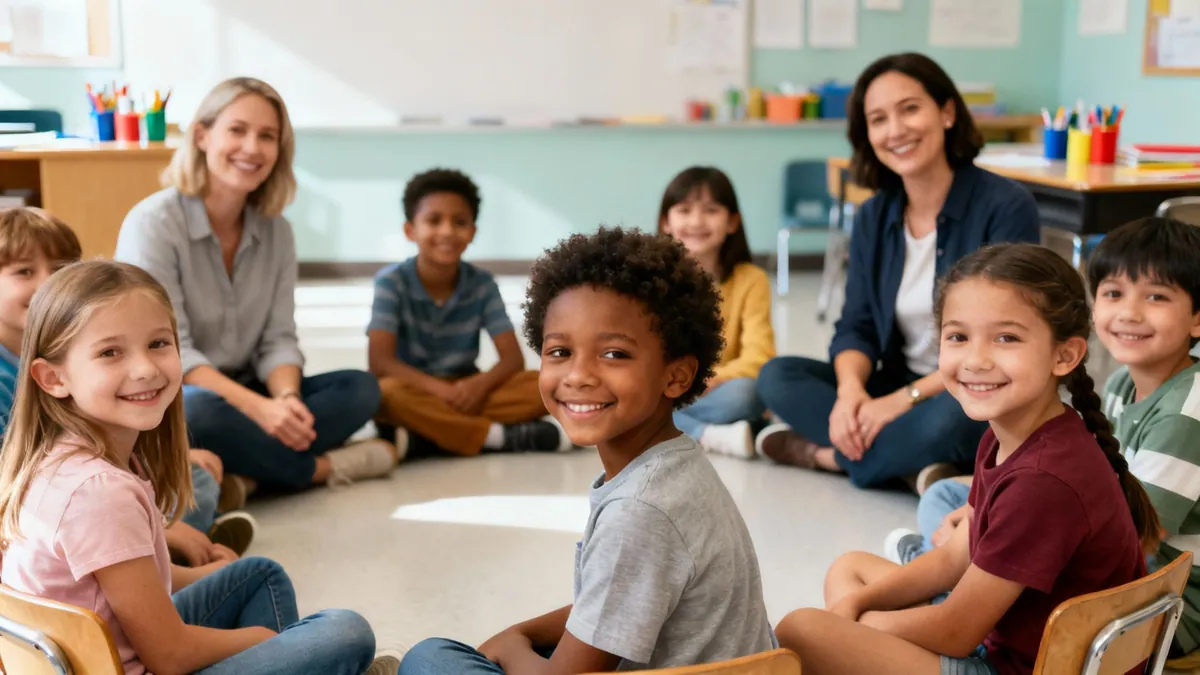
When we ask how to stop bullying, the real answer isn’t a one-time assembly or a catchy slogan. It’s about creating a fundamental shift in the school’s ecosystem. It means building a place where empathy is taught as intentionally as mathematics and where kindness is woven into the daily fabric of school life. This approach moves beyond just telling students “don’t bully” and instead gives them the skills to understand one another.
Why a Unified Strategy Matters
A disconnected approach almost always falls flat. A school might have a strong anti-bullying policy on the books, but if teachers aren’t equipped with classroom strategies and parents aren’t involved, the policy remains just words on paper. A plan that actually works requires everyone to be on the same page, speaking the same language of respect and support.
This is where the three pillars come into play. Creating a protective net around students requires a team effort, with each group playing a vital role. This shared responsibility is key to building a strong foundation of safety.
Three Pillars of Bullying Prevention
| Stakeholder Group | Key Responsibility | Example Action |
|---|---|---|
| School Leadership | Establishes clear, consistent policies and expectations for behavior. | Implementing a school-wide reporting system and restorative justice protocols. |
| Teachers & Staff | Implements daily practices that foster empathy, communication, and conflict resolution. | Leading daily morning meetings focused on SEL skills like perspective-taking. |
| Parents & Caregivers | Reinforces these values at home and maintains open lines of communication with the school. | Discussing the school’s “kindness” theme at home and practicing empathy with their child. |
When these three groups work in concert, they create a powerful, protective net around students. A huge part of this foundation is fostering a strong sense of psychological safety.
The Power of Social-Emotional Learning
The statistics on bullying are staggering. A massive global analysis found that 25% of students are victims, while another 16% are stuck in the cycle as both bullies and victims. This isn’t just a behavior issue; it’s a public health crisis tied to severe emotional distress.
But the research also points to a powerful solution. Schools that implement comprehensive SEL programs see bullying incidents drop by as much as 30%. Why? Because they teach core skills like empathy, self-awareness, and self-regulation. These are the building blocks of a kind and respectful community.
A truly safe school isn’t just free from physical harm—it’s a place where every child feels seen, heard, and valued. This sense of belonging is the ultimate antidote to bullying.
By focusing on these proactive strategies, we do more than just stop negative behaviors—we actively build a positive culture. A key step in this process is learning how to create a safe space where students feel comfortable enough to be themselves and ask for help when they need it. This playbook provides the practical, actionable methods to make that vision a reality.