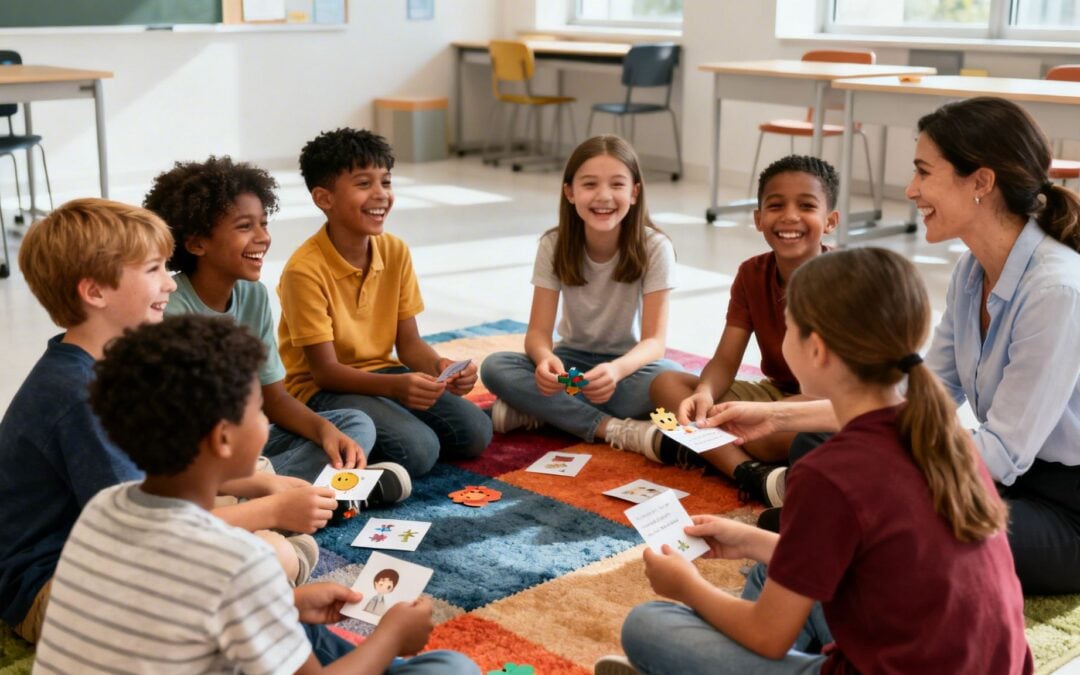
In today's classrooms and communities, the ability for students to connect, empathize, and collaborate is more than a 'nice-to-have'—it's foundational to academic success and emotional well-being. Strong peer relationships create the psychological safety necessary for students to take risks, ask for help, and engage fully in their learning. When students feel a sense of belonging, they are more likely to participate, cooperate, and support one another.
For parents and teachers, fostering these connections isn't about forcing friendships; it's about intentionally creating opportunities for positive interaction. This guide moves beyond generic advice to provide a curated roundup of 10 powerful, research-based relationship building activities. Each entry is designed for practical implementation, complete with age-differentiated examples, clear instructions, and alignment with core Social-Emotional Learning (SEL) competencies.
Whether you are a teacher building a supportive classroom culture, a school counselor leading a small group, or a parent helping your child navigate social dynamics, these activities offer concrete tools to help every student feel seen, valued, and connected. From Cooperative Games that teach teamwork to Empathy Mapping that encourages perspective-taking, this list provides specific, actionable strategies to strengthen the bonds that underpin a thriving learning environment. You will find practical examples for various age groups, helping you adapt each exercise for your specific needs.
1. Two Truths and a Lie
This classic icebreaker is one of the most effective and adaptable relationship building activities for any age group. It fosters a climate of psychological safety and shared discovery with minimal setup. Participants share three statements about themselves: two that are true and one that is false. The group then guesses which statement is the lie, leading to surprising revelations and genuine connections.
The activity’s strength lies in its participant-led nature. Each person controls the level of personal information they disclose, making it a low-stakes way to practice vulnerability. For example, a student might share, "I have a pet tarantula," "I have been to Hawaii," and "My favorite food is broccoli." This simple format sparks curiosity and helps peers find common ground in a playful, non-threatening manner.
How to Implement "Two Truths and a Lie"
Objective: To build rapport, foster active listening, and create a safe space for sharing.
Best For: All ages (K-8+), opening new groups, warm-ups before deeper discussions.
Time: 10-20 minutes.
Materials: None required (optional: whiteboards, index cards, or paper for writing).
Step-by-Step Instructions:
Model First: The facilitator (teacher, counselor, or parent) should always go first to set a clear example. Share three interesting but not overly obvious statements about yourself.
Give Thinking Time: Allow students 1-2 minutes to silently prepare their three statements. For younger students (K-2), provide sentence starters like, "My favorite animal is…" or "I have visited…" to guide them.
Share in Small Groups: Have students share in pairs or small groups of 3-4. This increases participation and reduces the pressure of presenting to a large audience.
Guess Respectfully: Instruct students to listen carefully to each person's three statements before discussing and making a group guess.
Reveal and Elaborate: After the group guesses, the sharer reveals the lie and can briefly elaborate on one of the true statements, adding context and personality.
Key Insight: The debrief is as important as the activity itself. After a round, ask questions like, "What did we learn about our classmates today?" or "What made a lie believable?" This reflection reinforces the goal of getting to know one another beyond surface-level assumptions. Soul Shoppe, a social-emotional learning organization, frequently uses this activity to establish a safe, playful tone at the beginning of their classroom workshops.
2. Circle of Trust / Talking Circles
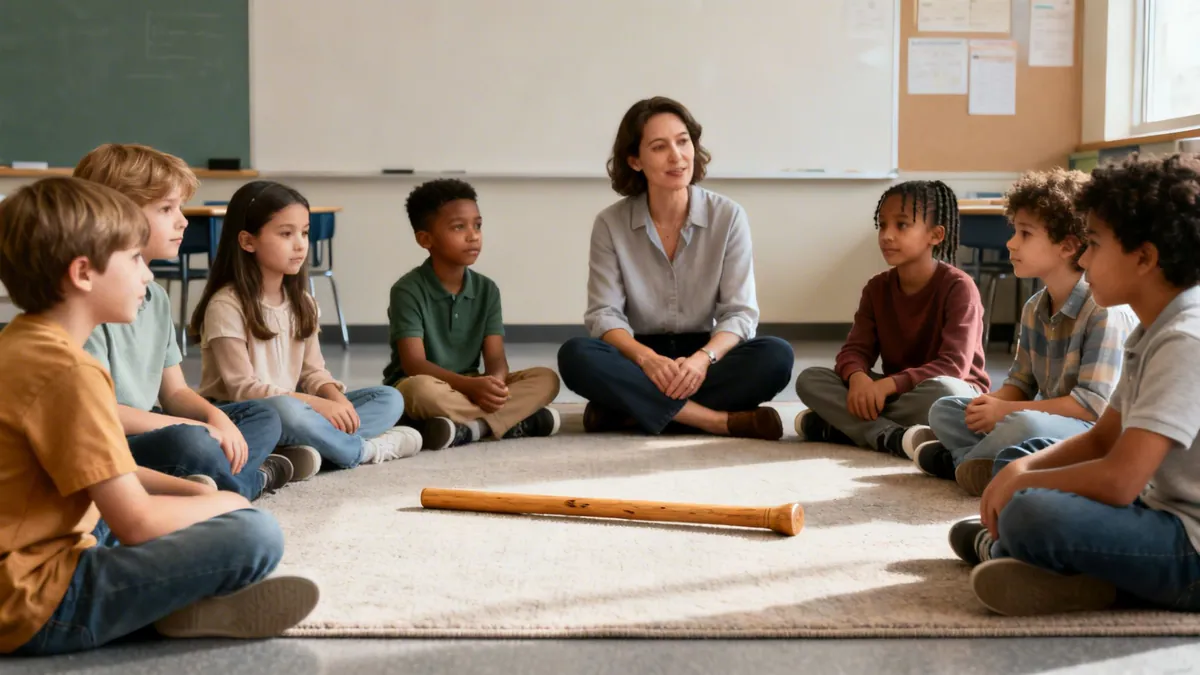
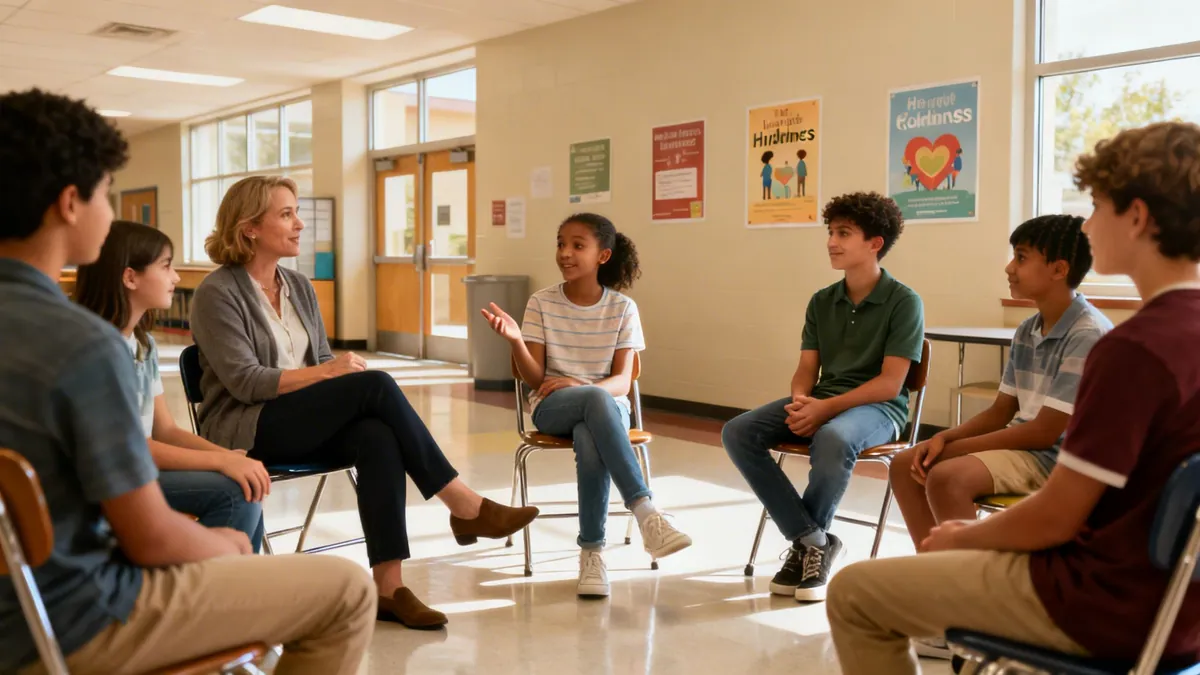
This intentional gathering is one of the most powerful relationship building activities for establishing equity and deepening connections. Rooted in indigenous wisdom and restorative practices, Talking Circles create a space where participants sit in a circle and take turns speaking and listening without interruption. This structured format promotes authentic dialogue and ensures every person has an equal voice and visibility.
The circle's strength is its ability to build empathy and understanding of diverse perspectives. By using a "talking piece" (an object that grants the holder the right to speak), the dynamic shifts from a free-for-all debate to focused, respectful listening. It is used effectively in restorative justice circles to address peer conflict, as well as in daily morning meetings to build a positive classroom community from the start.
How to Implement "Circle of Trust / Talking Circles"
Objective: To build empathy, cultivate respect for diverse perspectives, and create a brave space for authentic sharing.
Best For: All ages (K-8+), community building, conflict resolution, daily check-ins.
Time: 15-30 minutes (adaptable).
Materials: A designated "talking piece" (e.g., a decorated stone, a small stuffed animal, a special stick).
Step-by-Step Instructions:
Establish Circle Agreements: Before the first circle, collaboratively create agreements with the group. These often include principles like "Listen with respect," "Speak from the heart," "What is said in the circle stays in the circle," and "It's okay to pass."
Introduce the Talking Piece: Explain that only the person holding the object may speak. This simple rule is key to ensuring everyone is heard and interruptions are eliminated.
Pose an Open-Ended Prompt: The facilitator starts by asking a question that invites reflection, not a simple "yes" or "no" answer.
Practical Example (K-2): "Share one thing that makes you smile."
Practical Example (3-5): "Talk about a time you showed kindness to someone."
Practical Example (6-8): "Describe a challenge you are proud of overcoming."
Model and Pass: The facilitator answers the prompt first, then passes the talking piece to the next person in the circle. Remind participants they can pass if they do not wish to share.
Allow for Silence: Do not rush to fill pauses. Silence gives participants time to think and shows respect for the person who just spoke.
Close with Intention: End the circle with a closing ritual. This could be a shared quote, a moment of silent reflection, or a collective thank you to honor what was shared.
Key Insight: The structure itself teaches social-emotional skills. The act of waiting for the talking piece builds impulse control, while listening to every peer's perspective cultivates empathy. As a core component of restorative practices, circles shift the focus from punishment to understanding, helping communities repair harm and strengthen bonds after a conflict.
3. Cooperative Games and Team Challenges
Cooperative games shift the focus from individual competition to shared success, making them powerful relationship building activities. In these exercises, groups work together toward a common goal, requiring communication, problem-solving, and mutual support. This approach builds group cohesion while teaching practical collaboration skills that are essential in both academic and social settings.
The value of cooperative play is evident in its application across various youth settings. An elementary PE class might use the "Human Knot" to encourage physical problem-solving, while a middle school advisory period could feature a digital escape room to foster strategic thinking. Furthermore, a variety of energising indoor team building activities can effectively boost cooperation and communication among students, particularly in diverse learning environments. The shared struggle and eventual success create strong bonds and positive memories.
How to Implement Cooperative Games and Team Challenges
Objective: To improve communication, build trust, and develop group problem-solving skills.
Best For: All ages (K-8+), breaking down cliques, building team identity, applying SEL skills.
Time: 15-30 minutes.
Materials: Varies by activity (e.g., rope for Human Knot, building blocks for a tower challenge, or just open space).
Step-by-Step Instructions:
Select an Appropriate Challenge: Choose a game that fits the group's developmental level.
Practical Example (K-2): "Keep the Balloon Up." Students work together to keep one or more balloons from touching the floor.
Practical Example (3-5): "Group Juggle." Students stand in a circle and toss a soft ball to one another, aiming to establish a pattern and see how quickly they can complete it without dropping the ball.
Practical Example (6-8): "Spaghetti Tower." Groups get 20 sticks of spaghetti, a yard of tape, and a marshmallow. The goal is to build the tallest freestanding tower with the marshmallow on top.
Clearly State the Cooperative Goal: Before starting, explicitly state that the goal is to succeed as a team. For example, "The goal is for everyone in your group to untangle the knot, not to see which group finishes first."
Facilitate, Don't Direct: Your role is to monitor group dynamics. Watch for students who may be excluded or for individuals who dominate the conversation. Gently intervene with questions like, "Let's hear what Maria thinks," or "How can we make sure everyone has a chance to help?"
Allow for Productive Struggle: Don't be too quick to offer solutions. Let students experience the challenge of working together. This is where the most significant learning and bonding occurs.
Debrief with Reflection: After the game, lead a discussion. Ask questions like, "What was the hardest part?" "What did someone do that helped the group succeed?" and "How can we use this teamwork in our classroom?" Soul Shoppe provides many excellent ideas for cooperative games that build community.
Key Insight: The primary goal is the process, not the outcome. Whether a team "wins" or "loses" the challenge is less important than how they communicated, supported each other, and managed frustration. Emphasize that these skills are the same ones needed to be a good friend, a helpful classmate, and a supportive teammate in any situation.
4. Guided Reflection and Journaling Prompts
Structured writing or drawing exercises provide a quiet, introspective path toward stronger relationships, starting with the one we have with ourselves. By using guided prompts, individuals reflect on their experiences, emotions, and interactions, creating a powerful foundation for empathy and connection. This method is especially valuable for introverted students who may process their thoughts more effectively internally before sharing with others.
Journaling’s effectiveness comes from the safe, private space it creates for honest self-expression. A student can explore complex feelings about a peer conflict or celebrate a moment of kindness without the pressure of an immediate audience. For instance, a prompt like, "Describe a time you felt proud of how you treated a friend," allows a child to connect positive actions to their own emotions, building both self-awareness and social-emotional skills.
How to Implement "Guided Reflection and Journaling Prompts"
Objective: To develop self-awareness, practice self-regulation, and create a safe outlet for emotional processing before sharing with others.
Best For: All ages (K-8+), introverted learners, after-conflict resolution, morning meetings, or individual check-ins.
Time: 10-15 minutes.
Materials: Journals or notebooks, paper, writing/drawing tools (optional: digital tools like the Soul Shoppe app).
Step-by-Step Instructions:
Introduce the Prompt Clearly: Present a single, open-ended prompt.
Practical Example (K-2): "Draw a picture of a time you felt happy with a friend. What were you doing?"
Practical Example (3-5): "Write about a time it was hard to be a good friend. What happened and what did you learn?"
Practical Example (6-8): "Reflect on a time you disagreed with a friend. How did you handle it, and what might you do differently next time?"
Offer Multiple Formats: Emphasize that there is no "right" way to respond. Students can write sentences, use bullet points, draw a picture, or create a mind map. This accommodates different learning styles and expressive preferences.
Create Quiet Reflection Time: Build in 5-10 minutes of uninterrupted, quiet time for students to work in their journals. The focus is on reflection, not production. Ensure the space feels calm and free of pressure.
Make Sharing Voluntary: If sharing is part of the activity, make it optional and low-stakes. Use partner sharing or a "talking circle" where students can pass if they choose. Never force a student to read their private reflections aloud.
Connect to a Theme: Use themed journals (e.g., Gratitude, Friendship, Managing Big Feelings) to give the practice structure over time and track growth in specific areas.
Key Insight: The primary goal is honest reflection, not writing quality. To build trust, keep initial journal entries private. As a facilitator, your role is to create the conditions for safety and underscore that journaling is a tool for understanding ourselves, not an assignment to be graded. Programs like Soul Shoppe integrate journaling to help students master self-regulation, turning internal reflection into a cornerstone of healthy peer relationships.
5. Peer Mentoring and Buddy Systems
Pairing experienced students with younger or socially isolated peers is a powerful strategy for building an inclusive school climate. These structured buddy systems create authentic opportunities for support, modeling, and friendship. By creating a formal program, schools can nurture prosocial behaviors, reduce bullying, and give students a profound sense of belonging.
The effectiveness of this approach comes from its peer-led foundation. A mentor relationship feels more natural and less intimidating than adult intervention. For instance, a school might pair a confident 5th grader with a shy kindergartener to help them navigate the lunchroom, or train a group of 8th graders to act as peer allies for new students. These connections build genuine peer bonds that increase feelings of safety and community.
How to Implement "Peer Mentoring and Buddy Systems"
Objective: To build empathy, foster leadership skills, reduce social isolation, and create a supportive peer culture.
Best For: All ages (K-8+), school-wide initiatives, supporting new students, and bullying prevention.
Time: Ongoing throughout the school year or a semester.
Materials: Training materials, mentor applications, and a clear role description.
Step-by-Step Instructions:
Define the Program's Goal: Be clear about the purpose. Is it to help new students adjust, support academic skills, or improve social dynamics at recess? This will guide your mentor selection and training.
Train Your Mentors: Explicitly teach mentors key skills. Provide training on active listening, confidentiality, problem-solving, and knowing when to get an adult involved. Use frameworks like Soul Shoppe’s communication tools to give mentors specific language to use.
Match Pairs Intentionally: Thoughtfully pair students based on personality, shared interests, and specific goals. Avoid random pairings. A quiet, artistic 6th grader might be a great match for a new 4th grader who loves to draw.
Structure Low-Pressure Activities: Start the relationships with fun, informal activities.
Practical Example (K-5): "Reading Buddies." Older students read picture books to their younger buddies once a week.
Practical Example (6-8): "Lunch Buddies." Mentors meet their mentees for lunch once a month to chat and help them connect with other peers.
Provide Ongoing Support and Check-Ins: Schedule regular check-ins with the mentors. Give them a safe space to share their experiences, ask for advice, and discuss any concerns. This prevents mentor burnout and ensures the program's health.
Key Insight: A mentor’s role is to be a supportive friend, not to fix another student’s problems. Clarify this boundary from the start with a role description that states, “Your job is to be a friendly peer support and a positive role model.” This empowers mentors to act within their capacity and helps them understand that their primary contribution is building a trusting relationship.
6. Empathy Mapping and Perspective-Taking Exercises
These structured relationship building activities guide students to analyze another person's experience by considering what they might see, hear, think, and feel. By mapping out another's perspective, whether it's a fictional character, a peer, or a public figure, students practice the foundational SEL skill of empathy. This process builds a deeper understanding of others, reduces conflict, and encourages supportive behaviors in the community.
The power of empathy mapping lies in its structured approach to a complex emotional skill. It moves students beyond simple sympathy toward genuine perspective-taking. For instance, after reading a story, a first-grade class might map out how a character felt when they were left out. In middle school, students could use an empathy map to analyze the perspective of someone who engaged in bullying, exploring the potential needs or pressures that led to their actions. This helps dismantle assumptions and fosters a more compassionate school climate.
How to Implement "Empathy Mapping"
Objective: To develop empathy, improve social awareness, and promote pro-social problem-solving.
Best For: All ages (K-8+), conflict resolution, literature analysis, anti-bullying initiatives.
Time: 15-30 minutes.
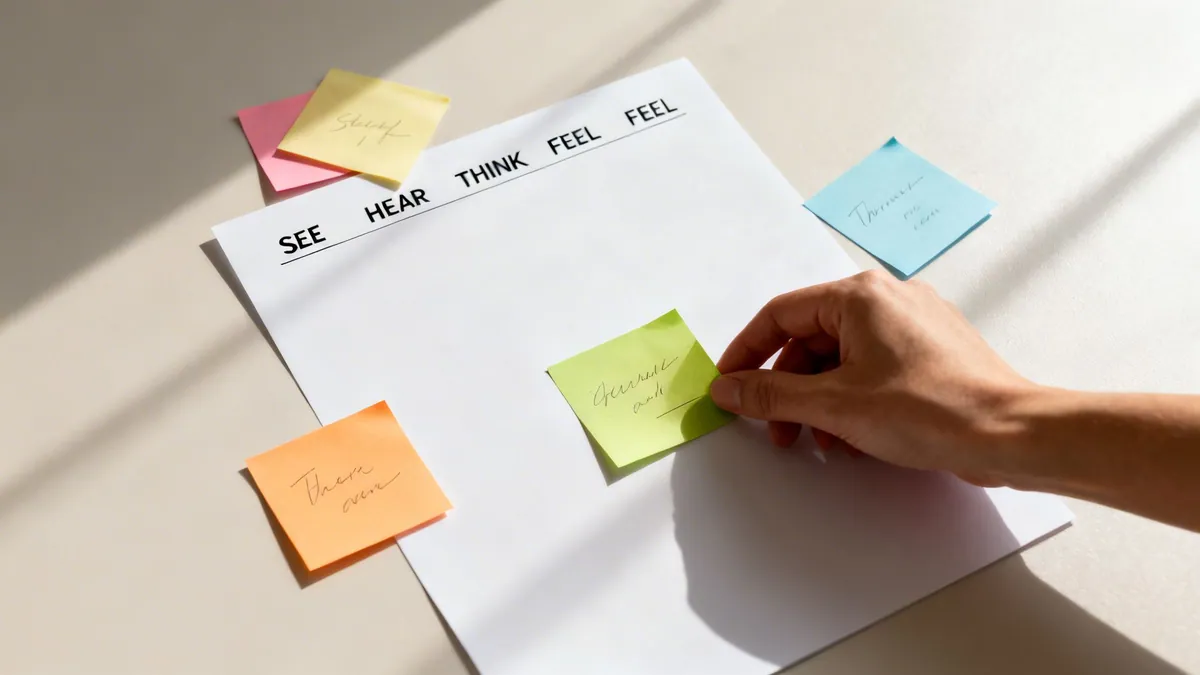
Materials: Whiteboard, chart paper, or individual worksheets with an empathy map template (sections for See, Hear, Think, Feel, Needs/Wants).
Step-by-Step Instructions:
Introduce the Subject: Select a subject for the empathy map. This could be a character from a book, a historical figure, a student in a hypothetical scenario, or even a real but anonymized situation from the school community.
Explain the Map: Draw or distribute the empathy map. Guide students through each quadrant: What does this person See in their environment? What do they Hear from others? What might they Think to themselves? How do they Feel?
Brainstorm Collaboratively: As a class or in small groups, have students brainstorm ideas for each quadrant.
Practical Example (K-2): After reading The Recess Queen, create a class empathy map for the character "Mean Jean." What did she see (kids running away)? What did she feel (lonely, angry)?
Practical Example (3-5): Use a map to explore the perspective of a new student on their first day of school. What might they be thinking and feeling?
Identify Needs and Pains: After filling out the main quadrants, discuss the person’s underlying needs, wants, or pains. What is their core challenge or desire in this situation?
Connect to Action: Ask students, "Now that we understand this perspective, how could we support this person?" or "What is one kind thing we could do?" This step turns empathy into compassionate action. More perspective-taking activities can help build this skill.
Key Insight: The goal is understanding, not necessarily agreement or forcing a conclusion that "we are all the same." After mapping, focus reflection on how this new perspective might change future interactions. In its conflict resolution curriculum, Soul Shoppe uses role-play and perspective-taking to help students understand the impact of their actions, a crucial step in restorative practices after harm has occurred.
7. Social-Emotional Learning (SEL) Skill-Building Workshops and Assemblies
Moving beyond brief icebreakers, structured SEL skill-building workshops and assemblies are powerful relationship building activities that directly teach core competencies. These are not one-off events but intentional, interactive presentations designed to equip students with practical tools for self-awareness, conflict resolution, and social awareness. By focusing on experiential learning, these programs make abstract concepts like empathy concrete and memorable.
The effectiveness of this approach comes from its direct instruction model. Instead of hoping students absorb skills implicitly, organizations like Soul Shoppe create signature assemblies that explicitly teach students how to use "I-statements" to resolve conflicts or how to recognize and regulate their emotions. These skills become a shared language for the entire school community, fostering a culture of mutual respect and understanding that reduces bullying and improves classroom dynamics.
How to Implement SEL Skill-Building Workshops
Objective: To explicitly teach, model, and practice specific SEL skills (e.g., conflict resolution, emotional regulation) in a structured, school-wide format.
Best For: All ages (K-8+), whole-school culture initiatives, targeted interventions for specific grade levels or behavioral challenges.
Time: 45-60 minutes for an assembly or workshop; can be a series or a single event.
Materials: Varies by program; often includes props, visuals, take-home resources, and follow-up lesson plans for teachers.
Step-by-Step Instructions:
Identify a Specific Need: Before booking a program, use school climate data or teacher feedback to pinpoint a precise skill gap. Are students struggling with managing frustration or resolving playground disputes? Choose a workshop that addresses that exact need.
Select a Reputable Provider: Partner with an organization that specializes in experiential SEL, such as Soul Shoppe, which has a 20-year track record. Ensure their approach is interactive and aligns with your school’s values.
Prepare Students and Staff: Frame the assembly as an exciting, practical learning opportunity, not a lecture on behavior. Brief teachers beforehand on the key skills that will be introduced so they can help reinforce them.
Engage During the Event: Encourage active participation. Effective programs use student volunteers to model skills, role-play real-world scenarios, and lead call-and-response chants that make learning sticky.
Plan for Reinforcement: A one-time assembly is a starting point. Use the provider's follow-up materials, such as posters and classroom activities, to integrate the new skills into daily routines and school-wide language.
Practical Example: A teacher can reference a "Peace Path" poster taught in the assembly when two students have a disagreement. They can walk the students through the steps on the poster: 1. Cool down. 2. Use "I-statements." 3. Brainstorm solutions.
Key Insight: To get leadership buy-in, frame SEL workshops as a direct investment in academic achievement. Explain that when students learn to manage their emotions and relationships, they are more available for learning, leading to improved attendance, focus, and test scores. Presenting SEL as a cornerstone of a successful academic environment, not just a "nice-to-have" program, is critical for securing resources and support.
8. Restorative Practices and Repair Circles
When conflict causes harm, restorative practices shift the focus from punishment to accountability, healing, and community repair. Unlike punitive measures that isolate individuals, these practices bring together those affected to understand the impact of actions and collaboratively find a path forward. This process is one of the most profound relationship building activities because it rebuilds trust after it has been broken.
The core of this approach is the repair circle, a facilitated meeting that includes the person who caused harm, the person harmed, and supporters for each. For instance, after a bullying incident, a restorative circle allows the student who was targeted to explain the emotional impact, and the student who did the bullying to understand the consequences beyond a simple disciplinary action. This structured dialogue helps rebuild the social fabric and prevents future harm by addressing root causes.
How to Implement "Restorative Practices and Repair Circles"
Objective: To repair harm, rebuild trust, and teach accountability and empathy after a conflict.
Best For: All ages (K-8+), responding to peer conflict, bullying, or community disruptions.
Time: 30-60 minutes, depending on the complexity of the situation.
Materials: A talking piece (an object to signify whose turn it is to speak), a quiet and private space.
Step-by-Step Instructions:
Invest in Training: Facilitating a repair circle requires skill. Seek professional development from organizations like Soul Shoppe to learn how to manage difficult conversations and guide participants toward resolution.
Conduct Pre-Meetings: Meet with the person who caused harm and the person who was harmed separately. Prepare them for the process, listen to their perspectives, and ensure they are willing to participate.
Set the Stage: Begin the circle by clearly stating its purpose: "Our goal today is to understand what happened and work together to make things right." Establish ground rules, such as using the talking piece and listening without interrupting.
Use Restorative Questions: Guide the conversation with specific, non-blaming questions:
What happened?
What were you thinking at the time?
Who has been affected by what you did, and how?
What do you think you need to do to make things right?
Create a Repair Agreement: Collaboratively develop a concrete plan of action.
Practical Example: After a student repeatedly interrupted a classmate's presentation, a repair agreement might include: 1) A sincere, specific apology to the presenter. 2) The student practices active listening skills with a counselor. 3) The student writes a short reflection on why respecting others' work is important.
Key Insight: Restorative practices are most effective when they are also used proactively to build community from the start, not just reactively after harm. Soul Shoppe coaches teachers to use circle formats for daily check-ins, creating a foundation of trust that makes repair conversations more successful when conflicts arise. To learn more, see this detailed overview of what restorative practices in education are and how they can be implemented.
9. Gratitude and Strength-Based Recognition Activities
These structured activities create a culture where students regularly acknowledge peer strengths, express gratitude, and celebrate positive contributions. This practice combats isolation by ensuring every student feels seen and valued for their unique qualities. By making recognition a daily habit, schools build an environment of belonging and mutual respect.
The power of these relationship building activities comes from their consistency. When students are taught how to spot and name specific strengths in others, it shifts their focus from deficits to assets. For instance, instead of a generic "good job," a student might learn to say, "I appreciated how you included Sarah in our game at recess; that was really kind." This level of specificity makes the recognition more meaningful and helps students see positive behaviors in concrete terms.
How to Implement "Gratitude and Strength-Based Recognition"
Objective: To build a culture of appreciation, improve self-esteem, and help students recognize positive qualities in themselves and others.
Best For: All ages (K-8+), morning meetings, classroom community building, restorative practices.
Time: 5-15 minutes, depending on the activity.
Materials: Sticky notes, index cards, a "gratitude jar," or a designated bulletin board.
Step-by-Step Instructions:
Teach Genuine Recognition: Model how to give specific and sincere appreciation. Explain the "what and why" format: "I noticed you (specific action), and it mattered because (specific impact)."
Integrate Into Routines: Make recognition a predictable part of the day or week. Use a "Gratitude Circle" during morning meetings, asking, "Who did you see being a good friend yesterday and what did they do?"
Offer Multiple Formats: Accommodate different comfort levels.
Practical Example: Create a "Shout-Out" bulletin board where students can write positive notes about classmates on sticky notes and post them publicly.
Practical Example: Use a "Gratitude Jar" where students drop in private notes of thanks for others. The teacher can read a few aloud (with permission) at the end of the week.
Celebrate Diverse Strengths: Ensure a wide range of contributions are celebrated, including academic, social, creative, and athletic skills. Highlight qualities like kindness, perseverance, and leadership.
Model Receiving Gratitude: Teach students how to accept a compliment gracefully. Practice simple responses like, "Thank you, that means a lot to me," to avoid deflecting positive feedback.
Key Insight: To ensure every student is seen, facilitators should discreetly track who receives recognition. If certain students are consistently overlooked, find opportunities to "spotlight" their strengths publicly or prompt peers to notice their contributions. This intentional approach ensures that recognition activities are truly inclusive and reinforce the value of every single member of the community.
10. Social Skills and Conversation Coaching
This targeted approach moves beyond general activities to provide direct instruction in specific social skills that are foundational to forming relationships. It involves modeling, role-playing, and guided practice in areas like initiating conversations, reading social cues, or managing disagreements. This coaching is especially helpful for socially isolated students, those with social anxiety, or anyone needing explicit support to build peer connections.
The power of this method is in its precision. Instead of hoping social skills develop on their own, coaching breaks them down into small, achievable steps. For instance, a counselor might role-play with a student how to join a group at recess, starting with observing the group, finding a natural opening, and using a simple phrase like, "Hi, what are you playing?" This makes the abstract goal of "making friends" a concrete, repeatable process.
Understanding perspective-taking is the first step, but the real magic happens when you weave it into the fabric of your entire school community. This is where theory gets its hands dirty. At Soul Shoppe, we guide schools from just talking about empathy to actually building it into the campus DNA with our research-based, hands-on programs.
We create a psychologically safe space where students from kindergarten through 8th grade can actively practice seeing the world through someone else’s eyes. Our approach isn't about lectures; it's about doing. Through interactive workshops, students engage in activities designed to help them step into another person’s shoes and see a familiar situation from a totally new angle.
Creating a Shared Language for Empathy
One of the most powerful ways to make perspective-taking a campus-wide habit is to establish a shared language. When everyone—from the principal to the youngest student—uses the same words to talk about feelings and conflict, it creates a powerful cultural touchstone. Our programs introduce simple, memorable tools that make it easier for students to communicate with real understanding.
For instance, we might walk students through a conflict with a simple, three-part script:
"I feel…" to express their own emotions without placing blame.
"I hear you saying…" to prove they were listening to the other person's side.
"What I need is…" to clearly and respectfully ask for what would help.
This shared vocabulary turns an abstract idea into concrete action. It gives kids the words they need to navigate tough moments with confidence, turning potential fights into opportunities for real connection.
Experiential Learning That Sticks
Let's be honest: kids learn best by doing. Soul Shoppe’s facilitators lead students through dynamic activities that make perspective-taking a tangible experience, not just a vocabulary word. These aren't sleepy, passive assemblies; they are high-energy workshops where empathy is practiced in real time.
A core belief at Soul Shoppe is that emotional skills are built through practice, just like any other skill. We don't just tell students to be empathetic; we give them the chance to feel what it’s like to understand someone else's point of view in a real, immediate way.
A teacher might see a student who usually struggles in groups suddenly pause and ask, "Wait, what's your idea?" after one of our programs. That tiny shift is the direct result of practicing the skill in a safe, guided environment.
When you partner with an organization like Soul Shoppe, you can scale these strategies across your entire campus. You can turn your school into a community where every single child feels seen, heard, and truly valued.
Common Questions About Teaching Perspective Taking
As you start weaving perspective-taking into your daily conversations with kids, you're bound to have some questions pop up. It’s a complex skill, and figuring out the best way to teach it isn't always straightforward. We get it.
Here are some of the most common questions we hear from parents and educators, along with our most practical, real-world answers.
Is Perspective Taking the Same as Empathy?
They’re incredibly close partners, but they aren't the same thing. Think of it this way: perspective-taking is the mental work of trying to see the world from someone else’s viewpoint. It’s a thinking skill. Empathy is the feeling part—it’s feeling with someone because you understand where they're coming from.
You really can't have true empathy without first taking someone’s perspective. It’s the key that unlocks the door. For instance, a student uses perspective-taking to guess that their friend is quiet because they didn't do well on a math test. That understanding then opens the door for them to feel empathy for their friend's disappointment.
My Child Struggles with This. When Should I Be Concerned?
First off, it is completely normal for younger kids (think K-2) to see the world primarily through their own eyes. Their brains are naturally self-focused at this stage. Just keep modeling the skill, using simple feeling words, and talking through different points of view.
But if a child in the upper elementary grades (4th or 5th) consistently seems unable to consider other viewpoints—and it's starting to cause friction in their friendships—that's a good time to team up with their teacher to brainstorm more targeted support.
For example, if your child always blames others for conflicts and can't articulate why a friend might be upset ("I don't know, he's just being weird"), it's a good cue to be more intentional. You can work with the teacher to see if this pattern shows up at school, too.
How Do I Teach This Without Making My Child a Pushover?
This is such an important question and a worry we hear all the time. The goal here is to teach understanding, not automatic agreement. We always stress that "understanding why someone feels a certain way doesn't mean you have to agree with them."
Frame perspective-taking as a tool for smarter, more effective communication. You can use phrases like, "You don't have to agree with your friend, but let's try to figure out why they're so upset." For instance, "I understand you feel it's unfair that your brother got to choose the movie, but you can still tell him you want to choose next time. Understanding his reason doesn't mean you give up your turn." This helps them see that understanding others gives them more information and makes them a better friend and problem-solver, not someone who just gives in.
Soul Shoppe provides research-based social-emotional learning programs that equip K-8 schools with the tools and language to build empathetic, connected communities where every student can thrive. Learn how we can support your school.
We’ve all been there—listening to someone talk, but our minds are busy formulating a reply, offering a solution, or just waiting for our turn to speak. Empathetic listening asks us to do something different. It’s the art of tuning into the feeling behind the words, not just the words themselves.
This kind of listening is all about connection over correction. It’s about creating a safe space where someone can be truly heard.
Defining Empathetic Listening in Education
To really define empathetic listening, try thinking of yourself as an “emotional detective” instead of a “problem solver.” Your first job isn't to fix anything or give advice. It's simply to understand and acknowledge the speaker's emotional state, which is the secret to building trust and psychological safety.
This skill is a cornerstone of effective social-emotional learning (SEL). When students feel genuinely heard and understood, they’re far more likely to open up, take healthy risks, and form real relationships with their peers and the adults in their lives.
Listening to Connect, Not Just Comprehend
There’s a big difference between empathetic listening and other ways we listen. It isn’t passive listening (where we’re just hearing sounds) or even active listening (which often focuses on remembering facts to repeat back). Empathetic listening goes deeper, tuning into the feelings simmering just below the surface.
For educators and parents, getting this right is a game-changer for building strong relationships. The foundation of strong interpersonal skills is this kind of genuine understanding.
Think about this common classroom moment:
Student: "I'll never finish this history project. It's just too much work, and I don't even know where to start."
Active Listening Response: "So, you're saying the project feels too big and you need a plan. Let’s break it down into smaller steps."
Empathetic Listening Response: "It sounds like you're feeling really overwhelmed and maybe a little stuck. That’s a tough feeling when you're facing a big project."
See the difference? The active listening response is helpful, but it jumps right to solving the problem. The empathetic response first acknowledges the student’s feeling of being overwhelmed. This small act of validation shows the student their feelings matter, opening the door to more productive problem-solving later.
By validating the emotion first, you create a space where the student feels safe enough to be honest about their struggles. This is the cornerstone of trust between a teacher or parent and a child.
This shift turns interactions from transactional to relational. It creates an environment where children feel secure enough to express themselves fully. The focus moves from just managing behavior to truly nurturing a child’s emotional well-being, which in turn supports their academic and social growth.
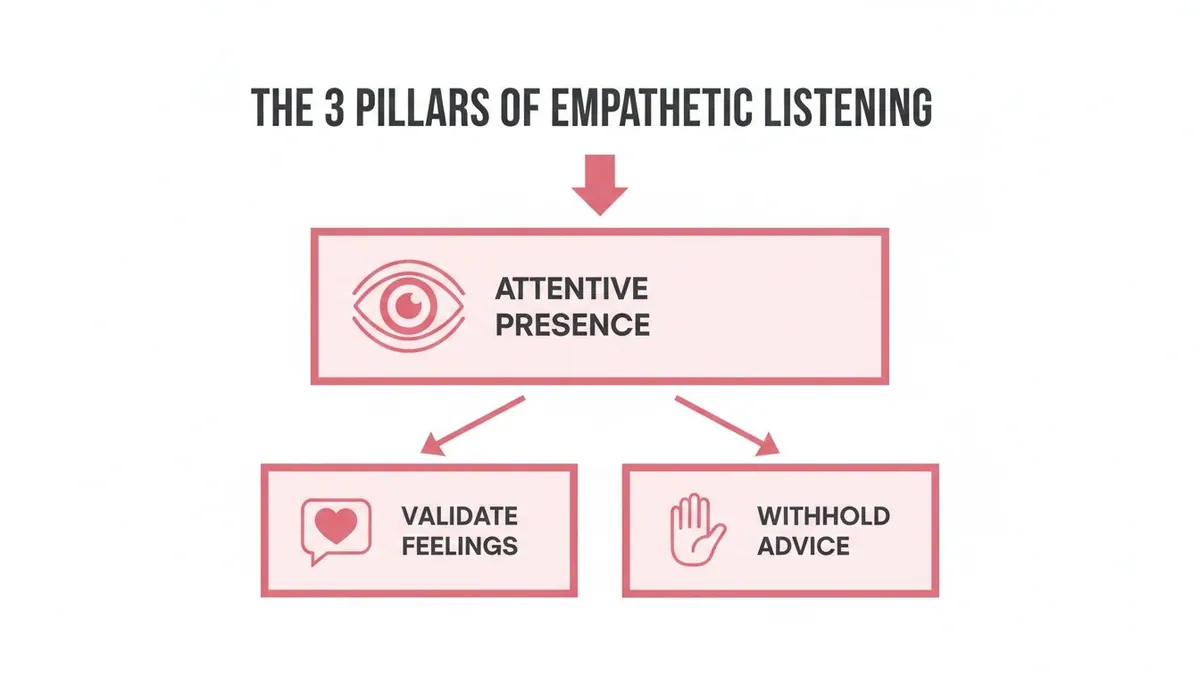
The Three Pillars of Empathetic Listening
To really get what empathetic listening is, it helps to think of it as a skill built on three core pillars. When educators and parents master these, they shift from just hearing a child's words to truly connecting with the feelings underneath. Think of these pillars as the foundation holding up a bridge of trust between you and a student.
This isn't about being passive; it's about being fully present and responsive. Instead of jumping in with advice or criticism, you create a space of genuine emotional safety. This sense of trust is the bedrock for building belonging in any school community.
Pillar 1: Attentive Presence
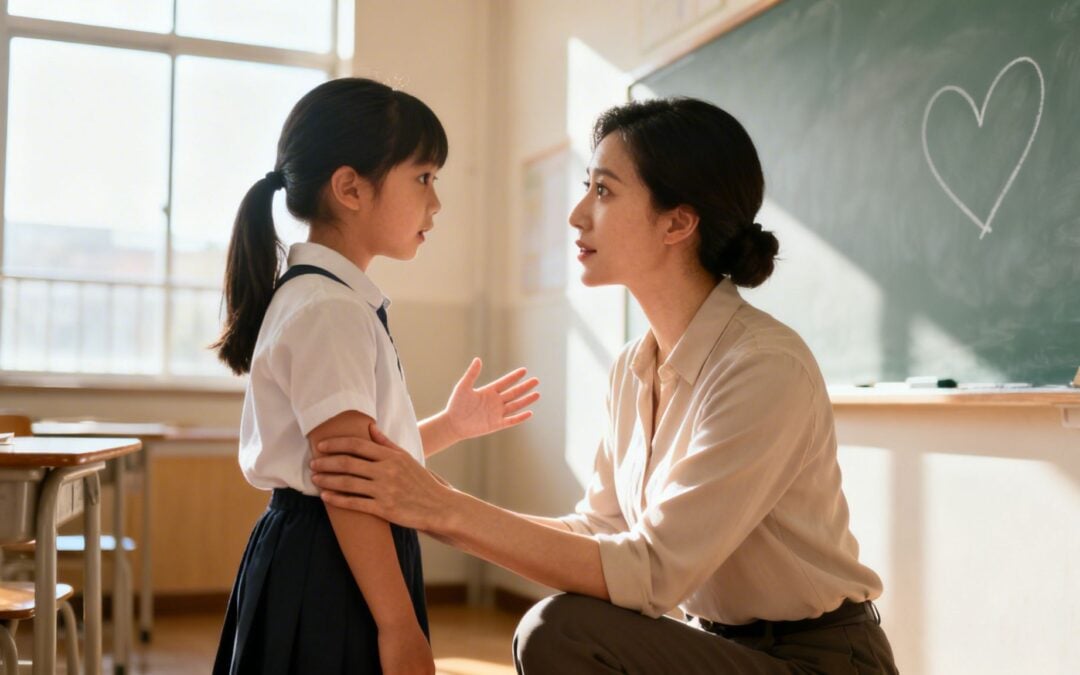
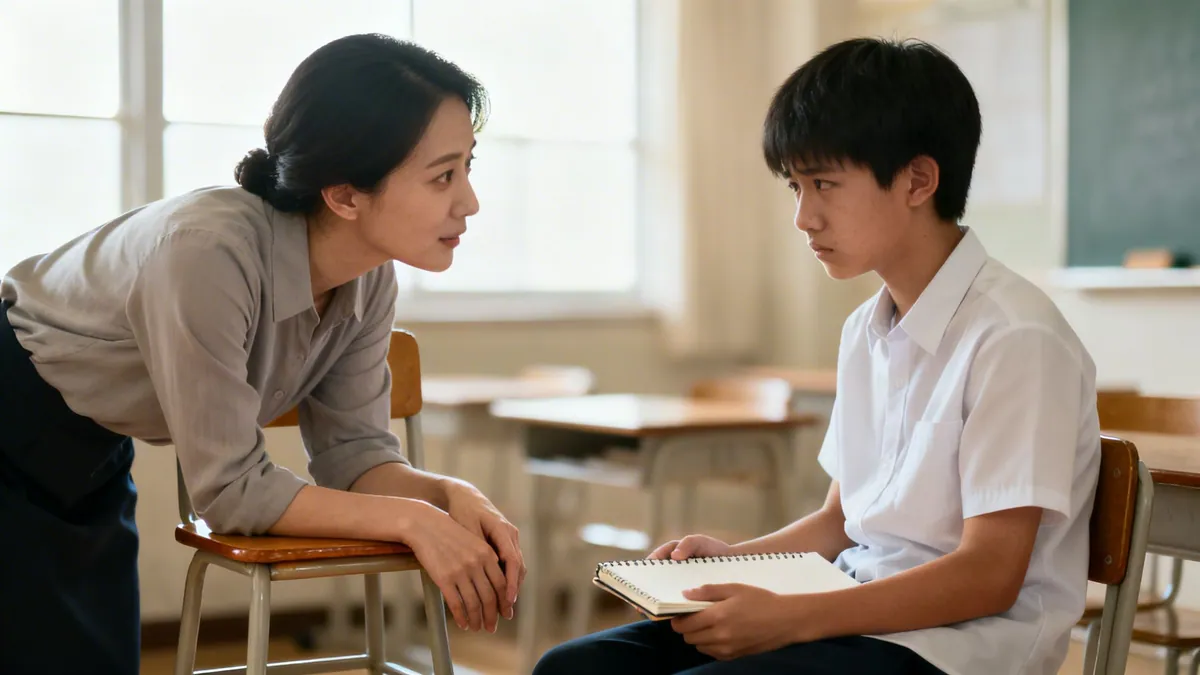
The first pillar is all about attentive presence. This means giving a child your complete, undivided attention, showing them with your body language that they are the most important thing in that moment.
It’s putting your phone down. It's turning away from the laptop. It's making eye contact that says, "I'm with you." Small cues like nodding or leaning in signal that you are fully engaged and ready to hear what they need to share.
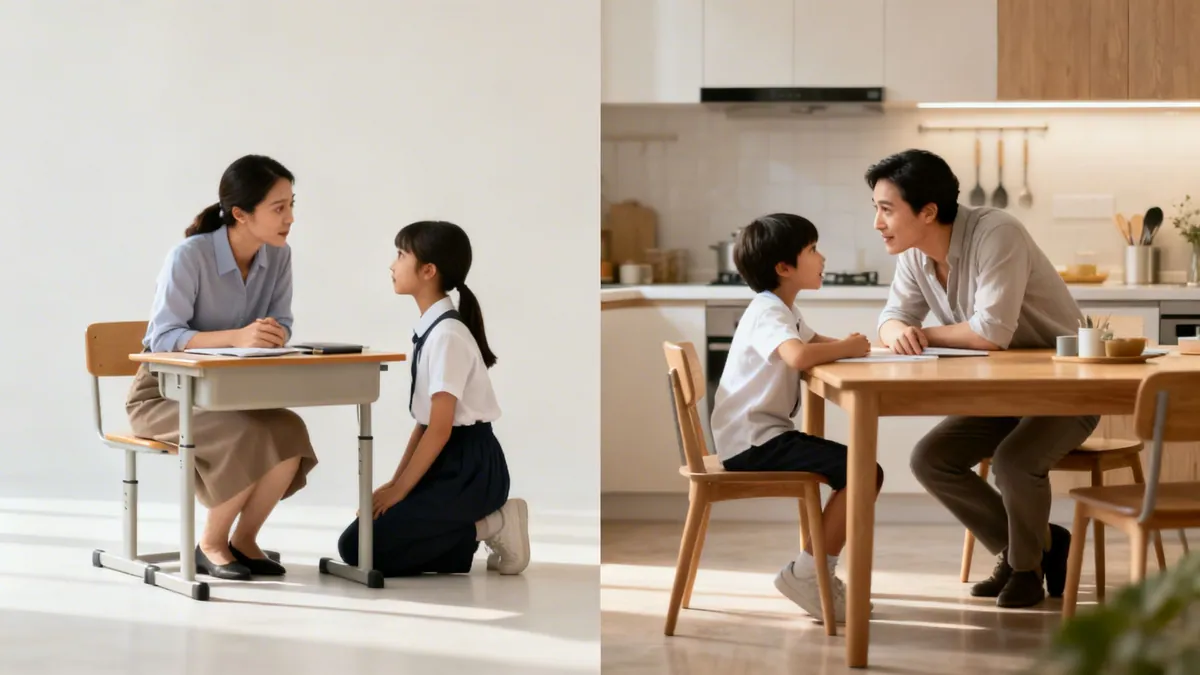
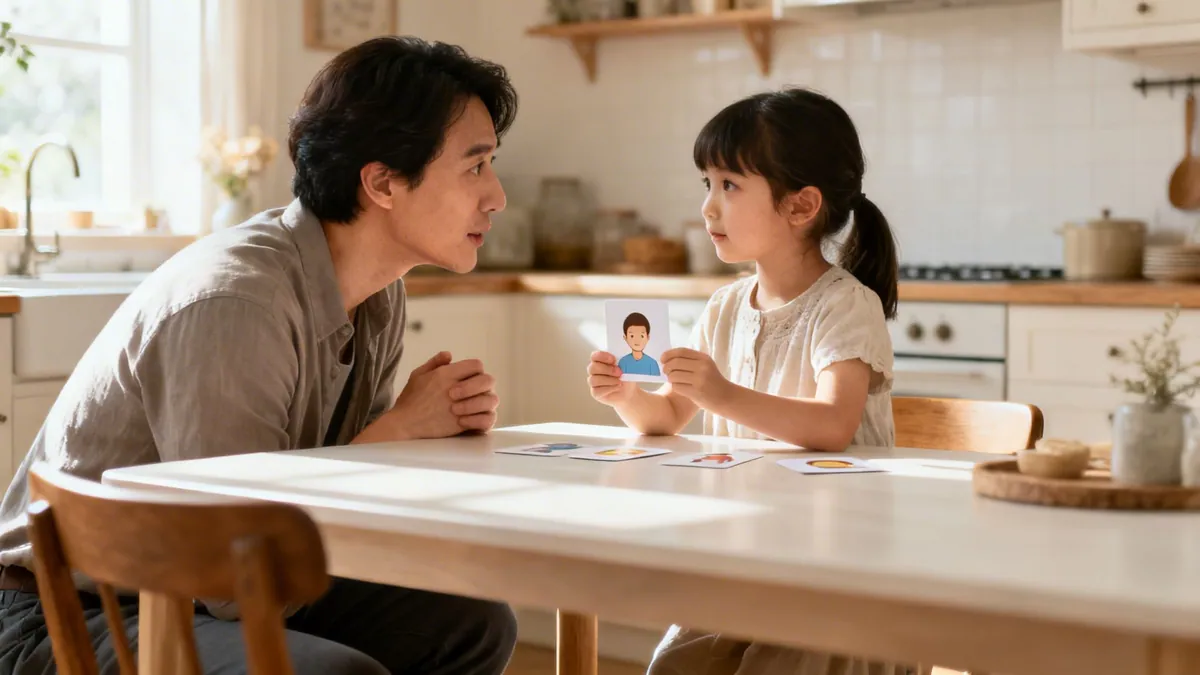
Parent Example: Your child walks in from school, shoulders slumped. Instead of multitasking while asking what’s wrong, you stop what you’re doing, sit with them, and just say, “You look like you had a tough day. I’m here if you want to talk about it.” This simple act shows they have your complete focus.
Teacher Example: A student is lingering after class, clearly wanting to talk. Instead of tidying your desk, you can pause, turn your body fully toward them, and say, "I have a few minutes. What's on your mind?" This signals that they are your priority.
Pillar 2: Validating Their Feelings
Next up is validating their feelings, and this might be the most powerful step of all. It involves figuring out the core emotion the child is expressing and reflecting it back to them without any judgment.
Your goal isn't to agree or disagree with the situation, but simply to show that you understand their emotional reality. This is a crucial part of building emotional intelligence, as it teaches kids that their feelings are real, valid, and deserve to be heard.
Teacher Example: A student slams their book shut, exclaiming, “This is impossible!” Instead of correcting their attitude, you can say, “It sounds like you’re feeling really frustrated and stuck right now.” This names the emotion and shows you get it.
Parent Example: Your child is crying because they weren't invited to a birthday party. Instead of saying, "There will be other parties," try validating their hurt: "It feels so painful to be left out. I'm sorry you're feeling so sad right now."
Pillar 3: Withholding Premature Advice
The final pillar is withholding premature advice. For many adults, this is the hardest one. Our natural instinct is to fix things and solve problems for the kids we care about.
But jumping in with a solution too quickly can feel like a dismissal. It sends the unintentional message that their feelings are just an obstacle to be cleared away, not a valid experience to be processed.
Teacher Example: A student says, "I don't think anyone in my group likes my ideas." A problem-solving response is, "Let's find you a new group." An empathetic response is to pause, then say, "That sounds really discouraging. It’s hard to feel like your voice isn’t being heard."
Parent Example: Your teen complains, "I have too many assignments and I can't keep up." Instead of immediately creating a schedule for them, try saying, "It sounds like you're completely buried in work. That must be so stressful."
When you pause before offering solutions, you give the child space to work through their own feelings and sometimes even discover their own answers. Once they feel heard and validated, they become much more receptive to guidance. This patient approach builds resilience and empowers them to become stronger problem-solvers down the road.
Empathetic Listening vs Active Listening Key Differences
Though people often use the terms interchangeably, empathetic listening and active listening are two very different tools. Knowing when to use each one is a game-changer for parents and educators. It can be the difference between a child feeling truly heard and supported, or simply feeling… managed.
Think of it like having a toolkit for communication. You wouldn’t use a hammer to turn a screw, right? Same idea here.
Active Listening: Listening to Comprehend
At its core, active listening is about understanding information. The goal is to accurately hear and confirm the facts. When you listen actively, your mind is zeroed in on the details. You summarize what you’ve heard and ask questions to make sure you got it right. It’s perfect for those straightforward, get-it-done conversations.
This is the skill you pull out when the goal is purely about comprehension. It shines when a student needs to understand the steps for a project or when a parent needs to confirm the logistics of a weekend plan. It’s all about getting the details straight.
Teacher Example: A student seems confused about a homework assignment. Using active listening, the teacher might say, “Okay, let me repeat that back to make sure we’re on the same page. You’ll choose a historical figure, write one page on their major accomplishment, and find a photo. Did I get that right?”
Parent Example: A child is explaining their after-school plan. The parent listens and confirms, “So you’re going to Maria’s house, her mom will drive you home at 5 PM, and you need to finish your math homework there. Is that the plan?”
Empathetic Listening: Listening to Connect
On the other hand, empathetic listening is about connecting with emotion. Here, the facts take a backseat. Your goal isn’t to solve a problem or absorb a list of details; it’s to understand what the other person is feeling. This is where you build trust, create emotional safety, and show someone their feelings are valid.
When a student is upset about a playground argument, they don't need a step-by-step solution right away. They need to feel understood. Empathetic listening is the tool for that job.
This is your cue to set your problem-solving brain aside for a moment. Instead of asking, "What happened?" you might gently ask, "How did that make you feel?" It’s a subtle but powerful shift from information to emotion. Diving into different communication approaches, like exploring the art of listening, can add so much depth to our interactions with kids.
Teacher Example: A student is sitting alone after being left out of a game. An empathetic response sounds like, “It looks like you’re feeling really sad right now. It hurts to be left out.”
Parent Example: A teen is stressing about a big test. Instead of jumping to advice like, "Just study more," an empathetic parent might say, "It sounds like you're under a lot of pressure. That must feel really overwhelming."
This simple diagram breaks down the three pillars of empathetic listening. It's all about being present, validating feelings, and—this is the hard part—holding back the urge to give advice.
Empathetic Listening vs Active Listening Key Differences
To make it even clearer, let's break down the two side-by-side. This table highlights the primary goals, focus areas, and outcomes of each approach, helping you decide which tool is right for the moment.
Aspect
Empathetic Listening
Active Listening
Primary Goal
To connect and build emotional safety.
To comprehend and confirm information.
Focus
The speaker's emotions and feelings.
The facts and details of what is being said.
Your Role
A safe harbor for emotions.
A fact-checker ensuring accuracy.
Key Question
"How does that feel?"
"Did I understand that correctly?"
Best For
Relational conversations; offering support.
Transactional conversations; giving instructions.
Outcome
The speaker feels understood, validated, and safe.
The speaker feels heard and confident the message was received.
Both listening styles are incredibly valuable. The real skill lies in recognizing what a child needs in a given moment—is it a solution, or is it support? Choosing the right one builds stronger, more trusting relationships.
If you're looking to practice these skills, check out our guide with a great active listening activity you can easily adapt for your classroom or home.
How Empathetic Listening Transforms School Communities
When we bring empathetic listening into our schools, it’s not just about improving one-on-one chats. It’s a powerful tool that changes the whole feel of the campus. It builds psychological safety—that sense of trust where students feel comfortable enough to take a chance on a tough question, ask for help, or just be themselves without worrying about being judged.
This feeling of safety has a direct effect on how kids treat each other. It’s one of the most effective tools we have for resolving conflict and even preventing bullying. When a child learns to truly hear a classmate's side of things, even when they disagree, they’re taking the first real step toward kindness.
Building Safer and More Engaged Schools
Schools that make a point to teach and model this skill see real, noticeable changes. It creates an environment where students feel seen and heard, which is directly tied to better behavior and a powerful sense of belonging. The more connected kids feel to their school, the more they want to be a part of its success.
This shift sends ripples through the entire community. Research from BetterUp found that empathetic listeners build trust 40% faster just by using simple cues like eye contact and asking follow-up questions. In U.S. schools, programs that focus on these skills are linked to a 32% drop in behavioral issues. We've seen it in our own work, too—partnerships like Soul Shoppe's with the Junior Giants Strike Out Bullying program have been shown to cut student isolation by 38%. You can discover more insights about building trust through listening on BetterUp's blog.
This practice also deepens the teacher-student relationship, making the classroom a more cooperative and engaged space. When that connection is strong, academic achievement naturally follows. You can explore a deeper dive into how to improve school culture with these strategies.
By fostering an environment of active understanding, empathetic listening lays the groundwork for holistic approaches such as client-centered care, fundamentally reshaping how schools operate.
From Understanding to Positive Action
The benefits don't just stay within the school walls. As students and staff get better at hearing the emotions behind the words, they’re also building lifelong skills in problem-solving and collaboration. That ability to connect on a human level is what holds a positive community together.
Think about these key outcomes:
Reduced Conflict: When students can understand a peer's feelings, they're far less likely to turn to aggression or exclusion.
Increased Participation: Kids who feel safe and respected are more willing to share their ideas and join in on class discussions.
Stronger Resilience: Feeling understood helps students navigate tough times and bounce back from setbacks with more confidence.
Ultimately, empathetic listening is what turns a school from a simple collection of individuals into a truly connected community—a place where everyone feels like they belong.
Empathetic Listening Examples for Teachers and Parents
Understanding the definition of empathetic listening is the easy part. The real work comes when you’re face-to-face with a frustrated child and have to put it into action. The secret is to resist the urge to jump in and solve the problem, and instead, focus on validating the feeling behind it.
Let's walk through a few real-world examples. Pay attention to how the empathetic responses avoid giving advice and instead focus on naming the child's emotion first. This simple shift is often the key to helping a child feel truly seen and heard.
Scenario 1: In the Classroom
Imagine a student slumped in their chair, pushing their math paper away. They’re visibly upset and mutter, “I’m just bad at math. I can’t do this.”
What to Avoid: "Don't give up, just try again. It's not that hard if you focus." This kind of response dismisses their frustration and can make them feel even more defeated.
What to Say Instead: "I can see how frustrating this problem is for you. It feels like you’ve hit a wall, and that's a really tough feeling." This response acknowledges their struggle and opens the door to connection and support.
When educators move from simply hearing to truly listening—asking things like, "What part feels impossible?"—it makes a massive difference. In fact, students who feel genuinely heard are 25% more likely to ask for help and stick with a challenge. Over Soul Shoppe's 20+ years of work, schools that adopt these methods have seen a 40% drop in student isolation reports. You can dive deeper into this topic by reading this insightful article from EdTechReview on teaching students to listen with empathy.
Scenario 2: At Home
Your child storms in after a fight with a friend over a toy. They slam their door and yell, “It’s not fair! Alex took my favorite car and wouldn’t give it back!”
The goal of empathetic listening is to communicate: "Your feelings make sense, and I am here with you." It doesn’t mean you agree with their behavior, only that you understand the emotion driving it.
This validation is everything. It shows them their feelings are legitimate, which helps calm their reactive brain and allows them to think more clearly about what happened.
Here’s how to handle it:
What to Avoid: "You two need to learn how to share. It's just a toy." This response minimizes their feelings and immediately jumps into a lecture, which almost guarantees they’ll shut down.
What to Say Instead: "It sounds like you're really angry because you felt it wasn't fair when Alex took the car. Is that right?" This reflects back their feeling (anger) and the reason for it (unfairness), showing them you’re connecting with their experience.
Once your child feels their anger has been heard and accepted, you can then gently guide them toward a solution. Try asking something like, "That sounds so frustrating. What do you think should happen next?" This approach not only empowers them to solve their own problems but also builds a stronger, more trusting relationship between you.
Simple Activities to Practice Empathetic Listening
The communication skills your child learns in the classroom truly take root when they’re nurtured at home. As a parent, you are the most important model for what healthy, loving communication looks like. The small, consistent habits you build together make all the difference.
These everyday moments create a safe space where children feel heard, valued, and comfortable expressing themselves. This not only supports their schoolwork but also builds the foundation for a lifetime of open, healthy relationships.
Go Beyond "How Was Your Day?"
The dinner table can be a perfect, low-pressure spot for building those communication muscles. But we all know the classic question, "How was your day?" often gets a one-word answer: "Fine." To inspire a real conversation, try asking more specific, open-ended questions that invite a story.
These conversation starters show you’re genuinely curious about their world:
"What was something that made you laugh today?"
"Tell me about a time you felt confused or frustrated today."
"If you could replay one moment from your day, what would it be and why?"
"Who did you help today, or who helped you?"
"What's one thing you learned that surprised you?"
Questions like these teach children to reflect on their day and find the words for their thoughts and feelings. This simple practice helps them understand what is interpersonal communication in their own lives—by living it with you every evening.
Have Fun with Screen-Free Family Activities
Not all communication practice has to feel like a formal lesson. Fun, screen-free activities can sharpen verbal and non-verbal skills without anyone even noticing they're "learning." The real goal is to connect and have a good time together.
Try adding some of these activities to your family routine:
Play Charades or Pictionary: These classics are fantastic for honing non-verbal skills. Players have to get creative, conveying a complex idea like "baking a cake" or "swimming with dolphins" using only their bodies, expressions, or drawings.
Co-Create a Story: Start a story with one sentence, like, "Once there was a brave squirrel who dreamed of flying…" Then, each person adds the next sentence. This game requires active listening to build on what was just said and encourages teamwork and imagination.
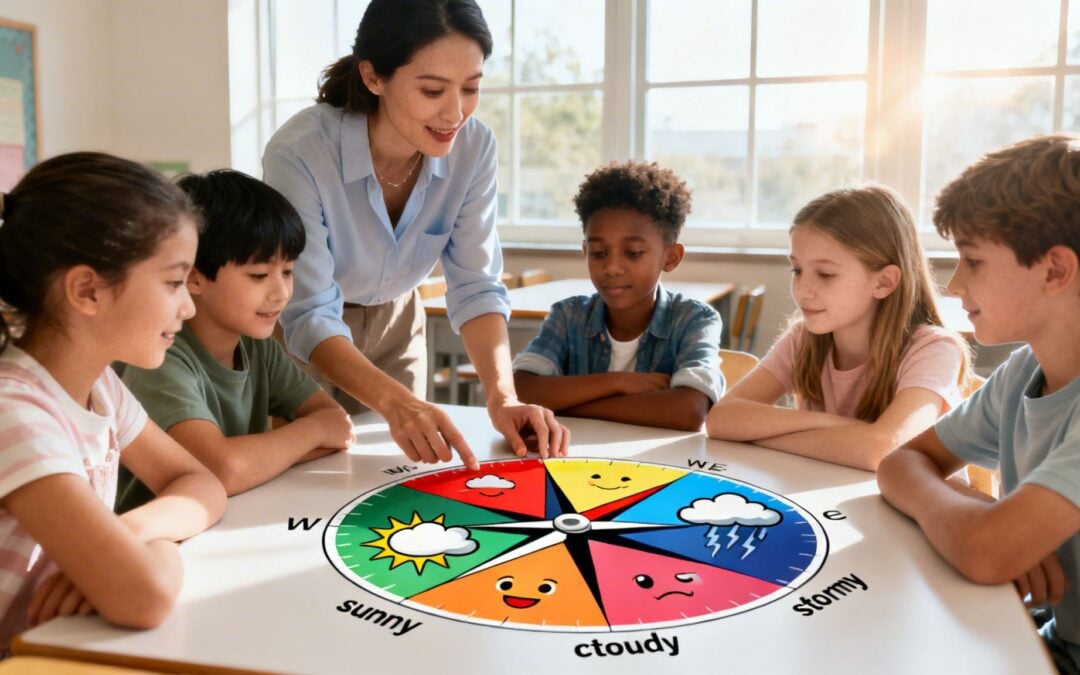
Hold a "Feelings" Weather Report: At the end of the day, ask everyone to describe their emotional state using a weather metaphor. A child might say, "I'm mostly sunny with a few clouds of frustration from math class, and maybe a little drizzle of sadness because my friend was away." This gives kids a creative, low-stakes way to practice talking about their emotions. For more tools to help children voice their feelings, you can learn about using I-Statements for kids.
These playful moments are incredibly powerful. They reinforce turn-taking, listening, and expressing ideas—all cornerstones of strong communication. Implementing structured communication skills training at home through play gives children practical tools for better interactions.
Bridge the Generational Communication Gap
In a world of texts and DMs, practicing face-to-face conversation is more important than ever. One recent survey found that a quarter of organizations struggle most with communicating with Gen-Z, whose preferred method is often messaging apps. This highlights a potential gap that parents can help bridge.
Modeling and practicing conversational skills at home ensures children develop the flexibility to communicate effectively across different mediums and generations.
By turning everyday moments into opportunities for connection, you empower your child to build stronger relationships, solve problems creatively, and navigate the world with confidence and empathy. Home is the first and most important classroom for these life-changing skills.
Common Myths About Interpersonal Communication
Before we can help our kids become great communicators, we have to clear up a few common misconceptions. These myths can get in the way of teaching this skill effectively, both in the classroom and at home. Let's bust a few of these ideas so we can better empower our young learners.
Myth 1: Good Communicators Are Born, Not Made
It’s easy to fall into the trap of thinking some kids are just “natural” communicators while others aren't. This mindset suggests that an outgoing child is destined to succeed socially, while a shy child will always struggle.
The truth is, interpersonal communication is a skill, not a fixed personality trait. Just like learning to read or ride a bike, it can be taught, practiced, and improved with gentle guidance. Every single child has the capacity to grow into a more confident and effective communicator.
Practical Example: A quiet student consistently uses one-word answers. A teacher can practice with them by asking them to describe one object in the room using three words. This small, structured task builds their confidence and skill in verbal expression without the pressure of a full conversation.
Myth 2: Talking More Means Better Communication
We often assume the most talkative person in the room is the best communicator. But quantity is not the same as quality. A child who dominates a conversation, constantly interrupts, or talks at others instead of with them isn't communicating well—they're just broadcasting.
Real communication is a two-way street. Listening is just as important as talking. A student who quietly listens to a friend's problem and asks thoughtful questions to show they care is a far stronger communicator than one who only talks about their own day.
Parent and Teacher Takeaway: Make a point to praise active listening when you see it. When a child waits for their sibling to finish a story before jumping in, acknowledge their effort. "I noticed you listened so carefully to your sister's whole story before you spoke. That was really kind, and it showed you care about what she has to say."
Myth 3: Avoiding Conflict Is Always the Goal
Many of us were taught that arguing is bad and that the best approach is to simply avoid conflict. While we certainly want to prevent pointless squabbles, teaching kids to sidestep every disagreement leaves them unprepared for life.
Conflict is inevitable. The real goal is to teach healthy conflict resolution, one of the most valuable life skills a child can learn. This process teaches them how to express their own needs respectfully, listen to another’s perspective, and collaborate on a solution. Guiding kids through small disagreements is actually a huge gift.
Practical Example: Two students both want to be the line leader. Instead of just picking one, a teacher can facilitate a conversation. "It sounds like you both really want to be the leader. How can we solve this so you both feel it's fair?" The students might decide to take turns, or one could be the leader today and the other tomorrow. They learn to negotiate a solution instead of one winning and one losing.
Frequently Asked Questions About Interpersonal Communication
As educators and parents, we're constantly in the middle of real-time communication challenges with our kids. When you're in the thick of it, theory goes out the window. Here are answers to some of the most common questions we hear, with practical advice that puts these skills into action.
How Do I Encourage a Shy Child to Participate Without Making Them Anxious?
For a quiet or shy child, the classroom spotlight can feel overwhelming. The goal isn’t to force them into the center of attention, but to create a gentle on-ramp for participation, building their confidence one small, safe step at a time. It's about inviting, not demanding.
Offer Non-Verbal Roles: Let them be a helper. Ask them to hold the talking stick, point to the next speaker, or distribute materials during a group activity. This gives them a vital role in the group without the pressure of speaking.
Use Turn-and-Talk Partners: Sharing with the entire class is a huge hurdle. A "turn-and-talk" shrinks the audience down to one. Pairing a shy student with a supportive, kind peer in this low-stakes setting is a great first step toward sharing in a larger group.
Give a Heads-Up: Anxiety often comes from the element of surprise. Quietly let the child know you'll be asking them a specific, easy question soon. For example, "In a few minutes, I'm going to ask you what your favorite part of the story was. Think about it for a minute." This gives them time to prepare an answer and feel ready.
What Is the Difference Between Interpersonal and Intrapersonal Skills?
This is a fantastic question, and the answer is simpler than it sounds. Just think of "inter" as meaning "between" and "intra" as meaning "within."
Interpersonal skills are all about the space between people. It’s the external stuff—how we talk, listen, read body language, and work together. It’s communication in action with others. Example: Asking a friend, "Do you want to play?"
Intrapersonal skills are what happen within ourselves. This is our self-talk, our ability to notice and manage our own feelings, and our understanding of our own values. It's the foundation of self-awareness. Example: A child thinking to themself, "I feel lonely. I think I'll ask someone to play."
The two are deeply connected. A child first needs the intrapersonal skill to recognize, "I am feeling frustrated," before they can use the interpersonal skill to say, "I feel frustrated when…"
What Are the First Steps to Mediate a Conflict Between Two Students?
When you step in to help with a conflict, your most important job is to be a facilitator, not a judge. The goal is to guide students toward finding their own solution, not to impose one. A simple three-step process can cool things down and open the door to resolution.
Separate and Regulate: First, get them into separate spaces. This gives them both physical and emotional breathing room. Guide each child to take a few deep, calming breaths. You can't solve a problem when emotions are running high and the "fight-or-flight" response has taken over. Say This: "Let's both take a quiet minute to calm our bodies down before we talk."
Listen to Each Side (Separately): Give each student your full, uninterrupted attention as they tell their side of the story. Use active listening to show you're hearing them. Reflect their feelings back: "So you felt angry because you thought she took your marker on purpose?" This step is critical for them to feel heard and validated.
Bring Them Together to Find a Solution: Once everyone is calm, bring them back together. Coach them to use "I-statements" to explain their feelings. Then, shift the focus to the future by asking, "What is one thing we can do to solve this problem right now?" Help them brainstorm ideas like apologizing, taking turns, or creating a new rule for next time.
This process doesn't just end the argument; it teaches children a powerful life lesson: that disagreement is survivable and that they have the power to repair their relationships.
At Soul Shoppe, we believe that teaching these essential skills creates a safer, more connected school community where every child can flourish. We provide schools with the tools, programs, and support needed to build a culture of empathy and respect from the ground up. Learn more about our SEL programs.
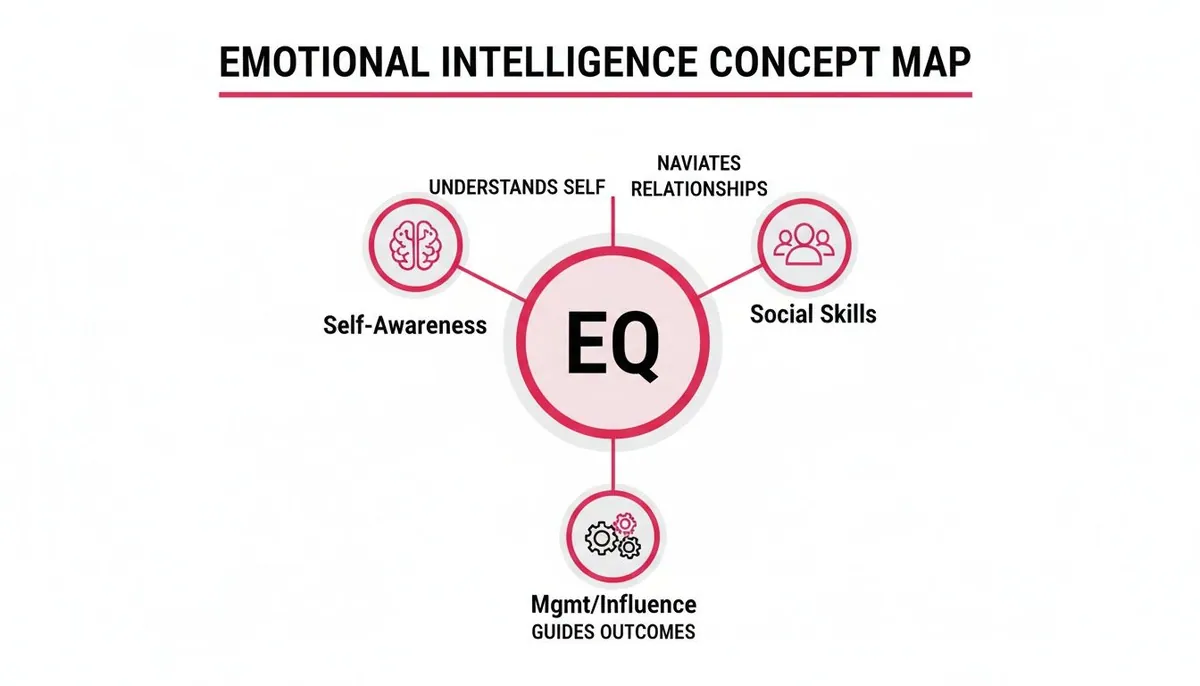
We hear the term “emotional intelligence” all the time, but what does it really mean for our kids? At its heart, emotional intelligence, or EQ, is the ability to recognize and manage your own emotions, while also understanding and navigating the feelings of others.
Think of it as an internal compass helping a child make sense of their complex social and academic worlds. It’s the set of skills that fosters resilience, empathy, and the strong relationships every child needs to thrive.
Decoding Emotional Intelligence in Your School and Home
We often praise kids for being book-smart—what’s known as their Intelligence Quotient, or IQ. But EQ is about a different kind of smarts. It’s the kind that helps a child make a new friend on the playground, bounce back from a disappointing grade, or work cooperatively on a group project.
To clarify how these two concepts fit together, here’s a quick comparison:
Emotional Intelligence (EQ) vs. Intelligence Quotient (IQ)
Aspect
Emotional Intelligence (EQ)
Intelligence Quotient (IQ)
What It Measures
The ability to understand, manage, and express emotions in healthy ways.
Cognitive abilities like logic, reasoning, and problem-solving.
Key Skills
Empathy, self-awareness, social skills, self-regulation, motivation.
Memory, analytical skills, mathematical ability, language comprehension.
Is It Fixed?
No. EQ is a flexible set of skills that can be taught and developed over time.
Generally considered more stable throughout a person's life.
Primary Role
Governs social interactions, resilience, and personal well-being.
Predicts academic performance and the ability to process complex information.
The best news for parents and educators is that unlike IQ, which is relatively fixed, EQ is a collection of practical skills. They can be taught, practiced, and strengthened over time. This means we can all play an active role in helping our kids build these essential emotional capacities.
The Origins and Importance of EQ
The idea of EQ first emerged in 1990 from researchers Peter Salovey and John Mayer, and was later made famous by psychologist Daniel Goleman. Their work was a game-changer, shifting our focus from pure academics to a more holistic view of what it takes to succeed in life. For schools and families, this has paved the way for creating safer, more supportive environments where kids feel seen and understood.
It’s also crucial to recognize the unique challenges faced by some students, including the link between neurodivergence and emotional dysregulation. A deeper understanding of these realities helps us build more inclusive and effective support for every single learner.
Emotional intelligence isn't about shutting feelings down; it’s about understanding them well enough to make wise choices. It’s the skill that allows a student to say, "I'm feeling frustrated with this math problem, so I'll take a few deep breaths before trying again," instead of just giving up.
Why EQ Matters More Than Ever
In schools, where organizations like Soul Shoppe bring experiential programs to K-8 students, EQ gives kids the tools they need for self-regulation, mindfulness, and resolving conflicts peacefully. This work directly fosters safer, more connected communities where bullying goes down and collaboration goes up.
The payoff extends far beyond the classroom walls. For instance, 71% of employers now say they value emotional intelligence over IQ. Research also shows that for every one-point increase in a person's EQ score, their annual salary goes up by an average of $1,300.
By teaching these skills early, we aren't just helping kids with today’s homework or friendships—we are preparing them for a more successful and fulfilling future. You can dive deeper into these statistics and their impact. Read the full research about EQ's professional benefits.
The Five Core Skills of Emotional Intelligence
Emotional intelligence isn't one big, abstract idea. It's more like a toolkit filled with five core skills that help children—and adults—navigate their world with more kindness and awareness. These skills, which are part of the well-known CASEL framework, don't exist in a vacuum. They build on one another, creating a sturdy foundation for a child's entire social and emotional life.
Think of them as building blocks. When kids develop these abilities, they’re better equipped to handle everything from classroom challenges to playground friendships.
As you can see, it all starts with what’s happening inside us. Understanding ourselves is the first step toward managing our actions and connecting meaningfully with others.
1. Self-Awareness: The Internal Weather Report
Self-awareness is the ability to check in with yourself and know what’s going on inside. It’s about recognizing your own emotions, thoughts, and values—and seeing how they shape what you do. For a child, it’s like having an "internal weather report." Are they feeling bright and sunny, or is a storm of frustration starting to brew?
This is the bedrock skill. Without it, managing big feelings or understanding a friend's perspective is nearly impossible. This also includes understanding the fight, flight, freeze, or fawn response—our body's automatic reaction to stress—which is a huge part of knowing ourselves.
Practical Example for Parents/Teachers: Before a spelling test, a second-grader named Alex notices his stomach feels tight and his hands are balled into fists. He tells his teacher, "I feel nervous." That's self-awareness in action. He connected his physical feelings to an emotion.
2. Self-Management: Steering Your Ship
Once a child can read their internal weather, self-management is about learning to steer their ship through it. This skill is all about handling emotions in healthy ways, controlling impulses, and working toward goals. It's where a student takes the information from their self-awareness and does something constructive with it.
This doesn't mean bottling up feelings. It means navigating the emotional storm without letting it capsize the ship. A child with strong self-management can stay focused under pressure and bounce back when things don't go their way.
Self-management is the crucial pause between feeling an emotion and reacting to it. It’s the difference between a student yelling out in frustration and one who takes a deep breath before asking for help.
Practical Example for Parents/Teachers: After recognizing his nervousness, Alex uses a strategy from class. He takes three slow, deep "belly breaths" to calm himself down before the spelling test starts. That’s a clear win for self-management.
3. Social Awareness: Reading the Room
Social awareness is the skill of looking outward. It’s the ability to understand other people's feelings and perspectives, especially those from different backgrounds. It’s about being able to "read the room" by noticing body language, tone of voice, and other social cues that tell us how someone else might be feeling.
A socially aware child can sense when a friend is feeling down, even if they say, "I'm fine." They notice the unspoken rules of a group and can navigate social situations with kindness and respect.
Practical Example for Parents/Teachers: At recess, fourth-grader Maria sees a new student, Leo, standing by himself with his head down. Maria notices his slumped shoulders and sad look, guesses he might be feeling lonely, and walks over to ask if he wants to play.
4. Relationship Skills: Building Bridges
Relationship skills are where all the other EQ tools come together to build and maintain healthy friendships. This means communicating clearly, listening well, working with others, resolving conflicts peacefully, and knowing when to ask for or offer help. It’s the art of building bridges, not walls.
Practical Example for Parents/Teachers: Two fifth-graders are arguing over who gets to use the new set of markers. Instead of yelling, they use "I-statements" they've practiced. One says, "I feel frustrated when I don't get a turn." This opens the door for a real conversation so they can work out a fair solution, like setting a timer.
5. Responsible Decision-Making: Choosing the Right Path
This final skill is about putting it all into practice. Responsible decision-making is the ability to make choices that are caring, constructive, and safe for everyone involved. It requires thinking about the consequences of an action before you take it.
When a child uses this skill, they're weighing their options. They consider ethics, safety, and how their choice will affect themselves and others. They're learning to choose the path that is both helpful and thoughtful.
Practical Example for Parents/Teachers: A group of middle schoolers finds a wallet on the playground. One friend suggests they should keep the cash. But another, using empathy (social awareness), points out how worried the owner must be. After talking it over, they decide together to do the right thing and turn it in to the office.
Navigating the Decline in Student Emotional Wellness
While the five core skills of emotional intelligence give us a clear road map, the journey for our kids has gotten a lot harder. Today’s students are growing up in a world where their emotional well-being is under constant strain, which makes these skills more critical than ever. Understanding what is emotional intelligence now means recognizing it as a crucial lifeline for children.
Many educators and parents have felt a shift in children's behavior and moods since 2020. Students seem more stressed, are quicker to disengage, and find it harder to connect with their friends. This isn't just a feeling; it's a real pattern that shows how much our world has changed.
The Rise of the Emotional Recession
The ripple effects of the pandemic and the huge increase in digital life have created new hurdles for K-8 students. Some have started calling this period an "Emotional Recession"—a time where our shared ability to manage feelings and connect with one another has taken a hit. Kids are especially vulnerable, soaking up the stress and uncertainty around them during their most important developmental years.
This isn't just an observation. Startling global data shows that emotional intelligence scores dropped by 5.79% worldwide between 2019 and 2024. This study, which looked at thousands of adults, points to a weakening of the very relational skills that shape the environments where our children learn and grow. You can discover more insights about these EQ findings and what they might mean for all of us.
For K-8 students, this "recession" often shows up as:
Increased Anxiety: More worry about school, grades, and fitting in.
Lower Frustration Tolerance: Giving up faster when things get tough.
Social Disconnection: Struggling to make and keep friends, which can lead to loneliness.
An Opportunity for Resilience
This emotional decline isn't a dead end—it's a clear call to action. It proves that social-emotional learning is no longer a "nice-to-have" extra. It's an essential tool for helping kids succeed, both in school and in life. Schools are in a unique position to turn these trends around by actively teaching the skills that build resilience from the ground up.
This challenge presents a powerful opportunity. By teaching practical tools for empathy and connection, schools can directly counteract the effects of isolation and stress, equipping students not just to cope, but to thrive.
This is exactly what programs like those from Soul Shoppe are designed to do. With over 20 years of experience, we use research-based methods to give students a shared language and hands-on tools to rebuild what’s been eroding. When an entire school community learns how to handle conflict and practice empathy, it creates a foundation of true psychological safety.
Ultimately, by focusing on emotional intelligence, we’re preparing students for a future where these skills are more valuable than ever. We’re giving them the internal compass they need to navigate a complex world with confidence, connection, and strength.
Practical Ways to Teach Emotional Intelligence at School
Knowing what emotional intelligence is is one thing. Actually bringing it to life in a busy classroom? That’s where the magic happens. When schools actively teach EQ, they’re doing more than just checking a box on the curriculum. They're creating an environment where kids feel safer, more connected, and truly ready to learn.
The trick is to use practical, age-appropriate strategies that feel like a natural part of the school day, not just another lesson. These methods give students a shared language and consistent tools to navigate their own feelings and their friendships.
Strategies for Early Learners (Grades K-2)
For our youngest students, emotional intelligence starts with the absolute basics: putting a name to a feeling and learning a simple way to handle it. The goal here is to build their first emotional vocabulary and introduce self-regulation in a way they can see and feel.
Feelings Wheel Check-ins: Kick off the morning by having students point to a face on a "Feelings Wheel" that matches how they feel. A teacher might say, "I see you pointed to 'sad,' Liam. Thank you for sharing that with us." This simple act shows that all emotions are okay and helps build self-awareness.
Puppet Role-Playing: Grab a couple of puppets and act out common social hiccups, like wanting the same toy or feeling left out. This lets kids explore different points of view (social awareness) and practice solutions in a fun, low-pressure way.
Breathing Buddies: To make self-management tangible, have students lie down and place a small stuffed animal—their "breathing buddy"—on their stomachs. They can watch their buddy gently rise and fall as they breathe, giving them a visual anchor for calming breaths.
These simple routines make abstract ideas like "empathy" feel real and doable for little learners.
Building Skills in Upper Elementary (Grades 3-5)
As kids hit the upper elementary years, they're ready for more complex social situations and a bit more self-reflection. Now, the focus can shift toward using their EQ skills to actually solve problems, especially when conflicts pop up with their friends.
A critical step for this age group is moving from simply naming a feeling to understanding its cause and choosing a productive response. This is where students learn to connect their internal experience with their external actions.
Practicing "I-Statements": When a disagreement happens, guide students to use the "I-statement" formula: "I feel ______ when you ______ because ______." Instead of yelling, "You're so annoying!" a child learns to say, "I feel frustrated when you talk while I'm trying to read because I can't concentrate." This is a huge step for relationship skills, teaching clear, non-blaming communication.
Problem-Solving Scenarios: Give the class a common problem to chew on, like two friends who both want to play different games at recess. Brainstorm a list of possible solutions as a group and talk through the pros and cons of each one. This is responsible decision-making in action.
Giving students these practical communication tools is like handing them a script for navigating tricky social moments with respect. For even more great ideas, check out our guide on emotional intelligence activities for kids.
Fostering EQ in Middle School (Grades 6-8)
Middle schoolers are in the thick of it—navigating a super complex social world while their own emotions are intensifying. The strategies for this group need to respect their growing independence and connect directly to the real-world drama they face every day, focusing on things like perspective-taking and making ethical choices.
This is where a school-wide approach really shines, creating a consistent culture of respect that can genuinely reduce bullying and cliques.
Key School-Wide Initiatives
Initiative
Description & Practical Example
Establish a Cool-Down Corner
Create a designated quiet space in classrooms with tools like stress balls, journals, or mindfulness cards. A student who feels overwhelmed can use the space for a few minutes to regulate their emotions (self-management) before rejoining the class, ready to learn.
Create a Shared Emotional Language
Adopt a consistent set of "feeling words" that are used in every classroom, from science to P.E. When everyone from the principal to the students uses the same vocabulary, it reinforces emotional literacy and makes it easier for kids to express themselves clearly.
Implement Peer Mediation
Train older students to be neutral helpers who can guide younger students through resolving conflicts. This not only builds leadership and social skills in the mediators but also empowers all students to solve their own problems peacefully.
These strategies don't just tell students what emotional intelligence is; they create a campus where EQ is lived out every single day. By embedding these tools into the school culture, we build a foundation of psychological safety that allows every child to thrive, both in their friendships and their report cards.
How to Nurture Emotional Intelligence at Home
The skills kids learn in the classroom really come to life when they’re practiced and supported at home. As a parent or caregiver, you’re your child’s first and most important teacher, especially when it comes to emotions.
When you create a bridge between the emotional language used at school and the conversations you have at home, you build an incredible support system for your child’s growth.
It all starts with modeling. Children are always watching, and they absorb far more from what you do than from what you say. When you handle your own big feelings with honesty and a sense of calm, you’re handing them a real-life blueprint for navigating their own.
Use Feeling Words Every Day
One of the simplest and most effective ways to build EQ is to help your child build their emotional vocabulary. This means going beyond the basics like "sad," "mad," and "happy." The goal is to get more specific to help them name the subtle shades of what they’re feeling inside.
Practical Example: Instead of "Don't be sad," try saying, "It sounds like you’re feeling disappointed that we can't go to the park."
Practical Example: Instead of "You're fine," you could say, "I can see you're feeling frustrated with that puzzle. It does look tricky."
Practical Example: Instead of "Calm down," try, "You seem really overwhelmed right now. Let's take a break together."
Using these "feeling words" helps your child connect a name to their inner world. That’s the first real step toward self-awareness and learning how to manage those feelings. For more ideas, you might like our guide on teaching emotional vocabulary to kids using games and charts.
Create a Calm-Down Space at Home
Just like schools have a "Cool-Down Corner," you can set up a similar space in your home. This isn't a timeout spot for punishment. It’s a safe, comforting place your child can choose to go when they feel overwhelmed and need to regulate.
A calm-down space teaches a vital lesson: it's okay to have big feelings, and it's smart to have a plan for what to do with them. It gives your child a sense of control and a healthy coping strategy.
This space can be simple. Think a cozy corner with a beanbag, a few favorite books, a soft blanket, or a glitter jar to watch. The goal is to create a positive feeling around self-regulation, showing your child that taking space to calm their body and mind is a sign of strength.
Open the Door to Deeper Conversations
Knowing how to talk about feelings is a skill that takes practice. Sometimes, kids just need a gentle invitation to share what’s on their minds. Using open-ended questions can help you explore friendship challenges, celebrate wins, and work through disappointments together.
Here are a few practical examples of questions to try:
Friendship Challenges: "What was one kind thing a friend did for you today? Was there a time when someone was unkind?"
Celebrating Success: "Tell me about something you did today that made you feel proud."
Handling Disappointment: "What was the hardest part of your day? What did you do to handle it?"
By actively listening during these talks—putting your phone down and giving them your full attention—you show your child that their feelings matter. This consistent support at home is the foundation for all other EQ skills, helping you raise a resilient, emotionally intelligent child.
The Lifelong Benefits of Emotionally Intelligent Schools