Soul Shoppe's work is made possible by donors and partners who care deeply about the young people in their communities! We can't do this work without you. Support our work in classrooms and on playgrounds across the nation by donating here.
In an increasingly interconnected world, the ability to understand and empathize with others is not just a soft skill; it is a fundamental competency for academic and life success. Social awareness, a core component of Social-Emotional Learning (SEL), empowers students to recognize diverse perspectives, show empathy, and understand social norms. For educators and parents, fostering this skill is crucial for creating inclusive, safe, and collaborative learning environments where every child feels they belong.
This article moves beyond theory to provide a concrete collection of 10 effective, practical social awareness activities for students from kindergarten through middle school. Cultivating this awareness also builds other essential life competencies, including critical diplomacy skills for students that foster understanding and collaboration in group settings.
You will find a curated list designed for direct classroom or home implementation. We break down each activity into:
Actionable, step-by-step instructions.
Clear learning objectives and time estimates.
Practical tips for differentiation and assessment.
Remote-friendly variations to support all learning models.
These strategies, aligned with frameworks from organizations like CASEL, are designed to build a culture of connection. The goal is to turn classrooms into communities of emotionally intelligent, resilient, and compassionate individuals. Let's explore the activities that will help your students develop this essential superpower.
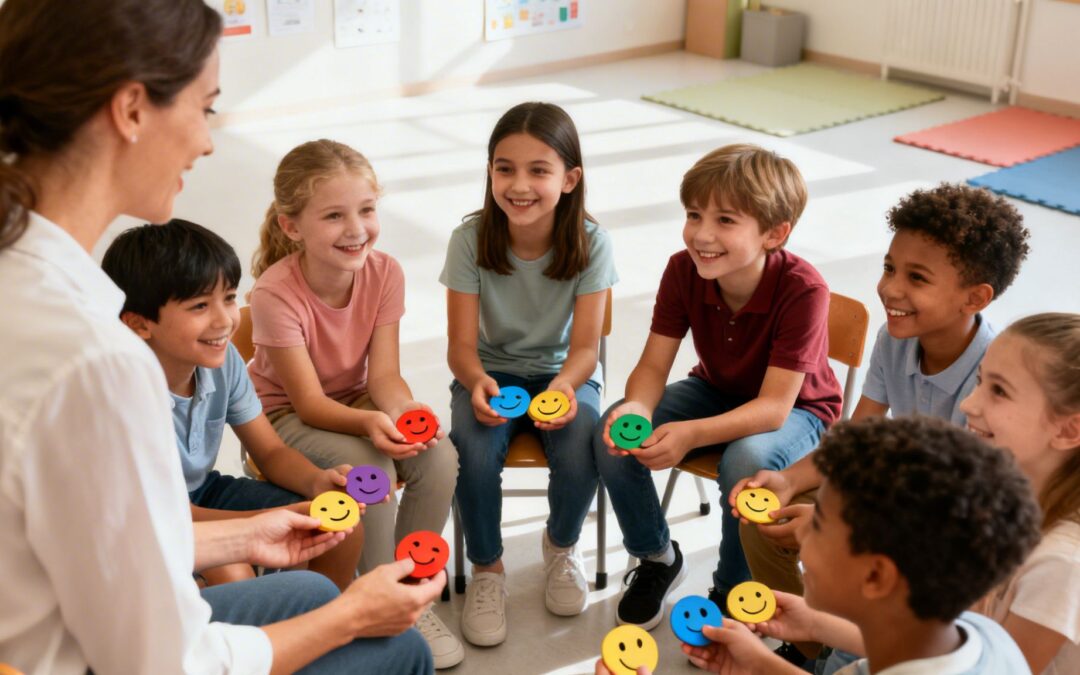
1. Empathy-Building Circle Discussions
Empathy-Building Circle Discussions are structured conversations where students sit in a circle to share experiences and listen to one another without judgment. This trauma-informed practice, rooted in restorative justice principles, creates a safe, equitable space where every student has an opportunity to speak and be heard. The format itself promotes connection and is a powerful tool for developing social awareness in students by exposing them to diverse viewpoints and personal stories from their peers.
These discussions are more than just informal chats; they follow a specific structure to build community and resolve conflict. Organizations like Soul Shoppe have refined this into an experiential method for emotional literacy, while districts like Oakland Unified have used restorative circles to improve school climate.
How to Implement Circle Discussions
Establish Clear Agreements: Begin by co-creating guidelines with students. These often include rules like "Listen with respect," "Speak from the heart," "One person speaks at a time" (often using a talking piece), and "What's said in the circle stays in the circle." This step is critical for building trust.
Practical Example: A teacher might say, "Let's agree on our circle rules. One rule is 'Listen with your eyes, ears, and heart.' What does that look like?" Students might add, "Don't interrupt," or "Look at the person who is talking."
Use a Talking Piece: Pass an object around the circle. Only the person holding the object may speak. This slows the conversation and encourages thoughtful responses rather than immediate reactions.
Practical Example: Use a special stone, a small stuffed animal, or a colorful ball as the talking piece. The teacher can introduce it by saying, "This is our talking piece. It helps us remember to listen when it's not our turn to speak."
Start with a Prompt: Pose a focused question to the group.
For K-2: "Share a time someone was kind to you."
For 3-5: "Talk about a time you felt left out. What did that feel like?"
For 6-8: "Describe a time you saw something unfair happen. What made it feel unfair?"
Practice Active Listening: Before tackling deep topics, run a mini-lesson on active listening. Ask students to practice restating what the person before them said before adding their own thoughts.
Practical Example: For younger students, the teacher can model this: "I heard Maria say she felt happy when her friend shared a crayon. That reminds me of a time…" For older students, you can make it a rule: "Before you share, start by saying, 'What I heard [student's name] say was…'"
Circles are effective because they flatten classroom hierarchies. The physical act of sitting at the same level, with no desks as barriers, communicates that every person's voice and experience are equally important.
This practice is one of the most direct and effective social awareness activities for students, fostering genuine human connection and reducing feelings of isolation. To see how schools are using this method for everything from community building to conflict resolution, you can learn more about restorative circles in schools.
2. Empathy-Building Circle Discussions
Empathy-Building Circle Discussions are structured conversations where students sit in a circle to share experiences and listen to one another without judgment. This trauma-informed practice, rooted in restorative justice principles, creates a safe, equitable space where every student has an opportunity to speak and be heard. The format itself promotes connection and is a powerful tool for developing social awareness in students by exposing them to diverse viewpoints and personal stories from their peers.
These discussions are more than just informal chats; they follow a specific structure to build community and resolve conflict. Organizations like Soul Shoppe have refined this into an experiential method for emotional literacy, while districts like Oakland Unified have used restorative circles to improve school climate.
How to Implement Circle Discussions
Establish Clear Agreements: Begin by co-creating guidelines with students. These often include rules like "Listen with respect," "Speak from the heart," "One person speaks at a time" (often using a talking piece), and "What's said in the circle stays in the circle." This step is critical for building trust.
Practical Example: A teacher might say, "Let's agree on our circle rules. One rule is 'Listen with your eyes, ears, and heart.' What does that look like?" Students might add, "Don't interrupt," or "Look at the person who is talking."
Use a Talking Piece: Pass an object around the circle. Only the person holding the object may speak. This slows the conversation and encourages thoughtful responses rather than immediate reactions.
Practical Example: Use a special stone, a small stuffed animal, or a colorful ball as the talking piece. The teacher can introduce it by saying, "This is our talking piece. It helps us remember to listen when it's not our turn to speak."
Start with a Prompt: Pose a focused question to the group.
For K-2: "Share a time someone was kind to you."
For 3-5: "Talk about a time you felt left out. What did that feel like?"
For 6-8: "Describe a time you saw something unfair happen. What made it feel unfair?"
Practice Active Listening: Before tackling deep topics, run a mini-lesson on active listening. Ask students to practice restating what the person before them said before adding their own thoughts.
Practical Example: For younger students, the teacher can model this: "I heard Maria say she felt happy when her friend shared a crayon. That reminds me of a time…" For older students, you can make it a rule: "Before you share, start by saying, 'What I heard [student's name] say was…'"
Circles are effective because they flatten classroom hierarchies. The physical act of sitting at the same level, with no desks as barriers, communicates that every person's voice and experience are equally important.
This practice is one of the most direct and effective social awareness activities for students, fostering genuine human connection and reducing feelings of isolation. To see how schools are using this method for everything from community building to conflict resolution, you can learn more about restorative circles in schools.
3. Community Service and Volunteer Projects
Community Service and Volunteer Projects offer students structured opportunities to contribute to meaningful causes, directly connecting them to the world beyond their classroom walls. These hands-on experiences, from working at food banks to participating in environmental cleanups, help students develop social responsibility, empathy, and a sense of self-efficacy. By engaging in service, students see firsthand how their actions can create positive change, building their understanding of interconnectedness and civic duty.
These projects move social awareness from a theoretical concept to a lived experience. Initiatives like the National Service-Learning Partnership and platforms such as Ashoka's Changemakers champion this model, integrating service with academic learning and reflection. Through community service, students can explore practical ways the community can help homeless families, understanding immediate needs and contributing to solutions.
How to Implement Service Projects
Connect to Curriculum: Align service projects with classroom learning.
Practical Example: After a science unit on ecosystems, a third-grade class could organize a "Campus Cleanup Day" to pick up litter and sort recyclables. Or, after learning about local government, a middle school class could write letters to city council about the need for a new crosswalk near the school.
Offer Choice and Voice: Provide multiple volunteer options that cater to different interests and skills. Allow students to have a say in choosing or designing the project to foster a greater sense of ownership and motivation.
Practical Example: A teacher could propose three project ideas: 1) a canned food drive, 2) making blankets for an animal shelter, or 3) writing thank-you cards to community helpers. The class then votes on which project they are most passionate about pursuing.
Start with a Guiding Question: Frame the project around an inquiry-based question to deepen its impact.
For K-2: "How can we make our school playground a friendlier place for everyone?"
For 3-5: "What does our local food bank need, and how can our class help fill that need?"
For 6-8: "How do environmental issues affect our community, and what is one step we can take to address them?"
Incorporate Reflection: Schedule time for students to discuss their experiences after the service activity. Use journal prompts or circle discussions to guide them in thinking about what they did, why it mattered, and how it made them feel.
Practical Example: Use prompts like, "What part of the project made you feel proud?" or "What was one challenge we faced, and how did we solve it together?" for a post-project class discussion.
Service learning is powerful because it answers the "Why do I need to learn this?" question with a tangible, real-world purpose. When students see their efforts make a difference, their engagement with both academics and their community grows.
This approach is one of the most effective social awareness activities for students because it builds character, reinforces academic concepts, and demonstrates the direct impact of empathy in action. To get started, consider partnering with established local nonprofits to ensure a well-structured and meaningful experience.
4. Anti-Bullying and Bystander Intervention Training
Anti-Bullying and Bystander Intervention Training provides students with the explicit skills to recognize bullying behavior and act as upstanders rather than passive bystanders. This approach reframes bullying prevention as a community responsibility, empowering students with concrete, safe strategies to intervene. It directly builds social awareness by teaching students to identify social injustice in real-time and understand their role in shaping a positive school climate.
These programs move beyond simple "don't be a bully" messages by focusing on the 85% of students who witness bullying. Evidence-based curricula like the Olweus Bullying Prevention Program and Steps to Respect, along with community partnerships like the Junior Giants Strike Out Bullying, provide structured lessons to build these crucial skills.
How to Implement Bystander Intervention Training
Define Roles Clearly: Teach students the difference between a bully, a target, a bystander (someone who sees it and does nothing), and an upstander (someone who sees it and does something to help). Use simple graphics and stories to illustrate these roles.
Practical Example: Use four corners of the classroom, each labeled with a role. Read a short scenario and have students walk to the corner that represents each character's role in the story. Discuss their choices.
Role-Play Scenarios: Practice is essential for building confidence. Guide students through role-playing common situations. Give them specific, safe phrases to use.
For K-2: Scenario: A student grabs a toy from another. Upstander response: "Let's play together." (Inviting the targeted student away). "That's not a kind thing to say."
For 3-5: Scenario: A student is teased on the playground. Upstander response: "Hey, stop that." (Direct intervention). "Let's go tell a teacher." (Getting help).
For 6-8: Scenario: A mean comment is posted in a group chat. Upstander response: "I'm not going to be part of this group chat if you're making fun of people." "Are you okay? What I saw/read wasn't right." (Supporting the target afterward).
Teach the "Four Ds" of Intervention: Give students a memorable framework for action: Direct (speak up), Distract (create a diversion), Delegate (get an adult), and Delay (check in with the person afterward).
Practical Example: For Distract, role-play a scenario where one student is being left out. Another student can walk up and say, "Hey, want to come help me with this puzzle?" or "Did you see that funny bird outside?" to change the subject and de-escalate the situation.
Connect to School-Wide Norms: Regularly celebrate instances of upstander behavior in class meetings or school announcements. This reinforces that standing up for others is a valued part of the school's culture.
Practical Example: Create an "Upstander Shout-Out" board where students or teachers can write a brief note recognizing a student who helped someone else. Read them aloud each Friday.
Bystander intervention training shifts the focus from punishment to prevention. It equips the silent majority with the tools to actively create a culture of respect and safety, making it one of the most effective social awareness activities for students.
By empowering peers to support one another, these programs build a foundation of collective responsibility and empathy. To discover more about selecting the right approach, you can explore different bullying prevention programs for schools.
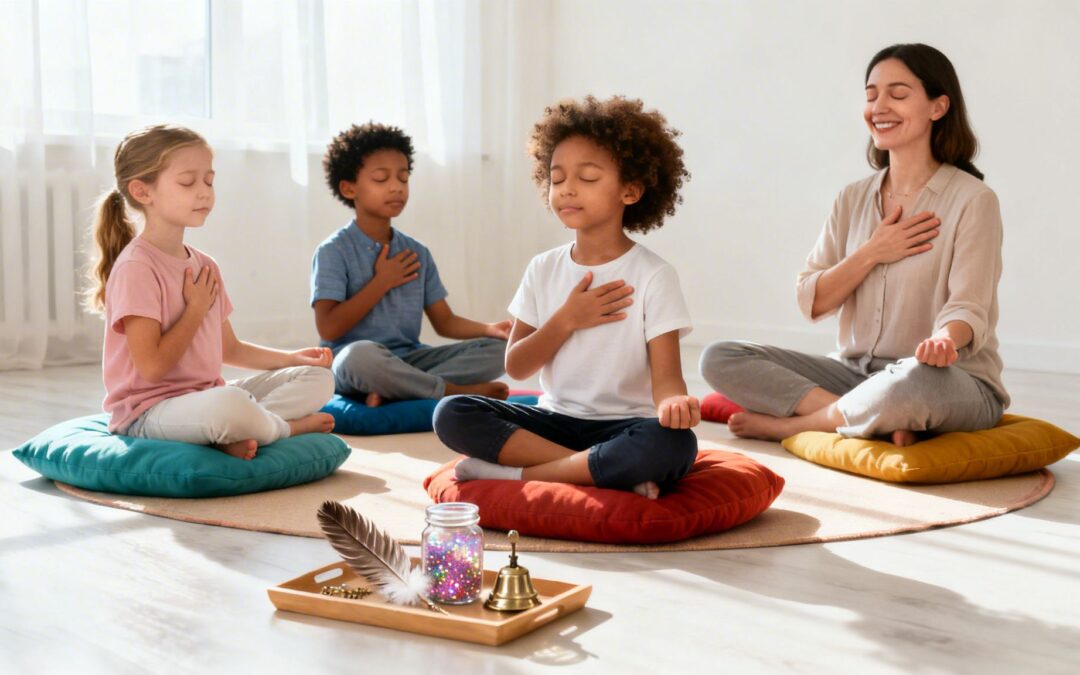
5. Student-Led Mindfulness and Self-Regulation Clubs
Student-Led Mindfulness and Self-Regulation Clubs are peer-organized groups where students teach and practice techniques like focused breathing and emotional regulation. This approach is powerful because it shifts the ownership of social-emotional learning directly to the students. When peers lead these practices, it normalizes conversations around mental health, reduces stigma, and boosts engagement in a way adult-led instruction sometimes cannot.
This model fosters social awareness by creating a safe, student-driven space for emotional exploration and practice. As student facilitators guide their peers, they develop leadership, empathy, and a deeper understanding of group dynamics. Organizations like Soul Shoppe have championed similar peer-led programs, and the Calm Schools initiative provides resources that can be adapted for student leadership.
How to Implement a Student-Led Mindfulness Club
Provide Facilitator Training: Before launching, equip student leaders with the necessary skills. Train them in basic mindfulness principles, group facilitation techniques, and how to create a safe and inclusive environment.
Practical Example: The school counselor can run a 4-session training for student leaders, teaching them three different breathing exercises and one guided meditation script. They can practice leading each other before the club starts.
Start Small and Be Consistent: Begin with short, manageable sessions. A 10-minute club meeting during lunch or before school is more sustainable than an hour-long commitment. Consistency is key to building a routine and seeing benefits.
Practical Example: A "Mindful Monday" club could meet for 10 minutes at the start of lunch recess. Student leaders can ring a chime, lead a 3-minute breathing exercise, and end with a positive affirmation for the week.
Use Simple, Guided Prompts: Student leaders can start with basic exercises.
For K-2: "Let's practice 'balloon breathing.' We'll breathe in to fill our bellies like a balloon and breathe out slowly to let the air out."
For 3-5: "Today, we'll do a 'mindful minute.' Let's close our eyes and just listen. What is the farthest sound you can hear? What is the closest?"
For 6-8: "Let's try a 'body scan.' Starting with your toes, notice how each part of your body feels without trying to change anything."
Offer Multiple Access Points: To ensure all students can join, consider offering the club at various times, such as during different lunch periods, before school, or as part of an after-school program. This makes participation more equitable.
Practical Example: Have the club meet on Tuesdays for 6th-grade lunch and on Thursdays for 7th-grade lunch. This allows more students to access the club without overcrowding the space.
When students teach self-regulation, they are not just sharing a skill; they are modeling vulnerability and courage. This peer-to-peer demonstration makes mindfulness feel authentic and accessible, not like another top-down requirement.
Placing students at the center of their own emotional learning makes these clubs one of the most effective social awareness activities for students, building a culture of well-being from the ground up.
6. Diversity and Inclusion Awareness Campaigns
Diversity and Inclusion Awareness Campaigns are student-led initiatives designed to celebrate differences, promote a sense of belonging, and directly address harmful stereotypes and biases within the school community. These campaigns move beyond passive learning, empowering students to use posters, assemblies, social media, and peer-led discussions to raise awareness about diverse cultures, identities, and perspectives. This approach is a powerful way to build social awareness by challenging assumptions and making space for authentic representation.
These campaigns give students ownership over the school's culture. For example, a middle school diversity club might organize a "Cultural Heritage Week" where students share food, music, and stories from their backgrounds. In another school, students could create a poster campaign with messages like "Kindness is our language" or "All are welcome here." Such projects are central to the work of organizations like Learning for Justice, which provides resources for creating inclusive school environments.
How to Implement Awareness Campaigns
Form a Student Leadership Team: Invite students from a wide range of backgrounds to form a planning committee. Ensure their voices are central to every decision, from the campaign's theme to its execution. This authentic leadership is key.
Practical Example: A teacher sponsor can put out a call for volunteers for a new "Belonging Committee" and ensure the group includes students from different grades, social circles, and backgrounds.
Choose a Focus and a Goal: Decide on a specific, achievable goal. Is the campaign meant to celebrate a heritage month, address a specific type of bias seen in the school, or promote inclusive language?
Practical Example: The committee notices that new students often feel lonely. Their campaign goal becomes: "Help every new student make at least one friend in their first month." The campaign could be called "The Friendship Project."
Plan Actionable Steps: Brainstorm concrete activities.
For K-2: Create a "Friendship Quilt" where each square, decorated by a student, represents their unique family or identity.
For 3-5: Organize a "Living Library" where students or community volunteers act as "books" and share their personal stories about their culture or identity with small groups.
For 6-8: Develop a student-led assembly on microaggressions, using skits to show their impact and discuss respectful alternatives.
Connect to the Curriculum: Integrate the campaign's themes into regular lessons.
Practical Example: If a student campaign focuses on celebrating different family structures, a first-grade teacher can read books like And Tango Makes Three and The Family Book during story time. A middle school health class could discuss the different ways families provide support.
The real power of student-led campaigns is that they shift the focus from adults telling students to be inclusive to students creating a culture of inclusion themselves. They learn social awareness by actively practicing it.
By giving students the tools to advocate for a more equitable school, these campaigns become some of the most meaningful social awareness activities for students. They build empathy, critical thinking, and leadership skills that last a lifetime. For more ideas on fostering these conversations, programs from Facing History and Ourselves offer excellent frameworks.
7. Peer Mentoring and Buddy Systems
Peer Mentoring and Buddy Systems are structured programs that pair older or more experienced students with younger or new students to provide guidance and support. These relationships focus on everything from academic help to navigating social situations, creating a strong sense of belonging for the mentee. This approach serves as one of the most practical social awareness activities for students, as it builds leadership, responsibility, and empathy in mentors while reducing isolation for mentees.
These programs formalize the positive influence that peers can have on one another. Organizations like Big Brothers Big Sisters have demonstrated the power of mentoring for decades, and schools can adapt this model to foster a supportive community. Whether it's a high schooler guiding a middle schooler through their first year or a fifth grader acting as a "reading buddy" to a first grader, these systems create a powerful network of peer support.
How to Implement a Peer Mentoring Program
Define the Program's Goal: Be clear about the purpose. Is it to help new students acclimate, support academic skills, or ease the transition between grade levels? A clear goal helps with mentor matching and activity planning.
Practical Example: The goal for a "Reading Buddies" program is "to increase reading confidence and fluency in first-graders." The goal for a "Middle School Transition" program is "to reduce anxiety and answer questions for incoming 6th graders."
Train Your Mentors: Mentoring is a skill. Provide mentors with training on active listening, giving constructive feedback, and maintaining confidentiality. You can even incorporate communication skills training from programs like Soul Shoppe.
Practical Example: During training, have mentors role-play scenarios like "What do you do if your buddy is sad?" or "How can you give a compliment about their reading even if they make mistakes?"
Establish a Structure: Create a consistent schedule and designated space for meetings. Provide structured agendas or conversation starters to guide their time together.
For K-2 (Buddy System): Pair a second grader with a kindergartener to be "playground pals" or "reading buddies" who meet every Friday for 20 minutes.
For 3-5 (Academic Buddies): Match fifth graders with third graders for 20 minutes twice a week to practice math facts or edit writing assignments.
For 6-8 (Transition Mentors): Pair eighth graders with sixth graders to meet monthly. The eighth grader can answer questions about middle school, share organization tips, and serve as a friendly face in the hallway.
Provide Adult Oversight: An adult facilitator should be available to check in with both mentors and mentees, offer guidance, and help troubleshoot any challenges that arise. Regular reflection sessions for mentors are crucial for their growth.
Practical Example: The adult coordinator can give mentors a short reflection sheet to fill out after each meeting with prompts like, "One thing that went well today was…" and "One thing I need help with is…"
A well-structured buddy system does more than just help the younger student. It gives older students a profound sense of purpose and responsibility, reinforcing the idea that their actions can positively impact someone else's life.
By creating these deliberate connections, schools empower students to support one another, building a culture of empathy and mutual respect. For more resources on setting up a program, the National Mentoring Resource Center offers valuable guides and research.
8. Social-Emotional Learning (SEL) Integration in Classroom Curriculum
Social-Emotional Learning (SEL) Integration is an approach where core emotional competencies are woven directly into the fabric of daily school life, rather than being taught as a separate, isolated subject. It infuses academic instruction, classroom routines, and school-wide culture with practices that build self-awareness, social awareness, and responsible decision-making. This method treats emotional intelligence as a critical component of academic success and overall student well-being.
Instead of a once-a-week lesson, SEL becomes part of the school's DNA. Prominent frameworks from organizations like CASEL (Collaborative for Academic, Social, and Emotional Learning) provide a foundation, while programs like Second Step and Responsive Classroom offer practical applications. Soul Shoppe has been a leader in this area for over two decades, using research-based, experiential methods to embed SEL into school culture, significantly improving school climate and belonging.
How to Implement SEL Integration
Secure Teacher Buy-In and Training: Effective integration begins with professional development. When educators understand the 'why' behind SEL and feel equipped with the right tools, they become its biggest champions. Ongoing support, such as coaching from Soul Shoppe, helps teachers refine their practice.
Practical Example: A school could dedicate one professional development day to SEL, where teachers from the same grade level work together to map out where SEL concepts can fit into their existing lesson plans for the next month.
Establish a Common Language: Create a shared vocabulary for emotions and social skills across all grade levels. When words like "empathy," "perspective-taking," and "self-regulation" are used consistently in every classroom, students develop a deeper and more fluent understanding of these concepts.
Practical Example: The school could choose a "Word of the Month," such as "respect." In every classroom, teachers would explicitly define the word, discuss examples, and recognize students who demonstrate it.
Embed SEL into Daily Routines: Look for natural points of integration.
Morning Meetings: Start the day with a check-in question like, "What is one goal you have for yourself today?" or "How can you show kindness to someone this morning?"
Academic Subjects: During a literature lesson, ask, "How do you think the character felt in this situation? Why?" In history, discuss the different perspectives of groups involved in a historical event.
Practical Example (Math): When students are working on a challenging word problem in pairs, the teacher can say, "I see you're getting frustrated. Let's take three deep breaths together before we try a new strategy. It's okay to feel stuck; we can work through it."
Model and Reinforce: Teachers and staff must consistently model the desired social and emotional behaviors. Acknowledge and praise students when they demonstrate empathy, cooperation, or responsible decision-making to reinforce these skills.
Practical Example: A teacher might say, "John, I noticed you invited the new student to join your group. That was a very empathetic and inclusive choice. Thank you for making our classroom a welcoming place."
Integrating SEL is not about adding more to a teacher's plate; it's about changing the plate itself. When SEL is part of how we teach math, how we manage transitions, and how we speak to one another, it becomes a powerful lever for both academic and personal growth.
This systemic approach makes social awareness a lived experience, not just a lesson. For more ideas on weaving these skills into your day, you can discover other social-emotional learning activities.
9. Student-Led Assembly and Performance Events
Student-Led Assembly and Performance Events are large-scale school gatherings where students take the lead in planning, organizing, and delivering performances centered on social-emotional themes. Topics often include kindness, empathy, belonging, and anti-bullying messages. This approach shifts the focus from adult-led lectures to authentic student voices, making the social awareness lessons more resonant and impactful for the entire student body.
These events transform traditional assemblies into powerful platforms for community building and peer-to-peer education. By taking ownership, students develop leadership and organizational skills while reinforcing key SEL concepts. Programs like Soul Shoppe's Peaceful Warriors Summit have shown how student-led events can normalize conversations about mental health and create a positive school climate.
How to Implement Student-Led Assemblies
Form a Planning Committee: Create a diverse student committee early in the school year. This group will brainstorm themes, organize logistics, and recruit participants, ensuring the event reflects genuine student interests and concerns.
Practical Example: The committee can conduct a simple survey (e.g., via Google Forms) asking students, "What is one topic you'd like to see an assembly about?" This ensures the theme is relevant.
Offer Diverse Participation Roles: Not every student wants to be on stage. Provide multiple ways to contribute, such as scriptwriting, creating scenery, managing sound and lighting, designing promotional posters, or serving as ushers. This makes the project inclusive.
Practical Example: A student who loves art but not public speaking can be in charge of creating a large banner with the assembly's theme to hang in the auditorium. A tech-savvy student can run the slideshow presentation.
Choose a Central Theme: Select a relevant and focused topic for the assembly.
For K-2: A "Kindness Campaign" assembly where students perform short skits about helping a friend or sharing.
For 3-5: An "Anti-Bullying Awareness" event featuring student-written poems and songs about standing up for others.
For 6-8: A "Belonging" summit with student speeches or short films about celebrating diversity and reducing social isolation.
Connect to Classroom Learning: Use the assembly as a catalyst for deeper conversations. Follow up with classroom activities or discussions that explore the themes presented, reinforcing the messages and making them part of the school's culture.
Practical Example: After an assembly on digital citizenship, advisory classes can spend 15 minutes discussing their own rules for positive online communication in their class group chat.
When students are the ones delivering the message, their peers listen differently. It’s not just an adult talking about a rule; it’s a friend sharing an experience. This peer-to-peer connection is the key to making social awareness stick.
This method is one of the most visible and community-oriented social awareness activities for students, celebrating student leadership and making SEL principles a shared school-wide value. Learn more about character education programs to see how student involvement drives success.
10. Student Mental Health Advocacy and Wellness Committees
Student Mental Health Advocacy and Wellness Committees are student-led groups that actively promote a culture of well-being and advocate for mental health resources within the school. These committees empower students to identify needs, design solutions, and lead initiatives that address psychological safety and reduce stigma. By taking ownership of their school's environment, students develop a profound sense of social awareness, learning to recognize systemic issues and advocate for the collective good.
This approach gives students a genuine voice in shaping their school climate. Organizations like the National Alliance on Mental Illness (NAMI) support youth-led mental health movements, recognizing that student input is critical for creating effective support systems. When students lead wellness fairs or peer support networks, they aren't just participating; they are building a responsive and caring community from the inside out.
How to Implement a Student Wellness Committee
Establish a Clear Structure: Create a formal charter with defined roles (e.g., chairperson, secretary, outreach coordinator) and responsibilities. Work with students to outline the committee's mission, goals, and decision-making processes. This provides a framework for productive action.
Practical Example: The committee could create a mission statement together, such as: "The Wellness Committee's mission is to make sure every student at Northwood Middle School feels supported and knows where to go for help."
Provide Foundational Training: Equip student leaders with knowledge. Partner with the school counselor or a community mental health organization to offer workshops on topics like active listening, recognizing signs of distress, leadership skills, and confidentiality.
Practical Example: A training session could focus on the difference between being a supportive friend (listening, showing empathy) and trying to be a therapist (giving advice, trying to solve the problem). This helps set safe boundaries.
Start with Achievable Initiatives: Guide the committee to identify and execute tangible projects.
For 3-5: Organize a "Kindness Week" where students create posters promoting positive self-talk and empathy.
For 6-8: Develop a "Stress-Less" campaign before exams, creating and sharing resources like breathing exercise guides, study break tips, and links to calming music playlists.
Practical Example: The committee could create "Calm Down Kits" for classrooms, which are small boxes containing items like stress balls, fidget toys, and cards with breathing exercises.
Create Multiple Participation Levels: Not every student wants a leadership role. Offer various ways to contribute, such as volunteering at a wellness fair, designing a social media post, or simply providing feedback through a survey. This makes involvement accessible to all.
Practical Example: Before planning an event, the committee could set up a "suggestion box" in the library where any student can anonymously submit ideas for improving school wellness.
Empowering students to lead mental health initiatives shifts the dynamic from adults solving student problems to a collaborative partnership. It shows students that their observations are valid and their voices can create meaningful change.
This model is one of the most impactful social awareness activities for students because it moves beyond individual feelings into community-level action. It teaches them to identify needs, organize, and advocate for others, building skills they will use throughout their lives. To learn more about youth advocacy, you can explore NAMI's resources for students and young adults.
Comparison of 10 Student Social Awareness Activities
Initiative
Implementation complexity
Resource requirements
Expected outcomes
Ideal use cases
Key advantages
Peer Mediation and Conflict Resolution Programs
Moderate — structured training and protocols
Trainer time, student training, designated space, coordination with discipline systems
Empowers students, surfaces real needs, can drive systemic change with support
Putting Social Awareness into Practice: Your Next Steps
The journey to cultivate a socially aware school community is built one intentional step at a time. The ten detailed social awareness activities for students outlined in this article are not just isolated exercises; they are foundational blocks for creating an environment where empathy, respect, and understanding are the norm. From the collaborative problem-solving of Peer Mediation to the quiet introspection of Student-Led Mindfulness Clubs, each strategy provides a unique pathway to help students look beyond themselves and connect with the world around them.
The power of these activities lies in their consistent and authentic application. Simply completing a single community service project or holding one anti-bullying assembly will not create lasting change. True social awareness is fostered when these concepts are woven into the very fabric of the school day, becoming a part of the shared language and culture of the entire community.
Key Takeaways for Immediate Action
To move from inspiration to implementation, consider these core principles drawn from the activities we've explored:
Student Agency is Paramount: Activities like Student-Led Wellness Committees and peer mentoring programs succeed because they empower students to take ownership. When young people lead, they are more invested in the outcomes, and their peers are more receptive to the message.
Empathy is a Teachable Skill: Empathy Circles and conflict resolution training provide structured, safe spaces for students to practice perspective-taking. These are not abstract concepts but practical skills that can be developed with guidance, repetition, and real-world application.
Integration Beats Isolation: The most impactful approach is embedding social-emotional learning directly into your core curriculum. Instead of treating SEL as a separate subject, find opportunities to discuss character motivations in literature, ethical considerations in science, and diverse perspectives in history.
Your First Steps: Making Social Awareness a Reality
Feeling overwhelmed by the options is natural. The key is to start small and build momentum. Choose one or two initiatives that align with your school's current needs and resources.
For a classroom teacher: You might begin with weekly Empathy-Building Circle Discussions. This requires minimal materials and can be adapted to fit a 20-minute slot in your schedule. A simple starting point could be a prompt like, "Share a time someone helped you when you were feeling down. How did it make you feel?"
For a school administrator: Consider launching a Peer Buddy System. This structured program can have an immediate, positive impact on school climate, especially for new students or those who feel isolated. Pairing older students with younger ones for reading sessions or recess activities creates a visible culture of support and kindness.
A Practical Insight: The goal is not perfection but progress. An imperfectly run student-led assembly that gets students talking about inclusion is more valuable than a perfectly planned initiative that never gets off the ground. Celebrate the effort and the small victories along the way.
Ultimately, these social awareness activities for students do more than just improve classroom dynamics or reduce bullying incidents. They equip young people with the essential life skills needed to become compassionate leaders, responsible citizens, and resilient individuals. By investing in social awareness, you are giving students the tools to build healthier relationships, navigate complex social situations, and contribute positively to their communities for years to come. The work you do today to plant these seeds of empathy and understanding will create a kinder, more connected world tomorrow.
Ready to bring a comprehensive, research-based social-emotional learning program to your entire school? Soul Shoppe provides the tools, training, and support to build a positive school climate from the ground up. Explore their programs and resources to see how they can help you implement powerful social awareness activities for students. Soul Shoppe
In a world filled with constant stimuli, young students often face significant challenges with focus, stress, and emotional regulation. The ability to manage these pressures is a critical life skill, and mindfulness offers a direct, powerful pathway to developing it. This guide moves beyond theory to provide a practical toolkit of mindfulness activities for elementary students, specifically designed for easy implementation in both classrooms and at home. The goal is to make abstract concepts like self-awareness and presence concrete and engaging for children.
Inside, you will find a curated collection of exercises that are both fun and foundational. We present a variety of options, from simple breathing techniques and body scan meditations to mindful movement and gratitude practices. Each activity is broken down with clear, step-by-step instructions, making them accessible even for educators and parents new to mindfulness.
To ensure these practices are effective and age-appropriate, every item includes:
Specific grade-level adaptations for students from kindergarten through fifth grade.
Alignment with core Social-Emotional Learning (SEL) competencies.
Practical tips for teachers and caregivers to lead the activities successfully.
This article is more than just a list; it is a resource for building a supportive environment where children can learn to understand their inner world, manage big emotions, and cultivate a sense of calm and focus. These are not just momentary fixes but essential skills that will support their well-being for years to come.
1. Breathing Exercises and Breathwork
Structured breathing exercises, often called breathwork, are a fundamental component of any effective mindfulness program for elementary students. These techniques teach children how to consciously use their breath to influence their nervous system, providing a powerful and accessible tool for managing stress, emotions, and focus. By concentrating on the simple, repetitive rhythm of inhaling and exhaling, students can anchor themselves in the present moment, quieting anxious thoughts and calming their bodies.
This practice is foundational because the breath is always available. Unlike other tools that require specific materials or settings, a student can use a breathing technique anywhere-at their desk before a test, on the playground during a conflict, or at home when feeling overwhelmed.
Common Breathing Techniques for Kids
Belly Breathing: Students place a hand on their stomach and imagine a small balloon inside. As they breathe in through their nose, they feel their belly expand like the balloon filling with air. As they breathe out slowly through their mouth, they feel the “balloon” deflate. This encourages deep, diaphragmatic breathing which is naturally calming. Practical Example: A teacher might say, “Let’s get our ‘Belly Buddies’ out!” Students lie down, place a small stuffed animal on their belly, and watch it rise and fall as they breathe.
Five Finger Breathing: Students hold one hand up with their fingers spread. Using the index finger of their other hand, they slowly trace up their thumb while inhaling, and trace down the other side while exhaling. They continue this for all five fingers, providing a multisensory experience that combines touch, sight, and breath. Practical Example: Before a spelling test, a teacher can say, “Let’s do our ‘High Five Breath’ to calm our butterflies.” The class does the exercise together for a minute.
Box Breathing: Ideal for older elementary students, this technique involves a four-part count. Students inhale for a count of four, hold their breath for four, exhale for four, and hold again for four. Visualizing drawing a square can help them remember the pattern. Practical Example: After a noisy recess, a teacher can guide the class: “Let’s draw our boxes with our breath. Inhale 2, 3, 4… Hold 2, 3, 4…” to help them settle.
Implementation Tip: Model these exercises yourself during class. When you take a moment to do Five Finger Breathing before starting a new lesson, you normalize the practice and show students that everyone can benefit from a mindful pause.
Putting Breathwork into Practice
Integrating breathing exercises into daily routines makes them second nature. A kindergarten teacher might start the day with “Belly Buddies,” where students lie down and place a small stuffed animal on their belly to watch it rise and fall with their breath. A fifth-grade teacher could use Box Breathing as a two-minute transition tool after a lively group activity to help the class reset and focus for independent work.
These simple yet effective practices are some of the most important self-regulation strategies for students to learn. By giving children a concrete way to manage their internal state, you empower them to handle challenges with greater resilience and awareness. The consistency of the practice is key; breathing exercises done during calm moments build the neural pathways needed to access the skill during times of high stress.
2. Body Scan Meditation
Body scan meditation is a guided practice where students bring gentle, moment-to-moment attention to different parts of their body. By systematically moving their focus from their toes to the top of their head, children learn to notice physical sensations like warmth, tingling, tightness, or comfort without judgment. This activity builds a crucial mind-body connection, helping students recognize how emotions like stress or excitement manifest physically.
This practice is an excellent addition to mindfulness activities for elementary students because it teaches interoception, the sense of the internal state of the body. Developing this skill allows children to identify and address feelings before they become overwhelming. A student who learns to notice the knot in their stomach before a test can then use a calming strategy, like breathwork, to self-soothe.
Common Body Scan Approaches for Kids
Weather Report: Students imagine different weather patterns in each body part. They might notice “sunny warmth” in their hands, a “tight storm cloud” in their shoulders, or “gentle rain” in their feet. This metaphor makes abstract sensations more concrete and less intimidating. Practical Example: A counselor could ask a child, “What’s the weather like in your tummy right now? Is it stormy or calm?”
Flashlight Focus: The guide asks students to imagine they are holding a flashlight and can shine its beam of attention on one body part at a time. They “illuminate” their toes, then their ankles, then their knees, simply observing what they feel in the light. Practical Example: A parent could say at bedtime, “Let’s get our magic flashlights. Shine it on your feet. Are they warm or cool? Now let’s move the light up to your legs…”
Melting Scan: This version is great for relaxation. Students are guided to tense a specific body part (e.g., squeeze their fists) and then release it, noticing the feeling of the muscle “melting” like an ice cube. This actively releases physical tension. Practical Example: A teacher might say, “Squeeze all the muscles in your legs like a frozen icicle… hold it… and now let them melt into a warm puddle.”
Implementation Tip: Offer choices to ensure comfort and safety. Let students decide if they want their eyes open or closed, and whether they prefer to sit in a chair or lie on a yoga mat or carpet. For students who are anxious or have experienced trauma, normalizing the practice in a one-on-one setting first can be very helpful.
Putting Body Scans into Practice
Integrating body scans can effectively transition students between different energy levels. A physical education teacher might use a five-minute melting scan after a high-energy game to help the class calm their bodies before heading back to the classroom. A school counselor could guide a student through a quick three-minute “Flashlight Focus” scan to help them identify where they are feeling anger after a playground conflict.
Starting with shorter, three-to-five-minute scans helps build students’ capacity for sustained attention. Following the practice with a quiet moment for drawing or journaling about what they noticed can deepen their awareness. By learning to listen to their bodies, students gain one of the most important self-awareness strategies for emotional regulation, giving them the power to understand and respond to their internal cues with kindness and skill.
3. Mindful Movement and Yoga
Mindful movement and yoga are physical mindfulness practices that connect gentle movement, stretching, and body awareness. For elementary students, who often learn best through kinesthetic experiences, these activities are invaluable. They teach children to pay attention to their bodies’ signals, release physical tension stored from stress or long periods of sitting, and improve focus by coordinating breath with motion.
This approach is powerful because it makes mindfulness tangible. Instead of just thinking about being calm, students can feel calm in their muscles and grounded through their feet. Popularized by programs like Cosmic Kids Yoga and the Yoga Kids curriculum, these activities offer a structured yet playful way to explore the mind-body connection.
Common Movement Techniques for Kids
Animal Poses: Engaging for younger students, these poses use imagination. Children can become a “downward-facing dog,” a “cat” arching its back, or a “cobra” lifting its head. This storytelling approach makes yoga feel like play rather than exercise. Practical Example: A kindergarten teacher could lead a “yoga story” about a trip to the zoo, having students become the different animals they “see.”
Mountain and Tree Pose: These simple standing poses build balance and concentration. In Mountain Pose, students stand tall and strong, feeling their feet connected to the ground. In Tree Pose, they balance on one leg, which requires complete focus in the present moment. Practical Example: Before a group project, a teacher can say, “Let’s find our strong Mountain Pose to feel confident and steady before we begin.”
Stretching Sequences: A teacher can lead a simple sequence like reaching for the sky on an inhale and folding forward toward the toes on an exhale. These can be used as quick “brain breaks” to reset the classroom’s energy. Practical Example: In the middle of a long lesson, the teacher can announce a “Stretch Break,” guiding students to “Reach for the sun, then tickle your toes.”
Implementation Tip: Connect movements to emotions to build emotional literacy. Use strong, expansive poses like Warrior II to help students feel confident before a presentation, and gentle, folded poses like Child’s Pose to create a sense of safety and calm when they feel overwhelmed.
Putting Movement into Practice
Integrating mindful movement into the school day can take many forms. A first-grade teacher might start each morning with a five-minute “yoga adventure” from a video to get wiggles out and set a positive tone. In a PE class, yoga can serve as a cool-down activity after active games, helping students transition from a high-energy state to a calm one.
These practices are excellent mindfulness activities for elementary students because they address both physical and emotional needs simultaneously. By guiding children through intentional movement, you give them a physical vocabulary for their feelings. You can discover more about how these embodiment practices support kids in school and at home. The key is to emphasize feeling over perfection, creating a non-competitive space where every child can connect with their body.
4. Gratitude and Appreciation Practices
Structured gratitude practices teach elementary students to intentionally notice and express appreciation for the positive aspects of their lives. These activities shift a child’s focus from what is lacking to what is present, building resilience, improving mood, and fostering a deep sense of connection and empathy. By actively looking for things to be thankful for, students develop a more positive and strengths-based mindset.
This practice is powerful because it retrains the brain to scan for goodness. In a busy school day filled with academic pressures and social challenges, taking a moment for gratitude can reset a child’s perspective, reduce feelings of envy, and increase overall happiness. It is one of the core mindfulness activities for elementary students that directly builds social-emotional well-being.
Common Gratitude Techniques for Kids
Gratitude Circles: During morning meetings, students take turns sharing one specific thing they are grateful for. This could be a person, an experience, or a simple object. Practical Example: A student might say, “I’m grateful for my brother because he helped me with my homework last night,” or “I’m grateful for the sunny weather at recess today.”
Thank-You Letters or Notes: Students write or draw a note to someone they appreciate, like a classmate, teacher, or family member. This tangible act reinforces the feeling of gratitude and positively impacts the recipient, strengthening social bonds. Practical Example: A teacher can set up a “Thank-You Station” with paper and crayons where students can write a quick note to a cafeteria worker or custodian.
Gratitude Journals or Jars: Students regularly write down things they are thankful for on slips of paper to put in a class “Gratitude Jar” or in a personal journal. Prompts like, “Today I appreciated…” or “A kind thing someone did for me was…” can guide their reflections. Practical Example: At the end of each week, the teacher can read a few slips from the Gratitude Jar to celebrate the good things that happened.
Implementation Tip: Model authentic gratitude yourself. When you start a lesson by saying, “I’m so grateful for how quietly everyone transitioned back to their seats,” you show students what gratitude looks like in action and set a positive, appreciative tone for the classroom.
Putting Gratitude into Practice
Integrating gratitude into the daily or weekly routine is essential for it to become a habit. A first-grade teacher could create a “Gratitude Tree” on a bulletin board where students add paper leaves with things they appreciate written or drawn on them. A fourth-grade class might engage in “Appreciation Circles” on Fridays, where students can publicly acknowledge a classmate for an act of kindness. For those interested in a deeper dive, there are various gratitude activities for kids that can change their worldview.
Beyond simple appreciation, students can learn 3 Ways To Develop An Attitude Of Gratitude that can enrich their daily lives. By providing structured opportunities to notice the good around them, you give children a tool to cultivate joy and connection, which directly counteracts stress and negativity. The key is to ask follow-up questions like, “Why are you grateful for that?” to help students connect the feeling to a specific cause, deepening their reflective practice.
5. Mindful Listening and Communication Circles
Mindful listening and communication circles are structured group activities where students practice deep listening and authentic expression in a safe, facilitated setting. These circles teach children to move beyond simply waiting for their turn to speak and instead focus on hearing and understanding their peers’ perspectives. By creating a dedicated space for sharing, these practices build community, empathy, and the psychological safety needed for a healthy classroom culture.
This practice is powerful because it directly addresses the social-emotional component of mindfulness. While breathing calms the individual, listening circles cultivate mindful awareness within a group, teaching students how to be present with others. They provide a structured format for navigating social dynamics, resolving conflict, and building strong interpersonal skills.
Common Circle Formats and Prompts
Morning Meeting Check-ins: A daily or weekly circle where students share a quick response to a low-stakes prompt. Practical Example: The teacher passes a talking piece and asks, “On a scale of 1 to 5, how are you feeling today, and why?” or “What is one thing you are looking forward to today?”
Restorative Circles: Used to repair harm after a conflict. A facilitator guides the students involved through prompts like, “What happened?” “Who was affected?” and “What needs to be done to make things right?” Practical Example: After an argument on the playground, two students and a teacher sit in a circle. Each gets to speak without interruption about their side of the story and what they need to feel better.
Thematic Circles: Focused on a specific topic relevant to the class or school, such as kindness, belonging, or resilience. Practical Example: A teacher might hold a circle about friendship and ask, “Share a time you saw someone being a good friend,” to reinforce positive behaviors.
Implementation Tip: The ‘talking piece’ is a critical tool. This can be any object-a special stone, a small ball, or a class mascot. Only the person holding the object can speak. This simple rule slows down the conversation, prevents interruptions, and ensures every voice has a chance to be heard.
Putting Circles into Practice
Establishing clear agreements is the first step. Before the circle begins, the group agrees to rules like: listen with respect, speak from the heart, maintain confidentiality, and honor the right to pass. A teacher might model this by sharing something simple and authentic about their own day, showing students that vulnerability is welcome and safe.
For younger students in kindergarten or first grade, a circle might last just five minutes and focus on a simple feelings check-in (“How is your heart today?”). For older fifth-grade students, a circle could be a 20-minute discussion used to solve a class-wide problem or explore a character’s motivations in a novel. The key is building a routine so that the circle becomes a trusted space for connection. By engaging in this mindfulness activity for elementary students, you are teaching one of the most important life skills: the ability to truly hear another person. These circles can be supported with a targeted active listening activity to strengthen the core skills needed for success.
6. Mindful Eating and Sensory Awareness Activities
Mindful eating invites students to slow down and use all their senses to explore food, transforming a routine act into a powerful lesson in present-moment awareness. This guided practice, often introduced with a single raisin or cracker, teaches children to pay close attention to sight, smell, touch, and taste without judgment. By focusing completely on the sensory experience of eating, students learn to notice subtle details, appreciate their food, and listen to their body’s hunger and fullness cues.
This practice is powerful because it connects the abstract concept of mindfulness to a concrete, universal experience: eating. It provides a structured way to practice focus and observation that can be extended to other sensory activities, helping students build a healthier and more conscious relationship with food and their own sensory world.
Common Sensory Awareness Techniques for Kids
The Mindful Raisin: This classic exercise, popularized by Jon Kabat-Zinn, guides students to explore a single raisin. They look at its wrinkles, feel its texture, smell its scent, place it in their mouth without chewing, and finally, chew it slowly, noticing the burst of flavor. Practical Example: A teacher gives each student one raisin and guides them: “First, just look at it. What do you see? Now, touch it. How does it feel? Now, listen to it near your ear.”
Sensory Anchor Stations: Create different stations around the room, each focused on one sense. One might have a bin of cool sand (touch), another a jar with cinnamon sticks (smell), a third with a rain stick (sound), and a fourth with a textured rock (sight/touch). Students rotate and spend a minute quietly exploring each. Practical Example: During a “Mindful Minute,” students can choose a station to visit, like smelling a jar of lavender or feeling a smooth stone to help them feel calm.
Mindful Snacking: Instead of eating snacks on autopilot, guide students through the first few bites mindfully. Ask open-ended questions like, “What sounds does the cracker make when you bite it?” or “What does the apple slice feel like on your tongue?” Practical Example: During snack time, a teacher can say, “Let’s take our first bite together mindfully. Close your eyes and just notice the taste of your orange slice.”
Implementation Tip: Always check for food allergies and have safe alternatives available. Use open-ended questions like “What do you notice?” instead of leading ones like “Doesn’t it taste sweet?” This encourages non-judgmental observation.
Putting Sensory Awareness into Practice
Integrating sensory awareness into the school day anchors mindfulness in tangible experiences. A science teacher could use mindful tasting during a lesson on the five senses, asking students to describe an apple slice with scientific precision. A school counselor might use sensory stations with an anxious student, helping them find a texture or scent that grounds them when they feel overwhelmed. Transforming snack time into an opportunity for sensory exploration and conscious consumption can start with choosing the right foods. Discover tips for finding deliciously fun healthy snacks that can make these activities even more engaging.
These hands-on mindfulness activities for elementary students teach them to tune into their bodies and the world around them. By practicing with food or other sensory objects, they build the ability to pause and notice, a skill that supports both academic focus and emotional self-regulation. The debrief after the activity is crucial for helping students connect the experience of “noticing” to the broader concept of mindfulness.
7. Loving-Kindness and Compassion Meditation
Loving-kindness and compassion meditations guide students to intentionally direct feelings of goodwill, kindness, and warmth toward themselves and others. This practice systematically expands a child’s circle of empathy, starting with self-compassion and extending outward to loved ones, neutral people, and eventually even those with whom they have difficulty. It is a powerful method for building emotional resilience, reducing social anxiety, and cultivating prosocial behaviors that form the bedrock of an inclusive school community.
This practice is essential because it actively counters the brain’s natural negativity bias and teaches students how to generate positive emotions on purpose. By repeating phrases of kindness, children learn to nurture their inner world, which directly impacts how they interact with their peers and handle social challenges like conflict or exclusion.
Common Compassion Practices for Kids
Self-Compassion Phrases: Students place a hand over their heart and silently repeat simple, kind phrases to themselves. The practice always begins here, as children cannot extend kindness to others if they don’t first feel it for themselves. Practical Example: The teacher guides, “Put a hand on your heart and silently say to yourself: May I be happy. May I be safe. May I be kind to myself.”
Extending Kindness Outward: After focusing on themselves, students visualize a loved one (a parent, pet, or best friend) and send them the same kind wishes: “May you be happy. May you be safe.” They then progress to a neutral person (like a school bus driver), a difficult person, and finally, the entire class or world. Practical Example: The teacher might say, “Now, think of someone in your family. Let’s send them kind wishes. In your mind, say to them: May you be happy.”
Compassion Visualization: Students can imagine a warm, glowing light in their chest that represents kindness. As they breathe in, the light grows brighter. As they breathe out, they can imagine sending beams of that light to themselves and then to others, wrapping them in warmth and care. Practical Example: “Imagine a warm, sparkly light in your heart. Breathe in and make it brighter. Now breathe out and send that light to everyone in our classroom.”
Implementation Tip: Be sensitive and provide extra support for students who struggle with self-compassion, which is common. Frame it as a practice, like learning an instrument; it’s okay if it feels awkward at first. Your consistent, non-judgmental modeling is the most important element.
Putting Compassion into Practice
Integrating loving-kindness into the school day reinforces a culture of empathy. A school counselor might lead a small group of students struggling with anger through a compassion meditation to help them understand and soften their reactions. A second-grade teacher could use a three-minute loving-kindness practice focused on classmates after recess to help reset social dynamics before an afternoon lesson.
These practices are some of the most effective mindfulness activities for elementary students when it comes to preventing bullying. By teaching children to send kind thoughts even to “difficult” people, you give them a constructive tool for managing complicated peer relationships. This builds the foundation for restorative conversations and a truly caring classroom where every student feels seen and valued.
8. Mindful Nature Connection and Outdoor Activities
Engaging students with nature through mindfulness is a powerful way to foster calm, curiosity, and a sense of connection to the world around them. These practices guide children to use their senses to observe plants, animals, and natural elements with full attention. By focusing on the texture of a leaf, the sound of the wind, or the feeling of the earth beneath their feet, students anchor themselves in the present moment, which can reduce stress and improve focus.
This approach, popularized by authors like Richard Louv who coined the term “nature-deficit disorder,” is essential because it gets students outdoors and connects them to a source of wonder and well-being. It moves mindfulness from an abstract concept into a tangible, sensory experience. Research supports that time in nature builds resilience, boosts mood, and cultivates environmental stewardship.
Common Nature Connection Activities for Kids
Sit Spot Observation: Students find a quiet, personal spot outdoors where they can sit comfortably for a few minutes. They are encouraged to simply observe what they see, hear, and feel without judgment. Returning to the same spot regularly helps them notice subtle changes through the seasons. Practical Example: A teacher takes the class outside and says, “Find your own ‘sit spot’ under a tree or near a bush. For the next three minutes, just watch and listen. What do you notice?”
Sensory Scavenger Hunt: Instead of looking for specific items, students search for sensory experiences. Prompts could include “Find something smooth,” “Find something that makes a crunching sound,” or “Find something that smells like the earth.” This hones their observational skills and present-moment awareness. Practical Example: A parent on a walk with their child could say, “Let’s go on a sound hunt! What’s the quietest sound you can hear? What’s the loudest?”
Barefoot Grounding: On a safe, clear patch of grass or soft earth, students are invited to take off their shoes and socks and simply stand or walk slowly. The goal is to notice the sensation of their feet connecting with the ground, feeling the temperature and texture of the earth. Practical Example: A teacher can lead this on a school field, saying, “Feel the grass tickling your toes. Do you feel the cool earth? Let’s walk slowly and notice every step.”
Implementation Tip: Integrate these activities into existing routines. Use the first five minutes of recess for a “Sit Spot” check-in or turn a walk to another part of the school campus into a mindful sensory exploration. Normalizing being outside in mild “bad weather,” like a light drizzle, also teaches resilience.
Putting Nature Connection into Practice
Bringing mindful nature connection into the school day can be simple and effective. A first-grade teacher might lead a “tree-hugging” exercise where students gently place their hands or give a light hug to a tree, noticing its bark texture and sturdiness. A fourth-grade class could create nature journals to sketch or write about what they observe, connecting scientific observation with personal reflection.
These outdoor mindfulness activities for elementary students offer a refreshing alternative to classroom-based practices. By guiding children to connect with the natural world, you give them a lifelong tool for finding peace, sparking curiosity, and understanding their place within the broader ecosystem. The key is to start small and build comfort, using open-ended questions like “What do you notice?” to empower students to lead their own discovery.
Sit-spot routines, school gardens, outdoor lessons
Powerful mood benefits, low-cost, fosters awe and connection
From Activity to Habit: Embedding Mindfulness into Your School Community
The journey into mindfulness is not about adding more to a teacher’s already full plate. Instead, it’s about shifting the way we approach daily challenges and opportunities for connection. The collection of mindfulness activities for elementary students detailed in this article, from simple breathing exercises to mindful nature walks, are more than just classroom fillers. They are practical, accessible tools for building a foundation of emotional awareness, self-regulation, and empathy. When a student can use a “Breathing Buddy” to calm their pre-test jitters or a “Body Scan” to release frustration after a playground disagreement, they are actively practicing lifelong skills.
The true impact of these practices is realized when they move from being isolated events to becoming integrated habits. A mindful moment is good, but a mindful culture is what creates lasting change. This shift begins with small, consistent steps. Rather than attempting to introduce all eight activities at once, start by identifying one or two that feel most authentic and needed for your specific group of students. A boisterous third-grade class might benefit most from starting with Mindful Movement and Yoga to channel their energy, while a quiet, anxious kindergarten group may find immediate comfort in Gratitude Circles.
Making Mindfulness Stick: From Practice to School Culture
Building a sustainable mindfulness program hinges on consistency, modeling, and a shared community language. The goal is to make these practices as routine and predictable as taking attendance or lining up for recess.
Consistency Over Duration: A daily two-minute “Starfish Breath” exercise before a math lesson is more effective than an occasional 20-minute meditation. Consistency builds neural pathways and makes self-regulation an automatic response, not an afterthought. For instance, a teacher could establish a “Mindful Minute” as the official start to the afternoon, signaling a reset for everyone.
Authentic Modeling: Children learn best by watching the adults around them. When teachers and parents share their own simple mindfulness practices, it normalizes the experience. A teacher might say, “My thoughts are feeling a little jumbled, so I’m going to take three deep breaths before we start our reading group.” This modeling shows students that mindfulness is a tool for everyone, not just a response to misbehavior.
Create a Shared Language: When everyone in the school community uses the same terms, the concepts become embedded in the culture. Terms like “anchor breath,” “kind hands,” or “listening with our whole body” create a common ground. This shared vocabulary allows a student to move from the classroom to the lunchroom to the principal’s office and find a consistent, supportive framework for emotional expression and regulation.
Expanding the Impact Beyond the Classroom
The benefits of these mindfulness activities for elementary students extend far beyond individual self-control. They ripple outward, positively affecting peer relationships, classroom dynamics, and the overall school climate. A student who has practiced Loving-Kindness Meditation is more likely to offer a kind word to a struggling classmate. A class that regularly engages in Mindful Listening Circles learns to respect differing perspectives, reducing conflicts and fostering a sense of belonging.
A Practical Example: Imagine a conflict over a shared toy. Instead of an immediate timeout, a teacher can guide the students involved through a simple breathing exercise to calm their reactive brains. Afterward, they can use prompts from Mindful Communication to express their feelings: “I felt sad when the block was taken because I was building with it.” This approach doesn’t just solve the immediate problem; it teaches the students a process for resolving future conflicts constructively.
By committing to this work, educators and parents are not just teaching coping skills. You are empowering children with a fundamental understanding of their own minds and hearts. You are giving them the tools to manage stress, build healthy relationships, and approach life’s challenges with resilience and compassion. This is the ultimate goal: to nurture a generation of children who can thrive not just in school, but in the complex world that awaits them.
Ready to bring a structured, school-wide mindfulness and social-emotional learning program to your campus? Soul Shoppe provides research-based, experiential programs that equip your entire community with a shared language and practical tools for self-regulation and conflict resolution. Visit Soul Shoppe to learn how their on-site and virtual programs can help you systematically embed these vital skills into the fabric of your school.
In a world of constant digital distraction, teaching children how to truly listen is more critical than ever. Active listening is not just about hearing words; it’s a foundational social-emotional skill that builds empathy, strengthens relationships, and creates psychologically safe classrooms and homes. For parents and teachers, fostering this ability is key to helping students navigate conflicts, build connections, and thrive. This is a skill that directly impacts a child’s ability to learn, collaborate, and show respect for others.
This article moves beyond generic advice, providing a curated collection of eight practical, research-backed active listening activity ideas. Each activity includes step-by-step instructions, grade-level adaptations, and real-world examples designed for immediate use in K–8 classrooms and family settings. We will cover a range of techniques, from simple paraphrasing and the use of silence to more structured protocols like Empathy Mapping and Active Listening Circles.
You will learn how to guide students in understanding another’s perspective, asking meaningful questions, and recognizing the importance of non-verbal cues. To truly understand the impact and application of active listening, exploring concrete examples can be incredibly insightful, such as these 8 Powerful Active Listening Examples. The exercises in this guide are simple yet powerful, helping you cultivate a culture of deep, meaningful understanding. Whether you’re a principal, teacher, counselor, or parent, these strategies offer actionable ways to make genuine listening a core part of your environment.
1. Reflective Listening (Paraphrasing)
Reflective listening is a foundational active listening activity where the listener rephrases the speaker’s message in their own words. This simple but powerful technique serves two key purposes: it confirms understanding and shows the speaker that their thoughts and feelings are being heard and valued. Instead of immediately judging or problem-solving, the listener acts as a mirror, reflecting the core message back to ensure clarity and connection.
This method, with roots in the work of psychologist Carl Rogers, builds a feedback loop that reduces miscommunication and validates the speaker’s experience. It is a cornerstone of Social and Emotional Learning (SEL) because it builds empathy, strengthens relationships, and gives students a concrete tool for conflict resolution.
How to Use Reflective Listening
Begin by listening intently not just to the words, but to the emotions and underlying needs being expressed. Once the speaker pauses, paraphrase what you heard using your own words.
Key Insight: The goal is not to repeat like a parrot but to capture the essence of the message. Using starter phrases like, “So, what I’m hearing is…” or “It sounds like you’re feeling…” can help frame your reflection naturally.
Classroom Example:
Student: “I hate group projects! Maya never does any work, and I have to do everything myself. It’s not fair.”
Teacher: “It sounds like you’re feeling really frustrated and overwhelmed because you believe the workload in your group isn’t being shared equally.”
Home Example:
Child: “I don’t want to go to soccer practice anymore. Everyone is better than me.”
Parent: “So, you’re feeling discouraged about soccer right now and worried that you can’t keep up with your teammates. Is that right?”
Tips for Effective Implementation
To make reflective listening a successful active listening activity, focus on these practical steps:
Focus on Emotion and Need: Listen for the feelings behind the facts. Reflecting the emotion (“you’re feeling disappointed”) is often more connecting than just repeating the situation.
Pause Before Responding: Take a breath (3-5 seconds) after the speaker finishes. This prevents reactive replies and shows you are thoughtfully considering their words.
Use Natural Language: Avoid sounding robotic. Your reflection should sound like you, not like you’re reading from a script.
Ask for Confirmation: End your reflection with a gentle question like, “Did I get that right?” or “Is that how you’re feeling?” This gives the speaker a chance to clarify their message and feel truly understood.
2. Silent Listening (The Pause Technique)
Silent listening is an active listening activity centered on maintaining quiet, focused attention without planning a response while someone speaks. This approach highlights the power of silence, giving speakers the space to fully express themselves without interruption. It recognizes that meaningful pauses allow for deeper thought and emotional processing, which is especially important for students who need more time to formulate ideas or navigate their feelings.
This technique, supported by research from educators like Mary Budd Rowe on “wait time,” shows that even a few seconds of silence can dramatically improve the depth and quality of communication. By resisting the urge to immediately fill the quiet, a listener demonstrates respect and patience. This practice is a key part of Social and Emotional Learning (SEL), as it builds a safe environment for vulnerability, encourages thoughtful reflection, and shows students that their voices are important enough to be given space.
How to Use Silent Listening
Start by dedicating your full attention to the speaker, focusing on their words, tone, and body language. When they pause or finish speaking, intentionally wait for a few seconds before you say anything. This quiet moment is the core of the activity, allowing the speaker’s message to land and giving them a chance to add more if they need to.
Key Insight: Silence isn’t empty; it’s an active space for thinking and feeling. By normalizing the pause, you teach students that reflection is just as important as speaking, reducing anxiety and encouraging more thoughtful participation.
Classroom Example:
Teacher: (After asking a complex question) “What are some reasons why the main character might have made that choice?” (The teacher then waits silently for 5-7 seconds, making eye contact with the class.)
Student: (After a long pause) “Well… at first I thought she was just being mean, but now I think maybe she was scared. She mentioned earlier that she didn’t want to be left alone.”
Home Example:
Child: “I got in an argument with Sam today at recess.” (The child stops, looking down.)
Parent: (Instead of immediately asking “What happened?” or “What did you do?”, the parent waits quietly, maintaining a caring expression.)
Child: (After a moment of silence) “…He said I couldn’t play with them anymore. It really hurt my feelings.”
Tips for Effective Implementation
To make silent listening a successful active listening activity, concentrate on these practical steps:
Resist the Urge to Interject: Train yourself to be comfortable with silence. The primary goal is to let the speaker complete their entire thought, which may include several natural pauses.
Use Open Body Language: While you are silent, show you are still engaged. Maintain gentle eye contact, nod occasionally, and keep your posture open and receptive.
Practice Intentional Wait Time: After you or a student asks a question, count to at least 3-5 seconds before allowing anyone to answer. This simple habit improves response quality.
Explain the Purpose of Silence: Let your students or children know why you’re using pauses. You can say, “I’m going to be quiet for a moment to give everyone some thinking time.” This frames silence as a useful tool, not an awkward void.
3. Empathetic Listening
Empathetic listening takes active listening a step further by focusing on understanding the emotional experience behind the speaker’s words. It is not just about hearing the message but about connecting with the feelings and perspective of the speaker. This powerful technique requires the listener to set aside their own viewpoint and try to see the world through the speaker’s eyes, validating their emotional state without judgment or immediate problem-solving.
This method, supported by the work of researchers like Daniel Goleman and Brené Brown, is a cornerstone of emotional intelligence. It transforms conversations from transactional exchanges into opportunities for deep human connection. As an active listening activity, it is crucial for building trust, de-escalating conflict, and creating an emotionally safe environment where individuals feel seen and understood.
How to Use Empathetic Listening
Start by tuning into the speaker’s non-verbal cues, such as tone of voice, facial expressions, and body language. When they pause, respond by acknowledging the emotion you perceive, showing that you are connecting with their feelings, not just their words.
Key Insight: The goal is to connect with the feeling, not necessarily to agree with the facts. Phrases like “That must have been so difficult,” or “I can see why you’d feel that way,” validate the emotion without taking a side.
Classroom Example:
Student: (Slams book on the desk) “This is stupid! I can’t do this math problem, and everyone else is already finished.”
Teacher: “I see you’re really frustrated right now. It can feel discouraging when it seems like others are moving ahead. Let’s look at this together.”
Home Example:
Child: “Nobody played with me at recess today. I just sat by myself the whole time.”
Parent: “Oh, that sounds incredibly lonely and sad. It must have been hard to sit by yourself while everyone else was playing.”
Tips for Effective Implementation
To make empathetic listening a successful practice in your classroom or home, focus on these key actions:
Name the Emotion: Observe the speaker’s expressions and tone, and gently name the feeling you see. “You sound really excited,” or “It looks like you’re feeling disappointed.”
Ask Feeling-Focused Questions: Use open-ended questions that invite emotional sharing, such as, “How did that make you feel?” or “What was that experience like for you?”
Use Validating Statements: Simple phrases like, “That makes sense,” or “It’s understandable that you feel hurt,” show you accept their feelings as valid.
Avoid “Fixing” It Immediately: Resist the urge to jump in with solutions or silver linings (“toxic positivity”). Sometimes, the most helpful response is to simply sit with someone in their difficult emotion, allowing them the space to feel it.
4. Clarifying Questions Technique
The clarifying questions technique is a powerful active listening activity that trains listeners to ask thoughtful, open-ended questions. Instead of making assumptions or jumping to solutions, this method encourages curiosity to deepen understanding. Asking questions like, “Can you tell me more about that?” demonstrates genuine interest while ensuring the listener fully comprehends the speaker’s experience before offering advice or judgment.
This approach, informed by the work of Edgar Schein’s Humble Inquiry and frameworks from the Crucial Learning Institute, shifts conversations from reactive to reflective. It prevents listeners from filling in gaps with their own biases and empowers the speaker to explore their thoughts more deeply. As an SEL tool, it fosters perspective-taking, critical thinking, and mutual respect in any dialogue.
How to Use Clarifying Questions
Listen with the intent to understand, not just to respond. When the speaker pauses, ask an open-ended question that invites them to share more detail. This active listening activity slows down the conversation and prioritizes comprehension over quick fixes.
Key Insight: The goal is to avoid yes/no questions that shut down conversation. Instead, use questions that begin with “What” or “How” to encourage the speaker to elaborate on their thoughts, feelings, and experiences.
Classroom Example:
Student: “I’m not playing with Leo anymore. He’s so mean.”
Teacher: “It sounds like something happened that was upsetting. What happened that made you feel he was being mean?”
Home Example:
Child: “My teacher gave me a bad grade on my project, and it’s not fair!”
Parent: “I hear that you feel the grade wasn’t fair. Can you tell me more about the project and what part felt unfair to you?”
Tips for Effective Implementation
To make clarifying questions a successful active listening activity, concentrate on these practical steps:
Start Questions Thoughtfully: Begin your questions with “What,” “How,” or “Tell me more about…” to invite detailed responses. Avoid “Why” questions, which can sound accusatory (“Why did you do that?”).
Ask One Question at a Time: Overloading the speaker with multiple questions can be confusing. Ask a single, focused question and wait for a full response before considering your next one.
Listen to the Answer: The purpose of the question is to gain understanding. Pay close attention to the response rather than just planning your next question.
Slow Down Your Impulses: Use this technique to manage your own reactive tendencies. Asking a clarifying question gives you time to process the situation before offering a solution or judgment. For more ideas on building this skill, check out this guide on communication skills activities.
5. Body Language and Non-Verbal Awareness
Body Language and Non-Verbal Awareness is an active listening activity that shifts the focus from words to what is communicated through physical cues. This practice involves consciously observing and using eye contact, posture, facial expressions, and gestures to show attention and understanding. Given that research suggests a huge portion of communication is non-verbal, mastering this skill is essential for showing someone you are truly present and engaged.
This focus on non-verbal signals, highlighted by researchers like Albert Mehrabian and Amy Cuddy, is critical for building psychological safety. When a listener’s body language aligns with their verbal message of support, it makes the speaker feel more secure and validated. This skill is foundational for Social and Emotional Learning (SEL), as it helps students accurately interpret social cues and build stronger, more empathetic connections. Learning how to read and use body language is a powerful tool for effective communication.
How to Use Body Language and Non-Verbal Awareness
Pay close attention to your own physical signals while another person is speaking. The goal is to make your body reflect your intention to listen carefully and respectfully.
Key Insight: Your body speaks volumes before you even say a word. An open, attentive posture can make a speaker feel safe and encouraged, while distracted or closed-off body language can shut a conversation down.
Classroom Example:
Situation: A student is shyly sharing a personal story with the class.
Teacher: The teacher sits at the front of the room, leans forward slightly, maintains a soft and encouraging facial expression, and nods periodically to show they are following along. They keep their hands relaxed and visible, avoiding crossed arms.
Home Example:
Child: “I messed up my drawing and I have to start all over again!”
Parent: The parent puts their phone down, kneels to be at the child’s eye level, and uses a concerned expression. They might say, “Oh no,” while gently touching the child’s shoulder to offer comfort before saying anything else.
Tips for Effective Implementation
To make body language a successful active listening activity, concentrate on these intentional actions:
Position for Connection: Whenever possible, position yourself at the speaker’s eye level. This simple adjustment reduces perceived power dynamics and fosters a feeling of equality.
Mirror an Open Posture: Avoid crossing your arms, which can signal defensiveness. Instead, keep your posture open and lean in slightly to convey interest.
Use Mindful Gestures: Nodding shows you are following along, but do it naturally. Your facial expressions should reflect the emotional tone of the speaker’s message, showing empathy.
Eliminate Distractions: Put away your phone, turn away from your computer screen, and give the speaker your full physical presence. This is one of the clearest non-verbal signs that you are listening. Teaching children about reading social cues is a related skill that reinforces this practice.
6. Active Listening Circles (Talking Piece Protocol)
Active listening circles, also known as the talking piece protocol, are structured group activities where participants take turns speaking without interruption. While sitting in a circle, a designated object (the “talking piece”) is passed from person to person, and only the individual holding the piece is allowed to speak. This ancient practice, with roots in Indigenous peacemaking traditions, fosters equitable participation and teaches students to listen deeply to all voices, not just those they usually agree with.
This method is a powerful active listening activity because it slows down conversation and creates a safe, predictable space for sharing. By ensuring every student gets an uninterrupted turn, it helps build a strong classroom community, elevates quieter voices, and provides a structured format for addressing group challenges. It is a core component of restorative practices in schools, promoting empathy and collective problem-solving.
How to Use Active Listening Circles
Gather your group in a circle where everyone can see each other. Introduce the talking piece and explain the three core rules: only the person holding the piece may speak, everyone else listens respectfully, and you have the right to pass if you don’t wish to share.
Key Insight: The circle’s power comes from its structure. The talking piece isn’t just a tool to manage turns; it’s a symbol of respect for each person’s voice and a physical reminder for others to focus on listening.
Classroom Example:
Topic: “Share one ‘high’ and one ‘low’ from your weekend.”
Teacher: (Holding a small decorated stone) “I’ll start. My high was seeing a beautiful sunset on my walk, and my low was spilling coffee on my favorite shirt. I’ll now pass the talking piece to my left. Remember, you can pass if you’d like.” The stone is then passed to the next student, who shares while all others listen.
Home Example:
Topic: “What’s one thing our family could do to be kinder to each other this week?”
Parent: (Holding a favorite seashell) “I think we could all put our phones away during dinner so we can connect more. I’m passing this to you now. What are your thoughts?” The shell is passed to a child, who is given the floor to speak without being interrupted.
Tips for Effective Implementation
To ensure your listening circle is a successful active listening activity, pay attention to the setup and facilitation:
Start with Low Stakes: Begin with simple, fun topics like “favorite superpower” or “what made you smile today” to build comfort and familiarity with the process.
Set Time Guidelines: For larger groups, suggest a gentle time limit (e.g., 1-2 minutes per person) to ensure everyone gets a turn and the activity stays focused.
Establish the Right to Pass: Explicitly state that anyone can pass their turn without giving a reason. This creates psychological safety and removes pressure.
Debrief the Process: After the circle, ask students reflective questions: “What did you notice about your listening when you couldn’t interrupt?” or “How did it feel to share without being cut off?”
7. Empathy Mapping and Perspective-Taking
Empathy mapping is a structured exercise where listeners visualize another person’s experience by considering what they see, hear, think, feel, say, and do. This technique moves beyond surface-level listening to a deeper understanding of someone’s internal world. It makes empathy tangible by asking us to step into another person’s shoes and consider their reality from multiple angles.
Popularized by innovators like Dave Gray and supported by the empathy research of Brené Brown, this powerful active listening activity helps students and adults alike move from sympathy (“I feel sorry for you”) to empathy (“I can understand what you’re feeling”). It builds a crucial foundation for conflict resolution, peer support, and creating an inclusive community.
How to Use Empathy Mapping
The core of this activity is filling out a four-quadrant map (or six, in some versions) focused on another person’s experience. This can be done individually or in groups after listening to someone’s story or reading about a character.
Key Insight: The goal is to separate observation from inference. By mapping what someone says and does versus what they might think and feel, participants learn to look beyond outward behavior to understand underlying motivations and emotions.
Classroom Example:
Scenario: A student is withdrawn and snaps at classmates who try to talk to them. The teacher leads the class in creating an empathy map to understand the student’s perspective without judgment.
Teacher: “Let’s think about what our classmate might be experiencing. What might they be thinking when they’re alone? What could they be feeling that makes them seem angry?” This shifts the focus from blame to understanding.
Home Example:
Scenario: A child is struggling to understand why their friend is ignoring them.
Parent: “Let’s make a map for your friend. What do you think they saw or heard that might have upset them? What might they be thinking about right now, even if they aren’t saying it?”
Tips for Effective Implementation
To make empathy mapping a successful active listening activity, consider these practical steps:
Start with Fictional Characters: Begin with characters from books or historical figures. This provides a safe, low-stakes way to practice before applying the skill to real-life peer conflicts.
Use Visuals: Draw the map on a whiteboard or large paper. Using different colors for each quadrant and allowing for drawings makes the process more engaging for visual learners.
Ask Guiding Questions: Prompt deeper thought with questions like, “What challenges might they be facing that we can’t see?” or “What worries might be keeping them up at night?”
Connect to Real Listening: Combine empathy mapping with real conversations. After a student shares a problem, have the listeners create a map to check their understanding. You can find more ideas in these perspective-taking activities.
8. Peer Tutoring and Teach-Back Method
The teach-back method is an active listening activity where the listener demonstrates understanding by explaining what they heard back to the speaker or to another person. It shifts listening from a passive act to an active one, requiring the listener to process, synthesize, and articulate information. When used for peer tutoring, this technique creates a powerful learning cycle that benefits both students. The “teacher” deepens their own comprehension, while the “learner” receives confirmation that their message was accurately received.
This method, with theoretical support from Vygotsky’s work on peer learning and Spencer Kagan’s cooperative learning structures, is highly effective in K-8 settings. It turns listening into a tangible and accountable skill, strengthening both academic retention and social-emotional competencies like empathy and clear communication.
How to Use the Teach-Back Method
The core idea is simple: after one person speaks or explains something, the other person’s job is to “teach it back” in their own words. This can be done in pairs, small groups, or even as a whole-class check for understanding.
Key Insight: The focus is on demonstrating comprehension, not on perfect recitation. The goal is to prove you listened well enough to explain the main idea, which is a much higher-level skill than simply remembering words.
Classroom Example:
Context: After a mini-lesson on the water cycle, the teacher puts students in pairs.
Teacher: “Turn to your partner. Partner A, you have one minute to explain the process of evaporation. Partner B, your job is to listen carefully.”
After 1 minute: “Okay, now Partner B, teach back to Partner A what you heard them say about evaporation. Start with, ‘What I heard you say was…'”
Home Example:
Context: A child is explaining the complicated rules of a new video game they want to play.
Child: “First you have to collect three power crystals, but you can’t get the red one until you beat the mini-boss in the forest, and he’s weak to ice attacks…”
Parent: “Okay, let me see if I’ve got this. So the first step is to find three power crystals. To get the red crystal, I have to go to the forest and defeat a specific enemy using an ice attack. Did I understand that correctly?”
Tips for Effective Implementation
To make the teach-back method a successful active listening activity, consider these practical steps:
Use Sentence Stems: Provide students with sentence starters to reduce anxiety and structure their responses. Phrases like, “My partner shared that…” or “What I understood was…” are great scaffolds.
Normalize Mistakes: Frame teach-back errors as learning opportunities, not failures. If a student misinterprets something, the original speaker can clarify, strengthening both of their skills.
Start Small: Begin with paired teach-backs before asking students to share with the whole class. This builds confidence in a lower-stakes environment.
Create Strategic Pairings: Pair students thoughtfully. Sometimes pairing a stronger student with one who needs support is beneficial, while other times, pairing students of similar abilities can foster a sense of shared discovery.
Celebrate Good Listening: When you see a student effectively teach back what their partner said, praise their listening skills explicitly. Say, “That was excellent listening. You really understood what she was explaining.”
Comparison of 8 Active Listening Activities
Technique
Implementation complexity
Resource requirements
Expected outcomes
Ideal use cases
Key advantages
Reflective Listening (Paraphrasing)
Low–Moderate; practice to sound natural
Minimal; brief training and practice time
Fewer misunderstandings; increased trust and clarity
Immediate feedback, deepens learning, builds confidence and accountability
Putting It All Together: Creating a Culture of Listening
The journey from a noisy classroom to a community of engaged listeners is built one interaction at a time. The activities outlined in this article, from Reflective Listening to the Peer Tutoring and Teach-Back Method, are more than just isolated exercises. They are the essential building blocks for creating a culture where feeling heard is the norm, not the exception. Integrating even one new active listening activity per week can begin to shift the dynamic in your classroom or home, fostering deeper connections and a stronger sense of belonging.
The true power of these techniques lies in their cumulative effect. When a child learns to paraphrase a peer’s feelings in an Active Listening Circle, they are not just completing a task; they are practicing the empathy needed to resolve a future conflict on the playground. When a student uses clarifying questions during a peer tutoring session, they are developing the critical thinking skills required to understand complex academic material and diverse perspectives. These are not soft skills; they are foundational life skills that directly support academic achievement and emotional well-being.
From Individual Activities to Daily Habits
To make listening a core value, it’s crucial to move beyond scheduled activities and weave these practices into the fabric of daily life. The goal is to create a shared language and a set of common expectations around communication.
Model the Behavior: The most powerful tool you have is your own example. When a child is upset, get down on their level, use Silent Listening to give them space, and then paraphrase what you heard: “It sounds like you felt really frustrated when your tower fell down.” This demonstrates respect and shows them what empathetic listening looks like in action.
Create Visual Reminders: Post anchor charts with sentence stems for clarifying questions (“Can you tell me more about…?”) or paraphrasing (“So, what you’re saying is…”). These visual cues support students, especially younger ones, as they internalize these new habits.
Celebrate the Effort: Acknowledge and praise students when you see them actively listening. A simple comment like, “Michael, I noticed you were looking right at Sarah while she was speaking and waited for her to finish. That was great listening,” reinforces the desired behavior far more effectively than correcting poor listening.
The Long-Term Impact of True Listening
Implementing a consistent active listening activity program does more than just quiet a room. It equips children with the tools to navigate a complex world with compassion and confidence. Students who feel heard are more likely to engage in learning, take healthy risks, and see themselves as valued members of a community. They learn that their voice matters and, just as importantly, that the voices of others matter, too.
A classroom culture rooted in active listening becomes a place where curiosity thrives over judgment, and connection is valued over correctness. Children learn that understanding someone is a more powerful goal than simply winning an argument.
By prioritizing these skills, you are making a direct investment in preventing bullying, reducing classroom conflicts, and building the social-emotional resilience every child needs to succeed. You are teaching them how to build and maintain healthy relationships, a skill that will serve them throughout their academic careers and far into adulthood. The quiet confidence that comes from knowing how to truly listen and be heard is one of the greatest gifts you can give a child.
Ready to take the next step and bring a comprehensive, school-wide listening culture to your community? Soul Shoppe provides dynamic programs and proven strategies that empower students with the social-emotional tools they need to thrive, with a core focus on the power of an active listening activity. Visit Soul Shoppe to see how their on-site and virtual programs can help you build a safer, more connected school environment.
True self-esteem isn’t just about feeling good; it’s the foundation for resilience, academic risk-taking, and healthy peer relationships. In an increasingly complex world, students in kindergarten through eighth grade need more than just academic knowledge. They need a strong sense of self-worth to navigate challenges and thrive both in and out of the classroom. This article moves beyond generic praise to provide a comprehensive roundup of 10 practical, research-informed building self esteem activities that parents and teachers can implement immediately.
Drawing from key social-emotional learning (SEL) principles, we’ll explore structured exercises designed for school and home. Each item includes step-by-step instructions, materials lists, differentiation tips, and alignment to SEL competencies. This isn’t just a list; it’s a toolkit for creating environments where every child can build the confidence to succeed. For students embarking on new journeys, engaging in rewarding activities like choosing martial arts for beginners can significantly boost fitness, confidence, and self-defense skills, proving invaluable to their personal development.
From mindfulness practices and strengths identification to peer connection exercises and goal-setting frameworks, you will find actionable strategies tailored for K-8 students. Our goal is to equip educators and families with the tools to foster genuine confidence, one activity at a time. Let’s get started.
1. Mindfulness and Self-Regulation Practice
Structured mindfulness exercises offer a direct pathway to improved self-esteem by teaching students to observe their thoughts and emotions without judgment. This practice helps children and adolescents understand that feelings are temporary and do not define their worth. Through guided breathing, body scans, and focused attention, students learn to quiet external and internal noise, creating a sense of calm and control. This foundational ability to self-regulate is a critical component of building self esteem activities, as it gives students confidence in their capacity to handle stress and navigate challenges.
Implementation Examples
School-Wide: A school assembly run by a group like Soul Shoppe can introduce core mindfulness concepts to the entire student body, creating a shared language and experience.
Classroom Routine: A second-grade teacher can start each day with a 3-minute “breathing buddy” activity, where students place a small stuffed animal on their belly and watch it rise and fall with each breath. Before a test, a teacher can lead a 1-minute “squeeze and release” exercise, where students tense and relax their hands and feet to release anxiety.
Small-Group Support: A school counselor can lead weekly sessions for students with anxiety, using body scan meditations to help them identify and release physical tension. For example, guiding them to notice the feeling of their feet on the floor, the chair supporting their back, and the air on their skin.
Home Connection: A parent can create a “calm-down corner” with a comfy pillow and a jar of glitter. When a child feels overwhelmed, they can shake the glitter jar and watch the sparkles settle, mimicking how their busy thoughts can settle.
Actionable Tips for Success
To make mindfulness effective, consistency and a supportive environment are key. Start with very short sessions, especially for younger students (3-5 minutes is ideal), and gradually increase the duration. It is important for adults to model the practice themselves; teachers and parents who practice mindfulness can more authentically guide students. Create a designated calm space with minimal distractions and use consistent verbal cues.
For more detailed guidance, discover our complete guide to teaching mindfulness to children and its benefits. This practice directly supports the Self-Awareness and Self-Management competencies of Social-Emotional Learning (SEL).
2. Strengths-Based Learning and Identification
A strengths-based approach shifts the focus from fixing student deficits to recognizing and nurturing their inherent talents and positive qualities. This developmental method helps children articulate their natural skills and character traits, building a foundation of confidence and positive self-perception. By identifying and using their personal strengths, students gain motivation and a more complete view of their own competence beyond just academic scores, making it one of the most effective building self esteem activities.
Implementation Examples
School-Wide: A character education program can feature a “Strength of the Week” (e.g., perseverance, creativity) in morning announcements, and teachers nominate students they see demonstrating that strength for public recognition.
Classroom Routine: A fifth-grade teacher can facilitate a “strength circle” where students sit together and take turns identifying a positive quality they’ve observed in a peer. For example: “I noticed Maria’s strength is leadership because she helped our group get organized during the project.”
Small-Group Support: During individual conferences, a counselor can work with a student to create a “strengths shield,” where the student draws symbols representing their talents (e.g., a book for “love of learning,” a smiley face for “humor”) in different quadrants.
Home Connection: During dinner, a parent can ask, “What was a moment today where you felt proud of how you handled something?” and then help the child connect that action to a strength, like “That showed a lot of responsibility.”
Actionable Tips for Success
For this approach to succeed, staff must be trained to use strength-spotting language consistently. Teach students a shared vocabulary of strengths and character traits and create visible reminders like classroom posters or a class book celebrating everyone’s unique abilities. When providing feedback, connect a student’s strengths directly to their academic work or how they solved a problem. Regularly involving families helps reinforce these positive messages.
This method directly supports the Self-Awareness and Social Awareness competencies of Social-Emotional Learning (SEL).
3. Peer Connection and Belonging Activities
Structured social activities that foster genuine connections are powerful tools for building self esteem activities because they directly address a student’s fundamental need for belonging. When children and adolescents feel seen, valued, and accepted by their peers, they are less likely to experience isolation and more likely to develop a positive self-concept. These activities create a safe and supportive environment for authentic interaction, empathy-building, and mutual respect, which are foundational elements for healthy self-esteem. A strong sense of community provides a crucial buffer against feelings of inadequacy and self-doubt.
Implementation Examples
School-Wide: A program like the Peaceful Warriors Summit from Soul Shoppe can bring diverse student leaders together to build community and practice prosocial skills. Another example is a school-wide partnership with organizations like Junior Giants to run “Strike Out Bullying” initiatives.
Classroom Routine: A third-grade teacher can incorporate a daily morning meeting where students respond to a low-stakes prompt, like “If you could have any superpower, what would it be and why?” to find common interests.
Small-Group Support: A middle school counselor could establish a “lunch bunch” for new students or shy students. The first session could involve a simple game like “Two Roses and a Thorn,” where each person shares two positive things about their week (roses) and one small challenge (thorn).
Home Connection: Parents can encourage participation in extracurricular groups. Before a playdate, a parent can talk with their child about being a good host, suggesting they ask their friend what they’d like to play first to practice being considerate.
Actionable Tips for Success
To ensure these activities build confidence, it’s vital to create psychological safety. Start with low-risk sharing activities (e.g., “What is your favorite weekend activity?”) before moving toward more personal topics. Establish clear and consistent norms around respectful listening and confidentiality. Intentionally mix social groups during activities to broaden students’ connection circles and prevent cliques from solidifying. Making these practices a regular part of the school rhythm, rather than one-off events, is key to developing lasting peer bonds.
For more ideas, explore these classroom community-building activities that can be adapted for various settings. This approach directly strengthens the Social Awareness and Relationship Skills competencies of Social-Emotional Learning (SEL).
4. Goal-Setting and Progress Tracking
A structured process of setting and tracking goals provides students with tangible proof of their own competence. When children set meaningful goals, monitor their progress, and celebrate their achievements, they build self-efficacy and agency. This experience of accomplishment is a direct contributor to healthy self-esteem, grounding a student’s sense of worth in real-world effort and growth. This is one of the most powerful building self esteem activities because it makes personal development visible and concrete.
Implementation Examples
Individual Conferences: A fourth-grade teacher helps a student set a goal of “reading for 20 minutes every night.” They create a simple chart with checkboxes for each day of the week. The student colors in a box each night, providing a visual representation of their progress.
Classroom Data Walls: A kindergarten class creates a “Kindness Tree.” Their goal is to give 10 compliments a day. Each time a student gives a genuine compliment, they get to add a paper leaf to the bare tree, watching it “grow” as they meet their collective goal.
Student-Led Meetings: During an IEP meeting, a middle schooler’s goal is to advocate for their needs. With support, they practice saying, “Could you please repeat the instructions? I need to hear them twice.” Successfully doing this in class is a celebrated achievement.
Home Connection: A parent helps their child set a goal of learning to tie their shoes. They break it down into small steps: 1) making the “bunny ears,” 2) crossing them over, etc. They practice one step at a time and celebrate mastering each part before moving to the next.
Actionable Tips for Success
To make goal-setting effective, the process must be explicitly taught and consistently reinforced. Adults should model goal-setting and use visual trackers appropriate for the grade level. Build in regular review cycles, such as a quick weekly check-in for younger students, to maintain momentum. Critically, the focus should always be on effort and progress, not just on the final outcome of success or failure. Celebrating small wins and teaching students how to adjust their strategies after a setback are key to building resilience. Involve families by sending home goal sheets that connect to positive behaviors at home.
For a deeper look into this topic, explore our guide on goal-setting for kids and its benefits. This practice strongly supports the Self-Management and Responsible Decision-Making SEL competencies.
5. Resiliency Training and Growth Mindset Development
Explicit instruction in resilience helps students bounce back from setbacks, view challenges as learning moments, and maintain effort despite difficulty. This is a core component of building self esteem activities because it reframes failure as a temporary state, not a personal indictment. When paired with growth mindset training, which teaches that abilities can be developed through hard work and strategy, students gain profound confidence. They begin to see that their capacity to improve is within their control, fundamentally changing how they interpret obstacles and building a robust sense of self-worth based on effort and perseverance.
Implementation Examples
School-Wide: A school principal shares a “Famous Failures” story during morning announcements, highlighting how someone like Michael Jordan was cut from his high school basketball team but persevered.
Classroom Routine: A fifth-grade teacher introduces “The Power of Yet.” When a student says, “I can’t do fractions,” the teacher and class respond, “You can’t do fractions… yet!” This becomes a regular, positive refrain.
Small-Group Support: A literature circle reads a book where the main character fails repeatedly before succeeding (e.g., The Most Magnificent Thing by Ashley Spires). The group charts the character’s feelings at each failure and what they did to keep going.
Home Connection: A parent sees their child get frustrated building a complex LEGO set. Instead of fixing it for them, they say, “Wow, this is a tricky part. What’s another way we could try to connect these pieces? Let’s look at the instructions together.” This praises the problem-solving process.
Actionable Tips for Success
The key to fostering resilience is creating a culture where mistakes are expected, normalized, and even celebrated as part of the learning process. Adults should model this by openly discussing their own learning challenges and how they work through them. Use specific, sincere praise focused on effort and strategy, such as, “I noticed you tried three different approaches to solve that; that’s great problem-solving.” Teach students to use metacognitive language by asking, “What strategies haven’t you tried yet?” Finally, build in moments of “productive struggle” by assigning tasks that are slightly beyond a student’s current mastery level, reinforcing that challenge is normal and manageable.
For a deeper dive into this topic, explore our guide on building resilience in children. This approach directly supports the Self-Management and Responsible Decision-Making competencies of Social-Emotional Learning (SEL).
6. Creative Expression and Arts-Based Activities
Structured opportunities for students to express their thoughts, emotions, and identities through art, music, movement, or performance provide a powerful, non-verbal path to self-discovery. Creative expression gives children a safe outlet for processing complex feelings, builds a sense of competence through tangible creation, and encourages them to represent themselves authentically. This process helps students see that their unique perspective has value, which is a cornerstone of many effective building self esteem activities. When students share their work, they also learn to receive meaningful feedback and recognition from peers, strengthening their social confidence.
Implementation Examples
School-Wide: A school can organize an “Express Yourself” art gallery where every student’s work is displayed, regardless of skill level. Each piece is accompanied by a short artist’s statement explaining what the piece means to them.
Classroom Routine: Following a read-aloud about a character experiencing a strong emotion (e.g., sadness), a first-grade teacher asks students to “draw the feeling” using colors and shapes instead of words, then share what their drawing represents.
Small-Group Support: An art therapist or counselor can work with a small group on creating “inside/outside masks.” Students decorate the outside of a plain mask to show how they think others see them and the inside to show who they really are or how they feel.
Home Connection: A parent can create a “feelings playlist” with their child. They can find songs that sound happy, sad, angry, or calm, and talk or dance about how the music makes them feel, validating all emotions.
Actionable Tips for Success
To ensure creative activities boost self-esteem, it is crucial to emphasize process over product. The goal is expression, not artistic perfection. Provide students with choices in materials, formats, and topics to give them ownership over their work. Establish structured sharing protocols like, “What do you notice? What does this tell you about the artist?” to foster respectful feedback. Displaying all student work equally, not just the “best” pieces, sends a powerful message that every contribution is valued.
This approach directly supports the Self-Awareness and Social Awareness competencies of Social-Emotional Learning (SEL).
7. Empathy and Perspective-Taking Development
Intentionally teaching empathy helps students understand and validate the feelings and viewpoints of others. When children learn to see the world from another’s perspective, they build stronger social connections and recognize their own capacity for kindness. This ability to form meaningful relationships and have a positive impact on their peers is a powerful component of building self esteem activities. It shifts a child’s focus from internal self-criticism to external contribution, reinforcing their value within a community.
Implementation Examples
School-Wide: A “Buddy Bench” is placed on the playground. Students are taught that if they see someone sitting there, it’s a signal they feel lonely, and they should invite them to play. This provides a concrete action for showing empathy.
Classroom Routine: A fourth-grade teacher uses a picture book with no words and asks students to write down what they think each character is thinking or feeling on each page. They then share and discuss the different perspectives.
Small-Group Support: A counselor facilitates a role-playing scenario where two students have a conflict over a shared toy. Each student acts out the scene from their own perspective, and then they switch roles to experience the other’s point of view.
Home Connection: A parent and child are watching a movie. The parent pauses and asks, “How do you think that character felt when their friend said that? What makes you think so?” This encourages the child to think beyond the plot.
Actionable Tips for Success
Creating a psychologically safe environment where diverse experiences are respected is foundational. Adults should model empathetic language by naming and validating feelings, such as saying, “It sounds like you felt frustrated when your tower fell.” Use sentence stems like, “I can see why you would feel…” to guide student conversations. Distinguishing between sympathy (“I feel sorry for you”) and empathy (“I feel with you”) is an important lesson. Regularly celebrate acts of kindness and empathy you witness in the classroom or at home to reinforce these positive behaviors.
This approach directly supports the Social Awareness and Relationship Skills competencies of Social-Emotional Learning (SEL).
8. Positive Self-Talk and Internal Dialogue Coaching
Coaching students in positive self-talk is one of the most direct building self esteem activities, as it teaches them to become their own internal advocate. This practice involves explicit instruction in recognizing automatic negative thoughts and consciously replacing them with encouraging, realistic internal dialogue. By developing a supportive inner voice, students learn to frame challenges constructively and acknowledge their worth, which builds resilience and confidence in their abilities. Instead of succumbing to self-criticism, they develop the skill to be their own cheerleader.
Implementation Examples
Classroom Environment: A teacher helps students identify their “inner critic” (the voice that says “I can’t”) and their “inner coach” (the voice that says “I can try”). They can draw what these two “characters” look like and write down things each one might say.
Small-Group Coaching: A school counselor works with a group on the “T-F-A” model: Thought, Feeling, Action. They analyze a situation: The Thought “No one will play with me” leads to the Feeling of sadness, which leads to the Action of sitting alone. They then brainstorm a new thought, like “I can ask someone to play,” and trace how that changes the feeling and action.
Individual Practice: A teacher gives a student a sticky note to put on their desk before a math test. It says, “I have practiced for this. I can take my time and try my best.” This serves as a tangible reminder to use positive self-talk.
Home Connection: A child says, “I’m so stupid, I spilled my drink.” The parent reframes this by saying, “You’re not stupid, you had an accident. Let’s get a towel and clean it up. Accidents happen.” This models self-compassion.
Actionable Tips for Success
To effectively teach internal dialogue coaching, begin by raising awareness. Help students simply notice their internal chatter without judgment. When introducing affirmations, ensure they are realistic and specific (“I can ask the teacher for help”) rather than generic (“I am the best”). A powerful technique is to use “yet” language, such as changing “I can’t do this” to “I can’t do this yet.”
It’s important to practice this skill during low-stakes moments before expecting students to use it during high-stress situations like tests or social conflicts. Encourage students to use personal pronouns (“I can…”) for greater ownership. This approach pairs well with teaching self-compassion, which involves asking students to treat themselves with the same kindness they would offer a friend. This practice directly supports the Self-Awareness and Self-Management SEL competencies.
9. Leadership Development and Student Voice Programs
Structured opportunities for students to develop and exercise leadership skills are powerful building self esteem activities. When students make meaningful decisions about their school community and see their voices heard and acted upon, they build a strong sense of agency, competence, and positive impact. These programs move beyond token roles, giving children real responsibility and demonstrating that their perspectives matter. This direct experience of influencing their environment is a foundational element in developing genuine self-worth and confidence in their abilities.
Implementation Examples
School-Wide: A student leadership council is given a budget and real authority to survey peers, select, and purchase new playground equipment, with an advisor guiding the process of gathering quotes and making a final decision.
Classroom Routine: A fifth-grade teacher creates weekly “Classroom Jobs” with real responsibility, such as a “Tech Expert” who helps classmates with login issues or a “Greeter” who welcomes visitors and explains what the class is learning.
Small-Group Support: A school counselor trains older students to be “Reading Buddies” for younger grades. They are taught how to ask engaging questions and give positive feedback, developing their leadership and nurturing skills.
Home Connection: A parent can put their child “in charge” of a part of a family routine. For example, a 7-year-old can be the “Pet Manager,” responsible for remembering to feed the dog every evening, giving them a sense of contribution and responsibility.
Actionable Tips for Success
To ensure leadership programs are effective, focus on inclusivity and genuine authority. Be intentional about inviting and encouraging a wide range of students into leadership, not just the most outgoing ones. Create multiple pathways for leadership that appeal to different strengths, such as a tech committee, a kindness club, or a new-student welcoming team. It is critical to provide explicit skill training in communication, facilitation, and group decision-making. When student decisions are made, ensure they are implemented transparently; if a proposal cannot be adopted, explain why respectfully. This practice directly supports the Responsible Decision-Making and Relationship Skills competencies of Social-Emotional Learning (SEL).
10. Emotional Literacy and Family Engagement
This approach combines systematic instruction in recognizing and naming emotions with intentional partnerships with families. When students develop emotional literacy, they gain agency over their inner lives, which is a cornerstone of building self esteem activities. Extending this learning into the home by engaging families creates a consistent support system where SEL language and practices are reinforced, allowing self-esteem to flourish across all contexts of a child’s life. This synergy between school and home makes emotional skill development a sustained, community-wide effort.
Implementation Examples
Classroom Routine: A first-grade class starts each day with a “feelings check-in.” Each student has a clothespin with their name on it and they clip it to a chart with faces showing “happy,” “sad,” “angry,” “excited,” or “tired.” This normalizes talking about feelings.
School-Wide Culture: In the school cafeteria, posters show a “size of the problem” scale. A “small problem” (like spilling milk) has a suggested small reaction, while a “big problem” has a different one. This gives students a visual tool to regulate their emotional responses.
Small-Group Support: A school counselor reads a story with middle schoolers and gives them “feelings flashcards.” When a character faces a challenge, students hold up the card that they think best represents the character’s emotion, sparking a discussion.
Home Connection: A school sends home a “Feelings Wheel” magnet for the refrigerator. When a child is upset, a parent can say, “It looks like you’re feeling something big. Can you point to the word on the wheel that is closest to your feeling?”
Actionable Tips for Success
To successfully integrate emotional literacy and family engagement, start by teaching basic emotions and gradually expand the vocabulary. It is vital to validate all feelings while teaching students appropriate ways to express them. Connect emotions to physical sensations by asking, “Where do you feel that worry in your body?” For a deeper dive into the cognitive underpinnings of this work, exploring the field of psychology can provide valuable context.
When engaging families, keep strategies practical for busy households. Meet families where they are by offering support in multiple formats, languages, and at various times. Most importantly, create two-way communication channels to listen to family input and train staff to be culturally responsive, acknowledging that parenting is a difficult job. This approach directly supports the Self-Awareness and Relationship Skills competencies of Social-Emotional Learning (SEL).
10-Item Comparison: Self-Esteem Building Activities
Item
Implementation complexity
Resource requirements
Expected outcomes
Ideal use cases
Key advantages
Mindfulness and Self-Regulation Practice
Low–Medium — simple routines but needs consistent facilitation
Low — minimal materials, brief training/time
Reduced anxiety, improved focus and self-regulation
Daily classroom routines, transitions, universal SEL
Evidence-based, low cost, broadly accessible
Strengths-Based Learning and Identification
Medium — requires training and assessment integration
Real responsibility and tangible impact; develops leadership skills
Emotional Literacy and Family Engagement
High — sustained school-family coordination and outreach
High — workshops, translations, staff time, materials
Foundational SEL gains, improved home-school consistency, early identification
Whole-school SEL foundation, family workshops, morning check-ins
Reinforces skills across contexts; strong predictor of sustained outcomes
Putting the Pieces Together: Creating a Culture of Confidence
Building authentic self-esteem is not about completing a single worksheet or holding a one-off assembly. It is the cumulative effect of countless small, intentional moments that signal to a child they are seen, valued, and capable. The ten categories of building self esteem activities explored in this article, from Mindfulness and Self-Regulation to Emotional Literacy and Family Engagement, represent the essential building blocks for this foundation. Their real power emerges not in isolation but when they are woven into the very fabric of a school’s culture and a family’s daily life.
Think of it like building a sturdy structure. A single brick is useful, but a wall constructed of many interlocking bricks, reinforced with mortar, creates something strong and lasting. Similarly, a Strengths-Based Learning activity is powerful on its own. But when that same student also practices positive self-talk, learns to set and track meaningful goals, and feels a deep sense of belonging among their peers, their self-esteem becomes resilient and self-sustaining. This integrated approach moves a child from simply knowing their strengths to believing in their inherent worth.
From Individual Activities to a Cohesive System
For school administrators and education leaders, the primary takeaway is the importance of systemic support. A collection of great ideas is not a plan. Creating a culture of confidence requires providing teachers with the necessary training, protected time for implementation, and high-quality resources. It means establishing a shared vocabulary around social-emotional learning so that a conversation started in a counselor’s office can be seamlessly continued in the classroom, on the playground, and at the dinner table.
Key Takeaway: The most effective building self esteem activities are not isolated events. They are interconnected practices that reinforce one another, creating a supportive ecosystem where students can safely explore their identity, practice resilience, and build confidence.
For classroom teachers, the next step is to look for small, consistent opportunities for integration. You don’t need to stop your math lesson for a 30-minute self-esteem block. Instead, you can:
Integrate Positive Self-Talk: Before a challenging quiz, lead a 60-second “I can handle this” internal dialogue exercise.
Connect to Goal-Setting: Frame a long-term research project as an opportunity for students to set mini-goals and track their own progress, fostering a sense of accomplishment.
Emphasize Strengths: When forming groups for a science experiment, consciously pair students based on complementary strengths you’ve helped them identify, such as “detail-oriented observer” and “creative problem-solver.”
Reinforcing Confidence Beyond the School Bell
Parents and caregivers play a crucial role as the primary architects of a child’s emotional home. Your next step is to create a safe harbor where the skills learned at school can be practiced without judgment. This means modeling your own emotional literacy by saying, “I’m feeling frustrated right now, so I’m going to take a few deep breaths.” It involves celebrating effort over outcomes and reframing setbacks as learning opportunities, turning a failed bike ride into a lesson on persistence.
By connecting these efforts, we create a powerful feedback loop. A child who feels understood at home is more likely to engage in peer connection activities at school. A student who masters goal-setting in the classroom can apply that skill to their personal passions, like learning an instrument or a new sport. This synergy is what transforms individual building self esteem activities into a lasting sense of self-worth. The goal is not just to help a child feel good in a single moment but to equip them with the internal tools and external support system needed to navigate life’s complexities with a core belief in their own value.
To unify your school community with a consistent, research-backed framework, explore the programs offered by Soul Shoppe. Their comprehensive approach provides the tools, language, and on-site support needed to seamlessly integrate these critical confidence-building practices into every classroom. Discover how Soul Shoppe can help you create a culture where every child thrives by visiting their website: Soul Shoppe.
The ability to make thoughtful, responsible decisions is one of the most critical life skills we can teach our students. From simple choices like who to play with at recess to complex ethical dilemmas, decision-making muscles need regular exercise to grow strong. But how do we make this practice engaging, memorable, and effective for young learners? Traditional lectures and worksheets often fall short in creating a space for authentic practice.
This article moves beyond those methods, offering a curated roundup of seven outstanding games for decision making designed specifically for K-8 learners. We have gathered a mix of digital simulations, cooperative board games, and interactive stories that empower students to weigh consequences, consider different perspectives, and build the confidence to choose wisely. For a deeper dive into integrating game elements into learning, explore the concept of applications like this example of successful gamification in education. The key is turning abstract concepts into tangible experiences.
For educators, parents, and program leaders looking for practical tools, this list provides everything you need to get started immediately. Each entry includes:
Step-by-step instructions and objectives
Age suitability and material lists
Targeted Social-Emotional Learning (SEL) skills
Debriefing questions to turn gameplay into lasting lessons
This guide is your direct path to finding and implementing powerful activities that help children practice making good choices in a low-stakes environment. Let’s explore how play can pave the way for creating powerful, independent decision-makers.
1. Quandary (Learning Games Network)
Quandary places students in the role of a colonist leader on the planet Braxos, where they must navigate complex ethical dilemmas with no clear right or wrong answers. This free, web-based game is a standout among games for decision making because it moves beyond simple “good vs. bad” choices. Instead, students are presented with conflicting needs and values from different colonists, forcing them to gather facts, listen to multiple perspectives, and justify their final decision.
The game’s strength lies in its design, which is grounded in educational research. Students show measurable gains in skills like differentiating fact from opinion and considering different viewpoints. The platform supports these learning goals with a suite of classroom materials, including lesson plans and discussion guides, making it simple for educators to integrate into their curriculum.
Key Features & Implementation
Objective: Develop ethical reasoning, perspective-taking, and problem-solving skills by analyzing complex situations and their consequences.
Time & Materials: 30-45 minutes per episode. Requires a computer or tablet with internet access.
Age/Grade Suitability: Grades 4–8 (Ages 9–14).
SEL Competencies: Responsible Decision-Making, Social Awareness.
Practical Classroom Example
A teacher can use a Quandary scenario to introduce a unit on community or resource management. In the “Water Wars” episode, colonists argue over limited water supplies. The teacher can set up small groups and instruct them to play through the episode, taking notes on the opinions of each colonist. Afterward, each group must present their final decision to the “Colony Council” (the rest of the class) and justify their choice. The teacher can then ask the class: “Which solution seems most fair? Who is helped by this decision, and who is harmed?” This transforms the game into a lesson on civic responsibility and compromise.
Differentiations & Tips
For Struggling Readers: Use the game’s text-to-speech feature or have students work in mixed-ability pairs where one student reads aloud.
For Advanced Learners: Challenge them with the “Build Your Own Quandary” tool. Students can create their own ethical dilemmas based on classroom conflicts, school-wide issues, or current events.
Tip for Engagement: Frame the activity as a “Colony Council” meeting. Assign students roles (like Fact-Checker, Empathy Officer) to encourage active participation during the discussion phase.
Why It’s a Top Pick: Quandary is completely free, nonviolent, and backed by research from institutions like MIT. Its focus on nuanced ethical challenges without a single “correct” path makes it an exceptional tool for building mature decision-making capacity.
iCivics offers a free, standards-aligned library of civics games that are exceptional at building practical decision-making skills. Students step into roles like a judge, a president, or a community advocate, where they must use evidence to make choices with real consequences. These games excel because they frame decisions not as abstract ethical problems but as concrete actions within a system, teaching students to weigh trade-offs, consider different stakeholder needs, and justify their positions.
The platform’s major advantage is its direct classroom applicability. With over 20 games, each playable in 15–30 minutes, teachers can easily integrate them as warm-ups, lesson centerpieces, or assessments. Teacher accounts allow for assigning specific games and tracking student progress, while the nonpartisan content makes it a trusted resource in a wide range of school settings. This makes iCivics one of the best sources of games for decision making in social studies.
Key Features & Implementation
Objective: Develop evidence-based decision-making by analyzing information, understanding systems, and evaluating the impact of choices on different groups.
Time & Materials: 15–30 minutes per game. Requires a computer or tablet with internet access.
Age/Grade Suitability: Grades 5–8 (Ages 10–14), with some titles adaptable for grades 3–4.
SEL Competencies: Responsible Decision-Making, Social Awareness.
Practical Classroom Example
A parent wanting to discuss current events with their child could use the game Cast Your Vote. They can play together, choosing a political issue they’ve seen on the news. As they listen to the fictional candidates’ positions, the parent can ask, “Which candidate’s ideas sound more like our family’s values? Why?” After voting in the game, they can debrief: “The candidate you voted for won. What changes might we see in our community based on their platform?” This connects the abstract process of voting to tangible, real-world outcomes in a simple, engaging way.
Differentiations & Tips
For Struggling Students: Use the game’s built-in scaffolds and glossary. Start with simpler games like Cast Your Vote, which focuses on evaluating candidate platforms on a single issue.
For Advanced Learners: Challenge them with Branches of Power, where they must make laws by getting the legislative and executive branches to agree. This requires strategic thinking and compromise.
Tip for Engagement: Create a “Civic Challenge” leaderboard. Track which student groups can successfully pass a law in Branches of Power or win a case in Argument Wars, fostering a healthy sense of competition.
Why It’s a Top Pick: iCivics is a classroom-proven, completely free resource founded by Justice Sandra Day O’Connor. Its focus on systems-level thinking helps students understand that individual decisions are part of a larger interconnected structure, a critical concept for responsible citizenship.
3. Common Sense Education: Digital Passport & Digital Compass
Common Sense Education offers two powerful, game-based suites that address decision-making in the digital world: Digital Passport for younger students and Digital Compass for middle schoolers. These free, choose-your-path games are exceptional tools because they root abstract digital citizenship concepts in concrete, relatable scenarios. Students don’t just learn about cyberbullying or data privacy; they experience the consequences of their choices in a safe, simulated environment.
The platform stands out by creating age-appropriate narratives that resonate with students’ real-life online experiences. Instead of a single “right” answer, the games feature multiple pathways and endings based on student decisions, encouraging critical thinking and replay. Each module comes with scorecards and extensive educator resources, making it simple to connect gameplay to meaningful classroom discussions and SEL standards.
Key Features & Implementation
Objective: Practice safe, responsible, and ethical decision-making in digital contexts like social media, online communication, and media consumption.
Time & Materials: 15-30 minutes per module. Requires a computer or tablet with internet access.
Age/Grade Suitability: Digital Passport (Grades 3–5), Digital Compass (Grades 6–8).
SEL Competencies: Responsible Decision-Making, Relationship Skills, Self-Awareness.
Practical Classroom Example
To address online drama, a 7th-grade teacher could use the Digital Compass story “Friend-in-Law.” The main character must decide how to react when a friend posts an embarrassing photo of someone else. The teacher can have students play individually and then come together for a “think-pair-share” activity. Students first reflect on the choices they made and the outcomes. Then, in pairs, they discuss which decisions were most difficult. Finally, the teacher can ask the whole class: “What are some ways you could support a friend in this situation without making the drama worse?” This provides a direct, actionable strategy for navigating real-life online conflicts.
Differentiations & Tips
For Language Learners: Both platforms are available in Spanish. Use the provided vocabulary lists in the educator guides to pre-teach key terms.
For Advanced Learners: Challenge students to storyboard an alternate ending for a module. Have them write a script that shows a different set of decisions and consequences, reinforcing cause-and-effect reasoning.
Tip for Engagement: After completing a module, have students create “Digital Dilemma” posters for the classroom. Each poster can illustrate a key decision point from the game and offer three possible choices, serving as a constant visual reminder of good digital citizenship.
Why It’s a Top Pick: Common Sense Education provides these high-quality, standards-aligned games entirely for free. Their specific focus on digital life makes them an indispensable resource for preparing students to make sound judgments in the online spaces they inhabit every day. Note: These products are scheduled to be retired on June 30, 2026.
Interland, part of Google’s free Be Internet Awesome program, transforms digital citizenship into a vibrant, playable adventure. Students navigate four distinct game worlds, each designed to teach a core tenet of online safety. This platform is a powerful addition to games for decision making because it focuses on the split-second choices students face online, from identifying phishing scams to managing their digital footprint.
The game’s appeal is its simplicity and direct feedback. In “Reality River,” students must correctly answer questions to cross a river, learning to spot fake information. In “Kind Kingdom,” they spread kindness and block “bullies.” This immediate cause-and-effect gameplay makes abstract concepts like privacy and digital kindness tangible. The entire experience is supported by a full curriculum, educator toolkits, and family pledges, making it a well-rounded resource for any school.
Key Features & Implementation
Objective: Practice making safe and responsible decisions related to online privacy, cyberbullying, phishing, and password security.
Time & Materials: 15-25 minutes per mini-game. Requires a computer or tablet with internet access.
Age/Grade Suitability: Grades 3–6 (Ages 8–12).
SEL Competencies: Responsible Decision-Making, Relationship Skills.
Practical Classroom Example
A teacher in a computer lab can use Interland to teach about online scams. The teacher would direct all students to play “Reality River,” where they must decide if website links and emails are real or fake. After 10 minutes of gameplay, the teacher can pause the activity and ask students to share one “phish” they fell for. For example, a student might say, “I clicked the link for free game tokens.” The teacher can then ask the class, “What was the clue that this was a trick?” This group sharing session helps students learn from each other’s mistakes and collectively build a list of red flags to watch for online, which is a great use of guiding kids to build empathy in their digital interactions.
Differentiations & Tips
For Younger Students: Focus on one game at a time, such as “Kind Kingdom,” and have a whole-class discussion about being an “upstander” versus a “bystander” online.
For Advanced Learners: Challenge them to create their own “Internet Awesome” pledge for the classroom based on what they learned from all four games. They can present their pledges to the class.
Tip for Engagement: Host an “Interland Olympics.” Divide the class into teams and have them compete to successfully complete all four games. This adds a layer of friendly competition and encourages peer support.
Why It’s a Top Pick: Interland provides a non-threatening, game-based environment for tackling critical digital safety topics. It’s free, accessible, and backed by a comprehensive, ready-to-use curriculum that makes it easy for teachers to implement.
Mission US immerses students in major eras of American history, casting them as young people whose lives are shaped by historical events. These free, narrative-rich interactive games are exceptional tools for decision making, as they require players to navigate complex situations where choices have significant and lasting consequences. Unlike games focused on points or winning, Mission US prioritizes empathy and understanding historical context from a personal perspective.
The platform’s power comes from its deep research and extensive support materials. Each “mission” is accompanied by educator guides, primary source documents, and classroom activities that help teachers connect the game’s narrative to broader historical themes. By stepping into the shoes of characters like a young Jewish immigrant in 1907 New York or a Cheyenne boy during the Plains Wars, students gain a powerful, personal understanding of how decisions are influenced by one’s identity, community, and the world around them.
Key Features & Implementation
Objective: Develop historical empathy, critical thinking, and an understanding of cause and effect by making choices as a historical figure.
Time & Materials: 45-60 minutes per mission part (missions have multiple parts). Requires a computer with internet access.
Age/Grade Suitability: Grades 5–8 (Ages 10–14).
SEL Competencies: Social Awareness, Responsible Decision-Making, Self-Awareness.
Practical Classroom Example
During a unit on the American Revolution, a teacher can assign the mission “For Crown or Colony?” Students play as Nat, an apprentice in 1770 Boston, and must make decisions about whether to support the Loyalists or the Patriots. To bring the learning home, the teacher can pause the game after a key decision point—like whether to participate in a protest against a British merchant—and have students write a “journal entry” from Nat’s perspective. They must explain the choice they made and describe their fears and hopes about the consequences. This connects the historical event to the personal, emotional experience of making a high-stakes decision.
Differentiations & Tips
For Struggling Readers: The game includes full audio narration and a glossary of key terms. Teachers can have students play in pairs to support reading comprehension.
For Advanced Learners: Challenge them to analyze the primary source documents connected to the mission. Ask them to write a journal entry from their character’s perspective, justifying a key decision they made in the game using evidence from the documents.
Tip for Engagement: Before playing, use the “Setting the Stage” activities from the educator guide. These activities provide essential background knowledge and can include map work or vocabulary previews that make the game experience more meaningful.
Why It’s a Top Pick: Mission US is free, ad-free, and meticulously researched. Its ability to blend compelling storytelling with critical historical inquiry makes it a standout among games for decision making, offering a profound way for students to connect with the past on a personal level.
Outfoxed! is a cooperative whodunit board game where young players work together as chicken detectives to catch a wily fox who has stolen a pot pie. This game is a fantastic entry point into games for decision making, especially for early elementary students. Instead of competing, players share a common goal: gather clues and unmask the guilty fox before it escapes. The entire team wins or loses together, fostering a sense of shared responsibility.
The game’s core mechanic involves rolling dice to move around the board, searching for clues or revealing suspects. A special evidence scanner tool helps players check if a suspect is wearing the item seen in a clue (e.g., a top hat or a monocle). This process encourages logical elimination and requires players to make joint decisions about where to move next and which suspects to rule out. The visible consequences of their choices, with the fox moving closer to its escape route, create a gentle but engaging sense of urgency.
Key Features & Implementation
Objective: Develop deductive reasoning, teamwork, and collaborative problem-solving skills by gathering evidence and eliminating suspects.
Time & Materials: 15–20 minutes per game. Requires the Outfoxed! board game set.
SEL Competencies: Relationship Skills, Responsible Decision-Making.
Practical Classroom Example
A parent can use Outfoxed! for a family game night to teach collaboration. When it’s their child’s turn, instead of letting them decide alone, the parent can ask, “Okay team, we need to decide whether to look for a clue or reveal a suspect. What do you think is our best move right now and why?” If another player disagrees, the parent can guide the conversation: “That’s a different idea. Let’s talk about the pros and cons of both moves.” This models how to have a respectful discussion, weigh options as a group, and make a choice together—a skill directly applicable to sharing toys or deciding on a group activity with friends.
Differentiations & Tips
For Younger Players: Play with the suspect cards face-up to reduce the memory load and focus purely on the logic of elimination.
For Confident Players: Challenge them to explain their reasoning for each move. Ask, “Why do you think moving to that space is the best choice for our team?”
Tip for Engagement: Create a “Detective’s Log” on a small whiteboard. Each time the group eliminates a suspect, write their name down. This provides a visual record of their progress and reinforces their successful teamwork.
Why It’s a Top Pick:Outfoxed! masterfully teaches young children the fundamentals of group decision-making in a low-conflict, highly engaging format. Its cooperative nature makes it a perfect tool for building a positive classroom community where collaboration is celebrated.
Pandemic is a cooperative board game that transforms players into a team of specialists racing against time to stop global disease outbreaks. Unlike competitive games, Pandemic requires players to work together, making it one of the most effective games for decision making in a collaborative context. Players must make strategic choices about where to go, what actions to take, and how to use their unique character abilities to manage crises and find cures before the world is overwhelmed.
The game’s core strength is its escalating tension, which forces players to communicate clearly and prioritize actions under pressure. The need to balance short-term containment with long-term research goals creates constant, meaningful trade-offs. Its high replayability and abundance of online “how-to-play” resources make it accessible for classroom clubs or family game nights, providing a tangible and exciting platform for practicing group problem-solving.
Key Features & Implementation
Objective: Develop collaborative problem-solving, strategic planning, and communication skills by making group decisions under time constraints.
Time & Materials: 45-60 minutes per game. Requires one copy of the board game per group of 2–4 players.
Age/Grade Suitability: Grades 5–8+ (Ages 10+).
SEL Competencies: Relationship Skills, Responsible Decision-Making.
Practical Classroom Example
A teacher can use Pandemic as a capstone activity for a unit on global systems or problem-solving. Divide the class into teams of four, assigning one copy of the game to each. The task is not just to win, but to document their decision-making process. The teacher can provide a simple worksheet where, on each turn, the group must write down: 1) The main problem they face, 2) The two options they considered, and 3) The reason for their final choice. For instance: “Problem: Outbreak in London. Option A: Medic flies to treat it. Option B: Scientist stays in Atlanta to trade a card. Choice: Medic flies because preventing a chain reaction is our top priority.” This makes the strategic thinking visible and serves as a basis for a post-game debrief on prioritization and teamwork.
Differentiations & Tips
For New Players: Play with fewer “Epidemic” cards in the deck to lower the initial difficulty. Keep player’s cards face-up so the group can openly discuss all possible moves.
For Advanced Learners: Encourage them to try different combinations of roles to see how it changes their strategy. Challenge them to win the game on a higher difficulty level by adding more Epidemic cards.
Tip for Engagement: Before starting, have each group create a “team name” (e.g., “The Cure Crusaders”). After the game, facilitate a debrief where teams discuss what went well, what they would do differently, and which player’s decision was a turning point.
Why It’s a Top Pick: Pandemic brilliantly simulates a high-stakes crisis where no single player can succeed alone. It provides immediate, concrete feedback on group decisions, making it an excellent tool for teaching the value of communication and coordinated strategy.
Low — simple cooperative board game with short sessions
Purchase per set, small-group play, ~20-minute setup and playtime
Deductive reasoning, teamwork, collaborative decision-making for young learners
Early elementary centers, after-school programs, family play
Cooperative, low-conflict, easy-to-learn for early elementary
Pandemic (Z-Man Games)
Moderate — rules and role strategy need orientation; time-intensive
Purchase per set, 45-minute sessions, 2–4 players per set (parallel sets for classes)
Strategic planning, role-based trade-offs, communication under time pressure
Upper elementary/middle school clubs, problem-solving lessons, longer class periods
Highly replayable, role differentiation, strong collaborative decision practice
Bringing It All Together: Turning Gameplay into Real-World Skills
Throughout this article, we’ve explored a powerful collection of games designed to build critical thinking and responsible decision-making skills in K–8 students. From the historical empathy of Mission US to the collaborative strategy required in Pandemic, each tool offers a unique avenue for learning. These are not just time-fillers; they are dynamic practice fields for life’s complex choices.
The true value of these games for decision making is unlocked when we, as educators and caregivers, guide students to connect in-game actions to their own lives. A choice made in Quandary about a new law on Planet Braxos can spark a conversation about fairness in the classroom. A misstep in Interland can lead to a meaningful discussion about online privacy and sharing information with friends.
Selecting the Right Game for Your Students
Choosing the perfect game depends entirely on your specific goals and your students’ needs. Your selection process should be as intentional as the lessons you plan to teach.
Consider these factors when deciding which game to introduce:
Learning Objective: Are you focusing on digital citizenship, ethical reasoning, or collaborative problem-solving? For digital citizenship, Digital Compass or Interland are excellent starting points. For complex ethical dilemmas, Quandary provides a rich, story-based environment.
Age and Developmental Stage: A game that challenges an eighth grader might overwhelm a third grader. Refer to the age recommendations for each game, but also use your own judgment. For younger students, a cooperative board game like Outfoxed! introduces basic deduction and teamwork in a tangible, low-stakes way.
Group Dynamics: Do you need an activity for individual practice, small group collaboration, or a whole-class experience? Digital games like iCivics can be great for individual or paired work, while board games like Pandemic are explicitly designed for small, cooperative groups.
Key Takeaway: The best game is not necessarily the most complex one. It’s the one that aligns with your specific SEL goals and meets your students where they are, providing a “just right” challenge that encourages growth without causing frustration.
From Play to Practice: The Power of Debriefing
Simply playing the game is only half the battle. The most crucial component for cementing learning is the post-game reflection. This is where you bridge the gap between the game world and the real world, helping students articulate what they learned and how they can apply it.
Without a structured debrief, the activity remains just a game. With a debrief, it becomes a powerful lesson in self-awareness, social awareness, and responsible decision-making. For example, after a session of Outfoxed!, a teacher could ask, “What clues did we miss? How can we communicate better next time to make sure we share all the information we have?” This directly ties to real-world collaboration on a group project.
Similarly, after playing a game from the iCivics library, a parent could ask their child, “The game showed how a new law affects different people. Can you think of a rule at home or at school that affects you and your friends differently?” This prompts them to see systems and consequences in their own environment. The debrief questions provided for each game in this listicle are your blueprint for these essential conversations. By consistently facilitating these discussions, you transform these games for decision making from isolated events into a foundational part of your students’ social-emotional development.
At Soul Shoppe, we help schools build on this foundation by creating safe, supportive environments where students can practice empathy and communication every day. Our programs provide the tools and training to turn your school community into a place where every child feels seen, heard, and empowered to make positive choices. Learn how Soul Shoppe can help your students carry the skills they learn in these games into the classroom, the playground, and beyond.