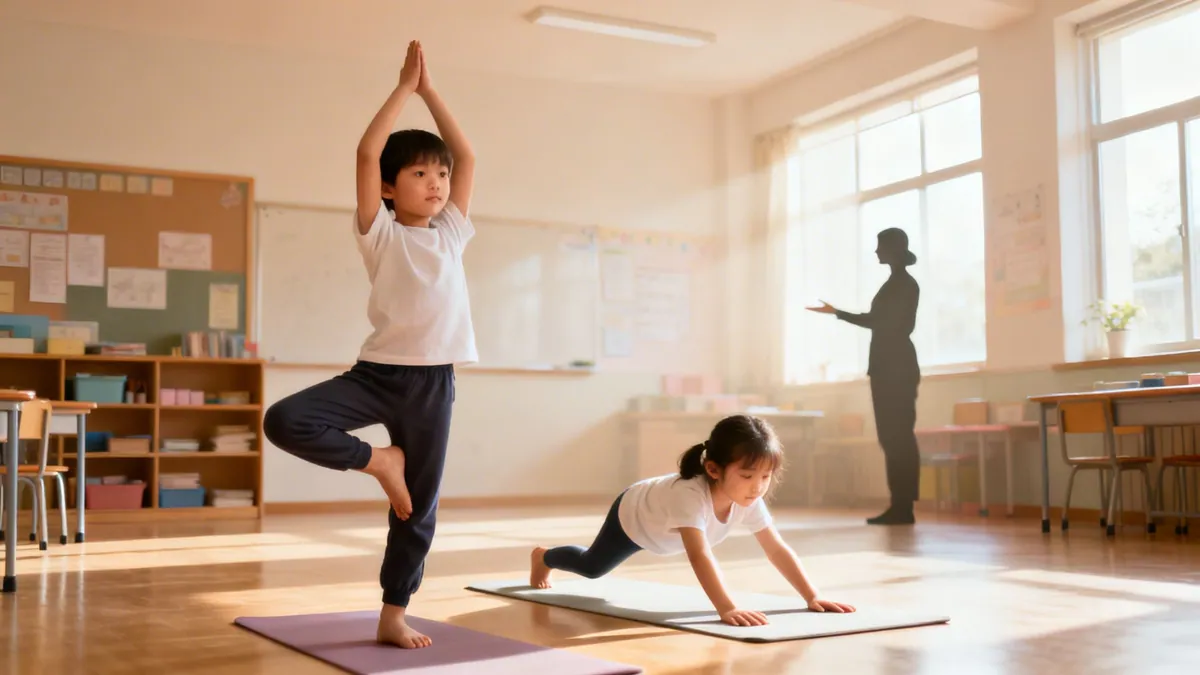
Self-regulation is the cornerstone of learning, resilience, and emotional well-being. It is the core ability to manage emotions, thoughts, and behaviors to achieve a specific goal. But what does it actually look like in practice, especially in a busy classroom or a hectic home environment? For many parents and educators, moving from abstract theory to tangible action can feel like a significant challenge.
This guide is designed to bridge that gap. We will provide clear, actionable examples of self-regulation that work for students across different ages and settings. Instead of just theory, you'll get specific tactics you can implement immediately.
We will break down seven powerful techniques, from in-the-moment breathwork to long-term problem-solving skills. Each section includes practical scripts, quick implementation tips, and brief notes on how to teach or reinforce each skill. By the end of this article, you will have a toolkit of replicable strategies to help children build the emotional intelligence they need to handle challenges and succeed. Let's dive into the first powerful example of self-regulation.
1. Breathwork and Mindfulness (Deep Breathing, Box Breathing, and Present-Moment Awareness)
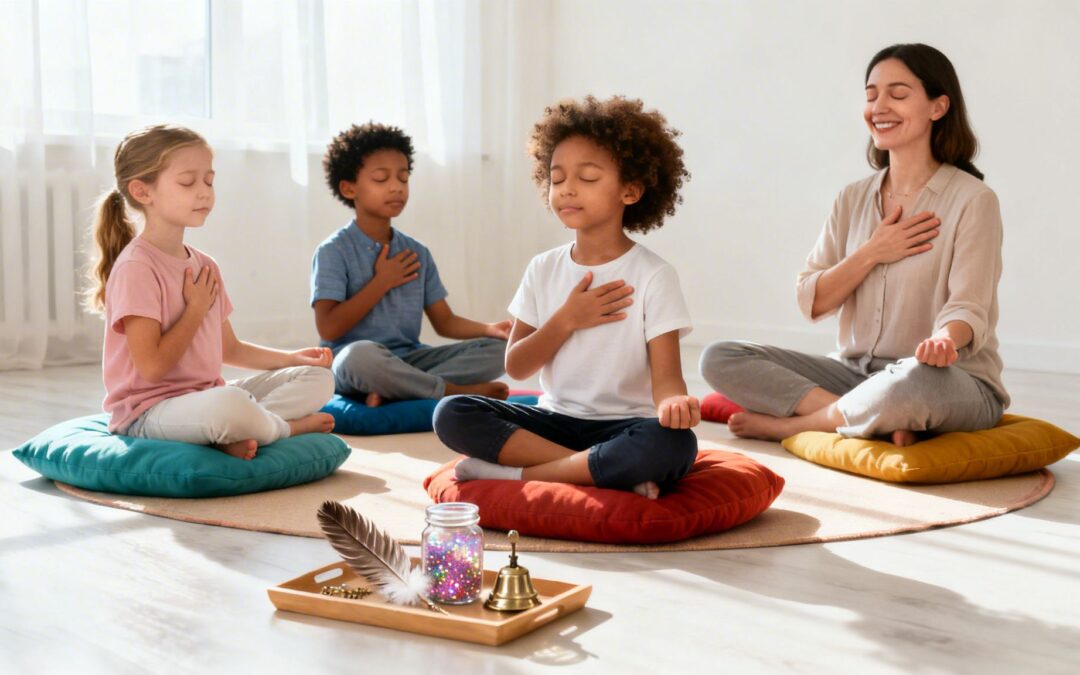
Breathwork and mindfulness are foundational self-regulation strategies that directly influence the body's physiological stress response. By consciously controlling our breathing, we can activate the parasympathetic nervous system, which slows the heart rate and creates a sense of calm. This technique is a powerful example of self-regulation because it provides an immediate, accessible tool for managing overwhelming emotions like anxiety, anger, or frustration.
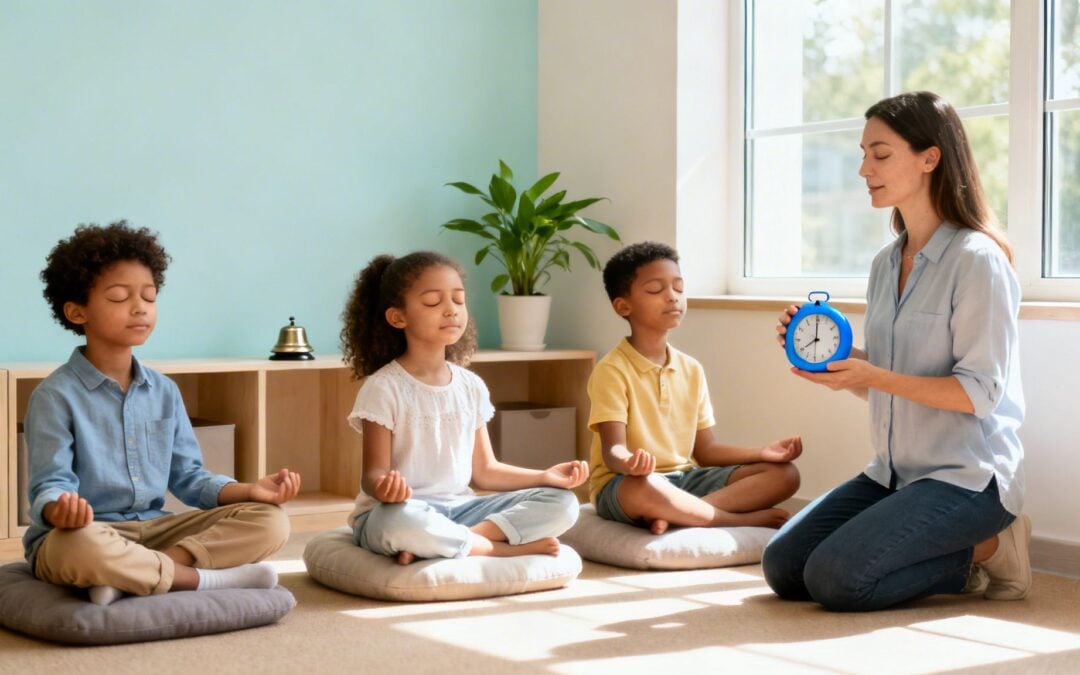
Mindfulness expands on this by training the brain to focus on the present moment without judgment. It helps children and adults notice their thoughts and feelings as temporary events rather than getting swept away by them. This builds the mental muscle needed to pause before reacting, a core component of emotional control. Combining these two practices offers both an in-the-moment rescue tool (breathwork) and a long-term preventative skill (mindfulness).
Strategic Breakdown and Implementation
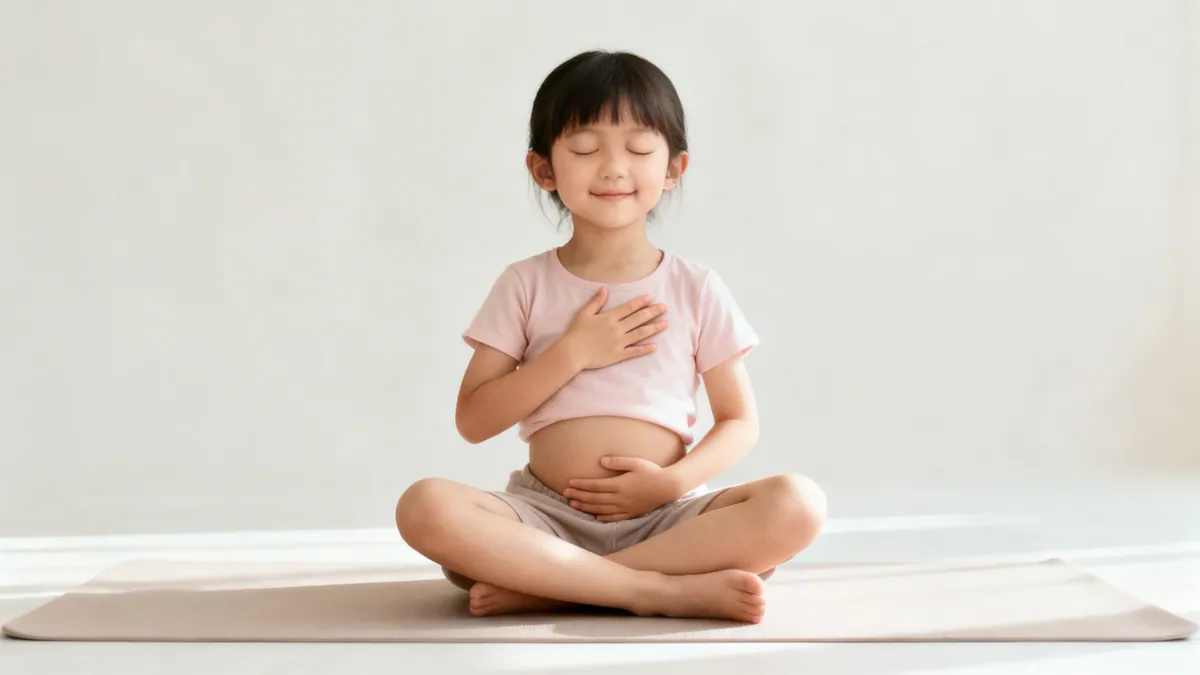
Why It Works: Deliberate, slow breathing sends a signal to the brain that there is no immediate danger, counteracting the "fight or flight" response. This is especially effective for children, whose nervous systems are still developing. Simple diaphragmatic breathing, often called belly breathing, is a great starting point. To learn more about this specific technique, you can explore this detailed guide on the belly breathing technique.
When to Use It:
Proactively: Before known triggers, like a test, a public speaking event, or a difficult conversation. For example, a teacher can lead the class in one minute of quiet breathing before a math quiz.
Reactively: When feeling overwhelmed, angry, anxious, or unable to focus. For example, a parent can say, "I see you're getting frustrated. Let's take three deep 'lion breaths' together."
Routinely: As a daily practice to build baseline resilience and emotional awareness. For example, starting each morning with "Five Finger Breathing" where a child traces their hand while breathing in and out.
Key Insight: The goal isn't to stop thoughts or eliminate feelings, but to notice them without getting stuck. Teach kids that their mind will wander-the "work" is gently bringing their attention back to their breath each time.
Actionable Examples and Prompts
For the Classroom (Ages 5-8): Use a visual like an animated "breathing bubble" on a screen or a physical Hoberman Sphere. Say, "Let's all be breathing buddies. Watch the ball get bigger as we breathe in through our noses, and see it get smaller as we breathe out of our mouths."
For Home (Ages 9-12): Introduce "Box Breathing" before homework or after a frustrating moment. Use a simple prompt: "Let's make a square with our breath. Breathe in for 4, hold for 4, breathe out for 4, and hold for 4. Let's trace the square in the air with our finger as we go."
For Teens: Encourage the use of guided meditation apps like Calm or Headspace for 5-10 minutes daily. Frame it as mental training for sports, academics, or managing social stress. Prompt: "Let's try a 5-minute guided session to hit reset before we start this next task."
2. Mindful Movement and Body Scanning
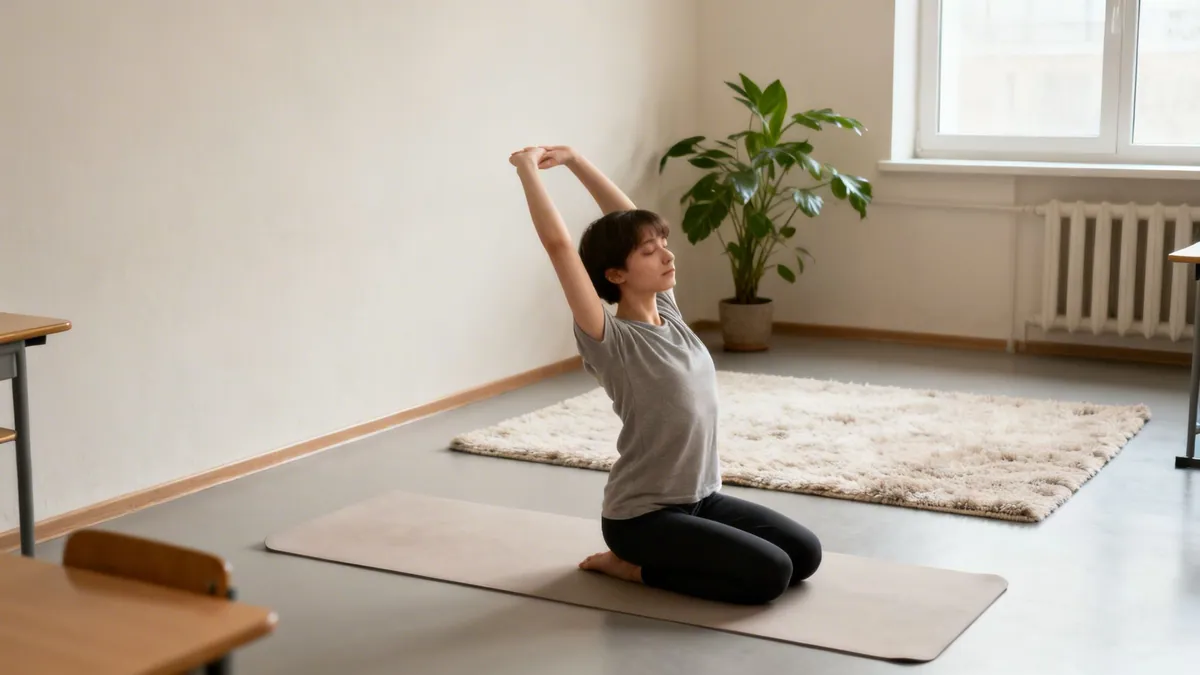
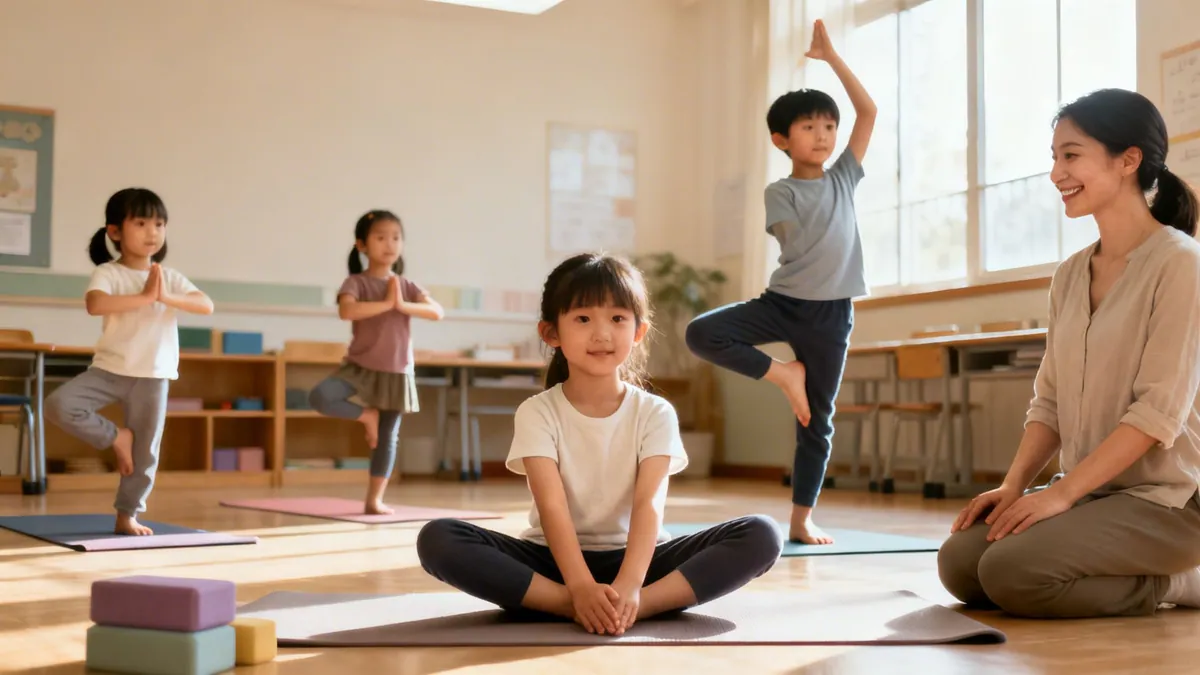
Mindful movement integrates physical activity with present-moment awareness, helping individuals connect their minds and bodies. This practice is a powerful example of self-regulation as it teaches learners to notice physical sensations like tension, tightness, or relaxation without judgment. By paying attention to the body through simple stretches, yoga, or systematic body scanning, individuals gain conscious control over their physiological state and learn to release stored stress.
This approach is particularly effective because it addresses the physical manifestation of emotions. When we feel anxious or angry, our muscles often tense up. Mindful movement provides a direct pathway to interrupt this cycle, offering a physical outlet that simultaneously calms the nervous system. Whether through a "brain break" in the classroom or a guided relaxation session at home, it builds interoceptive awareness, the ability to sense what is happening inside your own body.
Tips for Success
Start with Prevention: Focus on building a positive community with proactive circles before using them to address conflict. This establishes the trust necessary for difficult conversations.
Invest in Training: Ensure staff are well-trained in facilitation, trauma-informed practices, and the specific protocols for restorative justice. This is critical for success.
Use Consistent Protocols: Employ a consistent structure, language, and use of a talking piece across all circles. This makes the process predictable and safe for all participants.
Maintain Regularity: Hold circles routinely, at least monthly, so they become an integrated part of the school culture rather than a rare event only for problems.
3. Social Stories and Character Education Through Narrative
Social stories are a powerful social emotional learning strategy that uses narrative to teach social-emotional competencies and model healthy behaviors. The approach is rooted in the brain’s natural affinity for storytelling, making SEL concepts relatable and memorable. Students analyze characters' emotions, decisions, and relationships, then connect these lessons to their own lives and experiences.
Using carefully selected literature helps students understand complex social situations in a safe, structured way. For example, a class might read The Giving Tree to discuss generosity, or a middle school group could analyze a character's choices in a conflict. This method builds empathy, perspective-taking, and problem-solving skills, translating fictional scenarios into real-world social awareness.
How to Implement Narrative-Based Learning
Integrating stories into your SEL practice involves more than just reading a book. The real learning happens in the reflection and discussion that follow.
Read-Alouds with a Focus: Choose a book that deals with a relevant theme like friendship, loss, or courage. Pause during reading to ask, "How do you think the character is feeling right now? What clues in the story tell you that?" Practical example: While reading The Invisible Boy by Trudy Ludwig, a teacher pauses and asks, "When no one chose Brian for their team, what do you think was happening in his stomach? Has anyone ever felt that way?"
Book Clubs for Deeper Analysis: In small groups, have students discuss a shared text. For older students, assign roles like "Connection Connector" (finds links to real life) or "Feeling Finder" (tracks character emotions). Practical example: A 7th-grade book club reading Wonder by R.J. Palacio discusses how Julian's fear manifests as cruelty, connecting it to similar bystander behaviors they may have witnessed.
Writing and Role-Playing: After a story, ask students to write an alternate ending or a diary entry from a character's perspective. They can also act out a key scene, exploring different ways to handle the situation. Practical example: After reading a story about sharing, a parent and child can role-play. The parent pretends to be a friend who wants to play with a toy, and the child practices saying, "You can have a turn in five minutes."
Tips for Success
Prepare Thoughtful Questions: Move beyond simple comprehension. Ask open-ended questions that prompt reflection, such as, "Has anything like this ever happened to you?" or "What would you have done differently in this situation?"
Model Vulnerability: Share your own connections to the story's themes. Saying, "This story reminds me of a time I felt left out, and it was really hard," creates a safe space for students to share.
Connect to the Classroom: Explicitly link the story's lessons back to classroom dynamics. For example, "Remember how the characters in our book worked together? Let's try that same approach for our group project."
Choose Diverse Stories: Select books that feature characters from a wide range of backgrounds and experiences to build empathy and cultural understanding. Reading a variety of books on emotions for children is an excellent starting point for this work.
4. Collaborative Learning and Cooperative Group Work
Collaborative learning involves structured small-group activities where students work interdependently toward shared goals. This approach requires clear communication, cooperation, and mutual support. Unlike traditional group projects, this method includes explicit instruction in social skills, individual accountability, and positive interdependence. These social emotional learning strategies teach teamwork, perspective-taking, and conflict resolution while improving academic outcomes.
By working together, students learn to value diverse viewpoints and navigate disagreements constructively. This process strengthens peer relationships and builds a sense of classroom community. When students depend on each other for success, they develop empathy and a greater sense of responsibility for both their own learning and that of their peers.
How to Implement Collaborative Learning
Successful implementation hinges on clear structure and explicit teaching of social skills. Here are practical ways to integrate cooperative work:
Jigsaw Activities: Divide a topic into smaller parts. Assign each student in a group one part to become an "expert" on. Students then return to their original groups to teach their peers what they learned. Practical example: For a science unit on ecosystems, one student in a group learns about producers, another about consumers, and a third about decomposers. They then regroup and teach each other, so the whole group understands the food web.
Think-Pair-Share: Pose a question to the class. Give students time to think individually, then pair up with a partner to discuss their ideas before sharing with the larger group. Practical example: A history teacher asks, "What are three reasons the American colonists wanted independence?" Students think for 60 seconds, discuss their ideas with the person next to them, and then pairs share their best idea with the class.
Cooperative Problem-Solving: Present a complex math problem or science challenge that requires multiple perspectives to solve. This encourages students to combine their strengths and reason together. Practical example: A group of 4th graders is given 20 straws and a roll of tape and tasked with building the tallest possible freestanding tower. They must communicate, test ideas, and compromise to succeed.
Tips for Success
Assign Clear Roles: Use role cards (e.g., Facilitator, Recorder, Timekeeper, Encourager) to ensure every student has a specific responsibility. This prevents some students from dominating while others disengage.
Model and Monitor: Explicitly teach skills like active listening and giving constructive feedback. Actively circulate and provide guidance as groups work, rather than assuming cooperation will happen automatically.
Build in Reflection: After a group activity, have students reflect on their process. Ask, "How did we work as a team? What is one thing we could do better next time?"
Ensure Individual Accountability: While the final product may be a group effort, assess individual contributions through quizzes or separate components to ensure everyone is learning. For more guidance on this, learn about collaborative problem-solving as a tool for developing these essential skills.
5. Empathy-Building Exercises and Perspective-Taking Activities
Empathy-building exercises are structured activities that guide students to understand and feel what others experience, developing genuine empathy beyond simple sympathy. This social emotional learning strategy involves role-plays, interviews, and guided reflections that build the capacity to recognize others' emotions, understand different viewpoints, and respond with compassion. The core objective is to help students step into someone else's shoes, even for a moment, to see the world from their perspective.
Empathy is foundational to reducing bullying, improving peer relationships, and creating inclusive school communities. When students can connect with the feelings of others, they are less likely to cause harm and more likely to offer support. These activities move empathy from an abstract concept to a felt experience, making it a powerful tool for social harmony.
How to Implement Empathy-Building Exercises
Integrating these activities requires thoughtful planning and a safe environment where students feel comfortable being vulnerable. Here are practical ways to bring these practices into your classroom or community:
Role-Playing Scenarios: Have students act out a bullying scenario, taking on the roles of the person being bullied, the bystander, and the aggressor. Afterwards, lead a discussion about the feelings and thoughts of each character. Practical example: A teacher presents the scenario: "Someone new joins the class and has a different accent." Students role-play a scene where one student makes fun of the accent and another invites the new student to play. The class then discusses how each role felt.
Student Story Panels: Create a forum where students can volunteer to share personal stories about their identity, family traditions, or overcoming a challenge. This helps peers see the diverse experiences within their own classroom. Practical example: During Hispanic Heritage Month, a student volunteers to share how their family celebrates Día de los Muertos, explaining the significance of the ofrenda and sharing photos.
Community Walks: Take students on a walk through the school or neighborhood with a specific lens, such as looking for accessibility challenges for someone in a wheelchair or noticing how different groups use public spaces. Discuss your findings afterward. Practical example: Students tour the school and note that the water fountain is too high for a first-grader to reach easily, or there's no ramp to access the stage.
Tips for Success
Create Psychological Safety: Before asking for vulnerable participation, establish clear group norms for respectful listening and non-judgment. Reassure students that their feelings are valid.
Debrief Thoroughly: Always follow an activity with a structured debriefing session. Ask questions like, "What did you feel during that?" and "What did you learn?" to help students process the experience and ensure they don’t leave in a distressed state.
Connect to Action: End discussions with a forward-looking question: "Now that we understand this better, what will we do differently as a class?" This turns empathy into positive action.
Use Diverse Scenarios: Ensure your activities represent a wide range of identities, circumstances, and backgrounds to broaden students' understanding of the human experience. The Soul Shoppe's Strike Out Bullying curriculum offers powerful, pre-built activities that promote empathy and inclusion.
6. Emotion Identification and Naming with Visual Tools
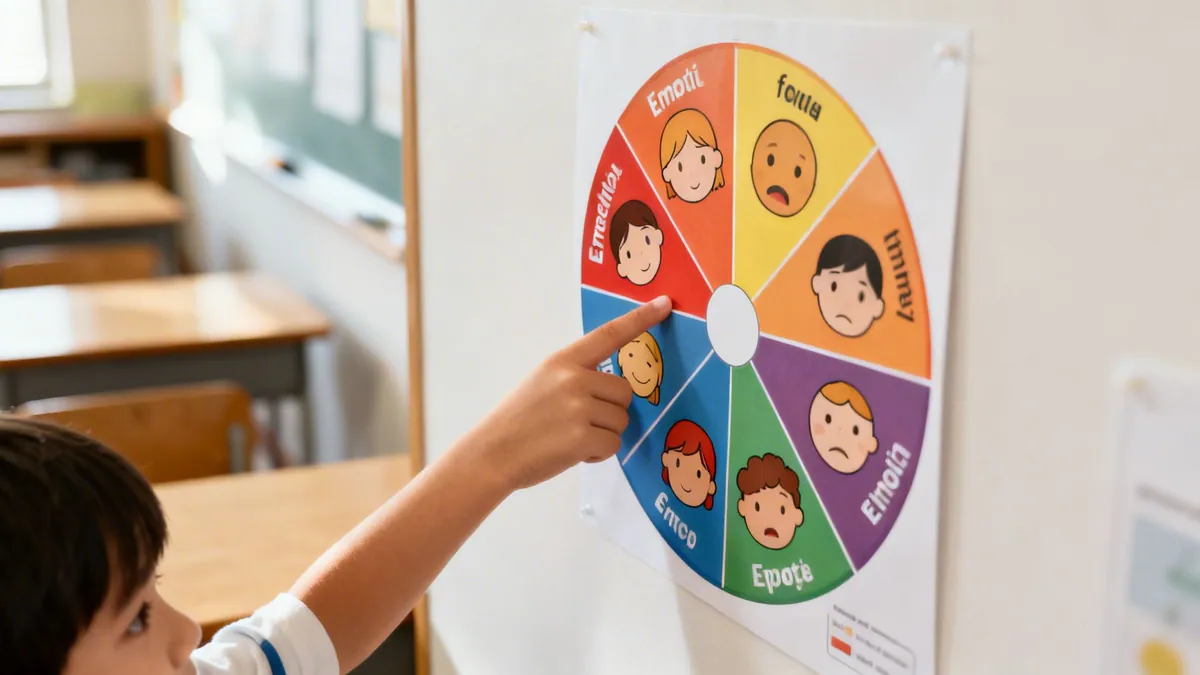
This foundational social emotional learning strategy involves systematic instruction to help students recognize, name, and understand the full spectrum of human emotions. By using visual supports like emotion wheels, feeling charts, and vocabulary cards, students learn to move beyond simple labels like 'good' or 'bad.' They develop precise emotional language and begin to connect their feelings to specific physical sensations and situational triggers.
This ability to accurately identify and label feelings is a critical first step toward self-regulation and empathy. When students can name an emotion, they gain a sense of control over it. This skill paves the way for effective communication, stronger peer relationships, and more constructive conflict resolution, as they can express their needs clearly instead of acting out.
How to Implement Emotion Identification
Making emotional literacy a part of the daily routine is key to its success. Here are some practical ways to integrate this practice:
Morning Check-ins: Start the day by having students point to a face on a color-coded feelings chart or emotion wheel to show how they are feeling. This normalizes emotional expression from the moment they arrive. Practical example: Each morning, students move a clothespin with their name on it to a section of a "Feelings Wheel" labeled "Happy," "Calm," "Sad," "Worried," or "Angry."
Literary Analysis: During read-alouds or literature discussions, pause to identify a character’s emotions. Ask questions like, "How do you think they are feeling? What clues in the text tell you that?" Practical example: A teacher says, "The author wrote that the character's 'shoulders slumped.' What emotion does that body language show? Let's check our feelings chart. Does that look like 'disappointed' or 'frustrated'?"
Body-Emotion Mapping: Lead activities where students identify where they feel emotions in their bodies. For example, "Where do you feel worry in your body? Is it a tight feeling in your chest or butterflies in your stomach?" Practical example: After a challenging math problem, a teacher asks, "Let's do a body scan. Notice if you feel any tightness in your shoulders or jaw. That might be a clue that you were feeling frustrated. Let's take a deep breath and relax those muscles."
Tips for Success
Start with Core Emotions: For younger students (K-1), begin with primary feelings like happy, sad, angry, and scared before gradually introducing more nuanced words like frustrated, disappointed, or content.
Model Your Own Feelings: Normalize having emotions by naming your own. Saying, "I'm feeling a little frustrated because the projector isn't working," shows students that adults have feelings too.
Validate, Don't Judge: Reinforce the message that all feelings are okay, even if certain behaviors are not. Use the phrase, "All feelings are okay; not all behaviors are okay" to separate the emotion from the action.
Use Diverse Visuals: Employ a variety of representations including charts, photos of real faces, and drawings of different body postures to help students recognize non-verbal emotional cues.
7. Peer Mentoring and Buddy Systems
Peer mentoring and buddy systems are structured relationships where older or more socially skilled students provide guidance and friendship to younger or struggling peers. This approach fosters a sense of belonging for mentees while developing leadership, responsibility, and empathy in mentors. This is one of the most effective social emotional learning strategies for building a positive school-wide culture.
When implemented thoughtfully, peer mentors serve as positive role models and a crucial safety net. They can reduce feelings of isolation, help new students adjust, and act as supportive upstanders who intervene when they see peers in need. This creates a powerful ripple effect, strengthening the entire school community from within.
How to Implement Peer Mentoring
A successful program relies on clear structure, training, and consistent support. Here are practical ways to get started:
Cross-Grade Buddies: Pair older students with younger ones for specific activities. For example, have 8th graders read to kindergarteners once a week or help them during school-wide assemblies. Practical example: A school pairs a 5th-grade class with a 1st-grade class for "Reading Buddies." Every Friday, the 5th graders visit the 1st-grade classroom and read a picture book to their buddy.
Transition Mentors: Assign student mentors to help new students navigate their first few weeks of school. Mentors can give school tours, explain schedules, and introduce the new student to friends. Practical example: An 8th-grade "Ambassador" is paired with a new 6th grader. The ambassador eats lunch with them for the first week, shows them how to open their locker, and introduces them to other students.
Targeted Support: Create a formal mentoring program where trained students are paired with peers who may be experiencing social isolation, academic difficulties, or behavioral challenges. Practical example: A student who consistently struggles on the playground is paired with a socially-savvy "Peer Helper" who is trained to invite them into games and model positive communication.
Tips for Success
Provide Ongoing Training: Equip mentors with essential skills. Offer training sessions on active listening, showing empathy, problem-solving, and knowing when to ask an adult for help.
Match Peers Thoughtfully: Consider personalities, shared interests, and specific needs when pairing mentors and mentees to increase the likelihood of a strong, positive connection.
Create Structured Activities: At the beginning, provide mentors with conversation starters or simple, structured activities to do with their mentees to help break the ice and build rapport.
Recognize and Reward Mentors: Publicly acknowledge the contributions of your mentors. Celebrate their leadership during assemblies, feature them in school newsletters, or give them special responsibilities.
8. Conflict Resolution and Problem-Solving Skill Building
This strategy involves direct instruction in using structured frameworks to address disagreements, solve problems collaboratively, and manage interpersonal challenges. Students learn specific steps, such as identifying the problem, listening to perspectives, generating solutions, and implementing agreements. The goal is to reframe conflicts from sources of resentment into valuable opportunities for learning, relationship building, and developing personal agency.
Effective conflict resolution is one of the most practical social emotional learning strategies for creating a safe and respectful school climate. When students possess the tools to solve their own problems, they build confidence and reduce their reliance on adult intervention for minor disputes. This skill set is directly linked to improved peer relationships, decreased bullying, and a more cooperative classroom atmosphere.
How to Implement Conflict Resolution Skills
Integrating structured problem-solving requires explicit teaching and consistent practice. Here are practical ways to build these skills in your classroom or at home:
Peer Mediation: Train older students as peer mediators to help younger students resolve disputes on the playground or in the cafeteria. This empowers students and frees up adult time. Practical example: Two 3rd graders are arguing over a swing. A trained 5th-grade "Peacekeeper" guides them through a script: each person gets to say what happened and how they feel, then they brainstorm solutions like taking turns for five minutes each.
Problem-Solving Protocols: Use morning meetings to teach a simple problem-solving protocol. For example, "I feel ___ when ___ because ___. I need ___." Role-play common scenarios to practice. Practical example: A teacher has two students practice with a scenario. Student 1 says, "I feel frustrated when you talk while I'm reading because I lose my place. I need you to wait until I'm done with my page."
Visual Aids: Display posters outlining the steps for conflict resolution in the classroom, the "peace corner," and other common areas. Refer to these steps when conflicts arise. Practical example: A poster on the wall shows four steps: 1. Cool Down. 2. Use "I-Statements." 3. Brainstorm Solutions. 4. Agree on a Plan. When a conflict happens, the teacher points to the poster and asks, "What is our first step?"
Tips for Success
Start with Low Stakes: Practice the steps with small, unemotional problems first, like deciding on a game to play at recess, before tackling more heated conflicts.
Teach One Step at a Time: Break down the process. Focus one week on active listening, the next on brainstorming solutions, and so on, to avoid overwhelming students.
Model the Behavior: When a disagreement occurs between you and a student or another adult, narrate your own conflict resolution process out loud. For example, "Let's both take a breath. Can you tell me your perspective on this? I want to understand."
Celebrate Success: Publicly acknowledge when students successfully resolve a conflict on their own. This reinforces the value of the skill and encourages others to use it.
To see these communication tools in action, explore Soul Shoppe's workshops on conflict resolution, which give students hands-on practice.
9. Community-Building Rituals and Consistent Relationship-Focused Routines
Community-building rituals are predictable, relationship-focused practices that intentionally build trust, safety, and connection within a group. These routines, such as morning meetings, closing circles, and shared traditions, create a stable environment and a powerful sense of belonging. The goal is to establish a classroom culture where students feel seen, valued, and psychologically safe enough to be themselves.
This feeling of being "in this together" is a cornerstone of effective social emotional learning strategies because it provides the security needed for students to take social risks, practice empathy, and support their peers. When students know they are part of a consistent, caring community, they are more willing to engage authentically, ask for help, and collaborate on solving problems. This foundation of trust makes all other SEL work more impactful.
How to Implement Community-Building Rituals
Successfully building a strong community requires consistency and genuine participation. Here are practical ways to bring these routines into your classroom:
Morning Meetings: Start each day with a 10 to 15-minute meeting. Include a quick greeting (like a special handshake or wave), a sharing activity where students answer a fun prompt, and a brief group activity or song. Practical example: A class starts the day with a "Ripple Greeting" where one student greets the person next to them by name, who then greets the next person, and so on around the circle.
Closing Circles: End the day with a closing circle. Ask students to share a success from the day, something they learned, or a "shout-out" for a classmate who showed kindness. Practical example: Before dismissal, a teacher asks, "Let's go around the circle and share one 'rose'—a good thing from today—and one 'thorn'—a challenge from today." This gives insight into students' experiences.
Classroom Traditions: Establish unique traditions, such as a "High-Five Friday" where you greet every student at the door with a high-five, or a class cheer to celebrate collective achievements. Practical example: A class creates a "Mistake Museum" poster where they post sticky notes about mistakes they made and what they learned from them, celebrating that mistakes are part of learning.
Tips for Success
Be Intentional from Day One: Start the school year with activities specifically designed to build community and co-create classroom agreements or a charter.
Protect the Time: Treat your community-building time as non-negotiable. Avoid canceling it for academic catch-up, as these rituals are essential for student well-being and learning.
Share Leadership: Rotate the role of meeting leader to students. This empowers them and gives them ownership over the community's culture.
Be Authentic: Show genuine interest in students' lives, share appropriately about your own, and participate fully in the rituals. Your presence sets the tone.
10. Student Leadership and Voice Opportunities
Authentic student voice means intentionally creating roles where students have genuine influence over school life, from policies to peer relationships. This social emotional learning strategy moves beyond token positions to give students a real stake in decision-making. By empowering them to lead initiatives, facilitate discussions, and shape their own environment, schools build agency, responsibility, and a deep sense of ownership among the student body.
When students help design school improvements or mediate peer conflicts, they develop critical social-emotional skills like perspective-taking, problem-solving, and communication. This approach makes schools more responsive to student needs, especially for those from historically marginalized groups. It transforms the school from a place where things happen to students into a community they actively create and maintain.
How to Implement Student Leadership
Building genuine student influence requires a commitment to sharing power and providing support. Here are some concrete ways to integrate student voice:
Peer Conflict Resolution: Establish a student-led restorative committee to help peers resolve conflicts. Train them in mediation and restorative questions to guide conversations toward mutual understanding and repair. Practical example: A middle school trains a "Student Court" to hear cases of minor conflicts, such as name-calling. The students on the court don't issue punishments but help the involved parties create a "repair plan."
School Improvement Projects: Create a youth council that gathers peer feedback about school climate, safety, or belonging. Task them with designing and implementing a school-wide initiative, such as a kindness campaign or a project to improve a common area like the library or playground. Practical example: A student council surveys their peers and finds that the playground is boring for older students. They propose a new four-square court and a Gaga ball pit, present the plan to the principal, and help fundraise for it.
Shared Governance: Include student representatives on key decision-making bodies, such as school climate committees or even panels for hiring new staff. Their unique perspective is invaluable. Practical example: A student is invited to sit on the hiring committee for a new vice-principal. The student prepares questions to ask candidates about how they would connect with students and support their well-being.
Tips for Success
Be Transparent: Clearly define what decisions students can influence. Be honest about administrative constraints or non-negotiables to build trust.
Provide Scaffolding: Offer leadership training, coaching, and regular check-ins. Students need skills and support to succeed in these roles.
Recruit Intentionally: Actively invite and encourage students from diverse and underrepresented backgrounds to participate, ensuring all voices are heard.
Celebrate Contributions: Publicly recognize student leaders and their accomplishments to validate their work and inspire others.
Debrief and Reflect: Discuss both successes and setbacks. Frame challenges as learning opportunities for everyone involved.
For tools that equip students with the communication and empathy skills needed for leadership, consider programs that focus on conflict resolution like the Soul Shoppe Peace Path.
10 SEL Strategies: Side-by-Side Comparison
Practice
Implementation complexity
Resource requirements
Expected outcomes
Ideal use cases
Key advantages
Mindfulness and Self-Regulation Practices
Low–Medium — simple routines but needs consistency
Minimal materials; short daily time; teacher training for fidelity
Empowers students and increases equity when power is shared
Putting Learning into Action: Creating Your SEL Toolkit
We've explored a powerful collection of ten social emotional learning strategies, from the quiet introspection of mindfulness to the dynamic collaboration of group work and the community-building power of restorative circles. Each strategy serves as a distinct tool, designed not to add another task to your day but to fundamentally improve the way young people communicate, self-manage, and connect with others. The journey through these methods reveals a clear and consistent message: effective SEL is intentional, integrated, and authentic.
The real impact of these practices doesn't come from a one-time assembly or a single lesson. It’s born from consistency. A second-grade teacher who starts each morning with an emotion check-in using a feelings wheel gives students a daily opportunity to practice self-awareness. A middle school that commits to using peer conferencing for minor disagreements teaches conflict resolution skills in the real-world moments they are needed most. A parent who uses a social story to prepare their child for a challenging social situation, like attending a birthday party, provides a scaffold for success. These small, repeated actions build the neural pathways for empathy, resilience, and emotional intelligence.
From Theory to Authentic Practice
The most important takeaway is that mastering social emotional learning strategies is not about perfection; it's about participation. Your role as an educator, parent, or community leader is to create the space for this learning to occur and to model it yourself.
Start Small, But Start Now: Resist the urge to implement everything at once. Choose one or two strategies that feel most urgent or natural for your environment. Perhaps it’s establishing a ‘Peace Corner’ for self-regulation in the classroom or introducing ‘I-Statements’ during family disagreements at home.
Embrace Imperfection: There will be moments when a restorative circle feels awkward or a conflict resolution attempt doesn't go smoothly. These are not failures; they are learning opportunities. Acknowledge the challenge and try again. This models resilience for the students watching you.
Connect and Customize: The strategies outlined, from peer mentoring to student leadership roles, are frameworks, not rigid prescriptions. Adapt them to fit your students' ages, developmental stages, and unique cultural backgrounds. The best SEL initiatives feel like an organic part of your community’s culture, not a separate program dropped in.
A Core Insight: The ultimate goal is to move from "doing SEL" as an activity to "being SEL" in our daily interactions. When we internalize these practices, they become a natural part of how we build relationships, solve problems, and create supportive environments where every child can feel safe, seen, and valued.
By consistently applying these social emotional learning strategies, we give students more than just coping mechanisms. We equip them with a durable toolkit for life. They learn to navigate complex social landscapes, build and maintain healthy relationships, advocate for their needs respectfully, and understand the perspectives of others. These are the foundational skills that support not only academic achievement but also long-term mental health, career success, and responsible citizenship. You are not just teaching a subject; you are nurturing the whole person, preparing them to build a more compassionate and connected world.
Ready to bring a structured, school-wide approach to social emotional learning to your community? Soul Shoppe provides evidence-based programs and practical tools that empower students and staff with a shared language for empathy and conflict resolution. Visit Soul Shoppe to see how our on-site and digital resources can help you build a culture of kindness and respect.
In a world filled with constant stimuli, young students often face significant challenges with focus, stress, and emotional regulation. The ability to manage these pressures is a critical life skill, and mindfulness offers a direct, powerful pathway to developing it. This guide moves beyond theory to provide a practical toolkit of mindfulness activities for elementary students, specifically designed for easy implementation in both classrooms and at home. The goal is to make abstract concepts like self-awareness and presence concrete and engaging for children.
Inside, you will find a curated collection of exercises that are both fun and foundational. We present a variety of options, from simple breathing techniques and body scan meditations to mindful movement and gratitude practices. Each activity is broken down with clear, step-by-step instructions, making them accessible even for educators and parents new to mindfulness.
To ensure these practices are effective and age-appropriate, every item includes:
Specific grade-level adaptations for students from kindergarten through fifth grade.
Alignment with core Social-Emotional Learning (SEL) competencies.
Practical tips for teachers and caregivers to lead the activities successfully.
This article is more than just a list; it is a resource for building a supportive environment where children can learn to understand their inner world, manage big emotions, and cultivate a sense of calm and focus. These are not just momentary fixes but essential skills that will support their well-being for years to come.
1. Breathing Exercises and Breathwork
Structured breathing exercises, often called breathwork, are a fundamental component of any effective mindfulness program for elementary students. These techniques teach children how to consciously use their breath to influence their nervous system, providing a powerful and accessible tool for managing stress, emotions, and focus. By concentrating on the simple, repetitive rhythm of inhaling and exhaling, students can anchor themselves in the present moment, quieting anxious thoughts and calming their bodies.
This practice is foundational because the breath is always available. Unlike other tools that require specific materials or settings, a student can use a breathing technique anywhere-at their desk before a test, on the playground during a conflict, or at home when feeling overwhelmed.
Common Breathing Techniques for Kids
Belly Breathing: Students place a hand on their stomach and imagine a small balloon inside. As they breathe in through their nose, they feel their belly expand like the balloon filling with air. As they breathe out slowly through their mouth, they feel the “balloon” deflate. This encourages deep, diaphragmatic breathing which is naturally calming. Practical Example: A teacher might say, “Let’s get our ‘Belly Buddies’ out!” Students lie down, place a small stuffed animal on their belly, and watch it rise and fall as they breathe.
Five Finger Breathing: Students hold one hand up with their fingers spread. Using the index finger of their other hand, they slowly trace up their thumb while inhaling, and trace down the other side while exhaling. They continue this for all five fingers, providing a multisensory experience that combines touch, sight, and breath. Practical Example: Before a spelling test, a teacher can say, “Let’s do our ‘High Five Breath’ to calm our butterflies.” The class does the exercise together for a minute.
Box Breathing: Ideal for older elementary students, this technique involves a four-part count. Students inhale for a count of four, hold their breath for four, exhale for four, and hold again for four. Visualizing drawing a square can help them remember the pattern. Practical Example: After a noisy recess, a teacher can guide the class: “Let’s draw our boxes with our breath. Inhale 2, 3, 4… Hold 2, 3, 4…” to help them settle.
Implementation Tip: Model these exercises yourself during class. When you take a moment to do Five Finger Breathing before starting a new lesson, you normalize the practice and show students that everyone can benefit from a mindful pause.
Putting Breathwork into Practice
Integrating breathing exercises into daily routines makes them second nature. A kindergarten teacher might start the day with “Belly Buddies,” where students lie down and place a small stuffed animal on their belly to watch it rise and fall with their breath. A fifth-grade teacher could use Box Breathing as a two-minute transition tool after a lively group activity to help the class reset and focus for independent work.
These simple yet effective practices are some of the most important self-regulation strategies for students to learn. By giving children a concrete way to manage their internal state, you empower them to handle challenges with greater resilience and awareness. The consistency of the practice is key; breathing exercises done during calm moments build the neural pathways needed to access the skill during times of high stress.
2. Body Scan Meditation
Body scan meditation is a guided practice where students bring gentle, moment-to-moment attention to different parts of their body. By systematically moving their focus from their toes to the top of their head, children learn to notice physical sensations like warmth, tingling, tightness, or comfort without judgment. This activity builds a crucial mind-body connection, helping students recognize how emotions like stress or excitement manifest physically.
This practice is an excellent addition to mindfulness activities for elementary students because it teaches interoception, the sense of the internal state of the body. Developing this skill allows children to identify and address feelings before they become overwhelming. A student who learns to notice the knot in their stomach before a test can then use a calming strategy, like breathwork, to self-soothe.
Common Body Scan Approaches for Kids
Weather Report: Students imagine different weather patterns in each body part. They might notice “sunny warmth” in their hands, a “tight storm cloud” in their shoulders, or “gentle rain” in their feet. This metaphor makes abstract sensations more concrete and less intimidating. Practical Example: A counselor could ask a child, “What’s the weather like in your tummy right now? Is it stormy or calm?”
Flashlight Focus: The guide asks students to imagine they are holding a flashlight and can shine its beam of attention on one body part at a time. They “illuminate” their toes, then their ankles, then their knees, simply observing what they feel in the light. Practical Example: A parent could say at bedtime, “Let’s get our magic flashlights. Shine it on your feet. Are they warm or cool? Now let’s move the light up to your legs…”
Melting Scan: This version is great for relaxation. Students are guided to tense a specific body part (e.g., squeeze their fists) and then release it, noticing the feeling of the muscle “melting” like an ice cube. This actively releases physical tension. Practical Example: A teacher might say, “Squeeze all the muscles in your legs like a frozen icicle… hold it… and now let them melt into a warm puddle.”
Implementation Tip: Offer choices to ensure comfort and safety. Let students decide if they want their eyes open or closed, and whether they prefer to sit in a chair or lie on a yoga mat or carpet. For students who are anxious or have experienced trauma, normalizing the practice in a one-on-one setting first can be very helpful.
Putting Body Scans into Practice
Integrating body scans can effectively transition students between different energy levels. A physical education teacher might use a five-minute melting scan after a high-energy game to help the class calm their bodies before heading back to the classroom. A school counselor could guide a student through a quick three-minute “Flashlight Focus” scan to help them identify where they are feeling anger after a playground conflict.
Starting with shorter, three-to-five-minute scans helps build students’ capacity for sustained attention. Following the practice with a quiet moment for drawing or journaling about what they noticed can deepen their awareness. By learning to listen to their bodies, students gain one of the most important self-awareness strategies for emotional regulation, giving them the power to understand and respond to their internal cues with kindness and skill.
3. Mindful Movement and Yoga
Mindful movement and yoga are physical mindfulness practices that connect gentle movement, stretching, and body awareness. For elementary students, who often learn best through kinesthetic experiences, these activities are invaluable. They teach children to pay attention to their bodies’ signals, release physical tension stored from stress or long periods of sitting, and improve focus by coordinating breath with motion.
This approach is powerful because it makes mindfulness tangible. Instead of just thinking about being calm, students can feel calm in their muscles and grounded through their feet. Popularized by programs like Cosmic Kids Yoga and the Yoga Kids curriculum, these activities offer a structured yet playful way to explore the mind-body connection.
For Older Students (4-8):
Classroom Yoga: Lead a 5-minute yoga flow with simple poses like Mountain, Warrior II, and Downward-Facing Dog. Focus on connecting breath with movement. Example: In the middle of a long class block, say, “Alright everyone, let’s stand up and do a 3-minute stretch. Reach for the sky in Mountain Pose, and let’s flow through two rounds of Warrior poses to reset our bodies.”
Cross-Body Exercises: Guide students through activities that cross the body’s midline, like touching their right hand to their left knee and vice versa. These movements help integrate the brain’s hemispheres. Example: If focus is waning, announce, “Time for a brain wake-up! Stand up. We’re going to do 20 cross-crawls. Right elbow to left knee, left elbow to right knee. Let’s go!”
Pro Tip: Create a “movement menu” with pictures or short descriptions of 5-6 quick activities students can choose from when they feel antsy. Offering choices empowers them to recognize their needs and take ownership of their self-regulation.
5. Social Problem-Solving and Perspective-Taking
Social problem-solving is a structured approach that moves students beyond reactive, emotional responses to conflict. It teaches them to analyze challenges systematically by identifying the problem, brainstorming solutions, considering consequences, and making a thoughtful choice. This skill is paired with perspective-taking, the ability to understand a situation from another person’s point of view, which is fundamental to building empathy and connection within a school community.
This strategy works by externalizing the conflict and turning it into a manageable puzzle rather than a personal attack. When students feel wronged or frustrated, their first impulse might be to blame or retaliate. By introducing a clear, step-by-step process, educators help them engage their rational brain, slow down their emotional reactions, and see the situation more clearly. This is one of the most practical self-regulation strategies because it gives students a concrete plan for navigating the complex social world, reducing anxiety and impulsive behavior.
How to Implement Social Problem-Solving
For Younger Students (K-3):
“Problem-Solving Wheel”: Create a visual wheel with simple solutions like “Ask for a turn,” “Say please,” “Walk away,” or “Get a teacher.” When a conflict arises over a toy, guide students to the wheel to choose a strategy. Example: “I see two friends who both want the blue truck. Let’s go to the problem-solving wheel. Which idea could you try first? Ah, ‘Ask for a turn.’ Let’s try that.”
“How Would They Feel?”: During read-alouds, pause and ask questions about the characters’ feelings. For example, “How do you think the wolf felt when the little pig wouldn’t let him in? Why?” Example: After reading about a character who shares, ask, “How did it make the other character feel when she shared her snack? How did it make her feel to be kind?”
For Older Students (4-8):
Structured Protocol: Teach and post a formal problem-solving process: 1. Define the problem (without blame). 2. Brainstorm at least three solutions. 3. Evaluate the pros and cons of each. 4. Choose one and try it. 5. Reflect on the outcome. Example: Two students are arguing about their group project. You say, “Okay, let’s use the protocol. Step 1: What’s the problem, stated without blame? ‘We disagree on the topic for our presentation.’ Good. Step 2: Let’s brainstorm three possible solutions right now.”
Role-Playing Scenarios: Use common classroom conflicts (e.g., being left out at recess, disagreeing on a group project) as practice scenarios for role-playing the protocol. Explore more ideas with these perspective-taking activities.
Pro Tip: Frame problem-solving as a skill everyone is learning, including adults. When you make a mistake, model the process out loud: “I was frustrated and spoke too quickly. I should have taken a moment to think about a better solution.” This normalizes the learning process and encourages students to try without fear of failure.
6. Positive Self-Talk and Cognitive Reframing
Positive self-talk and cognitive reframing are powerful self-regulation strategies that teach students to become aware of their internal dialogue and intentionally shift unhelpful thoughts. This approach helps children move from rigid, negative thinking to more flexible and encouraging perspectives. Instead of automatically assuming the worst, students learn to speak to themselves with the same kindness they would offer a friend, building resilience by changing the narrative around challenges and mistakes.
This strategy works by intercepting and challenging automatic negative thoughts before they escalate into overwhelming emotions. When a student thinks, “I’m terrible at math,” it can lead to feelings of frustration and avoidance. Cognitive reframing encourages them to pause and replace that thought with a more constructive one, such as, “This math problem is tricky, but I can try a different strategy.” This shift empowers students to view setbacks as temporary and solvable, which is a core component of developing a growth mindset. To learn more about fostering this mindset, explore these ways to build resilience and perseverance in students.
How to Implement Self-Talk and Reframing
For Younger Students (K-3):
“Thought Swapping”: Create a T-chart with “Helpful Thoughts” on one side and “Unhelpful Thoughts” on the other. When a student says, “No one will play with me,” guide them to find a “helpful thought” swap, like, “I can ask someone to play.” Example: “I hear you saying, ‘This is too hard.’ That sounds like an unhelpful thought. Let’s look at our chart. What’s a helpful thought we could swap it with? How about, ‘I can try my best’?”
“Turn-Around Phrases”: Introduce simple, powerful phrases like adding the word “yet” to statements. “I can’t read this” becomes “I can’t read this yet.” Example: A student says, “I don’t know how to tie my shoes.” You can gently respond, “You don’t know how to tie them yet. Let’s practice together.”
For Older Students (4-8):
“Catch It, Check It, Change It”: Teach students a three-step process: First, catch the negative thought. Second, check if it’s 100% true and helpful. Third, change it to a more realistic or supportive statement. Example: A student mutters, “I’m going to fail this test.” You can guide them: “Okay, catch that thought. Now, let’s check it. Is it 100% true that you will fail? You studied. So, let’s change it. What’s more accurate? Maybe, ‘I’m nervous about the test, but I’m prepared’.”
“What Would You Tell a Friend?”: When a student is self-critical, ask them what they would say to a friend in the same situation. This helps them access a more compassionate inner voice. Example: “You just called yourself ‘stupid’ for making that mistake. If your best friend made the same mistake, would you call them stupid? No? What would you say to them? Okay, now try saying that to yourself.”
Pro Tip: Model your own cognitive reframing out loud. Saying something like, “Oops, I forgot to bring the papers. It’s frustrating, but I can solve this by emailing them later,” shows students that everyone makes mistakes and that the response is what matters most.
7. Sensory Tools and Regulation Stations
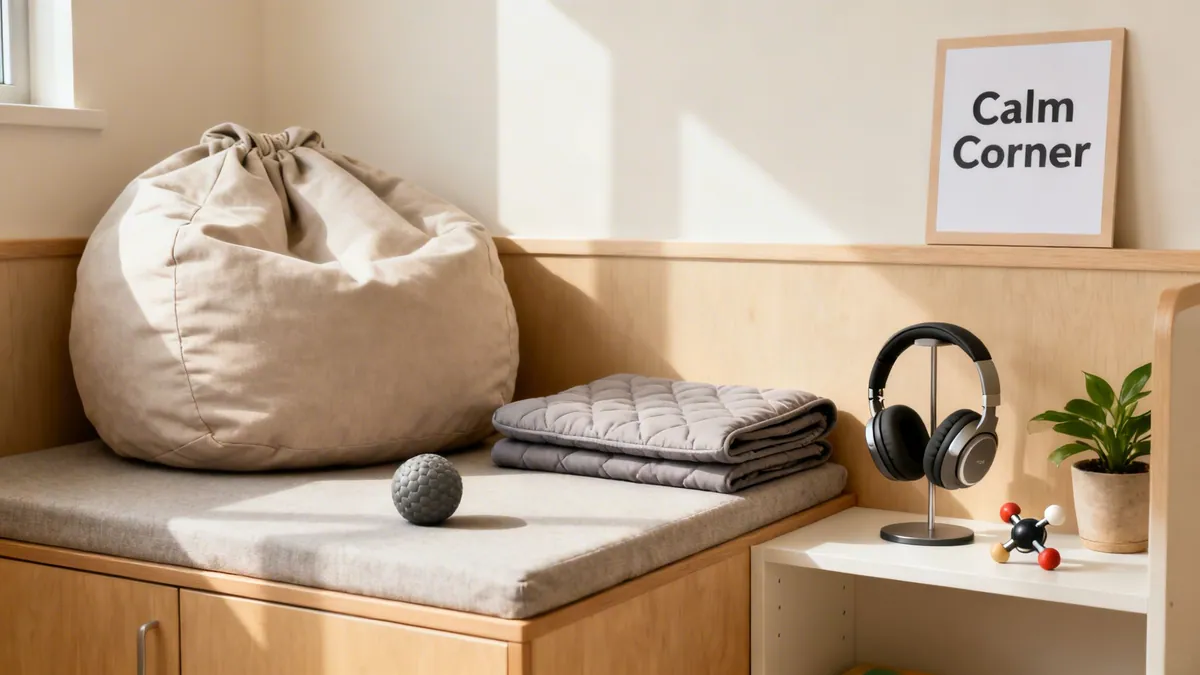
Sensory tools and regulation stations offer tangible, physical support for students learning to manage their internal states. Tools like fidgets, weighted lap pads, and noise-canceling headphones provide direct sensory input that can calm an overstimulated nervous system or provide the necessary stimulation for a student to focus. A regulation station, often called a “calm corner” or “peace corner,” is a designated space where students can access a curated collection of these tools to independently practice self-regulation.
This approach honors neurodiversity by acknowledging that different brains process sensory information differently. For some students, the hum of fluorescent lights can be overwhelming, while for others, sitting still is a significant challenge. Sensory-based self-regulation strategies work by giving the nervous system the input it needs to find a “just right” state of arousal for learning and engagement. To understand the foundational science behind these tools, delving into this guide on what is sensory integration can provide invaluable insight into how children process and respond to sensory input.
How to Implement Sensory Tools and Stations
For Younger Students (K-3):
“Calm-Down Corner”: Create a cozy corner with soft pillows, a weighted blanket, and a small box of sensory items like squishy balls, textured fabrics, and scented playdough. Example: When a student is starting to get upset, you can say, “It looks like your body needs a break. Would you like to spend five minutes in the calm-down corner with the blue squishy ball to help your body feel better?”
Individual Sensory Bags: For students who need consistent support, a small pouch with two or three approved fidgets can be kept at their desk for quiet use during lessons. Example: “David, remember if your hands start feeling busy during story time, you can quietly use the stretchy noodle from your sensory bag to help you listen.”
For Older Students (4-8):
Regulation Station: Design a space that is less about “calm” and more about “reset.” Include options like resistance bands for stretching, noise-canceling headphones, and more discreet fidgets like spinner rings or putty. Example: You notice a student tapping their pen loudly and shaking their leg. You can say, “Hey Alex, it looks like you have a lot of energy right now. Feel free to use a resistance band at the regulation station for a few minutes to get that energy out.”
Sensory Choice Board: Offer a menu of options students can choose from when feeling dysregulated, such as: “Listen to music for 5 minutes,” “Use the weighted lap pad,” or “Squeeze the stress ball 10 times.” Example: “Sarah, I see you’re feeling overwhelmed. Please point to one choice on the sensory board that you think would help your brain reset right now.”
Pro Tip: Explicitly teach the purpose and procedures for using sensory tools and regulation stations. Frame them as “brain tools,” not toys. Emphasize that these are available to everyone to help their brains get ready to learn, which destigmatizes their use and promotes a supportive classroom culture.
8. Journaling and Reflective Writing
Journaling and reflective writing offer a quiet, personal space for students to process their emotions, clarify their thoughts, and track their personal growth. This strategy involves putting feelings and experiences onto paper, which engages the brain differently than verbalizing them. Whether through unstructured free-writing or guided prompts, journaling supports emotional release, cognitive integration, and is one of the most effective self regulation strategies for building introspection.
The act of writing down thoughts and feelings externalizes them, making them feel more manageable. Research by psychologists like James Pennebaker shows that this form of expressive writing can decrease stress and improve well-being. By giving abstract emotions a concrete form, students can examine their experiences from a distance, identify patterns, and develop a stronger sense of self-awareness and control. It serves as a personal record of their resilience and progress.
How to Implement Journaling and Reflective Writing
For Younger Students (K-3):
Draw and Write Journals: Students can draw a picture of a feeling or event and then write (or dictate) a single sentence about it. For example, “I felt happy when I played on the swings.” Example: “Today in your journal, I want you to draw a picture of something that happened at recess. Then you can write one sentence about how it made you feel.”
“Rose and Thorn”: Each day, students share or draw one positive thing (a rose) and one small challenge (a thorn). This simple structure builds a habit of reflection. Example: At the end of the day, say, “Let’s think about our day. What was your rose—something that made you smile? What was your thorn—something that was a little tricky? Draw them in your journal.”
For Older Students (4-8):
Guided Prompts: Offer weekly prompts aligned with social-emotional learning goals. Examples include: “Describe a time you felt proud and what you did,” or “What was a challenge this week and how did you approach it?” Example: “This week’s journal prompt is on the board: ‘Write about a time you disagreed with a friend. What happened, and what did you learn from it?'”
Gratitude Journaling: Start or end the day by having students write down three specific things they are grateful for. This practice is proven to shift focus toward positive experiences. Example: As a bell-ringer activity, instruct students, “Open your journals and for the next three minutes, list three things, big or small, that you’re thankful for today. It could be your breakfast, a sunny day, or a friend.”
Pro Tip: Clearly establish that journals are private spaces. State that you will never read them unless a student explicitly asks you to. This trust is essential for honest self-expression and makes journaling a safe tool for emotional exploration.
9. Social Support and Strategic Breaks (Connection-Building + Time-Out)
Social support and strategic breaks are two intertwined self-regulation strategies that center on safety and connection. When students feel a strong sense of belonging and know they have trusted adults and peers to turn to, their capacity for managing emotions increases. This foundation of social safety makes strategic breaks, or non-punitive time-outs, far more effective. These breaks are not punishments but restorative opportunities for students to step away, decompress, and practice regulating themselves in a calm space.
This combination works by addressing a core human need for connection, as highlighted by researchers like Brené Brown. A regulated, caring adult can help a child co-regulate, modeling calmness and providing the security needed for the child’s nervous system to settle. Strategic breaks give students the time and space to apply other self-regulation strategies without the pressure of an audience. This builds autonomy and internal skills, showing students they are capable of managing big feelings. For a deeper dive into creating this environment, explore Soul Shoppe’s relationship-centered SEL programming.
How to Implement Connection and Breaks
For Younger Students (K-3):
Morning Meetings: Start each day with a brief, structured check-in circle where every child has a chance to share. This builds community and a sense of being seen. Example: “Good morning, everyone! Our greeting today is a high-five. After you greet your neighbor, please share one thing you’re looking forward to today.”
“Cool-Down Corner”: Create a designated, cozy space with soft pillows, sensory tools (like squishy balls or textured fabrics), and picture books about feelings. Students can choose to go there when they feel overwhelmed. Example: “Jason, it looks like you’re feeling frustrated. You can choose to take a 5-minute break in our cool-down corner to help your body calm down.”
For Older Students (4-8):
Peer Buddy Systems: Pair students to support each other academically and socially. Train them in active listening and how to offer help respectfully. Example: “Remember, if you’re feeling stuck on the assignment, you can use the ‘Ask 3 Before Me’ rule, and your peer buddy is one of those people you can check in with first.”
Restorative Circles: Use circles to discuss classroom issues or repair harm after a conflict. This process gives everyone a voice and focuses on mending relationships rather than assigning blame. Example: After a disagreement at lunch, you might say, “Let’s have a restorative circle to talk about what happened. We’ll use the talking piece, and everyone who wants to will get a chance to share how they were impacted.”
Pro Tip: Frame breaks as a tool for everyone. Say, “This space helps your brain get back on track so you can learn and solve problems.” Practice using the break area when everyone is calm, so students understand its purpose before they are in a moment of crisis. Always follow up with a brief, quiet conversation to reflect and welcome the student back.
10. Goal-Setting, Progress Monitoring, and Growth Celebration
Engaging students in setting meaningful goals, tracking their own progress, and celebrating growth is a powerful self-regulation strategy that builds agency and motivation. This approach shifts the focus from external control to internal drive, teaching students how to identify a desired outcome, create a plan, and persist through challenges. By framing effort and setbacks as part of a journey, it reinforces a growth mindset and develops crucial executive functioning skills.
This process works by making abstract concepts like “being respectful” or “staying calm” concrete and measurable. When a student helps create a goal, they take ownership of it. Regularly monitoring progress provides tangible evidence of their effort, which builds self-efficacy and the belief that they can influence their own outcomes. This metacognitive practice is a cornerstone of developing mature self-regulation.
How to Implement Goal-Setting and Celebration
For Younger Students (K-3):
Behavioral Goals: Frame goals in simple, positive language. For instance, “I will use my walking feet in the hallway” or “I will raise my hand before speaking.” Example: You might create a goal with a child: “Your goal for this week is to use kind words when you feel frustrated. Let’s practice what that sounds like.”
Visual Progress Trackers: Use a sticker chart, a coloring path, or a jar to fill with pom-poms. The visual feedback is immediate and motivating for this age group. A student might add a sticker to their chart each time they remember to use kind words with a friend. Example: “Wow, Michael! I saw you ask for a turn instead of grabbing. That was you using kind words! Go put a pom-pom in our class goal jar!”
For Older Students (4-8):
SMART Goals: Introduce the concept of SMART (Specific, Measurable, Achievable, Relevant, Time-bound) goals. A goal could be: “For the next two weeks (Time-bound), I will use my 4-7-8 breathing strategy (Specific) at least once a day when I feel frustrated (Measurable, Achievable) so I can stay focused in class (Relevant).” Example: A student wants to be more organized. You help them set a goal: “My goal is to write down all my homework in my planner (Specific) every day for the rest of the month (Time-bound).”
Student Portfolios & Check-ins: Have students keep a simple journal or portfolio to document their progress. Conduct weekly check-ins where they reflect on what worked, what was hard, and if the goal needs to be adjusted. Example: During a check-in, you could ask, “Let’s look at your goal of starting your homework before 7 PM. How did it go this week? What made it easy? What made it hard?”
Pro Tip: Celebrate the effort and the process, not just the final achievement. Acknowledge persistence when a student tries a calming strategy, even if they still get upset. This reinforces that the act of trying is what builds the skill, making them more likely to stick with these self-regulation strategies long-term.
10-Strategy Self-Regulation Comparison
Strategy
Implementation complexity
Resource requirements
Expected outcomes
Ideal use cases
Key advantages
Mindfulness and Deep Breathing
Low — simple to teach but needs regular practice
Minimal — none required; visual cues helpful
Immediate physiological calming, improved attention and emotional awareness
Makes progress visible, reinforces persistence and agency
Putting It All Together: Building a Culture of Self-Regulation
We’ve explored ten powerful self regulation strategies, from the immediate calm of deep breathing to the long-term resilience built through cognitive reframing. Each tool offers a unique pathway for children to understand and manage their internal worlds. Yet, the true power of these strategies emerges not from isolated lessons, but from their consistent integration into the rhythm of daily life. The ultimate goal isn’t just to teach a child what to do when they feel overwhelmed; it’s to cultivate an environment where emotional awareness and thoughtful response become second nature.
This journey is about building a culture, not just checking off a list. It’s the difference between a teacher occasionally saying, “Use your words,” and a classroom where emotional labeling is a daily practice, supported by visual charts and celebrated during morning meetings. It’s the shift from a punitive time-out to a restorative “strategic break” in a designated regulation station, where a child learns to connect their physical sensations with a need for sensory input or quiet reflection.
From Individual Skills to a Shared Language
The most profound impact comes when these self regulation strategies become a shared language between adults and children, and among peers. When an entire school community adopts the STOP technique, a student in crisis knows that any adult they approach will understand their need for a moment to pause and breathe. Similarly, when a family embraces positive self-talk, a child struggling with homework can be guided with a gentle reminder: “I hear that ‘I can’t do this’ thought. What’s a stronger, kinder thought we can try instead?”
This shared understanding turns abstract concepts into concrete, collaborative actions. It creates a predictable and supportive safety net, reassuring children that their big feelings are valid and that they are equipped with the tools, and the support system, to navigate them constructively.
Key Takeaway: Self-regulation is not a solitary skill learned in a vacuum. It flourishes in an ecosystem of co-regulation, where trusted adults model, guide, and reinforce these strategies with patience and consistency.
Actionable Next Steps for Educators and Parents
Building this culture can feel like a monumental task, but it begins with small, intentional steps. Here is a practical roadmap to get you started:
Start Small and Model Consistently: Don’t try to implement all ten strategies at once. Choose one or two that feel most accessible for your students or children. Perhaps you begin by introducing “Belly Breathing” during transitions or morning meetings. As the adult, you must model it authentically. When you feel your own frustration rising, say out loud, “I’m feeling a little overwhelmed, so I’m going to take three deep breaths to calm my body.” This modeling is more powerful than any worksheet.
Make it Visual and Accessible: Create tangible reminders. Post visuals of the STOP technique in the classroom. Designate a “Peace Corner” or “Regulation Station” with a few sensory tools. For older students, co-create posters with positive self-talk affirmations. These physical cues serve as environmental prompts, reminding students to use their skills before emotions escalate.
Integrate, Don’t Isolate: Weave these strategies into your existing routines. During literature discussions, ask questions like, “How do you think that character was feeling? What problem-solving strategy could they have used?” When a conflict arises on the playground, guide students through perspective-taking. Connect goal-setting to academic projects and personal conduct, celebrating the effort and progress along the way.
Embrace Progress Over Perfection: There will be setbacks. A child who has successfully used their breathing techniques for weeks might have a difficult day and forget. This is normal. The goal is not to eliminate emotional outbursts but to shorten their duration, reduce their intensity, and build the child’s capacity to recover more quickly. Respond to these moments with empathy, not judgment, and treat them as opportunities for reteaching.
By patiently and persistently weaving these self regulation strategies into the fabric of your classroom or home, you are giving children a gift that extends far beyond academic success. You are equipping them with the emotional intelligence, resilience, and confidence to build healthy relationships, overcome obstacles, and navigate the complexities of life with grace and strength. You are not just managing behavior; you are nurturing a foundation for lifelong well-being.
Ready to build a comprehensive, campus-wide culture of safety and connection? Soul Shoppe provides expert training and programs that empower both students and educators with a shared language and practical tools for thriving together. Learn more about bringing these powerful strategies to your entire school community at Soul Shoppe.
In today’s fast-paced world, children navigate a landscape of constant stimulation and high expectations. The ability to pause, breathe, and connect with the present moment isn’t just a nice-to-have; it’s a foundational skill for emotional regulation, focus, and resilience. This article moves beyond theory, offering a practical, evidence-informed toolkit of 10 mindfulness exercises for kids.
Designed for parents, teachers, and caregivers, each activity is broken down into simple, actionable steps, complete with age-appropriate adaptations and real-world examples. From calming anxious minds before a test to building empathy in the classroom, these exercises are more than just activities. They are building blocks for social-emotional learning (SEL) that equip children to thrive both academically and personally.
This comprehensive guide provides everything you need to introduce these powerful practices into your home or classroom. You will find step-by-step instructions, time guidance, and specific tips for adapting each exercise for different age groups and settings. For those looking to deepen their understanding and supplement these activities, exploring curated lists of books about social emotional learning can provide valuable narratives and frameworks to reinforce these concepts.
We will explore a variety of techniques, including:
Belly Breathing to manage stress.
Mindful Listening to improve focus.
Gratitude Practices to foster a positive outlook.
Body Scan Meditations to build self-awareness.
Each section is structured for quick reference and immediate implementation, helping you cultivate a more peaceful and attentive environment for the children in your care. By integrating these mindfulness exercises, you are giving kids a superpower: the ability to understand and manage their inner world with confidence.
1. Belly Breathing (Diaphragmatic Breathing)
Belly breathing, also known as diaphragmatic breathing, is a cornerstone of mindfulness exercises for kids. This foundational practice teaches children to take slow, deep breaths that originate from the diaphragm, causing the belly to rise and fall. This simple action directly engages the parasympathetic nervous system, our body’s natural relaxation response, helping to lower heart rate and reduce feelings of anxiety or stress.
Unlike shallow chest breathing, which is common during stressful moments, belly breathing provides an immediate and tangible tool for self-regulation. It is one of the most accessible self-regulation strategies for students and can be used anywhere, anytime.
How to Guide Belly Breathing
To introduce this technique, have children lie down comfortably or sit with a straight spine. Instruct them to place one hand on their chest and the other on their belly. Cue them to breathe in slowly through their nose, feeling the hand on their belly rise like a balloon filling with air, while the hand on their chest stays relatively still. Then, they should exhale slowly through their mouth, feeling their belly deflate.
Key Cue: “Imagine you have a small balloon in your belly. When you breathe in, you are slowly filling it up with air. When you breathe out, the balloon gently deflates.”
Practical Implementation and Tips
Make it Visual: Place a small stuffed animal or a “breathing buddy” on the child’s belly while they lie down. Their goal is to make the buddy gently rise and fall with each breath. For example, a child upset about a scraped knee can lie down with their favorite teddy bear on their tummy and focus on giving it a slow ride up and down.
Use Counting: Guide children through a simple counting pattern, such as breathing in for four counts, holding for four counts, and exhaling for four counts. This adds a focal point for their attention.
Integrate into Routines: A teacher might lead a two-minute belly breathing session after recess to help the class transition calmly to the next lesson. A parent can use it as part of a bedtime routine to promote restful sleep.
Normalize the Practice: Introduce belly breathing when children are calm and regulated. For example, practice for one minute during a morning meeting at school. This ensures they build muscle memory for the skill, making it easier to access during moments of frustration, anger, or nervousness before a big game.
2. Body Scan Meditation
The Body Scan Meditation is a guided exercise that encourages children to bring gentle, nonjudgmental attention to different parts of their body, one at a time. This practice helps kids develop a stronger mind-body connection, teaching them to notice physical sensations like warmth, tingling, or tension without feeling the need to react to them. It is a powerful tool for building body awareness and helping children recognize how emotions can manifest physically.
Pioneered in modern mindfulness by Jon Kabat-Zinn, this technique is not about changing or fixing sensations, but simply noticing them. For children, this fosters an ability to sit with discomfort and understand the transient nature of physical feelings, which is a key component of emotional resilience. It’s one of the most effective mindfulness exercises for kids to connect with their inner world.
How to Guide a Body Scan Meditation
Have children lie down comfortably on their backs with their eyes closed or with a soft, downward gaze. In a calm voice, guide their attention sequentially through the body, starting from the toes and moving slowly up to the head. Invite them to notice any sensations in each part without judgment.
Key Cue: “Bring your attention to your toes. You don’t have to move them, just notice how they feel. Are they warm or cool? Tingly or still? Whatever you feel is perfectly okay.”
Practical Implementation and Tips
Keep it Brief and Playful: For younger children, start with a 3-5 minute scan. You can call it a “Tingle Tour” or “Flashlight Focus,” imagining a gentle beam of light scanning their body. For example, a kindergarten teacher could say, “Let’s shine our magic flashlight onto our feet. What do you notice?”
Allow for Movement: It’s natural for kids to fidget. Offer “wiggle breaks” between body parts. You might say, “Now let your feet have a little wiggle before we move our attention to our legs.”
Use Inclusive Language: Frame invitations gently. For instance, “Notice your left hand… or if you prefer, just think about that space.” This is especially important for children with diverse physical abilities or sensitivities.
Integrate into Daily Transitions: A guidance counselor might use a short body scan with an anxious student to help them ground themselves before returning to class. A parent can lead a calming scan as part of a bedtime routine to release the day’s tension and promote sleep. For example, a parent could say, “Let’s notice if our legs feel tired from all that running today. Now let’s see how our tummy feels.”
3. Mindful Movement & Brain Breaks (Yoga, Short Movement Breaks)
Mindful movement combines gentle physical activity with present-moment awareness, making it one of the most engaging mindfulness exercises for kids. Practices like children’s yoga or short, structured “brain breaks” bridge the mind-body connection, helping children release physical tension, improve focus, and regulate their energy levels. This approach is especially effective for kinesthetic learners who thrive when they can move their bodies.
Unlike traditional exercise, the goal is not performance but awareness. Children learn to notice how their bodies feel during movement, connecting with their breath and physical sensations. These embodiment practices for kids empower them with tools to reset their attention and manage restlessness, both in the classroom and at home.
How to Guide Mindful Movement
Begin by creating a safe, non-competitive space. For yoga, use storytelling to guide poses, like becoming a tall, strong tree or a stretching cat. For a brain break, simply ask children to stand up and “shake out the wiggles” or “stretch toward the sky.” The key is guiding them to pay attention to the physical sensations as they move.
Key Cue: “As you stretch your arms up high, notice how your sides feel. Can you feel your muscles waking up? Now, as you shake your hands out, imagine you are shaking off any wiggly or tired feelings.”
Practical Implementation and Tips
Use Storytelling: Frame movements within a narrative. For example, a librarian leading a yoga session could guide children through an imaginary journey to the jungle, having them become a hissing snake (Cobra Pose) or a roaring lion (Lion’s Breath).
Schedule Brain Breaks: Integrate short (2-5 minute) movement breaks between academic subjects. A teacher might use a GoNoodle video or lead a quick “animal walks” session—like crab walking or frog hopping—to transition from math to reading.
Focus on Feeling, Not Form: Emphasize that every child’s pose will look different. The goal is to notice what their own body feels like, not to achieve a perfect posture.
Pair with Breathing: Connect breath to movement. For example, in a “Balloon Breath” break, a teacher can instruct students to breathe in while raising their arms overhead (filling the balloon) and breathe out while lowering them (letting the air out).