

7 Practical Example of Self-Regulation Strategies for Parents & Teachers in 2026
Self-regulation is the cornerstone of learning, resilience, and emotional well-being. It is the core ability to manage emotions, thoughts, and behaviors to achieve a specific goal. But what does it actually look like in practice, especially in a busy classroom or a hectic home environment? For many parents and educators, moving from abstract theory to tangible action can feel like a significant challenge.
This guide is designed to bridge that gap. We will provide clear, actionable examples of self-regulation that work for students across different ages and settings. Instead of just theory, you'll get specific tactics you can implement immediately.
We will break down seven powerful techniques, from in-the-moment breathwork to long-term problem-solving skills. Each section includes practical scripts, quick implementation tips, and brief notes on how to teach or reinforce each skill. By the end of this article, you will have a toolkit of replicable strategies to help children build the emotional intelligence they need to handle challenges and succeed. Let's dive into the first powerful example of self-regulation.
1. Breathwork and Mindfulness (Deep Breathing, Box Breathing, and Present-Moment Awareness)
Breathwork and mindfulness are foundational self-regulation strategies that directly influence the body's physiological stress response. By consciously controlling our breathing, we can activate the parasympathetic nervous system, which slows the heart rate and creates a sense of calm. This technique is a powerful example of self-regulation because it provides an immediate, accessible tool for managing overwhelming emotions like anxiety, anger, or frustration.
Mindfulness expands on this by training the brain to focus on the present moment without judgment. It helps children and adults notice their thoughts and feelings as temporary events rather than getting swept away by them. This builds the mental muscle needed to pause before reacting, a core component of emotional control. Combining these two practices offers both an in-the-moment rescue tool (breathwork) and a long-term preventative skill (mindfulness).
Strategic Breakdown and Implementation
Why It Works: Deliberate, slow breathing sends a signal to the brain that there is no immediate danger, counteracting the "fight or flight" response. This is especially effective for children, whose nervous systems are still developing. Simple diaphragmatic breathing, often called belly breathing, is a great starting point. To learn more about this specific technique, you can explore this detailed guide on the belly breathing technique.
When to Use It:
- Proactively: Before known triggers, like a test, a public speaking event, or a difficult conversation. For example, a teacher can lead the class in one minute of quiet breathing before a math quiz.
- Reactively: When feeling overwhelmed, angry, anxious, or unable to focus. For example, a parent can say, "I see you're getting frustrated. Let's take three deep 'lion breaths' together."
- Routinely: As a daily practice to build baseline resilience and emotional awareness. For example, starting each morning with "Five Finger Breathing" where a child traces their hand while breathing in and out.
Key Insight: The goal isn't to stop thoughts or eliminate feelings, but to notice them without getting stuck. Teach kids that their mind will wander-the "work" is gently bringing their attention back to their breath each time.
Actionable Examples and Prompts
- For the Classroom (Ages 5-8): Use a visual like an animated "breathing bubble" on a screen or a physical Hoberman Sphere. Say, "Let's all be breathing buddies. Watch the ball get bigger as we breathe in through our noses, and see it get smaller as we breathe out of our mouths."
- For Home (Ages 9-12): Introduce "Box Breathing" before homework or after a frustrating moment. Use a simple prompt: "Let's make a square with our breath. Breathe in for 4, hold for 4, breathe out for 4, and hold for 4. Let's trace the square in the air with our finger as we go."
- For Teens: Encourage the use of guided meditation apps like Calm or Headspace for 5-10 minutes daily. Frame it as mental training for sports, academics, or managing social stress. Prompt: "Let's try a 5-minute guided session to hit reset before we start this next task."
2. Mindful Movement and Body Scanning
Mindful movement integrates physical activity with present-moment awareness, helping individuals connect their minds and bodies. This practice is a powerful example of self-regulation as it teaches learners to notice physical sensations like tension, tightness, or relaxation without judgment. By paying attention to the body through simple stretches, yoga, or systematic body scanning, individuals gain conscious control over their physiological state and learn to release stored stress.
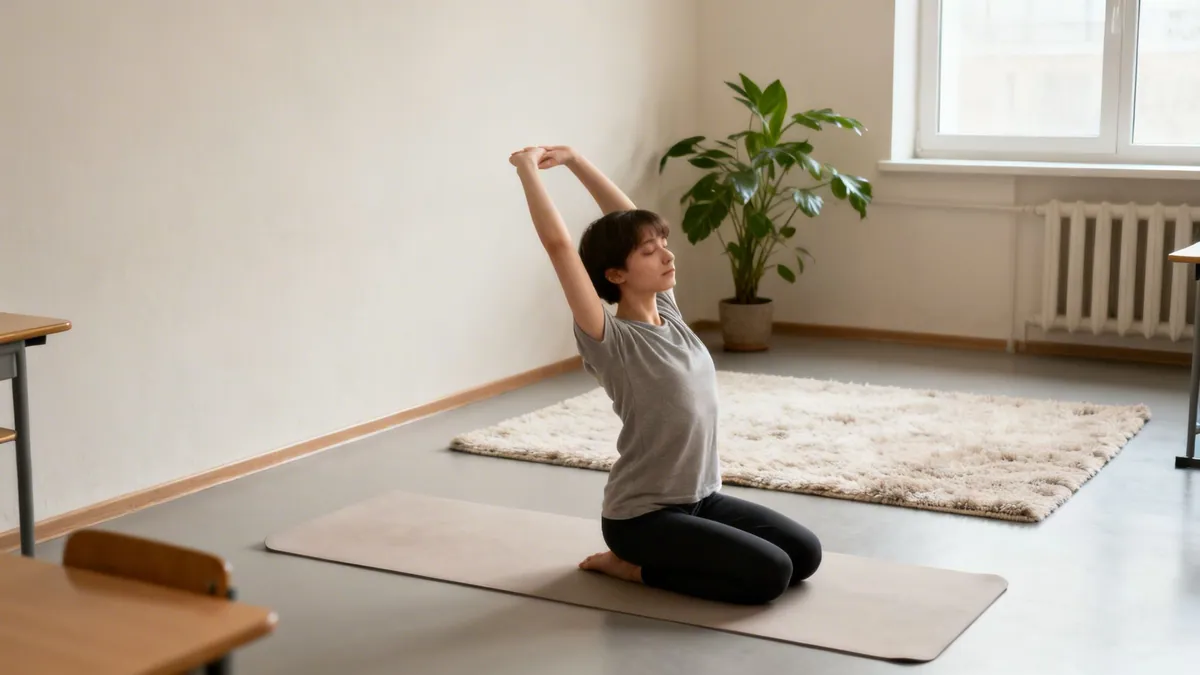
This approach is particularly effective because it addresses the physical manifestation of emotions. When we feel anxious or angry, our muscles often tense up. Mindful movement provides a direct pathway to interrupt this cycle, offering a physical outlet that simultaneously calms the nervous system. Whether through a "brain break" in the classroom or a guided relaxation session at home, it builds interoceptive awareness, the ability to sense what is happening inside your own body.