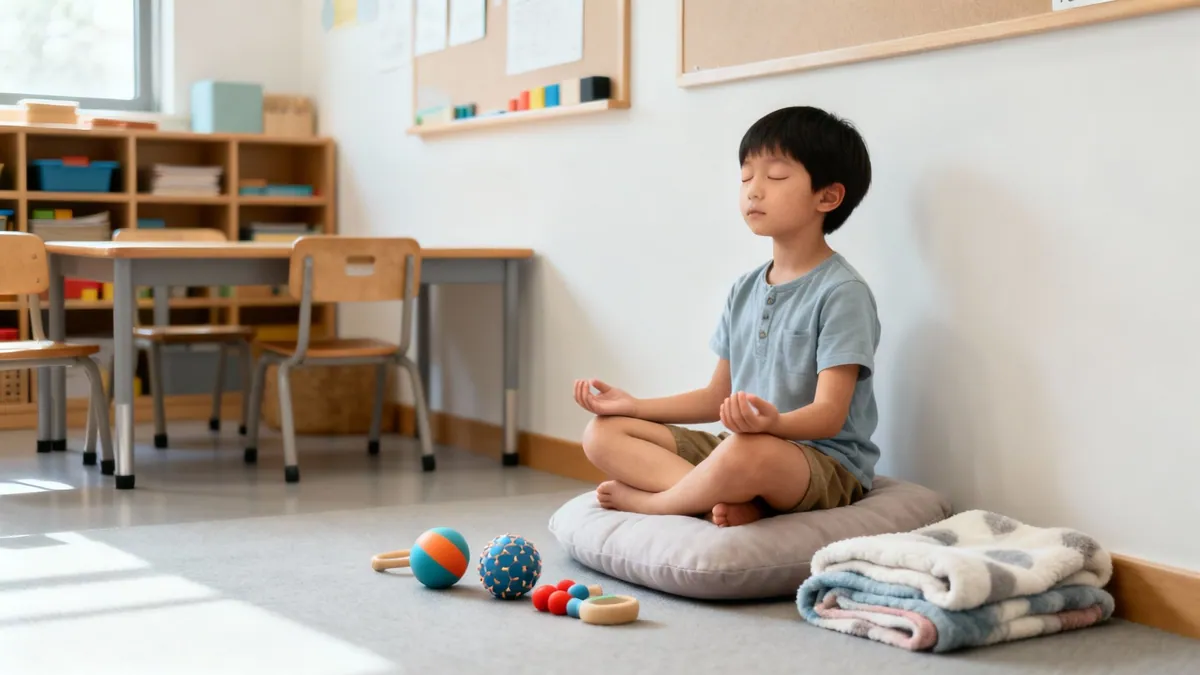
Effective SEL programs for schools aren’t just a “nice-to-have” anymore; they’re a foundational piece of a modern education. Think of them as an emotional operating system—the essential software that equips students with the core skills to manage academic pressures, navigate tricky social situations, and build a positive school culture from the ground up.
Why Effective SEL Programs Are No Longer Optional
Imagine a student’s education is a high-powered computer. You can load it up with the best programs—advanced math, engaging history lessons, creative arts—but none of it will run smoothly without a stable operating system.
That’s exactly what Social-Emotional Learning (SEL) is for our students. It’s the essential background processing that allows them to actually access academic content, manage stress, and work together. Without these skills, students often struggle to apply what they’re learning. SEL gives them the tools to not just succeed academically, but to thrive as well-rounded people.
The Core Competencies in Action
SEL is built on five core competencies that come to life every single day on campus. These aren’t just abstract concepts; they are the practical, real-world skills students use to navigate challenges big and small.
Self-Awareness: A student recognizes they feel anxious before a big presentation and understands that this feeling is making it hard to focus. Practical Example for Teachers: You might notice a student is tapping their pencil rapidly or avoiding eye contact. A simple, private check-in like, “I see you’re getting ready for your presentation. It’s normal to feel some butterflies. What’s one thing you’re most proud of in your work?” helps them name the feeling.
Self-Management: Instead of getting overwhelmed by that feeling, the student uses a deep-breathing technique they learned to calm their nerves and organize their thoughts. Practical Example for Parents: If your child is frustrated with their homework, you can say, “I can see this is really tough. Let’s try the ‘box breathing’ we learned: breathe in for four seconds, hold for four, out for four, hold for four. Let’s do it together three times before we look at the problem again.”
Social Awareness: During a group project, one student notices a classmate is unusually quiet and seems frustrated. They practice empathy by asking, “Is everything okay? How can we help?” Practical Example for Teachers: During group work, you can prompt students with, “Take a moment to check in with your team. Is everyone’s voice being heard? Does anyone look like they might have an idea but haven’t shared it yet?”
Relationship Skills: When a disagreement pops up about the project’s direction, the students use active listening and respectful communication to find a compromise, stopping the conflict before it escalates. Practical Example for Parents: If siblings are arguing over a toy, you can guide them by saying, “It sounds like you both want to play with the same thing. Let’s use our ‘I feel’ statements. Can you tell your sister, ‘I feel frustrated when you grab the toy from me’?”
Responsible Decision-Making: The group talks through their options, considers the consequences for everyone involved, and chooses a path that ensures the project is completed fairly and on time. Practical Example for Teachers: Before recess, you could pose a quick scenario: “If you see a new student standing alone on the playground, what are three different choices you could make? What might happen with each choice?” This helps them practice thinking through consequences.
These everyday scenarios show exactly why effective sel programs for schools are so critical. They help students move from simply reacting emotionally to responding thoughtfully. A huge part of this is giving children healthy coping mechanisms for complex emotions. Offering tools and resources for reducing anxiety in children is a perfect example of putting this into practice.
An effective SEL program doesn’t just teach students what to learn; it teaches them how to learn. It builds the resilience, focus, and collaborative spirit necessary for a productive and positive campus culture.
Ultimately, bringing SEL into your school is a strategic move to address some of education’s most persistent challenges. From boosting student mental health to reducing behavioral issues, these programs create an environment where both academic and personal growth can truly flourish. For a deeper dive into why this is so fundamental, you can explore more about why SEL matters for today’s students.
Exploring the Four Main Models of SEL Programs
Choosing the right SEL program for your school can feel like a huge task, but it helps to know they generally fall into four main models. Each one offers a different way to build social-emotional skills, and the best fit really depends on your school’s unique culture, resources, and goals.
Think of it like tending a school garden. You could plant seeds in individual pots, cultivate a large community plot, or enrich the existing soil everywhere. Similarly, SEL programs can be targeted or school-wide, structured or integrated. Getting a handle on these delivery methods is the first step toward finding a solution that will truly take root and flourish on your campus.
Structured Curriculum Programs
The most traditional model is a structured curriculum. This approach provides explicit, weekly lessons on specific SEL competencies, much like a dedicated math or reading block. It’s designed to ensure that SEL skills are taught consistently and systematically to every single student.
Picture a third-grade teacher leading a 20-minute lesson on empathy every Tuesday. The lesson might kick off with a story about a character who feels left out, followed by a class discussion and a role-playing activity where students practice inviting a classmate to join their game.
Pros: This model guarantees that all students receive direct instruction on core SEL skills. The lessons are often pre-planned, which is a huge time-saver for busy teachers.
Cons: It can sometimes feel like “one more thing” to cram into an already packed schedule. If the concepts aren’t connected to daily school life, the lessons risk feeling isolated from students’ real-world experiences.
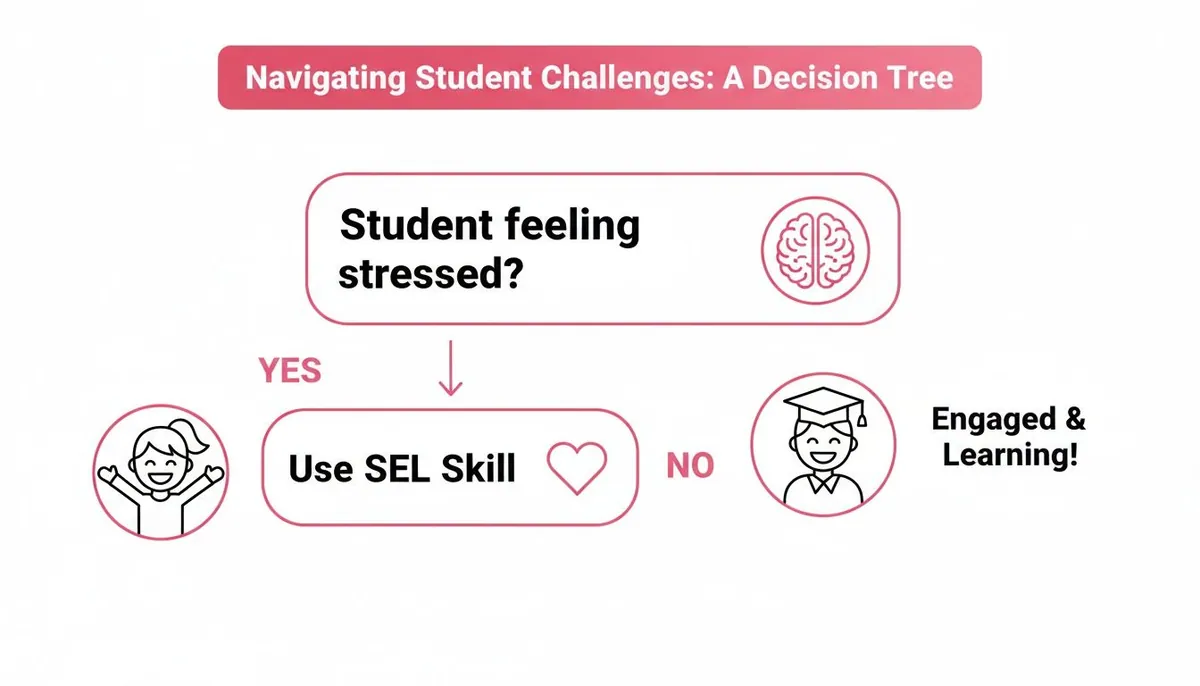
This decision tree shows how SEL skills can become the go-to tool for students navigating everyday challenges like stress.
The key insight here is that SEL gives students a proactive pathway. It empowers them to actively manage their feelings rather than just reacting to them.
Integrated Teacher Coaching
Another powerful approach is integrated teacher coaching. Instead of treating SEL as a separate subject, this model focuses on professional development that helps teachers weave SEL concepts directly into their existing academic instruction. It’s less about adding new lessons and more about enriching the ones already happening.
For instance, during a history lesson about a difficult event, a teacher coached in SEL might prompt students to discuss the different perspectives of the people involved (social awareness). Or, before a challenging science experiment, they might lead a brief goal-setting exercise to build perseverance (self-management). This method makes SEL a natural, seamless part of the learning process.
High-Impact Assemblies and Workshops
The third model centers on high-impact assemblies and workshops. These are school-wide events designed to build a shared language and collective excitement around a core SEL concept, like conflict resolution or creating a sense of belonging. They work as a powerful catalyst for a positive school culture.
A perfect example is a school hosting an assembly that introduces a memorable, easy-to-use tool for managing frustration. Students and staff learn the tool together, and it becomes a common reference point. When a conflict later pops up on the playground, a yard-duty supervisor can simply say, “Remember the ‘Peace Path’?” creating an immediate, shared understanding of how to resolve the issue constructively.
This model excels at creating a ripple effect. A single, powerful experience can introduce concepts and tools that teachers, students, and staff can refer to and build upon for the rest of the school year.
Supplementary App-Based Tools
Finally, supplementary app-based tools offer a digital way to reinforce SEL skills. These programs give students opportunities for personalized practice through games, journaling prompts, and interactive scenarios on tablets or computers.
Imagine a student using a school-approved app for 10 minutes during a quiet work period. The app might present them with a scenario about feeling disappointed and guide them through a virtual exercise on identifying their emotions and choosing a healthy coping strategy. These tools are excellent for reinforcing lessons and giving students a private space to practice self-awareness and self-management at their own pace.
Comparing SEL Program Models
To help you sort through these options, here’s a quick-reference table comparing the four main models. Use it to get a clearer picture of which approach might align best with your school’s current needs, resources, and long-term vision.
Program Model
Best For
Implementation Effort
Example in Action
Structured Curriculum
Schools needing a systematic, consistent approach that guarantees direct instruction for every student.
Medium to High: Requires dedicated time in the master schedule and teacher training on the curriculum.
A 30-minute SEL lesson on responsible decision-making is taught every Friday morning in all 4th-grade classrooms using a pre-made curriculum with videos and worksheets.
Integrated Coaching
Schools aiming to embed SEL into the fabric of daily academics, making it feel more natural and less like an “add-on.”
High: Requires significant investment in ongoing professional development and coaching for all teachers.
A science teacher uses a group lab experiment to explicitly teach collaboration, communication, and how to handle frustration when the experiment doesn’t work as planned.
Assemblies & Workshops
Schools looking to kickstart their SEL initiative, create a shared vocabulary, and build school-wide buy-in quickly.
Low to Medium: Involves scheduling the event and some light prep, but often relies on an outside provider for delivery.
An all-school assembly introduces a conflict-resolution tool called the “I-Message.” For the rest of the year, teachers and students use the phrase “Use your I-Message” on the playground and in the classroom.
App-Based Tools
Schools wanting to provide personalized, self-paced practice to reinforce concepts taught in other ways.
Low: Primarily involves procuring the software and integrating it into technology or quiet-time blocks.
During “choice time,” students spend 15 minutes twice a week on an app that provides scenarios for practicing empathy and identifying emotions in others.
Each model has its strengths, and it’s not an all-or-nothing choice. Many schools find the most success by blending elements from multiple approaches to create a custom SEL strategy that truly serves their community.
The Impact of Evidence-Based SEL Programs
Choosing to invest in SEL programs for schools is a big decision, but the results from evidence-based approaches really do speak for themselves. This isn’t just about making students feel good; it’s about creating tangible, measurable improvements in your school’s climate and even its academic outcomes. When students learn how to manage their emotions and build healthy relationships, the entire campus culture starts to shift for the better.
That shift creates a powerful ripple effect. A more positive school environment naturally leads to fewer behavioral issues, which means teachers can spend more of their precious time actually teaching. In turn, students feel safer and more connected, making them more open to learning and more willing to participate in class.
From a Safer Hallway to Higher Test Scores
The line between social-emotional skills and academic success is direct and well-documented. Students who develop skills like perseverance, focus, and responsible decision-making are simply better equipped to tackle tough academic material. They’re less likely to give up when they get frustrated and more likely to ask for help when they need it.
Let’s look at a real-world example. Imagine a middle school that decides to implement an SEL program focused on relationship skills and conflict resolution.
Before SEL: Hallway conflicts and minor scuffles between classes were a daily headache, causing frequent disciplinary referrals and lost instructional time. Students even reported feeling anxious during passing periods.
After SEL: The school introduces a shared language for disagreeing respectfully and solving problems. Teachers model these skills, and students get to practice them through role-playing in class. Six months later, the school sees a 30% reduction in hallway-related discipline incidents because students are using “I-statements” instead of shoving.
This isn’t just a behavioral win; it’s an academic one, too. The time teachers once spent managing conflicts is now dedicated to learning, and the drop in student anxiety creates a more focused educational environment for everyone. This is the kind of clear, positive outcome that helps administrators show the real value of their investment. You can see more data on how this works by reviewing the research behind Soul Shoppe’s programs.
The Data Behind Thriving School Communities
These positive effects aren’t just isolated stories. A massive review of 424 studies across 53 countries found significant boosts in school climate after SEL was introduced. The key findings? Stronger feelings of connection among students, better peer and teacher relationships, a noticeable drop in bullying, and an increased sense of safety.
On top of that, a national survey showed 83% of principals now use SEL curricula, with 72% reporting that it’s effective for supporting youth mental health. For a deeper dive, you can explore the full 2023 year-in-review on SEL trends.
An evidence-based SEL program is not an expense; it is a strategic investment. It builds the foundational skills that reduce behavioral issues, foster a positive climate, and directly support the academic mission of the school.
This kind of data gives school leaders the compelling evidence needed to advocate for funding and get buy-in from staff, parents, and the district. When you frame SEL as a core strategy for student success, you can make a powerful case that it’s an essential piece of a modern, effective education. The evidence is clear: when students thrive emotionally, they thrive academically.
How to Choose the Right SEL Program for Your Campus
Picking the right partner from the many sel programs for schools is a huge decision, one that will echo through your campus culture for years to come. To get it right, you have to look past the glossy brochures and slick marketing claims. This isn’t about buying a product; it’s about choosing a long-term partner for your school’s mission.
A truly great program won’t feel like a separate, add-on initiative. It should weave itself into your school’s unique ecosystem, feeling more like a set of tools that amplify the good work you’re already doing. To find that perfect fit, you need a clear set of criteria to sift through the options.
Start with Evidence and Alignment
First things first: any program you consider needs to have a solid foundation in evidence. An evidence-based program is one that’s been tested and proven to deliver measurable, positive outcomes. For the sake of your students and your budget, this is completely non-negotiable.
Just as important is cultural alignment. The program’s content has to connect with your student body. It should reflect their lived experiences and offer tools that feel relevant and useful to every single child, no matter their background.
Here are a few questions to get your initial review started:
Is the program backed by research? Ask vendors for the studies or data that prove its effectiveness in schools like yours.
Is the content culturally responsive? How does the program make sure its materials are inclusive and respectful of diverse family structures, cultures, and identities? For example, do scenarios include different types of families and names from various cultural backgrounds?
Can it adapt to our school’s specific needs? A one-size-fits-all approach almost never works. Look for flexibility.
Evaluate Teacher Support and Professional Development
You could have the best curriculum in the world, but it will fall flat if your teachers aren’t equipped and excited to use it. A top-tier SEL provider knows their job doesn’t end when the boxes of materials arrive. They stick around, offering robust, ongoing support to make sure your educators feel confident and competent.
A program’s commitment to professional development is a direct reflection of its commitment to your school’s long-term success. A single, one-off training day is not enough; look for a partner who offers sustained coaching and support.
When you’re talking with potential vendors, dig deep into their training models. Vague promises of “support” just won’t cut it. You need specifics that prove they’ll be a true partner to your staff.
Sample Questions for Vendors:
What does your initial training for our teachers actually look like? Is it a lecture, or is it interactive and hands-on?
Do you offer ongoing coaching or professional learning communities for our staff? For instance, will a coach visit our classrooms to provide feedback?
What specific tools do you provide for teachers to weave these skills into daily instruction, not just during a 30-minute SEL block? Do you provide sample scripts or question stems?
Can you share a case study from a school with a similar demographic to ours?
Look for Strong Family and Community Engagement
Social-emotional learning doesn’t stop when the school bell rings. The most successful sel programs for schools build a bridge from the classroom to the living room. They give parents and caregivers resources and strategies to reinforce the very same skills their kids are learning on campus.
This creates a consistent emotional language that supports a child in every part of their life. When parents are actively engaged, they become powerful allies. So, you’ll want to look for programs that have a real, intentional family engagement component.
This might look like:
Parent workshops or virtual training sessions that teach them the same coping strategies their children are learning.
Take-home activities or conversation starters for families, like a “dinner table question” related to empathy.
A dedicated app or portal with resources just for parents, such as short videos explaining how to handle common behavioral challenges at home.
By following this kind of structured evaluation, you can move forward confidently, knowing you’re choosing a program that won’t just check a box, but will become a true partner in building a thriving, emotionally intelligent school community.
A Step-by-Step Guide to Implementing an SEL Program
Rolling out a new social-emotional learning program isn’t a one-and-done event. It’s a journey. If you rush it, you risk creating confusion and meeting resistance from your staff. But when you treat it like the thoughtful process it is, you can weave SEL into the very fabric of your school’s culture for years to come.
Breaking the implementation down into clear, manageable steps is the key. It helps you build momentum, overcome common hurdles like staff skepticism, and bring your entire community along for the ride. Think of this as your roadmap from the initial spark of an idea to sustained success.
Phase 1: Build an SEL Team and Assess Needs
Before you can decide where you’re going, you need a team to help navigate. The first step is to assemble a small, dedicated SEL committee. Pull together a diverse group of administrators, teachers from different grade levels, your school counselor, and maybe even a parent representative. These folks will become the champions and core planners for the whole initiative.
Their first mission? To get a crystal-clear picture of your school’s current social-emotional landscape. What are your real strengths, and where are the most pressing challenges?
Dig into the Data: Start by looking at what you already have. Review school climate surveys, attendance sheets, and discipline records to spot any patterns. For example, do discipline referrals spike during recess or in the cafeteria? This could point to a need for conflict-resolution skills.
Listen to Your People: Send out short, anonymous surveys or hold informal focus groups with staff and students. Ask simple but powerful questions like, “What’s the biggest challenge students run into when working in groups?” or “When do you feel most supported at school?” A common answer like “Students get frustrated and give up” indicates a need for self-management and perseverance strategies.
This initial groundwork gives you the “why” behind the entire process. It’s what helps you choose a program that actually solves your school’s problems, not just one that checks a box.
Phase 2: Secure Buy-In from Staff and Stakeholders
Let’s be honest: no new initiative gets off the ground without widespread support. Getting true buy-in means connecting SEL directly to the daily realities of your teachers, staff, and families. You have to frame it not as “one more thing” on their plate, but as a powerful tool that makes their jobs easier and students’ lives better.
The most effective way to build support is to show, not just tell. Demonstrate how SEL skills can lead to a more manageable and engaged classroom, directly addressing common pain points like student disengagement and teacher burnout.
A great way to do this is by running a small pilot program with a handful of enthusiastic volunteer teachers. After six weeks, share their success stories and, more importantly, their data. Imagine presenting a simple chart showing a 25% decrease in classroom disruptions for the pilot group. That’s far more persuasive than just talking about potential benefits.
Phase 3: Plan the Launch
With your team in place and support starting to build, it’s time to map out the official launch. A great kickoff event does more than just announce the program—it generates real excitement and establishes a shared language from day one. This is your chance to set a positive, unified tone for the whole school year.
Consider launching with a high-energy, all-school assembly. You could introduce a new school motto tied to an SEL skill, like “Hawks Help Each Other Soar,” to reinforce relationship skills and social awareness. The key is to follow it up immediately with classroom activities that connect to the assembly’s theme, making sure the message travels from the auditorium right back to each student’s desk. For example, after the assembly, each class could create a poster illustrating what “Hawks Help Each Other Soar” looks like in the classroom, on the playground, and in the cafeteria.
Phase 4: Provide Effective and Ongoing Training
A single day of training won’t create lasting change. It just won’t. To be effective, professional development has to be practical, ongoing, and genuinely supportive. Your staff needs to feel confident and fully equipped to bring these new skills into their daily routines.
This means getting beyond theory and focusing on strategies teachers can use in their classrooms the very next day. To ensure the program is used as intended, many schools seek professional coaching support for their staff. High-quality support from a professional development program can provide the sustained coaching teachers need to feel like they’ve truly mastered these skills.
Phase 5: Monitor, Refine, and Celebrate
Implementation is an active process, not a “set it and forget it” task. You need a simple system for monitoring progress and gathering feedback so you can make smart adjustments along the way.
Regular Check-ins: Use quick surveys or short discussions during staff meetings to ask teachers what’s working and what isn’t. An example question could be: “Which SEL strategy have you used most this week, and how did it go?”
Listen to Students: Hold quarterly focus groups with a few students to hear their side of the story. Ask them things like, “Have you used the ‘calm-down corner’ this month? How did it help?” or “Can you tell me about a time you used an ‘I-message’ with a friend?”
Celebrate the Wins: Publicly acknowledge progress, no matter how small. Share stories of students successfully resolving conflicts or teachers noticing better cooperation in the school newsletter. For instance, “A huge shout-out to Mrs. Davis’s class for their amazing teamwork on their science projects this week!” This reinforces the value of what you’re doing and keeps everyone motivated.
How to Measure the Success of Your SEL Investment
You can have the most amazing program on paper, but it’s doomed to fail if it doesn’t have genuine support from the people who will live with it every day. The real success of bullying prevention programs for schools comes down to building momentum and commitment from your staff, students, and families.
This isn’t just about sending a memo. It’s about making everyone feel like a valued partner in creating a safer, kinder school community. The launch is a critical moment that sets the tone for everything to follow. Without that school-wide buy-in, even the best-designed program feels like just another top-down mandate.
Earning Teacher and Staff Support
Your teachers and support staff are on the front lines. Their enthusiasm is non-negotiable.
The best way to get them on board? Involve them from the very beginning. When staff feel they have a voice in choosing the program, they develop a sense of ownership that you just can’t manufacture after the fact.
Then, ditch the dry, lecture-style training. Make professional development interactive and immediately useful by focusing on practical tools they can implement the next day.
Host a role-playing session where teachers practice using specific, calm language to intervene when they see teasing. For example, they could practice saying, “I’m hearing words that could be hurtful. Let’s talk about this a different way.”
Share simple, 5-minute activities like a “compliment circle” that can be woven into morning meetings to build community and positive peer relationships.
Provide clear, concise guides on how to respond to and report incidents. A flowchart showing the exact steps to take—from the initial conversation to filling out a report—can remove ambiguity and empower staff to act confidently.
When training is hands-on and relevant, teachers see the program as a support system, not another box to check. Investing in high-quality training is essential, and a well-structured professional development program for teachers makes all the difference.
Empowering Students as Leaders
Students are more than just recipients of a bullying prevention program—they are its most powerful champions. When they take an active role, the entire school culture can shift. The goal is to move from a program that is done to them to one that is done with them.
Think about creating opportunities for students to lead the charge. This not only builds their own skills but also ensures the program’s message resonates authentically with their peers.
Key Takeaway: Student-led initiatives create a powerful ripple effect. Peer-to-peer influence is often more impactful than adult directives, making students essential partners in building a positive school climate.
Here are a few practical ways to get students involved:
Create a Peer Leadership Team: Train a group of students to act as “upstanders” and mediators. A practical example is teaching them to spot a classmate who is eating alone and inviting that student to join their table.
Plan Student-Led Assemblies: Let students design and run an assembly to kick off the program. They can create skits showing real-life scenarios, like how to respond when a friend starts a mean rumor, and present the core ideas in a way that truly connects.
Establish a Student Advisory Council: Form a group that meets regularly with school leaders to give feedback. For instance, they could identify “hotspots” on campus where they feel unsafe and brainstorm solutions with the principal, like adding a new game to the recess area to reduce conflict.
Turning Families into Active Partners
Parents and caregivers are your most important allies for extending the program’s values beyond school hours. Engaging them means turning them into genuine partners who understand the goals and can reinforce the same lessons at home.
A deep NIH review of interventions found that programs with strong parent involvement were significantly more successful in reducing bullying. It’s clear that a comprehensive strategy that includes families is a key component of what works.
Host parent workshops that are practical and engaging. Instead of just presenting information, share a common language for discussing empathy and respect. Give them simple tools they can use right away. For example, a workshop could focus on teaching parents how to ask open-ended questions like, “What was something kind you did for someone today?” instead of “How was school?”
When parents feel equipped and included, they become powerful advocates for the school’s efforts.
Measuring Success and Sustaining Long-Term Impact
Launching a new program is a huge accomplishment, but the real work starts after the rollout. How do you know if your efforts are actually making a difference? And how do you keep the momentum going year after year?
Measuring success isn’t just about hoping for the best; it’s about tracking real progress. This means moving beyond a one-and-done initiative and building an ongoing cultural commitment. To get the full picture of your school’s climate, you’ll need a mix of hard data and human stories. This continuous feedback loop is what makes bullying prevention programs for schools truly stick.
Blending Quantitative and Qualitative Data
The most effective way to see your impact is to use two kinds of information. Quantitative data gives you the numbers—the measurable shifts in behavior and perception. This is the evidence that often speaks loudest to stakeholders and school boards.
But numbers alone don’t tell the whole story. That’s where qualitative feedback comes in. These are the stories, observations, and personal experiences that provide context. They help you understand the why behind a trend, offering rich insights into how students and staff are really feeling.
Here’s how you can gather both:
For Quantitative Metrics (The “What”):
Incident Reports: Are disciplinary referrals for pushing on the playground down by 20% compared to last semester? Tracking this over several months is a powerful indicator.
School Climate Surveys: Run an anonymous survey before the program starts and again at the end of the year. Look for a measurable increase in the percentage of students who answer “Agree” to the statement, “There is at least one adult at school I can talk to if I have a problem.”
Attendance Records: Bullying is a common reason for absenteeism. If you see an uptick in overall attendance, it can be a sign that students feel safer coming to school.
For Qualitative Feedback (The “Why”):
Student Focus Groups: Get a small, diverse group of students together for an informal chat. Ask open-ended questions like, “Can you tell me about a time you used one of the ‘peace tools’ we learned this year to solve a problem with a friend?”
Teacher Observation Notes: Encourage staff to jot down specific examples of students using the program’s skills—like a third-grader who uses an “I-statement” to tell a classmate they feel left out of a game.
Parent-Teacher Conference Comments: Listen for anecdotal feedback from families. A parent mentioning their child seems happier or is using new emotional vocabulary at home is a huge win. For example, “He told his little sister he needed some ‘cool-down time’ instead of yelling at her. I’ve never heard him say that before!”
Creating a Cycle of Continuous Improvement
A program can’t be set in stone; it has to evolve with your school. The data you collect is only useful if you act on it. This is how you create a powerful cycle of continuous improvement.
For example, imagine your surveys show that while physical bullying has decreased, online incidents are ticking up. That data gives you a clear road map. The practical response might be to work with the student advisory council to create a student-led campaign on responsible social media use or add a new lesson on cyberbullying for your middle schoolers.
This process isn’t about finding flaws. It’s about staying responsive to what your community needs right now.
By scheduling regular check-ins to review your data, you transform your bullying prevention program from a static curriculum into a living, breathing strategy that grows with your school.
Practical Steps for Long-Term Sustainability
Keeping the energy alive requires a clear plan. Without ongoing attention, even the most amazing programs can lose steam.
Here are a few simple, actionable steps to keep your program strong for the long haul:
Schedule Annual Refresher Trainings: Staff turnover is a reality in any school. Start each year with a brief but engaging refresher. For example, dedicate 30 minutes of the first staff meeting to role-playing how to respond to common bystander scenarios.
Integrate It Into Onboarding: Make program training a non-negotiable part of the onboarding process for every new hire. Give them a “buddy” who is an experienced staff member they can ask questions about the school’s culture of respect.
Celebrate Successes Publicly: Share positive data points and success stories in the school newsletter, at assemblies, or on social media. When the community sees the program is working, their buy-in deepens. For example, you could feature a “Kindness Corner” in the newsletter with shout-outs to students who have been caught being exceptionally helpful or inclusive.
By measuring what matters and adapting based on what you learn, your bullying prevention efforts can build a kinder, more supportive school community that truly lasts.
Common Questions About Bulking Prevention Programs
Even with the best roadmap, launching a new school-wide initiative is going to bring up questions. Practical hurdles are just part of the process. Getting ahead of them is much easier when you have clear, honest answers ready to go.
Think of this as your field guide to troubleshooting the most common concerns we hear from administrators, teachers, and parents when they’re getting a bullying prevention program off the ground.
How Do We Get Funding for a Bullying Prevention Program?
Let’s be honest: the budget is often the first and biggest hurdle. The trick is to frame the program not as another expense, but as a critical investment in your school’s academic success and emotional health.
Start by looking for federal and state grants that are focused on school safety, mental health, or creating positive school climates. You’d be surprised how many are designed specifically to support this kind of work. Your local community is another powerful resource.
Partner with your PTA or PTO. They can run dedicated fundraising drives, like a “Fun Run for Friendship,” where proceeds go directly to funding the program’s materials and training.
Look into local community foundations. Many businesses and corporate sponsors want to invest in their local schools. A local real estate agency, for example, might be willing to sponsor a “Kindness Week” in exchange for being recognized as a community partner.
Let your data do the talking. This is where your needs assessment becomes your most powerful tool. Show them the numbers—the survey results, the incident reports. This isn’t just an abstract idea; you’re showing them a tangible problem and exactly how this program will create a better, safer learning environment for every single student.
How Should We Handle Parent Pushback on a New Program?
Hesitation from parents almost always comes from a place of uncertainty. They don’t have enough information, or they’re worried about what a new program really means. The best way to get them on board is with proactive, transparent communication that positions them as partners from day one.
Don’t wait for resistance to build. Before you even think about launching, host an info night—offer both in-person and online options—to walk families through the “why” and “how.” Share the key findings from your needs assessment so they see the specific challenges you’re trying to solve.
When parents see that a program is about teaching life skills like empathy and conflict resolution—not just punishment—they are far more likely to become your biggest advocates.
Give them simple, practical tools that connect what’s happening at school to what happens at home. A one-page handout with a few conversation starters or calming techniques taught in the program can make all the difference. For example, provide a magnet for the fridge that shows the “Stop, Walk, and Talk” strategy for handling conflicts, so parents can use the exact same language their kids are learning in class.
Our Staff Is Already Overwhelmed. How Do We Add This Without Causing Burnout?
This is the big one. If you ignore this concern, the program is doomed before it starts. The only way this works is if the program you choose integrates into the school day, not feel like one more thing piled onto a teacher’s already-full plate.
The secret is to pick a program that actually makes a teacher’s job easier. Look for curriculum with flexible, short “teachable moments” that can be woven into a morning meeting or advisory period. A five-minute breathing exercise to start the day or a quick de-escalation phrase can save a teacher 30 minutes of classroom management later.
Here’s how you make sure the program supports your staff instead of straining them:
Focus on practical training. Professional development shouldn’t be theoretical. It needs to give teachers tools that save time and reduce friction in the classroom. When a teacher learns a simple technique like the “two-minute reset” that peacefully resolves a dispute in seconds, they’ll see the program as a win, not a burden.
Give them a voice in the selection process. When teachers help choose the program, they can advocate for one that feels manageable and relevant to their classroom. This creates a sense of ownership right from the start.
Start small. You don’t have to roll out every single component at once. Phase the implementation. For example, in the first semester, focus only on implementing morning meetings. Once that becomes a comfortable routine, you can introduce peer mediation in the second semester.
By tackling these common hurdles with thoughtful planning and clear communication, you can build the broad support your program needs to create real, lasting change in your school.
At Soul Shoppe, we provide schools with the tools, training, and support needed to build a culture of kindness and safety from the ground up. Explore our programs and see how we can help your school thrive at soulshoppe.org.
Welcome, parents and educators! In a world where academic achievement often takes center stage, we know a child’s ability to understand and manage their emotions is just as critical for a happy, successful life. This ability, known as emotional intelligence (EI), is the bedrock of resilience, empathy, and strong relationships. It’s the difference between a child who shuts down when frustrated and one who can say, “I’m feeling overwhelmed and need a moment.”
But how do we move beyond theory and actively build these essential skills? This guide provides a comprehensive collection of powerful, practical, and engaging emotional intelligence activities for kids from kindergarten through 8th grade. We believe in an experiential learning approach where children learn best by doing, so each activity is designed to be hands-on and memorable.
Inside, you will find a curated list of activities organized by core social-emotional learning (SEL) competencies. For each one, we provide:
Clear learning goals to target specific skills.
Step-by-step instructions for easy implementation.
Practical examples for both home and classroom settings.
Adaptations for different age groups and needs.
This isn’t just a list; it’s a toolkit. Our goal is to equip you with actionable strategies to foster emotionally intelligent children who can thrive in the classroom, on the playground, and in life. Let’s dive in and empower our kids with the tools they need to understand their inner world and connect meaningfully with the world around them.
1. Emotion Charades
Emotion Charades is a classic, interactive game that transforms the abstract concept of feelings into a physical, engaging activity. In this game, children act out different emotions using only facial expressions, gestures, and body language while their peers try to guess the feeling. This simple yet powerful exercise is one of the most effective emotional intelligence activities for kids because it directly targets the foundational skill of identifying and interpreting nonverbal emotional cues.
The game builds a child’s emotional vocabulary and enhances their ability to recognize feelings in themselves and others, a cornerstone of self-awareness and social awareness.
Learning Goals & Core Skills
Primary Goal: To improve the ability to identify and label a wide range of emotions.
Core SEL Skills: Self-Awareness (recognizing one’s own feelings), Social Awareness (interpreting others’ nonverbal cues).
Additional Benefits: Enhances empathy, develops nonverbal communication skills, and builds a shared emotional language within a group.
How to Play: Step-by-Step Instructions
Prepare Emotion Cards: Create a set of cards with different emotions written or drawn on them. Start with basic feelings like happy, sad, angry, and scared for younger children (K-2). For older students (Grades 3-8), introduce more complex emotions like frustrated, jealous, proud, anxious, or relieved.
Explain the Rules: The rules are simple. One player draws a card and acts out the emotion without using words or sounds. The other players guess the emotion.
Model the Activity: The facilitator (teacher, counselor, or parent) should go first to model how to use their face and body to express an emotion. For example, to model ‘frustrated,’ you could furrow your brow, cross your arms tightly, and make a few huffing breaths.
Take Turns: Have students take turns drawing a card and acting. Encourage the audience to pay close attention to the actor’s facial expressions and body posture.
Debrief and Discuss: After each round or at the end of the game, hold a brief discussion. Ask questions like, “What clues helped you guess that feeling?” or “When have you felt that way before?” For example, after someone acts out ‘disappointed,’ you could ask, “What might make someone feel disappointed at school?”
Pro-Tip: For a successful session, create a safe and supportive environment. Remind children that there are no “wrong” ways to express an emotion and that all feelings are valid.
Classroom and Home Adaptations
Morning Meetings: Use Emotion Charades as a quick, 5-minute icebreaker to start the day on a positive, connected note.
Small Group Counseling: School counselors can use this activity in small groups to help students who struggle with emotional expression or identification in a more focused setting.
Family Game Night: Parents can easily adapt this at home with homemade cards. It’s a fun way to open up family conversations about feelings. For instance, after a child guesses “frustrated,” a parent could share, “I feel frustrated sometimes when I’m stuck in traffic. What makes you feel frustrated?”
For more structured social-emotional learning, Soul Shoppe’s programs often integrate dynamic activities like this to create a common language around emotions in the school environment. This simple game serves as a powerful building block for more advanced emotional intelligence.
2. Feelings Journal with Visual Prompts
A Feelings Journal is a reflective practice where children regularly record and explore their emotions using writing, drawing, or a combination of both. By using visual prompts like emotion wheels or feeling faces charts, this activity helps students identify and name their feelings, making it one of the most effective personal emotional intelligence activities for kids. This consistent practice builds a strong foundation for self-awareness and self-management by creating a private space for introspection.
The journal acts as a tangible tool for children to track their emotional patterns over time. This process helps them understand the connection between events, thoughts, and feelings, which is a critical step toward developing healthy coping strategies.
Learning Goals & Core Skills
Primary Goal: To build the habit of self-reflection and improve the ability to label and understand one’s own emotions.
Core SEL Skills: Self-Awareness (identifying emotions), Self-Management (managing emotions, self-motivation).
Additional Benefits: Enhances writing and drawing skills, fosters introspection, provides a healthy emotional outlet, and helps identify students who may need extra support.
How to Play: Step-by-Step Instructions
Introduce the Journal: Provide each child with a notebook or journal. Explain that it is a safe space to explore their feelings. Establish clear privacy expectations from the start.
Provide Visual Aids: Offer visual prompts like an emotion wheel, a chart of feeling faces, or a color-to-emotion key. For younger students (K-2), they can simply circle or draw the face that matches their feeling.
Use Sentence Starters: Guide the journaling process with simple, open-ended prompts. Practical examples include: “Today I felt… because…”, “Something that made me feel proud was…”, “I felt worried when…”, or “My body felt… when…”.
Establish a Routine: Dedicate a consistent time for journaling, such as the first 10 minutes of class (a “feelings check-in”) or before dismissal. Routine helps make emotional reflection a natural habit.
Model and Share (Optional): The facilitator can model vulnerability by sharing an appropriate, age-relevant feeling. For example, “Today, I felt a little nervous before our assembly, so in my journal, I wrote about what made me nervous and took a few deep breaths.” This normalizes expressing emotions.
Pro-Tip: Emphasize that there are no “right” or “wrong” feelings. The goal is simply to notice and name them. A judgment-free environment is essential for honest self-reflection.
Classroom and Home Adaptations
Daily Emotion Check-ins: Teachers can use journals as a morning bell-ringer activity. A quick review can give a valuable snapshot of the classroom’s overall emotional climate.
Small Group SEL Coaching: School counselors can use journals in small groups to track progress and guide conversations about specific emotional challenges, like managing anger or anxiety.
Bedtime Routine at Home: Parents can incorporate a feelings journal into a child’s bedtime routine. Asking “What was the best part of your day and how did it make you feel?” opens up communication and helps children process their day before sleep.
Tools like the Soul Shoppe digital app offer guided emotional reflection features that can supplement a physical journal. By making time for this quiet, personal activity, educators and parents empower children to become experts on their own emotional worlds.
3. Restorative Circles and Talking Piece Practices
Restorative Circles are a structured practice where students sit in a circle to communicate, build community, and repair harm. Rooted in indigenous traditions, this process uses a “talking piece” (a special object) to ensure that one person speaks at a time while others listen actively and respectfully. This is one of the most profound emotional intelligence activities for kids as it shifts the focus from punishment to understanding, accountability, and connection.
This practice directly teaches children how to express their feelings, listen with empathy, and collaboratively solve problems, which are crucial skills for managing relationships and making responsible decisions.
Learning Goals & Core Skills
Primary Goal: To build a safe community for open communication and to repair relationships after conflict.
Core SEL Skills: Social Awareness (empathy, perspective-taking), Relationship Skills (communication, conflict resolution), Responsible Decision-Making (analyzing situations, ethical responsibility).
Additional Benefits: Fosters a sense of belonging, promotes accountability, reduces disciplinary issues, and teaches active listening.
How to Play: Step-by-Step Instructions
Arrange the Circle: Have participants sit in a circle where everyone can see each other. There should be no tables or desks in the middle.
Establish Agreements: The facilitator (teacher or counselor) co-creates guidelines with the group. These often include: respect the talking piece, listen from the heart, speak from the heart, and what’s said in the circle stays in the circle.
Introduce the Talking Piece: Explain that only the person holding the talking piece may speak. This could be a smooth stone, a small stuffed animal, or a decorated stick.
Pose a Prompt: The facilitator starts with a question or prompt. Practical examples: For community-building, use prompts like, “Share one high and one low from your weekend,” or “Share a time someone was kind to you this week.” For conflict resolution, it could be, “What happened, and how did it affect you?”
Pass the Piece: The facilitator starts and then passes the talking piece around the circle. Students can choose to speak or pass. The circle continues until everyone who wishes to speak has had a turn.
Close the Circle: End with a closing sentiment or a summary of what was shared, reinforcing the sense of community.
Pro-Tip: Always allow students the option to “pass.” Forcing participation can undermine the psychological safety that is essential for a successful circle. The right to be silent is just as important as the right to speak.
Classroom and Home Adaptations
Daily Check-Ins: Use a quick circle for morning meetings. A simple prompt like, “Share one word describing how you feel today,” can help students practice self-awareness and build empathy.
Conflict Resolution: When a conflict arises between students, a restorative circle can be used to repair harm. The facilitator guides them through questions like, “What were you thinking at the time?” and “What do you need to move forward?”
Family Meetings: At home, families can use a talking piece to discuss household chores, plan a vacation, or work through a disagreement. This ensures everyone, even the youngest child, has a voice.
Restorative practices are a cornerstone of Soul Shoppe’s programs, creating classroom environments where every child feels heard and valued. To dig deeper into this transformative approach, you can learn more about what restorative practices in education look like and how they build safer schools.
4. The Feelings Temperature Check (Mood Meter)
The Feelings Temperature Check, often called a Mood Meter, is a quick assessment tool where children rate their current emotional state on a visual scale. Instead of a simple “good” or “bad,” this activity encourages kids to identify the intensity and nuance of their feelings using a thermometer, color scale, or numbered range. This is one of the most practical emotional intelligence activities for kids because it builds emotional granularity, which is the ability to put feelings into specific words.
This daily practice helps children become more aware of their internal state, which is the first step toward learning how to manage their emotions effectively.
Learning Goals & Core Skills
Primary Goal: To develop emotional granularity and self-awareness by regularly identifying and rating the intensity of feelings.
Core SEL Skills: Self-Awareness (identifying emotions), Self-Management (recognizing the need for regulation strategies).
Additional Benefits: Normalizes conversations about feelings, helps teachers identify students needing support, and provides a starting point for emotional regulation discussions.
How to Play: Step-by-Step Instructions
Create a Visual Scale: Design a visual tool. For younger children (K-2), a color-coded chart (blue for low energy, green for calm, yellow for energetic, red for high-alert) or a simple 1-3 thermometer works well. For older students (Grades 3-8), use a numbered scale from 1-10 or a quadrant-style mood meter with more complex emotions.
Introduce the Concept: Explain that feelings have different energy levels or “temperatures.” Model how to use the scale. For example, a teacher might say, “This morning, I’m feeling calm and focused, so I’m in the green zone. Yesterday, I was a little stressed about traffic, so I was in the yellow zone.”
Incorporate into Routines: Make this a regular check-in. Students can point to their “temperature” on a classroom chart, hold up fingers (1-5), or write their number on a sticky note.
Invite (Don’t Force) Sharing: After the check-in, ask if anyone would like to share why they chose that number or color. Keep it optional to create a low-pressure environment.
Connect to Strategies: Use the check-in to discuss self-regulation. Ask, “If you’re feeling at an 8, what is a tool you could use to get back to a 5 or 6?”
Pro-Tip: Track responses over time (privately for individual students) to notice patterns. A student who is consistently in the “red zone” may need additional, targeted support from a teacher or counselor.
Classroom and Home Adaptations
Morning Meetings: Start the day with a “show me your number” check-in where students use their fingers to indicate their emotional state. It gives the teacher a quick read of the room.
School Counselor Check-ins: Counselors can use a mood meter at the beginning of each session to track a student’s emotional progress and open a conversation about their week.
Family Dinner Conversation: Parents can use a simple 1-5 scale at the dinner table. “Let’s go around and share our number for the day.” This opens the door to family discussions about everyone’s highs and lows.
Activities like the Feelings Temperature Check are fundamental to the work we do at Soul Shoppe. By giving students a simple tool to check in with themselves, we empower them to take the first and most critical step in managing their emotional lives.
5. Empathy Interviews and Pair Shares
Empathy Interviews and Pair Shares is a structured dialogue activity where students interview each other to deepen understanding and connection. This exercise moves beyond casual conversation by using guided, open-ended questions about experiences, feelings, and values. By creating a dedicated space for one student to speak and another to listen actively, it powerfully cultivates empathy and perspective-taking.
This practice is one of the most effective emotional intelligence activities for kids as it teaches them to become genuinely curious about another person’s inner world. It directly builds the skills needed for strong, supportive relationships and effective communication, making it a cornerstone for a positive classroom or home environment.
Learning Goals & Core Skills
Primary Goal: To develop empathy and active listening skills by understanding another person’s perspective.
Core SEL Skills: Social Awareness (understanding others’ perspectives), Relationship Skills (communicating effectively and building positive connections).
Additional Benefits: Fosters a sense of community, builds trust and psychological safety, and enhances conflict resolution skills.
How to Play: Step-by-Step Instructions
Prepare Interview Questions: Create a list of thoughtful, open-ended questions. Practical examples: For younger children (K-2), use simple prompts like, “Tell me about a time you felt really happy,” or “What is your favorite thing to do with your family?” For older students (Grades 3-8), ask deeper questions such as, “Describe a challenge you overcame and how it made you feel,” or “What is something you are proud of?”
Explain the Roles: Pair students up. Designate one as the “Interviewer” and the other as the “Storyteller.” The Interviewer’s job is to listen carefully without interrupting. The Storyteller’s job is to share openly.
Model Active Listening: Demonstrate what active listening looks like: maintaining eye contact, nodding, and asking curious follow-up questions. Emphasize that the goal is not to talk about yourself but to learn about your partner.
Set a Timer: Give each student 5-10 minutes to interview their partner. Announce when it’s time to switch roles so both have a chance to share and listen.
Debrief as a Group: After both partners have shared, bring the group back together. Ask reflection questions like, “What is one new thing you learned about your partner?” or “How did it feel to be listened to so carefully?”
Pro-Tip: Emphasize confidentiality within each pair to build trust. Remind students that the stories shared are to be respected and not repeated outside of their conversation unless permission is given.
Classroom and Home Adaptations
New Student Icebreaker: Pair a new student with a classmate for an empathy interview to help them feel seen and integrated into the classroom community.
Conflict Resolution: After a disagreement, guide the involved students through an empathy interview to help them understand each other’s feelings and perspectives. This is a foundational practice to help teach empathy in a practical way.
Family Dinner Connection: Parents can use prompt cards at the dinner table with questions like, “What was the best part of your day and why?” Everyone takes a turn being the “storyteller” while the rest of the family practices active listening.
Soul Shoppe programs often use pair-share exercises like this to break down social barriers and build a cohesive, empathetic school culture where every student feels heard and valued.
6. Emotion Regulation Strategy Toolbox
An Emotion Regulation Strategy Toolbox is a personalized collection of evidence-based techniques that children can use to manage big emotions and calm their nervous systems. Instead of a single “one-size-fits-all” approach, this activity empowers children to learn, practice, and choose from a menu of strategies like deep breathing, sensory tools, or cognitive reframing. This customized approach makes it one of the most effective emotional intelligence activities for kids, as it teaches them to become active participants in their own emotional well-being.
The goal is to build a child’s capacity for self-management by equipping them with practical, accessible tools they can turn to in moments of stress, anger, or anxiety. This fosters independence and resilience.
Learning Goals & Core Skills
Primary Goal: To build a repertoire of effective, personalized coping strategies for managing difficult emotions.
Core SEL Skills: Self-Management (regulating one’s emotions and behaviors), Responsible Decision-Making (choosing appropriate responses to feelings).
Introduce One Strategy at a Time: Start by introducing a simple technique, like “Box Breathing” (inhale for 4 counts, hold for 4, exhale for 4, hold for 4). Don’t overwhelm children with too many options at once.
Model and Practice During Calm Times: Practice new strategies when children are calm and regulated. This helps encode the skill so it’s accessible during a stressful moment. For example, practice a grounding technique during a morning meeting by saying, “Let’s all practice our ‘5 Senses’ tool. Name five things you can see, four you can feel…”
Create a Physical or Visual Toolbox: Make tangible cards for each strategy. You can use a real box, a binder, or a chart on the wall. Visual aids should include a picture and simple text (e.g., a picture of a child squeezing a stress ball with the words “Squeeze Tool”).
Explore Different Categories: Introduce a variety of strategies over time, including:
Breathing: 5-finger breathing, belly breaths.
Movement: Wall pushes, jumping jacks, stretching.
Sensory: Using putty, a weighted lap pad, listening to calming music.
Cognitive: Positive self-talk (“I can handle this”), thinking of a happy place.
Personalize and Debrief: Regularly ask children which strategies feel best for their bodies. Discuss why one tool might work for anger while another works better for worry.
Restorative practices and Social-Emotional Learning (SEL) aren’t two separate initiatives you have to cram into a packed school day. It’s better to think of them as deeply intertwined partners.
If SEL is the “what”—the core skills like empathy, self-control, and good decision-making we want students to have—then restorative practices are the “how.” They provide the active, real-world moments where those skills come alive.
When a school truly commits to a restorative approach, it becomes a living laboratory for social-emotional growth. Students aren’t just learning about empathy in a worksheet; they’re practicing it in every circle and restorative chat. This is the magic that shifts SEL from a subject you teach to a culture you live.
Mapping Restorative Actions to SEL Competencies
The connection becomes undeniable when you map restorative actions directly to the five core SEL competencies. Restorative practices give students the perfect framework to build these essential life skills in authentic, meaningful ways—not just in theory, but in practice.
Self-Awareness: In a restorative circle, asking a student, “What were you thinking at the time?” isn’t an accusation. It’s an invitation for them to look inward and connect their feelings and motivations to their actions. That internal check-in is a powerful exercise in self-awareness.
Self-Management: Think about a student who has caused harm. Their first impulse might be to get defensive or shut down. By participating in a restorative conference, they have to learn to manage those emotions, take responsibility, and follow through on a plan to make things right. That’s a huge lesson in self-management.
Restorative practices give students the chance to practice SEL skills when the stakes are real. They learn to navigate tough emotions and tricky social situations with guidance and support, building resilience and emotional intelligence that will last a lifetime.
Building Relationships and Making Responsible Choices
Beyond individual skills, restorative practices are all about how we connect with others. This is where the final three SEL competencies really get to shine, transforming classroom dynamics and building a true foundation of mutual respect.
Social Awareness
Simply participating in a circle and listening as a talking piece makes its way around the room is an exercise in empathy. Students hear perspectives they’ve never considered, learning to understand and appreciate the feelings of their classmates. A child might realize for the first time that a joke they thought was harmless actually hurt someone’s feelings, which is a direct deposit into their social awareness bank.
Relationship Skills
Every restorative chat is basically a masterclass in relationship skills. Students learn how to communicate clearly, listen without interrupting, cooperate on finding a solution, and handle conflict without making it worse. Instead of a teacher swooping in to solve the problem for them, students are empowered to repair their own relationships—a skill they’ll use forever.
Responsible Decision-Making
The whole point of a restorative process is to answer one big question: “What can we do to make things right?” Answering this forces students to look at the situation from all sides, evaluate how their actions impacted others, and help create a solution that works for everyone involved. It’s the very definition of responsible decision-making in action.
By weaving these practices into the fabric of the school day, educators create a culture where social-emotional growth isn’t just an add-on; it’s central to the entire learning experience. To see how this fits into a bigger picture, it helps to explore different social-emotional learning programs for schools and see how they can support this work.
Ultimately, this integrated approach ensures students don’t just know what empathy is—they know what it feels like to both give and receive it.
Overcoming Common Implementation Challenges
Making the switch to a restorative model is a big cultural shift, and let’s be honest—it rarely happens without a few bumps in the road. Even with the best intentions, schools often run into predictable hurdles that can slow things down. Knowing what these challenges are ahead of time and having a plan to navigate them is the key to making restorative practices stick for the long haul.
The journey takes patience and persistence, but getting past these common obstacles is completely doable with a smart and empathetic approach.
Challenge 1: The “Soft on Discipline” Myth
One of the first things you’ll probably hear is that restorative practices are “soft” and let students off the hook. Staff, parents, and even some students might worry that without detentions or suspensions, there’s no real accountability for misbehavior.
This idea usually comes from a misunderstanding of what accountability actually means.
Restorative accountability isn’t about making a student suffer. It’s about making them understand the real impact of their actions and take responsibility for repairing the harm. This is often much harder—and far more meaningful—than just sitting in a room for an hour.
To tackle this myth, you have to reframe the conversation. Make it clear that restorative practices actually increase accountability. They require students to face the people they’ve harmed and actively work to make things right.
Challenge 2: Securing Staff Buy-In
Here’s a hard truth: you can’t mandate a change of heart. If teachers feel like this is just another top-down initiative being piled onto their already-full plates, they’ll resist. A lack of genuine buy-in is one of the fastest ways for implementation to fizzle out, leading to inconsistent use from one classroom to the next.
The secret to building support is to start small and show people that it works.
Start with a Pilot Group: Find a small group of enthusiastic, respected teachers who are willing to give it a try. Give them great training and lots of support.
Celebrate and Share Successes: When this group starts seeing positive changes—fewer disruptions, stronger relationships with students—get them to share their stories and data with the rest of the staff.
Provide Ongoing Training: Real buy-in comes from confidence. Offer continuous, practical training that gives teachers the scripts, tools, and coaching they need to feel like they can actually do this successfully.
Peer-to-peer influence is so much more powerful than any directive from the administration. When teachers see their colleagues succeeding and finding that this approach actually makes their jobs easier, organic buy-in will start to grow on its own.
Challenge 3: “I Don’t Have Time for This”
This is probably the most practical and valid concern teachers bring up. When you’re under pressure to get through the curriculum, finding time for a 10-minute restorative chat can feel impossible. It seems so much faster to just send a student to the office.
The solution is to shift the perspective from a short-term fix to a long-term investment.
Sure, a traditional punishment might be faster in the moment, but it rarely solves the underlying problem. That means the same issues are just going to pop up again and again, costing you more instructional time down the line. A restorative chat, on the other hand, gets to the root of the issue.
Think of it this way: Spending 10 minutes on a restorative conversation that stops a behavior from happening again saves you countless hours of classroom management and reteaching over the school year. It’s an upfront investment that pays huge dividends in reclaimed teaching time and a more peaceful classroom.
Building the Foundation for a Restorative Culture
Successful restorative practices don’t just happen because you adopt a few new scripts or meeting formats. They grow from something much deeper: a school culture rooted in psychological safety, genuine empathy, and real communication skills. Without this groundwork, even the best-structured restorative circle can feel hollow or just plain ineffective.
Think of it this way: restorative practices are like the frame of a house. For that frame to be strong and stable, it needs a solid concrete foundation. In a school, that foundation is built through dedicated social-emotional learning (SEL).
Equipping Students with the ‘How’
Restorative conversations ask a lot from students. We expect them to share their feelings, listen to others, and work together to find solutions. These are complex skills that don’t just appear overnight; they have to be intentionally taught and practiced. This is where SEL workshops and programs are essential.
They provide the “how” behind the restorative “what”:
How to accurately identify and name their own feelings.
How to listen with empathy to truly understand another person’s side of the story.
How to communicate their needs and boundaries respectfully.
How to calmly work through disagreements and find a peaceful way forward.
When students have these tools in their toolbox, they can actually engage in restorative conversations in a meaningful way. They can move past being defensive and start to hear how their actions impacted someone else, which is the whole point.
Building a restorative school isn’t just about responding to harm; it’s about proactively creating a community where every member feels seen, heard, and valued before conflict arises. This is the ultimate goal.
Investing in these foundational skills is the most critical first step you can take. It shifts the entire school environment from a place where kids are just held accountable to one where they’re also given the emotional and social tools they need to repair relationships and make their community stronger. A strong classroom culture that is peaceful and welcoming is the fertile ground from which all successful restorative work grows.
Still Have Questions? We’ve Got Answers.
As schools and parents get to know restorative practices, a few questions always seem to pop up. It makes sense—this is a big shift from the way many of us experienced school discipline. Let’s clear up some of the most common questions with straightforward, practical answers.
Is Restorative Justice the Same as Restorative Practices?
While they’re definitely related, they aren’t the same thing. Think of it like this: restorative practices is the big, overarching umbrella.
It covers everything from proactive community-building circles and quick, informal chats to the more structured conferences used after a serious incident. The goal is to build a strong community first, preventing harm before it happens.
Restorative justice, on the other hand, is a smaller, more specific tool under that umbrella. It typically refers to the formal processes used to repair significant harm, something you might see in the legal system. So, while all restorative justice is a type of restorative practice, most of the day-to-day work in schools is focused on building relationships, not just responding to conflict.
How Long Does It Take to See Results?
Shifting to a restorative culture is a marathon, not a sprint. This isn’t a quick fix you can install over a weekend; it’s a deep investment in your school community.
You might notice small, powerful changes pretty quickly—like more empathetic conversations in a classroom that starts using daily circles. But the bigger, measurable shifts take time.
A noticeable drop in suspensions and disciplinary referrals, along with a real improvement in school climate, typically takes one to three years of consistent, school-wide effort.
Real success depends on ongoing staff training, solid leadership support, and a genuine commitment to the process. It’s about planting a tree, not just a flower.
Can Parents Use Restorative Practices at Home?
Absolutely! The core ideas are incredibly powerful for strengthening family bonds and teaching kids essential life skills. Parents can easily bring the restorative mindset home to guide behavior in a more connected way.
Instead of jumping straight to a consequence like a time-out, a parent can use restorative questions to turn a sibling squabble into a moment of learning.
Here’s a practical example:
Imagine one child snatches a toy from another, and tears erupt. A restorative approach sounds less like a lecture and more like a conversation:
Step 1 (What happened?): “Okay, let’s take a breath. Tell me what just happened from your side.” (Make sure to listen to both kids.)
Step 2 (Who was affected?): “How do you think your brother felt when his favorite car was suddenly gone? And how did it feel for you when he started crying?”
Step 3 (How can we make it right?): “What’s one thing you could do to help make things right with your brother?”
Even simple shifts, like using “I-statements” (“I feel frustrated when there’s yelling”) instead of blame (“You’re always yelling!”), can model the empathy that’s at the very heart of restorative practices.
At Soul Shoppe, we know that a restorative culture is built on a foundation of empathy, communication, and conflict resolution. Our hands-on social-emotional learning programs give every child and adult the foundational skills needed for restorative practices to truly flourish, creating safer and more connected schools for everyone.
Find out how our workshops and assemblies can support your school’s journey at soulshoppe.org.
Navigating disagreements is a crucial life skill, yet children often need explicit guidance to move beyond yelling, tattling, and tears. For parents and educators, the real challenge lies in transforming these difficult moments into powerful learning opportunities. This guide moves beyond generic advice to offer a comprehensive roundup of powerful conflict resolution strategies for kids in grades K-8, designed for immediate use. We’ll provide actionable scripts, step-by-step activities, and age-appropriate examples you can implement today in the classroom, on the playground, and at home.
You will learn how to empower children with the language and tools to understand others, express their own needs, and solve problems collaboratively. We’ll cover everything from foundational skills like Active Listening and using I-Statements to more structured approaches such as Peer Mediation and Restorative Practices. These aren’t just quick fixes; they are foundational social-emotional learning (SEL) skills for building empathy, resilience, and healthier relationships.
The goal is to equip you with a toolkit to help children manage their emotions, communicate effectively, and take ownership of their solutions. We provide concrete steps for facilitating these processes, whether you’re a teacher establishing a peaceful classroom or a parent mediating a sibling squabble. For those seeking supplementary resources to reinforce these concepts, exploring a category dedicated to children’s books can offer stories and tools relevant to early social-emotional development. Let’s dive into the practical strategies that turn conflict into connection.
1. Active Listening, Reflective Speaking, and Perspective-Taking
This foundational strategy combines three powerful communication skills to transform how children navigate disagreements. Instead of reacting defensively, students learn to listen to understand, confirm what they’ve heard, and genuinely consider the other person’s point of view. This integrated approach builds a crucial bridge of empathy and is one of the most effective conflict resolution strategies for kids because it de-escalates tension and promotes mutual respect.
This method moves beyond simply “hearing” to deep, engaged listening. It fosters psychological safety, making it easier for children to express their true feelings without fear of immediate judgment. The goal is not to agree, but to understand.
How It Works in Practice
This strategy involves a clear, three-part process that can be taught and practiced in various settings, from classroom circles to playground disputes.
Active Listening: The listener gives their full, undivided attention to the speaker. This means putting down pencils, making eye contact, and focusing completely on what the other person is communicating with their words and body language.
Reflective Speaking: After the speaker finishes, the listener paraphrases what they heard to check for understanding. They might start with a simple phrase like, “So, what I’m hearing you say is…” This step is crucial because it validates the speaker’s feelings and corrects any misunderstandings before they escalate. Example: If Mia says, “I’m mad because Leo scribbled on my drawing,” Leo’s job is to reflect back, “So you’re saying you’re mad because I drew on your picture.”
Perspective-Taking: Both children are then prompted to consider the situation from the other’s shoes. This could involve asking questions like, “How do you think they felt when that happened?” or “What might have been their reason for doing that?” Example: The teacher might ask Leo, “How would you feel if someone scribbled on your favorite drawing?” This final step cultivates empathy, the core ingredient for resolving conflict peacefully.
Actionable Implementation Tips
Provide Scaffolds: Use sentence stems like “It sounds like you felt…” and “I can see why you would think…” to guide students. An emotion wheel can help younger children identify and name their feelings accurately.
Model Consistently: Adults must model this behavior. When a child comes to you with a problem, practice active listening and reflective speaking with them to show how it’s done.
Use Literature: Read stories featuring characters in conflict. Pause to ask students, “What is this character feeling? Why do you think they acted that way?” This builds perspective-taking muscles in a low-stakes environment. You can explore more ideas with this communication skills activity guide from soulshoppe.org.
Start Small: Practice these skills during calm moments, like morning meetings or class discussions, before applying them to real-time conflicts.
2. I-Statements and Emotion Naming
This strategy empowers children to communicate their feelings and needs clearly without resorting to blame or accusations. By using a structured “I feel…” format, students take ownership of their emotions and articulate the impact of another’s actions on them. This method is one of the most effective conflict resolution strategies for kids because it shifts the focus from fault-finding to feeling-sharing, which lowers defensiveness and opens the door to constructive dialogue.
Pairing I-statements with the ability to name emotions accurately is crucial for emotional intelligence. When children can pinpoint what they are feeling beyond just “mad” or “sad,” they gain better control over their reactions and can communicate their inner world more effectively. The goal is to express, not attack.
How It Works in Practice
This strategy relies on a simple, teachable sentence structure that can be adapted for children of all ages. The core formula helps de-personalize the conflict and focuses on behavior and feelings.
Name the Feeling: The child starts by identifying their specific emotion. This requires a moment of self-reflection to understand what they are truly feeling (e.g., frustrated, lonely, embarrassed).
State the Behavior: They then describe the specific action that led to that feeling. This part is objective and avoids generalizations or character attacks (e.g., “when you took my crayon” instead of “you’re mean”).
Explain the ‘Why’: The final part connects the feeling to the consequence or reason. This helps the other person understand the impact of their actions. The full statement looks like this: “I feel [emotion] when you [specific behavior] because [reason/impact].”
Practical Example (Playground):
Instead of: “You’re a cheater! You always cut in line!”
Use an I-Statement: “I feel frustrated when you cut in front of me in line because I have been waiting for my turn.”
Practical Example (Home):
Instead of: “Stop being so annoying!”
Use an I-Statement: “I feel distracted when you talk to me while I’m doing my homework because I can’t focus on my work.”
Actionable Implementation Tips
Create an Emotion Vocabulary Chart: Use an emotion wheel or a chart with pictures and words to help younger children identify and name their feelings. Start with basic emotions and gradually introduce more nuanced ones like “disappointed,” “anxious,” or “excluded.”
Model I-Statements Yourself: Adults should consistently model this language. For example, say, “I feel concerned when the floor is messy because someone could trip and get hurt.” This shows children how it’s done in everyday situations.
Practice During Calm Times: Introduce and role-play I-statements during morning meetings or class circles, not just in the heat of a conflict. This builds the skill as a habit before it’s needed under stress.
Use Sentence Stems: Provide visual aids with the sentence formula: “I feel ___ when you ___ because ___.” This scaffold helps children structure their thoughts, especially when they are upset. You can find more resources for helping kids find the words they need on soulshoppe.org.
3. The Problem-Solving Steps (Collaborative Resolution)
This strategy provides children with a structured, step-by-step framework to navigate disagreements collaboratively. It shifts their focus from blaming each other to working together toward a mutually acceptable solution. By following a clear process, children learn to approach conflicts with logic and creativity, transforming a moment of friction into an opportunity for growth. This method is one of the most powerful conflict resolution strategies for kids because it builds agency, critical thinking, and cooperation.
Instead of getting stuck on who is right or wrong, this approach empowers students to become active problem-solvers. It gives them a reliable roadmap to follow, reducing anxiety and promoting a sense of shared responsibility for finding a peaceful outcome.
How It Works in Practice
The process is broken down into clear, manageable steps that guide children from identifying the problem to implementing a solution. This structured format helps prevent discussions from devolving into arguments.
Identify the Problem: Both children state the problem from their perspective without blame. The goal is to agree on a neutral definition of the issue. Example: “We both want to use the only blue iPad.”
Brainstorm Solutions: Together, they generate as many potential solutions as possible without judgment. The rule is that no idea is a bad idea at this stage. Example: Ideas might include: “We can take turns for 10 minutes each,” “We can find another iPad,” “We can use the blue iPad together for a project,” “We can play rock-paper-scissors for it.”
Evaluate and Choose: They review the brainstormed list and discuss the pros and cons of each option. They then work together to choose one solution that both of them can agree on. Example: They decide taking turns for 10 minutes each is the fairest solution.
Implement the Plan: The children put their chosen solution into action. Example: They find a teacher to set a timer for 10 minutes for the first person’s turn.
Follow Up: Later, they check in to see if the solution worked. If not, they can return to the brainstorming step to try a different approach.
Actionable Implementation Tips
Post the Steps Visibly: Create a colorful chart or poster outlining the problem-solving steps and display it prominently in the classroom or home. This serves as a constant visual reminder.
Use Consistent Language: Adopt a consistent name for the process, like “The Five Problem-Solving Steps,” across different classrooms and grade levels to build a shared school-wide culture. To effectively teach this, educators can draw inspiration from problem-based learning approaches that center on student-led inquiry.
Practice with Scenarios: Use role-playing with hypothetical situations, like two students wanting the same library book, to practice the steps in a low-stakes environment before applying them to real conflicts.
Document Solutions: For younger children, have them draw a picture of their agreed-upon solution. Older students can write it down. This simple act increases their commitment to the plan.
4. Peace Circles and Restorative Practices
This community-focused strategy shifts the goal from punishment to repairing harm and strengthening relationships. Instead of asking, “Who is to blame?” restorative practices ask, “What harm was done, and what needs to be done to make things right?” Peace circles provide a structured, equitable format for these conversations, making this one of the most transformative conflict resolution strategies for kids because it builds accountability and community simultaneously.
The circle format itself is symbolic, communicating that every voice holds equal importance. A “talking piece” is often passed around, granting the holder the right to speak without interruption. This deliberate process slows down reactive emotions and encourages thoughtful participation from everyone involved, ensuring even the quietest students have a chance to be heard.
How It Works in Practice
Peace circles can be used proactively to build relationships (community-building circles) or reactively to address harm (restorative circles). The process follows a clear structure that promotes safety and fairness.
Opening and Norms: The circle begins with an opening ritual or quote to set a positive tone. The facilitator and group then co-create or review shared agreements, such as “Listen with respect,” “Speak from the heart,” and “What is said in the circle stays in the circle.”
Rounds with a Talking Piece: The facilitator poses a question and passes a talking piece (like a special stone or ball). Only the person holding the piece may speak. Initial rounds often involve simple check-ins (“Share one word about how you are feeling today”) before moving to the core issue.
Repairing Harm (Restorative Circles): When addressing a conflict, questions focus on impact and repair. Example: After a student’s joke hurt another’s feelings, the facilitator asks, “What happened?” “Who has been affected, and how?” and “What does our group need to do to make things right?” The group might decide that an apology and a promise to think before speaking are the best path forward.
Closing: The circle ends with a closing ritual or a final round of reflections, reinforcing the sense of community and shared responsibility for the outcome.
Actionable Implementation Tips
Start Proactively: Use circles for daily morning meetings or weekly check-ins to build trust and routine. This makes it feel natural to use the same format when a conflict arises.
Use a Meaningful Talking Piece: Allow students to choose or create a talking piece for the classroom. This small act gives them ownership over the process and makes it more special.
Train Facilitators: Effective facilitation is key. Train teachers, counselors, and even student leaders in restorative questions and circle management. The International Institute for Restorative Practices (IIRP) offers extensive training and resources.
Create Visual Agreements: Write the circle norms on a large poster and display it prominently. This serves as a constant, visual reminder of the group’s commitments to each other.
Keep Groups Manageable: When first introducing circles, work with smaller groups of 8 to 15 students to ensure everyone feels safe and has adequate time to participate.
5. Cool-Down Strategies and Self-Regulation Tools
Before a child can listen, reflect, or compromise, they must be calm. This strategy focuses on teaching children to recognize the physical and emotional signs of escalating anger or frustration and providing them with concrete tools to regulate their nervous system. Teaching students to “cool down” first is one of the most essential conflict resolution strategies for kids because a regulated brain is required for logical thinking and problem-solving.
These tools empower children with a sense of control over their big emotions. Instead of reacting impulsively, they learn to pause and choose a strategy that helps them return to a state where they can communicate effectively and resolve the issue peacefully.
How It Works in Practice
This approach involves creating an environment where taking a break to self-regulate is normalized and supported. Children are explicitly taught various techniques and given access to resources that help them manage their internal state.
Recognize the Signs: Adults help children identify their personal “escalation signals.” This might be a hot face, clenched fists, a racing heart, or a loud voice. Using a “feelings thermometer” visual can help them see how their emotions are rising.
Choose a Strategy: Children are given a menu of pre-taught, accessible cool-down options. This could range from simple breathing exercises to movement breaks or using sensory tools. The power of choice is critical for building autonomy and self-awareness.
Take a Break: The child uses their chosen strategy in a designated safe space, like a classroom “calm corner” or a quiet spot at home. This physical separation from the conflict provides the time and space needed for their nervous system to settle. Practical Example: A student who is getting frustrated during a math problem might say, “I need to go to the calm corner for five minutes.” There, they might squeeze a stress ball and do three deep “pizza breaths” (smelling the pizza, then blowing to cool it down) before returning to their desk, ready to try again.