Soul Shoppe's work is made possible by donors and partners who care deeply about the young people in their communities! We can't do this work without you. Support our work in classrooms and on playgrounds across the nation by donating here.
Monday morning tells the truth fast. A child who drifts past the front office with shoulders tight, a teacher who greets one class warmly and another with visible fatigue, a principal who spends the first five minutes calming one hallway while another moves with easy rhythm, all of it reveals school culture and climate before a single spreadsheet opens.
That's why this topic matters to tired teachers and worried parents alike. You can feel it in the handoff at the door, the way adults correct behavior, whether students sit alone or join a group, and whether the building sounds safe or strained. By the end of the day, those small moments add up into patterns that shape learning, attendance, and trust.
A Monday Morning That Shows You Everything
At 8:05 a.m. in a K-8 hallway, the scene is already speaking. One aide stands at the door and greets students by name. A seventh grader slows down, looks up, and walks over to a cluster of classmates. Another student keeps his backpack zipped tight and heads straight to an empty table, scanning the room before he sits.
You don't need a consultant's report to read that hallway. You can see adult welcome, peer connection, and student caution all at once. The school may have the same schedule, the same curriculum, and the same building as last year, but the lived experience can still feel completely different from one wing to another.
What the hallway is really showing
The first clue is the adult tone. If the handoff from parent to staff feels rushed, suspicious, or inconsistent, students notice. If a teacher's voice changes between classes, or if one grade level gets patient correction while another gets sharp reminders, students learn very quickly which spaces feel steady and which ones don't.
The second clue is student choice. A child who heads to a friend group, a trusted adult, or a calm corner is reading the room. That decision tells you something about belonging, not just behavior.
Practical rule: if a hallway looks orderly but students are avoiding eye contact, that's not the same thing as a healthy climate.
The rest of this guide keeps that Monday-morning lens. It separates the words people often blend together, shows the four climate spheres schools can observe, and walks through what administrators, teachers, and families can do with the data they already have. It also gives a short starter plan, so this doesn't stay a theory exercise until spring.
What School Culture and Climate Actually Mean
The cleanest way to separate the two is simple. Culture is the school's shared beliefs, values, norms, and traditions. Climate is the day-to-day tone people experience. One is the school's deep operating system, the other is what students, staff, and families feel when they walk the halls, sit in class, or call the office.
That distinction matters because culture shapes climate through values, unspoken norms, and expectations. If a school says it values respect but adults interrupt students constantly, the climate reveals the true story. If a school says it values high standards, but only some classrooms hold those standards consistently, students learn that the norm depends on who is in the room.
A classroom example that makes the difference stick
Think about one classroom where the culture says, “We greet each other, we resolve conflict respectfully, and we keep standards high.” That culture shows up in routines, language, and expectations. The climate shows up in whether students feel safe enough to ask for help, whether they speak up without fear of ridicule, and whether the teacher's corrections sound fair or personal.
If you want a quick self-check during an observation, ask three questions. Do the adults sound like they share the same norms? Do students act like they trust the room? Do the routines feel consistent enough that a newcomer could predict what happens next?
A lot of improvement work stalls because people use the two terms interchangeably. That creates vague goals like “make the culture better,” which sound right but don't guide action. A clearer move is to define the culture you want, then inspect the climate you're creating.
For a practical side note on protecting adult capacity while changing habits, tips for finding balance in Florida offers a useful lens on burnout and balance. That lens matters in schools too, because stressed adults rarely build steady climates.
And if you want a classroom-level companion piece, the internal guide on what is classroom climate fits neatly beside this distinction.
The Four Spheres Every School Climate Has
School climate becomes easier to work with once you stop treating it like one soft feeling. The OECD framework breaks it into four spheres, and each one shows up in behaviors families and staff can see: safety, teaching and learning, school community, and institutional environment. That's useful because a school can be strong in one sphere and weak in another.
What to look for in each sphere
Safety covers bullying, disciplinary problems, substance abuse, and truancy. In real life, that means watching whether hallways feel supervised without feeling oppressive, whether students report problems without fear, and whether office referrals cluster in certain places or times.
Teaching and learning includes academic support, feedback, socio-emotional skills, and leadership. Parents often sense this sphere during conferences. Are adults explaining how their child learns, or just listing grades? Are students getting helpful feedback, or only corrections?
School community is where relationships live. It includes student-teacher relationships, teamwork, respect for diversity, parental involvement, and community partnerships. A strong community sphere sounds like adults knowing students by name and families being treated like partners instead of visitors.
Institutional environment is the physical and organizational side. Buildings, facilities, technology, class size, school size, and ability grouping all shape how school feels. A cracked hallway, outdated devices, or a room packed too tightly can send a message long before any lesson starts.
“How do teachers adjust support when a child struggles?”
School community
Relationships, teamwork, respect for diversity
“How do students and families help shape the school?”
Institutional environment
Facilities, technology, class size, grouping patterns
“What resources make daily learning easier or harder?”
If you're in a family-school meeting, use those four spheres as separate questions. Don't settle for one vague impression. Ask about behavior, instruction, belonging, and resources one by one, because that's where the answers live.
The same lens helps if you're reviewing a more general school improvement resource, such as the broader climate guidance in the earlier section. One sphere can't stand in for the others.
How to Measure What You Cannot See
The best climate systems don't rely on a single score. ERIC guidance recommends a multimethod, multistakeholder approach, which means combining surveys with observations, interviews, and focus groups, then breaking results out by subpopulation and stakeholder type. That's the only way to catch the small pockets where students are struggling while the schoolwide average still looks fine.
A single composite score can hide trouble in a grade level, an identity group, or one wing of the building. When results are sliced by race, gender, grade, ability, and sexual orientation, patterns become much more actionable. The same idea holds for stakeholder groups. Students, staff, and families often describe the same school in very different language.
What to put on a dashboard
The most useful climate dashboards connect perception data to administrative indicators. That includes chronic absenteeism, suspensions and expulsions, behavior referrals, teacher absenteeism, and turnover. Those measures help leaders see whether the adult environment is stable enough to support student belonging and safety.
Core Climate Indicator to Track Each Year
Data Source
Question It Answers
Student safety and belonging
Surveys, interviews, focus groups
Do students feel safe and included?
Chronic absenteeism
Attendance records
Are students missing school in patterns that signal disengagement?
Suspensions and expulsions
Discipline records
Are exclusionary responses concentrated in certain groups?
Behavior referrals
Office logs
Where are the recurring pressure points in the day?
Teacher absenteeism and turnover
HR records
Is the adult environment steady enough to support students?
AASA-style dashboard review also helps when it's done regularly, not just at the end of the year. Annual measurement is the minimum benchmark, and early-versus-late-year comparisons can show whether interventions are shifting perceptions over time.
A good rule: if you can't separate the data by group, you're probably missing the story the data is trying to tell.
For a deeper look at linking results to outcomes, the internal piece on outcome measurement pairs well with this mindset. The point is not to collect more numbers. The point is to use the right numbers, in the right slices, at the right time.
Why More Programs Often Make Things Worse
Schools under pressure often reach for one more program. Another SEL curriculum. Another belonging campaign. Another binder full of lessons. That impulse makes sense, but it can backfire if the adults already feel overloaded.
Climate is shaped by day-to-day relationships, discipline, and support systems. If staffing is unstable, the community and safety spheres don't improve just because a new program arrives. The school still needs adults who can greet students, follow through on expectations, and communicate with families in a steady way.
The staffing question schools avoid
A school can buy a good idea and still miss the mechanism. If teachers don't have time to reinforce routines, if counselors are stretched thin, or if office responses vary from person to person, students experience the inconsistency. That's why climate improvement has to be a schoolwide plan, not just a classroom add-on.
Before adding anything new, leaders should audit time, staffing, and community partnerships. Ask who is already carrying the relational work, who has capacity to coach it, and what daily tasks are crowding it out. Only then does it make sense to decide whether a new curriculum helps or just adds noise.
That's also where an option like how to build psychological safety belongs in the conversation. Tools matter, but only when the adult system has room to use them well.
If you want a plain-language example, think about a school that adds a new conflict-resolution lesson but doesn't change the way lunch duty is staffed. Students may hear the lesson in class, then watch adults respond inconsistently in the cafeteria. The message gets split in two.
What Climate Looks Like for Students on the Margins
The difference between a welcoming school and an equitable school shows up fastest for students who have been pushed aside before. In a cooperative climate, adults use shared norms, peer repair, and regular check-ins to help students build trust. For underprivileged-background students, that kind of setting can support multiple social-emotional domains.
In a competitive climate, the story changes. When the school rewards individual performance over collaboration, some students stop speaking up. Others learn to keep their heads down, avoid risk, and protect themselves socially. The room may still look “positive” to an outsider, but the students who need belonging most may feel the least secure.
Why the same school can feel different to different students
Affirming cultural identities is not a decorative extra. Respect for diversity, community partnerships, and culturally responsive adult behavior all shape whether students feel like full members of the school. If those pieces are missing, the school can feel warm in general while still excluding specific groups in practice.
That matters for families too. A parent can hear that the school is “inclusive” and still notice that their child gets corrected more often than peers, or never sees their culture reflected in classroom materials. Those details are not minor. They are the climate.
If you're supporting families who are navigating unstable housing, the resource on homeless students in Maricopa County schools can sharpen the lens. Housing instability often changes how safety, belonging, and participation show up at school, so climate work has to be responsive, not generic.
Parent check: if your child says the school is “fine” but never mentions a trusted adult, a friend group, or a place where they feel seen, keep asking gentle questions.
The practical move is to look for whether the school's climate design helps the students most likely to be overlooked. If it does, the school will usually feel calmer for everyone. If it doesn't, the problems hide under polite language.
A Role-Based Playbook for Real Change
The fastest way to move from insight to action is to assign the work by role. When everyone owns everything, nothing gets done. When each group has a short list, climate work becomes visible and manageable.
Three moves for each group
Administrators can run a 30-day climate audit across the four spheres, build a subgroup dashboard, and review it briefly each morning. A five-minute look at attendance, behavior, and staff signals turns climate into a live management metric instead of a once-a-semester report.
Teachers can use greeting routines, shared language for self-regulation, and clear conflict-repair steps. The goal is not perfection. The goal is consistency that students can predict.
Parents and caregivers can align home language with school expectations, join climate conversations, and ask direct questions about bullying prevention. A weekly check-in at home helps a child notice patterns before they become blowups.
Soul Shoppe has delivered research-based, experiential programs for more than 20 years that teach students practical tools and shared language for self-regulation, mindfulness, communication, and conflict resolution, with offerings available digitally and on-site for individual students and entire campuses. That kind of support fits when a school wants common language across classrooms, hallways, and home.
For leaders thinking about the emotional side of implementation, the internal guide on welcoming new students is a helpful companion because transitions reveal climate fast.
If you're coordinating SEL or partnering with community agencies, the question is not which program sounds nicest. The question is which tool supports the sphere that's fraying.
Your First Thirty Days
A month is enough time to start, if the work stays focused. Week one is for listening. Use a short survey, then do three interviews per grade and review attendance and discipline patterns as a baseline. Week two is for mapping, using the four spheres to spot where climate is steady and where it's fraying, especially by subgroup.
Week three is for one small pilot. Choose one sphere and one role-aligned routine, then run it consistently. A teacher might pilot a morning greeting routine. A principal might start a daily dashboard review. A counselor might test a shared conflict-repair script.
Week four is for review. Compare early-year and late-year data, talk about what changed, and decide whether to expand, adjust, or pivot. If the data and the hallway stories don't match, trust the mismatch enough to ask more questions.
Keep the pace realistic
Use the plan that fits the adults you have, not the one you wish you had. A school with unstable staffing may need a simpler pilot and clearer routines. A school with strong teams may be ready for a broader subgroup dashboard and family partnership plan.
If you want a practical model for how a community can assess itself, the resource on boost member success offers a useful framing for looking at participation and support. The same logic applies here, because climate improves when people can see where they belong and what they're expected to do.
The simplest challenge is also the hardest one. Start one honest conversation this week with a student, a teacher, or a parent, then listen for what the room is telling you back. School culture and climate change one interaction at a time.
If your school wants a practical way to strengthen belonging, safety, and everyday connection, Soul Shoppe offers research-based SEL programs that fit classrooms, campuses, and family partnerships. Visit Soul Shoppe to explore tools and experiences that can help your community build a steadier climate, one routine and one relationship at a time.
It's 10:40 a.m. Recess just ended. Two fourth graders are still crying about a kickball argument, a teacher is trying to restart math, the counselor already has a full schedule, and the assistant principal is deciding whether this is “just friendship drama” or something that now needs documentation. In many K-8 schools, that scene plays out several times a day.
Most of these conflicts aren't dangerous. But they are disruptive, emotionally loaded, and expensive in staff attention. When adults handle every small conflict themselves, students learn to outsource problem-solving. The result is a school where kids wait for a grownup to interpret every hurt feeling, rumor, line-cutting dispute, and group project blowup.
Peer mediation in schools changes that pattern. Done well, it gives students a structured way to repair everyday conflict, practice empathy, and take responsibility for solutions. Done poorly, it becomes a binder on a shelf, a one-day training no one remembers, or a vague “student leadership” idea with no referral pathway and no adult follow-through.
After more than two decades helping schools build SEL systems, the programs that last all have the same foundation. They treat peer mediation as part of school culture, not an add-on. They define what counts as a mediation case and what doesn't. They train students with repetition, scripts, and supervised practice. And they build routines that work on an ordinary Tuesday, not just during launch week.
Why Peer Mediation Transforms School Culture
A playground disagreement usually starts small. Someone says, “She changed the rules.” Someone else says, “He pushed in line.” By lunch, three friends have chosen sides, a classroom teacher has lost prep time, and an administrator is trying to piece together a story from six emotional versions of the same event.
Traditional discipline can stop the noise. It rarely teaches the skill.
Peer mediation in schools works because it shifts the job of conflict resolution back toward students, with adult structure around it. Instead of asking, “Who's in trouble?” the process asks, “What happened, what does each person need, and what agreement can both people live with?” That's a different culture. Students stop seeing conflict as an automatic ticket to punishment and start seeing it as something they can learn to handle.
That matters for SEL. Mediation asks students to listen without interrupting, name feelings, identify needs, consider another perspective, and generate solutions they commit to following. Those are not abstract character traits. They are daily school survival skills.
The strongest validation comes from national evaluation data. The 2025 national evaluation of peer mediation in schools found that 96% of schools would recommend introducing a program and 89% of young people trained as mediators reported being better able to understand others' feelings according to the 2025 national peer mediation report. That's why schools often experience mediation as more than a behavior tool. It builds empathy capacity in the students leading it.
What changes for adults
When schools move from adult-only conflict handling to a mediation culture, teachers don't lose authority. They gain a more precise response system.
A teacher can still step in, regulate the room, and set limits. But instead of spending twenty minutes investigating a recess insult during reading block, the teacher can refer an appropriate case to a process that teaches repair. For schools already working on climate, belonging, and relationship-centered discipline, this fits naturally with broader efforts to improve school culture.
Practical rule: Peer mediation should reduce unnecessary adult refereeing, not remove adult responsibility.
Families often ask a related question. “What about students who get angry fast?” That's a fair concern. Mediation is not emotional suppression. Students still need tools for co-regulation, body awareness, and calming before they can talk productively.
What changes for students
Students begin to internalize a few powerful messages:
My voice matters: I get to tell my side without being cut off.
The other person has a story too: Conflict looks different from different positions.
Repair is possible: Not every mistake becomes a label or a punishment.
Leadership isn't only academic: Quiet, observant, empathic students often shine as mediators.
In K-8 settings, that last point is especially important. The students who make excellent mediators aren't always class presidents or straight-A students. Many are the children who notice tension early, can stay steady when peers are upset, and know how to speak in language younger students can hear.
That's why peer mediation transforms school culture. It doesn't just solve disputes. It teaches the community how to respond to tension with structure, dignity, and skill.
Designing Your School's Peer Mediation Framework
A sustainable program starts long before the first student mediation session. Most failures happen in planning. The school launches with enthusiasm, but nobody has defined scope, documented procedures, or assigned ownership.
The first design choice is simple. Decide whether peer mediation will be a “nice opportunity” or an actual school system. If it's a system, students know how to access it, teachers know when to refer, families know what it is, and staff know what cases are off-limits.
Define the lane clearly
Not every conflict belongs in mediation. Minor interpersonal disputes often do. Bullying, threats, harassment, coercion, and physical aggression do not. The distinction matters because mediation depends on voluntary participation and enough balance between students to speak openly.
A practical scope statement for a K-8 handbook might read like this:
Peer mediation is available for student conflicts such as friendship disagreements, rumors, recess disputes, line-cutting, misunderstandings, and disagreements over shared materials or group work. Peer mediation is not used for bullying, physical fights, threats, harassment, discrimination, or any situation involving safety concerns. Those matters are handled directly by school staff.
That language protects students and gives adults confidence in referral decisions. If your team needs shared vocabulary around appropriate student conflict resolution pathways, this overview of conflict resolution for schools can help anchor the conversation.
Build the structure before the launch
A workable framework usually includes these pieces:
A small steering team: Include an administrator, counselor or SEL lead, one classroom teacher from lower grades, one from upper grades, and a staff member who can manage logistics.
A written referral process: Keep it short enough that teachers will use it.
A supervision plan: One adult needs clear responsibility for training support, scheduling, and follow-up.
A family communication plan: Parents shouldn't first hear about mediation after their child participates.
A space plan: Students need a neutral, predictable place to meet.
Which grades can serve as mediators and which grades can be referred
Supervision
Which adult oversees scheduling, records, and coaching
Documentation
What gets recorded and what stays confidential
Family notice
Whether consent is passive, active, or case-specific
Adapt for younger students
Schools often assume mediation is only for middle school, but that's too narrow. Most research and implementation focus on middle and high school students, but peer mediation has been proven effective in upper elementary (4th–5th) grades. Successful programs for younger students require age-appropriate modifications to training and the mediation process according to this overview of peer mediation models in schools.
For K-5 students, age-appropriate usually means shorter sessions, more visual prompts, concrete feeling words, and simpler agreement forms. A fifth grader mediating between two third graders may use sentence stems like “What happened first?” and “What would make recess feel okay tomorrow?” A middle school mediator can handle more nuance.
Use ready-to-send language
A parent newsletter paragraph can be plain and reassuring:
This semester, our school is launching a peer mediation program for everyday student conflicts. Trained student mediators will help classmates talk through minor disagreements in a structured, supervised setting. The goal is to build communication, empathy, and problem-solving skills while reducing conflict escalation. Peer mediation will not be used for bullying, safety concerns, or serious discipline matters, which will continue to be handled by staff.
A consent form snippet can be just as clear:
Voluntary participation: My child may choose whether to participate in a peer mediation session.
Supervised process: Peer mediation sessions are overseen by trained school staff.
Confidentiality limits: Students are expected to respect privacy, but school staff must act on any information related to safety concerns.
Appropriate use: Peer mediation is for minor interpersonal conflicts, not bullying or dangerous behavior.
Schools that get this framework right avoid the most common launch mistake. They don't confuse enthusiasm with readiness.
How to Select and Train Effective Student Mediators
Many schools begin by asking teachers for “responsible kids.” That's too shallow. Responsibility matters, but it isn't the top criterion. The best mediators are students who can stay neutral, listen well, avoid gossip, and treat peers with respect even when they disagree.
Some of the strongest mediators are not the loudest leaders in the room. They are often the students who notice who's left out, paraphrase naturally, and don't need to win every conversation.
What to look for in student mediators
Use nomination forms that ask for behaviors, not labels. “Kind” is too vague. “Stays calm when classmates disagree” is more useful.
A strong nomination form might ask teachers:
Listening habits: Does this student let others finish speaking before responding?
Peer trust: Do classmates seek this student out when they need support?
Discretion: Can this student keep sensitive information private?
Flexibility: Can this student consider more than one side of an issue?
Reliability: Does this student show up and follow through?
For a short student interview, ask questions that reveal judgment:
Tell me about a time two classmates disagreed. What did you notice?
What would you do if one friend wanted you to take their side during mediation?
Why might confidentiality matter in this role?
What would you do if a student became too upset to keep talking?
Choose for empathy and steadiness first. Public speaking can be taught. Neutrality is harder.
If your school already runs student service roles, it helps to borrow from proven essential volunteer management tips such as clear expectations, defined responsibilities, and regular check-ins. Peer mediators may be students, but they still need adult structures that every successful volunteer program requires.
Train through repetition, not inspiration
One assembly is not training. Students need practice with the actual mediation sequence. The core process is well established. The peer mediation process follows a structured six-step protocol: agreeing to rules, storytelling, identifying interests, brainstorming options, evaluating solutions, and writing the agreement. Training that masters this process is key to the program's 93% success rate in reaching formal agreements according to this evaluation of peer mediation outcomes in education.
A practical K-8 training arc can run over several weeks with short, active sessions:
Session
Focus
Practice task
Week 1
Role of a mediator
Notice advice-giving vs neutral facilitation
Week 2
Active listening
Paraphrase a partner's story without judgment
Week 3
Feelings and needs
Match conflict statements to underlying needs
Week 4
Ground rules and confidentiality
Practice opening scripts
Week 5
Brainstorming solutions
Generate options without evaluating too early
Week 6
Full role-play and agreement writing
Run start-to-finish mock mediations
One option schools use for structured support is conflict resolution skills training, especially when staff want a repeatable sequence of listening, repair, and solution-building tools.
A short video can also help students visualize tone and posture before role-play practice:
What Safety Looks and Sounds Like in School
Psychological safety isn't hidden once you know what to watch for. You can hear it in the tone of feedback. You can see it in how students respond when someone gets something wrong.
In the classroom
Here are some school-based look-fors.
Looks like
Sounds like
A student volunteers an unusual answer
“That's an interesting way to think about it. Say more.”
A child admits, “I don't get it yet”
“Thanks for saying that. I think others may need that explanation too.”
A pair of students disagree during partner work and stay engaged
“I see it differently. Can I explain why?”
A teacher revises directions after student confusion
“I think my directions weren't clear. Let me try that again.”
A class returns to a mistake and studies it
“What can this error teach us?”
Notice what's missing. There's no shaming, no quick rescue, and no pretending everything is fine. The room stays honest and steady.
Across grade levels
A kindergarten example might be a child knocking over paint water and bracing for anger. In a psychologically safe room, the adult says, “Spills happen. Let's clean it up together.” The child learns responsibility without panic.
In upper elementary, it may look like a student reading a rough draft and hearing specific, respectful feedback from peers. Nobody has to fake praise. The safety is in knowing the feedback will help, not humiliate.
In middle school, it often shows up during social tension. One student says, “That joke bothered me.” Another student listens, even if embarrassed. An adult supports repair instead of rushing to punishment or dismissal.
“A safe space isn't a place where nothing hard happens. It's a place where hard things can be handled without cruelty.”
In hallways, meetings, and the office
Psychological safety also shows up outside class instruction.
At a staff meeting a teacher says, “I'm not sure this routine is working for my class.”
In the counseling office a student admits they excluded someone at recess.
During dismissal a parent says, “My child comes home worried about partner work. Could we discuss this?”
In the principal's office a staff member raises a concern without fearing they'll be labeled difficult.
Schools that want more of these moments often focus on shared language and shared norms. If you're building that kind of culture, this guide on how to create a safe space can support the day-to-day practices that make safety visible.
Common Myths About Psychological Safety
The biggest myth is simple. People hear “psychological safety” and think it means being nice all the time.
It doesn't. McKinsey's explanation emphasizes that psychological safety is the permission to take interpersonal risks, which includes the discomfort of respectful conflict, correction, and accountability (McKinsey on what psychological safety is).
This, not that
Myth
Reality
Safety means everyone agrees
Safety means people can disagree respectfully
Safety means no one feels uncomfortable
Safety allows productive discomfort without humiliation
Safety means lower standards
Safety supports high standards because people can ask for help and recover from mistakes
Safety means soft feedback
Safety makes honest feedback possible
Safety means children are protected from all frustration
Safety helps children face challenge with support
Where adults get tripped up
Parents sometimes worry that emphasizing safety will make children fragile. Teachers sometimes worry it will weaken authority. Both concerns make sense if safety is confused with emotional cushioning.
But psychological safety doesn't ask adults to remove expectations. It asks adults to remove unnecessary threat.
A teacher can still say, “You need to revise this paragraph.” A parent can still say, “You broke trust, and we need to repair it.” The key question is whether the child experiences correction as guidance or as humiliation.
Not safe: “How many times do I have to tell you this?”
Safer: “You're still learning this. Let's slow it down.”
Not safe: “That's wrong.”
Safer: “I see where you were going. Let's check one part together.”
The standard can stay high. The relationship stays intact.
How to Build Psychological Safety at School and Home
Psychological safety is a group climate, not an individual trait, so the work is not to convince one child to feel brave. The work is to shape norms, routines, and response patterns that make risk feel manageable across the whole group (psychological safety as a group climate).
For school leaders
Leaders set the emotional weather.
If a principal reacts defensively when staff raise concerns, people learn to edit themselves. If a principal says, “Tell me what I'm missing,” and responds calmly, people bring more truth into the room.
A few high-impact moves:
Model fallibility in public. Say, “I made the wrong call on that schedule change,” or “I need your input before we decide.”
Respond predictably to bad news. Staff should know that surfacing a problem leads to problem-solving, not blame.
Interrupt ridicule fast. One dismissive comment in a meeting can shrink participation for weeks.
Study patterns, not just incidents. If the same staff members speak up every time, ask whose voice the system still doesn't invite.
For classroom teachers
Children learn safety from repetition. One warm moment helps. Repeated, predictable moments build trust.
Try routines like these:
Normalize “not yet.” When a student is stuck, use language that keeps them in the learning process.
Teach sentence stems for disagreement. “I'd like to build on that.” “I see it another way.” “Can you explain what you mean?”
Publicly value revision. Show your own draft, your own mistake, or a changed plan.
Pause before correction. Tone matters as much as content.
Use repair language after conflict. “What happened?” “What was the impact?” “What needs to happen next?”
For teachers: If students only feel safe when they're right, the room isn't safe enough for learning.
Some schools support this through structured SEL routines. Soul Shoppe, for example, offers workshops and coaching focused on communication, self-regulation, mindfulness, and conflict resolution, which are all practical conditions that support safer group interactions.
For parents and caregivers
Home is often where children first learn what happens after a mistake.
A child spills milk, lies about homework, snaps at a sibling, or forgets a backpack. In those moments, adults teach either “Tell the truth and we'll handle it” or “Hide the problem until you can't.”
Try these swaps:
Instead of
Try
“Why did you do that?”
“Walk me through what happened.”
“You know better.”
“What got hard here?”
“Stop crying and explain.”
“Take a breath. Then we'll talk.”
“That's no excuse.”
“I want the truth, even if it's messy.”
This doesn't remove accountability. It increases honesty.
Families who want extra support sometimes benefit from tools outside school, including emotional intelligence coaching that helps adults strengthen self-awareness, regulation, and communication. Those adult skills matter because children borrow their sense of safety from how grownups respond under stress.
Small systems matter more than big speeches
Psychological safety grows through habits people can count on:
Opening routines that let everyone enter the day predictably
Discussion norms that protect turn-taking and respectful challenge
Repair processes after harm or conflict
Feedback habits that stay specific and calm
Consistent adult responses across classrooms and home settings
If you're strengthening relational trust across a school community or family system, building trust in relationships offers practical ways to make connection more dependable over time.
The Foundation for Every Learner's Success
Psychological safety may sound like a workplace phrase, but in schools and homes it names something children feel immediately. Can I ask? Can I try? Can I tell the truth? Can I recover if I get it wrong?
When the answer is yes, learners participate more fully in their own growth. They can tolerate correction, stay engaged after mistakes, and contribute to the group instead of guarding themselves from it.
That matters for every child. It matters even more for children who already carry extra social risk because of temperament, identity, language, learning differences, or past experiences. Resources from outside education, such as this neurodiverse team building guide, can still be useful reminders that group norms need to support different ways of participating and processing.
Schools that care about empathy, belonging, and healthy conflict already have the right goal. Psychological safety is the daily condition that helps those values become visible. If you want that work to last, it helps to ground it in explicit SEL practices and shared language, like the approaches discussed in social-emotional learning programs for schools.
Start with one small move tomorrow. Respond calmly to a mistake. Invite a quieter voice. Thank a student for an honest question. Those moments look ordinary. They build the climate where learning becomes possible.
If you want practical support for building safer, more connected classrooms and school communities, explore Soul Shoppe. Their programs focus on communication, self-regulation, empathy, and conflict resolution, which are the everyday skills students and adults use to create the trust that learning depends on.
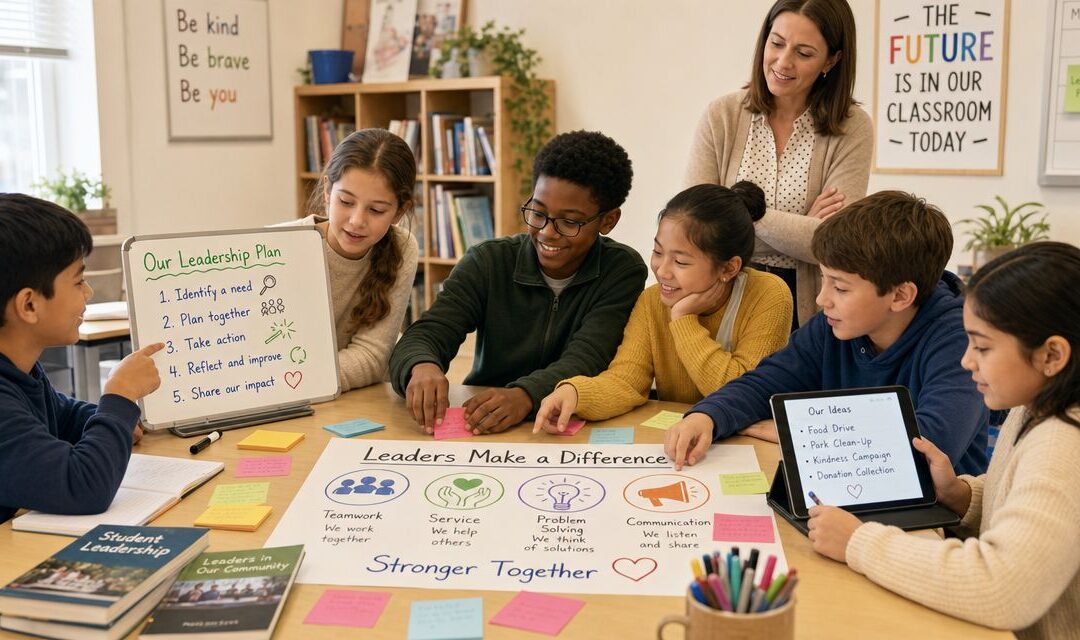
You can see the need for student leadership every day. A disagreement starts on the playground and no one knows how to step in well. A new student sits alone at lunch. A class has strong ideas about improving school culture, but the only adults making decisions are already stretched thin.
That's where student leadership activities matter. In K-8 schools, leadership isn't about creating a few polished speakers or handing out badges and titles. It's about helping students practice confidence, communication, honesty, responsibility, listening, respect, integrity, empathy, teamwork, and compassion. A major 2023 survey of almost 7,000 student leaders found those were the top qualities young people themselves associated with effective leadership, and the same review noted that students place leadership in a democratic framework focused on influence, contribution, and relationships, not control or status (student leadership research summarized by SSAT).
That matches what works in schools. Students grow when they get real responsibility, adult coaching, and structures that protect belonging. They don't grow from token jobs, popularity contests, or vague encouragement to “be leaders” without tools.
The 10 ideas below are practical student leadership activities you can run in a K-8 setting. Each one includes what it builds, how to launch it, where it tends to go wrong, and how to adapt it so more students can lead.
1. Student Leadership Councils
A student leadership council works when it solves real problems. It falls flat when it becomes a school photo opportunity or a place where the same confident students talk while everyone else watches.
For elementary schools, this might look like rotating classroom ambassadors who gather input from classmates and bring it to a weekly meeting. In middle school, it can be a formal council that helps shape spirit events, welcome routines, service projects, or anti-bullying campaigns.
How to set it up well
Start with representation before elections. If you only elect students by popularity, you'll often miss thoughtful leaders, multilingual students, quieter students, and children who care a great deal but don't campaign well.
A stronger model is mixed entry. Use some elected seats, some teacher-nominated seats, and some rotating classroom roles. Then train everyone in meeting norms, listening, and how to gather peer input before making recommendations.
Give them one real lane: Let the council own something visible, like recess equipment ideas, school welcome routines, or a kindness week.
Use a simple agenda: Opening check-in, issue review, student feedback, decision, next steps.
Require class feedback loops: Council members shouldn't just share their opinions. They should bring back questions, collect peer ideas, and report out.
Practical rule: If adults can override every decision without explanation, students will stop treating the council seriously.
For younger students, use sentence frames such as “Students in our class noticed…” and “Our suggestion is….” For older students, add subcommittees for climate, events, and peer support.
The best councils build democratic habits. Students learn that leadership means listening across differences, not winning the room.
2. Peer Mentoring and Buddy Programs
Peer mentoring is one of the most reliable student leadership activities because it helps both sides. Younger students get connection and orientation. Older students practice patience, responsibility, and emotional awareness.
A simple example is a 5th grade and kindergarten buddy system. Older students read together, walk to assemblies together, and model classroom routines. In middle school, 8th graders can support incoming 6th graders during the first months of transition.
What to teach mentors first
Don't choose mentors only by grades or teacher pleasing behavior. Pick students who can listen, stay calm, and follow through. Then train them before they ever meet with younger peers.
Use role-play for common moments. A kindergartener clings at drop-off. A new student says nothing. A younger buddy gets frustrated during a game. Mentors need scripts, not just encouragement.
A strong starter routine includes:
Opening ritual: Greeting, name check, and one easy question.
Shared activity: Read, draw, play a structured game, or complete a collaborative task.
Closing reflection: “What went well today?” and “What should we do next time?”
If you want mentors to build stronger connections, pair the program with intentional relationship-building activities. That gives students more than a buddy title. It gives them ways to connect.
Common mistakes
Schools often make buddy programs too loose. If students just “go hang out,” some pairs click and others drift. Structure creates safety.
Another mistake is leaving mentors unsupported. Check in with them regularly. Ask what feels easy, what feels awkward, and where they need adult backup. Leadership grows through coaching, not silent observation.
A good buddy program is especially helpful for new students, multilingual learners, and children who need a friend before they need advice.
3. Student-Led Conflict Resolution Programs
Some of the strongest student leadership activities teach students how to handle tension directly. Peer mediation, peacemaker teams, and student-led restorative circles all give children a structured way to respond when conflict shows up.
Conflict is constant in school life. Exclusion, teasing, line-cutting, game disputes, and group work friction don't disappear because adults post expectations on the wall.
Build the structure before you launch
Student mediators need clear boundaries. They are not mini-therapists, investigators, or disciplinarians. Their role is to help peers slow down, name what happened, hear each other, and work toward a fair next step.
Teach a protocol they can repeat. For example: each student speaks without interruption, each student says how they were affected, both identify what they need now, and both agree on a repair plan. Keep the process short enough for school use and simple enough that students can remember it under stress.
Soul Shoppe's approach is especially relevant here because schools can train adults to launch Student Peacemakers in grades 3 through 5 through its certification pathway, using the Peace Path as a structured peer conflict tool.
Here's a useful example of what student-facing conflict support can look like in practice:
Schools that adopt established frameworks from organizations like the Collaborative for Academic, Social, and Emotional Learning (CASEL) or partner with experts like Soul Shoppe often see the most significant impact. These programs provide structured, evidence-based tools that go beyond theory. For additional ideas, you can find helpful SEL resources for teachers that support both personal wellness and classroom instruction. By focusing on the emotional health of educators, schools can build a more resilient, engaged, and stable teaching force.
2. Mentorship and Peer Support Programs
A cornerstone of effective teacher retention strategies is the implementation of structured mentorship and peer support programs. Pairing experienced educators with new or struggling teachers provides a crucial blend of professional guidance and emotional support. These relationships create accountability, build community, reduce the profound sense of isolation many new teachers face, and accelerate their professional growth.
When educators feel connected to their colleagues and believe they have a safe space to ask for help, their sense of belonging and psychological safety grows. This directly combats the high-stress environment that often leads to early-career burnout and departure.
This strategy is built on the understanding that professional development is not a one-time event but a continuous journey best navigated with a trusted guide. Mentorship moves beyond simple "buddy systems" to create deep, reflective partnerships.
How to Implement Mentorship for Staff Retention
Successful implementation requires intentional design and administrative support. Instead of leaving mentorship to chance, schools should create a formal framework that gives these relationships the time and resources needed to flourish. This demonstrates a clear investment in each teacher's long-term success.
Provide Mentor Training: Equip veteran teachers with specific coaching and active listening skills. Training from organizations like the National Mentoring Center can help mentors learn how to guide rather than just give advice. For example, a mentor might learn to ask, "What have you tried so far?" instead of immediately offering a solution.
Allocate Protected Time: Schedule regular, non-negotiable meeting times for mentors and mentees during contract hours. This prevents mentorship from becoming an after-hours burden and signals its importance.
Establish Peer Learning Communities: Create small groups of teachers who meet regularly to discuss challenges and share strategies. For example, a group of third-grade teachers could share successful techniques for teaching fractions, providing practical, student-focused lesson ideas for everyone.
Normalize Asking for Help: Leaders should model vulnerability by sharing their own professional struggles and seeking input. For instance, a principal could share that they are struggling to engage families and ask for teachers' ideas, creating a culture where asking for help is seen as a strength.
Key Insight: The most impactful mentorship programs are reciprocal. While new teachers gain invaluable guidance, veteran mentors report feeling re-energized and more reflective about their own practice, creating a school-wide culture of continuous improvement and boosting overall retention.
Many state education departments and large districts, like those in New York City and Los Angeles, have developed formal induction and mentorship programs that significantly improve retention rates for new educators. By fostering these supportive professional relationships, schools build a resilient and collaborative staff committed to staying and growing within the community.
3. Competitive Compensation and Benefits Packages
A foundational element of any effective teacher retention strategy is a commitment to competitive compensation and benefits. Offering salaries, comprehensive health coverage, and retirement plans that reflect the value of educators directly addresses their material security and sends a clear message of institutional respect. While salary alone may not guarantee retention, inadequate pay is consistently cited as a primary reason teachers leave the profession, making it a critical area for schools to address.
This strategy is built on the direct link between financial stability and professional sustainability. When teachers are not burdened by financial stress, they can dedicate more energy to their students and their craft, improving job satisfaction and long-term commitment.
How to Implement Competitive Compensation and Benefits
Moving beyond baseline offerings requires a proactive and transparent approach. Administrators must treat compensation not as a fixed cost, but as a strategic investment in their most valuable resource: their teaching staff.
Conduct Annual Salary Analysis: Regularly benchmark your district’s or school’s salary and benefits against neighboring and comparable districts. Use this data, often available through organizations like the National Education Association (NEA) or state-level departments of education, to make informed adjustments and stay competitive.
Prioritize Comprehensive Wellness Benefits: Go beyond standard health insurance. Include robust mental health support, such as access to counseling services, wellness stipends, or subscriptions to mindfulness apps. For example, a teacher using these services to manage stress is better equipped to patiently support a student with challenging behavior.
Offer Clear Pathways to Growth: Develop and transparently communicate a clear salary schedule that shows teachers how they can advance financially through experience, further education, or taking on leadership roles. This allows a teacher to plan their career and see a future at the school.
Explore Creative Financial Incentives: Consider implementing programs that address specific financial burdens. For example, a district might offer a stipend for teachers who earn a bilingual certification, which directly benefits students who are English language learners.
Key Insight: Competitive compensation isn't just about the dollar amount; it's about communicating value. When salary and benefits packages are fair, transparent, and responsive to teachers' needs, it builds trust and reinforces the idea that teaching is a respected and sustainable career.
4. Autonomy and Leadership Opportunities
Empowering teachers with genuine decision-making authority is one of the most effective teacher retention strategies available. This approach moves beyond top-down management to create a culture where educators have a real voice in school operations, curriculum design, and professional growth. When teachers feel that their expertise is respected and their contributions matter, their sense of ownership and professional investment grows, directly combating the feelings of powerlessness that often lead to burnout.
This strategy is built on the principle that the professionals closest to the students are best equipped to make many of the decisions that affect the classroom. Giving them autonomy is not just a perk; it is a recognition of their professional expertise and a critical component of a healthy school ecosystem.
How to Implement Autonomy and Leadership Opportunities
Successful implementation requires administrators to intentionally distribute leadership and create clear, reliable channels for teacher input. This builds trust and shows that leadership values collaboration over compliance. It’s about shifting from a model where teachers are simply directed to one where they are partners in the school's success.
Establish Teacher-Led Committees: Create committees for key areas like curriculum adoption, school climate, or technology integration. For example, a teacher-led committee could pilot and choose a new math curriculum, ensuring it's practical for classroom use and meets student needs.
Implement Distributed Leadership Models: Identify and train teacher leaders who can facilitate Professional Learning Communities (PLCs), mentor new educators, or lead departmental initiatives. This creates career pathways within the school, as advocated by experts like Richard Elmore.
Start with Low-Stakes Decisions: Build a foundation of trust by involving staff in smaller, tangible decisions first. For example, let a grade-level team decide how to structure their literacy block, allowing them to tailor instruction to their specific students' reading levels.
Provide Leadership Training: Offer professional development specifically for teachers interested in leadership roles. This training can cover skills like facilitating meetings, coaching peers, and analyzing school data, preparing them to take on more responsibility effectively.
Key Insight: True autonomy is not about the absence of leadership; it's about the distribution of it. When teachers are given meaningful leadership roles and a voice in decisions that affect their work, they become more invested, innovative, and motivated to stay and contribute to the school's long-term success.
5. Reduced Class Sizes and Manageable Workloads
One of the most direct and effective teacher retention strategies is a commitment to reducing class sizes and ensuring workloads are manageable. Smaller classes allow educators to move beyond crowd control and dedicate their energy to meaningful instruction, building individual relationships, and providing personalized support. When teachers have fewer students, their workload decreases, stress is reduced, and they are able to focus on the craft of teaching, which is the reason most entered the profession in the first place.
This approach acknowledges that a teacher's capacity is finite. By limiting the number of students they are responsible for, schools directly address a primary source of burnout and create an environment where high-quality instruction can flourish, boosting both teacher satisfaction and student achievement.
How to Implement Reduced Workloads and Class Sizes
Achieving smaller classes often requires strategic financial planning and advocacy, but the long-term benefits to school culture and stability are significant. Even when system-wide changes are not immediately possible, targeted actions can make a substantial difference.
Target Key Grade Levels: If district-wide reduction is not feasible, start by lowering class sizes in early grades (K-3) or in grade levels with the highest rates of behavioral challenges. For example, a class of 18 first-graders allows a teacher to conduct individual reading conferences with each student weekly.
Advocate for Funding: Use data to build a case for class size reduction. Present research, such as findings from Tennessee's Project STAR, to school boards and community stakeholders to advocate for increased state and federal funding.
Systematically Audit Workloads: Don't just assume workloads are reasonable. Regularly survey teachers about their time spent on grading, lesson planning, and administrative duties. For instance, if a survey reveals teachers spend hours on a duplicative report, leadership can eliminate it, freeing up time for student feedback.
Protect Planning Time: A smaller class is only half the solution. Ensure that reduced class sizes are paired with adequate, uninterrupted preparation time. Protect this time fiercely from meetings or other obligations.
Key Insight: Reducing class sizes is not just about logistics; it's a fundamental investment in the quality of teacher-student interactions. A manageable workload empowers teachers to be proactive educators rather than reactive managers, directly correlating with their desire to remain in the classroom and the profession.
Pioneering research from Tennessee's Project STAR provided strong evidence that smaller classes in the early grades have lasting positive effects on student success. Progressive schools often adopt this as a core principle, capping classes at 18-20 students to create a more connected and supportive learning community. By strategically addressing class size and daily workload, schools can build a more sustainable and rewarding environment for their most valuable asset: their teachers.
6. Professional Growth and Continuous Learning Opportunities
Investing in meaningful professional growth is one of the most effective teacher retention strategies because it signals that an institution values its educators as professionals who are worth developing. When teachers feel they are continuously learning and honing their craft, their engagement and commitment to their school deepen. Providing access to high-quality conferences, advanced certifications, and specialized training shows a direct investment in their careers, which boosts both competence and job satisfaction.
This approach is built on the understanding that stagnation leads to burnout. Opportunities to deepen expertise in areas like social-emotional learning, trauma-informed practices, or differentiation not only make teachers more effective but also reignite their passion for the profession, making them more likely to stay.
How to Implement Professional Growth for Staff Retention
Successful implementation requires a strategic, individualized approach rather than a one-size-fits-all model. It’s about aligning teacher aspirations with school-wide goals and creating a culture where learning is celebrated.
Create Individualized Growth Plans: Work with each teacher to create a professional development plan that aligns their personal interests with school improvement priorities. For example, a teacher passionate about STEM could be supported in attending a coding bootcamp, bringing new project-based learning to their students.
Offer Tangible Support: Show commitment by offering tuition reimbursement for graduate programs, covering costs for teacher teams to attend SEL and wellness conferences, or providing stipends for completing National Board Certification.
Build Communities of Practice: When teachers return from training, create structured time for them to share what they've learned. For instance, a teacher returning from a literacy conference could lead a session on new strategies for supporting struggling readers, benefiting the whole staff.
Celebrate and Utilize New Expertise: Publicly recognize teachers who complete certifications or training. More importantly, give them opportunities to lead, such as by facilitating a staff workshop or mentoring a peer. This validates their growth and benefits the entire school.
Key Insight: Professional development becomes a powerful retention tool when it moves beyond compliance and becomes a collaborative effort. When schools invest in a teacher's long-term career path, the teacher is more likely to invest their long-term career in the school.
Schools often see the best results when they partner with organizations that specialize in educator development, like Learning Forward or CASEL. For schools focused on building a supportive culture, professional development that strengthens adult SEL skills is crucial. You can explore relevant professional development topics for teachers that focus on these essential areas. By building a clear pathway for continuous learning, schools create an environment where teachers feel empowered, respected, and motivated to build a lasting career.
7. Positive School Culture and Psychological Safety
Creating a school environment where teachers feel respected, valued, and safe, both physically and psychologically, is foundational to effective teacher retention strategies. This involves fostering a workplace free from harassment, practicing inclusive leadership, celebrating diverse perspectives, and cultivating genuine care among staff. When teachers experience the same psychological safety and belonging that programs like Soul Shoppe teach students, they feel more connected to their work and are significantly more likely to stay. A positive culture reduces isolation and builds the human connections that sustain careers.
This strategy is built on the work of researchers like Amy Edmondson and Brené Brown, who highlight that belonging and vulnerability are prerequisites for high performance and engagement. A school cannot expect its teachers to create safe, supportive classrooms if they do not experience that safety themselves in the staff room and hallways.
How to Implement a Culture of Psychological Safety
Implementation begins when leaders intentionally model vulnerability and actively protect their team's well-being. This signals that the school is a place where it's safe to take risks, admit mistakes, and ask for help, which are all crucial for professional growth and resilience.
Model Safety from the Top: Leaders should openly share their own challenges and learning moments. An administrator who says, "I tried a new parent communication strategy and it didn't work as expected; here’s what I learned," gives teachers permission to be imperfect and try new things in their own classrooms.
Address Toxic Behaviors Swiftly: Do not allow gossip, cliques, or dismissive attitudes to fester. Use restorative practices to address staff conflicts. For example, if two teachers disagree, a trained facilitator could help them use "I-statements" to find a resolution, modeling a skill they can teach students.
Create Community-Building Rituals: Start staff meetings with a "gratitude circle" or host monthly potlucks. Simple, consistent rituals build a sense of community and turn colleagues into a support system.
Involve Teachers in Culture Initiatives: Form a volunteer "Culture Committee" of teachers to plan staff appreciation events, wellness activities, and recognition programs. This ensures initiatives are authentic and valued by staff.
Key Insight: Psychological safety is not about being "nice"; it's about creating a climate of respect, trust, and openness where candor is welcome and interpersonal risks feel safe. Teachers who feel psychologically safe are more innovative, collaborative, and committed to their school community.
By actively cultivating a positive environment, schools build a resilient and stable faculty. To dig deeper into specific actions, you can find helpful advice on how to improve school culture that directly supports these retention efforts. This focus on the human element of the school environment is a powerful investment in keeping your best teachers.
8. Recognition, Celebration, and Appreciation Programs
One of the most direct teacher retention strategies involves creating a culture where educators feel seen, valued, and appreciated. This goes far beyond a single end-of-year award to encompass regular, meaningful recognition for their daily contributions and emotional labor. While many enter the profession for mission-driven reasons, a persistent feeling of being undervalued is a primary driver of burnout and attrition. Systematic and authentic appreciation directly counteracts this, reinforcing a teacher’s sense of purpose and belonging.
This strategy is built on the understanding that acknowledgment is a powerful motivator. When teachers feel that their hard work, instructional creativity, and dedication to students are noticed and celebrated, their professional morale and commitment to the school community strengthen considerably.
How to Implement Recognition and Appreciation
Effective recognition programs are authentic, specific, and consistent. They move beyond generic praise to highlight the unique strengths and accomplishments of individual educators, creating a positive and reinforcing school environment.
Establish a Peer-to-Peer Recognition System: Use a simple digital platform like a shared Google Form or a physical "kudos board" in the staff lounge. A practical example: a teacher writes, "Kudos to Ms. Jones for sharing her amazing science experiment on volcanoes! My students loved it."
Make Appreciation Public and Specific: Instead of a generic "Teacher of the Month," create specific recognitions like "Innovator of the Month" for a teacher who successfully integrated a new technology that engaged students in a new way. Announce these in staff newsletters and on school social media.
Involve Parents and the Community: Launch a "Thank a Teacher" campaign where parents and students can submit notes. A parent might write, "Thank you, Mr. Smith, for helping my child finally understand fractions. Your patience made all the difference." Sharing these builds morale.
Celebrate Diverse Contributions: Acknowledge not just test scores but also the teacher who stayed late to comfort a student, successfully de-escalated a conflict in the hallway, or organized a field trip. This shows all aspects of a teacher's work are valued.
Key Insight: The most effective appreciation is specific, consistent, and visible. When recognition is woven into the daily fabric of the school culture, it becomes a powerful antidote to the demoralization that can lead to teacher turnover, making it a cornerstone of successful teacher retention strategies.
9. Work-Life Balance and Burnout Prevention Programs
A critical component of any effective teacher retention strategy is a direct focus on work-life balance and burnout prevention. Teacher burnout, as identified in Christina Maslach's foundational research, is a primary driver of attrition. Proactive programs that manage workload, offer mental health support, and encourage self-care acknowledge that teaching is an emotionally demanding profession that requires specific support systems for sustainability.
This strategy is built on the understanding that simply telling teachers to "take care of themselves" is not enough. Schools must create an environment where balance is not just encouraged but structurally supported, helping teachers build long, fulfilling careers.
How to Implement Burnout Prevention Programs
Implementation requires a systemic commitment from leadership to address the root causes of stress, not just the symptoms. This begins with leaders modeling healthy work-life boundaries and creating policies that protect teachers' time and well-being.
Protect Teacher Time: Institute clear policies that limit expectations for after-hours work, such as a "no emails after 5 PM or on weekends" rule. For example, an administrator modeling this behavior reinforces that teachers can and should disconnect to rest.
Provide Mental Health Resources: Partner with local providers to offer free or subsidized counseling services. Normalize seeking support by openly discussing the availability of these resources and destigmatizing mental health care.
Offer Wellness and Mindfulness Programs: Dedicate time during professional development for staff to learn and practice mindfulness. For example, teaching staff a 5-minute breathing exercise gives them a tool they can use to de-stress between classes or share with an overwhelmed student.
Regularly Assess and Respond: Use anonymous surveys to regularly check in with teachers about their burnout levels and workload concerns. Use this data to make targeted, meaningful changes. For example, if surveys show "report card comments" are a major stressor, the school can provide comment banks or dedicated time to complete them.
Key Insight: The most impactful burnout prevention programs move beyond individual self-care tips and address systemic workload issues. When school leaders actively model and enforce boundaries, they create a culture where teachers feel permitted to prioritize their own well-being, leading to greater resilience and retention.
10. Inclusive, Trauma-Informed, and Culturally Responsive Leadership
A critical factor in teacher retention strategies is leadership that actively fosters an inclusive, trauma-informed, and culturally responsive school environment. Teachers, especially those from marginalized communities, are more likely to leave when they feel unseen, unsupported, or isolated. Leadership that is explicitly anti-racist and prioritizes belonging for all staff members directly combats this by creating a psychologically safe and affirming workplace.
This approach recognizes that a school's culture is set from the top down. When leaders model inclusivity and address systemic inequities head-on, it signals to every educator that their identity and well-being are valued, which is fundamental to long-term commitment.
How to Implement Inclusive Leadership for Staff Retention
Implementation requires a deep commitment to examining and transforming school policies, practices, and norms. It begins with leaders honestly assessing the current climate and centering the voices of educators from underrepresented backgrounds in every decision.
Start with an Equity Audit: Begin with an honest assessment of current policies and curriculum to identify biases. For example, an audit might reveal that classroom libraries lack diverse authors, leading to a school-wide initiative to purchase books that reflect the student population.
Invest in Continuous Training: Provide ongoing, meaningful professional development in anti-racism and culturally sustaining pedagogy. A practical outcome is a teacher learning how to facilitate classroom conversations about different cultures respectfully and accurately.
Create Affinity and Support Groups: Establish and support affinity groups for teachers of color and other marginalized staff. These groups provide a vital sense of community, validation, and a network for peer support.
Recruit and Mentor Diverse Talent: Actively recruit teachers from diverse communities and create structured mentoring programs that pair new educators of color with experienced mentors who can help them navigate the school system and feel a sense of belonging.
Embed Restorative Practices: Move beyond punitive discipline for both students and staff. For example, instead of suspension for an argument, a teacher can use a restorative circle where students can share their perspectives and co-create a solution, a skill learned through school-supported training.
Key Insight: Inclusive leadership is not a passive stance but an active, ongoing practice. When school leaders intentionally dismantle exclusionary systems and build a culture of authentic belonging, they create an environment where every teacher feels respected, supported, and motivated to stay.
This work is grounded in the scholarship of experts like Gloria Ladson-Billings, Zaretta Hammond, and Ibram X. Kendi. Their frameworks provide clear pathways for creating equitable learning environments. For a deeper understanding of one key component, you can explore these trauma-informed teaching strategies that support both student and staff well-being. By championing equity, leaders can make their schools places where talented educators from all backgrounds choose to build their careers.
Teacher Retention — 10-Strategy Comparison
Strategy
Implementation complexity
Resource requirements
Expected outcomes
Ideal use cases
Key advantages
Social-Emotional Learning (SEL) Integration and Professional Development
High — requires system-wide training and culture change
Medium–High — ongoing PD, coaches, time, sustained funding
Increased retention of teachers of color, greater belonging, improved outcomes for marginalized students
Diverse schools, equity-focused districts, schools addressing systemic bias
Addresses systemic inequities and builds authentic belonging for marginalized staff
Building a School Where Everyone Belongs
The journey through these ten powerful teacher retention strategies reveals a central, undeniable truth: retaining great educators is not about a single program or a one-time bonus. It is the direct result of building a school culture where teachers feel seen, supported, and professionally fulfilled. The ideas we have explored, from robust mentorship programs and fair compensation to the critical work of fostering psychological safety and manageable workloads, are not isolated solutions. Instead, they are deeply connected components of a single, unified mission: creating a school where every adult, just like every student, feels a profound sense of belonging.
Mastering these approaches is essential because the alternative is unsustainable. The constant cycle of hiring, training, and then losing talented teachers drains financial resources, destabilizes school culture, and, most importantly, negatively impacts student learning. A stable, experienced, and motivated faculty is the foundation upon which academic achievement, positive behavior, and a vibrant community are built. When teachers feel secure and valued, they have the emotional and mental capacity to create the same environment for their students. This is the core of effective education.
From Ideas to Action: Your Next Steps
Reading a list of strategies is a great start, but creating lasting change requires intentional action. The goal is not to implement all ten ideas overnight. The goal is to begin. Choose one area that resonates most with your school’s current needs and commit to making a measurable difference.
Consider these actionable starting points:
If you want to focus on well-being: Start by modeling and integrating adult SEL practices into your staff meetings. Begin each meeting with a brief, structured check-in or a one-minute mindfulness exercise. This small change signals that you prioritize the emotional health of your team.
If you want to improve recognition: Don't wait for a formal awards ceremony. Create a simple "Kudos Corner" on a staff bulletin board or a dedicated channel in your school’s communication app. Encourage peer-to-peer shout-outs to build a culture of everyday appreciation.
If you want to address workload: Conduct an anonymous "time audit" survey. Ask teachers what tasks consume the most time outside of instruction and which ones feel least impactful. Use this data to identify one specific administrative burden, such as a redundant report or an inefficient duty schedule, that you can simplify or eliminate.
Key Takeaway: The most successful teacher retention strategies are not about grand, expensive gestures. They are about the consistent, daily practice of demonstrating respect, providing support, and building trust.
Ultimately, the work of retaining teachers is the work of creating a human-centered organization. It means recognizing that educators are professionals who need autonomy, opportunities for growth, and a voice in the decisions that affect their work. It requires leaders who are not just managers but also mentors, advocates, and cultivators of a positive, inclusive culture. By weaving together the threads of fair compensation, authentic recognition, and a deep commitment to well-being, you are not just improving a statistic. You are building a professional home where dedicated educators can thrive for years to come, shaping the lives of countless students along the way. Your school becomes a place where people don't just want to work; it becomes a place where they belong.
Ready to build a school culture rooted in respect, empathy, and positive communication? Soul Shoppe provides SEL-focused programs and professional development that equip both students and staff with the tools to create a supportive environment, directly contributing to the psychological safety and sense of belonging that are critical for effective teacher retention strategies. Explore how Soul Shoppe can help you build the foundation for a school where everyone thrives.