

What Is Classroom Climate: Boost Student Success
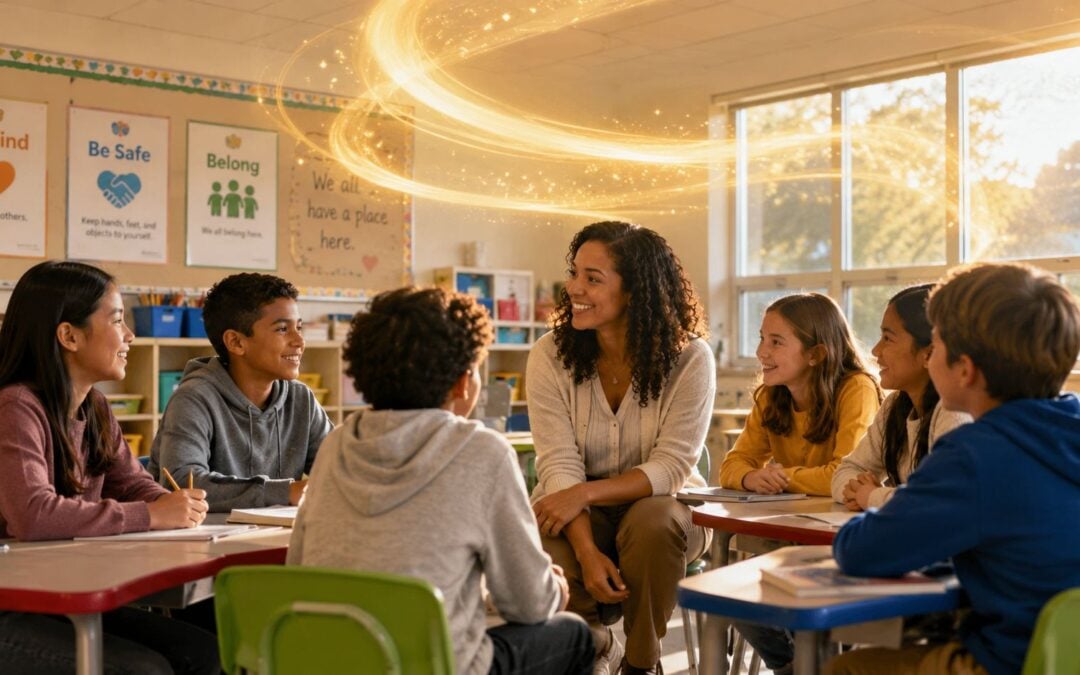
You can feel it within the first few minutes of the day.
In one classroom, students walk in slowly, avoid eye contact, and wait to be told what to do. Questions are met with silence. A mistake on the board makes a few kids smirk, and the rest of the room gets even quieter. In another classroom down the hall, students are still very much children. They wiggle, talk, and need reminders. But they also greet each other, take academic risks, and recover from missteps faster. The difference isn't just management style. It's climate.
For K to 8 educators, that difference matters every single period. When the room feels safe, predictable, and human, students are more available for learning. When it feels tense, cold, or chaotic, even strong lesson plans can fall flat. If you're working on behavior, engagement, belonging, or academic recovery, you're already working on classroom climate whether you call it that or not.
That's also why climate can't be separated from the larger work of connection across a campus. If you're thinking about how the classroom fits into the wider student experience, this piece on how to improve school culture helps show how those daily classroom moments build into something bigger.
The Invisible Force Shaping Your Classroom
A lot of teachers hear the phrase classroom climate and picture posters, flexible seating, or a calm corner. Those things can help, but they aren't the whole story. Climate is the lived feeling of the room. It's the emotional weather students and adults move through together all day.
You've seen it in small moments. A student raises a hand even though they aren't sure of the answer. A classmate drops a pencil and another student picks it up. A child who had a hard recess still walks back in and joins math without shutting down. Those moments don't happen by accident. They happen when the room feels safe enough for students to participate, recover, and belong.
What teachers often notice first
Most educators don't start by naming climate. They notice symptoms:
- Participation drops when students are worried about being wrong.
- Behavior escalates when kids don't feel connected or understood.
- Energy gets flat when expectations are unclear or trust is thin.
- Peer conflict lingers when students don't have shared tools for repair.
That's why climate can feel invisible and obvious at the same time. You can't hang it on a bulletin board, but you can absolutely feel it during transitions, group work, partner talk, and conflict.
Practical rule: If students are constantly scanning for embarrassment, exclusion, or unpredictability, they have less energy left for learning.
For teachers, this can be confusing because classroom climate isn't one single thing. It includes how students feel with you, how they treat one another, how safe it feels to try, and how clear and fair the learning environment is. It also includes parts of the room adults often overlook, like lighting, noise, space, and temperature.
The good news is that climate is not fixed. It shifts through repeated daily choices. The way you welcome students, respond to mistakes, organize support, handle conflict, and design routines all shape the atmosphere students experience.
Defining Classroom Climate Beyond Decoration and Rules
When people ask, what is classroom climate, the simplest answer is this. It's the overall emotional and academic atmosphere students experience in your room. Not your intentions. Not your posted expectations. The actual felt experience of being there.

A useful way to explain it to colleagues or families is to call it the room's emotional atmosphere. Students and teachers breathe it in every day. If that atmosphere feels respectful, clear, and supportive, kids are more likely to engage. If it feels sharp, confusing, or unsafe, participation shrinks.
According to Flip Education's classroom climate overview, classroom climate is a dual-dimension construct made up of an academic dimension and a social-emotional dimension. The academic side includes expectations, intellectual rigor, and support for learning. The social-emotional side includes belonging, safety, respect, and teacher warmth. That same source describes climate as the felt quality of daily life, created through thousands of interactions that shape whether students feel safe and included. In practice, that's why a positive climate supports risk-taking, curiosity, and collaboration.
What climate is and what it isn't
Many readers find this distinction challenging. Classroom climate is related to classroom culture and school climate, but it isn't the same thing.
| Term | What it focuses on | Example |
|---|---|---|
| Classroom climate | The day-to-day felt experience in one room | “I feel safe asking for help in this class.” |
| Classroom culture | The deeper shared values and habits that build over time | “In this class, we repair harm and keep trying.” |
| School climate | The broader atmosphere across the school community | “This school feels welcoming and orderly.” |
That distinction matters because teachers can directly shape classroom climate every day. You may not control every building-wide variable, but you do control many of the interactions students experience in your room.
Why decor and rules don't tell the full story
A beautiful room can still have a brittle climate. A tightly managed room can still feel emotionally unsafe. Students can follow directions and still feel unseen.
Climate sits underneath visible routines. A posted rule like “respect others” doesn't create respect by itself. Students decide whether respect is real by watching how adults respond to mistakes, who gets heard, whose feelings matter, and whether repair is possible after conflict.
Students learn the climate of a room by living in it, not by reading the walls.
That's also why two classrooms with the same curriculum and behavior chart can feel completely different. One teacher may hold high expectations while offering strong scaffolds and warmth. Another may hold the same expectations but respond in ways that increase anxiety. The standard looks similar on paper. The climate feels very different to children.
The Four Pillars of a Positive Classroom Climate
It is 9:10 a.m. A student gets an answer wrong and freezes. One classmate snickers. Another looks away. The teacher has a choice in that moment. Brush past it, correct it sharply, or turn it into a safe chance to learn. Those small moments reveal classroom climate faster than any poster on the wall.
A positive climate rests on four pillars that students experience all day long. If one pillar is shaky, the room can feel tense or unpredictable. If all four are steady, students are more likely to participate, recover from mistakes, and stay connected to learning. This is also where the benefits of social-emotional learning in daily school life become visible. SEL is not separate from climate. It gives teachers concrete ways to strengthen it.

Psychological and physical safety
Safety is the floor students stand on. If that floor feels shaky, everything else gets harder.
Psychological safety means students can ask for help, make a mistake, disagree respectfully, and try again without humiliation. Physical safety includes the emotional message sent by the room itself. Crowded pathways, constant noise, poor visibility, harsh lighting, and uncomfortable seating can all raise stress before a lesson even begins. Teachers sometimes overlook these factors because they seem logistical, not relational. Students feel them immediately.
A useful check is to scan your room the way a sensitive third grader would. Where are bottlenecks? Which seats make it hard to see, hear, or focus? Which areas tend to spark conflict during transitions? Tomorrow, you can widen one traffic path, create a calm reset spot, lower visual clutter near your meeting area, or move high-demand materials away from crowded corners.
Belonging and community
Belonging answers a different question. Do I have a place here?
Children do not need constant harmony to feel belonging. They need repeated signs that they matter to the group. They hear their name pronounced correctly. They see their work and identity reflected in the room. They notice that groups are formed in ways that include everyone, not just the most socially confident students. They experience repair after conflict instead of quiet exclusion.
This pillar grows through routines more than speeches. A second grade teacher opens with partner greetings so each child is acknowledged early. A sixth grade teacher rotates discussion partners and teaches sentence stems for inviting quieter peers in. A class meeting gives students language for naming harm, listening, and making things right. Belonging works like a braided rope. Many small strands create strength.
Positive norms and expectations
Students also need to know what this classroom asks of them and what support they can count on when the work is hard.
Healthy norms are more than rules on a chart. They are shared ways of speaking, listening, moving, and solving problems. In strong climates, expectations are clear enough to reduce anxiety and flexible enough to teach, not just punish. Students learn that respect includes waiting, disagreeing without insults, sharing materials fairly, and rejoining the group after a mistake. They also learn that academic struggle is part of learning, not proof that they do not belong.
This pillar becomes visible when teachers model the behavior they want to see.
- Clear interaction norms show students how to enter a conversation, challenge an idea, and repair harm.
- Academic norms make room for revision, questions, and productive struggle.
- Predictable responses from adults help students trust that discipline will be fair and instruction will stay steady.
A fifth grade teacher might say, “In this class, we explain our thinking, listen fully, and try again,” and then practice those moves during math discussion. That is what makes expectations real.
Teacher-student relationships
Relationships hold the other three pillars in place. A room can have good procedures and still feel cold. Students can follow directions and still avoid risk if they do not trust the adult.
Catlin Tucker's piece on psychological safety draws on Dr. Amy Edmondson's definition of psychological safety as a climate of interpersonal trust and mutual respect. In K-8 classrooms, that trust grows through ordinary, repeatable actions. Teachers admit mistakes, invite student voice, notice effort, and stay calm enough to be predictable during stress.
These moves are simple, but they are not small. You say, “I gave unclear directions. Let me fix that.” You ask students for quick feedback at the end of the week. You kneel beside a frustrated writer and coach instead of correcting from across the room. When students trust the adult, feedback feels usable, and challenge feels manageable.
Why Climate Matters The Research on Student Outcomes
Some school decisions get labeled “extra” when they aren't directly tied to instruction. Classroom climate doesn't belong in that category. It affects how instruction lands.
A national study of 16,258 students found that for every one-point increase in a student's positive perception of their learning environment, math scores increased by 2.061 points, and a one-point increase in perceived safety correlated with a 1.806-point rise in math scores, as reported in the Educational Longitudinal Survey analysis. That's a strong reminder that safety and learning environment are not side issues. They are tied to academic outcomes.

What those findings mean in daily practice
Teachers don't experience climate as a research term. They experience it as whether students enter discussion, persist through challenge, and regulate themselves well enough to stay in the lesson.
A broader review in this overview of classroom climate research found small to moderate positive effects on social competence, motivation, engagement, and academic performance, along with small negative effects on socioemotional distress and externalizing behaviors. That means a positive climate isn't just about nicer feelings. It supports the social and emotional conditions students need in order to learn and relate well.
If you need language for advocating this work to colleagues or families, connect it to outcomes they already care about:
- Academic engagement improves when students feel safe enough to participate.
- Peer interactions get stronger when empathy and repair are part of the room.
- Behavior support becomes more effective when students feel connected instead of managed.
- Well-being improves when socioemotional support is built into the school day.
Families often understand this immediately. They know the difference between a child who says, “I got something wrong today,” and a child who says, “I don't want to go back.” For a deeper look at the wider student impact, Soul Shoppe's article on the benefits of social-emotional learning offers language many school teams can use in conversations with staff and caregivers.
A strong classroom climate helps students use what they know. A weak one often hides what they're capable of.
How to Measure the Vibe in Your Classroom
It is 10:15 a.m. Your lesson is organized, the directions were clear, and still the room feels off. One table jumps in right away. Another goes quiet. One student keeps looking around before answering, as if checking whether it is safe to be wrong.
That is classroom climate showing up in real time.
Teachers can measure that kind of pattern. You do not need a long formal tool to start. You need a simple routine for noticing what students experience across the day, then checking whether your systems for safety, belonging, support, and physical comfort are landing the way you intended.
A helpful starting point is this: climate is a group pattern, not a single moment. One student's rough day matters, but it does not define the whole room. You are looking for repeated signals across the class. Short, repeated check-ins often give you more useful information than a one-time survey because they show what students feel again and again.
Low-effort ways to gather student feedback
Use methods your students can handle quickly and accurately.
- Anonymous mini-surveys work well when you repeat the same few prompts over time. Try statements like “I feel safe sharing ideas here,” “Students treat each other with respect,” “I know what to do when I get stuck,” and “Our room helps me focus.”
- Emoji check-ins help younger students report feelings without needing a lot of language. You can ask about inclusion, clarity, or stress with simple visual choices.
- Exit tickets can pair one learning question with one climate question. For example: “What helped you learn today?” or “Did partner work feel comfortable, confusing, or hard today?”
- Fist-to-five check-ins give you a quick class snapshot. Ask about asking for help, understanding directions, feeling ready to join discussion, or how comfortable the room felt for learning.
- Quick space scans are easy to miss, but they matter. Notice noise, crowding, seating flow, glare, temperature, and whether students can access materials without bottlenecks. A room can be emotionally warm and still feel physically hard to learn in.
If your team wants a clearer process for collecting and reviewing this kind of information, Soul Shoppe's guide to outcome measurement for schools and SEL teams offers a practical starting point.
What to look for in the responses
Look for trends, then match the trend to the pillar of climate underneath it.
| Signal | What it may mean | Next step |
|---|---|---|
| Many students avoid speaking during discussion | Emotional safety may be weak | Use turn-and-talk before whole-group sharing, and name mistakes as part of learning |
| Students often say they are unsure what to do | Support and structure may be inconsistent | Tighten routines, model directions, and post one clear process at a time |
| Some students report belonging while others do not | Connection may depend too much on social status or seating patterns | Rework partnerships, greeting routines, and who gets invited into leadership |
| Students lose focus at the same time each day | The physical environment may be working against attention | Check noise, movement breaks, seating layout, lighting, and material access |
| Students say adults do not listen | Voice and respect may be uneven | Add regular reflection prompts and make space for students to influence parts of the day |
Teacher reflection belongs here too. After class, ask questions that are specific enough to answer candidly. Who got warm attention from me today. Who mostly heard correction. Which students took up space easily, and which students stayed at the edge. Did my setup help students regulate, move, and concentrate, or did it add friction?
A classroom thermometer works best when you check it regularly. One survey in October will not tell you what February feels like.
If the same pattern shows up across student feedback, your observation notes, and the physical flow of the room, treat it as useful information and adjust the environment, not just the lesson.
Practical SEL Strategies to Improve Your Classroom Climate
Good climate grows from repeated moves, not one big reset. The most useful strategies are small enough to use tomorrow and strong enough to repeat all year.

Build belonging first
Students settle faster when they feel recognized.
Try a Positive Starter routine at the door. Greet each student by name and offer a choice like a wave, thumbs up, or brief verbal check-in. Choice matters because some students want warmth without physical contact, and some need a softer entry after a difficult morning.
Other simple belonging moves work well across K to 8:
- Morning or opening circles give every student a voice, even if the prompt is brief.
- Partner rotations prevent social isolation and widen peer connection.
- Two-minute connection conferences let you learn one non-academic detail about students over time.
A parent can use the same approach at home by replacing “How was school?” with one specific question such as “When did you feel included today?” That helps children notice climate, not just tasks.
Strengthen safety through predictable repair
Safety doesn't mean the absence of conflict. It means students know what happens when conflict or mistakes occur.
Use these routines:
- Co-create class agreements in student-friendly language like “We let people finish” or “We fix harm.”
- Teach I-statements so students can say, “I felt frustrated when my idea was interrupted.”
- Model your own repair when you speak too sharply or rush a child.
Research summarized in the verified guidance on emotional intelligence shows that fostering these skills directly improves climate. Teachers can use a Feeling Words Chart to help students name emotions and run empathy drills where students role-play conflict by stating how the other person might feel, based on the findings in this well-being and classroom climate paper.
Here's what that can look like in a third grade class. Two students argue over markers. Before solving the problem, the teacher asks each child to choose a word from the chart. One says “left out.” The other says “annoyed.” Then both try one sentence about the other person's perspective. That slows the conflict and builds empathy instead of rushing straight to blame.
Make expectations clear without making the room rigid
Students do better when the room feels organized and transparent. If you use a digital platform, organize materials in consistent modules, include due dates, and place help resources where students can find them easily. That reduces uncertainty and supports the emotional side of climate because students know where to go when they're stuck.
For in-person routines, keep it visible and repeatable:
- Show what participation sounds like with sentence stems.
- Teach help-seeking by naming exactly what students can do before frustration spikes.
- Celebrate revision and effort so rigor doesn't become fear of being wrong.
This short video offers a useful classroom-facing lens on creating a safer, more connected learning space.