Soul Shoppe's work is made possible by donors and partners who care deeply about the young people in their communities! We can't do this work without you. Support our work in classrooms and on playgrounds across the nation by donating here.
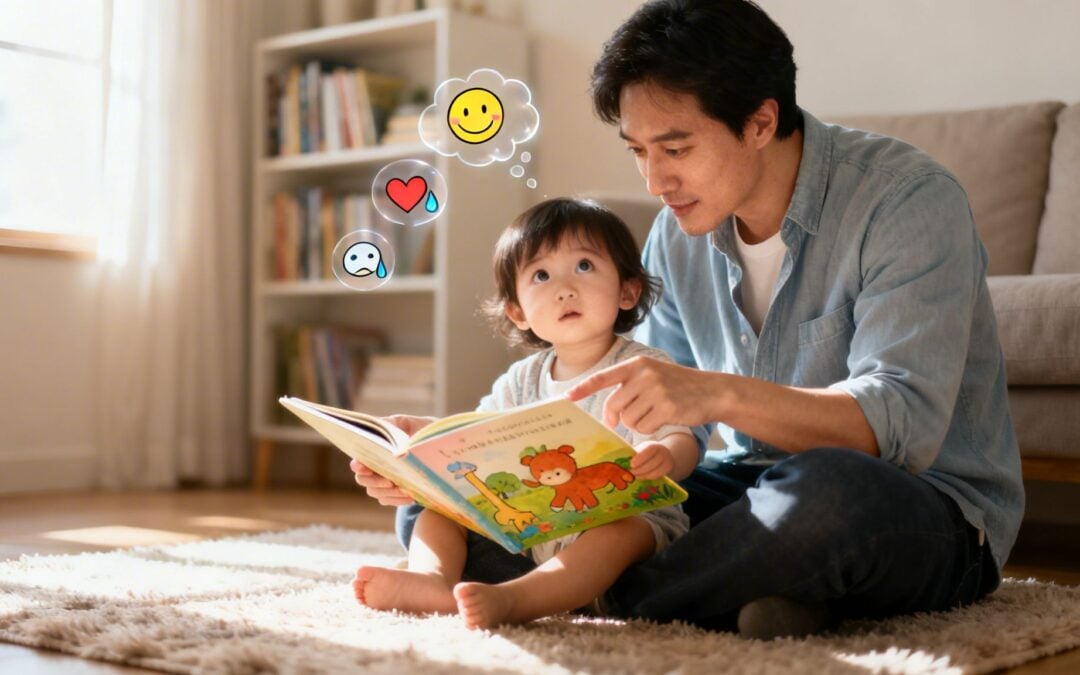
Using books on emotions for children is one of the most powerful and natural ways to build emotional intelligence. Stories give kids the words and a safe space to understand big, complicated feelings—like sadness, joy, and frustration—in a way that makes perfect sense to them.
How Stories Build Emotionally Resilient Children
Think of a storybook as a “flight simulator for feelings.” It lets a child step into a tricky situation, like watching a character feel left out on the playground, but from a totally safe distance. They get to process the character’s disappointment and watch them solve the problem, all without feeling overwhelmed themselves.
This kind of safe exploration is where empathy and social skills really begin to take root. When kids see a character navigate a big feeling, it provides a mental blueprint they can use later when a similar situation pops up in their own lives. For instance, after reading a story about a little bear who shares his favorite toy, a parent can reference it on the playground by saying, “Remember how Barnaby Bear felt so happy when he shared his red ball? Maybe you could try sharing your truck with Leo.”
Creating a Shared Emotional Language
When you read together about a grumpy badger or a nervous squirrel, you’re not just reading a story—you’re building a shared vocabulary. This makes it so much easier for a child to express themselves down the road.
Instead of a meltdown, they might be able to say, “I feel grumpy like that badger today.” That shared language turns abstract feelings into something concrete they can point to, building a bridge between their inner world and your ability to help them.
Practical Example: A teacher reads “Grumpy Monkey” by Suzanne Lang to her class. The next day, a student is quiet and withdrawn. The teacher can gently ask, “Are you feeling a bit like Grumpy Monkey today?” This gives the child a simple, low-pressure way to confirm their feelings without having to find complex words.
This growing focus on emotional literacy isn’t just happening in homes and classrooms; it’s being noticed across the publishing world. In fact, the global children’s book market is expected to hit USD 882.08 million by 2035, a trend that’s heavily influenced by the new emphasis on social-emotional development in early education. You can read more about this market growth on Global Market Statistics.
From Storytime to Real-Life Skills
Reading a book about feelings does more than just fill a few minutes before bedtime. It actively builds the foundation for lifelong emotional resilience. It’s a chance to connect and grow, turning a simple story into a truly powerful tool.
A story gives a child a safe place to put their feelings. When a character is sad or angry, the child can feel it too, but from the comfort of a lap or a cozy reading corner. This is how empathy begins.
By exploring these stories together, you’re helping your child practice skills that will last a lifetime. For more ideas, check out our guide on building emotional resilience in kids. This simple act of reading together strengthens their ability to understand themselves and connect meaningfully with the world around them.
Choosing the Right Emotional Book for Any Age
Finding the perfect book to talk about feelings can feel like searching for a needle in a haystack. The real secret is matching the book’s content and complexity to your child’s developmental stage. What captivates a toddler simply won’t resonate with a third-grader, so knowing what to look for makes all the difference.
For the youngest children, the best books on emotions for children lean on simple language and crystal-clear, expressive illustrations. A toddler or preschooler connects best when a character’s feeling is impossible to miss—think of a rabbit’s big, sad tears or a bear’s angry, scrunched-up face. The emotional journey should be straightforward: a character feels a big emotion, and then they (or a caring friend) find a simple way to feel better.
As children grow, they’re ready for more complex stories. Elementary-aged kids can follow narratives with multiple characters, nuanced social moments, and internal conflicts. They can understand a character who feels embarrassed and a little bit proud at the same time, or one who is grappling with jealousy toward a friend.
Matching Books to Social-Emotional Skills
To make this even easier, you can filter your choices by the specific social-emotional skills you want to nurture. Different books are better suited for teaching different competencies. For a deeper look at these skills, you can explore our overview of what social-emotional development is and see how it unfolds at various stages.
Choosing a book isn’t just about the story; it’s about finding the right mirror for your child’s inner world. The right book makes them feel seen, understood, and equipped to handle their own emotional experiences.
And don’t forget the power of the cover! The visual presentation has a huge impact on a book’s initial appeal. The colors and imagery can draw a child in before you even read the first page. It’s fascinating to see how color psychology influences book cover perception and why certain designs connect so strongly with young readers.
To give you a practical tool, here is a simple framework for selecting books based on age and the specific SEL competency you want to focus on.
Book Selection Guide by Age and SEL Competency
This table breaks down what to look for when choosing books on emotions for children at different developmental stages, turning an overwhelming search into a focused one.
Age Group
SEL Competency Focus
Key Book Characteristics
Practical Example
Toddlers (1-3)
Self-Awareness (Identifying basic feelings)
Features brightly colored, simple illustrations with clearly labeled emotions (e.g., “happy,” “sad”). Uses minimal text and a repetitive structure.
A book where each page shows an animal with a distinct facial expression. You can point and say, “Look, the lion is sad. Can you make a sad face?” Then, mirror their expression back to them.
Preschool (3-5)
Self-Management (Learning coping strategies)
The main character experiences a common frustration (like not getting a turn) and learns a simple calming technique, such as taking a deep breath or finding a quiet space.
A story about a little monster who gets angry when her block tower falls. She learns to stomp her feet three times and roar into her hands to let the “angry energy” out. You can practice this action together.
Early Elem. (6-8)
Empathy & Social Awareness (Understanding others’ perspectives)
The story shows a situation from more than one character’s point of view or features a main character who misinterprets a friend’s actions and later learns why they behaved that way.
A book about two friends who want to play different games. The story shows why each friend feels strongly about their choice. You can pause and ask, “How do you think Maya feels right now? What about Sam?”
Upper Elem. (9-11)
Relationship Skills & Responsible Decision-Making
Characters navigate complex social dynamics like peer pressure, exclusion, or ethical dilemmas. The plot shows the consequences of different choices.
A chapter book where the protagonist has to decide whether to join in on teasing a new student or to stand up for them. You can discuss the choices: “What do you think would happen if they told the teaser to stop? What might happen if they didn’t?”
Think of this as your cheat sheet. By keeping your child’s age and your learning goal in mind, you can confidently pick stories that not only entertain but also empower.
Turning Storytime Into an Empathy Workout
Just reading the words on a page is one thing. But when we use books on emotions for children, the real magic happens when we turn storytime from a passive activity into an active, emotional exploration. With a few simple shifts, you can transform any book into a workout for the heart, building self-awareness and empathy with every page you turn.
This isn’t about quizzing kids or turning reading into a test. It’s about being curious together and creating space for them to connect a character’s journey to their own lives. When we read this way, it becomes a shared experience that strengthens our bond and their emotional toolkit.
The infographic below offers a simple way to think about choosing the right book. It helps you narrow down the options by starting with what’s age-appropriate, then thinking about the specific feelings you want to explore.
As the visual guide shows, starting with the child’s age group, focusing on a target emotion, and then looking for relatable character traits gives you a clear path to finding the perfect book for your needs.
Model Your Thinking with “Think-Alouds”
One of the most powerful things you can do is simply say what you’re thinking out loud as you read. This is called a Think-Aloud. It’s where you voice your own thoughts and reactions to the story, showing your child how a reader makes sense of what’s happening.
Think of yourself as an emotional tour guide for the story. You’re pointing out the important sights and helping them understand the landscape.
Practical Examples of a Think-Aloud:
(Frustration): “Wow, the bear looks so frustrated that he can’t get that honey. See how his face is all scrunched up? I get that way when my computer is being slow. It makes me want to sigh really loudly, like this… Hmph!”
(Sadness): “Oh, that little cloud looks pretty lonely. I wonder if she wishes she had a friend to float with. Her teardrop shape makes me feel a little sad for her.”
(Excitement): “Look at that huge smile! He must be so excited for his birthday party. He’s wiggling all over, just like you do when we are about to go to the park!”
Ask “I Wonder…” Questions
Instead of asking direct questions that have a right or wrong answer (like “How does he feel?”), try framing them with curiosity. Wondering Questions are open-ended and invite imagination without any pressure to be “correct.”
“I wonder…” questions shift the dynamic from a quiz to a shared exploration. They tell a child, “Your ideas are interesting to me,” which builds confidence and encourages them to think more deeply.
These questions open the door for conversation. And if your child doesn’t answer? That’s okay. Just asking the question plants a seed for them to think about later.
Practical Examples of “I Wonder…” Questions:
“I wonder what the fox is thinking right now, hiding behind that tree.”
“I wonder why she didn’t want to share her toy. Maybe she was worried it would break.”
“I wonder what they could do to solve this problem together. What’s one idea?”
Help Them Make Text-to-Self Connections
The real goal here is to help children see themselves in the story. We can gently guide this by making Text-to-Self Connections, linking what’s happening on the page to something in their own lives. This makes the emotional lesson feel personal, real, and much more likely to stick.
Practical Examples of a Text-to-Self Connection:
“This reminds me of when you were nervous on your first day of school. The character’s tummy feels all fluttery, just like you said yours did. It’s the same feeling, isn’t it?”
“Remember how proud you felt after you finished that huge puzzle? I bet the knight feels that exact same way right now after building that bridge.”
“The rabbit is feeling very shy. That’s a bit like how you feel sometimes when we go to a new birthday party, before you get to know the other kids.”
Exploring lists of the best read aloud books for first graders can be a great starting point for finding stories that spark these conversations. These simple techniques are foundational for social-emotional growth, and you can learn even more ways to build these skills by checking out our guide on how to build empathy in the classroom.
Bringing Emotional Lessons Off the Page
While reading is a powerful start, the real magic happens when the lessons from books on emotions for children leap off the page and into everyday life. The goal is to build a bridge between a character’s experience and a child’s own world.
Hands-on activities are the perfect way to make abstract feelings concrete, tangible, and manageable. They don’t need to be complicated, either. In fact, the simplest extensions are often the most effective because they anchor the story’s message in a physical or creative experience, helping a child embody the emotional skills they’ve just read about.
Creative Expression Activities
Art gives kids a way to process and express what they’re feeling inside, especially when they don’t have the words. After reading a story together, you can use creative prompts to help them explore the book’s themes and communicate their understanding in a whole new way.
Practical Examples:
Feelings Wheel: Grab a paper plate or draw a large circle and divide it into slices. In each slice, have your child draw a face showing a different emotion from the story—happy, sad, frustrated, surprised. This becomes a practical tool they can later point to when they’re struggling to find the right words.
Character Sculptures: Using play-doh or clay, ask your child to sculpt the main character. You can prompt them by asking, “What did the character look like when they were feeling angry? Can you show me with the clay?” This connects the physical act of creation with emotional expression.
Draw the Feeling: After reading a book like “The Color Monster,” give your child crayons and paper. Say, “The monster felt all mixed up inside. What do your feelings look like today? Can you draw them?” There are no rules—it could be scribbles, lines, or specific pictures.
Role-Playing and Problem-Solving
Acting out scenarios from a book is like a dress rehearsal for real life. Role-playing allows children to practice empathy, communication, and conflict resolution in a safe, low-stakes environment. It’s a chance to try out different responses and see what works.
When a child role-plays a character’s dilemma, they are literally stepping into their shoes. This practice moves empathy from an abstract idea to a felt experience, building a crucial foundation for strong relationship skills.
This is especially powerful when a story’s character makes a poor choice. You can pause the reading and act out a different, more positive way to handle the problem. This gives your child a practical script they can use later. For more guidance on this, our article offers great tips on how to express your feelings in words.
Practical Example: If a book features friends arguing over a toy, you and your child can act it out. You can play one friend, and your child can be the other. First, act it out just like the book. Then, ask, “What’s another way the story could go? Let’s try it!” You could practice taking turns or finding a new game to play together.
Mindfulness and Movement
Connecting emotions to the body is a game-changer for developing self-regulation. Movement activities can release the pent-up energy that comes with feelings like anger or excitement, while mindfulness exercises can calm anxiety and frustration. These activities make emotional management a full-body experience.
Actionable Exercises:
Dragon Breaths: After reading about a frustrated or angry character, try practicing “dragon breaths.” Breathe in deeply through your nose, then open your mouth and exhale forcefully like a dragon breathing fire. It’s a fun and surprisingly effective way to release tension.
Feelings Dance: Put on some music and call out different emotions from the story. Ask your child to dance how that feeling would move—maybe a slow, heavy dance for sadness, or a fast, bouncy one for joy. This helps them understand how emotions feel in their bodies.
Worry Stones: After reading about a worried character, find a smooth, small stone. Explain that this can be a “worry stone.” When they feel worried, they can hold it and rub it with their thumb, focusing on how it feels in their hand. This gives them a physical anchor to ground themselves.
As parents and educators look for more engaging tools, the market is responding. The interactive children’s book market is projected to grow to USD 1.04 billion by 2033, driven by an increasing focus on early literacy and emotional development.
By bringing these simple, hands-on activities into your routine, you turn storytime into an active, memorable lesson that equips children with the tools they need to thrive.
Building an Inclusive Emotional Bookshelf
For a story to truly connect, a child needs to see their own world reflected in its pages. A powerful collection of books on emotions for children is both a mirror and a window. It’s a mirror that shows a child they are seen, and a window that offers a respectful glimpse into the lives of others. Both are absolutely essential for building genuine empathy.
When kids see characters who look like them, live in families like theirs, or have abilities similar to their own, it’s a powerful validation. It sends a quiet but clear message: “Your feelings are normal, and your story matters.” Without that connection, the emotional lessons in a book can feel distant or abstract.
This is exactly why taking a thoughtful look at your bookshelf—whether at home or in the classroom—is so important. The goal isn’t just diversity for diversity’s sake; it’s to create a library where all kinds of characters experience universal emotions. This teaches kids that feelings are a shared human experience that cuts across all our differences.
How to Audit Your Bookshelf for Inclusion
Take a moment and look at your book collection with fresh eyes. This isn’t about judgment. It’s about being intentional. As you scan the spines and covers, ask yourself a few practical questions:
Cultural Representation: Do the characters come from a range of cultural and ethnic backgrounds? Look for stories that authentically show different traditions, languages, and settings. For example, look for books where a child celebrates Diwali or Ramadan, not just Christmas.
Family Structures: Do your books show different kinds of families? Try to include stories with single parents, grandparents as caregivers, same-sex parents, and blended or adoptive families. A book like “Stella Brings the Family” is a great example.
Varying Abilities: Are there characters with physical disabilities, neurodiversity, or different learning styles? It’s vital for children to see disability portrayed as a natural and normal part of human diversity. For example, seek out stories featuring a main character who uses a wheelchair or is on the autism spectrum.
Socioeconomic Diversity: Do the homes, neighborhoods, and experiences of the characters reflect different economic situations? This helps show that feelings are universal, no matter what a family’s circumstances are. Look for stories set in apartments as well as houses, or where a family takes the bus instead of driving a car.
A truly inclusive bookshelf goes way beyond tokenism. Instead of having just one book about a specific culture, try to find multiple stories where diverse characters are simply living their lives—feeling joy, solving problems, and figuring out friendships.
An inclusive bookshelf sends a powerful message: everyone belongs in the story. It teaches children not just to tolerate differences but to genuinely celebrate and understand them, building a foundation for a more compassionate worldview.
And this isn’t just a niche idea; it’s a growing movement. The market for personalized children’s books in the U.S. is expected to hit USD 1,128.52 million by 2032. This trend shows a huge demand from families who want books where their child can be the hero of the story. As you can see in the U.S. Personalized Children’s Books Market Report, this directly supports social-emotional learning by making these lessons deeply personal and relatable.
By carefully and intentionally curating a diverse library, you help every child feel seen and valued, all while teaching every child to appreciate the rich, wonderful tapestry of the world around them.
Your Questions About Emotional Storybooks Answered
It’s one thing to hear that books on emotions for children are a great tool, but it’s another to put it into practice. As you start exploring this world, questions are bound to come up.
Let’s walk through some of the most common ones we hear from parents and educators, with clear, supportive answers to help you along the way.
What if My Child Resists Books About Feelings?
This is a really common hurdle. The moment a book feels like a “lesson,” some kids will check out immediately. The secret is to avoid making it feel like medicine.
Instead, shift your focus to finding stories with fantastic, exciting plots where emotions are just a natural part of the adventure, not the entire point.
Practical Example: If your child loves trucks, find a story about a little dump truck who feels sad because he’s too small to carry big rocks, and then discovers his unique strength. The focus is on the trucks, but the feeling of inadequacy and self-acceptance is woven in naturally.
Look for books that tap into what they already love—dinosaurs, outer space, building amazing forts—that just happen to feature characters who get frustrated, feel overjoyed, or have to solve a problem with a friend. Graphic novels can also be a game-changer here; their visual storytelling is incredibly engaging and shows emotions through expressions and body language, which is often more powerful than words. The goal is to meet them where they are and sneak the emotional vocabulary into a story they can’t put down.
When a child resists a ‘feelings book,’ it’s often because they sense a lecture coming. The solution is to embed the lesson in a great story. A tale about a brave knight who feels scared before facing a dragon is still an adventure story first.
How Do I Handle Difficult Topics Like Grief or Anger?
Books are incredible for this because they create a safe, contained space to explore really tough emotions from a distance. A great first step is always to read the book yourself first. That way, you’re prepared for the tricky parts and can guide the conversation with confidence.
When you get to a heavy moment in the story, just pause. Validate the emotion without any judgment at all.
Practical Example: You are reading “The Invisible String” by Patrice Karst, a book about connection even when loved ones are far away. When you reach the part about a loved one in heaven, you can pause and say, “Wow, the characters feel so sad because they miss their uncle. It hurts our hearts when we miss someone we love. It’s okay to feel that way.” Then, you can talk about the “invisible string” that connects you to people you miss.
Keep your language simple and honest. Answer their questions directly, but don’t feel like you have to give them more information than they’re asking for. The most important thing is to reassure them that all feelings are okay—even the big, uncomfortable ones. Frame the book as a way to learn what we can do when we feel that way.
How Can Books Actually Help with Tantrums?
They absolutely can. Think of books as a proactive tool for managing those tough behaviors. When you read a story about a character who gets mad and learns to take three deep “lion breaths,” you’re planting a seed. You’re giving your child a mental script and a concrete strategy to use before a tantrum even begins.
These stories create a shared language you can draw on later, even in the heat of the moment.
Practical Example: You’ve read “When Sophie Gets Angry—Really, Really Angry…” by Molly Bang. Later that week, your child gets frustrated and is about to throw a toy. You can intervene gently by saying, “You are getting really, really angry, just like Sophie. Remember what she did? She ran and ran until she felt better. Let’s go outside and run to the big tree and back to let our angry energy out.”
Books don’t magically erase big feelings or replace the need for direct guidance, but they build a crucial foundation of emotional understanding. They give kids tangible tools for self-regulation and problem-solving, which, over time, can make a huge difference in reducing those difficult moments by equipping them with a better way forward.
At Soul Shoppe, we believe in equipping every child with the tools they need for a lifetime of emotional well-being. Our programs bring these concepts to life, helping school communities create environments where every child feels safe, seen, and supported. To learn how we can help your school, visit us at https://www.soulshoppe.org.
In a world filled with constant challenges, building a child’s inner strength and resilience is more critical than ever. Positive affirmations for kids are far more than just feel-good phrases; they are practical, science-backed tools for shaping a child’s brain, building self-esteem, and fostering a growth mindset. These simple, powerful “I am” or “I can” statements, when practiced consistently, help children internalize positive beliefs about themselves and their abilities. For a child struggling with a difficult math problem, repeating “I can solve hard problems” can shift their mindset from defeat to determination. Similarly, a child feeling anxious about making friends can find comfort in the statement, “I am a good friend and people want to be my friend.”
This guide moves beyond simple lists, offering educators, school counselors, and parents a deep dive into the ‘how’ and ‘why’ of using affirmations effectively. You will find a comprehensive collection of affirmations organized by age and theme, complete with actionable strategies for integrating them into daily life. We’ll provide specific examples for classroom morning meetings, calming corners, and at-home routines. Beyond the power of positive words, research also highlights the profound impact of practices like exploring the art therapy benefits for mental health, which can complement verbal affirmations by providing a creative outlet for expression. Prepare to unlock a simple yet profound way to nurture the emotional well-being of the children in your care, turning simple words into a foundation for lifelong confidence.
1. I Am Brave
The affirmation “I Am Brave” is a foundational statement that helps children build courage and resilience. It’s not about eliminating fear but about acknowledging it and choosing to act anyway. This powerful phrase empowers kids to face a variety of challenges, from academic hurdles to complex social situations, fostering a belief in their own capability to handle difficulty.
For children, bravery can look like many different things: raising a hand in class when unsure of the answer, trying a new activity, or speaking up when they see something unfair. Reciting “I Am Brave” provides a mental anchor, helping them access their inner strength when they feel nervous or intimidated. This is one of the most effective positive affirmations for kids because it directly addresses the anxieties that can hinder learning and social growth.
Why It Works and When to Use It
This affirmation is particularly effective because it connects directly to Social-Emotional Learning (SEL) competencies like self-awareness and self-management. Organizations like Soul Shoppe integrate this concept into their research-based programs, recognizing that bravery is a skill that can be practiced and developed.
Use “I Am Brave” in moments that require social or emotional courage:
Before Presentations: A student can quietly repeat the phrase before speaking in front of the class. For example, before a book report, a teacher can lead the class in saying, “I am brave enough to share my ideas.”
During Conflict Resolution: It can be used as a grounding statement before peer-led mediations. A mediator might start by having both students say, “I am brave enough to listen and speak respectfully.”
Anti-Bullying Initiatives: Empowering bystanders to act is a key part of bullying prevention. A practical example is teaching students to say to themselves, “I am brave enough to tell a teacher,” when they witness unkind behavior.
By repeating “I Am Brave,” children internalize the idea that courage isn’t the absence of fear, but the decision to move forward despite it. This mindset shifts them from a passive role to an active one in their own lives.
Practical Tips for Implementation
Connect to Specific Actions: Pair the affirmation with a tangible goal. For example, “I am brave enough to ask the teacher for help” or “I am brave enough to join the game at recess.” For more ideas on developing this skill, explore these confidence-building activities for kids.
Create Visual Reminders: Display brave role models or stories in the classroom. To further encourage this quality, an inspiring Be Brave Wall Sticker Quote can serve as a daily visual reminder.
Start Small and Celebrate: Encourage practice in low-stakes situations first, like sharing an idea in a small group. Acknowledge and celebrate all acts of bravery, no matter how small, to reinforce the behavior. For example, a teacher could say, “David, I saw you were nervous to share your drawing, but you did it anyway. That was very brave.”
2. I Can Learn and Grow
The affirmation “I Can Learn and Grow” is deeply rooted in the concept of a growth mindset, popularized by Stanford researcher Carol Dweck. This powerful statement teaches children that their abilities are not fixed but can be developed through dedication and hard work. It reframes challenges and mistakes not as failures, but as essential opportunities for learning, which helps build academic and emotional resilience.
For a child, this mindset shift is critical. Instead of thinking “I’m bad at math,” they learn to think “I can improve at math with more practice.” This affirmation gives them the language to express this belief, turning moments of frustration into productive learning experiences. These are some of the most important positive affirmations for kids because they directly support the creation of psychologically safe classrooms where students feel comfortable taking risks.
Why It Works and When to Use It
This affirmation directly supports key Social-Emotional Learning (SEL) skills like self-efficacy and perseverance. It helps children understand that effort is the path to mastery. Soul Shoppe’s resilience-building workshops often center on this principle, teaching students that their brains are like muscles that get stronger with exercise.
Use “I Can Learn and Grow” to foster a positive approach to challenges:
During Difficult Assignments: When a student feels stuck, a teacher can say, “This is a tricky problem. Let’s say together, ‘I can learn and grow from this challenge,’ and then try a new strategy.”
After Receiving Feedback: It helps children see constructive criticism as a tool for improvement, not a judgment. A practical example is a student telling themselves, “The teacher’s note isn’t saying I’m bad at writing; it’s showing me how I can learn and grow as a writer.”
In Reflection Journals: Students can use it as a prompt to track their progress. For instance, a journal entry could start with: “This week, I learned and grew in science by finally understanding how plants get their food.”
By internalizing “I Can Learn and Grow,” children move away from a fear of failure and toward a love of learning. It empowers them to embrace the process of improvement, which is a foundational skill for lifelong success.
Practical Tips for Implementation
Model Growth Mindset Language: As an adult, openly share your own learning struggles. Say things like, “This is tricky for me, but I know I can learn and grow by trying a different way.”
Use the Power of “Yet”: Actively replace “I can’t do it” with “I can’t do it yet” in classroom conversations. This small change reinforces the idea that ability is a journey, not a destination. To explore this concept further, you can find valuable strategies in this guide to developing a growth mindset for kids.
Celebrate the Process, Not Just the Outcome: Praise students for their effort, the strategies they try, and their persistence. For example, say, “I saw how you kept working on that problem even when it was hard. Your brain is growing stronger!”
3. I Am Kind and Caring
The affirmation “I Am Kind and Caring” helps children build empathy, compassion, and pro-social behaviors. This statement shifts kindness from being just an action to a core part of their identity. By regularly affirming this trait, kids learn to see themselves as people who naturally show concern for others, which positively influences their peer interactions, conflict resolution skills, and overall classroom community.
This affirmation is a cornerstone for creating a positive social environment. It encourages children to think beyond themselves and consider the feelings and perspectives of their peers. Reciting “I Am Kind and Caring” serves as a mental cue to act with compassion, whether that means including a classmate at recess, offering help to someone who is struggling, or simply listening with an open heart. These are some of the most important positive affirmations for kids as they directly foster the emotional intelligence needed for healthy relationships.
Why It Works and When to Use It
This affirmation powerfully supports Social-Emotional Learning (SEL) competencies such as social awareness and relationship skills. Programs like Soul Shoppe build their entire curriculum around these ideas, understanding that empathy is a teachable skill that prevents bullying and creates safer schools.
Use “I Am Kind and Caring” to promote a positive and inclusive climate:
During Morning Meetings: Start the day with a group recitation to set a compassionate tone. For example: “Today, we will remember: I am kind and caring. Let’s look for ways to show that.”
Before Collaborative Work: Remind students to be kind and caring partners before they begin group projects. A teacher could say, “As you work with your partner, remember to listen to their ideas, because you are a kind and caring teammate.”
In Conflict Resolution Circles: Use it as a centering thought to encourage empathetic problem-solving. For instance, begin a mediation with, “Let’s remember we are all kind and caring people, and solve this problem from that place.”
When children identify as kind and caring, their actions naturally follow. This affirmation doesn’t just ask them to do kind things; it encourages them to be kind people.
Practical Tips for Implementation
Create Kindness Anchor Charts: Brainstorm with students what being “kind and caring” looks and sounds like. Examples might include: “Looks like: Sharing a pencil.” “Sounds like: ‘Are you okay?'” Write their examples on a chart and display it in the classroom as a constant visual reminder.
Pair with Specific Actions: Connect the affirmation to concrete behaviors. For example, “I am kind and caring, so I will invite someone new to play” or “I am kind and caring, so I will give a compliment.”
Recognize and Celebrate: Create a “Kindness Spotting” routine where students can acknowledge the kind and caring acts they see from their peers. This reinforces the behavior and builds a positive community. For more strategies, explore these methods for teaching kindness in the classroom.
4. I Can Help Others
The affirmation “I Can Help Others” shifts a child’s focus from their own needs to their capacity to contribute positively to their community. It builds a sense of agency and social responsibility, framing children as capable helpers and supportive peers. This powerful statement encourages them to recognize their own strengths and use them to assist classmates, which reduces isolation and fosters healthy peer relationships.
For kids, helping can mean offering to explain a math problem, including someone in a game, or simply offering a kind word. When children repeat “I Can Help Others,” they begin to see themselves as active, valuable members of their social groups. This mindset is one of the most constructive positive affirmations for kids because it directly counters feelings of helplessness and is a cornerstone of anti-bullying work, turning bystanders into supportive upstanders.
Why It Works and When to Use It
This affirmation directly supports the Social-Emotional Learning (SEL) competency of relationship skills, specifically social awareness and responsible decision-making. Programs focused on peer support and empathy, like those offered by Soul Shoppe, are built on the principle that children have the capacity to support each other when given the right tools and encouragement.
Use “I Can Help Others” to build a supportive classroom or home environment:
During Group Work: Encourage students to see themselves as resources for one another. A teacher might say, “If you finish early, remember ‘I can help others’ and see if a teammate needs support.”
For New Students: Frame helping a new classmate as a leadership opportunity. For instance, “Leo, you are a great helper. Can you show our new student, Maya, where the cubbies are?”
Bystander Intervention: Teach it as a precursor to action when a peer is being treated unfairly. A practical example is role-playing a scenario where a student tells themselves, “I can help by going to get Mr. Davis,” instead of just watching.
By internalizing “I Can Help Others,” children move from being passive observers to engaged participants in their social world. They learn that their actions, big or small, can make a meaningful difference to someone else.
Practical Tips for Implementation
Teach Specific Helping Skills: Don’t just say “help”; teach what helping looks like. For example, “I can help by asking, ‘Do you want to play?'” or “I can help by showing you how I solved the first step.”
Start with Low-Stakes Opportunities: Create classroom jobs or assign partners for a simple task. Acknowledge and praise these small acts specifically: “I saw you helping Alex put the blocks away. That was a great example of being a helper.”
Establish Clear Protocols: When dealing with conflicts or bullying, provide clear steps for how to help safely, such as telling an adult or inviting the targeted peer to walk away with them. Ensure children know they have adult support.
Celebrate Helping Actions: Create a “Helping Hands” bulletin board where students can post notes about how a classmate helped them. This makes prosocial behavior visible and valued by the entire community.
5. I Make Good Choices
The affirmation “I Make Good Choices” is a powerful tool for developing responsible decision-making and self-regulation. It empowers children by shifting their focus from external rules to their own internal capacity to choose their actions and responses. This phrase is foundational for building executive function and impulse control, which are critical skills for academic success and social harmony.
For kids, a “good choice” might be sharing a toy instead of grabbing it, taking a deep breath when frustrated, or choosing to start their homework. Reciting “I Make Good Choices” reinforces the idea that they are in control of their behavior. This is one of the most practical positive affirmations for kids because it directly supports positive classroom management and helps students learn constructive ways to handle conflict and difficult emotions.
Why It Works and When to Use It
This affirmation directly supports the Social-Emotional Learning (SEL) competency of responsible decision-making. It is a cornerstone of programs like Positive Behavioral Interventions and Supports (PBIS) and is frequently used by school counselors because it promotes self-awareness and accountability. Organizations like Soul Shoppe build their self-regulation training around this core concept, teaching students that they have the power to think before they act.
Use “I Make Good Choices” to guide behavior in key moments:
During Transitions: Say it as a class before moving from a fun activity to a quiet one. For example: “Okay team, we are about to line up. Let’s remember, ‘I make good choices,’ and show me a quiet, safe line.”
Before Independent Work: Use it to set the intention for staying on task and focused. A practical example: “Before you start your work, tell yourself, ‘I make good choices about how I use my time.'”
Conflict Resolution: It serves as a reminder to choose words and actions that solve problems, not make them bigger. A teacher could guide students by asking, “What is a good choice you can make right now to solve this?”
By internalizing “I Make Good Choices,” children begin to see themselves as capable decision-makers. This mindset empowers them to pause, consider consequences, and act with intention rather than on impulse.
Practical Tips for Implementation
Teach Decision Frameworks: Explicitly teach a simple model like “Stop, Think, Choose.” Then, connect the affirmation to this process. Say, “When we stop and think, we can make a good choice.”
Role-Play Scenarios: Practice common classroom challenges, such as disagreements over supplies or what to do when feeling frustrated. Ask students, “What good choice could you make here?” For example, act out a scene where someone cuts in line and practice the good choice of using words instead of pushing.
Reflect After Mistakes: After a poor choice, frame the conversation around the future. Ask, “What good choice will you make next time?” This turns errors into learning opportunities without shame. You can find more strategies for teaching self-regulation in our guide to mindfulness activities for kids.
6. I Belong Here
The affirmation “I Belong Here” addresses one of the most fundamental human needs: acceptance and connection. This statement directly counters feelings of isolation, loneliness, and social anxiety, which can often lead to exclusion and bullying. It fosters a sense of psychological safety, assuring children that their presence is valued within their community, whether that’s a classroom, a team, or their family.
For a child, feeling like they belong means they can be their authentic self without fear of judgment. It’s the difference between sitting alone at lunch and confidently joining a group. Reciting “I Belong Here” helps children internalize this sense of security and worth. This is one of the most important positive affirmations for kids because it lays the groundwork for healthy social development, active participation, and emotional well-being.
Why It Works and When to Use It
This affirmation is powerful because it reinforces a core component of Social-Emotional Learning (SEL): relationship skills and social awareness. Organizations like Soul Shoppe build their entire mission around creating cultures of belonging in schools, recognizing that a child’s ability to learn is directly tied to their feeling of safety and inclusion. This concept is also supported by belonging researchers like Brené Brown, who highlight its importance for courage and resilience.
Use “I Belong Here” to build a strong and inclusive community:
During Morning Meetings: Start the day with a communal recitation to set a welcoming tone. A practical example: “Let’s look around at everyone in our classroom community and say together, ‘I belong here.'”
Welcoming New Students: Pair a new student with a peer mentor and use this phrase as part of their introduction to the class. For instance, the whole class could say, “Welcome, Sarah! We are so glad you are here. You belong here.”
In Anti-Bullying Initiatives: Explicitly teach that everyone belongs and empower students to reinforce this message with their peers.
Before Collaborative Projects: Remind students that every member’s contribution is essential to the group’s success by saying, “Everyone in this group has an important role. You all belong here.”
By repeating “I Belong Here,” children develop a strong internal belief that they are an integral part of their community. This mindset shifts them from feeling like an outsider to an active, engaged, and valued participant.
Practical Tips for Implementation
Pair with Inclusive Actions: The affirmation must be supported by genuine practices. For example, use it during community-building circles where every student has an opportunity to speak. Create a “Welcome Wall” with photos of all students.
Create Specific Statements: Make it more personal by adding to the phrase, such as, “I belong in this classroom, and my voice matters,” or “I belong on this team, and my friends are happy I’m here.”
Celebrate Diversity: Intentionally highlight and celebrate the different cultures, backgrounds, and abilities within the classroom to show that diversity is what makes the community strong. Address any act of exclusion immediately to maintain the authenticity of your message.
7. I Can Calm Myself Down
The affirmation “I Can Calm Myself Down” is a powerful tool for developing emotional self-regulation. It empowers children by teaching them they have internal control over their big feelings, shifting their perspective from being overwhelmed by emotions to being capable of managing them. This statement, when paired with concrete calming techniques, gives students the agency to navigate stress, frustration, and anxiety constructively.
Instead of simply reacting to emotional triggers, a child who uses this affirmation learns to pause and choose a more effective response. This skill is crucial for preventing behavioral issues and resolving social conflicts peacefully. By internalizing “I Can Calm Myself Down,” children build a foundation for lifelong emotional intelligence. It stands out as one of the most practical positive affirmations for kids because it directly addresses the need for self-management, a key to success in both school and life.
Why It Works and When to Use It
This affirmation directly supports the Social-Emotional Learning (SEL) competency of self-management. Trauma-informed practitioners and mindfulness educators promote this approach because it builds a child’s internal locus of control. Organizations like Soul Shoppe incorporate this principle into their self-regulation workshops, recognizing that the ability to self-soothe is a teachable skill.
Use “I Can Calm Myself Down” during moments of escalating emotion or as a preventative practice:
During Transitions: Help students manage the stress of switching from one activity to another. For example, before cleanup time, a teacher could say, “It’s almost time to clean up. Let’s practice our calming breaths and remember, ‘I can calm myself down.'”
Before Difficult Tasks: Use it to reduce anxiety before a test or a challenging assignment. A parent could say, “I see you’re worried about the spelling test. Let’s take a deep breath and tell ourselves, ‘I can calm myself down and do my best.'”
In Calm-Down Corners: Post the phrase as a visual cue alongside sensory tools and breathing guides. A practical script for a student using the corner could be: “I feel frustrated. I will go to the calm-down corner and tell myself ‘I can calm myself down’ while I squeeze this stress ball.”
By repeating “I Can Calm Myself Down,” a child practices metacognition, actively thinking about their emotional state and choosing a strategy to manage it. This internal script is the first step toward independent emotional regulation.
Practical Tips for Implementation
Teach Specific Strategies: Before introducing the affirmation, teach 3-5 concrete calming methods like box breathing, squeezing a stress ball, or taking a short walk. Then, pair them directly: “I can calm myself down by taking three deep breaths.”
Practice Proactively: Don’t wait for a moment of crisis. Practice the affirmation and associated strategies during calm times, like a morning meeting, to build muscle memory. For more ideas, explore these calming activities for the classroom.
Use Visual and Kinesthetic Cues: Create charts showing calming strategies or use a consistent hand gesture (like placing a hand over the heart) when saying the affirmation. This helps anchor the concept for all learners.
8. I Am Worthy and Enough
The affirmation “I Am Worthy and Enough” is a profound statement that addresses a child’s core sense of self-worth. It directly counters feelings of inadequacy, perfectionism, and comparison-based thinking that can be so damaging to self-esteem. This message helps children understand that their value is inherent and not dependent on achievements, mistakes, or external validation.
For a child, feeling “enough” means accepting themselves just as they are. This affirmation helps build psychological safety and resilience, which is especially important in diverse school communities where children may receive societal messages that question their worth. Reciting “I Am Worthy and Enough” helps dismantle the internalized shame that can lead to peer conflict, anxiety, and bullying behaviors. These are among the most crucial positive affirmations for kids because they build a foundation of self-acceptance that supports mental and emotional well-being.
Why It Works and When to Use It
This affirmation, rooted in the work of researchers like Brené Brown and psychologists like Carl Rogers, is powerful because it promotes unconditional positive regard. It helps children develop a strong internal locus of control over their self-esteem, making them less vulnerable to peer pressure and criticism. Programs like Soul Shoppe emphasize creating a sense of belonging, which is directly tied to a child’s feeling of worthiness.
Use “I Am Worthy and Enough” to foster self-compassion and emotional security:
During Morning Meetings: Start the day by having the class recite it to cultivate an inclusive and accepting classroom climate. For example, looking in a small hand mirror and saying, “I am worthy and enough.”
After a Mistake or Setback: Remind a child of this affirmation to separate their actions from their inherent value. A parent could say, “You lost the soccer game, and it’s okay to be sad. But the score doesn’t change who you are. You are worthy and enough.”
In Anti-Bullying Lessons: Discuss how feeling unworthy can sometimes lead people to bully others, and how self-acceptance can stop that cycle.
By internalizing “I Am Worthy and Enough,” children learn that their value doesn’t need to be earned. This mindset frees them from the constant pressure to prove themselves and allows them to engage with learning and relationships more authentically.
Practical Tips for Implementation
Model Self-Compassion: Adults should openly model self-acceptance. For example, a teacher might say, “I made a mistake on that worksheet, and that’s okay. I am still a good teacher.”
Connect to Identity and Diversity: Pair this affirmation with lessons that celebrate diverse backgrounds, abilities, and identities. Ensure classroom books and materials represent all children, reinforcing that everyone is worthy.
Use in One-on-One Support: When a student is struggling academically or socially, quietly remind them, “You are trying your best, and you are worthy and enough right now, in this moment.”
9. I Can Use My Words
The affirmation “I Can Use My Words” is a critical tool for teaching children effective communication and conflict resolution. It encourages them to turn to verbal expression instead of physical reactions or internalizing their feelings. This phrase empowers kids to articulate their needs, feelings, and boundaries, which is fundamental for building healthy relationships and navigating social challenges.
For a child, using their words can mean asking for a turn, expressing hurt feelings, or disagreeing respectfully. This affirmation serves as an internal prompt, reminding them that their voice is a powerful tool for solving problems and connecting with others. As one of the most practical positive affirmations for kids, it directly supports the development of essential life skills like emotional expression and peer negotiation, which are central to bullying prevention.
Why It Works and When to Use It
This affirmation directly supports the Social-Emotional Learning (SEL) competency of relationship skills. It’s a cornerstone of programs that teach nonviolent communication and peer mediation, including the work done by Soul Shoppe in its skill-building workshops. By repeating “I Can Use My Words,” children build the confidence to engage in dialogue, a skill that is crucial for their social and emotional well-being.
Use “I Can Use My Words” during moments of conflict or high emotion:
During Disagreements: Encourage children to pause and use this phrase before reacting in a conflict with a sibling or peer. A practical example is a teacher coaching two students: “Instead of grabbing, let’s stop. Remember, ‘I can use my words.’ Now, can you tell Liam what you need?”
When Feeling Overwhelmed: It helps a child identify and name their feelings instead of acting out. For instance, a parent might say, “It looks like you’re very upset. You can use your words to tell me what’s wrong.”
In Restorative Circles: It is a foundational concept in practices that focus on repairing harm through communication.
By internalizing “I Can Use My Words,” children learn that communication is not just about talking, but about advocating for themselves and understanding others. This shifts their approach from reactive behavior to proactive problem-solving.
Practical Tips for Implementation
Teach ‘I’ Statements: Provide children with a clear formula for expressing themselves, such as “I feel… when you… because… I need…” For example: “I feel sad when you take the ball because I wasn’t finished. I need you to ask first.” This gives them a concrete tool to use.
Use Sentence Starters: Post visible charts with helpful phrases like, “Can I have a turn please?” or “I don’t like it when…” to support children who struggle to find the right words.
Role-Play Scenarios: Practice common conflicts through role-playing. This allows kids to rehearse using their words in a low-stakes environment, building muscle memory for real-life situations.
Model Healthy Communication: Adults should consciously model how to express feelings and resolve disagreements respectfully. Children learn powerful lessons by observing the adults around them.
10. I Can Handle Hard Things
The affirmation “I Can Handle Hard Things” is a powerful tool for building resilience and a growth mindset. It shifts a child’s focus from the overwhelming nature of a challenge to their own internal capacity to manage it. This phrase teaches them that difficulty is a part of life, but they possess the strength to navigate it, fostering stress tolerance and emotional regulation.
Instead of avoiding difficult situations, children learn to face them with a sense of capability. Whether it’s a tough math problem, a disagreement with a friend, or a big transition like moving to a new school, this affirmation acts as a steadying internal voice. It is one of the most effective positive affirmations for kids because it directly builds the psychological strength needed to bounce back from setbacks and persevere through adversity.
Why It Works and When to Use It
This affirmation is rooted in principles championed by resilience researchers like Angela Duckworth. It promotes the idea that effort and strategy, not just innate ability, lead to success. Programs like those at Soul Shoppe use this concept to build core strength in students, helping them see challenges not as threats, but as opportunities for growth.
Use “I Can Handle Hard Things” to support children through difficult moments:
Before Difficult Tasks: Students can say this before starting a challenging academic assignment or a test. For example, a teacher could lead the class in saying, “This test might be tough, but remember, ‘I can handle hard things.'”
During Transitions: It’s helpful during changes like starting a new grade or dealing with family shifts. A parent might tell their child, “Starting middle school feels scary, but you’ve handled hard things before, and you can handle this too.”
After Mistakes: Use it to reframe failure as a learning experience rather than a final outcome. For instance, after a student gets a poor grade, a teacher can say, “This grade is disappointing, but I know you can handle hard things. What can we learn from this for next time?”
By affirming their ability to handle difficulty, children internalize a message of self-efficacy. This belief empowers them to approach, rather than retreat from, the inevitable challenges of learning and life.
Practical Tips for Implementation
Pair with Coping Strategies: Connect the affirmation to a concrete action. For example, “I can handle this hard test by taking three deep breaths first” or “I can handle this disagreement by asking for help from a teacher.”
Model the Behavior: When you face a challenge, verbalize your own process. You might say, “This is a hard problem to solve. I know I can handle it if I break it into smaller steps.”
Reinforce After Success: Once a child has overcome a challenge, connect their success back to their strength. Say, “See? That was a hard thing, and you handled it!” This solidifies the connection between their effort and the positive outcome.
Comparison of 10 Positive Affirmations for Kids
Affirmation
Implementation complexity
Resource requirements
Expected outcomes
Ideal use cases
Key advantages
I Am Brave
Low — easy to introduce; needs practice opportunities
Low — posters, routines, role‑plays
Increased assertiveness, reduced social anxiety
Morning meetings, anti‑bullying workshops, small‑group practice
Boosts confidence and willingness to take social risks
I Can Learn and Grow
Medium — requires culture shift and teacher modeling
Medium — teacher training, reflection tools, classroom supports
Greater persistence, reduced fear of failure, improved academic risk‑taking
Builds stress tolerance, problem‑solving, and adaptive coping
Putting Affirmations into Action: Creating a Culture of Confidence
We have explored a powerful collection of affirmations, from “I Am Brave” to “I Can Handle Hard Things,” each designed to plant a seed of self-belief in a child’s mind. But the true impact of these phrases isn’t just in the saying; it’s in the doing. The journey from reciting a positive affirmation to internalizing its message requires a consistent, supportive, and intentional environment, both in the classroom and at home.
The ultimate goal is to move beyond a simple checklist of phrases and build a genuine culture of confidence. This is where the ideas, scripts, and activities provided in this article come to life. You are not just giving children words to say; you are providing them with a new internal script that can guide their actions, shape their self-perception, and build resilience in the face of challenges.
From Words to Lived Experience
The most significant takeaway is that affirmations are a tool, not a magic wand. Their power is unlocked when they are connected to tangible experiences and reinforced by the adults in a child’s life.
When a student is nervous about a presentation and you practice “I am brave” together, you link the words to the action of facing a fear.
When you notice a child sharing their crayons and praise them by saying, “That was so kind. You are showing everyone that you are kind and caring,” you are validating the affirmation with real-world evidence.
When a student is frustrated with a math problem and you guide them through the “I can learn and grow” mindset, you are actively teaching them to associate struggle with progress, not failure.
This consistent connection between language and action is what builds a child’s belief system. It shows them that these aren’t just empty words but truths they can see and feel in their own lives.
Key Strategies for Building an Affirmation-Rich Culture
To make these practices stick, focus on integration rather than addition. Weaving positive affirmations for kids into your existing routines ensures they become a natural part of the day.
Model Authentically: Children are keen observers. When they hear you say, “This is tricky, but I can handle hard things,” or, “I made a mistake, and that’s okay because I can learn and grow,” you model self-compassion and resilience. Your actions give the affirmations credibility.
Create Visible Reminders: The reproducible prompts and printable posters mentioned earlier serve as constant, passive reinforcement. Placing “I Can Calm Myself Down” in a calming corner or “I Belong Here” near the classroom door makes these concepts an ambient part of the learning space.
Establish Predictable Routines: Incorporating an affirmation into your morning meeting, as a journal prompt after lunch, or as a closing circle activity at the end of the day creates a reliable touchpoint. This predictability helps children internalize the messages through repetition and reflection.
A Note for Educators and Parents: Start small. Choose one or two affirmations that align with a current need or goal. If your classroom is struggling with social conflicts, focus on “I can use my words” and “I am kind.” If your child is experiencing anxiety, make “I can calm myself down” a daily practice. Mastery and consistency with a few affirmations will always be more effective than a superficial approach with many.
Ultimately, by embedding these powerful statements into daily life, you are doing more than just boosting a child’s mood. You are equipping them with essential social-emotional learning (SEL) skills. You are teaching them self-advocacy, emotional regulation, and a growth mindset. You are building a foundation of self-worth that will support them through academic challenges, social hurdles, and all the complexities of growing up. The culture you create today is the inner voice they will carry with them tomorrow.
Ready to take the next step and build a comprehensive, school-wide culture of respect and emotional safety? Soul Shoppe offers dynamic programs that teach students the skills to stop bullying, resolve conflicts, and build empathy, using tools that perfectly complement the power of positive affirmations. Discover how Soul Shoppe can help bring these concepts to life in your entire school community.
When we talk about self-management, we’re really talking about the practical tools students use to take charge of their own thoughts, feelings, and actions to get where they want to go. It’s the ability to steer their own ship, whether they’re navigating tricky homework, managing big emotions, or working towards a personal milestone. This isn’t just a “nice-to-have”—it’s a core skill for success both in and out of the classroom.
Understanding Your Student’s Inner Toolkit
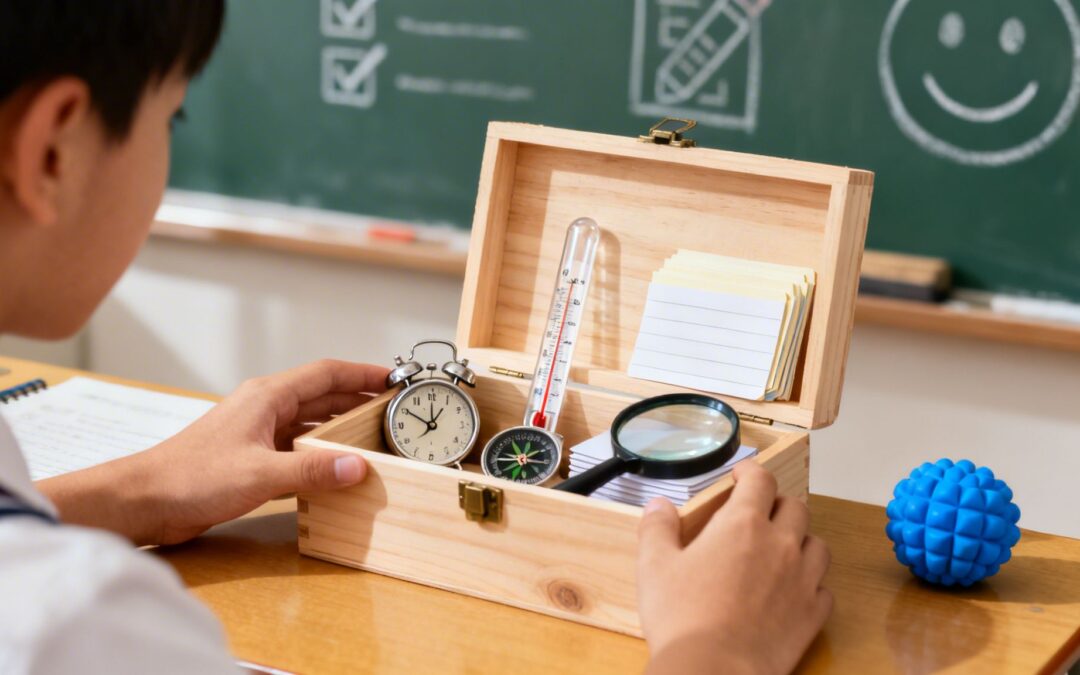
Think of self-management not as one single skill, but as a personal toolkit every child carries with them. Inside are all the specific instruments they need to handle daily challenges and build a strong foundation for whatever comes next. Just like a builder needs a hammer for one job and a measuring tape for another, a student needs different self-management skills for different situations.
For example, when a student gets frustrated with a tough math problem, their emotional regulation tool helps them take a deep breath instead of just giving up. When they’d rather be playing video games but have a project due, their impulse control tool helps them stay focused. Developing these skills isn’t about turning kids into perfect, rule-following robots; it’s about empowering them to make thoughtful choices for themselves.
Self-management is the bridge between knowing what to do and actually doing it. It empowers students to take ownership of their learning, behavior, and emotional well-being, turning potential into real-world competence.
This internal toolkit has a huge impact on every part of a student’s life. A child with strong self-management skills is much better equipped to:
Succeed Academically: They can map out study time, stay focused during lessons, and push through when subjects get tough. A practical example is a student using a planner to schedule 30 minutes for homework before playing, ensuring it gets done.
Build Healthy Friendships: They’re able to manage their reactions during disagreements and really listen to another person’s side of things without getting overwhelmed. For instance, a student who feels upset can say, “I need a minute,” instead of yelling at their friend.
Develop Resilience: They can handle stress, bounce back from setbacks, and walk into new situations with a sense of confidence. A resilient student who fails a test might think, “Okay, that didn’t work. I’ll ask the teacher for help and try a new study method.”
The Core Components of Self Management
To really get what’s inside this toolkit, let’s break down the key skills that all work together. Each one plays a unique role in helping a student navigate their world with more confidence and control.
Here’s a quick look at these essential components. As parents and teachers, our job is to help students recognize which tool is needed for the job and give them chances to practice using it.
The Core Components of Self Management
Skill Component
What It Looks Like in a Student
Emotional Regulation
Taking a moment to calm down after a disagreement on the playground.
Impulse Control
Raising their hand instead of shouting out the answer in class.
Goal-Setting
Breaking a large book report into smaller, manageable steps.
Organization
Keeping their backpack tidy and remembering to bring home their homework folder.
Stress Management
Using a breathing exercise before a test to reduce anxiety.
Attention Control
Finishing their reading assignment even when siblings are playing nearby.
When we see these skills as distinct but connected tools, it becomes much easier to pinpoint where a student might need extra support and how we can provide it. Building these skills one by one gives students the foundation they need to manage themselves effectively in any situation.
Exploring the 6 Pillars of Self Management
It helps to think of self-management as a “toolkit” a student carries with them. Let’s open that toolkit and look at the 6 essential instruments inside. These are the pillars that hold up a student’s ability to navigate their world with intention and control.
Each is a distinct skill, but they all work together—much like you need different tools to build a sturdy house. To make these ideas real, we’ll explore each pillar with a simple analogy and practical examples that parents and teachers can spot in everyday life. This helps turn abstract concepts into behaviors you can actually see, support, and encourage.
This diagram shows how a student’s success toolkit connects their thoughts, feelings, and actions, turning them into a powerful cycle for achievement.
The visual reminds us that self-management isn’t just about what kids do. It’s about helping them understand the powerful link between what they think, how they feel, and the choices they make.
1. Emotional Regulation: The Feelings Thermostat
Think of emotional regulation as a child’s internal “feelings thermostat.” It helps them notice when their emotional temperature is rising—from cool and calm to warm and annoyed, or even hot and angry. The goal isn’t to get rid of big feelings, but to learn how to keep them in a comfortable, manageable range.
A child with a well-calibrated thermostat can sense frustration building and use a strategy to “cool down” before a full-blown meltdown. This is absolutely foundational for learning and getting along with others.
Example for a Teacher: A kindergartener, accidentally pushed in line, feels their “thermostat” spike. They remember the class breathing exercise, put a hand on their belly, and take three slow breaths instead of pushing back.
Example for a Parent: An eight-year-old is about to lose a board game. They start to feel angry, but instead of flipping the board, they say, “I’m feeling frustrated, I need a minute,” and step away.
Example for a Student: A student gets a lower grade on a quiz than they wanted. Instead of crumpling the paper in anger (hot), they feel a pang of disappointment (warm), take a deep breath, and decide to ask the teacher how they can improve for the next one.
2. Impulse Control: The Mental Brakes
Impulse control is like having a reliable set of “mental brakes.” It’s the ability to hit pause between feeling an urge and acting on it. For a student, this means stopping to think before speaking, acting, or making a choice—especially when a more immediate, less helpful option is so tempting.
Without these brakes, a student might blurt out answers, grab a toy from a friend, or get sidetracked by their phone instead of finishing homework. Learning to use these brakes is crucial for classroom conduct and making safe, thoughtful decisions.
This skill is all about creating a moment of choice. It’s the pause that allows a student to ask, “Is this a good idea right now?” and steer toward a better outcome.
Example for a Teacher: A student is so excited they know the answer that they start to shout it out. They catch themselves, put their mental brakes on, and raise their hand instead.
Example for a Parent: A teenager sees a new video game they desperately want. Their first impulse is to spend all their allowance money. Instead, they pause and decide to save half of the money and put the other half toward the game.
Example for a Student: A fifth-grader is working on a group project, and a classmate suggests an idea they strongly disagree with. Their first impulse is to say, “That’s a stupid idea!” Instead, they apply their mental brakes, pause, and rephrase: “I see what you’re saying, but what if we tried this instead?”
3. Goal Setting: The Personal Roadmap
Goal-setting is a student’s “personal roadmap.” It helps them see where they’re going and plan the steps to get there. This skill transforms huge, overwhelming tasks—like a science fair project or learning a new instrument—into a series of smaller, more achievable milestones.
A good roadmap doesn’t just show the final destination; it highlights the route, potential stops, and the progress made along the way. This builds a sense of agency and teaches students how to work toward future accomplishments. It’s also tightly linked to motivation; as you can learn in this guide on how to develop self-discipline, breaking down goals makes it possible to keep going.
Example for a Teacher: To prepare for a spelling bee, a teacher helps a student set a goal of learning 5 new words each day, rather than trying to memorize 50 words the night before.
Example for a Parent: A child wants to save up for a new bike. A parent helps them create a “roadmap” by figuring out how much they need to save from their allowance each week and creating a chart to track their progress.
Example for a Student: A middle schooler wants to get a B in math but currently has a C. They create a “roadmap” with a parent that includes:
Destination: Earn a B or higher.
Route: Complete all homework, study for 20 minutes each night, and ask for help once a week.
Milestone: Check their grade every Friday to see if they’re on track.
4. Organization: The Tidy Backpack
Organization is about creating order in a student’s physical and mental worlds. Think of it as keeping a “tidy backpack”—both literally and figuratively. When a student’s backpack, desk, and schedule are organized, they can find what they need, remember deadlines, and approach their work with a clear head.
The opposite is a chaotic, overflowing backpack where homework gets lost and important papers are crumpled. This disorganization creates a ton of unnecessary stress and wastes mental energy that should be going toward learning.
Example for a Teacher: A teacher shows the class how to use a color-coded folder system: a red folder for math, a blue one for reading. This helps students visually sort their work and find materials quickly.
Example for a Parent: Before bedtime, a parent and child do a “backpack check” together, making sure homework is packed, old papers are taken out, and gym clothes are ready for the next day.
Example for a Student: A student knows exactly where their homework folder is. They have a specific pocket for important papers, so they hand in the permission slip calmly and start their day ready to learn. This reduces anxiety and builds independence.
5. Stress Management: The Pressure Valve
Stress management works like a “pressure valve.” Everyone feels pressure from school, friends, and home life. This skill allows a student to safely release that pressure before it builds up and leads to an explosion of anxiety, anger, or just shutting down completely.
Learning to spot the signs of stress (like a racing heart or tense shoulders) and use healthy release strategies is one of the most important self-management skills for long-term well-being. It goes hand-in-hand with self-awareness, which gives students the ability to recognize their feelings in the first place. You can read more about building that crucial foundation in our detailed guide on self-awareness skills.
Example for a Teacher: A teacher notices students are getting antsy before a test. They lead the class in a one-minute “chair stretch” to release physical tension and reset their minds.
Example for a Parent: A teenager is stressed about a social situation at school. Instead of letting them bottle it up, a parent suggests going for a walk together to talk it out, releasing emotional pressure.
Example for a Student: A high schooler feels overwhelmed by an upcoming exam. Instead of panicking, they use their “pressure valve” by taking a five-minute break to listen to music or talk to a friend. This helps them return to studying with a clearer mind.
6. Attention Control: The Focus Flashlight
Finally, attention control is like having a “focus flashlight.” In a world overflowing with distractions, this skill allows a student to shine a bright beam of concentration on what matters most in the moment—whether it’s the teacher’s voice, a book, or a math problem.
It also means noticing when the flashlight has drifted away and gently guiding it back to the task. This isn’t about forcing concentration for hours on end, but about learning to manage and direct one’s focus with intention.
Example for a Teacher: During silent reading, a teacher quietly prompts a daydreaming student by saying, “Shine your flashlight on your book,” providing a simple, non-judgmental cue to refocus.
Example for a Parent: A child is trying to do homework while the TV is on. A parent helps them manage distractions by saying, “Let’s turn the TV off for 20 minutes so you can use your full focus flashlight on this worksheet. Then you can watch.”
Example for a Student: A student is reading at home while their younger sibling watches cartoons in the same room. They feel their “flashlight” drifting toward the TV. They recognize this, stand up, and move to a quieter spot at the kitchen table to finish their work. They didn’t just notice the distraction—they took action to manage it.
Tracking Self Management Skills by Grade Level
How can you tell if a student’s self-management skills are on track? It’s a lot like learning to read or ride a bike—these skills grow over time and look totally different from one age to the next.
Knowing what’s developmentally appropriate is the key. It helps us provide the right kind of support without causing frustration for the child (or for us!). Think of this as a practical roadmap to understanding what “normal” behavior looks like and how to gently guide students toward the next milestone.
Early Elementary Milestones (Grades K-2)
For our youngest learners in kindergarten through second grade, it’s all about building the absolute basics of self-management. Kids at this age are just starting to move from being completely reliant on adults to taking their very first wobbly steps toward independence. Their self-control is very much a work in progress.
Our expectations should center on simple, concrete actions we can practice every day, with plenty of reminders and positive praise. Success isn’t about perfection; it’s about the effort.
Impulse Control Example: A first-grader wants the classroom’s special glitter crayon right now. Instead of grabbing it, they are learning to ask, “Can I use that when you’re done?”
Emotional Regulation Example: A second-grader feels tears coming after losing a game of kickball. They are learning to go get a drink of water to calm down instead of yelling.
Attention Control Example: A teacher asks a kindergartener to “put your drawing in your cubby and join us on the rug.” The child successfully completes both steps without getting sidetracked.
Organization Example: A student learns to put their crayons back in the box and hang their coat on their designated hook with a little bit of guidance.
At this age, self-management is a team sport. Think of it as co-regulation, where the adult acts as the external “brakes” or “thermostat” while the child’s internal system is still under construction.
When a first-grader manages to sit quietly for ten minutes during story time, that’s a huge win for their attention control. And when a second-grader remembers to put their homework folder in their backpack after just one reminder, they are mastering a crucial organizational skill.
Upper Elementary Milestones (Grades 3-5)
By the time students reach upper elementary, they are primed for more independence. Their brains have developed a greater capacity for planning and reasoning, which means they can start managing more complex situations and tasks. The training wheels are starting to come off.
Now, they can begin to see the direct connection between their actions and the results. This is the perfect time to introduce more structured planning and goal-setting.
Goal-Setting Example: A third-grader wants to learn their multiplication tables. A parent helps them set a goal to practice for 10 minutes each night using flashcards. Our guide on goal-setting for students offers more practical ways to build this crucial skill.
Organization Example: A fifth-grader starts using a simple weekly planner to write down assignments and due dates, checking it each afternoon.
Stress Management Example: A fourth-grader feels overwhelmed by a tough math problem. They are learning to name that feeling (“I’m frustrated!”) and use a simple strategy, like taking a few deep breaths or asking for a short break.
Impulse Control Example: A student gets better at thinking before they speak in a class discussion, showing more respect for what their classmates have to say, even when they disagree.
Middle School Milestones (Grades 6-8)
Middle school throws a whole new level of complexity at students—multiple teachers, changing schedules, and long-term deadlines. This is when self-management skills go from “helpful” to “absolutely essential” for both school success and personal well-being.
The focus shifts from simply completing single tasks to managing a whole system of ongoing responsibilities. They’re now expected to be the main drivers of their own learning.
Long-Term Planning Example: A seventh-grader has a research project due in two weeks. They create a timeline: week one for research and outlining, week two for writing and editing.
Advanced Organization Example: An eighth-grader uses a digital tool like Google Calendar or a school app to track their homework, sports practices, and social plans.
Emotional & Stress Management Example: A sixth-grader has a conflict with a friend. They are able to talk through the issue with the friend directly, using “I feel” statements, without needing an adult to step in every time.
This progression isn’t just about making school life easier. Strong self-management skills are consistently ranked among the top qualities employers look for. Building these skills in the classroom is one of the best ways we can set our kids up for a successful and fulfilling future.
Actionable Strategies for the Classroom
Okay, so we’ve talked about what self-management is, but how do we actually teach it in a busy classroom? This is where the real magic happens. By weaving simple, consistent routines into the school day, teachers can create an environment where students actively build and strengthen their own self-management toolkits.
The great news is, this doesn’t require a total curriculum overhaul. It’s about small, intentional actions that yield huge results.
The goal is to shift from correcting a lack of self-management to proactively teaching the skills. Instead of just reacting to a student’s outburst, we can give them the tools for emotional regulation before the feelings get too big. This simple shift empowers kids, cuts down on disruptions, and frankly, just makes the classroom a better place to be for everyone.
Create a Calm-Down Corner
One of the most effective, hands-on ways to teach emotional regulation is to set up a designated “Calm-Down Corner” or “Peace Corner.” This isn’t a punitive time-out spot. It’s a safe, inviting space where students can choose to go when they feel their emotions starting to bubble over. It gives them a physical place to practice self-soothing.
Stock this area with simple tools that help students manage their feelings and reset. The key is to frame it as a helpful resource, not a place of shame.
Practical Example: A student feels frustrated during math. They signal the teacher, walk to the Calm-Down Corner, squeeze a stress ball for three minutes while watching a sand timer, and then return to their desk ready to try again.
Sensory Tools: Think stress balls, soft pillows, or small containers of putty. These tactile objects give a student a quiet, non-disruptive way to channel anxious or angry energy.
Visual Aids: Post an “emotions chart” with faces showing different feelings. This helps kids identify and name what they’re experiencing—the crucial first step to managing it.
Breathing Guides: Simple visual cues work wonders. A picture of a flower to “smell” (inhale) and a candle to “blow out” (exhale) can guide a student through calming breaths without you having to say a word.
Timers: A sand timer or a simple visual timer provides structure. It allows a student to take a designated two or five minutes to regulate before rejoining the group.
Use Visual Timers and Schedules
So many self-management challenges, especially around attention and organization, come from a fuzzy sense of time. For a child, a 30-minute work period can feel endless and overwhelming. Visual timers are a game-changer because they make abstract time concrete and manageable.
By making time visible, you give students a powerful tool to manage their own energy and attention. It answers the constant question of “How much longer?” and helps them learn to pace themselves.
Practical Example: A teacher sets a visual countdown timer on the board for 20 minutes of independent work. Students can glance up and see exactly how much time is left, which helps them stay on task and manage their pace instead of asking the teacher repeatedly.
Practical Example: A clear visual schedule of the day’s activities is posted on the wall. Before transitioning from reading to math, the teacher points to the schedule. This helps kids anticipate the change, reducing the stress and disruption that can come from uncertainty. For students who might need a bit more support, you can explore other self-regulation strategies for students that build on these foundational classroom structures.
Implement Goal-Setting Routines
Make setting goals a regular, low-stakes part of your classroom culture. This gives students constant practice in breaking down tasks and builds their sense of accomplishment. These don’t have to be massive academic undertakings; small, personal objectives work wonders.
Here are a few practical ways to weave this in:
“One-Thing” Morning Check-in: Start the day by having each student write down one small, achievable thing they want to accomplish on a sticky note. It could be “finish my math worksheet,” “read one chapter,” or even “ask a question in class.” They put the note on their desk as a visual reminder.
Project Roadmaps: For longer assignments, work with students to create a simple “roadmap.” Break the project into three or four steps with target dates. For a book report, the steps might be: 1. Finish book by Friday. 2. Write outline by Tuesday. 3. Complete rough draft by Thursday.
End-of-Day Reflection: Take two minutes before dismissal for students to reflect on their “one thing.” Did they do it? If not, what got in the way? This builds metacognition—the ability to think about their own thinking and learning.
How to Foster Self Management Skills at Home
The classroom is a fantastic learning ground for self-management, but the real practice—the kind that truly sticks—happens at home. When parents and teachers are on the same team, they create a consistent world where kids can strengthen these essential skills in every part of their lives.
Don’t worry, reinforcing these ideas at home doesn’t have to be complicated. It’s really just about weaving simple, supportive routines into the natural rhythm of your family life.
Your role as a parent is incredibly powerful. By modeling and encouraging self-management, you’re handing your child a blueprint for success they’ll carry with them long after they’ve left the classroom. The key is to be supportive and realistic, always celebrating the effort, not just perfection.
Establish Predictable Daily Routines
Let’s be honest: kids thrive on structure. Predictable routines act like guardrails, guiding them through their day with far less stress and fewer power struggles. A consistent schedule for waking up, doing homework, and going to bed helps children internalize time management and take on more responsibility.
Think of it as creating a family rhythm. When a child knows what to expect, they can start to manage their own transitions between activities, which is a huge boost for both their confidence and their autonomy.
A consistent routine is the scaffolding that helps a child build their own internal sense of order. It reduces anxiety by answering the question, “What’s next?” before it’s even asked.
An after-school routine, for example, could be as simple as this:
Unpack & Snack (15 mins): Empty the backpack and grab a healthy snack. This gives them a moment to decompress.
Homework Time (30 mins): Settle in and work on assignments in a designated quiet space.
Free Play (Until dinner): Once responsibilities are handled, it’s time for fun and relaxation.
Create a Dedicated Homework Zone
An organized workspace is a game-changer for learning how to focus. Designate a specific spot for homework—whether it’s a desk in their room or a corner of the kitchen table. What matters is that it’s consistent, quiet, and stocked with all the supplies they’ll need.
This simple act of creating a “work zone” sends a clear signal to a child’s brain: “This is where I focus.” It cuts out the wasted time spent searching for a pencil or a quiet place to think, letting them dive right into their tasks. For any parent looking for ways to empower their children, figuring out how to motivate kids to study effectively is a huge piece of the puzzle.
Practical Example: Create a “homework caddy” with pencils, crayons, scissors, and glue. When it’s homework time, the child can bring the caddy to the kitchen table. When they’re done, everything goes back in the caddy, keeping the space organized and supplies easy to find for next time.
Use Chore Charts to Teach Responsibility
Chore charts are a classic for a reason—they are a brilliant, visual tool for teaching organization, goal-setting, and accountability. A good chart breaks down bigger responsibilities (like the dreaded “clean your room”) into small, manageable steps.
The trick is to make it a collaborative process. Sit down with your child to decide on a few age-appropriate chores and any potential rewards. This gives them a sense of ownership over the process and makes them much more invested in the outcome.
Practical Example (Ages 5-7): A chart with pictures for non-readers: a picture of a dog for “feed the dog,” a picture of a toy box for “put away toys.” They can put a sticker next to each task they complete.
Practical Example (Ages 8-12): A weekly chart on the fridge where they can check off multi-step chores like “sort and bring down laundry” or “help set the table for dinner.”
Practice Mindfulness Together
Stress management is a skill that benefits the entire family. Bringing simple mindfulness activities into your home can help everyone learn to hit the “pause” button and handle stress in a healthier way. You don’t need to be an expert; the goal is simply to practice paying attention to the present moment together.
Practical Example: Try “belly breathing” at bedtime. Have your child lie down and place a small stuffed animal on their belly. Ask them to breathe in slowly and watch the animal rise, then breathe out and watch it fall. This gives them a visual, calming focus point. For some family-friendly ideas to get you started, check out these simple self-care activities for students.
These efforts pay off in the long run. Workplace studies show that employees with strong self-management skills are 15% more productive because they are better at setting goals and managing their time. By building these skills at home, you’re not just helping with homework—you’re laying a foundation for their future success.
Connecting Self-Management to Lifelong Success
The skills we work on in childhood don’t just stay in the classroom. They become the bedrock of a successful and fulfilling adult life. When we teach a student what self-management skills are, we’re not just preparing them for the next test—we’re getting them ready for the real, complex world waiting outside the school gates.
Think of it this way: every small win in self-management is a building block for the future.
When a student learns to manage their frustration during a group project, they’re practicing the exact same skills they’ll need to navigate a tough conversation with a coworker one day. The organized backpack and homework planner of a middle schooler is the direct ancestor of the project management and deadline-driven work of a future career.
From Classroom Lessons to Career Readiness
This isn’t just a nice idea; it’s exactly what employers are looking for.
In its Future of Jobs Report 2025, the World Economic Forum pointed to self-management skills like motivation and self-awareness as top-five core competencies. With 39% of workers’ skills expected to change by 2030, companies are desperate for agile, resilient talent. You can dig into more of the data in the Future of Jobs Report on the WEF website.
Practical Connection: A student who uses a planner to manage five different subjects is learning the time management skills needed to juggle multiple projects in a future job. The ability to prioritize tasks, meet deadlines, and plan ahead is a direct outcome of practicing organization in school.
This really highlights how vital early SEL instruction is. By nurturing these skills now, we’re setting students up to thrive in the collaborative, fast-paced environments that future jobs will demand.
By guiding a child to manage their inner world, we empower them to shape their outer world. We are preparing them to be resilient problem-solvers, empathetic colleagues, and confident leaders.
The lessons learned from creating a study schedule or calming down after a playground disagreement are more profound than they seem. They are the very seeds of resilience, responsibility, and emotional intelligence.
As parents and educators, our guidance has a ripple effect that lasts a lifetime. By investing in these skills today, we’re giving the next generation the tools they need to build not just a successful career, but a well-managed, intentional, and meaningful life. Your support on this journey is one of the greatest gifts you can give.
Common Questions About Self-Management
We’ve covered a lot of ground, but you might still have some specific questions about what these skills look like day-to-day. Here are a few of the most common ones we hear from parents and educators.
How Can I Tell if It’s Defiance or a Skill Gap?
This is a critical distinction and one that can completely change how you respond to a child’s behavior. The key is to look at how they respond to a task, not just if they do it.
A student who can do the work but flat-out refuses is showing defiance. But a student who is genuinely overwhelmed by the steps involved—where to start, what to do next—is showing a skill gap. They might look frozen, frustrated, or just give up.
Practical Example: A teacher asks a student to clean their desk area. A defiant response might be, “No, I don’t want to.” A skill gap response might look like the student just moving papers around aimlessly, unsure of where to begin. This student doesn’t need discipline; they need a parent or teacher to break it down: “First, put all the loose papers in your folder. Next, put the crayons back in the box.”
What’s the Best Age to Start Teaching Self-Management?
Honestly? The best time to start is right now.
Self-management skills begin developing from the moment a child is born through co-regulation with a caregiver. When a toddler learns to wait a minute for a snack, that’s the earliest form of impulse control, guided by a trusted adult.
Practical Example (Ages 3-5): Focus on simple, concrete skills. Think two-step directions (“Pick up your toys and put them in the box”) and helping them use words for big feelings (“You’re feeling sad because playtime is over”).
Practical Example (Ages 6-8): You can start introducing basic organizational tools, like a homework folder, and simple goal-setting for tasks like cleaning their room. For instance, “Your goal is to make your bed every morning this week.”
The key is to start with small, age-appropriate expectations and build from there. You can’t expect a kindergartener to manage a weekly planner, but you can absolutely teach them to hang up their coat when they come inside.
What if a Student Struggles with Just One Specific Skill?
That’s completely normal! It’s very common for a student to be a rockstar at organization but struggle with emotional regulation, or vice versa.
The first step is to pinpoint the specific challenge and provide targeted support. If impulse control is the issue, try practicing games that require waiting for a turn. If they get easily overwhelmed by stress, introduce some simple breathing exercises they can do at their desk.
Practical Example: A student is well-organized but shouts out answers in class (a challenge with impulse control). The teacher can set a small, private goal with them: “Let’s see if you can raise your hand three times this morning. I’ll give you a quiet thumbs-up when you do.” This focuses on building one skill without overwhelming the student.
Soul Shoppe provides schools and families with the practical tools and shared language needed to build these essential life skills. Our research-based, experiential programs cultivate connection and resilience in every child. Discover how our assemblies, workshops, and digital resources can support your community at https://www.soulshoppe.org.
Think of it as the process of learning how to be human—how to understand our own big feelings, get along with other people, and make choices we can be proud of. It’s the essential toolkit kids build over time that helps them navigate the world successfully. This isn’t just about being “nice”; it’s the foundation for everything from acing a math test to bouncing back from a tough day.
Understanding Social Emotional Development
Imagine a child building a house. Their academic skills—like reading and math—are the blueprints and the raw materials. But their social-emotional skills? Those are the actual tools. Without a solid hammer, a level, and a tape measure, even the best blueprints won’t result in a sturdy, reliable structure.
This development is what’s happening beneath the surface. It’s the internal compass that guides a child through playground disagreements, the focus needed for a group project, and the empathy required to celebrate a friend’s victory instead of feeling jealous.
The Five Core Building Blocks
Social emotional development really boils down to five interconnected skills. These aren’t just abstract ideas; they are practical, everyday abilities that kids use constantly. Let’s break down what they actually look like.
A great way to visualize these skills is to think of them as the five essential pillars holding up a child’s well-being and success.
The Five Pillars of Social Emotional Development
Core Skill
What It Looks Like in a Child
Self-Awareness
Recognizing, “I feel frustrated right now because this puzzle is hard.”
Self-Management
Taking three deep breaths when feeling angry instead of yelling or stomping.
Social Awareness
Noticing a classmate is sad and asking if they’re okay.
Relationship Skills
Listening to a friend’s idea and finding a way to work together.
Responsible Decision-Making
Choosing to tell a teacher about bullying instead of just watching.
Each of these pillars supports the others, creating a strong, resilient, and well-rounded person.
It’s so important to remember that these skills aren’t something kids are just born with. They are learned and practiced, day in and day out, through interactions with parents, teachers, and friends—just like learning to read or ride a bike.
Ultimately, these five competencies work together to help a child not just succeed in school, but thrive in life. To see how these skills connect and build on one another, you can dive deeper into the five core SEL competencies explained in our detailed guide. If you’re interested in the science and theory behind this, you can explore psychology resources to get a broader academic perspective.
The Real-World Payoff of Strong Social Emotional Skills
So we understand the building blocks of social emotional development, but let’s get to the question every parent and teacher asks: Why does this actually matter?
The answer is simple. These aren’t just feel-good, abstract concepts. They have a massive, tangible impact on a child’s everyday life—at school, at home, and for years to come. Think of these skills less as “soft skills” and more as a direct investment in a child’s academic success, mental health, and their ability to be a good human being in a complex world.
Better Learning and Academic Performance
An emotionally regulated child is a child who is ready to learn. It’s really that straightforward.
Picture a student staring down a tough math problem. Without the right emotional tools, frustration can quickly boil over, leading to a total shutdown. That moment doesn’t just halt their own learning; it can disrupt the entire classroom.
Now, imagine a different student. They feel that same frustration bubbling up, but they have the skills to recognize it, take a deep breath, and ask for help instead of giving up. That single skill—self-regulation—is directly tied to better focus, stronger memory, and higher grades. When a child isn’t hijacked by their emotions, their brain is free to do its real job: absorbing new ideas and solving problems.
Key Takeaway: Emotional regulation isn’t separate from academics—it’s the foundation that makes deep learning possible. A calm, focused mind is a learning mind.
The research on this is overwhelming. One landmark meta-analysis looked at 424 different studies covering over 500,000 students. The conclusion was clear: students in social emotional learning programs consistently showed improved social skills, better attitudes about school, and stronger academic performance than their peers.
Safer Classrooms and Fewer Conflicts
At its heart, social emotional learning is the ultimate antidote to bullying and daily classroom drama. When kids develop empathy and social awareness, they learn to step into someone else’s shoes. That ability is an absolute game-changer on the playground.
Practical Examples:
A child with empathy will be the one to spot a classmate sitting alone and invite them to play.
A child with strong relationship skills can disagree about the rules of a game without it turning into a screaming match. For instance, they might say, “How about we try my way this time, and your way next time?”
A child who can make responsible decisions will be more likely to stand up for a peer who is being treated unkindly by telling a trusted adult.
These skills transform a room full of individuals into a supportive, collaborative community where students feel safe enough to be themselves. And when conflicts inevitably pop up, kids have the tools to solve them peacefully. They learn to use “I feel” statements instead of fists or hurtful words. The importance of these skills is huge, because they create a positive school climate where everyone can actually thrive.
Building Lifelong Resilience and Mental Health
Maybe the most profound benefit of social emotional learning is its long-term impact on a child’s mental well-being. These skills are a child’s first line of defense against life’s inevitable curveballs, building a resilient mindset that will serve them long into adulthood.
Practical Examples:
Managing Anxiety: A child who learns to identify and manage their anxiety is better equipped to handle the stress of a big test. They might use a calming technique like deep breathing or positive self-talk before the test begins.
Navigating Peer Pressure: A teenager who has practiced responsible decision-making has a stronger compass for navigating social situations. They might have a pre-planned response for when a friend offers them a vape, like “No thanks, I’m not into that.”
By giving children a vocabulary for their feelings and practical strategies to cope with them, we’re essentially handing them a protective shield against future mental health struggles. This isn’t about trying to prevent kids from ever feeling sad, angry, or scared. It’s about teaching them how to move through those feelings constructively, building a quiet confidence and a strong sense of self along the way.
Social Emotional Milestones for K–8 Students
Just like kids learn to crawl before they walk and sound out letters before they read a whole book, their social and emotional skills grow in predictable stages. Understanding these developmental milestones helps us—whether we’re parents or teachers—give the right kind of support at the right time. It’s all about celebrating their progress and spotting where a child might need a little extra help.
Social emotional development isn’t a race. It’s a journey, and what we look for in a kindergartener is worlds away from what we expect from a middle schooler. A five-year-old who can simply name their feeling as “sad” is right on track, while an eighth-grader is learning to navigate much more complex social currents.
Each stage builds on the last, creating a foundation for the next level of emotional intelligence and social skill.
As you can see, the journey starts with very concrete skills and blossoms into the more abstract thinking needed to manage relationships and personal choices as kids get older.
A Parent’s Guide to Social Emotional Milestones
Watching a child grow socially and emotionally can feel like a mystery. What’s typical for a 7-year-old versus a 12-year-old? This table breaks down what you can generally expect to see at each stage, along with some gentle flags that a child might need a bit more guidance or support.
Age Group
Typical Milestones to Look For
Signs a Child May Need Support
K–2nd Grade (Ages 5–7)
Can name basic emotions (happy, sad, mad). Begins to share and take turns. Shows simple empathy, like hugging a sad friend. Follows two-step directions in a game.
Frequently grabs toys or has trouble waiting for a turn. Can’t name any feelings or seems disconnected from them. Struggles to play with others without constant conflict.
3rd–5th Grade (Ages 8–10)
Develops more complex friendships and can resolve minor disagreements. Understands others’ perspectives better. Can handle losing a game without a major meltdown. Starts working well in group projects.
Has difficulty keeping friends or is often in conflict. Regularly blames others for their problems. Seems unable to cope with small disappointments. Struggles to see things from another’s point of view.
6th–8th Grade (Ages 11–14)
Navigates peer pressure and begins to make responsible choices. Develops a stronger sense of personal identity and values. Shows deeper empathy for others’ experiences. Can articulate their own needs and set boundaries.
Is easily swayed by peers or engages in risky behavior to fit in. Seems to have a very low sense of self-worth. Is consistently unkind or dismissive of others’ feelings. Has trouble managing online social interactions.
Remember, every child develops at their own pace. This guide is here to offer context, not to create worry. It’s about being aware and ready to help them build the skills they need for the road ahead.
Early Elementary (Kindergarten – 2nd Grade)
This is where it all begins. In these early years, children are learning the absolute fundamentals of social life and emotional awareness. Their world is still very much centered around themselves, and the idea that other people have different thoughts and feelings is a brand-new concept.
The main job here is learning to identify feelings in simple terms and follow basic social rules. Things we take for granted, like sharing a coveted toy or waiting in line, are monumental tasks that require immense self-control for a six-year-old.
What to Look For (Practical Examples):
Identifying Basic Feelings: They can say, “I’m sad because you took my toy,” or “I’m happy we’re playing.”
Following Simple Rules: During a classroom game like “Simon Says,” they can follow two- or three-step directions.
Taking Turns: A student can wait for their turn in a board game, even if they’re bursting with excitement.
Showing Simple Empathy: They might try to comfort a crying friend by offering a hug or a favorite stuffed animal.
Upper Elementary (3rd – 5th Grade)
As kids hit the upper elementary grades, their social lives get a lot more complicated. Friendships aren’t just about who has the best toys anymore; they’re now built on loyalty, inside jokes, and learning how to work through disagreements.
At this stage, children are developing a much stronger capacity for empathy. They’re getting better at putting themselves in someone else’s shoes and learning to manage trickier emotions like frustration, disappointment, and jealousy.
What to Look For (Practical Examples):
Navigating Complex Friendships: A child can work through an argument with a friend without needing an adult to step in every time. They might use a compromise, like “Let’s play your game for 10 minutes, then my game for 10 minutes.”
Managing Disappointment: They can lose a game at recess and, while they might feel bummed, they can still shake hands with the other team.
Developing Empathy: They might notice a classmate is being left out and go out of their way to invite them to join the group.
Working Cooperatively: Students can actually collaborate on a group project, listening to others’ ideas and sharing their own.
Middle School (6th – 8th Grade)
Welcome to middle school, where everything shifts. The influence of friends often becomes the most powerful force in a child’s life, and the focus turns to fitting in and figuring out their own identity. It’s a messy, beautiful, and critical time.
This is when a stronger sense of self really starts to form. Kids are learning to make responsible choices on their own and handle the intense pressures of both online and real-world social dynamics. Because their brains can now think more abstractly, they’re able to consider the long-term consequences of their actions.
If you’re looking for ways to support this age group, exploring different social-emotional learning activities can provide some great, practical ideas.
What to Look For (Practical Examples):
Handling Peer Influence: A student can say “no” when a friend is pressuring them to do something they know isn’t right, like skipping a class.
Developing a Sense of Self: They can talk about their own values and interests, even if they’re different from what’s popular, like preferring to read a book instead of going to a party.
Making Responsible Choices: A student finds a lost phone on the bus and decides to turn it in to the driver instead of keeping it.
Showing Advanced Empathy: They can understand and show compassion for someone whose life is very different from their own, perhaps after reading a book or watching a documentary about another culture.
Actionable Ways to Nurture Social Emotional Growth
Knowing the milestones of social emotional development is one thing, but actively nurturing those skills is where the real work begins. This is where theory meets practice.
The good news for parents and teachers? Supporting this growth doesn’t require a special curriculum or expensive tools. It’s all about weaving intentional practices into the everyday moments you already share with children, turning daily routines into powerful learning opportunities.
These strategies are designed to be simple and effective, easy to slip into a busy classroom or a bustling home. By being active coaches in a child’s emotional journey, we can give them the scaffolding they need to build self-awareness, manage their feelings, and connect meaningfully with others.
Fostering Self-Awareness: The Ability to See Within
Before a child can manage an emotion, they have to be able to recognize and name it. Think of self-awareness as the bedrock skill of what is social emotional development—it’s their internal compass. The goal is to give kids a rich vocabulary for their feelings that goes far beyond just “happy” or “mad.”
Practical Examples:
Create a Feelings Wheel: In the classroom or at home, a simple chart with faces showing a range of emotions (proud, frustrated, worried, excited) works wonders. During a check-in, a child can just point to the face that matches how they feel. It’s a low-pressure way to communicate what’s going on inside.
Start a Simple Journaling Practice: For older elementary or middle school students, a “one-sentence journal” can be a powerful tool. Each day, they write just one sentence about how they felt and why. This small habit builds the muscle of self-reflection over time.
Narrate Emotions Out Loud: Model this for them. You might say, “I’m feeling a little frustrated because I can’t find my keys, and it’s making my shoulders feel tight.” This shows them that everyone has feelings and demonstrates how to connect an emotion to a physical sensation and a cause.
Building Self-Management: The Power to Regulate
Once a child can name their feeling, the next step is learning what to do with it. Self-management is all about developing the skills to handle stress, control impulses, and push through challenges. It’s the difference between a frustration-fueled meltdown and taking a moment to reset.
Key Insight: The goal isn’t to suppress or get rid of big feelings. It’s to teach children how to navigate them constructively without causing harm to themselves or others.
One of the most effective ways to do this is by creating a dedicated space and teaching specific calming techniques they can turn to.
Practical Examples:
Design a Calm-Down Corner: This isn’t a “time-out” spot. It’s a safe, cozy space a child can choose to go to when they feel overwhelmed. Stock it with sensory items like a soft blanket, a squishy ball, or a coloring book. This empowers them to take charge of their own regulation.
Teach “Box Breathing”: For older students dealing with test anxiety or social stress, this simple technique is a game-changer. Guide them to breathe in for a count of four, hold for four, exhale for four, and pause for four, visualizing a box in their mind. It’s a discreet tool they can use anywhere.
Use “If-Then” Plans: Help kids prepare for tough situations ahead of time. For example, “If I start to feel angry during the game, then I will go get a drink of water and do three box breaths.” This proactive approach gives them a clear action plan instead of leaving them to react in the heat of the moment.
Developing Strong Relationship Skills
Social emotional development really flourishes in our connections with others. Relationship skills cover everything from clear communication and active listening to cooperation and peaceful conflict resolution. These are the skills essential for making friends, working in groups, and just being part of a community.
A core piece of this is teaching children how to express their needs and feelings without blaming others. Learning to use “I feel” statements is a foundational communication skill that can stop countless conflicts from escalating.
Practical Examples:
Role-Play Difficult Conversations: Practice really does help. Set up a scenario, like a friend who keeps cutting in line. Help the child practice saying, “I feel frustrated when you cut in front of me because it doesn’t feel fair. I need you to wait for your turn.” Role-playing in a calm moment builds the confidence they need for real-life situations.
Practice Active Listening: In a conversation, challenge kids to repeat back what they heard the other person say before sharing their own opinion. Something as simple as, “So what I hear you saying is…” fosters genuine understanding and empathy.
Assign Collaborative Projects: Give kids tasks that require teamwork, whether it’s building a LEGO tower at home or finishing a group report at school. Afterward, debrief with them: “What went well? What was hard about working together? What would you do differently next time?”
By focusing on these actionable strategies, you can transform your home or classroom into a space where children feel seen, understood, and equipped with the tools they need to thrive. For more ideas, check out these engaging emotional intelligence activities for kids that you can start using today.
Why Social Emotional Skills Are a Global Priority
The conversation around social-emotional development isn’t just happening in local school districts—it’s a worldwide educational movement. Countries all over the globe are waking up to a fundamental truth: if we want to prepare students for the future, we have to teach them how to be resilient, collaborative, and empathetic human beings.
This global shift is being driven by a clear-eyed look at what the future actually requires. Tomorrow’s workplaces and communities won’t be defined by academic knowledge alone. Success will hinge on the ability to communicate across differences, solve messy problems together, and adapt to constant change. These aren’t ‘soft skills’; they are essential survival skills for a deeply interconnected world.
A New Definition of School Readiness
For decades, the main yardstick for a school’s success was academic readiness. But today, global education leaders understand that a child’s ability to manage their emotions and work well with others is just as critical. This shift paints a much more complete picture of what it means to be an educated, well-rounded person.
Investing in social-emotional learning is now seen as a core part of a nation’s long-term health and success. And this isn’t just a K-12 thing; the ongoing development of these skills is crucial for lifelong learning. We see this in professional settings, like in various Community of Practice examples where people work together to sharpen their abilities through shared experiences. That collaborative spirit is exactly what we’re trying to build in our schools.
Responding to a Worldwide Need
International research confirms just how urgent this work is. The OECD’s Survey on Social and Emotional Skills (SSES) is the largest global effort to track these competencies, and its findings have been a wake-up call. The data shows that students’ social and emotional skills often take a nosedive as they hit adolescence.
Even more concerning, the survey reveals significant gaps between children from different socioeconomic backgrounds, highlighting a global inequity in who gets access to quality social-emotional support. You can discover more about the OECD’s global findings on social and emotional learning.
For school leaders, this global perspective makes a powerful case for investing in social-emotional programs. It’s not just about improving classroom behavior. It’s about aligning with international best practices and giving every single student the tools they need to thrive in a complex, globalized future.
Key Insight: Prioritizing social emotional development is a strategy for building stronger, kinder, and more innovative societies. It ensures students are prepared not just for a test, but for the test of life.
This global consensus sends a clear message. When we teach a child how to understand their feelings or resolve a conflict peacefully, we are doing so much more than just helping one student. We are contributing to a more compassionate and competent future generation—one that’s capable of tackling challenges we can’t yet even imagine.
How Soul Shoppe Programs Create Positive School Climates
Understanding the theory behind social-emotional development is one thing. But for schools, the real question is: How do you bring it to life in a way that actually sticks? This is where a structured, school-wide system makes all the difference. Instead of leaving SEL to chance, dedicated programs can transform a school’s entire climate.
Soul Shoppe helps schools move from the ‘what’ to the ‘how’ with a hands-on, practical approach. We focus on building skills through direct experience, not just lectures. Our interactive assemblies and in-class workshops make learning engaging and memorable for students from kindergarten all the way through middle school.
Making Skills Usable and Visible
The goal is to give students tools they can use the moment they walk out of the workshop. We don’t just talk about abstract ideas like “conflict resolution”; we give them a shared vocabulary and tangible strategies they can apply on the playground, in the cafeteria, and at home.
For example, students learn specific techniques to manage frustration or respectfully disagree with a friend. This creates a common language across the entire school, so everyone is on the same page.
Practical tools students learn include:
The “I-Message” Formula: A simple, non-blaming way to express feelings and needs. Think, “I feel frustrated when I’m interrupted because my idea is important to me,” instead of “You always cut me off!”
Peace Path for Conflict Resolution: This is a step-by-step physical guide—often painted right on the playground—that students can literally walk through to solve problems peacefully on their own.
“Stop, Walk, and Talk”: A clear, three-step process for handling minor conflicts before they escalate. It empowers students to take ownership of their interactions.
Empowering Teachers and Staff
A positive school climate isn’t built by students alone. It takes every single adult on campus actively modeling and participating. That’s why our programs also focus heavily on empowering teachers, administrators, and staff.
We provide practical training and ongoing resources that give educators the confidence to reinforce these skills consistently. This approach transforms the adults from passive observers into active coaches of social-emotional development.
A school’s culture is shaped by the daily interactions between every person in the building. When staff and students share the same tools and language for empathy and respect, the entire community becomes a safer, more supportive place to learn and grow.
By weaving these practices into the school day, we help create a culture where kindness, respect, and emotional intelligence aren’t just taught—they’re a part of the very fabric of daily life.
Your Questions About Social-Emotional Development, Answered
As social-emotional development becomes a bigger part of the conversation in schools and at home, it’s natural for parents and educators to have questions. This final section gives clear, straightforward answers to some of the most common things people ask as they navigate this important journey with their children.
What if My Child’s School Doesn’t Have an SEL Program?
Don’t worry. If your school doesn’t have a formal program, remember that you are your child’s first and most important teacher when it comes to these skills. The most meaningful learning often happens in the small, everyday moments you share.
Practical Examples You Can Use at Home:
Model Empathy: While watching a show, you could say, “That character looks really sad. I wonder what would make them feel better?” This simple act teaches your child to notice and consider others’ feelings.
Use Dinnertime for ‘Feelings Check-Ins’: Go around the table and share one high point and one low point from the day. This creates a safe, routine space for everyone to talk about emotions like excitement, frustration, or disappointment.
Isn’t This Just Another Term for Soft Skills?
While there’s definitely some overlap, thinking about what is social emotional development is more specific and structured than the general idea of “soft skills.” Modern social-emotional learning uses a research-backed framework—like the five core competencies—that gives educators and parents measurable outcomes to work toward.
It’s not just about being polite. It’s about intentionally teaching skills like emotional regulation and responsible decision-making in a way that can be practiced, tracked, and improved over time.
When Is the Best Age to Start Teaching These Skills?
The answer is simple: it starts from day one. When a parent soothes a crying infant, they are giving the very first lesson in emotional regulation. When a toddler learns to take turns with a toy, they are practicing relationship skills.
Key Takeaway: Social-emotional development begins at birth, but it’s crucial to remember that it’s never too late to start. Whether a child is five or fifteen, they can always build new skills and strengthen their emotional intelligence.
How Can I Tell if My Child Is Making Progress?
Progress isn’t always a straight line, and it won’t show up on a report card. Instead of looking for perfect behavior, watch for the small, observable changes that show your child is starting to use their new tools.
Observable Signs of Progress:
Sharing More Willingly: A child who used to grab toys might start offering to take turns without being prompted.
Handling Disappointment Calmly: After losing a game, they might still express sadness but stop short of yelling or storming off.
Using Feeling Words: You might hear them say, “I feel frustrated right now,” instead of just acting out that frustration.
These small shifts are huge victories. They show that a child is internalizing these critical life skills and building a stronger foundation for whatever comes next.
At Soul Shoppe, we believe every child deserves the tools to navigate their world with kindness and confidence. Our programs bring these essential skills to life, creating school climates where every student can thrive. Learn how Soul Shoppe can support your school community.
Anxiety coping skills are the tools we give children to help them navigate feelings of worry, fear, and stress. Think of them as emotional first aid—things like grounding techniques, deep breathing exercises, and simple ways to reframe scary thoughts. They equip kids to handle emotional bumps in the road in a healthy, constructive way.
Understanding Childhood Anxiety in Today’s World
Before we jump into specific strategies, it’s important to get a clear picture of what anxiety actually looks like in children today. We’re not just talking about the occasional butterflies before a school play. For many kids, it’s a much more persistent response to a world packed with academic pressure, tricky social dynamics online, and the echoes of global uncertainty.
For a child, anxiety often feels different than fear. Fear is usually a reaction to a clear and present danger, like a dog barking loudly. Anxiety, on the other hand, is that nagging sense of dread about something that might happen down the road. For example, a child might feel fear when seeing a spider (an immediate threat), but they feel anxiety when lying in bed worrying that a spider might be in their room.
Distinguishing Normal Worries from Heightened Anxiety
It’s completely normal for a child to worry about a test or feel shy on the first day of school. These are just part of growing up. But when those worries become so big and persistent that they get in the way of daily life—school, friendships, sleep—it might signal a need for more support. You can learn more about the specific signs of stress in children and how to spot them.
Here’s how anxiety can show up differently than typical worries:
Intensity: A child might worry about a spelling test. But a child struggling with anxiety might lose sleep for a week straight leading up to it, feel sick to their stomach, or refuse to go to school on test day.
Duration: Everyday worries tend to pass quickly. Anxious feelings can hang around for days or even weeks, casting a shadow over everything. For example, a typical worry about a sleepover ends once the child has fun, but anxiety might cause them to worry about the next sleepover weeks in advance.
Physical Symptoms: Anxiety often brings real physical complaints. Think frequent stomachaches, headaches, or constant tiredness that isn’t linked to any medical illness. A child might consistently ask to go to the nurse’s office on Mondays before a math test they find difficult.
It’s a tough reality, but the global prevalence of anxiety disorders in children has become a major concern. About 14% of children worldwide experience some form of mental health challenge, with anxiety being one of the most common, especially for older kids and teens.
Why Coping Skills Are a Core Life Skill
Teaching children how to manage anxiety is as fundamental as teaching them to read or tie their shoes. It’s not about trying to get rid of worry completely—that’s not realistic or even healthy. The goal is to give them the tools to work with their feelings so their feelings don’t run the show.
When we reframe anxiety as a signal from their bodies, not a character flaw, we empower them to listen and respond in a helpful way. For more support and information on children’s well-being, exploring general resources for mental health awareness can be incredibly valuable.
Creating emotionally safe spaces, both at home and in the classroom, is the absolute first step. This means building an environment where kids feel seen, heard, and validated when they share what’s scaring them.
For example, if a child is afraid of the dark, instead of saying, “There’s nothing to be scared of,” try something like, “I hear that you’re feeling scared when the lights are out. It feels pretty lonely in the dark sometimes. What could we do to make it feel a little safer?” This simple shift from dismissal to empathy opens the door for a child to build true resilience.
Tangible Coping Skills for Young Children (Grades K-2)
When you tell a kindergartener to “just relax,” you might as well be speaking another language. For young children in grades K-2, abstract ideas about feelings are confusing. Their brains are wired for concrete, physical experiences, so our strategies for teaching anxiety coping skills need to be tangible—something they can see, touch, and do.
The goal is to connect their big feelings to simple, physical actions. This process builds a kind of emotional muscle memory, turning an overwhelming internal state into a manageable, hands-on task. By making coping skills sensory-based and even playful, we give them tools they can actually understand and use on their own.
Create a Calm-Down Corner
One of the most powerful tools in my experience is a designated “Calm-Down Corner” or “Peace Corner.” This isn’t a timeout spot for bad behavior; it’s a safe, cozy space a child can choose to visit when they feel overwhelmed. The space itself should feel like a warm hug, creating a positive association with self-regulation.
To make it effective, fill it with sensory items that help soothe an agitated nervous system. These tools give all that anxious energy a place to go.
Soft Textures: A fuzzy blanket, a soft rug, or a few large pillows are perfect.
Squishy Toys: Stress balls, textured fidgets, and squishy toys help release physical tension in their hands.
Weighted Items: A weighted lap pad or a heavy stuffed animal can provide a grounding, calming pressure that feels incredibly secure.
Practical Example: A teacher might notice a student getting wiggly and frustrated during math. She could quietly say, “It looks like your body needs a break. Would you like to spend five minutes in the Calm-Down Corner with the weighted lizard?”
Deep breathing is a game-changer for anxiety, but telling a young child to “take a deep breath” often leads to quick, shallow gasps that do more harm than good. We have to make the process visual and interactive. It needs to feel less like a chore and more like a gentle game.
This simple process flow shows how we can guide a child from recognizing an anxious signal to using a skill with our help.
This visual reminds us that our job is to help kids first notice the Signal (their body’s clue that they’re anxious), offer loving Support, and then guide them toward a tangible Skill. This framework builds their confidence and independence over time.
A fantastic way to practice this is with “Stuffed Animal Breathing.” Have the child lie down and place a favorite stuffed animal on their belly. Then, guide them with a soft, gentle voice.
Example Script: “Let’s give your teddy bear a slow ride. Take a big breath in through your nose and make your belly rise up high, like a balloon. 1… 2… 3… Now, breathe out slowly through your mouth and let the teddy bear float back down. 1… 2… 3… 4…”
Watching the toy rise and fall gives them a concrete visual for the rhythm of deep, calming breaths. It transforms a complex concept into a simple, observable action they can control.
Introduce Worry Monsters and Worry Boxes
Young children often can’t find the words for their anxieties. Giving their worries a physical form makes them feel less scary and much more manageable. This is where tools like a “Worry Monster” or a “Worry Box” can be magical.
A Worry Monster is just a special puppet or a decorated tissue box with a big mouth. Introduce it as a friendly creature that loves to eat worries for lunch.
Here’s how it works: If a child is anxious about a parent leaving at drop-off, you can say, “It sounds like you have a big worry about saying goodbye. The Worry Monster is really hungry today. Let’s draw a picture of that worry and feed it to him so he can gobble it all up!”
The child can draw or write what’s bothering them on a small piece of paper, then physically “feed” it to the monster. This simple, symbolic act helps them externalize the fear, giving them a real sense of control and relief.
To help you get started, here are a few simple, age-appropriate skills you can introduce in the classroom or at home.
Core Coping Skills for Grades K-2
Coping Skill
Classroom or Home Activity
What It Teaches
Belly Breathing
Stuffed Animal Breathing: Lie down, place a toy on the belly, and watch it rise and fall with each deep breath. Flower & Candle: Pretend to smell a flower (breathe in) and blow out a candle (breathe out).
Body awareness and how to slow down the nervous system.
Grounding
5 Senses Game: Name 5 things you can see, 4 you can touch, 3 you can hear, 2 you can smell, and 1 you can taste. Chair Push-Ups: While seated, push hands down on the chair to feel the strong muscles in your arms.
Pulls focus away from anxious thoughts and back to the present moment.
Externalizing Worries
Worry Monster/Box: Draw or write down a worry and “feed” it to a special box or puppet.
Makes abstract fears tangible and provides a sense of control over them.
Sensory Soothing
Calm-Down Corner: Use a designated space with soft blankets, squishy toys, or weighted lap pads.
How to self-soothe using sensory input to calm the body.
These activities are more than just distractions; they are the building blocks of lifelong emotional regulation. By weaving these simple practices into daily routines, we normalize the process of managing emotions and empower kids with skills they’ll use for years to come.
Helping Older Elementary Kids Understand Their Worries (Grades 3-5)
By the time kids hit the upper elementary grades, their minds are making some incredible leaps. They’re starting to think more abstractly, which is fantastic for learning but can also open the door to more complex worries. While the sensory tools we use with younger kids are still great to have on hand, students in grades 3-5 are ready for some real cognitive strategies.
This is the perfect age to pull back the curtain and teach them about the fascinating mechanics of their own brains. Giving them this knowledge is empowering—it helps them understand what’s happening inside when big feelings take over.
This shift couldn’t come at a better time. Diagnosed anxiety among children has been climbing, with 2022–2023 data showing that 11% of U.S. children ages 3-17 have received a diagnosis. But that might just be the tip of the iceberg. Global research suggests as many as 20.5% of young people experience significant anxiety symptoms, hinting that the official numbers don’t capture the full picture.
The Upstairs vs. Downstairs Brain
One of the most powerful analogies for this age group is the “upstairs brain” and the “downstairs brain.” It’s a simple, sticky way to explain a complex process.
You can frame it like this: the upstairs brain (the prefrontal cortex) is our “Wise Owl” or “Thinking Brain.” It’s the part that helps us make smart choices, solve problems, and calm ourselves down.
Then there’s the downstairs brain (amygdala and limbic system), which is our “Guard Dog” or “Feeling Brain.” Its job is to sniff out danger. When it senses a threat—whether it’s a real emergency or just a scary thought—it starts barking. And when it barks really loud, it can cause us to “flip our lid.”
When a child “flips their lid,” the connection between the calm upstairs brain and the reactive downstairs brain temporarily snaps. The Guard Dog takes over completely, making it almost impossible to think clearly or listen to reason. Explaining this helps kids see their intense reactions not as a personal failure, but as a normal (and temporary) brain state.
Try This: A hand model makes this concept click instantly. Make a fist with your thumb tucked inside. Your wrist is the brainstem, your tucked-in thumb is the “downstairs brain,” and your fingers wrapping over the top are the “upstairs brain.” When you’re calm, it’s a connected fist. But when you flip your lid, your fingers fly up, leaving the thumb (downstairs brain) exposed and in charge. You can practice this with a child after a difficult moment, saying, “It looks like your Guard Dog was in charge then. What can we do to help your Wise Owl come back online?”
The 5-4-3-2-1 Grounding Trick
When a child’s mind is caught in a spiral of “what ifs,” grounding techniques are the lifeline that pulls them back to the present moment. The 5-4-3-2-1 method is a go-to because it methodically engages all five senses, forcing the brain to focus on the here and now instead of future fears.
Walk them through it gently. No rush. Practical Example: A student is frozen with test anxiety. A teacher can kneel beside them and whisper:
See: “Okay, quietly look around and name 5 blue things you can see in the classroom.” (The poster, Maya’s shirt, the recycling bin…)
Feel: “Great. Now, can you tell me 4 things you can feel? Wiggle your toes in your shoes. Feel the desk under your hands.” (My feet in my shoes, the smooth desk, my soft sweater…)
Hear: “Good job. Now listen closely. What are 3 things you can hear right now?” (The clock ticking, someone turning a page, the fan humming…)
Smell: “Almost there. Take a sniff. What are 2 things you can smell?” (The pencil shavings, the dry-erase marker…)
Taste: “Last one. What is 1 thing you can taste?” (The mint from my toothpaste this morning.)
This technique works because it interrupts the anxiety cycle by redirecting the brain’s attention. Of course, having the words for their feelings is a huge help, too. Building a rich feelings vocabulary is key, and you can find some great ideas in our guide to teaching emotional vocabulary for kids.
Becoming a Thought Detective
Another game-changer for this age group is “thought challenging.” This skill teaches kids to be detectives of their own minds, investigating their worries instead of just accepting them as fact. When we learn to question our anxious thoughts, we can build resilience in children and help them navigate life’s inevitable bumps.
Start by helping a student catch their “worry thought.” Then, you can gently prompt them to put it on trial with one simple but powerful question: “Is my worry 100% true?”
Here’s How It Looks in Action:
A student is completely panicked about giving her book report.
Worry Thought: “Everyone is going to laugh at me. I just know I’m going to mess up and fail.”
Challenge Question: “Okay, let’s investigate. Is it 100% true that everyone will laugh? Have you ever seen the entire class laugh at someone’s report before? What’s a more likely thing to happen? What’s one thing you know you did well when you practiced?”
Balanced Thought: “I feel really nervous, and that’s okay. Some kids might not be listening, but probably no one will laugh. I practiced my first page a lot, so I know I can start strong. I’m just going to do my best.”
This simple process is incredibly empowering. It shows kids they can talk back to their anxiety, shifting them from feeling like a victim of their worries to being a resourceful problem-solver. It’s a foundational skill for a healthy inner dialogue that will serve them for years to come.
Advanced Self-Advocacy Skills for Middle Schoolers (Grades 6-8)
The middle school years bring a whole new flavor of anxiety. Suddenly, the social world gets way more complicated, the academic stakes feel higher, and students are in the thick of figuring out who they are. For this age group, basic breathing exercises aren’t always enough. We need to introduce them to metacognition—the powerful ability to think about their own thinking.
As students navigate this tricky period, their capacity for self-awareness is actually growing. This is the perfect time to introduce more advanced strategies that empower them to become their own best advocates. We can guide them not just to manage their anxiety, but to understand it, question it, and communicate their needs effectively.
And the need for these skills is urgent. The ripple effects of the pandemic have revealed some troubling patterns in kids’ mental health. Researchers at Boston University found that childhood anxiety spiked in 2020 and hasn’t returned to pre-COVID levels. As one researcher noted, the core drivers of anxiety, like intolerance for uncertainty, just “haven’t come back down.” It’s a clear signal that we need to equip kids with robust coping tools.
Teaching the Fact vs. Feeling Check
A middle schooler’s brain can easily blur the line between an emotional reaction and what’s actually happening. A game-changing metacognitive tool is the “Fact vs. Feeling” check. It helps students step back from an intense emotion and analyze the situation like a detective, separating what they feel from what they know.
Let’s walk through a classic middle school scenario:
A student sees a group of friends whispering in the hallway and feels a surge of panic. You can guide them with these prompts:
The Feeling: “Okay, what’s the feeling right now? Name it.” (They might say: “They’re talking about me. I must have done something wrong. They hate me.”)
The Facts: “Got it. Now let’s be detectives. What are the facts we know for sure? What did you see with your eyes?” (They might say: “I saw my friends talking. I have no idea what they were saying. One of them smiled when she looked over. I don’t have any actual evidence that it’s about me.”)
The Reframe: “So the feeling is ‘they hate me,’ but the fact is ‘I saw them talking.’ Can we hold both? The feeling is real, but it might not be true.”
By guiding them through this process, we’re teaching them to challenge their brain’s automatic negative thoughts. It’s not about invalidating their feelings; it’s about putting them in perspective. This technique builds a habit of critical thinking that can short-circuit an anxiety spiral before it really takes off.
The Mind-Body Connection in Middle School
Middle schoolers are finally old enough to grasp that their daily habits directly impact their mental state. This opens the door for some really powerful conversations about the link between physical health and emotional well-being.
Instead of just nagging them to “get more sleep,” we can frame it as a concrete strategy for managing anxiety.
Sleep: Explain that when they’re tired, the “Guard Dog” part of their brain is way more reactive. Getting 8-10 hours of sleep helps the “Thinking Brain” stay in charge. Example: “I notice you seem more on edge on days after you stay up late gaming. Let’s try an experiment: for one week, we’ll shut down screens at 9 PM and see if you feel less anxious in the mornings.”
Nutrition: Talk about how sugary foods can cause energy spikes and crashes that feel a lot like the physical symptoms of anxiety. Eating balanced meals helps keep both their blood sugar and their mood more stable. Example: “Let’s pack a snack with some protein, like cheese and crackers, for that mid-afternoon slump. It will give you more steady energy than a cookie and might help you feel less jittery before soccer practice.”
Screen Time: Discuss how constant notifications and the social media comparison game can keep their nervous systems on high alert. Encourage designated “unplugged” times to give their brains a chance to rest and reset. Example: “Let’s all put our phones in this basket during dinner so we can actually connect. It gives our brains a break from all that buzzing.”
Teaching students that they have agency over their anxiety by making healthy choices is a massive step toward self-empowerment. It shifts their perspective from feeling helpless to feeling capable and in control of their own well-being.
Empowering Students with Sentence Starters
The final, crucial piece is self-advocacy—giving students the actual words to use when they need help. So many tweens feel anxious but have no idea how to ask for support without feeling awkward or embarrassed. Providing them with simple, respectful sentence starters can be a total game-changer.
This skill is all about teaching them how to be assertive, not aggressive. You can dive deeper into this important distinction in our guide on teaching assertiveness vs. aggressiveness.
Encourage them to practice these scripts so they roll off the tongue more naturally when needed:
For Academic Confusion: “Can we review the instructions again? I’m feeling unsure about where to start.” (Practice this by role-playing with a confusing homework assignment at home.)
When Feeling Overwhelmed: “I’m feeling a little overwhelmed by this assignment. Could I have a few minutes to take some deep breaths before I dive in?” (Suggest they write this on a sticky note and keep it in their binder.)
For Social Situations: “When you said that, it made me feel anxious. Could you help me understand what you meant?” (Role-play a scenario with a friend who makes a joke that doesn’t land well.)
When Needing a Break: “My brain feels really full right now. I’m going to use a coping skill for a minute and then I’ll be ready to focus.” (Identify a non-verbal signal they can give a teacher, like placing a specific colored card on their desk.)
Equipping middle schoolers with these advanced skills helps them build a strong foundation of self-awareness and self-advocacy that will support them long after they’ve left your classroom.
Creating a Supportive Environment at School and Home
Teaching kids individual anxiety coping skills is a huge step, but those skills truly take root when they’re practiced in a consistent and reassuring environment. A child is far more likely to remember deep breathing or grounding techniques when the adults in their life are modeling and encouraging them. Creating this kind of supportive ecosystem—at both school and home—is what transforms coping from an isolated activity into a shared cultural value.
The goal is to build a world where talking about feelings is normal and using a coping skill feels as natural as brushing their teeth. This consistency chips away at uncertainty, which is a major anxiety trigger, and gives children a predictable foundation to stand on when their inner world feels shaky. When school and home are in sync, kids get a clear, powerful message: your feelings are valid, and you have the tools to manage them.
This alignment is crucial. It creates a seamless experience for a child, reinforcing that all the grown-ups in their life are a united team working for their well-being.
Integrating Coping Skills Into the School Day
For educators, the most effective approach is to weave coping skills right into the fabric of the classroom routine, rather than treating them as a separate lesson. This normalizes self-regulation and gives students frequent, low-stakes opportunities to practice. The key is to keep these moments brief, predictable, and positive.
Here are a few practical ways to embed these skills seamlessly:
Start with a Mindful Minute: Kick off the day or transition after recess with just 60 seconds of quiet. Example: “Okay class, before we start math, let’s have a Mindful Minute. Everyone put your hands on your desk, feel your feet on the floor, and let’s listen for any sounds outside our classroom. Go.”
Use Emotion Check-Ins: During morning meetings, add a quick emotional check-in. Students can point to a “feelings wheel” or just hold up a number from 1 to 5 to show where they’re at emotionally. This builds emotional vocabulary and gives you a quick read on who might need extra support.
Create Predictable Routines: Unpredictability can be a huge source of anxiety. Post a clear daily schedule and do your best to stick to it. If things have to change, give as much advance notice as possible to help students prepare mentally. Example: “Team, I just found out the assembly is moved to 10:00 AM today, which means we’ll do our reading block after lunch. I’ve updated it here on the board for us.”
Building a predictable classroom environment is one of the most effective, yet simple, strategies to reduce ambient anxiety. When students aren’t spending mental energy wondering what’s next, they have more capacity for learning and emotional regulation.
Modeling Healthy Coping at Home
At home, parents and caregivers are the primary role models for emotional regulation. The “do as I say, not as I do” approach just doesn’t work when it comes to anxiety. Kids learn how to handle stress by watching how you handle your own. This doesn’t mean being perfectly calm all the time—in fact, it’s more powerful when they see you navigate stress in a healthy, real way.
A huge part of this is verbalizing your own internal process. Instead of just quietly taking deep breaths when you’re stressed, you narrate the experience for them.
What This Looks Like in Real Life:
Stuck in traffic: “Ugh, this traffic is making me feel really frustrated. I can feel my shoulders getting tight. I’m going to take three slow, deep ‘lion breaths’ to help my body relax. Want to do them with me? Big breath in… ROAR!”
During a tricky task: “I’m having a tough time putting this shelf together, and I’m starting to feel angry. I think I’ll take a five-minute break to get a glass of water and come back to it with a clearer head.”
Before a big event: “I’m feeling a little nervous about my big meeting tomorrow. I’m going to look over my notes one more time and then listen to some calming music to help me unwind.”
This kind of modeling does two critical things. First, it validates their own feelings by showing them that adults get frustrated, angry, and nervous, too. Second, it gives them a real-life script for how to connect a feeling to a constructive action.
By creating a shared family language around emotions and building predictable daily routines, you construct a safe harbor for your child. It becomes a place where they feel secure enough to name their worries and practice their new skills without fear of judgment.
Common Questions About Kids’ Anxiety Coping Skills
As you start putting these anxiety coping skills into practice, you’re bound to run into some real-world questions. It’s one thing to read about a technique, but it’s another thing entirely to use it when a child is feeling completely overwhelmed.
This section gets into the nitty-gritty, tackling the most common concerns we hear from parents and educators. Think of it as your field guide for navigating those tricky moments with a bit more confidence. Knowing what to expect makes all the difference.
When Is It Normal Worry vs. a Potential Disorder?
This is probably the biggest question on everyone’s mind. The short answer? All kids worry. It’s a healthy, normal part of growing up. The line gets crossed when that worry starts getting in the way of their day-to-day life.
The key things to look for are the intensity, duration, and impact of their anxiety.
Normal Worry: A child is nervous before their first piano recital. They feel butterflies, but they still go on stage and perform. The feeling fades afterward.
Potential Disorder: Weeks before a piano recital, a child has trouble sleeping, complains of stomachaches, and has meltdowns during practice. They might ultimately refuse to perform. The worry is disproportionate to the event and significantly impacts their functioning.
If a child’s anxiety is consistently keeping them from doing age-appropriate things—like going to school, making friends, or sleeping through the night—that’s a clear signal it’s time to seek some professional guidance.
A great rule of thumb is to consider the “Three Fs.” Is the anxiety impacting their Functioning (at school, home, or with activities), their Friendships, or their Family life? If you see a major negative shift in any of these areas, that’s your cue to talk with a school counselor, pediatrician, or another mental health professional.
What If My Child Resists Trying a Coping Skill?
This happens all the time. When a child is in the middle of a big, anxious moment, their logical “upstairs brain” is offline. Trying something new feels impossible. The most important thing to remember here is to lead with patience, connection, and choice.
First off, never try to force a skill when anxiety is high. It will only backfire. Instead, just model it yourself. You could say something like, “Wow, this is a really big feeling. I can see you’re having a hard time. I’m going to take a few slow breaths to help my own body calm down.” Your calm presence is the most powerful tool you have. Through co-regulation, you’re helping their nervous system sync up with yours.
Later, when things are calm, you can bring it up again. But frame it as a game and give them options.
Here’s what that might look like:
Instead of demanding, “You need to do your belly breathing,” try this later in the day: “Hey, remember those big feelings from earlier? Let’s practice for next time so we feel stronger. Do you want to give our teddy bear a ride on our belly, or should we draw our worries and feed them to the Worry Monster? You pick.”
Giving them that sense of control makes them so much more willing to try. The goal is low-pressure practice outside of the stressful moment.
How Can I Adapt These Skills for Neurodivergent Children?
This is such an important consideration. For neurodivergent kids, including those with autism or ADHD, the core principles of calming the nervous system are the same, but the approach often needs to be more concrete, sensory-based, and built around their unique needs.
Simply talking about “calming down” is often too abstract to be helpful. Many neurodivergent children are visual and sensory thinkers.
Make it Visual: A visual timer can show them exactly how long a calming activity will last. A “choice board” with pictures of different coping skills lets them point to what they need when words are hard to find. Example: Create a laminated card with pictures of a weighted blanket, headphones, and a squishy toy. When they’re overwhelmed, you can show them the card and ask them to point to what their body needs.
Lean into Sensory Needs: For a child who seeks out sensory input, a big, deep-pressure hug or a weighted blanket might be a game-changer—far more effective than deep breathing. For a child who gets easily overstimulated, noise-canceling headphones in a quiet corner might be the essential first step.
Use Their Interests: Connect coping strategies to whatever they’re passionate about. If a child loves trains, you could call deep breathing “chugging like a train”—a slow “choo” on the inhale and a long, drawn-out “chooooo” on the exhale. If they love superheroes, you can call grounding “activating your spidey-senses” to notice things in the room.
The best strategy is to observe what already soothes them and build from there. Their self-soothing behaviors (often called “stims”) are their natural way of regulating. Instead of trying to stop them, see how you can incorporate them into a more structured coping strategy.
At Soul Shoppe, we believe every child deserves the tools to navigate their inner world with confidence. Our programs are designed to help schools and families build supportive environments where children can learn, practice, and master the social-emotional skills they need to thrive. Explore our K-8 programs to bring these vital tools to your community at https://www.soulshoppe.org.