

What Is Restorative Justice in Schools A Guide to Safer Classrooms
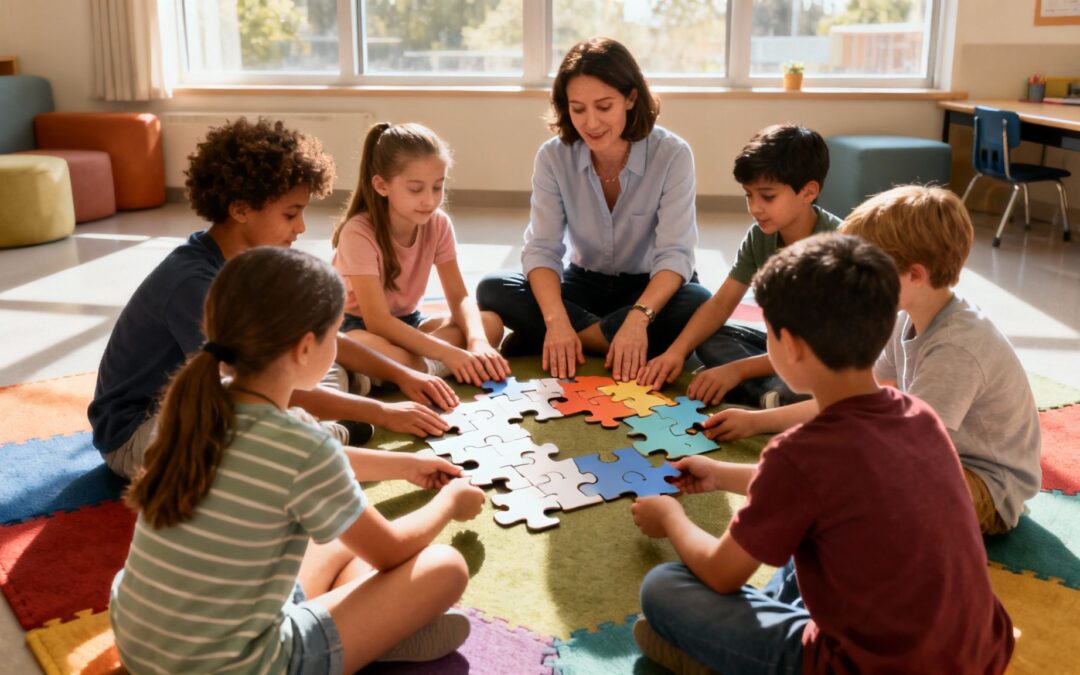
When you hear the term “school discipline,” what comes to mind? For many of us, it’s things like detention, suspension, or a trip to the principal’s office. This traditional approach focuses on rules and consequences. But what if we shifted the conversation from punishment to healing?
That’s the core idea behind restorative justice. Instead of asking, “What rule was broken and what’s the punishment?” it asks a fundamentally different set of questions: “Who was harmed? What do they need? And whose job is it to make things right?”
It’s a powerful shift that moves the goal from simply punishing misbehavior to actually repairing harm and rebuilding the relationships at the heart of a school community.
A New Way of Thinking About School Discipline
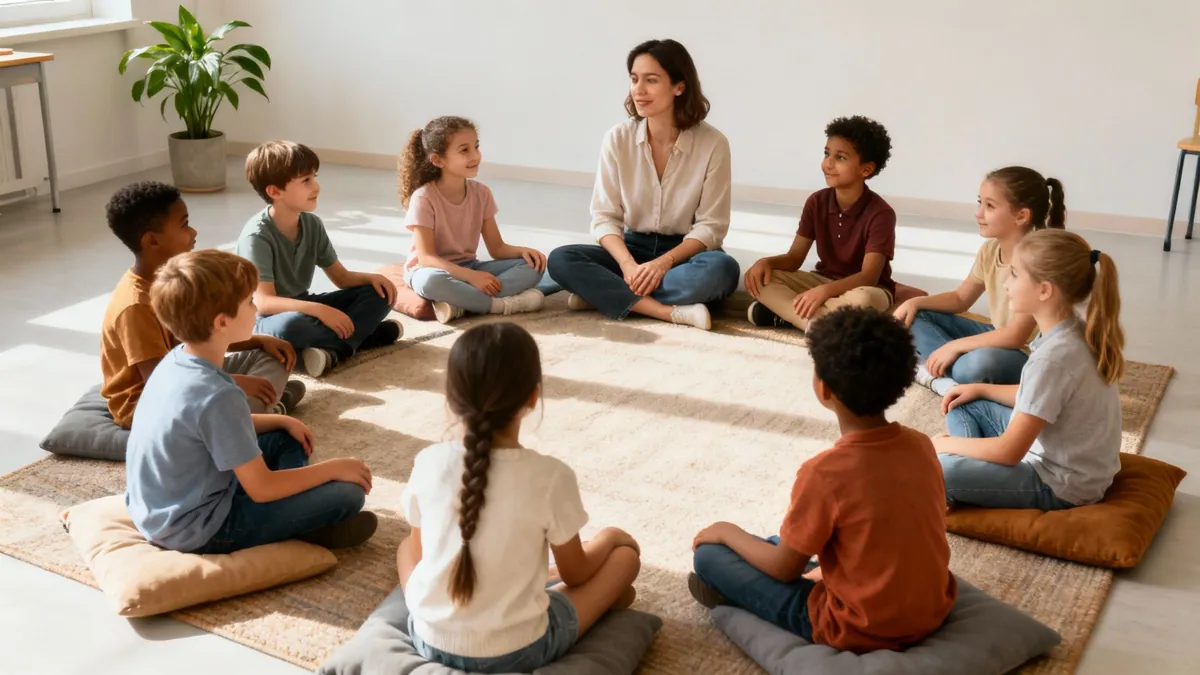
Think of traditional discipline as a one-way street. A student breaks a rule, a consequence is handed down, and that’s often the end of it. The problem is, this process rarely gets to the root cause of the behavior, and it does little to mend the broken trust between students or between students and staff.
Restorative justice, on the other hand, is more like a community roundabout. When a conflict happens, everyone involved has a chance to navigate a path forward together. The person who caused the harm, the person who was harmed, and even other affected community members all come into the circle. The goal isn’t just to assign blame but to foster understanding, healing, and true accountability.
This isn’t just another program; it’s a mindset that transforms school culture. By teaching empathy and connection, it creates a genuinely safer and more supportive place for everyone to learn and grow. You can dive deeper into how this works by exploring various restorative practices.
Moving Beyond Punishment
Let’s make this real. Imagine a student, Leo, scribbles all over another student’s, Maya’s, artwork.
- A traditional response: The teacher sends Leo to the principal’s office, and he gets detention. Leo serves his time, but Maya is still upset about her ruined project, and the tension between them is left to fester. Nothing was really solved.
- A restorative response: The teacher facilitates a conversation, maybe in a small circle. Leo has to face Maya and hears how his actions made her feel disrespected and sad. Maya gets to explain why her artwork was so important to her. Together, they decide that a good way for Leo to make it right would be to help her recreate the damaged part.
In the second scenario, Leo isn’t just “in trouble.” He’s confronting the real-world impact of his choices and taking direct responsibility for fixing the harm he caused. That’s what true accountability looks like in action.
The Focus Is on Relationships
At its heart, restorative justice recognizes a simple truth: conflict harms relationships, and those relationships must be at the center of any solution. It’s built on the understanding that strong communities are the foundation of a great school. When students feel seen, heard, and connected to one another, they are far better equipped to thrive, both academically and emotionally.
To help clarify the difference, let’s compare the two approaches side-by-side.
Traditional Discipline vs Restorative Justice at a Glance
| Element | Traditional Discipline | Restorative Justice |
|---|---|---|
| Core Focus | Broken rules and assigning blame. | Harmed relationships and meeting needs. |
| Key Question | “What rule was broken and what is the punishment?” | “Who was harmed and what is needed to make things right?” |
| Accountability | Defined as accepting punishment. | Defined as understanding impact and repairing harm. |
| Outcomes | Often leads to isolation, resentment, and disconnection. | Fosters empathy, mutual understanding, and reintegration. |
| Communication | Top-down, authority-driven. | Dialogue-based, involving all affected parties. |
| Goal | Compliance and control. | Healing, learning, and community building. |
As the table shows, the restorative path leads to a very different destination—one where students learn from their mistakes in a way that strengthens the entire school community.
This method creates a space for healing and accountability rather than division and punishment. It provides students with practical tools for self-regulation, communication, and conflict resolution that last a lifetime.
The Core Principles of Restorative Practices
To really get what restorative justice is all about in schools, you have to look past the textbook definition and dive into its foundations. These aren’t just abstract ideas; they’re the active ingredients that shift a school’s culture from punitive to healing. Think of them like the legs of a stool—if you take one away, the whole thing wobbles.
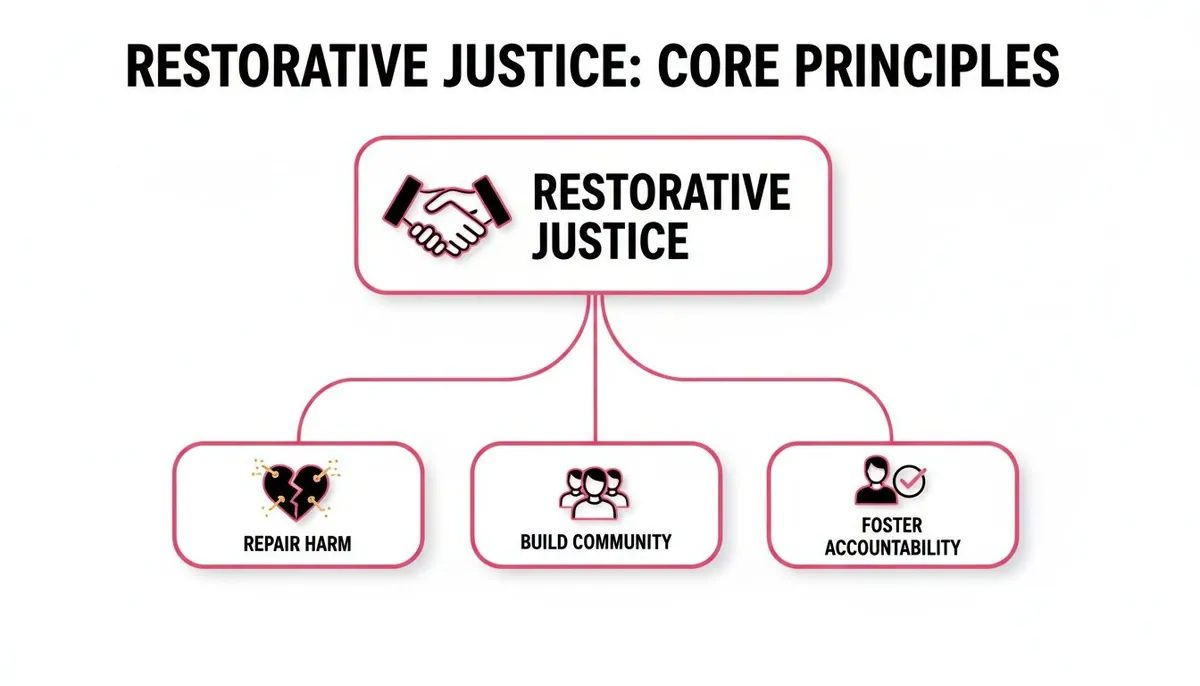
At its core, restorative justice is built on three interconnected principles. Each one moves the focus away from punishment and toward resolution, creating a stronger, more connected community along the way.
Repairing Harm
The first and most important principle is repairing harm. In a traditional system, when a rule gets broken, all eyes are on the rule-breaker. In a restorative model, the focus flips to the harm that was done and what the person who was hurt needs. Accountability isn’t about serving time in detention; it’s about actively taking steps to make things right.
This requires a student to directly acknowledge how their actions affected someone else. It pulls them out of a passive state of just accepting a consequence and into an active role of mending the tear they created in the community fabric.
Practical Example: Picture a fourth-grader, Alex, who gets frustrated during a group project and smashes a classmate’s carefully built model bridge.
- Instead of an automatic timeout, the teacher helps them talk it out. The classmate shares how angry and disappointed she is that her hard work was destroyed.
- Alex is then tasked with helping repair the damage. He spends his recess helping her find new materials and rebuild the bridge, piece by piece.
- Through this, Alex doesn’t just “do his time.” He comes face-to-face with the results of his actions and helps fix the problem he made, learning a huge lesson about respect and responsibility.
Building Community
The second principle is building community. Restorative justice isn’t just a reactive plan for when things go south; it’s a proactive way to keep harm from happening in the first place. It’s based on the simple truth that conflict is far less likely in places where students feel safe, connected, and seen.
Strong relationships are the bedrock of a positive school climate. When students and teachers actually know and trust each other, they’re more likely to be vulnerable, work through disagreements respectfully, and cheer each other on. This sense of belonging is a massive piece of social-emotional wellness.
“Restorative practices create space for healing and accountability rather than division and punishment. They offer a way to make amends, rebuild trust, and strengthen relationships within the community.”
Practical Example: A second-grade teacher kicks off every single day with a five-minute “check-in circle.” Each student gets a chance to answer a simple prompt like, “Share one word that describes how you’re feeling today,” or “What’s one thing you’re looking forward to?”
- This simple, daily routine carves out a predictable space for every student to be seen and heard.
- Over time, kids get more comfortable sharing their feelings and listening to their peers.
- This foundation of trust makes it so much easier to navigate conflicts when they pop up, because the lines of communication are already wide open.
Fostering True Accountability
Finally, the third principle is fostering true accountability. This might be the most misunderstood part of restorative justice. It’s not a “soft” approach that lets kids off the hook. In fact, it often demands more from them than traditional punishment ever could.
True accountability is about understanding the full ripple effect of your actions, facing the people you’ve harmed, and working together on a solution to fix the relationship. It’s about taking ownership, not just taking a penalty. This process builds essential life skills, and you can learn more about how it develops empathy in the classroom in our detailed guide.
Practical Example: A middle schooler spreads a nasty rumor about a classmate online. The rumor causes the targeted student a lot of pain and makes them feel isolated.
- A restorative conference is held with both students, a school counselor, and their parents.
- The student who was harmed gets to share how the rumor affected their friendships and sense of safety at school.
- The student who started the rumor has to listen and then work with the other student to create a plan. This might involve posting a public correction, writing a sincere apology letter, and even presenting to their class about the dangers of cyberbullying.
This outcome requires courage, reflection, and a real commitment to making things right—a much deeper accountability than a simple suspension could ever provide.
Implementing Restorative Justice in Your School
Making the leap from understanding restorative justice in theory to putting it into practice can feel like a big step. The key is a structured, tiered approach that makes implementation feel manageable and, more importantly, effective. This model helps schools apply the right level of support at the right time—from proactive community building for everyone to more intensive responses when serious harm occurs.
Think of this framework less as a rigid set of rules and more as a flexible guide. It’s designed to help schools build a restorative culture from the ground up, ensuring every student benefits from a community-focused environment while also having clear processes for when things go wrong.
The diagram below shows how the core principles of repairing harm, building community, and fostering accountability all work together. They aren’t separate ideas but interconnected pillars holding up the entire restorative process.
Tier 1: Proactive Community Building for All Students
Tier 1 is the foundation. The goal here is to build such strong relationships and a positive classroom climate that most conflicts never even start. These practices are universal, meaning they are for every student, every day.
The focus is on proactive strategies that create a deep sense of belonging and psychological safety. When students feel genuinely connected and respected, they’re far more likely to succeed academically and less likely to act out. These strategies aren’t add-ons; they’re woven directly into the fabric of daily classroom life.
Practical Examples for Parents and Teachers
- Daily Check-In Circles: Start or end the day with a quick circle where everyone shares an answer to a prompt. This simple act builds empathy, listening skills, and a sense of community.
- Sample Prompt: “Share one kind thing you did for someone today,” or “What is one thing you’re feeling grateful for?”
- Classroom Agreements: Instead of a top-down list of rules, the class works together to create agreements for how they want to treat one another. This gives students real ownership over their environment.
- Process: The teacher might ask, “How do we want to feel in our classroom?” and “What can we all agree to do to make sure everyone feels that way?” The answers become the class’s living constitution.
Tier 2: Responsive Practices for Minor Conflicts
When the inevitable minor issues pop up—an argument over a game, a misunderstanding, or a small disagreement—Tier 2 practices offer a structured way to respond. These interventions are for some students, some of the time, and are designed to address harm quickly before it escalates.
This is where we shift from being proactive to responsive, using restorative language and conversations to guide students toward a resolution. It’s about teaching them to see conflict not as a fight to be won, but as a problem to be solved together.
The goal of a restorative conversation isn’t to find a winner and a loser. It’s to help everyone involved understand each other’s perspective and find a way to move forward in a good way.
Practical Examples for Parents and Teachers
- Guided Restorative Conversations: A teacher or parent can facilitate a brief, structured chat between students in conflict.
- Sample Question: “What were you thinking and feeling at the time?” or “What did you need in that moment that you weren’t getting?”
- Peer Mediation: Older students can be trained to help younger students work through their disputes. This empowers kids to take on leadership roles in maintaining a peaceful school culture.
- Process: Two students in conflict meet with a neutral student mediator who guides them through a problem-solving process without ever taking sides.
Tier 3: Intensive Interventions for Significant Harm
Tier 3 is reserved for more serious incidents that cause significant harm to individuals or the whole community. These are formal processes for a few students who need intensive, wrap-around support. They involve bringing everyone affected by an incident together to collectively decide how to repair the harm that was done.
This is the most intensive level and almost always requires a trained facilitator, like a school counselor or an administrator. The process involves careful preparation before the meeting and dedicated follow-up after to ensure it’s safe and productive for everyone involved.
Practical Examples for School Staff
- Formal Restorative Conferences: This is a structured meeting that includes the person who caused harm, the person who was harmed, and their supporters (like parents or friends).
- Goal: To give the harmed person a voice, help the person who caused harm understand the full impact of their actions, and create a plan for repair that everyone agrees on.
- Re-Entry Circles: When a student returns to school after a suspension or another long absence, a circle can be held to welcome them back and begin mending relationships with peers and teachers.
The move toward these practices is growing. A recent EdWeek Research Center survey revealed that 48% of educators report their schools are using restorative justice more now than they did before the 2018-19 school year. By integrating these strategies, schools are better equipped to build the supportive environments essential for effective social-emotional learning programs for schools.
How Restorative Approaches Can Reshape a School Community
When a school begins to shift from a punitive to a restorative mindset, the change doesn’t just stop at student conflicts. It’s so much bigger than that. This approach doesn’t just manage behavior; it starts to transform the entire school ecosystem. The ripple effects create a climate where students feel safer, more connected, and truly understood, leading to powerful improvements in their well-being and how they show up to learn.
Instead of just handing out consequences, restorative practices dig deeper to repair harm and get to the root of what’s really going on. The question changes from “What rule was broken?” to “What happened here, and who was impacted?” This simple but profound shift opens the door to understanding a student’s unmet needs, whether it’s a lack of connection, a struggle at home, or a need for specific social skills.
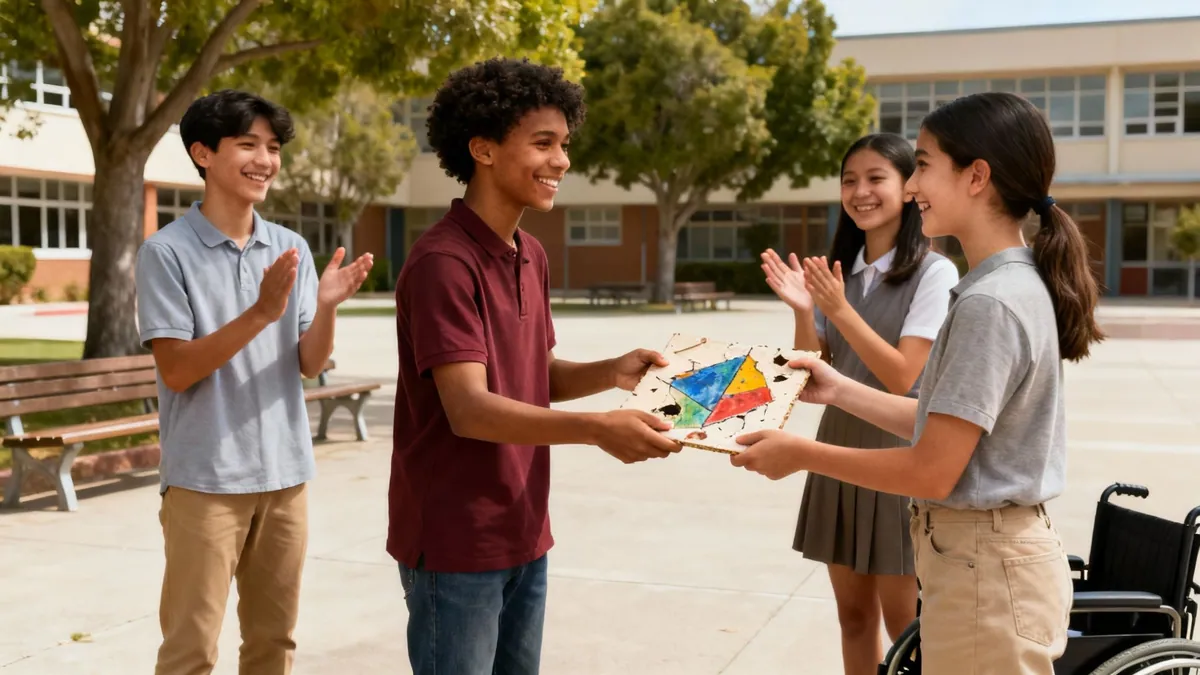
This focus on understanding and healing brings real, tangible results. It’s not just a feel-good idea. Schools that commit to restorative approaches almost always see a major drop in disciplinary actions that pull kids out of the classroom.
Studies consistently show that schools implementing restorative justice see reduced rates of suspensions and expulsions. This is huge. It means more students stay in the learning environment where they belong, preventing them from falling behind academically and feeling disconnected from their school community.
Creating a Safer and More Connected Climate
One of the biggest wins of restorative justice in schools is the way it nurtures a positive school climate. When students are actively involved in building and maintaining their community—through circles, shared agreements, and open dialogue—they develop a powerful sense of ownership. They learn that their voice matters and that they have a shared responsibility to look out for one another.
This creates a culture of psychological safety where students feel comfortable taking academic risks, asking for help, and just being themselves. The result is a vibrant community where empathy and mutual respect become the norm, not the exception. To learn more about this, check out our guide on how to improve school culture.
Practical Example for Parents and Teachers:
Imagine a typical hallway conflict where one student pushes another. A punitive approach might mean an immediate office referral and a detention slip. But a restorative approach leads to a conversation. A teacher might pull both students aside and ask:
- “Can you each tell me what happened from your perspective?”
- “How did that make you feel?”
- “What do you need to feel respected and safe here?”
This dialogue doesn’t excuse the push. It addresses the underlying feelings, helps restore the relationship, and teaches invaluable conflict-resolution skills that prevent future incidents.
Closing Racial Gaps in School Discipline
One of the most powerful outcomes of restorative justice is its ability to create more equitable learning environments for every child. We know that traditional, zero-tolerance policies have often led to disproportionately high rates of suspension and expulsion for students of color. Restorative practices directly challenge this by replacing subjective, punitive responses with consistent, relationship-focused solutions.
By focusing on the harm and the needs of everyone involved, these approaches help reduce the influence of implicit bias in disciplinary decisions. The results can be remarkable, especially for students from marginalized backgrounds who have historically been over-disciplined.
This isn’t just a theory; it’s backed by some really compelling evidence. Restorative practices have been shown to be incredibly effective in reducing racial disparities in school discipline, with Black students often seeing the most significant benefits in major urban districts. Research in Chicago Public Schools, for instance, revealed transformative outcomes for Black students who had previously faced stark inequities in discipline. You can find more insights in this promising research from Brookings.
For restorative justice to really take root in a school, it can’t just be a classroom thing. When the principles of repairing harm and building community are echoed at home and championed by key staff, they become part of the school’s DNA.
This is where families and school counselors become so important. They aren’t just bystanders; they are active partners in creating a consistent, supportive environment for every child. When everyone works together, the positive effects multiply, and students truly start to internalize these crucial social-emotional skills.
How Families Can Support Restorative Practices at Home
When kids hear the same restorative language at home that they hear at school, it creates a seamless world for them. It reinforces the lessons they’re learning about empathy and accountability. After all, parents and caregivers are a child’s first and most influential teachers.
You don’t have to be an expert to bring these ideas into your family life. It often just means small shifts in how you talk about conflict—moving the focus away from blame and toward understanding and repair.
Practical Examples for Parents:
- During Sibling Arguments: Instead of sending kids to separate rooms, try guiding a restorative chat. Ask questions that get them thinking about each other’s feelings.
- “How do you think your actions made your brother feel?”
- “What was going through your mind when that happened?”
- “What’s one thing you can do to make things right between you?”
- When a Rule is Broken: If a child makes a mess and doesn’t clean it up, connect the consequence directly to the harm.
- Instead of a timeout, the repair could be helping with an extra household chore. This isn’t a punishment; it’s about contributing back to the family, which teaches responsibility in a tangible way.
By using restorative language at home, parents help their children build an internal compass for empathy and accountability. This consistency sends a powerful message: repairing our relationships is something our whole community values.
The Crucial Role of the School Counselor
School counselors are perfectly positioned to be the champions of a school’s restorative justice work. With their training in mediation, communication, and student well-being, they can act as facilitators, coaches, and guides for everyone involved.
Counselors often become the central hub for restorative efforts, helping weave these practices into every part of the school’s support system. Their expertise makes them natural leaders for navigating sensitive conversations and showing others how to do the same.
Key Responsibilities for School Counselors:
- Leading Formal Conferences: When something serious happens, counselors can step in as skilled, neutral facilitators for Tier 3 incidents. They ensure the process feels safe and fair, keeping the focus on genuine repair for everyone.
- Training and Coaching Teachers: Counselors are great resources for professional development. They can model how to lead community-building circles or use restorative questions to handle minor conflicts, building confidence and skill across the entire staff.
- Integrating Principles into Counseling: In one-on-one or small group sessions, counselors can weave in restorative ideas. This might mean helping a student see the impact of their behavior on others or guiding them through the steps of mending a friendship.
When counselors take on these roles, they make sure restorative justice is applied with consistency and care, deepening its impact on students’ social and emotional health.