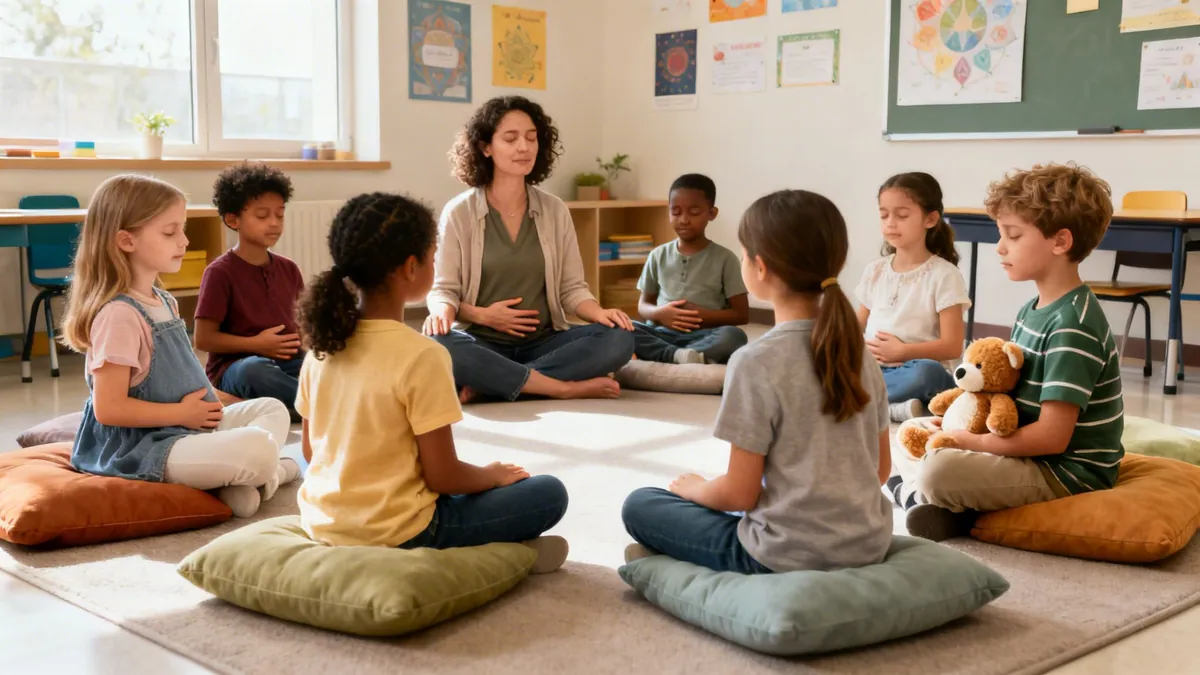
Soul Shoppe's work is made possible by donors and partners who care deeply about the young people in their communities! We can't do this work without you. Support our work in classrooms and on playgrounds across the nation by donating here.
You’re probably reading this in the middle of real life. A student is tapping a pencil. Another is asking for help while half the class is still settling down. At home, dinner is on the table, but everyone’s attention is somewhere else. One child is replaying what happened at recess. A grownup is thinking about tomorrow’s schedule.
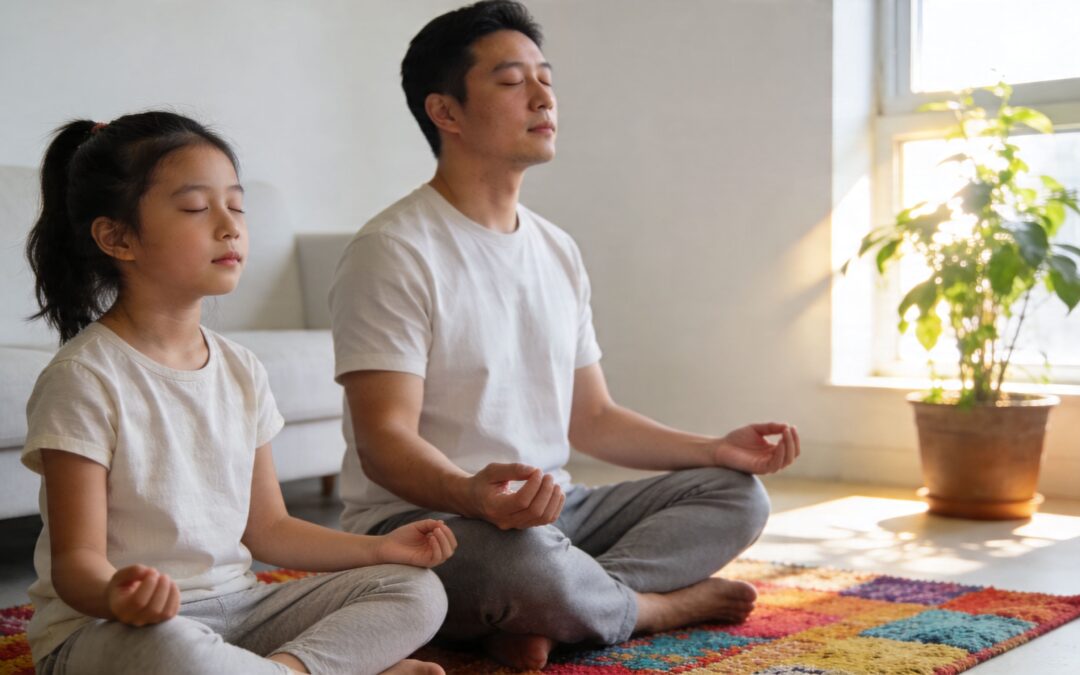
That’s usually where “living in the now” gets misunderstood. It can sound vague, lofty, or unrealistic. In schools and homes, it’s not any of those things. It’s the practical skill of noticing what is happening inside and around you, then returning your attention to this moment with enough steadiness to make a wise next choice.
As educators and caregivers, we don’t need children to become perfectly calm or meditative. We need them to notice, “My body is tight.” “My mind is racing.” “I’m not listening.” “I need a reset.” That kind of presence changes how kids learn, how adults respond, and how relationships recover after stress.
From Scattered Moments to Mindful Connection
The quiz papers are face down. A teacher says, “Begin,” and the room looks ready. Still, one student is frozen after a hard recess moment. Another is on a third trip to the sharpener. A third has already decided, “I’m bad at math,” before reading question one.
At home, the pattern can look quieter but feel just as familiar. A caregiver asks about the day while packing lunches in their head for tomorrow. A child shrugs, says “fine,” and carries worry from the bus ride, the group project, or the lunch table into the evening.
These are ordinary moments of attention slipping away.
Researchers Matthew Killingsworth and Daniel Gilbert found that people spend about 47% of their waking hours thinking about something other than what they are doing, a pattern they linked with lower happiness in their published study in Science. In classrooms and homes, that drift shows up in ways adults know well. Directions need repeating. Conflict escalates fast. A child’s body is in the room, but their attention is stuck in a different moment.
What living in the now actually means
Living in the now means bringing attention back to what is happening here, in this body, in this room, at this moment, so a child or adult can choose the next action with more care.
That sounds abstract until you watch it in practice. Presence works like putting both feet back on the ground before taking the next step. You are not erasing the past. You are not ignoring what comes next. You are helping the nervous system register, “I am here now, and I can notice what is true before I act.”
In Soul Shoppe programs, that often starts with something simple and concrete, because children learn this skill best by doing it, not by hearing a lecture about mindfulness.
In a classroom, that might sound like:
Before a lesson: “Check in with your body. Are your shoulders up or down? Let them drop.”
During conflict: “Pause. Tell me what happened in one sentence. Then tell me what you feel right now.”
Before speaking: “Put a hand on your chest or desk. Feel the surface. Now say your words.”
At home, it might look like:
At pickup: “Do you want to start with your mind, your body, or your feelings?”
At dinner: “Let’s each name one thing we notice right now. A sound, a smell, or how our body feels in the chair.”
At bedtime: “What is one thing your body is still holding from today? What would help it settle?”
For restless children, “notice your breath” can feel too vague or too hard. A better entry point is often sensory and external. “Find three blue things.” “Press your feet into the floor.” “Push your hands together for five seconds.” These are present-moment practices too.
For children who resist, the goal is not perfect participation. It is a small return of attention. A muttered answer counts. One second of eye contact counts. A child tapping their knees while listening counts.
For children who have experienced trauma, presence needs to feel safe, predictable, and chosen. Some children do better looking at a spot on the wall than closing their eyes. Some need movement before reflection. Some need the adult to say, “You do not have to share. Just notice whether your body feels fast, slow, tight, or loose.”
That is what mindful connection looks like in real life. It is brief, teachable, and repeatable. And over time, these small routines help children build the inner pause that makes learning, repair, and relationship more possible.
The SEL Science of Being Present
A student walks in from recess still carrying the argument that happened on the blacktop. Their body is in the classroom, but their attention is still outside. Then math starts. A classmate bumps their chair. The pencil drops. The student snaps.
That sequence is common in K to 8 spaces. It is also teachable.
Present-moment awareness gives children a way to notice what is happening inside them before the feeling takes over their words or actions. In SEL terms, it supports the skills underneath the skills. A child needs to notice frustration before they can manage it. They need to catch the tightening shoulders, hot face, or racing thoughts before they can make a different choice.
Research has linked school-based SEL to stronger emotional skills, behavior, and academic functioning, and mindfulness-informed approaches are often studied as part of that picture. If you work in a school or support a busy home, the takeaway is practical. Presence helps children get to regulation, connection, and learning faster because it gives them a small pause between experience and reaction.
How presence supports each SEL skill
Educators often ask, “What does being present change?” A simple way to explain it is to picture a traffic light. Presence helps a child notice the yellow light. Without that moment of noticing, they go straight from feeling to action.
Here is how that shows up across SEL:
Self-awareness starts with noticing. “My stomach feels tight.” “My hands want to grab.” “I am getting embarrassed.”
Self-management follows awareness. “I can press my feet down.” “I can ask for a break.” “I can try again instead of tearing the page.”
Social awareness gets stronger when a child has enough steadiness to notice another person’s face, tone, or need.
Relationship skills improve when students can stay in the moment long enough to listen, repair, and respond.
Responsible decision-making depends on a brief pause. Even two seconds can change what happens next.
A principal may talk about school climate. A counselor may talk about co-regulation. A teacher may say, “I need the class back with me.” These are different names for the same human capacity.
A classroom example
A student gets a problem wrong and embarrassment rises fast. If no one has taught present-moment skills, that feeling often turns into behavior right away. The paper gets crumpled. A peer gets blamed. The student checks out.
With practice, the sequence can look different:
The student notices heat in the face and tightness in the chest.
They hear a familiar cue such as, “Pause and plant your feet.”
They press both feet down or place a hand on the desk.
They take one slower breath or ask for help.
That is observable SEL. It is not a theory. It is a routine the nervous system can learn through repetition.
This matters even more for children who are restless, resistant, or carrying stress from hard experiences. For those students, “pay attention” is often too vague. A concrete cue works better. “Feel your shoes on the floor.” “Look for two corners in the room.” “Push your palms together.” Soul Shoppe’s approach works well here because it gives children simple tools they can try in real time, instead of asking them to understand a big idea first.
Adults need the same practice. A teacher who notices, “My voice is getting sharp,” can reset before correction turns into power struggle. A parent who realizes, “I am asking questions too fast,” can slow the conversation and help a child feel safer.
People sometimes hear “be present” and picture a calm child sitting still with folded hands. That picture leaves out real life.
A child can be present while angry. A teacher can be present while frustrated. Presence means noticing what is here with enough clarity to respond on purpose.
That distinction matters in classrooms and homes. The goal is not a performance of calm. The goal is a return to awareness.
For children with trauma histories, that return must feel safe and chosen. Some students regulate better with eyes open. Some need movement before reflection. Some will only tolerate a five-second check-in, and that still counts. The science matters because it points us toward practice. Children build presence through repeated, supported experiences of noticing, naming, and returning.
Core Practices for Building Present-Moment Awareness
The strongest classroom and home routines are concrete. Children do better when the practice is short, repeatable, and tied to something they can feel in their body.
Start there.
Sensory grounding that works in real time
Sensory grounding helps restless students because it gives attention a job. Instead of saying, “Calm down,” you say, “Notice.”
Try a Sound Scavenger Hunt when the room is buzzy.
Script:
“Let your body get still enough to hear.”
“Find one sound close to you.”
“Now one sound far away.”
“Now one sound you didn’t notice at first.”
“Open your eyes and tell me just one.”
This works well before independent work, after recess, or during a noisy transition at home.
Another favorite is Color Find.
Script:
“Look around and find three things that are blue.”
“Now two things that are soft.”
“Now one thing that helps this room feel safe.”
That last prompt matters. It helps children connect presence with safety, not just compliance.
Breathwork kids can actually do
Some children love breathing exercises. Some feel awkward or resistant. Keep the language simple and avoid making it feel performative.
Five-Finger Breathing is often a good entry point.
Script:
“Hold up one hand like a star.”
“Use one finger from your other hand to trace up a finger as you breathe in.”
“Trace down as you breathe out.”
“Keep going until you reach the thumb again.”
For younger children, I say, “Smell the flower, blow the pinwheel.” For older students, I say, “Match your breath to your hand and let your shoulders drop if they want to.”
If you want more ready-to-use activities, Soul Shoppe’s article on mindfulness exercises for kids offers classroom-friendly ways to build this habit.
Movement for children who don’t want to sit still
Some students connect to the present through movement faster than through stillness. That’s not a problem. It’s useful information.
Try Robot to Ragdoll.
Script:
“Stand tall like a robot. Tight arms, tight legs, tight face.”
“Freeze.”
“Now melt into a ragdoll. Loose shoulders, loose knees, loose jaw.”
“Do that two more times and notice which feels better for learning.”
You can also use Push the Wall.
Script:
“Place your hands on the wall.”
“Push slowly and feel your muscles turn on.”
“Take one breath.”
“Step back and notice if your body feels more ready.”
For many children, especially after conflict or overstimulation, pressure and movement are more regulating than verbal reminders.
When a child can’t access quiet attention, offer a body-based path into the moment.
A reflection tool for older students and adults
For upper elementary, middle school, and grownups, structured reflection can help uncover what keeps pulling attention away from the present. One useful approach is the Wheel of Life. According to this explanation of the Wheel of Life coaching tool, K-8 adaptations such as a Student Wheel show 70% self-regulation gains in SEL programs.
A simple Student Wheel might include:
Friendships
Schoolwork
Family
Rest
Play
Body and health
Hobbies
Feelings
Ask students to rate how each area feels right now, then choose one small improvement. Not a total life overhaul. Just one next step.
Examples:
“Friendships feels low. I will sit with one safe person at lunch.”
“Schoolwork feels stressful. I will ask the teacher my first question instead of waiting.”
“Rest feels low. I will put my backpack away before snack so my body can settle.”
This works because presence grows when children can name what is pulling on them.
Later in the day, you can pair that reflection with a communication routine. If you’re helping students or family members respond with more care, this guide to active listening is a helpful companion. Presence and listening reinforce each other.
A short guided practice for busy days
Use this when you have two minutes and not a second more.
“Put both feet on the floor.”
“Notice where your body touches the chair.”
“Take one breath in.”
“Take one slower breath out.”
“Name one feeling in your mind.”
“Look at one thing in the room that stays still.”
“Begin.”
A simple video can help adults and children practice outside the moment of stress too.
What each ingredient is doing
Children love making these, but adults need to know why the recipe works.
Ingredient
Job in the bottle
What happens if you use too much
Warm water
Helps mix the contents smoothly
Bottle may settle too fast if there’s too much water
Clear glue
Slows the glitter and creates that floating effect
Bottle can become thick and cloudy
Fine glitter
Gives the visual tracking effect
Can become dense if overloaded
Food coloring
Adds theme and visual appeal
Can darken the bottle too much
Adhesive on lid
Keeps the bottle classroom-safe
Without it, leaks are much more likely
The step people skip
The lid has to be sealed as if a determined child will test it. Because they will.
I apply adhesive on the lid threads, screw the lid on tightly, wipe the rim, and let it cure fully before the bottle goes into a calm corner. If I’m making a class set, I test each bottle by turning it upside down over a sink first.
If the bottle is meant for school use, don't send it into circulation until you've tested for leaks.
A few first-try fixes
The glitter falls too fast: Add more clear glue, shake again, and retest.
It looks muddy: Use less coloring and less filler next time.
It feels boring: Mix fine glitter with a small amount of chunky glitter for contrast.
The bottle is too full: Pour out a little liquid. Motion needs space.
A successful glitter sensory bottle should feel soothing, not chaotic. When you shake it, the movement should invite watching. If it makes your eyes jump around or if everything drops immediately, keep adjusting.
Creative Variations for Different Ages and Goals
Once you’ve made one reliable bottle, you can start matching the design to the child and the moment. That’s when this tool becomes much more than a generic calm-down jar.
Different fillers create different experiences. Some bottles are best for quiet recovery. Others work better for short transitions, focus resets, or sensory curiosity.
How movement changes the goal
Advanced recipes can be tuned by changing the liquid base. A Day in Our Shoes explains that adding 25% baby oil or mineral oil creates layered movement, while 10% to 20% glycerin can slow glitter descent by 2 to 4 times. The same source notes that a drop of dish soap can reduce glitter clumping by over 90%.
Those adjustments give you options.
A faster bottle can support a child who needs a brief reset and then wants to get back to work. A slower bottle can support a child who needs more help staying with one calm activity.
Sensory Bottle Recipes and Their SEL Purpose
Bottle Type
Key Ingredients & Adjustments
SEL Objective
Ideal for Ages
Classic Calm Bottle
Water, clear glue, fine glitter
Self-regulation during upset moments
K-5
Deep Breathing Bottle
Add glycerin for slower drift
Pacing breaths and extending calm
K-8
Ocean Bottle
Blue tint, baby oil or mineral oil for layered flow, ocean-themed fillers
Younger children usually do best with a cleaner visual field. Too many sequins, beads, and novelty items can make the bottle feel busy instead of soothing.
Older children often enjoy a bottle that feels less “babyish.” I’ve had good success with:
Ocean themes: especially when tied to science or habitats
Galaxy themes: great for writing, art, or quiet reflection
School-color bottles: useful when students help make a shared set for the classroom calm corner
Simple examples from real use
A kindergarten teacher might keep an ocean bottle near the rug area and say, “Take one minute to watch the waves settle before we start.”
A fourth-grade teacher might use a darker galaxy bottle before a test and say, “Eyes on the glitter. Shoulders down. Slow breath in, slow breath out.”
At home, a parent might hand a child a feelings-themed bottle during sibling conflict and ask, “What color matches your body right now?”
The best variation isn't the prettiest one. It's the one a child will use.
Keep the design purposeful
When adults get excited, bottles can become overdecorated. I say that with love because I’ve made those bottles too.
If your goal is calm, keep these design choices in mind:
Choose one visual focus: Too many fillers compete for attention.
Use color intentionally: Softer or cooler tones often feel less activating.
Test movement before sealing: A beautiful bottle that settles poorly won’t get used.
Label the purpose: “Breathing Bottle,” “Transition Bottle,” or “Peace Corner Bottle” helps adults stay consistent.
The strongest classroom sets usually include a few different styles, not one bottle for every situation.
Integrating Sensory Bottles into Your Classroom and Home
A glitter bottle helps most when adults introduce it before a child is in full distress. If the first time a child sees it is during a meltdown, it can feel like one more demand.
Treat it like any other SEL tool. Teach it when everyone is calm. Practice it when no one urgently needs it. Then it’s available when emotions spike.
In the classroom
A glitter sensory bottle belongs best in a defined space. That might be a peace corner, a calm-down spot, a counselor table, or a quiet chair near the library area.
The key is this. The bottle should feel like a support, not a consequence.
I introduce it with language like:
“This is a tool for helping your brain and body get steady. It is not a punishment spot. It is one choice you can make when you need a reset.”
That script matters. Children quickly notice whether a regulation space is respectful or controlling.
A simple routine that works
Many teachers overcomplicate calm-down procedures. Keep it short.
Notice the early sign. “I see your hands are tight.”
Offer the tool. “Do you want the glitter bottle or a quiet seat first?”
Stay nearby if needed. Some children regulate better when an adult remains physically present.
Reflect after the settle. “What does your body need next?”
That last step is where the SEL learning happens. A physical tool is useful, but reflection helps the child build transfer.
The pairing is what matters. A sensory bottle buys a child time to settle; the reflection afterwards is what turns that pause into a skill they can use without the bottle.
If you're building out a broader practice around regulation, teaching mindfulness to children offers a useful companion approach.
A glitter bottle meditation
Here’s a script I’ve used with students from early elementary through middle school:
“Shake the bottle once.”
“Watch the glitter move.”
“Let your eyes stay with one part of the bottle.”
“Breathe in slowly.”
“Breathe out slowly.”
“When the glitter settles, notice if your body changed at all.”
For younger children, I shorten it even more. “Shake. Watch. Breathe. Wait.”
For older students, I add, “You don’t have to force calm. Just observe.”
In morning meetings, circles, and group spaces
A glitter bottle can also support shared emotional language.
Try these uses:
Feeling check-in: Pass the bottle around. Each student names one feeling word.
Transition to listening: One shake, then everyone gets quiet before instructions.
Conflict repair pause: Use it as a settling object before peers talk through a disagreement.
Writing prompt: “If your mind looked like this bottle today, what would it show?”
These routines help students see regulation as normal and teachable.
At home
Families often need practical uses, not theory.
A glitter sensory bottle can help during:
Before homework: a short reset after school
Sibling conflict: a pause before discussing what happened
Bedtime: a steady visual cue for slowing down
Leaving the house: a transition ritual when mornings are rough
Here’s a parent script that works well: “Your body looks overwhelmed. Let’s watch the bottle first, then we’ll talk.”
That sequence respects timing. Children can’t always process conversation and regulate at the same moment.
What not to do
A good tool can lose its value if adults misuse it.
Avoid these common mistakes:
Don’t force it: An offered tool works better than a demanded one.
Don’t use it as exile: “Go sit over there with the bottle” can feel shaming.
Don’t expect magic: It supports regulation. It doesn't replace relationship.
Don’t skip repair: After calm returns, children still need help naming what happened and what comes next.
Troubleshooting Common Glitter Bottle Problems
Even experienced teachers make a bottle that flops sometimes. Usually the issue is easy to fix once you know what you’re looking at.
The glitter sinks too fast
This is the most common problem. The liquid is usually too thin.
Add a little more clear glue, shake again, and retest. If you want the bottle to become part of a child’s regular calming routine, it can also help to pair the visual pause with other self-soothing strategies for kids.
The glitter clumps together
Clumping usually means the fillers are sticking or the mixture needs a small adjustment.
Try adding a drop of dish soap if the bottle hasn’t been permanently sealed yet. Swirl gently and watch whether the glitter begins to spread more evenly.
Sometimes the fix is tiny. One small adjustment can change the whole feel of the bottle.
The bottle looks cloudy
Cloudiness often comes from overmixing, too much color, or ingredients that don’t blend cleanly.
Let the bottle sit for a while before deciding it failed. If it still looks muddy, rebuild with less food coloring and fewer fillers.
The bottle leaks
If the lid leaks, retire the bottle until you can fix it properly.
Dry the lid and threads completely, reapply strong adhesive, close it firmly, and let it cure fully. Always test repaired bottles upside down over a sink before handing them back to children.
The bottle is too busy to feel calming
A glitter sensory bottle should draw the eye, not overwhelm it.
If there are too many sequins, beads, or competing colors, start over with a simpler recipe. In regulation tools, less is often more.
Frequently Asked Questions About Glitter Sensory Bottles
Are glitter sensory bottles safe for toddlers?
They can be, if adults use a sturdy plastic bottle, seal the lid securely, and supervise use. For very young children, avoid sharp fillers or anything that could become unsafe if the bottle opened.
Do I have to use glitter?
No. Some children prefer beads, sequins, pom-poms, or themed confetti. If you're trying to reduce mess or avoid traditional glitter, you can still create a visually engaging bottle with other fillers.
How do I clean the outside?
Wipe the outside with a damp cloth and dry it well. If little hands have made it sticky, a mild soap on the cloth usually does the job. Keep water away from the lid seam if the seal is aging.
How long does a glitter sensory bottle last?
A well-made bottle can last a long time if it stays sealed and is handled with care. In classrooms, I check bottles regularly for cloudiness, leaks, or cracked plastic. If the contents stop moving well, I rebuild rather than trying to save a bottle that no longer works.
What age is best for a glitter sensory bottle?
They can work across a wide age range. Younger children often use them for sensory soothing and transition support. Older students may use them more intentionally for mindfulness, focus, and emotional reset.
Should I make one bottle or several?
Start with one strong, reliable bottle. Use it. Observe who responds to it and when. Then make additional versions for different needs, such as a slower breathing bottle or a simpler transition bottle.
If you want more practical tools for helping children build empathy, self-regulation, communication, and psychological safety, explore Soul Shoppe. Their work supports schools, families, and communities with experiential social-emotional learning that children can apply in real life.
The belly breathing technique is one of the simplest, most powerful tools we have for calming the nervous system. It’s all about swapping shallow chest breathing for deeper, more efficient breaths that engage the diaphragm. By inhaling to expand the abdomen and exhaling to contract it, you kickstart the body’s natural relaxation response.
What Is Belly Breathing and Why Does It Work So Well
Diaphragmatic breathing, which we often call the belly breathing technique, is how our bodies are naturally designed to breathe. It’s what you see babies do instinctively. But as we get older, life’s stresses and constant tension often cause us to switch to shallow "chest breathing" without even realizing it.
When we feel anxious, rushed, or overwhelmed, our breathing tends to become quick and high up in the chest. This pattern sends a direct signal to our nervous system that we're on high alert, locking us into a state of "fight or flight." Belly breathing flips that switch. By intentionally slowing down and deepening your breaths, you send a message back to your brain that everything is okay.
The Power of Conscious Breathing
This simple act of focusing on your breath engages the diaphragm, a large dome-shaped muscle at the base of your lungs. When you inhale deeply, your diaphragm moves down, creating more room for your lungs to fill with air. This movement directly stimulates the vagus nerve, a crucial part of the parasympathetic nervous system—your body's "rest and digest" command center.
The real power of the belly breathing technique lies in its ability to serve as a physiological reset button. It’s not just about feeling calm; it's about actively changing your body's stress response from the inside out.
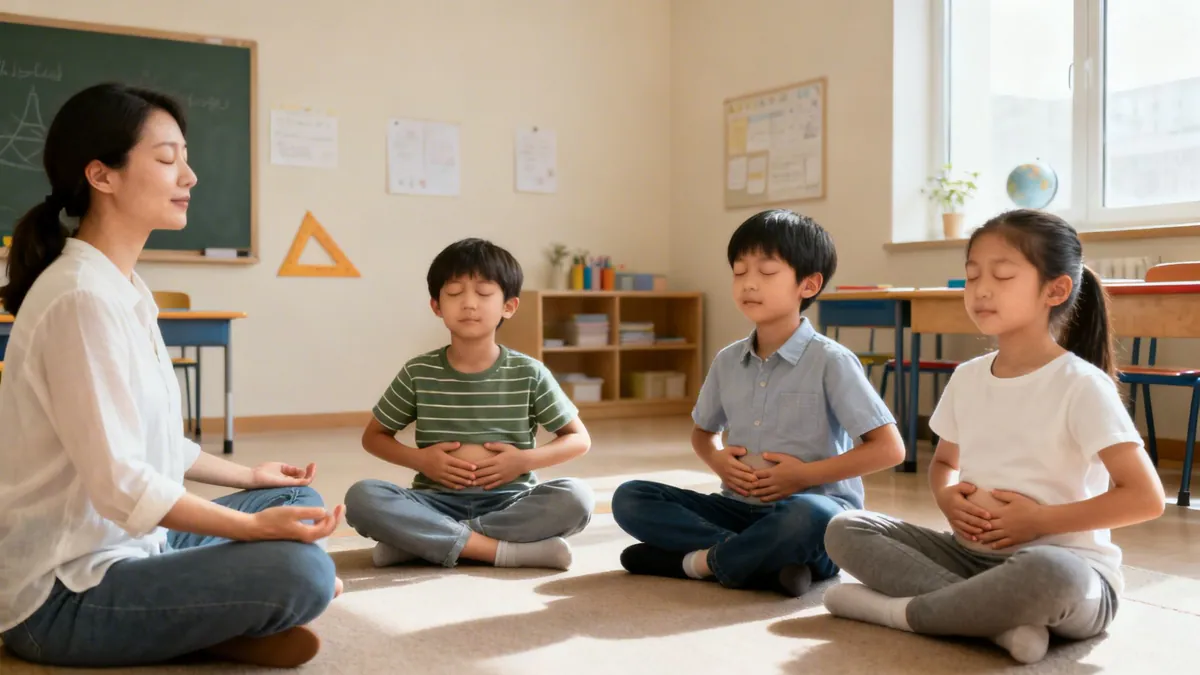
For parents and educators, this is a total game-changer. Imagine a child who can calm themselves down before a big test. Or a classroom that can smoothly transition from the chaos of recess to quiet, focused learning. This isn't just a nice idea; it's a trainable skill. For example, a teacher can lead a one-minute "Belly Buddy" session before starting a math lesson to help students settle their minds and bodies.
Historical Roots and Modern Benefits
This practice is anything but a new-age fad. A focus on deep, intentional breathing has roots going back centuries. In the 1800s, the explorer George Catlin observed that Native American communities who consistently practiced nasal breathing showed remarkable health, from strong jaws to overall vitality. He documented these observations in his book, 'The Breath of Life,' directly linking their wellness to how they breathed.
Before we dive into the "how-to," it’s helpful to get a bigger picture by understanding the critical differences between nasal and mouth breathing and how they affect our health. When you teach a child this foundational skill, you're giving them a tool they can use for life. It helps them to:
Reduce anxiety and stress by lowering cortisol levels.
Improve focus and attention, which is crucial in academic and social settings.
Foster emotional regulation and build self-control.
Mastering this one technique can set the stage for a more peaceful and productive environment, both at school and at home.
How to Guide Your Child Through Belly Breathing
Before you can teach the belly breathing technique to a child, it’s a good idea to get a feel for it yourself. We can't pour from an empty cup, after all. Modeling a sense of calm is always the first, most important step.
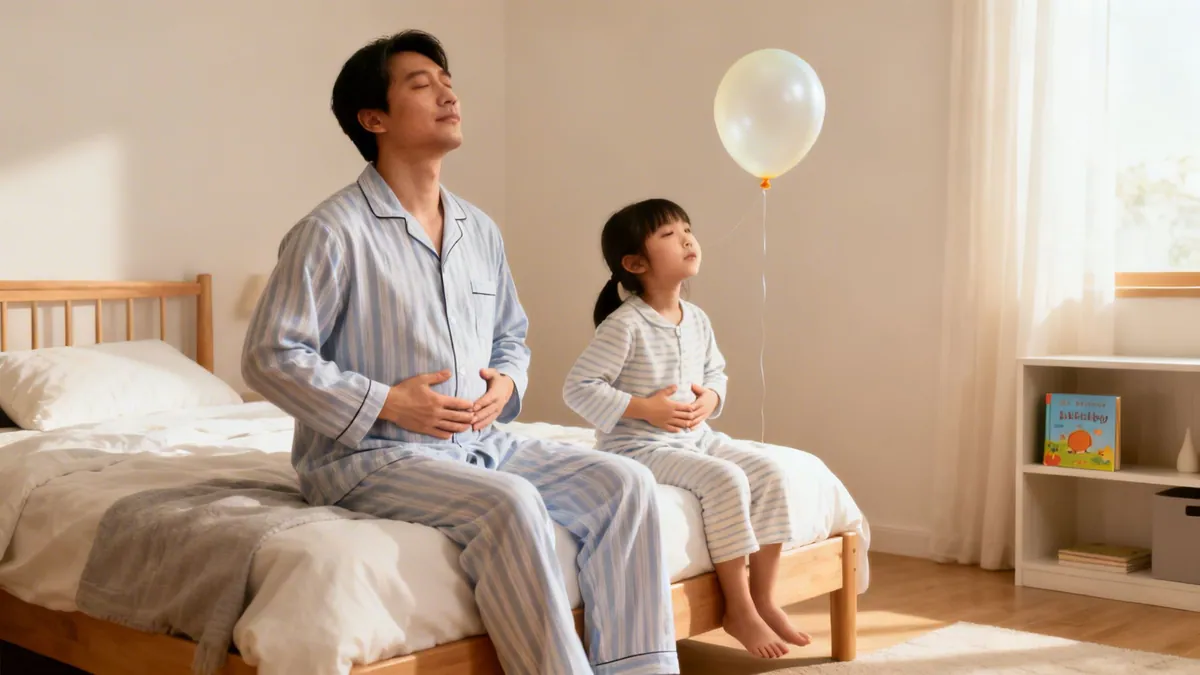
Find a comfortable spot, either sitting up straight or lying on your back. Place one hand on your chest and the other right on your belly, just below your ribs.
Now, take a slow, deep breath in through your nose. The goal is to feel the hand on your belly rise up, while the hand on your chest stays mostly still. As you exhale slowly, just feel your belly fall. That simple motion means you’re engaging your diaphragm. Once you can feel this in your own body, you'll be so much more confident and authentic when guiding a child.
Making Belly Breathing Fun for Kids
Let's be real—kids learn best through play and imagination. Dry, clinical instructions just won't cut it. To make the belly breathing technique stick, we need to turn it into a gentle, playful activity using visuals and language they can connect with.
Here are a few activities I’ve found work wonders at home or in the classroom.
The Breathing Buddy Activity
This is a classic for a reason—it’s fantastic for younger kids (think Pre-K to 2nd grade) because it makes the breath visible.
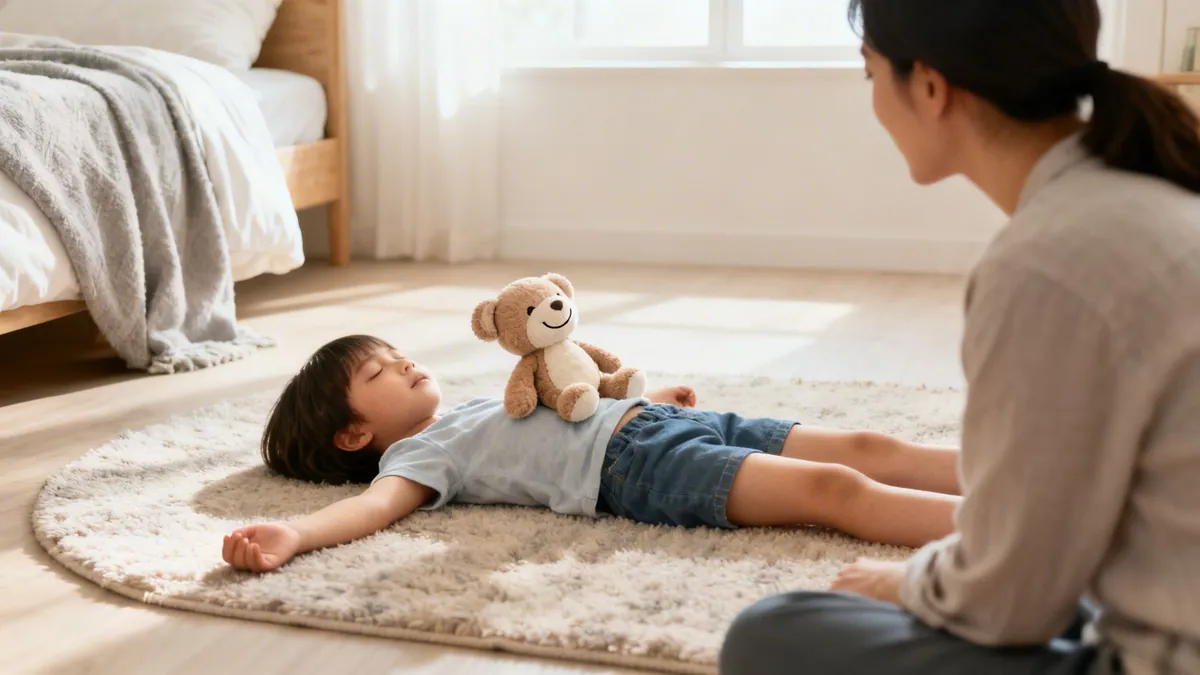
Practical Example: A parent can use this as part of a bedtime routine. After story time, say, "Let's put Teddy on our tummies and rock him to sleep." This creates a calm, focused transition toward sleep.
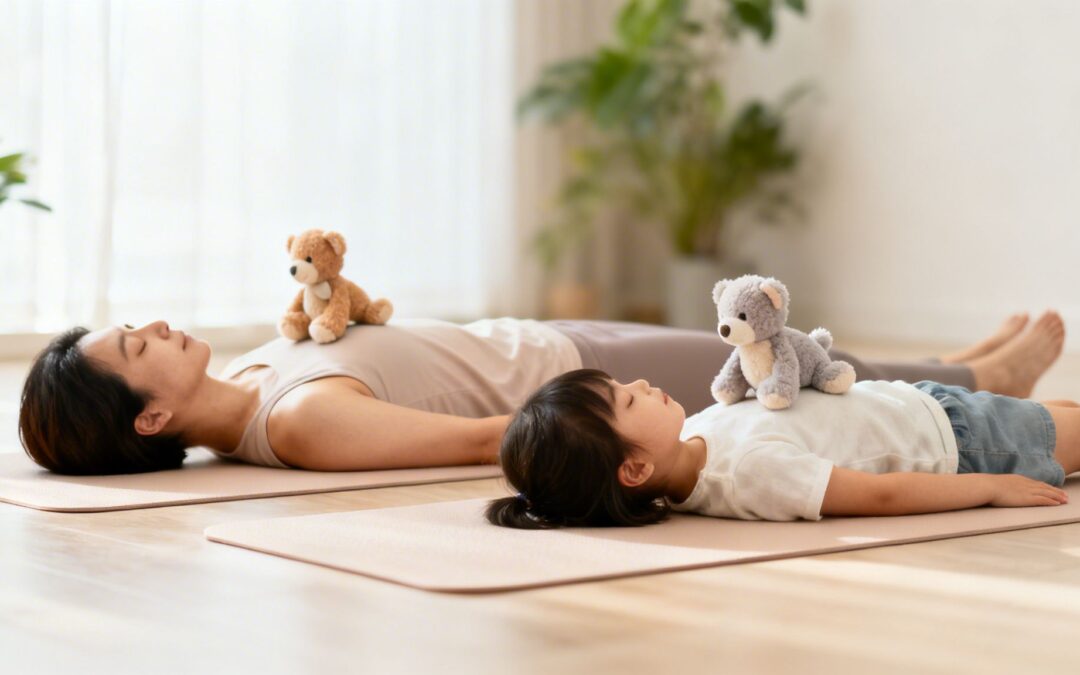
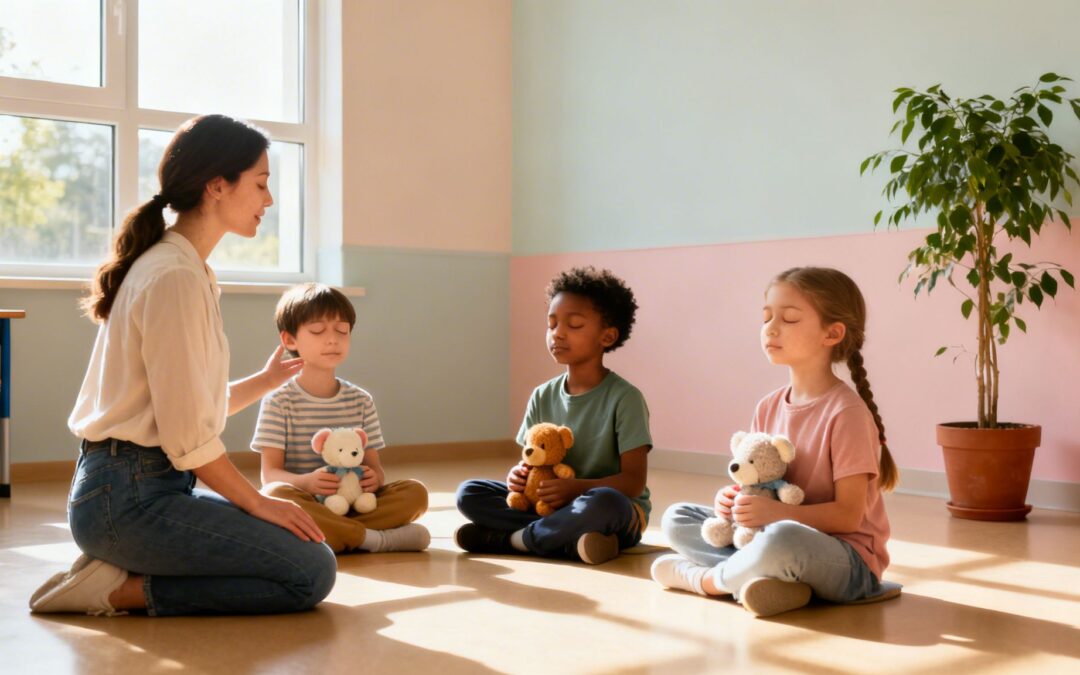
First, have the child lie down comfortably on their back, maybe on a rug or mat. Ask them to pick a small stuffed animal or a favorite lightweight toy to be their "Breathing Buddy."
Then, have them place their little buddy right on their tummy. Their one special job is to rock their buddy to sleep using only their breath.
You can guide them with a simple script: "Take a slow, quiet breath in and feel your tummy lift your buddy up toward the ceiling. Now, breathe out slowly and watch your buddy gently float back down." This turns an abstract feeling into a concrete result they can actually see.
Balloon Belly Breathing
This visualization is a game-changer for helping kids understand the idea of filling their abdomen with air. It’s effective for a wide age range, from kindergarteners all the way to older elementary students.
Practical Example: A teacher notices the class is getting restless during a long lesson. She says, "Okay everyone, hands on your bellies! Let's blow up our green balloons three times. Ready? Breathe in… and whoosh it out." This 30-second break resets the room's energy without disrupting the lesson plan.
Start by having them place their hands on their belly. Then, you can say something like, "Pretend there's a small, empty balloon deep inside your tummy. When you breathe in slowly through your nose, imagine you're filling that balloon up with air, making your belly get bigger and rounder."
"Now, as you breathe out slowly through your mouth, let all the air whoosh out of the balloon, making your tummy get smaller again." To make the imagery even more vivid, you can ask them to pick a color for their balloon. This gives a child a powerful tool to how to self-soothe in moments of big feelings or stress.
Teacher Tip: I love using this as a quick reset after a loud transition or a chaotic moment. Just three "Balloon Belly" breaths can help an entire class settle down and refocus their energy for the next lesson.
Simple Scripts and Visual Cues
Having a few go-to scripts in your back pocket makes it easy to introduce the belly breathing technique anytime, anywhere. Here are two of my favorites that work just as well one-on-one as they do in a group.
Smell the Flower, Blow Out the Candle
This sensory-based script is incredibly intuitive for most kids.
Practical Example: A child is getting upset because they can't get their shoes tied. The parent can kneel down and say, "Whoa, that's frustrating. Let's pause. Smell this beautiful rose with me… now blow out this birthday candle very slowly." This physical interruption breaks the frustration cycle.
For the inhale: "Imagine you're holding a beautiful flower. Bring it up to your nose and take a long, slow sniff to smell its wonderful scent. Let the air fill up your whole belly."
For the exhale: "Now, pretend you have a birthday candle in front of you. Purse your lips and blow the air out slowly and gently to make the flame flicker, but don't blow it all the way out just yet!"
That visual distinction between a sharp puff of air and a slow, controlled exhale is crucial. For kids struggling with emotional regulation, learning to extend their exhale is a powerful skill.
Belly Breathing Cues for Different Age Groups
The language we use matters. A cue that works for a second-grader might go right over a preschooler's head. It's helpful to have a few age-appropriate phrases ready to go.
Here are some simple, effective cues tailored for different developmental stages.
Age Group
Verbal Cue or Activity
Focus
Preschool (3-5)
"Let's pretend we're sleeping lions. Take a big, quiet breath in, then a long, sleepy sigh out."
Making it a game, connecting to familiar concepts (animals).
K-2nd Grade (5-8)
"Put your hands on your tummy. Can you make your hands go for a ride on your 'breathing wave'?"
Concrete, sensory feedback (feeling hands move).
3rd-5th Grade (8-11)
"Imagine your belly is a balloon. Breathe in to fill it up, breathe out to let the air out slowly."
Introducing simple visualization and control.
6th-8th Grade (11-14)
"Let's try 4-4-4 breathing. Inhale for 4, hold for 4, exhale for 4. Focus on the belly rising and falling."
Introducing structure and more advanced self-regulation techniques.
These are just starting points, of course. The best cue is always the one that resonates most with the child in front of you. Feel free to get creative and adapt the language to their interests
The Science Behind a Calmer Nervous System
Have you ever noticed how taking a few deep breaths can change your entire mood in seconds? It’s not just a feeling; it’s a powerful biological process at work. The belly breathing technique is like a direct line to your body's control center—the autonomic nervous system.
This system has two main modes. The first is the sympathetic nervous system, our "fight-or-flight" response, which kicks into high gear during stress. Then there's the parasympathetic nervous system, our "rest-and-digest" mode, which is all about calm and recovery.
When a child (or an adult, for that matter) feels stressed, anxious, or upset, their body is stuck in fight-or-flight. Their heart beats faster, breathing becomes short and shallow, and the body is flooded with stress hormones like cortisol. The belly breathing technique acts as a manual override for this entire response.
Engaging the Vagus Nerve
The secret ingredient here is the vagus nerve. It's the longest cranial nerve in the body and essentially runs the show for the parasympathetic nervous system. When you take a slow, deep breath that makes your belly expand, you're physically stimulating this nerve.
This simple action sends a signal straight to the brain: "It's safe to relax now." In response, the body gets the message to slow the heart rate, lower blood pressure, and ease up on cortisol production. It's a fascinating look into the mechanics of calming your nervous system through the vagus nerve.
By teaching a child this breathing technique, you are giving them a remote control for their own nervous system. It’s not a magic trick; it is a tangible, science-backed tool for self-management.
The Proven Impact on Respiratory Function
This isn't just theory; the physical benefits are real and measurable. Conscious, deep breathing makes our lungs work more efficiently. Over time, it can actually retrain the body to use a calmer, more effective breathing pattern even when at rest.
For instance, one four-month study with adolescents showed that regular practice led to a 10.96% increase in their tidal volume—that’s the amount of air moved with each breath. Their breathing frequency also slowed down by 11.47%, a clear shift away from rapid, shallow breathing. These findings show how consistent practice creates lasting change, and you can dig into the details in the full study on respiratory intervention outcomes.
Practical Examples in Action
Let’s see how this science plays out in a real school or home setting.
Before a Test: A student feels their heart pounding. The teacher says, "Okay class, before we start, let's take five deep belly breaths together." This activates their parasympathetic nervous system. Their heart rate slows, their mind clears, and they can finally access the information they studied instead of being blocked by test anxiety.
After Recess: A group of third-graders bursts into the classroom, loud and buzzing with energy. The teacher guides them through two minutes of "Balloon Belly" breathing. This collective sigh brings the energy down, cools off lingering playground squabbles, and gets their brains ready for focused learning.
Sibling Squabble: Two siblings are arguing over a toy. A parent intervenes and says, "Freeze. Everyone, let's do three Dragon Breaths." They inhale deeply and exhale with a loud 'whoosh.' The shared physical action breaks the tension, and they can address the problem more calmly.
These everyday moments are where the belly breathing technique proves its worth as a core emotional wellness tool. Learning to manage the body’s stress response is one of the most important self-regulation strategies for students we can possibly teach.
Weaving Belly Breathing into Daily Routines
The real power of the belly breathing technique isn’t in doing it once in a while; it’s in making it a habit. When kids practice consistently, they build a deep-rooted skill for self-regulation that they can turn to automatically. The goal is to make it as natural as brushing their teeth.
By weaving these quick exercises into existing schedules, you give children small pockets of calm throughout their day. This practice can be proactive—building resilience before stress hits—and reactive, offering instant relief in a tough moment.
Bringing Belly Breathing into the Classroom
Classrooms are busy places, full of transitions and shifting energy levels. A consistent belly breathing technique practice can anchor the day, creating a more predictable and focused atmosphere for everyone. It doesn't take much time, just a little intention.
Here are a few moments where you can easily slip it in:
Morning Meeting Kickstart: Start the day with just one minute of guided belly breathing. Practical Example: The teacher says, "Good morning, everyone! Let's start our day by waking up our bodies. Place a hand on your belly and let's take three slow breaths to get ready for a great day."
Post-Recess Reset: The jump from playground energy to quiet work can be a challenge. Use "Balloon Belly" breathing to help the class collectively exhale the chaos and settle their bodies.
Pre-Test Focus: Before a test or big assignment, lead the class through 3 to 5 deep belly breaths. This simple act can slow racing hearts, ease anxiety, and help students think more clearly.
By normalizing these brief pauses, you're not just managing classroom behavior; you're teaching a fundamental life skill. You're showing students that they have the power to manage their own energy and emotions.
Creating a Classroom Peace Corner
A designated "Peace Corner" or "Calm-Down Spot" gives students a safe, physical space to go when they need to practice their breathing skills. This isn’t a timeout for punishment. It’s a supportive spot for self-regulation.
Setting one up is simple:
Find a Quiet Spot: Look for a small, low-traffic area in your classroom.
Make it Comfy: Add a soft rug, a few cushions, or a beanbag chair.
Stock It with Tools: Include "breathing buddies" (small stuffed animals), laminated cue cards ("Smell the Flower, Blow Out the Candle"), or a glitter jar for focus.
Set Clear Expectations: Teach students that this is a place to go when they feel overwhelmed or upset. It’s a tool to help them reset before rejoining the group. Practical Example: A student who is visibly frustrated after a group activity can choose to go to the Peace Corner for two minutes to do "Breathing Buddy" breathing before re-engaging.
This small corner empowers students to take ownership of their emotional state. Knowing how to create these supportive environments is a key part of teaching mindfulness to children in a way that truly sticks.
Using Belly Breathing at Home
For parents, the belly breathing technique can transform challenging family moments and build deeper connection. It becomes a shared tool for navigating the inevitable ups and downs of life together.
Consider these opportunities to practice as a family:
Bedtime Wind-Down: Lying in bed is the perfect time to practice with a breathing buddy on the tummy. A few minutes of quiet belly breathing can ease the transition to sleep, especially for kids whose minds race at night.
Homework Frustration Breaker: When you see frustration building over a tricky math problem, pause everything. Say, "Let's take three dragon breaths together," and guide them through a slow inhale and a powerful "whoosh" exhale.
Pre-Game Jitters: Before a soccer game, recital, or any big performance, find a quiet moment to breathe together. Practical Example: In the car on the way to the recital, the parent can say, "I see you have some butterflies in your tummy. Me too! Let's tell them to calm down. Let's do three 'flower breaths' together."
When you model this yourself during your own moments of stress, you send a powerful message: this is a tool for everyone in the family.
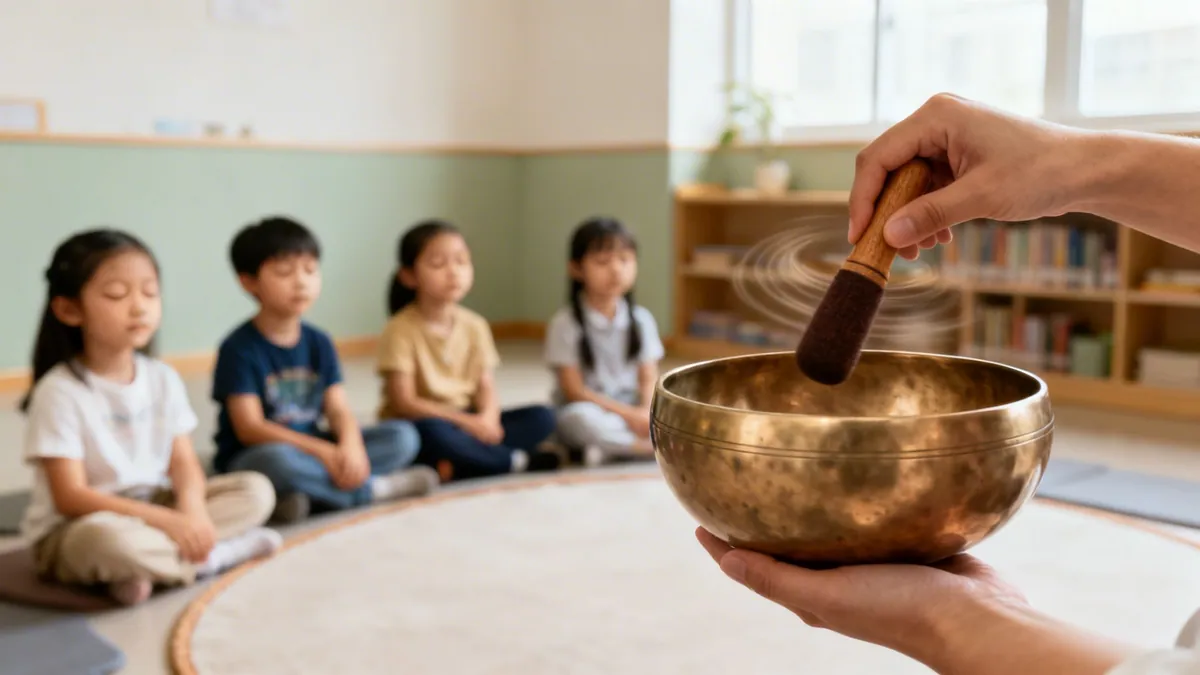
Mindful Sound Listening is a guided auditory practice where participants focus their full attention on sounds, either from their immediate environment or a specific instrument like a singing bowl. This 5 senses activity trains the brain to stay in the present moment, sharpens listening skills, and promotes a state of calm. By concentrating on the sense of hearing, it helps individuals quiet internal chatter and regulate their nervous system.
This method is central to programs like the Mindfulness in Schools Project (MiSP) and Calm Classroom, which use sound as an anchor for attention. The predictable, resonant tone of a bell or bowl can signal a transition, reset a classroom's energy, and create psychological safety. It’s a powerful tool for building foundational self-regulation and focus, especially in busy school environments.
How to Implement Mindful Sound Listening
This auditory activity is highly adaptable and requires only a single sound-making tool to start.
Suggested Time: 2-10 minutes
Appropriate Ages: Kindergarten through 8th Grade (and beyond)
Materials: A singing bowl, a small bell, chimes, or a digital recording of one of these sounds.
Step-by-Step Directions:
Introduce the Activity: Explain that you will be practicing listening with full attention. Say, "We're going to use our sense of hearing to listen to a special sound. Your only job is to listen until you can't hear the sound anymore."
Prepare for Listening: Invite participants to find a comfortable but alert posture. They can sit upright in their chairs with their feet on the floor or lie down. They might close their eyes or look softly at the floor.
Create the Sound: Ring the bell or play the singing bowl once, letting the sound resonate.
Guide the Listening: Instruct participants to raise a hand quietly when they can no longer hear the sound. This helps them maintain focus.
Facilitate Reflection (Optional): After the sound has completely faded, ask students to notice what they are feeling. You can invite them to share what the experience was like, what other subtle sounds they noticed, or what thoughts came up. For example, a student might share, "After the bell stopped, I heard the clock ticking and the fan humming."
Key Insight: The goal isn't silence of the mind but rather a gentle redirection of attention. If students report that their minds wandered, congratulate them for noticing. That act of noticing is mindfulness in action.
Actionable Tips for Educators and Parents
You can easily integrate sound-based mindfulness into daily routines to foster a calmer, more focused environment.
Signal Transitions: A first-grade teacher can ring a chime to signal the end of "center time" and the start of "clean-up time." The sound becomes a predictable, non-verbal cue that helps students switch tasks peacefully, replacing loud verbal reminders.
Start the Day: Use a gratitude bell during a morning meeting. A school counselor leading a small group could ring a bell, and each student could share one thing they are grateful for when it's their turn. This combines mindfulness with positive reflection.
Pre-Test Reset: Before a test or a challenging academic task, a fifth-grade teacher can lead a one-minute listening exercise with a singing bowl. This helps students settle their nerves and focus their minds for the work ahead.
Bedtime Routine: A parent can use a recording of a singing bowl on their phone as part of a bedtime routine. The child's task is to lie still and listen until the sound is gone, helping them wind down and prepare for sleep.
3. Texture Exploration & Tactile Empathy Building (Touch)
Texture Exploration is a hands-on activity where participants investigate various textures like smooth, rough, bumpy, and soft. By focusing on the sense of touch, this 5 senses activity builds sensory awareness and connects tactile input to emotions. The exercise helps individuals recognize that just as people have different comfort textures, they also have different emotional needs and sensitivities.
This activity is often used in occupational therapy and sensory-friendly classrooms to promote self-regulation and emotional understanding. It provides a concrete way to discuss abstract concepts like empathy and acceptance, creating a space where differences are explored with curiosity rather than judgment. For example, a student might use a 'texture bag' with a favorite soft fabric as a calming tool during a stressful test.
How to Implement Texture Exploration
This activity can be easily adapted for different age groups and requires simple, accessible materials.
Suggested Time: 20-30 minutes
Appropriate Ages: Kindergarten through 8th Grade
Materials: A collection of items with distinct textures (e.g., sandpaper, cotton balls, smooth stones, bubble wrap, corduroy, foil, sponges). Blindfolds or "mystery bags" are optional.
Step-by-Step Directions:
Introduce the Concept: Explain that you will be exploring the sense of touch. Start with an open exploration, allowing participants to see and feel the different items.
Guided Exploration: Ask participants to close their eyes or use a blindfold (if comfortable). Hand them one textured item at a time.
Prompt for Description: Ask them to describe what they feel. Use sensory-focused questions like, "Is it rough or smooth? Soft or hard? Warm or cold?" For example, when feeling sandpaper, a student might say "It feels scratchy and bumpy."
Connect to Feelings: Once they've described the texture, ask how it makes them feel. For instance, "Does this bumpy texture feel surprising? Does the soft one feel calming?" A student might say the soft cotton ball "feels like a fluffy cloud and makes me feel sleepy."
Facilitate a Discussion: After exploring several textures, lead a group conversation about their experiences. Discuss how some people loved the rough texture while others preferred the smooth one, linking this to personal preferences and needs.
Key Insight: The main goal is to build a bridge between physical sensations and emotional responses. Emphasize that there is no "right" way to feel about a texture, which teaches acceptance of diverse perspectives.
Actionable Tips for Educators and Parents
You can integrate texture-based activities into daily routines to foster empathy and self-regulation.
Create a Texture Palette: A third-grade teacher could set up a "sensory station" with a 'texture palette' where students can go to touch different materials when they feel overwhelmed or need a brain break. This gives students a tangible self-regulation strategy.
Use Texture Metaphors: During conflict resolution, a school counselor can ask students to describe the situation using textures. A student might say, "Their words felt like sandpaper," helping them articulate the emotional impact in a new way.
Design 'Comfort Kits': Help students identify a personal "comfort texture" they can keep at their desk, like a smooth stone or a small piece of faux fur. This becomes a discreet calming tool during anxious moments. A parent can help a child create a similar kit at home for homework time.
Empathy Building Exercise: In an anti-bullying lesson, a fourth-grade teacher could have students pass around a piece of rough sandpaper and a smooth stone. Then, they can discuss which texture unkind words feel like and which texture kind words feel like, making the concept of emotional impact more concrete.
4. Mindful Tasting & Gratitude for Nourishment (Taste)
Mindful Tasting is a sensory activity that uses a small piece of food to anchor attention to the present moment. Participants slowly eat an item like a raisin or apple slice, focusing intently on the taste, texture, and aroma. This foundational mindfulness exercise turns the simple act of eating into a powerful 5 senses activity, building self-awareness and regulation skills. By slowing down, students learn to notice details they usually miss and develop a sense of gratitude for their food.
This practice is a cornerstone of established mindfulness programs like Mindfulness-Based Stress Reduction (MBSR) and is widely used in social-emotional learning (SEL) curricula. It provides students with a tangible tool to calm an anxious mind, focus their attention, and connect with their bodies in a positive way.
How to Implement Mindful Tasting
This activity requires very few materials and can be a quiet, calming experience for any group. Crucially, always check for food allergies and sensitivities beforehand.
Suggested Time: 5-15 minutes
Appropriate Ages: Kindergarten through 8th Grade (and beyond)
Materials: A small food item for each participant. Good options include a single raisin, a small piece of dark chocolate, a cranberry, a thin apple slice, or a pretzel.
Step-by-Step Directions:
Introduce the Concept: Explain that you will be exploring a piece of food using all your senses, as if for the very first time. Frame it as a fun experiment to see what you can notice.
Provide Materials: Give one food item to each participant. Ask them not to eat it yet.
Guide the Sensory Exploration: Lead students through a slow, deliberate process using gentle prompts.
Sight: "Look at the item in your hand. Notice its color, its shape, and the tiny lines or wrinkles on its surface." (e.g., "Look at how the light shines on the raisin.")
Touch: "Feel its texture between your fingers. Is it rough, smooth, sticky, or hard?"
Sound: "Hold it up to your ear. Does it make a sound if you roll it between your fingers?"
Smell: "Bring it to your nose and take a slow breath in. What do you smell? Is it sweet, earthy, or something else?"
Taste: "Slowly place it in your mouth but don't chew yet. Notice the sensation on your tongue. Now, take one slow bite and notice the burst of flavor. Chew slowly and see how the taste and texture change."
Facilitate Reflection: After everyone has finished, ask open-ended questions like, "What was that like for you?" or "Did you notice anything surprising about your raisin?"
Key Insight: The goal is not to rush but to experience each moment of eating. Remind students there is no right or wrong thing to notice; the practice is simply about paying attention. Offer a "dignified opt-out" where students can choose to just observe.
Actionable Tips for Educators and Parents
You can use Mindful Tasting to create moments of calm and build gratitude in various settings.
Classroom Transition: Use this activity to help students settle down after recess or before a test. A third-grade teacher could lead a three-minute mindful tasting with a small pretzel to help the class transition from a noisy lunchroom to quiet independent reading time.
Anxiety Regulation: A school counselor can guide an anxious student through a mindful chocolate tasting. The intense sensory focus on the melting chocolate can ground the student in the present, interrupting a cycle of worried thoughts.
Dinner Time Routine: At home, a parent can start a meal by mindfully eating the first bite. For example, with spaghetti, everyone can silently taste the first forkful, noticing the texture of the pasta and the tangy flavor of the sauce before starting their conversation.
Gratitude Practice: After the tasting, extend the reflection. A teacher could ask a class after eating an apple slice, "Let's thank the tree that grew the apple, the sun that made it sweet, and the farmer who picked it." This connects the simple act of eating to a larger system of nourishment.
5. Scent Journeys & Emotional Anchoring (Smell)
Scent Journeys & Emotional Anchoring is a guided sensory activity where individuals explore different scents to build olfactory awareness and create powerful connections between smell and emotional states. Because the olfactory system links directly to the brain's memory and emotion centers, this 5 senses activity uses scent as a potent tool for emotional regulation and creating psychological safety. Participants learn to use specific scents as portable self-regulation tools, helping them manage stress or anxiety in real-world situations.
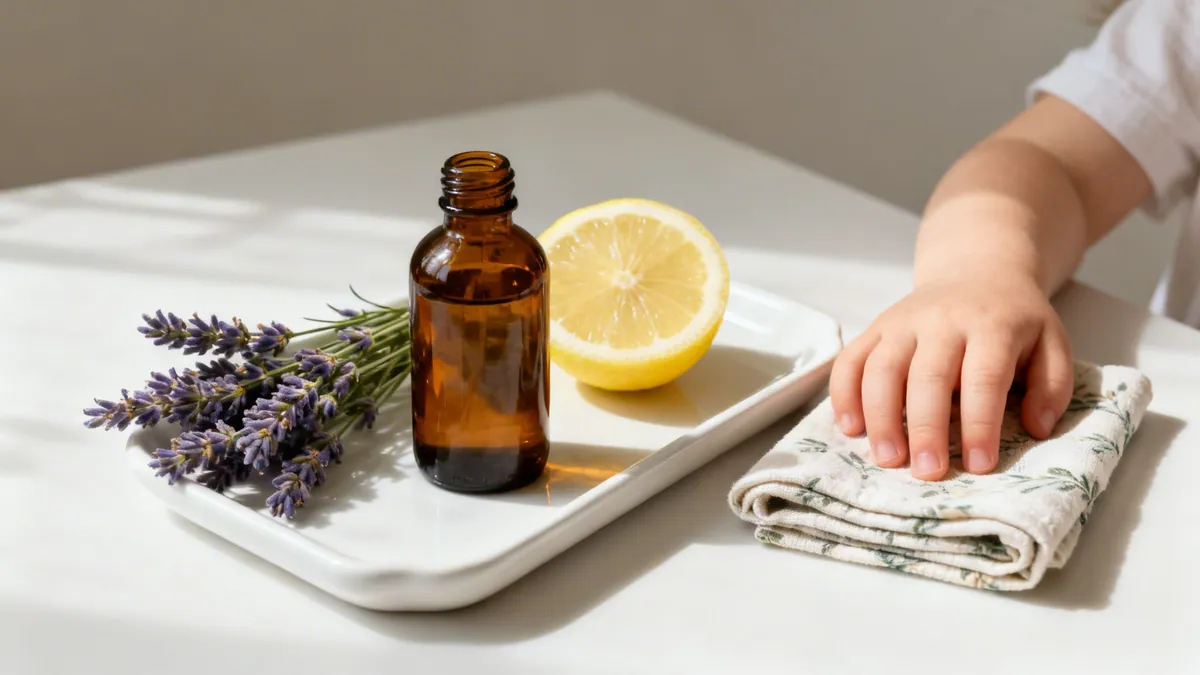
This approach is supported by neuroscience research on olfaction and emotion, as well as practices from trauma-informed care and mindfulness programs. It recognizes that scent can be an "emotional anchor," a sensory cue that helps ground a person in a feeling of calm or focus. For example, a student might learn to associate the smell of lavender with deep breathing exercises, creating a reliable shortcut to a calmer nervous system.
How to Implement Scent Journeys
This activity can be a calming group experience or a personalized tool for individual students. Always prioritize safety and be mindful of potential sensitivities.
Suggested Time: 10-20 minutes
Appropriate Ages: Kindergarten through 8th Grade
Materials: Cotton balls or fabric scraps, small containers, and a variety of mild, natural scents such as lemon peels, lavender buds, fresh mint leaves, or drops of vanilla extract.
Step-by-Step Directions:
Introduce the Concept: Explain that our sense of smell is strongly connected to our memories and feelings. Ask, "Have you ever smelled something that reminded you of a person or a place, like cookies baking at home?"
Prepare the Scents: Place a few drops of an essential oil or a small piece of the scented item (e.g., a mint leaf) onto a cotton ball and put it in a container. Prepare several different scents.
Guide the Exploration: Pass one scent around at a time. Instruct participants to close their eyes, take a gentle sniff, and notice what thoughts, feelings, or sensations come up.
Facilitate Discussion: Ask open-ended questions like, "What does this scent make you think of?" or "How does this smell make your body feel- energized, relaxed, or something else?" For example, smelling cinnamon, a student might say, "It reminds me of my grandma's house at Christmas and makes me feel warm."
Create an Anchor (Optional): Guide students to choose a scent they find particularly calming or focusing. Pair the scent with a simple breathing exercise, creating a personal "scent anchor" for future use.
Key Insight: The power of this activity comes from personal association. Respect individual preferences and aversions, as a scent that is calming for one person may be overstimulating for another. Always offer the choice to opt out.
Actionable Tips for Educators and Parents
You can integrate scent-based regulation into daily routines to support emotional well-being.
Calm-Down Corner: A school counselor can stock a calm-down corner with a few approved scents (like lavender or chamomile) on cotton balls in sealed jars. Students can choose one to smell while practicing their coping strategies.
Focus Tool: During independent work, a third-grade teacher might use a diffuser with a drop of peppermint or lemon scent for a short period to help students feel more alert and focused.
Transition Support: A parent can use a consistent, pleasant scent during a transition that is often challenging, like getting ready for school. A spritz of a calming room spray can signal it's time to get dressed, creating a predictable and soothing morning ritual.
Personal Regulation Kit: Help students create their own portable scent anchor. A student who experiences anxiety before tests could carry a small cloth with a drop of their chosen calming scent (like lavender) to smell discreetly at their desk, helping to ground them in the moment. You can also use scented products like aromatic mixer melts at home to create a consistent calming or invigorating atmosphere.
5-Senses Mindful Activities Comparison
Activity
Implementation complexity
Resource requirements
Expected outcomes
Ideal use cases
Key advantages
Color Emotion Mapping (Sight)
Low — simple setup but needs guided reflection
Low — colored paper, markers, paint
Builds emotional vocabulary, visual records of feelings, nonverbal expression
Strong neurological tie to emotion, highly personalizable, portable tools
Putting It All Together: Weaving Sensory SEL into Your Daily Routine
Throughout this guide, we've explored five distinct yet interconnected pathways for building social-emotional skills through sensory engagement. From mapping our feelings with Color Emotion Mapping to grounding ourselves with Mindful Sound Listening, each 5 senses activity offers a practical tool for K-8 students. We’ve seen how Texture Exploration can build tactile empathy, how Mindful Tasting cultivates gratitude, and how Scent Journeys can create powerful emotional anchors for self-regulation.
The true value of these practices, however, lies not in their occasional use but in their consistent integration into the fabric of your classroom or home. This isn't about adding another complex item to your already packed schedule. It’s about reframing moments you already have into powerful opportunities for connection, self-awareness, and growth.
Making Sensory SEL a Sustainable Habit
Integrating any new 5 senses activity successfully hinges on starting small and building momentum. The goal is to create a sustainable routine that becomes second nature for both you and your children or students.
Consider these practical starting points:
Transition Times: Use a gratitude bell or a brief Mindful Sound Listening exercise to signal the end of one activity and the beginning of another. This creates a moment of calm, helping students reset their focus instead of carrying chaotic energy into the next task.
Morning Meetings or Check-Ins: Begin the day with a Scent Journey. Pass around a cotton ball with a calming scent like lavender and ask students to share one word about how it makes them feel. This simple ritual starts the day with mindfulness and emotional sharing.
Snack or Lunch Time: Introduce Mindful Tasting once a week. Instead of a formal, lengthy exercise every day, choose one day to guide students through mindfully eating the first bite of their snack, noticing the texture, taste, and smell.
Art & Creative Writing: Weave Color Emotion Mapping directly into your existing art curriculum. When studying a painting, ask, "What emotions do you think the artist was feeling based on these color choices?" This connects art history to personal emotional expression.
Key Insight: The most effective implementation doesn't feel like a separate "SEL lesson." It feels like a natural part of how your group communicates, solves problems, and supports one another. A consistent, simple 5 senses activity done daily has a greater impact than a complex one done sporadically.
By embedding these sensory tools into daily routines, you create a shared language and a predictable structure for emotional exploration. Students learn that their feelings are valid and that they possess tangible strategies to manage them. This consistency builds a foundation of psychological safety, empowering them to take emotional risks, practice empathy, and build resilience. You are not just teaching them an activity; you are giving them lifelong skills for a more connected and self-aware existence.
Ready to build a more connected and compassionate school culture? For over two decades, Soul Shoppe has helped schools implement practical, student-centered tools that reduce conflict and build empathy, much like the sensory activities discussed. Explore our programs and see how we can help your students thrive at Soul Shoppe.
When we talk about teaching mindfulness to children, we’re talking about giving them simple, practical tools to pay attention to the present moment without judgment. This can be as easy as a few focused breaths or a game that hones their sensory awareness. The goal is to help them regulate their emotions, improve focus, and build resilience in a way that just makes sense to them.
Why Teaching Mindfulness to Children Matters Now More Than Ever
Let’s be honest: managing a child’s big emotions, whether in a bustling classroom or a busy home, can be a daily challenge. Kids today are swimming in a sea of constant stimulation, academic pressure, and tricky social situations. This environment is fueling a noticeable rise in https://soulshoppe.org/blog/2022/01/29/stress-in-children/, making it harder for them to focus, connect with others, and simply manage their feelings.
Mindfulness isn’t about forcing kids to sit still and be quiet. It’s about handing them a toolkit for life. It gives them the foundational skills to understand their own inner world, creating that all-important pause between a feeling and a reaction. For example, instead of a child immediately shoving a classmate who takes their toy, mindfulness helps them notice the anger, pause, and maybe use their words instead.
The Research-Backed Benefits in Action
When we introduce mindfulness to children, we’re not just hoping for the best. We’re teaching skills with proven, positive outcomes that go far beyond a few moments of calm. These benefits show up in real, tangible ways in their behavior and learning.
So what does this look like in practice? Here are a few core benefits you can expect to see blossom with a consistent mindfulness routine.
A Quick Look at Mindfulness Benefits for K-8 Students
This table breaks down the research-supported benefits you can expect to see when you bring mindfulness into your students’ lives.
Benefit Area
What It Looks Like in a Child
Impact on Learning
Improved Focus
A child can gently bring their attention back to the lesson, even with distractions around them.
Students absorb new material more easily and stay engaged for longer periods.
Emotional Regulation
Instead of an outburst, a student learns to recognize anger and says, “I need a minute.”
Fewer classroom disruptions and a more positive, supportive atmosphere for everyone.
Increased Empathy
A child understands their own feelings better, so they can recognize and respond to their peers’.
Conflicts on the playground decrease, and students build stronger, kinder relationships.
Reduced Stress
A student uses a breathing technique before a test instead of feeling overwhelmed by anxiety.
Kids feel more confident and capable, which frees up mental energy for academic challenges.
Greater Resilience
A child can bounce back from a mistake or social hiccup with a more balanced perspective.
Students are more willing to take academic risks and persevere through difficult assignments.
Ultimately, by equipping students with these tools, we create psychologically safer environments where they feel seen, heard, and understood. This sense of security is the bedrock of any thriving learning community.
This approach aligns beautifully with the philosophy behind the Montessori method of teaching, which emphasizes child-led learning and fostering curiosity within a prepared environment. Both mindfulness and Montessori empower children by giving them tools for self-direction and deep concentration.
A Growing Movement Supported by Evidence
Mindfulness in schools is far from a fleeting trend. A massive body of research backs up its effectiveness, with systematic reviews showing consistent positive effects on mental health, cognitive skills, and social-emotional growth.
The data also reveals a powerful truth: when educators practice mindfulness themselves, the benefits for students are significantly amplified.
And the support is overwhelming. With global parental support for school-based programs at 93%, there is a clear mandate to weave these essential skills into our educational fabric. By teaching mindfulness, we aren’t just adding another subject to the day. We are investing in their long-term well-being and giving them skills to navigate a complex world with greater awareness, compassion, and resilience.
Age-Appropriate Mindfulness Activities You Can Use Today
The best way to get started with mindfulness is by doing, not just explaining. We want these practices to feel like a natural part of the day, not another chore. Instead of demanding perfect stillness, we can meet kids where they are with playful, sensory activities that match their developmental stage.
The real key is to keep it simple, engaging, and short, especially in the beginning. I’ve found that a one-minute mindful activity done consistently is far more powerful than a long, infrequent session that everyone dreads.
Here are some practical, age-appropriate activities you can try today, complete with scripts and tips I’ve picked up from years in the classroom.
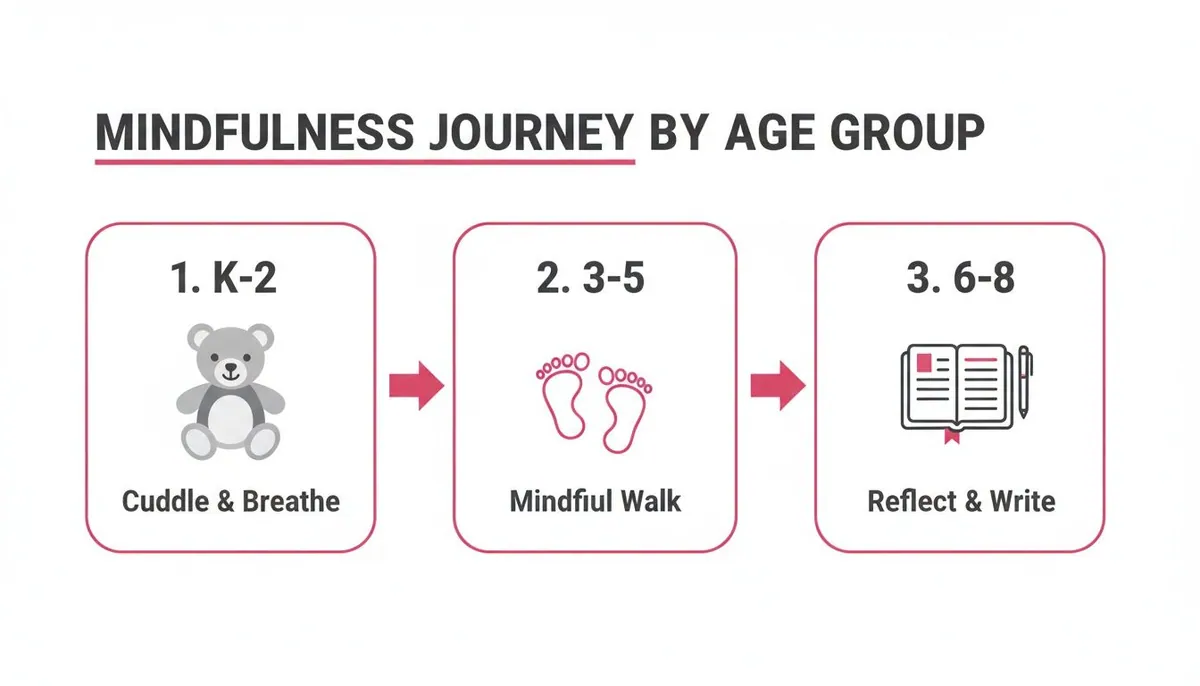
Engaging Early Learners: Grades K-2
For our youngest students, mindfulness needs to be a sensory experience. It should be playful and concrete. Abstract ideas won’t land nearly as well as activities that involve their bodies, their favorite toys, and the world right in front of them. We’re building the most basic awareness skills here.
Buddy Breathing
This simple breathing exercise is a classroom favorite. It uses a stuffed animal to make an invisible process—the breath—visible and real. It’s a wonderfully calming activity for transitions or settling down after a rowdy recess.
How to do it: Invite the kids to lie down comfortably on their backs. Have them place a small stuffed animal or “breathing buddy” on their belly.
Script: “Let’s give our buddies a gentle ride. When you breathe in, watch your buddy rise up toward the ceiling. As you breathe out, see your buddy slowly float back down. Just notice your buddy going for a quiet ride, up and down, with each breath.”
Pro-Tip: I like to play some soft, instrumental music in the background. If a child is extra wiggly, reframe it. Encourage them to notice how their buddy is having a “bumpy ride” today. This turns it into an observation, not a failure.
Sound Safari
This one is fantastic for sharpening listening skills and practicing focused attention. It uses the sounds already in your environment and turns the simple act of listening into a fun adventure.
How to do it: Ask students to sit comfortably and close their eyes if they want to. I use a small chime to signal the start and end of our “safari.”
Script: “We’re going on a Sound Safari! Our ears are our superpowers. For the next minute, let’s listen for as many different sounds as we can. What can you hear inside our room? What can you hear outside? What sounds are quiet? What sounds are loud?”
Pro-Tip: When the minute is up, have students share the sounds they “collected.” This validates their experience and creates a great sense of shared discovery.
Building Awareness: Grades 3-5
As kids get into the upper elementary years, they’re ready to start grasping more abstract ideas and doing a bit of self-reflection. Activities for this age can focus more on identifying internal states—like thoughts and emotions—and connecting them to what’s happening in their bodies.
Weather Report Check-In
This metaphor gives students a simple, non-judgmental way to name and share how they’re feeling. Just like the weather, emotions come and go. They aren’t permanent, and they aren’t “good” or “bad.”
How to do it: Introduce the idea that our feelings are like the weather inside us. I have a visual chart on the wall with different weather types (sunny, cloudy, rainy, stormy, windy).
Script: “Let’s check in with our internal weather today. You don’t have to change it, just notice what it is. Are you feeling sunny and bright? A little cloudy or foggy? Maybe it feels rainy with some sad tears, or even stormy with some big, loud feelings. Take a quiet moment and see what your weather is right now.”
Pro-Tip: Let students share by pointing to the chart or writing it on a sticky note. This lets them communicate their feelings without needing to find complicated words. It’s a quick and powerful emotional check-in.
Mindful Walking
This practice is great for grounding kids in their bodies and the present moment. It turns a simple walk across the room into an exercise in focus and serves as an excellent “brain break” between subjects.
How to do it: Ask students to stand and find their own space. Then, instruct them to walk around the room in slow motion.
Script: “Let’s try some ‘turtle walking.’ As you walk very, very slowly, can you feel your foot lifting off the floor? Can you feel your heel touching down, then the rest of your foot? Just notice the feeling of your feet connecting with the ground. What does the floor feel like under your feet?”
Pro-Tip: Start with just 30-60 seconds. As they get used to it, you can have them notice other things, like the air on their skin. These embodiment exercises are powerful tools for self-regulation; for more ideas, you might be interested in our guide on embodiment practices for kids in school and at home.
The goal here isn’t to get rid of the wiggles or stop all thinking. It’s to build the muscle of awareness—that ability to notice what’s happening, inside and out, without immediately getting swept away by it.
Empowering Middle Schoolers: Grades 6-8
By middle school, students are dealing with complex social situations and intense academic pressure. They’re also capable of more sophisticated metacognition—thinking about their own thinking. Mindfulness for this age group can offer real, practical tools for navigating difficult thoughts and building self-awareness.
Thought Surfing
This technique uses a surfing metaphor to help students relate to their thoughts in a new way. Instead of getting pulled under by a difficult thought, they learn to “ride the wave” of it—observing it as it rises, crests, and falls away.
How to do it: Explain that thoughts are like waves in the ocean; they come and go. We can’t stop the waves, but we can learn to surf.
Script: “When a strong or tricky thought comes up, like ‘I’m going to fail this test,’ imagine it as a wave. Acknowledge it’s there. Instead of fighting it, try to ride it. Notice how the thought feels in your body. Notice its peak, and then watch as it starts to lose energy and fade, just like a wave on the shore.”
Pro-Tip: This is about changing the relationship to thoughts, not suppressing them. Encourage students to name the thought (“Ah, the ‘I’m not good enough’ wave is here again”) to create some distance and reduce its power.
Mindful Journaling Prompts
Journaling offers a structured, private space for middle schoolers to practice self-reflection. Giving them specific, mindful prompts can help them move beyond just listing events to actually exploring their inner experience.
How to do it: Provide a journal and set aside 5-10 minutes of quiet time. Offer a few prompts on the board for them to choose from.
Examples of Prompts:
“Describe a moment today when you felt completely present. What were you doing? What did you notice with your senses?”
“Think of a challenging moment from your week. What emotion did you feel most strongly? Where did you feel it in your body?”
“Write about one small thing you’re grateful for today and why. It could be a song, a food, a person, or a sunny spot in the room.”
Pro-Tip: Emphasize that there are no right or wrong answers, and that spelling and grammar don’t matter. The journal is for their eyes only. This creates a safe space for honest reflection without the pressure of being graded.
Weaving Mindfulness into Your Daily Routine
The real magic happens when mindfulness isn’t just another lesson but becomes a natural, seamless part of the day. When you weave small, consistent moments of awareness into existing routines, you help create a classroom culture where focus and calm are the default settings. It’s about turning those chaotic transitions into opportunities for a collective deep breath.
This approach makes mindfulness feel easy and sustainable. Instead of trying to carve out a new 30-minute block, you infuse it into the seconds and minutes you already have. These small, repeated actions are what build lasting habits and a genuine culture of awareness.
From Morning Chaos to Mindful Arrival
The first few minutes of the school day can set the tone for the next several hours. A frantic, rushed entry often leads to a scattered, unfocused class. But what if you could swap that chaotic energy for a simple, two-minute “Mindful Arrival”? This is a game-changer for grounding students and preparing their minds for learning.
Here’s what that shift can look like in practice:
The Old Way: The bell screams, kids flood the room, bags drop with a thud, and chatter fills the air while you try to get everyone’s attention for announcements.
The Mindful Way: As students enter, soft, instrumental music is playing. They know the routine: put their things away and find their seats. Once most are settled, you ring a small chime to signal the start of a one-minute mindful moment.
Mindful Arrival Script: “Good morning, everyone. Let’s start our day together. As you settle into your seat, can you feel your feet flat on the floor? Take a slow breath in… and let it all the way out. For the next minute, let’s just listen to the quiet sounds in our room.”
This simple change doesn’t add time to your day; it reclaims it. It acts as a powerful reset, allowing the entire class to start on the same calm page. Building these simple, predictable moments is key to helping children feel emotionally grounded. You can find more ideas in our guide to creating emotionally grounding routines for kids.
Integrating Mindfulness into Your Curriculum
You don’t need a separate curriculum to teach mindfulness. In fact, the most powerful way to do it is by embedding these practices directly into the subjects you already teach. This reframes mindfulness as a practical tool for learning, not just another “thing” to do.
I hear from a lot of teachers who worry kids will find these practices “boring.” But my experience—backed by research—is that when they’re woven in thoughtfully, kids are incredibly receptive. A 2023 feasibility study on school-based interventions had a remarkable 96% retention rate in a program run during class hours. It just goes to show that when the activities are interactive and supported by the teacher, kids are all in. You can read the full research on this effective school integration.
Here are a few ways this can look in different subjects:
Science: During a nature observation, add a mindful step. Before students start classifying a leaf or a rock, ask them to spend one minute simply observing it with all their senses. “What do you see? What does it feel like? What do you smell?”
Language Arts: When reading a story, pause after a key emotional moment. You could ask: “Where do you think the character is feeling that sadness in their body? Where do you feel big emotions in your own body?”
History: After learning about a difficult historical event, use a quiet, reflective prompt. “Take a quiet moment to think about one feeling that came up for you during this lesson. You don’t have to share it, just notice it.”
Math: When a student is stuck on a tough problem, suggest a “Math Brain Break.” Say, “Okay, let’s pause. Everyone close your eyes and take three slow ‘balloon breaths’—breathe in deep to fill your belly like a balloon, and breathe out slow to let the air out. Now, let’s look at the problem again with fresh eyes.”
As kids get older, these practices can evolve, moving from simple sensory exercises to more reflective techniques.
As you can see, the journey builds on itself. It starts with concrete, body-based activities for our youngest learners and grows into more introspective practices for older students.
Using Micro-Practices for Transitions and Resets
Some of the best opportunities for mindfulness are hidden in the “in-between” moments. Think about the transition from math to reading, the lull before lunch, or the restlessness after a long assembly. These are perfect times for a “Mindful Minute.”
These quick one-minute resets act like a mental palate cleanser, helping students shift gears and release any lingering stress or excitement. A great example is a ‘Starfish Breath’: have kids spread their hand like a starfish. They trace up one finger while breathing in, and trace down the other side while breathing out, continuing for all five fingers.
The Gratitude Share
A wonderful way to close the day is with a brief “Gratitude Share.” This simple practice helps students leave on a positive, reflective note.
Set the Tone: Gather students in a circle or have them turn to a partner.
The Prompt: Ask them to think of one small thing from their day they are grateful for. It could be learning something new, a kind word from a friend, or the sunshine during recess.
Share (Optional): Invite a few students to share their gratitude aloud if they feel comfortable. This simple act of sharing amplifies the positive feeling in the room.
It’s these small, consistent practices, woven into the fabric of the school day, that truly build a lasting foundation of awareness, focus, and emotional well-being for every child.
Partnering With Families to Build a Mindful Community
When we teach mindfulness in the classroom, the practices truly come alive when they become a shared language between school and home. Bridging this gap creates a supportive ecosystem that reinforces these essential life skills, helping transform classroom exercises into deeply rooted family habits.
Let’s face it, though—most families are incredibly busy and might not be familiar with mindfulness at all. The key is to make your communication simple, inviting, and practical. Start by clearly explaining what you’re doing in the classroom and, just as importantly, why it matters for their child.
Sharing Your “Why” Through Newsletters
Your regular class or school newsletter is the perfect place to start. You don’t need to write a long essay. Just keep the blurbs short, positive, and focused on the benefits for their child. Avoid jargon and always offer one simple thing they can try at home.
Here’s a little blurb you can adapt for your own newsletter:
This Week’s Mindful Moment: Listening Ears
Hello Families! This week in class, we’ve been practicing “Mindful Listening”—a fun game where we pause and notice all the quiet sounds around us. This simple activity helps students improve their focus and calm their bodies. You can try it at home for just one minute! Ask your child: “What sounds can you hear right now?” It’s a great way to settle down before bed.
These small, consistent updates demystify the practice and empower parents to become partners in your work.
Host a Family Mindfulness Night
For a more immersive experience, think about hosting a family mindfulness night. This can be virtual or in-person, and it’s not about sitting in silence for an hour! It’s about playful connection, shared learning, and giving families tangible tools they can use right away.
Structure the evening around fun, interactive activities:
Buddy Breathing: Ask each family to bring a favorite stuffed animal. Lead them through the same breathing exercise you use in class so parents can experience it firsthand.
Mindful Tasting: Use a simple snack like a raisin or a small piece of chocolate. Guide families to explore it with all their senses before eating. It’s always a hit.
Create ‘Calm Down Jars’: This is a wonderful hands-on activity. Provide jars, water, glitter, and glue, and let families create a visual tool they can take home for when big emotions arise.
This kind of shared experience builds real community and shows parents that mindfulness is an activity for connection, not just for quiet time. Positive parenting is all about connection, and you can explore more strategies by reading our guide on positive parenting tips to nurture your child’s growth.
Launch a Home-and-School Mindfulness Challenge
A weekly or monthly challenge can be a fantastic, low-pressure way to encourage consistent practice. Create a simple, downloadable sheet with fun activities that families can do together.
The impact of these school-led initiatives can be huge. In the ‘World’s Largest Mindful Moment’ event, an impressive 67% of parents reported practicing mindfulness at home with their kids afterward. A staggering 96% saw clear benefits, including children getting better at handling emotions (63%), becoming calmer (42%), and showing more empathy (28%). This highlights the powerful ripple effect of your work. You can discover more about these powerful family engagement findings.
Here are some sample weekly challenges you could include:
Week 1 – Mindful Munching: Practice ‘Mindful Eating’ with one snack this week. Eat without screens and talk about the tastes, smells, and textures.
Week 2 – Rose, Thorn, Bud: At dinner one night, share your “rose” (a positive moment), “thorn” (a challenge), and “bud” (something you’re looking forward to).
Week 3 – Mindful Steps: Take a three-minute walk together, inside or out. Walk in silence and just notice the feeling of your feet on the ground.
Week 4 – Gratitude Jar: Write down one thing you’re thankful for each day and add it to a jar. Read them all at the end of the week.
By making families your partners, you multiply the impact of your efforts. You’re not just teaching a skill; you’re helping to build a truly mindful community where every child is supported.