Soul Shoppe's work is made possible by donors and partners who care deeply about the young people in their communities! We can't do this work without you. Support our work in classrooms and on playgrounds across the nation by donating here.
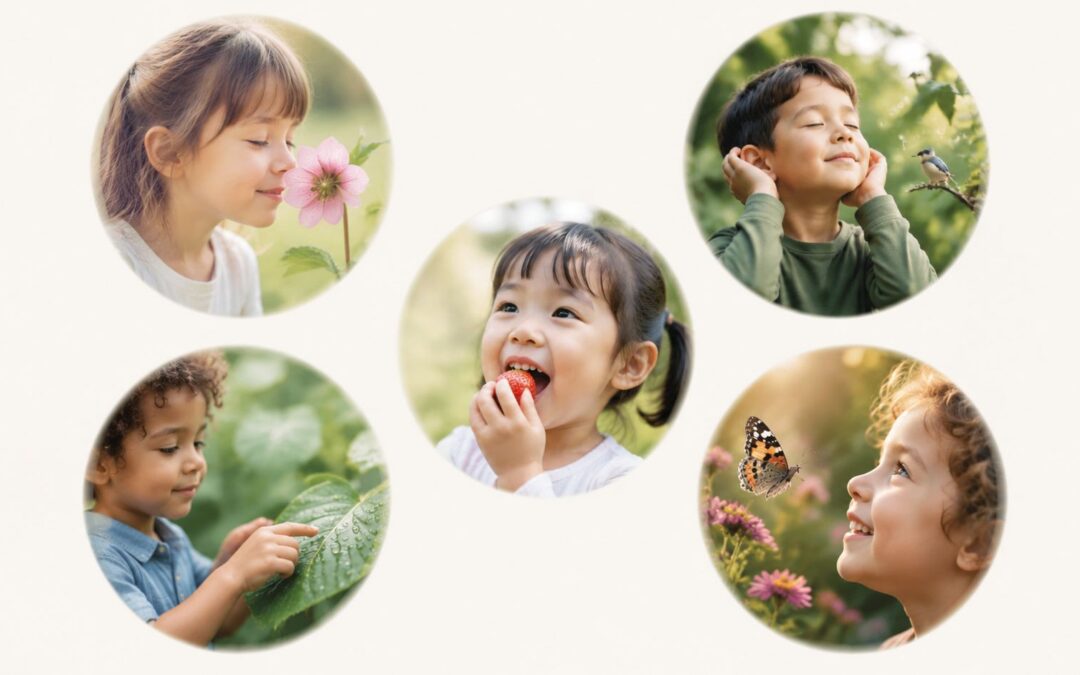
A child closes their eyes and listens to rain on the roof. Another tastes a strawberry and pauses, as if the sweetness has a story attached to it. Those moments can look small from the outside, but for children they are often the first clues that feelings live in the body, not just in words. 5 senses poems turn those clues into a simple, repeatable practice that helps kids notice what they feel, name what they notice, and connect with other people more kindly.
Teachers and parents can use sensory poetry as a gentle entry point into self-awareness, self-regulation, empathy, and belonging. The form is familiar, structured, and accessible, which is why it fits so well in early literacy and SEL work. Traditional poetry instruction still centers the five classic sensory image types, sight, hearing, taste, smell, and touch, and that framework has stayed steady across decades of classroom use, which makes it a useful foundation for young writers and readers alike (EBSCO on imagery in poetry).
1. "Five Senses" by Mary O'Neill The Classic Sensory Explorer
Mary O'Neill's “Five Senses” gives children a clean, memorable path into sensory language. The poem's value is its simplicity, because young learners can follow one sense at a time without getting lost in complicated figurative language. That matters in K-1 settings, where students are still building the vocabulary they need to talk about what they notice in the world and in their own bodies.
The poem also fits the way poetry is already taught in schools. Poetry is already part of most schooling, which makes a familiar sensory poem a natural bridge between literacy and SEL. In classrooms, teachers often use poems like this to introduce environmental awareness, because children learn to notice sights, sounds, textures, and smells before they're asked to explain them.
A strong fit for self-awareness
When students hear a line about sound, then think about the sound of their own classroom, they're practicing a core SEL move, connecting outside input to inner experience. That same move helps children describe how their bodies feel during calm, stress, curiosity, or excitement. A child who can say “my hands feel tight” or “the room sounds loud” is already building emotional vocabulary.
Practical rule: Pair the poem with one concrete action right away, because children learn best when the words and the senses stay connected.
Parents and teachers can keep this simple. Read the poem aloud, then ask children to make a “My Five Senses” chart with personal examples, like “rain on the window” for hearing or “warm socks” for touch. A sensory scavenger hunt around the classroom or playground works well too, and the poem can anchor sound exploration, texture matching, smell jars, taste tests, and observation walks. If a child feels overwhelmed, the poem can also become a grounding tool, returning attention to one sense at a time and helping the child re-enter the room with more stability.
For a ready-made companion activity, the 5 senses activity gives families and educators a simple place to begin.
2. "Listen" by David Sobol The Mindful Listening Poem
David Sobol's “Listen” shifts the focus from noticing to receiving. That distinction matters for SEL, because real listening is not passive silence, it's a skill that supports communication, trust, and psychological safety. When children practice listening with intention, they learn that being heard and hearing others are both part of belonging.
The poem works especially well in moments when the room needs to slow down. A teacher can read it before a peer listening activity, a morning meeting, or a conflict-resolution circle, then ask students to notice how a quiet room changes the way they pay attention. The poem's auditory imagery makes listening feel active and deliberate, which helps children understand that they aren't just waiting for their turn to talk.
Using sound to build empathy
Listening is one of the clearest pathways into empathy. Children who learn to hear another voice without interrupting, correcting, or rushing to answer are practicing a social habit that supports stronger relationships. That's why this poem fits so naturally with community-building and classroom communication routines.
In a school setting, the poem can lead into a listening walk, where students go outside and document sounds they hear, or into a sound map, where they list the noises they notice in different places. Counselors can use it in small groups to open discussion about what it feels like when someone really listens. Parents can also use it at home by creating a family listening moment, turning off background noise, and asking each person to share one sound they noticed.
Read the poem in a quiet space first. Students often understand “listening” better when they feel the contrast between distraction and attention.
For English learners, visual cues help a lot. Point to a picture of an ear, a hallway, a bell, or a tree outside the window, then invite students to name what they hear in short phrases. That keeps the task concrete and lowers language barriers. A simple follow-up question, “What did you notice that you hadn't noticed before?” can open the door to presence, curiosity, and respect for other people's experiences.
The listening skills activities resource pairs well with this poem when you want a classroom routine that reinforces genuine attention.
3. "Taste" by Jane Taylor Adaptation The Emotion-Sensory Connection Poem
Taste is one of the easiest senses to connect to memory, which makes it especially useful for SEL. A child can think about “sweet,” “sour,” or “spicy” and immediately connect those sensations to reactions in the body, and that opens a conversation about emotion without forcing direct disclosure. For some students, that's safer than being asked to explain a feeling head-on.
This poem type works well because it connects sensory awareness to emotional awareness. Students begin to see that what they taste can affect how they feel, and that feeling can shape what they remember. That bridge is valuable for young children who don't yet have a rich emotional vocabulary, and it's also respectful of the fact that children experience food and sensation differently.
A low-pressure way to talk about feelings
Taste poems can help students compare reactions without turning the class into a debate. One child may link sour to frustration, while another links it to wake-up energy. Both responses are valid, and that difference helps normalize neurodiversity and varied sensory preference.
Classrooms can use this poem during cultural celebrations to honor family foods and shared traditions. A student might describe a holiday dish, a family snack, or something that reminds them of home, then connect it to an emotion or memory. Counselors can use the same format when a child is processing grief or another difficult feeling, because the sensory focus keeps the conversation gentle and concrete.
Safety first: Check allergies before any taste activity, and give students an observation-only option if tasting isn't appropriate.
Safe samples can be simple, like crackers, fruit, chocolate, or lemon slices with proper precautions. After tasting, students can draw or write about what the flavor felt like and then match it to an emotion on an emotion-flavor chart. You can ask, “What does happiness taste like to you?” or “What tastes remind you of home?” and accept whatever answer comes forward. For self-regulation, the question can shift to, “What tastes help you feel calm or alert?” so children begin thinking about healthy coping habits in everyday language.
For families, a tasting activity can become a conversation about memory and comfort at the dinner table. A child who says, “This tastes like my grandma's kitchen,” is doing more than naming food, they're naming attachment, belonging, and emotional association. The naming feelings resource can support that conversation when you want language for big feelings without making the child feel exposed.
4. "Touch" Sensory Exploration Poem The Connection and Safety Poem
Touch-based poems give children language for comfort, discomfort, and boundaries. That makes them especially important in SEL, because students need words for both welcome touch and unwanted touch, and they need practice saying those words in safe, age-appropriate ways. A tactile poem helps normalize that different people feel differently about texture, pressure, and closeness.
This kind of poem works well in younger grades because touch is immediate. A soft blanket, a pinecone, or a rough piece of bark can quickly lead into conversations about what feels calming, what feels too intense, and what kinds of touch are appropriate in a school setting. That connection supports both self-regulation and personal safety.
Building comfort, consent, and vocabulary
Teachers can introduce the poem with texture boxes, then guide children to describe what they notice using words like bumpy, smooth, soft, prickly, cold, warm, and comforting. Students can connect those textures to emotion by finishing simple prompts like, “This texture helps me feel calm,” or “This texture feels like quiet.” The language stays concrete, which helps students who struggle with abstract emotional talk.
This poem also creates a natural opening for consent. A teacher can say, “We respect that different people like different touches,” and use that statement to support personal space, hugs, handshakes, and other greetings. That kind of routine is especially useful during transitions, when students may be more dysregulated and less able to explain what they need.
Always offer an observation-only option. Some children don't want to touch everything, and that choice should be respected without comment.
Classrooms can build a comfort corner with textures that students choose for grounding, then return to the poem when the room feels noisy or tense. Counselors can use it to discuss safe and unsafe touch in careful, age-appropriate language. For students with sensory sensitivities, drawing, describing, or watching others explore can still keep them included.
The how to create a safe space resource pairs naturally with this poem when you want tactile work to reinforce trust, not pressure.
5. "Sight" or Observation Poem The Mindful Presence and Connection Poem
A sight-based poem trains children to slow down and look carefully. That skill matters because observation is the foundation for social awareness. When students learn to notice small details about classmates, nature, or classroom objects, they also become more likely to notice feelings, needs, and shifts in energy.
This poem is especially powerful in inclusive communities. Children who are taught to really see each other with curiosity are less likely to flatten people into labels or assumptions. The poem gives teachers a way to make noticing feel kind, not nosy, and that distinction helps build belonging.
Seeing people with more care
A simple classroom routine can start with a noticing walk. Students go outside, look closely, and notice five beautiful things, then return to share what they saw. That same routine can move into peer appreciation, where children are invited to notice something kind about a classmate or something they appreciate about the room. Families can do the same thing at home by naming five things they notice around the house.
Observation poems also support perspective-taking. A counselor can ask, “What did you notice about how the other person felt?” and use the answer to guide conflict repair. In anti-bullying work, the poem becomes a reminder that when children really see one another, they're less likely to hurt each other. That idea is simple, but it's powerful because it links attention with care.
Connection grows when children practice looking for the full person, not just the mistake or the label.
Students can draw something they observed closely, then explain the details they included. Teachers can also create a noticing chart with prompts like, “What do we notice about our classroom, autumn, or each other?” This gives children a shared language for appreciation and helps them practice growth mindset by noticing the positive in others and themselves. For students with visual processing differences, the activity can shift to sound or touch so everyone still has access to the same SEL goal.
The sample week in a creative arts program shows how creative routines can carry emotional learning across the week when children revisit a theme through different forms.
Low–Moderate, needs varied environments and focus activities
Access to outdoor/varied settings, drawing or observation materials
Enhanced social awareness, mindful presence, appreciation of others/environment
Noticing walks, peer appreciation, anti-bullying and perspective-taking lessons
Builds careful observation, fosters compassion and belonging, adaptable to many settings
Bringing Sensory Awareness into Everyday Learning
Integrating 5 senses poems into your classroom or home isn't just a literacy activity, it's a practice in mindfulness, empathy, and connection. The five-senses framework has stayed central in poetry instruction because it gives children a familiar way to organize experience, and that structure makes it easier to move from noticing to naming, then from naming to relating (EBSCO on imagery in poetry). When kids have words for what they hear, taste, touch, see, and smell, they're better equipped to talk about emotions, ask for help, and understand one another.
Poetry already has a strong place in learning, which makes sensory poems a practical tool rather than a novelty.
For SEL, its power is in repetition. A child who returns to a five-senses poem during calm moments learns the language before stress arrives. A child who uses it during a hard moment can borrow the structure until their own words come back. That's why these poems work so well for self-awareness, regulation, empathy, and belonging; they give children a way to experience those skills before they can fully explain them.
Start small. Read one poem, use one sense, and add one short activity. A listening walk, a texture box, a tasting conversation, or a noticing chart is enough to begin. What matters most is consistency, because children grow in confidence when adults keep offering them safe, concrete ways to notice themselves and each other.
If you want a partner in that work, Soul Shoppe offers experiential SEL programs, coaching, and shared language that help school communities build connection, safety, and empathy. Visit Soul Shoppe to explore resources that support sensory learning, emotional regulation, and everyday relationship skills for children and the adults who guide them.
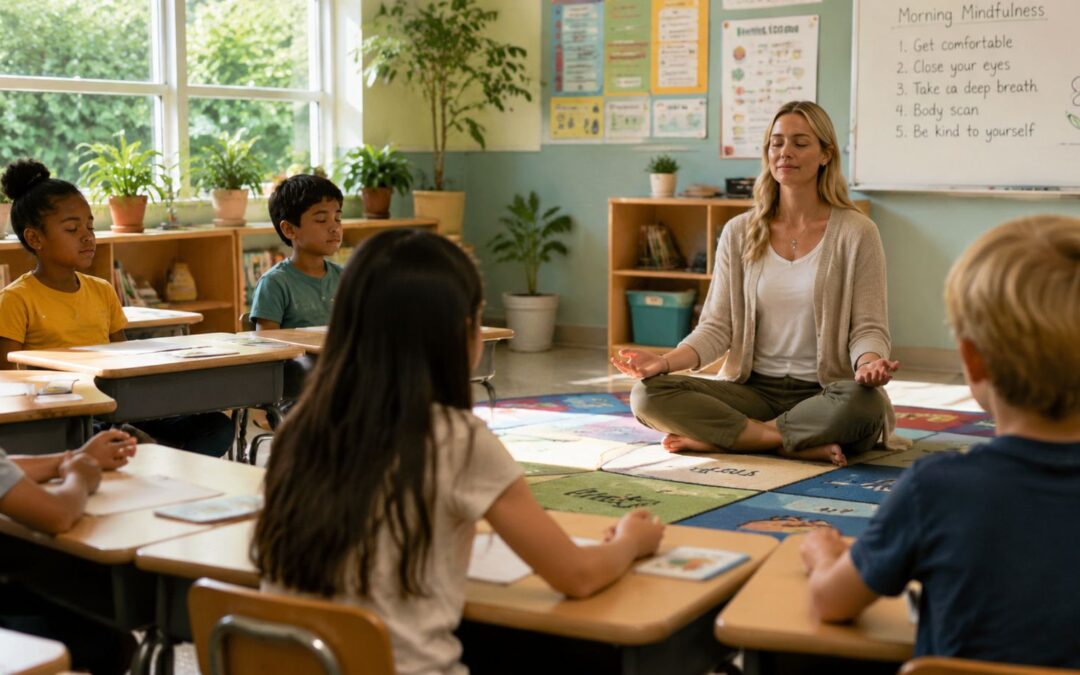
Right after recess, the room can feel full of unfinished sentences, wiggly legs, and one child who's already bracing for the math check-in. Just before a test, the same room can swing the other way, quiet on the surface but tight underneath. A body scan meditation script gives you a way to meet that energy without adding more noise, and in K-8 settings that matters because calm doesn't arrive by accident.
A 2022 meta-analysis of 14 trials found that body scan meditation produced a small but statistically significant increase in mindfulness, with Hedges' g = 0.27, a 95% confidence interval of 0.03 to 0.50, and p < .05 (PubMed). That's a modest effect, not a magic fix, but it's exactly the kind of grounded evidence school teams can work with when they're choosing an SEL tool for real classrooms. For many educators, a body scan fits because it can be delivered in a brief guided format of about 20 minutes or less and still stay useful in school rhythms.
This practice can settle a room without turning it into a performance. The children who need movement can stay seated and track sensations instead. The children who need reassurance can notice the floor under their feet, the chair under their hips, or the breath moving in and out. For a companion exercise that uses a similar steady rhythm, a step-by-step PMR guide can help you compare how body awareness and muscle relaxation differ in practice. If you're also looking for a simple grounding companion, Soul Shoppe's grounding techniques for kids pairs naturally with this work.
Grounding Your Classroom with the Body Scan
A third grader once told me, right before a spelling quiz, that her stomach felt like “a washer on spin.” Another student at the same table was kicking the chair legs and smiling too hard, which usually means the nerves are already in charge. In moments like that, a body scan works because it gives students a job that's internal, structured, and quiet enough to fit the room.
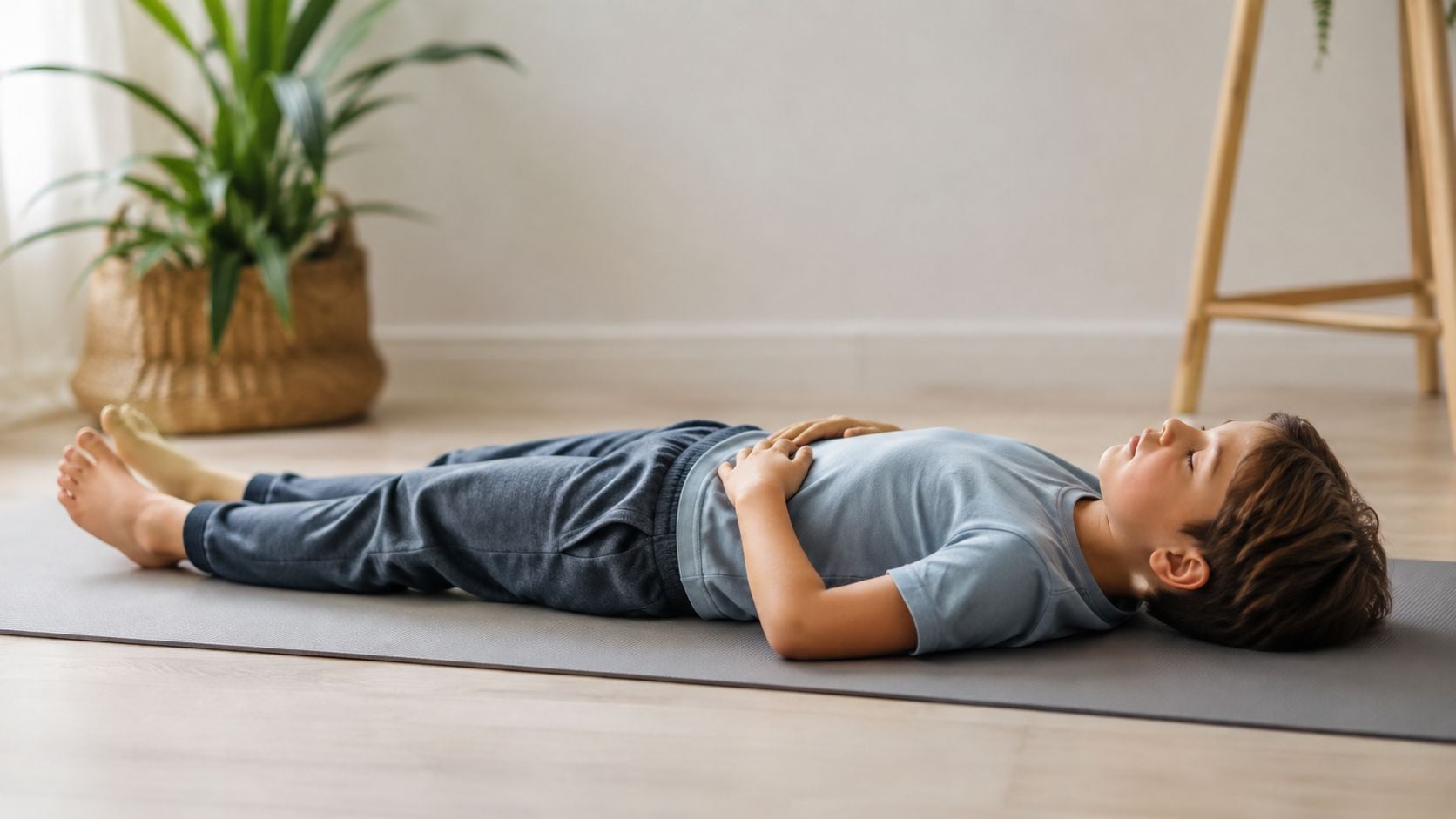
The practice isn't complicated, but it is deliberate. The body scan has become a core entry practice in mainstream mindfulness because it needs no equipment, can be done sitting or lying down, and is easy to script for children, caregivers, and school staff. Public guidance also shows how flexible the format is, with some scripts spending 20 to 30 seconds per area and others offering a 20-minute version (Berkeley Greater Good). That range matters in schools, where a teacher may need a fast reset after lunch or a deeper practice during SEL time.
Practical rule: if the room is dysregulated, make the script simpler, not longer.
A body scan also gives children a vocabulary for self-awareness. Instead of asking, “How do you feel?” and getting shrugs, you can ask, “What do you notice in your shoulders?” or “Is your jaw tight, loose, or somewhere in between?” Those prompts are concrete, which helps younger learners, and they're also calm enough to use before transitions, after conflict, or when winding down.
If you're deciding whether to use this practice or a more movement-based one, a body scan meditation script can sit alongside breathing or grounding tools, not replace them. That's the mindset that keeps SEL practical. You're not trying to create perfect silence, you're giving students a repeatable way to come back to themselves.
Three Ready-to-Use Body Scan Scripts
Shorter mindfulness practices have become more common because classrooms and homes need something that fits the day, not something that competes with it. Public resources now offer 3-, 5-, and 10-minute body scan versions, which reflects how often educators need quick, integrated practices instead of long standalone sessions (Mindful). A good body scan meditation script works best when the timing matches the moment.
3-Minute Reset for Transitions
Use this when students are coming in from recess, lining up for lunch, or shifting after a loud activity. Keep your voice steady and your instructions short.
Sit with both feet on the floor or lie down if there's space. Take one slow breath in and out. Notice your feet. Notice your legs. Notice your belly. Notice your shoulders. Notice your hands. Notice your face. If any part feels busy, you don't have to change it. Just notice it and move on. Take one more breath. Feel the room around you. Open your eyes when you're ready.
10-Minute Standard Scan for SEL Time
Use this when you have a little more room for focus, especially before writing, testing, or after a difficult social moment.
Find a comfortable position, sitting or lying down. Let your breath be slow and easy. Bring attention to your toes. Move to your feet. Notice your ankles and lower legs. Notice your knees and thighs. Notice your hips and belly. Notice your chest and back. Notice your hands and arms. Notice your shoulders, neck, and face. Notice the top of your head. If you lose track, come back to the last place you remember. If a spot feels unclear, neutral, or too much, skip it. End by noticing the room, the chair or floor, and one thing you can hear.
Kid-Friendly Imagery Scan for Younger Learners
Use this with K-2 students who need something playful and concrete.
Put your body in a quiet shape. Imagine warm sunshine on your toes. Check your feet like you're looking for tiny treasure. Notice your legs, like tree trunks resting on the ground. Feel your tummy like it's a balloon gently floating. Notice your arms and hands, like they're sleeping on a cloud. Check your shoulders. Can they melt a little? Let your face be soft like a calm pond. Now notice the air around you. When you're ready, wiggle your fingers and toes.
Script Type
Duration
Best For
Key Feature
3-Minute Reset
3 minutes
Transitions, calming a noisy room
Fast, simple, low-demand
10-Minute Standard Scan
10 minutes
SEL lessons, pre-test focus, deeper settling
More complete attention path
Kid-Friendly Imagery Scan
Flexible
K-2 and mixed-age groups
Playful language, easier engagement
If your team is building a wider mindfulness library, it helps to think the same way some creators do when they solve podcast scripting bottlenecks. A clear script template removes hesitation, especially when you're trying to lead a class and keep the practice consistent. For a broader child-centered mindfulness approach, you can also connect this work with teaching mindfulness to children.
How to Lead a Body Scan Meditation
The strongest body scan script can fall flat if the delivery feels rushed or hesitant. Students read your pacing immediately, especially if they're already keyed up. A calm, even voice tells them there's no hidden test in the practice, only a chance to notice what's happening inside.
A standard body scan usually starts with a comfortable position, either sitting or lying down, which makes it flexible enough for classrooms where students stay at their desks (The Wellness Society). That's one reason it has become so useful in school-based programs. You don't need mats, special lighting, or a room full of silence to begin.
Facilitator note: the body scan works best when your tone says, “Notice,” not “Fix.”
Start with the breath, then move through the body in a clear sequence. Adults often make the mistake of talking too much while trying to guide the process. Better results usually come from short cues, small pauses, and a pace that gives the brain time to follow. A cue like “notice your feet” works better than three or four instructions piled together.
The posture choice matters too. Some children settle faster in a chair with both feet grounded, while others relax more easily on a carpet square or mat. If a child looks stiff, you can offer, “You can keep your eyes open or closed,” or, “You can stay right where you are.” For a simple companion resource on breath settling, belly breathing technique can be paired with this practice before the scan begins.
A strong classroom flow often looks like this:
Ask students to get still in a way that feels manageable.
Invite one or two slow breaths.
Move attention from feet upward, or from head downward, using the same order each time.
Pause briefly between body regions.
Close by returning attention to the room.
That structure gives children predictability. Predictability lowers the amount of mental effort needed to stay with the practice, which is useful when attention is already stretched thin.
Adapting Scripts for Children and Classrooms
The same script can land very differently in a first-grade room and an eighth-grade advisory. Younger children need concrete images and short attention steps. Older students usually do better when you talk plainly about sensation, focus, and stress, without making the practice sound babyish.
A detailed anatomical order helps a lot here. Published guidance commonly moves attention from the toes up toward the head, or in the reverse direction, and that kind of structure gives children specific anchors like “now notice your knees” or “feel the air on your face” (APA-linked mindfulness text). That's more effective than the vague instruction to “scan your body,” which leaves too much room for drift.
In K-2, keep the language playful but not chaotic. “Warm, sleepy sunshine on your toes” works because it's sensory and calm. “Spidey-senses” can work with some groups too, especially if the class already uses that metaphor for noticing clues in the body. The trick is to use one image at a time, then move on.
With grades 3-5, I shift toward simpler factual language. “Notice your shoulders,” “check your jaw,” and “feel your belly rise and fall” are usually enough. If the room gets giggly, I don't stop the practice to call it out unless the laughter is spreading. Lower your voice, slow the pace, and keep going.
Middle schoolers deserve respect in the language. They respond well when you frame the practice as a focus tool, a brain break, or a way to notice stress before it spills into behavior. They do not need a long explanation about mindfulness theory in the moment. They need something clear enough to use without feeling singled out.
For parents and teachers who want a broader support system around calm routines, Daily Powers supplements for children is one example of how families sometimes look for additional calming supports outside school. In the classroom, though, the practical work still comes back to wording, pacing, and whether the practice feels age-appropriate.
Creating a Safe and Trauma-Informed Practice
A body scan asks children to pay attention to the inside of their bodies. For some students, that's comforting. For others, especially children with trauma histories, it can feel too exposed, too quiet, or too close. That's why a trauma-informed script isn't a special add-on, it's the safer version of the practice.
One major U.S. review estimates that about two-thirds of children report at least one traumatic event by age 16, which helps explain why a “simple” mindfulness exercise can land very differently across a classroom (VA Whole Health Library). If you ignore that reality, some students will opt out by shutting down, joking, fidgeting, or checking out mentally. If you plan for it, you can keep the practice open without forcing participation.
The safest scripts give choice at every turn. You can say, “If you'd like, bring your attention to your feet,” which leaves room for a student to observe without pressure. You can also say, “You can focus on the feeling of your breath or on a comforting spot in the room.” That external anchor matters because not every child is ready to go inward for long.
Supportive language lowers pressure. Choice lowers resistance.
I also use permission language before the practice starts. “You can keep your eyes open or closed.” “You can skip any part.” “You can just listen if that feels easier.” Those phrases do more than soothe, they give students control. Control is often the missing piece in generic mindfulness scripts, and without it, the practice can feel like one more adult demand.
The teaching strategy matters as much as the wording. If a child looks activated, don't push them to describe it out loud. Let them focus on the floor, the chair, or the sound of your voice. For a fuller educator lens on this approach, trauma-informed teaching strategies is a helpful companion resource. The goal is not to force internal awareness. The goal is to make internal awareness optional, supported, and safe enough to try.
Integrating Body Scans into Your Daily Routine
A body scan only helps if students know it as part of the day. When it shows up in predictable moments, children start to recognize the routine and settle into it with less resistance. In classrooms, that predictability matters because students are already managing transitions, emotions, and attention shifts.
Use it at times when the room already needs a reset:
After recess: students come in buzzing, and a short scan helps them shift from movement to seated focus.
Before a test or quiz: the practice gives children a quiet way to notice tension before it turns into panic.
After lunch: a brief body check can help the class re-enter learning without carrying over cafeteria noise.
After conflict: a scan gives students a nonverbal path back to regulation before discussion.
At dismissal: a calmer ending can reduce the chaos that sometimes follows the last bell.
The practical challenge in classrooms is not whether students can follow the script. It is whether they can do it without feeling boxed in. If a child refuses, let them sit in silence and listen. If the group gets restless, shorten the scan instead of stretching it out. If time is tight, use the 3-minute version rather than skipping the practice entirely.
A few troubleshooting moves help in almost every setting:
If kids giggle: lower your voice, keep going, and avoid turning the giggles into a big event.
If attention drifts: return to a single body part and use the same cue again.
If a student seems uncomfortable: offer feet, breath, or room sounds as an outside anchor.
If the class is overtired: make the script shorter and more concrete.
If the room is highly activated: start with feet on the floor and one slow breath before any scan begins.
The routine gets easier when adults treat it as a normal classroom tool, not a special performance. A one-minute feet-to-breath check after lunch can change the tone of the whole transition. The class learns that this is notice time, not chaos time.
Soul Shoppe helps school communities build the shared language, safety, and connection that make practices like this easier to use every day. If you want support bringing mindfulness, empathy, and regulation into your classroom or campus, visit Soul Shoppe and explore the programs, tools, and trainings that fit your school community.
You're not dealing with a child who is “acting out” when they can't sit still, blurt answers, or melt down after a loud hallway transition. More often, you're seeing a body that hasn't yet learned how to notice itself, calm itself, or organize itself for learning. Body awareness activities help children connect what they feel inside with what they do outside, which is why they're so useful in classrooms, counseling spaces, and at home.
That connection matters because body awareness is tied to interoception, the internal sense that helps kids notice hunger, tension, breathing, and fatigue. A major meta-analysis found a small but statistically significant association between mindfulness and objective body awareness, based on 17 independent effect sizes with an effect size of g = 0.21 and a 95% CI of 0.08 to 0.34 from the Scientific Reports analysis of mindfulness and body awareness. The takeaway for educators is simple, small practices can still matter, especially when they're repeated consistently.
1. Body Scan Meditation
A body scan gives students a structured way to notice what's happening inside without having to fix anything right away. That matters because many children don't know how to name tension, calm, restlessness, or discomfort until those feelings spill into behavior. A short scan helps them pause, locate sensations, and build the language for self-regulation.
In practice, an elementary teacher might start the day with a 5-minute scan so students can transition from home mode to school mode. A parent might use the same routine at bedtime, pausing at each body part and asking, “What do you notice here?” A school counselor can also use this before testing, especially with anxious students who carry stress in their shoulders, stomach, or jaw.
How to guide it well
Start with a clear path, head to toe or toe to head, and keep your pacing slow. For younger students, 3 to 5 minutes is enough, while older students can usually handle a longer practice. If a child fidgets, that doesn't mean the activity failed, it usually means the child is still learning how to notice.
Practical rule: Aim for awareness, not stillness. A child can be shifting in place and still be fully engaged in a body scan.
For trauma-sensitive use, offer seated practice, open eyes, or a choice to skip any part that feels uncomfortable. After the scan, ask a simple reflection question such as, “Where did you feel tension?” or “Where did your body feel calm?” If you want a ready-made companion resource for students, the internal guide at Soul Shoppe's mindfulness exercises for students pairs well with this routine.
2. Movement Breaks with Intentional Awareness
Movement breaks work best when they're more than just a quick burst of energy. When children notice how their arms, legs, breath, and balance feel during movement, they begin to connect motion with regulation. That's important because many students need movement to reset their nervous systems, and the awareness piece turns an ordinary break into a real SEL tool.
A teacher might lead a 5-minute energy reset with arm circles, leg swings, and spinal twists, then ask what each movement felt like. A parent and child can do a feeling dance at home, then compare notes about body sensations, like “My legs felt strong” or “My heart was beating fast.” In a classroom, a brain break card deck can become more meaningful when each movement ends with a quick reflection, not just a timer.
Make movement observable
Use prompts that direct attention into the body while students move. “What do you feel in your legs right now?” is better than “Are you ready?” because it brings attention to sensation instead of compliance. Cues like “Stand tall and feel your feet on the ground” help anchor the body, especially during transitions.
A school can also build movement stations into the morning or mid-morning routine. One group might jump, one might stretch, and one might twist, then everyone checks in on energy, breath, and focus afterward. Soul Shoppe's fun brain breaks fit naturally here because they turn movement into a repeatable classroom rhythm.
Give students choices. “Big stretches or small stretches?” invites agency, and agency supports regulation.
To keep the routine effective, use the same cue language often. Students learn faster when the structure stays familiar, because they can stop thinking about what comes next and start noticing what their bodies are telling them.
3. Five Senses Grounding Exercise
The 5-4-3-2-1 practice helps students come back to the present when stress starts pulling their attention in too many directions. It works because the senses give the brain concrete information, which can interrupt spiraling thoughts and help a child settle enough to learn. For anxious students, this is often one of the most practical body awareness activities because it's simple, discreet, and easy to repeat.
A teacher can use it in the middle of a stressful announcement and ask the whole class to name something they see, touch, hear, smell, and taste. A parent can guide a child through it in a waiting room before a doctor's appointment. A school counselor can teach it to a student who feels uneasy in the hallway, then post a small reminder card near the classroom door so the student can use it independently.
Keep it teachable before it's needed
Introduce the sequence during a calm moment, not in the middle of a meltdown. That way, students can practice when their brains are open to learning and use the same pattern later when they're dysregulated. For K-1 students, simplify it to 3-2-1, such as three things they see, two they can touch, and one they hear.
Some students are sensory-sensitive, so don't force every sense in every situation. You can skip taste, use gentle movement sensations instead, or ask the child to stay with preferred senses first. Soul Shoppe's 5 senses activity supports this kind of grounding practice well because it reinforces the same sequence in a kid-friendly way.
The best grounding tools don't demand perfect answers. They help a child notice what's there without judgment.
Follow the exercise with a quick body check-in. Ask, “What changed in your body after that?” That question helps students connect an outside-sense exercise with an inside-body shift, which is the learning.
4. Proprioceptive Awareness Activities with Wall Pushes and Weighted Tasks
Some children need stronger physical input before they can settle into learning. Proprioceptive activities, like wall pushes, chair pushes, carrying books, or moving furniture, give the brain clear information about where the body is in space and how much force it's using. That's why these tasks can feel grounding for dysregulated students, especially when their bodies are seeking heavy input or resistance.
A classroom teacher might have students do 10 to 15 wall pushes before independent work, then ask how their bodies feel afterward. At home, a parent can turn routine chores into a body-awareness moment by asking a child to carry the laundry basket, push chairs into place, or squeeze therapy putty while talking about muscle effort. A child who's overwhelmed can also take a heavy-work break by moving books or pushing a rolling cart under adult supervision.
Use force on purpose
Form matters here. Hands should be flat on the wall, the body slightly angled, and the push should come from the shoulders and core, not just the arms. That keeps the activity intentional and safer, and it also makes the body feedback clearer.
You can pair the work with simple counting or breathing, such as “push for 4 counts, rest for 4 counts.” That combination helps students feel the input in their muscles while staying connected to a calm rhythm. The Soul Shoppe embodiment practices resource aligns well with this approach because it treats body input as a regulation skill, not just a movement break.
Use these activities before hard moments, not only after problems happen. Transitions, tests, and busy hallway times are often the best moments for preventive heavy work.
If you're building a wider motor toolkit, a relevant companion resource is motor skills activities for preschoolers, especially for younger children who need more hands-on movement variety.
5. Breathing Awareness Exercises with Hand Placement
Breathing becomes a body-awareness skill when children can feel it, not just hear about it. Hand placement helps with that because a hand on the belly or chest gives direct tactile feedback about expansion, rhythm, and pace. When students notice the breath moving the body, they start to connect calm breathing with a calmer internal state.
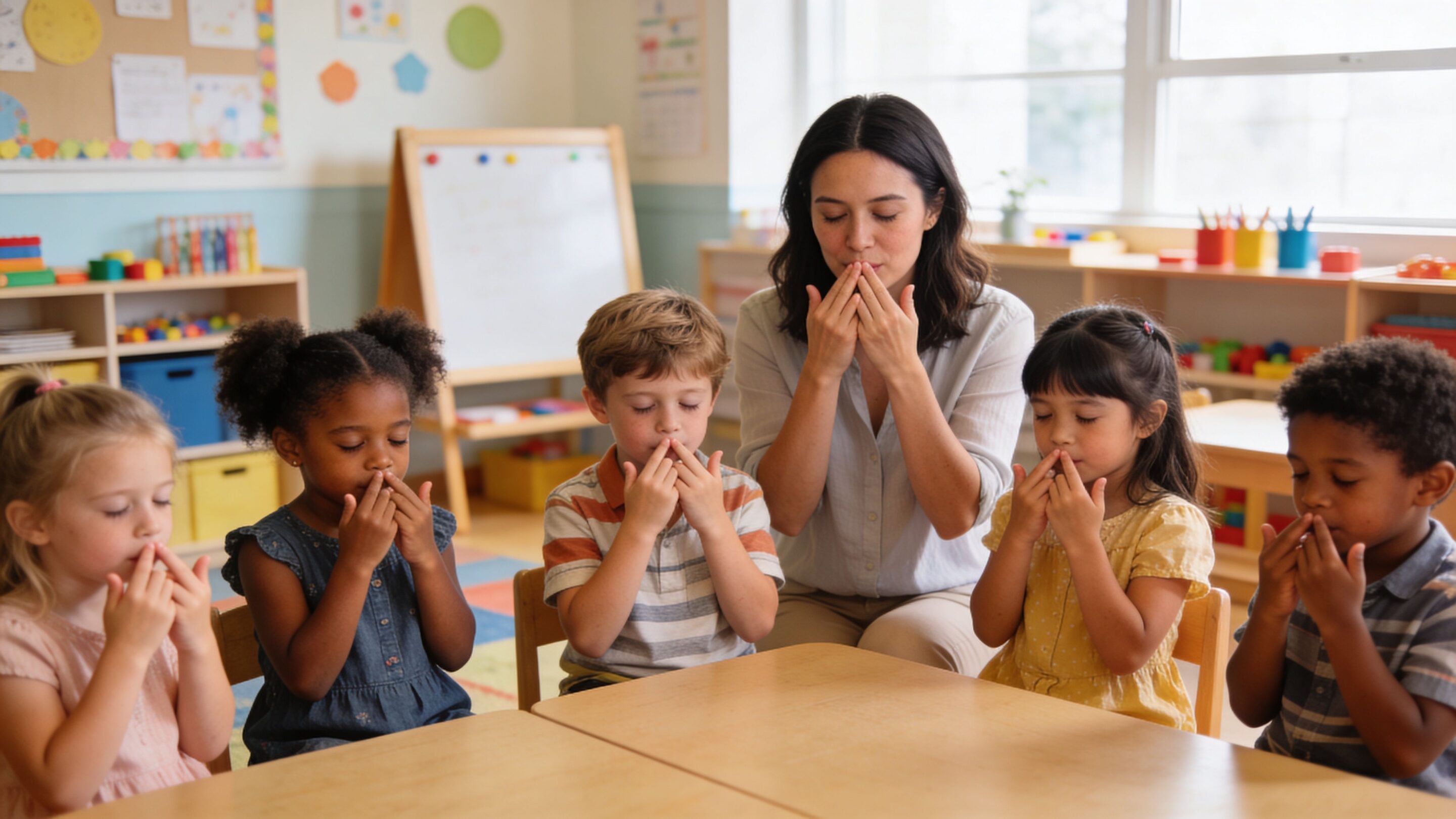
A kindergarten teacher might lead “bubble breath,” asking children to breathe in like they're smelling a flower and out like they're blowing bubbles. A parent can help a child at bedtime place a hand on the heart and notice what changes after three slow breaths. A counselor might teach box breathing for test anxiety, helping a student feel the belly rise and fall through each phase.
Make the breath visible and concrete
Model the breathing yourself so children can see what slow, steady breaths look and sound like. Young children usually do better with imagery than technical language, so “smell the flower, blow the candle” often lands better than “regulate your respiratory pattern.” For older children, counting can help, especially if they're already familiar with patterns like inhale, hold, exhale, hold.
Offer options for hand placement, too. Some children like a hand on the belly, some prefer the chest, and some don't want touch on the body at all. That choice matters, because the goal is awareness and safety, not forcing a pose.
A breathing bell or timer can make this a shared classroom habit. When it chimes, everyone stops for three conscious breaths, then checks in with the body before returning to work. This kind of routine gives students a predictable moment to notice what's happening inside them, which helps build trust in the practice.
6. Yoga and Mindful Stretching
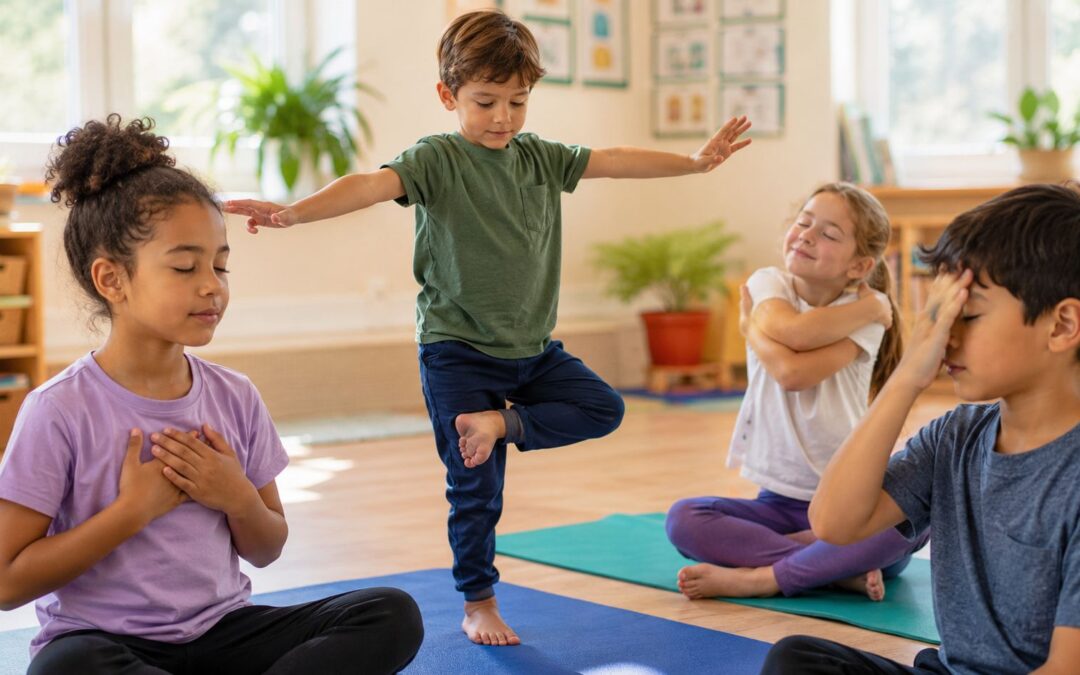
Yoga works well for body awareness because it combines pose, breath, and attention all at once. A child isn't just reaching for a shape, they're learning how the shape feels, where balance lives, and how emotions shift inside the body. That makes yoga especially useful for students who need a safe, playful way to inhabit their bodies with more confidence.
An elementary class might move through an animal flow sequence, starting with mountain pose, then moving into downward dog, then resting in child's pose. A parent and child might do bedtime yoga in pajamas, using gentle stretches to release the day before sleep. A teacher can also keep yoga cards in the classroom so children can pick a pose when they need a regulation tool.
Keep the practice child-friendly
Start with familiar poses such as mountain, child's pose, and downward dog. The simpler the pose, the easier it is for students to focus on sensation instead of performance. Use storytelling when you can, because a forest, a strong tree, or a steady mountain gives children something concrete to inhabit.
Remind students that it's “your yoga,” not a test of perfect form. Some children will need wall support, some will prefer kneeling, and others may want a chair-based version. Keep child's pose available as a resting option throughout the sequence so children learn that pause is part of practice, not a sign of failure.
Pair each pose with a quick body question. “In warrior pose, I feel…” or “What do you notice in your shoulders now?” helps children connect posture with emotion and physical sensation. Over time, they start recognizing which shapes help them feel strong, which help them feel calm, and which ones they can use on their own.
The most useful yoga routines in schools are the ones children can remember without adult prompting.
7. Body Mapping and Emotional Awareness
Body mapping helps children see feelings instead of only talking about them. That's powerful because emotions often show up physically before a child has words for them, tight fists, a heavy chest, a hot face, or a stomach that feels strange. When students draw or color where feelings live in the body, they build a bridge between emotional literacy and body awareness.
A teacher can hand out a simple body outline and ask students to color where they feel anger, sadness, happiness, or worry. A parent can sit with a child and make a feeling map together, talking about where calm or concern shows up during the day. A counselor can use body maps to help a student describe worry as chest tightness, then return to that map later when it's time to choose a regulation strategy.
Make the map safe and usable
Keep the language neutral. Ask, “Where do you notice calm?” instead of “What's wrong with your body?” because the point is understanding, not judgment. Offer options for children who don't want to draw, such as stickers, symbols, or words written directly on the outline.
If the activity happens in a group, display it carefully and remove identifying details when needed. That helps normalize the idea that many children feel emotions in similar places. Revisit the maps after teaching coping tools so students can see whether something shifted.
This is also a strong place to connect action to sensation. If a child says anger lives in the hands, hand squeezes or wall pushes may help. If worry lives in the chest, breathing practices may be the right next step. The value of body mapping is that it makes regulation feel specific instead of abstract.
Real-life interoception training; engages all senses and gratitude
8. Mindful Eating and Sensory Food Exploration
Mindful eating slows children down enough to notice hunger, fullness, texture, and taste before those cues get buried by speed or distraction. It's one of the clearest ways to connect body awareness with everyday life, because meals and snacks already happen in homes and schools. When a child pauses to notice food with all the senses, the body becomes part of the learning process.
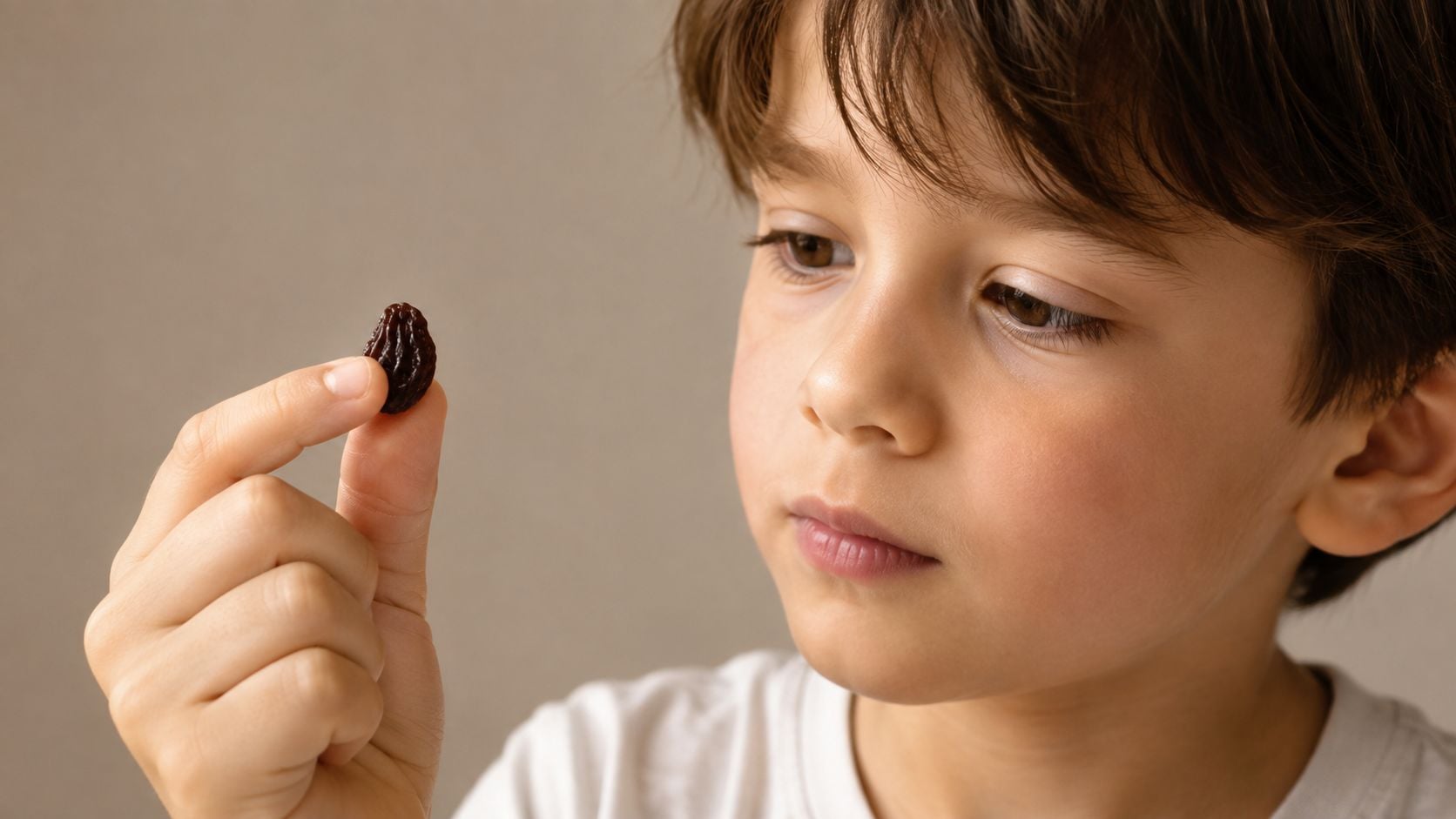
An elementary classroom might do a mindful raisin tasting with one small raisin, asking students to notice color, wrinkles, smell, texture, and flavor changes. A parent and child can share a slow snack at home and compare what they each notice in the first bite and the last bite. A school lunch routine can begin with a simple pause to smell the food and check in with hunger before eating.
Keep the experience small and pressure-free
Use tiny amounts of food so the task stays focused and doesn't turn into a full snack time challenge. One raisin, one strawberry slice, or one piece of chocolate is enough for the first practice. Start with neutral or preferred foods, and don't frame foods as good or bad.
For children with sensory sensitivities, ask what they notice rather than assuming they'll enjoy the texture or taste. Some kids will be curious, some will be cautious, and some will need repeated tries before the practice feels safe. That's normal.
A simple script works well here. “Notice the color. Notice the smell. Notice the texture on your tongue. Notice how the taste changes as you chew.” Afterward, ask how the body feels, and whether fullness or satisfaction showed up differently. That reflection helps children connect eating with body signals instead of autopilot.
Weaving Awareness into Everyday Life
Body awareness becomes most useful when it shows up in ordinary moments, not only in special lessons. A morning body scan can help a class settle in. A wall-push reset can help a student move from transition chaos into focused work. A five-senses pause can turn a stressful hallway, announcement, or doctor's office wait into a chance to regulate instead of react.
The strongest routines are the ones adults repeat with calm consistency. When a teacher uses the same cue language, the same breathing pattern, or the same reflection question, students begin to trust the process. That trust matters because body awareness is personal, and some children need many low-pressure repetitions before they can use a tool on their own.
These activities also support social-emotional learning in a very practical way. Children who can notice body signals are better positioned to name emotions, ask for help, and choose a strategy before escalation takes over. That's especially important in K-8 settings, where students are growing fast, managing more complex social situations, and learning how school expectations feel in their bodies.
Parents and teachers don't need a perfect program to start. A short scan before the bell, a movement break after recess, a hand-on-belly breath before bedtime, or a sensory check-in during snack time can make a real difference when it's repeated over time. Small moments of awareness help children understand that their bodies are not obstacles to learning, they're part of how learning works.
At Soul Shoppe, we believe safe, connected communities are built through practice, language, and care. When adults model body awareness, they give children a reliable way to reset, reflect, and return to learning with more confidence and compassion.
Soul Shoppe helps schools and families build the shared language kids need for self-regulation, mindfulness, and connection. If you want practical support that turns body awareness activities into everyday SEL habits, visit Soul Shoppe and explore programs that help children thrive at school and at home.
From Big Feelings to Big Insights: Why Self-Awareness Matters
Ever wonder what's really going on inside a child's head when they can't find the words for their big feelings? A student who suddenly withdraws, a child who lashes out in frustration, these are often signs of a gap in self-awareness. Self-awareness is the foundation of emotional intelligence. It's the ability to recognize our own emotions, thoughts, and values, and notice how they shape behavior.
That sounds simple, but it rarely happens automatically. Research by organisational psychologist Tasha Eurich found that while about 95% of people believe they are self-aware, only an estimated 10% to 15% actually are — which is why children need structured practice rather than being told to “just reflect”. In schools and homes, that gap shows up when a child says “I'm fine” with clenched fists, watery eyes, and a shut-down voice.
The good news is that self awareness exercises can be taught in concrete, kid-friendly ways. When adults give students repeated chances to notice body signals, name emotions, reflect on choices, and hear feedback safely, children start building language for what's happening inside them. That helps with behavior, yes, but it also helps with relationships, learning, and confidence.
Below are eight practical, evidence-informed self awareness exercises for K-8 settings. Each one includes age adaptations, classroom and home variations, examples, and simple ways to notice whether it's helping.
1. Body Scan Meditation
A body scan is one of the fastest ways to help children notice that emotions live in the body, not just in their thoughts. An upset child may not be able to say, “I'm overwhelmed,” but they can learn to notice a tight jaw, shaky hands, a heavy stomach, or buzzing legs.
That kind of noticing matters because self-perception is often inaccurate. A mixed-methods study in the NIH database reported that the connection between how self-aware people think they are and their actual observed behavior is less than 30% in some findings, which is one reason structured practices like mindfulness are so useful (NIH article on measuring the effects of self-awareness).
How to use it with kids
Ask students to sit, stand, or lie down comfortably. Then guide their attention slowly through the body. “Notice your forehead. Notice your jaw. Notice your shoulders. Are they tight, loose, warm, heavy, still, or wiggly?”
For younger children, keep it short. Three minutes is enough. For older elementary and middle school students, you can stretch it to five or even ten minutes once they know the routine.
Practical rule: Start shorter than you think you need. A calm 3-minute routine done consistently works better than an occasional 12-minute one that feels too long.
A 3rd-grade teacher might use a five-minute body scan every Monday morning before academics begin. A parent might guide a worried 5th grader through one before bed by saying, “Let's check what your shoulders, chest, and stomach are telling you.”
Age adaptations and ways to measure impact
K-2 version: Use concrete language. “Do your hands feel like spaghetti or rocks?”
Grades 3-5 version: Add an emotion link. “What feeling might match that tightness?”
Grades 6-8 version: Ask for pattern noticing. “When do you usually feel this in your body?”
Afterward, students can draw where they felt tension or write one sentence such as “My body felt jumpy before math.” If you're teaching mindfulness regularly, the Soul Shoppe guide to teaching mindfulness to children offers child-centered language that fits nicely with this practice.
A simple way to measure impact is to keep a quick teacher or parent log. Note what students were like before the scan and after it. Over time, you may see smoother transitions, better focus, or earlier recognition of stress signals.
2. Emotion Wheel and Feelings Vocabulary Mapping
When children only know four feeling words, every hard feeling becomes “mad” or “sad.” An emotion wheel gives them a wider emotional map. That extra language can change behavior because a child who can say “I'm disappointed” is often easier to support than a child who only knows how to slam a pencil down.
In practice, this exercise can be very simple. Put an emotion wheel near the door. Invite students to place a clothespin, magnet, or sticky note near the feeling that matches their current state when they arrive.
Practical examples for school and home
A 4th-grade teacher might notice that several students choose “nervous” on presentation day and decide to begin with partner rehearsals. A parent of a 2nd grader might make a home version with drawings and examples like “frustrated when my tower falls” or “proud when I help set the table.”
During a peer conflict, a counselor can ask, “Were you irritated, embarrassed, left out, or furious?” That question slows the moment down and helps the child respond in proportion to what occurred.
K-2: Start with happy, sad, angry, scared. Add facial expressions and colors.
Grades 3-5: Add words like disappointed, worried, proud, lonely, calm.
Grades 6-8: Add intensity and nuance, such as irritated versus enraged, uneasy versus anxious.
Try pairing the wheel with body clues. “Frustrated feels hot in my face.” “Nervous feels fluttery in my stomach.” That's where self-awareness gets deeper.
To measure impact, listen for language growth. Are students moving from broad labels to precise ones? Are they needing less adult prompting to identify what's going on? Those are meaningful signs that the exercise is working.
3. Journaling and Reflective Writing
Journaling gives children a private place to notice patterns. A student may not speak openly in a circle, but they might write, “I always get mad when people laugh and I think it's about me.” That sentence alone is valuable. It gives the child and the adult something specific to work with.
This exercise also helps distinguish useful reflection from rumination. Structured reflection paired with outside perspective tends to support better outcomes, while unstructured rumination can lead to fewer benefits, as summarized in the same self-awareness statistics overview cited earlier.
Prompts that actually work
The best prompts are open but concrete. “When did you feel proud today?” works better than “How was your day?” “What happened right before you got upset?” works better than “Why were you bad?”
A 5th-grade teacher might do Monday growth journals where students reflect on a challenge from last week. A parent and child could keep paired feelings journals and share one line each at dinner. A counselor might use conflict reflection sheets after a disagreement to help a student replay the event with less blame and more awareness.
For emerging writers: Let them draw first, then label feelings.
For elementary students: Use sentence stems such as “I felt ___ when ___.”
For middle schoolers: Add prompts about patterns, values, and choices.
Don't require students to share everything they write. Journals work best when children know the goal is awareness, not performance. If you review them, be clear about boundaries and safety expectations.
A simple way to make journaling more actionable is to end with one small next step: “Next time I feel left out, I can ask to join instead of walking away.” Schools that are thinking about documentation and systems in helping professions sometimes look to tools outside education too, such as the PracticeReady compliance platform, for ideas about structured reflection and record keeping.
Track impact by looking for stronger self-description over time. Are students identifying triggers more clearly? Are they connecting feelings, behavior, and consequences with more accuracy?
4. Strength and Values Identification Activities
Some children know their mistakes better than their strengths. They can tell you exactly where they struggle, but they freeze when asked what kind of person they are or what they contribute. Strength and values work corrects that imbalance.
Self-awareness extends beyond merely noticing difficult emotions. It also encompasses recognizing what is important to you, what your strengths are, and how you aim to present yourself to others.
What it can look like in real life
In a 2nd-grade classroom, each child might make a “Strength Star” with one strength in the middle. Then classmates add kind, specific observations around the edges: “You include people,” “You keep trying,” “You explain math clearly.”
At home, a parent could ask a 4th grader, “Tell me about a time you helped someone. What strength did you use?” Then they could build a simple strength collage with drawings or magazine images. In middle school, advisory groups can sort value cards such as honesty, friendship, courage, creativity, fairness, and kindness, then talk about which ones guide their choices most often.
A child who knows “I am persistent” has something solid to stand on during a hard week.
Age adaptations and impact checks
K-2: Use picture cards and observable strengths like helpful, brave, kind, curious.
Grades 3-5: Add evidence. “What did you do that shows that strength?”
Grades 6-8: Connect strengths and values to decisions, friendships, and leadership.
Keep this grounded in what adults and peers observe. Instead of asking only, “What are your strengths?” say, “I noticed you kept trying three strategies during writing. That shows persistence.” That's far easier for many students to believe.
To measure impact, notice whether students can name a strength during frustration. A child who says, “I'm stuck, but I'm also creative,” is using self-awareness in a practical way. You can also compare early-year and later-year reflections to see if students move from generic traits to clearer, evidence-based self-knowledge.
5. Mindful Movement and Body Awareness Activities
Some children don't access calm by sitting still. They access it by moving with intention. That's where mindful movement helps. It combines physical activity with noticing breath, balance, muscle tension, and internal state.
This approach is especially useful for students who get dysregulated during transitions, after recess, or before tests. Movement gives them something concrete to do while also turning attention inward.
Start with simple routines
A kindergarten teacher might begin the day with animal walks and stretches. “Stomp like a bear. Stretch like a cat. Freeze and notice your breathing.” A 4th-grade teacher could lead a three-minute stretch-and-breathe routine between subjects.
For older students, yoga, tai chi-inspired flow, or slow standing sequences can work well. The focus isn't perfect form. It's noticing. “How do your legs feel in mountain pose?” “What changes when you exhale slowly?”
This short classroom-friendly video can support that kind of routine:
What this can look like in a real day
Different moments call for different levels of support.
Time of day
What’s happening
How to use the box breathing visual
Arrival
Students carry energy from home
One whole-class round after unpacking
Transition to math
Anxiety rises
Teacher points to square and leads two silent cycles
Conflict after group work
Voices are sharp
Students pause, breathe separately, then rejoin conversation
End of day
The room feels scattered
One final round before dismissal directions
The big mistake is saving the tool only for the child who is “having a hard time.” When the whole class uses it, the practice feels normal rather than corrective.
Adapting Box Breathing for Different Ages and Needs
A strong box breathing visual for adults can still miss the mark with children. The issue usually isn’t the breath itself. It’s the mismatch between the child’s developmental stage and the way the tool is presented.
One adjustment matters more than most: young children generally manage shorter breath cycles of two to three seconds better than the standard four-second version. That’s a useful reminder for anyone trying to teach the same pattern to every grade level.
Kindergarten through grade 2
Young children need brevity, movement, and imagery. Four counts can feel long, especially if they’re upset or impulsive. A 2 or 3 count square often works better.
Try language like:
“Smell the flower.”
“Freeze.”
“Blow the feather.”
“Freeze.”
Let them trace a square on the carpet, on their palm, or on a card with bright edges. Some teachers use finger puppets, small laminated “magic square” cards, or a square taped onto the floor for line-up time.
A practical example: A first-grade class comes in from lunch loud and bumping into each other. The teacher stands at the rug and says, “Show me your finger square.” Everyone traces one small box in the air while breathing together. No one has to close their eyes or sit perfectly still.
Grades 3 through 5
This age group can usually handle the classic 4 count pattern, but they still benefit from concrete context. Tie the skill to situations they already care about. Friendship tension, test nerves, getting picked for teams, frustration during writing.
A box breathing visual can sit in:
a calm corner
a take-a-break folder
a desk caddy
the top of a worksheet packet during longer tasks
Students this age also like ownership. Invite them to design a class square, choose colors, or create one for a buddy classroom.
A child is more likely to use a regulation tool they helped create.
Grades 6 through 8
Older students often resist anything that feels childish or performative. The language should be cleaner and more respectful. Focus, reset, steadiness, composure, and performance are usually better entry points than “calm down.”
Use it before:
speeches
band or choir performances
athletic competition
difficult peer conversations
tests
A middle school counselor might say, “One cycle before you walk in. In four, hold four, out four, hold four.” That works because it’s private, fast, and not loaded with extra explanation.
Neurodivergent students and flexible use
Some students need the visual but not the hold. Others need the tracing but not the counting. Some do best with a shorter pattern and repeated practice across the day.
Helpful adjustments include:
Shorter counts: Better for students who feel trapped by long holds
Silent tracing: Good for students who don’t want to stand out
Desk-based visuals: Useful when transitions are activating
Adult co-regulation: Child watches the adult breathe first, then joins if ready
The aim isn’t to make every child do the method the exact same way. The aim is to help each child find a version they can use.
What to Do When Box Breathing Gets Complicated
You introduce box breathing after lunch. One student starts huffing loudly. Two more start laughing. Another puts their head down and refuses. That kind of moment is common in K through 8 settings, and it does not mean the practice has failed. It means the adults in the room need a flexible plan.
Complications usually come from one of three places. The child feels exposed. The breathing pattern feels uncomfortable. The tool is being introduced too late, after the nervous system is already running hot.
Technique matters, but comfort matters too. A randomized controlled trial on box breathing for post-mastectomy pain syndrome noted that participants were taught diaphragmatic breathing as part of the practice, which supports the same coaching move many teachers and caregivers use with children: a hand on the belly can help shift breathing out of the chest and into a slower, steadier pattern (study details here). With students, I keep that cue simple. “Let your belly do the work.”
What if students get the giggles
The giggles usually mean the group is activated, self-conscious, or unsure what is being asked of them. Treat it as information.
Try these responses:
“We’re doing one quiet square together.”
“Watch my finger and match the pace.”
“You do not have to do it perfectly. Just stay with me for one round.”
If the whole group tips into silliness, shorten the practice and save the longer version for another time. In a classroom, protecting the tone matters more than squeezing in extra rounds.
What if a child says it’s not working
Take that seriously. “Not working” can mean the count is too long, the hold feels bad, the child is embarrassed, or they need a different regulation tool altogether.
Start with a quick adjustment:
Check body comfort: “Does the breath feel tight or forced?”
Shrink the square: Use a shorter count
Change the entry point: Trace the visual together instead of asking for closed eyes
Simplify the task: Keep only the exhale slow
Offer another tool: Pair breathing with grounding, movement, or co-regulation
That adjustment helps many younger students, anxious students, and neurodivergent students who feel trapped by breath holding. You can still use the square as a pacing visual. Breathe in for one side, out for the next, and keep the pattern going without the pauses.
Adults sometimes worry that changing the pattern means they are no longer doing “real” box breathing. In practice, a usable version is better than a perfect version that the child avoids.
The best version of the tool is the version the child can actually use.
What if adults only use it during crisis
Children notice that quickly. If box breathing shows up only when someone is upset, it starts to feel like a correction instead of a skill.
Teach it before the hard moment:
at arrival
before a quiz
after recess
before transitions
at bedtime or before homework at home
That proactive use is what makes the visual familiar enough to help later. By middle school, students are far more willing to use a quiet reset they already know than a new strategy introduced in the middle of embarrassment or conflict.
A quick troubleshooting guide
Challenge
What often happens
What works better
Child escalates quickly
Adult teaches the strategy for the first time in the moment
Practice earlier during neutral parts of the day
Child breathes high in the chest
Adult repeats the count louder
Add a hand-on-belly cue or model one slow breath
Group gets silly
Adult pushes through a long round
Do one short round and try again later
Student resists the hold
Adult insists on the full pattern
Remove the hold and keep the visual pacing
Older student shuts down
Adult uses language that feels childish
Use private, respectful cues like “reset” or “steady”
Patience matters here. Children are learning a body-based skill, and body-based skills rarely look polished at the start. In classrooms and homes, success usually looks ordinary: one quieter transition, one less power struggle, one child who remembers to use the square before things fall apart.
Frequently Asked Questions About Box Breathing
Is box breathing the best breathing method for every situation
No. It’s a strong choice for focus, composure, and steadying the body, but it isn’t the only useful breathing pattern. A source discussing a 2023 study notes that cyclic sighing, which emphasizes a longer exhale, was more effective than box breathing for improving mood and reducing respiratory rate, according to this comparison of breathing approaches. That’s why tool-matching matters.
A simple rule of thumb helps:
Use box breathing when a child needs structure and focus
Use a longer-exhale pattern when a child needs deeper downshifting
How long should a child practice
Keep it realistic. In a classroom, one to three rounds may be enough for a reset before instruction. At home, a child might use a few rounds before homework, bedtime, or a difficult conversation.
For longer-term skill building, consistency matters more than intensity. A short daily practice usually works better than saving the tool for major meltdowns.
Can kids use a box breathing visual during a panic moment
Sometimes, yes, but with care. If a child can still follow simple cues, a visual can help them orient and slow down. If they’re too overwhelmed to count or hold, simplify. Trace the shape together. Focus only on a slower exhale. Sit nearby and co-regulate first.
If a child experiences repeated panic symptoms, severe anxiety, or distress that doesn’t ease with support, breathing tools should be part of a larger plan that includes professional guidance.
Should children close their eyes
Usually not in group settings. Many children regulate better with eyes open and focused on the square. Closing the eyes can feel too vulnerable, too hard, or too activating.
What if my child refuses because it feels babyish
Change the framing. Call it a reset cycle, performance breathing, or tactical breathing. Give older kids privacy and choice. A strategy doesn’t need to look cute to be effective.
Building a Culture of Calm and Connection
A box breathing visual is small. That’s part of its power. You can tape it to a desk, post it by the classroom door, slide it into a homework folder, or keep it in a counseling office. It doesn’t require a special room or a long lesson. It asks for something more important. Consistent use, calm modeling, and language that respects children.
When adults use the tool as a shared practice instead of a correction, children learn something bigger than one breathing pattern. They learn that strong feelings can be noticed without panic. They learn that a pause is available before a reaction. They learn that classrooms and homes can become places where regulation is taught, not demanded.
That culture grows through repetition. A teacher points to the square after recess. A parent traces one before homework. A counselor uses the same rhythm before a hard conversation. Over time, the cue becomes familiar. Then usable. Then internal.
Start small:
post one child-friendly square where kids can see it
teach it when the room is already calm
use the same brief script each time
adapt the count for the child in front of you
treat practice as skill-building, not compliance
A calmer classroom and a calmer home rarely come from one dramatic intervention. They come from ordinary moments handled with steadiness, over and over again.
If you want support building that kind of steady, connected school culture, Soul Shoppe offers practical SEL programs, workshops, and resources that help students and adults develop shared language for self-regulation, empathy, and healthy relationships.