Soul Shoppe's work is made possible by donors and partners who care deeply about the young people in their communities! We can't do this work without you. Support our work in classrooms and on playgrounds across the nation by donating here.
What if classroom conflict wasn’t something to be stamped out with punishment, but a chance for students to grow? That’s the idea behind restorative circles in schools. It’s a powerful shift away from focusing on consequences and toward repairing harm and rebuilding community. This simple method gives everyone a voice, turning tense moments into real opportunities for empathy and connection.
Moving from Conflict to Connection with Restorative Circles
Think about what happens when a problem pops up in a typical classroom. Maybe two students get into a heated argument. The usual response is often punitive—a trip to the office, detention, or lost privileges. This approach zeros in on punishing the behavior, but it rarely gets to the root of the problem or helps mend the relationship.
Restorative circles offer a completely different path. Instead of asking, “What rule was broken and who gets punished?” we start asking different questions:
Who was harmed by this?
What do they need to feel okay again?
Whose job is it to help make things right?
This small change in framing shifts the entire goal from punishment to accountability and healing. The focus is now on making things right, not just making someone pay for being wrong. By bringing everyone involved into a structured conversation, circles help students see and understand the real impact of what they do.
A Tale of Two Responses
Let’s look at a common scenario: a fifth-grader keeps disrupting a math lesson by making loud jokes while you’re trying to explain a new concept.
The Traditional Response: You’ve given several warnings, and your frustration is mounting. You send the student to the principal’s office. They get a detention slip and a lecture about being respectful. The disruption is over for today, but the student feels misunderstood and resentful. The rest of the class just learned that acting out gets you removed, and no one ever found out why the student was being disruptive in the first place.
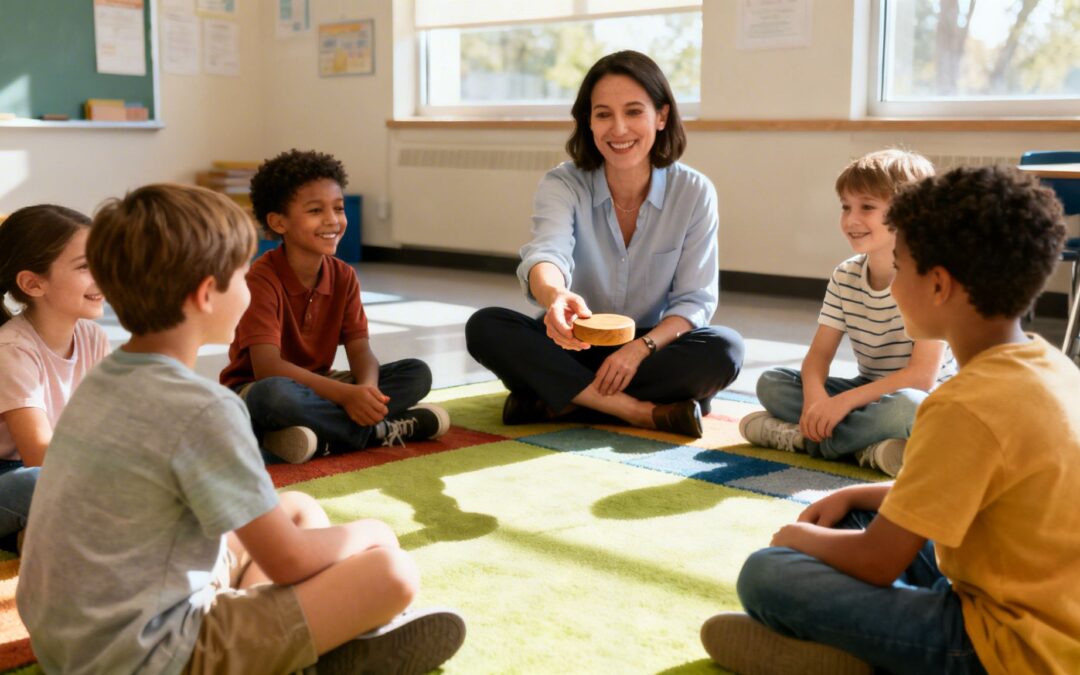
The Restorative Response: The teacher finds a calm moment to pull together a quick restorative circle. It includes the student who was being disruptive and a few classmates who were affected. Using a talking piece (an object that gives the holder the exclusive right to speak) ensures everyone gets heard without interruption. The teacher might ask, “What happened?” and “What were you thinking at the time?”
The disruptive student might share that they felt anxious about the math and used humor to cover it up. The other students might share that the jokes made it hard for them to concentrate. From there, the group works together on a solution. For example, the student could apologize and the group might agree on a quiet signal they can use with the teacher next time they feel lost or overwhelmed.
The restorative approach doesn’t let misbehavior slide; it tackles it head-on by making the community part of the solution. This process builds empathy and teaches priceless conflict-resolution skills that directly support social-emotional learning (SEL).
Beyond Discipline: A Tool for Community
While circles are fantastic for responding to harm, their real power lies in being proactive. Many schools use them for daily check-ins, celebrating successes, or even discussing academic topics. For example, a teacher might hold a 10-minute circle every Monday morning with the prompt: “Share one goal you have for this week.” These routine, low-stakes circles build the trust and safety needed for the more challenging conversations to work when conflicts eventually happen.
By practicing sharing and listening when things are calm, students develop the skills to navigate difficult moments with maturity and respect. This foundation is at the heart of the entire restorative movement in schools, which you can explore further by learning about what restorative practices in education are. It all leads to a classroom where every student feels seen, heard, and valued—the essential ingredients for a truly positive learning environment.
The Real Impact of Restorative Practices on Students and Schools
When you hear “restorative practices,” it’s easy to think only of conflict resolution. But the truth is, the benefits go so much deeper, reshaping the entire school climate in ways you can see and measure. It’s not just about students feeling better; it’s about creating an environment where they can actually learn and you can actually teach.
One of the first things schools notice is a dramatic drop in punitive discipline. When students have a structured process for addressing harm and mending relationships, the need for office referrals and suspensions plummets. For any teacher or administrator, this is a game-changer.
Just think about all the time spent on discipline paperwork and the instructional hours lost when a student is sent out of the room. Restorative circles give you that time back, redirecting it toward proactive community building and positive learning experiences.
Building a Foundation for Academic Success
It turns out a more connected school community is a more academically successful one. When students feel seen, heard, and respected, they have more mental and emotional space to focus on learning. Instead of worrying about peer conflicts or feeling misunderstood, they can engage fully with their lessons.
This creates a calmer, more predictable classroom where education can finally take center stage. And the data backs this up, showing a clear link between restorative approaches and better student outcomes.
Schools that effectively use restorative circles in schools often see a powerful ripple effect. Fewer disruptions mean more time for focused instruction, which leads to stronger academic performance for everyone. It’s a positive cycle that feeds itself.
This isn’t just theory. A landmark study from the Learning Policy Institute looked at restorative practices in 485 middle schools, with data from nearly 2 million students. The research found that as students were exposed more to restorative practices, they saw measurable gains on standardized tests in both English and math.
So, what does this impact look like on a day-to-day basis? It shows up in real, observable changes that make school better for everyone.
Fewer Classroom Disruptions: Teachers can spend far more time teaching and less time managing behavior because students are gaining the skills to solve their own problems.
Reduced Administrative Burden: Principals and office staff are freed from a constant cycle of discipline and can focus on instructional leadership and school improvement.
Improved Teacher Morale: Educators feel more supported and effective when they are part of a collaborative, problem-solving culture.
Stronger Student Relationships: Students learn empathy and communication skills firsthand, which naturally reduces incidents of bullying and social isolation.
Imagine a school that used to deal with daily lunchtime conflicts. After implementing regular community-building circles, students start mediating their own disagreements. A small argument over a game no longer blows up into a major office referral. Instead, kids use the language and skills they practiced in the circle (“When you said that, it made me feel…”) to work it out right there on the spot.
This kind of shift doesn’t happen overnight, but the results are profound. By investing in relationships, schools build a resilient community where every member feels a sense of belonging and responsibility. See firsthand how our programs help schools measure these positive changes. This focus on connection is the key to unlocking not just better behavior, but a healthier and more successful school for everyone.
Laying the Groundwork for Successful School Circles
A powerful restorative circle doesn’t just happen. The real magic begins long before anyone sits down in that circle. Without thoughtful preparation, even the best intentions can fall flat, turning what could be a cultural cornerstone into just another passing initiative.
Getting this groundwork right starts with the adults in the building. Restorative practices thrive when they’re a shared mission, not a top-down mandate. For this to take root, teachers, staff, and administrators need to see and believe in its value first.
Start with a Pilot to Build Momentum
Instead of attempting a massive school-wide rollout from day one, try starting small. Launching a pilot program with a handful of enthusiastic educators is a fantastic way to build momentum.
This approach gives a few teachers the space to experiment, figure out what works, and become your school’s first restorative champions. Their genuine success stories will do more to convince skeptical colleagues than any district directive ever could.
Form an implementation team with these early adopters and an administrator to steer the process. They can plan the training, share resources, and provide that crucial peer-to-peer support. Research consistently shows that schools with a dedicated coordinator see much better results. This person becomes the go-to guide, ensuring everyone feels supported as they learn.
A common misstep is assuming a one-day training is enough. Real implementation is a journey of learning, practicing, and reflecting over multiple years. It starts with building a shared philosophy and foundational skills among the adults first.
This groundwork is what builds the safe, predictable environment students need to thrive. To learn more about this, check out our guide on how to create a safe space for students. When educators feel confident, they can lead circles that truly build community.
Co-Creating Your Circle Agreements
Once your pilot team is ready to go, one of the first and most important steps is setting your circle agreements, or norms. Here’s the key: these must be co-created with your students.
This simple act of shared ownership is a restorative practice in itself. It sends a powerful message that their voices are essential in shaping the classroom community.
A teacher might kick this off by saying, “We’re going to start having circles to get to know each other and solve problems together. What promises do we need to make so everyone feels safe enough to share their thoughts?”
Through brainstorming, students almost always land on the core tenets of a strong circle:
Listen to understand, not just to reply. This fosters deep, active listening.
What’s said in the circle stays in the circle. This builds the trust needed for honesty, with the clear exception that safety concerns are always brought to a trusted adult.
Speak from the heart. This encourages students to share what’s real for them, not what they think they should say.
You have the right to pass. No one should ever feel forced to speak. The circle is an invitation, not a demand.
Post these agreements where everyone can see them. They’ll serve as a constant reminder of the community’s shared commitments. Of course, how you introduce these ideas will change depending on your students’ ages. The table below offers some practical language and prompts you can adapt for your classroom.
Age-Appropriate Circle Prompts and Agreements
This table provides sample circle agreements and tiered talking points to introduce and facilitate restorative circles for different elementary and middle school grade levels.
Grade Level
Sample Agreement
Introductory Script Snippet
Proactive Circle Prompt (Community Building)
Responsive Circle Prompt (Addressing Harm)
K–2nd
Use kind words and listening ears.
“In our circle, we use a talking piece. When you have it, it’s your turn to talk, and everyone else has their listening ears on.”
“Share about a time this week when you felt proud of yourself.”
“What happened at recess? How did it make your heart feel?”
3rd–5th
Respect the talking piece. Listen from the heart.
“Today we’re starting something new called a circle. It’s a special time for us to share and listen so we can be a stronger team.”
“If you could have any superpower to help others, what would it be and why?”
“What were you thinking when the argument started? What do you think is needed to make things right?”
6th–8th
Speak your truth. Lean into discomfort.
“Circles are a space for us to be real with each other. We’re creating our agreements together to ensure this is a place of respect.”
“Share about a challenge you’ve overcome and what you learned from it.”
“What was the impact of your actions? Who was affected, and what do they need to move forward?”
Using these age-appropriate starting points makes it easier to introduce restorative circles in schools in a way that feels natural and effective for every student.
How to Lead a Restorative Circle with Confidence
Knowing the theory is one thing, but stepping into the center of a circle to actually lead one? That’s something else entirely. Real confidence comes from having a clear process and practical tools ready to go. This guide will walk you through the essential parts of leading a circle, giving you the language and techniques to create a space built on trust and respect.
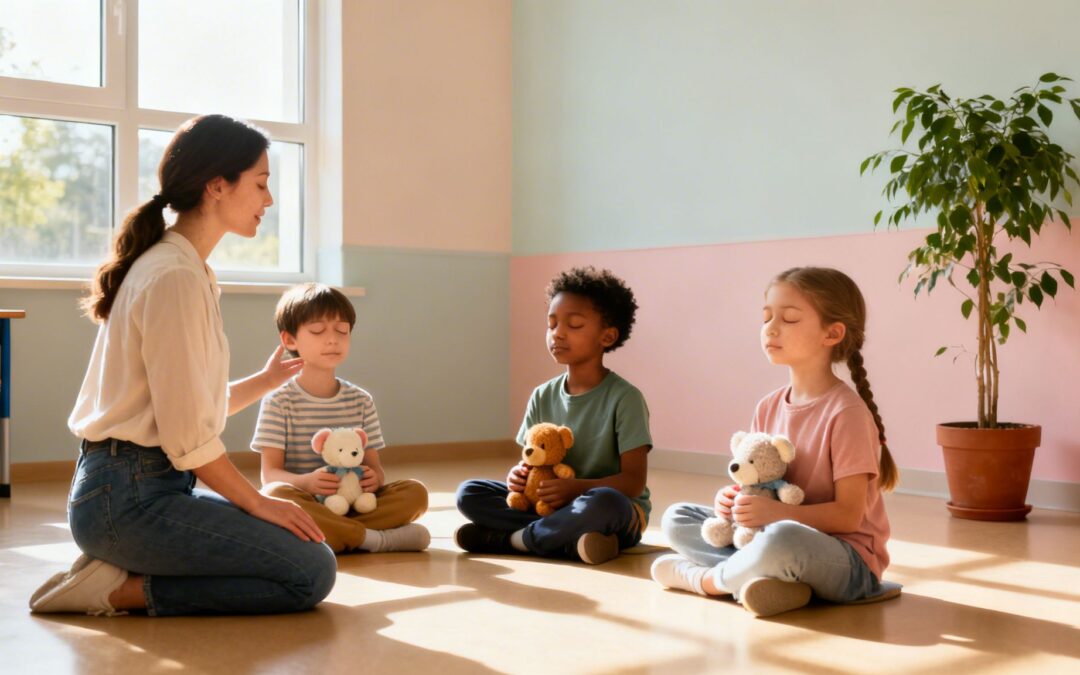
At the very heart of every circle is the talking piece. This is just a designated object—maybe a special stone, a small stuffed animal, or even a decorated stick—that gives the person holding it the floor to speak. It’s a simple but powerful tool that slows conversations down, prevents interruptions, and ensures even the quietest voices are invited to share. How you model its use is everything.
Opening the Circle and Setting the Tone
Every restorative circle needs a clear, intentional beginning. This simple ritual signals to students that they’re shifting out of their regular classroom routine and into a special, focused space.
Your opening can be quick, but it should be consistent. You might start by welcoming everyone and briefly stating the purpose of today’s circle.
For a proactive, community-building circle: “Welcome, everyone. In our circle today, we’re going to share a little bit about what makes us feel proud. The talking piece will move around, and remember, you always have the right to pass.”
For a responsive circle addressing harm: “Thank you all for being here. We’re coming together today to talk about what happened at lunchtime so we can understand everyone’s perspective and figure out how to move forward in a good way.”
That initial moment sets the stage. It establishes safety and reminds everyone of the shared agreements you’ve already created together. A strong opening makes it clear this isn’t just another conversation.
Using the Talking Piece to Guide the Flow
The talking piece is so much more than a turn-taking tool; it’s a physical symbol of respect and listening. When a student is holding it, they have the group’s full, undivided attention. When they don’t have it, their job is to listen with an open mind.
As the facilitator, you’ll use the talking piece, too. This is crucial because it shows you’re a member of the circle, not an authority figure standing outside of it. Your first few shares are a perfect chance to model a little vulnerability and set a constructive tone.
Effectively leading these circles hinges on your ability to facilitate meaningful dialogue. Knowing some powerful topics for group discussion and how to frame your questions will make all the difference, as your prompts truly guide the entire conversation.
Proactive vs. Responsive Circle Scenarios
The way you structure your circle will change depending on its purpose. Is it a proactive circle meant to build community? Or a responsive one meant to repair it?
Scenario 1: A Proactive Morning Check-In Imagine you want to build community in your 3rd-grade class. You open with, “Good morning! As the talking piece comes to you, share one thing you’re looking forward to this week.” This is a low-stakes prompt that’s easy for everyone to answer, and it builds a positive habit of sharing.
Scenario 2: A Responsive Lunchtime Conflict Two 7th-graders, Sam and Alex, had a heated argument over a game that almost got physical. You gather them along with two other students who saw what happened.
Here, your prompts become much more focused:
“What happened?” (Each person shares their perspective, one at a time, without being interrupted.)
“What were you thinking and feeling at the time?” (This gets to the heart of the matter, uncovering the emotions that were driving the behavior.)
“Who has been affected by this, and how?” (This broadens the view from a two-person fight to its impact on the community.)
“What’s needed to make things right?” (Now the focus shifts to accountability, repair, and finding a solution together.)
This structured line of questioning keeps the circle from turning into a blame game. Instead, it guides students toward taking responsibility for the harm and fixing it.
Key Takeaway: A facilitator’s primary role is not to solve the problem for the students, but to hold the space and ask the right questions so they can solve it together. This empowers them with invaluable problem-solving skills.
The image above shows the typical journey a school takes when starting with circles. It’s a phased process that highlights just how critical training is for bridging the gap between getting buy-in and launching a successful pilot program.
Troubleshooting Common Challenges
Even with the best preparation, things will come up. Here’s how to handle a few common challenges with grace.
The Quiet or Reluctant Student: Never, ever force a student to speak. The “right to pass” is sacred. If a student passes, just say, “Thank you for listening,” and move the talking piece along. Later, you can gently invite them back in by saying, “We’ve heard from everyone else. Is there anything you’d like to add?” This low-pressure invitation often works once they’ve had time to listen and feel safe. Your patience and validation are key here—it’s all about active listening. For more ideas, check out our guide on practicing active listening with your students.
The Dominant Personality: Some students will naturally want to speak without the talking piece or go on for too long. Gently redirect them. “Thanks for your energy, Michael. Let’s make sure Maria has a chance to finish her thought.” You can also remind the group of the purpose: “Remember, the talking piece helps us make sure every single voice is heard.”
The Outcome: The goal of responsive restorative circles in schools is to reach an agreement on how to repair the harm. This isn’t about you, the facilitator, handing down a consequence. You might ask, “So, what can we agree on to make sure this doesn’t happen again?” The solution needs to feel relevant, respectful, and reasonable to everyone involved. For example, if a group of students made a mess, the agreement might be that they stay after to help the janitor, not that they lose recess for a week.
Having a dedicated person to lead this work can make a world of difference. A trial at River Ridge Elementary found that hiring a full-time restorative coordinator was a game-changer. They saw a 28% decrease in student suspensions and a 30% drop in office referrals, not to mention academic gains. You can dive into the full study on the Restorative School Communities model to learn more.
Closing the Circle
Just as you opened with intention, you need to close the same way. The closing provides a sense of finality and appreciation. It could be a simple go-around where each person shares one word about how they’re feeling, or you could offer a short, collective statement.
For example, you could say, “Thank you all for your honesty and courage today. Let’s take the feeling of respect we built in this circle with us for the rest of the day.” This seals the experience and helps students transition smoothly back into their regular activities.
How to Adapt Circles for Your School and Measure Success
Restorative circles aren’t a rigid, one-size-fits-all script. Their real power lies in their flexibility. They can be shaped to meet the unique needs of your school community, from a quick kindergarten check-in to a deep middle school problem-solving session.
Success isn’t just a feeling, either. It’s something you can—and should—measure. The most effective restorative circles in schools are the ones that are truly customized for the students sitting in them. A circle can be a space for celebrating growth, running academic check-ins, or navigating everyday peer disagreements.
Tailoring Circles to Fit Your Students
The secret to making circles work is adjusting their length and complexity to match your students’ developmental stage. A short, focused circle is almost always more powerful than one that drags on, especially for younger kids.
For example, a kindergarten class might kick off their day with a quick 10-minute circle. The prompt could be as simple as, “Share one thing that makes you happy.” This small routine builds the foundational skills of listening and sharing in a positive, low-stakes way.
On the other hand, a 45-minute circle with seventh graders can tackle something much more complex, like a group chat disagreement that spiraled over the weekend. The prompts would be more sophisticated, guiding students to reflect on the impact of their words and brainstorm a solution together.
Restorative practice is a mindset, not a script. The goal is to build and repair relationships, and how you do that should look different in a first-grade classroom than it does in an eighth-grade one.
The versatility of circles is one of their biggest strengths. Think about how you could use them in different situations:
Academic Circles: Before a big test, a teacher could hold a circle and ask, “What’s one thing you feel confident about for this test, and one thing you’re nervous about?” This helps bring anxieties into the open and lets classmates offer support and encouragement.
Celebration Circles: When a big project wraps up, a circle is a great way to celebrate effort and growth. A prompt like, “Share one thing you’re proud of that a classmate did during this project,” builds a powerful sense of community and appreciation.
Problem-Solving Circles: When the whole class seems to be struggling with something—like keeping the room tidy—a circle can be used to solve the problem together. “What’s our shared responsibility for our classroom, and what’s one thing we can all agree to do to help?”
Measuring the Impact of Restorative Circles
To know if your restorative initiatives are actually working, you need to look beyond gut feelings. Collecting and analyzing real data gives you a clear picture of your program’s impact and helps you make the case for continued investment.
This means shifting from just sharing feel-good stories to tracking concrete metrics. Administrators can use this data to evaluate the success and return on investment (ROI) of their school’s programs, proving that they are creating real, sustainable change.
Start by tracking a few key performance indicators:
Office Referral Rates: A noticeable drop in the number of students sent to the office for discipline is one of the clearest signs of success.
Suspension and Expulsion Data: Keep an eye on both in-school and out-of-school suspensions. The goal is a significant reduction, which means more students are in class where they can learn.
Student Climate Surveys: Use regular, simple surveys to ask students about their sense of safety, belonging, and connection to their school community.
Attendance and Truancy Rates: A more positive school climate almost always leads to better attendance because students feel more connected and want to be at school.
But the data doesn’t always tell a simple story. A randomized trial in Pittsburgh Public Schools, for example, found that restorative practices improved school climate and significantly cut down on days lost to suspension in high schools. Yet, the same study showed no significant impact on suspension rates for middle schoolers, which tells us that results can vary by age and depend on thoughtful implementation. You can learn more about these nuanced restorative practice findings.
This is exactly why consistent and faithful implementation is so vital. When restorative practices are rolled out inconsistently or without proper training and buy-in from everyone, the results will be mixed at best. Real success comes from a whole-school commitment to the philosophy behind the practice.
Common Questions About Restorative Circles
When schools start exploring restorative practices, questions always come up. That’s a good thing! It means you’re thinking deeply about how to build a stronger, more connected school community. Moving away from traditional discipline isn’t always easy, so let’s walk through some of the most common questions we hear from educators just like you.
How Much Time Do Restorative Circles Take?
This is probably the number one concern, and it’s a valid one. The reality is, circles are incredibly flexible.
Community-building circles—the ones you run to build trust and connection—can be surprisingly quick. Many teachers weave a simple 10- to 15-minute circle into their morning routine. It’s a small daily investment that pays huge dividends when conflict eventually pops up.
Responsive circles, the kind used to address a specific issue, do take more time. But think about the time you’re already spending on that conflict. The hours spent on phone calls home, filling out paperwork, and dealing with the same unresolved issues day after day. A responsive circle is time spent teaching crucial skills and actually solving the problem, not just putting a band-aid on it.
What If Students Don’t Want to Participate?
A restorative circle is an invitation, never a demand. In fact, the “right to pass” is one of the most important parts of making a circle feel genuinely safe.
If you force a student to share before they’re ready, you’ve already lost their trust. The goal isn’t compliance; it’s connection. When a student chooses to pass, just thank them for being a good listener and move the talking piece along. Nine times out of ten, a student who passes at the beginning will feel safe enough to share by the time the circle comes back around to them.
As a facilitator, your job is to make the circle a comfortable space. You can do this by modeling vulnerability yourself and starting with fun, low-risk prompts. When a student chooses to pass, they’re practicing autonomy. Respecting that choice makes the circle stronger for everyone.
For instance, if a student seems hesitant, you might say, “Thanks for listening while others share. We’ll come around again at the end in case you think of something you want to add.” It’s a low-pressure way to honor their choice while keeping the door open.
Do Restorative Circles Replace Consequences?
This might be the biggest myth out there. Restorative practices don’t get rid of consequences; they make them meaningful. The entire focus shifts from punishment (which is about making someone suffer) to accountability (which is about making things right).
A circle allows everyone involved to understand the real impact of what happened. From that shared understanding, the group works together to decide what needs to happen to repair the harm. These aren’t random punishments—they are logical consequences that connect directly back to the action.
Here’s what that looks like in practice:
Instead of detention for writing on a desk, a student might agree to help the custodian clean desks after school.
After an argument with hurtful words, the students might create a classroom poster about respectful communication.
A student who kept disrupting class for attention could be asked to lead the morning greeting the next day, giving them a positive way to be seen.
In every case, the student is held accountable by taking direct action to fix what they broke.
Can Circles Be Used for Serious Issues Like Bullying?
Yes, but this is where you need to be extremely careful and ensure you have a highly skilled facilitator. For something as sensitive as bullying, the top priority has to be the physical and emotional safety of the person who was targeted. A poorly run circle can do more harm than good and easily re-traumatize a student.
Before even considering a group circle, the facilitator absolutely must hold separate pre-meetings with everyone involved. This is non-negotiable. You have to gauge their readiness and make sure they feel truly safe to participate. For severe incidents, circles are just one piece of a much larger safety and support plan, not the entire response. The goal is to create a path toward healing, not a forced confrontation.
At Soul Shoppe, we believe in equipping schools with the tools to build connected, empathetic communities where every child can thrive. Our programs and coaching provide the practical skills and support needed to implement restorative practices effectively.
Relationship conflict resolution isn’t about stopping fights. It’s about using those tricky moments to teach kids how to build stronger, more resilient connections with each other. It turns a frustrating disagreement into a real-life lesson in empathy, communication, and bouncing back from challenges—skills they’ll need for the rest of their lives.
Shifting from Conflict to Connection in the Classroom
What if we saw every classroom disagreement not as a disruption, but as a chance for kids to grow? This one shift in perspective moves conflict resolution from something we try to stamp out to a vital part of social-emotional learning (SEL). When students learn to work through their disputes, they aren’t just solving a problem; they’re building a toolkit for life.
Think of unresolved tension in the classroom like a leaky faucet. It’s a constant, low-grade annoyance that disrupts the flow of learning and makes the room feel less safe. But a structured approach to conflict is more like a fire drill. It gives everyone a clear plan, so when a real flare-up happens, they can respond calmly and effectively, strengthening their bonds instead of breaking them.
A New Approach to Disagreements
This framework empowers adults—both teachers and parents—to see arguments as teachable moments. Instead of stepping in as a judge to decide who’s right and who’s wrong, we can act as guides, helping children find their own way to mutual understanding. This process builds the psychological safety students need to share their feelings without worrying about being punished.
For example, when two students are arguing over a shared set of markers, the goal isn’t just to end the argument. It’s to help them see each other’s point of view and find a solution they can both live with. A teacher might gently say, “It looks like you both really want to use the markers. Can you each tell me what you were hoping to draw?” That simple question opens the door to real listening and problem-solving, perhaps leading them to decide to share the colors or work on a picture together.
By reframing disagreements as a tool for connection, we show kids that conflict is a normal part of life—and that working through it with respect can actually make their friendships stronger.
The Lifelong Benefits of Early Skills
The skills students pick up in these moments go far beyond the classroom. A child who learns how to navigate a disagreement with a classmate is better prepared to handle arguments with family, friends, and, one day, their own coworkers. This foundation is crucial for creating more peaceful and inclusive communities everywhere. You can see how these ideas play out by exploring what restorative practices in education look like.
Teaching conflict resolution helps build:
Empathy: The ability to imagine what someone else is feeling. For example, a student learns that when they bragged about their score, their friend felt sad not because they lost, but because they felt left out of the celebration.
Resilience: The skill of bouncing back when things get tough. Students discover that a disagreement over game rules doesn’t have to mean the end of a friendship.
Effective Communication: The art of speaking your truth clearly and listening with an open heart. Kids practice using “I-Statements” to explain their feelings without blaming others.
Ultimately, making these practices a part of your school culture creates a place where every child feels seen, heard, and valued. It turns everyday conflicts into some of the most profound opportunities for connection and growth.
The Hidden Costs of Unresolved School Conflict
What’s the real price of unchecked conflict in a school? When disagreements between students and staff are brushed aside, the fallout is much more than just hurt feelings. These unresolved issues create real, system-wide problems that affect everyone, from the quietest kid in the back row to the most dedicated teacher.
Think of persistent conflict as a hidden tax on your school’s resources. It’s a direct drain on instructional time, leading to more disciplinary referrals, sinking academic engagement, and faster teacher burnout.
Instead of teaching math or history, educators find themselves spending countless hours mediating disputes, documenting incidents, and managing disruptions. For students, the emotional toll is huge. It can lead to anxiety, isolation, and a feeling that school just isn’t a safe place to be.
The Ripple Effect on Learning and Well-Being
Conflict rarely stays between just two people. It sends ripples across the entire school community. A single argument on the playground can easily escalate, pulling in other students and creating a cloud of tension that follows them right back into the classroom.
When kids feel on edge or unsafe, their brains simply aren’t primed for learning.
Here’s what that looks like in practice:
Lowered Academic Performance: A student preoccupied with a social conflict can’t focus on their lessons. For example, a student who had a fight with their best friend that morning may spend math class worrying about who they’ll sit with at lunch instead of engaging with the curriculum.
Increased Absenteeism: For some kids, especially those who feel targeted or left out, avoiding school can feel like the only way to cope. This leads to missed instruction and a growing academic gap.
Erosion of School Climate: When conflict becomes the norm, trust disappears. Students are less likely to collaborate, and teachers feel unsupported. This can poison the entire school environment. For more on this, check out our guide on how to improve school culture.
A teacher might notice a once-enthusiastic student has become withdrawn and quiet. The cause isn’t a sudden inability to learn, but a lingering argument with a friend that has left them feeling ostracized. This is the unseen cost of unmanaged conflict.
Quantifying the Impact on Time and Resources
The time drain from unresolved conflict is a real, measurable problem. Just think about the hours spent each week addressing student disagreements, calling parents, and handling disciplinary paperwork. This is precious time that could be spent on lesson planning, one-on-one student support, or professional development.
Investing in relationship conflict resolution isn’t a luxury; it’s a strategic imperative. It’s about reclaiming lost instructional time, boosting student achievement, and creating a positive school climate where everyone can thrive.
This problem doesn’t just exist on the playground. Research shows that in the workplace, disputes and personality clashes eat up about 2.8 hours per employee every week. That lost productivity costs U.S. companies an estimated $359 billion a year.
By teaching students these skills now, we’re making a direct investment in their futures. We’re giving them tools that will save them—and their future employers—immeasurable time, money, and emotional strain. When we tackle conflict head-on, we can transform a major liability into a powerful opportunity for student growth and community well-being.
Core Skills for Healthy Conflict Resolution
Handling disagreements well isn’t magic—it’s a set of practical skills we can teach. Think of it like a toolbox. When conflicts pop up, as they always do, we want kids to have the right tools ready to go. This turns an abstract idea like “peace” into concrete actions they can actually use.
The most essential tools in this box are active listening, emotional regulation, and perspective-taking. When used together, they help a child turn a moment of pure frustration into a chance to connect and understand someone else a little better.
When we don’t give kids these tools, small disagreements can spiral. A single unresolved conflict creates ripples of disruption that can lead to frustration and burnout for students and staff alike.
This cycle drains a school’s emotional and academic energy, showing just how important it is to address conflict at the source.
Mastering I-Statements to Express Feelings
One of the most powerful tools you can give a child is the “I-Statement.” It’s a simple shift in language that helps them share their feelings without blaming or accusing anyone. This one change can immediately lower defenses and open the door for a real conversation.
For instance, a child’s first instinct might be to shout, “You always ruin the game!” That’s an attack, and it almost guarantees a defensive or angry response.
With a little guidance, we can help them rephrase it: “I feel frustrated when the rules change mid-game because I don’t know how to play anymore.” This version isn’t an attack. It’s an honest look into their feelings and why they’re there, making it so much easier for the other person to actually hear them.
An “I-Statement” acts like a bridge, not a wall. It invites the other person into your experience instead of pushing them away with blame.
A Simple Model for Peaceful Problem-Solving
Once kids can share their feelings without starting a bigger fight, they need a map to find a solution. A simple, four-step model gives them the structure to work through problems together, guiding them from that first emotional spark to a shared agreement.
The table below breaks down a simple framework you can use to walk students through this process.
Step
What It Means
Example Teacher/Parent Prompt
1. Stop and Cool Off
Taking a moment to breathe and regulate big emotions before talking.
“It looks like you’re both upset. Let’s take three deep breaths before we talk.”
2. Use I-Statements
Each person shares their feelings and perspective without blame.
“Can you tell me how you felt when that happened? Start with ‘I felt…'”
3. Listen and Restate
Each person repeats what they heard the other say to ensure they understand.
“Okay, now can you tell me what you heard your friend say they were feeling?”
4. Brainstorm Solutions
Both people suggest ideas to solve the problem and agree on one to try.
“What’s one thing you could both do differently next time? Let’s think of some ideas.”
This four-step process gives students a reliable method they can turn to again and again. Of course, effective communication is key, and if you’re looking for ways to restore family bonds after a lack of communication, these foundational skills are a great place to start.
A huge part of this process is truly hearing what the other person is saying. To help your students build this crucial skill, check out our guide with an active listening activity for your classroom.
By teaching these fundamental skills, we give kids the confidence to manage their relationships with peace and respect. These aren’t just “nice-to-have” social graces; they are essential life skills that build resilience, foster empathy, and create a more positive learning environment for everyone.
Practical Strategies for Teachers and Counselors
Knowing the theory is one thing, but putting it into practice in a busy classroom is where the real magic happens. As a teacher or counselor, you’re not a judge meant to declare a winner and a loser. You’re a guide, helping students find their own way to a solution.
This shift in your role is huge. It builds their confidence and ensures the lessons actually stick. Your goal is to create a safe, structured space where kids feel comfortable enough to be honest, share what’s really going on, and work toward understanding each other. These strategies are designed to be used tomorrow, helping you build a more peaceful classroom right away.
Facilitate Role-Playing for Common Scenarios
Role-playing is one of my favorite tools because it gives students a safe place to practice before the pressure is on. It’s like a scrimmage before the big game. They can try out new ways of communicating without the weight of big, real-time emotions, building muscle memory for peaceful responses.
Start with simple, everyday situations they’ll instantly get.
Scenario 1: The Playground Dispute. Two kids want the same swing. One has been on it forever, and the other is getting frustrated. It’s about to turn into a shouting match.
Scenario 2: The Group Project Problem. In a group, one student feels like they’re doing all the work, while another feels like they’re being bossed around and ignored.
Scenario 3: The Misunderstanding. A student tells a joke, but it accidentally hurts another’s feelings, and now they aren’t speaking.
As they act it out, hit the “pause” button. Ask questions like, “What’s another way you could say that?” or “How do you think your friend is feeling right now?” For more great scenarios, you can find a ton of ideas in our guide on conflict resolution activities for kids.
Provide Ready-to-Use Scripts and Starters
When emotions are running high, it’s hard for anyone—kids and adults alike—to find the right words. Giving students a few go-to phrases can instantly lower the tension and open the door for a real conversation. These scripts are like training wheels for using their own “I-Statements.”
Educator’s Script: “It sounds like you both have strong feelings about this. Let’s take a turn sharing your side using an I-Statement. Remember to start with ‘I feel…'”
This simple prompt does so much. It validates their feelings, gives them a clear turn-taking structure, and reinforces a core communication skill. And as you get to know your students’ interaction styles, using tools like free online behavior tracking for teachers can help you spot conflict patterns and step in proactively.
Here are a few more conversation starters to keep in your back pocket:
“Help me understand what happened from your point of view.”
“It looks like we have different ideas. What’s one thing we can agree on?”
“What do you need to feel better about this situation?”
These questions gently shift the focus from blaming each other to finding a solution together.
Establish a Peace Corner
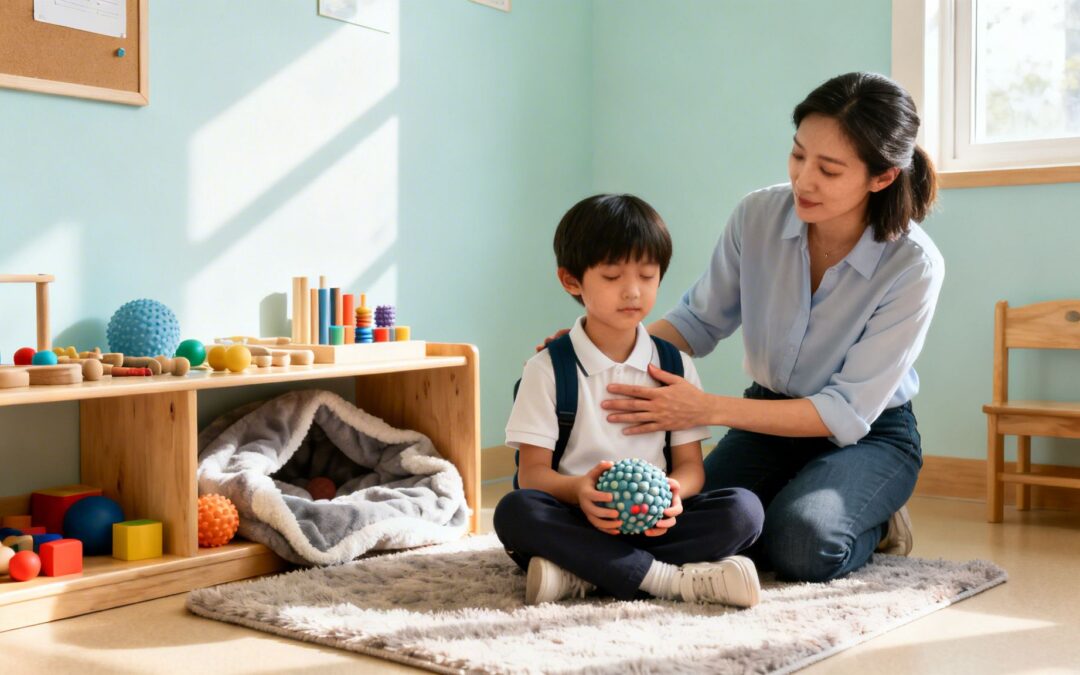
A “Peace Corner” is a specific spot in your classroom where students can go to cool down before they try to solve their problem. It’s not a punishment or a time-out chair. It’s a resource they can choose to use to regulate their emotions.
Stocking this space with the right tools empowers kids to take charge of their feelings.
Your Peace Corner might include:
A Feeling Faces Chart: A visual guide to help students put a name to their emotion.
Calming Tools: Things like stress balls, glitter jars, or a soft pillow.
Problem-Solving Steps: A simple, illustrated chart reminding them of the process.
“I-Statement” Prompt Cards: Sentence stems printed out to guide their words.
When a disagreement pops up, you can say, “It seems like you both need a minute. Why don’t you head to the Peace Corner, and when you’re ready, you can use the talking stick to share your feelings?” This teaches them to take ownership of the process.
How Parents Can Foster Resolution Skills at Home
The school bell doesn’t signal the end of learning for the day. A child’s first—and most important—classroom is the home, and parents are their most influential teachers. When you reinforce the same conflict resolution skills at home that your kids are learning at school, you create a powerful, consistent environment where these habits can truly stick.
This consistency is everything. When kids hear the same language, like “I-Statements,” and practice the same problem-solving steps in the living room and the classroom, the lessons become deeply ingrained. You’re building a bridge between school and home that gives your child a social-emotional foundation to last a lifetime.
Turn Sibling Squabbles into Teachable Moments
Sibling disagreements might feel like a headache, but they are the perfect low-stakes training ground for relationship conflict resolution. The next time a fight breaks out, try shifting your role from judge to coach. The goal isn’t just to stop the fighting, but to guide your children toward finding their own solution.
Think about the classic argument over the TV remote. Your first instinct might be to just take it away. Instead, what if you coached them through it?
Parent as a Coach Example:
Acknowledge Feelings: Start by simply noticing the emotions without placing blame. “Wow, it looks like you are both really frustrated about this remote.”
Guide I-Statements: Prompt each child to use the “I feel…” structure they’re learning. You could say, “Can you tell your sister how you feel when she grabs the remote? Try starting with, ‘I feel…'”
Encourage Listening: Make sure the other child is hearing them. “What did you hear your brother say? Can you tell me what he’s feeling right now?”
Brainstorm Solutions: Put the problem back in their hands. “Okay, this is our problem to solve together. What are a few fair ways we can decide who gets the remote next? Maybe you can use a timer, or each pick a show to watch.”
This approach gives them the power to fix their own problems. It turns a moment of frustration into a real-world lesson in empathy, communication, and collaboration.
Model Healthy Disagreements
Your kids are always watching. One of the most powerful ways to teach healthy conflict resolution is to simply let them see it in action in your own relationships. When you and your partner or another adult have a disagreement, it’s a chance to show them that conflict is normal and can be handled with respect.
You don’t need to be perfect; you just need to be real. Letting your kids see you work through a disagreement and come back together teaches them that conflict doesn’t have to break a connection—it can even make it stronger.
For example, let’s say you and your partner disagree on weekend plans. You can show them what a respectful conversation looks like. Instead of, “You never want to do what I want,” you could try, “I feel a little disappointed because I was really looking forward to the park. Can we talk about a plan that works for both of us?” This shows them how to share needs without blame.
Even seeing you apologize and reconnect after things get a little tense is a huge lesson in how to repair a relationship. You might say in front of them, “I’m sorry I got frustrated earlier. Let’s try talking about our plans again calmly.”
How Administrators Can Build a Conflict-Positive Culture
While what happens in the classroom and at home is incredibly important, real, lasting change always starts at the top. For school leaders, this means going beyond just managing conflict—it means building a conflict-positive culture.
This is about weaving the principles of relationship conflict resolution into the very fabric of your school. It’s a systemic approach that creates a shared language and a consistent, healthy response to disagreements for every single person in the building, moving past isolated efforts.
This work isn’t just for teachers and counselors. It’s about making sure every adult—from the front office staff to the custodians and cafeteria monitors—gets professional development in these crucial skills. When the entire staff can model and guide students through disagreements, conflict stops being a disruption and starts becoming a powerful opportunity for community growth.
Modeling Conflict Resolution from the Top Down
School leaders, you set the tone. The way you handle disagreements in staff meetings, respond to a parent’s concern, or navigate tough budget conversations sends a clear message to your entire community. By intentionally modeling healthy conflict resolution, you’re establishing a standard of respect and collaboration for everyone to follow.
Think about a staff meeting where two teachers have a passionate disagreement over a new curriculum policy.
Instead of shutting down the debate or picking a side, you can model active listening. You might step in and say, “I hear really strong feelings from both of you. Can each of you share the core concern you have about this policy?”
Then, you can guide them toward seeing the other’s perspective. A great next step is to ask, “What part of Sarah’s point can you agree with, even if you see the overall issue differently?”
This approach doesn’t just solve a problem; it shows your team that disagreement is okay. In fact, it’s a necessary part of finding the best solutions. This is how you build psychological safety, creating a culture where staff feel secure enough to voice different opinions respectfully.
The Critical Need for Leadership Training
Research backs up just how crucial this is. A global study of over 70,000 managers revealed that nearly half (49%) don’t have effective conflict management skills. But the flip side is inspiring: when leaders get the right training, 76% of employees say they see conflict lead to positive outcomes, like a better understanding of others or improved problem-solving. You can dive deeper into how leadership shapes these outcomes in this 2024 DDI research report.
A school-wide commitment to relationship conflict resolution is a strategic investment in your school’s reputation and climate. It’s the blueprint for creating a resilient, connected community where every person feels seen, heard, and valued.
This data makes it clear: investing in conflict resolution training for administrators isn’t just a good idea—it’s essential for fostering the positive school environment we all want.
A school with a truly conflict-positive culture sees the results everywhere. You’ll notice a measurable drop in disciplinary referrals, less staff turnover, and much stronger home-school partnerships. When parents feel their concerns are truly heard and handled with respect, their trust in the school skyrockets.
This whole-school commitment transforms your campus from a place where conflict is feared into one where it’s skillfully used to build a more empathetic and connected community for everyone.
Frequently Asked Questions About Relationship Conflict Resolution
Even with the best intentions, putting conflict resolution into practice brings up real-world questions. When you’re in the middle of a tense moment with kids, theory goes out the window. Here are some answers to the common “what if” scenarios that educators and parents face, designed to help you navigate the messy, important work of guiding children toward peace.
What If a Student Refuses to Participate?
It happens all the time. A child, feeling hurt, angry, or embarrassed, completely shuts down. They cross their arms, refuse to talk, and want nothing to do with a structured conversation. The most important thing to remember is to never force it.
Forcing a child to talk before they’re ready can feel like a punishment, and it breaks the very trust you’re trying to build. Instead, your job is to offer a safe path back to connection. You might say, “I see you’re not ready to talk right now, and that’s okay. How about you take a few minutes in the Peace Corner to cool down? We can try again when you feel ready.” This respects their feelings while keeping the door open.
The goal is always to maintain emotional safety. When a child feels respected, even while they are resisting, they are far more likely to trust the process and engage the next time a conflict comes up.
How Can Parents and Teachers Work Together?
A strong home-school partnership is the secret sauce. When kids hear the same language and see the same strategies at school and at home, the lessons stick. It creates a consistent, predictable world for them.
Here’s how to build that bridge:
Share a Simple Framework: Teachers can send home a one-pager that outlines the conflict resolution steps used in class, like “Stop and Cool Off” or how to use “I-Statements.”
Communicate Proactively: A quick, positive note home after a conflict is resolved can be incredibly powerful. Imagine a parent reading, “Alex and Sam had a tough disagreement today over a game, but they worked together to find a solution where they took turns. I was so proud of how they handled it!”
Host a Parent Workshop: A short session, even a virtual one, can show parents the tools in action. This empowers them to feel confident trying the same techniques at home.
When Should an Adult Step in More Directly?
While we want to empower kids to solve their own problems, our primary job is to ensure every child is safe—physically and emotionally. There are absolutely times when you must step in immediately.
You need to intervene directly and stop the interaction if a conflict involves:
Physical harm or any threats of violence.
Bullying, which involves a power imbalance and repeated targeting.
Harmful language targeting a person’s race, identity, religion, or ability.
In these situations, the immediate priority shifts from student-led resolution to safety and enforcing clear boundaries. For example, if one child shoves another, the first step is to separate them and ensure everyone is physically safe. Restorative conversations can—and should—happen later, but only after the threat is gone and every child feels secure again.
At Soul Shoppe, we believe every conflict is an opportunity for connection. Our experiential programs give schools the tools and shared language needed to build communities where every child feels safe, seen, and supported. To bring these powerful skills to your students, explore our on-site and digital programs.
In a world of constant digital distraction, teaching children how to truly listen is more critical than ever. Active listening is not just about hearing words; it’s a foundational social-emotional skill that builds empathy, strengthens relationships, and creates psychologically safe classrooms and homes. For parents and teachers, fostering this ability is key to helping students navigate conflicts, build connections, and thrive. This is a skill that directly impacts a child’s ability to learn, collaborate, and show respect for others.
This article moves beyond generic advice, providing a curated collection of eight practical, research-backed active listening activity ideas. Each activity includes step-by-step instructions, grade-level adaptations, and real-world examples designed for immediate use in K–8 classrooms and family settings. We will cover a range of techniques, from simple paraphrasing and the use of silence to more structured protocols like Empathy Mapping and Active Listening Circles.
You will learn how to guide students in understanding another’s perspective, asking meaningful questions, and recognizing the importance of non-verbal cues. To truly understand the impact and application of active listening, exploring concrete examples can be incredibly insightful, such as these 8 Powerful Active Listening Examples. The exercises in this guide are simple yet powerful, helping you cultivate a culture of deep, meaningful understanding. Whether you’re a principal, teacher, counselor, or parent, these strategies offer actionable ways to make genuine listening a core part of your environment.
1. Reflective Listening (Paraphrasing)
Reflective listening is a foundational active listening activity where the listener rephrases the speaker’s message in their own words. This simple but powerful technique serves two key purposes: it confirms understanding and shows the speaker that their thoughts and feelings are being heard and valued. Instead of immediately judging or problem-solving, the listener acts as a mirror, reflecting the core message back to ensure clarity and connection.
This method, with roots in the work of psychologist Carl Rogers, builds a feedback loop that reduces miscommunication and validates the speaker’s experience. It is a cornerstone of Social and Emotional Learning (SEL) because it builds empathy, strengthens relationships, and gives students a concrete tool for conflict resolution.
How to Use Reflective Listening
Begin by listening intently not just to the words, but to the emotions and underlying needs being expressed. Once the speaker pauses, paraphrase what you heard using your own words.
Key Insight: The goal is not to repeat like a parrot but to capture the essence of the message. Using starter phrases like, “So, what I’m hearing is…” or “It sounds like you’re feeling…” can help frame your reflection naturally.
Classroom Example:
Student: “I hate group projects! Maya never does any work, and I have to do everything myself. It’s not fair.”
Teacher: “It sounds like you’re feeling really frustrated and overwhelmed because you believe the workload in your group isn’t being shared equally.”
Home Example:
Child: “I don’t want to go to soccer practice anymore. Everyone is better than me.”
Parent: “So, you’re feeling discouraged about soccer right now and worried that you can’t keep up with your teammates. Is that right?”
Tips for Effective Implementation
To make reflective listening a successful active listening activity, focus on these practical steps:
Focus on Emotion and Need: Listen for the feelings behind the facts. Reflecting the emotion (“you’re feeling disappointed”) is often more connecting than just repeating the situation.
Pause Before Responding: Take a breath (3-5 seconds) after the speaker finishes. This prevents reactive replies and shows you are thoughtfully considering their words.
Use Natural Language: Avoid sounding robotic. Your reflection should sound like you, not like you’re reading from a script.
Ask for Confirmation: End your reflection with a gentle question like, “Did I get that right?” or “Is that how you’re feeling?” This gives the speaker a chance to clarify their message and feel truly understood.
2. Silent Listening (The Pause Technique)
Silent listening is an active listening activity centered on maintaining quiet, focused attention without planning a response while someone speaks. This approach highlights the power of silence, giving speakers the space to fully express themselves without interruption. It recognizes that meaningful pauses allow for deeper thought and emotional processing, which is especially important for students who need more time to formulate ideas or navigate their feelings.
This technique, supported by research from educators like Mary Budd Rowe on “wait time,” shows that even a few seconds of silence can dramatically improve the depth and quality of communication. By resisting the urge to immediately fill the quiet, a listener demonstrates respect and patience. This practice is a key part of Social and Emotional Learning (SEL), as it builds a safe environment for vulnerability, encourages thoughtful reflection, and shows students that their voices are important enough to be given space.
How to Use Silent Listening
Start by dedicating your full attention to the speaker, focusing on their words, tone, and body language. When they pause or finish speaking, intentionally wait for a few seconds before you say anything. This quiet moment is the core of the activity, allowing the speaker’s message to land and giving them a chance to add more if they need to.
Key Insight: Silence isn’t empty; it’s an active space for thinking and feeling. By normalizing the pause, you teach students that reflection is just as important as speaking, reducing anxiety and encouraging more thoughtful participation.
Classroom Example:
Teacher: (After asking a complex question) “What are some reasons why the main character might have made that choice?” (The teacher then waits silently for 5-7 seconds, making eye contact with the class.)
Student: (After a long pause) “Well… at first I thought she was just being mean, but now I think maybe she was scared. She mentioned earlier that she didn’t want to be left alone.”
Home Example:
Child: “I got in an argument with Sam today at recess.” (The child stops, looking down.)
Parent: (Instead of immediately asking “What happened?” or “What did you do?”, the parent waits quietly, maintaining a caring expression.)
Child: (After a moment of silence) “…He said I couldn’t play with them anymore. It really hurt my feelings.”
Tips for Effective Implementation
To make silent listening a successful active listening activity, concentrate on these practical steps:
Resist the Urge to Interject: Train yourself to be comfortable with silence. The primary goal is to let the speaker complete their entire thought, which may include several natural pauses.
Use Open Body Language: While you are silent, show you are still engaged. Maintain gentle eye contact, nod occasionally, and keep your posture open and receptive.
Practice Intentional Wait Time: After you or a student asks a question, count to at least 3-5 seconds before allowing anyone to answer. This simple habit improves response quality.
Explain the Purpose of Silence: Let your students or children know why you’re using pauses. You can say, “I’m going to be quiet for a moment to give everyone some thinking time.” This frames silence as a useful tool, not an awkward void.
3. Empathetic Listening
Empathetic listening takes active listening a step further by focusing on understanding the emotional experience behind the speaker’s words. It is not just about hearing the message but about connecting with the feelings and perspective of the speaker. This powerful technique requires the listener to set aside their own viewpoint and try to see the world through the speaker’s eyes, validating their emotional state without judgment or immediate problem-solving.
This method, supported by the work of researchers like Daniel Goleman and Brené Brown, is a cornerstone of emotional intelligence. It transforms conversations from transactional exchanges into opportunities for deep human connection. As an active listening activity, it is crucial for building trust, de-escalating conflict, and creating an emotionally safe environment where individuals feel seen and understood.
How to Use Empathetic Listening
Start by tuning into the speaker’s non-verbal cues, such as tone of voice, facial expressions, and body language. When they pause, respond by acknowledging the emotion you perceive, showing that you are connecting with their feelings, not just their words.
Key Insight: The goal is to connect with the feeling, not necessarily to agree with the facts. Phrases like “That must have been so difficult,” or “I can see why you’d feel that way,” validate the emotion without taking a side.
Classroom Example:
Student: (Slams book on the desk) “This is stupid! I can’t do this math problem, and everyone else is already finished.”
Teacher: “I see you’re really frustrated right now. It can feel discouraging when it seems like others are moving ahead. Let’s look at this together.”
Home Example:
Child: “Nobody played with me at recess today. I just sat by myself the whole time.”
Parent: “Oh, that sounds incredibly lonely and sad. It must have been hard to sit by yourself while everyone else was playing.”
Tips for Effective Implementation
To make empathetic listening a successful practice in your classroom or home, focus on these key actions:
Name the Emotion: Observe the speaker’s expressions and tone, and gently name the feeling you see. “You sound really excited,” or “It looks like you’re feeling disappointed.”
Ask Feeling-Focused Questions: Use open-ended questions that invite emotional sharing, such as, “How did that make you feel?” or “What was that experience like for you?”
Use Validating Statements: Simple phrases like, “That makes sense,” or “It’s understandable that you feel hurt,” show you accept their feelings as valid.
Avoid “Fixing” It Immediately: Resist the urge to jump in with solutions or silver linings (“toxic positivity”). Sometimes, the most helpful response is to simply sit with someone in their difficult emotion, allowing them the space to feel it.
4. Clarifying Questions Technique
The clarifying questions technique is a powerful active listening activity that trains listeners to ask thoughtful, open-ended questions. Instead of making assumptions or jumping to solutions, this method encourages curiosity to deepen understanding. Asking questions like, “Can you tell me more about that?” demonstrates genuine interest while ensuring the listener fully comprehends the speaker’s experience before offering advice or judgment.
This approach, informed by the work of Edgar Schein’s Humble Inquiry and frameworks from the Crucial Learning Institute, shifts conversations from reactive to reflective. It prevents listeners from filling in gaps with their own biases and empowers the speaker to explore their thoughts more deeply. As an SEL tool, it fosters perspective-taking, critical thinking, and mutual respect in any dialogue.
How to Use Clarifying Questions
Listen with the intent to understand, not just to respond. When the speaker pauses, ask an open-ended question that invites them to share more detail. This active listening activity slows down the conversation and prioritizes comprehension over quick fixes.
Key Insight: The goal is to avoid yes/no questions that shut down conversation. Instead, use questions that begin with “What” or “How” to encourage the speaker to elaborate on their thoughts, feelings, and experiences.
Classroom Example:
Student: “I’m not playing with Leo anymore. He’s so mean.”
Teacher: “It sounds like something happened that was upsetting. What happened that made you feel he was being mean?”
Home Example:
Child: “My teacher gave me a bad grade on my project, and it’s not fair!”
Parent: “I hear that you feel the grade wasn’t fair. Can you tell me more about the project and what part felt unfair to you?”
Tips for Effective Implementation
To make clarifying questions a successful active listening activity, concentrate on these practical steps:
Start Questions Thoughtfully: Begin your questions with “What,” “How,” or “Tell me more about…” to invite detailed responses. Avoid “Why” questions, which can sound accusatory (“Why did you do that?”).
Ask One Question at a Time: Overloading the speaker with multiple questions can be confusing. Ask a single, focused question and wait for a full response before considering your next one.
Listen to the Answer: The purpose of the question is to gain understanding. Pay close attention to the response rather than just planning your next question.
Slow Down Your Impulses: Use this technique to manage your own reactive tendencies. Asking a clarifying question gives you time to process the situation before offering a solution or judgment. For more ideas on building this skill, check out this guide on communication skills activities.
5. Body Language and Non-Verbal Awareness
Body Language and Non-Verbal Awareness is an active listening activity that shifts the focus from words to what is communicated through physical cues. This practice involves consciously observing and using eye contact, posture, facial expressions, and gestures to show attention and understanding. Given that research suggests a huge portion of communication is non-verbal, mastering this skill is essential for showing someone you are truly present and engaged.
This focus on non-verbal signals, highlighted by researchers like Albert Mehrabian and Amy Cuddy, is critical for building psychological safety. When a listener’s body language aligns with their verbal message of support, it makes the speaker feel more secure and validated. This skill is foundational for Social and Emotional Learning (SEL), as it helps students accurately interpret social cues and build stronger, more empathetic connections. Learning how to read and use body language is a powerful tool for effective communication.
How to Use Body Language and Non-Verbal Awareness
Pay close attention to your own physical signals while another person is speaking. The goal is to make your body reflect your intention to listen carefully and respectfully.
Key Insight: Your body speaks volumes before you even say a word. An open, attentive posture can make a speaker feel safe and encouraged, while distracted or closed-off body language can shut a conversation down.
Classroom Example:
Situation: A student is shyly sharing a personal story with the class.
Teacher: The teacher sits at the front of the room, leans forward slightly, maintains a soft and encouraging facial expression, and nods periodically to show they are following along. They keep their hands relaxed and visible, avoiding crossed arms.
Home Example:
Child: “I messed up my drawing and I have to start all over again!”
Parent: The parent puts their phone down, kneels to be at the child’s eye level, and uses a concerned expression. They might say, “Oh no,” while gently touching the child’s shoulder to offer comfort before saying anything else.
Tips for Effective Implementation
To make body language a successful active listening activity, concentrate on these intentional actions:
Position for Connection: Whenever possible, position yourself at the speaker’s eye level. This simple adjustment reduces perceived power dynamics and fosters a feeling of equality.
Mirror an Open Posture: Avoid crossing your arms, which can signal defensiveness. Instead, keep your posture open and lean in slightly to convey interest.
Use Mindful Gestures: Nodding shows you are following along, but do it naturally. Your facial expressions should reflect the emotional tone of the speaker’s message, showing empathy.
Eliminate Distractions: Put away your phone, turn away from your computer screen, and give the speaker your full physical presence. This is one of the clearest non-verbal signs that you are listening. Teaching children about reading social cues is a related skill that reinforces this practice.
6. Active Listening Circles (Talking Piece Protocol)
Active listening circles, also known as the talking piece protocol, are structured group activities where participants take turns speaking without interruption. While sitting in a circle, a designated object (the “talking piece”) is passed from person to person, and only the individual holding the piece is allowed to speak. This ancient practice, with roots in Indigenous peacemaking traditions, fosters equitable participation and teaches students to listen deeply to all voices, not just those they usually agree with.
This method is a powerful active listening activity because it slows down conversation and creates a safe, predictable space for sharing. By ensuring every student gets an uninterrupted turn, it helps build a strong classroom community, elevates quieter voices, and provides a structured format for addressing group challenges. It is a core component of restorative practices in schools, promoting empathy and collective problem-solving.
How to Use Active Listening Circles
Gather your group in a circle where everyone can see each other. Introduce the talking piece and explain the three core rules: only the person holding the piece may speak, everyone else listens respectfully, and you have the right to pass if you don’t wish to share.
Key Insight: The circle’s power comes from its structure. The talking piece isn’t just a tool to manage turns; it’s a symbol of respect for each person’s voice and a physical reminder for others to focus on listening.
Classroom Example:
Topic: “Share one ‘high’ and one ‘low’ from your weekend.”
Teacher: (Holding a small decorated stone) “I’ll start. My high was seeing a beautiful sunset on my walk, and my low was spilling coffee on my favorite shirt. I’ll now pass the talking piece to my left. Remember, you can pass if you’d like.” The stone is then passed to the next student, who shares while all others listen.
Home Example:
Topic: “What’s one thing our family could do to be kinder to each other this week?”
Parent: (Holding a favorite seashell) “I think we could all put our phones away during dinner so we can connect more. I’m passing this to you now. What are your thoughts?” The shell is passed to a child, who is given the floor to speak without being interrupted.
Tips for Effective Implementation
To ensure your listening circle is a successful active listening activity, pay attention to the setup and facilitation:
Start with Low Stakes: Begin with simple, fun topics like “favorite superpower” or “what made you smile today” to build comfort and familiarity with the process.
Set Time Guidelines: For larger groups, suggest a gentle time limit (e.g., 1-2 minutes per person) to ensure everyone gets a turn and the activity stays focused.
Establish the Right to Pass: Explicitly state that anyone can pass their turn without giving a reason. This creates psychological safety and removes pressure.
Debrief the Process: After the circle, ask students reflective questions: “What did you notice about your listening when you couldn’t interrupt?” or “How did it feel to share without being cut off?”
7. Empathy Mapping and Perspective-Taking
Empathy mapping is a structured exercise where listeners visualize another person’s experience by considering what they see, hear, think, feel, say, and do. This technique moves beyond surface-level listening to a deeper understanding of someone’s internal world. It makes empathy tangible by asking us to step into another person’s shoes and consider their reality from multiple angles.
Popularized by innovators like Dave Gray and supported by the empathy research of Brené Brown, this powerful active listening activity helps students and adults alike move from sympathy (“I feel sorry for you”) to empathy (“I can understand what you’re feeling”). It builds a crucial foundation for conflict resolution, peer support, and creating an inclusive community.
How to Use Empathy Mapping
The core of this activity is filling out a four-quadrant map (or six, in some versions) focused on another person’s experience. This can be done individually or in groups after listening to someone’s story or reading about a character.
Key Insight: The goal is to separate observation from inference. By mapping what someone says and does versus what they might think and feel, participants learn to look beyond outward behavior to understand underlying motivations and emotions.
Classroom Example:
Scenario: A student is withdrawn and snaps at classmates who try to talk to them. The teacher leads the class in creating an empathy map to understand the student’s perspective without judgment.
Teacher: “Let’s think about what our classmate might be experiencing. What might they be thinking when they’re alone? What could they be feeling that makes them seem angry?” This shifts the focus from blame to understanding.
Home Example:
Scenario: A child is struggling to understand why their friend is ignoring them.
Parent: “Let’s make a map for your friend. What do you think they saw or heard that might have upset them? What might they be thinking about right now, even if they aren’t saying it?”
Tips for Effective Implementation
To make empathy mapping a successful active listening activity, consider these practical steps:
Start with Fictional Characters: Begin with characters from books or historical figures. This provides a safe, low-stakes way to practice before applying the skill to real-life peer conflicts.
Use Visuals: Draw the map on a whiteboard or large paper. Using different colors for each quadrant and allowing for drawings makes the process more engaging for visual learners.
Ask Guiding Questions: Prompt deeper thought with questions like, “What challenges might they be facing that we can’t see?” or “What worries might be keeping them up at night?”
Connect to Real Listening: Combine empathy mapping with real conversations. After a student shares a problem, have the listeners create a map to check their understanding. You can find more ideas in these perspective-taking activities.
8. Peer Tutoring and Teach-Back Method
The teach-back method is an active listening activity where the listener demonstrates understanding by explaining what they heard back to the speaker or to another person. It shifts listening from a passive act to an active one, requiring the listener to process, synthesize, and articulate information. When used for peer tutoring, this technique creates a powerful learning cycle that benefits both students. The “teacher” deepens their own comprehension, while the “learner” receives confirmation that their message was accurately received.
This method, with theoretical support from Vygotsky’s work on peer learning and Spencer Kagan’s cooperative learning structures, is highly effective in K-8 settings. It turns listening into a tangible and accountable skill, strengthening both academic retention and social-emotional competencies like empathy and clear communication.
How to Use the Teach-Back Method
The core idea is simple: after one person speaks or explains something, the other person’s job is to “teach it back” in their own words. This can be done in pairs, small groups, or even as a whole-class check for understanding.
Key Insight: The focus is on demonstrating comprehension, not on perfect recitation. The goal is to prove you listened well enough to explain the main idea, which is a much higher-level skill than simply remembering words.
Classroom Example:
Context: After a mini-lesson on the water cycle, the teacher puts students in pairs.
Teacher: “Turn to your partner. Partner A, you have one minute to explain the process of evaporation. Partner B, your job is to listen carefully.”
After 1 minute: “Okay, now Partner B, teach back to Partner A what you heard them say about evaporation. Start with, ‘What I heard you say was…'”
Home Example:
Context: A child is explaining the complicated rules of a new video game they want to play.
Child: “First you have to collect three power crystals, but you can’t get the red one until you beat the mini-boss in the forest, and he’s weak to ice attacks…”
Parent: “Okay, let me see if I’ve got this. So the first step is to find three power crystals. To get the red crystal, I have to go to the forest and defeat a specific enemy using an ice attack. Did I understand that correctly?”
Tips for Effective Implementation
To make the teach-back method a successful active listening activity, consider these practical steps:
Use Sentence Stems: Provide students with sentence starters to reduce anxiety and structure their responses. Phrases like, “My partner shared that…” or “What I understood was…” are great scaffolds.
Normalize Mistakes: Frame teach-back errors as learning opportunities, not failures. If a student misinterprets something, the original speaker can clarify, strengthening both of their skills.
Start Small: Begin with paired teach-backs before asking students to share with the whole class. This builds confidence in a lower-stakes environment.
Create Strategic Pairings: Pair students thoughtfully. Sometimes pairing a stronger student with one who needs support is beneficial, while other times, pairing students of similar abilities can foster a sense of shared discovery.
Celebrate Good Listening: When you see a student effectively teach back what their partner said, praise their listening skills explicitly. Say, “That was excellent listening. You really understood what she was explaining.”
Comparison of 8 Active Listening Activities
Technique
Implementation complexity
Resource requirements
Expected outcomes
Ideal use cases
Key advantages
Reflective Listening (Paraphrasing)
Low–Moderate; practice to sound natural
Minimal; brief training and practice time
Fewer misunderstandings; increased trust and clarity
Immediate feedback, deepens learning, builds confidence and accountability
Putting It All Together: Creating a Culture of Listening
The journey from a noisy classroom to a community of engaged listeners is built one interaction at a time. The activities outlined in this article, from Reflective Listening to the Peer Tutoring and Teach-Back Method, are more than just isolated exercises. They are the essential building blocks for creating a culture where feeling heard is the norm, not the exception. Integrating even one new active listening activity per week can begin to shift the dynamic in your classroom or home, fostering deeper connections and a stronger sense of belonging.
The true power of these techniques lies in their cumulative effect. When a child learns to paraphrase a peer’s feelings in an Active Listening Circle, they are not just completing a task; they are practicing the empathy needed to resolve a future conflict on the playground. When a student uses clarifying questions during a peer tutoring session, they are developing the critical thinking skills required to understand complex academic material and diverse perspectives. These are not soft skills; they are foundational life skills that directly support academic achievement and emotional well-being.
From Individual Activities to Daily Habits
To make listening a core value, it’s crucial to move beyond scheduled activities and weave these practices into the fabric of daily life. The goal is to create a shared language and a set of common expectations around communication.
Model the Behavior: The most powerful tool you have is your own example. When a child is upset, get down on their level, use Silent Listening to give them space, and then paraphrase what you heard: “It sounds like you felt really frustrated when your tower fell down.” This demonstrates respect and shows them what empathetic listening looks like in action.
Create Visual Reminders: Post anchor charts with sentence stems for clarifying questions (“Can you tell me more about…?”) or paraphrasing (“So, what you’re saying is…”). These visual cues support students, especially younger ones, as they internalize these new habits.
Celebrate the Effort: Acknowledge and praise students when you see them actively listening. A simple comment like, “Michael, I noticed you were looking right at Sarah while she was speaking and waited for her to finish. That was great listening,” reinforces the desired behavior far more effectively than correcting poor listening.
The Long-Term Impact of True Listening
Implementing a consistent active listening activity program does more than just quiet a room. It equips children with the tools to navigate a complex world with compassion and confidence. Students who feel heard are more likely to engage in learning, take healthy risks, and see themselves as valued members of a community. They learn that their voice matters and, just as importantly, that the voices of others matter, too.
A classroom culture rooted in active listening becomes a place where curiosity thrives over judgment, and connection is valued over correctness. Children learn that understanding someone is a more powerful goal than simply winning an argument.
By prioritizing these skills, you are making a direct investment in preventing bullying, reducing classroom conflicts, and building the social-emotional resilience every child needs to succeed. You are teaching them how to build and maintain healthy relationships, a skill that will serve them throughout their academic careers and far into adulthood. The quiet confidence that comes from knowing how to truly listen and be heard is one of the greatest gifts you can give a child.
Ready to take the next step and bring a comprehensive, school-wide listening culture to your community? Soul Shoppe provides dynamic programs and proven strategies that empower students with the social-emotional tools they need to thrive, with a core focus on the power of an active listening activity. Visit Soul Shoppe to see how their on-site and virtual programs can help you build a safer, more connected school environment.
Learning how to self soothe is one of the most important skills we can teach our kids. It’s what allows them to navigate big, overwhelming feelings and build the resilience they’ll need for a lifetime. When a child can recognize an emotional storm coming, use a personal strategy to find their calm, and practice this in a safe space, they build a foundation for everything else—from focusing in class to creating positive friendships.
The Foundations of Self-Soothing in Children
Let’s clear up a common myth right away. Teaching a child to self-soothe has nothing to do with leaving them alone to “cry it out.” True self-soothing is a skill that’s learned, not forced. It develops through our active guidance, modeling, and co-regulation—the process of calming with them.
Think of it as the ability to independently manage emotional waves. It’s a skill that grows slowly, right alongside their developing brains. For our youngest kids, regulation is almost entirely external; they need a trusted adult to be their anchor in a storm. Over time, they start to internalize the strategies we show them, eventually learning to use them all on their own.
Creating Emotional Safety
The journey always begins with emotional safety. Before a child can even think about managing their feelings, they have to know it’s okay to have them—even the messy, inconvenient ones.
A huge part of this is giving them the words for what’s happening inside. When we create a shared, simple language for emotions, we demystify the experience. For example, a teacher might say to a second-grader, “It looks like you’re feeling frustrated because that puzzle piece won’t fit. Frustration can feel tight and hot in your body, can’t it?” This does two things: it labels the feeling and normalizes the physical sensation without judgment. You’re helping them connect the inner feeling to an outer word, which is a core building block of social-emotional development.
A child’s ability to self-soothe is directly tied to the feeling of being seen and understood by their caregivers. When we validate their emotions, we give them the security to explore and eventually manage those feelings independently.
While we’re focusing on school-aged kids here, these principles start way earlier. The groundwork for self-regulation is laid in infancy. If you’re curious about this stage, there are great guides on how to teach baby to self soothe that dig into the specifics.
Identifying Triggers and Modeling Responses
A key piece of the puzzle is learning to spot what sets off big emotions in the first place. These triggers change dramatically with age. What sends a kindergartener into a tailspin is worlds away from what rattles a middle schooler.
When we can anticipate these age-specific triggers, we can be proactive about modeling healthy ways to respond. A young child who’s crushed over losing a game might just need a hug and a quiet moment. A parent might say, “Losing feels so disappointing. It’s okay to be sad. Let’s get a big hug.” For an older student stressing about a test, you might model taking a few deep breaths and using positive self-talk, saying, “Wow, this test feels like a lot. I’m going to take three slow breaths to calm my brain down.”
To help you get started, here’s a look at some common triggers and simple soothing responses you can model for different age groups.
Age-Based Emotional Triggers and Initial Soothing Responses
This table breaks down some of the most frequent emotional stressors for K-8 students and offers immediate, age-appropriate actions you can model to help them begin the self-soothing process.
Age Group
Common Triggers
Initial Soothing Response to Model
K–2
Losing a game, sharing toys, transitioning between activities, loud noises.
“Let’s take a slow breath together.” Hugging a favorite stuffed animal. Moving to a quiet corner.
3–5
Peer disagreements, homework frustration, feeling left out, academic pressure.
“It’s okay to feel upset. Let’s write or draw about it.” Squeezing a stress ball. Taking a short walk.
6–8
Social drama, test anxiety, fear of failure, body image concerns, complex homework.
“I can see this is tough. Let’s listen to a calm song.” Journaling thoughts. Talking to a trusted friend.
By consistently modeling these simple actions, you give kids a real-life script they can draw from when their own emotions feel too big to handle alone.
Building a Sensory Toolkit for Calming Down
Once a child can name their feelings and triggers, we can give them something physical to do about it. This is where a sensory toolkit—often called a “calm-down kit”—becomes one of the most powerful resources you can have, both at home and in the classroom.
Engaging the senses is one of the fastest ways to ground a child who feels like they’re spiraling. When big emotions hijack their brain, the logical, thinking part goes offline. Sensory input helps cut through the noise, pulling them out of that reactive state and back into their bodies.
The Power of Sensory Engagement
A calm-down kit isn’t just a box of toys to distract a child. It’s a hand-picked collection of items designed to provide specific sensory input that actively de-escalates stress. Research backs this up, showing that tactile (touch) and proprioceptive (deep pressure) input have a significant calming effect on the nervous system.
You don’t need to spend a fortune on fancy gadgets. Honestly, some of the most effective items are things you probably already have, or can find at a local dollar store. The whole point is to offer a variety of textures, weights, and even smells that a child can turn to when their world feels a little too loud.
Here are a few powerful, low-cost ideas to get your kit started:
For Touch: A scrap of faux fur, a smooth river stone, a small sequin pillow, or different fabric swatches like velvet, corduroy, and silk.
For Pressure: A weighted lap pad (easy to make with a pouch of rice or dried beans), a perfectly squishy stress ball, or some therapy putty.
For Scent: Scented putty or play-doh with calming smells like lavender or chamomile. Even peppermint can be great for helping a child refocus their attention.
Co-Creating the Kit With Your Child
This is the most important part: build the toolkit with your child. When they get to choose what goes inside, they develop a sense of ownership over the tools and are far more likely to actually use them.
Find a calm, quiet moment to sit down together. Explain the kit’s purpose in a way they’ll understand. A parent might say, “Remember how your body feels when you get really frustrated? Let’s make a special box of things that can help your body feel calm and safe again.” A teacher could say, “Our classroom is a team. Let’s build a ‘Peace Corner’ with tools anyone can use when they need a quiet moment to reset.”
When a child co-creates their own sensory toolkit, they are not just picking out items; they are practicing self-awareness. They learn to identify what truly helps them feel better, turning a box of objects into a powerful symbol of their own competence and control.
For instance, a third-grader feeling anxious before a spelling test might pull out their peppermint-scented putty. The act of kneading it provides calming deep pressure to their hands, while the focusing scent helps clear their mind. To effectively build a robust sensory toolkit, it’s beneficial to consider specific best toys for sensory seekers that cater to varied sensory needs, providing targeted input for calming and focus.
Practical Examples in Action
Let’s look at how this plays out in the real world. These scenarios show how a simple toolkit can be woven right into a child’s day.
Example 1: A Kindergartener After a Loud Assembly
Scenario: Leo comes back from a noisy all-school assembly feeling jittery and overstimulated. He’s having a hard time settling down for quiet reading.
Tool: His teacher quietly guides him to the classroom’s “calm-down corner,” where he has his own small sensory box. He picks out a small, weighted lizard to place on his lap.
Outcome: The gentle pressure from the weighted animal helps ground him. That simple, physical sensation gives his nervous system the input it needs to settle down. In just a few minutes, he’s ready to rejoin the group.
Example 2: A Middle Schooler After a Disagreement
Scenario: Maya, a seventh-grader, has a small argument with a friend at lunch and comes home feeling upset and withdrawn.
Tool: Instead of pushing her to talk, her parent reminds her about the “chill out” basket they created together. Maya grabs a soft fleece blanket and her sketchbook.
Outcome: She wraps herself tightly in the blanket, giving herself a comforting, cocoon-like hug. She then spends 10 minutes doodling, which lets her process her feelings without having to find the words. This is a fantastic example of using established self-regulation strategies for students in a personal and meaningful way.
Mindful Movements and Breathing You Can Teach Today
While sensory tools are fantastic for grounding, some of the most powerful self-soothing strategies don’t come in a box. When we teach children how to use their own breath and body, we give them a toolkit they can carry anywhere, for life.
This isn’t just about telling a kid to “take a deep breath.” These are engaging, memorable activities designed to interrupt the stress cycle and return a child’s sense of control. Mastering this skill is at the heart of learning how to self soothe.
Breathing Exercises With Kid-Friendly Scripts
The goal is to make breathing feel less like a chore and more like a superpower. Using simple, playful scripts helps kids connect with the practice and, more importantly, remember it when they need it most.
Here are a few of my go-to’s that work wonders in both classrooms and homes.
1. Balloon Breaths This one is perfect for helping kids visualize their breath and slow down, which is incredibly helpful for taming anxiety.
The Script: “Pretend your belly is a big balloon. Put your hands right on your tummy. As you breathe in slowly through your nose, feel that balloon get bigger and bigger. Now, breathe out slowly through your mouth, letting all the air whoosh out as your balloon deflates.”
Practical Scenario: A parent sees their fourth-grader getting frustrated over a tough math problem. They might say, “Hey, let’s pause and do three Balloon Breaths to give our brains a mini-break.” This shifts the moment from struggle to proactive self-care.
2. Dragon Breaths This is the one I pull out for releasing frustration or big, pent-up energy. It encourages a strong, cleansing exhale.
The Script: “Sit up tall like a mighty dragon. Take a giant breath in through your nose, filling up your whole belly. Now, open your mouth wide and breathe out a powerful, fiery breath—whoosh!—to get all that mad energy out.”
Practical Scenario: After a disagreement on the playground, a teacher sees a student stomping back to class. Instead of scolding, they can get down on the child’s level and say, “I see some fiery feelings in you. Let’s be dragons together and breathe that fire out.”
3. Box Breathing (or Square Breathing) This technique is excellent for older kids (grades 3–8) because it introduces rhythm and focus. It involves tracing a square in the air or on their leg to pace the breath.
The Script: “Let’s draw a square with our breath. Using your finger, trace one side up as you breathe in for four counts. Hold your breath for four counts as you trace the line across the top. Breathe out for four counts as you trace down the other side. And hold your breath for four counts as you trace the bottom to finish the square.”
Practical Scenario: A middle schooler is visibly nervous before a presentation. A counselor could quietly guide them: “Let’s do some Square Breathing at your desk. No one even has to know. Just trace the square on your notebook.”
Mindful breathing activates the parasympathetic nervous system—the body’s natural “rest and digest” mode. By intentionally slowing their breath, children can lower their heart rate and signal to their brain that they are safe, effectively short-circuiting an anxious response.
Mindful Movements to Reset and Refocus
Sometimes, a child’s body just needs to move to let go of tension. These simple stretches can be done right at a desk or in a small space, making them perfect for classroom transitions or quick resets at home.
Starfish Stretches This full-body stretch is a fantastic way to wake up the body and release tension after sitting for a while.
How to Do It: “Stand up and reach your arms and legs out as wide as you can, like a big starfish! Stretch your fingers and toes. Now, curl into a tiny, tight ball. Let’s do it again—big starfish stretch, then tiny ball.”
Practical Scenario: A teacher notices the class energy is getting chaotic after a loud assembly. They can announce, “Okay, everyone, on your feet! Let’s do three big Starfish Stretches to help our bodies feel calm and ready for our next activity.” It gives students a physical outlet and instantly resets the room’s atmosphere.
Teaching these techniques is a vital step in helping kids build their emotional regulation skills, but it’s just one piece of the puzzle. The need for these practices is wider than you might think. For instance, a 2023 Safer Society survey found that while 74% of people have a daily self-care practice, 80% still report high burnout. More telling for us, 45% of respondents reported high stress in the prior six months. You can read the full research about these findings to see how stress is affecting people of all ages.
You don’t need fancy programs or complex exercises to teach a child how to self-soothe. In fact, some of the most powerful strategies are probably already happening in your home or classroom. The key is to turn these everyday activities into intentional tools for emotional regulation.
It’s all about helping a child connect the dots. When we guide them to see why listening to a certain song or doodling in a notebook makes them feel better, we’re handing them the keys. They move from just passively distracting themselves to mindfully managing their inner world.
Turn Passive Habits Into Active Soothing
Many activities kids already gravitate toward are, at their core, a form of self-regulation. Our job is to help them recognize this and use these habits on purpose. Instead of just seeing screen time or hobbies as “downtime,” we can frame them as real and valid self-care tools.
This isn’t just a hunch; it’s how kids are already coping. A 2023 survey revealed that 93% of youth use self-care to manage their emotions. The most common methods? Listening to music (72%), watching movies or TV (53%), and playing video games (47%). You can dive into the full breakdown of these powerful self-care findings to see just how central these activities are to their well-being.
By validating these existing habits, we remove the shame that can sometimes come with them. We send a clear message: “What you’re doing to feel better isn’t just okay—it’s a skill. Let’s get good at using it when you need it most.”
This shift in perspective is everything. It helps kids build a personalized menu of calming options that feel genuine and easy to reach for, boosting their confidence to handle whatever comes their way.
Create a “Calm-Down Playlist”
Music has a direct line to the emotional centers of the brain. The right song can shift a child’s mood, slow their heart rate, and give them a much-needed mental break. Building a “Calm-Down Playlist” with a child is a fantastic collaborative exercise.
For the Classroom: During a quiet moment, ask students to share one song that helps them feel calm or happy. Compile them into a class playlist to use during independent work, tricky transitions, or after a high-energy gym class.
For Home: Sit down with your child and explore different kinds of music. Try instrumental tracks, nature sounds, or even their favorite gentle pop songs. Ask them how each one makes their body feel. Does it make them want to tap their feet or relax their shoulders?
Practical Example: A fifth-grade teacher sees his class is getting antsy before a math test. He says, “Okay team, let’s put on our calm-down playlist for five minutes while we get our pencils ready.” A quiet, instrumental track comes on, and without him saying another word, the energy in the room visibly settles.
Set Up a “Doodle Corner” for Quiet Expression
Drawing, doodling, and coloring aren’t just for art class—they’re forms of non-verbal processing. For a child who can’t find the words for their big feelings, a pen and paper can be a lifeline. It gives them a way to get frustration or sadness out without having to talk about it.
In the Classroom: Designate a small, cozy area with paper, colored pencils, and markers. Frame it as a spot to “draw your feelings out” or to “give your brain a quiet break.”
At Home: Keep a “doodle basket” with sketchbooks and art supplies somewhere easy to grab. When you see your child is upset, you can suggest, “It looks like you have some big feelings right now. Do you want to go doodle them out in your book for a bit?”
Practical Example: An eight-year-old is fuming after an argument with her brother. She stomps off and grabs her sketchbook. She starts by furiously drawing dark, scribbly storm clouds. After a few minutes, she begins adding little sunbeams peeking through. The act of drawing helps her process the anger and move through it on her own terms.
Adapting Strategies for Different Ages and Needs
What works for a five-year-old won’t fly with a fifth-grader. The journey to learning how to self-soothe isn’t a one-size-fits-all path. What brings comfort to a six-year-old might feel silly or even embarrassing for a thirteen-year-old, so adapting our strategies is key.
As kids grow, their worlds expand. Their ability to think abstractly, understand their own feelings, and connect with others deepens. This means our approach has to evolve right alongside them, shifting from purely sensory methods for our youngest learners to more cognitive and relational tools for older students.
Kindergarten to Second Grade: Concrete Comfort
For kids in K-2, the world is very literal and hands-on. Their emotional regulation is deeply tied to their senses and what their bodies are experiencing. When big feelings hit, they need concrete, physical actions to feel safe and grounded again.
Self-soothing strategies at this age should be simple, easy to remember, and focused on the body.
Hugging a Stuffed Animal: The gentle pressure and soft texture offer immediate comfort. Practical Example: A first-grader feels sad after a playground squabble and the teacher allows them to get the classroom’s “feel-better bear” from the calm-down corner to hold at their desk for a few minutes.
Using a Weighted Lap Pad: During quiet reading, a child who feels wiggly and overstimulated can place a small weighted pad on their lap. That deep pressure sends calming signals straight to the nervous system.
Looking at a Calm-Down Jar: A glitter jar is a perfect visual anchor. Practical Example: A kindergartener is upset about their parent leaving at drop-off. The teacher can sit with them for a moment, shake the glitter jar, and say, “Let’s watch all the glitter settle. By the time it’s calm, our hearts might feel a little calmer, too.”
The goal here is to move from co-regulation to self-regulation. We start by modeling the soothing action with them—hugging them, breathing deeply beside them—and then guide them to use a physical tool on their own, like their favorite stuffed animal.
These early skills are incredibly important. Research shows that a child’s ability to self-soothe grows dramatically even in the first year of life, jumping from just 27.55% at one month to 46.39% by twelve months. This early development, often supported by comfort objects, helps build lifelong emotional health. You can learn more about how these foundational soothing skills develop and why they matter for a child’s future.
Third to Fifth Grade: Building a Bridge to Self-Awareness
Students in upper elementary are in a fascinating transition. They still absolutely benefit from sensory strategies, but they’re also starting to develop the ability to use more internal, cognitive techniques. They can actually think about their feelings and begin using simple self-talk.
This is the perfect age to connect concrete actions with their growing self-awareness.
Drawing or Journaling: A fourth-grader who’s frustrated with a tough math problem can be encouraged to “draw their frustration” or write down three angry words. This gets the feeling out without needing a complex conversation.
Using a Fidget Tool Discreetly: A fidget spinner or therapy putty can be used under a desk to manage pre-test jitters. It gives them quiet sensory input that helps focus the mind without distracting anyone else.
Listening to a Short Guided Meditation:Practical Example: A teacher can have students put their heads down for three minutes before a test and play a short audio clip: “Imagine a calm, blue light filling up your body, from your toes to your head, making you feel peaceful and focused.”
Sixth to Eighth Grade: Thinking and Connecting to Calm Down
By middle school, students are swimming in a sea of complex social dynamics and higher academic stakes. A squishy ball might still have its place, but they need more sophisticated tools that respect their growing independence and need for privacy.
The focus naturally shifts to internal self-talk and trusted peer connections.
Practicing Positive Self-Talk: A student who bombed a quiz can be taught to reframe their thoughts. Practical Example: A parent can model this by saying, “I’m so frustrated I burned dinner! Okay, deep breath. It’s not the end of the world. Let’s order a pizza and I’ll try that recipe again tomorrow.” This shows the student how to talk themselves through a mistake.
Creating a Calming Music Playlist: Music is a huge mood regulator for this age. An eighth-grader overwhelmed by social drama can put on their headphones and tune into a pre-made “chill” playlist, creating a personal bubble of calm.
Relational Soothing: Encourage them to reach out to a trusted friend. Practical Example: A teacher might notice a student is upset and say, “It looks like you’re having a hard time. Would you feel better if you took five minutes to talk with Sarah in the hallway?” This validates peer support as a healthy coping strategy.
When Self-Soothing Is Not Enough
Self-soothing skills are powerful tools, but they have their limits. It’s just as important to teach a child how to calm down as it is to recognize when their distress is bigger than what a coping strategy can solve.
These techniques are designed to help a child through temporary, manageable upsets. They aren’t a fix for chronic anxiety, deep-seated sadness, or overwhelming emotional pain. Knowing the difference is a critical part of supporting them effectively.
So, how can you tell when a child has moved beyond needing a calming corner and requires more specialized help? There are several clear indicators to watch for.
Red Flags to Monitor
Keep an eye out for persistent shifts in a child’s behavior, mood, or school performance. We’re not talking about a few off days, but consistent patterns that don’t get better even when they use their go-to soothing strategies.
Here are a few key signs that a higher level of care might be needed:
Significant School Changes: This could be a sudden or steady drop in grades, a consistent refusal to go to school, or frequent complaints of feeling sick without any clear physical cause. Example: A student who used to love math now complains of stomachaches every day before math class.
Extreme Emotional Outbursts: Look for meltdowns or tantrums that are far more intense or frequent than what’s typical for their age. This is especially concerning if they involve aggression, self-harm, or destroying property. Example: A ten-year-old throws a chair when asked to do their homework, a behavior that is new and extreme.
Persistent Withdrawal: You might notice them regularly pulling away from friends, family, and activities they used to love. Maybe they’re spending a lot more time alone in their room and seem disconnected. Example: A usually social teen stops answering texts from friends and quits the soccer team without explanation.
This decision tree infographic is a great starting point, outlining age-specific self-soothing strategies that can help you respond to a child’s needs.
Think of it as your first line of defense. The visual shows how to match techniques to a child’s developmental stage, but if you’ve tried these and things aren’t improving, it’s a clear signal to look further.
Reaching out for professional help is not a failure—it is a proactive and courageous act of care. It means you are expanding the child’s circle of support, bringing in partners who have specialized tools to help.
If you’re seeing these red flags, the first step is to document your observations. Make a few notes on the frequency, intensity, and context of the behavior.
Then, it’s time to start a conversation with the right people. At school, that might be the school counselor or psychologist. For parents, it’s about calmly sharing what you’ve noticed and suggesting you work together to find more support. You can also explore additional anxiety coping skills for kids to continue building out your toolkit.
Common Questions About Teaching Self-Soothing
As you start teaching and modeling self-soothing, it’s completely natural for questions to pop up. This is a nuanced skill, and every child’s journey will look a little different. Let’s walk through some of the most common questions we hear from parents and educators.
One of the first things everyone wants to know is, “How long will this take?” The honest answer is, there’s no set timeline. Self-soothing isn’t a single lesson you teach once; it’s an ongoing process. It takes a tremendous amount of patience and, more than anything, consistent modeling from the trusted adults in a child’s life.
What If My Child Resists?
Another big one we hear is, “What if my child refuses to use the calming corner?” Resistance like this is often a signal that the child needs more ownership of the space and the process.
This is a time to sidestep a power struggle. Instead, co-create the space and choose the tools with them. When a child has a hand in picking out that super-soft blanket or the perfect squishy stress ball, they’re much more likely to see it as their own helpful resource, not a time-out spot.
The goal is to build independence, not create another point of conflict. If a tool isn’t working, it’s not a failure on the child’s part. It’s simply a sign that you need to explore different strategies together.
Here are a few other common questions we get, along with some quick thoughts:
Can a middle schooler learn to self-soothe if they never have before? Absolutely. For older kids and tweens, you’ll want to focus on more mature strategies. Think about things like journaling, creating calming music playlists, or practicing positive self-talk. It is never too late to start building these essential life skills.
How do I balance letting my child self-soothe with giving them comfort? This is where co-regulation becomes your best friend. The process often starts with you soothing with them. For example, you might sit next to an upset child, rub their back, and do deep breaths with them. As you feel their body and breath start to calm, you can gradually step back a little, allowing them to take over by saying, “You’re doing a great job calming your body. Keep it up.” This teaches them they aren’t alone while building their own capacity for independence.
At Soul Shoppe, we believe that providing students with these essential emotional tools creates safer, more connected school communities. We have spent over 20 years developing research-based programs that empower children to manage their emotions and build empathy. Discover how our on-site and digital programs can support your students.
When we talk about teaching mindfulness to children, we’re talking about giving them simple, practical tools to pay attention to the present moment without judgment. This can be as easy as a few focused breaths or a game that hones their sensory awareness. The goal is to help them regulate their emotions, improve focus, and build resilience in a way that just makes sense to them.
Why Teaching Mindfulness to Children Matters Now More Than Ever
Let’s be honest: managing a child’s big emotions, whether in a bustling classroom or a busy home, can be a daily challenge. Kids today are swimming in a sea of constant stimulation, academic pressure, and tricky social situations. This environment is fueling a noticeable rise in https://soulshoppe.org/blog/2022/01/29/stress-in-children/, making it harder for them to focus, connect with others, and simply manage their feelings.
Mindfulness isn’t about forcing kids to sit still and be quiet. It’s about handing them a toolkit for life. It gives them the foundational skills to understand their own inner world, creating that all-important pause between a feeling and a reaction. For example, instead of a child immediately shoving a classmate who takes their toy, mindfulness helps them notice the anger, pause, and maybe use their words instead.
The Research-Backed Benefits in Action
When we introduce mindfulness to children, we’re not just hoping for the best. We’re teaching skills with proven, positive outcomes that go far beyond a few moments of calm. These benefits show up in real, tangible ways in their behavior and learning.
So what does this look like in practice? Here are a few core benefits you can expect to see blossom with a consistent mindfulness routine.
A Quick Look at Mindfulness Benefits for K-8 Students
This table breaks down the research-supported benefits you can expect to see when you bring mindfulness into your students’ lives.
Benefit Area
What It Looks Like in a Child
Impact on Learning
Improved Focus
A child can gently bring their attention back to the lesson, even with distractions around them.
Students absorb new material more easily and stay engaged for longer periods.
Emotional Regulation
Instead of an outburst, a student learns to recognize anger and says, “I need a minute.”
Fewer classroom disruptions and a more positive, supportive atmosphere for everyone.
Increased Empathy
A child understands their own feelings better, so they can recognize and respond to their peers’.
Conflicts on the playground decrease, and students build stronger, kinder relationships.
Reduced Stress
A student uses a breathing technique before a test instead of feeling overwhelmed by anxiety.
Kids feel more confident and capable, which frees up mental energy for academic challenges.
Greater Resilience
A child can bounce back from a mistake or social hiccup with a more balanced perspective.
Students are more willing to take academic risks and persevere through difficult assignments.
Ultimately, by equipping students with these tools, we create psychologically safer environments where they feel seen, heard, and understood. This sense of security is the bedrock of any thriving learning community.
This approach aligns beautifully with the philosophy behind the Montessori method of teaching, which emphasizes child-led learning and fostering curiosity within a prepared environment. Both mindfulness and Montessori empower children by giving them tools for self-direction and deep concentration.
A Growing Movement Supported by Evidence
Mindfulness in schools is far from a fleeting trend. A massive body of research backs up its effectiveness, with systematic reviews showing consistent positive effects on mental health, cognitive skills, and social-emotional growth.
The data also reveals a powerful truth: when educators practice mindfulness themselves, the benefits for students are significantly amplified.
And the support is overwhelming. With global parental support for school-based programs at 93%, there is a clear mandate to weave these essential skills into our educational fabric. By teaching mindfulness, we aren’t just adding another subject to the day. We are investing in their long-term well-being and giving them skills to navigate a complex world with greater awareness, compassion, and resilience.
Age-Appropriate Mindfulness Activities You Can Use Today
The best way to get started with mindfulness is by doing, not just explaining. We want these practices to feel like a natural part of the day, not another chore. Instead of demanding perfect stillness, we can meet kids where they are with playful, sensory activities that match their developmental stage.
The real key is to keep it simple, engaging, and short, especially in the beginning. I’ve found that a one-minute mindful activity done consistently is far more powerful than a long, infrequent session that everyone dreads.
Here are some practical, age-appropriate activities you can try today, complete with scripts and tips I’ve picked up from years in the classroom.
Engaging Early Learners: Grades K-2
For our youngest students, mindfulness needs to be a sensory experience. It should be playful and concrete. Abstract ideas won’t land nearly as well as activities that involve their bodies, their favorite toys, and the world right in front of them. We’re building the most basic awareness skills here.
Buddy Breathing
This simple breathing exercise is a classroom favorite. It uses a stuffed animal to make an invisible process—the breath—visible and real. It’s a wonderfully calming activity for transitions or settling down after a rowdy recess.
How to do it: Invite the kids to lie down comfortably on their backs. Have them place a small stuffed animal or “breathing buddy” on their belly.
Script: “Let’s give our buddies a gentle ride. When you breathe in, watch your buddy rise up toward the ceiling. As you breathe out, see your buddy slowly float back down. Just notice your buddy going for a quiet ride, up and down, with each breath.”
Pro-Tip: I like to play some soft, instrumental music in the background. If a child is extra wiggly, reframe it. Encourage them to notice how their buddy is having a “bumpy ride” today. This turns it into an observation, not a failure.
Sound Safari
This one is fantastic for sharpening listening skills and practicing focused attention. It uses the sounds already in your environment and turns the simple act of listening into a fun adventure.
How to do it: Ask students to sit comfortably and close their eyes if they want to. I use a small chime to signal the start and end of our “safari.”
Script: “We’re going on a Sound Safari! Our ears are our superpowers. For the next minute, let’s listen for as many different sounds as we can. What can you hear inside our room? What can you hear outside? What sounds are quiet? What sounds are loud?”
Pro-Tip: When the minute is up, have students share the sounds they “collected.” This validates their experience and creates a great sense of shared discovery.
Building Awareness: Grades 3-5
As kids get into the upper elementary years, they’re ready to start grasping more abstract ideas and doing a bit of self-reflection. Activities for this age can focus more on identifying internal states—like thoughts and emotions—and connecting them to what’s happening in their bodies.
Weather Report Check-In
This metaphor gives students a simple, non-judgmental way to name and share how they’re feeling. Just like the weather, emotions come and go. They aren’t permanent, and they aren’t “good” or “bad.”
How to do it: Introduce the idea that our feelings are like the weather inside us. I have a visual chart on the wall with different weather types (sunny, cloudy, rainy, stormy, windy).
Script: “Let’s check in with our internal weather today. You don’t have to change it, just notice what it is. Are you feeling sunny and bright? A little cloudy or foggy? Maybe it feels rainy with some sad tears, or even stormy with some big, loud feelings. Take a quiet moment and see what your weather is right now.”
Pro-Tip: Let students share by pointing to the chart or writing it on a sticky note. This lets them communicate their feelings without needing to find complicated words. It’s a quick and powerful emotional check-in.
Mindful Walking
This practice is great for grounding kids in their bodies and the present moment. It turns a simple walk across the room into an exercise in focus and serves as an excellent “brain break” between subjects.
How to do it: Ask students to stand and find their own space. Then, instruct them to walk around the room in slow motion.
Script: “Let’s try some ‘turtle walking.’ As you walk very, very slowly, can you feel your foot lifting off the floor? Can you feel your heel touching down, then the rest of your foot? Just notice the feeling of your feet connecting with the ground. What does the floor feel like under your feet?”
Pro-Tip: Start with just 30-60 seconds. As they get used to it, you can have them notice other things, like the air on their skin. These embodiment exercises are powerful tools for self-regulation; for more ideas, you might be interested in our guide on embodiment practices for kids in school and at home.
The goal here isn’t to get rid of the wiggles or stop all thinking. It’s to build the muscle of awareness—that ability to notice what’s happening, inside and out, without immediately getting swept away by it.
Empowering Middle Schoolers: Grades 6-8
By middle school, students are dealing with complex social situations and intense academic pressure. They’re also capable of more sophisticated metacognition—thinking about their own thinking. Mindfulness for this age group can offer real, practical tools for navigating difficult thoughts and building self-awareness.
Thought Surfing
This technique uses a surfing metaphor to help students relate to their thoughts in a new way. Instead of getting pulled under by a difficult thought, they learn to “ride the wave” of it—observing it as it rises, crests, and falls away.
How to do it: Explain that thoughts are like waves in the ocean; they come and go. We can’t stop the waves, but we can learn to surf.
Script: “When a strong or tricky thought comes up, like ‘I’m going to fail this test,’ imagine it as a wave. Acknowledge it’s there. Instead of fighting it, try to ride it. Notice how the thought feels in your body. Notice its peak, and then watch as it starts to lose energy and fade, just like a wave on the shore.”
Pro-Tip: This is about changing the relationship to thoughts, not suppressing them. Encourage students to name the thought (“Ah, the ‘I’m not good enough’ wave is here again”) to create some distance and reduce its power.
Mindful Journaling Prompts
Journaling offers a structured, private space for middle schoolers to practice self-reflection. Giving them specific, mindful prompts can help them move beyond just listing events to actually exploring their inner experience.
How to do it: Provide a journal and set aside 5-10 minutes of quiet time. I usually offer a few prompts on the board for them to choose from.
Examples of Prompts:
“Describe a moment today when you felt completely present. What were you doing? What did you notice with your senses?”
“Think of a challenging moment from your week. What emotion did you feel most strongly? Where did you feel it in your body?”
“Write about one small thing you’re grateful for today and why. It could be a song, a food, a person, or a sunny spot in the room.”
Pro-Tip: I always emphasize that there are no right or wrong answers, and that spelling and grammar don’t matter. The journal is for their eyes only. This creates a safe space for honest reflection without the pressure of being graded.
Weaving Mindfulness into Your Daily Routine
The real magic happens when mindfulness isn’t just another lesson but becomes a natural, seamless part of the day. When you weave small, consistent moments of awareness into existing routines, you help create a classroom culture where focus and calm are the default settings. It’s about turning those chaotic transitions into opportunities for a collective deep breath.
This approach makes mindfulness feel easy and sustainable. Instead of trying to carve out a new 30-minute block, you infuse it into the seconds and minutes you already have. These small, repeated actions are what build lasting habits and a genuine culture of awareness.
From Morning Chaos to Mindful Arrival
The first few minutes of the school day can set the tone for the next several hours. A frantic, rushed entry often leads to a scattered, unfocused class. But what if you could swap that chaotic energy for a simple, two-minute “Mindful Arrival”? This is a game-changer for grounding students and preparing their minds for learning.
Here’s what that shift can look like in practice:
The Old Way: The bell screams, kids flood the room, bags drop with a thud, and chatter fills the air while you try to get everyone’s attention for announcements.
The Mindful Way: As students enter, soft, instrumental music is playing. They know the routine: put their things away and find their seats. Once most are settled, you ring a small chime to signal the start of a one-minute mindful moment.
Mindful Arrival Script: “Good morning, everyone. Let’s start our day together. As you settle into your seat, can you feel your feet flat on the floor? Take a slow breath in… and let it all the way out. For the next minute, let’s just listen to the quiet sounds in our room.”
This simple change doesn’t add time to your day; it reclaims it. It acts as a powerful reset, allowing the entire class to start on the same calm page. Building these simple, predictable moments is key to helping children feel emotionally grounded. You can find more ideas in our guide to creating emotionally grounding routines for kids.
Integrating Mindfulness into Your Curriculum
You don’t need a separate curriculum to teach mindfulness. In fact, the most powerful way to do it is by embedding these practices directly into the subjects you already teach. This reframes mindfulness as a practical tool for learning, not just another “thing” to do.
I hear from a lot of teachers who worry kids will find these practices “boring.” But my experience—backed by research—is that when they’re woven in thoughtfully, kids are incredibly receptive. A 2023 feasibility study on school-based interventions had a remarkable 96% retention rate in a program run during class hours. It just goes to show that when the activities are interactive and supported by the teacher, kids are all in. You can read the full research on this effective school integration.
Here are a few ways this can look in different subjects:
Science: During a nature observation, add a mindful step. Before students start classifying a leaf or a rock, ask them to spend one minute simply observing it with all their senses. “What do you see? What does it feel like? What do you smell?”
Language Arts: When reading a story, pause after a key emotional moment. You could ask: “Where do you think the character is feeling that sadness in their body? Where do you feel big emotions in your own body?”
History: After learning about a difficult historical event, use a quiet, reflective prompt. “Take a quiet moment to think about one feeling that came up for you during this lesson. You don’t have to share it, just notice it.”
Math: When a student is stuck on a tough problem, suggest a “Math Brain Break.” Say, “Okay, let’s pause. Everyone close your eyes and take three slow ‘balloon breaths’—breathe in deep to fill your belly like a balloon, and breathe out slow to let the air out. Now, let’s look at the problem again with fresh eyes.”
As kids get older, these practices can evolve, moving from simple sensory exercises to more reflective techniques.
As you can see, the journey builds on itself. It starts with concrete, body-based activities for our youngest learners and grows into more introspective practices for older students.
Using Micro-Practices for Transitions and Resets
Some of the best opportunities for mindfulness are hidden in the “in-between” moments. Think about the transition from math to reading, the lull before lunch, or the restlessness after a long assembly. These are perfect times for a “Mindful Minute.”
These quick one-minute resets act like a mental palate cleanser, helping students shift gears and release any lingering stress or excitement. A great example is a ‘Starfish Breath’: have kids spread their hand like a starfish. They trace up one finger while breathing in, and trace down the other side while breathing out, continuing for all five fingers.
The Gratitude Share
A wonderful way to close the day is with a brief “Gratitude Share.” This simple practice helps students leave on a positive, reflective note.
Set the Tone: Gather students in a circle or have them turn to a partner.
The Prompt: Ask them to think of one small thing from their day they are grateful for. It could be learning something new, a kind word from a friend, or the sunshine during recess.
Share (Optional): Invite a few students to share their gratitude aloud if they feel comfortable. This simple act of sharing amplifies the positive feeling in the room.
It’s these small, consistent practices, woven into the fabric of the school day, that truly build a lasting foundation of awareness, focus, and emotional well-being for every child.
Partnering With Families to Build a Mindful Community
When we teach mindfulness in the classroom, the practices truly come alive when they become a shared language between school and home. Bridging this gap creates a supportive ecosystem that reinforces these essential life skills, helping transform classroom exercises into deeply rooted family habits.
Let’s face it, though—most families are incredibly busy and might not be familiar with mindfulness at all. The key is to make your communication simple, inviting, and practical. Start by clearly explaining what you’re doing in the classroom and, just as importantly, why it matters for their child.
Sharing Your “Why” Through Newsletters
Your regular class or school newsletter is the perfect place to start. You don’t need to write a long essay. Just keep the blurbs short, positive, and focused on the benefits for their child. Avoid jargon and always offer one simple thing they can try at home.
Here’s a little blurb you can adapt for your own newsletter:
This Week’s Mindful Moment: Listening Ears
Hello Families! This week in class, we’ve been practicing “Mindful Listening”—a fun game where we pause and notice all the quiet sounds around us. This simple activity helps students improve their focus and calm their bodies. You can try it at home for just one minute! Ask your child: “What sounds can you hear right now?” It’s a great way to settle down before bed.
These small, consistent updates demystify the practice and empower parents to become partners in your work.
Host a Family Mindfulness Night
For a more immersive experience, think about hosting a family mindfulness night. This can be virtual or in-person, and it’s not about sitting in silence for an hour! It’s about playful connection, shared learning, and giving families tangible tools they can use right away.
Structure the evening around fun, interactive activities:
Buddy Breathing: Ask each family to bring a favorite stuffed animal. Lead them through the same breathing exercise you use in class so parents can experience it firsthand.
Mindful Tasting: Use a simple snack like a raisin or a small piece of chocolate. Guide families to explore it with all their senses before eating. It’s always a hit.
Create ‘Calm Down Jars’: This is a wonderful hands-on activity. Provide jars, water, glitter, and glue, and let families create a visual tool they can take home for when big emotions arise.
This kind of shared experience builds real community and shows parents that mindfulness is an activity for connection, not just for quiet time. Positive parenting is all about connection, and you can explore more strategies by reading our guide on positive parenting tips to nurture your child’s growth.
Launch a Home-and-School Mindfulness Challenge
A weekly or monthly challenge can be a fantastic, low-pressure way to encourage consistent practice. Create a simple, downloadable sheet with fun activities that families can do together.
The impact of these school-led initiatives can be huge. In the ‘World’s Largest Mindful Moment’ event, an impressive 67% of parents reported practicing mindfulness at home with their kids afterward. A staggering 96% saw clear benefits, including children getting better at handling emotions (63%), becoming calmer (42%), and showing more empathy (28%). This highlights the powerful ripple effect of your work. You can discover more about these powerful family engagement findings.
Here are some sample weekly challenges you could include:
Week 1 – Mindful Munching: Practice ‘Mindful Eating’ with one snack this week. Eat without screens and talk about the tastes, smells, and textures.
Week 2 – Rose, Thorn, Bud: At dinner one night, share your “rose” (a positive moment), “thorn” (a challenge), and “bud” (something you’re looking forward to).
Week 3 – Mindful Steps: Take a three-minute walk together, inside or out. Walk in silence and just notice the feeling of your feet on the ground.
Week 4 – Gratitude Jar: Write down one thing you’re thankful for each day and add it to a jar. Read them all at the end of the week.
By making families your partners, you multiply the impact of your efforts. You’re not just teaching a skill; you’re helping to build a truly mindful community where every child is supported.
Wrestling with the Hurdles and Spotting Real Wins
Even with the best game plan, bringing mindfulness into a classroom isn’t always a walk in the park. Let’s get real about the bumps you’ll hit along the way. The good news? These challenges are totally normal, predictable, and you can absolutely navigate them with a little creativity and a lot of heart.
When you first introduce mindfulness, you’re almost guaranteed to hear, “This is boring!” or “This is so silly.” It’s a rite of passage, especially with older students. The trick is to not let it get under your skin. Instead, get curious. More often than not, that pushback comes from feeling self-conscious or just not getting why you’re doing it.
Getting Past “This is Boring”
The best way to flip skepticism on its head is to reframe the whole thing. Tie mindfulness directly to stuff they already care about—like leveling up in a video game, nailing a free throw, or not panicking during a test. You can even call it “attention training” to help them get focused and stay cool under pressure.
Another game-changer is tweaking your language. If a kid is squirming in their seat, don’t rush to label them “unfocused.” Try using their wiggles as part of the practice.
Here’s what that sounds like: Instead of saying, “You need to sit still,” try something like, “I notice your body has a lot of energy right now. That’s totally okay. For just a moment, let’s see if we can notice that ‘body energy’ without needing to fix it. Is it a buzzy feeling? Or maybe a jumpy one?”
This little shift validates what they’re feeling and turns their restlessness into an object of curiosity, not a behavior problem. It’s a subtle but powerful move from judgment to awareness.
Finding Time in a Jam-Packed Day
“I just don’t have the time.” We hear this from teachers and parents all the time, and it’s a valid concern. But here’s the secret: you don’t need to find a new 30-minute block in your day. It’s all about using the little pockets of time you already have. This is where “micro-practices” become your secret weapon.
These are super-short, 30- to 60-second mindfulness hits you can sprinkle throughout the day. They’re amazing for hitting the reset button without derailing your entire schedule.
Right Before a Test: Lead a 30-second “cool the pizza” breath. “Okay, let’s pretend we have a super hot slice of pizza. Breathe in and smell that yummy pizza… now blow out nice and slow to cool it down.”
Lining Up for Recess: Try a quick “sound safari.” “While we’re waiting, let’s close our eyes for a minute and see how many different sounds we can hear. Go!”
Switching Between Subjects: Use a one-minute mindful walk. “Let’s walk to our reading spots in super slow motion. See if you can feel your feet on the floor with every single step.”
When you weave in these tiny moments, mindfulness stops feeling like another thing to do and just becomes part of the classroom rhythm. It proves you don’t need a ton of time to make a huge difference.
Measuring What Really Matters
While it’s great to see data on improved test scores or focus, the most profound signs of success aren’t usually found on a spreadsheet. Real progress shows up in how kids talk to themselves, how they treat each other, and how they handle their big feelings.
So, what are you looking for? Success isn’t about kids sitting in perfect silence with empty minds. It’s about their growing awareness.
Qualitative Signs of Success
What You Might See
What It Really Means
Self-Regulation
A student says, “I’m getting frustrated, I need a minute,” instead of melting down. They’re noticing an emotion and choosing how to respond. That’s a huge win.
Empathy & Kindness
You spot fewer squabbles on the playground or see a child comforting a friend who’s upset. This shows they’re tuning into how others feel, not just their own world.
Home Connection
A parent emails you to say their child used a breathing exercise to calm down before bed or started talking about their “internal weather” at home. This is the gold standard—it means the skills are sticking.
These are the moments that tell you the practice is truly taking root. It shows that kids aren’t just doing mindfulness exercises; they’re starting to live more mindfully. Every time a child shows a little more patience, a bit more self-awareness, or an ounce more kindness, you’re witnessing real, tangible success.
Got Questions About Teaching Mindfulness?
When you’re just starting to bring mindfulness to kids, it’s natural for a few common questions to pop up. Whether you’re a teacher or a parent, you’re not alone in wondering about the practical side of things. Let’s walk through some of the most frequent ones I hear from educators just like you.
How Do I Introduce Mindfulness Without Touching on Religion?
This is a big one, and the answer is simpler than you might think: keep it secular and grounded in brain science. I always advise teachers to frame mindfulness as “attention practice” or “brain training.” The focus is on concrete, observable benefits like better focus and a calmer way to handle stress.
Use simple, universal language. Instead of words that might feel spiritual, try phrases like:
“Let’s notice our breath.”
“We’re going to pay attention on purpose for a minute.”
“Let’s check in with our feelings right now.”
The goal is to teach a life skill for mental well-being, just like P.E. class teaches students how to care for their bodies. A “Mindful Minute” isn’t a spiritual ritual; it’s a tool for getting ready to learn.
The most successful school programs I’ve seen all have one thing in common: they treat mindfulness as a mental fitness exercise. You’re helping kids train the muscle of attention—a skill every single child can benefit from, no matter their family’s personal beliefs.
I’m a Teacher. What’s the Single Most Important First Step for Me?
Before you teach anyone else, start your own practice. Seriously. It doesn’t have to be a huge commitment—even five minutes a day can make a world of difference. Study after study shows that students get significantly more out of mindfulness when their teacher has a personal practice.
You don’t need to become a meditation guru overnight. The point is to understand what you’re teaching from the inside out. This is what allows you to teach with authenticity.
It lets you troubleshoot from experience and, most importantly, model a calm, present demeanor for your students. When a child says, “I can’t stop thinking!” you’ll be able to nod and say with genuine empathy, “I know what you mean, my mind gets super busy too! Let’s just watch those thoughts go by like clouds in the sky.” Your own practice is the bedrock of a truly mindful classroom.
How Can I Start If I Have Zero Budget for SEL Programs?
Great news: many of the most powerful mindfulness activities are completely free. You can start today. The most important investment isn’t money; it’s your consistent time and energy.
Here are a few zero-cost ideas to get you started:
Breathing Buddies: Grab some stuffed animals for a simple “Buddy Breathing” exercise where kids watch the animal rise and fall on their belly. Or try “Cool the Pizza” breathing to teach slow, intentional exhales.
Mindful Listening: Ring a chime, a bell, or just use the sounds already in your classroom for a “Sound Safari.” The goal is just to notice.
One-Minute Resets: Squeeze in a quick, one-minute “Mindful Reset” during transitions between subjects. It’s a perfect way to help students shift gears and bring their focus back.
Start small. Keep a simple log of the positive changes you see—maybe fewer disruptions or kids being a little kinder to each other. This kind of real-world evidence can build a powerful case for getting a budget for more formal social-emotional learning programs down the road.
At Soul Shoppe, we believe that every child deserves the tools to build a kind and connected world, starting from within. Our programs provide students and educators with the shared language and practical skills to cultivate empathy, resilience, and psychological safety in schools. Ready to bring these powerful social-emotional learning tools to your community? Explore our programs and see how we can help your school thrive.