Soul Shoppe's work is made possible by donors and partners who care deeply about the young people in their communities! We can't do this work without you. Support our work in classrooms and on playgrounds across the nation by donating here.
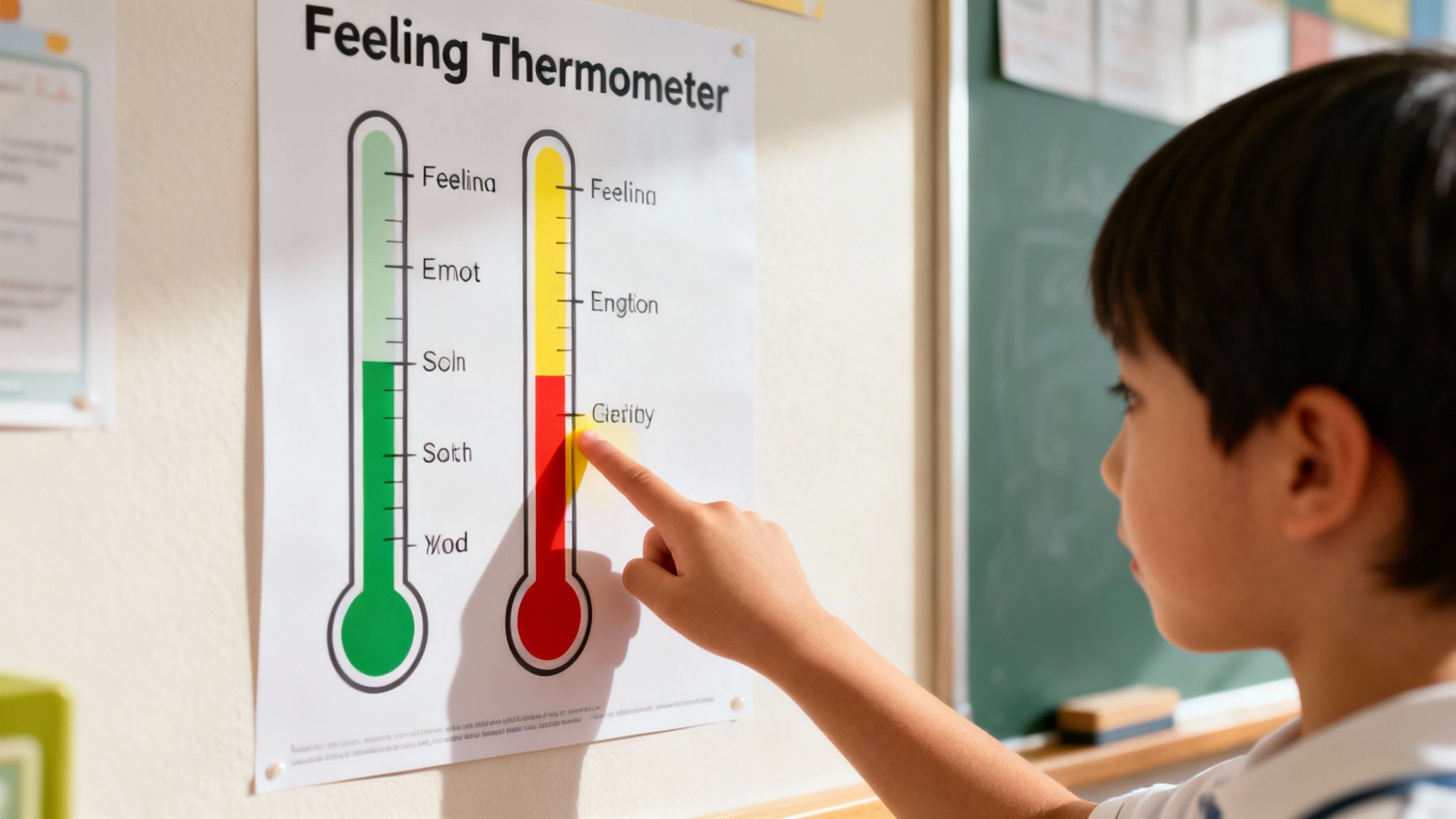
In a world that feels increasingly divided, the ability to genuinely understand another person’s point of view is more than a skill; it’s a superpower. For K-8 students, developing this ability, known as perspective-taking, is foundational for building healthy relationships, resolving conflicts, and creating inclusive communities. It’s the bedrock of social-emotional learning (SEL) that allows students to move from simple sympathy (feeling for someone) to true empathy (feeling with someone). This critical shift requires children to first understand their own emotions. A critical initial step in empathy is helping children identify and articulate their own feelings; consider using a simple feelings chart for kids to build this self-awareness.
This practical guide moves beyond abstract advice to offer a comprehensive roundup of powerful and actionable perspective taking activities designed for immediate use in classrooms, counseling sessions, and at home. We’ve compiled a variety of dynamic exercises suitable for kindergarten through middle school, ensuring you have the right tools for every developmental stage. Each item in this listicle includes:
Clear, step-by-step instructions.
Age-appropriate differentiations and modifications.
Specific SEL skills targeted by the activity.
Practical examples and sample scripts.
From role-playing and storytelling to art-based expression and restorative circles, these strategies are designed to cultivate deep, authentic empathy. Let’s explore how to move beyond the cliché and into transformative practices that create environments where every child feels seen, heard, and understood.
1. Role-Playing and Scenario-Based Activities
Role-playing is a powerful, hands-on method where students step into another person’s shoes to act out real-world scenarios. By embodying different characters, participants move beyond theoretical understanding to an experiential grasp of diverse viewpoints. This dynamic approach is one of the most effective perspective taking activities because it integrates movement, emotion, and social interaction, making empathy a tangible skill.
This method, popularized by practices like Augusto Boal’s Theatre of the Oppressed and used extensively by organizations like Soul Shoppe, allows students to safely explore complex social dynamics. They can practice navigating conflict, responding to peer pressure, and understanding the feelings of others in a controlled environment.
How It Works
The core of role-playing is assigning students specific roles within a predefined scenario. They act out the situation, making choices and reacting as their character would. The facilitator then guides a group reflection to unpack the experience.
For Younger Students (K-3): Use simple, relatable scenarios. Practical Example: Have two students act out a conflict over a shared toy. One student is the “grabber,” and the other is the “owner.” A third student can play the “friend” who sees it happen. Afterward, ask: “To the owner: how did it feel when the toy was taken?” “To the grabber: what did you want in that moment?” “To the friend: what did you see and how did it make you feel?”
For Older Students (4-8): Tackle more nuanced situations. Practical Example: A scenario could involve one student trying to convince another to cheat on a test, a group navigating the exclusion of a peer at lunch, or a student posting a hurtful comment online about a classmate. Assign roles like “the poster,” “the target,” and “the bystander” who saw the comment but didn’t say anything.
Implementation Tips for Success
To ensure these activities are productive and safe, structure is key. Always establish clear guidelines and objectives before you begin.
Start Small: Begin with low-stakes, lighthearted scenarios (e.g., disagreeing on a game to play at recess) before moving to more emotionally charged topics like bullying or exclusion.
Facilitate Debriefing: The learning happens in the reflection. After a role-play, use guided questions:
“To the person playing [Character A], what were you feeling when that happened?”
“What do you think [Character B] was thinking?”
“If we did this again, what could we change for a better outcome?”
Offer Opt-Outs: Participation should always be a choice. Allow students to observe if they are not comfortable acting. Observers can provide valuable insights during the debriefing.
Role-playing builds a strong foundation for social-emotional learning by transforming abstract concepts like empathy and respect into practical, memorable skills. By actively practicing these scenarios, students develop crucial communication skills that they can apply to real-life challenges.
2. Literature and Storytelling Circles
Stories are powerful vehicles for empathy, offering a direct window into another’s world. Literature and storytelling circles use the power of narrative to help students explore diverse viewpoints, motivations, and experiences. By engaging with characters in books or listening to peers’ personal stories, students practice one of the most fundamental perspective taking activities: seeing a situation through someone else’s eyes.
This approach is championed by educators like Harvey Daniels and Dr. Rudine Sims Bishop, who emphasize that books should serve as “windows, mirrors, and sliding glass doors.” Literature circles allow students to analyze character decisions, while storytelling circles build community by fostering understanding of each other’s lived realities.
How It Works
This method involves small groups reading and discussing texts or sharing personal narratives with a focus on viewpoint. The facilitator uses guided questions to deepen comprehension and encourage students to connect the story’s themes to their own lives.
For Younger Students (K-3): Use picture books with clear emotional arcs. Practical Example: After reading The Invisible Boy by Trudy Ludwig, ask: “How do you think Brian felt when no one included him?” and “What could the other kids have done to make him feel seen?” Then, have students turn and talk to a partner about a time they felt like Brian.
For Older Students (4-8): Use chapter books with complex characters and multiple perspectives, like Wonder by R.J. Palacio. Practical Example: Assign different small groups to be “experts” on a specific character (e.g., Via, Jack, Summer). Have them track their character’s point of view throughout the book and then present to the class how their character experienced a key event, like the first day of school, differently from others.
Implementation Tips for Success
Creating a safe and structured environment is essential for honest and respectful sharing. Establish clear norms before you begin any discussion or storytelling activity.
Select Diverse Texts: Choose culturally responsive literature that reflects your students’ identities and introduces them to new ones. Ensure a wide representation of family structures, cultures, and experiences.
Use Discussion Prompts: Scaffold conversations with sentence stems to help students articulate their thoughts. Examples include:
“I wonder why the character decided to…”
“From their perspective, they might have felt…”
“If I were in that situation, I would…”
Establish Group Norms: Before any circle, co-create rules for respectful listening, such as “one person speaks at a time,” “we listen to understand, not to reply,” and “what is shared in the circle stays in the circle.” This is especially crucial for personal storytelling.
By regularly engaging with stories, students build a cognitive framework for empathy. They learn that every person has a unique story that shapes their actions, a crucial skill for navigating social complexities in the classroom and beyond.
3. Empathy Mapping and Visual Perspective Activities
Empathy mapping is a powerful visual tool that helps students organize and understand another person’s experience. By creating a visual representation of what someone thinks, feels, says, and does, participants make invisible emotions and thoughts tangible. This concrete approach is one of the most effective perspective taking activities for younger learners, as it transforms abstract emotional concepts into an organized, easy-to-understand format.
Originally developed in the design thinking world by groups like IDEO, this method has been widely adopted by educators and counselors to build social awareness. It provides a structured way for students to move beyond their own viewpoint and systematically consider the complex inner world of another person, whether that’s a character in a book, a historical figure, or a peer in their classroom.
How It Works
The activity centers on a graphic organizer, often a simple chart with four quadrants: Thinks, Feels, Says, and Does. Students fill out the map for a specific person in a particular situation, using words, drawings, or both to capture their perspective.
For Younger Students (K-3): Focus on literary characters or simple classroom scenarios. Practical Example: After reading The Little Red Hen, students can create an empathy map for the protagonist. Teacher asks: “What was the Little Red Hen thinking when no one would help her? (Maybe: ‘I have to do this all by myself.’) What did she feel? (Maybe: ‘Tired’ or ‘Frustrated’). What did she say? (‘I will do it myself then.’) What did she do? (She baked the bread.)”
For Older Students (4-8): Use empathy maps to analyze more complex social dynamics. Practical Example: Have students create two empathy maps for the same situation from a history lesson, like the Boston Tea Party. One map is for a British soldier, and the other is for a Son of Liberty. This exercise visually highlights how two groups can experience the same event very differently.
Implementation Tips for Success
To get the most out of empathy mapping, it’s important to scaffold the process and create a supportive environment for exploration.
Use Templates: Start with pre-made templates labeled with sections like “Thinks,” “Feels,” “Says,” and “Does.” This provides a clear structure, especially for students new to the activity.
Model the Process: Before asking students to work independently, complete an empathy map together as a class. Use a very familiar character (from a movie or popular book) or a relatable situation (like feeling nervous before a presentation).
Ask Probing Questions: Guide students’ thinking with questions that encourage deeper reflection. Ask, “What might this person be secretly worried about?” or “What do they wish others understood about them?”
Integrate with Writing: Use the completed empathy maps as a pre-writing tool. Students can write a short story, journal entry, or a poem from the perspective of the person they mapped. You can learn more about methods like this when exploring how to teach empathy in the classroom.
Empathy mapping makes perspective-taking visible and accessible, giving students a repeatable process for building compassion and understanding in all aspects of their lives.
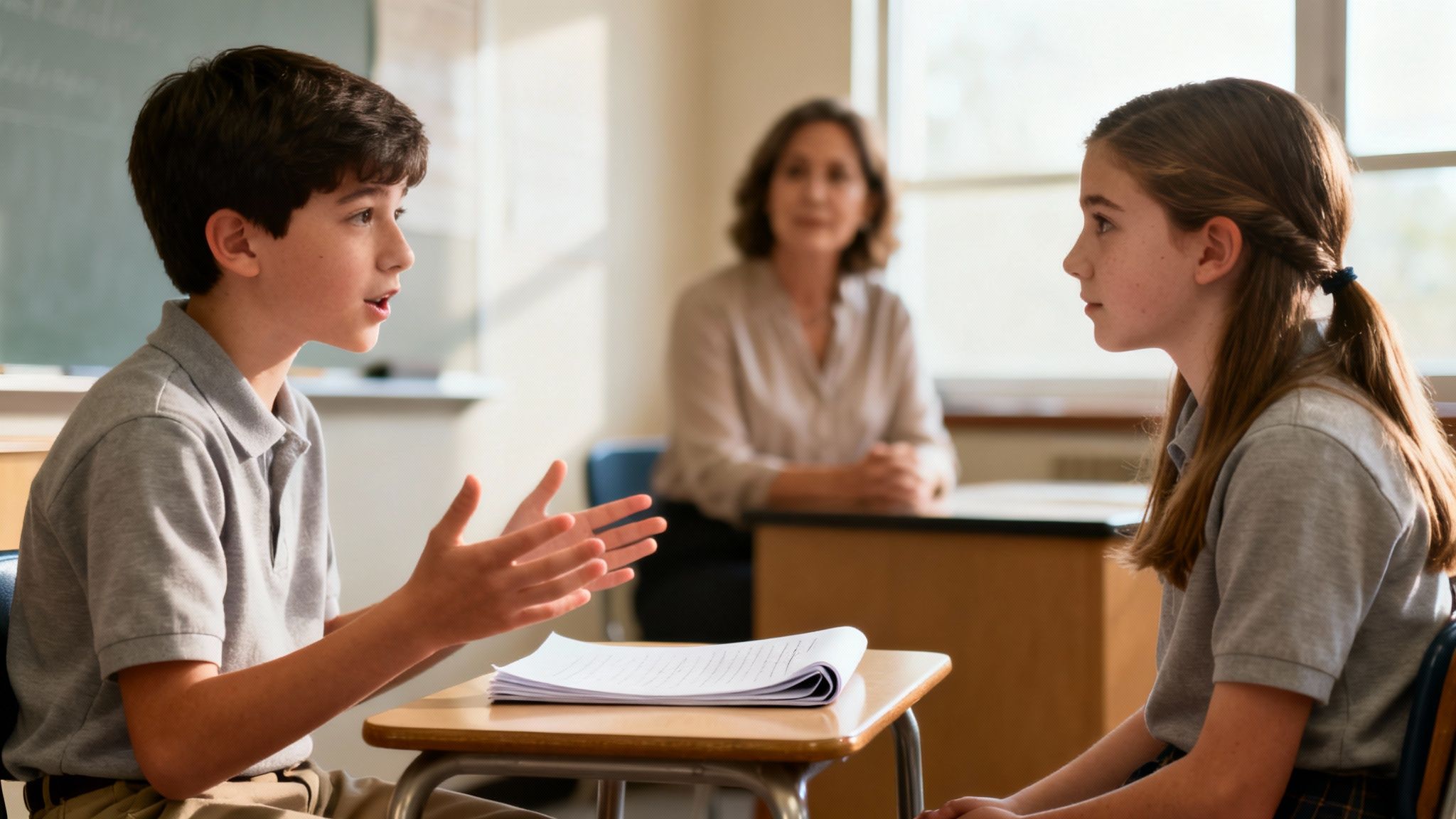
4. Peer Interviews and “Getting to Know You” Activities
Structured peer interviews transform typical icebreakers into meaningful perspective taking activities. Students ask carefully designed questions to learn about their classmates’ experiences, values, and backgrounds. This guided conversation moves beyond surface-level facts to build a genuine understanding of how a peer’s life has shaped their worldview.
This method, often used in restorative practices and community-building circles, helps dismantle assumptions and stereotypes. By actively listening to a partner’s story, students learn to appreciate the diversity within their own classroom, fostering a culture of curiosity and respect.
How It Works
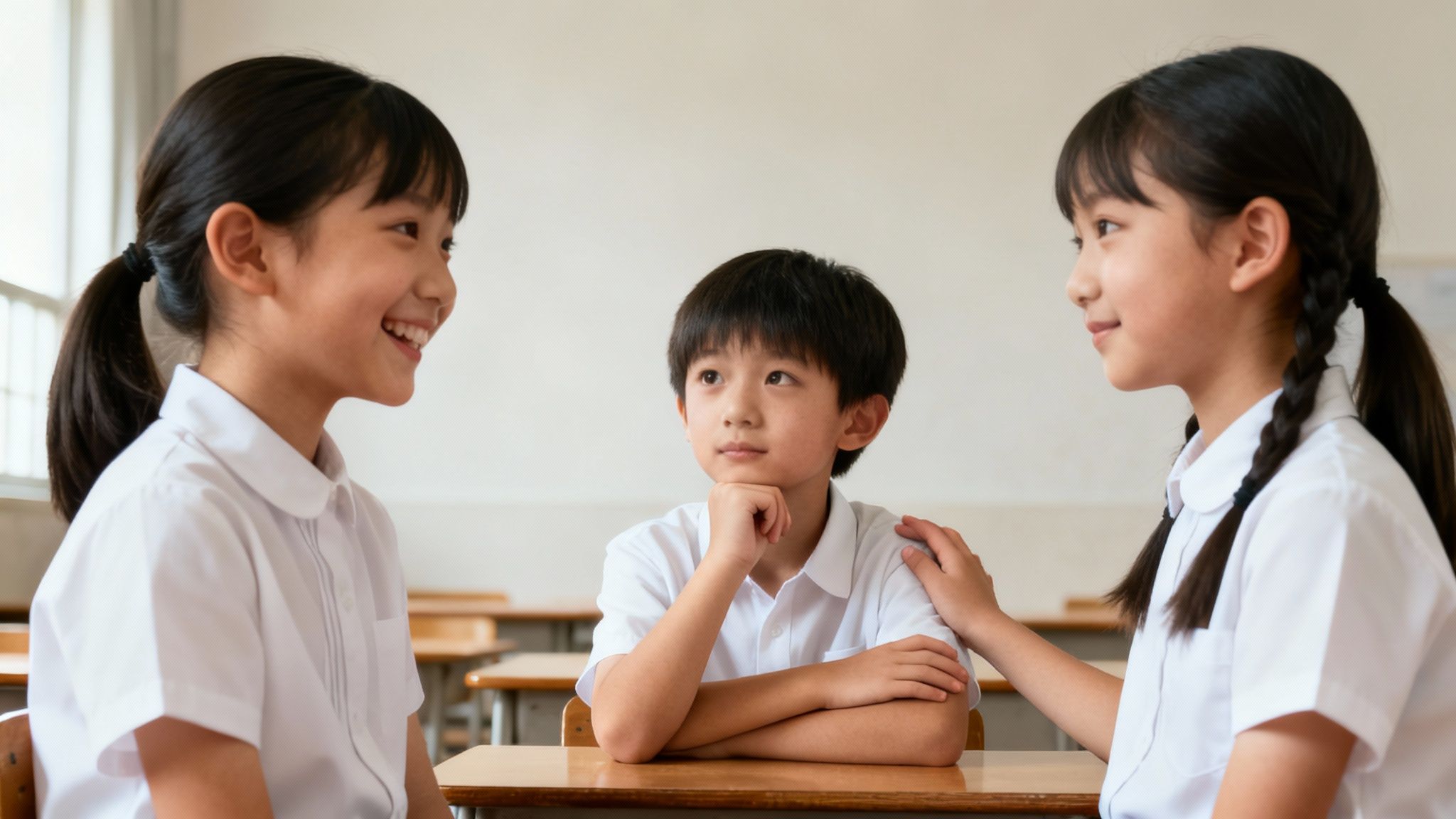
The activity pairs students to interview each other using a set of prepared questions. The goal is not just to collect answers but to listen and ask follow-up questions. Afterward, students can reflect on what they learned about their partner and themselves.
For Younger Students (K-3): Keep interviews short with simple, concrete questions. Practical Example: Partners can draw pictures to represent their answers. Questions could include: “What is a favorite family tradition and why is it special?” or “Tell me about a time you felt really happy.” The interviewer then shares one interesting thing they learned about their partner with the class.
For Older Students (4-8): Use multi-layered questions that invite deeper reflection. Practical Example: A prompt could be: “Describe a challenge you’re proud of overcoming” or “What is something people often misunderstand about you?” After the interview, students can write a one-paragraph “bio” for their partner, focusing on what they learned about their character and strengths.
Implementation Tips for Success
Creating a safe and structured environment is crucial for these interviews to be effective. Clear guidelines help students feel comfortable sharing.
Create Question Banks: Develop a list of questions ranging from lighthearted (e.g., “What’s your favorite thing to do on a weekend?”) to more profound (e.g., “What is a value that is really important to your family?”). This allows you to tailor the activity to the group’s comfort level.
Model Active Listening: Before they begin, demonstrate what active listening looks like. Show how to make eye contact, nod, and ask clarifying questions like, “Can you tell me more about that?”
Establish Safety and Confidentiality: Clearly state that personal stories shared in pairs should stay between those two students unless they get permission to share with the larger group. This builds trust.
Use Sentence Starters: Provide prompts to help students formulate respectful and open-ended questions, such as:
“Tell me about a time when…”
“What’s important to you about…”
“How does it feel when…”
Peer interviews are a powerful tool for building a connected and empathetic classroom community. They teach students that every person has a unique story and that taking the time to listen is a profound act of respect.
5. Perspective-Taking Through Art, Music, and Creative Expression
Creative expression offers a unique and powerful pathway for exploring different viewpoints. By using mediums like visual art, music, or dance, students can process and communicate perspectives that are difficult to put into words. This approach engages different parts of the brain than verbal discussion, making it one of the most inclusive perspective taking activities for students who may not be comfortable expressing themselves through speech alone.
This method, championed by arts-integrated education advocates and SEL programs, acknowledges that emotion and perspective are deeply personal. Creating or responding to art allows students to build their emotional vocabulary and empathy in a way that feels natural and non-confrontational, turning abstract feelings into tangible creations.
How It Works
This activity centers on using creative prompts to inspire students to explore a specific point of view. The goal is not artistic perfection but the process of understanding and expressing a perspective. The facilitator then guides a sharing circle where students can present and discuss their work.
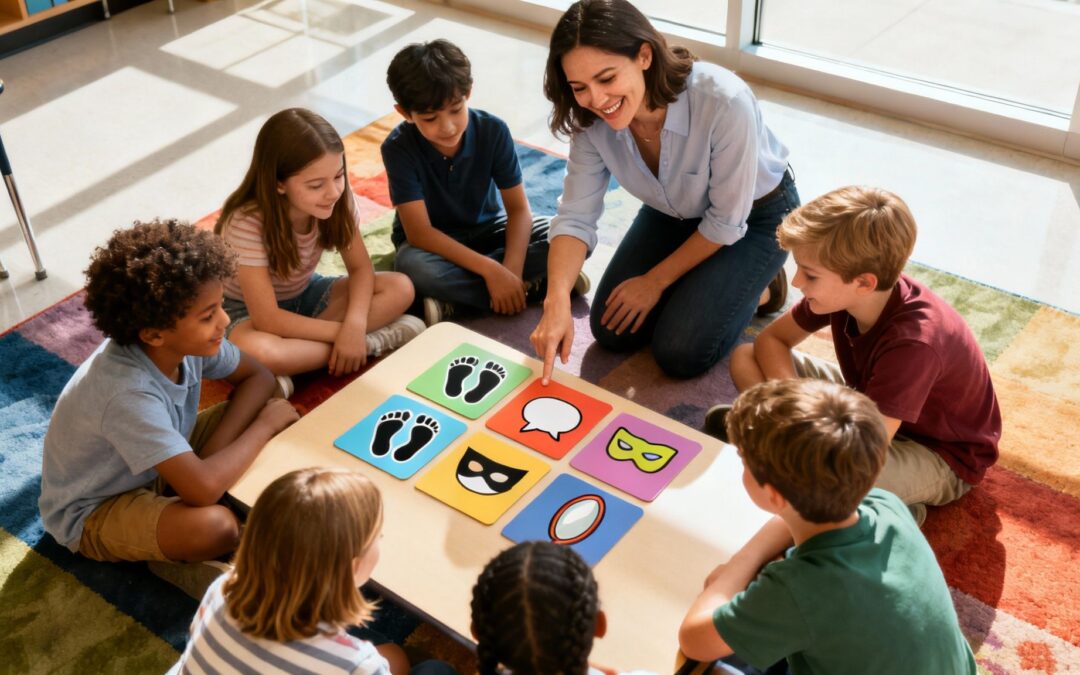
For Younger Students (K-3): Keep prompts concrete and feeling-focused. Practical Example: Play different pieces of music (one fast and upbeat, one slow and somber) and ask students to draw with colors and shapes that show how each song makes them feel. Or, after reading a story, ask them to draw a picture from the perspective of a secondary character, like the wolf in The Three Little Pigs.
For Older Students (4-8): Use more complex and abstract prompts. Practical Example: Have students create a “perspective collage” using magazine cutouts to represent how someone new to the school might see the cafeteria, hallways, and classrooms. Another powerful activity is to have them write a song or poem from the perspective of a historical figure they are studying.
Implementation Tips for Success
To create a supportive environment, it is crucial to emphasize process over product and honor all forms of creative expression.
Frame the Activity: Clearly state that the goal is to explore feelings and ideas, not to create a masterpiece. Use prompts like, “Create something that shows how [character] feels about…” to focus on expression, not technical skill.
Use Diverse Materials: Offer a variety of mediums, such as paint, clay, digital art tools, or musical instruments. Play music from diverse artists and cultures, and discuss whose stories are being told.
Facilitate Sharing Circles: After the creation process, invite students to share their work. Ask open-ended questions like, “What part of this piece shows the character’s feelings?” or “What story does this artwork tell?” Remember that some students may prefer to create and listen without sharing verbally.
By integrating the arts, you provide a versatile and deeply effective way for students to connect with the emotional lives of others. This approach validates different ways of processing the world and builds a classroom culture where every perspective is seen and valued.
6. Restorative Circles and Peer Dialogue Processes
Restorative circles are structured dialogues that bring together individuals affected by conflict to share their perspectives, understand the impact of actions, and collaboratively find a path forward. By creating a safe space for every voice to be heard, this method moves beyond punishment to focus on empathy and repair. This approach is one of the most transformative perspective taking activities because it helps participants understand the ripple effect of their actions on a community.
Pioneered by restorative justice leaders like Dr. Howard Zehr, this practice is now widely used in schools as an alternative to traditional discipline. It shifts the central question from “What rule was broken and who should be punished?” to “Who was harmed and what needs to happen to make things right?” This fundamental change empowers students to see situations from multiple viewpoints and take responsibility for community well-being.
How It Works
A facilitator guides participants through a series of scripted questions designed to promote listening and understanding. The use of a talking piece (an object that is passed around) ensures that only one person speaks at a time, and everyone has an equal opportunity to contribute.
For Younger Students (K-3): Use circles proactively to build community. Practical Example: A “check-in” circle can start the day with a simple prompt like, “Share one happy thing and one tricky thing from your morning.” After a minor conflict, like excluding a friend from a game, the circle can explore questions like, “How does it feel to be left out?” and “What could we do next time to make sure everyone feels welcome to play?”
For Older Students (4-8): Address more complex issues, such as a post-bullying incident. The circle would include the student who was targeted, the student who bullied, and supportive peers. Practical Example: The facilitator might ask the student who did the bullying, “What were you thinking and feeling right before it happened?” Then, to the student who was targeted, “What has been the hardest part for you since this happened?” This allows everyone to hear the full impact of the actions.
Implementation Tips for Success
Effective restorative circles require careful planning and skilled facilitation to ensure they are safe and productive for all involved.
Train Facilitators: Leaders must be thoroughly trained in restorative practices and trauma-informed approaches. The facilitator’s role is to maintain safety, not to judge or solve the problem.
Use a Consistent Framework: Guide the circle with a clear question structure. A common framework is:
“What happened?”
“Who has been affected by what happened, and how?”
“What needs to happen to make things right?”
Ensure Voluntary Participation: Forcing a student into a circle can undermine the entire process. Participation should be a choice, and individual “pre-circles” are essential to prepare everyone.
Build Community Proactively: Don’t wait for harm to occur. Use circles regularly to build relationships and establish trust, making it easier to navigate conflict when it arises. You can learn more about restorative practices in education to see how they build positive school climates.
Restorative circles teach students that their voices matter and their actions impact others, building a deep, practical understanding of empathy and mutual respect.
7. Programmatic and Community-Based Approaches: SEL, Mindfulness, and Service Learning
Beyond standalone lessons, programmatic approaches embed perspective-taking into the very fabric of school culture through comprehensive Social-Emotional Learning (SEL) curricula, mindfulness practices, and service learning. These structured methods intentionally teach empathy alongside self-awareness, relationship skills, and responsible decision-making. By combining direct instruction with real-world community engagement, these are powerful perspective taking activities that help students understand systemic issues and their role within a larger community.
This approach, championed by organizations like CASEL and demonstrated through experiential programs like those offered by Soul Shoppe, moves beyond individual scenarios to build a consistent, school-wide language for empathy and understanding. It connects classroom learning to authentic community needs, fostering a deep sense of civic responsibility and interconnectedness.
How It Works
These programs integrate perspective-taking skills across the curriculum and school day, rather than isolating them to a single lesson. They often combine classroom instruction with practical, reflective experiences.
For Younger Students (K-3): Use an SEL curriculum like Second Step or Responsive Classroom during morning meetings. Practical Example: A lesson might focus on identifying feelings in others using picture cards. This is followed by a class project like creating “get well soon” cards for a local children’s hospital, during which the teacher asks, “What words can we write that would make someone feel happy and cared for?”
For Older Students (4-8): Implement a service-learning project. Practical Example: Students could partner with a local food bank. First, they learn about food insecurity in social studies. Then, they volunteer to sort donations. Finally, they write a reflection answering: “After meeting volunteers and hearing stories, how has your perspective on hunger in our community changed?”
Implementation Tips for Success
Success with these broad approaches hinges on thoughtful planning, professional development, and authentic community partnerships.
Integrate, Don’t Add On: Weave SEL concepts into existing structures like morning meetings, advisory periods, and academic subjects. This makes the learning feel relevant and continuous.
Invest in Training: Effective implementation requires that all staff understand the philosophy and practical strategies of the chosen program. Quality professional development is non-negotiable.
Center Community Voice: When engaging in service learning, partner with community organizations as equals. Ensure projects are designed to meet genuine, community-identified needs rather than positioning students as “saviors.”
Build in Reflection: Structure time for reflection before, during, and after service projects. Use prompts like, “What do we expect to learn?” and “How has this experience changed our perspective?”
Cultivate Mindfulness: Introduce mindfulness to build the self-regulation and awareness necessary for perspective-taking. For deepening personal focus, practices such as meditating with crystals can be integrated to help students cultivate inner calm.
By adopting a programmatic approach, schools create a reinforcing ecosystem where perspective-taking is not just a lesson, but a lived value. These structured programs provide students with the consistent practice needed to develop a sophisticated and compassionate worldview. You can explore a variety of engaging social-emotional learning activities to supplement any curriculum.
8. Family and Cross-Generational Perspective-Taking Activities
Inviting family and community members into the classroom bridges the gap between home and school, enriching a student’s understanding of how personal history and culture shape viewpoints. These activities honor that students come from diverse family structures and backgrounds, positioning their lived experiences as valuable sources of knowledge. This approach makes learning relevant and affirms student identity, making it one of the most powerful perspective taking activities available.
This asset-based approach, rooted in frameworks like the Funds of Knowledge theory developed by Moll, Amanti, Neff, and Gonzalez, recognizes that families possess rich cultural and cognitive resources. By centering these voices, schools can build authentic partnerships and create a more inclusive learning environment where every family’s story is valued.
How It Works
This method involves creating structured opportunities for students to learn from their relatives and community elders. The focus is on storytelling and shared experiences, helping students connect curriculum concepts to the real world and understand the diverse viewpoints within their own community.
For Younger Students (K-3): Host a “Family Treasures” show-and-tell. Practical Example: Students bring an item from home that is special to their family (like a grandparent’s recipe, a cultural garment, or an old photograph) and invite a family member to help them share its story. This helps children see how objects can hold different meanings and histories for different people.
For Older Students (4-8): Implement a family history interview project. Practical Example: Students use a provided set of questions to interview an older relative about their life experiences, such as “What was school like for you?” or “Tell me about a time you had to be brave.” They can then present their findings by creating a “podcast” episode, a written report, or a visual timeline that is shared with the class.
Implementation Tips for Success
Creating a welcoming space for families is crucial for these activities to succeed. The goal is to build genuine, respectful relationships.
Offer Multiple Participation Options: Not all families can come to school during the day. Allow participation through recorded videos, written stories, drawings, or a live video call. This inclusivity ensures everyone who wants to share can.
Build Relationships First: Don’t make the first interaction with a family a request for them to share personal stories. Build rapport through positive communication, newsletters, and school events before extending an invitation to participate in a classroom activity.
Facilitate a Thoughtful Debrief: After a family or community member shares, guide a student discussion to process the experience. Ask questions like:
“What was one new thing you learned about your classmate’s family or culture?”
“How was their experience similar to or different from your own family’s?”
“How does learning this story change how you see our community?”
Engaging families and elders directly validates students’ identities and shows them that learning happens everywhere, not just within school walls. These cross-generational connections build a strong sense of community and teach students to appreciate the rich diversity of perspectives that make up their world.
Comparison of 8 Perspective-Taking Activities
Activity
Implementation complexity
Resource requirements
Expected outcomes
Ideal use cases
Key advantages
Role-Playing and Scenario-Based Activities
Low–Moderate — needs facilitator debrief skills
Minimal materials and space; teacher facilitation time
Rapid observable social skill practice; improved empathy and confidence
Bullying prevention, conflict resolution, social skill practice (K–8)
Highly engaging; immediate feedback; builds shared classroom language
Literature and Storytelling Circles
Moderate — requires skilled facilitation and time
Texts/resources, structured protocols, teacher/librarian support
Deeper perspective analysis, improved literacy and respectful dialogue
Cultural understanding, literacy-integrated SEL, community building
Integrates academics + SEL; highlights diverse voices; scalable
Empathy Mapping and Visual Perspective Activities
Low — templates and modeling make it easy to implement
Templates, art supplies, display space, time for reflection
Tangible artifacts showing perspective; accessible for varied learners
Early elementary, students with verbal or processing challenges, conflict mapping
Concrete and inclusive; supports visual/kinesthetic learners; reusable
Peer Interviews and “Getting to Know You” Activities
Low–Moderate — needs protocols and privacy safeguards
Question banks, partner time, facilitator prep, confidentiality norms
Stronger peer connections, active listening, reduced isolation
Welcoming new students, peer mentoring, building belonging
Direct relationship-building; adaptable across ages; low cost
Perspective-Taking Through Art, Music, and Creative Expression
Moderate — needs clear framing to link art to perspective
Art/music materials, space, arts facilitation or teacher training
Increased emotional expression, alternative access to empathy development
Supporting language learners, trauma processing, honoring diverse expression
Engages multiple modalities; less verbally demanding; affirming
Restorative Circles and Peer Dialogue Processes
High — requires extensive training and cultural shift
Trained facilitators, time, preparatory work, follow-up supports
Relationship repair, accountability, measurable reductions in harm
Putting Perspective into Practice: Your Next Steps
We’ve explored a rich tapestry of perspective taking activities, from the dramatic flair of role-playing scenarios to the quiet introspection of empathy mapping. Each of the eight approaches detailed in this guide, whether it’s harnessing the power of storytelling, engaging in restorative circles, or interviewing a peer, serves as a vital tool in building a foundation of social-emotional intelligence. These are not just isolated classroom exercises; they are invitations to cultivate a culture of empathy, curiosity, and genuine human connection.
The core takeaway is that perspective-taking is not a static skill learned in a single lesson. It is a dynamic, ongoing practice. It flourishes when woven into the very fabric of a child’s daily life, becoming as natural as reading or math. It is the practice of asking, “What might this look like from their side?” during a playground disagreement, a historical lesson, or a family discussion.
From Activities to Lifelong Habits
The true power of these strategies is realized when they move beyond the activity itself and become a routine way of thinking and interacting. The ultimate goal is to equip students with an internal framework for understanding others, a framework they can carry with them long after they leave the classroom.
For example, a student who regularly participates in Literature Circles doesn’t just learn to analyze characters; they learn to question their own initial judgments about people they meet. A child who has used an Empathy Map to understand a classmate’s frustration is better equipped to offer support instead of reacting with annoyance. This is where the magic happens: the activity becomes a habit, and the habit becomes a part of their character.
Key Insight: The most effective perspective taking activities are those that are consistently integrated, creating a predictable and safe environment where students feel empowered to explore different viewpoints without fear of judgment.
Your Actionable Next Steps
Embarking on this journey doesn’t require a complete overhaul of your curriculum or home life. Meaningful change begins with small, intentional steps. Here is how you can start putting these ideas into practice today:
Start Small and Be Specific: Don’t try to implement everything at once. Review the list of activities and choose just one that feels like a natural fit for your students’ age group and current needs. Perhaps you start by incorporating a “Getting to Know You” interview into your morning meeting once a week, or you select a book specifically for its potential to spark a perspective-taking discussion.
Model the Behavior: Children are keen observers. Let them see you practicing perspective-taking. You can do this by verbalizing your own thought process. For instance, a teacher might say, “I see that many of you are feeling tired today. I’m going to try to see this from your perspective and adjust our schedule to include a short movement break.” A parent might say, “I’m feeling frustrated, but I’m going to take a moment to understand why you might have felt you needed to do that.”
Connect to Academics: Seamlessly integrate these practices into existing lessons. When studying a historical event, prompt students to write a diary entry from the perspective of two different historical figures. In science, have them debate the environmental impact of a new technology from the viewpoint of a scientist, a business owner, and a community resident. This shows that perspective-taking is a critical thinking skill applicable across all subjects.
Embrace Imperfection: There will be moments when discussions are challenging or when students struggle to see another viewpoint. This is part of the learning process. The goal is not to achieve perfect empathy in every interaction but to consistently create opportunities for practice. Celebrate the effort, not just the outcome.
By committing to these practices, we are doing more than just teaching a social skill. We are nurturing compassionate leaders, thoughtful friends, and engaged citizens who can navigate a complex and diverse world with wisdom and kindness. We are giving them the invaluable gift of seeing the world not just through their own eyes, but through the eyes of others.
Ready to build a comprehensive, campus-wide culture of empathy and respect? Soul Shoppe offers experiential programs that provide students and staff with a shared language and practical tools for conflict resolution, emotional intelligence, and perspective-taking. Explore Soul Shoppe’s programs to bring these vital skills to your entire school community.
Effective communication is a cornerstone of social-emotional learning (SEL), academic achievement, and lifelong success. While the phrase “use your words” is a common refrain in classrooms and homes, teaching children how to use their words constructively requires more than just a simple reminder. It demands intentional practice through engaging, hands-on communication skills activities that build a sophisticated toolkit for expressing thoughts, understanding others, and navigating complex social situations.
This comprehensive guide moves beyond basic instruction to provide a curated collection of practical, grade-tiered activities designed for K-8 students. Educators, administrators, and parents will find detailed, step-by-step instructions for implementing powerful exercises that foster essential competencies. We will cover a broad spectrum of skills, from active listening and interpreting nonverbal cues to resolving conflicts and practicing empathy.
Instead of abstract theories, you will find actionable strategies you can implement immediately. Each activity is structured to be both educational and engaging, helping students develop the confidence and ability to communicate clearly and respectfully. These exercises are not just about preventing misunderstandings; they are about building stronger relationships, fostering a positive school climate, and equipping students with the tools they need to thrive in all aspects of their lives. Whether you’re a teacher looking for a new lesson plan or a parent hoping to support your child’s social growth, this resource provides the concrete activities needed to turn communication theory into a practiced, everyday skill.
1. Active Listening Circles
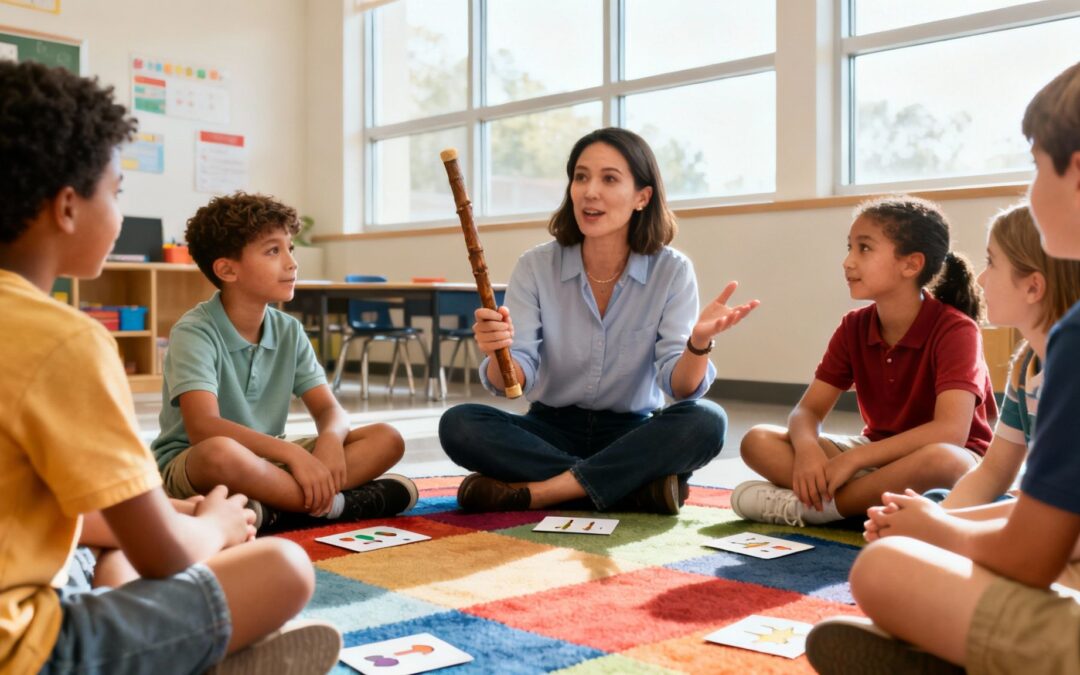
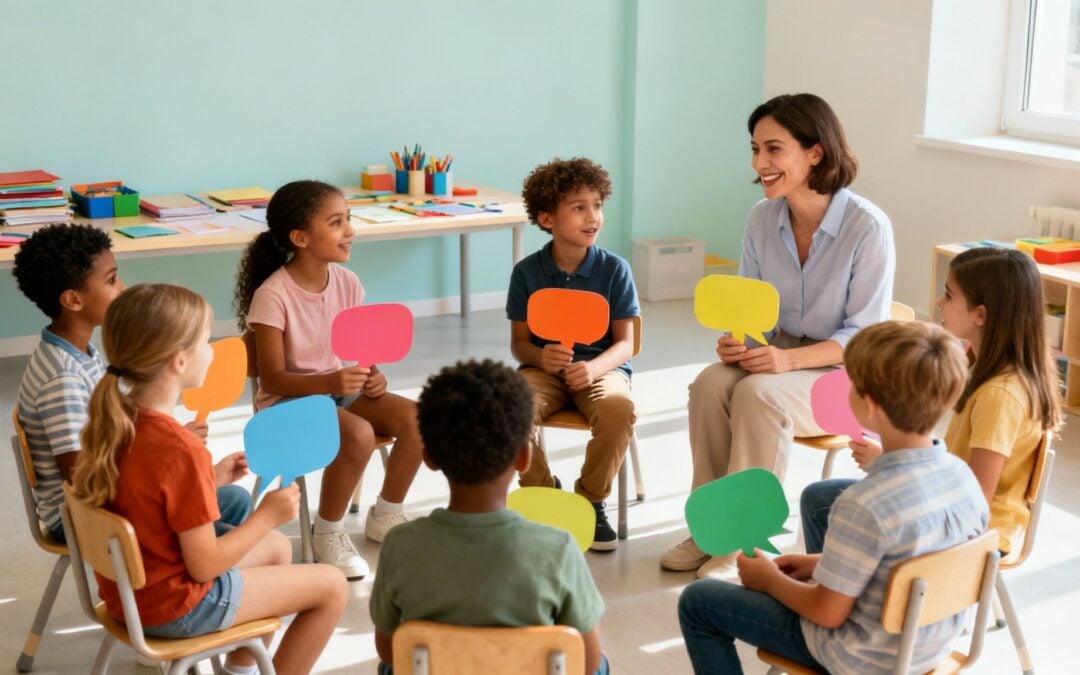
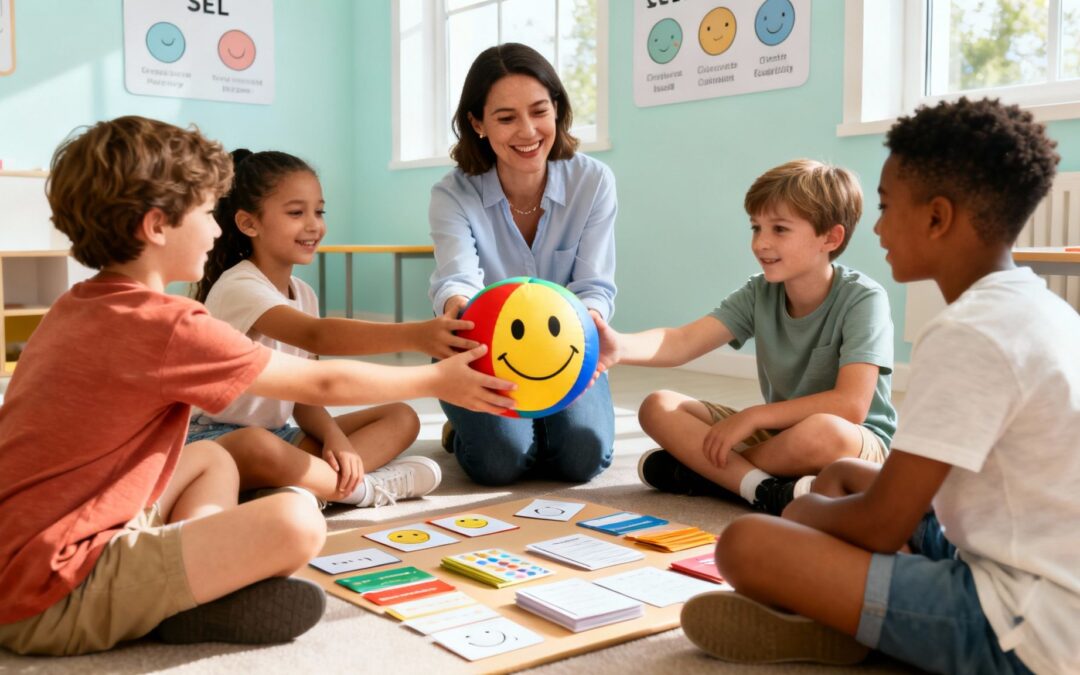
Active Listening Circles are structured conversations designed to teach students how to listen with the intent to understand, not just to reply. In this activity, students sit in a circle and take turns speaking on a specific prompt while the others practice focused, respectful listening. This simple yet powerful exercise builds empathy and creates a safe space for sharing.
This practice is fundamental among communication skills activities because it directly addresses the often-overlooked listening component of dialogue. It helps students learn to honor others’ perspectives, reduce interruptions, and appreciate the value of each person’s voice.
How It Works
Purpose: To develop active listening skills, promote empathy, and build a sense of community and psychological safety.
Time: 15–20 minutes
Materials: A talking piece (e.g., a small ball, decorated stone, or stuffed animal) and a discussion prompt.
Step-by-Step Directions:
Arrange the Circle: Have students sit in a circle where everyone can see each other.
Introduce the Prompt: Present a simple, open-ended prompt.
Practical Example (K-2): “Share your favorite part of the day so far.”
Practical Example (3-5): “Talk about a skill you’d like to learn.”
Practical Example (6-8): “Describe a time you showed kindness to someone.”
Explain the Rules: The person holding the talking piece is the only one who can speak. Everyone else’s job is to listen quietly and attentively, without planning their response.
Begin the Circle: Hand the talking piece to a starting student. After they share, they pass it to the next person.
Closing: Once everyone who wishes to share has spoken, briefly thank the group for their respectful listening.
Tips for Implementation
For Younger Students (K-3): Keep prompts concrete and focused on recent experiences. Use a visually engaging talking piece. Model active listening by nodding and making eye contact with the speaker.
For Older Students (4-8): Introduce more complex prompts related to feelings, challenges, or goals. After the circle, you can lead a brief reflection on what it felt like to be truly listened to.
Differentiation: Offer students the “right to pass” if they don’t feel comfortable sharing. This ensures the circle remains a low-pressure, safe environment.
This structured approach is a cornerstone of building a positive classroom culture. To see how these principles are integrated into a broader curriculum, you can explore the tools and strategies in Soul Shoppe’s comprehensive Peace Path® conflict resolution program.
2. Role-Playing and Perspective-Taking Scenarios
Role-Playing Scenarios are interactive exercises where students act out realistic social situations to practice communication strategies and understand different viewpoints. By stepping into another person’s shoes, students can safely explore complex emotions, practice conflict resolution, and build empathy. This hands-on method bridges the gap between knowing what to do and actually doing it in a real-life situation.
This technique is a core component of effective communication skills activities because it moves beyond theoretical discussion into practical application. It helps students develop emotional intelligence and flexible thinking, preparing them to navigate friendship challenges, peer pressure, and other social hurdles with confidence and compassion.
How It Works
Purpose: To build empathy, practice problem-solving, develop conflict resolution skills, and learn to communicate effectively in challenging situations.
Time: 20–30 minutes (including debrief)
Materials: Scenario cards (pre-written situations), optional props to set the scene.
Step-by-Step Directions:
Introduce the Scenario: Present a relatable conflict or situation.
Practical Example (K-3): “Two friends both want to be the line leader.”
Practical Example (4-8): “A student overhears their friends making fun of another classmate’s new haircut.”
Assign Roles: Assign students roles within the scenario (e.g., the friends, a bystander). It is often powerful to have students play roles that are different from their typical experience.
Act It Out: Give students a few minutes to act out the scene. Encourage them to use “I” statements and express the feelings of their character.
Pause and Discuss: Stop the role-play at a key moment and ask observers: “What did you notice about their body language?” or “What is another way this could be handled?”
Debrief: After the role-play, have students step out of their roles. Discuss how it felt to be each character and what they learned about the situation and themselves.
Tips for Implementation
For Younger Students (K-3): Use simple, concrete scenarios like sharing a toy or asking to join a game. Use puppets or props to help them feel more comfortable acting.
For Older Students (4-8): Introduce more complex social dynamics, such as navigating gossip, handling peer pressure online, or disagreeing respectfully with a friend’s opinion.
Differentiation: Provide sentence starters like “I feel ___ when you ___” or “I need ___” to support students who struggle with expressing themselves. Allow students to participate as active observers if they are not ready to act.
Role-playing is a dynamic tool for building a proactive and empathetic school culture. To learn how to integrate these scenarios into a structured conflict resolution framework, explore Soul Shoppe’s acclaimed student leadership and peer mediation programs.
3. Nonverbal Communication and Body Language Activities
Nonverbal Communication and Body Language Activities teach students to recognize and interpret the powerful messages sent through facial expressions, gestures, posture, and personal space. These exercises help participants understand that a significant portion of communication is conveyed without words, making body awareness essential for effective social interaction.
These practices are vital among communication skills activities because they equip students with the ability to “read the room” and align their own nonverbal cues with their intended message. This focus on conscious communication builds self-awareness and empathy, which are core components of Soul Shoppe’s approach to creating respectful school environments.
How It Works
Purpose: To build awareness of nonverbal cues, improve the ability to interpret body language, and practice expressing emotions and intentions without words.
Time: 15–25 minutes
Materials: Varies by activity; may include emotion flashcards, masking tape for personal space bubbles, or a video recording device.
Step-by-Step Directions:
Introduce the Concept: Explain that we communicate with our bodies, not just our words. Use a simple example: “What does it look like when someone is excited versus when they are sad?”
Choose an Activity: Select an age-appropriate exercise. A great starting point is Emotion Charades.
Explain the Rules: For Emotion Charades, a student draws a card with an emotion (e.g., happy, frustrated, surprised) and must act it out using only their face and body. The other students guess the emotion. Practical Example: A student acting out “frustrated” might cross their arms, furrow their brow, and sigh loudly without making any noise.
Facilitate and Model: Demonstrate an emotion yourself to start. Encourage students to be bold in their expressions and observant in their guessing.
Debrief: After the game, discuss what specific cues helped students guess the emotion. Ask, “What did their shoulders do? What about their eyebrows or mouth?”
Tips for Implementation
For Younger Students (K-3): Use Mirroring, where partners face each other and one student mirrors the movements of the other. This builds focus and connection. Use simple, primary emotions for charades.
For Older Students (4-8): Try Personal Space Bubbles. Use tape to mark a circle around a student and have others slowly approach, with the student saying “stop” when they feel uncomfortable. This makes the concept of boundaries tangible.
Differentiation: All activities should be “opt-in,” allowing students who are uncomfortable with physical expression to observe or participate in a different role, such as timekeeper or guesser.
By engaging in these hands-on communication skills activities, students gain a deeper understanding of social dynamics. For more ideas on how to build these skills, you can explore strategies for teaching children about reading social cues.
4. Fishbowl Discussions
Fishbowl Discussions are a structured conversation format where a small inner circle of students discusses a topic while a larger outer circle observes. The roles then switch, giving everyone a chance to both speak and listen critically. This dynamic setup sharpens public speaking, active listening, and analytical skills in a controlled environment.
This is one of the most effective communication skills activities for teaching students how to engage in and analyze a conversation simultaneously. It helps participants understand the mechanics of a healthy dialogue, from building on others’ ideas to using evidence, while the observers learn to identify effective communication strategies.
How It Works
Purpose: To develop speaking and active listening skills, encourage critical thinking, and allow students to analyze group dynamics.
Time: 25–40 minutes
Materials: Chairs arranged in two concentric circles (an inner “fishbowl” and an outer circle), discussion prompts or a text to analyze.
Step-by-Step Directions:
Set Up the Circles: Arrange a small circle of 4–6 chairs in the center (the fishbowl) and a larger circle of chairs around it for the observers.
Assign Roles: A small group of students begins in the fishbowl, while the rest of the class sits in the outer circle as observers.
Provide the Prompt: Give the inner circle a specific, thought-provoking question or topic.
Practical Example (2-4): “What are three rules that make our classroom a better place?”
Practical Example (5-8): After reading a chapter about a character facing a dilemma, ask, “What were the character’s choices, and what would you have done differently?”
Begin the Discussion: The inner circle discusses the prompt for a set amount of time (e.g., 8–10 minutes). The outer circle listens silently and takes notes on a specific task, such as tracking how often participants build on each other’s points.
Switch and Debrief: After the time is up, the inner and outer circles switch roles. A new group enters the fishbowl with a new or related prompt. A final whole-group debrief can discuss both the content and the communication process.
Tips for Implementation
For Younger Students (2-4): Use simpler topics like, “What makes a good friend?” Give observers a clear, simple task, like using a thumbs-up when they hear a kind word.
For Older Students (5-8): Tackle more complex topics, like analyzing a character’s motivations in a novel or debating a school policy. Provide observers with a rubric to evaluate the discussion’s quality.
Differentiation: Use sentence frames to support students in the fishbowl (e.g., “I agree with ___ because…” or “To add to what ___ said…”). Allow observers to write or draw their observations instead of only taking notes.
This activity not only builds individual communication skills but also enhances the entire class’s awareness of what makes a discussion productive. To further support students in navigating challenging conversations, explore the peer mediation strategies within Soul Shoppe’s violence prevention and bullying prevention programs.
5. I-Messages and Nonviolent Communication Practice
I-Messages and Nonviolent Communication (NVC) are structured frameworks that teach students to express their feelings and needs clearly without blaming or criticizing others. Instead of accusatory “you” statements, students learn to use an “I feel…” format, which reduces defensiveness and opens the door for genuine understanding and problem-solving.
This practice is one of the most transformative communication skills activities because it shifts the focus from fault to feeling. It empowers students with a concrete tool to navigate conflict constructively, making it a cornerstone of effective social-emotional learning and a core component of Soul Shoppe’s approach to conflict resolution.
How It Works
Purpose: To teach students how to express personal feelings and needs responsibly, reduce blame in conflicts, and foster empathetic responses.
Time: 20–25 minutes for initial instruction and practice.
Materials: Whiteboard or chart paper, markers, and scenario cards (optional).
Step-by-Step Directions:
Introduce the Formula: Write the I-Message formula on the board: “I feel [emotion] when [specific situation/behavior] because [my need or what is important to me].”
Model with Examples: Provide clear, relatable examples.
“You” statement: “You’re so annoying for making that noise!”
“I-Message”: “I feel distracted when I hear tapping because I need quiet to focus on my work.”
Brainstorm Feelings and Needs: Create lists of “feeling words” (sad, worried, confused) and “need words” (respect, safety, friendship) to give students a vocabulary to draw from.
Practice with Scenarios: Have students practice turning “you” statements into I-Messages.
Practical Example: Turn “You never pick my idea for the game!” into “I feel left out when my ideas aren’t chosen because I want to be part of the team.”
Role-Play: Pair students up to practice using I-Messages in brief role-playing situations, such as a disagreement over a game or a misunderstanding in the hallway.
Tips for Implementation
For Younger Students (K-3): Simplify the formula to “I feel ___ when you ___.” Use picture-based feeling charts. Focus heavily on identifying and naming emotions before moving to the full sentence structure.
For Older Students (4-8): Introduce the “because” part of the statement to help them connect their feelings to underlying needs. Discuss how I-Messages can be used to solve bigger problems with friends and family.
Differentiation: Provide sentence stems (“I feel ___ when ___ because ___.”) for students who need more support. Acknowledge that using this format can feel awkward at first and praise any effort.
6. Peer Mediation and Conflict Resolution Role Practice
Peer Mediation and Conflict Resolution Role Practice trains student leaders to facilitate constructive conversations between peers experiencing conflict. This activity uses structured steps to help disputants understand each other and find mutually acceptable solutions, transforming conflict into a learning opportunity. It empowers students with advanced communication skills, empathy, and leadership.
This practice is one of the most impactful communication skills activities because it moves beyond theory into real-world application. It builds a culture of student-led problem-solving, reduces office referrals, and equips children with the tools to navigate disagreements respectfully and independently, a skill they will use for the rest of their lives.
How It Works
Purpose: To develop advanced communication, problem-solving, and leadership skills by training students to mediate peer conflicts effectively.
Time: 20–30 minutes for role-playing; ongoing for a formal program.
Materials: Role-play scenarios, a designated quiet space, and visual aids of the mediation steps.
Step-by-Step Directions:
Train Mediators: Select and train a group of students in the principles of mediation: neutrality, confidentiality, and active listening. This often requires dedicated training sessions.
Introduce a Scenario: Present a common conflict scenario for practice.
Practical Example (K-3): “Two students are arguing over who gets to use the red crayon first.”
Practical Example (4-8): “One student feels their friend shared a secret they told them in confidence.”
Assign Roles: Assign students to be the disputants and the mediators.
Role-Play the Mediation: Guide the student mediators as they lead the disputants through the conflict resolution process: setting ground rules, allowing each person to share their story, identifying feelings and needs, brainstorming solutions, and agreeing on a plan.
Debrief: After the role-play, lead a discussion about what worked well and what was challenging. Focus on the communication strategies used by the mediators.
Tips for Implementation
For Younger Students (K-3): Use simplified steps, often called “Peace Talks.” Focus on “I-statements” and expressing feelings. A “conflict corner” with visual cues can provide a structured space for practice.
For Older Students (4-8): Establish a formal peer mediation program where trained students are available to help resolve conflicts during recess or lunch. Ensure mediators understand the importance of confidentiality and when to involve an adult.
Differentiation: Start with heavily scaffolded role-plays where the teacher guides the mediators through each step. As students gain confidence, allow them to lead the process more independently. For further guidance on fostering these crucial abilities, particularly in a collaborative setting, consider reading about how to develop problem-solving skills in your child.
This approach not only resolves immediate conflicts but also builds a proactive, positive school climate. To explore more about building these skills, you can find effective conflict resolution strategies for kids that complement peer mediation.
7. Digital Communication and Online Etiquette Simulations
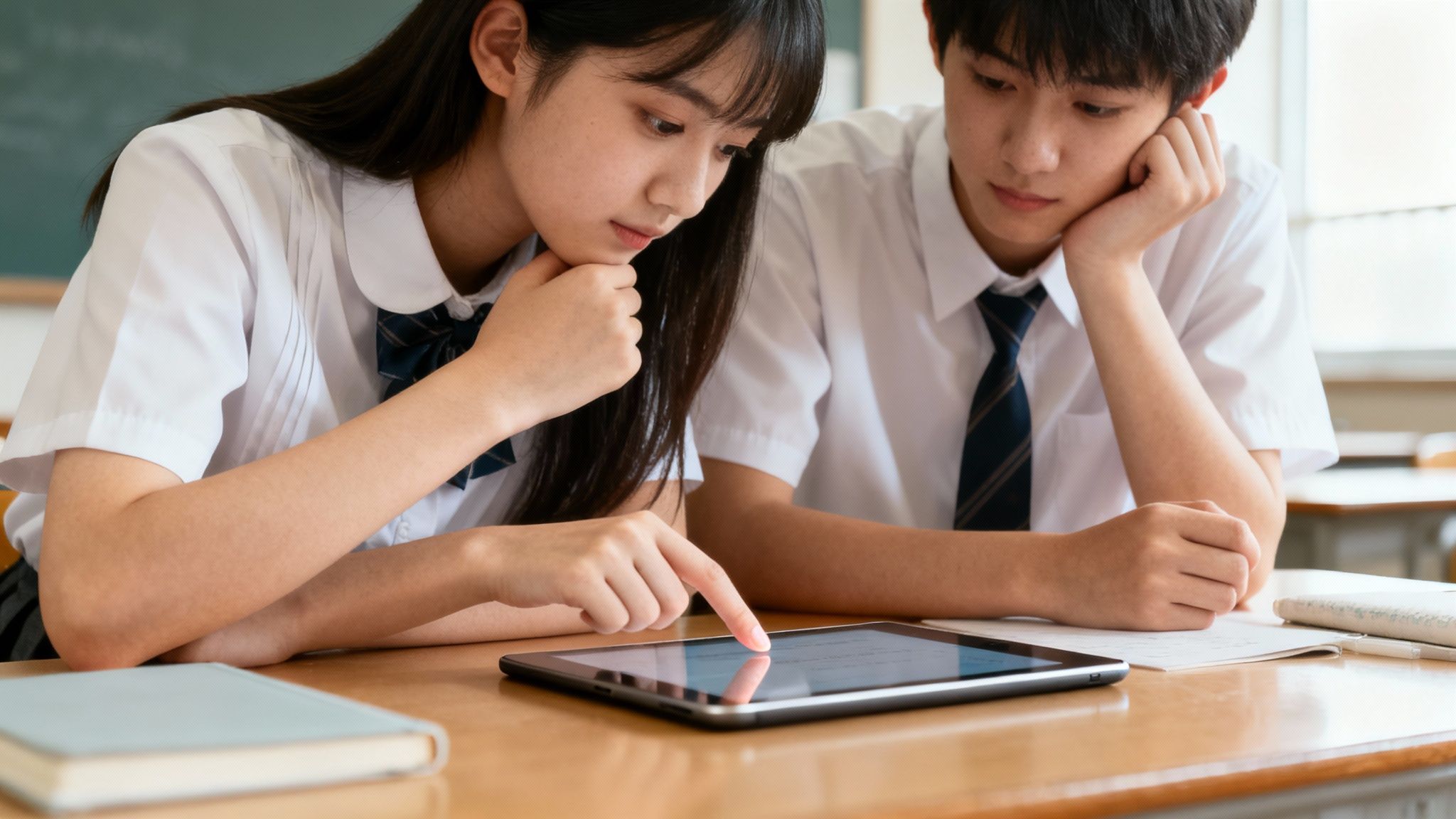
Digital Communication and Online Etiquette Simulations are activities that teach students how to interact respectfully and effectively in digital spaces. Through role-playing, case studies, and guided practice, students learn to navigate the complexities of online tone, digital empathy, and conflict resolution. These exercises are crucial for preparing students to be responsible and kind digital citizens.
This practice is one of the most relevant communication skills activities today, as it directly addresses the modern landscape where students build and maintain relationships. It equips them with the tools to prevent cyberbullying, understand the permanence of their digital footprint, and communicate with clarity and consideration online.
How It Works
Purpose: To develop digital literacy, teach online etiquette (netiquette), and build empathy for others in digital interactions.
Time: 20–30 minutes
Materials: Device with internet access (optional), printed scenarios or worksheets, whiteboard or chart paper.
Step-by-Step Directions:
Introduce a Scenario: Present a relatable digital scenario.
Practical Example: “A friend keeps sending you memes during a virtual class, and the teacher is starting to notice. You are worried about getting in trouble.”
Analyze the Situation: As a class, discuss the scenario. Ask questions like, “How might the person who received the comment feel?” and “What could be the a a’s motivation?”
Brainstorm Responses: Have students work in small groups to brainstorm potential responses. These could include ignoring the comment, reporting it, defending the person, or messaging the commenter privately.
Simulate and Role-Play: Select a few potential responses and have students role-play them. For example, they could write out a supportive public comment or a private message to the person who was targeted.
Debrief and Create Agreements: Discuss the outcomes of each simulated response. Use this discussion to collaboratively create classroom agreements for positive online communication.
Tips for Implementation
For Younger Students (K-3): Use simplified, text-only scenarios. Focus on basic rules like “Only say things online you would say in person” and “Ask a grown-up for help if something feels wrong.”
For Older Students (4-8): Explore more complex topics like the impact of tone in text messages, the ethics of screenshots, and how to disagree respectfully in an online forum. Use real (but anonymized) examples they can relate to.
Differentiation: For students who are hesitant to share, use anonymous polling tools to gauge their responses to different scenarios. Provide sentence starters for practicing supportive or assertive online comments.
By directly teaching and simulating these situations, we help students apply pro-social skills to the digital world. You can find more strategies for creating a safe and respectful school climate in Soul Shoppe’s resources on building a Bully-Free School Culture.
8. Empathy Mapping and Perspective-Taking Exercises
Empathy mapping is a collaborative, visual tool that helps students step into someone else’s shoes. Participants create a chart to explore what another person is thinking, feeling, seeing, and hearing in a specific situation. This exercise moves beyond simple sympathy and builds the cognitive and emotional skills needed for true empathy and perspective-taking.
This practice is one of the most powerful communication skills activities because it makes the abstract concept of empathy tangible and actionable. By systematically analyzing another’s experience, students learn to suspend judgment, recognize different viewpoints, and communicate with greater understanding and compassion.
How It Works
Purpose: To develop deep empathy, enhance perspective-taking abilities, and improve conflict resolution skills by understanding others’ motivations.
Time: 25–40 minutes
Materials: Chart paper or whiteboards, markers, and an empathy map template (with sections for “Says,” “Thinks,” “Does,” and “Feels”).
Step-by-Step Directions:
Introduce the Subject: Choose a person or character for the empathy map.
Practical Example: Use the antagonist from a story the class just read, such as the wolf from “The Three Little Pigs,” to understand their motivations beyond just being “bad.”
Display the Template: Draw the four quadrants (Says, Thinks, Does, Feels) on the board or provide handouts.
Brainstorm in Quadrants: Guide students to brainstorm what the person might experience in each category. Use prompting questions: “What might they be worried about?” (Thinks), “What actions would we see them take?” (Does), “What phrases might we overhear?” (Says), and “What emotions are they likely feeling inside?” (Feels).
Fill the Map: As a class or in small groups, students fill in the map with their ideas, using sticky notes or writing directly on the template.
Debrief and Reflect: Discuss the completed map. Ask questions like, “What surprised you?” or “How does this change how you see this person’s situation?”
Tips for Implementation
For Younger Students (K-3): Use a simplified map with just “Feels” and “Thinks.” Map a familiar character from a picture book after a read-aloud to explore their motivations.
For Older Students (4-8): Map complex figures, such as a stakeholder in a current event or even a bully, to understand the root causes of behavior. After mapping, have students write a short narrative from that person’s point of view. For activities focused on practicing modern digital interactions, incorporating tools like a whatsapp widget for tutoring can provide a relevant and practical simulation experience.
Differentiation: For students who struggle with abstract thought, provide a specific scenario (e.g., “Map what a student feels on their first day at a new school”). Allow drawing or using emojis in addition to words.
9. Collaborative Problem-Solving Challenges and Group Communication Tasks
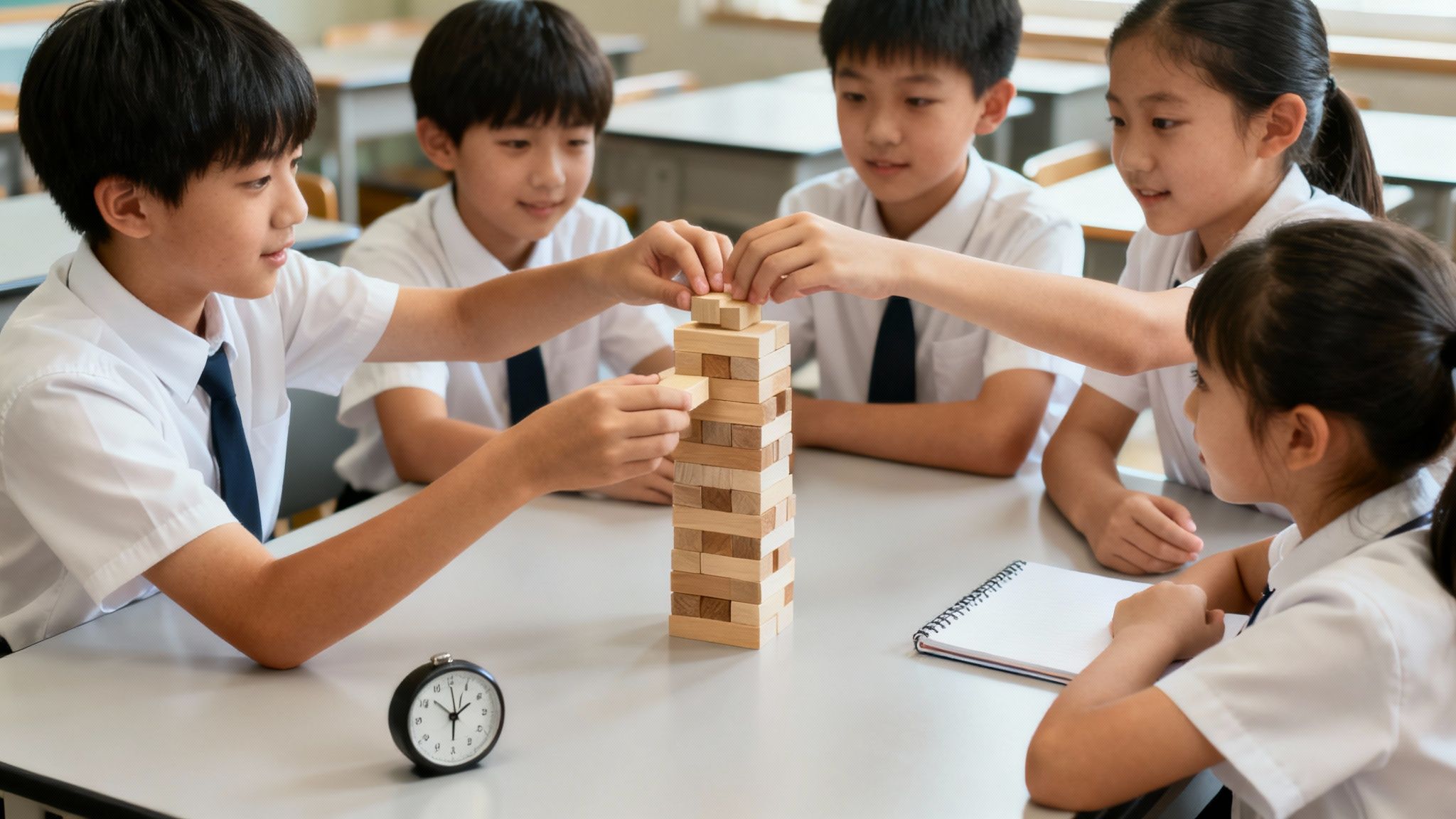
Collaborative Problem-Solving Challenges are tasks where students must work together to achieve a common goal that is impossible to complete alone. These activities require students to negotiate roles, share ideas, and combine different perspectives to find a solution. Through these shared experiences, students learn the power of teamwork, critical thinking, and effective interpersonal communication.
These group communication tasks are vital among communication skills activities because they simulate real-world scenarios where collaboration is key. They teach students to value diverse viewpoints, manage disagreements constructively, and build consensus, reinforcing that collective effort often leads to the most innovative solutions.
How It Works
Purpose: To develop teamwork, problem-solving, negotiation skills, and an appreciation for diverse perspectives.
Time: 20–30 minutes
Materials: Varies by activity (e.g., LEGOs, spaghetti and marshmallows, cups, puzzle pieces, rope).
Step-by-Step Directions:
Form Groups: Divide students into small, mixed-ability groups of 3-5.
Present the Challenge: Introduce the task and its constraints.
Practical Example: The “Human Knot” challenge, where students stand in a circle, grab hands with two different people across from them, and then work together to untangle the “knot” of arms without letting go.
Explain Communication Rules: Set clear expectations for communication. Emphasize that all ideas should be heard and respected.
Facilitate the Activity: Give students a set time to plan and execute their solution. Observe their communication patterns and how they handle disagreements.
Debrief and Reflect: After the time is up, lead a group discussion. Ask questions like, “What communication strategies worked well?” and “What would you do differently next time?”
Tips for Implementation
For Younger Students (K-3): Use simple, tangible tasks like building the tallest possible tower with a set number of blocks or a “Cup Stack Relay.” Focus on taking turns and using kind words. The goal is successful participation over a perfect outcome.
For Older Students (4-8): Introduce more complex challenges, such as escape room-style puzzles or a “Blind Construction” activity where one student describes a structure for another to build without seeing it. Assign specific roles like facilitator or timekeeper to ensure accountability.
Differentiation: Ensure tasks are challenging but achievable for all groups. For students who struggle with group work, provide sentence starters or a script to help them contribute their ideas positively.
These activities provide a dynamic, hands-on way to teach communication skills. For more tools that foster peer-to-peer connection and cooperation, explore Soul Shoppe’s engaging student programs.
10. Gratitude and Appreciation Communication Rituals
Gratitude and Appreciation Communication Rituals are structured activities that give students regular opportunities to express thanks and recognition. By creating dedicated time for students to appreciate peers, teachers, and their community, these rituals help build positive relationships, reinforce pro-social behaviors, and shift the classroom focus from deficits to strengths.
This practice is essential among communication skills activities because it teaches students how to articulate positive feelings constructively. It fosters a culture of kindness and belonging, showing students that their positive contributions are seen and valued, which is central to creating a safe and connected learning environment.
How It Works
Purpose: To develop skills in expressing and receiving appreciation, strengthen peer relationships, and build a positive, supportive classroom culture.
Time: 5–15 minutes, depending on the format.
Materials: Varies by activity (e.g., paper, sticky notes, a jar, a shared journal).
Step-by-Step Directions:
Introduce the Concept: Explain what appreciation means. Model a specific and meaningful appreciation.
Practical Example: Instead of saying “Thanks, Maya,” try “I want to appreciate Maya for helping me pick up my crayons when I dropped them. It made me feel supported.”
Choose a Ritual: Select a format that fits your classroom. A simple start is an “Appreciation Circle” during a morning meeting.
Set the Rules: Establish guidelines for giving and receiving appreciation. The giver should be specific, and the receiver should learn to simply say, “Thank you.”
Facilitate the Activity: For an Appreciation Circle, pass a talking piece and have each student share one thing they appreciate about another person. For an “Appreciation Mailbox,” have students write anonymous notes and read them aloud at the end of the week.
Make it a Habit: Integrate the ritual into your regular classroom routine (daily or weekly) to build momentum and make it a cultural norm.
Tips for Implementation
For Younger Students (K-3): Use a “Thankfulness Tree.” Students can write or draw what they are thankful for on paper leaves and add them to a large tree cutout on the wall.
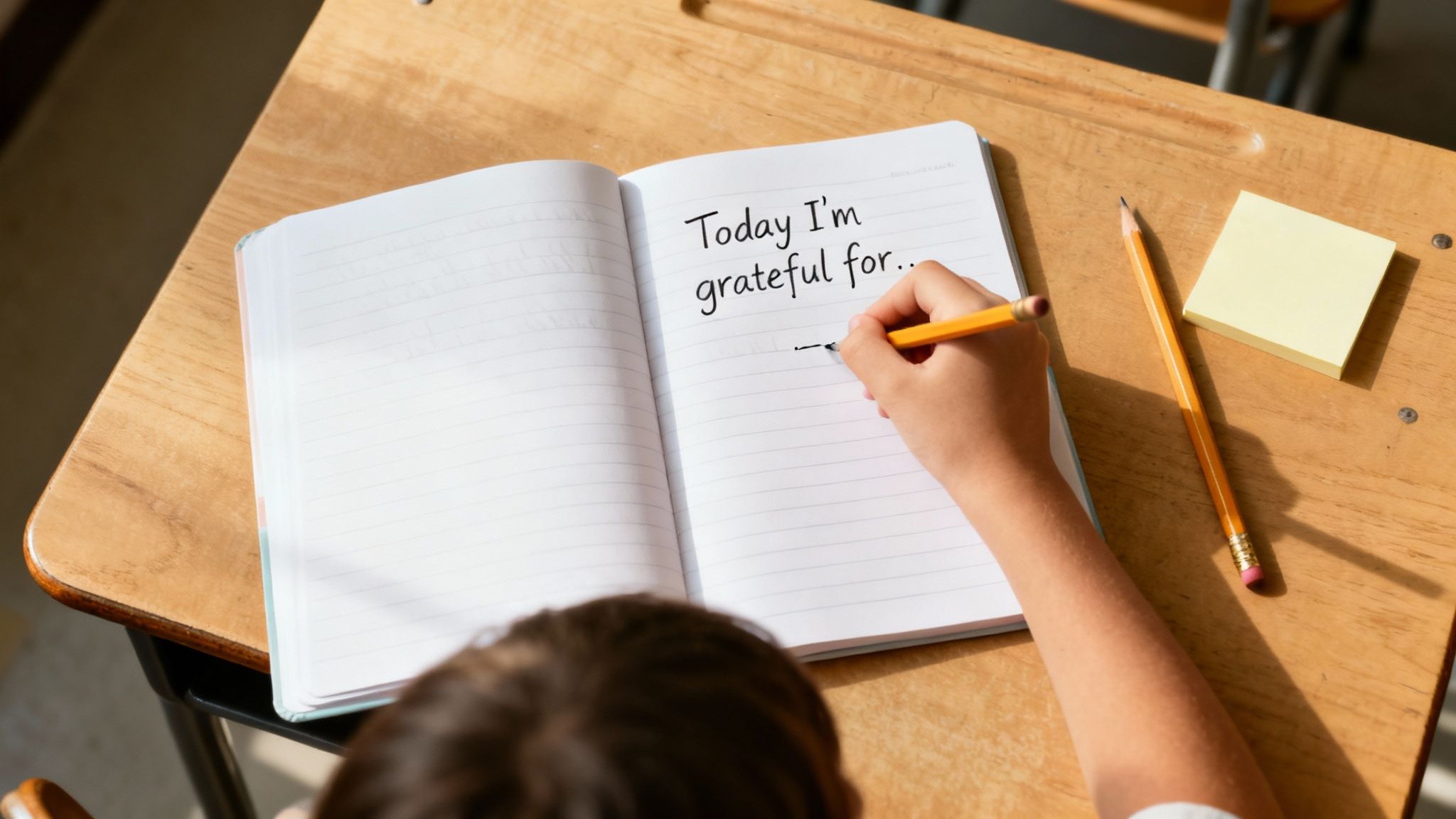
For Older Students (4-8): Start a Gratitude Journal where students write detailed entries about people or experiences they appreciate. This encourages deeper reflection and improves written communication skills.
Differentiation: Offer multiple formats for expressing gratitude, including verbal sharing, writing, or drawing. Provide a private option, like an appreciation box, for students who are uncomfortable with public recognition.
Creating these consistent rituals is a powerful way to embed social-emotional learning into your daily schedule. To learn more about fostering a culture of belonging, explore the principles in Soul Shoppe’s SEL-focused student assemblies.
Low-cost, high-impact; reinforces strengths and community
Putting Communication into Action: Your Next Steps
We’ve explored a comprehensive toolkit of ten dynamic communication skills activities designed to empower students from kindergarten through eighth grade. Moving beyond passive learning, these hands-on exercises transform abstract concepts like active listening, empathy, and conflict resolution into tangible, memorable experiences. From the focused intention of Active Listening Circles to the complex social navigation of Digital Communication Simulations, each activity provides a unique pathway to building a more connected, respectful, and collaborative classroom or home environment.
The common thread weaving through these diverse activities is the principle of practice. Communication is not a static subject to be memorized; it is a fluid skill that must be rehearsed, refined, and reflected upon. A single session on “I-Messages” is a great start, but true mastery comes from consistently creating opportunities for students to use these tools in low-stakes, supportive settings.
Key Takeaways for Lasting Impact
As you integrate these exercises, remember these core principles to maximize their effectiveness:
Scaffolding is Crucial: Start with foundational skills before moving to more complex ones. For example, ensure students are comfortable with Nonverbal Communication cues before asking them to engage in a nuanced Peer Mediation role-play. A solid base prevents frustration and builds confidence.
Contextualize the Learning: Always connect the activity back to real-world situations. After a Fishbowl Discussion on a hypothetical playground conflict, ask students, “When might you see a situation like this during recess? How could using an ‘I-Message’ change the outcome?” This bridge makes the skills relevant and applicable to their daily lives.
Model, Model, Model: Children and young adolescents learn as much from observation as they do from instruction. Demonstrate active listening when a student speaks to you. Use “I-Messages” when expressing your own feelings. Your consistent modeling validates the importance of these skills and provides a constant, living example.
Consistency Over Intensity: A 15-minute Gratitude and Appreciation Ritual once a week can have a more profound, lasting impact than a single, two-hour workshop on communication. Weaving these communication skills activities into the regular rhythm of your classroom or family routine normalizes them, making them a natural part of your shared culture.
Your Actionable Next Steps
Feeling inspired? The journey from reading about these activities to implementing them is the most important step. Here is a simple, actionable plan to get you started:
Choose One Activity: Don’t try to do everything at once. Review the list and select one activity that best addresses a current need in your group. Is listening a challenge? Start with Active Listening Circles. Are minor conflicts derailing lessons? Try I-Messages and Nonviolent Communication Practice.
Schedule It: Commit to a specific day and time. Put it on your calendar or in your lesson plan. For example, decide to run a 20-minute Collaborative Problem-Solving Challenge every Friday afternoon for the next month.
Prepare and Adapt: Gather your materials and think through any necessary differentiations. If you’re working with younger students on Empathy Mapping, you might use simple emojis for feelings instead of written words. For older students, you could use a complex character from a novel they are reading.
Reflect and Iterate: After the activity, create space for reflection. Ask students: “What was challenging about that? What felt easy? What did you learn about how you communicate?” Use their feedback, and your own observations, to adjust your approach for the next time.
By intentionally and consistently cultivating these skills, you are doing more than just teaching students how to talk and listen. You are equipping them with the fundamental tools they need to build healthy relationships, navigate complex social landscapes, and advocate for themselves with confidence and compassion. You are laying the groundwork for a future where they can connect, collaborate, and contribute meaningfully to the world around them.
Ready to take your school’s social-emotional learning to the next level? The activities in this guide are a powerful start, and Soul Shoppe provides comprehensive programs that build a culture of empathy and respect throughout your entire school community. Explore our evidence-based programs and bring expert-led, transformative SEL experiences to your students by visiting Soul Shoppe.
In a world of constant digital noise and increasing social challenges, the ability to communicate effectively is a superpower for students. Strong communication skills are the bedrock of social-emotional learning (SEL), fostering the empathy, resilience, and psychological safety needed to thrive in school, at home, and in life. These abilities are not innate; they must be intentionally taught, modeled, and practiced. This is where targeted communication skill activities become essential tools for educators and parents alike.
This guide provides a comprehensive collection of actionable strategies designed to build these foundational competencies in K-8 students. We move beyond generic advice to offer detailed, step-by-step instructions for ten powerful activities that you can implement immediately. From active listening circles that teach students to hear and be heard, to role-playing scenarios that build empathy and perspective-taking, each entry is crafted to be practical and adaptable.
You will find a curated selection of exercises designed for diverse age groups and settings, including:
Classroom adaptations and at-home modifications.
Clear learning objectives and Social-Emotional Learning (SEL) alignment.
Practical tips for assessment and extension ideas to deepen learning.
Whether you are a K-8 teacher aiming to improve classroom dynamics, a school counselor fostering conflict resolution, or a parent seeking to strengthen family connections, this listicle offers the resources you need. These activities are designed to cultivate a culture of understanding and belonging, helping children develop the emotional intelligence to navigate a complex world, one thoughtful conversation at a time. Let’s dive into the practical exercises that transform how students connect, collaborate, and grow.
1. Active Listening Circles
Active Listening Circles are structured group sessions designed to teach participants how to listen deeply without interruption, judgment, or the pressure to formulate a response. In this foundational communication skill activity, participants sit in a circle and take turns speaking on a specific topic or prompt, often holding a “talking piece” to signify whose turn it is. While one person speaks, everyone else practices the core tenets of active listening: focusing completely on the speaker, absorbing their message, and acknowledging their perspective.
This simple yet powerful structure builds empathy, validates individual emotions, and creates a sense of psychological safety. It is a cornerstone for building a respectful and inclusive classroom or family culture where every voice is valued.
When to Use This Activity
This activity is exceptionally versatile. Use it for daily morning meetings to check in with students, as a tool for resolving classroom conflicts, or during advisory periods to discuss social-emotional learning (SEL) topics. At home, families can use this format during dinner to ensure everyone gets a chance to share about their day without being talked over. The controlled format makes it ideal for addressing sensitive subjects like bullying or social exclusion, as seen in peer support groups.
Step-by-Step Implementation
Establish Ground Rules: Before starting, co-create clear norms with the group. Key rules should include: one person speaks at a time (the one with the talking piece), listen with respect, no interruptions, and what’s shared in the circle stays in the circle.
Introduce the Talking Piece: Select an object to serve as the talking piece- a small ball, a decorative stone, or a stuffed animal works well. Explain that only the person holding this object may speak.
Provide a Prompt: Start with a low-stakes prompt, such as, “Share one good thing that happened this week,” or “What is something you are looking forward to?” For parents, a great dinner prompt is, “Share one ‘rose’ (a success) and one ‘thorn’ (a challenge) from your day.”
Model the Process: As the facilitator, go first to model the desired tone and vulnerability. For instance, a teacher might say, “My rose this week was seeing how you all helped each other with the math project.”
Facilitate the Circle: Pass the talking piece around the circle. Participants can choose to pass if they do not wish to share.
Debrief: After everyone has had a turn, lead a brief reflection. Ask questions like, “What did it feel like to be listened to?” or “What did you learn about someone else today?”
Pro-Tip: To truly master active listening, it’s essential to understand techniques like what is reflective listening, which builds trust and clarifies understanding. This involves paraphrasing what you heard to confirm you understood correctly.
This exercise is one of many effective listening skills activities that can transform group dynamics by fostering genuine connection and mutual respect.
2. Role-Playing and Perspective-Taking Scenarios
Role-Playing and Perspective-Taking Scenarios are immersive communication skill activities where participants act out realistic social situations in a safe and structured setting. By stepping into another person’s shoes, whether it’s a peer, a teacher, or a family member, students practice navigating complex interactions like resolving conflicts or standing up to bullying. This hands-on approach moves beyond theoretical discussion, allowing for practical application of empathy and assertive communication.
This method builds confidence and emotional intelligence by allowing students to experiment with different responses without real-world consequences. It is a powerful tool for developing empathy, as participants experience firsthand how their words and actions impact others’ feelings.
When to Use This Activity
This activity is ideal for teaching specific conflict resolution skills or preparing students for challenging social dynamics. Use it to address common classroom issues like exclusion at recess, disagreements during group projects, or bystander intervention in bullying situations. At home, parents can use role-playing to practice scenarios such as apologizing to a sibling or asking a friend for help. It is particularly effective in peer mediation programs and social skills groups.
Step-by-Step Implementation
Set the Stage: Clearly define the scenario and the objective. For example, a teacher might say, “In this scene, Sam has been telling other kids not to play with Alex on the playground. Our goal is to practice how a bystander could step in and help.”
Assign Roles: Assign roles such as the person being excluded, the one doing the excluding, and an active bystander. Provide simple scripts or key phrases for students who may be hesitant to improvise. For instance, the bystander’s script could start with: “Hey, I noticed Alex is standing alone. It’s more fun when we all play together. Can he join us?”
Act Out the Scenario: Give students a few minutes to act out the scene. Facilitate as needed, but allow them to lead the interaction.
Pause and Discuss: Stop the role-play at a critical moment to ask the audience and participants questions. For example, “What is Alex feeling right now? What could the bystander say to change the situation?”
Replay and Revise: Have students replay the scene, trying out a different, more positive strategy based on the discussion. Maybe this time the bystander invites Alex to a new game.
Debrief as a Group: After the role-play, lead a reflection on the experience. Discuss what strategies worked, how each character felt, and how these lessons can be applied in real life.
Pro-Tip: Increase relevance by using anonymous, real-life scenarios submitted by students. This ensures the practice is directly applicable to their daily challenges and empowers them by showing their concerns are being addressed.
Role-playing is a cornerstone of many social-emotional learning programs, like those seen in the Second Step curriculum, because it transforms abstract concepts like empathy into tangible, memorable skills.
3. Nonviolent Communication (NVC) Practice
Nonviolent Communication (NVC) is a powerful framework that teaches individuals to express themselves honestly and listen with empathy. Developed by Marshall B. Rosenberg, this approach centers on four components: observations, feelings, needs, and requests. By separating objective facts from subjective feelings and connecting them to universal human needs, NVC transforms confrontational “you” statements into collaborative “I” statements. It is one of the most transformative communication skill activities for de-escalating conflict and fostering mutual understanding.
This structured method helps reduce defensiveness, validates emotions, and paves the way for collaborative problem-solving. In a school setting, it equips students and staff with the tools to navigate disagreements constructively, moving from blame to connection. Programs like Soul Shoppe’s self-regulation workshops often integrate these principles to build a more positive school culture.
When to Use This Activity
NVC is invaluable for peer conflict resolution, classroom management, and staff communication. Use it to mediate playground disputes by helping students articulate their unmet needs (like inclusion or respect) instead of just blaming others. It’s also effective in parent-teacher conferences to address concerns without creating defensiveness. At home, families can use the NVC framework to discuss chores, screen time, or sibling rivalries in a way that makes everyone feel heard and respected.
Step-by-Step Implementation
Introduce the Four Components: Teach the four steps sequentially: Observation (state what you see without judgment), Feeling (name the emotion you are experiencing), Need (identify the universal need that is not being met), and Request (make a clear, positive, and actionable request).
Create Vocabulary Charts: Post charts in the classroom with extensive lists of “feeling” words (e.g., frustrated, lonely, excited) and “need” words (e.g., respect, safety, belonging, fun). This gives students the language to express themselves accurately.
Model with Scenarios: As a facilitator, model NVC in response to common conflicts. A parent could model: “When I see your wet towel on the floor (observation), I feel annoyed (feeling) because I need our home to be tidy and respected (need). Would you be willing to hang it up now? (request).”
Role-Play Low-Stakes Situations: Have students practice converting “blaming” statements into NVC statements. For example, turn “You always grab the ball from me!” into “When the ball was taken from my hands (observation), I felt angry (feeling) because I need to be included in the game (need). Can we take turns? (request).”
Facilitate Peer Mediation: Guide students through the four steps when a real conflict arises, acting as a coach rather than a judge.
Celebrate Success: Acknowledge and praise students when you see them using NVC language independently to solve their problems.
Pro-Tip: Start small. Practicing the four steps can feel mechanical at first. Encourage students to focus on just one part, like accurately naming their feelings, before trying to put all four components together in a high-stress moment.
The Center for Nonviolent Communication provides extensive resources for educators and parents looking to deepen their understanding and practice of this compassionate communication model.
4. Empathy Building Through Storytelling and Sharing
Empathy Building Through Storytelling and Sharing involves structured activities where individuals share personal stories about their challenges, emotions, identities, or values. This process creates authentic connection and mutual understanding. Storytelling activates mirror neurons in the brain, deepening our ability to take on others’ perspectives and humanizing their experiences, which is a powerful tool for reducing bullying and developing emotional intelligence.
These narrative-based communication skill activities build a strong sense of belonging by transforming abstract concepts like resilience and respect into lived, relatable experiences. When a student shares a story of overcoming a fear, or a teacher shares a moment of vulnerability, it builds a foundation of trust and emotional safety for everyone.
When to Use This Activity
This approach is highly effective for building classroom community at the beginning of the school year or repairing relationships after a conflict. Use it during advisory periods to explore themes of identity and belonging, or as part of a staff professional development session to foster empathy among colleagues. At home, families can use storytelling during dedicated family nights to share stories of resilience or family history, strengthening bonds across generations. It’s also a core component of assemblies like Soul Shoppe’s Peaceful Warriors Summit, which uses personal narratives to inspire large groups.
Step-by-Step Implementation
Set Supportive Ground Rules: Co-create norms focused on safety and respect. Include rules like “Listen with your heart,” “Honor each other’s stories,” and “What’s shared here stays here” to establish confidentiality.
Model Vulnerability: As the facilitator, share a brief, relevant personal story first. A parent could start with, “A time I felt really nervous was my first day at a new job, just like some of you might feel on the first day of school.”
Provide a Clear Prompt: Offer a focused prompt or sentence starter to guide the sharing. A great prompt for teachers is, “Share about a time you received help from someone and how it made you feel.” This focuses on positive social behavior.
Offer Multiple Formats: Acknowledge that not everyone is comfortable with verbal sharing. Allow participants to write, draw, or create a short digital story as an alternative. For example, students could draw a comic strip of a time they felt brave.
Manage Time: Keep stories to a 3-5 minute limit to ensure everyone who wants to share has a chance. Use a gentle timer if needed.
Connect and Reflect: After sharing, guide a brief discussion to connect the stories to broader themes like courage, growth, or community. Ask, “What common feelings or experiences did you notice in our stories today?”
Pro-Tip: The goal is connection, not performance. Emphasize that there is no “right” way to tell a story. Dignity is key, so always allow participants to pass or simply listen if they are not ready to share.
This activity is a cornerstone for anyone looking to foster deeper connections, as learning how to teach empathy often begins with the simple, profound act of sharing and receiving stories.
5. Peer Mediation and Conflict Resolution Training
Peer Mediation and Conflict Resolution Training is a structured program that empowers selected students to act as a neutral third-party mediators, helping their peers resolve disputes constructively. Mediators are trained in essential communication skills, including active listening, identifying underlying needs (interest-based negotiation), and facilitating respectful dialogue. This initiative not only addresses conflicts but also builds student leadership and fosters a more empathetic and responsible school culture.
By teaching students to manage their own conflicts, this approach reduces reliance on adult intervention and equips them with lifelong problem-solving abilities. Programs like school-wide peer mediation centers or student-led restorative circles transform the school environment, making it a place where disagreements are seen as opportunities for growth.
When to Use This Activity
This program is ideal for schools looking to proactively address common conflicts that arise during recess, in hallways, or online. It is particularly effective for low-level disputes such as rumors, social exclusion, or disagreements over property before they escalate. It serves as a Tier 1 or Tier 2 intervention, providing a structured, supportive process for students to find their own solutions. Peer mediation is also a powerful tool for building a positive school climate and reinforcing social-emotional learning competencies.
Step-by-Step Implementation
Select and Train Mediators: Choose a diverse group of students who reflect the school population and possess qualities like empathy and discretion. Provide comprehensive training using clear, repeatable protocols and role-playing scenarios.
Establish the Process: Create a clear, confidential referral and intake process. For example, a student can fill out a “conflict slip” and put it in a box in the counselor’s office. Designate a quiet, neutral space for mediation sessions.
Define the Ground Rules: Mediators begin each session by establishing rules with the participants, such as taking turns speaking, listening respectfully, and working toward a solution.
Facilitate a Structured Dialogue: The mediator guides the conversation, allowing each person to share their perspective without interruption. For example, the mediator would say, “First, Maria will share her side. Juan, your job is to listen. Then you will have a turn.” They help identify the core issues and brainstorm mutually agreeable solutions.
Formalize the Agreement: Once a solution is reached, the mediator helps the students write it down in a simple agreement that both parties sign. For a conflict over a ball, the agreement might be, “We agree to take 10-minute turns with the soccer ball at recess.”
Provide Ongoing Support: Regularly meet with peer mediators to debrief, provide guidance, and celebrate their contributions. Train staff on how and when to refer students to mediation.
Pro-Tip: The success of a peer mediation program hinges on its structure and the mediator’s ability to remain neutral. Focus training on asking open-ended questions and avoiding taking sides, which empowers students to create their own resolutions.
This program is a prime example of a proactive communication skill activity that builds a more peaceful community. Exploring various conflict resolution strategies for kids can further enhance the tools available to both mediators and the wider student body.
6. Mindful Communication and Pause Practices
Mindful Communication and Pause Practices teach students how to intentionally stop, breathe, and choose a thoughtful response instead of making an impulsive reaction. This approach integrates mindfulness with communication, helping students manage their emotions during conversations and conflicts. By creating a deliberate pause, children develop greater self-awareness and self-regulation, which are essential for navigating difficult social situations with compassion and clarity.
These practices build the foundation for more empathetic and effective exchanges, reducing emotional reactivity and fostering healthier relationships. They empower students to feel in control of their words and actions, a cornerstone of social-emotional wellness and a key element in effective communication skill activities.
When to Use This Activity
This strategy is powerful for both preemptive skill-building and in-the-moment conflict resolution. Use it to start the day, helping students arrive centered and ready to learn. It is also highly effective before transitioning to potentially challenging group work or right after recess to help students reset. For families, practicing a “pause and breathe” moment before discussing a chore disagreement or a difficult report card can transform a potential argument into a productive conversation.
Step-by-Step Implementation
Introduce Core Concepts: Explain the difference between a “reaction” (quick, emotional) and a “response” (thoughtful, chosen). Use a simple analogy, like shaking a snow globe and waiting for the glitter to settle before you can see clearly.
Teach Breathing Techniques: Explicitly teach 2-3 simple breathing exercises. A teacher could lead “Take 5 Breathing,” where students trace their hand, breathing in as they trace up a finger and out as they trace down. Belly Breathing is great for home: have the child lie down with a stuffed animal on their belly and watch it rise and fall.
Establish a Cue: Create a shared verbal or non-verbal cue to signal a pause, such as saying “Let’s pause,” raising a specific hand signal, or ringing a small chime. A parent might say, “My feelings are getting big. I need a pause.”
Practice During Calm Times: Integrate these pause practices into low-stakes, calm moments in the daily routine. For example, do three deep breaths together before starting homework each day.
Model and Guide: As the adult, model using the pause practice yourself. If a student is upset, calmly say, “I see you’re frustrated. Let’s take three deep breaths together before we talk about it.”
Debrief the Experience: After a conflict is resolved using a pause, reflect with the student(s). Ask, “How did taking that pause change how you felt?” or “What did you choose to do differently after you took a breath?”
Pro-Tip: Connect the pause to self-awareness by encouraging students to ask themselves, “What do I need right now?” This question helps them identify their underlying feelings and needs, which is a critical step toward effective self-advocacy and problem-solving.
This strategy is fundamental to programs like Soul Shoppe’s self-regulation workshops, which focus on giving students tangible tools to manage their emotions and communicate peacefully.
7. Feedback and Appreciation Circles
Feedback and Appreciation Circles are structured group activities where participants practice giving and receiving specific, constructive feedback and expressions of gratitude. Using protocols like “glow and grow,” these exercises build trust, vulnerability, and a growth mindset by creating a safe space to share observations. This process reinforces positive peer relationships and strengthens psychological safety within a classroom or family.
By teaching students how to formulate and accept feedback gracefully, this communication skill activity moves beyond simple praise to foster genuine personal and academic development. It shifts the culture from one of judgment to one of mutual support and continuous improvement.
When to Use This Activity
This activity is powerful for building a collaborative environment. Use it for weekly “appreciation shares” to boost morale, at the end of a unit for “glow and grow” feedback, or during group projects to help peers refine their work. It is also an excellent tool for students to show appreciation for teachers. At home, families can use it to create a weekly ritual of acknowledging each other’s efforts and positive actions, strengthening family bonds.
Step-by-Step Implementation
Establish a Safe Space: Co-create norms focused on respect and kindness. Emphasize that feedback is about a specific behavior or action, not a person’s character.
Introduce Sentence Starters: Provide clear sentence frames to guide participants. For appreciation, a parent could use: “I really appreciated it when you cleaned up your toys without being asked.” For teacher feedback, use “One thing that went well (a glow) was how you explained fractions using pizza.” and “Next time, you could try (a grow) adding more examples.”
Start with Appreciation Only: In the beginning, focus solely on appreciation circles. This builds comfort and trust before introducing constructive feedback. A fun home activity is an “appreciation jar” where family members write notes to each other all week.
Model the Process: As the facilitator, go first. Give a specific example of appreciation, like, “I appreciate when Maya helped a classmate who dropped their books without being asked.” Then, model receiving feedback gracefully by saying, “Thank you for that feedback.”
Facilitate the Circle: Go around the circle, giving each person a chance to share one piece of appreciation or feedback for another member. Keep comments brief and focused.
Debrief and Reflect: Conclude by asking, “How did it feel to give appreciation?” or “How can we use this feedback to help us grow?”
Pro-Tip: Teach students the difference between vague praise (“Good job!”) and specific, observable feedback (“I noticed you used three strong verbs in your opening sentence, which made it very engaging.”). Specificity makes the feedback more meaningful and actionable.
This practice is essential for developing a growth mindset and is a key component of many effective social-emotional learning programs that prioritize building positive peer relationships.
8. Communication Skills Games and Cooperative Activities
Communication Skills Games and Cooperative Activities use play-based learning to teach teamwork, collaboration, and mutual respect. These engaging activities transform abstract concepts like clarity, perspective-taking, and interdependence into tangible, memorable experiences. By embedding communication lessons within fun challenges, students learn to listen, express themselves clearly, and work together in a low-pressure, supportive environment.
This approach is powerful because it makes skill-building enjoyable and organic. Games like a silent scavenger hunt or a blindfolded partner walk require participants to rely entirely on nonverbal cues and trust, naturally strengthening their communication abilities without feeling like a formal lesson.
When to Use This Activity
These activities are perfect as classroom energizers, to kick off a new group project, or as a core part of a team-building day. Use them to break the ice at the beginning of the school year or to mend group dynamics after a conflict. At home, cooperative games can be a fantastic way for siblings to practice collaboration and problem-solving during family game night, turning potential arguments into opportunities for teamwork.
Step-by-Step Implementation
Select an Appropriate Game: Choose an activity that matches your group’s age and goals. A great classroom game is “Minefield,” where one student is blindfolded and their partner must give them verbal directions to navigate an “obstacle course” of pillows or cones. For home, try “Team Story,” where each family member adds one sentence to a story.
Explain the Rules Clearly: Before starting, clearly state the objective and rules. Emphasize that the goal is cooperation, not competition. For a blindfolded walk, for example, stress the importance of clear, calm directions.
Facilitate the Activity: Observe the group as they play. Take note of communication patterns, both effective and ineffective, to discuss during the debrief.
Lead a Debrief Session: After the game, guide a reflection. Ask questions like, “What kind of directions were most helpful in Minefield? Short ones or long ones?” “What was challenging about working together?” or “What would you do differently next time?”
Connect to Real-Life Situations: Help students connect the lessons from the game to real-world scenarios, such as working on a group project or solving a disagreement with a friend.
Pro-Tip: To maximize learning, adapt traditionally competitive games into cooperative ones. For instance, instead of having teams race to build the tallest tower, challenge the entire group to build one stable tower together. This shifts the focus from winning to collective success.
Organizations like Soul Shoppe have perfected the use of interactive games in their workshops to build these essential skills, demonstrating how play is a powerful pathway to better communication.
9. Assertive Communication and Boundary-Setting Practice
Assertive Communication and Boundary-Setting Practice is a structured training activity that teaches students how to express their needs, opinions, and boundaries clearly and respectfully. Unlike aggressive communication (hostile) or passive communication (compliant), assertiveness is about confident self-expression while respecting others. Through role-playing, scripting, and guided practice, students learn the verbal and non-verbal skills needed to stand up for themselves and others, which is foundational for building healthy relationships and preventing bullying.
This activity directly equips students with tools to navigate peer pressure, ask for help, and address conflict constructively. By normalizing and practicing boundary-setting, it cultivates a classroom culture where respect and self-advocacy are core values.
When to Use This Activity
This is an essential activity for social-emotional learning (SEL) lessons, bullying prevention programs, and health classes. Use it to address specific classroom dynamics where students struggle to speak up or resolve conflicts. It is also highly effective in one-on-one counseling sessions to help a student who is either overly passive or aggressive. At home, families can use these techniques to practice respectful disagreement and establish clear personal boundaries. For guidance on specific techniques, a helpful resource is ‘A Parent’s Guide to teaching kids how to be assertive‘.
Step-by-Step Implementation
Define Communication Styles: Begin by clearly defining and providing examples of passive, aggressive, and assertive communication. For example, a teacher could act out three ways to ask for a pencil: passively (whispering, looking down), aggressively (snatching it), and assertively (making eye contact and asking calmly).
Introduce an ‘I-Statement’ Formula: Teach students a simple script for assertive expression, such as: “I feel ___ when you ___ because ___. I need ___.” For example, a child could practice saying to a sibling: “I feel upset when you take my toys without asking because they might get lost. I need you to ask me first.”
Model and Role-Play Scenarios: Present common scenarios like a friend asking to copy homework, someone cutting in line, or receiving an unwanted comment. First, model an assertive response. Then, have students practice in pairs, taking turns playing different roles.
Practice Body Language: Coach students on assertive non-verbal cues: maintaining steady eye contact, standing tall with relaxed shoulders, and using a calm, firm tone of voice. Practice this in front of a mirror.
Provide Feedback: As students practice, offer specific, constructive feedback. Praise their efforts and celebrate brave attempts to set boundaries, even if imperfect.
Debrief the Experience: After role-playing, discuss how it felt to be assertive versus how it might feel to be passive or aggressive in that situation. Ask, “What was challenging? What felt powerful?”
Pro-Tip: Introduce the “broken record” technique for handling persistent pressure. This involves calmly repeating a short, clear “no” statement without getting drawn into an argument. For example, “No, I can’t share my answers,” repeated as needed.
Understanding the nuances between these communication styles is key. You can explore a deeper dive into teaching assertiveness versus aggressiveness to provide students with clearer distinctions.
10. Digital Communication and Social Media Literacy
Digital Communication and Social Media Literacy involves direct instruction and practice in the norms of healthy online interaction. As students’ social lives increasingly extend into digital spaces, this essential training teaches them to apply empathy, emotional intelligence, and clear communication principles to email, social media, and messaging platforms. The goal is to equip them with the tools to navigate online environments safely, positively, and responsibly.
These lessons build a foundation for strong digital citizenship, helping prevent miscommunication, cyberbullying, and other online risks. By making these conversations a normal part of their education, we empower students to build and maintain healthy relationships both on and off-screen, making it one of the most relevant communication skill activities for today’s youth.
When to Use This Activity
Integrate these activities throughout the school year in technology classes, health lessons, or advisory periods. It’s crucial to introduce these concepts before students receive their own devices or social media accounts. Use specific events, like Safer Internet Day, as a launchpad for school-wide campaigns. At home, families should establish digital communication guidelines when a child first gets a phone or tablet, creating an open dialogue about online behavior from the start.
Step-by-Step Implementation
Establish a Baseline: Start with a discussion or anonymous survey to understand students’ current digital habits, challenges, and knowledge.
Teach Netiquette: Explicitly teach the “rules” of online communication. For example, create a T-chart comparing a formal email to a teacher (clear subject, greeting, closing) with a casual text to a friend. Discuss how ALL CAPS can feel like yelling.
Introduce the “Pause Before You Post” Rule: Guide students to ask themselves three questions before sending or posting: Is it True? Is it Helpful? Is it Kind? This simple filter prevents impulsive and potentially harmful communication.
Role-Play Scenarios: Present students with realistic digital dilemmas. A teacher could ask, “Your friend posts a photo you don’t like of yourself. What do you do?” Discuss options like private messaging them to ask them to take it down versus leaving an angry public comment.
Analyze Real-World Examples: (With privacy in mind) use anonymized or public examples to discuss how digital communication can be misinterpreted. Show how the text “Fine, whatever” can be interpreted as angry, dismissive, or neutral.
Create a Digital Citizenship Agreement: Collaboratively create a classroom or family pledge that outlines expectations for respectful, safe, and responsible online behavior. A parent and child could co-sign an agreement about screen time limits and not sharing personal information.
Pro-Tip: Treat cyberbullying with the same gravity as in-person bullying. Ensure students know the clear steps to take if they witness or experience it, including telling a trusted adult, saving evidence, and blocking the user. A structured response plan is critical.
Building these skills prepares students for a lifetime of digital interaction, reinforcing that the core principles of respect and kindness are just as important online as they are in person.
Comparison of 10 Communication Skill Activities
Technique
Implementation complexity
Resource requirements
Expected outcomes
Ideal use cases
Key advantages
Active Listening Circles
Low–Medium — simple structure but needs skilled facilitation
Minimal materials (talking piece), trained facilitator, time for circles
Safer online behavior, reduced cyberbullying, stronger digital citizenship
Cyberbullying prevention, middle/high school, family workshops
Addresses modern communication realities; highly relevant and preventive
From Practice to Progress: Weaving Communication into Your School’s Culture
Moving from isolated lessons to a deeply ingrained culture of effective communication is the ultimate goal. The collection of communication skill activities detailed in this guide, from Active Listening Circles to Digital Communication Literacy, provides a comprehensive toolkit. However, their true power is unlocked not through a single session, but through consistent, intentional integration into the daily rhythm of your classroom, school, and home. The journey isn’t about perfection; it’s about persistent practice and creating an environment where students feel safe to learn, make mistakes, and grow.
Think of these activities as the individual threads. By weaving them together, you create a strong, supportive fabric that reinforces empathy, respect, and understanding across all interactions. A one-time role-playing scenario is helpful, but a culture that encourages daily perspective-taking transforms how students approach disagreements in the hallway or on the playground.
Synthesizing the Core Principles
The ten activities presented share a common foundation built on several key principles. Mastering these concepts is what elevates a simple exercise into a transformative learning experience.
Presence Over Performance: Activities like Mindful Communication and Pause Practices teach students that the most powerful tool they have is their ability to be present. It’s about listening to understand, not just to respond.
Empathy as a Learnable Skill: Through storytelling, role-playing, and peer mediation, students learn that empathy isn’t an innate trait but a skill that can be developed. They practice stepping into others’ shoes, which is fundamental to resolving conflict and building community.
Clarity and Kindness in Expression: Nonviolent Communication and Assertive Communication practices give students the language to express their needs and feelings without blame or aggression. This empowers them to set boundaries respectfully and advocate for themselves effectively.
Conflict as an Opportunity: The goal is not to eliminate conflict but to transform it. Peer Mediation and Conflict Resolution training reframes disagreements as opportunities for growth, understanding, and strengthening relationships.
By focusing on these underlying principles, you ensure that the skills learned in one activity are transferable to countless other situations, both in and out of the classroom.
Actionable Next Steps: Making It Stick
To avoid the “one-and-done” lesson trap, it’s crucial to build a sustainable plan. Lasting change comes from small, consistent actions repeated over time.
Start Small and Build Momentum: Don’t try to implement all ten activities at once. Choose one or two that address a specific need in your community. If lunchtime conflicts are a major issue, start with Peer Mediation training for a small group of student leaders. If classroom discussions feel one-sided, begin each day with a brief Active Listening Circle.
Model the Behavior: The most effective way to teach communication is to model it. As an educator, administrator, or parent, consciously use “I” statements, practice active listening in staff meetings or parent-teacher conferences, and openly acknowledge when you make a communication misstep. When students see adults practicing these skills, they understand their true value.
Create a Shared Language: Integrate the vocabulary from these activities into everyday conversations. For example, you might ask, “Are you listening with your whole body right now?” or “Let’s try to rephrase that as an ‘I feel’ statement.” This shared language creates cognitive shortcuts that help students apply their learning in real-time.
Key Takeaway: The goal is not to “do” communication activities but to “become” a community that communicates with intention, empathy, and respect. Consistency is the engine that drives this cultural transformation.
Ultimately, championing these communication skill activities is about more than improving classroom management or reducing bullying incidents. It is about equipping children with the essential tools they need to build meaningful relationships, collaborate effectively, and navigate an increasingly complex world. You are nurturing not just better students, but more compassionate, confident, and connected human beings who will carry these skills with them for a lifetime.
Ready to take the next step and bring a comprehensive, expert-led approach to your school’s culture? Soul Shoppe specializes in transforming school communities by providing dynamic assemblies, in-class workshops, and parent education focused on the very communication skill activities discussed here. Explore how Soul Shoppe can help you build a safer, more connected, and empathetic environment for every student.
In today’s complex world, academic knowledge alone isn’t enough for students to succeed. The ability to understand emotions, build healthy relationships, and make responsible decisions, the core of social-emotional learning (SEL), is paramount. Yet, educators and parents often ask: What does this look like in practice? How do we move from theory to tangible, daily activities that build these critical skills?
To fully grasp the scope and benefits of these activities, it’s helpful to begin with a clear understanding of what is social emotional learning and its foundational principles. This guide provides a direct answer to the practical “how-to” by offering a comprehensive roundup of 10 research-backed social emotional learning activities designed for the modern K-8 classroom and adaptable for home use.
This is not a list of abstract ideas. Each activity is presented as a complete toolkit, offering:
Clear, step-by-step instructions to ensure easy implementation.
Practical examples and scenarios to bring concepts to life.
Differentiation strategies to meet diverse student needs.
Adaptations for both home and digital learning environments.
We will explore how these practices, aligned with the five core SEL competencies, can transform your classroom climate, reduce behavioral issues, and equip students with the tools they need to navigate their world with empathy and resilience. Let’s dive into the actionable strategies that create not just better students, but more connected and self-aware human beings.
1. Mindful Breathing & Body Scan Practice – Self-Awareness & Self-Regulation
This foundational practice combines two powerful mindfulness techniques: guided breathing and a systematic body scan. Students learn to use their breath as an anchor to the present moment and develop interoceptive awareness, the ability to notice internal body sensations. This combination is a cornerstone of effective social emotional learning activities, empowering students to recognize and manage their physiological responses to stress, anxiety, or excitement.
The goal is not to eliminate feelings but to observe them without judgment. By tuning into sensations like a tight jaw or a calm stomach, students gain crucial data about their emotional state, creating a moment of pause before they react. This practice directly builds skills in self-awareness and self-regulation.
How It Works: Implementation & Tips
Start by introducing a simple breathing exercise like box breathing (inhale for 4 counts, hold for 4, exhale for 4, hold for 4) or 4-7-8 breathing (inhale for 4, hold for 7, exhale for 8). Once students are comfortable, transition into a brief body scan.
Practical Example: A 3rd-grade teacher initiates a 3-minute body scan after recess. “Notice your feet on the floor. Are they warm? Tingly? Just notice. Now, bring your attention to your legs… your stomach… your shoulders. If you notice any wiggles, that’s okay. Just notice them and come back to my voice.”
Start Small: Begin with just 3-5 minutes, keeping eyes open if students prefer. Consistency is more important than duration.
Model It: As the educator, practice with the class. Let them see you taking deep breaths and relaxing your shoulders. Students learn through imitation.
Practice Proactively: Introduce these skills during calm moments. This builds the “muscle memory” needed to access the techniques during times of high stress or dysregulation.
Many schools report a significant increase in student focus after these brief mindfulness sessions. Teachers often use a one-minute breathing exercise before a test to reduce anxiety, while counselors find it an invaluable first-line intervention for escalated students. You can explore more ideas for creating a relaxed learning environment by reviewing additional calming activities for the classroom.
This structured activity teaches students to move beyond generic compliments and identify specific, positive character strengths they observe in their peers. Using sentence stems, students learn to articulate what they appreciate, which builds a culture of mutual support, psychological safety, and celebration. This is one of the most powerful social emotional learning activities for shifting classroom dynamics from competition to collaboration and directly addressing relational aggression.
The goal is to help students see and name the good in others, which in turn helps them recognize it in themselves. By focusing on concrete actions and character traits, such as “perseverance” or “kindness,” the practice reinforces positive behaviors and enhances social awareness. This exercise is foundational for building relationship skills and fostering a true sense of belonging.
How It Works: Implementation & Tips
Begin by introducing the concept of “strength-spotting” and provide a list of character strengths with simple definitions. Use sentence stems to guide students and ensure the feedback is specific and meaningful.
Practical Example: During a morning meeting, a 5th-grade teacher passes a “talking piece” around a circle. When a student receives it, they turn to the person on their right and say, “I see the strength of creativity in you because I noticed how you solved that math problem in a new way yesterday.”
Use Sentence Stems: Provide visual aids or cards with prompts like, “I noticed you were a leader when you…” or “You showed courage by…” This scaffolding is especially helpful for younger students or those who struggle with social communication.
Make it a Ritual: Consistency is key. Implement a “Strength Circle” every Friday or start each day by having two students recognize each other. This normalizes positive recognition and makes it a core part of the classroom culture.
Model It: Actively participate by spotting strengths in your students. Say things like, “David, I saw you showing great self-regulation when you took a deep breath instead of getting upset.” Your modeling demonstrates the value of the practice.
Schools that integrate strength-spotting into their daily routines often report a significant decrease in bullying incidents and an increase in students’ willingness to help one another. The practice directly counters the negativity that can fuel conflict by creating a shared language of appreciation and respect.
The Feelings Thermometer is a visual tool that helps students identify and label the intensity of their emotions on a scale. By linking feelings to different levels, often represented by colors like green (calm), yellow (agitated), and red (overwhelmed), students develop a shared vocabulary to express their internal states. This is one of the most effective social emotional learning activities for building emotional granularity, the ability to put feelings into precise words.
This practice normalizes the full spectrum of emotions and empowers students to recognize escalating feelings before they become unmanageable. Instead of just saying “I’m mad,” a student can articulate, “I’m in the yellow zone, feeling frustrated.” This crucial distinction creates an opportunity for early intervention and co-regulation, directly strengthening self-awareness and self-regulation skills.
How It Works: Implementation & Tips
Integrate the Feelings Thermometer into daily routines to make emotional check-ins a natural part of the classroom culture. The goal is to make identifying and communicating feelings a regular, shame-free practice.
Practical Example: During a morning meeting, a 2nd-grade teacher asks, “Let’s do a quick temperature check. Using our fingers, show me where you are on the thermometer today: 1 for green, 2 for yellow, or 3 for red.” The teacher notes which students might need a quiet check-in later.
Make it Visible and Personal: Post a large, clear Feelings Thermometer in the classroom. Encourage students to create their own smaller, personalized versions that include their unique physical cues for each zone (e.g., “My hands get sweaty in the yellow zone”).
Connect to Scenarios: Use the thermometer when discussing characters in a book or scenarios on the playground. “How do you think the character was feeling on the thermometer when his friend took his toy?”
Teach Coping Strategies for Each Zone: Link each level of the thermometer to specific strategies. For example, the green zone is for learning, the yellow zone is a time to use calming strategies (like deep breathing), and the red zone is when we need to ask for help from an adult to get safe.
Schools using this approach report a significant increase in students’ ability to self-report their emotional state. This allows educators to resolve potential conflicts more quickly, as students can articulate their high-intensity feelings and request support before a crisis occurs.
This structured activity teaches students to navigate disagreements constructively using a powerful communication tool: the “I-Statement.” Instead of blaming (“You always take my crayons!”), students learn to express their feelings and needs clearly and respectfully. This guided role-play directly builds core competencies in responsible decision-making and relationship skills, turning conflict into an opportunity for understanding rather than escalation.
The goal is to empower students with a concrete framework: “I feel [emotion] when [specific behavior] because [impact], and I need [request].” By rotating through roles of speaker, listener, and observer, they build empathy, practice perspective-taking, and gain the confidence to handle real-life peer issues peacefully. This is one of the most practical social emotional learning activities for creating a safer, more connected classroom community.
How It Works: Implementation & Tips
Introduce the I-Statement formula and model it with a co-teacher or a student volunteer. Use simple scenarios before moving to more complex ones. The structure and repetition are key to helping students internalize this new way of communicating.
Practical Example: In a 4th-grade class, two students role-play a conflict over a group project. The speaker says, “I feel frustrated when you don’t add your ideas because it makes me feel like I’m doing all the work alone. I need us to brainstorm together for 10 minutes.”
Provide Scaffolds: Use written sentence starters on a whiteboard or notecards for students to reference. "I feel __ when you __ because __. I need __."
Rotate Roles: Ensure every student experiences being the speaker (advocating for themselves), the listener (practicing active listening), and the observer (providing feedback).
Debrief Effectively: After each role-play, ask targeted questions: “What was it like to use an I-Statement?” “To the listener, how did that feel different than being told ‘You’re lazy’?”
Practice Proactively: Don’t wait for a real conflict. Make this a regular, low-stakes practice during morning meetings or advisory periods. Peer mediation programs in middle schools are often built on this foundational skill.
Schools that implement this practice, like those using Soul Shoppe’s core workshops, report that students begin using I-Statements spontaneously on the playground and in the classroom weeks after training. You can explore a deeper dive into the magic of ‘I Feel’ statements for kids to further support this transformative practice.
This activity involves structured interviews where students ask peers open-ended questions designed to build understanding across differences. The core practice is active listening, which validates diverse experiences and dismantles stereotypes by fostering genuine personal connections. Empathy interviews are powerful social emotional learning activities because they teach students to move beyond their own worldview and appreciate the rich inner lives of others.
The objective isn’t just to gather facts but to understand a peer’s feelings, motivations, and experiences. By creating a safe space for vulnerability, this practice directly develops social awareness (perspective-taking) and relationship skills (communication, building positive relationships), ultimately fostering a more inclusive and compassionate classroom culture that can reduce bullying.
How It Works: Implementation & Tips
Begin by explicitly teaching active listening skills, such as making eye contact, nodding, and asking follow-up questions. Provide students with an interview protocol sheet containing open-ended questions like “What is something that makes you feel proud?” or “Can you describe a challenge you’ve overcome?”
Practical Example: A 6th-grade teacher pairs students from different social groups for empathy interviews. One student asks, “Tell me about a time you felt really understood by a friend.” After listening, the interviewer reflects back, “It sounds like you felt valued when your friend remembered something important to you.”
Model First: Always model the activity with a student volunteer. Demonstrate how to ask questions with genuine curiosity and listen without interrupting.
Strategic Pairing: Intentionally pair students who don’t typically interact to bridge social divides and break down cliques.
Share Out: After the interviews, have students share one surprising or interesting thing they learned about their partner (with their partner’s permission). This normalizes different experiences for the whole class.
Repeat & Deepen: Conduct these interviews throughout the year with different partners and evolving questions to build a strong foundation of mutual respect.
Schools that regularly implement empathy interviews often report significant shifts in friendship patterns and a marked increase in peer acceptance for students with diverse backgrounds or needs. These interactions serve as the starting point for ongoing connections and collaborative projects. You can find more strategies for teaching empathy to kids and teenagers to expand on this foundational activity.
This set of activities shifts the classroom culture from a fear of mistakes to an embrace of the learning process. Students are taught to view challenges and failures not as endpoints but as valuable data. By actively engaging in difficult tasks and celebrating the “productive struggle,” they build resilience, intellectual risk-taking, and a deeper understanding of how effort and strategy lead to growth. This approach is a cornerstone of social emotional learning activities that foster persistence.
The goal is to normalize struggle and reframe the concept of failure. When students learn to say “I can’t do this yet,” they develop self-awareness about their current skill level and are empowered to make responsible decisions about what strategies to try next. This directly builds skills in responsible decision-making and self-awareness by linking effort to outcomes.
How It Works: Implementation & Tips
Begin by explicitly teaching the difference between a fixed mindset (“I’m bad at math”) and a growth mindset (“This problem is tricky, so I’ll try a new strategy”). Introduce tiered challenges that allow every student to experience an appropriate level of difficulty.
Practical Example: A 5th-grade teacher creates a “Failure Wall” or “Celebrate Our Goofs” board. When a student makes a mistake in a math problem but then figures out their error, they write it on a sticky note. “I kept forgetting to carry the one, but then I started circling it to remember.” This celebrates the learning process itself.
Use Precise Language: Model and encourage specific growth mindset language. Instead of generic praise like “You’re so smart,” say, “I saw you use three different strategies to solve that problem. Your persistence paid off!”
Respond with Curiosity: When a student is stuck, ask, “What have you tried so far? What’s another approach you could take?” This positions the teacher as a facilitator of learning, not just an answer provider.
Share Your Struggles: Be open about your own learning challenges. “I had to read this chapter twice to really understand it. Let me show you the notes I took the second time.”
Schools that implement these practices report a noticeable increase in student engagement and a willingness to tackle difficult problems. Fostering this mindset is critical for academic and personal success. You can find more strategies by exploring resources on developing a growth mindset for kids.
7. Circle of Trust & Community Agreements – Social Awareness & Relationship Skills
This practice establishes a structured, predictable forum for students to connect, solve problems, and build a shared sense of community. By co-creating behavioral expectations, often called community agreements or norms, students take ownership of their classroom culture. This process directly targets social awareness by requiring students to consider diverse perspectives and fosters relationship skills through active listening and respectful communication.
The circle format physically represents equity, as every member has an equal position and voice. When used consistently for everything from morning meetings to conflict resolution, it becomes a powerful tool for building trust and psychological safety. Students learn to navigate disagreements constructively and celebrate successes collectively, strengthening their interpersonal bonds.
How It Works: Implementation & Tips
Begin the school year by facilitating a circle where students brainstorm what they need to feel safe, respected, and ready to learn. Group their ideas into 4-6 core values and write them as positive, actionable statements (e.g., “Listen to understand” instead of “Don’t interrupt”). Post these agreements visibly in the classroom.
Practical Example: A 6th-grade class’s community agreement is “Assume good intent.” When a student feels slighted by a peer’s comment, the teacher references the agreement and asks, “Let’s assume good intent here. Can you ask them what they meant by that?” This reframes conflict into a moment of clarification rather than accusation.
Use a Talking Piece: Introduce a designated object (a small ball, a decorated stone) that grants the holder the exclusive right to speak. This simple tool dramatically improves listening, as others focus on the speaker instead of planning what to say next.
Be Consistent: Use the circle for daily check-ins, academic discussions, problem-solving, and celebrations. Consistency makes it a reliable and trusted part of the classroom routine, not just a tool for when things go wrong.
Model Vulnerability: As the educator, participate authentically in the circle. Share your own relevant experiences and model the type of listening and respect you expect from students.
Schools that fully integrate restorative practices, which are heavily based on the circle model, often report significant decreases in disciplinary issues. By empowering students to create and uphold their own community standards, these social emotional learning activities foster a profound sense of belonging and accountability.
This social emotional learning activity moves students from theory to practice by presenting them with realistic social and ethical dilemmas. In small groups, students analyze scenarios related to bullying, inclusion, academic integrity, peer pressure, or digital citizenship. This process builds essential responsible decision-making skills by requiring them to apply personal values, consider consequences, and collaborate on ethical solutions.
The core objective is to equip students with a structured framework for navigating complex choices. By repeatedly practicing in a safe, guided environment, they develop the cognitive habits needed to make thoughtful decisions when faced with real-world conflicts. It turns abstract concepts like integrity and empathy into tangible skills.
How It Works: Implementation & Tips
Introduce a simple decision-making model, such as: 1) Identify the problem, 2) Brainstorm solutions, 3) Consider the consequences for everyone involved, and 4) Choose the most responsible option. Present a scenario and have small groups work through the steps together before sharing with the class.
Practical Example: A 5th-grade teacher presents the scenario: “You see a classmate take an extra snack from the share bin when they think no one is looking. What do you do?” Students discuss the problem (fairness, honesty), possible solutions (tell the teacher, talk to the classmate, do nothing), and the consequences of each choice for themselves, the classmate, and the class community.
Keep it Relevant: Choose or create scenarios that reflect the actual challenges your students face. This makes the exercise meaningful and immediately applicable.
Use ‘What Would You Do?’: Frame the discussion around exploration rather than finding a single “right” answer. This encourages critical thinking and respects diverse perspectives.
Rotate Groups: Ensure students have opportunities to problem-solve with different peers. This exposes them to new ways of thinking and builds broader social cohesion.
Connect to Class Values: Explicitly link the decisions made in scenarios back to your established classroom agreements or school-wide values. This reinforces the ethical foundation of your learning community.
Many educators find that after engaging in these social emotional learning activities, students begin referencing the scenarios and problem-solving steps during actual peer conflicts. The structured practice provides them with a shared language and a clear process for navigating difficult social situations constructively.
This practice intentionally shifts students’ focus toward the positive aspects of their lives, helping to counteract the brain’s natural negativity bias. By regularly identifying and reflecting on things they are grateful for, students develop a deeper appreciation for their experiences, relationships, and even their own strengths. These powerful social emotional learning activities build both self-awareness by acknowledging personal feelings of gratitude and social awareness by recognizing the positive impact of others.
The goal is to cultivate a habit of noticing good in the world, which can improve overall mood, resilience, and empathy. When students share what they are grateful for, it strengthens classroom community and fosters a more positive and supportive learning environment. This simple practice builds skills that contribute to long-term well-being and relational health.
How It Works: Implementation & Tips
Introduce gratitude as a simple “notice the good” exercise. This can take many forms, from private journaling to public sharing in a “gratitude circle” or on a “gratitude wall.” The key is making it a consistent, low-pressure routine.
Practical Example: A 5th-grade class starts each Friday morning with “Appreciation Notes.” Students are given a sticky note to write a specific thank you to a classmate for something kind they did that week. The notes are then delivered, creating a powerful wave of positive peer-to-peer recognition.
Model It: Be specific in your own expressions of gratitude. Instead of saying “Thanks for being good,” try “I’m so grateful for how you all helped each other clean up so quickly today; it shows real teamwork.”
Vary the Format: Keep the practice fresh by switching between different methods. Use a class gratitude jar where students add slips of paper throughout the week, create a collaborative gratitude collage with drawings and words, or hold a circle where students can verbally share.
Include Challenges: Encourage students to find gratitude even in difficult situations. Frame it as appreciating the opportunity to learn, grow stronger, or discover something new about themselves.
Make it Optional: Always provide an option to pass. Gratitude should feel authentic, not forced. A student having a tough day should be allowed to simply listen and absorb the positive energy of others.
Restorative circles are a structured approach to conflict resolution that shifts the focus from punishment to repair. When harm occurs, this practice brings together the person who caused the harm, those affected, and a facilitator to discuss the impact and collaboratively decide how to make things right. This process is a powerful tool among social emotional learning activities, as it directly teaches accountability, empathy, and responsible decision-making.
The goal is to mend relationships and restore the community, not to assign blame or isolate individuals. By understanding the real-world consequences of their actions, students develop crucial relationship skills and learn to take ownership of their choices. This method preserves a student’s connection to the school community, a key factor in reducing repeat offenses.
How It Works: Implementation & Tips
Restorative practices require a shift in mindset and should be introduced with intention and training. The circle format creates a non-hierarchical space where every voice is valued.
Practical Example: After a conflict where one 5th grader took another’s art supplies, a counselor facilitates a restorative circle. The student who was harmed explains, “When my special markers were gone, I felt disrespected and couldn’t finish my project.” The other student, hearing the direct impact, offers a sincere apology and agrees to help organize the art station for a week as a way to make amends.
Use a Trained Facilitator: Initially, have a trained staff member lead the circle. Over time, build capacity by training other teachers and even student peer mediators.
Follow a Clear Protocol: A common structure includes an opening, storytelling from all perspectives (“what happened?”), discussing the impact (“who was affected?”), and creating a repair agreement (“what needs to be done to make things right?”).
Focus on Behavior, Not Character: Frame the conversation around the action and its impact. Avoid labels like “bad” or “mean.” The focus is on repairing harm, not judging the person.
Create Concrete Agreements: Ensure the plan for repair is specific, achievable, and agreed upon by all parties. Follow up to see that the agreement was honored and that the relationship is healing.
Schools implementing restorative justice models often report a 30-50% reduction in suspensions. Students feel heard and are more likely to learn from their mistakes when they participate in fixing them, rather than being excluded through traditional discipline.
10 SEL Activities — Skills & Implementation
Item
Implementation complexity
Resource requirements
Expected outcomes
Ideal use cases
Key advantages
Mindful Breathing & Body Scan Practice
Low — short sessions, needs teacher modeling and trauma-sensitive options
Minimal — no materials; optional audio/visual cues
Weaving SEL into the Fabric of Your School: Your Next Steps
The comprehensive collection of social emotional learning activities detailed in this article-from Mindful Breathing to Restorative Circles-provides a powerful toolkit for educators. Yet, the true potential of SEL is unlocked not by occasionally implementing an isolated activity, but by weaving these practices into the very fabric of your school’s culture. This is not about adding another item to a packed curriculum; it is about fundamentally shifting how students and staff interact, understand themselves, and navigate their world together.
The journey begins by moving from doing SEL to being SEL. It’s the difference between a one-off “Conflict Resolution Role-Play” and a classroom where using “I-Statements” becomes the natural, expected way to communicate disagreement. It’s transforming a “Gratitude Practice” from a five-minute exercise into a school-wide culture of appreciation, where students and teachers actively look for and acknowledge the good in each other. This sustained, integrated approach creates the psychological safety necessary for deep learning and personal growth to occur.
Making SEL Stick: From Theory to Daily Practice
The most effective implementation is both strategic and organic. It requires a thoughtful plan but also the flexibility to respond to the real-time needs of your community. For a classroom teacher, this means starting small and building momentum.
Consider these actionable next steps:
Start with One or Two Core Activities: Don’t try to implement all ten activities at once. Choose one that addresses a pressing need in your classroom. For instance, if transitions are challenging, begin with the Feelings Thermometer to help students identify and manage their energy levels before moving to the next subject. If you notice social cliques forming, introduce Peer Appreciation & Strength-Spotting to foster broader connections.
Model Authenticity: Your own engagement is the most powerful endorsement. When you, as the adult, share a moment you felt frustrated and used a breathing technique to calm down, you make it safe for students to do the same. This vulnerability transforms abstract concepts into relatable, human experiences.
Create Predictable Routines: Integrate these activities into the natural rhythm of the school day. A Mindful Breathing exercise can become the standard way you begin class after recess. A Gratitude Circle can be the consistent closing ritual every Friday afternoon. Consistency turns practice into habit. For additional practical ideas on integrating SEL into daily routines, you can refer to this guide on 10 Social Emotional Learning Activities to Build Real-World Skills.
A School-Wide Commitment to Nurturing Whole Beings
For school leaders and administrators, the goal is to cultivate an environment where every adult feels equipped and empowered to champion SEL. This involves more than just providing a list of social emotional learning activities; it requires systemic support.
Key Insight: A successful SEL initiative is not a top-down mandate but a collaborative, community-wide commitment. It thrives when teachers are given the professional development, resources, and autonomy to adapt practices to their unique classroom environments.
By investing in these skills, you are doing far more than managing behavior or improving academic metrics. You are nurturing a generation of resilient, empathetic, and responsible individuals. You are equipping them with the internal architecture to handle adversity, build meaningful relationships, and contribute positively to their communities. This is the ultimate return on investment-developing engaged, self-aware, and compassionate citizens prepared not just for the next test, but for a lifetime of well-being and success.
Ready to transform your school’s culture with proven, hands-on support? Soul Shoppe provides comprehensive programs that empower students, staff, and parents with the tools to build empathy, resolve conflicts, and create a climate of respect. Visit Soul Shoppe to learn how their on-site and virtual assemblies, parent workshops, and professional development can bring these essential social emotional learning activities to life in your community.