

10 Practical Communication Skill Activities for K-8 Students in 2026
In a world of constant digital noise and increasing social challenges, the ability to communicate effectively is a superpower for students. Strong communication skills are the bedrock of social-emotional learning (SEL), fostering the empathy, resilience, and psychological safety needed to thrive in school, at home, and in life. These abilities are not innate; they must be intentionally taught, modeled, and practiced. This is where targeted communication skill activities become essential tools for educators and parents alike.
This guide provides a comprehensive collection of actionable strategies designed to build these foundational competencies in K-8 students. We move beyond generic advice to offer detailed, step-by-step instructions for ten powerful activities that you can implement immediately. From active listening circles that teach students to hear and be heard, to role-playing scenarios that build empathy and perspective-taking, each entry is crafted to be practical and adaptable.
You will find a curated selection of exercises designed for diverse age groups and settings, including:
- Classroom adaptations and at-home modifications.
- Clear learning objectives and Social-Emotional Learning (SEL) alignment.
- Practical tips for assessment and extension ideas to deepen learning.
Whether you are a K-8 teacher aiming to improve classroom dynamics, a school counselor fostering conflict resolution, or a parent seeking to strengthen family connections, this listicle offers the resources you need. These activities are designed to cultivate a culture of understanding and belonging, helping children develop the emotional intelligence to navigate a complex world, one thoughtful conversation at a time. Let’s dive into the practical exercises that transform how students connect, collaborate, and grow.
1. Active Listening Circles
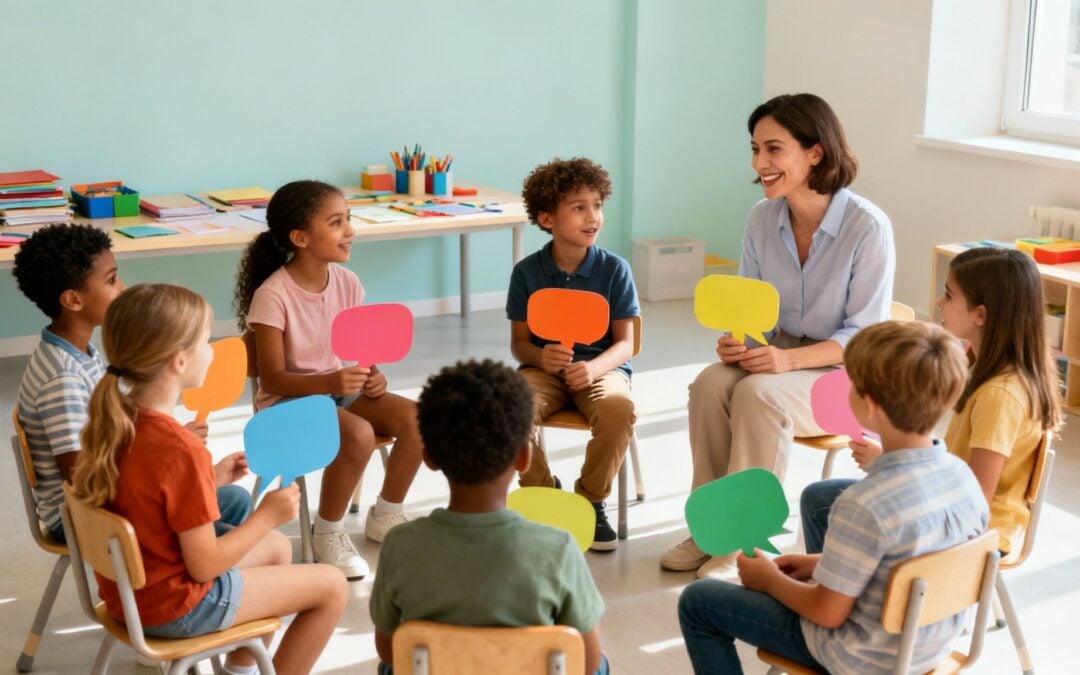
Active Listening Circles are structured group sessions designed to teach participants how to listen deeply without interruption, judgment, or the pressure to formulate a response. In this foundational communication skill activity, participants sit in a circle and take turns speaking on a specific topic or prompt, often holding a “talking piece” to signify whose turn it is. While one person speaks, everyone else practices the core tenets of active listening: focusing completely on the speaker, absorbing their message, and acknowledging their perspective.
This simple yet powerful structure builds empathy, validates individual emotions, and creates a sense of psychological safety. It is a cornerstone for building a respectful and inclusive classroom or family culture where every voice is valued.
When to Use This Activity
This activity is exceptionally versatile. Use it for daily morning meetings to check in with students, as a tool for resolving classroom conflicts, or during advisory periods to discuss social-emotional learning (SEL) topics. At home, families can use this format during dinner to ensure everyone gets a chance to share about their day without being talked over. The controlled format makes it ideal for addressing sensitive subjects like bullying or social exclusion, as seen in peer support groups.
Step-by-Step Implementation
- Establish Ground Rules: Before starting, co-create clear norms with the group. Key rules should include: one person speaks at a time (the one with the talking piece), listen with respect, no interruptions, and what’s shared in the circle stays in the circle.
- Introduce the Talking Piece: Select an object to serve as the talking piece- a small ball, a decorative stone, or a stuffed animal works well. Explain that only the person holding this object may speak.
- Provide a Prompt: Start with a low-stakes prompt, such as, “Share one good thing that happened this week,” or “What is something you are looking forward to?” For parents, a great dinner prompt is, “Share one ‘rose’ (a success) and one ‘thorn’ (a challenge) from your day.”
- Model the Process: As the facilitator, go first to model the desired tone and vulnerability. For instance, a teacher might say, “My rose this week was seeing how you all helped each other with the math project.”
- Facilitate the Circle: Pass the talking piece around the circle. Participants can choose to pass if they do not wish to share.
- Debrief: After everyone has had a turn, lead a brief reflection. Ask questions like, “What did it feel like to be listened to?” or “What did you learn about someone else today?”
Pro-Tip: To truly master active listening, it’s essential to understand techniques like what is reflective listening, which builds trust and clarifies understanding. This involves paraphrasing what you heard to confirm you understood correctly.
This exercise is one of many effective listening skills activities that can transform group dynamics by fostering genuine connection and mutual respect.
2. Role-Playing and Perspective-Taking Scenarios
Role-Playing and Perspective-Taking Scenarios are immersive communication skill activities where participants act out realistic social situations in a safe and structured setting. By stepping into another person’s shoes, whether it’s a peer, a teacher, or a family member, students practice navigating complex interactions like resolving conflicts or standing up to bullying. This hands-on approach moves beyond theoretical discussion, allowing for practical application of empathy and assertive communication.
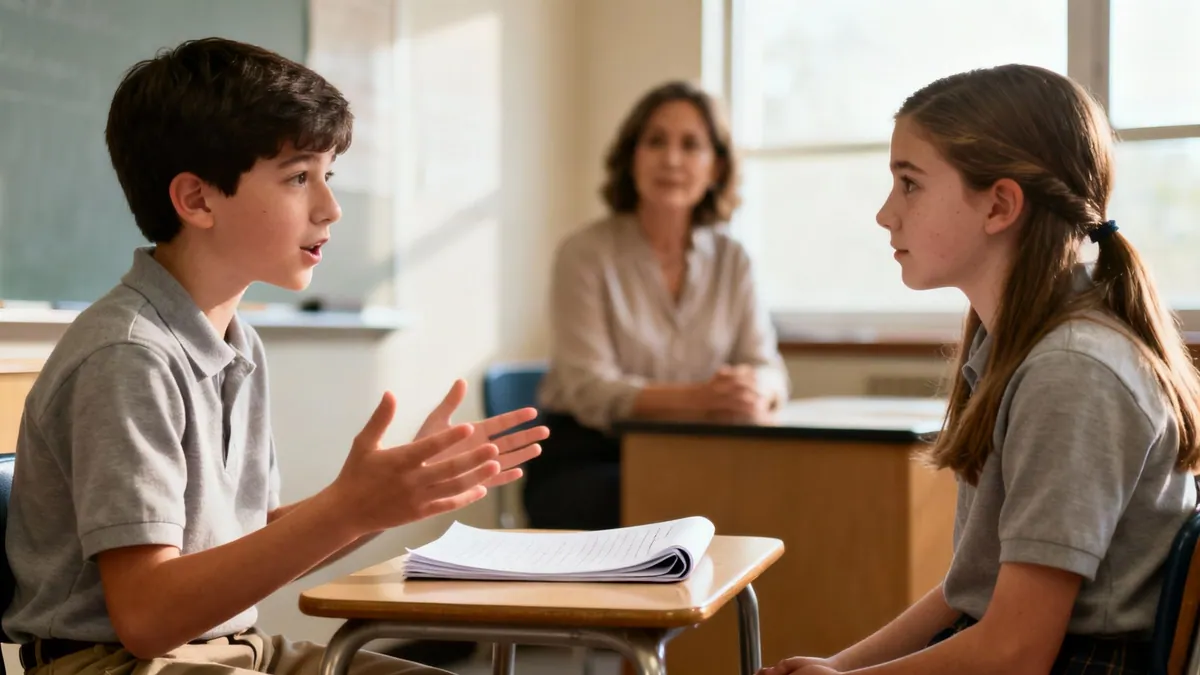
This method builds confidence and emotional intelligence by allowing students to experiment with different responses without real-world consequences. It is a powerful tool for developing empathy, as participants experience firsthand how their words and actions impact others’ feelings.
When to Use This Activity
This activity is ideal for teaching specific conflict resolution skills or preparing students for challenging social dynamics. Use it to address common classroom issues like exclusion at recess, disagreements during group projects, or bystander intervention in bullying situations. At home, parents can use role-playing to practice scenarios such as apologizing to a sibling or asking a friend for help. It is particularly effective in peer mediation programs and social skills groups.
Step-by-Step Implementation
- Set the Stage: Clearly define the scenario and the objective. For example, a teacher might say, “In this scene, Sam has been telling other kids not to play with Alex on the playground. Our goal is to practice how a bystander could step in and help.”
- Assign Roles: Assign roles such as the person being excluded, the one doing the excluding, and an active bystander. Provide simple scripts or key phrases for students who may be hesitant to improvise. For instance, the bystander’s script could start with: “Hey, I noticed Alex is standing alone. It’s more fun when we all play together. Can he join us?”
- Act Out the Scenario: Give students a few minutes to act out the scene. Facilitate as needed, but allow them to lead the interaction.
- Pause and Discuss: Stop the role-play at a critical moment to ask the audience and participants questions. For example, “What is Alex feeling right now? What could the bystander say to change the situation?”
- Replay and Revise: Have students replay the scene, trying out a different, more positive strategy based on the discussion. Maybe this time the bystander invites Alex to a new game.
- Debrief as a Group: After the role-play, lead a reflection on the experience. Discuss what strategies worked, how each character felt, and how these lessons can be applied in real life.