Soul Shoppe's work is made possible by donors and partners who care deeply about the young people in their communities! We can't do this work without you. Support our work in classrooms and on playgrounds across the nation by donating here.
A child cries after being bumped in line. Another stares at a group project, unable to start. A middle-school student checks a phone again and again after a friendship text goes unanswered. In each case, the feeling is real, but the child may not yet have the words or strategies to understand what's happening and respond constructively.
That's the practical answer to what is emotional literacy. It's the developing ability to recognize, understand, express, and regulate emotions in yourself and respond thoughtfully to emotions in other people. In a K–8 school, this skill appears in ordinary moments, during morning meeting, recess, partner work, dismissal, family dinner, and group chats.
A Classroom Moment That Shows Why This Matters
A third-grader is waiting in line when another student pushes ahead. Her face tightens, her hands curl, and then she bursts into tears. She can recognize that something feels wrong, but she can't yet separate anger, hurt, and unfairness, so the feeling comes out as crying and shouting.
Across the room, a fifth-grader's group project falls apart. One partner changes the plan, another stops participating, and the student freezes over the worksheet. The child may understand that the group is struggling, but doesn't know how to express, “I'm overwhelmed and I need us to choose one plan.” Without that language, withdrawal can look like defiance or disinterest.
Later, a middle-school student sends a message to a friend and receives no reply. The student reads the silence as rejection, becomes embarrassed or angry, and posts a sharp comment. The missing skills are more complex here. The student needs to recognize the emotional reaction, consider possible causes, express concern directly, and regulate the urge to respond immediately.
The four skills inside one busy day
These moments involve four connected abilities:
Recognizing: noticing body signals, facial expressions, tone, and emotional shifts.
Understanding: connecting a feeling to its cause, context, thoughts, and likely effects.
Expressing: communicating the feeling, need, or concern clearly.
Regulating: choosing a response that protects safety, learning, and relationships.
A teacher who helps the third-grader say, “I'm angry because my place was taken,” gives the child more than a vocabulary word. The teacher creates a pause between the event and the reaction. That pause can make room for a breathing strategy, a request for adult help, or a calm repair conversation.
Practical rule: Teach the feeling language before the next conflict, then prompt students to use it during the conflict.
The benefits reach beyond the individual child. When students can identify what's happening and repair after disagreement, teachers spend less time decoding behavior and more time supporting learning. Peer relationships become easier to restore, and children have a clearer path back into the lesson.
Emotional literacy doesn't require a separate lesson every time. A greeting, a modeled sentence, a check-in, or a short debrief can build it. The working definition becomes clearer when we look closely at the four abilities children practice.
Defining Emotional Literacy in Plain Language
Emotional literacy is the ability to recognize, understand, express, and regulate emotions in yourself and others. It develops gradually, and children can strengthen it through repeated practice at school and home.
A useful analogy is reading and writing. A child first decodes marks on a page, then understands meaning, produces language, and adjusts expression for the audience. Emotional literacy follows a similar path. Children decode emotional signals, make sense of them, communicate what they feel, and adjust their response to fit the situation.
Recognize the signal
Recognition means noticing an emotion in the body, behavior, voice, face, or situation. A kindergartner might say, “My tummy feels buzzy,” before having the word nervous. A teacher can respond, “Your tummy feels buzzy, and your hands are tight. You might be nervous about sharing.”
Recognition doesn't require perfect certainty. It starts with curiosity and observation.
Understand the meaning
Understanding connects the emotion to its context, causes, thoughts, and consequences. A fourth grader might notice that a classmate's voice sounds flat after a loss. The student can learn to avoid guessing, ask gently, and recognize that sadness may affect participation.
Modern research describes children's emotion knowledge in similarly concrete terms, including emotional context, causes, physical reactions, thoughts, behaviors, and responses that support regulation. The 2024 school-based research on children's emotion literacy treats these as teachable areas rather than vague personality traits.
Express the experience
Expression means communicating an emotion accurately and respectfully. A child might say, “I'm disappointed that the game ended,” instead of knocking over the pieces. A sixth grader might write, “I'm angry about what happened, so I'm going to wait before I reply.”
Expression includes words, tone, timing, gestures, and requests. Children need practice finding language that tells others what's happening without blaming them.
Regulate the response
Regulation doesn't mean suppressing feelings or pretending to be calm. It means managing the emotional response well enough to choose a safe and useful next step. That might involve breathing, moving, taking space, asking for help, checking the facts, or returning to a conversation later.
These abilities are age-staged. Younger children may begin with body cues and basic feeling words. Older students can examine mixed emotions, social context, impact, repair, and digital communication. The common thread is daily language, not a badge or one-time program.
How Emotional Literacy Differs From Related Ideas
Schools often use emotional literacy, emotional intelligence, and SEL as if they mean the same thing. They overlap, but each term points to a different teaching lens.
Emotional literacy focuses on the practical skill set of recognizing, understanding, expressing, and regulating emotion in social situations. It leaves out some of the broader systems and capacities associated with emotional intelligence. In class, use it when you're teaching a student to identify a feeling, explain its cause, communicate a need, or repair harm.
Emotional intelligence is a broader capacity for perceiving, using, understanding, and managing emotions. It can include self-awareness, self-management, social awareness, and relationship management. Emotional literacy gives students the language and practice that support those capacities, but it doesn't describe every aspect of effective decision-making or relationship leadership. This guide to emotional intelligence offers the neighboring concept in broader terms.
Social-emotional learning, or SEL, is the schoolwide framework for teaching and applying social and emotional competencies. It includes instruction, classroom routines, adult modeling, relationships, discipline practices, and family partnerships. Emotional literacy is one skill area inside that larger system.
Social awareness is a specific social-emotional competency involving empathy, perspective-taking, and attention to other people's experiences. It helps a student consider what a classmate may be feeling, but it doesn't by itself cover recognizing one's own body cues or regulating an impulsive reaction.
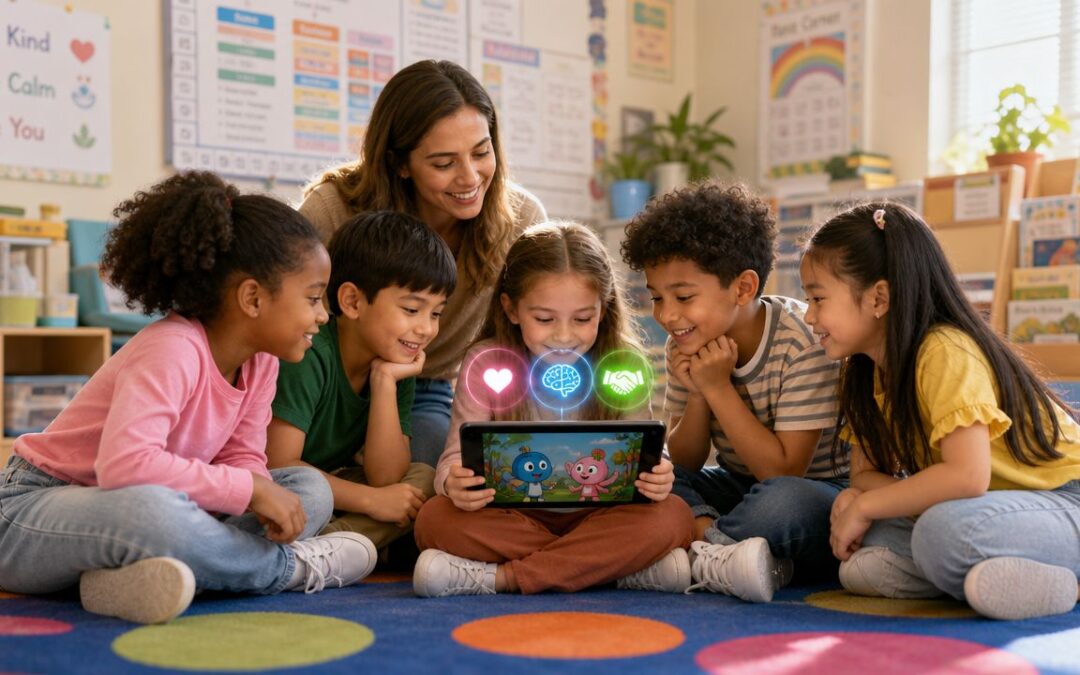
Digital emotional literacy adds another context. It applies the same core abilities to texts, online comments, group chats, social media, and AI-mediated communication, where facial expressions and vocal tone may be missing.
Concept
Scope
Primary Focus
Best Classroom Use
Emotional literacy
Individual and relational skill set
Recognizing, understanding, expressing, and regulating feelings
Teach specific feeling words, sentence stems, coping choices, and repair
Emotional intelligence
Broader emotional capacity
Using emotional information to navigate decisions and relationships
Discuss broader self-management, empathy, and relationship habits
SEL
K–12 framework and schoolwide approach
Instruction, climate, relationships, and applied competencies
Align routines, lessons, adult practice, and family engagement
Social awareness
One social-emotional competency
Perspective-taking and empathy
Analyze another person's viewpoint and needs
Digital emotional literacy
Emotional skill in digital contexts
Interpreting and managing emotion through screens
Practice pausing, checking meaning, and communicating online
The distinction helps teachers choose a measurable goal. “Build SEL” is a broad school aim. “Students will use a feeling word and a reason during conflict” is an emotional literacy target.
What the Research Shows About Teaching It
The strongest evidence comes from universal school-based SEL rather than from isolated emotion-vocabulary activities. A contemporary meta-analysis found significant gains compared with controls in student skills, attitudes, behaviors, school climate and safety, peer relationships, school functioning, and academic achievement (research review of universal school-based SEL).
That pattern fits what teachers see in practice. A student who can label rising frustration has a better chance of choosing a pause before interrupting. A student who can understand a peer's perspective has more tools for resolving a disagreement. Those small changes can improve the conditions in which teaching and learning occur.
What schools can reasonably expect
Schools shouldn't promise that an emotional literacy lesson will eliminate conflict or distress. Students will still become angry, disappointed, anxious, embarrassed, and impulsive. The more accurate expectation is stronger access to skills and more opportunities to use them under pressure.
Evidence from a school-based emotional well-being program for disadvantaged primary-school children found significant improvements in self-awareness, self-regulation, motivation, and social skills after intervention (intervention study on emotional well-being and emotional literacy). The practical lesson is that one activity can target several skills when it asks children to notice body cues, select a calming strategy, and rehearse a repair statement.
What transfer looks like: A student may still have a difficult reaction, but recover sooner, explain more accurately, and return to the relationship or task with less adult prompting.
Research supports sequenced, active, explicit, and repeated teaching. Students need to see adults model language, practice responses, receive feedback, and use the same tools across settings. A morning meeting, a recess debrief, and a family conversation can reinforce one another when they share familiar words and steps.
For school leaders, the outcome is a healthier climate, steadier peer relationships, fewer avoidable disruptions, and improved access to learning. For families, it's a practical reason to make feeling language part of ordinary conversation.
Practical Examples for Classrooms and Homes
A child arrives angry after recess, another keeps fidgeting during morning work, and a caregiver later receives a sharp text from home. Emotional literacy gives adults a shared way to handle these ordinary moments. The practice should be small enough to repeat, with the target skill named clearly rather than hidden inside a vague “SEL time” conversation.
Early elementary
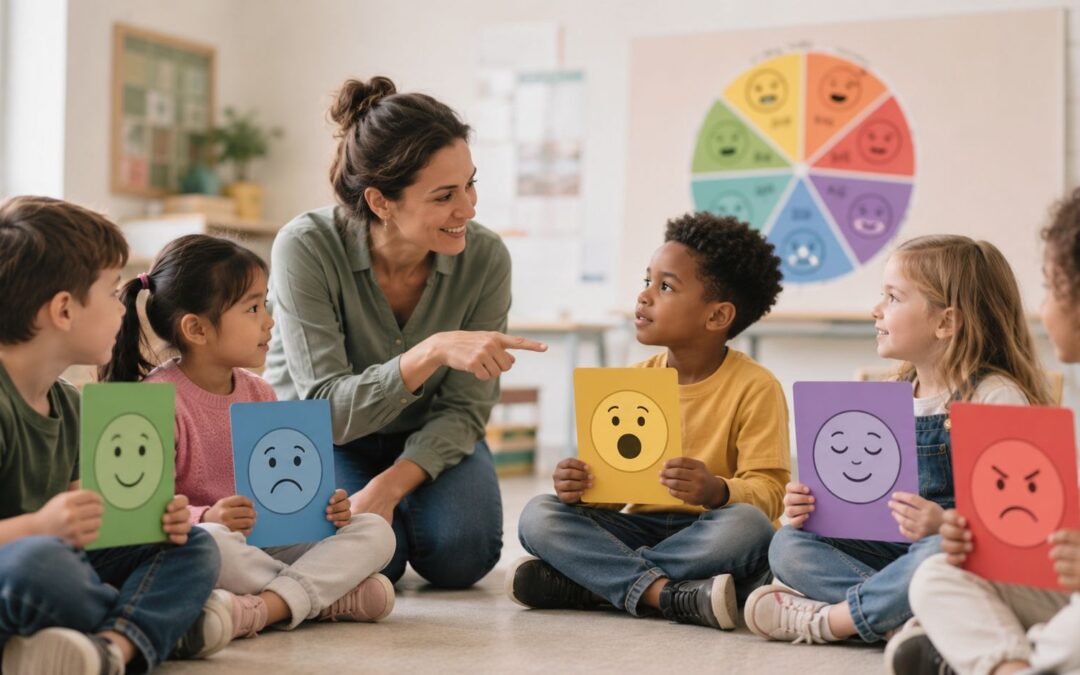
Start the day with a feelings word wall. Add familiar words such as happy, sad, mad, scared, and calm, then introduce more precise choices such as disappointed, worried, proud, lonely, or frustrated. During morning meeting, children can point to a word, gesture toward it, or describe a body cue.
The aim is recognition and expression, not public disclosure. A child might say, “I feel wiggly,” or place a private card near a check-in board. The teacher can model, “I'm frustrated because the materials aren't ready, so I'm going to take one slow breath and begin with what I have.” That example connects a feeling with its cause and a manageable response.
A classroom calm-down corner works best as a place to practice regulation, not as punishment. Include a feelings chart, breathing prompt, paper for drawing, and a short menu of choices. After the child settles, ask, “What did your body notice? What happened? What could help you rejoin?” At home, caregivers can use the same sequence after a sibling dispute: name the feeling, explore the cause, and offer a limited choice of next steps.
Upper elementary
In grades three through five, teachers can model sentence stems during real classroom friction:
“I felt ___ when ___ happened.” This links emotion to context.
“I'm guessing you might feel ___, is that close?” This practices empathy without claiming to know another person's mind.
“I need ___ so I can ___.” This turns a feeling into a constructive request.
“I'm ready to talk, but I need a short pause first.” This makes regulation visible.
A family dinnertime check-in can use a feelings wheel. Each person chooses a word and shares a cause, body signal, or coping response. A caregiver might say, “I felt relieved when the appointment ended because I had been worried.” The adult is teaching understanding, while allowing children to decide how much they want to share.
Teachers who need a simple record of patterns can pair student reflections with an online behavior tracking solution. Keep notes focused on observable behaviors and support needs, not labels or assumptions.
Middle school
For grades six through eight, use role-play in both directions. One student practices saying, “When the slides changed without telling me, I felt unprepared. Next time, can we check the plan together?” The partner responds, “I hear that the change affected you. I was trying to help, but I should have asked first.” Students then switch roles so the exercise does not frame one person as the problem.
This rehearses expression, perspective-taking, and repair in language students can use during group work, friendship conflict, or a family disagreement.
At home, create a family contract for tech-driven emotional moments. It might include pausing before replying to an insulting message, asking for clarification when tone is unclear, avoiding forwarded screenshots during conflict, and moving a heated exchange to face-to-face conversation or a voice call. The contract teaches digital context-awareness and regulation without treating devices as the enemy. Age-adaptable ideas are available in these emotional awareness activities for children and students.
Lesson Ideas Assessment Tips and School Implementation
A teacher can begin on Monday without creating a new course. Choose one feeling skill, teach it directly, and look for evidence of use during ordinary routines.
Three lessons ready for Monday
Feelings vocabulary with picture cards: Show facial expressions, body positions, and brief situations. Students sort the cards by possible feeling, explain their reasoning, and add a more precise word when “mad” or “sad” isn't enough. This primarily teaches recognition and understanding.
Empathy mapping with a short story: Draw four boxes labeled “What might the character notice,” “What might the character think,” “What might the character feel,” and “What might the character need.” Emphasize that students are making informed guesses, not stating facts about another person's inner life. This builds social awareness and perspective-taking.
Problem-solving circle: Use a recurring playground conflict. Each participant describes what happened without insults, names an emotion and need, listens to another viewpoint, and proposes a repair. The group chooses a next step that protects safety and belonging. This practices expression, regulation, and repair.
Assessment can stay low stakes. Teachers might notice whether students use a wider range of feeling words, explain causes more clearly, recover faster after upset, or seek help before behavior escalates. Track patterns over time through brief anecdotal notes, student reflections, or class discussions rather than reducing a complex skill to a single score.
Look for movement, not perfection: Progress may sound like “I'm still angry, but I can talk now,” or “I thought you ignored me, but I'll ask before assuming.”
Schools should embed practice in existing structures. Morning meetings, advisory, read-aloud discussions, recess reflection, restorative conversations, and family communication can carry the work without adding another block. Paraprofessionals, recess supervisors, counselors, and office staff also need the shared language because students practice emotional literacy across the campus, not only with their classroom teacher.
Send home feeling-word cards and short newsletters with one sentence stem or regulation strategy. Families don't need a full curriculum to reinforce the work. They need to hear the same language and know that adults value both emotional honesty and responsible action.
A short demonstration can help staff visualize the teaching move before they try it:
Common Misconceptions and the Digital Era
Myth: Feelings should stay outside the classroom. Students bring emotions with them, whether adults name them or not. A child who feels embarrassed may avoid work, provoke peers, or shut down. A brief check-in can make the feeling discussable before it controls the lesson.
Myth: Emotional talk is soft or off-task. Emotional literacy supports the behaviors that make learning possible. Students need language for frustration during challenging work, disappointment after feedback, and uncertainty during collaboration.
Myth: Children will outgrow emotional struggles. Development changes what students can understand, but it doesn't automatically provide the vocabulary or regulation strategies they need. Adults still have to model, prompt, and practice.
Myth: Children absorb these skills socially without explicit teaching. Some children pick up emotional language through conversation and supportive relationships. Others need direct instruction, repeated rehearsal, and adults who make invisible processes visible.
Digital emotional literacy
Online communication removes many cues children use in person. A short text can sound angry, playful, dismissive, or rushed depending on the reader. Students also face the permanence of screenshots, rapid emotional spread through group chats, social comparison, cyberbullying, and communication shaped by platforms or AI.
Digital emotional literacy applies the same four abilities to those conditions:
Recognize: Notice your reaction to a message and identify what cues are present.
Understand: Consider alternative explanations for ambiguous wording and the possible impact of forwarding or posting.
Express: Ask for clarification, state concern, and choose a channel that fits the problem.
Regulate: Pause before replying, step away from the device, and avoid escalating a public exchange.
Schools can establish device-free emotion check-in moments so students practice reading their own signals without a screen competing for attention. Teachers can also model interpretation: “That message felt harsh to you. What do we know for certain, what are we assuming, and what could we ask before responding?”
Emotional literacy begins with four teachable abilities, recognize, understand, express, and regulate. The evidence supports explicit, sequenced practice connected to classroom climate, relationships, behavior, and learning. The smallest first step is simple: choose one feeling word, model one sentence, and invite students or family members to use it during a real moment this week.
Soul Shoppe offers research-based SEL programs, workshops, and coaching that give school communities shared language for self-regulation, communication, empathy, and conflict resolution. Visit Soul Shoppe to explore tools that can help students and grownups practice emotional literacy at school and at home.
A child is crying over a missing shoe. A student is snapping at a classmate over a pencil. A parent is standing in the kitchen, trying to get homework started while everyone is already tired. In moments like that, what matters is often not the behavior you see first, but whether the child can notice what they feel, name it clearly, and make sense of it before the moment snowballs.
That capacity is emotional awareness, and it sits underneath a lot of what adults hope kids will eventually do well, from calming down to solving conflict to asking for help. It's also more teachable than many people assume, which is why it shows up in research as something measurable, not just a personality trait or a vague “good with feelings” quality. A useful starting point is to think of it as the skill of noticing emotions in yourself and others, then sorting them well enough to respond instead of react. For a wider early-childhood lens, this overview of emotional development in early childhood helps place emotional awareness in the larger picture of growth.
A Moment Every Teacher and Parent Recognizes
A student slams a book shut and says, “I'm fine,” which usually means they are very much not fine. A second-grader melts down because the shoe they wanted isn't in the cubby, and the tears seem bigger than the problem. A parent hears, “I hate homework,” and knows the sentence is carrying more than frustration.
Those moments are where emotional awareness becomes visible. Before a child can calm down, explain themselves, or ask for support, they have to register that something is happening inside them. Research on emotional awareness treats it as a measurable capability, not a vague trait, and recent global tracking even shows that it can rise or fall over time rather than staying fixed as part of someone's personality Six Seconds research on emotional intelligence.
What adults usually miss first
Adults often jump straight to behavior. We see the shout, the slam, the refusal, or the tears. The child, though, may only be aware of a body signal, like a tight chest or hot face, and not yet know what that signal means.
Practical rule: when a child is escalating, start by asking what they notice inside, not what they did wrong.
That shift matters because emotional awareness is the foundation under the rest of social-emotional learning. If a child can't notice the feeling in time, every later strategy starts too late. If they can notice it, even roughly, you have something to work with before the whole interaction tips into a power struggle.
A Working Definition You Can Use Today
Emotional awareness is the capacity to notice, label, and differentiate emotions in yourself and in other people. That sounds academic, but it becomes practical the minute a teacher asks, “Are you frustrated, embarrassed, or disappointed?” instead of settling for “You're upset.” The difference is not just vocabulary, it's precision.
A simple way to explain it at pickup is this. Emotional awareness is the skill of recognizing what you feel, figuring out what kind of feeling it is, and understanding how it's shaping what you're about to do. That makes it related to emotional intelligence, but not identical to it. It also comes before self-regulation, because you can't manage a feeling well if you haven't noticed it clearly enough to name it.
For a parent-friendly companion to that broader umbrella, this guide to emotional intelligence helps separate the pieces without making the concept feel fuzzy.
Concept
Core Question It Answers
Where It Fits
Emotional Awareness
“What am I feeling, and what does it mean?”
The noticing and understanding piece
Emotional Intelligence
“How do I understand and use emotions well?”
The broader set of emotional skills
Self-Regulation
“What do I do now that I know how I feel?”
The response and control piece
How it differs from empathy and self-regulation
Empathy is about reading someone else's inner world. Self-regulation is what happens after awareness, when a child uses a strategy to settle, pause, or choose differently. Emotional awareness sits earlier than both. It helps a child tell the difference between “I'm angry,” “I'm hurt,” and “I'm overwhelmed,” which is the level of detail most kids need before they can act with any steadiness.
Why Naming a Feeling Is Not the Whole Story
A child saying “I feel bad” has started the process, but they haven't finished it. That sentence could mean embarrassed, lonely, irritated, scared, disappointed, or just flooded. Research makes an important distinction here between attention to emotions, which is noticing that something is happening, and emotional clarity, which is understanding what that feeling means and why it matters emotional self-knowledge profiles.
From vague body cue to usable language
A teacher might hear, “My stomach hurts, I want to go home.” A parent might hear, “I'm mad,” when the child really means ashamed after being corrected in front of peers. The first move is to slow the moment down and ask for one more detail, not to correct the child's wording.
A helpful scaffold looks like this. First, notice the body cue. Then offer two or three feeling words. Then connect the feeling to the situation.
“Your shoulders are tight, and your voice got loud. That can happen when someone feels frustrated or embarrassed. Which one fits better?”
Tools like a digital reflection journal can be useful for older kids who need a low-pressure way to sort through what they felt after the moment has passed.
Sometimes low awareness is protection
It's tempting to treat every lack of clarity as a skill gap. Sometimes it is. Sometimes a child has learned that tuning out feelings helps them stay safe, stay invisible, or avoid shame. A 2021 study linked emotional-awareness difficulties with distress, loneliness, and distress concealment, which is a reminder that shutting down can be a coping strategy, not just a deficit Frontiers in Psychology. In those cases, the work isn't just vocabulary. It's trust, patience, and repeated experiences of being taken seriously.
For a deeper look at helping children find emotion words without forcing them, this piece on naming feelings is a useful companion.
How Emotional Awareness Develops from K Through 8
Kindergarteners often live in broad labels. They can usually say mad, sad, or happy, but they may not yet explain why the feeling showed up. By second or third grade, many kids can add words like scared or surprised and give a one-word reason, such as “test” or “fight.” That's a real step forward, because the child is beginning to connect feeling with event.
By fourth and fifth grade, some children can handle mixed feelings. They might say they're excited about a field trip and nervous about the bus ride, which shows they're no longer treating emotions as one-at-a-time. In middle school, a student may be able to identify a trigger, link it to a reaction, and use a coping move without adult prompting. That's the stage where emotional awareness starts to look like self-management in the wild.
The research is clear that this development is uneven. One longitudinal study described emotional awareness as attentional monitoring and differentiation of discrete emotions, and found that the dimension of differentiating emotions uniquely predicted internalizing symptoms in the sample longitudinal study on emotional awareness. In plain English, some kids need much more explicit support in moving from “something feels off” to “this is embarrassment, and it started when I got corrected in front of everyone.”
Red flags worth noticing
A child who frequently complains of stomachaches or headaches without a clear cause may be signaling stress through the body. A student who suddenly withdraws from peers, goes quiet in group work, or gets unusually reactive after small corrections may need more explicit emotional support, not more punishment. A middle schooler who can describe body tension but can't connect it to a feeling word may be stuck at attention without clarity.
The goal isn't to label every child by grade. It's to notice what they can already do, then meet them there.
For school teams looking at how awareness connects to self-management and reflection, this self-awareness exercises resource offers a practical extension.
Classroom Strategies That Actually Fit a Real Schedule
A classroom doesn't need a full SEL block to build emotional awareness. It needs small, repeatable moves that fit inside the day you already have. The best ones are quick enough to keep, even on the messy days when the schedule is thin and everyone's patience is thinner.
Four moves that don't eat the period
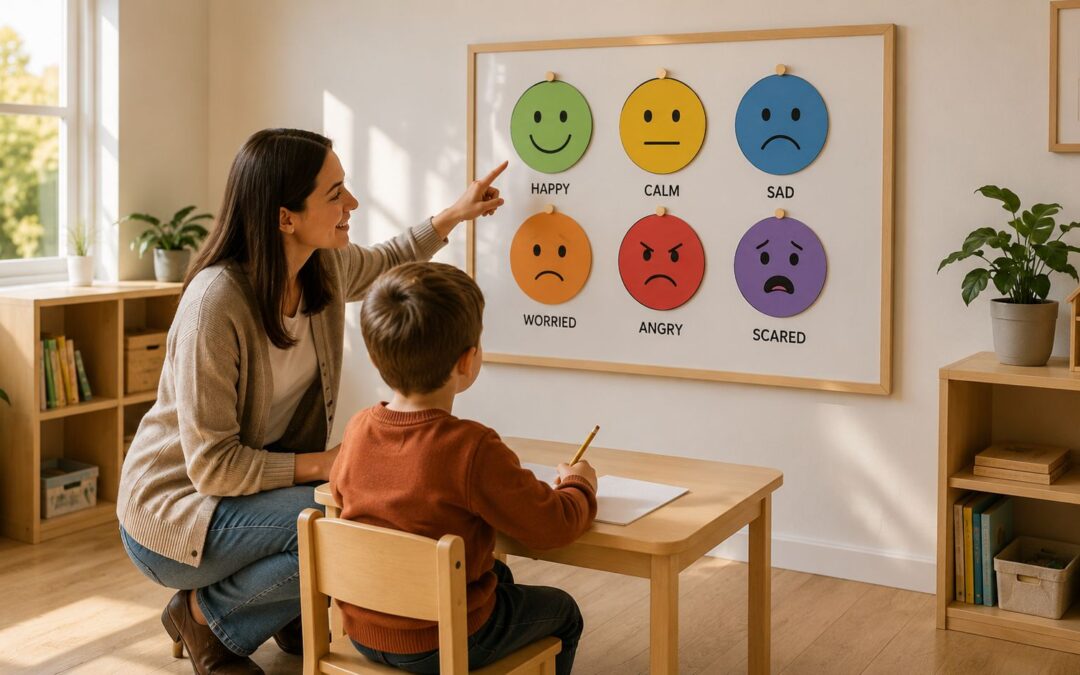
A 60-second emotion check-in at the door can be as simple as, “Show me fingers from one to five, or point to the feeling that fits.” It gives you a quick read without turning the moment into a discussion circle.
Language stems posted on the board help kids borrow the words they don't yet own. Try, “I feel ___ because ___,” “My body feels ___,” or “I need ___ right now.” Those stems matter because they move students from global distress to workable language.
A feelings versus behaviors chart is another low-lift tool. On one side, list emotional states like worried, frustrated, embarrassed, or disappointed. On the other, list behaviors like yelling, hiding, freezing, or tapping. Kids often confuse the two, and naming the difference can stop shame from taking over.
For schools that want a structured way to support volunteering and family involvement around these practices, a volunteer background check can be part of the wider planning conversation before adults step into classrooms or support spaces.
Useful check: if a student can move from a body cue to a feeling word to a need statement, you've got a real-time observation of growth.
What to say during a meltdown
When a child is already flooded, skip the lecture. Use fewer words, lower your volume, and name what you see. “Your hands are clenched. You look overwhelmed. Let's breathe once and pick one word for this feeling.” That's not about being soft. It's about keeping the child in a state where learning is still possible.
A daily two-minute journal entry can help older students sort their day after the fact, especially if they shut down in the moment. The point isn't polished writing. The point is giving feelings a place to land.
At-Home Strategies for Parents and Caregivers
At home, emotional awareness usually grows in the ordinary parts of the day, not in the perfect teaching moment. A parent saying, “I'm frustrated because I lost my keys,” gives a child a live model of naming, not just instruction. Kids learn a lot from hearing adults narrate their own inner experience without turning it into a performance.
The question that tends to work better than “Why are you upset?” is, “What does that feel like in your body?” That question is easier for many children to answer because it starts with a sensation they can notice. Tight belly, hot face, clenched fists, fast breathing, those cues are often the front door to the feeling itself.
A homework meltdown, step by step
A child sits down to do homework, stares at the page, and suddenly starts crying. The parent's first instinct is usually to fix it, explain it, or finish it for them. A more useful move is to pause, name the observable signs, and ask one small question at a time.
“Your pencil is down, and your eyes are watery. Is this feeling more like frustration, worry, or embarrassment?” If the child says, “I don't know,” that's fine. Offer a guess. “Sometimes this looks like frustration when the work feels too hard.” The child can accept, reject, or revise the guess, and all three outcomes move awareness forward.
Sit with the feeling long enough for the child to notice it, not so long that they feel trapped in it.
That's the balance many caregivers are trying to find. You don't need to solve the math problem first. You need the child back in enough of their own mind to try.
Everyday moments that help
Car rides are good for side-by-side conversation because eye contact isn't required. Bedtime is another useful window because the day is already winding down. A quick check like, “What felt heavy today?” or “What felt good in your body today?” gives children practice without pressure.
The hardest part is often tolerating your own urge to rescue. If you can stay calm for another minute, the child gets the message that feelings can be named and held without being treated like an emergency every time.
Bringing It All Together and Where to Go Next
What is emotional awareness, really? It's the ability to notice what's happening inside, tell the difference between a vague signal and a clearer feeling, and use that information before behavior takes over. For kids, that skill can look clumsy at first. A child may start with body cues, move to broad labels, and only later learn how to connect a trigger, a feeling, and a response.
That's why the most helpful adult moves are often the simplest ones. Notice the body. Offer a feeling word. Slow the moment. Give the child a way to say more than “bad.” Those steps are small, but they add up in classrooms, kitchens, and counseling rooms.
Soul Shoppe offers workshops, assemblies, coaching, and digital tools that help students build shared language for emotions, self-regulation, communication, and conflict resolution. For schools and families who want support that goes beyond one-off lessons, Soul Shoppe is a practical place to start because the work is built around the same core skill this article has focused on, helping kids notice what they feel and respond with more clarity.
Social-emotional learning (SEL) is critical for building safe, supportive, and effective school communities. Translating core competencies like self-awareness and relationship skills into tangible classroom practice, however, requires practical tools. High-quality Social Emotional Learning worksheets provide a direct and accessible way for both teachers and parents to help children develop these essential life skills.
This guide cuts through the noise, offering a curated list of the best resources for printable and digital SEL activities. Before exploring specific worksheets, it’s valuable to have a strong foundation in SEL principles. For parents seeking a deeper understanding, building a social emotional toolkit for children starts with grasping these core concepts.
We will explore platforms like Second Step, Centervention, and Teachers Pay Teachers, detailing what makes each one effective. You will find practical examples for different age groups to help students build real skills in self-regulation, conflict resolution, and responsible decision-making. Each resource includes direct links and a clear breakdown of its best uses, so you can quickly find the right fit for your classroom or home. Let's dive into the tools that can make a genuine difference.
1. Product – Deluxe Peacemaker At Home Kit
While many resources focus on individual Social Emotional Learning worksheets, the Deluxe Peacemaker At Home Kit by Soul Shoppe provides a cohesive, hands-on system for families. Developed from over two decades of research-based application in schools, this kit translates proven conflict-resolution and self-regulation strategies into a format perfect for home use. It’s designed to create a shared language between parents and children, turning everyday disagreements into valuable teaching moments.
This stands out because it goes beyond paper-based activities by equipping families with a durable set of tools for practice. The included caregiver guide provides scripts and prompts, making it easy for adults to facilitate meaningful conversations and model healthy communication, even without prior SEL training.
Key Features and Use Cases
The strength of the kit lies in its multimodal approach. It combines conversation starters, role-playing scenarios, and calming techniques to help children build concrete skills.
Practical Example: If siblings are arguing over a toy, a parent can use the kit’s role-play scripts to guide them through expressing their feelings with "I feel" statements and brainstorming a fair solution together. This active practice is far more memorable than simply filling out a worksheet about sharing.
School-to-Home Connection: For educators, this kit is an excellent recommendation for parents. It helps reinforce classroom SEL concepts, creating consistency for students between their school and home environments.
Proactive Skill-Building: The kit includes quick mindfulness exercises and games that can be incorporated into daily routines, proactively building a child's capacity for self-regulation before conflicts arise.
The kit costs $99 and is available directly from the Soul Shoppe website. While it requires active adult participation for the best results, its evidence-based foundation makes it a powerful tool for embedding peacemaking skills into family culture. It is not a substitute for professional mental health services but serves as a first-rate support for everyday emotional development.
Second Step, developed by the Committee for Children, offers a complete, research-backed SEL curriculum for PreK through 8th grade. Unlike websites offering one-off printables, Second Step provides a structured, school-wide program where Social Emotional Learning worksheets and activities are integrated into a larger, evidence-based system. Each grade-level unit contains a coherent sequence of lessons supported by downloadable handouts, posters, and activity sheets.
This platform stands out for its turnkey nature. A key strength is the consistency it brings across a school; every classroom uses the same language and builds on skills learned in previous years. Access to these materials, however, is tied to a school or district-wide license, making it a significant investment and less practical for individual teachers or parents seeking quick resources.
Key Features and Access
Practical Example: A second-grade lesson on empathy might include a worksheet where students identify feelings in pictures and write a sentence about what the person might be thinking. This builds on a kindergarten activity of simply naming basic emotions, reinforcing the concept in a more complex way.
Integrated Curriculum: Worksheets are not standalone but are part of comprehensive lesson plans that include Bullying Prevention and Child Protection units.
Licensing Model: Access to the digital platform and all downloadable materials requires an annual subscription, which can be costly. This is not a source for free, individual worksheets.
Professional Development: The program includes robust training and implementation support for educators and administrators, ensuring effective school-wide adoption.
Pros:
Clear, research-based scope and sequence
High-quality, consistent materials across grade levels
Harmony SEL, a program from National University, provides no-cost, PreK-6 SEL resources designed for easy integration into daily classroom routines and home life. Instead of just offering individual Social Emotional Learning worksheets, Harmony delivers complete lesson units through downloadable PDFs and supplemental materials. The program is built to foster peer relationships and build a positive classroom community, making it one of the most accessible and complete free SEL programs available to educators.
The platform’s strength lies in its practicality and focus on daily application. The “Harmony at Home” component extends this learning with printable activities for families, creating a consistent support system for children. While it is one of the top social emotional learning programs for schools, access requires a free account registration, and its content is primarily focused on the elementary grades.
Key Features and Access
Practical Example: The “Quick Connection Cards” provide simple, 5-minute activities for morning meetings. A card might prompt students to turn to a partner and discuss "a time you helped a friend," connecting SEL concepts to their real lives and building community.
No-Cost Model: All lesson PDFs, home activities, and training modules are available for free after creating an online account.
Daily Practice Tools: Includes Quick Connection Cards and other resources created for brief, consistent daily check-ins and activities.
Family Engagement: “Harmony at Home” provides specific printables and guidance for parents to reinforce classroom learning.
Pros:
Completely free access with account registration
Practical daily routines that complement core SEL work
Includes family engagement resources
Cons:
Focused on PreK–6 with fewer middle-school-specific printables
Centervention offers a unique blend of digital, game-based SEL practice with a library of printable resources. Through its "Assist" program, educators gain access to over 200 ready-to-use lessons and Social Emotional Learning worksheets. This approach allows students to learn a concept with a hands-on worksheet and then reinforce it through engaging online activities, with progress monitoring tools to track skill development.
This platform stands out by connecting concrete, printable activities with interactive digital practice. This hybrid model makes it particularly effective for targeted interventions within an MTSS framework. While free starter activities are available, full access requires a subscription.
Key Features and Access
Practical Example: A school counselor could use a printable worksheet on conflict resolution with a small group, where students list pros and cons of different solutions. Then, they can assign specific online games that allow students to practice those same skills in simulated scenarios, getting immediate feedback.
Blended Learning: Pairs printable worksheets and lessons with corresponding online, game-based practice for skill reinforcement.
Targeted Library: The "Assist" library provides open-and-go lessons and printables organized by skill, ideal for small groups or individual support.
Progress Monitoring: Digital components include tools for educators to track student progress and identify areas needing more support.
Pros:
Blends hands-on printables with engaging digital practice
Clear, tiered pricing for individuals and schools
Good fit for targeted/small-group MTSS supports
Cons:
Lower-tier plans have limits on the number of students
Subscription model may be less appealing than one-time packs
Positive Action offers a full PreK-12 SEL curriculum that is recognized in the CASEL Program Guide for its systemic, evidence-based approach. The platform provides grade-level kits that include student workbooks and reproducible Social Emotional Learning worksheets. Rather than offering single downloads, its materials are part of a cohesive program designed for consistent, school-wide implementation, available in both print and digital formats.
This program stands out for its vertical alignment, ensuring that skills build logically from one grade to the next. Access is intended for school or district-level adoption, with pricing available by quote, making it less suitable for individuals seeking quick, free resources. The program also includes family and community kits to extend learning beyond the classroom.
Key Features and Access
Practical Example: A third-grade lesson on positive self-talk might have a worksheet where students identify a negative thought ("I'm bad at this") and reframe it as a positive one ("I can get better with practice"). This builds on an earlier first-grade activity about identifying personal strengths.
Systemic K-12 Design: Worksheets are part of a structured curriculum that supports vertical skill alignment across all grade levels.
Flexible Delivery: Materials are available through print kits with reproducible worksheets or a digital curriculum platform (Pasela).
Full Program Purchase: Access requires a school or district-wide purchase, with pricing and format details provided upon requesting a quote.
Pros:
Strong evidence base and research-backed outcomes
Comprehensive K-12 scope and sequence
Includes family and community engagement materials
Cons:
Designed for institutional adoption, not individual use
The Zones of Regulation provides a cognitive-behavioral framework designed to help students consciously manage their feelings and actions. Rather than just offering standalone Social Emotional Learning worksheets, it centers on a visual system that categorizes emotional states into four colored "zones." The official website is a hub for purchasing the core curriculum and supporting materials, but it also offers a valuable selection of free printable supplements that bring the concepts to life.
This platform excels at giving students a simple, concrete language for discussing complex internal states. The visual tools are particularly effective in special education and counseling settings. While the framework's full impact requires purchasing the book or curriculum, the free resources are excellent starting points for introducing self-regulation concepts and pair well with other lessons on impulse control.
Key Features and Access
Practical Example: A student feeling agitated might identify they are in the "Yellow Zone." The teacher can then prompt them to use a tool from their personal "toolbox" worksheet, such as taking a short walk or doing three deep breaths, to return to the "Green Zone."
Visual Framework: The core of the program is the easy-to-understand four-zone color chart that simplifies emotion identification.
Purchasable Materials: The official shop sells the curriculum book, posters, card games, and other tools. These are one-time purchases, not subscriptions.
Free Supplements: The website provides free downloadable resources, including posters and activity ideas, to support anyone using the Zones framework.
Pros:
Practical, easy-to-use visuals popular in U.S. classrooms
Helpful free printable resources to support implementation
Well-suited for counseling and special education settings
Cons:
Most effective when the full curriculum is implemented with fidelity
Core materials are sold; some resources require purchase
Education.com provides a massive, easily searchable library of materials perfect for supplemental instruction. Unlike structured curricula, this platform operates more like a digital file cabinet, offering thousands of individual Social Emotional Learning worksheets that can be filtered by grade (K-8), topic, and subject. It excels at providing targeted practice on specific skills when you need it most. The resources cover a wide array of SEL competencies, including empathy, managing feelings, and responsible decision-making.
This platform stands out for its flexibility. A key strength is the dual format- teachers and parents can download printable PDFs for hands-on activities or assign interactive, auto-grading versions online. This makes it ideal for homework, independent practice, or quick reinforcement activities. While many resources are free, full library access requires a premium membership.
Key Features and Access
Practical Example: After a classroom discussion on self-awareness, a teacher could assign a third-grade worksheet like "What Are Your Strengths?" for students to complete on a tablet. The digital version provides immediate feedback, and the teacher can see who completed the assignment through their dashboard.
Filterable Library: The powerful search and filter function allows you to quickly find worksheets for a specific grade level and SEL topic.
Printable and Interactive: Choose between classic printable PDFs or assign digital versions that provide immediate feedback and track student progress.
Teacher Tools: A premium subscription includes tools to assign work to individual students or whole classes and monitor completion.
Pros:
Large variety of worksheets for grades K-7 and beyond
Flexible formats for both print and digital use
Excellent for finding specific skill practice on demand
Cons:
Designed as supplemental practice, not a full SEL curriculum
Full access to all worksheets and tools requires a paid membership
Teachers Pay Teachers (TPT) is a massive online marketplace where educators create and sell their own instructional materials. For anyone searching for Social Emotional Learning worksheets, TPT offers a nearly endless library of resources for every grade level, from kindergarten through high school. Unlike structured curricula, its strength is its variety and immediacy. You can find everything from a single worksheet on kindness to comprehensive, year-long SEL activity bundles.
The platform excels at providing targeted solutions for immediate classroom needs. The quality can vary significantly between sellers, so it's essential to read reviews, check seller ratings, and closely examine product previews before purchasing. Many sellers also offer free downloads, which is a great way to sample their work.
Key Features and Access
Practical Example: A teacher noticing students struggling with gossip can quickly search for "conflict resolution friendship" and download a set of role-playing scenarios or a "think before you speak" worksheet. They can have a practical tool ready for a class meeting the next day.
Extensive Marketplace: Thousands of SEL worksheet listings, bundles, and seasonal activity packs are available from different educator-authors.
Flexible Pricing: Resources range from free to premium bundles, accommodating any budget. Most are instant digital downloads.
Seller Previews: Users can preview materials and read peer reviews to judge quality before buying, a key step given the platform's open nature.
Pros:
Huge selection allows for highly specific, tailored material searches
Budget-flexible with many free and low-cost options
Immediate digital access for quick classroom implementation
Cons:
Quality is inconsistent; requires careful vetting of sellers and products
Licensing terms can vary by individual product and seller
Big Life Journal is a resource that focuses heavily on building a growth mindset, resilience, and perseverance through visually engaging materials. While it doesn't offer a complete SEL curriculum, it provides excellent Social Emotional Learning worksheets and activities through its printable kits, journals, and lesson extensions. The content is specifically designed to help children and tweens develop positive self-talk, set meaningful goals, and overcome challenges.
This platform excels at making abstract concepts like resilience tangible for kids. A key strength is its student-friendly design; the printables are colorful and interactive, making them perfect for classroom centers or home use. The materials are sold as individual digital PDF kits or physical journals, so access is piecemeal rather than part of a larger system.
Key Features and Access
Practical Example: A worksheet might prompt a student to reframe a negative thought like "I can't do math" into a growth mindset statement like "I will practice math problems until I understand them better." This gives them a script to use when facing academic challenges.
Downloadable PDF Kits: Includes a wide range of printable worksheets, posters, and activities focused on growth mindset themes.
Age-Specific Journals: Offers journals tailored for different age groups that guide children through self-reflection and goal-setting activities.
Focus on Resilience: Materials specifically target skills like perseverance, positive self-talk, and learning from mistakes.
Licensing Model: Products are typically sold as individual digital downloads or physical products, with licenses intended for personal or single-classroom use.
Pros:
Highly visual and engaging printables for students
Strong focus on growth mindset and perseverance skills
Excellent for parent engagement and independent work
Cons:
Not a full SEL curriculum; more of a supplemental resource
Sold as individual kits, not a comprehensive library
Everyday Speech is a comprehensive PK–12 social-skills platform that uniquely pairs video modeling with supporting materials. Instead of just offering static printables, it integrates Social Emotional Learning worksheets directly into structured lessons that begin with engaging, real-world videos. This approach helps students see social skills in action before practicing them with guided activities, making the concepts more concrete and relatable.
The platform’s strength lies in its no-prep, ready-to-use lessons, which are a significant time-saver for educators and counselors. While a free trial is available, full access to the extensive library requires a subscription, making it a planned investment for a school, district, or dedicated professional rather than a source for quick, free downloads.
Key Features and Access
Practical Example: A lesson on perspective-taking might start with a video of students navigating a misunderstanding. This is followed by a fillable PDF worksheet where children identify each character's thoughts and feelings, and then suggest what one character could say differently next time.
Video Modeling: Each lesson is anchored by a video that models the target skill, which is then reinforced with printable worksheets, activities, and interactive games.
Searchable Library: Educators can easily find materials by filtering for specific skills, such as self-management or relationship skills, and by grade level.
Structured Progression: Provides a full scope and sequence, ensuring skills build logically from one lesson and grade level to the next.
Pros:
Saves significant prep time with complete lesson plans
Excellent for teaching social communication skills, especially in SLP and special education settings
Well-organized platform makes it easy to find targeted resources
Cons:
Subscription cost is higher than one-time worksheet purchases
Full access requires a school, district, or individual professional plan
Mylemarks provides session-ready resources designed for counselors, therapists, and educators working with children and teens in small-group or one-on-one settings. Instead of a broad curriculum, it offers individual Social Emotional Learning worksheets, activity packs, and games available for instant PDF download. The materials target specific needs like managing emotions, building self-esteem, developing coping skills, and practicing social problem-solving.
The platform’s strength lies in its clinical focus and immediate accessibility. A school counselor can quickly find and purchase a worksheet on anxiety triggers before a session, making it a practical tool for responsive support. The availability of many Spanish-language printables and guidance for using fillable PDFs in telehealth sessions further extends its utility.
Key Features and Access
Practical Example: The "Anger Buttons" worksheet helps a child identify specific situations that cause frustration by drawing or writing them on illustrated buttons. This provides a concrete, visual starting point for discussing coping strategies for each specific trigger.
Instant-Download PDFs: Resources are purchased individually or in bundles and delivered immediately as downloadable PDF files.
Targeted Topics: Worksheets are highly specific, covering topics from emotional regulation and social skills to cognitive-behavioral therapy (CBT) concepts.
Licensing Options: While resources are priced per item, organizational licenses are available for sharing materials among multiple staff members.
Pros:
Session-ready worksheets tailored for counseling and small groups
Simple purchasing with quick digital delivery
Bilingual resources available
Cons:
Not a full SEL curriculum; best as supplemental or Tier 2 supports
Resource pricing is per item and may require additional licenses for multi-staff use
The Random Acts of Kindness Foundation (RAK) offers a completely free, K-12 curriculum focused on kindness, empathy, and compassion. Unlike paid programs, RAK provides educators and parents with easily accessible lesson plans and printable Social Emotional Learning worksheets designed to be used immediately. Its "Kindness in the Classroom" curriculum is organized into thematic units that make it simple to integrate prosocial themes into daily instruction.
The platform’s strength is its no-cost, ready-to-use nature. A teacher can quickly download a PDF lesson for a specific kindness concept, such as respect or gratitude, and find student activity pages included. While its focus is narrower than a full SEL program, it serves as a powerful supplement to build a positive classroom culture.
Key Features and Access
Practical Example: A lesson on caring might include a worksheet where second-grade students draw and write down three specific ways they can show care for a new classmate. This is an excellent activity to foster an inclusive environment and complements anti-bullying efforts.
Free and Downloadable: All materials, including lesson plans and worksheets, are available as free PDF downloads. Many resources are also available in Spanish.
Thematic Units: Content is structured around kindness concepts, making it easy to find relevant activities for specific classroom needs or school-wide initiatives.
Supplemental Resources: Beyond worksheets, RAK provides posters, calendars, and other visuals to reinforce kindness themes throughout the school environment.
Pros:
No-cost, ready-to-use printables for immediate classroom use
Easy to integrate into advisory, counseling, or classroom meetings
Supports service learning and community-building themes
Cons:
Narrower topical focus on kindness and prosocial behavior
May need to be complemented by broader SEL curricula
Putting SEL Into Practice: From Worksheet to World
Finding the perfect Social Emotional Learning worksheets is a fantastic start, but the real growth happens when these resources transition from paper to practice. The tools explored in this guide, from comprehensive curricula like Second Step and Positive Action to targeted printables from Teachers Pay Teachers and Mylemarks, are designed to be catalysts. They are meant to spark the meaningful conversations and consistent routines that build lasting emotional intelligence.
The ultimate objective is not merely to complete an activity but to equip children with a durable toolkit of strategies and language. A self-awareness worksheet on identifying emotions, for instance, isn't just about circling the right face. It's about giving a child the vocabulary to say, "I feel frustrated right now," instead of acting out. A problem-solving template from Harmony SEL helps students practice seeing multiple perspectives, a skill they can apply during a disagreement on the playground. These are the connections that move learning from the abstract to the real world.
From Resource to Routine
The most effective implementation happens when these tools are integrated into daily life. To make this transition successful, consider these key points:
Consistency is Crucial: A one-time worksheet has limited impact. Schedule regular, brief SEL activities. For a teacher, this might mean a 10-minute "Zones of Regulation" check-in each morning. For a parent, it could involve using a Big Life Journal prompt during dinner conversation twice a week.
Model the Behavior: Children learn by observing. When you, as the adult, talk about your own feelings, demonstrate how you manage stress, or apologize when you make a mistake, you are providing a powerful, real-time SEL lesson that no worksheet can replicate.
Connect to Real-Life Scenarios: Always link the worksheet's concept to a student's experience. If a worksheet covers empathy, you might ask, "Remember when Sarah fell on the playground? How do you think she was feeling? What could we do to show we care?" This makes the learning relevant and memorable.
Choosing the Right Path Forward
Your selection from this list depends entirely on your specific context. A school district SEL coordinator might invest in a school-wide program like Everyday Speech for its video modeling and robust data tracking. A school counselor might prefer the specific, intervention-focused tools from Centervention to support small groups. A parent looking to build resilience at home could find the activities in the Deluxe Peacemaker At Home Kit or printables from the Random Acts of Kindness Foundation to be a perfect fit.
The key is to start somewhere. Select a single skill or resource that addresses an immediate need. Whether you are focusing on self-management, relationship skills, or responsible decision-making, each small step contributes to a larger culture of emotional awareness. Beyond individual worksheets, broader initiatives like engaging in effective youth mental health programs can significantly reinforce social-emotional skills. For more information on this, the Kindness Community Foundation youth guide offers valuable insights. Ultimately, the goal is to build a supportive environment where children feel safe to learn, practice, and grow emotionally, creating a more compassionate community one interaction at a time.
Ready to bring hands-on, interactive SEL tools into your school or home? Soul Shoppe offers programs and kits designed to turn abstract concepts into tangible skills, moving beyond worksheets to build a culture of peace and connection. Explore how Soul Shoppe can support your community’s social-emotional journey.
You can see the need for student leadership every day. A disagreement starts on the playground and no one knows how to step in well. A new student sits alone at lunch. A class has strong ideas about improving school culture, but the only adults making decisions are already stretched thin.
That's where student leadership activities matter. In K-8 schools, leadership isn't about creating a few polished speakers or handing out badges and titles. It's about helping students practice confidence, communication, honesty, responsibility, listening, respect, integrity, empathy, teamwork, and compassion. A major 2023 survey of almost 7,000 student leaders found those were the top qualities young people themselves associated with effective leadership, and the same review noted that students place leadership in a democratic framework focused on influence, contribution, and relationships, not control or status (student leadership research summarized by SSAT).
That matches what works in schools. Students grow when they get real responsibility, adult coaching, and structures that protect belonging. They don't grow from token jobs, popularity contests, or vague encouragement to “be leaders” without tools.
The 10 ideas below are practical student leadership activities you can run in a K-8 setting. Each one includes what it builds, how to launch it, where it tends to go wrong, and how to adapt it so more students can lead.
1. Student Leadership Councils
A student leadership council works when it solves real problems. It falls flat when it becomes a school photo opportunity or a place where the same confident students talk while everyone else watches.
For elementary schools, this might look like rotating classroom ambassadors who gather input from classmates and bring it to a weekly meeting. In middle school, it can be a formal council that helps shape spirit events, welcome routines, service projects, or anti-bullying campaigns.
How to set it up well
Start with representation before elections. If you only elect students by popularity, you'll often miss thoughtful leaders, multilingual students, quieter students, and children who care a great deal but don't campaign well.
A stronger model is mixed entry. Use some elected seats, some teacher-nominated seats, and some rotating classroom roles. Then train everyone in meeting norms, listening, and how to gather peer input before making recommendations.
Give them one real lane: Let the council own something visible, like recess equipment ideas, school welcome routines, or a kindness week.
Use a simple agenda: Opening check-in, issue review, student feedback, decision, next steps.
Require class feedback loops: Council members shouldn't just share their opinions. They should bring back questions, collect peer ideas, and report out.
Practical rule: If adults can override every decision without explanation, students will stop treating the council seriously.
For younger students, use sentence frames such as “Students in our class noticed…” and “Our suggestion is….” For older students, add subcommittees for climate, events, and peer support.
The best councils build democratic habits. Students learn that leadership means listening across differences, not winning the room.
2. Peer Mentoring and Buddy Programs
Peer mentoring is one of the most reliable student leadership activities because it helps both sides. Younger students get connection and orientation. Older students practice patience, responsibility, and emotional awareness.
A simple example is a 5th grade and kindergarten buddy system. Older students read together, walk to assemblies together, and model classroom routines. In middle school, 8th graders can support incoming 6th graders during the first months of transition.
What to teach mentors first
Don't choose mentors only by grades or teacher pleasing behavior. Pick students who can listen, stay calm, and follow through. Then train them before they ever meet with younger peers.
Use role-play for common moments. A kindergartener clings at drop-off. A new student says nothing. A younger buddy gets frustrated during a game. Mentors need scripts, not just encouragement.
A strong starter routine includes:
Opening ritual: Greeting, name check, and one easy question.
Shared activity: Read, draw, play a structured game, or complete a collaborative task.
Closing reflection: “What went well today?” and “What should we do next time?”
If you want mentors to build stronger connections, pair the program with intentional relationship-building activities. That gives students more than a buddy title. It gives them ways to connect.
Common mistakes
Schools often make buddy programs too loose. If students just “go hang out,” some pairs click and others drift. Structure creates safety.
Another mistake is leaving mentors unsupported. Check in with them regularly. Ask what feels easy, what feels awkward, and where they need adult backup. Leadership grows through coaching, not silent observation.
A good buddy program is especially helpful for new students, multilingual learners, and children who need a friend before they need advice.
3. Student-Led Conflict Resolution Programs
Some of the strongest student leadership activities teach students how to handle tension directly. Peer mediation, peacemaker teams, and student-led restorative circles all give children a structured way to respond when conflict shows up.
Conflict is constant in school life. Exclusion, teasing, line-cutting, game disputes, and group work friction don't disappear because adults post expectations on the wall.
Build the structure before you launch
Student mediators need clear boundaries. They are not mini-therapists, investigators, or disciplinarians. Their role is to help peers slow down, name what happened, hear each other, and work toward a fair next step.
Teach a protocol they can repeat. For example: each student speaks without interruption, each student says how they were affected, both identify what they need now, and both agree on a repair plan. Keep the process short enough for school use and simple enough that students can remember it under stress.
Soul Shoppe's approach is especially relevant here because schools can train adults to launch Student Peacemakers in grades 3 through 5 through its certification pathway, using the Peace Path as a structured peer conflict tool.
Here's a useful example of what student-facing conflict support can look like in practice:
What works and what doesn't
What works is narrow scope, adult supervision, and frequent practice. What doesn't work is handing students a mediation badge after one lesson and expecting them to manage serious social harm.
Student mediators should handle manageable peer conflict. Safety issues, harassment, threats, and repeated targeting always belong with adults.
For elementary students, use visuals, feeling words, and a short repair menu. For middle school students, add confidentiality limits, facilitation practice, and reflection after each mediation.
When schools sustain these programs, they often connect them to larger school improvement efforts. One four-year implementation window found student leadership programming was associated with positive improvements in attendance, discipline referrals, and state test performance over time (Leader in Me summary of longitudinal school outcomes).
Leadership gets real when students identify a need in the community, design a response, try it, and revise it. That process teaches ownership far better than an adult-made kindness poster campaign ever will.
A class might notice that recess conflicts spike after lunch. A student team could design a calm-start station with breathing cards, feelings check-ins, and peer greeters. Another group might realize new students don't know playground games, then create a “join us” club with rotating hosts.
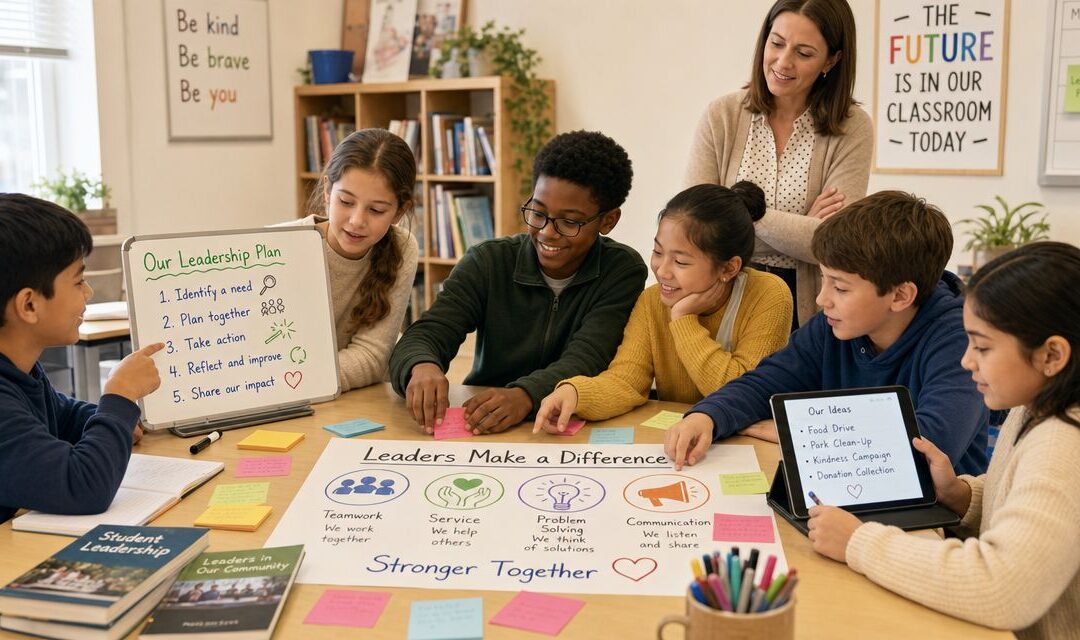
A simple planning frame
Give students a structure that keeps the work grounded:
Notice: What problem are we seeing?
Listen: Who is affected, and what do they say they need?
Design: What small action could help?
Try: When and where will we test it?
Reflect: What changed, and what should we adjust?
This approach helps adults avoid taking over. Students still need support, but the support should sound like coaching. Ask, “Who else needs to be included?” or “How will students know this is for them?” instead of “Here's what you should do.”
Grade-level adaptations
In K-2, keep it classroom-based. Students can create a kindness routine, a welcome board, or a helper system. In grades 3-5, teams can lead schoolwide campaigns around gratitude, recess inclusion, or calm corners. In middle school, students can gather peer feedback, develop short proposals, and present them to administrators.
What usually fails is making the project too broad. “Improve school climate” is too vague. “Help students feel included during indoor recess” is workable. The tighter the focus, the stronger the student ownership.
This format is also useful for students who don't want performative leadership. They can plan, interview, design visuals, collect feedback, and track what's working.
5. Student Wellness and Mindfulness Leaders
Some students are natural calm-setters. They remind classmates to breathe before a presentation, help peers reset after recess, or notice when the room is getting dysregulated. A wellness leadership role gives those students language and structure.
That doesn't mean students should lead mental health care. It means they can help normalize simple regulation practices that make classrooms feel safer and steadier.
Start with modeling, not performance
Train a small group first. Show them how to lead a breathing exercise, a body check, a gratitude pause, or a transition reset. Then have them practice in pairs before they guide a whole class or morning meeting.
If you're building a schoolwide routine, it helps to draw from age-appropriate mindfulness activities for kids. Give student leaders a menu so they can choose from several options rather than reading one script forever.
For primary grades: Use breathing shapes, stretch cards, and feelings visuals.
For upper elementary: Add short scripts for pre-test calm-downs or post-recess resets.
For middle school: Let students co-lead advisory openings, wellness campaigns, or reflective circles.
Inclusion matters here
Many schools accidentally make wellness leadership feel like public speaking with a softer tone. It doesn't need to be. A student can ring a chime, hand out reflection prompts, model a grounding posture, or lead by preparing the environment.
Leadership in wellness can look quiet. A student who helps peers regulate without taking over is leading.
The broader leadership development world is also moving toward hybrid and flexible formats. One market report estimated the global leadership development program market at $83.2 billion in 2024, with projections to reach $218.9 billion by 2034, alongside growth in online and blended delivery (global leadership development market outlook). Schools can take the same lesson without copying corporate models. Offer more than one way to participate.
6. Student Inclusion and Belonging Task Forces
If your school wants student leadership to improve climate, create a belonging task force. This group asks a clear question: who feels left out here, and what can we change?
That sounds simple, but it requires courage and adult humility. Students often see exclusion patterns adults miss. They know which lunch tables feel closed, which routines embarrass students, and which school traditions leave some children out.
How to make the work honest
Start with listening. Use short class discussions, sticky-note prompts, or advisory circles to gather input. Questions like “When do students feel alone here?” and “Where is it hard to join in?” usually produce useful answers quickly.
Then form a mixed student team. Include social connectors, quieter students, multilingual learners, students with different support needs, and children from different grade levels if possible. A belonging task force should reflect the school, not just the most visible leaders.
Try one focused project first:
Lunch connection plan: Greeters, conversation cards, or open-seat signs.
Recess inclusion project: Student hosts who teach games and invite peers in.
Welcome routine: Student-made maps, peer tours, or first-week check-ins.
What adults need to watch
Don't ask students to diagnose every school problem without acting on any of it. If students repeatedly name exclusion and nothing changes, trust drops fast.
Also, don't frame belonging as fixing “those kids who struggle socially.” Strong belonging work changes systems and routines. It doesn't shame individual students.
One of the biggest gaps in public advice on student leadership is inclusion for quieter, neurodivergent, multilingual, or anxious students. Too many leadership models still center speaking up, debating, or performing. More thoughtful approaches make room for reflection, peer dialogue, self-assessment, and individualized growth plans (inclusive student leadership perspective).
7. Student Peer Support and Mental Health Ambassador Programs
This activity requires the clearest boundaries of the whole list. Student mental health ambassadors can be helpful, but only when adults define the role tightly and supervise it closely.
Students can notice, welcome, listen briefly, and help peers connect with trusted adults. They should not carry secrets about safety, promise confidentiality they can't keep, or become the emotional safety net for the whole campus.
The role that actually works
Train ambassadors in three things. First, how to notice signs that a peer may need support. Second, how to respond with calm, simple language. Third, how to refer quickly to a counselor, teacher, or administrator.
A middle school version might include lunchtime peer support tables, transition support for new students, or student-created campaigns that reduce stigma around asking for help. In upper elementary, the role is usually lighter. Think check-in buddies, welcome teams, or help-seeking ambassadors who can say, “Let's go find an adult together.”
A useful script is short: “I'm glad you told me. You don't have to handle this alone. Let's talk to an adult now.”
Protect the student leaders too
These programs can backfire if adults focus only on the peers receiving help and forget the ambassadors themselves. Student leaders need debrief time, emotional support, and permission to step back.
A student support ambassador is a bridge, not a treatment provider.
This role is strongest when it sits inside a broader system led by counselors, social workers, or trained administrators. It's not a replacement for services. It's a peer-friendly entry point that can make help easier to reach.
8. Student Community Service and Social Justice Leadership
Service becomes leadership when students make decisions. If adults pick the cause, set the schedule, and assign the tasks, students may help, but they aren't really leading.
A better model starts with what students care about. One group may want to organize a food drive. Another may focus on campus recycling. Older students may advocate for safer crossings near school, book access, or community care projects tied to local needs.
Move from charity to reflection
The strongest service projects include both action and meaning-making. Students should know who the project serves, what root issue they're responding to, and what they learned about responsibility, fairness, or community.
For example, a 4th grade class might collect hygiene items for families in need, then write reflections about dignity and what makes receiving help feel respectful. A middle school team might plan a local awareness event, speak to community partners, and create student-made materials that explain the issue to peers.
Choose with students: Offer a few real options and let them decide.
Close the loop: Share what happened and thank the people involved.
If your students want to plan a fundraiser as part of their service work, educators can discover charity fundraising events to adapt for a school setting.
Trade-offs to expect
Not every service project needs to become activism, and not every activism project fits every age group. Younger students usually need concrete, local action. Older students can handle more analysis and advocacy.
What matters most is authenticity. Students should feel, “We saw a need, we organized around it, and our actions meant something.”
9. Student Diversity, Equity, and Belonging Committees
This committee works best when students examine everyday school life through the lens of fairness and representation. It works worst when adults form the group for appearance, then avoid the hard conversations that follow.
In elementary school, this might mean reviewing whose stories are featured in classroom libraries, what holidays are recognized, or whether all students can see themselves in school displays. In middle school, students can look at policies, student experiences, or participation patterns and make practical recommendations.
Set up brave, protected discussion
Students need clear norms before they talk about identity, bias, and belonging. Use agreements such as listening to understand, speaking from personal experience, and separating intent from impact.
Adults should also be careful not to put the burden of education on students from marginalized groups. A strong committee includes many voices, but no child should be expected to represent an entire identity group.
For schools already working on classroom belonging, Soul Shoppe's ideas for teaching diversity in the classroom can support that broader culture work.
Practical project ideas
A diversity, equity, and belonging committee can do meaningful work without becoming abstract. Try one of these:
Representation review: Students audit posters, books, and celebration displays.
Access check: Students identify school routines that feel confusing or exclusionary.
Belonging campaign: Students create peer messages about respect, names, pronouns, culture, and inclusion.
An empirical middle-school leadership study used the Leadership Skills Inventory in a pre/post design across a two-round leadership course, which is a useful reminder that schools can measure leadership growth with formal tools instead of relying only on anecdotes (middle school leadership study using pre and post assessment). A committee like this can track growth in listening, communication, and collaborative problem-solving the same way.
10. Student Leadership Summits and Retreats
Sometimes students need concentrated time away from the usual pace of school to step into leadership more fully. A summit or retreat can do that. It creates momentum, shared language, and a stronger cross-grade network.
This can be a half-day school event, a district gathering, or a retreat format for student teams. The most useful versions mix skill-building, reflection, team challenges, and concrete planning for what students will do when they return.
What belongs in the agenda
Keep direct instruction short. Students learn leadership by doing it. Build the day around scenarios, partner tasks, problem-solving stations, and facilitated circles.
A strong summit usually includes a mix of these:
Connection-building: Cross-grade mixers, values cards, or identity maps.
Skill practice: Active listening, facilitation, conflict repair, welcome routines.
Action planning: Each team leaves with one goal, one timeline, and one adult contact.
If you're creating a visible event identity for student leaders, some schools also use simple spirit items or custom jackets for schools and events to build cohesion. That only helps if the summit itself has substance. Gear can reinforce belonging, but it can't replace leadership practice.
Don't let the energy disappear
The biggest mistake is treating the summit as the finish line. It should be a launch point. Schedule follow-up meetings, advisor check-ins, and small wins students can complete quickly after the event.
A practical example is a K-8 leadership day where upper elementary and middle school students attend workshops in the morning, then return to mixed teams to plan one school improvement action. Within the next two weeks, each team shares progress in advisory or assembly.
That follow-through is what turns inspiration into culture.
Kickoffs, district-level leadership development, intensive training
Intensive, fast-tracked learning; builds strong peer networks and accountability
Building a Lasting Culture of Student Leadership
Student leadership activities work best when they stop being special events and start becoming part of how the school runs. Students need repeated chances to contribute, reflect, repair, and try again. One leadership role won't transform a campus on its own. A connected set of routines can.
That means starting smaller than many schools expect. You don't need a full council, peer mediation center, wellness team, and annual summit all at once. You might begin with a buddy program for one grade band, a student-led recess inclusion team, or a rotating classroom leadership role with clear training and reflection. If the structure is real, students will feel it.
Adults set the conditions. Students do best when expectations are explicit, support is visible, and leadership roles come with actual responsibility. They also do better when schools stop equating leadership with charisma. Some students lead by facilitating a circle. Others lead by noticing who's alone, organizing materials, translating for a peer, preparing a reflection prompt, or asking a thoughtful question that shifts the whole group.
That's one of the most important mindset changes for K-8 schools. If leadership only belongs to the loudest students, many children will decide it isn't for them. If leadership includes listening, empathy, reliability, and repair, far more students can grow into it.
Schools also need patience. Sustainable leadership culture usually develops over time, especially when the work is tied to school climate, conflict resolution, belonging, and student voice. Programs tend to become stronger when they are coached consistently and woven into everyday routines instead of treated as extras.
Parents can reinforce this at home, too. A child doesn't need a title to practice leadership. They can welcome a new teammate, help solve a sibling conflict respectfully, plan a small service project, or reflect on how their actions affect others. Those habits transfer back into school.
If you're building this work across a campus, it helps to choose common language and shared practices that students and adults can use consistently. Soul Shoppe is one relevant option for schools that want support with connection, safety, empathy, mindfulness, and conflict resolution through workshops, assemblies, coaching, and student-centered tools. Community-building beyond the classroom matters too, and schools planning staff or student culture events can also discover inspiring team activities to support shared experiences.
The goal isn't to produce polished young executives. The goal is to help children practice being thoughtful, courageous, responsible members of a community. When schools do that well, student leadership stops being a program. It becomes part of the culture students carry with them every day.
If you want help building a more connected, empathetic school culture where student leadership can take root, explore Soul Shoppe. Their programs give schools practical SEL tools and shared language for communication, mindfulness, self-regulation, and conflict resolution that can support student leadership from the classroom to the playground.
A teacher has ten minutes before the class shifts from math to lunch. A parent needs something better than random YouTube clips after a hard school day. That's usually when people start searching for social emotional learning videos for elementary students. They're not looking for more theory. They need something that works in real life, with real kids, in short windows of time.
That's where video can help. Strong SEL videos give children a shared example, a common vocabulary word, or a simple strategy they can try right away. Public collections from places like PBS LearningMedia's social-emotional learning library show how video-based SEL has shifted from one-off classroom clips to more structured instruction aligned with recognized competencies like self-awareness, self-management, social awareness, relationship skills, and responsible decision-making. In practice, that means videos can fit into morning meeting, counseling groups, family routines, and weekly classroom lessons.
What matters most is what happens after the video. Social and emotional skills are teachable in school settings, and they're linked to meaningful outcomes across academics, quality of life, and broader societal participation, as discussed in the OECD webinar on social and emotional skills. But a video alone rarely changes behavior. The follow-up does. If you also support staff with clear routines, this same principle shows up in other media formats too, including planning successful training videos.
1. Video Gallery – Soul Shoppe Programs
Soul Shoppe's Video Gallery is one of the easiest places to start if you want short, child-ready SEL clips without digging through a giant general library. The focus stays where elementary teachers and families usually need it most: empathy, communication, conflict resolution, mindfulness, and self-regulation. That makes it practical for morning meeting, a reset after recess, or a fast intervention when a class issue shows up in the moment.
What gives this collection an edge is that it connects to a broader SEL approach instead of acting like a stand-alone entertainment library. Soul Shoppe has spent more than 20 years building experiential, developmentally grounded programming for school communities, so the videos feel like part of a larger language kids can use. If you want that bigger picture, their overview of the benefits of social-emotional learning helps frame why these routines matter over time.
Best use in a real classroom
This is the featured pick because it works well for adults who need low-prep tools but don't want shallow content. The clips are short enough to use consistently, and that consistency matters more than a single “special” lesson. I'd use a Soul Shoppe video in one of three ways:
Morning meeting opener: Show a clip on empathy or calming down, then ask, “What might this sound like in our classroom today?”
Conflict repair support: After a playground issue, replay a communication clip and have students practice one sentence stem with a partner.
Home carryover: Send one clip to caregivers with a prompt like, “Ask your child which tool they want to try this week.”
Practical rule: Don't ask, “Did you like the video?” Ask, “What is one thing someone in this video did that you could try today?”
A simple example. If students watch a clip about handling frustration, don't stop at discussion. Have them act out two versions of the same situation: grabbing the marker from a classmate, then trying again with words and a breath first. That's the moment when the lesson starts transferring.
Trade-offs
Soul Shoppe's strength is also its limit. These clips are excellent support tools, but they don't replace live facilitation, coaching, or repeated practice across the day. They're strongest when a teacher, counselor, or caregiver treats them as a launch point rather than the whole lesson.
They're also built for elementary learners, which is a plus here, but less useful if you're trying to stretch one resource across older students. For K-5 and many K-8 settings, though, the age fit is exactly why they work.
2. Second Step
Second Step Elementary works best for schools that don't want to assemble SEL from scattered videos and teacher-created lessons. It gives you a weekly structure, teacher-led delivery, and short media built into the curriculum. For principals and district teams, that kind of consistency matters because classrooms aren't all inventing SEL on their own.
The videos usually function as modeling tools, not complete lessons. That's a good thing. In my experience, a short skill model on emotion management or problem-solving lands better than a long video that tries to do everything.
Where it fits best
Second Step is a strong option if your school wants a scope and sequence and family connection pieces, not just a playlist. It also helps classrooms where teachers are willing to teach SEL but need scripting and pacing support.
Try a lesson video on friendship skills this way:
Before viewing: “Listen for one moment where a character could have made the problem worse.”
After viewing: “What was the turning point?”
Extension: Students write or say one sentence starter they can use at recess, such as “Can we try that again?” or “I felt left out when…”
For families, one practical move is to send home the same skill language used at school. That creates less confusion for children and helps them hear the same message in two places. Soul Shoppe's ideas for SEL activities for elementary students pair well with that kind of carryover.
Trade-offs
Second Step's biggest advantage is structure. Its biggest drawback is that it sits inside a more closed ecosystem, and public pricing isn't posted. That won't bother a district buyer as much as it will a parent or an individual teacher looking for quick free access.
3. Flocabulary
If you teach a class that remembers lyrics faster than lectures, Flocabulary is worth a close look. Its music-driven videos can make SEL vocabulary stick in a way that straight explanation often doesn't. That's especially useful for concepts like active listening, managing frustration, or empathy, where children need memorable language they can call back under stress.
Flocabulary is also handy when you want SEL to connect with literacy, speaking, and discussion. A child who won't summarize a traditional lesson may still repeat a chorus about self-control or respectful communication.
How to avoid passive watching
The mistake with Flocabulary is treating the song as the whole lesson. Don't. Use the rhythm and repetition as the hook, then move quickly into practice.
A strong routine looks like this:
Listen for the target phrase: Ask students to catch one key line about the skill.
Turn lyric into action: If the line is about listening, students show what listening looks like with eyes, body, and voice off.
Use a fast reflection: “When is this easiest for you? When is it hardest?”
Music helps kids remember words. Practice helps them use those words when they're upset.
For a home example, a caregiver might replay a short SEL video before homework and say, “Pick one line from the song that could help if you get stuck tonight.” That's simple, concrete, and more useful than a generic “calm down.” Soul Shoppe's emotional intelligence activities for kids can extend that kind of language work offline.
Trade-offs
Flocabulary is highly engaging, but the style won't fit every classroom. Some teachers love the energy. Others want a quieter tone for sensitive topics. It also requires paid access for the full experience, so it's often easier to justify at the school level than for one family.
4. BrainPOP and BrainPOP Jr.
BrainPOP and BrainPOP Jr. are familiar to many teachers, which lowers the barrier to using them. If students already know the format, you can spend less time explaining the platform and more time discussing the skill. BrainPOP Jr. tends to fit younger elementary students better, while BrainPOP works well into upper elementary and middle grades.
The SEL topics are broad and useful: emotions, empathy, bullying, mindfulness, and digital citizenship. That makes BrainPOP a solid “I need something good for tomorrow” option.
Best for quick concept teaching
BrainPOP is especially good when students need a shared definition before they can talk meaningfully. For example, if a class keeps accusing one another of “being mean,” a short video on empathy or conflict can give everyone more precise language.
Use it this way:
Pause mid-video: Ask, “What clue tells you how this character feels?”
Quick partner task: One child names a feeling. The other suggests a respectful response.
Exit slip: “One thing I can do differently next time is…”
This platform works best as a spark, not the whole fire. If your school wants a more complete approach, pair it with recurring routines, playground coaching, and a broader SEL program for schools.
Trade-offs
BrainPOP's production quality is strong, and that familiarity helps. The trade-off is depth. Some SEL topics are handled well as introductions, but they still need adult-led discussion and real-life application if you want behavior to shift.
5. Harmony SEL
Harmony SEL stands out because it doesn't treat videos as isolated media. It ties them to routines like Meet Up and Buddy Up, which is exactly what many classrooms need. Kids rarely build relationship skills from watching alone. They build them by talking, listening, and repeating social routines with real peers.
That's why Harmony works well in schools trying to strengthen belonging and classroom community. The videos and story-based lessons support the routine, rather than replacing it.
A strong fit for daily practice
If your classroom has tension, cliques, or kids who only talk to the same few classmates, Harmony's daily-practice angle is useful. A short story or video can open the door, then the routine does the heavier lifting.
Example:
Show a clip on inclusion or friendship.
Move into a Buddy Up conversation with a prompt like, “Tell about a time you felt included.”
End with one class agreement for the day, such as “We make room in games.”
Some of the best social emotional learning videos for elementary students aren't the flashiest ones. They're the ones that fit into a repeatable routine kids can count on.
Trade-offs
Harmony is appealing because access is available without a typical curriculum purchase barrier, though registration is required. The main limitation is range. It's strongest in PreK through elementary and may need supplementation if older students need more nuanced content.
6. GoNoodle and SuperNoodle
GoNoodle is one of the easiest SEL-adjacent tools to use because it solves an immediate classroom problem: students are dysregulated, tired, wiggly, or overloaded. The movement and mindfulness videos can help children reset their bodies, and that often creates the opening for better emotional control.
SuperNoodle adds more structure for schools that want sequenced lessons and teacher guides. That matters if you're trying to move from random brain breaks to a more intentional self-regulation approach.
What it does well
GoNoodle shines during transitions. After lunch, before a test, or when the room gets noisy, a short movement or breathing video can reset the group faster than a lecture on expected behavior.
One practical sequence:
Start with a calming or movement clip.
Ask, “What changed in your body?”
Have students choose one word: calmer, energized, focused, still frustrated.
Name the next step: “Now that your body is ready, let's try the hard part again.”
This works at home too. A parent can use one clip after school and then ask, “Do you need to move more, talk, or sit calmly?” That turns a generic brain break into a self-awareness routine.
Trade-offs
GoNoodle is excellent for regulation support, but it isn't enough by itself if your goal is conflict resolution, empathy language, or problem-solving. Think of it as body-first support that often needs a second step.
7. ClassDojo Big Ideas Video Series
ClassDojo Big Ideas is a strong choice when you need free, fast, child-friendly mini-lessons. The Mojo videos are especially accessible for younger elementary students, and they cover familiar SEL themes like growth mindset, empathy, mindfulness, perseverance, and gratitude.
These videos are simple enough for school or home, which is part of their value. A classroom teacher can use one in five minutes. A caregiver can pull one up after dinner without needing a manual.
Best for conversation starters
ClassDojo is effective. It gives children a shared story and language for talking about a concept that might otherwise feel abstract.
A good example with a perseverance video:
Ask before viewing: “What do you usually do when something feels too hard?”
Ask after viewing: “What did the character do instead of giving up?”
Extend it: Have students finish the sentence, “When I get stuck, I can…”
For home use, keep it even simpler. Watch one clip and invite the child to draw “what trying again looks like.” That gives younger children another way to process the idea.
Trade-offs
The Big Ideas series is free and easy to use, but it isn't a full curriculum. There's limited depth, and older elementary students may outgrow the tone. It's best used as a discussion spark, not the entire SEL plan.
8. Everyday Speech
Everyday Speech is especially useful when students need explicit social skills instruction, not just broad SEL themes. That makes it a strong fit for school counselors, special educators, speech-language pathologists, and classroom teams supporting students who benefit from clear modeling.
The video format is practical. Children can see a scenario, compare less helpful and more helpful responses, and then talk through what changed.
Where it shines
If a child struggles to join play, read conversational cues, or manage peer interactions, Everyday Speech often feels more concrete than a general SEL video. It shows the skill in action, which reduces guesswork.
Try it with a recess-entry skill:
Watch a scenario about joining a group.
Pause and ask, “What would make this hard?”
Practice two entry lines, such as “Can I play too?” or “What role do you need?”
Rehearse the body language, not just the words.
That last part matters. Many students know the phrase but not the tone, timing, or physical presence that helps the phrase land.
Trade-offs
Everyday Speech is strong on video modeling and companion activities. The trade-off is that adults still need to create live practice opportunities. If students only watch and never rehearse with peers, the skill may stay stuck in the lesson instead of showing up on the playground.
9. CharacterStrong PurposeFull People
CharacterStrong PurposeFull People is built for schools that want turnkey weekly lessons tied to a broader culture effort. The embedded videos, slide decks, prompts, and family resources reduce teacher prep. That alone makes it attractive in busy schools where SEL gets pushed aside unless the materials are ready to go.
Its emphasis on belonging, relationships, and regulation also matches what many elementary teams are trying to reinforce schoolwide.
Good for schoolwide consistency
This program makes the most sense when a school wants common language across classrooms. If one second grade teacher says “pause and breathe,” another says “reset your body,” and the counselor says something else, children get mixed signals. CharacterStrong helps tighten that up.
A practical use case:
Show the short lesson video.
Discuss one prompt as a class.
Practice one specific routine in the setting where kids need it most, such as lining up, group work, or recess transitions.
The fastest way to weaken an SEL video is to keep the skill inside the lesson block. Move it into hallway, playground, and partner work language the same day.
Trade-offs
PurposeFull People is polished and teacher-friendly, but schools get the most value when adoption is broad. If only one classroom uses it in isolation, some of the culture-building advantage gets lost.
10. Peekapak
Peekapak is a good fit for teachers who want SEL and literacy to reinforce each other. Its story-driven approach helps children connect social-emotional concepts to characters, plot, and reading discussion. For many elementary classrooms, that makes implementation easier because the SEL time doesn't feel disconnected from the rest of the day.
This also helps families. Story characters give adults something concrete to reference later, which is easier than revisiting a vague classroom lecture.
Best when you want story and skill together
Peekapak works well for children who respond to narrative more than direct instruction. A child may not engage with “today we are learning empathy,” but they'll often respond to “what should this character do next?”
Simple extension ideas:
Character check-in: “How do you think this character felt in that moment?”
Perspective practice: “What might another character have been thinking?”
Real-life bridge: “When has something like this happened at school or at home?”
This approach also lines up with a broader practical truth about SEL instruction. Independent SEL research highlighted in a webinar on how children learn social and emotional skills emphasizes listening, observation, direct instruction, repeated practice in different contexts, and the importance of discussion and personal connection after a story or video. That's exactly why story-based programs can work well, if adults don't skip the conversation.
Trade-offs
Peekapak's strength is integration. Its limit is access, since many materials sit behind paid packages. It's also best for teachers who are willing to use the stories actively. If you just press play and move on, you won't get the full benefit.
Top 10 Elementary SEL Video Resources Comparison
Product
Core features
Target audience & use
Key strengths
Limitations & Price
Video Gallery – Soul Shoppe Programs
Curated, bite‑sized SEL clips aligned to Soul Shoppe tools & app
Pricing by quote; best with whole‑school adoption and PD
Peekapak
Story‑driven animated stories, teacher videos/slides, home activities (EN/ES)
PreK–5; SEL integrated with literacy & family engagement
Strong literacy integration; multi‑level reading and family extensions
Many materials behind Pro subscription; pricing varies
Making Screen Time Count: SEL Videos as Tools for Connection
The best social emotional learning videos for elementary students don't carry the whole lesson by themselves. They open the door. A short clip can show a child what empathy looks like, give a class a shared phrase for calming down, or create enough emotional distance to talk about a hard situation safely. But the learning deepens when an adult helps children name what they saw, connect it to their own lives, and practice the next move.
That's the pattern I trust most. Watch something brief. Ask one or two concrete questions. Practice the skill in a realistic setting. Then come back to it later when the child needs it. A video about conflict resolution means more when students use one sentence from it during partner work. A mindfulness clip matters more when a child remembers the breath before a test or after a disagreement.
There's also an important selection issue that gets overlooked. Not every classroom needs the same tone, pace, or examples. Sesame Workshop's Watch, Play, Learn library was designed for children ages 3 to 8 with attention to children affected by crisis, conflict, and displacement. That's a useful reminder that the market doesn't merely need more SEL videos. It needs better-matched videos for children's actual contexts, including multilingual settings, stressed classrooms, and students carrying trauma or instability.
For teachers, that means choosing videos with intention. Ask whether the content fits your students' language levels, emotional readiness, and daily realities. For parents, it means resisting the urge to use videos as digital babysitting when emotions are running high. A two-minute clip followed by a calm conversation will usually do more than a longer block of passive viewing.
The strongest results come when digital resources support a larger culture of belonging, emotional safety, and repeated skill practice. That's why video libraries, curriculum platforms, movement tools, and story-based programs each have a place. They just do different jobs. Some are best for direct instruction. Some are best for regulation. Some help with schoolwide consistency. Some are ideal for home follow-through.
If you want another example of story-based video content that depends on discussion and adult guidance, this roundup of top animated Bible stories for kids shows the same general principle in a different category. The screen introduces the idea. The relationship around the screen makes it meaningful.
If you want social emotional learning to stick beyond a single lesson, Soul Shoppe is worth a serious look. Its video resources, experiential programs, and schoolwide approach help teachers, counselors, and families turn SEL from a topic into a shared daily practice kids can use in class, on the playground, and at home.