Soul Shoppe's work is made possible by donors and partners who care deeply about the young people in their communities! We can't do this work without you. Support our work in classrooms and on playgrounds across the nation by donating here.
You've just watched a fifth grader slide into a seat at lunch, open a book, and eat alone while three classmates snicker nearby. Nothing gets thrown. No one raises a hand. By the time you hear about it, the students have moved on, but the targeted child has already learned a painful lesson about where they belong.
That moment is why bullying prevention strategies for teachers have to reach beyond referrals and consequences. Teachers need practical routines that shape peer behavior before harm becomes a pattern, plus calm intervention tools for the incidents they do see. The strongest approach is consistent, relationship-based, and small enough to use on an ordinary Tuesday.
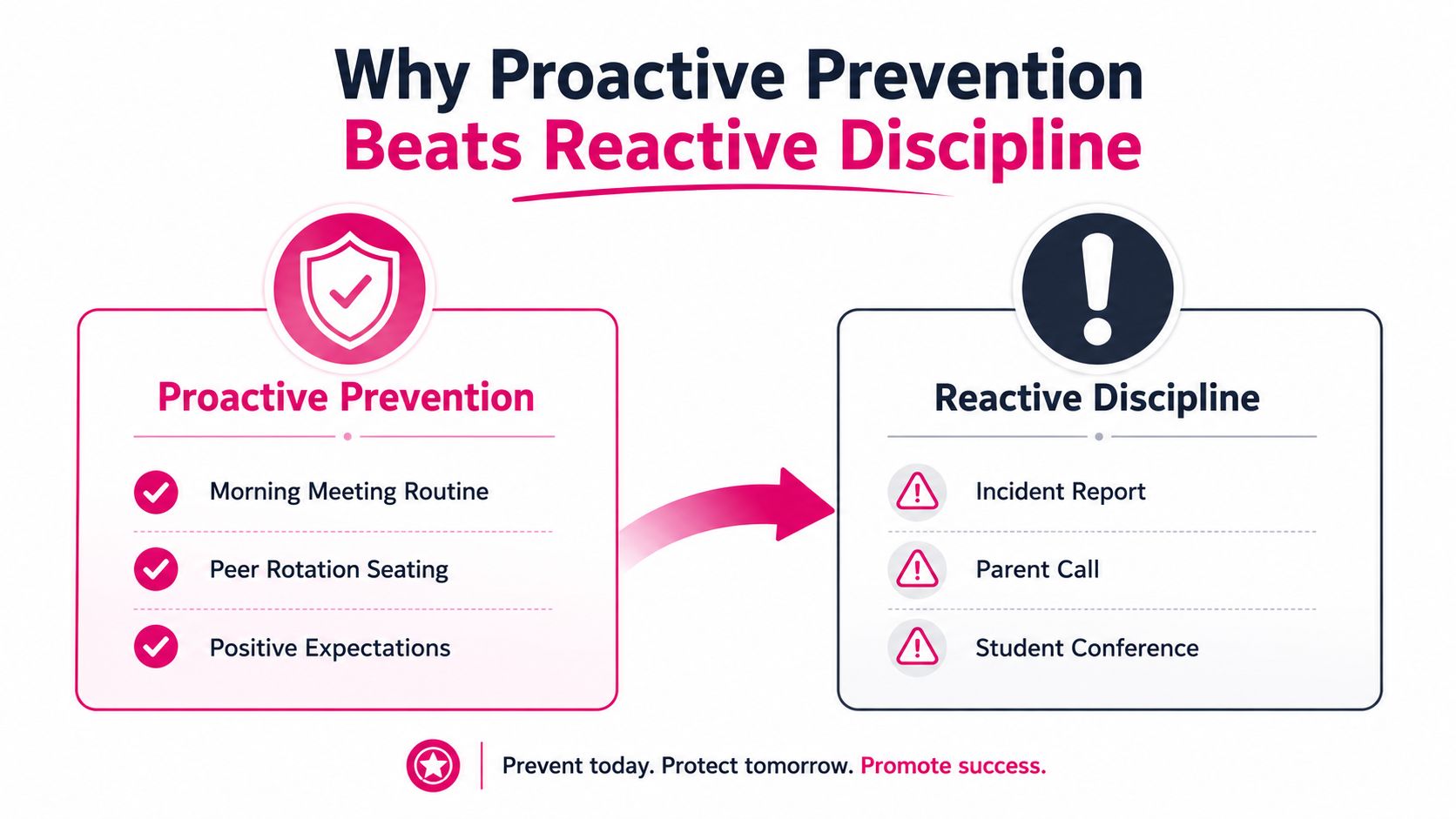
A reactive response might involve pulling students aside, assigning detention, or completing a referral form. Those actions can be necessary, especially when safety is at risk, but they usually begin after the social damage has happened. They may address the visible behavior without changing the lunchroom dynamic, the group's status system, or the targeted student's sense of safety.
A 2003 survey of teachers found that 86.3% of responding teachers said they had serious talks with both the student who bullied and the student who was targeted, while fewer than one-third reported building bullying prevention into classroom time, at 31.7%, or involving students in creating anti-bullying classroom rules, at 31.2%. The study included 359 respondents from 700 surveyed teachers, a 52.4% response rate. The original PubMed record helps explain the historic shift from responding after incidents to creating structures that make harmful behavior less acceptable and less rewarding.
The evidence also points toward coordinated prevention. A 2019 meta-analysis of 100 independent school-bullying program evaluations found that interventions reduced perpetration by about 19–20% and victimization by about 15–16%. Stronger results were associated with whole-school approaches, clear policies, classroom rules, informal peer involvement, and parent information, rather than lessons delivered in isolation. The meta-analysis in Psychology in the Schools also connected activities such as group discussion, role play, and class exercises with greater reductions in victimization.
Micro-practices change the room
Micro-practices are small actions repeated often enough to become part of classroom life:
Greet students at the door: Use each child's name and notice their emotional state without demanding an explanation.
Structure peer interaction: Rotate partners, assign roles during group work, and avoid leaving social arrangements entirely to popularity.
Name the behavior you want: Say, “I saw you make room for Jordan,” rather than offering general praise such as “Good job.”
Check the edges: Notice who stands outside groups, gets interrupted, or repeatedly loses access to materials and play.
These actions use minutes teachers already have. A morning greeting, a deliberate partner switch, or a thirty-second reflection after recess can reinforce belonging more consistently than a standalone assembly.
Practical rule: If students only hear the school's expectations after something goes wrong, the system is teaching them that prevention is optional.
A teacher who wants to strengthen this daily work can connect it with broader social-emotional learning benefits, especially skills involving empathy, communication, self-regulation, and relationship repair. The point isn't to add another initiative. It's to make ordinary transitions, group tasks, and corrections carry the same message: everyone belongs, adults notice, and students have safe ways to respond.
Building a Classroom Culture That Prevents Bullying
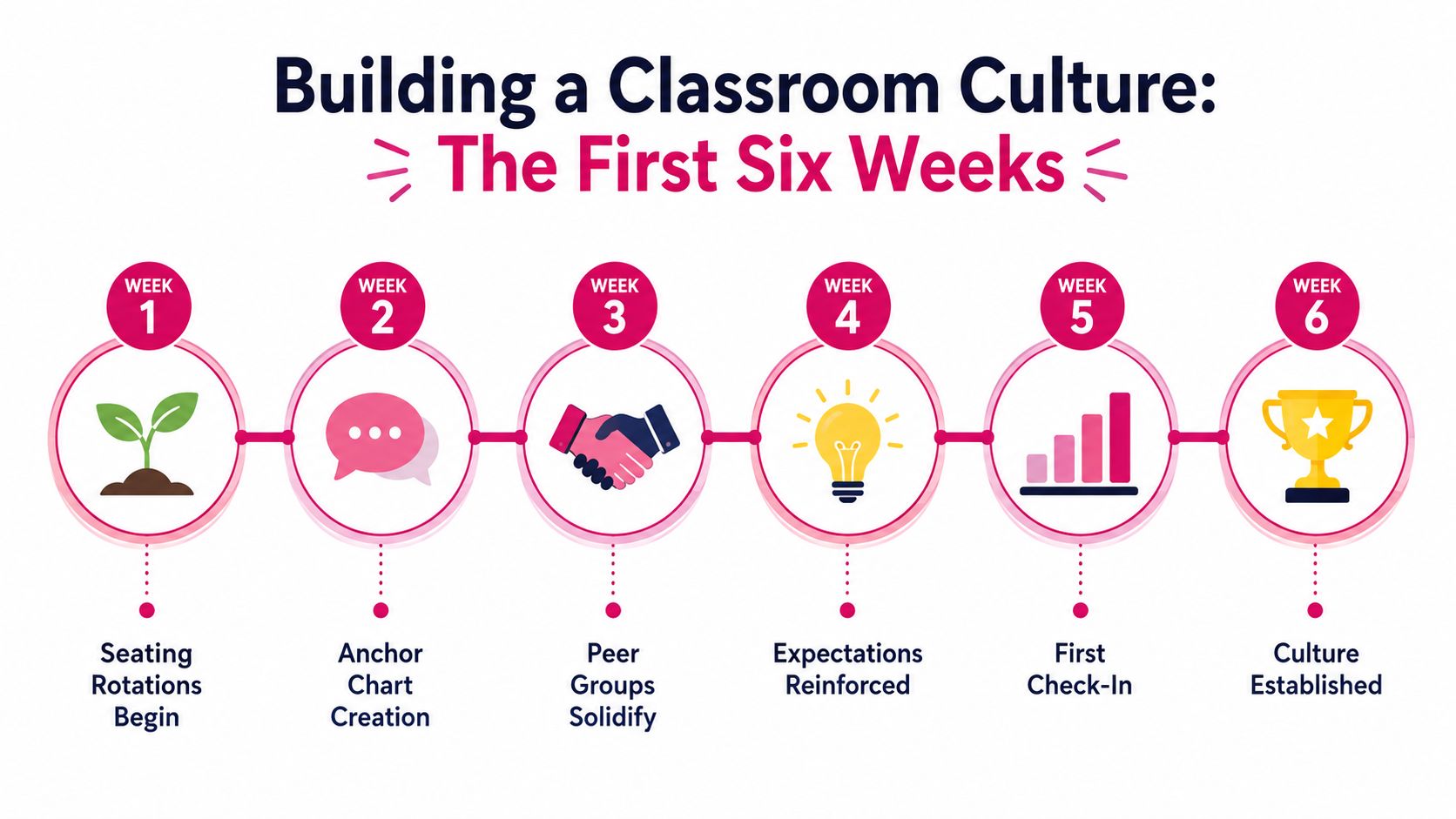
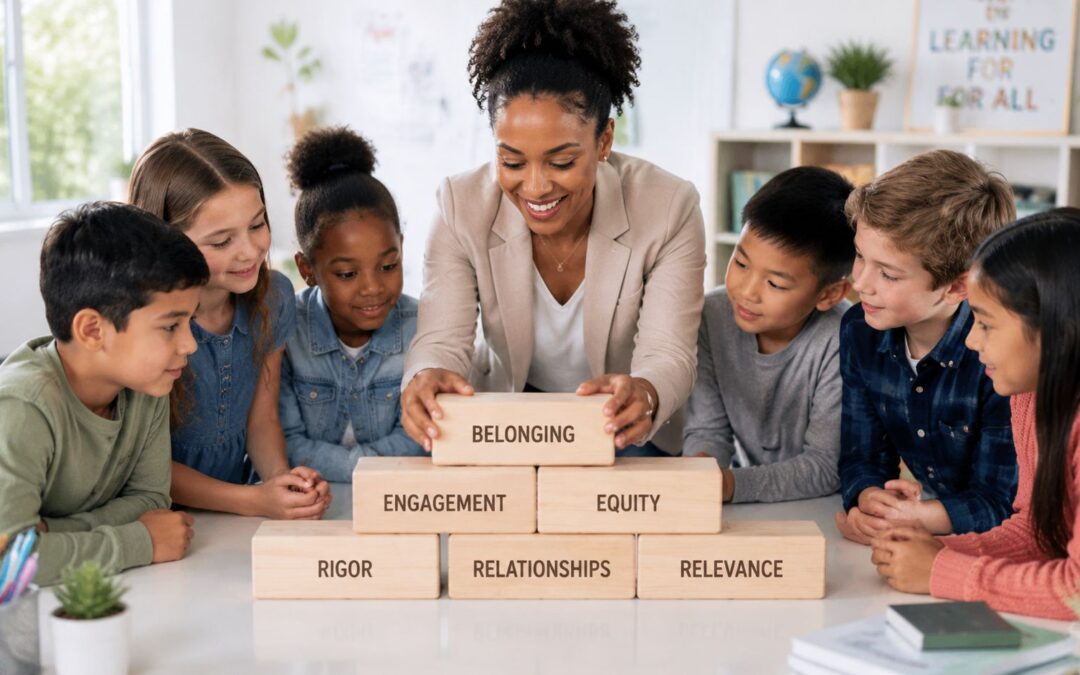
Prevention starts with classroom design, not a poster added after the first incident. During the opening weeks, arrange the room so students experience varied partnerships, see the shared norms, and have predictable ways to connect with an adult.
Begin with rotating peer groups. Change table partners or learning teams on a planned cycle, and give each student a meaningful role such as materials manager, recorder, questioner, or encourager. Rotation doesn't erase friendship groups, but it prevents one social arrangement from controlling every learning opportunity.
Create an anchor chart with students. Ask, “What helps someone feel safe joining a group?” and “What does respectful disagreement sound like?” Turn their answers into observable statements, such as “We make room,” “We don't repeat private stories,” and “We ask before touching someone's materials.” A shared definition matters because students need to recognize exclusion, threats, teasing, and repeated targeting as behaviors that adults will address.
Set up a connection corner for brief, private check-ins. It can be a chair near your desk, a hallway conference spot, or another visible but quiet location. This isn't a place to send students for punishment. It's a predictable setting where you can ask, “Who feels hard to sit with today?” or “What happened during partner work that I should know?”
A first-six-weeks sequence
Use one social focus each week, then reinforce it during academics and transitions:
Week 1, identity and belonging: Students share names, interests, strengths, and the conditions that help them participate.
Week 2, empathy mapping: Students consider what a person might notice, feel, need, and say in a challenging situation.
Week 3, assertive communication: Model the difference between passive, aggressive, and clear language.
Week 4, recognizing exclusion: Use fictional scenarios involving table groups, games, messages, and invitations.
Week 5, bystander roles: Practice safe ways to speak up, interrupt, invite, and report.
Week 6, class commitment: Students review the agreement, revise language, and mark their commitment through a class meeting or ceremony.
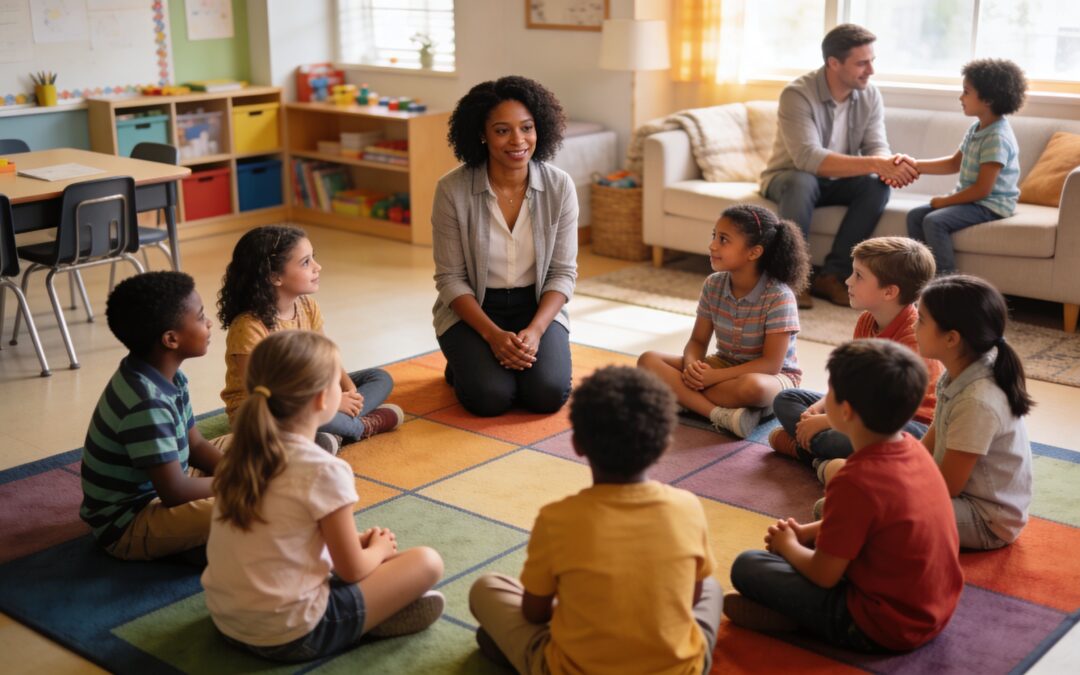
A morning circle might ask, “What helps you join a group?” On another day, students can complete a partner switch, changing partners halfway through a task with a new responsibility. At dismissal, ask students to finish one sentence privately: “I felt included when…” or “A moment that needs repair is…”. These prompts surface tensions before they become normalized.
When students help write the agreement, avoid asking for vague promises about kindness. Try this script:
“We need agreements that someone can see and hear. If our value is belonging, what would a classmate see us doing when someone joins a group? What would they hear if we disagree? Which actions should adults respond to every time?”
You can also draw useful parallels with workplace culture advice when thinking about consistency, shared norms, and the daily behaviors that make a community feel safe. For an education-specific companion, see what makes a peaceful and welcoming classroom. The central idea is social scaffolding, a web of repeated positive connections that makes it harder for one student to become socially isolated without adults noticing.
Intervention Scripts and Bystander Coaching Techniques
In the moment, students need a response that is specific, brief, and connected to the class agreement. Avoid labeling a child as “mean” or “a bully.” Name what happened, state the expected behavior, and create a path toward repair.
Three scripts for common situations
Direct verbal aggression
A student says, “Nobody wants you in this group,” or uses a slur during a game.
Name it: “I heard you tell Kai that nobody wants him here. That comment excludes him.”
Connect it to the norm: “Our agreement says we speak about people respectfully and make room during group work.”
Repair it: “You need to acknowledge the impact, restate the invitation, and help Kai rejoin safely. We'll talk privately about what led to the comment.”
Social exclusion
A group blocks a classmate from a table or repeatedly changes the rules so one student can't participate.
Say, “I noticed the group changed the rules after Sam joined. Our agreement says access to the activity can't depend on popularity. Let's pause, state the rules clearly, and decide how everyone can participate.” Then ask the targeted student what would help them re-enter without forcing a public apology.
Covert relational aggression
A student spreads a private story, encourages peers to avoid someone, or uses a group chat to create shame.
Try, “I learned that a private story was shared with other students. Sharing it has affected someone's relationships, and our agreement protects privacy. We'll stop the spread, identify who needs support, and plan a repair that doesn't require the targeted student to perform forgiveness.”
Teach the 3 Ds
Students shouldn't be expected to confront unsafe behavior alone. Teach three choices and let them select the safest one:
Direct: Say, “Stop. That's not okay here,” when the student feels safe.
Distract: Change the activity, invite the targeted student to join another group, or redirect attention.
Delegate: Tell a trusted adult as soon as possible when direct action feels unsafe or the behavior continues.
Use role-play during morning meeting. Give students scenarios such as a classmate being left out of a science team, a hurtful message appearing in a group chat, or a student being mocked during recess. Pause the role-play and ask, “Which D fits this situation, and what words could you use?”
Use this quick decision tree before choosing the intensity of your response:
Was there a disagreement between students with similar social power? Treat it as conflict, separate the students if needed, teach problem-solving, and facilitate repair.
Is there a power imbalance, repeated behavior, or a strong likelihood of repetition? Treat it as possible bullying, increase supervision, document the pattern, support the targeted student, and follow school policy.
Is anyone in immediate danger? Prioritize safety, get additional adult help, and follow emergency procedures before attempting a restorative conversation.
Watch the video below for another way to visualize scenario-based practice.
When Strengths Based Language Becomes Performative
Strengths language can go wrong fast if adults use it to decorate the same old system. Saying “You're resilient” while leaving a child in a chaotic classroom or a family without support is not strengths based practice, it's polite avoidance. The critique from i2insights is blunt on this point, the approach should not pretend problems don't exist or ignore inequality i2insights on strengths-based approaches.
That warning matters in schools because too many problems are structural. Chronic absenteeism, behavior referrals, and family stress rarely come from mindset alone. If the environment stays unsafe, unpredictable, or disconnected, then naming strengths without changing conditions becomes performative.
A quick diagnostic for staff meetings
Ask three questions before saying the plan is strengths based.
Did we change the environment? If not, the child may still be carrying the same barrier.
Did we name the child's real context? If not, we may be using generic praise instead of actual support.
Did we honor identity-specific strengths? If not, we may be erasing culture, language, or survival knowledge.
Recent work on identity-specific strengths makes that last point especially important for multilingual families, students with disabilities, and racially marginalized youth identity-specific strengths research. A child's strength might be caring for siblings, translating for family members, navigating public systems, or staying loyal to a community that has not always been loyal back.
Schools can answer that by widening what counts. A strength is not only reading fast or sitting still. It can be persistence, humor, memory, leadership, translation, self-protection, or the ability to calm a younger child. The more accurately staff name those strengths, the more likely the student is to trust the process.
Coaching Tips and Simple Ways to Measure Progress
Instructional coaches and principals don't need a thick binder to know whether strengths based work is taking root. They need a few honest observation points. Look for student voice in conferences, teacher use of strength-based reframes, family participation, and whether the adult's language is shifting from problem labeling to goal language.
A coach can listen for one clear question in a classroom or support meeting, “What already helps this student succeed?” That question is a good sign the adult is working from strengths instead of only deficits. It also creates a practical path into outcome measurement guidance without turning the conversation into paperwork.
Useful check: If a teacher can describe a student's goal, a strength, and one next step, the practice is probably more than a slogan.
Keep the measurement simple. Student self-reflection, quick family feedback, and a short teacher practice rubric tell you more than standardized scores do about whether the approach is being used well. A semester check can track whether adults are asking better questions, whether children are naming strengths on their own, and whether families are showing up with more trust.
Soul Shoppe's workshops and coaching support this kind of schoolwide language because they help students, teachers, and families practice communication, empathy, and conflict resolution in real time. That makes it one practical option for schools that want help building a strengths based routine into daily life.
Frequently Asked Questions From Principals Teachers and Parents
A strengths based approach doesn't replace PBIS or behavior charts, it changes the lens and the goal. If staff are skeptical, start with one classroom script and one family meeting question, then let them see the response. At home, use natural language, not a script, by asking what helped and what the child wants to try next. If a child needs clinical support or a structural fix, use those too, strengths based practice works best as part of a wider response.
Soul Shoppe helps school communities build shared language for empathy, self-regulation, and conflict resolution, which fits naturally with strengths based practice. If you want practical tools that teachers and families can use right away, visit Soul Shoppe and explore programs, workshops, and coaching that help kids build on what's already strong.
A principal opens the staff meeting with a familiar question: “Why are so many students being flagged for extra support this fall?” The reading specialist points to decoding gaps. A classroom teacher brings up behavior during transitions. The counselor names friendship drama, shutdowns, and students who seem on edge before the day even gets going. Everyone cares. Everyone is working hard. Yet the work can start to feel fragmented.
That's where MTSS Tier 1 helps. Not as one more initiative to layer on top of everything else, but as the shared base that holds the whole school together. It gives teachers, specialists, counselors, and families a common way to think about support before students are in crisis and before small struggles grow into bigger ones.
In K-8 schools, that matters every single day. A kindergartener needs predictable routines. A fourth grader needs clear reading instruction and a way to reset after recess conflict. A seventh grader needs structure, belonging, and adults who notice when missing work is really a sign of stress. Tier 1 creates the conditions for all of that to happen schoolwide.
When schools strengthen the universal layer, students feel it. Hallways feel calmer. Expectations make sense. Classrooms become more predictable. Adults stop reacting to every problem as if it belongs to one student alone and start asking a better question: what are we building for everyone?
Building a School Where Every Student Thrives
On many campuses, the warning signs show up before anyone names them. Teachers are reteaching routines in October. Office referrals come from the same parts of the day. Families say their child “used to like school” but now feels lost, bored, or overwhelmed. Staff members care immensely, but each team may be solving only its own slice of the problem.
A grade-level team might say, “Our students need stronger reading support.” The counselor may say, “They also need better self-regulation.” The assistant principal may focus on lunchroom behavior. All three can be right. The trouble starts when the school treats those as separate problems instead of connected signals.
A familiar school meeting
I've sat in those meetings as a teacher and as an SEL coach. The room is full of smart people. Someone suggests another intervention group. Someone else proposes a behavior chart. A parent asks what they can do at home. The conversation gets busy fast.
Then one steadying question changes the tone: what if the core experience of school needs to be more consistent, more proactive, and more supportive for everyone?
That's the heart of Tier 1. It brings academic instruction, behavior expectations, and social-emotional supports into one schoolwide system. It's the daily experience every student walks into, not the safety net that appears later.
Tier 1 works best when adults stop thinking in silos and start designing one predictable, caring experience across classrooms, hallways, and home-school communication.
A school with a strong universal layer usually feels different before you ever study a spreadsheet. Students know what happens when they enter class. Teachers use common language for problem solving. Families hear the same core messages from multiple adults. If you're already working on climate and connection, this kind of school culture improvement work fits naturally inside Tier 1.
What this looks like in daily practice
In a K-8 setting, Tier 1 often shows up through simple, repeatable moves:
Shared routines: Every class starts with a calm, known entry routine.
Common expectations: Staff teach what respect, safety, and readiness look like in concrete ways.
Early support: Teachers notice concerns early instead of waiting for failure.
Family partnership: Caregivers know the language the school is using and can reinforce it at home.
For parents, Tier 1 means your child shouldn't need to struggle loudly to be noticed. For teachers, it means you're not expected to invent support systems from scratch in every room. For principals, it means the school's first line of support is also its most important one.
What Is MTSS Tier 1 Really
The simplest way to explain MTSS Tier 1 is this: it's the foundation of the school house. If the foundation is solid, the whole structure has a better chance of holding steady. If the foundation is uneven, cracks show up everywhere. In classrooms, those cracks can look like behavior referrals, widening skill gaps, chronic confusion about expectations, or too many students needing help beyond the core.
The universal layer for every student
Tier 1 is the universal foundation of support provided to every student. Effective schools aim for Tier 1 to successfully support at least 80% of their student population, which signals that the core instruction and environment are meeting the needs of most students, as explained in Panorama's overview of MTSS tiers.
That sentence carries a lot of meaning, so it helps to slow it down.
Tier 1 is not a reading intervention group. It isn't a behavior plan for a few students. It isn't only for students who are struggling. It is the core experience all students receive through classroom instruction, schoolwide expectations, and proactive support.
In practical terms, that includes things like:
Strong core teaching: Clear modeling, checks for understanding, and chances to practice.
Predictable routines: Students know how class begins, how help works, and how transitions happen.
Positive behavior support: Expectations are taught, practiced, and reinforced.
Belonging and safety: Students feel seen, welcomed, and emotionally safe enough to learn.
How Tier 1 differs from Tiers 2 and 3
This is one of the places people get tangled.
Think of the tiers as levels of intensity, not levels of student worth. Tier 1 is for everyone. Tier 2 adds targeted support for students who need more than the universal layer. Tier 3 provides intensive, individualized intervention. Multiple MTSS explanations describe the framework as having three tiers, with Tier 1 for all students, Tier 2 for targeted support, and Tier 3 for intensive individualized intervention.
Practical rule: If your school is leaning on Tier 2 and Tier 3 to solve needs that show up across many classrooms, the universal layer probably needs attention first.
For families, a useful translation is this: Tier 1 is what every child should be able to count on each day. For teachers, it means the basics aren't basic at all. They're the backbone. For school leaders, it means universal systems deserve the same care and planning as interventions.
A strong Tier 1 doesn't remove the need for more support. It makes that support more precise, more equitable, and more sustainable.
The Four Core Components of Tier 1
Tier 1 gets clearer when you stop treating it as a vague philosophy and start naming its moving parts. In schools, I think of it as a four-part engine. If one part is missing, the ride gets rough fast.
The MTSS model evolved by integrating Response to Intervention (RTI) for academics and Positive Behavioral Interventions and Supports (PBIS) for behavior. That history helps explain why modern Tier 1 addresses the whole child and relies on universal screening at least twice a year to monitor progress and the effectiveness of core instruction, as described in LightSpeed Systems' MTSS framework guide.
High-quality core instruction
This is the teaching every student receives. It should be clear, intentional, and accessible to a wide range of learners. In a Tier 1 classroom, teachers don't wait for confusion to pile up before adjusting. They build in supports from the start.
A first grade teacher, for example, might model a phonics skill out loud, give students a visual anchor chart, let them practice with a partner, and quickly reteach for a small group during independent work. That's still Tier 1 because the design of the lesson assumes student variability from the beginning.
Universal screening
Screening is a school's regular checkup. It helps adults identify which students may be at risk and whether the universal layer is doing its job. Screening should happen early, not after months of struggle.
A practical example: a school screens reading, math, and behavior at the start of the year, reviews the patterns by grade level, and notices one grade needs stronger vocabulary support across classrooms. That finding points the team back to core instruction.
Universal screening is not about sorting kids into labels. It's about asking whether the school is noticing needs early enough to respond wisely.
Evidence-based practices
Teachers need strategies and materials with a strong instructional rationale behind them. In plain language, schools should use approaches that are grounded in research, taught consistently, and implemented well.
This can be as concrete as using explicit modeling during a new math routine, a predictable partner-talk structure, or a schoolwide approach to repairing harm after conflict. If your staff is building shared student language, conflict resolution practices for schools fit naturally into this part of Tier 1.
Data-based decision making
Without data, adults often default to hunches. Sometimes those hunches are right. Sometimes they lead schools to over-refer students when the larger issue sits in the core.
Data-based decision making means teams study screening results, classwork patterns, attendance, behavior concerns, and implementation consistency. Then they decide what to strengthen.
Here's a one-sentence classroom example for each component:
Instruction: A teacher preteaches vocabulary before a science text so more students can access the lesson the first time.
Screening: A school notices early literacy screening concerns across one grade and responds with stronger shared routines, not immediate pull-out referrals for everyone.
Evidence-based practice: A class uses a daily explicit routine for teaching discussion norms instead of assuming students already know how to collaborate.
Data use: A team compares missing-work patterns across classrooms and finds one unclear assignment system that can be fixed schoolwide.
Integrating SEL and Behavior into Tier 1
Academic learning doesn't happen in a vacuum. Students learn through their nervous systems, their relationships, and their sense of safety. If a child is bracing for embarrassment, recovering from conflict, or unsure how to ask for help, even excellent academic instruction can miss the mark.
That's why Tier 1 needs social-emotional learning and positive behavior support woven into the day, not saved for an assembly or a crisis response.
What students need before they can show what they know
A strong Tier 1 classroom answers quiet but powerful questions for students:
Am I safe here
Do I belong here
What happens when I make a mistake
How do people solve problems here
When schools answer those questions clearly, behavior support becomes more preventive and less reactive. Teachers spend less energy on constant correction and more on instruction, coaching, and connection.
In practice, this can look very simple:
Morning meetings: Students greet one another, preview the day, and practice listening.
Feelings check-ins: A teacher learns who may need a quiet check-in before math starts.
Shared language: Students use sentence stems such as “I felt…” or “I need…” during peer conflict.
Reset spaces: A calm corner helps students regulate without shame or exile.
For families, this matters at home too. If a school teaches students how to name feelings, pause, and repair harm, parents can echo that language after school. A child who hears “Take a breath and use your words” in both places gets more traction than a child navigating two completely different systems.
SEL is not extra
One of the most common misunderstandings is that SEL steals time from academics. In reality, it supports access to academics. Students who can follow routines, recover after frustration, and communicate needs are more available for learning.
That's also why many schools look for practical social-emotional learning programs for schools that can support universal classroom practice. Soul Shoppe is one example. It offers live SEL lessons by grade level and professional development that schools can use as part of a broader Tier 1 approach.
This short video gives a useful feel for how relationship-centered support can come alive in school settings:
Tier 2 for some students
Tier 2 is for children who need more than universal instruction but don't yet need highly individualized intervention.
Examples include:
Lunch groups: A counselor or trained staff member runs a small group on friendship skills or emotion regulation.
Check-in routines: A student meets briefly with an adult at the start and end of the day.
Conflict practice groups: Students rehearse listening, turn-taking, and apology skills with support.
A fifth grader who repeatedly gets into recess conflict may join a small group that practices entering games, handling “no,” and using repair language. The key is that the skill gets taught, practiced, and revisited.
Tier 3 for a few students
Tier 3 is individualized. The student may need an individualized support plan, counseling, formal evaluation, behavior support, or a coordinated team response.
That can include:
A clear problem statement: “Transitions after lunch lead to dysregulation and class refusal.”
Specific supports: Visual schedule, quiet arrival routine, adult check-in, break plan, and family communication.
Regular review: Adults meet, notice patterns, and adjust.
This is the one section where naming a concrete provider makes sense. Soul Shoppe offers school-based social-emotional learning workshops, assemblies, and coaching that schools can use as part of universal and targeted support, especially around self-regulation, communication, and conflict resolution.
The strongest MTSS systems don't wait for children to fail loudly. They build steady layers of support so students can succeed earlier and with less distress.
A Parent Guide to Partnering for Early Support
Parents often sense a problem before they know what to call it. You may notice that your child handles school all day, then falls apart at home. Or maybe playdates keep ending in tears, homework turns into panic, or your child says, “Nobody likes me,” even when the teacher reports a mostly normal day.
That uncertainty is hard. It gets harder when you ask for help and hear vague answers, or when services feel slow to access. Research on access barriers notes that even eligible families can run into waitlists, staffing shortages, hesitation, and coordination challenges, which is why strong school-family partnership matters so much, as discussed in this peer-reviewed review of early intervention access barriers.
Start with observations, not labels
A strong first step is to describe what you see as specifically as possible.
Instead of saying:
“My child is selfish.”
“She's always anxious.”
“He can't handle anything.”
Try:
During playdates: “She gets upset when another child changes the rules.”
At homework time: “He tears up when he makes a mistake and wants to stop.”
Before school: “She complains of stomachaches most on days with presentations or group work.”
Specific examples help school staff respond to patterns. Labels alone can trigger defensiveness or confusion.
How to open the conversation with school
You don't need a perfect script. You need a collaborative tone.
You could say:
I'm noticing some patterns at home and I'm wondering if you see anything similar at school. I'd love to compare notes and think together about what support might help.
That phrasing does three useful things. It shares concern without blame. It invites the teacher's perspective. It keeps the focus on support, not fault.
If the teacher says they don't see the same level of struggle, don't assume that means nothing is wrong. Some children hold it together at school and release tension at home. Others struggle in one setting because the demands are different.
Simple supports families can try at home
You don't need to turn home into therapy. Small routines can make a big difference.
Create a calm-down spot: Include paper, soft items, or sensory tools. Present it as a place to reset, not a punishment space.
Practice feeling words during neutral times: “You looked disappointed when the game ended.” This builds language before a hard moment hits.
Use one repair phrase consistently: “Try again with respect” or “Tell me what happened, not who's bad.”
Rehearse hard moments ahead of time: Before a birthday party or sports practice, talk through what your child can do if they feel left out or frustrated.
If worry is a major part of the picture, these anxiety coping skills for kids can give families simple, age-appropriate ideas to practice at home.
Parents don't need to solve everything alone. Your role is to notice, communicate, and help create consistency between home and school.
Measuring Success Beyond the Data
A school team can do every formal step correctly and still miss the question families care about most. Is this child doing better in real life?
Timelines, eligibility labels, and support plans help adults respond promptly. Those structures matter, especially in birth-to-three systems where quick follow-through is part of good practice. In a K-8 setting, though, school leaders and families also need to watch for quieter signs of progress. A student may still have hard days and still be growing in meaningful ways.
Growth in social and emotional development often works like physical therapy after an injury. The first sign of healing is not always a dramatic leap. Sometimes it is steadier balance, faster recovery, or a little more confidence using a skill that used to fall apart under stress.
Signs that support is working
Look for patterns like these over time:
Faster recovery after a setback: The student still gets frustrated, but returns to learning or connection with less adult support.
Clearer communication: They name a feeling, ask for space, or tell an adult what happened before the moment turns into conflict.
Stronger participation: They join the group, stay with a task longer, or try again after making a mistake.
More relationship repair: They apologize, accept feedback, or reconnect with peers after tension.
Growing belief in their own skills: They begin to expect that a hard moment can be handled.
A lower incident count can be one useful sign. It is not the whole picture. Real success also looks like a child feeling safer, more capable, and more connected at school.
Keep the record useful and human
Documentation helps when it answers practical questions. What is getting easier? What still sets this student off? Which support works with this teacher, in this class, at this time of day?
Some teams use brief behavior notes or meeting logs. Some use student support platforms to track enrollments and student progress so patterns do not live only in one adult's memory. The best record is one that helps adults notice change early, adjust support, and stay consistent across classrooms and home.
That is especially important when schools adapt early intervention principles for older students. In a clinical model, progress may be tied to eligibility or treatment goals. In an SEL-focused school model, progress may show up in daily moments. A fifth grader uses a calming strategy before a conflict. A seventh grader asks for a reset instead of walking out. Those are small moments on paper. In practice, they are turning points.
Soul Shoppe's approach fits that everyday view of growth. The goal is not merely to document fewer problems. The goal is to help children build the relationship skills, self-awareness, and self-regulation that make learning and belonging more possible.
The class is only ten minutes in, and two students are already talking over each other. One child grabs a marker without asking. Another rolls their eyes when a partner shares an idea. You stop the lesson to remind everyone about listening, but the same patterns return by lunch.
At home, it can look just as familiar. A sibling interrupts at the table. A child snaps, “That’s mine,” instead of asking for space. A caregiver repeats the same correction three times and wonders why nothing sticks.
This is why teaching about respect can’t stay at the level of “be nice.” Students need clear language, repeated practice, and adults who respond the same way at school and at home. Respect is a daily skill. It shows up in tone, body language, turn-taking, conflict, and follow-through.
Introduction to Respect and Its Impact
Respect often gets mistaken for simple politeness. Manners matter, but respect goes deeper than saying “please” and “thank you.” It means recognizing another person’s dignity, boundaries, feelings, ideas, and right to belong.
In schools, that affects more than behavior. Research from the Rutgers Social-Emotional Learning Research Lab found that respectful school climates were directly linked to higher academic achievement across 48,000 students in 115 schools and 48 districts over two years, with stronger teacher-student relationships at the center of those outcomes, as described in this Education Week analysis of the Rutgers findings.
At home, respect affects whether routines feel safe or tense. Families notice it in how children ask for help, handle disappointment, and respond when someone says no. Teachers notice it in how students collaborate, recover after conflict, and trust adults enough to learn.
Practical rule: If adults can’t point to what respect looks and sounds like, children can’t practice it consistently.
A workable respect plan has to answer four questions:
What does respect look like? Observable actions, not vague values.
How do we teach it? Direct lessons, modeling, and repeated rehearsal.
How do families reinforce it? Shared scripts and simple home routines.
How do we know it’s growing? Rubrics, observations, and reflection.
When those pieces line up, respect stops being a poster on the wall and becomes part of the culture.
Defining Respect and Setting Inclusive Learning Objectives
Respect needs a definition children can use. I teach it as showing care for people, space, feelings, and differences through your words, actions, and choices.
That definition works because it’s concrete. A kind thought is helpful, but students need behavior they can practice. If a child asks, “Was that respectful?” they should be able to look at what happened and decide.
What respect looks like in real life
In a K to 8 setting, respect usually shows up in a few observable ways:
Listening with your body and words. Waiting, facing the speaker, and not cutting people off.
Using safe boundaries. Asking before touching, noticing personal space, and handling materials carefully.
Acknowledging differences. Not mocking accents, abilities, identities, preferences, or learning styles.
Responding to conflict without harm. Using calm language, asking for help, and repairing after mistakes.
Treating shared spaces responsibly. Cleaning up, returning materials, and noticing community needs.
Those behaviors also help adults teach related skills like empathy, problem-solving, and self-regulation. If you want support connecting those ideas, this piece on how to teach empathy pairs well with respect lessons.
Grade-band objectives that stay clear
Children don’t all show respect in the same way at the same age. The objective has to match their development.
Grade band
Learning objective
Example of success
K to 2
Students can name respectful and disrespectful choices in common classroom situations.
A student says, “I can wait my turn,” or “I need space.”
3 to 5
Students can explain how respect affects group work, friendships, and conflict.
A student disagrees without insults and can restate a peer’s idea.
6 to 8
Students can apply respect during disagreement, online communication, and peer pressure.
A student uses a calm response, sets a boundary, or repairs harm after conflict.
Keep the wording simple. “Students will demonstrate mutual regard in collaborative interactions” sounds formal, but it’s harder for children and families to use. “Listen, wait, use kind words, respect space, repair harm” is easier to remember.
Inclusive objectives for neurodiverse learners
Some students understand respect but struggle to show it in expected ways. That’s especially important for neurodiverse learners who may need direct support with social cues, transitions, sensory needs, or flexible language.
Avoid assuming intent. A child who looks away may still be listening. A student who blurts out may need support with turn-taking, not a lecture about caring.
Use objectives that allow more than one respectful response:
Offer visual choices. “Listening can look like eyes on speaker, hands still, or quiet drawing while listening.”
Use social scripts. “Can I have a turn when you’re done?” or “I need a quieter space.”
Pre-teach routines. Show what respectful disagreement sounds like before group work begins.
Give sensory supports. A calmer body often leads to more respectful interaction.
Practice with real contexts. Hallways, lunch lines, group projects, and recess matter more than abstract discussion.
Respect isn’t sameness. It’s helping each student meet community expectations in a way that preserves dignity.
A shared definition for school and home
The strongest respect goals travel across settings. I like sending home a one-sentence version families can use at dinner, during homework, or while managing sibling conflict:
Respect means I notice that other people matter too.
That line helps adults redirect behavior without long lectures. If a child interrupts, grabs, mocks, or refuses to listen, you can return to the same anchor. It keeps expectations steady, even when the setting changes.
Crafting Multi-Day Lesson Plans with Interactive Activities
Children don’t learn respect from one assembly, one read-aloud, or one hard conversation after a conflict. They learn it through repetition. A short, structured week gives you enough time to introduce the skill, practice it, reflect on it, and try again.
Research on the multilevel anti-bullying intervention Steps to Respect found significant declines in bullying and bystander aggression within six months when teachers delivered 10 to 12 structured SEL lessons that emphasized respect and problem-solving, as summarized in this George Fox University paper on the program.
A five-day rhythm that works
You don’t need a perfect script. You do need a predictable pattern. This weekly flow works in kindergarten, third grade, and sixth grade with small adjustments.
Day 1 understanding respect
Start with a warm-up. Ask, “What does respect sound like?” Give students think time, then collect examples.
Suggested flow
Warm-up. Circle share or turn-and-talk.
Mini-lesson. Define respect using classroom examples.
Modeling. Act out one respectful and one disrespectful version of the same scenario.
Reflection. Students finish the sentence, “Respect matters because…”
Kindergarten example
Read a short story about sharing space or waiting for a turn. Then ask, “Which choice helped everyone feel safe?”
Third grade example
Use a partner scenario. One student interrupts, one waits and repeats what they heard. Have the class compare both.
Sixth grade example
Discuss group chats, class discussions, and disagreement. Ask, “Can you disagree respectfully? What would that sound like?”
Day 2 practicing respect
Now move from naming to doing.
Set up role-plays based on common moments from your own environment:
Lining up
Choosing partners
Borrowing supplies
Joining a game
Disagreeing in a group
Responding to a mistake
Give students sentence stems, not just directions.
Sample stems
“I’m still talking.”
“Can I use that when you’re done?”
“I disagree, but I want to hear your idea.”
“I need space.”
“Let’s try that again respectfully.”
For younger children, keep scenarios short. For older students, add complexity. Ask what respect looks like when both people are upset.
Three versions of the same activity
One activity can span multiple grades if you scale the language and demand.
Activity
Kindergarten
Third grade
Sixth grade
Respect Relay
Students sort picture cards into respectful and not respectful choices.
Teams act out short situations and identify a better response.
Groups solve a conflict scenario and justify their response.
Partner listening
One child shares a favorite color, partner repeats it.
Students summarize a partner’s idea before giving their own.
Students paraphrase, ask a clarifying question, then respond.
Space and boundaries
Practice asking before hugging or borrowing.
Notice personal space in desk groups and games.
Discuss consent, digital boundaries, and sarcasm.
Day 3 building empathy through perspective-taking
Respect gets stronger when students can imagine another person’s experience. This is the day to slow down and ask, “How might that feel?”
Use one story, one photo prompt, or one teacher-created scenario. Keep the discussion grounded:
What happened?
How might each person feel?
Which action showed respect?
What could someone do to repair harm?
A simple option is a “step in, step back” discussion. Students speak only after they restate one idea they heard from someone else.
“Before you answer, tell me one thing your classmate just said.”
That one sentence can transform discussions. It teaches listening and lowers reactive responses.
Day 4 resolving conflict respectfully
Many lessons falter without practical application. Adults talk about respect in calm moments, but children need it most during stress.
Teach a short conflict routine. Don’t make it too wordy.
Example classroom routine
Stop and take a breath.
Say what happened without blame.
Say what you need.
Listen to the other person.
Choose a next step or ask an adult for help.
Use quick scripts:
“I felt frustrated when you took my pencil.”
“I need you to ask first.”
“I hear that you were in a hurry.”
“Next time, let’s trade.”
For sixth grade, include digital conflict and group project tension. For kindergarten, use puppets or visuals. For third grade, add peer mediation practice.
A strong bank of ready-to-use teaching respect activities can make this day easier because the most difficult part is often choosing scenarios students recognize.
Day 5 reflecting and celebrating
The week shouldn’t end with a test. It should end with noticing growth.
Try one of these:
Respect journal. “One respectful choice I made this week was…”
Partner feedback. “I felt respected when you…”
Class celebration. Name specific actions, not general praise.
Commitment card. “Next week I will work on…”
Avoid broad comments like “You were all great.” Be precise instead.
Examples of specific feedback
“You waited for Maya to finish before you responded.”
“You asked for space without yelling.”
“You returned the marker and apologized.”
“You changed your tone after the reminder.”
Timing and materials without overcomplicating it
A full lesson doesn’t need to take an hour.
Simple planning guide
Warm-up. Short and predictable.
Mini-lesson or modeling
Practice activity
Debrief
Closing reflection
Useful materials
Scenario cards
Visual sentence stems
Chart paper
Sticky notes
Emotion cards
Reflection journals
Timer
Puppets for younger grades
Common confusion points and easy fixes
Teachers and caregivers often hit the same snags.
“My students can define respect, but they don’t do it.” That usually means they need more rehearsal in real situations. Add role-play and immediate feedback.
“Some students laugh during role-plays.” Assign clear roles. Observer, speaker, responder. Then ask observers to name one respectful move they noticed.
“One child dominates every discussion.” Use turn tokens, partner-first sharing, or a rule that each student must paraphrase before adding new ideas.
“A student knows the script but melts down when upset.” Practice the routine in calm moments. Keep language short. Add visual supports and co-regulation.
The goal isn’t a flawless week. The goal is enough repeated experience that respectful behavior becomes more available when students need it.
Engaging Families with Practical Home Strategies and Scripts
Families often agree that respect matters, but many don’t know what to say in the moment. A child interrupts, argues, mocks a sibling, or storms away, and the adult has about five seconds to respond. That’s why home strategies work best when they’re short, repeatable, and connected to classroom language.
Gallup reported that only 37% of U.S. employees strongly agree they are treated with respect at work, which is one reason early respect habits matter far beyond childhood, as noted in Gallup’s workplace respect findings.
Home routines that actually stick
The most effective home plan is small. Pick one or two rituals and use them consistently.
Dinner table listening round
Each person answers one prompt without interruption. The next speaker first says one thing they heard.
Prompts can be simple:
“Something that felt hard today.”
“One way someone showed respect.”
“One way I want to try again tomorrow.”
Sibling reset routine
When conflict starts, pause and walk through this script:
“Say what happened.”
“Say how you feel.”
“Say what you need next.”
“Listen to the other person.”
“Choose a repair.”
Object ownership cues
Many respect struggles start with shared materials. For younger children, visible ownership helps. Families who want practical ways to reinforce responsibility may find this article on teaching kids ownership through name labels useful for creating calmer routines around personal items, school supplies, and family spaces.
Sample scripts for tense moments
Parents often ask for exact wording. Here are scripts that keep dignity intact.
When a child is disrespectful, correct the behavior without attacking the child.
If a child interrupts
“Pause. I want to hear you. Show respect by waiting until I finish, then you can speak.”
If siblings are arguing over an item
“Hands off for a moment. Use words first. Tell your brother what you need without blame.”
If a child uses a rude tone
“Try that again with a respectful voice. I’m listening.”
If a child refuses a boundary
“You don’t have to like the limit. You do need to speak respectfully.”
For children who need help expressing frustration, teaching families to use I-statements for kids gives them a structure that sounds like, “I feel upset when my things are taken. I need you to ask first.”
A weekly family challenge
Try a one-week “respect at home” challenge. Keep it simple enough that busy families can do it.
Monday Notice one respectful action from each family member.
Tuesday Practice asking before borrowing.
Wednesday Use one repair phrase after a conflict. “I’m sorry,” “Can I try that again?” or “How can I fix it?”
Thursday Do a gratitude circle. Each person thanks someone for a specific action.
Friday Reflect together. Ask, “What got easier? What still feels hard?”
A short video can help caregivers hear this language in a relatable way.