Soul Shoppe's work is made possible by donors and partners who care deeply about the young people in their communities! We can't do this work without you. Support our work in classrooms and on playgrounds across the nation by donating here.
Psychological safety is the shared belief that a group is safe for interpersonal risk-taking. In a classroom, that's the difference between a student who raises a hand to say “I'm confused” and a student who stays quiet because they're afraid of looking foolish.
You've probably seen that moment this week. A child glances around the room, knows they missed a step, and decides not to ask. A middle schooler has an idea during discussion but lets someone else talk instead. A parent notices their child shut down after one correction and wonders, “Why did they stop trying?”
Those moments can look small. They aren't. They tell us whether a child believes mistakes are part of learning or proof they don't belong.
The term psychological safety came from workplace research, but it fits schools and homes remarkably well. Children learn best when they can ask, wonder, disagree, try, fail, and repair without humiliation. Adults do too. Teachers are more reflective when they can say, “That lesson flopped.” Parents are more effective when they can pause and respond with curiosity instead of panic.
When people ask what psychological safety is, they're often really asking a more practical question. How do I create a class or home where people can be honest without things falling apart? That's the heart of this article.
The Invisible Barrier to Learning
A third grader is halfway through math workshop. The class is working on regrouping, and she lost the thread two steps ago. She grips her pencil, looks at the page, then looks at the other kids. Everyone seems busy. She doesn't raise her hand.
She isn't lazy. She isn't refusing to learn. She's protecting herself.
That's the invisible barrier. It sits between a learner and the risk of being seen not knowing. In some rooms, that barrier is low. In others, it's high enough that even capable, curious kids go quiet.
What hesitation often means
Teachers and parents can misread silence. We may think a child is checked out, oppositional, or uninterested. Often, the child is asking an internal question first:
Will people laugh if I get this wrong?
Will the teacher sound annoyed?
Will I disappoint someone if I admit I need help?
Will this become part of who people think I am?
Children ask those questions fast. Adults do too.
A fifth grader who won't read aloud after stumbling once. A kindergartener who whispers an answer only after a classmate says it first. A teacher who avoids bringing up a classroom struggle at a team meeting because they don't want to seem incompetent. These are all signs that relational risk feels high.
In learning spaces, silence is not always calm. Sometimes it's self-protection.
Why this matters in schools and homes
When students don't feel safe enough to take small social risks, they miss academic chances too. They don't ask the clarifying question. They don't test a new strategy. They don't recover openly from mistakes. The same pattern shows up at home when children hide a bad grade, deny breaking something, or say “I don't know” instead of telling the truth.
Psychological safety helps us notice what's underneath behavior. It shifts the question from “Why won't this child speak up?” to “What in this environment makes speaking up feel costly?”
That shift changes everything. It helps adults build conditions where curiosity can come forward again.
What Psychological Safety Really Means
Psychological safety has a specific meaning. Harvard professor Amy Edmondson defined it in 1999 as a “shared belief that the team is safe for interpersonal risk-taking” in her foundational research on teams at a medical device company, where high-performing groups were the ones in which people could admit mistakes and ask questions without fear of retribution (Edmondson's 1999 study).
A plain-language definition for educators and parents
In school and home settings, psychological safety means this: people believe they can speak candidly, ask for help, make a mistake, or offer a different idea without being shamed, ignored, or punished for it.
Think of it as an emotional safety net. The net doesn't remove challenge. It makes challenge survivable.
A psychologically safe fourth-grade classroom still has rigorous writing expectations. A psychologically safe home still has limits, chores, and consequences. The difference is that people can tell the truth inside those expectations.
It belongs to the group, not just the person
A common point of confusion for many readers is that psychological safety is not merely a private feeling inside one child. It is a group-level climate. A 2021 concept analysis across 88 healthcare articles described major attributes such as perceptions of consequences for interpersonal risk-taking, strong relationships, a safe environment for risk-taking, and a non-punitive culture (concept analysis of psychological safety).
That matters in schools because we often try to “help one student feel safe” without changing the room. But a child's sense of safety depends heavily on predictable group norms.
Here's the difference:
Situation
Individual comfort
Group psychological safety
A shy student speaks only to the teacher
One relationship may feel safe
The class norm may still punish mistakes
A student shares a wrong answer and peers listen respectfully
The moment supports the whole room
Everyone sees that risk is tolerated
A child admits “I forgot my homework” and the adult responds calmly
The child may stay engaged
The system teaches honesty over hiding
What counts as interpersonal risk
In K to 8 settings, interpersonal risk often looks ordinary:
Asking for help when directions are confusing
Saying “I disagree” in a respectful way
Admitting a mistake instead of covering it up
Trying an unfinished idea in front of peers
Telling the truth about a conflict at home or school
Practical rule: If a learner has to choose between honesty and self-protection, psychological safety is low.
That's why this concept matters so much in education. Learning requires risk. If the environment punishes risk, children stop using the very behaviors learning depends on.
Why Psychological Safety Is Essential for Learning
In adult settings, the absence of psychological safety already shows a clear pattern. According to Niagara Institute's 2025 psychological safety statistics summary, 87% of executives report feeling psychologically safe, while only 69% of individual contributors do. That same source notes that quit intention rises to 12% among people who feel psychologically unsafe, compared with 3% among those who feel safe.
Those are workplace numbers, not school numbers. But the lesson for schools is hard to miss. People with less power often experience the environment differently than people with more power. In a school, adults may feel a class is welcoming while students, especially quieter or more vulnerable ones, experience it as risky.
Learning depends on visible risk-taking
Children learn in public. They read out loud, solve on the board, join group work, and explain their thinking in front of others. Every one of those moments includes social risk.
If a classroom punishes wrong answers with sarcasm, eye-rolling, or impatience, students adapt quickly. They offer safer answers. They wait for someone else to go first. They protect their image instead of stretching their thinking.
When a class feels safer, students are more likely to:
Ask the follow-up question that leads to understanding
Revise work openly instead of hiding errors
Participate in discussion without rehearsing for perfection
Recover after failure because mistakes aren't treated as identity
The same principle applies to adults on campus. Teachers need room to say, “I need another strategy for this student,” or “That lesson didn't land.”
Why it affects adults too
If staff members don't feel safe to surface concerns, a school loses information. Small problems stay private until they become larger ones. Good ideas stay unspoken. Honest collaboration gets replaced by performance.
That's one reason psychological safety matters when schools work toward achieving high team performance outcomes. Teams do better work when people can name concerns early, share partial ideas, and learn out loud.
For classrooms serving students impacted by stress or adversity, safety also connects with a broader relationship-centered approach. Many educators already use trauma-informed teaching strategies because regulation, predictability, and trust shape whether students can access learning in the first place.
A short video can help put this idea in everyday terms.
What Safety Looks and Sounds Like in School
Psychological safety isn't hidden once you know what to watch for. You can hear it in the tone of feedback. You can see it in how students respond when someone gets something wrong.
In the classroom
Here are some school-based look-fors.
Looks like
Sounds like
A student volunteers an unusual answer
“That's an interesting way to think about it. Say more.”
A child admits, “I don't get it yet”
“Thanks for saying that. I think others may need that explanation too.”
A pair of students disagree during partner work and stay engaged
“I see it differently. Can I explain why?”
A teacher revises directions after student confusion
“I think my directions weren't clear. Let me try that again.”
A class returns to a mistake and studies it
“What can this error teach us?”
Notice what's missing. There's no shaming, no quick rescue, and no pretending everything is fine. The room stays honest and steady.
Across grade levels
A kindergarten example might be a child knocking over paint water and bracing for anger. In a psychologically safe room, the adult says, “Spills happen. Let's clean it up together.” The child learns responsibility without panic.
In upper elementary, it may look like a student reading a rough draft and hearing specific, respectful feedback from peers. Nobody has to fake praise. The safety is in knowing the feedback will help, not humiliate.
In middle school, it often shows up during social tension. One student says, “That joke bothered me.” Another student listens, even if embarrassed. An adult supports repair instead of rushing to punishment or dismissal.
“A safe space isn't a place where nothing hard happens. It's a place where hard things can be handled without cruelty.”
In hallways, meetings, and the office
Psychological safety also shows up outside class instruction.
At a staff meeting a teacher says, “I'm not sure this routine is working for my class.”
In the counseling office a student admits they excluded someone at recess.
During dismissal a parent says, “My child comes home worried about partner work. Could we discuss this?”
In the principal's office a staff member raises a concern without fearing they'll be labeled difficult.
Schools that want more of these moments often focus on shared language and shared norms. If you're building that kind of culture, this guide on how to create a safe space can support the day-to-day practices that make safety visible.
Common Myths About Psychological Safety
The biggest myth is simple. People hear “psychological safety” and think it means being nice all the time.
It doesn't. McKinsey's explanation emphasizes that psychological safety is the permission to take interpersonal risks, which includes the discomfort of respectful conflict, correction, and accountability (McKinsey on what psychological safety is).
This, not that
Myth
Reality
Safety means everyone agrees
Safety means people can disagree respectfully
Safety means no one feels uncomfortable
Safety allows productive discomfort without humiliation
Safety means lower standards
Safety supports high standards because people can ask for help and recover from mistakes
Safety means soft feedback
Safety makes honest feedback possible
Safety means children are protected from all frustration
Safety helps children face challenge with support
Where adults get tripped up
Parents sometimes worry that emphasizing safety will make children fragile. Teachers sometimes worry it will weaken authority. Both concerns make sense if safety is confused with emotional cushioning.
But psychological safety doesn't ask adults to remove expectations. It asks adults to remove unnecessary threat.
A teacher can still say, “You need to revise this paragraph.” A parent can still say, “You broke trust, and we need to repair it.” The key question is whether the child experiences correction as guidance or as humiliation.
Not safe: “How many times do I have to tell you this?”
Safer: “You're still learning this. Let's slow it down.”
Not safe: “That's wrong.”
Safer: “I see where you were going. Let's check one part together.”
The standard can stay high. The relationship stays intact.
How to Build Psychological Safety at School and Home
Psychological safety is a group climate, not an individual trait, so the work is not to convince one child to feel brave. The work is to shape norms, routines, and response patterns that make risk feel manageable across the whole group (psychological safety as a group climate).
For school leaders
Leaders set the emotional weather.
If a principal reacts defensively when staff raise concerns, people learn to edit themselves. If a principal says, “Tell me what I'm missing,” and responds calmly, people bring more truth into the room.
A few high-impact moves:
Model fallibility in public. Say, “I made the wrong call on that schedule change,” or “I need your input before we decide.”
Respond predictably to bad news. Staff should know that surfacing a problem leads to problem-solving, not blame.
Interrupt ridicule fast. One dismissive comment in a meeting can shrink participation for weeks.
Study patterns, not just incidents. If the same staff members speak up every time, ask whose voice the system still doesn't invite.
For classroom teachers
Children learn safety from repetition. One warm moment helps. Repeated, predictable moments build trust.
Try routines like these:
Normalize “not yet.” When a student is stuck, use language that keeps them in the learning process.
Teach sentence stems for disagreement. “I'd like to build on that.” “I see it another way.” “Can you explain what you mean?”
Publicly value revision. Show your own draft, your own mistake, or a changed plan.
Pause before correction. Tone matters as much as content.
Use repair language after conflict. “What happened?” “What was the impact?” “What needs to happen next?”
For teachers: If students only feel safe when they're right, the room isn't safe enough for learning.
Some schools support this through structured SEL routines. Soul Shoppe, for example, offers workshops and coaching focused on communication, self-regulation, mindfulness, and conflict resolution, which are all practical conditions that support safer group interactions.
For parents and caregivers
Home is often where children first learn what happens after a mistake.
A child spills milk, lies about homework, snaps at a sibling, or forgets a backpack. In those moments, adults teach either “Tell the truth and we'll handle it” or “Hide the problem until you can't.”
Try these swaps:
Instead of
Try
“Why did you do that?”
“Walk me through what happened.”
“You know better.”
“What got hard here?”
“Stop crying and explain.”
“Take a breath. Then we'll talk.”
“That's no excuse.”
“I want the truth, even if it's messy.”
This doesn't remove accountability. It increases honesty.
Families who want extra support sometimes benefit from tools outside school, including emotional intelligence coaching that helps adults strengthen self-awareness, regulation, and communication. Those adult skills matter because children borrow their sense of safety from how grownups respond under stress.
Small systems matter more than big speeches
Psychological safety grows through habits people can count on:
Opening routines that let everyone enter the day predictably
Discussion norms that protect turn-taking and respectful challenge
Repair processes after harm or conflict
Feedback habits that stay specific and calm
Consistent adult responses across classrooms and home settings
If you're strengthening relational trust across a school community or family system, building trust in relationships offers practical ways to make connection more dependable over time.
The Foundation for Every Learner's Success
Psychological safety may sound like a workplace phrase, but in schools and homes it names something children feel immediately. Can I ask? Can I try? Can I tell the truth? Can I recover if I get it wrong?
When the answer is yes, learners participate more fully in their own growth. They can tolerate correction, stay engaged after mistakes, and contribute to the group instead of guarding themselves from it.
That matters for every child. It matters even more for children who already carry extra social risk because of temperament, identity, language, learning differences, or past experiences. Resources from outside education, such as this neurodiverse team building guide, can still be useful reminders that group norms need to support different ways of participating and processing.
Schools that care about empathy, belonging, and healthy conflict already have the right goal. Psychological safety is the daily condition that helps those values become visible. If you want that work to last, it helps to ground it in explicit SEL practices and shared language, like the approaches discussed in social-emotional learning programs for schools.
Start with one small move tomorrow. Respond calmly to a mistake. Invite a quieter voice. Thank a student for an honest question. Those moments look ordinary. They build the climate where learning becomes possible.
If you want practical support for building safer, more connected classrooms and school communities, explore Soul Shoppe. Their programs focus on communication, self-regulation, empathy, and conflict resolution, which are the everyday skills students and adults use to create the trust that learning depends on.
A student walks in from recess with a scraped knee. A classmate shrugs and says it was an accident. The adult nearby heard laughter before the fall, but missed the moment of contact. At home that afternoon, the same child says, "I'm fine," yet starts asking to skip the bus, gym, or lunch line.
Physical bullying often hides inside those unclear moments. Adults usually picture a visible fight, but many physical bullying examples begin as quick acts that are easy to dismiss. A shove in a crowded line. A trip framed as clumsiness. Hair grabbed during a tense exchange. A backpack slapped from a student's hands while others watch. Like a smoke alarm that chirps before a full alarm sounds, these smaller incidents can signal a larger pattern.
What separates bullying from rough play or a single conflict is not just the contact. It is the repeated behavior, the intent to intimidate, and a power imbalance between the students involved.
Federal school crime and safety reporting summarized by the National Center for Education Statistics describes physical bullying among the forms students report at school, including being pushed, shoved, tripped, or spit on, as shown in NCES Indicators of School Crime and Safety reporting on bullying victimization. For many students, the injury is only part of the harm. The bigger change is often internal. They start scanning the hallway, avoiding transitions, or choosing isolation because school no longer feels predictable.
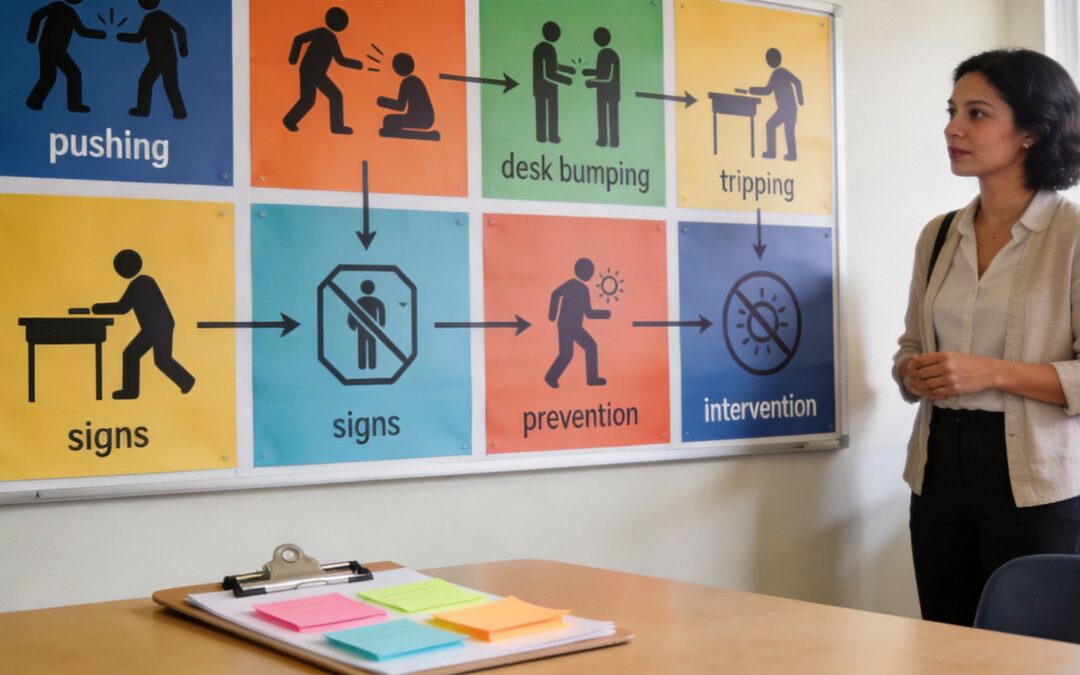
The examples below are designed for real decisions adults make every day. Each one pairs a physical bullying behavior with a three-part toolkit: signs you can observe early, prevention steps that reduce the chance of escalation, and SEL-based response scripts you can use in the moment. That structure helps teachers, caregivers, and school staff do more than label behavior. It helps them notice patterns sooner, respond calmly, and teach safer ways to handle conflict.
1. Hitting, Punching, and Striking
This is the form adults recognize fastest. One student hits another in the arm during math centers. A child gets punched in the back after days of taunting. A student uses an object, not just a hand, to strike someone and then claims they were “messing around.”
A documented school case from Boston Children's Hospital shows how serious this can become. In that account, a fifth-grade student named Samantha experienced ongoing bullying that escalated into a male classmate punching her in the back after repeated harassment. After the assault and an inadequate school response, she missed 30 days of school that year, described in Boston Children's Hospital's account of Samantha's story.
What adults usually notice first
Students who are being hit often change their body language before they tell the full story. They may flinch when a certain peer gets close, protect one side of their body, ask to stay inside during recess, or suddenly want an adult nearby during transitions.
Teachers may also notice social warning signs. A peer group goes quiet when an adult approaches. Witnesses look at one another before answering. The targeted student minimizes what happened, but their face shows fear.
Check injury patterns: Bruises on upper arms, shoulders, ribs, or the back can signal targeted contact rather than ordinary play.
Watch for protective behavior: A child who turns sideways, ducks, or keeps distance from one student may be telling you something without words.
Protect witnesses: Students are more likely to report when they know adults won't name them publicly.
Practical rule: Don't ask only, “Did he hit you?” Ask, “Has this happened before, and who was nearby each time?”
Prevention and response script
Prevention starts with clear adult language. Students need to hear that striking someone is not a joke, not horseplay, and not something they have to solve alone. Staff also need a shared response: stop the behavior, separate students calmly, check for injury, gather statements privately, and document specifics.
Try language like this:
“I saw contact that wasn't safe. I'm separating you now. We'll talk privately, and I'm going to make sure everyone is okay.”
For the targeted student:
Name safety first: “You didn't deserve to be hit.”
Invite detail gently: “Tell me what happened right before, during, and after.”
Offer choice: “Would you like to talk here, with the counselor, or with another trusted adult?”
For the student who hit:
Set a firm boundary: “You may be upset, but you may not use your body to hurt someone.”
Build accountability: “You're going to tell me what choice you made, what impact it had, and what repair is needed.”
2. Pushing, Shoving, and Tripping
A student reaches the stairwell with the rest of the class, then hesitates. Another student brushes past and clips their shoulder just hard enough to throw them off balance. By the time an adult turns, it looks like clumsiness.
That is part of why pushing, shoving, and tripping are missed so often. The act is quick, the setup is easy to hide, and the target is often left looking like the one who “fell.” Yet the message lands with force. You are not safe when I am near you.
Unlike an isolated accident, bullying with body contact follows a pattern. It often shows up in motion. Hallways, lunch lines, dismissal areas, locker rows, and classroom doorways give a student cover because everyone is already squeezed together. For a child on the receiving end, each transition can start to feel like crossing a narrow bridge while someone keeps shaking the rails.
A common example is subtle but repeated. One student gets nudged off the walking path every morning. Another is tripped near the same table during lunch pickup. Nobody sees a punch, but one child keeps losing space, balance, and dignity.
Here's a short visual resource that can support staff discussion during training meetings:
Signs adults can observe early
The first question is not just, “Did contact happen?” It is, “Who benefits from the confusion?” Rough play tends to be shared and stops when someone is uncomfortable. Bullying keeps one student in control and the other on alert.
Watch for these patterns:
Repeated loss of balance near the same peer: The same child stumbles, drops belongings, or arrives upset after passing one student or group.
Body language before contact: A student may tense up, slow down, hug the wall, or wait for others to go first.
Hot spots in transition spaces: Corners, bottlenecks, and crowded entry points make it easier to hide targeted contact.
Social fallout after the shove or trip: Snickering, glances between peers, or a chorus of “It was an accident” can signal coordination, not chance.
A useful adult question is: “If this were truly accidental, why does it keep happening to the same student in the same places?”
Prevention and response script
Prevention starts with supervision that matches the behavior. If adults only monitor the middle of a hallway, students learn to use the doorway, blind corner, or end of the line. Staff presence should move with the traffic pattern, much like crossing guards stand where collisions are most likely, not where the view is easiest.
Name the rule clearly before problems start. Students need to hear that using your body to move, block, or topple someone is physical bullying when it is repeated, targeted, or meant to intimidate.
Use language like this in the moment:
To stop the behavior: “Stop. Give each other space. I saw unsafe contact.”
To the targeted student: “Come with me. I want to check that you're okay and hear what happened.”
To the student who shoved or tripped: “You do not get to use your body to control someone else's movement. Tell me what you did.”
To witnesses: “If you saw the setup, tell me privately. Reporting safety concerns helps people stay safe.”
At home, caregivers can ask questions that uncover patterns instead of treating each incident as a random fall. Try, “Where were you right before it happened?” “Who was closest to you?” and “Has this happened with the same student before?”
That three-part response matters. Adults notice the signs, reduce risk in the places where it happens, and use calm, specific scripts that build accountability. That is how a “small shove” stops being brushed off and starts being addressed for what it is.
3. Spitting and Saliva-Based Attacks
A student gets to the classroom door, wipes their cheek with a sleeve, and says, “It's nothing.” An adult who misses that moment may miss the whole pattern. Spitting often happens fast, in public, and with just enough deniability to make a child doubt whether telling will help.
This form of physical bullying can leave little visible injury, but the impact is often intense. It violates personal boundaries and adds humiliation to the harm. For many students, that public disrespect is what lingers.
Spitting can happen in a lunch line, on a bus, across a table, or during a passing period when supervision is split between several directions at once. Shared spaces raise the risk because the behavior is quick and witnesses may laugh, freeze, or look away. The National Center for Education Statistics reports that students commonly experience bullying in places such as hallways, cafeterias, and classrooms, which helps explain why saliva-based attacks can be easy to carry out and hard to confirm without a prompt adult response (NCES report on student bullying locations).
What adults can watch for early
Students rarely announce this kind of harm directly. Shame often shuts the door before a child has words.
Look for signs that work like smoke before a fire becomes obvious:
Sudden cleanup behavior: wiping the face, shirt, backpack, or desk right after peer contact
A quick change in expression: disgust, freezing, or tearing up after laughter nearby
Avoidance of a specific seat or route: especially in lunch areas, bus seats, or crowded transitions
Peer audience behavior: laughing, recording, chanting, or gathering around the target
Minimizing language: “It was a joke,” “It's fine,” or “Don't tell anyone”
A targeted student may also ask to go to the bathroom immediately, stop eating, or become unusually quiet for the rest of the period.
Prevention that fits this behavior
Prevention needs to match how the behavior works. Spitting is opportunistic. It thrives in brief, public moments when adults are nearby but not tuned in.
Try these steps:
Cover high-risk transition points: stand where students bottleneck, turn corners, or bunch up while waiting
Teach the rule in plain language: tell students that spitting on a person or at a person is physical aggression and humiliation, not joking
Interrupt audience rewards: address laughing, filming, and crowding as part of the incident, because social payoff often keeps the pattern going
Create private reporting paths: some students will disclose on paper, by check-in, or after class more easily than in front of peers
Build repair into follow-up: consequences matter, and so do skills for impulse control, empathy, and respectful conflict
SEL-based response scripts adults can use right away
The first job is regulation. A child who has been spit on often feels exposed, angry, and ashamed at the same time. Adults help by lowering the temperature without lowering the seriousness.
Use language like this in the moment:
“Stop. Spitting on someone is physical aggression. I'm helping the student who was targeted first.”
For the targeted student:
Protect dignity: “Come with me. You do not need to explain this in front of other students.”
Restore control: “You can wash up now. I'll make sure you have privacy and support.”
Reduce self-blame: “This was done to you. You are not in trouble for reporting it.”
For witnesses:
Set responsibility: “If you saw what happened, tell me privately. Laughing or recording adds harm.”
For the student who spit:
Name the behavior: “You used your body to disrespect and humiliate someone.”
Prompt ownership: “Tell me exactly what you did.”
Set the next step: “You will be part of a follow-up process that includes accountability, repair, and a plan so this does not happen again.”
That three-part toolkit matters here. Adults need observable signs, prevention matched to the setting, and calm scripts that protect dignity while holding firm boundaries. Without that structure, spitting gets dismissed as a gross joke. With it, adults can identify the pattern early and respond with the seriousness it deserves.
4. Hair Pulling and Grabbing
Hair pulling is painful, sudden, and personal. In many schools, it appears during arguments, on the playground, in line, or as part of ongoing teasing about appearance. Some students describe it as feeling trapped, especially when the contact targets the head, scalp, or neck area.
For some children, hair has cultural, family, or identity significance. That means the harm isn't just physical. A student may feel exposed, disrespected, and singled out in ways adults miss if they focus only on whether there was a visible injury.
What makes this form especially distressing
A student may start avoiding hairstyles they normally love. They may become unusually protective of their head, refuse to sit near a certain peer, or react strongly when someone reaches behind them. Teachers sometimes notice this first during circle time, carpet work, or crowded transitions.
This is also a good place to remember a basic distinction. Bullying involves repetition and power imbalance. A one-time conflict between equally matched students still needs intervention, but repeated grabbing of one child by another is a different pattern. McMillen Health's explanation of physical bullying emphasizes those core features.
Observe appearance-based teasing: Hair pulling is often preceded by comments about texture, length, style, or grooming.
Ask in a low-pressure setting: Students may disclose more in a walk-and-talk than in a formal office meeting.
Document exact contact: “Grabbed braid,” “pulled ponytail,” or “held back of hood/hair” is more useful than “students got physical.”
Prevention and response script
Adults should interrupt immediately and avoid treating this as minor horseplay. Once hair is involved, many students experience the act as both pain and public control.
Try these scripts:
In the moment: “Hands off. Move back. Hair and head contact are not okay.”
To the targeted student: “I'm sorry that happened. Tell me where you were grabbed and whether this has happened before.”
To the student who grabbed: “You crossed a physical boundary. We'll address the harm and the pattern.”
A strong SEL response includes more than consequences. It teaches bodily boundaries, impulse control, and respectful repair.
5. Kicking, Stepping On, or Using Feet as Weapons
A kick under the table. A stomp on the heel in line. A student on the ground while another uses their feet to intimidate, strike, or pin space around them. These are some of the most alarming physical bullying examples because the force can be significant and the fear can spread quickly to bystanders.
In many schools, adults hear about these incidents after the fact because they happen during fast movement. Recess transitions, PE, dismissal, and crowded hallways create openings for this kind of aggression.
Why this form needs urgent attention
Kicking can signal escalation. Even when the visible injury looks small, the message is domination. Students who use their feet this way may also be testing how much they can get away with in spaces adults supervise loosely.
Global and U.S. patterns show physical bullying remains widespread. In a TIMSS analysis across 21 middle-income countries, bullying victimization increased from 2019 to 2023, with 4th graders reporting 56% and 8th graders 64%, according to the Center for Global Development analysis of TIMSS bullying data. Those figures include environments where physical aggression is part of the larger bullying pattern.
Look for targeted lower-body injuries: Shin bruises, stepped-on shoes, ankle complaints, and fear during line movement can all be clues.
Check group dynamics: A crowd closing in around the event often means intimidation is part of the act.
This kind of contact requires a high-alert response. Separate students, check for medical needs, and gather witness statements promptly. Don't let the situation get rewritten as “they were both playing” before facts are collected.
Use clear language:
“I saw unsafe contact with feet. Everyone step back. I need space, names, and witnesses now.”
Then move into support and accountability.
For the targeted student: “You're safe with me right now. Tell me where you were kicked or stepped on.”
For the aggressor: “Using your feet to hurt or intimidate someone is serious. We're addressing safety first, then responsibility.”
For the group: “Standing around, laughing, or surrounding someone makes the harm worse. If you saw it, your job is to report what you saw.”
6. Pinching, Scratching, and Skin-Targeted Attacks
This form often slips under adult radar because the marks can be small or fade quickly. A student pinches another under the lunch table. Someone scratches an arm during line-up. A child digs nails into a classmate when the teacher's back is turned.
Because the injury may not look dramatic, adults sometimes miss the pattern. The targeted student learns that reporting “small” pain doesn't get a big response. That silence gives the aggressor room to continue.
Small marks can still signal a big problem
Pinching and scratching are often deliberate, sneaky, and repeated. They can also overlap with relational aggression, especially when the aggressor smiles, whispers, or threatens the student not to tell. The physical act becomes one part of a larger control pattern.
A college case study on bullying described physical aggression as behavior that harms through physical damage or threats, and included severe incidents in unsupervised settings, as discussed in this collegiate bullying case study from Hanover College. While the setting is older, the lesson applies in K-8 schools: less visible forms of aggression often persist where adults assume nothing serious is happening.
Take every report seriously: Don't wait for a dramatic mark.
Invite specifics: Ask where on the body, when it happened, and whether the same student has done it before.
Track repeated complaints: “Keeps pinching me” matters even if each single incident seems minor.
Prevention and response script
Students need words for bodily boundaries. Many younger children can say “stop” but still need adult help to define what counts as harmful physical contact.
Try this language:
To the class or group: “If contact causes pain, fear, or humiliation, it's not a joke.”
To the targeted student: “Show me where it happened if you want to. I believe you, and I'm writing this down.”
To the aggressor: “Using your hands or nails to hurt someone in a hidden way is still physical bullying.”
Parents can support by noticing patterns at home. If a child says someone “always messes with me” but struggles to explain, ask whether that includes pinching, scratching, or quick painful touches others may not see.
7. Choking, Blocking Airways, and Neck-Targeted Violence
A recess aide turns and sees one student's forearm pressed across another child's neck near the play structure. A nearby group laughs because they think it is roughhousing. The child being held is not laughing. This kind of incident needs the same level of urgency adults would use for any breathing concern.
Choking, covering the mouth or nose, or putting pressure on the neck crosses far beyond ordinary conflict. Airway restriction can cause injury fast, and neck-targeted force can become dangerous before visible marks appear. For educators and caregivers, it helps to view this behavior as both a medical concern and a bullying concern. One response protects the body. The other protects the student's sense of safety at school.
What adults should look for
Observable signs are often easy to miss if adults expect a dramatic scene. A student may cough, gasp, hold their throat, cry without explaining why, or go unusually quiet after an incident. Some children avoid the cafeteria, bus line, locker room, or playground afterward because those are places where peers can corner them for a few seconds without much notice.
School avoidance can follow serious peer aggression. According to the CDC's 2023 Youth Risk Behavior Survey, many students report bullying at school, and many also report missing school because they felt unsafe. In a neck-targeted incident, fear often lasts longer than the physical contact itself.
A useful analogy for adults is this: pressure to the airway works like cutting off a fire alarm. The child's body reads immediate danger, even if the event is brief and even if peers dismiss it as a joke.
Prevention starts with fast adult recognition
Students need clear teaching that the neck, throat, mouth, and nose are off-limits in conflict and play. This should be stated plainly, not left inside a general rule like “keep hands to yourself,” which some children hear but do not fully apply during horseplay.
Prevention steps that help include:
Increase adult supervision in transition spaces, on playground edges, and in other spots where students cluster tightly.
Teach students to report breathing-related aggression right away, even if it lasted only a moment.
Correct joking language immediately. “I was just messing around” should not reduce the response.
Document location, students involved, witness names, and physical symptoms the same day.
SEL-based intervention script for staff and caregivers
Short, calm language helps because frightened students often cannot process long explanations.
In the moment: “Hands off. Step back. We are getting help now.”
To the targeted student: “I am with you. Breathe as comfortably as you can. We're going to the nurse.”
To witnesses: “Tell me only what you saw and heard, one person at a time.”
To the student who used force: “Pressure on the neck or blocking breathing is dangerous. You will be separated from this student now while we address safety.”
After the student is medically checked and regulated enough to talk, SEL support should focus on restoring predictability. Many children need a map for what happens next, just as they would after any serious scare.
Validate: “What happened was serious, and adults are taking it seriously.”
Name the safety plan: “Here is who you can go to, where you will check in, and how we will keep space between you and that student.”
Reduce performance pressure: “You do not need to tell the story perfectly right now. We can come back to details.”
For parents, one practical question can open the door: “Did anyone put hands near your neck, cover your mouth, or keep you from breathing comfortably?” Children do not always label that as choking, especially if peers called it playing.
8. Destruction of Property Paired with Physical Intimidation
A student reaches for their backpack and another child jerks it away, dumps the contents on the floor, and stands close enough that picking anything up feels unsafe. The broken item matters. The blocked body matters too. When damage to belongings is used to frighten, control, or corner a student, adults should treat it as physical bullying, not just a property issue.
This pattern often works like taking away a child's tools for belonging and learning at the same time. Glasses, lunch, headphones, class materials, medication pouches, mobility aids, and communication devices are not just objects. They help a student see, eat, participate, move, and stay regulated. If peers target those items while using physical presence, grabbing, crowding, or threats, the message is clear: “Your safety and access depend on me.”
What adults should look for
Students do not always report this directly. Some say they are “careless” or that they “lost” things. Others stop bringing valued items to school because avoiding the target feels safer than asking for help.
A National Center for Education Statistics report on student bullying shows that bullying remains a common school experience for students ages 12 to 18. In day-to-day practice, property intimidation can be easy to miss because adults see the torn notebook or broken glasses but not the body blocking the exit, the hand grabbing the bag, or the group closing in.
Watch for patterns such as these:
Repeated missing or damaged items: notebooks, pencils, lunch containers, jackets, chargers, or glasses come home broken or do not come home at all.
Avoidance around belongings: a student quits bringing favorite items, assistive tools, or needed school supplies.
Fear-based explanations: “It's fine,” “I dropped it,” or “I don't need it” said with visible tension.
Hot spot timing: losses that happen in hallways, buses, locker areas, cafeterias, or unsupervised transition times.
Bodily intimidation paired with damage: peers crowd the student, slap items away, stand over them, or prevent them from retrieving what was knocked down.
One useful question is simple and concrete: “Did someone touch your things while making you feel physically unsafe?” That wording helps children who would not use the word bullying but do recognize fear in their body.
Prevention and response script
Adults help most when they address the whole incident. Replacing a broken folder without naming the intimidation is like mopping up water while the faucet is still running.
Start with safety and access. Make sure the student can get through the school day with what they need, then document the object damage and the physical behavior that surrounded it.
Use clear language:
“Damaging or taking someone's things while using force, blocking, or threats is physical bullying. I am addressing the safety issue and the property loss.”
For the targeted student:
Reduce shame: “You did not cause this by bringing your things to school.”
Restore access: “Let's get what you need for class, lunch, or dismissal right now.”
Create predictability: “Here is where you can keep your belongings, who will check in with you, and what to do if someone comes near your things again.”
For the student who caused harm:
Name the behavior plainly: “You used another student's belongings to control and scare them.”
Connect action to impact: “That interfered with their learning, dignity, and sense of safety.”
Require repair: “You will be part of replacing or restoring the item, and you will follow a plan that keeps space and stops any further contact.”
For witnesses or peers nearby:
Coach bystander action: “If you see someone's things being grabbed or knocked down, get an adult right away. Do not join the crowd.”
This category deserves careful follow-up because the object is often only the surface. The deeper issue is power. When adults respond to both the damaged belonging and the intimidation around it, students learn that safety includes their body, their tools, and their right to participate in school without fear.
8-Point Comparison of Physical Bullying Examples
A quick chart can help adults sort out what they are seeing, but only if it answers the questions teachers and caregivers ask in the moment. What might this look like before it becomes obvious? What might a child say at home? What is my first goal in the first few minutes?
The table below works like a field guide. It does more than label the behavior. It helps adults notice early signs, respond with a clear first step, and choose language that protects safety and dignity.
Physical bullying example
What a teacher might see
What a parent might hear
First response goal
SEL-based script adults can use
Hitting, Punching, and Striking
A student flinches when someone walks by, covers their face, or keeps unusual distance from one peer. You may also notice repeated "rough play" that only goes one way.
"He keeps finding me at recess." "I don't want to go near the basketball court." "It was nothing, I just got hit."
Stop contact, check for injury, and separate students without debate about blame in front of peers.
"Hands are not for hurting. I am stopping this now. You will move with me, and we will sort out what happened once everyone is safe."
Pushing, Shoving, and Tripping
One student gets knocked off balance in lines, doorways, stairs, or crowded transitions. The same child may start hanging back to avoid being near certain classmates.
"I keep getting bumped." "They say it was an accident." "I don't want to walk in with them."
Treat the body contact seriously, even if the student causing harm calls it a joke or accident.
"A safe body keeps space. Whether it was called a joke or not, your body made school unsafe for someone else. We are fixing that now."
Spitting and Saliva-Based Attacks
A student wipes their face or clothing, looks shocked, or suddenly goes quiet while nearby students laugh or recoil. Humiliation is often visible before details are shared.
"Someone spit on me." "Don't make me go back." "Everybody saw."
Protect dignity first. Move the student to privacy, help them clean up, and avoid making them retell the event in front of others.
"What happened to you was not okay. Let's get you cleaned up and somewhere private, then I will handle the reporting and follow-up."
Hair Pulling and Grabbing
A child reaches for another student's hair, hood, head covering, or backpack area near the neck. The targeted student may start changing hairstyles, seating spots, or routes through school.
"They keep touching my hair." "She grabbed me from behind." "I don't want to wear my hair like this anymore."
Stop the grabbing, name the boundary clearly, and recognize that this can also carry identity-based harm.
"Your hands do not go on another person's hair, head, or clothing. That crossed a body boundary and a respect boundary. We are addressing both."
Kicking, Stepping On, or Using Feet as Weapons
A student is kicked under a desk, stepped on in line, or cornered on the ground while others watch. Shoes may be used to dominate when adults are not looking directly.
"They stomped on my foot on purpose." "He kicked me under the table." "I tried to move away."
Check for pain or injury right away and interrupt any group dynamic that is turning one child into a target.
"Feet stay on the floor and away from other people's bodies. I am checking for injury first, and you will not remain near this student right now."
Pinching, Scratching, and Skin-Targeted Attacks
Small marks show up again and again. The student may struggle to explain them, especially if the harm happens in close quarters during centers, carpet time, or bus seating.
"It didn't leave a big mark." "She keeps pinching me." "Nobody sees it happen."
Take repeated low-visibility harm seriously before it becomes a pattern the child expects adults to miss.
"Small injuries still matter. If someone keeps pinching or scratching you, that is not minor to me. I am documenting it and making a plan to stop it."
Choking, Blocking Airways, and Neck-Targeted Violence
Hands near the throat, pressure on the neck, blocking the mouth or nose, or any report that a child could not breathe or speak normally.
"He put his hands on my neck." "I couldn't breathe." "My throat hurts."
Get immediate medical help and treat it as a high-danger event. Student safety comes before interviews or discipline discussions.
"I am calling for medical support now. Anything involving breathing or the neck is treated as an emergency."
Destruction of Property Paired with Physical Intimidation
A student's items are grabbed, thrown, stomped on, or hidden while the student is blocked, crowded, or threatened. Fear around the object matters as much as the object itself.
"They took my stuff." "I couldn't get it back." "They broke it while I was right there."
Restore access, reduce shame, and respond to the intimidation, not just the damaged item.
"Your things should not be used to scare or control you. First, we are getting back what you need. Then I will address the force and the property damage together."
One useful pattern to remember is this: the less visible the injury, the easier it is for adults to minimize the behavior. Pinching, tripping, and stepping on feet often get brushed off because they can look small from across the room. For the targeted student, though, repeated low-level contact can feel like a dripping faucet. One drop may seem minor. Constant drops change how safe the whole room feels.
That is why a strong comparison chart should help adults notice, not just summarize. The best response is rarely complicated at first. Stop the behavior, protect the targeted student, use plain language, and follow up with the SEL tools that teach boundaries, repair, and accountability.
From Intervention to Prevention Building a Culture of Safety
Recognizing physical bullying examples is only the beginning. The deeper work is building a school culture where students know bodily boundaries matter, adults respond consistently, and peers understand that safety is a shared responsibility. Children are more likely to speak up when they trust that adults will stay calm, take action, and protect their dignity.
That means schools need more than a discipline policy on paper. They need shared language across classrooms, hallways, cafeterias, buses, and playgrounds. A student shouldn't hear one message from a counselor, another from a recess aide, and a third from a classroom teacher. Consistency lowers confusion and raises reporting.
Prevention also gets stronger when adults look beyond the visible injury. A shove, spit, or hair grab may last seconds. The impact can linger much longer in the form of dread, school avoidance, or constant scanning for danger. Students learn from adult reactions. When adults minimize patterns, students stop reporting. When adults notice, document, follow up, and teach repair, students begin to trust the system again.
SEL belongs at the center of that work. Empathy helps students understand harm. Self-regulation helps them pause before acting. Communication skills help them use words instead of force. Conflict resolution helps them handle frustration without turning another child into a target. None of that replaces accountability. It makes accountability more effective.
Schools can start with a few practical moves:
Teach clear definitions: Students should know the difference between conflict, rough play, and bullying.
Map hot spots: Review where incidents happen most often, especially transition spaces and loosely supervised areas.
Create easy reporting channels: Students need multiple trusted adults and simple ways to ask for help.
Follow through visibly: Without sharing private details, let students see that adults do act on reports.
Coach bystanders: Peers should know when to get help, what to say, and how to support the targeted student safely.
Families play a key role too. Parents and caregivers can ask specific questions, notice avoidance patterns, and partner with schools early. “Who were you with?” and “Has this happened before?” often open more useful conversations than “Was everything okay?”
A whole-school SEL approach can support this prevention work. Soul Shoppe is one example of an organization that helps school communities cultivate connection, safety, empathy, self-regulation, communication, and conflict resolution through experiential programming for students and adults. For schools trying to move from reactive discipline to a more preventive culture, that kind of support can be part of a broader safety plan.
When adults respond with clarity, warmth, and consistency, students learn an important truth. School is a place where harm is taken seriously, where repair is expected, and where every child's body deserves respect.
If your school or family is looking for practical SEL tools to prevent bullying and strengthen student safety, Soul Shoppe offers programs, workshops, and resources focused on empathy, connection, self-regulation, and conflict resolution.
It’s 9:12 a.m. A third grader is under a table because recess ended badly. Two students are arguing over who “started it.” One child is staring at a math page and hasn’t written a thing. The teacher is trying to move the lesson forward while also protecting the room’s emotional temperature.
Most K-8 educators know this moment. So do principals. So do parents at 6:30 p.m. when homework ends in tears over something that looks small on the surface but isn’t small to the child living it.
That’s where social emotional learning tools matter. Not as an extra program you squeeze in if time allows, but as the practical supports that help kids name feelings, manage impulses, repair harm, ask for help, and stay connected enough to learn. If you want calmer classrooms, fewer repeat conflicts, stronger student relationships, and better carryover between school and home, the tools you choose matter.
Why Social Emotional Learning Tools Are No Longer Optional
A lot of schools are trying to solve behavior, engagement, attendance, and belonging as if they’re separate problems. In practice, they overlap all day long.
A student who can’t identify frustration may shut down during writing. A child who doesn’t know how to re-enter play after conflict may spend the rest of recess isolated. A class with no shared language for feelings often swings between disruption and silence. Teachers then spend huge amounts of energy reacting instead of teaching.
That’s why social emotional learning tools are no longer nice-to-have materials. They’re the routines, prompts, assessments, discussion structures, visual supports, and family practices that help adults respond early, consistently, and with less guesswork.
Schools are treating SEL as core infrastructure
This isn’t a passing trend. The global SEL market was valued at approximately USD 5.3 billion in 2025 and is projected to reach USD 47.1 billion by 2035, a projected 24.3% CAGR, according to Future Market Insights’ SEL market report. That growth signals something educators already feel on the ground. Schools are investing because they need systems that support the whole child.
The important shift is this. SEL isn’t only about a weekly lesson on kindness. It’s about building a school ecosystem where students practice self-awareness before conflict escalates, use communication tools during conflict, and reflect afterward in a way that teaches a new skill.
Practical rule: If a tool only works during a scripted lesson but disappears during transitions, lunch, recess, or homework, it isn’t enough.
What leaders and teachers need now
New principals often ask, “Where do we even start?” Teachers ask, “Do I need a curriculum, an app, or just better routines?” Parents ask, “How do I support this at home without turning dinner into therapy?”
Those are the right questions.
A useful starting point is understanding the broader benefits of social emotional learning, then getting very concrete about which tools belong in classrooms, which belong in leadership systems, and which belong in family routines.
The schools that make progress usually do three things well:
Choose tools on purpose that match student needs and staff capacity.
Implement them consistently across classrooms and home communication.
Measure what changes so SEL stays tied to real outcomes, not wishful thinking.
Understanding Your SEL Toolkit
Think of SEL like a carpenter’s toolbox. You wouldn’t use one screwdriver for every repair in a building. In the same way, schools shouldn’t expect one app or one lesson series to carry the full emotional life of a campus.
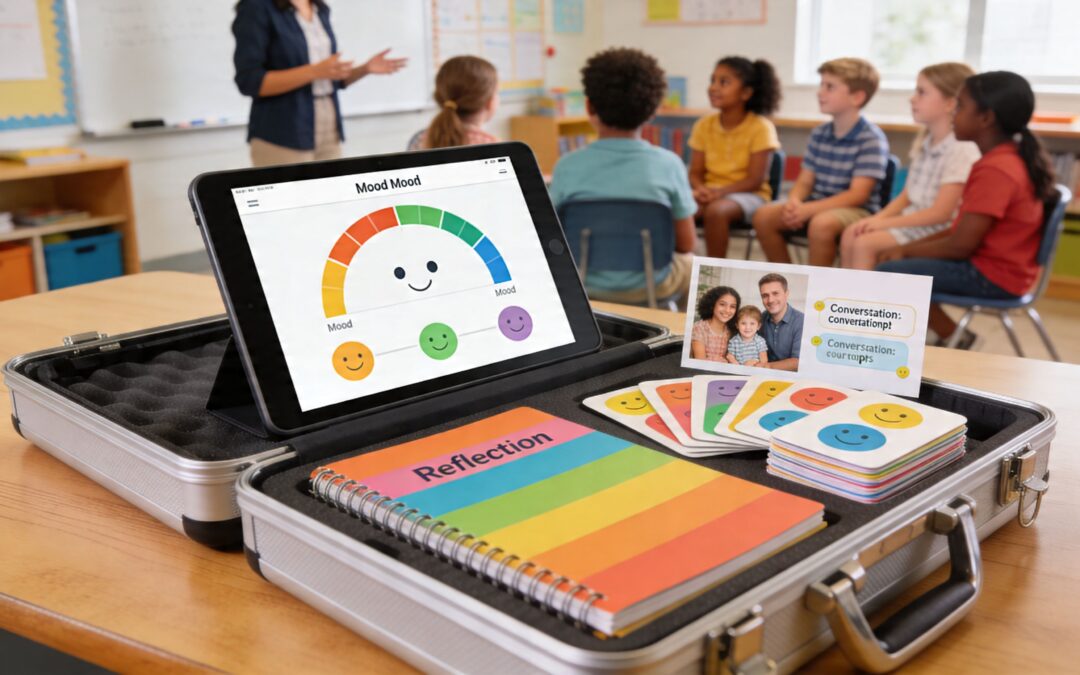
A strong SEL toolkit includes different kinds of supports for different jobs. Some tools help students identify feelings. Others help them calm their bodies, repair peer conflict, or bring families into the same language.
Research on evidence-based elementary SEL programs gives us a helpful blueprint. Analysis found that components like identifying others’ feelings (100% of programs), identifying one’s own feelings (92.3%), and behavioral coping skills (91.7%) are foundational, as described in this systematic analysis of elementary SEL programs. That matters because it tells us what effective social emotional learning tools should teach.
Four kinds of tools most schools need
Some educators hear “SEL tools” and think only of digital platforms. That’s too narrow. The toolkit is broader.
Digital apps and platforms
These tools help with check-ins, reflection, student self-assessment, mood tracking, or guided regulation.
A classroom example: a fifth grade teacher starts the day with a digital feelings check-in. Students select a feeling word and a readiness level before math. The teacher notices three students flagging frustration and pulls them for a quick preview before independent work starts.
At home, a parent might use a simple app-based mood check after school and ask, “Was that feeling about work, friendship, or energy?”
Digital tools are useful when you need:
Quick visibility into how students are doing
Consistent data collection across classrooms
Easy access for students, staff, and sometimes families
They’re less useful when staff haven’t built routines around what happens after the data comes in.
Formal curricula and programs
These are structured lesson sequences, often aligned to CASEL competencies, that teach skills such as empathy, self-regulation, listening, conflict resolution, and decision-making.
Example: a second grade class practices role-play around joining a game at recess. Students rehearse language like, “Can I join?” and “What role can I take?” That sounds simple, but for many children, direct practice changes what happens outside.
This category gets overlooked, even though it’s where SEL often becomes real. Morning meetings, calm corners, partner shares, repair circles, breathing routines, and transition scripts all count.
A kindergarten peace corner might include:
Feelings visuals so students can point before they have the words
Breathing prompts for body regulation
A reflection card with “What happened?” and “What do I need?”
A middle school advisory routine might open with, “What’s one challenge you handled well this week?” That builds reflection without forcing disclosure.
A tool becomes powerful when students can use it independently, not only when an adult prompts it.
Family engagement practices
If school and home use completely different language, students often don’t transfer skills well. Family engagement tools close that gap.
Examples include:
Dinner table prompts like “When did you feel included today?”
Take-home conflict scripts such as “I felt __ when __. Next time I need __.”
Brief family workshops where caregivers try the same calming routine students use at school
A fourth grader who learns “pause, breathe, say what you need” in class can use the same sequence before a sibling conflict at home if adults reinforce it.
Comparing Categories of Social Emotional Learning Tools
Tool Type
Primary Use Case
Pros
Cons
Digital Apps and Platforms
Check-ins, tracking, reflection, screening
Easy to scale, fast data access, useful across classrooms
Can become passive if staff don’t respond to results
Low cost, immediate impact, easy to embed into the day
Quality depends on adult consistency
Family Engagement Practices
Home-school carryover
Extends SEL beyond campus, helps parents reinforce skills
Needs simple communication and family-friendly design
A simple way to think about fit
If your biggest issue is constant peer conflict, don’t buy only a dashboard. If your staff lacks shared language, routines alone may not be enough. If families feel disconnected, a strong classroom plan still won’t travel home by itself.
Most schools need a mix. The goal isn’t to collect tools. It’s to build a system where each tool has a job.
How to Choose the Right SEL Tools for Your School
The wrong way to choose SEL tools is to start with the flashiest demo.
The better way is to start with your school’s friction points. Where are students getting stuck? Where are adults losing time? Which moments feel predictable in the worst way?
A principal might say, “Our classrooms are calm during lessons, but lunch and recess keep unraveling the day.” That school may need conflict-resolution routines, adult supervision scripts, and student practice with peer repair. Another school may say, “Our students can talk about feelings, but they fall apart during academic frustration.” That points more toward self-management tools and coping routines.
Match the tool to the problem
Before you purchase anything, name the problem in plain language.
Try prompts like these with your team:
Where do students struggle most? During transitions, partner work, unstructured time, or independent tasks?
What do students need more of? Emotion vocabulary, impulse control, empathy, conflict repair, or help-seeking?
What do adults need more of? Shared language, usable routines, clearer data, or family communication supports?
A practical example: if fourth graders keep escalating minor social misunderstandings into office referrals, a weekly empathy lesson alone probably won’t solve it. They may need sentence stems for disagreement, brief restorative routines after conflict, and adult coaching in the moment.
Developmental fit matters
Not every tool works for every age. A first grader needs concrete language, visuals, and repeated modeling. An eighth grader usually needs more privacy, more autonomy, and less “performing feelings” in front of peers.
Look for signs of developmental fit:
K-2 tools should be visual, repetitive, embodied, and brief.
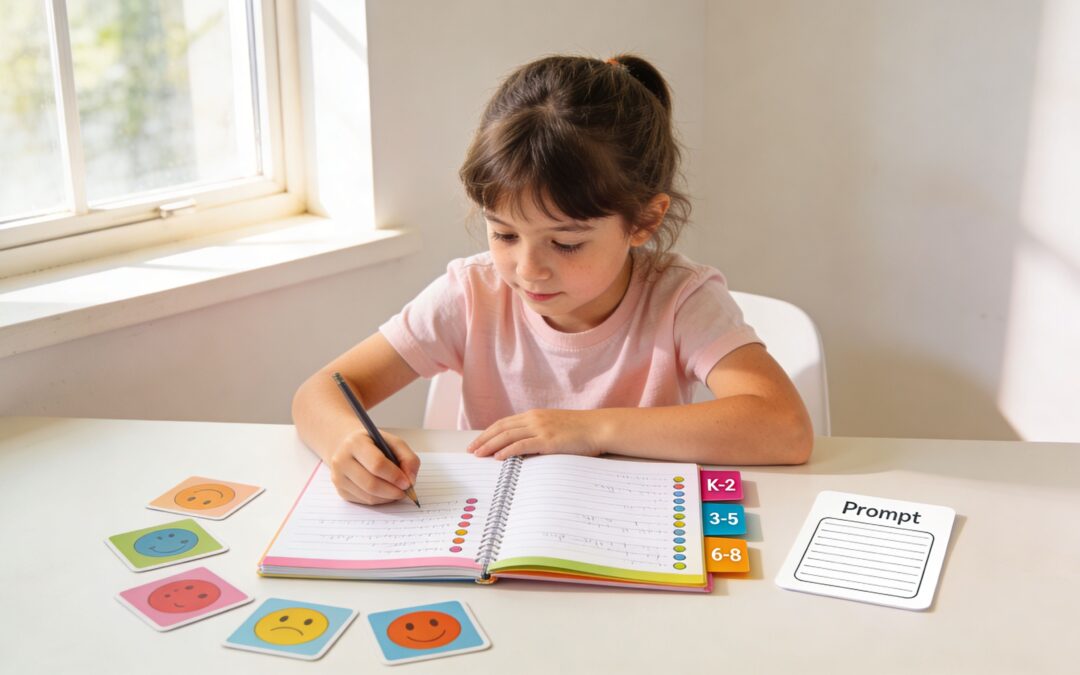
Grades 3-5 tools should blend direct teaching with reflection and practice.
Grades 6-8 tools should respect dignity, choice, and social complexity.
For instance, a feelings chart works in first grade because it helps children locate emotion quickly. In middle school, a private reflection form or advisory prompt may work better because students don’t want to announce vulnerability publicly.
Capacity beats ambition
A school can buy a strong program and still fail if staff can’t use it consistently.
Ask hard questions early:
How much training does this require?
Can teachers use it inside a normal school day?
Will counselors, recess staff, and classroom teachers all understand it the same way?
Does it create one more initiative, or does it simplify what adults already do?
If your staff is stretched thin, low-burden options may be wiser. The Wallace Foundation has highlighted low-cost, low-burden SEL “kernels” as flexible strategies for specific behaviors, which is why schools under pressure should consider routines and short practices, not just full programs.
Equity cannot be an afterthought
Many schools make a costly mistake by choosing tools that appear neutral but don’t reflect students’ lived experience, community context, or the ways bias shapes behavior interpretation.
Black SEL raises an important challenge to standard programs. It argues that many mainstream approaches overlook systemic issues and cultural context, making culturally affirming approaches necessary for Black and marginalized students. That perspective is described on the Black SEL about page.
What does that mean in practice?
It means asking:
Whose communication style does this tool assume is “appropriate”?
Do examples, stories, and role-plays reflect our students and families?
Does the tool build belonging, or does it reward compliance without context?
A school serving diverse communities might adapt scenarios so students discuss real peer dynamics they recognize, not generic workbook conflicts. Family nights might include multilingual materials and examples that reflect actual home routines.
If students don’t see themselves in the tool, adults often misread resistance as lack of skill.
Don’t ignore low-cost options
A tight budget doesn’t mean you can’t do strong SEL work. Many high-impact practices are routines, scripts, and habits.
A school with limited funds might start with:
Daily check-in circles
Calm-down menus in every room
Peer conflict scripts posted at student eye level
Weekly family conversation prompts
Brief advisory lessons using existing staff
If you want classroom-ready ideas to pair with a broader plan, Kuraplan’s roundup of social emotional learning activities offers practical examples educators can adapt.
One example from the field: some schools use a conflict pathway tool so students can talk through what happened, how each person feels, and what repair looks like. Soul Shoppe offers a Peace Path with Tutorial that fits that kind of practical, skill-based conflict resolution approach.
A procurement checklist leaders can actually use
Bring this checklist into vendor meetings or planning sessions.
Problem fit Does this tool solve a problem we’ve clearly named?
Age fit Will our students use it, from primary grades through middle school where applicable?
Cultural fit Does it reflect our students’ identities, experiences, and community realities?
Staff fit Can teachers, counselors, and support staff use it without heavy overload?
Family fit Is there a simple way for caregivers to reinforce the same language at home?
Measurement fit Can we tell whether it’s helping through observations, assessments, or behavior patterns?
Sustainability Will this still work after the launch excitement fades?
Schools rarely need the most complicated option. They need the clearest one.
If your team is choosing among full-school approaches, this guide to SEL programs for schools can help frame the decision around implementation reality, not just features.
A Guide to Implementing SEL Tools School-Wide
The best SEL tool can still fail in a school that launches too fast, trains too little, or treats implementation like a one-time event.
School-wide SEL works when adults share a common approach, students experience it in predictable ways, and families hear language that matches what happens in classrooms.
Research gives leaders one more reason to stay committed. A thorough synthesis of SEL research found that students participating in SEL programs achieved an average 11 percentage point gain in academic performance compared with peers, as summarized in this SEL research synthesis article. For principals trying to balance behavior support with instructional goals, that matters.
Start with a small leadership team
Don’t put implementation on one counselor and hope for the best.
Build a team that includes:
An administrator who can align decisions and remove barriers
Classroom teachers from different grade bands
Student support staff such as counselors or psychologists
A family-facing voice such as a parent liaison or community coordinator
This group should answer practical questions. Where will SEL happen daily? Which routines are essential? What language will adults use during conflict? How will families hear about it?
A good launch feels organized, not crowded.
Train adults on use, not just philosophy
Teachers don’t need another abstract lecture on why emotions matter. They need language, modeling, and repetition.
Useful staff training sounds like this:
What do I say when two students interrupt each other in conflict?
How do I run a two-minute reset without losing the lesson?
What should a calm corner include?
How do I respond when a student refuses the SEL routine?
Practice the routine exactly as students will experience it. If the tool is a check-in, teachers should do the check-in. If the tool is a repair conversation, staff should role-play the script.
Adults need the same thing students need. Clear language, repeated practice, and a low-stakes chance to get it wrong before the real moment arrives.
Pilot before going school-wide
A pilot gives your school room to learn. Choose a grade span, a few classrooms, or one common setting like advisory or morning meeting.
During the pilot, watch for:
What students use independently
Which routines teachers can sustain
Where confusion shows up
What families understand right away and what needs translation into simpler language
For example, a pilot in grades 2 and 5 might reveal that younger students use feelings visuals easily, while older students respond better to journal prompts and partner processing.
That kind of feedback saves schools from rolling out something polished on paper but clumsy in real life.
Build SEL into the existing day
SEL works best when it’s embedded where students already are.
Try structures like these:
In classrooms
A teacher opens class with a one-minute emotional weather report. Students show “sunny,” “cloudy,” or “stormy” with fingers or cards. The teacher doesn’t turn it into a full discussion every time. The point is awareness.
During reading, students pause and ask, “What might this character be feeling, and what clues tell us that?” That turns literacy into empathy practice.
During conflict
A recess aide uses a short script:
What happened?
What were you feeling?
What do you need now?
What can repair look like?
The script matters because adults often improvise differently under stress. Students benefit when the process is predictable.
During transitions
A fourth grade class practices one shared reset. Feet still. One breath in. Long breath out. Eyes on the next task. The routine takes less time than repeated redirection.
If school climate is part of the larger goal, this article on how to improve school culture pairs well with implementation planning.
Bring families in early and simply
Parents and caregivers don’t need a stack of theory. They need a few doable ways to reinforce the same skills.
Good family implementation often includes:
A one-page SEL language guide with terms students are using
Take-home prompts for dinner or bedtime
Short workshops where caregivers try the routines themselves
Teacher messages that describe the tool in plain language
Example take-home prompt for K-2: “What was one feeling you had today? What helped you?”
Example for grades 4-8: “When did you disagree with someone today? How did you handle it?”
Later in the rollout, it helps to give families something concrete to watch and discuss.
A strong school-to-home connection creates shared language. When a child hears “pause, name it, choose your next step” at school and then hears a similar prompt at home, the skill sticks faster.
Keep the rollout calm
Not every classroom will look identical, and that’s fine. The goal is consistency in essentials, not robotic sameness.
Pick a few school-wide anchors:
One common check-in approach
One shared conflict repair process
One or two family-facing routines
A regular way for staff to reflect on what’s working
That creates enough structure for coherence and enough flexibility for teachers to sound like themselves.
Measuring the Impact of Your SEL Investment
Schools often measure SEL in one of two weak ways. They either rely only on anecdotes, or they chase numbers that don’t tell the story.
Better measurement combines both. You want to know what adults and students are experiencing, and you want to know whether patterns are shifting over time.
Start with what people notice
Qualitative data matters because SEL often shows up first in daily interactions.
Look for evidence in:
Teacher observation notes about student regulation, peer interaction, and participation
Student reflections or focus groups that reveal whether tools feel useful
Family feedback on home carryover
School climate surveys that surface belonging, safety, and connection
A teacher might report, “Students are using the conflict script without waiting for me.” A parent might say, “My child now tells me she needs a break instead of slamming the door.” Those aren’t soft signals. They’re signs that the skill is generalizing.
Pair stories with trackable indicators
Quantitative indicators help leaders see whether change is broad enough to matter across a school.
Common school indicators include:
Discipline referrals
Attendance patterns
Bullying or conflict reports
Classroom removal patterns
Participation trends
You don’t need to claim that every shift comes only from SEL. School life is more complex than that. But you can look for movement that aligns with your implementation. If a grade level uses a shared reset and conflict script consistently, do adults report fewer repeated escalations? Are students returning to learning more quickly?
Use assessment tools carefully
Some schools also need direct measures of student competency growth. That’s where structured SEL assessments can help.
ERB’s SelfWise Inventory is one example of a web-based self-assessment aligned to CASEL competencies. According to ERB’s overview of measuring and analyzing social-emotional skills, tools like SelfWise provide actionable data by measuring student self-perception on competencies and helping schools track progress and identify where interventions are needed.
That kind of tool is helpful when you want to answer questions like:
Are students reporting stronger self-awareness over time?
Which grade levels need more support with relationship skills?
Are classroom practices connecting to what students say about themselves?
Build a usable data routine
The mistake isn’t collecting too little data. It’s collecting too much and doing nothing with it.
A practical school routine might look like this:
Data Type
What to Review
What to Ask
Teacher observations
Use of calming and conflict tools
Are students using the skill independently or only with prompting?
Student self-assessments
Self-awareness, social awareness, relationship indicators
Which skills appear strongest, and where are gaps?
Behavior patterns
Referrals, repeated conflicts, removals
Are problem moments changing in frequency or intensity?
Family feedback
Carryover at home
Do caregivers understand and use the language?
Turn results into a story stakeholders understand
Boards, families, and staff need a simple narrative.
It might sound like this: “We introduced common check-in and repair routines, trained staff, and gave families matching language. Teachers report more student independence in problem-solving. Student self-assessment data points us to a continued need in relationship skills. Behavior incidents during unstructured time are where we’re watching next.”
Measure whether students can do something new, not just whether adults delivered the lesson.
That’s the essential return on investment. Better SEL measurement helps schools improve supports, protect time, and make future decisions with more confidence.
Real-World Examples from Thriving Schools
The schools below are fictional, but the situations are familiar. They reflect what many K-8 teams see when they put social emotional learning tools into daily use.
Jefferson Elementary and the reset that changed mornings
Jefferson’s primary classrooms started each day with scattered energy. Students came in carrying bus drama, family stress, and the rough edge of rushed mornings. Teachers spent the first block redirecting, soothing, and trying to get everyone ready to learn.
The school didn’t begin with a full new program. They started with two routines. A morning feelings check-in and a short class circle where students practiced naming one need for the day.
Within weeks, teachers noticed a shift in tone. Students who used to act out early were more likely to say, “I’m upset,” or “I need a minute.” The morning wasn’t perfect, but it became more predictable. Adults spent less time guessing what was wrong.
Oakwood Middle School and private stress tools
Oakwood had a different issue. Students didn’t want to talk publicly about feelings, especially before tests or presentations. Teachers knew anxiety was showing up, but whole-group discussions fell flat.
The school added a digital self-reflection routine during advisory. Students completed a quick private check-in and selected a coping option before high-stress academic moments. Advisors then knew which students needed a quiet nudge, a breathing prompt, or a quick one-on-one.
The key wasn’t the technology by itself. It was privacy plus follow-through. Students felt less put on the spot, and teachers had a clearer path to support.
Willow Creek and the family language bridge
Willow Creek’s staff felt good about classroom SEL, but parents said they weren’t sure how to continue it at home. Students used school language during the day, then lost it by evening when sibling conflict or homework stress hit.
So the school began sending home one family prompt each week. Nothing fancy. One question for the dinner table, one calming strategy, and one sentence stem for conflict.
A third grade parent later shared that “What do you need right now?” had replaced “What is your problem?” in their home. That one language shift changed the feel of hard moments.
What these examples have in common
None of these schools tried to fix everything at once.
They chose tools that matched the problem in front of them. They kept routines simple enough for adults to use under pressure. And they made sure students could practice the same skills in more than one setting.
That’s what thriving schools usually do. They make SEL visible in ordinary moments.
Your Next Steps in Building an SEL-Powered School
Strong SEL work follows a simple cycle. Choose carefully. Implement steadily. Measure accurately.
That sounds straightforward, but it requires discipline. Schools need tools that match real student needs, adults who can use them consistently, and a way to tell whether the work is changing daily life for kids.
For some schools, the next step is an audit. What tools are already in place, and where are the gaps? For others, it’s a pilot with one grade band, one shared conflict routine, or one family engagement practice. For others still, it’s getting clearer on measurement so SEL doesn’t stay stuck in the category of “good intentions.”
The most effective school leaders I’ve seen don’t ask, “Which tool will solve everything?” They ask, “Which tools will help our adults and students respond better in the moments that matter most?”
That’s where outside partnership can help. Organizations that focus on experiential SEL, educator coaching, and practical student tools can support schools that want to move from isolated lessons to a more connected school-wide approach.
If your team is serious about building a calmer, more connected, more teachable school environment, start small but start clearly. Pick one tool, one routine, and one measure of success. Then build from there.
If you want support turning these ideas into a school-wide plan, Soul Shoppe offers experiential SEL programs, educator coaching, and practical tools that help schools and families build shared language for self-regulation, communication, empathy, and conflict resolution.
More than words. That’s what you’re dealing with when a student erases a drawing until the paper tears, or when a child knows an answer but won’t risk saying it out loud. Those moments often get labeled as perfectionism, shyness, or sensitivity. In practice, they’re often early signs of shaky self-worth.
That matters because self-esteem in girls can decline sharply in early adolescence. One summary of the research notes that girls’ self-esteem peaks around age 9, and body image satisfaction drops from 75 percent at ages 8 and 9 to 56 percent at ages 12 and 13, according to findings cited by Journal Buddies. By the teen years, body concerns and outside pressures can become even louder.
Praise helps, but praise alone is flimsy. Kids can become dependent on hearing “good job” and still crumble the moment something feels hard, awkward, or imperfect. Strong self-esteem grows from the inside out. It’s built through self-awareness, honest reflection, problem-solving, and the ability to recover after disappointment.
That’s where journaling earns its place. Structured prompts can support stress reduction, self-awareness, confidence, and perspective-taking, with benefits described in therapeutic writing research summarized by PositivePsychology’s journaling prompts guide. For teachers and parents, journaling also works because it’s flexible. You can use it in a morning meeting, after recess conflict, at counseling check-in, or as part of a bedtime routine.
The most effective self esteem journal prompts don’t ask kids to repeat empty positive phrases. They help children notice strengths, name values, process setbacks, and see proof of their own growth.
Below are eight journaling methods I’d use with K to 8 students. Each one serves a different psychological purpose, includes concrete examples, and works best when adults keep the tone steady, warm, and specific.
1. Daily Affirmations and Strengths Recognition
This is the simplest place to start, and it’s also the easiest place to get it wrong.
A lot of adults hand kids an affirmation like “I am amazing” and hope repetition will do the rest. Usually it doesn’t. Children trust evidence more than slogans. If the writing feels fake, they disengage fast.
Make affirmations concrete
The strongest affirmations are tied to real behavior.
A kindergartner who shared crayons can write, “I am a helpful friend because I shared my crayons today.” A 3rd grader might write, “My strength is persistence. I kept trying on my math page even when I felt stuck.” A middle school student can go further: “I handled a hard social moment calmly. I listened to my friend before giving advice.”
That shift matters. The child isn’t just claiming a trait. They’re identifying proof.
Practical rule: Never ask kids to write an affirmation without also asking, “What happened today that makes this true?”
In classrooms, I like sentence stems for younger or hesitant writers:
I am good at: helping, drawing, listening, building, noticing, trying again
I showed strength when: I kept going, told the truth, asked for help, included someone
Today I’m proud of: one action, not a whole identity
What works and what doesn’t
What works is specificity, repetition, and adult modeling. A teacher can write on the board, “I am patient because I explained the directions again without rushing.” That gives students a believable model.
What doesn’t work is forcing intensity. Kids don’t need to declare that they love everything about themselves. They need language for noticing what’s sturdy in them.
A few practical supports help:
Build a strengths bank: Post words like brave, thoughtful, persistent, creative, fair, calm, curious.
Pair self and peer noticing: Let students write one strength they saw in themselves and one they saw in a classmate.
Keep it short: Two sentences is enough if they’re honest.
2. Challenge Reflection and Problem-Solving Journal
Students build self-esteem faster from “I got through something hard” than from “I’m good at everything.”
That’s why challenge reflection is one of the most practical self esteem journal prompts you can use. It turns failure, conflict, and frustration into usable information.
Turn setbacks into evidence of capability
Younger students do well with an “Oops to Aha” format.
A 1st grader might write: “Oops: My block tower kept falling. Aha: I made the bottom wider. Now I know: I can try a different plan.”
A 4th grader can handle more emotional detail: “My challenge was working with a partner I didn’t know. I felt nervous and quiet. I asked what idea they wanted to start with. That helped us begin.”
A 7th grader can reflect on choices: “I got a low quiz grade and blamed the teacher at first. If I’m honest, I didn’t review until the night before. Next time I’ll make a study plan and use my organization skills.”
That last sentence is the key. Reflection without a next step can become rumination.
A structure kids can repeat
Use the same few prompts each time:
What happened: Name the challenge clearly.
How I felt: Frustrated, embarrassed, left out, confused, angry, disappointed.
What I did: The action taken, even if it was imperfect.
What I learned: One takeaway.
What I’ll try next: One concrete step.
Struggle is not a sign that a prompt failed. It’s often the exact material the child needs to work with.
What works here is normalizing challenge before asking students to reflect. Teachers can briefly share age-appropriate examples: “I mixed up our schedule this morning and had to regroup.” That lowers defensiveness.
What doesn’t work is turning journaling into a post-mistake punishment. If a child only writes after conflict or failure, they’ll start associating journaling with shame. Use it after challenges, yes, but also after recovery and repair.
For classrooms, anonymous “challenge examples” can help. A counselor or teacher can keep a folder of composite entries like “I felt left out at recess” or “I froze during a presentation” so students see that hard moments are common, not proof that something is wrong with them.
3. Values and Identity Exploration Journal
A student bombs a test, gets left out at lunch, or sees a friend get more attention online. By the end of the day, one quiet belief can take over: maybe I only matter when I perform, fit in, or look right.
Identity journaling interrupts that pattern. In this method, the goal is not just expression. It is helping kids build self-respect around values, roles, culture, character, and choice. That makes it a different tool from challenge reflection or affirmations. It helps children answer a steadier question: Who am I, even on an off day?
Help students define themselves beyond outcomes
For younger students, keep identity work concrete and visible. A 2nd grader might make a “Me Shield” with four sections:
people who matter to me
things I enjoy
strengths I use
one rule or belief I try to live by
That last section often tells you the most. A child who writes “Include others” or “Tell the truth” is starting to root identity in values.
Upper elementary students can connect values to behavior. A 5th grader might write, “I value honesty. I told my mom I broke the vase. I felt nervous, but I did what matches who I want to be.” That is fundamental work. The student is linking action, discomfort, and identity.
Middle school students are usually ready for contradiction and context. An 8th grader might write, “At home I’m funny and creative, but at school I stay quiet. I think I’m worried people will judge me.” That kind of entry gives adults something useful to respond to. It points to belonging pressure, not a lack of personality.
Use prompts that build identity language
Children often need words before they can reflect clearly. Give them a values menu and let them choose a few that feel true or aspirational: kindness, courage, creativity, fairness, loyalty, curiosity, responsibility, humor, faith, family, service, justice.
Then use prompts like these:
Which value mattered most to you today?
Where did your actions match that value?
Where did they drift away from it?
What part of yourself feels easy to show?
What part do you keep private?
Who are you with different people?
What do you want to be known for?
This works especially well in grades 4 through 8, when students are trying on identities quickly and often publicly. Some children answer too fast with labels they think adults want to hear. Slow them down. Ask for a moment, not a slogan.
How to implement it well at home or in class
Use identity journaling once or twice a week, not every day. Daily use can make the writing feel forced, especially for students who are still figuring themselves out.
In classrooms, I recommend giving students choice in format. Some write paragraphs. Some sort value cards first. Some draw identity maps with circles for family, friends, school, interests, culture, and beliefs. If you want a related way to help students notice what matters in their lives, these gratitude activities for kids pair well with values work because they move children from vague feelings to specific meaning.
At home, parents can keep the conversation light but honest. “What felt most like you today?” usually gets a better response than “What are your values?” The trade-off is speed versus depth. Simpler questions get more participation. Richer questions produce better insight, but only when trust is already there.
What helps and what gets in the way
What helps is making room for layered identity. A child can be shy in class and loud with cousins. Athletic and artistic. Caring and still learning how to handle anger. Kids need to see that complexity is normal.
What gets in the way is turning identity work into branding. If adults push children to pick one neat answer to “who am I,” journaling starts to shrink them instead of helping them grow. Identity develops through repetition, testing, and revision.
As noted earlier in the article, concerns about appearance and outside approval can distort self-worth, especially for older students. That is why this journaling method matters. It gives kids another place to stand.
4. Gratitude and Appreciation Journaling
A 3rd grader has a hard recess, comes back upset, and writes, “Nothing good happened today.” That is the moment this journaling method earns its place. Gratitude and appreciation journaling helps children widen the frame enough to notice support, relief, effort, and small wins without denying what hurt.
Used as a self-esteem tool, gratitude is not a feel-good list. It trains attention. Children who regularly fixate on mistakes, exclusion, or comparison need practice spotting what supported them, what mattered, and what they contributed themselves. That shift can build steadier self-worth because the child starts to see, “My day was hard, and I still noticed care, choice, and strength.”
Specificity matters. “I’m grateful for my family” is a start, but “I’m grateful my dad waited with me before school because I was nervous” gives the brain something real to hold onto. The same is true at school. “I’m grateful my friend shared a swing at recess because I felt left out” is stronger than a vague list item. So is self-appreciation: “I’m grateful I took three breaths instead of yelling.”
That last category is easy to skip. I do not recommend skipping it. If gratitude only points outward, some children learn to appreciate everyone except themselves.
For younger students, keep the method concrete and brief. A kindergarten or 1st grade journal can use “Three Good Things” with pictures and a few dictated words. A 3rd or 4th grader can finish the stem “I appreciated ___ because ___.” Middle school students usually benefit from a two-part entry: one thing they received, one thing they did.
A better prompt set than “What are you grateful for?”
The prompt shapes the depth of the answer. Rotate the lens so the practice stays active:
Support: Who helped you today, and what did they do?
Moment: What felt calm, fun, or meaningful?
Self: What did you handle well, even if it was small?
Body and senses: What did you notice that made the day easier or better?
Repair: What got better after a hard moment?
The word “because” often does the heavy lifting. Without it, many entries stay shallow.
There is also a real trade-off here. Daily gratitude can become performative if adults push it too hard or use it to shut down disappointment. A child who says, “I’m still mad,” should not be corrected into gratitude on command. The practice works better after the feeling is acknowledged. Then journaling can help the child add complexity: “I was angry after lunch, and I was also grateful my teacher checked on me.”
For classroom use, this method works well in advisory, morning meeting follow-up, calm-down corners, or Friday reflection. For home use, a shared notebook by the dinner table or bedside usually gets better follow-through than a formal workbook. Families and teachers who want more hands-on extensions can pair this section with these gratitude activities for kids that help children notice specific moments of care and joy.
Used consistently, gratitude and appreciation journaling becomes a resilience tool. It helps children record evidence that good experiences, caring relationships, and personal effort are still present, even on days that do not feel easy.
5. Growth Mindset and Learning Journey Journal
Monday morning, a student stares at a page and says, “I’m just bad at this.” By Friday, that same student may still find the work hard, but the journal can help them say something more accurate: “I used a different strategy, and part of it worked.”
That shift matters. This method builds self-esteem by helping children separate identity from current performance. In this toolkit of eight journaling approaches, the growth mindset journal is the tool for resilience under challenge. It teaches students to track progress, strategy, and recovery after mistakes.
Help students record change they can actually see
Children rarely build confidence from praise alone. They build it from evidence.
A 1st grader can tape in two handwriting samples and finish the sentence, “In September I needed help with ____. Now I can ____ on my own.” A 5th grader might write, “Flashcards were not enough for multiplication facts. Skip-counting and a partner game helped more.” In middle school, the reflection can get more precise: “I still get nervous in science, but asking one question before labs helped me understand the directions.”
Those examples do more than sound positive. They document process. That is the difference between empty encouragement and useful self-belief.
Use prompts that connect effort to strategy
Students need language they can use during hard moments, not just after success. Prompts like these work well:
What felt hard today, specifically?
What strategy did I try first?
What changed after I got stuck?
What mistake showed me what to practice next?
What can I say instead of “I’m bad at this”?
What is one sign I know more today than I did last week?
For younger students, keep it concrete and brief. “One thing I can do now is…” works better than abstract reflection. For grades 4 through 8, add comparison prompts and revision notes so students can examine how learning changed over time.
I usually recommend a weekly “learning journey” page with three parts: what improved, what still feels shaky, and what strategy to try next. That structure is simple enough for follow-through and strong enough to show patterns across a month or grading period.
Protect the journal from becoming fake positivity
There is a real trade-off here. Growth mindset language helps, but it can also irritate students if adults use it as a script instead of support.
A child who hears “just keep trying” after repeated frustration often feels misunderstood. The journal works better when adults acknowledge the barrier and then guide reflection: “What part is confusing?” “What have you already tried?” “What support would help?” Self-esteem grows when students feel competent and honest, not when they are pushed to sound optimistic.
That is why “yet” needs a companion. “I can’t do this yet” should lead to “My next step is…” Without that second part, the phrase becomes classroom wallpaper.
Match the method to age and setting
In K to 2, use drawings, stickers, sentence stems, and before-and-after work samples. In grades 3 to 5, students can track strategies across subjects and notice which ones help. In grades 6 to 8, the journal can include revision reflections, test corrections, project checkpoints, and short entries about persistence, planning, and asking for help.
For teachers, this aligns well with SEL goals around self-awareness, self-management, and responsible decision-making. For parents, it works best after homework, music practice, sports, or any moment where frustration tends to show up quickly. A short entry is enough if it captures one challenge, one action, and one next step.
Visible artifacts strengthen the practice. Keep drafts, corrected work, reading logs, and goal check-ins together so students can review their own evidence. If you want ready-to-use classroom extensions, Soul Shoppe’s growth mindset activities for kids that stick pair well with this journal routine.
Used consistently, this journal helps children build a more durable kind of confidence. They stop asking, “Am I smart at this?” and start asking, “What helps me learn this?”
6. Peer Feedback and Compliment Collection Journal
Some students cannot name a single strength in themselves, even when everyone around them can see several.
A compliment journal helps bridge that gap. It gives children a place to collect evidence from real relationships. Not flattery. Observations.
Teach students to gather useful feedback
For younger students, this can be very simple. A kind note gets taped into a journal with a quick drawing of how it felt to receive it.
In 4th grade, I’d use structured sentence frames during class meeting: “I noticed you…” “You helped me by…” “I appreciate your…”
Then students reflect in writing: “Maria said I was a good leader because I made sure everyone had a job in our group.”
In 7th grade, a monthly review works well: “I noticed people often say I’m funny and easy to talk to. I don’t usually think of that as a strength, but maybe it is.”
That reflection step is where the confidence grows. Otherwise students just collect compliments without integrating them.
Protect the process from becoming performative
This method can backfire if it turns into a popularity contest. The fix is structure.
Use brief routines like:
Compliment circles: Every student both gives and receives.
Specific praise only: No “you’re nice.” Ask for actions.
Private collection options: Some kids don’t want public attention.
Home-school connection: Invite one note a week from a caregiver or sibling.
A 2020 Journal of Consumer Research study found that low self-esteem can shape choices in self-verifying ways, including a tendency to choose options that align with negative self-views, as discussed in the study abstract and article page. In school terms, students sometimes reject positive evidence because it clashes with the story they already believe about themselves. That’s why compliment journaling needs repetition. One kind note won’t usually override a negative self-concept.
“I notice you waited for me when I was behind” is stronger than “You’re a good friend.”
What works is helping students ask, “What strength does this feedback reveal?” Leadership, humor, patience, courage, fairness, creativity, reliability. Give them words for what they’re collecting.
What doesn’t work is vague praise, public pressure, or sarcasm disguised as humor. Adults need to teach feedback carefully and monitor the tone.
7. Self-Compassion and Inner Friend Journal
Many students talk to themselves in ways they would never use with another human being.
“I’m so stupid.” “No one likes me.” “I ruin everything.”
If those thoughts go unchallenged, journaling can accidentally become a place where self-criticism gets rehearsed instead of softened. That’s why self-compassion prompts matter.
A useful video can help introduce the idea before writing:
Teach the inner friend voice
For younger children, separate “worry thoughts” from “kind thoughts.”
If a child spills paint: Worry thought: “I’m so clumsy.” Kind thought: “Accidents happen. I can clean this up.”
A 5th grader can use the friend test: “My inner critic said I’m the worst at kickball. What would I tell a friend? I’d say it was one turn and they’ll get another chance.”
An 8th grader can write more fully: “My inner critic shows up after bad grades and tells me I’m not smart enough. My inner friend says this is disappointing, but one grade doesn’t define me.”
Children begin to learn that painful feelings don’t need to become identity statements.
Three elements to build into prompts
The self-compassion approach often works best when students practice three moves:
Self-kindness: Can I speak to myself gently
Common humanity: Do other people struggle with this too
Mindfulness: Can I notice the feeling without becoming the feeling
Try prompts like:
What is my inner critic saying
What would I say to a good friend
What do I need right now
What is true, even though this is hard
A 2023 study on young adults found that higher self-esteem reduced depression risk, while more daily social media time increased the odds of depressive symptoms and weakened the protective link between self-esteem and depression, according to the Mobile Screen Time Project article in PMC. For older students especially, that means journaling may work better when adults also help them notice digital triggers. Middle schoolers can add prompts like, “What app or post made me feel smaller today?” and “What helped me come back to myself?”
What works is modeling self-compassion out loud. Teachers can say, “I forgot that stack of papers. That’s okay. I’ll fix it.” Parents can do the same.
What doesn’t work is asking kids to “be positive” when they’re upset. Self-compassion isn’t denial. It’s honesty without cruelty.
8. Goal-Setting and Personal Agency Journal
A student says, “I want to do better,” but cannot tell you what “better” means by Friday. That is usually a confidence problem on the surface and a planning problem underneath.
A goal-setting journal helps children connect effort, choices, and results. That matters for self-esteem because kids start to see themselves as people who can act on their world, not just react to it. Of the eight journaling methods in this guide, this one is the clearest tool for building agency.
Start with a goal the child can own
Self-esteem grows faster when the goal feels personal and reachable.
A kindergartner’s goal might be, “Zip my coat by myself.” The journal entry can be a simple drawing with boxes for practice days. A 4th grader might write, “I want to finish a long book. I will read 10 pages each night.” A 7th grader may choose a social goal, such as, “I want to make one new friend this semester. This week I will say hi to someone in science and ask a classmate to work together.”
The trade-off is real. Adult-chosen goals are often easier to manage, but student-chosen goals create stronger follow-through. Teachers and parents still need guardrails. Help the child narrow the target, set a timeline, and choose a first step that can happen soon.
Use prompts that lead to action
Open-ended reflection is useful, but agency journals work best when prompts push toward a decision. I usually look for five parts:
What do I want to get better at
Why does this matter to me
What is my first step
What might get in the way
What will I do if I get stuck
Those questions turn a wish into a plan. They also give adults something concrete to coach. Instead of saying, “Try harder,” you can ask, “Which step felt too big?” or “What support would help next time?”
Make progress visible
Children often miss their own growth because it happens gradually. A journal solves that if the format is simple enough to maintain.
Goal ladders, checkboxes, short weekly reflections, and quick teacher or parent notes all work. Younger students usually do better with visuals. Older students can handle written reflections about effort, obstacles, and adjustment. The point is not to fill pages. The point is to create a record that says, “I made a plan, I followed part of it, I changed what was not working, and I kept going.”
That pattern builds durable self-belief.
Keep the routine small enough to last
This method breaks down when adults make it too ambitious. A detailed journal used for four days does less good than a five-minute routine that lasts six weeks.
Use what already exists in the day. Try a two-minute homeroom check-in, a Friday advisory reflection, or a brief bedtime entry at home. As noted earlier in this article, schools often run into the same practical barriers with journaling: limited time, uneven buy-in, and difficulty tracking growth in ways that go beyond mood in the moment. A lean routine solves more of that than a perfect template.
For families or educators who want a clearer structure for student-owned targets, Soul Shoppe’s guide to goal setting for kids fits well with this journal practice.
One caution matters here. Do not use the journal only to record whether the child succeeded. Record strategy use too. A student who changed plans, asked for help, or started again after a setback is building agency, even before the final goal is complete.
Motivation building, executive function support, individualized plans
Builds agency via measurable progress; fosters intrinsic motivation
Putting Prompts into Practice Making Self-Esteem a Daily Habit
A Monday morning journal routine can fall apart fast. One student says they have nothing to write, another rushes through two words, and an adult starts wondering whether the whole idea is too much effort for too little return.
That moment usually does not mean the method is wrong. It means the routine is still new.
These eight journaling methods work when they become part of ordinary life, not a one-time reset after a hard day. Self-esteem grows through repeated practice. Students need steady chances to notice strengths, recover from mistakes, name what matters to them, accept care, and make small decisions that build agency.
Start with one method, not all eight. Use it for two weeks before you switch. In a classroom, that might mean three minutes during morning meeting, after recess, or as an exit routine. At home, it may work better after dinner or before bed. In counseling groups, one shared format across several sessions usually gives better results than introducing a new prompt set every time.
Repetition matters because depth comes later. Early entries are often brief, flat, or performative. Younger children may copy what they think adults want to hear. Older students may test whether the journal is private. Give the routine time to become safe and familiar before you decide it is not working.
Match the journal type to the problem you are seeing. A child who shuts down after mistakes usually benefits more from challenge reflection, growth mindset prompts, or self-compassion than from generic affirmations. A child who depends on constant praise often needs identity and values work. A discouraged learner may need a journal that tracks effort, strategy, and progress. A child who cannot name a single positive trait may need strengths recognition or a compliment collection journal first because those formats lower the demand.
Modeling changes the tone. When adults write too, journaling feels less like a task and more like a tool. A teacher might say, “I’m writing about a time I got frustrated and tried again.” A parent might share one gratitude sentence or one goal for the day. Students do not need a long speech. They need to see that reflection is something real people use.
Choice also keeps the habit going. Some children need sentence stems. Some do better with drawing plus one line of writing. Some older students will write more openly in a private notebook with little discussion. The goal is not one perfect format. The goal is a repeatable practice of noticing, naming, and responding to inner experience.
If you are building the habit into the start of the day, attach it to a cue that already happens. A sharpened pencil on each desk, a journal basket by the door, a calm song after breakfast, or the same chair by the bed can do more than a motivational talk. This piece on how to create a morning routine that sticks offers a useful reminder that consistency is usually built through simple cues, not willpower.
For schools and families that want wider SEL support around belonging, empathy, and emotional skills, Soul Shoppe is one relevant option. Their work focuses on helping school communities build connection, safety, and shared language that students can use every day. That context matters. Self-esteem is easier to build in environments where children feel known and respected.
The journal itself is only part of the work. The stronger influence is the relationship around it. When a child learns, over time, “I can tell the truth about what I feel. I can notice what is good in me. I can keep going after a hard moment,” that is the kind of self-esteem that holds up outside the page.
If you want support building these habits across a classroom, counseling program, or school community, explore Soul Shoppe. Their SEL programs, workshops, and resources can help students practice reflection, empathy, self-regulation, and healthy connection in ways that fit everyday school life.
The demand for effective social emotional learning (SEL) has never been higher. As educators and parents navigate the complexities of supporting student well-being, choosing the right tools is critical. This guide cuts through the noise, offering a deep dive into 12 of the best social emotional learning resources available today for K-8 schools and families.
Instead of a simple list, we provide a detailed analysis of each option. You'll find practical examples for implementation in the classroom and at home, honest assessments of strengths and weaknesses, and direct links to each resource. For instance, when searching for tools that support older students, you might prioritize platforms offering structured guidance on specific skills, such as these practical social skills activities for teens that focus on conversational strategies.
Our goal is to equip school leaders, teachers, and caregivers with the clear insights needed to select and implement programs that foster genuine connection, build resilience, and create environments where every child can thrive. We will explore everything from comprehensive, whole-school programs like Soul Shoppe and CharacterStrong to targeted assessment and check-in tools like Panorama Education. This article is your roadmap to finding the right fit for your specific grade levels, school context, and student needs, ensuring your investment in SEL has a meaningful and lasting impact.
1. Soul Shoppe
As a veteran in the field with over two decades of experience, Soul Shoppe offers a deeply integrated, whole-school approach to social emotional learning. It stands out by moving beyond one-off lessons to cultivate a sustainable campus-wide culture of safety and belonging. The organization provides research-based, experiential programs that equip K-8 students, staff, and families with a shared language and practical skills for real-world challenges.
What makes Soul Shoppe a premier choice is its focus on creating psychological safety and peer support systems. Instead of just delivering content, its model is built to change school dynamics. Programs are designed to be interactive and memorable, teaching concrete tools for self-regulation, communication, and conflict resolution that students can apply immediately. For example, during their Peacemaker Program, students are trained to mediate playground disputes. When two younger students are arguing over a ball, a trained 5th-grade Peacemaker can guide them through a script to help them share their feelings and find a solution, reducing yard-duty escalations.
Key Takeaway for Administrators: Soul Shoppe acts as a long-term strategic partner, not just a curriculum vendor. The goal is to build a lasting, positive school climate by embedding SEL skills into daily interactions, which can lead to measurable reductions in conflict and improved student well-being.
Key Features & Program Highlights
Experiential Learning: Soul Shoppe uses interactive workshops and assemblies that actively involve students. A practical example is their "I-Message" activity, where students practice using "I feel…" statements to express needs without blaming others, a foundational skill for resolving peer conflicts. For example, instead of saying "You always take the good swing," a student learns to say, "I feel frustrated when I don't get a turn on the swing."
Flexible Delivery: Programs are available through on-site visits, live virtual sessions, and a library of digital resources, including an app and online courses for families. This mixed-model delivery makes it adaptable for various school budgets and logistical needs.
Whole-School Implementation: The approach extends to staff coaching and family engagement events. By providing a common vocabulary, such as tools for "peace corners" or "brave talks," everyone in the community learns to reinforce the same positive behaviors. A parent might use the "brave talk" script at home to help their child address a conflict with a sibling.
Community Credibility: With a 20+ year track record, significant partnerships like the Junior Giants' "Strike Out Bullying" campaign, and founder Vicki Abadesco's TEDx talk, the organization demonstrates proven expertise and public trust.
Implementation & Access
Best for: K-8 schools and districts seeking a comprehensive, campus-wide SEL program. It is particularly effective for schools aiming to build a common language around conflict resolution and emotional regulation.
Cost: Pricing is not publicly listed. Schools and districts must contact Soul Shoppe directly for a customized quote based on program selection and implementation scale.
Pros:
Focuses on practical, lasting skills like self-regulation and conflict resolution.
The whole-school model fosters a consistent and supportive environment.
Established credibility with over two decades of experience and community partnerships.
Cons:
The need to request a quote adds a step to the evaluation process.
Primarily designed for K-8, requiring adaptation for high school settings.
2. CASEL District Resource Center + Program Guide (Collaborative for Academic, Social, and Emotional Learning)
CASEL stands as the authoritative source for districts planning and executing systemic social emotional learning. Rather than providing a single curriculum, its website offers a free, research-backed framework for leaders to audit their current SEL efforts, select evidence-based programs, and plan multi-year implementations. For a school leader, this is the starting point for making informed decisions that align with long-term school improvement goals.
The platform's core strength lies in its Program Guide, a searchable database that helps schools compare vetted, evidence-based SEL programs. This neutral tool saves administrators countless hours of research and reduces the risk of adopting a program that isn't a good fit. For instance, a middle school principal can use the Guide to filter programs specifically designed for grades 6-8, view their evidence rating (like "SELect" or "Promising"), and see how each one addresses CASEL's five core competencies. This allows them to compare three top-rated programs based on their approach to relationship skills before scheduling demos, helping in choosing from a variety of social-emotional learning programs for schools with confidence.
Key Considerations
Cost & Access: The District Resource Center and Program Guide are completely free to access. However, it's a planning tool, not a curriculum. Schools must still purchase the specific programs they select, and CASEL does not list pricing information; you must contact vendors directly.
Best For:
District and school leaders building a strategic, system-wide SEL plan.
SEL committees tasked with evaluating and recommending curricula.
Educators seeking to understand the research behind effective SEL implementation.
Limitations: The sheer volume of information can be a lot for a single teacher or parent to process. It is best used by teams at the school or district level.
Second Step is a widely adopted, research-based K–8 digital SEL curriculum known for its clear, sequential lesson plans. Committee for Children provides a fully built-out program with grade-banded materials, making it a turnkey solution for schools seeking a structured approach to social emotional learning resources. Its digital format includes multimedia, student handouts, and scripted lessons that ensure consistent delivery across classrooms.
The program’s core strength is its scripted, grade-specific lessons that build skills year over year. A third-grade teacher, for example, can use a ready-made digital lesson on empathy that includes a short video of a relatable scenario, like one child feeling left out at recess. The lesson then provides guided questions for discussion ("How do you think Maria felt when no one asked her to play?") and a partner activity where students practice inviting someone new to join a game. For administrators, the leader dashboard offers a schoolwide view of implementation progress, while optional add-ons for bullying prevention and child protection create a more comprehensive safety net for students.
Key Considerations
Cost & Access: Second Step is a subscription-based program. Pricing is tiered and depends on the number of students and grade levels, which may require careful budgeting for smaller schools. Access is through an online portal after purchasing a school or district license.
Best For:
Schools and districts wanting a complete, ready-to-implement K-8 curriculum.
Teachers who prefer structured, scripted lessons with all materials provided.
Administrators looking for data-driven tools to monitor SEL implementation.
Limitations: The highly scripted nature, while ensuring fidelity, can feel restrictive to some educators who prefer to create or adapt their own lessons. Local adaptation may be needed to make scenarios more relevant to a specific student population.
RULER is a whole-school social emotional learning approach from the Yale Center for Emotional Intelligence, grounded in decades of emotion science. The acronym stands for Recognizing, Understanding, Labeling, Expressing, and Regulating emotions. Instead of a standalone curriculum, RULER focuses on shifting the entire school climate by prioritizing adult SEL skills first, then equipping staff with concrete tools to embed emotional intelligence into daily routines and academic instruction.
The system’s power comes from its practical tools that become part of the school's shared language. For example, classrooms create a Charter, a collaboratively developed document outlining how everyone wants to feel at school, and the Mood Meter helps students and staff identify and label their feelings throughout the day. A teacher might use the Mood Meter during morning meeting, asking students to point to where they are on the grid (e.g., "high energy, low pleasantness" in the red quadrant) and discuss why. A student might share they are in the red quadrant because they are anxious about a test, which creates an opportunity for support. This builds a foundation for meaningful emotional intelligence activities for kids. The Meta-Moment tool teaches a six-step process for pausing and making better choices during emotionally charged situations. These are valuable social emotional learning resources for any school community.
Key Considerations
Cost & Access: RULER requires a two-year training and implementation package for a school-based team, with transparent pricing published on their website for both online and in-person models. This includes access to the RULER Online platform. It is a significant investment in professional development and system-wide change, not a one-off curriculum purchase.
Best For:
Schools and districts committed to a deep, long-term culture shift around emotional intelligence.
Leaders who believe adult SEL is a prerequisite for student SEL.
Educators looking for practical, research-backed tools to integrate into existing school structures.
Limitations: The model requires substantial buy-in and active participation from the entire staff, as it's not a simple lesson-based program. The upfront cost and time commitment for training can be a barrier for some schools.
Harmony Academy offers a complete PreK-6 social emotional learning curriculum at no cost, making it a powerful resource for schools looking to implement a high-quality, research-based program without straining their budget. The digital platform provides everything an elementary teacher needs to get started, from lesson plans and activity guides to interactive games. Its design is focused on fostering positive peer relationships, empathy, and effective communication from an early age.
The curriculum's strength is its ready-to-use, practical structure. A second-grade teacher, for example, can use the "Meet Up" and "Buddy Up" activities to build community and practice problem-solving skills daily. In a "Buddy Up" activity, pairs of students might discuss a question like, "What is one way you can show a classmate you care?" before sharing their ideas with the class. Interactive "Harmony Games" provide a fun, digital way for students to apply concepts like diversity and inclusion. Furthermore, the inclusion of at-home resources makes Harmony one of the more family-inclusive social emotional learning resources, helping to reinforce classroom lessons with parents and caregivers.
Key Considerations
Cost & Access: The entire digital curriculum, including all lessons, activities, and training materials, is completely free after a simple registration. Physical material kits may have associated costs, but the core program is accessible without a financial investment.
Best For:
Elementary school teachers and principals looking for a comprehensive, no-cost SEL curriculum.
Schools with limited budgets that need a CASEL-aligned program.
Out-of-school-time programs seeking structured activities that build social skills.
Limitations: The curriculum is designed specifically for PreK-6. Middle schools will need to find a different program for older students. While digital access is excellent, schools that prefer extensive physical materials may need to supplement the program.
6. Responsive Classroom (Center for Responsive Schools)
Responsive Classroom is an evidence-informed teaching approach that weaves social emotional learning into the fabric of daily school life. Rather than providing a separate, weekly SEL lesson, it offers practical strategies for integrating SEL competencies into every interaction and academic task. This approach focuses on creating a positive, engaging classroom climate where students feel safe, valued, and ready to learn, making it a foundational piece for proactive behavior management and academic engagement in K-8 settings.
The platform's strength is its collection of applicable, day-to-day practices like the Morning Meeting, a cornerstone routine that builds community through greeting, sharing, group activities, and a morning message. A teacher can use this 20-minute daily structure to explicitly model and practice listening, empathy, and cooperation. For example, during the "sharing" component, one student shares about their weekend while another student practices active listening by paraphrasing what they heard. Other core strategies include using specific teacher language to reinforce positive behaviors ("I see you're using a quiet voice during independent reading") and interactive modeling to explicitly teach procedures, from how to turn in homework to how to join a group discussion respectfully. These tools make it one of the most practical social emotional learning resources for immediate classroom use.
Key Considerations
Cost & Access: The website offers free articles and introductory information. However, full implementation requires purchasing books, resource kits, and professional development courses. Multi-day workshops (both virtual and in-person) have clear, published fees, and schoolwide training packages are available by quote.
Best For:
K-8 classroom teachers looking for concrete strategies to improve classroom management and culture.
School leaders aiming to build a consistent, schoolwide approach to discipline and community.
New educators seeking a structured framework for establishing a positive learning environment.
Limitations: This is not a scripted, "open-and-go" curriculum for explicit SEL skill instruction. Schools may want to pair it with another program that teaches specific SEL concepts more directly. Effective implementation also depends on staff buy-in and investment in professional training.
Open Circle is a well-established, evidence-based social emotional learning program specifically designed for elementary schools. Rather than just offering a set of lessons, it provides a comprehensive K–5 curriculum built around structured classroom meetings. This approach focuses on creating routines that embed SEL directly into the school day, making it a foundational part of the classroom culture. For an elementary principal, this program offers a clear path to building a safe, communicative community from the ground up.
The program's core strength is its emphasis on practical routines and teacher training. The classroom meetings provide a consistent format for students to practice self-awareness, relationship skills, and responsible decision-making in a group setting. For example, a second-grade class might use the Open Circle meeting structure to collectively brainstorm solutions to a recurring playground conflict. The teacher would pose the problem, "What can we do when multiple people want to use the same swing at once?" and facilitate as students offer and evaluate ideas like taking turns or setting a timer. This consistent practice makes social problem-solving a familiar and expected part of their day. With its focus on direct instruction and application, the curriculum offers a wealth of kids' social skills activities that are directly tied to classroom life.
Key Considerations
Cost & Access: Program details and pricing are provided after submitting a training inquiry on their website. Open Circle is not a free resource; it is a full curriculum and professional learning package that requires a school or district-level purchase.
Best For:
Elementary school leaders aiming to implement a whole-school SEL model in grades K-5.
K-5 teachers who want a structured, routine-based approach to teaching SEL.
Districts looking for a program with a long history and strong evidence of effectiveness in early grades.
Limitations: The program is specifically designed for the K-5 grade band, meaning middle schools would need to find a different solution. Its effectiveness is closely tied to the professional learning component, so simply buying the materials without the training would not be sufficient.
CharacterStrong provides a comprehensive PreK-12 curriculum suite focused on integrating social emotional learning with character development. Rather than being just another set of lesson plans, it offers a vertically aligned framework designed to create a common language and consistent culture across an entire school or district. This whole-child approach bridges elementary, middle, and high school experiences, ensuring students build upon SEL skills year after year.
The platform’s strength is its dual focus on Tier 1 universal instruction and Tier 2 targeted interventions. For example, a 7th-grade advisory teacher can use the core secondary curriculum for weekly lessons on empathy and responsible decision-making. If a counselor identifies a small group of students struggling with conflict, they can use CharacterStrong's specific Tier 2 small-group curriculum to work on those particular skills. A practical activity might involve role-playing a scenario where one friend posts an embarrassing photo of another, and the group practices how to respond assertively and respectfully. This layered support helps schools meet diverse student needs within one system, an essential component for building resilience in children. The inclusion of family newsletters and implementation resources also helps extend learning beyond the classroom.
Key Considerations
Cost & Access: Access is provided through a school or district-level license. Pricing is not publicly listed and requires schools to request a quote. This model simplifies budgeting for administrators by covering an entire site rather than charging per student.
Best For:
Schools and districts seeking a unified, PreK-12 SEL and character curriculum.
Counselors in need of structured Tier 2 small-group intervention materials.
SEL leadership teams aiming to build a consistent, school-wide culture and vocabulary.
Limitations: The curriculum is designed for regular, structured implementation, not as a drop-in resource. Schools that prefer fully scripted, daily SEL lessons may find they need to supplement CharacterStrong’s advisory or weekly model.
Move This World delivers a dynamic, video-based SEL curriculum for grades PreK-12, built around short, daily practices. Its core philosophy is that emotional wellbeing is built through consistent, manageable routines rather than occasional, lengthy lessons. For teachers juggling packed schedules, the platform offers a "plug-and-play" solution that integrates social emotional learning into the school day with minimal preparation, making it an accessible entry point for school-wide implementation.
The platform’s standout feature is its library of on-demand, high-energy videos designed as daily rituals. A second-grade teacher, for example, could start the day with a 3-minute "Emotion Motion" video where students physically act out feelings like excitement or frustration, helping them build an emotional vocabulary through movement. A practical application for parents could be using a similar "calm down" video from the family resources to help a child manage big feelings at home before bedtime. By providing these consistent micro-practices, Move This World helps schools establish a shared language and routine around emotional health, which is a key component of effective social emotional learning resources.
Key Considerations
Cost & Access: Access requires a school or district-level subscription, and pricing is provided via a custom quote. It is not available for individual teacher or parent purchase. Reliable internet bandwidth and classroom devices are necessary to stream the video content.
Best For:
Schools seeking a low-prep, daily SEL routine that is easy to implement consistently.
Teachers who prefer guided video content over creating lessons from scratch.
Districts aiming to build a common emotional language across all grade levels.
Limitations: The reliance on video may not suit all teaching styles or student needs. Schools looking for deep, project-based SEL work might find the micro-practice format less extensive than other curricula.
Aperture Education offers a strengths-based approach to SEL data, moving beyond simply identifying deficits to actively measuring and growing student competencies. Its platform is built around the well-regarded Devereux Student Strengths Assessment (DESSA), providing schools with a robust system for universal screening, progress monitoring, and targeted intervention planning. This is an essential tool for districts aiming to implement a data-driven Multi-Tiered System of Supports (MTSS) for social emotional well-being.
The platform’s standout feature is the direct link between assessment data and actionable strategies. After a teacher completes a DESSA rating for a student, the system generates a report highlighting areas of strength and need. More importantly, it provides a "strategy playbook" with specific, evidence-based activities to address those needs. For example, if a student’s assessment shows a need in self-management, the platform might suggest a "stop-and-think" breathing exercise or a goal-setting worksheet. The teacher can then implement that strategy for two weeks and use the platform's progress monitoring tool to see if it's making a difference, directly connecting data to practical classroom support. This integration makes it a valuable collection of social emotional learning resources.
Key Considerations
Cost & Access: Access to the DESSA System is subscription-based, with pricing dependent on district size and package selection. Schools must contact Aperture Education directly for a quote. While the platform is a paid service, the company often provides free webinars and resources.
Best For:
School counselors and psychologists implementing data-driven SEL interventions within an MTSS framework.
District leaders seeking a valid, reliable tool for universal screening and program evaluation.
Teachers who need practical, data-informed strategies to support individual student needs in the classroom.
Limitations: Aperture Education provides the assessment and strategy framework, not a core Tier 1 SEL curriculum for daily instruction. Schools will need to pair it with a separate instructional program to build foundational skills for all students.
The Zones of Regulation is a widely adopted self-regulation framework that provides a systematic, cognitive-behavioral approach to teaching emotional control. Its core strength is a simple, visual system using four color-coded zones to help students identify their feelings and level of alertness. It offers a structured curriculum and professional learning that gives schools a common, non-judgmental language to discuss emotions and the tools needed to manage them, making it one of the most practical social emotional learning resources for immediate classroom use.
The platform provides a digital curriculum subscription with extensive implementation guides and fidelity checklists to ensure proper school-wide rollout. For example, a teacher can introduce the Blue Zone (sad, sick, tired) and have students identify what that feels like in their bodies. Then, the class co-creates a list of tools to use when in the Blue Zone, like getting a drink of water, taking a brief rest in the calm-down corner, or asking to talk to an adult. At home, a parent can create a similar "Zones" poster and help their child identify they are in the "Yellow Zone" (frustrated, anxious) before a challenging homework assignment, and then practice a calming strategy together. This concrete connection between an internal state (the Zone) and an actionable strategy is what makes the framework so effective for students across general and special education populations.
Key Considerations
Cost & Access: The website offers many free resources and samples to get started. The full curriculum, books, and posters require purchase. A digital subscription is available with per-user licenses, which can become costly for larger staff teams without institutional pricing. Professional learning is also offered in on-demand bundles and live training formats for an additional fee.
Best For:
Special and general education teachers needing a concrete visual system for self-regulation.
School counselors using a common language in small groups or individual sessions.
Schools aiming to build a tiered system of support (MTSS) for behavior and emotional management.
Limitations: The framework is most effective when integrated with broader SEL instruction on empathy, relationship skills, and responsible decision-making. It is a tool for self-regulation, not a complete SEL program on its own.
12. Panorama Education (Surveys, Check-Ins, and Playbook)
Panorama Education is a data platform designed for K-12 districts to measure, understand, and act on social emotional learning and school climate information. Instead of providing a direct SEL curriculum, it offers a suite of tools that help leaders gather perception data from students, families, and staff. For a district administrator, this is the engine for a data-driven approach, allowing them to pinpoint needs, monitor progress, and provide targeted support at a systemic level.
The platform’s standout feature is its combination of robust, research-backed Surveys with actionable tools. For example, after a district-wide survey reveals that 7th-grade students are struggling with self-management, a teacher can use Quick Check-Ins to get real-time feedback from specific students on that topic. A student might respond to a prompt like, "How well were you able to manage your time this week?" The integrated Playbook then suggests evidence-based strategies, like a "Two-Minute Check-In" activity or a "Weekly Goal Setting" worksheet, that a teacher can immediately use to support those students. This makes it a powerful resource among social emotional learning resources for connecting large-scale data to individual student support.
Key Considerations
Cost & Access: Access is priced at the district level and requires a custom quote based on student enrollment and selected modules. While the platform itself is a paid service, Panorama makes its validated survey instruments available open-source for any educator to use.
Best For:
District leaders implementing a large-scale SEL and school climate measurement strategy.
Principals and school counselors looking to connect student data to MTSS/intervention tiers.
Teachers seeking quick, data-informed ways to support individual student well-being.
Limitations: This is a measurement and response tool, not a standalone SEL curriculum. It tells you what to address but does not provide the core instructional lessons to teach SEL skills comprehensively.
Evidence‑informed approach; national trainings and resources
Training fees published; full staff onboarding requires time/cost
Open Circle (Wellesley Centers for Women)
K–5 curriculum focused on classroom meetings, routines, relationship skills
Grade-banded lessons + teacher professional learning
Elementary schools building safe, caring classroom communities
Longstanding use; external evidence reviews support effectiveness
Program/pricing via training inquiry; details by request
CharacterStrong
PreK–12 SEL + character development suite with tiered interventions
Digital curricula, Tier 2 small-group materials, family newsletters
PreK–12 schools seeking continuity across grades
CASEL-aligned maps; regular content updates
License model (often per site); pricing by quote
Move This World
Short video-based daily rituals for emotional vocabulary & regulation
On‑demand videos, micro‑practices, coaching for rollout
Schools wanting low‑prep, consistent daily SEL routines
Practical implementation focus; classroom‑friendly format
Quote-based pricing; depends on district scale and bandwidth needs
Aperture Education (DESSA System)
SEL assessment + playbook: universal screening, progress monitoring
DESSA assessments, staff dashboards, strategy playbook, PD
Districts using MTSS/data-driven SEL to target supports
Widely recognized, strengths‑based assessment suite
Package pricing varies by district; quotes required
The Zones of Regulation
Visual self‑regulation framework using color "zones" and strategies
Digital curriculum subscription, fidelity supports, trainings
General and special education; MTSS tiers from whole-class to small groups
Widely used; extensive free samples and training options
Per-user licenses for digital content; costs scale with staff size
Panorama Education
Survey & analytics platform for student/family/staff well‑being
Validated surveys, Quick Check‑Ins, Playbook strategies, multilingual support
Districts measuring climate, SEL, family engagement at scale
Research-backed instruments; robust reporting and disaggregation
Enrollment/module-based pricing; quotes required
Putting It All Together: Building a Thriving School Community
Navigating the extensive landscape of social emotional learning resources can feel like an overwhelming task. This guide has presented a curated collection, from comprehensive programs like Second Step and CharacterStrong to specialized tools like The Zones of Regulation and assessment systems from Aperture Education. The goal was not simply to list options but to provide a clear framework for selecting and implementing the right resources for your unique school community.
The central takeaway is that there is no single "best" SEL resource. The most successful schools often create a mosaic of tools, blending a foundational curriculum with school-wide cultural initiatives and targeted support systems. An effective SEL strategy is not an add-on; it is woven into the very fabric of the school day.
From Selection to Successful Implementation
Choosing the right tool is just the beginning. The real work lies in thoughtful implementation, which requires a clear understanding of your starting point. Before committing to a program, consider what your specific data tells you.
For schools noticing increased conflicts on the playground: A program like Soul Shoppe, which focuses on peer mediation and conflict resolution skills through assemblies and workshops, could be a powerful, high-impact intervention.
For educators wanting to integrate SEL into daily academics: Methodologies like Responsive Classroom offer practical strategies for morning meetings and academic choice that build community without requiring a separate block of instruction time.
For administrators seeking a data-driven approach: Using Panorama Education's surveys to gather baseline student voice on school climate can pinpoint specific areas of need, such as a sense of belonging or emotion regulation, guiding your selection of a targeted program like RULER or Harmony.
Successful implementation also depends on buy-in and support. It is essential to provide teachers with high-quality professional development, ongoing coaching, and the time to collaborate. When educators feel confident and equipped, they are better able to model SEL skills for their students, creating a ripple effect throughout the school.
The Critical Home-School Connection
A truly supportive ecosystem for children extends beyond the classroom walls. For students to truly thrive in a school community, a supportive home environment is crucial. When SEL principles are reinforced at home, the skills students learn in school become more deeply ingrained.
Families can play a significant role by actively setting family goals that improve communication and connection, fostering social-emotional skills from a young age. This partnership is vital. Consider hosting parent workshops or sharing resources that help caregivers understand the language and concepts being taught at school. When a child uses a term like "being in the blue zone," a parent who understands the framework can provide more effective support.
Ultimately, the journey of building a thriving, emotionally intelligent school community is a continuous one. It requires patience, collaboration, and a commitment to seeing every student as a whole person. The social emotional learning resources detailed in this article are powerful tools, but their true potential is only unlocked when wielded by dedicated educators and engaged families who believe in the profound importance of teaching skills for life, not just for the classroom. By taking a strategic and heartfelt approach, you can create a place where every child feels seen, heard, and equipped to navigate their world with kindness, confidence, and resilience.
Ready to move from resource selection to cultural transformation? Soul Shoppe provides the assemblies, parent workshops, and on-site support to unite your entire community around a shared language of empathy and respect. See how we can help build a climate of kindness and psychological safety at your school by visiting Soul Shoppe.