Soul Shoppe's work is made possible by donors and partners who care deeply about the young people in their communities! We can't do this work without you. Support our work in classrooms and on playgrounds across the nation by donating here.
You're in a familiar spot if you've ever watched a student go quiet during morning meeting. The prompt is friendly enough, the room is calm, and yet one child is clearly doing the math of, “This question doesn't fit my life.” That small disconnect is exactly where culturally responsive SEL starts to matter, because SEL only works when students can see themselves in the way it's taught, practiced, and repaired.
A lot of educators already teach with care. They want kids to feel safe, heard, and included. The hard part is that good intentions can still miss students when the routines, examples, discipline choices, and family communication all assume one dominant experience instead of many.
When the Morning Meeting Prompt Misses the Mark
A teacher asks, “What did you do this summer?” A few hands shoot up, and one student stares at the floor. Maybe their summer looked like caring for siblings, moving apartments, helping at a family business, or staying inside because money was tight. The question wasn't cruel, it was just narrower than the room.
That's the everyday problem culturally responsive SEL is meant to solve. SEL is strongest when the prompt, the activity, and the response options leave room for different cultures, family structures, and lived realities. When they don't, some students participate with ease while others learn that school asks them to translate themselves before they can belong.
Practical rule: If a prompt only works for one kind of childhood, it's not neutral. It's selective.
A safer circle prompt sounds more open. “What's something you learned, made, noticed, or did over the break?” That version still invites reflection, but it doesn't punish kids whose experiences don't match the most common script. It also opens space for family care, work, language brokering, community routines, and rest.
The same pattern shows up in transitions, conflict repair, and praise. A child who hears adults only celebrate one kind of communication style can start to think their home norms are wrong. The safe space guidance from Soul Shoppe fits here because psychological safety isn't just about warm language, it's about whether students can show up without editing their identities first.
In other words, the prompt is never “just a prompt.” It's a signal about who the classroom expects to be centered, who gets to speak comfortably, and who has to work harder just to enter the conversation.
What Culturally Responsive SEL Actually Means
Think of students like different soils, not empty plots. Some are already rich with family language, survival skills, humor, ceremony, caregiving, and community expectations. Culturally responsive SEL works when instruction notices that richness and builds from it instead of flattening it into one school-approved version of “good behavior.”
A working definition is simple. It's SEL designed around students' cultural strengths, identities, and lived realities, while also examining power, bias, and barriers that shape school life. That means you're not only teaching self-management or empathy, you're asking whose norms are being treated as default and whose experiences are treated as exceptions.
The three layers that show up in real classrooms
First, design around cultural strengths. Teachers connect lessons to family routines, community stories, home languages, music, and local examples. Washington's SEL Culturally Responsive Practices Brief says these practices affirm students' cultural place in the world and intentionally address barriers to SEL, which is a useful way to think about the work when you're explaining it to colleagues or families (Washington OSPI brief).
Second, center student identities and lived realities. That means students are not asked to hide where they come from in order to participate. The PMC review of early childhood and elementary practice points to classroom community, family engagement, critical literacy, multicultural literature, and print-rich environments as connected dimensions of culturally responsive teaching (PMC review).
Third, examine power and bias. This is the piece many school teams skip because it feels harder, but it matters. If a lesson never names discrimination, privilege, or microaggressions, it can become a polished version of inclusion that still leaves the hardest realities untouched.
A good test is simple. If your SEL lesson could run the same way in every room without acknowledging who your students are, it's probably not culturally responsive yet.
For a plain-language explanation, you could tell a parent, “We're teaching kids how to manage emotions and solve problems in ways that respect their culture, language, and family life, while also helping them deal with unfairness at school and beyond.” That's the heart of it.
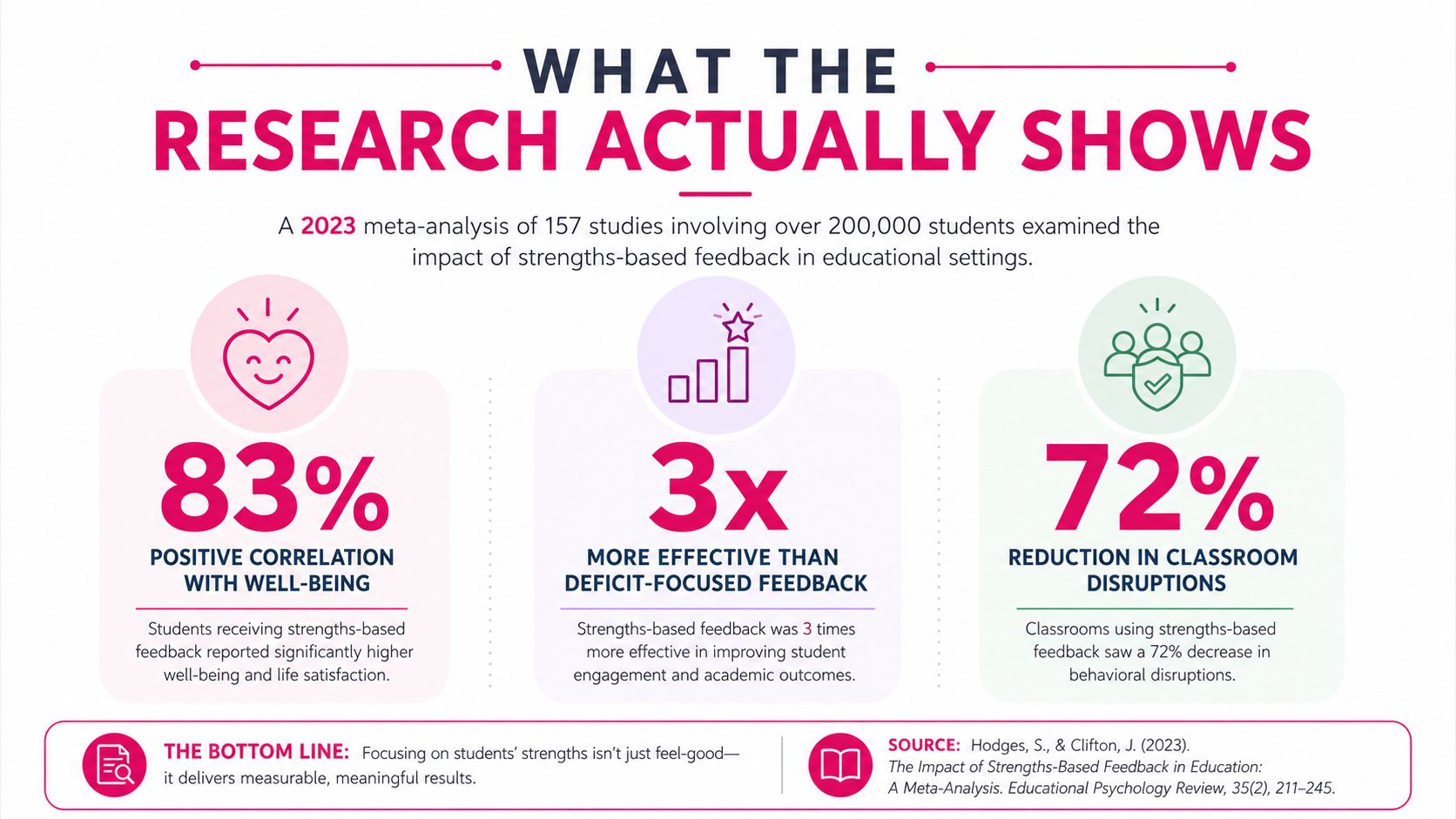
What the Research Actually Shows
The evidence base is encouraging, but it's not magic, and it's not finished. A 2024 systematic review and meta-analysis of culturally responsive SEL programs included 13 studies in the qualitative review and 7 studies in the quantitative meta-analysis, with an overall effect size of Hedges' g = 0.36 (2024 systematic review). That matters because it shows measurable promise, while also showing the field is still building.
A second meta-analysis of culturally adapted SEL programs found 0.27 overall with a 95% confidence interval of 0.13 to 0.41 (meta-analysis PDF). In the subset that met the SAFE criteria for effective SEL implementation, the effect size was 0.26 with a 95% confidence interval of 0.15 to 0.37. Programs that did not meet SAFE criteria were not statistically distinguishable from the null, which is a useful reminder that adaptation alone doesn't replace strong implementation.
What seems to matter most
The strongest programs in the review were delivered at the targeted level, led by researchers, and used multiple culturally responsive strategies rather than just one (2024 systematic review). That lines up with what many educators feel in practice. A single poster, holiday craft, or renamed activity doesn't shift student experience very much. Design choices, repeated over time, do.
The research on English learners also points to gains in self-awareness and relationship skills after cultural and linguistic adaptation (technical review). That makes sense, because those are the skills most tied to classroom participation, peer interaction, and feeling safe enough to speak.
The biggest gap is measurement. The literature still leans toward principles and implementation advice, not a widely accepted framework that cleanly separates culturally responsive SEL from generic SEL (gap review). If you're presenting this to a board or parent group, that honesty helps. The field has real evidence, and it still needs stronger tools for tracking what changes for marginalized students.
Takeaway for leaders: treat the research as a reason to start thoughtfully, not as a reason to overclaim.
Everyday Classroom Strategies That Change Practice
The fastest way to make culturally responsive SEL feel real is to change the ordinary moves. Not the one-off assembly, the ordinary moves. The morning prompt, the response format, the way a disagreement is repaired, the examples on the wall, the way an adult talks about home language, all of that teaches SEL whether you planned it or not.
Five shifts you can use tomorrow
Use asset-based identity talk. Ask, “What's a skill, tradition, or habit your family has that helps people care for each other?” That prompt lets students name pride instead of only problem-solving. The Children's Institute guidance recommends conversations that are asset-based and connected to children's lives, including home languages, music, games, and lived experiences (Children's Institute).
Make prompts inclusive by design. Swap out questions that assume one experience, like “What did you do this summer?” for “What did you learn, notice, or do over the break?” The SMART article's caution about exclusionary prompts is useful because it shows how small wording choices can widen or narrow participation (SMART article).
Offer more than one response mode. Let students draw, speak, write, record audio, or use a short video to show understanding. A counselor running a coping-skills lesson can say, “Choose the format that helps you share your thinking clearly.” That supports voice and cultural relevance at the same time.
Represent more than one kind of child in materials. Use books, photos, and class examples that reflect different family structures, neighborhoods, abilities, and languages. When students see people like them in the learning environment, they don't have to spend energy wondering whether school has room for them.
Respond to conflict with context, not just correction. If a student gets into a peer conflict, ask what happened, what the students were feeling, and what social rule or family expectation might be shaping the moment. That kind of response keeps the focus on learning and repair instead of only compliance.
If the strategy can live inside your existing meeting, lesson, or hallway response, it's probably a real practice, not an extra.
Sample Lesson Snippets You Can Use This Week
An elementary lesson can be short and still carry a lot of meaning. Start with a multicultural read-aloud, then move to a self-portrait activity, and finish with a family interview about how caregivers solve conflicts at home. The point is to connect story, identity, and home wisdom to concrete SEL language.
Elementary lesson on feelings and apology language
Open with, “Today we're looking for how families care for one another in different ways.” Read a book that includes children from an underrepresented community, then ask students to notice one problem the character faces and one way the character shows care or courage. After the read-aloud, have students draw self-portraits and label one strength they learned from family or community.
Send home a simple interview question. “How do the adults in your family solve problems when people are upset?” When students return, ask them to share one idea from home and connect it to naming feelings, using calm words, or making an apology that repairs harm. If a student brings up a difficult home experience, respond with care, thank them for trusting the room, and move the conversation toward support rather than forcing public details.
Upper-grade lesson on perspective-taking
In middle grades, use youth culture, music, or a familiar local example to open a discussion about perspective. You might say, “Different people can hear the same song, watch the same clip, or live the same moment and still walk away with different feelings. Let's practice noticing that without arguing someone out of their experience.” Then use structured dialogue norms so students know how to listen, wait, and respond.
Ask students to compare how two people might interpret the same event based on identity, friendship history, language, or community norms. Give them sentence stems such as, “I could see that differently because…” and “That makes me think about…” If a student names discrimination or an exclusionary moment, the adult's job is to slow the room down, acknowledge the harm, and keep the discussion grounded in respect.
The PMC review's connected dimensions, classroom community, family engagement, critical literacy, multicultural literature, and print-rich environments, match this kind of lesson design well (PMC review). Students aren't just talking about empathy. They're practicing it in a format that honors where they come from.
Family and Community Engagement as a Core Layer
Family partnership can't sit on the edge of this work. A 2025 study in rural TK classrooms found three CR-SEL themes, multicultural and critical perspective development, inclusive environment, and family engagement, which says a lot about what schools often miss when they treat parent involvement as a separate add-on (ACT report). Families are not an audience for SEL. They're part of the implementation.
What stronger partnership looks like
Start by asking caregivers what respect, discipline, and emotional regulation look like at home. That gives you a real baseline and keeps you from assuming the school's default language is the only workable one. It also surfaces differences you can discuss without turning them into deficits.
Offer communication in languages families use and in formats they can access. A short bilingual message, a phone call with interpretation, or a brief video message can do more than a polished flyer no one reads. Consistency matters here more than performance.
Invite families to co-design a small piece of learning. A family interview, a story about how adults in the household solve conflict, or a community partner visit can become the bridge between classroom skills and home practice. The 2025 rural TK findings matter because they show family engagement as a central theme, not a courtesy.
Trust grows when families see that school asks them for expertise, not just attendance.
Community organizations can help too. Youth programs, cultural leaders, after-school staff, and neighborhood groups can extend the same SEL language across settings so students don't have to relearn how relationships work every time they change rooms. That continuity is especially helpful when children are moving between school expectations and home expectations.
If language access, time, or previous negative school experiences make family engagement hard, start small. One honest question, one translated message, and one follow-up loop are better than a big event that doesn't change everyday communication.
Naming Power, Bias, and Identity-Based Stressors
Culturally responsive SEL gets thin fast if it only celebrates difference. Real classrooms also have to deal with power, privilege, implicit bias, institutional racism, microaggressions, discrimination, and the stress students carry when they're constantly managing how they're seen. If the work stops at kindness, it misses the moments when kindness alone isn't enough.
Here's the practical difference. A celebration-of-diversity lesson says, “We all have unique backgrounds.” A deeper CR-SEL lesson asks, “Who gets interrupted, who gets believed, who gets corrected, and who has to translate themselves in this room?” That question isn't too heavy for kids when it's handled with care and age-appropriate language.
When a student names discrimination in circle time, don't rush past it. Say, “Thank you for saying that out loud. That sounds painful, and it matters.” Then pause the group, clarify the harm, and decide whether the next step is repair, adult follow-up, or a private check-in.
If a microaggression happens between peers, the goal isn't public shaming. The goal is to make the harm visible, name the impact, and help the student understand why the comment landed the way it did. A calm script works better than a lecture: “I want us to pause. That phrase can send a message about who belongs, and that's not okay here.”
For staff learning, resources that focus on communication across difference can help. A useful example is this deaf communication etiquette guide, which reminds adults that respectful interaction starts with listening, not assumptions. That same humility applies across culturally responsive practice.
The larger point is simple. SEL should help students regulate emotions and build relationships, but it should also give them language for unfairness. That's where empathy becomes more than a feeling and turns into a skill for school life.
Measuring Impact and Taking the Next Step
Schools usually want to know whether a new approach is helping. That's fair. For culturally responsive SEL, the best indicators are practical, visible, and a mix of numbers and stories, because no single data point tells the whole story.
Sample indicators for tracking culturally responsive SEL
Indicator
What to Look For
Data Source
Student belonging
Students say they feel seen, safe, and included
Student surveys, circles, interviews
Discipline patterns
Fewer repeated exclusions for the same students
Office referrals, restorative logs
Attendance
More consistent participation over time
Attendance records
Family engagement
More two-way contact and family input
Call logs, workshop attendance, feedback forms
Student voice
More students naming their experiences and perspectives
Writing samples, discussions, reflection prompts
The field still lacks a widely accepted framework that cleanly separates culturally responsive SEL from generic SEL, so track what matters in your community and watch patterns over time (measurement gap review). If you want a broader look at thinking about outcomes in schools, the measuring program impact resource can help leaders think clearly about evidence, even when the metrics are not perfectly neat.
A 30-60-90 day starter path
In the first 30 days, audit SEL materials for representation, wording, and assumptions. In the next 30, pilot one culturally responsive move per grade level, such as inclusive prompts, family interviews, or multimodal response options. By 90 days, gather family input, review student voice, and compare what changed in belonging, participation, or conflict patterns.
Principals often ask whether this is the same as critical race theory. It isn't. This work is classroom-based, relational, and practical, with a focus on how students experience belonging, fairness, communication, and support.
Parents often ask whether language access really matters. It does, because families can't partner with a school if the school only communicates in ways some caregivers can't fully use.
If pushback shows up, stay concrete. Describe what changed in the lesson, why you changed it, and how students responded. If a program looks polished but doesn't let families, identity, and bias show up openly, keep looking.
Soul Shoppe helps school communities build shared language for connection, self-regulation, and conflict resolution, which fits this kind of work when schools want structured SEL support. If you're ready to strengthen belonging and make your routines more culturally responsive, visit Soul Shoppe and explore how its programs can support your students, staff, and families.
The first clue often shows up before the bell. A child who has been redirected three times is also the first one to greet a new classmate, help unzip a backpack, or notice who looks lost at the carpet. A tired adult can miss that in a busy morning, but a strengths based approach asks for a different habit, notice what a child already does well, then build the day around that asset instead of only the problem.
That shift matters because schools don't run on one note. Kids need correction, yes, but they also need adults who can see competence, connection, and effort in the same child who forgot a pencil or blurted out an answer. When teachers lead with strengths, they're not pretending behavior never needs attention, they're changing the starting point so the plan can include success, not just repair. For a connected SEL lens on why that matters, this Soul Shoppe overview of social emotional learning fits well with the same idea, kids learn best when they feel seen and safe.
Why a Strengths Based Approach Matters in Elementary Classrooms
The morning circle is already moving when the teacher notices it. One student has interrupted twice, another is squirming, and the new classmate still hasn't found a place to sit. Then the same child who got redirected three times slides over, pats the rug, and says, “You can sit here.”
That moment is the difference between a deficit lens and a strengths based approach. The deficit lens tracks what went wrong first, then builds a response around fixing it. The strengths-based lens sees the same child as someone who has social awareness, initiative, and a way of making other people feel safe, then asks how those qualities can be used on purpose during the school day.
What changes when adults look for assets first
A classroom built on strengths still has rules. It still has consequences. What changes is the adult's first question. Instead of, “What's wrong with this child?” the teacher asks, “What does this child already bring that we can build on?” That small shift changes tone, language, and planning.
It also changes how children hear themselves. A student who is treated as a problem quickly learns to perform the role. A student who is named for a real strength hears something more useful, “I can do something that matters here.” That doesn't erase struggle, but it gives the child a place to stand while learning.
Practical rule: If the only time a child hears their name is during correction, the room is teaching them that mistakes define them.
Schools like this approach because it fits naturally with SEL work. Teachers are already trying to build self-awareness, relationship skills, and responsible decision-making. A strengths based approach gives those goals a concrete habit, notice what works, then use it more often. For a broader SEL context, the Soul Shoppe SEL article offers a useful companion frame.
Defining the Strengths Based Approach Without the Jargon
A strengths based approach starts with a child's resources, relationships, and environment, then uses those assets to shape support. The Social Care Institute for Excellence describes it as outcomes led rather than services led, which means the goal comes first, and the support is chosen to match the goal and the person's real-life context.
A deficit model works the other way around. It starts with what is missing or difficult, then assigns help based on the problem category. That model can be useful for identifying risk, but it often makes adults ignore what a child already does well. A strengths based approach keeps the need in view without letting the need become the child's whole identity.
A quick way to explain it in a meeting
Try this: “Instead of asking only what the student can't do, we ask what they already do, who supports them, and what outcome they want.” That language works with teachers, parents, counselors, and administrators because it keeps the conversation practical.
Question asked
Deficit lens
Strengths based approach
What is the main concern?
What the student is doing wrong
What the student can already do, plus what support they need
What do we focus on first?
Problems and risk
Resources, relationships, and goal setting
How is help chosen?
By the category of the issue
By the student's outcome and available strengths
What does success look like?
Less of the unwanted behavior
More movement toward a meaningful goal
A child struggling with reading offers a simple example. Under a deficit lens, the note might say, “Needs intervention for weak decoding.” Under a strengths based approach, the conversation sounds more like, “He remembers stories well, uses pictures to figure out meaning, and works hard with one-on-one support. Let's use those skills while we build decoding.”
That difference matters because it keeps adults from confusing a skill gap with a lack of value. It also keeps the plan linked to the child's real life, not just a service label. SCIE's framing is helpful because it reminds educators that the point is not to feel positive, it is to produce better outcomes by using what is already there.
What the Research Shows About Strengths Based Work
A strengths based approach has support, but it is not magic, and that honesty helps schools use it well. A 2023 narrative review and meta-analysis of strength-based psychotherapies examined 57 effect sizes nested in 9 trials and found a small but statistically significant advantage for strengths-based methods, with an overall weighted effect size of g = 0.166, 95% CI [0.027, 0.305], and p < .01 in favor of the strengths-based treatments PMC review of strength-based psychotherapies. The practical takeaway is simple. The approach has measurable support, but it is not a cure-all.
Another systematic review of strengths-based interventions in severe mental illness gives school teams a useful boundary. It did not show significant differences versus control models for functioning or quality of life, and controls did better on symptoms PMC systematic review of strengths-based interventions. That does not cancel the value of the approach. It does show that strengths based work should not be treated as a stand-alone symptom treatment.
What that means for schools
The clearest reading is this. Strengths based practice works best as a service-delivery framework for self-determination, goal attainment, and better engagement. It is especially useful when adults need a way to organize support around relationships, voice, and practical next steps. It is less persuasive as a replacement for clinical care when a child has significant mental health needs.
Schools also need to be careful not to turn strengths language into a feel-good script with no follow-through. A student does not need adults to praise effort in the abstract, the student needs adults to notice what already works and change the support around it. That includes how goals are written, how families are invited into planning, and how adults respond when a child's current setting is making success harder than it should be.
That is why leaders should treat it as a schoolwide way of working, not a slogan. It belongs in conference conversations, coaching notes, family meetings, and student goal setting. It does not belong as a shortcut around assessment or intervention. For a simple example of how confidence can be built through everyday language and consistent support, see this guide to building confidence in kids.
Core Principles Every Teacher and Coach Should Know
A strengths based classroom sounds warm, but it only works when adults practice a few concrete habits. The first is asset focus, which means naming what the child can already do instead of making every note about failure. The second is collaboration, which keeps the student and family in the conversation instead of handing them a finished plan.
The third principle is using the environment as a resource. A child's strengths aren't only inside the child, they also live in relationships, routines, and settings that make success more likely. The fourth is goal setting linked to strengths, which turns “be better” into something a child can do. A fifth, and often missed, is identity-specific strengths, which means recognizing that culture, language, disability, and marginalized experience shape what strength looks like.
A classroom plan gets stronger when it names the child's skill and the adult's next move in the same sentence.
Here's a script teachers can use right away. Instead of “You are bad at reading,” try, “You remember stories well and use pictures to figure out meaning, let's build on that skill.” At home, the parallel line can be, “You stayed calm while waiting for help, let's use that patience again during homework.”
Another useful move comes from relationship patterns. When a student struggles in groups but does well with one trusted peer, that peer connection can become a bridge to larger collaboration. The adult is not lowering expectations, the adult is using an existing strength in the environment.
The identity piece matters more than many staff realize. Research on identity-specific strengths argues that the skills, knowledge, and perspective gained through marginalized experience are strengths too. That matters for multilingual learners, students with disabilities, and racially marginalized youth, whose strengths may show up as translation, care for siblings, survival skills, or cultural knowledge, not just the traits printed on a school rubric.
For teachers who want the mindset behind this work, Soul Shoppe's article on self-efficacy in teaching pairs well with strengths language because adults do this work best when they believe their small moves matter.
Classroom and Family Activities You Can Use Tomorrow
A strengths based routine doesn't need new curriculum. It needs a repeatable way to help children name what works and then use it again. The simplest place to start is morning meeting for K-2, where children can share one thing they're good at or one thing that helped them yesterday.
For grades 3-5, a two stars and a strength journal works well. Kids can write two things that went well and one strength they used to make them happen. For grades 6-8, a peer-buddy bridge is often better, especially for group work, because older students are more likely to accept help from a peer than from an adult.
A few ready-to-use activities
Strengths Circle, K-2: Materials, a talking piece. Time, 5 minutes. SEL focus, self-awareness and relationship skills. Ask, “What is something you do that helps other people?”
Two Stars and a Strength Journal, 3-5: Materials, notebook or half-sheet reflection page. Time, 7 minutes. SEL focus, self-management and self-awareness. Ask, “Which strength helped you finish a hard task today?”
Peer Strengths Nomination, 6-8: Materials, sticky notes or a simple form. Time, 10 minutes. SEL focus, social awareness and relationship skills. Ask, “Who helped the group move forward, and what strength did they use?”
Family Strengths Interview, any grade: Materials, a short question card. Time, 10 to 15 minutes. SEL focus, communication and belonging. Ask, “What helps you get through hard days?”
A home version can mirror each activity without feeling school-like. At dinner, a parent can ask, “What went well today, and what helped?” A child can answer with a real example, and the adult can name the strength they hear in it.
Here's a simple two-week sequence that keeps the work light. Week 1, use a strengths circle or dinner-table check-in twice. Week 2, add one reflection journal entry and one peer-buddy conversation. That's enough to start changing the language in the room without taking over instructional time.
For a related family lens, Soul Shoppe's confidence article offers a nice companion idea, confidence grows when kids hear specific feedback about what they can already do.
When Strengths Based Language Becomes Performative
Strengths language can go wrong fast if adults use it to decorate the same old system. Saying “You're resilient” while leaving a child in a chaotic classroom or a family without support is not strengths based practice, it's polite avoidance. The critique from i2insights is blunt on this point, the approach should not pretend problems don't exist or ignore inequality i2insights on strengths-based approaches.
That warning matters in schools because too many problems are structural. Chronic absenteeism, behavior referrals, and family stress rarely come from mindset alone. If the environment stays unsafe, unpredictable, or disconnected, then naming strengths without changing conditions becomes performative.
A quick diagnostic for staff meetings
Ask three questions before saying the plan is strengths based.
Did we change the environment? If not, the child may still be carrying the same barrier.
Did we name the child's real context? If not, we may be using generic praise instead of actual support.
Did we honor identity-specific strengths? If not, we may be erasing culture, language, or survival knowledge.
Recent work on identity-specific strengths makes that last point especially important for multilingual families, students with disabilities, and racially marginalized youth identity-specific strengths research. A child's strength might be caring for siblings, translating for family members, navigating public systems, or staying loyal to a community that has not always been loyal back.
Schools can answer that by widening what counts. A strength is not only reading fast or sitting still. It can be persistence, humor, memory, leadership, translation, self-protection, or the ability to calm a younger child. The more accurately staff name those strengths, the more likely the student is to trust the process.
Coaching Tips and Simple Ways to Measure Progress
Instructional coaches and principals don't need a thick binder to know whether strengths based work is taking root. They need a few honest observation points. Look for student voice in conferences, teacher use of strength-based reframes, family participation, and whether the adult's language is shifting from problem labeling to goal language.
A coach can listen for one clear question in a classroom or support meeting, “What already helps this student succeed?” That question is a good sign the adult is working from strengths instead of only deficits. It also creates a practical path into outcome measurement guidance without turning the conversation into paperwork.
Useful check: If a teacher can describe a student's goal, a strength, and one next step, the practice is probably more than a slogan.
Keep the measurement simple. Student self-reflection, quick family feedback, and a short teacher practice rubric tell you more than standardized scores do about whether the approach is being used well. A semester check can track whether adults are asking better questions, whether children are naming strengths on their own, and whether families are showing up with more trust.
Soul Shoppe's workshops and coaching support this kind of schoolwide language because they help students, teachers, and families practice communication, empathy, and conflict resolution in real time. That makes it one practical option for schools that want help building a strengths based routine into daily life.
Frequently Asked Questions From Principals Teachers and Parents
A strengths based approach doesn't replace PBIS or behavior charts, it changes the lens and the goal. If staff are skeptical, start with one classroom script and one family meeting question, then let them see the response. At home, use natural language, not a script, by asking what helped and what the child wants to try next. If a child needs clinical support or a structural fix, use those too, strengths based practice works best as part of a wider response.
Soul Shoppe helps school communities build shared language for empathy, self-regulation, and conflict resolution, which fits naturally with strengths based practice. If you want practical tools that teachers and families can use right away, visit Soul Shoppe and explore programs, workshops, and coaching that help kids build on what's already strong.
You know the moment. The bell has rung, the inbox is full, a parent is asking for support, and a teacher is trying to keep five moving parts steady before lunch. In that kind of week, school community partnerships can feel like either a lifeline or one more thing to manage.
The difference usually comes down to structure. When schools treat partnerships as a coordinated system, not a one-off event, families, staff, and community partners can share the load in ways that help students feel safer, more connected, and more ready to learn.
What School Community Partnerships Actually Look Like
A fifth grade teacher at a K-8 school can usually tell when the building is running on goodwill alone. The reading interventionist is juggling attendance calls, the counselor is helping students regulate after recess conflicts, and family engagement depends on whoever happens to have extra time that week. In that setting, a real partnership changes the rhythm of the school day.
A true school community partnership is not a volunteer sign-up sheet or a fundraiser that happens once a year. It is a coordinated relationship among the school, families, nonprofits, local businesses, and community members that supports both academic and nonacademic student needs, which matches the Institute of Education Sciences definition of K-12 community partnerships as collaborative relationships aimed at improving student outcomes and addressing those broader needs (IES definition and guidance).
What makes it feel different in real life
In practice, the school and its partners share language, routines, and responsibilities. A counselor might coordinate a referral process with a local mental health provider, a parent liaison might help caregivers understand when and how to access services, and a community partner might support a lunch bunch, family workshop, or attendance follow-up.
Practical rule: if the relationship only shows up when someone needs a favor, it's an activity. If it has shared goals, repeated touchpoints, and a plan for follow-through, it's a partnership.
That distinction matters for school culture too. Soul Shoppe's approach to school culture and belonging fits naturally here because its SEL work gives adults and students a shared way to talk about safety, empathy, and conflict. If you want a simple companion piece on that side of the work, this overview on how to improve school culture is a useful reference point.
What a parent and principal should be able to say
If a parent asks what the school is trying to build, the answer should be simple: “We're creating a support network around students, so learning, behavior, and family connection aren't handled in separate silos.” That's the heart of it.
A partnership is working when the school can point to clear roles, shared routines, and support that reaches students before problems become crises. If the only evidence is a pile of flyers, a few guest visits, or a seasonal event, the school probably has outreach, not a partnership.
Why Partnerships Improve SEL, Attendance, and Belonging
A principal sees it first in the hallway. A family calls about transportation, a teacher is trying to de-escalate a conflict, and a counselor is already juggling several student needs. school community partnerships help schools respond without making every support request start from zero. When a school can connect families to counseling, food support, mentoring, after-school help, or caregiver guidance through a shared system, students face fewer barriers to learning. That matters most in schools where staff are stretched thin and one counselor is carrying too many needs at once.
A historical marker shows how large this work became. The U.S. Partnerships 2000 survey found that 69% of districts nationwide were engaged in partnership activities, up from 51% in 1990, and estimated that more than 35 million students benefited, alongside about 3.4 million volunteers contributing roughly 109 million hours of work, an amount described as equivalent to about 52,000 full-time staff and valued at approximately $2.4 billion in combined resources (ERIC report). Those numbers matter because they show partnerships were never just an extra event calendar. They became part of the support system schools depended on.
Why the SEL piece is not separate
SEL is the thread that keeps the partnership from feeling like paperwork. A student may learn self-regulation in a classroom circle, then need the same language from adults when a conflict spills into the hallway or home. Experiential, community-based SEL programming gives students and adults a shared way to practice empathy, repair, and calm-down strategies together, so the support feels consistent instead of disconnected.
A 2024 study on sustainable partnerships found that 90% of respondents identified a common purpose as an important strategy for establishing partnerships, and it also highlighted trust, accountability, monitoring, and shared responsibility (2024 sustainable partnership study). That matches what happens in schools. If caregivers, teachers, and community providers are all reinforcing different norms, students get mixed messages. If they share the same purpose, the same words, and the same response to problems, students get steadier support. The operational side matters too, because shared purpose works better when the school has clear roles, a basic memorandum of understanding, and a simple plan for who can share what information, with whom, and for what reason.
Belonging is part of the same picture. For a plain-language overview, see what sense of belonging looks like in school communities. When students feel known, supported, and included, they are more likely to stay connected to school routines instead of drifting away after one hard moment.
Who benefits most
Partnerships matter for every student, and the equity angle is especially important for underserved communities. A 2025 U.S. public-health study found that established school partnerships can be mobilized to reach underserved populations more efficiently than building entirely new systems (2025 public-health study). That matters when families are dealing with language barriers, transportation issues, mental health access gaps, or uneven access to information.
A partnership reduces friction. It does not replace family effort or staff effort, it makes both easier to carry.
The strongest partnerships do more than engage families for a night or two. They remove obstacles, coordinate services, and make belonging visible in daily routines. That is why attendance, SEL growth, and school climate often move together when the school and community stop working in parallel and start working as one support system.
Partnership Models That Fit K–8 Schools
Not every school needs the same kind of partnership first. A building with serious attendance challenges may need service-aligned support before it needs a big enrichment calendar. A school with decent external programming but weak family connection may need caregiver workshops and home-school bridges. The right model depends on what's missing.
Model
Typical Partners
Primary Outcomes
Best Fit For
Service-aligned partnerships
Counselors, mental health providers, food banks, family support agencies
Access to help, removal of barriers, student stability
Schools with basic needs, attendance, or support gaps
Program-embedded partnerships
SEL providers, coaches, assembly facilitators, classroom trainers
Youth programs, local businesses, neighborhood groups, mentoring organizations
Belonging, exposure, real-world learning
Schools seeking engagement beyond the classroom
Service-aligned partnerships
These partnerships connect the school to actual supports. A food bank can help a family stabilize basics, a counseling provider can extend mental health access, and an after-school tutoring partner can support students who need more time and practice. These are the partnerships that often show their value fastest because they answer a concrete need.
The National Center for School Mental Health recommends mapping services across Tiers 1, 2, and 3, using MOUs to spell out prevention, promotion, and intervention responsibilities, and defining staffing arrays based on need (NCSMH guidance). That kind of clarity keeps support from becoming random or duplicated.
Program-embedded partnerships
SEL providers, coaching, assemblies, and staff training fit this need. Soul Shoppe belongs in this category because its interactive workshops and assemblies help schools build shared language around safety, communication, and conflict resolution. It's one example of a program that can sit inside the school day instead of hovering around the edges.
If peer support is already a goal at your school, peer support programs can give leaders a way to think about student-to-student connection without leaving adults out of the equation.
Family-capacity and community-enrichment partnerships
Family-capacity work often starts with the basics, like caregiver workshops on boundaries, routines, or emotional regulation at home. Community-enrichment work is broader, including mentoring, career exposure, service learning, and school events that give students a wider circle of adults who know their names.
A simple way to choose:
If students need access to services, start with a service-aligned model.
If adults need a shared SEL language, build a program-embedded model.
If family trust feels thin, invest in caregiver-facing support.
If students need more connection to the world outside school, add enrichment partners.
The goal isn't to collect partner logos. It's to build the right mix for the needs your students have.
Readiness Checklist and Stakeholder Roles
Before launching anything new, ask whether the school can hold the work. A partnership collapses quickly when the principal is enthusiastic but nobody knows who schedules meetings, who shares data, or who follows up with families. Readiness is mostly about clarity.
The roles that need to be named early
A site-based leadership team should include school leaders, teachers, families, administrative or support staff, and community partners who meet regularly to plan, implement, and evaluate the partnership, which aligns with Institute of Education Sciences guidance (IES guidance). That team is not decorative. It carries the work.
Here's how the roles usually break down:
Principal or assistant principal: gives the partnership permission to exist, clears barriers, and keeps it tied to school priorities.
Counselor or SEL coordinator: connects the partnership to student needs, staff language, and service coordination.
Teacher representative: checks whether the plan works in real classrooms, not just on paper.
Family liaison or parent leader: keeps communication understandable and culturally responsive.
Community partner lead: brings services, staffing, and limits into the planning so the school knows what is realistic.
Practical rule: if two adults can't answer the question “Who owns this step?” the system is already too vague.
What readiness looks like before launch
A school is in better shape when it has a needs assessment, a communication path, a leadership team, and a legal path for any data sharing that might be required. The Institute of Education Sciences also recommends continuous improvement routines, including collecting data, analyzing trends with descriptive statistics, and reviewing results with stakeholders to decide what to do next (IES continuous improvement guidance).
If the school does not have that foundation yet, the right move may be to start small instead of starting fast. A single pilot partnership with clear meetings and one outcome is more workable than a broad launch no one can sustain.
For teams building the SEL side of readiness, this SEL programs for schools overview can help leaders think about how a partnership and a schoolwide SEL effort fit together.
A quick self-check helps:
Start now if the school has clear leadership, a real partner, and a narrow goal.
Start small if the partnership idea is strong but roles and routines need testing.
Pause and prepare if no one can name the data, the meeting cadence, or the owner of the work.
Readiness protects students and staff alike. It also keeps goodwill from turning into confusion.
Implementation Steps That Prevent Staff Burnout
A partnership should reduce strain, not add hidden tasks to every teacher's plate. The cleanest way to do that is to phase the work, formalize expectations, and keep the school from becoming the default storage bin for everything that goes wrong. When the implementation is sloppy, burnout shows up fast.
Start with one need and one partner
Begin with a needs assessment that points to a specific student problem, not a vague wish list. If attendance is the issue, find a partner who can help with attendance follow-up or family support. If students need self-regulation practice, choose a partner who can work inside the SEL routine already in place.
The National Center for School Mental Health recommends using MOUs to define responsibilities, payment processes, duration, and termination terms, which is what keeps service work from becoming improvised (NCSMH guidance). A school can also use one standard MOU template across different partners, then adjust the details for each program instead of starting from scratch every time.
Build the legal and communication pieces early
For data sharing, districts should create templates for agreements and help schools and partner organizations through the legal process of creating and maintaining them (ERIC report on data-sharing agreements). That matters when partners need attendance data, referral status, or progress updates to do their jobs well.
A school might use one template for a food bank, another for a counseling provider, and a third for an after-school tutoring program. The point is to clarify what can be shared, who can access it, and how updates move over time.
The school should also set a regular checkpoint. One guide recommends agreed-upon status checks so partners can verify whether the relationship is meeting shared objectives and renegotiate if it isn't, such as a monthly review between a school and a youth center checking whether an attendance-support program is reaching students who miss 10 or more days (WiseWays guide).
Use templates so the work can breathe
A good implementation cycle usually looks like this:
Assess one need with the leadership team.
Pilot one partnership with a narrow scope.
Write the MOU and data-sharing agreement before launch.
Review the results regularly with the people doing the work.
That sequence keeps the school from carrying three months of confusion into the second week of services. It also gives teachers and families a way to trust the process because they can see how decisions get made and when changes will happen.
Practical Activities and Real Partnership Examples
The easiest way to make a partnership feel real is to let students and adults practice the same skills in the same language. A school can talk about empathy all year, but when caregivers, counselors, and teachers hear the same phrases in workshops, circles, and hallway repair conversations, the work starts to stick. That's where experiential SEL becomes the connective tissue.
A middle school team might invite a community counselor to co-facilitate a trauma-informed icebreaker during family night. The counselor models low-pressure questions, the teacher explains how the classroom uses the same check-in routine, and caregivers leave with a simple version they can use at home after a rough afternoon. The partnership is no longer abstract, because the adults are practicing the same skill in public.
Examples that work in K-8 settings
A boundary-setting workshop is another practical option. A family liaison can help caregivers talk through scripts for saying no, naming feelings, and setting limits, while the school counselor ties those scripts to what students are learning about regulation and respect. That matters because children often need the same boundary language in both settings, not two separate versions that conflict.
Another useful example is a peer-support circle attached to a schoolwide assembly. A group of students processes what they heard, a teacher helps them name examples of kindness and repair, and a community partner supports the conversation without taking it over. Programs like the Peaceful Warriors Summit or Junior Giants Strike Out Bullying can give the school a shared event, but the daily follow-up is what turns the message into habit.
The strongest partnership activities give students a chance to rehearse a skill, not just hear about it.
One resource for building repeatable training
If your team is trying to teach the same expectations across teachers, helpers, and outside partners, the structure matters as much as the content. A practical employee training video guide can help teams think about how to make short, repeatable training useful for adults who can't sit through long meetings.
Soul Shoppe fits this activity-based approach because it offers workshops, assemblies, coaching, and community events that help adults and students build a shared emotional vocabulary. Used well, that kind of programming doesn't sit beside the partnership, it gives the partnership something to sound like in real rooms, with real kids, on a Tuesday afternoon.
The best examples are the ones families can recognize at home the same night. If a student says, “I used my calm-down tool,” or “We repaired after the conflict,” the partnership is already influencing daily behavior.
Measuring Impact and Sustaining Partnerships Over Time
A partnership only earns its place if someone checks whether it's helping. The cleanest measures are the ones schools already touch, attendance, chronic absenteeism, SEL skill growth, school climate surveys, and referral follow-through. Those data points tell you whether support is reaching students or just generating activity.
The Institute of Education Sciences emphasizes continuous improvement routines, including collecting data, analyzing trends with descriptive statistics, and then reviewing results with stakeholders to decide what to do next (IES guidance). That keeps the school honest. It also helps the team distinguish between a popular program and a useful one.
What to watch for
A school can look at attendance patterns, track whether referrals are getting completed, and check whether students are using the SEL language in classrooms and at home. Climate surveys can add the student and family voice that raw numbers miss.
Practical rule: if the data never changes, the partnership isn't being reviewed. If the staff can't explain what they learned, the system isn't improving.
Sustainability is the other half of the equation. Recent guidance from the Institute of Education Sciences stresses that schools should start small, use needs assessments, build site-based leadership teams, and ensure reciprocity, while a 2024 study found that sustainability depends on two-way conversations, negotiated goals, funding clarity, accountability, and regular reflection on partnership quality (IES community partnerships guidance). That's important because even strong programs can collapse when one person carries all the coordination.
The decision framework is simple. Deepen a partnership when the data and stories point in the same direction. Renegotiate when the relationship is useful but the roles, timing, or scope need to change. Sunset an arrangement when it's no longer meeting shared objectives and only survives out of habit.
That's how schools protect both student outcomes and staff capacity. A partnership should feel like support, not a quiet drain on the people keeping the building open.
Soul Shoppe helps school communities build the shared language, connection, and SEL routines that make partnerships work in everyday classrooms, family conversations, and conflict repair. If your team is ready to bring more structure, empathy, and practical support into your school community partnerships, visit Soul Shoppe to explore programs, workshops, and coaching that can fit into real school life.
The class is only ten minutes in, and two students are already talking over each other. One child grabs a marker without asking. Another rolls their eyes when a partner shares an idea. You stop the lesson to remind everyone about listening, but the same patterns return by lunch.
At home, it can look just as familiar. A sibling interrupts at the table. A child snaps, “That’s mine,” instead of asking for space. A caregiver repeats the same correction three times and wonders why nothing sticks.
This is why teaching about respect can’t stay at the level of “be nice.” Students need clear language, repeated practice, and adults who respond the same way at school and at home. Respect is a daily skill. It shows up in tone, body language, turn-taking, conflict, and follow-through.
Introduction to Respect and Its Impact
Respect often gets mistaken for simple politeness. Manners matter, but respect goes deeper than saying “please” and “thank you.” It means recognizing another person’s dignity, boundaries, feelings, ideas, and right to belong.
In schools, that affects more than behavior. Research from the Rutgers Social-Emotional Learning Research Lab found that respectful school climates were directly linked to higher academic achievement across 48,000 students in 115 schools and 48 districts over two years, with stronger teacher-student relationships at the center of those outcomes, as described in this Education Week analysis of the Rutgers findings.
At home, respect affects whether routines feel safe or tense. Families notice it in how children ask for help, handle disappointment, and respond when someone says no. Teachers notice it in how students collaborate, recover after conflict, and trust adults enough to learn.
Practical rule: If adults can’t point to what respect looks and sounds like, children can’t practice it consistently.
A workable respect plan has to answer four questions:
What does respect look like? Observable actions, not vague values.
How do we teach it? Direct lessons, modeling, and repeated rehearsal.
How do families reinforce it? Shared scripts and simple home routines.
How do we know it’s growing? Rubrics, observations, and reflection.
When those pieces line up, respect stops being a poster on the wall and becomes part of the culture.
Defining Respect and Setting Inclusive Learning Objectives
Respect needs a definition children can use. I teach it as showing care for people, space, feelings, and differences through your words, actions, and choices.
That definition works because it’s concrete. A kind thought is helpful, but students need behavior they can practice. If a child asks, “Was that respectful?” they should be able to look at what happened and decide.
What respect looks like in real life
In a K to 8 setting, respect usually shows up in a few observable ways:
Listening with your body and words. Waiting, facing the speaker, and not cutting people off.
Using safe boundaries. Asking before touching, noticing personal space, and handling materials carefully.
Acknowledging differences. Not mocking accents, abilities, identities, preferences, or learning styles.
Responding to conflict without harm. Using calm language, asking for help, and repairing after mistakes.
Treating shared spaces responsibly. Cleaning up, returning materials, and noticing community needs.
Those behaviors also help adults teach related skills like empathy, problem-solving, and self-regulation. If you want support connecting those ideas, this piece on how to teach empathy pairs well with respect lessons.
Grade-band objectives that stay clear
Children don’t all show respect in the same way at the same age. The objective has to match their development.
Grade band
Learning objective
Example of success
K to 2
Students can name respectful and disrespectful choices in common classroom situations.
A student says, “I can wait my turn,” or “I need space.”
3 to 5
Students can explain how respect affects group work, friendships, and conflict.
A student disagrees without insults and can restate a peer’s idea.
6 to 8
Students can apply respect during disagreement, online communication, and peer pressure.
A student uses a calm response, sets a boundary, or repairs harm after conflict.
Keep the wording simple. “Students will demonstrate mutual regard in collaborative interactions” sounds formal, but it’s harder for children and families to use. “Listen, wait, use kind words, respect space, repair harm” is easier to remember.
Inclusive objectives for neurodiverse learners
Some students understand respect but struggle to show it in expected ways. That’s especially important for neurodiverse learners who may need direct support with social cues, transitions, sensory needs, or flexible language.
Avoid assuming intent. A child who looks away may still be listening. A student who blurts out may need support with turn-taking, not a lecture about caring.
Use objectives that allow more than one respectful response:
Offer visual choices. “Listening can look like eyes on speaker, hands still, or quiet drawing while listening.”
Use social scripts. “Can I have a turn when you’re done?” or “I need a quieter space.”
Pre-teach routines. Show what respectful disagreement sounds like before group work begins.
Give sensory supports. A calmer body often leads to more respectful interaction.
Practice with real contexts. Hallways, lunch lines, group projects, and recess matter more than abstract discussion.
Respect isn’t sameness. It’s helping each student meet community expectations in a way that preserves dignity.
A shared definition for school and home
The strongest respect goals travel across settings. I like sending home a one-sentence version families can use at dinner, during homework, or while managing sibling conflict:
Respect means I notice that other people matter too.
That line helps adults redirect behavior without long lectures. If a child interrupts, grabs, mocks, or refuses to listen, you can return to the same anchor. It keeps expectations steady, even when the setting changes.
Crafting Multi-Day Lesson Plans with Interactive Activities
Children don’t learn respect from one assembly, one read-aloud, or one hard conversation after a conflict. They learn it through repetition. A short, structured week gives you enough time to introduce the skill, practice it, reflect on it, and try again.
Research on the multilevel anti-bullying intervention Steps to Respect found significant declines in bullying and bystander aggression within six months when teachers delivered 10 to 12 structured SEL lessons that emphasized respect and problem-solving, as summarized in this George Fox University paper on the program.
A five-day rhythm that works
You don’t need a perfect script. You do need a predictable pattern. This weekly flow works in kindergarten, third grade, and sixth grade with small adjustments.
Day 1 understanding respect
Start with a warm-up. Ask, “What does respect sound like?” Give students think time, then collect examples.
Suggested flow
Warm-up. Circle share or turn-and-talk.
Mini-lesson. Define respect using classroom examples.
Modeling. Act out one respectful and one disrespectful version of the same scenario.
Reflection. Students finish the sentence, “Respect matters because…”
Kindergarten example
Read a short story about sharing space or waiting for a turn. Then ask, “Which choice helped everyone feel safe?”
Third grade example
Use a partner scenario. One student interrupts, one waits and repeats what they heard. Have the class compare both.
Sixth grade example
Discuss group chats, class discussions, and disagreement. Ask, “Can you disagree respectfully? What would that sound like?”
Day 2 practicing respect
Now move from naming to doing.
Set up role-plays based on common moments from your own environment:
Lining up
Choosing partners
Borrowing supplies
Joining a game
Disagreeing in a group
Responding to a mistake
Give students sentence stems, not just directions.
Sample stems
“I’m still talking.”
“Can I use that when you’re done?”
“I disagree, but I want to hear your idea.”
“I need space.”
“Let’s try that again respectfully.”
For younger children, keep scenarios short. For older students, add complexity. Ask what respect looks like when both people are upset.
If you teach younger children, a few playful social skills activities for preschoolers can help build the turn-taking and perspective-taking that support respect lessons later.
Three versions of the same activity
One activity can span multiple grades if you scale the language and demand.
Activity
Kindergarten
Third grade
Sixth grade
Respect Relay
Students sort picture cards into respectful and not respectful choices.
Teams act out short situations and identify a better response.
Groups solve a conflict scenario and justify their response.
Partner listening
One child shares a favorite color, partner repeats it.
Students summarize a partner’s idea before giving their own.
Students paraphrase, ask a clarifying question, then respond.
Space and boundaries
Practice asking before hugging or borrowing.
Notice personal space in desk groups and games.
Discuss consent, digital boundaries, and sarcasm.
Day 3 building empathy through perspective-taking
Respect gets stronger when students can imagine another person’s experience. This is the day to slow down and ask, “How might that feel?”
Use one story, one photo prompt, or one teacher-created scenario. Keep the discussion grounded:
What happened?
How might each person feel?
Which action showed respect?
What could someone do to repair harm?
A simple option is a “step in, step back” discussion. Students speak only after they restate one idea they heard from someone else.
“Before you answer, tell me one thing your classmate just said.”
That one sentence can transform discussions. It teaches listening and lowers reactive responses.
Day 4 resolving conflict respectfully
Many lessons falter without practical application. Adults talk about respect in calm moments, but children need it most during stress.
Teach a short conflict routine. Don’t make it too wordy.
Example classroom routine
Stop and take a breath.
Say what happened without blame.
Say what you need.
Listen to the other person.
Choose a next step or ask an adult for help.
Use quick scripts:
“I felt frustrated when you took my pencil.”
“I need you to ask first.”
“I hear that you were in a hurry.”
“Next time, let’s trade.”
For sixth grade, include digital conflict and group project tension. For kindergarten, use puppets or visuals. For third grade, add peer mediation practice.
A strong bank of ready-to-use teaching respect activities can make this day easier because the most difficult part is often choosing scenarios students recognize.
Day 5 reflecting and celebrating
The week shouldn’t end with a test. It should end with noticing growth.
Try one of these:
Respect journal. “One respectful choice I made this week was…”
Partner feedback. “I felt respected when you…”
Class celebration. Name specific actions, not general praise.
Commitment card. “Next week I will work on…”
Avoid broad comments like “You were all great.” Be precise instead.
Examples of specific feedback
“You waited for Maya to finish before you responded.”
“You asked for space without yelling.”
“You returned the marker and apologized.”
“You changed your tone after the reminder.”
Timing and materials without overcomplicating it
A full lesson doesn’t need to take an hour.
Simple planning guide
Warm-up. Short and predictable.
Mini-lesson or modeling
Practice activity
Debrief
Closing reflection
Useful materials
Scenario cards
Visual sentence stems
Chart paper
Sticky notes
Emotion cards
Reflection journals
Timer
Puppets for younger grades
Common confusion points and easy fixes
Teachers and caregivers often hit the same snags.
“My students can define respect, but they don’t do it.” That usually means they need more rehearsal in real situations. Add role-play and immediate feedback.
“Some students laugh during role-plays.” Assign clear roles. Observer, speaker, responder. Then ask observers to name one respectful move they noticed.
“One child dominates every discussion.” Use turn tokens, partner-first sharing, or a rule that each student must paraphrase before adding new ideas.
“A student knows the script but melts down when upset.” Practice the routine in calm moments. Keep language short. Add visual supports and co-regulation.
The goal isn’t a flawless week. The goal is enough repeated experience that respectful behavior becomes more available when students need it.
Engaging Families with Practical Home Strategies and Scripts
Families often agree that respect matters, but many don’t know what to say in the moment. A child interrupts, argues, mocks a sibling, or storms away, and the adult has about five seconds to respond. That’s why home strategies work best when they’re short, repeatable, and connected to classroom language.
Gallup reported that only 37% of U.S. employees strongly agree they are treated with respect at work, which is one reason early respect habits matter far beyond childhood, as noted in Gallup’s workplace respect findings.
Home routines that actually stick
The most effective home plan is small. Pick one or two rituals and use them consistently.
Dinner table listening round
Each person answers one prompt without interruption. The next speaker first says one thing they heard.
Prompts can be simple:
“Something that felt hard today.”
“One way someone showed respect.”
“One way I want to try again tomorrow.”
Sibling reset routine
When conflict starts, pause and walk through this script:
“Say what happened.”
“Say how you feel.”
“Say what you need next.”
“Listen to the other person.”
“Choose a repair.”
Object ownership cues
Many respect struggles start with shared materials. For younger children, visible ownership helps. Families who want practical ways to reinforce responsibility may find this article on teaching kids ownership through name labels useful for creating calmer routines around personal items, school supplies, and family spaces.
Sample scripts for tense moments
Parents often ask for exact wording. Here are scripts that keep dignity intact.
When a child is disrespectful, correct the behavior without attacking the child.
If a child interrupts
“Pause. I want to hear you. Show respect by waiting until I finish, then you can speak.”
If siblings are arguing over an item
“Hands off for a moment. Use words first. Tell your brother what you need without blame.”
If a child uses a rude tone
“Try that again with a respectful voice. I’m listening.”
If a child refuses a boundary
“You don’t have to like the limit. You do need to speak respectfully.”
For children who need help expressing frustration, teaching families to use I-statements for kids gives them a structure that sounds like, “I feel upset when my things are taken. I need you to ask first.”
A weekly family challenge
Try a one-week “respect at home” challenge. Keep it simple enough that busy families can do it.
Monday Notice one respectful action from each family member.
Tuesday Practice asking before borrowing.
Wednesday Use one repair phrase after a conflict. “I’m sorry,” “Can I try that again?” or “How can I fix it?”
Thursday Do a gratitude circle. Each person thanks someone for a specific action.
Friday Reflect together. Ask, “What got easier? What still feels hard?”
A short video can help caregivers hear this language in a relatable way.
A teacher email families can actually use
You don’t need a long newsletter. A short note works better.
Sample family message
Hello families, This week our class is practicing respect. Students are learning that respect means using words and actions that show care for people, space, and differences. You can support this at home by trying one simple routine: during dinner or bedtime, ask your child, “What did respect look like today?” If conflict comes up, encourage this script: “What happened, how do you feel, and what do you need?” Thank you for using the same language with us.
That kind of message helps families mirror school expectations without feeling judged.
What families often misunderstand
Some adults hear “respect” and think it means instant obedience. Others hear it and think it only means being nice. Children need a more balanced message.
Respect includes:
listening
boundaries
tone
honesty
repair
care for shared space
room for disagreement without cruelty
It also includes adult modeling. If grownups interrupt, shame, or mock, children absorb that pattern faster than any lesson.
Practical Tips for Differentiation and Assessment of Respect Skills
Respect is observable, but only if adults agree on what they’re looking for. Many programs struggle here. A source summarizing CASEL-related findings reported that 68% of K to 8 programs lack assessment tools, while schools using respect rubrics saw 28% better conflict resolution outcomes in classroom observations, according to this summary discussing respect rubrics and SEL assessment.
Different learners need different access points
A student may understand the idea of respect but need another path to show it.
For students who need visual support
Use picture cards, sentence stems, and first-then charts. During role-play, place the script where everyone can see it.
For students with language delays
Reduce the verbal load. Let them point to feeling cards, choose from two response options, or rehearse one key phrase such as “Stop” or “My turn next.”
For students who need movement or sensory regulation
Build in short resets before partner work. A more regulated body makes respectful interaction more likely.
For advanced learners
Add complexity. Ask them to compare respectful disagreement in person and online, or to lead peer mediation with adult support.
How to assess without making it awkward
Use quick, low-pressure checks during normal routines.
Exit tickets. “One respectful action I used today.”
Peer observations. Partners note one listening move they saw.
Teacher tally. Track interruptions, repair attempts, and respectful requests.
Respect journals. Students reflect on progress and setbacks.
Family check-ins. A short note home asks what respectful behavior looked like outside school.
Assessment works best when it notices patterns, not isolated mistakes.
Sample Respect Assessment Rubric
Skill Level
Indicator
Evidence Source
Beginning
Needs frequent adult prompting to wait, listen, or use respectful language
Teacher observation during class routines
Developing
Shows respectful behavior in structured activities but struggles during conflict or transitions
Don’t rely only on self-report. Children often know the “right” answer before they can apply it under stress. Pair student reflection with observation from adults and peers. That gives you a fuller picture and helps you adjust instruction instead of guessing.
Integrating Respect into Schoolwide SEL and Soul Shoppe Programs
A respect lesson works better when the whole campus uses the same language. If the classroom teaches calm repair, but the hallway runs on public shaming or inconsistent discipline, students get mixed messages fast.
A teacher-focused aggression prevention workshop described proactive modeling of respect and structured routines as part of a dignity-centered approach, and reported a 30% increase in on-task behavior along with sustained reductions in classroom aggression, according to this ERIC-hosted article on the workshop.
A schoolwide rollout that feels manageable
A full-campus plan doesn’t need to start huge. It needs to be coordinated.
Month one
Staff agree on a shared definition of respect.
Teachers identify three observable behaviors all classrooms will reinforce.
Counselors create common repair scripts for conflict moments.
Month two
Classrooms teach the same core routines.
Families receive one-page language guides.
Admin teams look for consistency during walk-throughs.
Month three
Students practice peer support and repair in real settings like recess, lunch, and transitions.
Staff review patterns and adjust supports for classes or groups that need more structure.
What shared language should sound like
Adults need phrases they can use under pressure. Long lectures usually fail in the moment.
Useful schoolwide phrases include:
“Pause and listen.”
“Try that again respectfully.”
“What happened?”
“What do you need now?”
“How will you repair the harm?”
If your staff is exploring relationship-centered discipline, this overview of what is restorative practices in education can help connect respect instruction with repair and accountability.
Roles across the campus
Respect culture doesn’t belong only to counselors or classroom teachers.
Role
Practical responsibility
Teachers
Teach, model, and reinforce respectful routines daily
Counselors
Support small groups, coach repair conversations, help interpret behavior patterns
Administrators
Align discipline responses, protect staff consistency, and keep respect visible in school priorities
Support staff
Use the same language in cafeterias, buses, hallways, and playgrounds
Families
Reinforce the same scripts and expectations at home
One structured option among many
Some schools choose to build this work through assemblies, classroom follow-up, coaching, and digital tools. Soul Shoppe offers research-based SEL programs, workshops, and app-supported tools focused on self-regulation, communication, mindfulness, and conflict resolution, which can give schools a common set of routines and language across settings.
That kind of alignment matters most when students move between classrooms, specialists, recess, aftercare, and home. Consistency lowers confusion. It also makes respect feel like a lived norm instead of a lesson adults mention only after someone gets hurt.
A respectful culture grows when adults respond predictably, not perfectly.
Sustaining a Respectful Culture at School and Home
Respect fades when adults treat it like a one-week theme. It grows when it becomes part of routines, language, and repair.
Schools can keep momentum by revisiting a few basics each month. Morning meetings can include one respect prompt. Staff meetings can review common language. Family newsletters can share one script and one reflection question. Student recognition can name specific actions like listening, boundary-setting, or repairing harm.
At home, the same idea applies. Keep the dinner prompt. Keep the sibling reset routine. Keep asking children to try again respectfully instead of turning every mistake into a power struggle.
Leadership matters too. When administrators, teachers, and caregivers review rubric notes, behavior patterns, and family feedback together, they can see what’s improving and where students still need support. Respect becomes more durable when adults commit to steady practice, not occasional reminders.
Teaching about respect is long-term work. It asks adults to be clear, calm, and consistent. The payoff is worth it. Students feel safer, families get stronger tools, and classrooms become better places to learn.
If your school wants structured support for building connection, safety, empathy, and respectful conflict resolution, explore Soul Shoppe. Their programs, workshops, and family-facing resources can help educators and caregivers use shared SEL language across classrooms and homes.