

10 Essential Trauma Informed Teaching Strategies for K-8 Educators
Understanding the impact of trauma on learning is no longer optional; it’s essential for creating classrooms where every student can thrive. Trauma, stemming from adverse childhood experiences (ACEs) or systemic stressors, can fundamentally alter a child’s brain development. This directly affects their ability to regulate emotions, build relationships, and access learning. For K-8 educators, this means that traditional classroom management techniques may not only be ineffective but could also re-traumatize a student who is struggling.
The goal isn’t to become a therapist. Instead, it’s about making a crucial shift in perspective from asking, “What’s wrong with this student?” to “What happened to this student, and how can I support them?” By implementing trauma informed teaching strategies, educators can build environments of psychological safety that calm the nervous system and reopen pathways to engagement, connection, and academic growth. A trauma-informed classroom is a space where students feel seen, safe, and supported, allowing their brains to move out of survival mode and into a state ready for learning.
This comprehensive guide moves beyond theory to provide ten actionable strategies tailored for the K-8 classroom. Each item includes practical, step-by-step implementation details, real-world examples, and guidance on how to adapt these methods to meet individual student needs. You will discover how to create predictable routines, foster authentic connections, and use restorative practices to build a more resilient and supportive learning community for every child.
1. Creating Psychologically Safe Classrooms
Psychological safety is the bedrock of all trauma-informed teaching strategies, creating an environment where students feel secure enough to take healthy academic and social risks. For students who have experienced trauma, the world can feel unpredictable and threatening. A psychologically safe classroom counteracts this by establishing consistency, predictability, and emotional validation, allowing a child’s nervous system to shift from a constant state of high alert to one of calm readiness for learning. This foundation is crucial for engagement, cognitive function, and building positive relationships.
A foundational element in creating a psychologically safe classroom is successfully forming a supportive community where students feel connected and valued. When students trust their teacher and peers, they are more willing to participate, ask for help, and navigate challenges without fear of judgment or shaming.
How to Implement This Strategy
- Establish Predictable Routines: Post and review a visual daily schedule. Use timers or verbal cues to signal transitions consistently. For example, use the same short, calm song every day to signal clean-up time. This predictability reduces anxiety about what comes next.
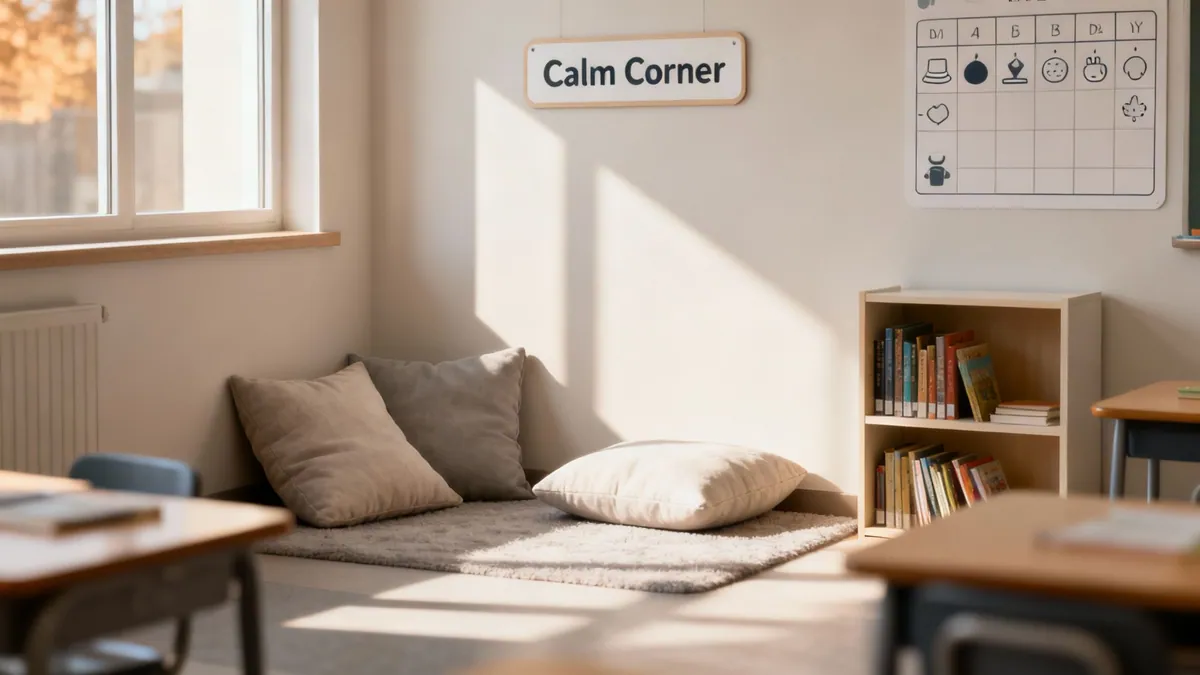
- Create Safe Spaces: Designate a “calm-down corner” or “cozy corner” with comfortable seating, sensory tools, and books. Teach students how to use this space to self-regulate, framing it as a tool for everyone. For instance, you could say, “If you feel your engine running too fast, you can take a 5-minute break in the cozy corner to help your body feel calm.” For more ideas, explore these detailed steps on how to create a safe space for students.
- Co-Create Classroom Agreements: At the beginning of the year, work with students to establish shared expectations. Instead of a rule like “No shouting,” an agreement might be, “We use calm voices to show respect for our friends’ ears.” Phrase them positively and have all students sign the poster.
- Practice Welcoming Rituals: Greet every student at the door by name each morning with a choice of a handshake, high-five, or wave. This simple, consistent act of connection reinforces that each child is seen and valued from the moment they arrive.
This approach is most effective when implemented universally from the first day of school, as it sets the tone for the entire year. It is particularly vital during times of change, such as after a school break or a disruptive event, to re-establish a sense of stability and security.
2. Self-Regulation and Co-Regulation Techniques
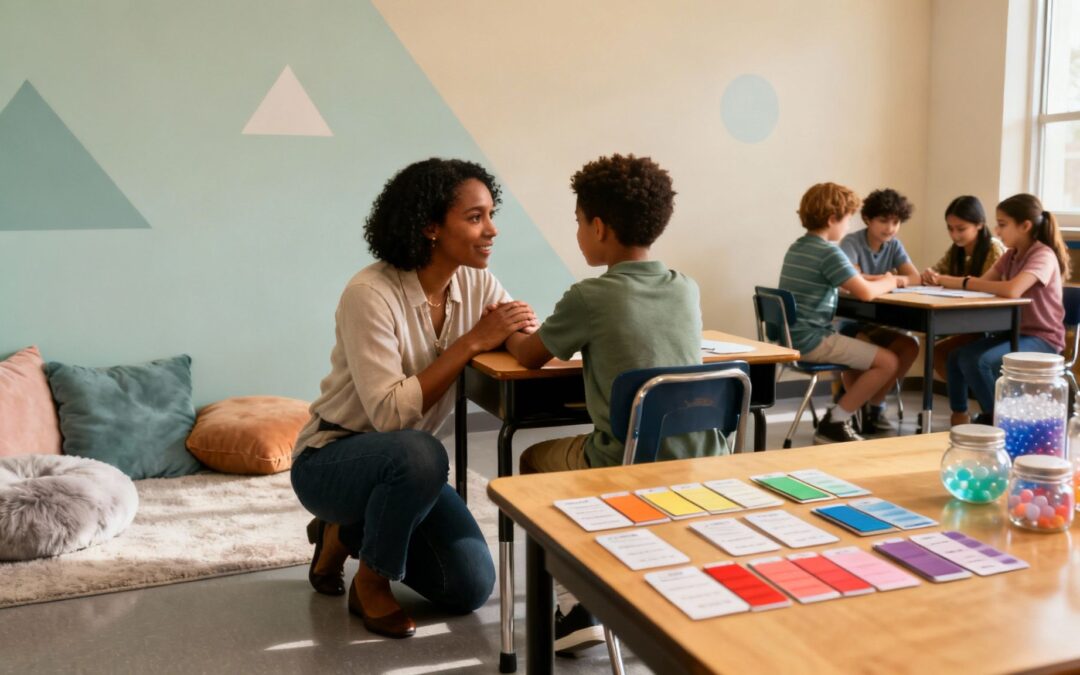
Self-regulation is the ability to manage emotions and behaviors, a skill that can be significantly underdeveloped in students who have experienced trauma. Co-regulation is the supportive process where a calm, regulated adult helps a child navigate distress and return to a state of balance. By explicitly teaching and modeling these skills, educators provide one of the most essential trauma informed teaching strategies, equipping students with tools to manage their internal states and engage in learning. Instead of just reacting to behavior, this approach addresses the underlying neurological need for safety and calm.

The work of neurobiologists like Dr. Dan Siegel emphasizes how co-regulation helps build neural pathways for independent self-regulation over time. When a teacher remains a calm, validating presence during a student’s meltdown, they are not just managing a moment; they are actively helping to wire the child’s brain for future resilience.