Soul Shoppe's work is made possible by donors and partners who care deeply about the young people in their communities! We can't do this work without you. Support our work in classrooms and on playgrounds across the nation by donating here.
School pickup runs late. A child melts down over the wrong snack. A teacher email sits unopened while dinner still needs to happen. In those moments, adults do not need prettier words. They need a short phrase that helps them pause, regulate, and choose connection on purpose.
A strong being a parent quote can do that job. The right quote gives parents, caregivers, and educators language they can return to under stress. Used well, it becomes an SEL anchor: a cue for emotional awareness, listening, repair, empathy, and steady boundaries.
Parenting holds joy and strain at the same time, and many adults feel both in the same hour. That tension is normal. It is also why inspiration alone is not enough. Families and schools need tools that hold up in real life, especially on noisy mornings, tense transitions, and after hard interactions that need repair.
The quotes in this article are here to be used. Each one connects to a practical skill children learn through relationships first. That approach aligns with Soul Shoppe's focus on building emotional intelligence, resilience, and connection through everyday interactions. At home, in classrooms, in counseling spaces, or during staff reflection, a well-chosen quote can become a shared prompt that shifts behavior, not just mood.
1. "The Days Are Long, But the Years Are Short" – Gretchen Rubin
This quote works because it doesn't deny the grind. It names it. The days can feel repetitive, noisy, and draining. But it also reminds adults that childhood moves fast, which helps shift attention from managing every task to protecting small moments of connection.
In practice, this is a presence cue. When a child wants to show you a drawing while you're loading the dishwasher or finishing attendance, you don't need a perfect hour. You need one minute of full attention. Kneel down. Make eye contact. Respond to the drawing before returning to the task. That minute builds more trust than half-listening for ten.
How to use it as an SEL anchor
At home, pick one repeatable ritual. It could be a two-minute bedtime check-in, a no-phone breakfast on Fridays, or a one-question walk from the car to school: “What felt easy today, and what felt hard?”
At school, teachers can use the same principle during arrival. Greeting each student by name, noticing their face, and giving one warm sentence of acknowledgment creates emotional safety before instruction even begins.
Practical rule: Don't aim for more time first. Aim for better attention.
A few examples that work well:
Dinner reset: Put phones in another room for one meal and ask each person to share one feeling from the day.
Classroom presence: Start morning meeting with one breath and one simple prompt before announcements.
Overwhelm filter: When you're frustrated, ask, “What will matter more here, speed or connection?”
This quote is especially useful for adults who feel guilty all the time. Guilt usually pushes people toward grand gestures. Children usually respond better to consistent, ordinary presence.
2. "Parenting is the One Job Where You Know You're Going to Fail" – Jon Acuff
Many adults resist this quote at first because the word fail sounds harsh. But in real parenting and teaching, it's freeing. You will lose patience sometimes. You will misread a child's need. You will say no too sharply or step in too late. The goal isn't spotless performance. The goal is repair.
That makes this one of the most useful being a parent quote options for shame-prone adults. Shame says, “I messed up, so I'm a bad parent.” SEL says, “I messed up, so now I model how humans repair harm.”
Repair matters more than image
A parent snaps at a child for moving too slowly in the morning. The old pattern is pretending it didn't happen. The healthier pattern is circling back: “I was frustrated, and I spoke sharply. That wasn't okay. Let's try the next part again.” A teacher can do the same after misjudging a student in front of the class.
When adults handle mistakes this way, children learn that conflict doesn't have to end in distance. It can end in reconnection. That's one reason resilience grows in homes and classrooms where mistakes are named without humiliation. Soul Shoppe's article on building resilience in children offers helpful language for that process.
Try these moves:
Name the action: Say what happened without excuses.
Own the impact: Tell the child what you understand about how it landed.
Make a repair plan: Ask what would help now, or state the next better step.
A calm apology teaches more than a perfect lecture.
What doesn't work is using “I'm not perfect” as permission to stay reactive. Imperfection is normal. Avoiding accountability isn't. This quote helps when it leads to humility, not resignation.
3. "Model the Behavior You Want to See" – Often attributed to Gandhi
Children study adults more than they obey them. That's the center of this quote. If you want a child to regulate anger, they need to see what regulation looks like in a real body and voice. If you want respect, they need to hear respectful disagreement from adults first.
This applies just as much in schools as it does at home. A principal who corrects staff publicly and sharply can't expect a gentle classroom culture. A parent who demands calm while yelling instructions sends two different lessons at once.
What children actually copy
Children copy tone, pacing, and conflict habits. They notice whether adults interrupt, whether adults blame, and whether adults come back after hard moments. That means modeling isn't abstract. It's visible in a thousand tiny behaviors.
A teacher can say, “I'm getting frustrated, so I'm going to take one breath before I respond.” A parent can say, “I disagree with you, and I'm still going to speak respectfully.” Those sentences give children usable scripts. For more examples of actions children can learn from, Soul Shoppe's post on examples of prosocial behavior is a practical companion.
A few strong examples:
During sibling conflict: Instead of “Be nice,” say, “I'm going to show you how to tell someone to stop without insulting them.”
During classroom stress: Let students see you reset materials, breathe, and restart rather than spiraling.
During adult disagreement: Keep your voice steady when talking with a co-parent, colleague, or student.
Children trust what adults practice more than what adults preach.
What doesn't work is outsourcing SEL to posters, assemblies, or one weekly lesson. Children learn emotional habits from the adults who set the tone every day.
4. "You Don't Have to See the Whole Staircase, Just Take the First Step" – Martin Luther King Jr.
Parenting gets overwhelming when adults try to solve childhood all at once. You worry about screen time, sleep, friendship drama, emotional regulation, academics, sports schedules, and whether your child is “behind.” This quote cuts through that spiral. You don't need a complete master plan to improve family life. You need the next doable step.
That's also how effective school culture shifts happen. A staff team rarely changes communication, discipline, and belonging all in one sweep. It starts with one shared practice used consistently.
One step is enough for today
If mornings are chaotic, don't redesign the whole household. Start by moving backpacks and shoes to one launch spot the night before. If your child shuts down after school, don't force a deep conversation. Start with a snack and ten quiet minutes before asking questions.
Teachers can use the same approach with peer conflict. Don't try to teach every interpersonal skill in one conversation. First step: help each student state what happened without name-calling. Second step comes later.
Useful first steps include:
For connection: Add one daily check-in question.
For conflict: Teach one sentence stem such as “I didn't like it when…”
For regulation: Practice one breathing routine before homework or transitions.
The broader parenting context supports this need for practical tools. In Pinterest's 2026 Parenting Trend Report, shared via Pinterest's parenting trends video, searches for screen-free activities, “no phone summer,” and sensory play ideas all rose sharply, which points to demand for concrete, usable ideas rather than vague encouragement.
This quote works best when you use it to reduce pressure, not delay action. “Small” doesn't mean “someday.” It means “start with what can happen today.”
5. "Listen More Than You Speak" – Unknown
Some parenting quotes sound nice but stay abstract. This one becomes powerful the moment a child is upset. Most adults rush to correct, reassure, or explain. Listening slows that impulse down. It tells the child, “Your inner world matters before I try to manage your behavior.”
That's not permissiveness. It's information-gathering. A child who says, “I hate school,” may mean “I felt embarrassed in math,” “my friend ignored me,” or “I'm exhausted.” If you respond too fast, you solve the wrong problem.
Listening that helps, not hovering that smothers
Useful listening is active, brief, and grounded. You don't need a therapy voice. You need calm attention and better questions.
Try this sequence with a child or student:
Start open: “What happened?”
Clarify: “Then what?”
Reflect: “You felt left out when that happened.”
Only then problem-solve: “Do you want help thinking about what to do next?”
In classrooms, this matters during peer conflict. If a teacher jumps straight to “Say sorry,” students often perform compliance without understanding each other. If the teacher first reflects both perspectives, the apology has a better chance of meaning something.
A family example: your child melts down over a broken granola bar. Instead of “It's not a big deal,” try, “You were expecting it whole, and now it feels ruined.” The food issue may stay small, but the child feels seen. That usually reduces the intensity faster than logic does.
What doesn't work is interrogating. Too many questions can feel like pressure. Listening works when the child feels invited, not examined.
6. "Children Are a Gift, Not a Project" – Unknown
A parent rushes from work to pickup, asks about the test score in the car, corrects table manners at dinner, reminds a child to practice piano, then ends the night worried they did not do enough. That pattern is common in high-pressure homes and schools. It often comes from care. It still leaves a child feeling managed instead of fully known.
Used as an SEL anchor, this quote helps adults reset the goal. The job is not to produce a polished child. The job is to build the conditions for growth: safety, connection, clear expectations, and room for the child's actual temperament, pace, and interests. Soul Shoppe's work keeps returning to that principle because children build emotional intelligence best in relationships where they feel valued before they are evaluated.
Respect the child in front of you
Children still need coaching, limits, and accountability. They do not need to feel like every struggle is a flaw to fix.
A child who has a hard time with transitions may need visual schedules, warnings, and practice recovering after disappointment. A quiet student may need support joining a group without being pushed to perform a louder personality than they have. Good support is specific. It responds to a real need instead of forcing every child toward the same template.
Pressure changes adult behavior too. Under stress, adults often become more controlling because control feels faster than curiosity. I see this in both classrooms and families. The short-term result is usually compliance. The long-term cost can be anxiety, perfectionism, hiding mistakes, or constant approval-seeking.
A practical way to use this quote is to check whether your language treats the child as a person or as an outcome.
Name qualities that are not performance-based: “You stayed with a hard problem,” “You were honest,” “You noticed your friend was upset.”
Offer support without attaching worth to results: “Let's practice together” says something very different from “You need to do better.”
Replace fixing questions with understanding questions: “What feels hard here?” gives you more to work with than “Why are you doing this again?”
Families and schools can also pair this quote with explicit empathy practice. Children who feel accepted are more able to accept feedback, repair conflict, and care about another person's experience. Soul Shoppe offers concrete strategies for teaching empathy to kids and teenagers that fit this relationship-first approach.
This quote does not argue for low expectations. It argues for humane expectations. Guidance works better when a child experiences it as help, structure, and belief in who they are becoming.
7. "Empathy is a Learned Skill, Not a Trait" – Brené Brown
This quote is useful because it removes a common excuse. Adults sometimes treat empathy as something children either have or don't have. But empathy can be taught, practiced, and strengthened. That's good news for families and schools because it means kindness is not left to chance.
It also changes how adults respond to unkind behavior. Instead of labeling a child as mean and stopping there, you can ask which empathy skill is missing. Do they need help noticing facial cues, taking perspective, managing jealousy, or repairing after harm?
Teach empathy in plain language
A parent can build empathy at dinner by asking, “How do you think your brother felt when that happened?” A teacher can pause after recess conflict and ask, “What might the other person be telling about this same moment?” Literature discussions help too. Characters create safe distance for practicing emotional understanding.
Name feelings specifically: annoyed, embarrassed, left out, proud
Compare perspectives: “You thought it was a joke. He thought he was being targeted.”
Follow empathy with action: “What could help now?”
Empathy grows when adults teach children to notice impact, not just intent.
What doesn't work is demanding empathy in the heat of a child's own dysregulation. First regulate, then reflect. Children can't perspective-take well when they're flooded.
8. "Kids Don't Remember If You Yelled; They Remember If You Were There" – Unknown
A child melts down at bedtime after everyone has already had a long day. The adult sets the limit, the child cries harder, and the room goes tense. The moment that shapes the relationship is often what happens next. Does the adult stay regulated enough to remain available, or does the connection break and stay broken?
That is why this quote works as a strong SEL anchor for both families and schools. It points to repair, co-regulation, and consistency. Children build emotional security through repeated experiences of, “You were upset. I still stayed connected. We got through it.”
Presence also needs a practical definition. It is not constant availability, and it is not permissive parenting. It means a child can count on an adult to return, follow through, and reconnect after stress. That pattern builds trust over time. Soul Shoppe's guidance on building trust through consistent relationship repair fits closely with this work.
Presence after conflict teaches more than the conflict itself
I see adults misunderstand this quote in two common ways. Some hear it as permission to minimize yelling because “being there” matters more. Others hear it as pressure to be endlessly patient. Neither reading helps. Yelling can frighten children, especially if it is frequent or intense, and adults also will lose their footing sometimes. The skill to practice is repair.
For parents, that can sound like, “I was too loud. The limit still stands. I want to try that again with respect.” For teachers, it may mean checking in privately after a public correction so the student does not carry the whole day as shame. In both settings, the lesson is the same. Conflict does not have to end connection.
Use this quote as a reminder to protect a few repeatable behaviors:
After a hard moment: Return when everyone is calmer and name what happened in simple language.
At school or home: Keep one predictable ritual, such as a goodbye phrase, bedtime check-in, or weekly walk.
When a child withdraws: Stay available without chasing. A brief “I'm here when you're ready” often does more than another lecture.
After setting a limit: Stay emotionally present so the child experiences structure and relationship together.
This quote is most useful when adults treat presence as a practice, not a personality trait. Show up. Repair the miss. Repeat. Over time, that steady pattern helps children build resilience, trust, and the relational safety they need to learn.
9. "Parenting is the Most Important Job You'll Ever Have" – Unknown
A parent is trying to get dinner on the table, answer a work message, and help a child who is falling apart over homework. In that moment, this quote can feel heavy. Used well, though, it points adults toward skill-building. Parenting shapes a child's inner voice, stress response, and relationship habits. Teaching does too, which is why families and schools both need practical tools, not just good intentions.
I use this quote as an SEL anchor. It reminds adults to treat connection, emotional coaching, and limit-setting as skills that can be practiced and improved. In Soul Shoppe's approach, the goal is not to create perfect parents or perfect classrooms. The goal is to help children build self-awareness, empathy, and resilience through repeated everyday interactions with the adults around them.
That shift matters. Importance should lead to support, training, and realistic expectations.
Earlier in the article, we noted that many parents believe good parenting can be learned. That belief is useful because it turns guilt into action. A parent can learn to name feelings without over-talking. A teacher can learn to correct behavior without adding shame. A caregiver can learn how to stay calm long enough to hold a boundary.
At school, this quote is most helpful when it shapes systems, not slogans. Family engagement works better when schools send home specific language families can try that same week. A counselor might offer one script for conflict repair. A teacher might share the class calming routine before tests. A principal might host a short workshop on helping children handle frustration without rescuing them too quickly. Those are small moves, but they build consistency across home and school, which is where children make the strongest gains in SEL.
A useful question is, “If this role matters so much, what support belongs around it?”
Helpful examples include:
Parent education night: Teach one skill parents can practice that evening, such as naming a feeling, setting a clear limit, or repairing after a rough interaction.
Shared home-school language: Use the same simple phrases for emotions, boundaries, and problem-solving so children do not have to translate between settings.
Support-seeking: Normalize counseling, parenting groups, and co-parent communication help as ordinary forms of care, not signs of failure.
The trade-off is real. Parents and educators are already stretched. Adding one more ideal can increase shame if it is not paired with usable tools. That is why sentimental parenting advice often falls flat. It praises love but skips the daily work of staying regulated, being consistent, and trying again after a miss. Marc and Angel's article for struggling parents stands out because it speaks to that strain directly.
This quote has value when it leads adults to study the job, practice the job, and ask for help with the job. Used that way, it becomes more than inspiration. It becomes a reminder that children grow through relationships, and relationships get stronger through practice.
9 Parenting Quotes Compared
Quote
Implementation complexity
Resource requirements
Expected outcomes
Ideal use cases
Key advantages
"The Days Are Long, But the Years Are Short" – Gretchen Rubin
Low–Moderate, adopt small rituals
Low, time, brief mindfulness practice
Increased presence, stronger parent-child bonds
Daily routines, meals, classroom transitions
Encourages mindful presence and quality time
"Parenting is the One Job Where You Know You're Going to Fail" – Jon Acuff
Moderate, culture shift toward transparency
Low–Medium, modeling, discussion time, coaching
Reduced perfectionism, greater resilience and repair skills
Parent education, restorative classrooms, family conversations
Normalizes mistakes and models growth mindset
"Model the Behavior You Want to See" – Often attributed to Gandhi
High, sustained adult SEL work
Medium–High, PD, coaching, supervision
Authentic SEL uptake; improved adult-child interactions
Staff development, leadership modeling, schoolwide SEL
Aligns adult behavior with taught skills; sustainable influence
"You Don't Have to See the Whole Staircase…" – Martin Luther King Jr.
Low, stepwise implementation
Low, simple planning and small actions
Less overwhelm, increased momentum through small wins
Rolling out SEL, overwhelmed parents, pilot programs
Makes change manageable; builds confidence via small steps
"Listen More Than You Speak" – Unknown
Moderate, requires skill practice and patience
Medium, training in active listening, practice time
Validates parental role and motivates investment in learning
From Inspiration to Action: Weaving Quotes into Your Life
It is 7:45 a.m. A child cannot find a shoe, an adult is already late, and the tone in the room is starting to harden. In moments like that, a quote is useful only if it changes the next 30 seconds. It needs to cue a behavior. Pause. Lower your voice. Offer two choices. Repair after the rush.
That is the standard I use with families and schools. A strong being a parent quote is not just inspiring language. It is an SEL anchor. It gives adults a short phrase they can return to under stress, then ties that phrase to a repeatable skill such as listening, co-regulation, perspective taking, or repair. That practical use aligns with Soul Shoppe's approach. Shared language matters because it helps adults and children practice the same habits across home and school.
Choose one quote based on the pressure point you are dealing with now. A family that feels chronically rushed may use “The Days Are Long, But the Years Are Short” to protect one predictable connection ritual, such as bedtime reading or a screen-free dinner. A parent carrying guilt after snapping may use “Parenting is the One Job Where You Know You're Going to Fail” as a reminder to apologize clearly and reconnect. A classroom with frequent peer conflict may use “Model the Behavior You Want to See” to focus adults on calm tone, respectful limits, and visible repair.
Keep the application concrete:
Post one quote where stress tends to spike such as the kitchen, car, staff room, or classroom door.
Pair it with one behavior such as “listen fully before responding” or “repair within the same day.”
Use it as a reflection prompt at the end of the week with children, staff, or a co-parent.
Turn it into a short script you can say under pressure, like “First listen, then solve” or “Connection before correction.”
The trade-off is real. Visible reminders do not change family culture by themselves. Practice does. Quote My Wall's expert advice explains why visual phrases stay present in everyday routines, but the words only matter if they lead to a specific action that gets repeated often enough to become a habit.
This matters even more during high-stress seasons. A parent dealing with sleep loss, irritability, or intrusive worry may not need more inspiration. They may need targeted support, steadier routines, and postpartum anxiety strategies that reduce overload and help restore a sense of control. In practice, that can mean choosing a gentler quote, lowering expectations for the week, and focusing on one repair skill instead of trying to improve everything at once.
Schools can use quotes the same way. A counselor can build a parent workshop around one quote and one communication routine. A teacher can connect a quote to a morning meeting norm. A principal can use a quote to strengthen shared adult language around belonging, accountability, and emotional safety. Soul Shoppe is one option for schools and families that want practical SEL support focused on empathy, communication, self-regulation, and conflict resolution.
Pick one quote for this week. Attach it to one behavior. Repeat it until children can feel the difference in the room.
A child storms off after recess because a friend wouldn’t share. Another freezes before a math test and says their stomach hurts. A middle schooler shrugs and mutters, “I don’t care,” when you can tell they absolutely do. In those moments, adults often reach for the same phrase: calm down.
The problem is that “calm down” isn’t a tool. It’s a request.
Children need actual strategies they can use when frustration, worry, embarrassment, grief, or disappointment rush in faster than their thinking brain can catch up. That’s where emotion focused coping comes in. These strategies help kids work with the feelings created by a hard situation, especially when they can’t fix the situation right away. A student can’t undo a conflict, erase a mistake, or control a family change in the moment. They can learn how to notice, express, soothe, and move through the emotions that come with it.
That matters. A 2015 meta-analysis on emotion-focused coping found that people who actively processed and expressed emotions, rather than avoiding them, showed measurable improvements in resilience and well-being. That’s an important distinction for adults in schools and homes. Not all emotion-focused coping helps. Suppressing feelings tends to backfire, while healthy emotional processing can support stronger coping.
These emotion focused coping examples are designed for real classrooms, real homes, and real kids. They’ll also strengthen the emotional intelligence that children need to handle relationships, stress, and setbacks with more confidence.
1. Mindfulness and Present-Moment Awareness
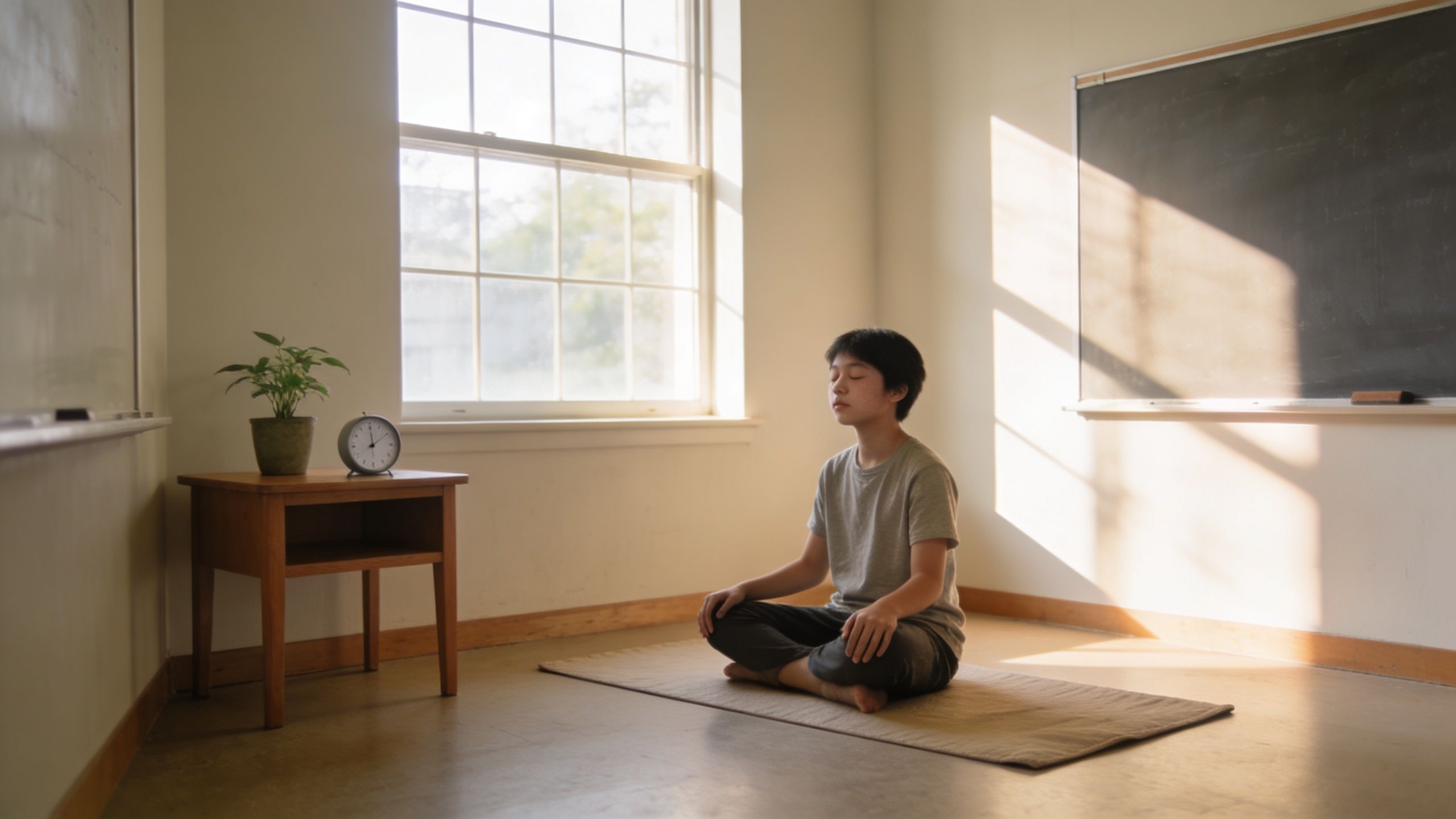
Mindfulness gives a child something concrete to do when feelings start to spike. Instead of getting pulled deeper into panic, anger, or shame, they practice noticing what’s happening right now. Breath. Feet on the floor. Hands on the desk. Sounds in the room. That pause can keep emotion from taking over behavior.
In school, this often looks simple. A third grader takes three slow breaths before opening a test packet. A teacher starts the morning with one minute of quiet noticing. A parent kneels beside a crying child and says, “Let’s feel your belly rise and fall together.”
What it sounds like with kids
You don’t need long meditations. Short, repeatable routines work better.
For early elementary: “Name three things you see, two things you hear, one thing you feel in your body.”
For upper elementary: “Put one hand on your chest and one on your belly. Breathe in slowly. Breathe out even slower.”
For middle school: “Notice the thought. Don’t argue with it yet. Just label it: worried thought, mad thought, embarrassed thought.”
Practical rule: Practice mindfulness when kids are calm, not only when they’re upset. Skills learned during peaceful moments are easier to use during hard ones.
Classroom and home adaptations
A mindfulness routine works best when it’s built into the day. Try it before tests, after lunch, after conflict, or during transitions. If you want students to understand why this matters, tie it to the idea of living in the now, which helps kids shift attention away from spiraling “what if” thoughts.
Teachers can say, “We’re not trying to make every feeling disappear. We’re helping our bodies get steady enough to think.” Parents can use the same language at bedtime, before sports, or after a sibling conflict.
2. Emotional Expression and Creative Outlets
Some children can tell you exactly what they feel. Many can’t. They show it in drawings, movement, music, pretend play, or the way they slam a marker onto paper. Creative expression gives emotion a safe exit. It helps a child process feelings without needing perfect words first.
This is one of the most useful emotion focused coping examples for younger students and for older kids who shut down when asked direct questions. A child might draw “what anger looks like,” create a playlist for different moods, or act out a problem with puppets before they’re ready to talk.
Ways to use it without turning it into an assignment
The key is to focus on expression, not performance. Don’t correct the art. Don’t ask for neatness. Don’t force sharing.
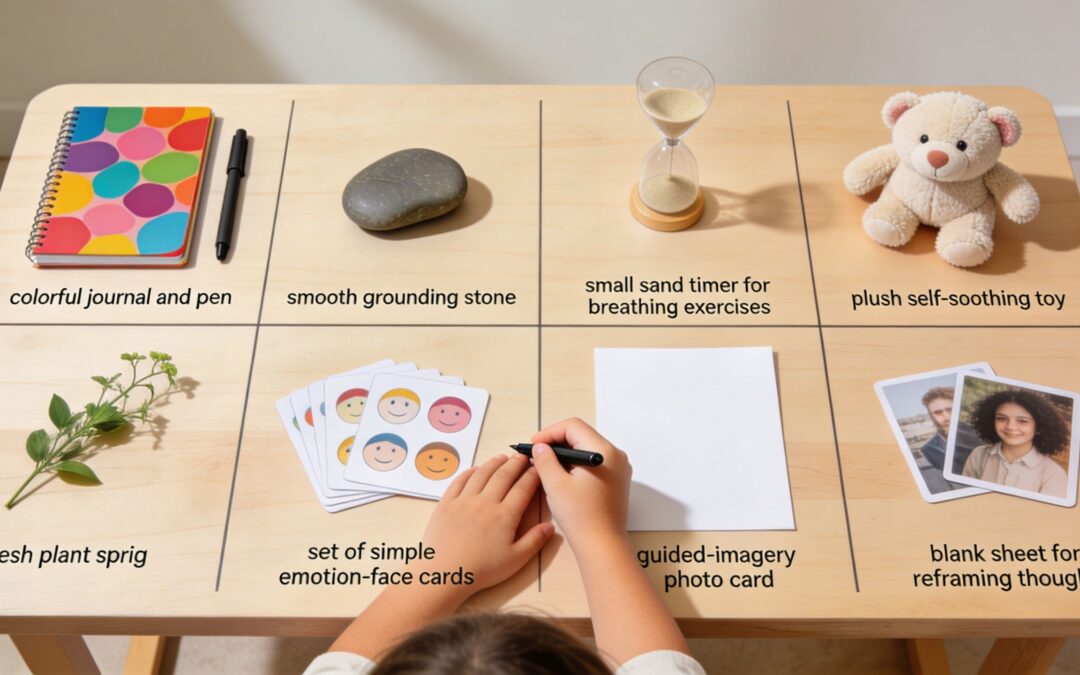
Art option: “Use color and shape to show how today feels.”
Writing option: “Finish this sentence three times: Right now I wish…”
Movement option: “Show me with your body what nervous feels like, then show me what steady feels like.”
Drama option: “Let the puppet say what the student can’t say yet.”
A feelings chart for kids can help children move from broad labels like mad or sad to more accurate words like left out, embarrassed, worried, or disappointed. That added precision often lowers intensity because the feeling becomes easier to understand.
Sample adult script
Try: “You don’t have to explain it right away. You can draw it, write it, or move it.”
That kind of permission matters. A randomized trial described in this positive affect journaling overview found that journaling was linked with significant reductions in mental distress, anxiety, and perceived stress after an 8-week intervention, with benefits that persisted at follow-up. For children, the school version can be much simpler: a short reflection page, a feelings doodle, or a gratitude journal they return to regularly.
3. Social Support and Connection-Building
Kids regulate better in relationship. Even very independent children often need another nervous system nearby before they can settle their own. That’s why connection is one of the strongest emotion focused coping examples you can teach.
For some students, support means talking. For others, it means sitting next to a trusted adult, walking a lap with the counselor, or knowing there’s one peer who’ll save them a seat at lunch. The message is the same: you don’t have to carry big feelings alone.
Build support before a child is in crisis
Waiting until a student is overwhelmed is too late. Connection has to be part of the routine.
Teacher check-ins: Greet students by name and notice changes in mood.
Peer structures: Use partner shares, lunch groups, or buddy systems.
Family routines: Set a daily “tell me one hard thing and one good thing” conversation.
Counselor support: Give students a clear path for asking for help without shame.
Research summarized in this overview of coping patterns in students found that girls reported higher overall coping levels than boys, and that self-efficacy and family support influenced which coping strategies students used. The same review also noted that withdrawal was associated with depressed mood. For adults, that’s a reminder to teach help-seeking directly instead of assuming children will do it on their own.
Sample scripts for adults and peers
A supportive response sounds like this:
“You don’t have to fix it right now. Tell me what feels hardest.”
A peer can learn simple language too: “Do you want advice, or do you want me to just stay with you?” Activities that strengthen trust and belonging make these moments more likely. Schools can support that through intentional relationship-building activities woven into the week.
4. Self-Compassion and Positive Self-Talk
Many kids are much harder on themselves than adults realize. You see it after a wrong answer, a missed goal, a social mistake, or a small correction. “I’m dumb.” “Nobody likes me.” “I ruin everything.” That inner voice can turn one hard moment into a much bigger emotional crash.
Self-compassion teaches children to talk to themselves the way they’d talk to a friend. It doesn’t mean pretending everything is fine. It means meeting struggle with honesty and kindness.
Replace harsh self-talk with helpful language
Children usually need this modeled out loud. They don’t automatically know what compassionate self-talk sounds like.
Try these swaps:
Instead of: “I’m terrible at this.” Try: “This is hard for me right now.”
Instead of: “I messed up everything.” Try: “I made a mistake, and I can repair it.”
Instead of: “Everyone else gets it.” Try: “I’m still learning, just like everybody else.”
A teacher can model this after making a mistake on the board: “I don’t love getting things wrong, but mistakes help me see what to fix.” That lands because it’s real.
A quick self-compassion routine
Give students three steps they can remember:
Name it: “This is a hard moment.”
Normalize it: “Other people feel this way too.”
Support yourself: “What do I need to hear right now?”
Parents can keep this concrete: “You’re disappointed. That makes sense. What would help you talk to yourself kindly?” Teachers can post positive affirmations for kids and revisit them after mistakes, not just during morning meetings.
Speak to the child in a way you hope they’ll eventually speak to themselves.
That’s one of the quietest and strongest forms of SEL teaching.
5. Reframing and Cognitive Perspective-Taking
A child’s first interpretation of an event is often the most painful one. “She didn’t wave back because she hates me.” “The teacher corrected me because I’m bad.” “I failed one quiz, so I’m going to fail everything.” Reframing helps children slow down and consider another possible explanation.
This doesn’t mean arguing kids out of their feelings. If a child feels hurt, they feel hurt. Reframing comes after validation, not instead of it.
Start with the feeling, then widen the lens
A good adult response sounds like this: “I can see why that felt embarrassing. Let’s look at what else might be true.”
Then ask questions that invite perspective:
“What’s one other explanation?”
“What would you say to a friend in this situation?”
“Is this a forever problem, or a right-now problem?”
“What facts do you know for sure?”
For younger children, use visual choices. “Do you think your friend was being mean on purpose, distracted, or upset about something else?” For older students, introduce thinking traps such as mind-reading, catastrophizing, and all-or-nothing thinking.
Real school examples
A student gets feedback on an essay and says, “My teacher thinks I’m bad at writing.” Reframing sounds like: “Your teacher spent time on comments because your writing matters and can grow.”
A student isn’t picked for a game and says, “Nobody wants me.” Reframing might be: “That felt personal. It may also have been a quick choice between friends.”
This strategy pairs well with journaling, class discussions, and restorative conversations. Adults can model it openly: “My first thought was that the meeting went badly. My second thought is that people were tired and distracted.”
6. Relaxation Techniques and Somatic Awareness
Sometimes the fastest way to help a child with big feelings is through the body, not through words. An anxious child may have tight shoulders, shaky hands, or a stomachache. An angry child may clench fists or breathe fast. Somatic coping teaches kids to notice those signals and respond before they escalate.
That’s useful because many children don’t recognize stress until it’s already overflowing. Body awareness gives them an earlier warning system.
Here’s a simple practice to introduce:
What to remember
Not every practice fits every child every day. One student settles with breath. Another needs movement. Another needs to draw before talking.
That isn’t inconsistency. That’s responsive teaching.
Weaving 'Now' Moments into Your Classroom and Home
The most effective presence practices don’t live in a special binder. They live inside the day you already have.
A teacher doesn’t need a new 30-minute block. A caregiver doesn’t need a perfect evening routine. What helps most is attaching a small “now” moment to places that already repeat.
That’s also how habits become part of a group culture. Children learn by watching one another, borrowing language, and repeating shared routines. If you want a useful overview of how that process works, this explanation of social learning concepts gives a clear frame for why modeling matters so much.
In the classroom
Try matching practices to predictable moments:
Morning arrival Greet students, then offer one settling choice: hand on heart, wall push, or three quiet breaths.
Before transitions Ring a chime or give a verbal cue such as, “Notice your feet before you move.”
Before assessments Invite students to unclench hands, drop shoulders, and look at one corner of the paper before starting.
After recess or lunch Use sound noticing, stretching, or one sentence stem: “Right now my body feels…”
After conflict Don’t rush to a full discussion. Start with regulation. “Can you feel your feet? Are you ready to talk now or in two minutes?”
For teachers wanting additional age-appropriate ideas, this Soul Shoppe piece on teaching mindfulness to children offers practical ways to fold these routines into school life.
At home
Families can build the same habit without calling it mindfulness if that word doesn’t fit.
Try these anchors:
In the car “Before we talk, let’s each notice one thing we can see outside.”
At meals “What does your first bite taste like?” “What does your body feel like today?”
During homework frustration “Stop. Shake out your hands. Tell me what your brain is saying right now.”
At bedtime “What happened today that your body is still holding?” “What is over now?”
The routine matters more than the label. A one-minute reset done daily teaches more than a long lesson done rarely.
Activity adaptations for living in the now
Practice
Grades K-2 (Ages 5-7)
Grades 3-5 (Ages 8-10)
Grades 6-8 (Ages 11-14)
Sound noticing
Listen for one near sound and one far sound
Identify three layers of sound in the room
Notice sound without judging it as annoying or good
Breathing practice
Smell the flower, blow the pinwheel
Five-finger breathing with slower exhale
Silent counted breathing before tests or transitions
Body check-in
“My body feels wiggly, sleepy, or tight”
Name body sensations and choose a reset tool
Track body cues linked to stress, conflict, or avoidance
Mindful movement
Stretch high, fold low, shake out arms
Robot to Ragdoll or wall push before work time
Short movement reset, then self-direct back into focus
Reflection
Draw the feeling with color
Sentence stem: “Right now I need…”
Brief journal entry on what is pulling attention away
Conflict repair
“I didn’t like that” with adult support
Pause, breathe, say what happened
Pause, regulate, then use respectful problem-solving language
A few ready-made routines
Some readers get stuck because they like the idea but can’t picture when to use it. Here are examples.
Morning Meeting Starter “Show me with your fingers how ready your body feels for learning. One means not ready yet. Five means ready. If you’re below a three, choose a reset.”
Transition Tamer “When you hear the signal, freeze your feet, soften your face, and take one breath before moving.”
Pre-Test Focuser “Your job is not to feel perfect. Your job is to arrive. Eyes on the page. One inhale. Longer exhale. Start with the easiest problem.”
Bedtime Wind-Down “Let’s tell the truth about the day. What felt good? What felt hard? What can your body let go of now?”
These small scripts help children trust the routine. Over time, they begin to use the language without being prompted.
Troubleshooting Resistance and Deepening the Practice
Many children don’t respond to “let’s be mindful” with calm appreciation. They giggle. They groan. They stare at you. Some become more activated when asked to be still.
That response makes sense.
The brain doesn’t naturally rest in the present for long stretches. A key challenge is that the present moment is neurologically hard to inhabit, and our brains may spend 50-75% of waking hours mind-wandering, as described in this discussion of why the present is hard to access. That difficulty can be even more pronounced for children, who are still developing the skills that support impulse control and attention.
When children say it’s silly
Don’t argue. Translate the practice into plain purpose.
Instead of:
“We’re doing mindfulness now.”
Try:
“We’re helping our brains get back.”
“We’re giving your body a reset.”
“We’re making it easier to learn.”
“We’re noticing what’s happening before it gets bigger.”
For some students, naming the benefit lowers resistance. For others, choice lowers resistance more than explanation does.
Offer options:
Sit or stand
Eyes open or lowered
Breathe, stretch, draw, or listen
Join now or watch first
Choice protects dignity.
When a child is restless or dysregulated
Stillness is not the first intervention for every nervous system. If a child is bouncing, agitated, or close to a meltdown, start with action.
Try this sequence:
Orient by looking around the room.
Press hands together or push against a wall.
Move with marching, stretching, or carrying books.
Name one body sensation.
Then invite one breath if it feels accessible.
That order matters. Regulation often moves from body to breath, not the other way around.
Some children need to arrive through motion before they can arrive through attention.
A trauma-informed approach
For children who have experienced chronic stress, the phrase “just be in the moment” can feel impossible. If the body is scanning for danger, calm attention won’t come from pressure.
Use these trauma-informed principles:
Lead with safety Keep your voice steady. State what will happen next.
Offer predictability Repeat the same short routine often.
Avoid forced participation Invite. Don’t demand.
Use external anchors Sounds, objects, textures, and movement can feel safer than closing eyes or focusing inward.
Respect the no A child who declines may still be learning by watching.
If a student says, “I hate this,” you can respond with, “Thanks for telling me. You can keep your eyes open and just listen for one sound.” That keeps the door open.
For neurodiverse learners
Many neurodiverse students benefit from present-moment practices, but they may need adaptation.
Consider:
shorter directions
visual prompts
tactile supports
movement before reflection
concrete language instead of metaphor
reduced emphasis on silence
For one child, a fidget may support focus. For another, doodling while listening may be the pathway to staying present. Don’t confuse a nontraditional regulation strategy with disengagement.
Reflection without judgment
Adults often turn mindfulness into another performance metric. Children can feel that instantly.
Instead of asking, “Did you do it right?” ask:
“What did you notice?”
“Was your body more settled, less settled, or the same?”
“Which tool helped a little?”
“What should we try next time?”
For adults, useful reflection sounds like:
“When did I feel most available today?”
“What pulled me out of the moment?”
“What helped me return without force?”
“Did I ask children for presence that I wasn’t practicing myself?”
These questions build awareness without shame.
The grownup obstacle
Many adults say, “I don’t have time.”
Often what they mean is, “I don’t have capacity for one more thing.” That’s real. So don’t add another thing. Put presence inside what you already do.
Try:
one breath before answering a hard email
both feet on the floor before speaking to a child in distress
one moment of silence before starting the car
noticing your jaw during a tense meeting
Living in the now becomes sustainable when it stops being a performance and starts becoming a return.
Your Soul Shoppe Toolkit for Lasting Change
Children learn presence through repetition, relationship, and shared language. Adults do too. That’s why one-off reminders rarely create lasting change. A school or family needs routines, cues, and tools people can use when emotions are calm and when emotions are big.
A structured practice helps. According to this presentation on cultivating presence through daily protocols, 70% of participants sustain more than 30 minutes of daily presence after 30 days, with a 25% drop in cortisol. The same source reports that bringing 10-minute daily Now Circles into K-8 settings has led to 60% gains in peer empathy. For educators, that points to something practical. Presence grows when it is taught as a repeatable routine, not treated as a one-time inspiration.
What lasting implementation looks like
In schools, lasting change usually includes:
Shared language Students and staff use the same words for noticing feelings, needs, and regulation tools.
Predictable practice Presence shows up during arrival, transitions, conflict repair, and academic stress.
Adult modeling Students see grownups pause, reset, and repair in real time.
Family connection The same simple tools travel home in accessible ways.
Reflection Teachers and caregivers track what helps different children return to the moment.
A defined toolkit matters more than enthusiasm alone.
One practical option for schools and families
Soul Shoppe is one resource schools use to teach self-regulation, mindfulness, communication, and conflict resolution through experiential SEL programs, workshops, assemblies, coaching, and family-facing supports. If you’re looking for materials that help turn these ideas into repeatable school and home routines, their overview of social-emotional learning tools is a useful starting point.
For principals and SEL leaders, the practical question is often not “Does presence matter?” It’s “How do we help busy adults teach it consistently?” The answer usually includes scripts, modeling, and a small set of rituals that can be used across grade levels.
A simple action plan
If you want this to stick, keep it narrow at first.
Pick one moment of the day Arrival, before tests, after recess, dinner, or bedtime.
Choose one routine Sound noticing, wall push, five-finger breathing, or a one-sentence body check-in.
Use the same words for two weeks Consistency helps children feel safe enough to participate.
Offer choice Let children engage through breath, movement, drawing, or listening.
Reflect briefly Ask, “What helped?” instead of “Did it work?”
Small daily practice beats occasional intensity. Children trust what adults repeat.
What success really looks like
Success is not a perfectly serene classroom or a child who always pauses before reacting.
Success looks more like this:
a student notices they’re overwhelmed sooner
a teacher catches tension before snapping
a parent chooses curiosity instead of immediate correction
a class returns to focus faster after disruption
a child uses one learned phrase during conflict instead of shutting down
Those are meaningful signs of growth. They are also the building blocks of belonging.
Living in the now is not about escaping real life. It’s about meeting real life with more awareness, steadiness, and care. In schools and homes, that changes the climate one small moment at a time.
If you want support turning these ideas into daily practice, explore Soul Shoppe for school-based SEL programs, family resources, and experiential tools that help kids and grownups build presence, empathy, and connection together.
It’s 9:12 a.m. A third grader is under a table because recess ended badly. Two students are arguing over who “started it.” One child is staring at a math page and hasn’t written a thing. The teacher is trying to move the lesson forward while also protecting the room’s emotional temperature.
Most K-8 educators know this moment. So do principals. So do parents at 6:30 p.m. when homework ends in tears over something that looks small on the surface but isn’t small to the child living it.
That’s where social emotional learning tools matter. Not as an extra program you squeeze in if time allows, but as the practical supports that help kids name feelings, manage impulses, repair harm, ask for help, and stay connected enough to learn. If you want calmer classrooms, fewer repeat conflicts, stronger student relationships, and better carryover between school and home, the tools you choose matter.
Why Social Emotional Learning Tools Are No Longer Optional
A lot of schools are trying to solve behavior, engagement, attendance, and belonging as if they’re separate problems. In practice, they overlap all day long.
A student who can’t identify frustration may shut down during writing. A child who doesn’t know how to re-enter play after conflict may spend the rest of recess isolated. A class with no shared language for feelings often swings between disruption and silence. Teachers then spend huge amounts of energy reacting instead of teaching.
That’s why social emotional learning tools are no longer nice-to-have materials. They’re the routines, prompts, assessments, discussion structures, visual supports, and family practices that help adults respond early, consistently, and with less guesswork.
Schools are treating SEL as core infrastructure
This isn’t a passing trend. The global SEL market was valued at approximately USD 5.3 billion in 2025 and is projected to reach USD 47.1 billion by 2035, a projected 24.3% CAGR, according to Future Market Insights’ SEL market report. That growth signals something educators already feel on the ground. Schools are investing because they need systems that support the whole child.
The important shift is this. SEL isn’t only about a weekly lesson on kindness. It’s about building a school ecosystem where students practice self-awareness before conflict escalates, use communication tools during conflict, and reflect afterward in a way that teaches a new skill.
Practical rule: If a tool only works during a scripted lesson but disappears during transitions, lunch, recess, or homework, it isn’t enough.
What leaders and teachers need now
New principals often ask, “Where do we even start?” Teachers ask, “Do I need a curriculum, an app, or just better routines?” Parents ask, “How do I support this at home without turning dinner into therapy?”
Those are the right questions.
A useful starting point is understanding the broader benefits of social emotional learning, then getting very concrete about which tools belong in classrooms, which belong in leadership systems, and which belong in family routines.
The schools that make progress usually do three things well:
Choose tools on purpose that match student needs and staff capacity.
Implement them consistently across classrooms and home communication.
Measure what changes so SEL stays tied to real outcomes, not wishful thinking.
Understanding Your SEL Toolkit
Think of SEL like a carpenter’s toolbox. You wouldn’t use one screwdriver for every repair in a building. In the same way, schools shouldn’t expect one app or one lesson series to carry the full emotional life of a campus.
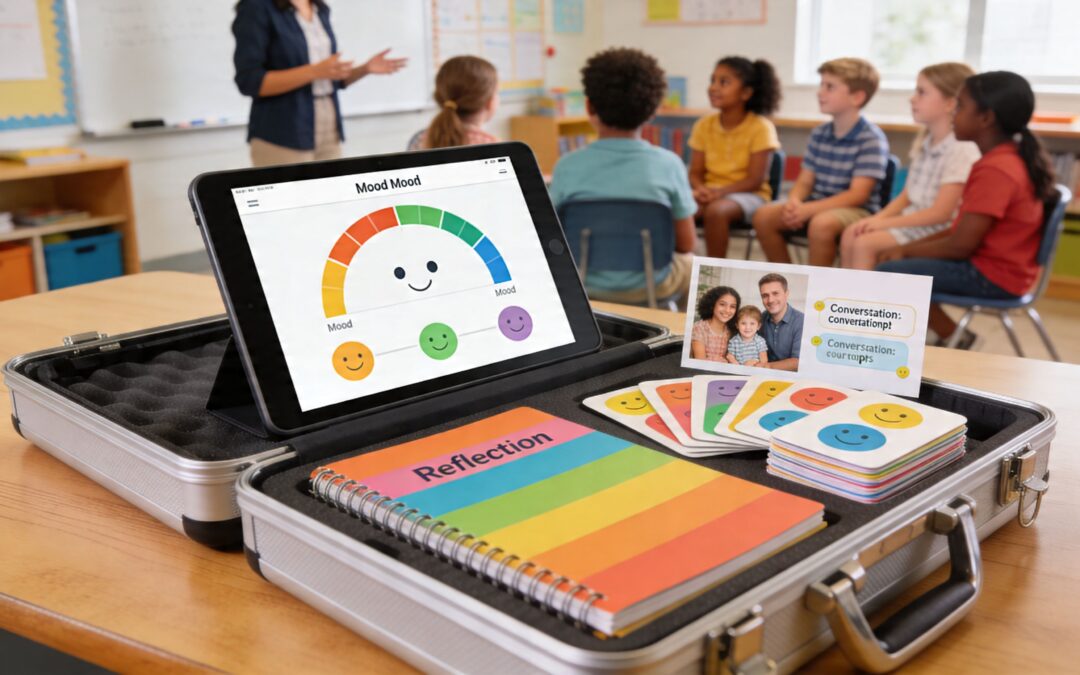
A strong SEL toolkit includes different kinds of supports for different jobs. Some tools help students identify feelings. Others help them calm their bodies, repair peer conflict, or bring families into the same language.
Research on evidence-based elementary SEL programs gives us a helpful blueprint. Analysis found that components like identifying others’ feelings (100% of programs), identifying one’s own feelings (92.3%), and behavioral coping skills (91.7%) are foundational, as described in this systematic analysis of elementary SEL programs. That matters because it tells us what effective social emotional learning tools should teach.
Four kinds of tools most schools need
Some educators hear “SEL tools” and think only of digital platforms. That’s too narrow. The toolkit is broader.
Digital apps and platforms
These tools help with check-ins, reflection, student self-assessment, mood tracking, or guided regulation.
A classroom example: a fifth grade teacher starts the day with a digital feelings check-in. Students select a feeling word and a readiness level before math. The teacher notices three students flagging frustration and pulls them for a quick preview before independent work starts.
At home, a parent might use a simple app-based mood check after school and ask, “Was that feeling about work, friendship, or energy?”
Digital tools are useful when you need:
Quick visibility into how students are doing
Consistent data collection across classrooms
Easy access for students, staff, and sometimes families
They’re less useful when staff haven’t built routines around what happens after the data comes in.
Formal curricula and programs
These are structured lesson sequences, often aligned to CASEL competencies, that teach skills such as empathy, self-regulation, listening, conflict resolution, and decision-making.
Example: a second grade class practices role-play around joining a game at recess. Students rehearse language like, “Can I join?” and “What role can I take?” That sounds simple, but for many children, direct practice changes what happens outside.
This category gets overlooked, even though it’s where SEL often becomes real. Morning meetings, calm corners, partner shares, repair circles, breathing routines, and transition scripts all count.
A kindergarten peace corner might include:
Feelings visuals so students can point before they have the words
Breathing prompts for body regulation
A reflection card with “What happened?” and “What do I need?”
A middle school advisory routine might open with, “What’s one challenge you handled well this week?” That builds reflection without forcing disclosure.
A tool becomes powerful when students can use it independently, not only when an adult prompts it.
Family engagement practices
If school and home use completely different language, students often don’t transfer skills well. Family engagement tools close that gap.
Examples include:
Dinner table prompts like “When did you feel included today?”
Take-home conflict scripts such as “I felt __ when __. Next time I need __.”
Brief family workshops where caregivers try the same calming routine students use at school
A fourth grader who learns “pause, breathe, say what you need” in class can use the same sequence before a sibling conflict at home if adults reinforce it.
Comparing Categories of Social Emotional Learning Tools
Tool Type
Primary Use Case
Pros
Cons
Digital Apps and Platforms
Check-ins, tracking, reflection, screening
Easy to scale, fast data access, useful across classrooms
Can become passive if staff don’t respond to results
Low cost, immediate impact, easy to embed into the day
Quality depends on adult consistency
Family Engagement Practices
Home-school carryover
Extends SEL beyond campus, helps parents reinforce skills
Needs simple communication and family-friendly design
A simple way to think about fit
If your biggest issue is constant peer conflict, don’t buy only a dashboard. If your staff lacks shared language, routines alone may not be enough. If families feel disconnected, a strong classroom plan still won’t travel home by itself.
Most schools need a mix. The goal isn’t to collect tools. It’s to build a system where each tool has a job.
How to Choose the Right SEL Tools for Your School
The wrong way to choose SEL tools is to start with the flashiest demo.
The better way is to start with your school’s friction points. Where are students getting stuck? Where are adults losing time? Which moments feel predictable in the worst way?
A principal might say, “Our classrooms are calm during lessons, but lunch and recess keep unraveling the day.” That school may need conflict-resolution routines, adult supervision scripts, and student practice with peer repair. Another school may say, “Our students can talk about feelings, but they fall apart during academic frustration.” That points more toward self-management tools and coping routines.
Match the tool to the problem
Before you purchase anything, name the problem in plain language.
Try prompts like these with your team:
Where do students struggle most? During transitions, partner work, unstructured time, or independent tasks?
What do students need more of? Emotion vocabulary, impulse control, empathy, conflict repair, or help-seeking?
What do adults need more of? Shared language, usable routines, clearer data, or family communication supports?
A practical example: if fourth graders keep escalating minor social misunderstandings into office referrals, a weekly empathy lesson alone probably won’t solve it. They may need sentence stems for disagreement, brief restorative routines after conflict, and adult coaching in the moment.
Developmental fit matters
Not every tool works for every age. A first grader needs concrete language, visuals, and repeated modeling. An eighth grader usually needs more privacy, more autonomy, and less “performing feelings” in front of peers.
Look for signs of developmental fit:
K-2 tools should be visual, repetitive, embodied, and brief.
Grades 3-5 tools should blend direct teaching with reflection and practice.
Grades 6-8 tools should respect dignity, choice, and social complexity.
For instance, a feelings chart works in first grade because it helps children locate emotion quickly. In middle school, a private reflection form or advisory prompt may work better because students don’t want to announce vulnerability publicly.
Capacity beats ambition
A school can buy a strong program and still fail if staff can’t use it consistently.
Ask hard questions early:
How much training does this require?
Can teachers use it inside a normal school day?
Will counselors, recess staff, and classroom teachers all understand it the same way?
Does it create one more initiative, or does it simplify what adults already do?
If your staff is stretched thin, low-burden options may be wiser. The Wallace Foundation has highlighted low-cost, low-burden SEL “kernels” as flexible strategies for specific behaviors, which is why schools under pressure should consider routines and short practices, not just full programs.
Equity cannot be an afterthought
Many schools make a costly mistake by choosing tools that appear neutral but don’t reflect students’ lived experience, community context, or the ways bias shapes behavior interpretation.
Black SEL raises an important challenge to standard programs. It argues that many mainstream approaches overlook systemic issues and cultural context, making culturally affirming approaches necessary for Black and marginalized students. That perspective is described on the Black SEL about page.
What does that mean in practice?
It means asking:
Whose communication style does this tool assume is “appropriate”?
Do examples, stories, and role-plays reflect our students and families?
Does the tool build belonging, or does it reward compliance without context?
A school serving diverse communities might adapt scenarios so students discuss real peer dynamics they recognize, not generic workbook conflicts. Family nights might include multilingual materials and examples that reflect actual home routines.
If students don’t see themselves in the tool, adults often misread resistance as lack of skill.
Don’t ignore low-cost options
A tight budget doesn’t mean you can’t do strong SEL work. Many high-impact practices are routines, scripts, and habits.
A school with limited funds might start with:
Daily check-in circles
Calm-down menus in every room
Peer conflict scripts posted at student eye level
Weekly family conversation prompts
Brief advisory lessons using existing staff
If you want classroom-ready ideas to pair with a broader plan, Kuraplan’s roundup of social emotional learning activities offers practical examples educators can adapt.
One example from the field: some schools use a conflict pathway tool so students can talk through what happened, how each person feels, and what repair looks like. Soul Shoppe offers a Peace Path with Tutorial that fits that kind of practical, skill-based conflict resolution approach.
A procurement checklist leaders can actually use
Bring this checklist into vendor meetings or planning sessions.
Problem fit Does this tool solve a problem we’ve clearly named?
Age fit Will our students use it, from primary grades through middle school where applicable?
Cultural fit Does it reflect our students’ identities, experiences, and community realities?
Staff fit Can teachers, counselors, and support staff use it without heavy overload?
Family fit Is there a simple way for caregivers to reinforce the same language at home?
Measurement fit Can we tell whether it’s helping through observations, assessments, or behavior patterns?
Sustainability Will this still work after the launch excitement fades?
Schools rarely need the most complicated option. They need the clearest one.
If your team is choosing among full-school approaches, this guide to SEL programs for schools can help frame the decision around implementation reality, not just features.
A Guide to Implementing SEL Tools School-Wide
The best SEL tool can still fail in a school that launches too fast, trains too little, or treats implementation like a one-time event.
School-wide SEL works when adults share a common approach, students experience it in predictable ways, and families hear language that matches what happens in classrooms.
Research gives leaders one more reason to stay committed. A thorough synthesis of SEL research found that students participating in SEL programs achieved an average 11 percentage point gain in academic performance compared with peers, as summarized in this SEL research synthesis article. For principals trying to balance behavior support with instructional goals, that matters.
Start with a small leadership team
Don’t put implementation on one counselor and hope for the best.
Build a team that includes:
An administrator who can align decisions and remove barriers
Classroom teachers from different grade bands
Student support staff such as counselors or psychologists
A family-facing voice such as a parent liaison or community coordinator
This group should answer practical questions. Where will SEL happen daily? Which routines are essential? What language will adults use during conflict? How will families hear about it?
A good launch feels organized, not crowded.
Train adults on use, not just philosophy
Teachers don’t need another abstract lecture on why emotions matter. They need language, modeling, and repetition.
Useful staff training sounds like this:
What do I say when two students interrupt each other in conflict?
How do I run a two-minute reset without losing the lesson?
What should a calm corner include?
How do I respond when a student refuses the SEL routine?
Practice the routine exactly as students will experience it. If the tool is a check-in, teachers should do the check-in. If the tool is a repair conversation, staff should role-play the script.
Adults need the same thing students need. Clear language, repeated practice, and a low-stakes chance to get it wrong before the real moment arrives.
Pilot before going school-wide
A pilot gives your school room to learn. Choose a grade span, a few classrooms, or one common setting like advisory or morning meeting.
During the pilot, watch for:
What students use independently
Which routines teachers can sustain
Where confusion shows up
What families understand right away and what needs translation into simpler language
For example, a pilot in grades 2 and 5 might reveal that younger students use feelings visuals easily, while older students respond better to journal prompts and partner processing.
That kind of feedback saves schools from rolling out something polished on paper but clumsy in real life.
Build SEL into the existing day
SEL works best when it’s embedded where students already are.
Try structures like these:
In classrooms
A teacher opens class with a one-minute emotional weather report. Students show “sunny,” “cloudy,” or “stormy” with fingers or cards. The teacher doesn’t turn it into a full discussion every time. The point is awareness.
During reading, students pause and ask, “What might this character be feeling, and what clues tell us that?” That turns literacy into empathy practice.
During conflict
A recess aide uses a short script:
What happened?
What were you feeling?
What do you need now?
What can repair look like?
The script matters because adults often improvise differently under stress. Students benefit when the process is predictable.
During transitions
A fourth grade class practices one shared reset. Feet still. One breath in. Long breath out. Eyes on the next task. The routine takes less time than repeated redirection.
If school climate is part of the larger goal, this article on how to improve school culture pairs well with implementation planning.
Bring families in early and simply
Parents and caregivers don’t need a stack of theory. They need a few doable ways to reinforce the same skills.
Good family implementation often includes:
A one-page SEL language guide with terms students are using
Take-home prompts for dinner or bedtime
Short workshops where caregivers try the routines themselves
Teacher messages that describe the tool in plain language
Example take-home prompt for K-2: “What was one feeling you had today? What helped you?”
Example for grades 4-8: “When did you disagree with someone today? How did you handle it?”
Later in the rollout, it helps to give families something concrete to watch and discuss.