Soul Shoppe's work is made possible by donors and partners who care deeply about the young people in their communities! We can't do this work without you. Support our work in classrooms and on playgrounds across the nation by donating here.
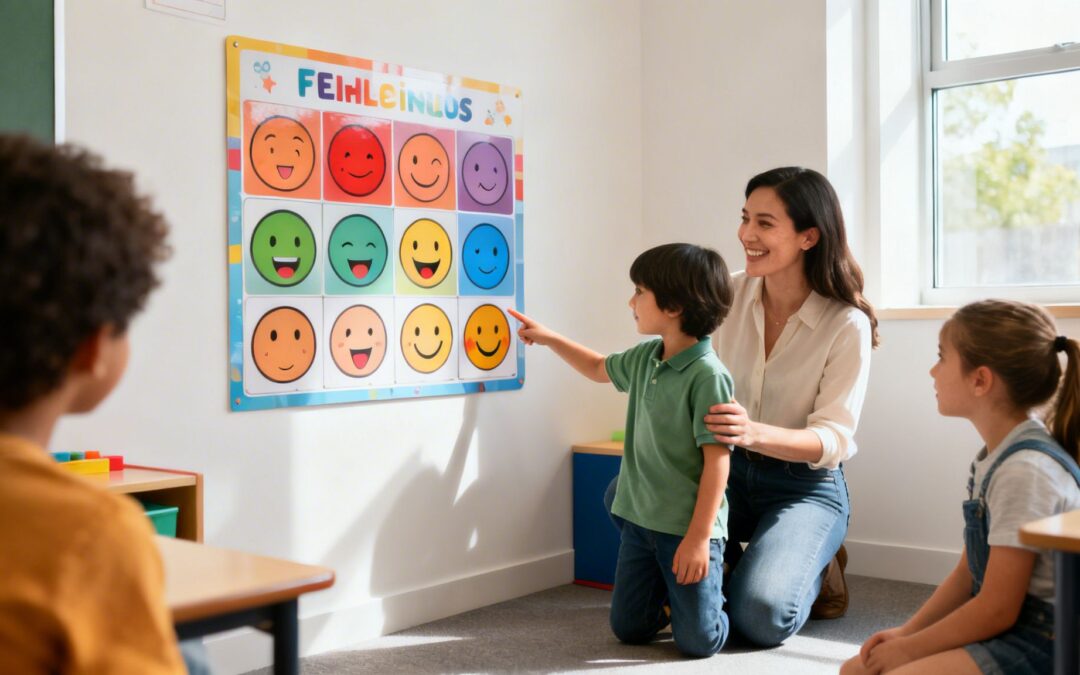
A feelings chart for kids is one of the simplest, most effective tools in the social-emotional learning (SEL) toolkit. You've probably seen them—posters with faces showing a range of emotions, from happy and excited to sad and frustrated. But they're so much more than just a piece of classroom decor.
A good feelings chart gives children a concrete way to identify, name, and begin to understand their own complex emotions. It provides a shared language for those big, messy internal experiences that can be so hard to put into words.
More Than a Poster: Why Feelings Charts Work
Think of a feelings chart as a bridge. It connects what a child is feeling on the inside to something tangible they can see, point to, and talk about. This simple act of giving an emotion a name and a face is a game-changer for building emotional intelligence.
When a child can match their internal storm to a word like "disappointed" or "worried," they take the first crucial step toward self-awareness. That feeling is no longer a scary, overwhelming force. It’s something real that can be understood and, eventually, managed.
Giving Kids the Words for Their Feelings
Imagine a first-grader with clenched fists and a scowl. They can't explain why they're upset. Maybe a friend didn't want to play, or they're struggling with a math problem. Without the right words, that frustration just builds.
This is where the feelings chart comes in.
By gently guiding them to the chart, you can ask, "Can you show me which face looks like how you feel right now?" This one question opens the door. It helps the child shift from a reactive state of distress to a more expressive one. They're no longer just feeling the anger; they are starting to understand it.
The goal isn't just to get a label for the feeling—it's to validate it. When we acknowledge an emotion, we're telling a child, "What you're feeling is real, it's okay, and we can figure this out together." This builds the trust and psychological safety every child needs.
This growing vocabulary empowers kids to advocate for themselves. A child who once might have pushed or cried can begin to say, "I feel sad because I miss my mom," or "I'm worried about the assembly." You can learn more about naming feelings to help kids find the words they need in our dedicated guide.
Building a Foundation for Empathy and Self-Regulation
The benefits don't stop at self-awareness. When children get comfortable recognizing their own emotions, they get better at spotting them in others, too. This is the very foundation of empathy. They start to realize that their friends also have a rich, complex inner world.
For example, a teacher might say, "Leo pointed to 'frustrated' on our chart. Has anyone else ever felt frustrated when their block tower fell down?" This simple question helps other children connect Leo's experience to their own, building a shared emotional understanding.
This skill is absolutely vital for building a kind and connected community, whether at home or in the classroom. It's a bit startling, but recent studies suggest only about 36% of people globally score high in emotional intelligence. This highlights just how important it is to start early with simple tools like a feelings chart.
By building this foundational skill, we’re not just managing today's behavior—we're equipping kids for a lifetime of healthier relationships and greater well-being. You can explore the latest global findings on child well-being to see just how critical these early skills are.
Creating a Feelings Chart That Kids Will Actually Use
For a feelings chart to be more than just wallpaper, it needs to feel alive and relevant to a child. A generic, downloaded poster might work in a pinch, but the charts that truly make a difference are the ones kids feel a real connection to.
So, how do we create a feelings chart that children will be genuinely excited to use?
The secret is surprisingly simple: involvement. When children are part of the creation process, they develop a sense of ownership. It becomes their tool, not just another poster the adults put up.
Tailor Emotions to the Right Age
The first move is to choose emotions that match your kids' developmental stage. A chart that’s too simple will bore older kids, while one that’s too complex will just overwhelm the younger ones.
For Early Years (Ages 3-6): Start with the absolute basics. Stick to 4-6 core emotions that are easy to spot and happen often. Think happy, sad, mad, and surprised. The goal here isn't a huge vocabulary; it's about introducing the foundational language of feelings.
For Lower Elementary (Ages 7-9): Now you can start expanding their emotional world. Bring in more nuanced feelings like proud, frustrated, worried, and excited. Kids at this age are starting to grasp that they can feel more than one thing at a time, and your chart can begin to reflect that complexity.
For Upper Elementary (Ages 10-12): Older kids are ready for even more sophisticated words. You can introduce concepts like anxious, overwhelmed, lonely, jealous, and hopeful. For this group, a simple chart might evolve into a "mood meter" or a feelings wheel that shows a wider range of emotional states.
Visuals are the heart of any feelings chart, but they don't have to be limited to yellow smiley faces. In fact, the more personal and relatable the images are, the better.
A key insight from working with children is that they connect deeply with authenticity. Using photos of real human faces—or even their own—makes the concept of emotions feel much more real and less abstract than a cartoon character.
Here are a few powerful alternatives to consider:
Use Photographs of the Kids: With permission, of course, hold a "feelings photoshoot." Ask each child to show you their best "surprised face" or "frustrated face." Print these to create a chart that’s a true reflection of your specific group.
Draw Your Own Faces: Turn it into an art project. Give each child a paper plate and an emotion to illustrate. This kind of collaborative work builds community and gets buy-in from every single child.
Cutouts from Magazines: For a fun collage activity, have kids look through old magazines to find pictures of people showing different emotions. This sparks incredible conversations about how we read feelings in others' body language and facial expressions.
Get Creative with the Design
The format of the chart itself can be a game-changer. A static poster is good, but a dynamic, interactive tool is even better. This invites children to physically engage with the chart, turning the emotional check-in into an active experience rather than a passive one.
Here are a few practical examples to get your ideas flowing:
Feelings Thermometer A "feelings thermometer" is a fantastic way to help kids visualize emotional intensity.
Example for a 2nd Grade Classroom: Draw a large thermometer on poster board. Label the bottom "Cool & Calm" (in blue), the middle "Getting Warm" (yellow/orange), and the top "Hot & Angry" (red). Students can move a clothespin with their name up or down to show where they are, which helps them notice when their big feelings are starting to escalate.
Feelings Wheel with Clothespins This design is perfect for helping children pinpoint a specific feeling with more accuracy.
Example for a Home Setting: Make a wheel from a paper plate and divide it into wedges for different feelings like 'Peaceful,' 'Silly,' 'Worried,' and 'Disappointed.' Your child can clip a clothespin to the feeling that best describes their state, creating a natural and easy opening for a conversation.
Weaving the Feelings Chart into Your Daily Routine
A feelings chart hanging on the wall is a great start, but it's just a poster until you breathe life into it. Its real magic unfolds when it becomes a living, breathing part of your daily rhythm—as automatic as grabbing a snack or starting a lesson.
This isn’t about adding another task to your already full plate. It's about finding natural moments to connect and make checking in on emotions a normal, everyday habit. When you do that, the chart stops being just a piece of paper and becomes a powerful tool for building emotional awareness.
Creating Predictable Check-in Times
The secret to making the chart a habit is to build it into moments you already have. For kids, routines create safety, and a safe-feeling child is far more likely to open up and share what’s really going on inside.
For teachers, the morning check-in is a perfect opportunity.
Here’s how it looks: As students come into the room and unpack, they can move a clothespin with their name to the feeling that fits their morning. One child might place their pin on "tired" after a restless night, while another puts it on "excited" for a friend's birthday party. This gives you a quiet, immediate snapshot of your classroom’s emotional temperature without ever putting a single child on the spot.
For parents, an after-school check-in can become a treasured ritual.
Here’s how it looks: As you’re both unpacking backpacks and settling in with a snack, you can simply ask, “Let’s see where our feelings landed after today.” A child might point to "proud" for acing a math quiz or "lonely" because recess was tough. This small gesture cracks the door open for bigger conversations about their day.
These simple, consistent touchpoints normalize talking about feelings. If you're looking for more ideas on building these kinds of structures, our guide on how effective routines for kids can help them feel emotionally grounded is a great resource.
Guiding Kids to the Chart in Real Time
Beyond your planned check-ins, some of the most powerful moments to use a feelings chart will be the unplanned ones—right when big emotions are bubbling over. The trick is to approach these moments with curiosity, not as a chance to discipline.
Instead of a reactive, "Stop crying!" try gently guiding them toward the chart. You can say something like, "Wow, that looks like a really big feeling. Can you show me on the chart what's happening inside you right now?"
This simple pivot does two amazing things at once:
It co-regulates. Your calm focus on the chart helps soothe their activated nervous system.
It empowers. You're giving them a tool to communicate when their words are lost in the emotional storm.
The most important rule of thumb? The chart must always be a safe, judgment-free zone. It’s a tool for understanding, not for correction. If a child points to "angry" or "jealous," the right response is always one of validation: "Thank you for showing me you feel frustrated. I get it."
This approach transforms a meltdown into a teachable moment, helping kids learn to identify and handle their feelings before they become overwhelming.
Connecting the Chart to Positive Outcomes
Using a feelings chart consistently does far more than just help a child name an emotion. It's a foundational skill in emotional intelligence (EI) that has a direct, measurable impact on their behavior and even their academics.
Research has shown that teaching EI with tools like feelings charts can dramatically reduce aggression and boost a child's chances of success in school. One study of over 400 primary students discovered a direct link between higher emotional intelligence and lower aggressive behaviors. In fact, the children with the highest EI scores showed 35% lower aggression rates.
For example, a school that implements a daily feelings check-in might see a drop in playground conflicts. A student who can identify feeling "annoyed" can then use a calm-down strategy, like taking five deep breaths, instead of shoving the person who cut in line. This proactive self-regulation, learned through the chart, directly reduces aggressive incidents.
This happens because naming an emotion is the first step toward taming it. A child who can point to "angry" is less likely to express that anger by hitting or yelling. This skill also pays off in the classroom, as children with higher EI have been found to have 25% better attention spans and form 40% more positive peer relationships. You can read the full research about these emotional intelligence findings and their impact on student behavior.
From Naming Feelings to Building Real Resilience
It’s a huge win when a child can confidently point to the "angry" or "sad" face on a feelings chart. That’s a massive step in self-awareness. But that’s only half the battle.
The real magic happens when we teach them what to do with that big, powerful emotion. This is how a simple feelings chart transforms from an identification tool into a powerful engine for problem-solving and resilience. The goal is to connect their feeling to an underlying need, empowering them to see emotions as helpful messengers, not something to be pushed away.
Connecting Feelings to Needs and Actions
When a child shares a big feeling, they’re opening a door for connection. By responding with gentle curiosity instead of judgment, you help them forge the neural pathways for self-regulation. You guide them from simply saying, "I feel," to discovering, "I need."
Here’s what this can look like in the moment:
When a child indicates 'Angry': "I see you're feeling angry. Thank you for showing me that. It looks like your fists are tight, too. Do you need a minute alone in the calm-down corner, or would you like to try that tough puzzle again with my help?"
When a child points to 'Sad': "You're feeling sad today. I'm so sorry you feel that way. Would a hug help right now, or would you rather draw a picture about what’s making you sad?"
When a child shows they're 'Worried': "It's okay to feel worried. I see you’re pointing to that feeling. Is it about the test later? Do you want to take five deep 'dragon breaths' with me, or would looking at our schedule help you know what's coming next?"
This simple routine can help you weave these check-ins into the fabric of your day.
These consistent touchpoints create a predictable structure where kids can safely practice moving from identifying an emotion to managing it constructively.
To make this even more concrete, we've found it helps to explicitly link common feelings to healthy coping strategies. The right strategy often depends on a child's developmental stage.
Taking deep "smell the flower, blow out the candle" breaths, holding a smooth "worry stone"
Making a list of what they can and can't control, practicing a 5-senses grounding exercise
Overwhelmed
Covering ears or eyes, shutting down, saying "I can't do it"
Going to a quiet "calm-down corner," looking at a sensory bottle
Taking a short break, breaking a big task into smaller steps, listening to a short guided meditation
This isn't about prescribing a single "fix," but rather expanding a child's toolkit. Over time, they'll start to recognize what works best for them, building genuine self-regulation skills.
Using the Chart to Grow Empathy
A feelings chart doesn't just build self-awareness; it’s a fantastic tool for cultivating a caring community. When one child's feelings are made visible in a safe way, it becomes an opportunity for everyone to learn how to show up for each other.
You can gently nudge this process by extending the conversation to the group.
Teacher Prompt: "Friends, I see that Sarah has her name on 'sad' this morning. Let's think. What is one kind thing our class could do to show Sarah we care?"
This simple question turns a personal emotion into a chance for collective kindness. The other kids might suggest drawing her a picture, inviting her to play a special game, or just offering a friendly wave. They learn to not only notice how others feel but to respond with compassion—a skill that will serve them for their entire lives.
Fostering Self-Esteem and Long-Term Well-Being
This emotional work does more than just manage tough moments; it lays the foundation for lasting self-esteem and resilience. When children feel seen and equipped to handle their feelings, their confidence grows. For more on this, check out these great tips for Raising Confident Kids.
This isn't just a nice-to-have. The World Happiness Report 2024 found that while 10-year-olds in Spain report high life satisfaction (8.25/10), these scores often plummet during adolescence. Kids with higher emotional intelligence are simply better equipped to navigate these turbulent years.
A 2023 OECD study backs this up, finding that self-awareness—the very skill a feelings chart builds—predicts 66% of the variance in a child’s empathy and social skills. Those with top scores are also 25% more collaborative. This work matters.
Solving Common Problems with Your Feelings Chart
So you've introduced a feelings chart for kids, but it's not quite going as planned. Don't worry. Even with the best intentions, you might run into some resistance or see kids using it in ways you didn't expect.
These moments aren't failures—they're valuable feedback. When a child interacts with the chart in an unusual way, they're telling you something. Let's walk through some of the most common hurdles I've seen in classrooms and homes, and how to navigate them with confidence.
When a Child Always Stays on 'Happy'
It’s a classic scenario: a child who keeps their marker on "happy" day after day, even when their slumped shoulders or the situation itself tells a different story. It’s easy to get frustrated and think they aren't taking it seriously.
But often, this is a form of self-protection. For some kids, admitting to feeling sad, angry, or scared feels incredibly risky. They might worry about disappointing you, getting in trouble, or being seen as a "problem." Sticking with "happy" is the safest bet they can make.
The key here is to build trust without any pressure.
Acknowledge their choice. Start by validating what they've shared. "I see you're on 'happy' again today! It’s wonderful when we feel happy."
Create emotional safety. In a quiet, private moment, you could gently say, "I just want you to know, it’s safe to feel all your feelings here. It's okay to be sad or frustrated, too. We'll figure it out together."
Model your own vulnerability. Share your own emotional shifts. "My name is on 'calm' right now, but this morning I was feeling 'frustrated' because I couldn't find my keys anywhere."
The goal isn't to get them to pick another feeling. It's to reinforce that every emotion is okay and welcome in your space. When they truly believe that, the authentic sharing will follow.
Sometimes, a physical tool can make this process feel safer. Objects like Cuddle Kind handmade dolls can become a bridge, giving kids a way to act out and understand their feelings through play when words feel too hard.
When Older Kids Say It's 'Babyish'
As kids move into the upper elementary and middle school grades, a chart full of simple smiley faces can feel condescending. A 10-year-old wrestling with social anxiety isn't going to connect with a tool that looks like it was made for their little sister.
If you hear, "This is for babies," listen up. They're giving you crucial feedback. It's your cue to adapt the tool to meet them where they are. The idea of an emotional check-in is still vital, but the presentation needs to mature along with them.
Practical Adaptations for Older Kids:
Upgrade the Vocabulary: Swap the simple faces for a more sophisticated "Mood Meter." This can be a quadrant chart with an X-axis for "Energy" (low to high) and a Y-axis for "Pleasantness" (low to high). This opens up a world of nuanced words like serene, agitated, lethargic, or elated.
Introduce a Feelings Wheel: A detailed feelings wheel with dozens of specific emotions—from "insecure" and "betrayed" to "inspired" and "optimistic"—respects their growing intellect and emotional depth.
Go Digital: A simple Google Form or a dedicated check-in app can feel more private and age-appropriate for tech-savvy kids.
Use a Journal: Shift the focus to writing. Provide a journal with prompts like, "What was a high point and a low point of your day?" or "What's taking up the most space in your mind right now?"
The secret is to be flexible. By evolving your tools, you show older kids you respect their maturity. You're teaching them that emotional awareness isn't a lesson you outgrow—it's a skill you refine for life.
Frequently Asked Questions About Feelings Charts
As you start bringing a feelings chart for kids into your classroom or home, a few common questions always seem to pop up. It's one thing to have the tool, but it's another to use it in a way that truly clicks for your kids. Let's walk through some of those frequent questions with practical answers I've picked up over the years.
At What Age Can I Start Using a Feelings Chart?
You can start much earlier than most people realize—even with toddlers as young as two or three. The trick is to keep it super simple. A chart with just three or four basic emotions like happy, sad, and mad, shown with really clear, simple facial expressions, works perfectly.
The goal isn't deep emotional analysis; it's just about building that first layer of emotional vocabulary. You can make connections in the moment. If your toddler is giggling, you might say, “You’re laughing so much! That looks just like the ‘happy’ face on our chart.” As kids get into kindergarten and elementary school, you can slowly introduce a wider range of feelings like surprised, frustrated, and proud.
How Can a Feelings Chart Help with Hitting or Yelling?
This is a big one. A feelings chart works best as a teaching tool before and after a big behavior, not as a punishment during it. Big actions like hitting or yelling are often what happens when a child's feelings get too big for their words. The emotion spills out physically because they don't know what else to do with it.
Once everyone is calm after an incident, the chart becomes your bridge. You can use it to help them connect their action to the feeling that was underneath it all.
You could say, "When you threw the block, what was that big feeling inside you? Were you feeling angry?" Just giving the feeling a name is the first step toward helping them recognize their own triggers. Over time, you can start to intervene earlier: "I see your face looks like the 'frustrated' face. Let's take three big breaths before that feeling gets any bigger."
This doesn't excuse the behavior. It gets to the root cause and teaches the incredibly important skill of self-regulation.
What if My Child Only Ever Points to 'Happy'?
Don't panic—this is really common and it’s giving you important information. When a child always defaults to "happy," even when they clearly aren't, it’s often a sign that they don't feel completely safe expressing those "negative" emotions yet. They might be worried about getting in trouble or disappointing you.
Your job here is to build that emotional safety. First, validate what they showed you: "I see you're on 'happy' today." Then, later, in a quiet, low-pressure moment, you can open the door for more. "You know, it's always okay to feel other things here, too. It's safe to feel sad or angry with me."
How Do I Adapt a Feelings Chart for an Older Child?
It's almost a guarantee that a middle schooler will look at a chart with smiley faces and say it's "for little kids." And they're not wrong! To keep the concept useful, you have to level it up to meet them where they are. The idea of checking in on emotions is still vital, but the tool itself needs to mature.
Here are a few ways to make it work for older kids:
Use a Mood Meter: Instead of cartoon faces, try a quadrant-style "Mood Meter." It uses more sophisticated vocabulary like serene, agitated, or lethargic that respects their intelligence.
Introduce a Feelings Wheel: A detailed feelings wheel shows dozens of specific emotions, acknowledging the complex feelings they're starting to navigate.
Go Digital: A simple check-in app or even a shared private document can feel more appropriate and tech-friendly for this age group.
When you frame it as a tool for managing stress or improving focus—skills they know are important—it feels less like a kid's activity and more like a strategy for success.
At Soul Shoppe, we believe that giving children the tools to understand their emotions is foundational to building kinder, safer school communities. Our programs are designed to equip students, teachers, and parents with practical strategies for empathy and connection.
Explore our SEL programs and resources to bring these essential skills to your school or home: https://www.soulshoppe.org
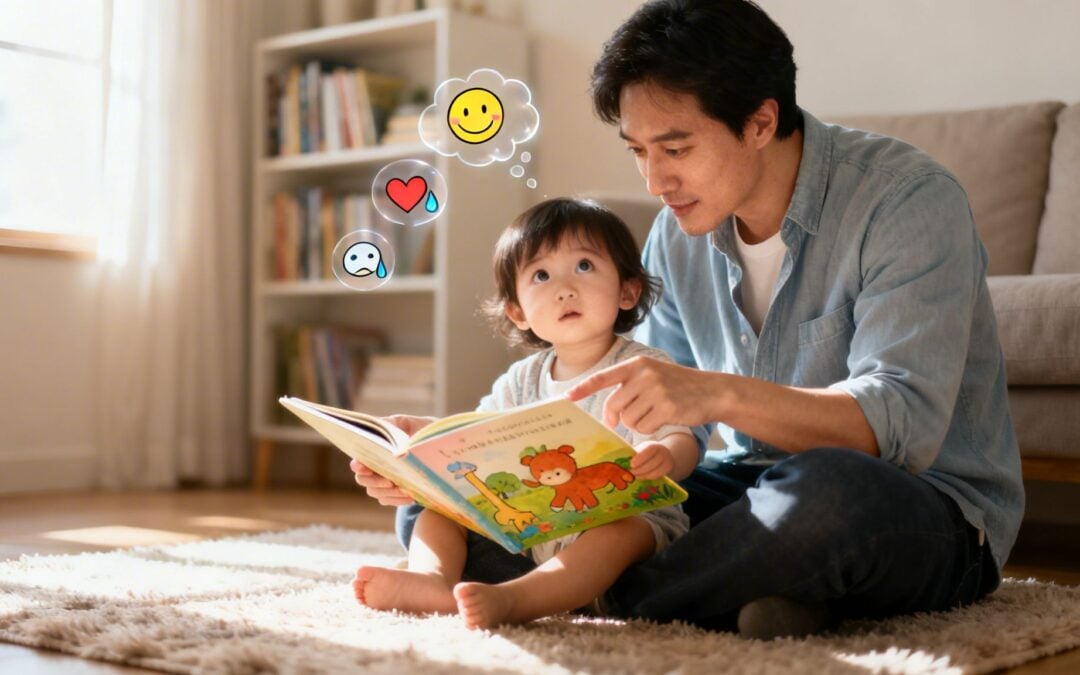
Using books on emotions for children is one of the most powerful and natural ways to build emotional intelligence. Stories give kids the words and a safe space to understand big, complicated feelings—like sadness, joy, and frustration—in a way that makes perfect sense to them.
How Stories Build Emotionally Resilient Children
Think of a storybook as a “flight simulator for feelings.” It lets a child step into a tricky situation, like watching a character feel left out on the playground, but from a totally safe distance. They get to process the character’s disappointment and watch them solve the problem, all without feeling overwhelmed themselves.
This kind of safe exploration is where empathy and social skills really begin to take root. When kids see a character navigate a big feeling, it provides a mental blueprint they can use later when a similar situation pops up in their own lives. For instance, after reading a story about a little bear who shares his favorite toy, a parent can reference it on the playground by saying, “Remember how Barnaby Bear felt so happy when he shared his red ball? Maybe you could try sharing your truck with Leo.”
Creating a Shared Emotional Language
When you read together about a grumpy badger or a nervous squirrel, you’re not just reading a story—you’re building a shared vocabulary. This makes it so much easier for a child to express themselves down the road.
Instead of a meltdown, they might be able to say, “I feel grumpy like that badger today.” That shared language turns abstract feelings into something concrete they can point to, building a bridge between their inner world and your ability to help them.
Practical Example: A teacher reads “Grumpy Monkey” by Suzanne Lang to her class. The next day, a student is quiet and withdrawn. The teacher can gently ask, “Are you feeling a bit like Grumpy Monkey today?” This gives the child a simple, low-pressure way to confirm their feelings without having to find complex words.
This growing focus on emotional literacy isn’t just happening in homes and classrooms; it’s being noticed across the publishing world. In fact, the global children’s book market is expected to hit USD 882.08 million by 2035, a trend that’s heavily influenced by the new emphasis on social-emotional development in early education. You can read more about this market growth on Global Market Statistics.
From Storytime to Real-Life Skills
Reading a book about feelings does more than just fill a few minutes before bedtime. It actively builds the foundation for lifelong emotional resilience. It’s a chance to connect and grow, turning a simple story into a truly powerful tool.
A story gives a child a safe place to put their feelings. When a character is sad or angry, the child can feel it too, but from the comfort of a lap or a cozy reading corner. This is how empathy begins.
By exploring these stories together, you’re helping your child practice skills that will last a lifetime. For more ideas, check out our guide on building emotional resilience in kids. This simple act of reading together strengthens their ability to understand themselves and connect meaningfully with the world around them.
Choosing the Right Emotional Book for Any Age
Finding the perfect book to talk about feelings can feel like searching for a needle in a haystack. The real secret is matching the book’s content and complexity to your child’s developmental stage. What captivates a toddler simply won’t resonate with a third-grader, so knowing what to look for makes all the difference.
For the youngest children, the best books on emotions for children lean on simple language and crystal-clear, expressive illustrations. A toddler or preschooler connects best when a character’s feeling is impossible to miss—think of a rabbit’s big, sad tears or a bear’s angry, scrunched-up face. The emotional journey should be straightforward: a character feels a big emotion, and then they (or a caring friend) find a simple way to feel better.
As children grow, they’re ready for more complex stories. Elementary-aged kids can follow narratives with multiple characters, nuanced social moments, and internal conflicts. They can understand a character who feels embarrassed and a little bit proud at the same time, or one who is grappling with jealousy toward a friend.
Matching Books to Social-Emotional Skills
To make this even easier, you can filter your choices by the specific social-emotional skills you want to nurture. Different books are better suited for teaching different competencies. For a deeper look at these skills, you can explore our overview of what social-emotional development is and see how it unfolds at various stages.
Choosing a book isn’t just about the story; it’s about finding the right mirror for your child’s inner world. The right book makes them feel seen, understood, and equipped to handle their own emotional experiences.
And don’t forget the power of the cover! The visual presentation has a huge impact on a book’s initial appeal. The colors and imagery can draw a child in before you even read the first page. It’s fascinating to see how color psychology influences book cover perception and why certain designs connect so strongly with young readers.
To give you a practical tool, here is a simple framework for selecting books based on age and the specific SEL competency you want to focus on.
Book Selection Guide by Age and SEL Competency
This table breaks down what to look for when choosing books on emotions for children at different developmental stages, turning an overwhelming search into a focused one.
Age Group
SEL Competency Focus
Key Book Characteristics
Practical Example
Toddlers (1-3)
Self-Awareness (Identifying basic feelings)
Features brightly colored, simple illustrations with clearly labeled emotions (e.g., “happy,” “sad”). Uses minimal text and a repetitive structure.
A book where each page shows an animal with a distinct facial expression. You can point and say, “Look, the lion is sad. Can you make a sad face?” Then, mirror their expression back to them.
Preschool (3-5)
Self-Management (Learning coping strategies)
The main character experiences a common frustration (like not getting a turn) and learns a simple calming technique, such as taking a deep breath or finding a quiet space.
A story about a little monster who gets angry when her block tower falls. She learns to stomp her feet three times and roar into her hands to let the “angry energy” out. You can practice this action together.
Early Elem. (6-8)
Empathy & Social Awareness (Understanding others’ perspectives)
The story shows a situation from more than one character’s point of view or features a main character who misinterprets a friend’s actions and later learns why they behaved that way.
A book about two friends who want to play different games. The story shows why each friend feels strongly about their choice. You can pause and ask, “How do you think Maya feels right now? What about Sam?”
Upper Elem. (9-11)
Relationship Skills & Responsible Decision-Making
Characters navigate complex social dynamics like peer pressure, exclusion, or ethical dilemmas. The plot shows the consequences of different choices.
A chapter book where the protagonist has to decide whether to join in on teasing a new student or to stand up for them. You can discuss the choices: “What do you think would happen if they told the teaser to stop? What might happen if they didn’t?”
Think of this as your cheat sheet. By keeping your child’s age and your learning goal in mind, you can confidently pick stories that not only entertain but also empower.
Turning Storytime Into an Empathy Workout
Just reading the words on a page is one thing. But when we use books on emotions for children, the real magic happens when we turn storytime from a passive activity into an active, emotional exploration. With a few simple shifts, you can transform any book into a workout for the heart, building self-awareness and empathy with every page you turn.
This isn’t about quizzing kids or turning reading into a test. It’s about being curious together and creating space for them to connect a character’s journey to their own lives. When we read this way, it becomes a shared experience that strengthens our bond and their emotional toolkit.
The infographic below offers a simple way to think about choosing the right book. It helps you narrow down the options by starting with what’s age-appropriate, then thinking about the specific feelings you want to explore.
As the visual guide shows, starting with the child’s age group, focusing on a target emotion, and then looking for relatable character traits gives you a clear path to finding the perfect book for your needs.
Model Your Thinking with “Think-Alouds”
One of the most powerful things you can do is simply say what you’re thinking out loud as you read. This is called a Think-Aloud. It’s where you voice your own thoughts and reactions to the story, showing your child how a reader makes sense of what’s happening.
Think of yourself as an emotional tour guide for the story. You’re pointing out the important sights and helping them understand the landscape.
Practical Examples of a Think-Aloud:
(Frustration): “Wow, the bear looks so frustrated that he can’t get that honey. See how his face is all scrunched up? I get that way when my computer is being slow. It makes me want to sigh really loudly, like this… Hmph!”
(Sadness): “Oh, that little cloud looks pretty lonely. I wonder if she wishes she had a friend to float with. Her teardrop shape makes me feel a little sad for her.”
(Excitement): “Look at that huge smile! He must be so excited for his birthday party. He’s wiggling all over, just like you do when we are about to go to the park!”
Ask “I Wonder…” Questions
Instead of asking direct questions that have a right or wrong answer (like “How does he feel?”), try framing them with curiosity. Wondering Questions are open-ended and invite imagination without any pressure to be “correct.”
“I wonder…” questions shift the dynamic from a quiz to a shared exploration. They tell a child, “Your ideas are interesting to me,” which builds confidence and encourages them to think more deeply.
These questions open the door for conversation. And if your child doesn’t answer? That’s okay. Just asking the question plants a seed for them to think about later.
Practical Examples of “I Wonder…” Questions:
“I wonder what the fox is thinking right now, hiding behind that tree.”
“I wonder why she didn’t want to share her toy. Maybe she was worried it would break.”
“I wonder what they could do to solve this problem together. What’s one idea?”
Help Them Make Text-to-Self Connections
The real goal here is to help children see themselves in the story. We can gently guide this by making Text-to-Self Connections, linking what’s happening on the page to something in their own lives. This makes the emotional lesson feel personal, real, and much more likely to stick.
Practical Examples of a Text-to-Self Connection:
“This reminds me of when you were nervous on your first day of school. The character’s tummy feels all fluttery, just like you said yours did. It’s the same feeling, isn’t it?”
“Remember how proud you felt after you finished that huge puzzle? I bet the knight feels that exact same way right now after building that bridge.”
“The rabbit is feeling very shy. That’s a bit like how you feel sometimes when we go to a new birthday party, before you get to know the other kids.”
Exploring lists of the best read aloud books for first graders can be a great starting point for finding stories that spark these conversations. These simple techniques are foundational for social-emotional growth, and you can learn even more ways to build these skills by checking out our guide on how to build empathy in the classroom.
Bringing Emotional Lessons Off the Page
While reading is a powerful start, the real magic happens when the lessons from books on emotions for children leap off the page and into everyday life. The goal is to build a bridge between a character’s experience and a child’s own world.
Hands-on activities are the perfect way to make abstract feelings concrete, tangible, and manageable. They don’t need to be complicated, either. In fact, the simplest extensions are often the most effective because they anchor the story’s message in a physical or creative experience, helping a child embody the emotional skills they’ve just read about.
Creative Expression Activities
Art gives kids a way to process and express what they’re feeling inside, especially when they don’t have the words. After reading a story together, you can use creative prompts to help them explore the book’s themes and communicate their understanding in a whole new way.
Practical Examples:
Feelings Wheel: Grab a paper plate or draw a large circle and divide it into slices. In each slice, have your child draw a face showing a different emotion from the story—happy, sad, frustrated, surprised. This becomes a practical tool they can later point to when they’re struggling to find the right words.
Character Sculptures: Using play-doh or clay, ask your child to sculpt the main character. You can prompt them by asking, “What did the character look like when they were feeling angry? Can you show me with the clay?” This connects the physical act of creation with emotional expression.
Draw the Feeling: After reading a book like “The Color Monster,” give your child crayons and paper. Say, “The monster felt all mixed up inside. What do your feelings look like today? Can you draw them?” There are no rules—it could be scribbles, lines, or specific pictures.
Role-Playing and Problem-Solving
Acting out scenarios from a book is like a dress rehearsal for real life. Role-playing allows children to practice empathy, communication, and conflict resolution in a safe, low-stakes environment. It’s a chance to try out different responses and see what works.
When a child role-plays a character’s dilemma, they are literally stepping into their shoes. This practice moves empathy from an abstract idea to a felt experience, building a crucial foundation for strong relationship skills.
This is especially powerful when a story’s character makes a poor choice. You can pause the reading and act out a different, more positive way to handle the problem. This gives your child a practical script they can use later. For more guidance on this, our article offers great tips on how to express your feelings in words.
Practical Example: If a book features friends arguing over a toy, you and your child can act it out. You can play one friend, and your child can be the other. First, act it out just like the book. Then, ask, “What’s another way the story could go? Let’s try it!” You could practice taking turns or finding a new game to play together.
Mindfulness and Movement
Connecting emotions to the body is a game-changer for developing self-regulation. Movement activities can release the pent-up energy that comes with feelings like anger or excitement, while mindfulness exercises can calm anxiety and frustration. These activities make emotional management a full-body experience.
Actionable Exercises:
Dragon Breaths: After reading about a frustrated or angry character, try practicing “dragon breaths.” Breathe in deeply through your nose, then open your mouth and exhale forcefully like a dragon breathing fire. It’s a fun and surprisingly effective way to release tension.
Feelings Dance: Put on some music and call out different emotions from the story. Ask your child to dance how that feeling would move—maybe a slow, heavy dance for sadness, or a fast, bouncy one for joy. This helps them understand how emotions feel in their bodies.
Worry Stones: After reading about a worried character, find a smooth, small stone. Explain that this can be a “worry stone.” When they feel worried, they can hold it and rub it with their thumb, focusing on how it feels in their hand. This gives them a physical anchor to ground themselves.
As parents and educators look for more engaging tools, the market is responding. The interactive children’s book market is projected to grow to USD 1.04 billion by 2033, driven by an increasing focus on early literacy and emotional development.
By bringing these simple, hands-on activities into your routine, you turn storytime into an active, memorable lesson that equips children with the tools they need to thrive.
Building an Inclusive Emotional Bookshelf
For a story to truly connect, a child needs to see their own world reflected in its pages. A powerful collection of books on emotions for children is both a mirror and a window. It’s a mirror that shows a child they are seen, and a window that offers a respectful glimpse into the lives of others. Both are absolutely essential for building genuine empathy.
When kids see characters who look like them, live in families like theirs, or have abilities similar to their own, it’s a powerful validation. It sends a quiet but clear message: “Your feelings are normal, and your story matters.” Without that connection, the emotional lessons in a book can feel distant or abstract.
This is exactly why taking a thoughtful look at your bookshelf—whether at home or in the classroom—is so important. The goal isn’t just diversity for diversity’s sake; it’s to create a library where all kinds of characters experience universal emotions. This teaches kids that feelings are a shared human experience that cuts across all our differences.
How to Audit Your Bookshelf for Inclusion
Take a moment and look at your book collection with fresh eyes. This isn’t about judgment. It’s about being intentional. As you scan the spines and covers, ask yourself a few practical questions:
Cultural Representation: Do the characters come from a range of cultural and ethnic backgrounds? Look for stories that authentically show different traditions, languages, and settings. For example, look for books where a child celebrates Diwali or Ramadan, not just Christmas.
Family Structures: Do your books show different kinds of families? Try to include stories with single parents, grandparents as caregivers, same-sex parents, and blended or adoptive families. A book like “Stella Brings the Family” is a great example.
Varying Abilities: Are there characters with physical disabilities, neurodiversity, or different learning styles? It’s vital for children to see disability portrayed as a natural and normal part of human diversity. For example, seek out stories featuring a main character who uses a wheelchair or is on the autism spectrum.
Socioeconomic Diversity: Do the homes, neighborhoods, and experiences of the characters reflect different economic situations? This helps show that feelings are universal, no matter what a family’s circumstances are. Look for stories set in apartments as well as houses, or where a family takes the bus instead of driving a car.
A truly inclusive bookshelf goes way beyond tokenism. Instead of having just one book about a specific culture, try to find multiple stories where diverse characters are simply living their lives—feeling joy, solving problems, and figuring out friendships.
An inclusive bookshelf sends a powerful message: everyone belongs in the story. It teaches children not just to tolerate differences but to genuinely celebrate and understand them, building a foundation for a more compassionate worldview.
And this isn’t just a niche idea; it’s a growing movement. The market for personalized children’s books in the U.S. is expected to hit USD 1,128.52 million by 2032. This trend shows a huge demand from families who want books where their child can be the hero of the story. As you can see in the U.S. Personalized Children’s Books Market Report, this directly supports social-emotional learning by making these lessons deeply personal and relatable.
By carefully and intentionally curating a diverse library, you help every child feel seen and valued, all while teaching every child to appreciate the rich, wonderful tapestry of the world around them.
Your Questions About Emotional Storybooks Answered
It’s one thing to hear that books on emotions for children are a great tool, but it’s another to put it into practice. As you start exploring this world, questions are bound to come up.
Let’s walk through some of the most common ones we hear from parents and educators, with clear, supportive answers to help you along the way.
What if My Child Resists Books About Feelings?
This is a really common hurdle. The moment a book feels like a “lesson,” some kids will check out immediately. The secret is to avoid making it feel like medicine.
Instead, shift your focus to finding stories with fantastic, exciting plots where emotions are just a natural part of the adventure, not the entire point.
Practical Example: If your child loves trucks, find a story about a little dump truck who feels sad because he’s too small to carry big rocks, and then discovers his unique strength. The focus is on the trucks, but the feeling of inadequacy and self-acceptance is woven in naturally.
Look for books that tap into what they already love—dinosaurs, outer space, building amazing forts—that just happen to feature characters who get frustrated, feel overjoyed, or have to solve a problem with a friend. Graphic novels can also be a game-changer here; their visual storytelling is incredibly engaging and shows emotions through expressions and body language, which is often more powerful than words. The goal is to meet them where they are and sneak the emotional vocabulary into a story they can’t put down.
When a child resists a ‘feelings book,’ it’s often because they sense a lecture coming. The solution is to embed the lesson in a great story. A tale about a brave knight who feels scared before facing a dragon is still an adventure story first.
How Do I Handle Difficult Topics Like Grief or Anger?
Books are incredible for this because they create a safe, contained space to explore really tough emotions from a distance. A great first step is always to read the book yourself first. That way, you’re prepared for the tricky parts and can guide the conversation with confidence.
When you get to a heavy moment in the story, just pause. Validate the emotion without any judgment at all.
Practical Example: You are reading “The Invisible String” by Patrice Karst, a book about connection even when loved ones are far away. When you reach the part about a loved one in heaven, you can pause and say, “Wow, the characters feel so sad because they miss their uncle. It hurts our hearts when we miss someone we love. It’s okay to feel that way.” Then, you can talk about the “invisible string” that connects you to people you miss.
Keep your language simple and honest. Answer their questions directly, but don’t feel like you have to give them more information than they’re asking for. The most important thing is to reassure them that all feelings are okay—even the big, uncomfortable ones. Frame the book as a way to learn what we can do when we feel that way.
How Can Books Actually Help with Tantrums?
They absolutely can. Think of books as a proactive tool for managing those tough behaviors. When you read a story about a character who gets mad and learns to take three deep “lion breaths,” you’re planting a seed. You’re giving your child a mental script and a concrete strategy to use before a tantrum even begins.
These stories create a shared language you can draw on later, even in the heat of the moment.
Practical Example: You’ve read “When Sophie Gets Angry—Really, Really Angry…” by Molly Bang. Later that week, your child gets frustrated and is about to throw a toy. You can intervene gently by saying, “You are getting really, really angry, just like Sophie. Remember what she did? She ran and ran until she felt better. Let’s go outside and run to the big tree and back to let our angry energy out.”
Books don’t magically erase big feelings or replace the need for direct guidance, but they build a crucial foundation of emotional understanding. They give kids tangible tools for self-regulation and problem-solving, which, over time, can make a huge difference in reducing those difficult moments by equipping them with a better way forward.
At Soul Shoppe, we believe in equipping every child with the tools they need for a lifetime of emotional well-being. Our programs bring these concepts to life, helping school communities create environments where every child feels safe, seen, and supported. To learn how we can help your school, visit us at https://www.soulshoppe.org.
When we talk about teaching empathy, it’s easy to jump to the classic phrase, “walk a mile in someone else’s shoes.” It’s a nice starting point, but that idea barely scratches the surface. Empathy isn’t a single action or a fixed trait some kids just have. It’s a complex skill that we can intentionally nurture in every child, and it looks different as they grow.
Understanding What Empathy Actually Looks Like in Kids
To teach empathy well, we first have to understand what we’re looking for. It’s less about a vague feeling and more about a set of interconnected abilities we can actually observe, label, and practice with our kids.
The Three Types of Empathy in Action
Breaking empathy down into three distinct types really helps clarify what we’re aiming for in the classroom or at home. Each one builds on the last, creating a clear path from just understanding a feeling to doing something about it.
Cognitive Empathy (Perspective-Taking): This is the “thinking” part of empathy. It’s a child’s ability to understand what someone else might be feeling or thinking from their point of view. For example, a student might notice their friend didn’t get picked for the soccer team and think, “She must be so disappointed because she practiced all week.” They can grasp the situation intellectually without necessarily feeling the emotion themselves.
Emotional Empathy (Shared Feelings): This is the “feeling” part. Here, a child doesn’t just understand another’s emotion—they feel it right along with them. This is where deep connection happens, and it’s essential for building authentic relationships. For instance, when that same student sees their friend’s sad face, they might feel a lump in their own throat because they remember the sting of being left out.
Compassionate Empathy (Taking Action): This is the “doing” part. It’s what moves a child from understanding and feeling to being motivated to help. This is where empathy becomes a true force for good, turning an internal experience into an external act of kindness. For example, a student might go over to their friend and say, “I’m sorry you didn’t make the team. Do you want to practice together after school tomorrow?”
Empathy is the skill of connection. When we teach it, we’re not just creating kinder kids; we’re building stronger communities, one interaction at a time. It’s the foundation for collaboration, conflict resolution, and a genuine sense of belonging.
Real-World Classroom Scenarios
So what does this all look like during a typical school day? Let’s imagine a student, Leo, forgets his lunch at home.
A classmate with cognitive empathy might think, “Leo must be really hungry and maybe a little embarrassed.” They get what’s happening on an intellectual level.
Another student showing emotional empathy might actually feel a pang of worry or sadness for Leo. They might remember a time they were in the same boat and physically share in his distress.
But a student with compassionate empathy takes it one step further. They’re the one who walks over and says, “You can have half of my sandwich,” or asks the teacher if there’s any extra food. Their understanding and shared feelings spurred them to act.
Our goal as educators and parents is to guide children through all three stages, fostering a complete empathetic response. Building these skills is a crucial part of healthy child emotional development and sets them up for life.
The need for this guidance is clearer than ever. The OECD’s 2023 Survey on Social and Emotional Skills found that students in supportive, empathetic school climates showed up to 20-30% higher empathy scores. This highlights the direct and powerful impact of intentionally teaching these skills.
Integrating Empathy Into Daily Routines and Conversations
Teaching empathy isn’t about scheduling another lesson into an already packed day. It’s about weaving it into the very fabric of our interactions. The most powerful learning happens in those small, in-between moments—during morning greetings, snack time squabbles, and casual chats on the way to the bus.
By making a few intentional shifts in our language and routines, we can create an environment where empathy becomes a natural reflex, not a forced behavior. The goal is to make talking about feelings as normal and unremarkable as talking about the weather.
Start the Day with a Feelings Check-In
A simple and incredibly effective way to start is with a daily “Feelings Check-In.” This quick routine gives kids practice identifying and naming their emotions, which is the foundational first step to recognizing those same emotions in other people.
You can use an emotion wheel or a simple chart where kids can point to or name how they’re feeling. This isn’t just for the big, loud feelings like anger or sadness. It’s just as important to acknowledge joy, excitement, or even just feeling tired and a bit quiet.
In the Classroom: A teacher might say, “Good morning, everyone! Time for our Feelings Check-In. I’ll start. Today, I’m feeling hopeful because I’m so excited about our science experiment.”
At Home: A parent could ask at the breakfast table, “How’s everyone’s emotional battery today? Mine is feeling pretty charged up and happy.”
This simple act validates every feeling as acceptable and normal. It also gives you a valuable peek into a child’s inner world before the day’s challenges even begin. Consistently using practices like this is key to building emotionally grounded routines for kids.
Replace Dismissive Phrases with Validating Language
The words we choose have immense power. So often, we fall back on phrases that seem harmless, like “You’re fine,” “Don’t cry,” or “It’s not a big deal.” But these can inadvertently teach children that their feelings are wrong, overblown, or unimportant.
Swapping these automatic responses with validating statements shows kids that you see them and accept their emotional state. This tiny shift in language models how to respond with empathy, moving the conversation from dismissal to connection and inviting the child to explore their feelings in a safe space.
Language Swaps to Practice:
Instead of saying this…
Try saying this…
“You’re overreacting.”
“You’re having a really big reaction. Tell me what’s going on.”
“It’s not that big of a deal.”
“I can see this is really important to you. Let’s talk about it.”
“Just ignore them.”
“It sounds like those words really hurt your feelings.”
“You’re fine.”
“I see that you’re really frustrated right now. I’m here to help.”
This approach doesn’t mean you’re endorsing the behavior, but it acknowledges the very real emotion underneath it. Once a child feels truly heard, they become much more open to problem-solving and guidance.
Model Empathetic Listening During Disagreements
Conflicts aren’t just problems to be solved; they are prime opportunities for teaching empathy in real-time. When you step in to mediate a disagreement, your most important job is to model how to listen to understand, not just to respond.
A fantastic technique is to have each child repeat back what they heard the other person say before they get to share their own side. It immediately slows things down and forces them to actively listen instead of just planning their rebuttal.
A Practical Script for Mediating Peer Conflicts:
Acknowledge Both Sides: Start with, “Okay, I can see you are both very upset. Let’s figure this out together.”
One Person Speaks: “Sam, can you tell Maya what happened from your side? Maya, your job right now is just to listen.”
Reflect and Validate: “Maya, what did you hear Sam say he was feeling?” (Help her find the words if she needs it). “Sam, is that right?”
Switch Roles: “Great. Now, Maya, it’s your turn to share how you felt. Sam, you’ll be our listener.”
Find Common Ground: “It sounds like Sam felt frustrated because he wanted to use the blue marker, and Maya felt sad because she thought he was taking it from her. Do I have that right?”
This process gently shifts the focus from blame to understanding. To help guide these discussions and prompt deeper reflection, this resource with over 150 open-ended questions examples is fantastic for helping children explore their feelings and the perspectives of others.
By consistently integrating these small practices, we do more than just teach empathy—we cultivate a culture of empathy. Children learn that their feelings matter, that others’ feelings matter, and that connection is always possible, even in disagreement.
Actionable Empathy-Building Activities for Different Age Groups
Knowing how to talk about empathy is one thing, but bringing it to life with hands-on activities is where the real learning happens. The key is to choose activities that match a child’s developmental stage. What works for a five-year-old will look very different from what engages a thirteen-year-old, but the goal is the same: building the skill of perspective-taking.
And this isn’t just theory. Just imagine transforming a classroom in only 10 weeks with a simple empathy program. That’s exactly what happened in a groundbreaking study of 900 students. Before the program, teachers rated students’ empathy at an average of 5.55 out of 10. Afterward? It jumped to 7.
Even more telling, behavior scores soared from 6.52 to 7.89. These numbers show real, measurable improvements in how kids treat each other every single day. Consistent practice works.
Grades K–2: Building the Foundation
For our youngest learners, empathy starts with understanding and naming their own feelings. The goal is to connect emotions to facial expressions, body language, and specific situations in a way that feels like play.
Emotion Charades is a fantastic place to start.
How it works: Write simple emotions (happy, sad, angry, surprised, scared) on cards. A child picks a card and acts out the emotion without speaking while the others guess.
Materials: Index cards, a marker, and a bit of open space.
Discussion Prompts: Keep it simple and direct. Ask things like, “What did you see that made you guess ‘sad’?” or “When have you felt surprised like that?”
Puppets are another wonderfully effective tool. Grab some socks or paper bags to create simple characters and act out common social hiccups, like one puppet snatching a toy from another. This gives kids a safe, third-person way to explore tricky social dynamics without the pressure. For example, you can act out a scene where one puppet feels left out during playtime, and then ask the children, “What could the other puppets do to help their friend feel included?”
Grades 3–5: Stepping Into Someone Else’s Shoes
At this age, kids are ready to move beyond simply identifying emotions and can start genuinely thinking about the perspectives of others. They’re beginning to understand that people have different roles, experiences, and viewpoints.
This is the perfect time for a project like “Perspective Detectives.”
How it works: Students become investigators, tasked with interviewing different staff members at school—like the custodian, a cafeteria worker, or the school secretary.
Example Questions: Help them prepare questions that dig a little deeper, such as, “What’s the hardest part of your job?” or “What’s something you wish students knew about your work?”
The Goal: The kids then present their findings to the class, sharing what they learned about the daily lives and feelings of the people who help their school run. This activity directly teaches them that every person has a unique and valuable story.
“When children learn to see the world from another’s point of view, they don’t just become kinder—they become better problem-solvers, collaborators, and friends.”
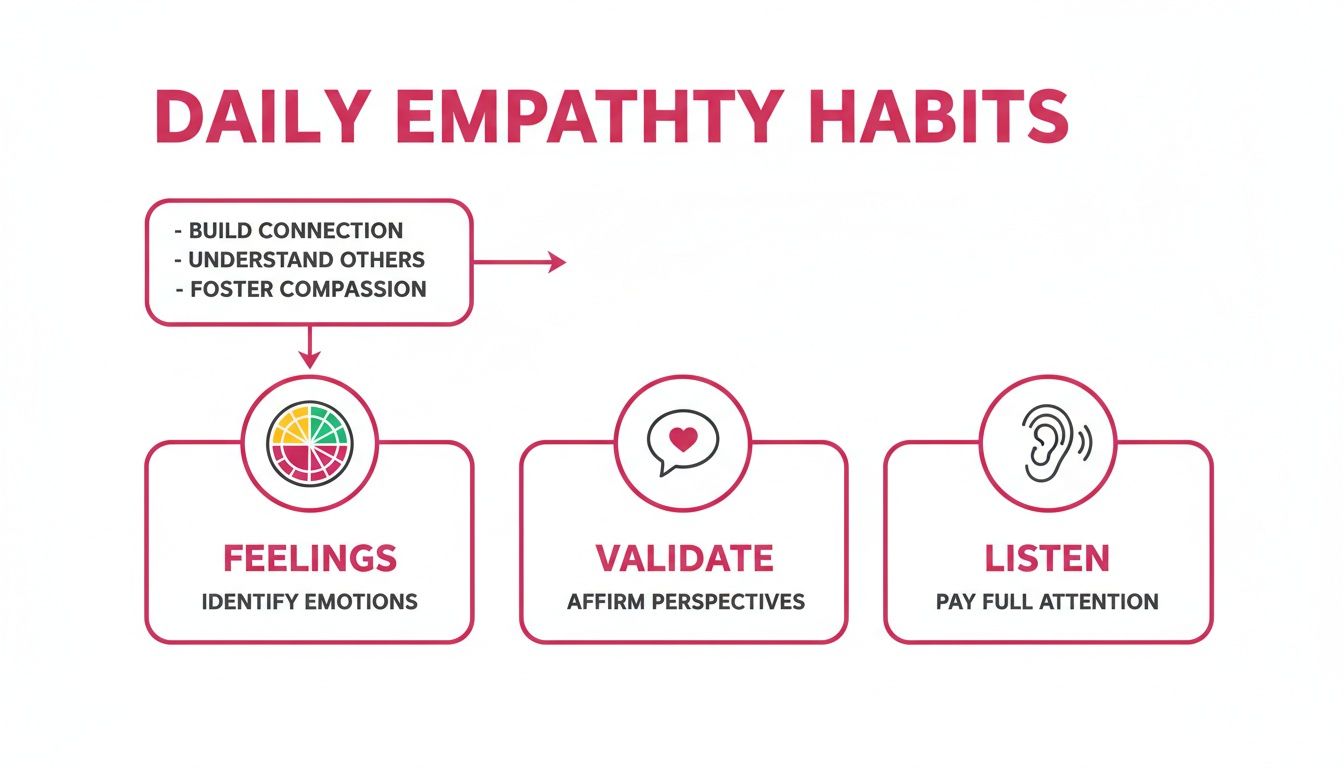
This visual is a great reminder that daily empathy is built on three pillars: noticing feelings, validating them in others, and listening to truly understand.
Grades 6–8: Exploring Complex Perspectives
Middle schoolers can handle more complex and abstract scenarios. They’re grappling with their own identities and are capable of considering nuanced ethical dilemmas and motivations.
“Scenario Reversal” Journaling is a powerful exercise that challenges them to dig deep into perspective-taking.
How it works: Give students a short story or a scene from a book they’ve all read. Their task is to rewrite it from the perspective of the antagonist or a minor character.
Example: Imagine rewriting a chapter of Harry Potter from Draco Malfoy’s point of view. What are their motivations, fears, and justifications for their actions? Or rewrite a scene from the perspective of a quiet background character who just observed the main action.
Discussion Prompts: Spark conversation with questions like, “Did writing from this perspective change how you felt about the character?” and “What did you learn about their motivations that you didn’t see before?”
Another fantastic activity is to hold structured debates on ethical dilemmas. Present a scenario with no easy “right” answer and assign students to argue for different sides, regardless of their personal opinions. For example, “A new factory will bring jobs to your town but might pollute the river. Should it be built?” This forces them to build a case from a viewpoint they may not naturally hold, stretching their empathy muscles in a new way.
To help you get started, here’s a quick-reference table with more ideas you can adapt for your classroom or home.
Age-Appropriate Empathy-Building Activities
Grade Level
Activity Example
Primary Learning Objective
Materials Needed
K–2
Feelings Faces Collage
To identify and name a range of emotions using visual cues.
Magazines, scissors, glue, paper.
3–5
“Day in the Life” Story Swap
To understand and articulate another person’s daily experiences.
To analyze a real-world issue from multiple stakeholder viewpoints.
Whiteboard, markers, articles or videos on a local issue.
These activities are just starting points, of course. The most important thing is creating consistent opportunities for kids to practice seeing the world through someone else’s eyes.
For an even wider range of ideas, check out our complete guide to social skills activities for kids that you can easily adapt for any age group.
Using Stories and Role-Playing to Cultivate Perspective
Stories are like empathy gyms where kids can safely exercise their perspective-taking muscles. When a child gets lost in a good book or movie, they aren’t just following a plot; they’re stepping into another person’s world, feeling their joys, and wrestling with their problems. It’s a powerful and natural way to build empathy.
When kids connect with characters from different backgrounds, they start to see that their own experience isn’t the only one out there. Narratives give them a window into someone else’s inner life, making abstract ideas like compassion and understanding feel tangible and real.
Harnessing the Power of Storytelling
Of course, choosing the right stories is key. Look for books and short films that feature diverse characters and don’t shy away from complex social or emotional topics. The idea is to spark curiosity and conversation, not just to entertain.
Book Recommendations by Age Group:
For K–2:The Invisible Boy by Trudy Ludwig is a touching story about a boy named Brian who feels unseen by his classmates. It perfectly shows how small acts of kindness can make a huge difference in helping someone feel included.
For Grades 3–5:Wonder by R.J. Palacio offers a rich exploration of perspective. The story is told from multiple viewpoints, all centered around a boy with facial differences, which really drives the lesson home.
For Middle School:The Giver by Lois Lowry challenges older students to think about conformity, individuality, and what it truly means to feel. It’s a fantastic catalyst for deep, meaningful discussions.
But the real learning happens after the last page is turned. A good discussion is what transforms a simple reading session into a profound empathy lesson. You have to go beyond basic plot questions and dig into the characters’ emotional worlds. To get kids thinking more about what makes characters similar and different, an activity like the Same Same Different Game can be a really fun and useful tool.
Asking, “How would you feel if that happened to you?” is a good start. But a better question is, “What do you think the character was feeling but not saying?” This pushes kids to look for nonverbal cues and unspoken emotions—a critical empathy skill.
Bringing Empathy to Life with Role-Playing
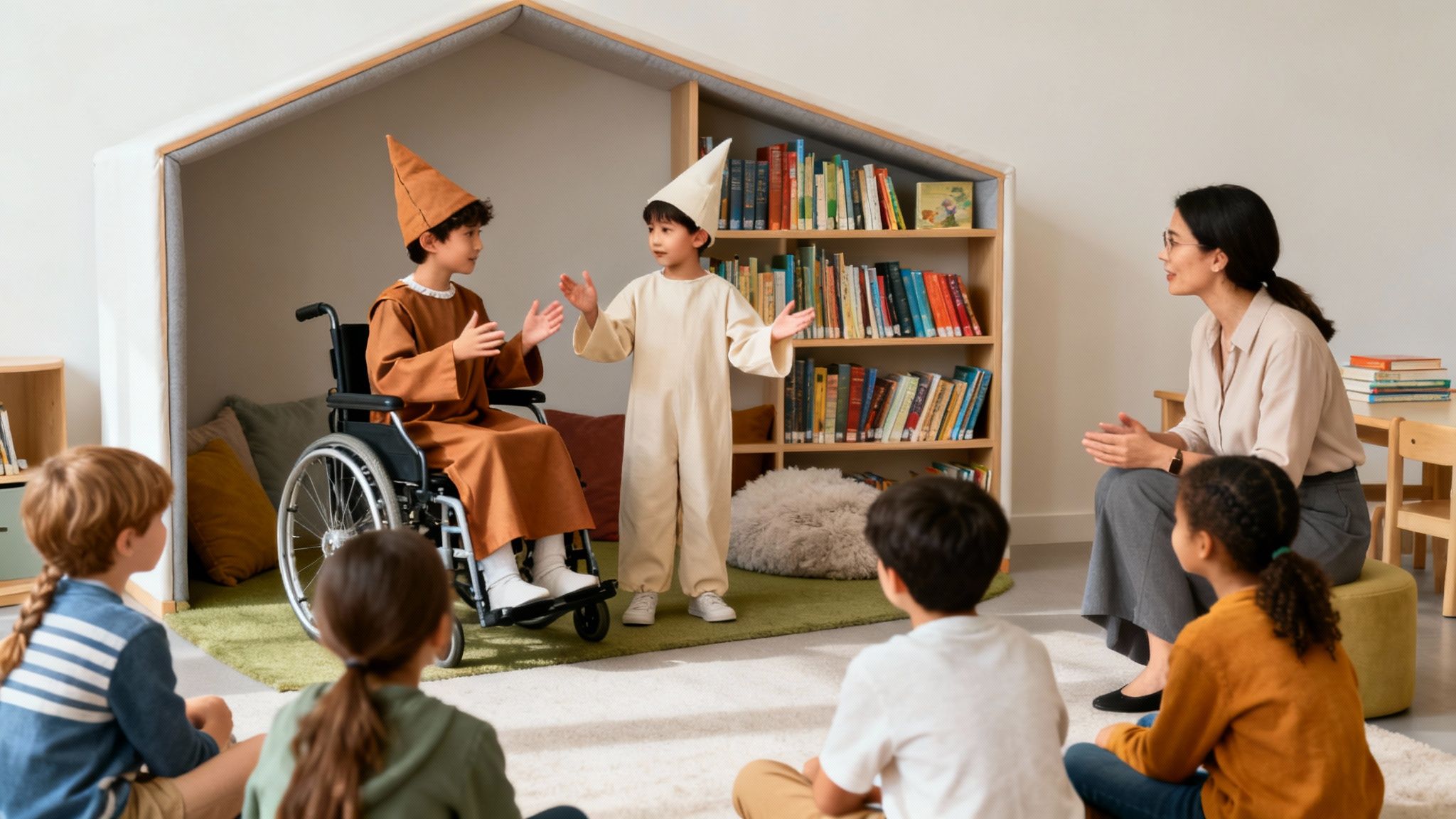
While stories let children observe empathy, role-playing lets them actually practice it. It gives them a safe, structured way to rehearse their responses to real-life social situations without the pressure of a real conflict. They get to try on different perspectives and test out solutions in a low-stakes environment.
This kind of hands-on practice is incredibly effective. For example, a study showed that when nursing students participated in cultural empathy simulations, they had profound “aha moments” that lectures just couldn’t provide. It deepened their connection with diverse patients and truly prepared them for empathetic practice in the real world.
Setting Up Simple Role-Playing Scenarios
You don’t need elaborate scripts or a costume closet. The most powerful scenarios are simple, relatable, and focused on a clear social skill. The goal here is rehearsal, not a Broadway performance.
Here’s a simple flow that works:
Introduce a Relatable Scenario: Start with something familiar. “Imagine you see a new student sitting all by themselves at lunch. What could you do?” Or, “Let’s pretend someone just said your drawing was ‘weird.’ How would that feel?”
Assign Roles: Keep it simple. You just need a few kids to act out the scene: the new student, a student who approaches them, and maybe an observer.
Act It Out (Briefly): Let them play out the scene for just a minute or two. The point is to see their natural instincts in action.
Pause and Discuss: This is the most important part. Ask the actors and observers questions like, “How did it feel to be the person sitting alone?” or “What words made you feel welcome?”
Try It Again: Based on the conversation, have them replay the scene, trying out a new strategy. This repetition is what builds muscle memory for kind and empathetic behavior.
By consistently using both stories and role-playing, you give kids a well-rounded way to learn empathy. They first learn to understand and feel for others through stories, and then they get to practice turning those feelings into compassionate action.
Building a Strong School-to-Home Empathy Partnership
Teaching empathy in the classroom is a powerful start, but the real magic happens when those lessons are echoed at home. Children thrive on consistency. When the same language and values around empathy show up at their desk and their dinner table, the learning sticks.
This isn’t about giving parents or teachers another thing to do. It’s about building simple, sustainable bridges between the two most important parts of a child’s world. The goal is to create a supportive ecosystem where seeing from someone else’s perspective is a shared—and celebrated—value.
Simple Strategies for Teachers to Engage Families
As an educator, you can create easy-to-use resources that bring classroom learning to life at home. The key is to keep it light, optional, and definitely not feeling like homework.
Weekly “Dinner Table Topics”: Send home a short email or a note in a backpack with one or two open-ended questions. These prompts can tie directly into the empathy skills you’re working on in class.
For K-2: “This week, ask your child: ‘Can you think of a time a friend was sad? What did you do to help them feel better?'”
For Grades 3-5: “A great dinner topic: ‘Talk about a character from a movie or book who made a bad choice. Why do you think they did it?'”
Family Kindness Challenge: Create a simple, monthly “Kindness Challenge” that families can tackle together. This shifts the focus from an individual task to a fun, collective effort.
Example: “This month, our challenge is to do something kind for a neighbor. You could bake cookies, offer to water their plants, or simply write them a nice card together.”
These small touchpoints keep the conversation going and show parents what their children are learning in a practical way. To really make this partnership strong, it helps to borrow from effective community engagement strategies that focus on building collaborative relationships around a shared goal.
Practical Ways Parents Can Weave Empathy into Daily Life
For parents, reinforcing empathy doesn’t mean you need a lesson plan. It’s about recognizing and using the countless teaching moments that pop up naturally every single day.
The most powerful empathy lessons often happen in unplanned moments. By being intentional with our language during a movie night or a trip to the grocery store, we can turn ordinary routines into extraordinary learning opportunities.
Think about the things you already do together. With just a slight shift in focus, they can become rich empathy-building experiences.
Turn Everyday Activities into Empathy Practice:
Activity
How to Weave in Empathy
Watching a Movie or TV Show
Pause and talk about what motivates a character. Ask, “Why do you think she did that? How do you think she was feeling when she wasn’t invited to the party?”
Running Errands
Point out community helpers—the cashier, the mail carrier, the sanitation worker. “What would our day be like without their help? Their job looks hard sometimes.”
Reading a Bedtime Story
Go beyond the plot. Ask about the feelings of other characters. “How do you think the little bear felt when Goldilocks ate his porridge and broke his chair?”
Discussing Their Day
When they share a story about a conflict with a friend, gently probe for the other side. “That sounds really frustrating. I wonder what was going on for Alex that made him say that?”
By creating this seamless connection between school and home, we send a clear and consistent message. We show kids that empathy isn’t just a “school skill”—it’s a life skill that matters everywhere, to everyone.
Common Questions About Teaching Empathy
Even with the best lesson plans, teaching empathy in the real world can get messy. When you hit those inevitable roadblocks, it’s easy to feel stuck. Let’s walk through some of the most common questions that come up for both teachers and parents, with some practical answers you can use right away.
How Can I Teach Empathy to a Child Who Seems Less Empathetic?
First, remember that empathy is a skill we build, not a trait someone is born with. For a child who really struggles to connect with others’ feelings, the best place to start is with their own emotions.
Before they can understand how a friend feels, they need a solid vocabulary for their own feelings. Start by being their emotional mirror. When you see them getting frustrated, label it gently. Instead of reacting to the behavior, you could say, “Wow, it looks like you’re feeling really angry that your block tower fell down.”
Once they get good at recognizing what’s happening inside them, you can start building a bridge to understanding others. Stories and real-life moments are perfect for this.
Instead of a lecture or a punishment for taking a toy, try a simple, direct observation. “Look at Sarah’s face. She seems really sad because she wanted another turn.” This connects the action directly to the feeling it caused, which is far more powerful than a timeout. Patience is everything here; these small, consistent observations are what build the muscle of empathy over time.
What Is the Difference Between Empathy and Sympathy?
This is a huge one, and the distinction is critical.
Sympathy is feeling sorry for someone. It’s an outside-in perspective, like saying, “That’s too bad you fell.” While well-intentioned, sympathy can sometimes create distance, making the other person feel a bit like a victim.
Empathy, on the other hand, is about feeling with someone. It’s trying to imagine what their experience is like from the inside out. An empathetic response sounds more like, “Ouch, falling like that must have really hurt. Are you okay?” It creates connection.
Empathy is what builds a true sense of community and makes people feel seen. Sympathy can sometimes leave a person feeling even more alone. Our goal is always to model and encourage empathy, as it’s the skill that truly fosters strong, supportive relationships.
A great way to practice this is to reframe common scenarios. If a student is upset about a low grade, a sympathetic response is, “Oh no, that stinks.” An empathetic one goes a step further: “You look so disappointed. It’s tough when you study hard and don’t get the score you were hoping for.” It validates their feeling without just pitying the situation.
How Do I Know If My Efforts Are Working?
Progress isn’t going to show up on a report card. You’ll see it in the small, everyday interactions that shape your classroom or home culture. You’re looking for behavioral shifts, not a sudden personality transplant.
Keep an eye out for these positive signs:
More spontaneous sharing: Are kids offering to share supplies or take turns without you having to step in?
Offers of help: Do you see a child rush to help a classmate who dropped their books or is struggling with a zipper?
Shifts in conflict: Are disagreements on the playground being solved with words more often? For example, instead of pushing, a child says, “I was using that first!”
Empathetic language: Are you hearing kids use “I feel” statements or trying to guess how others feel? (“Maybe he’s mad because…”)
The truest sign of success isn’t one big, dramatic moment of kindness. It’s a classroom that just feels kinder, more collaborative, and more emotionally safe for everyone. Those small, positive shifts are the real measure of your impact.
At Soul Shoppe, we believe that teaching empathy creates safer, more connected school communities where every child can flourish. We provide students and educators with the practical tools needed to build healthy relationships, resolve conflicts, and foster a true sense of belonging.
Discover how our research-based programs can bring a culture of compassion to your school. Learn more about Soul Shoppe.