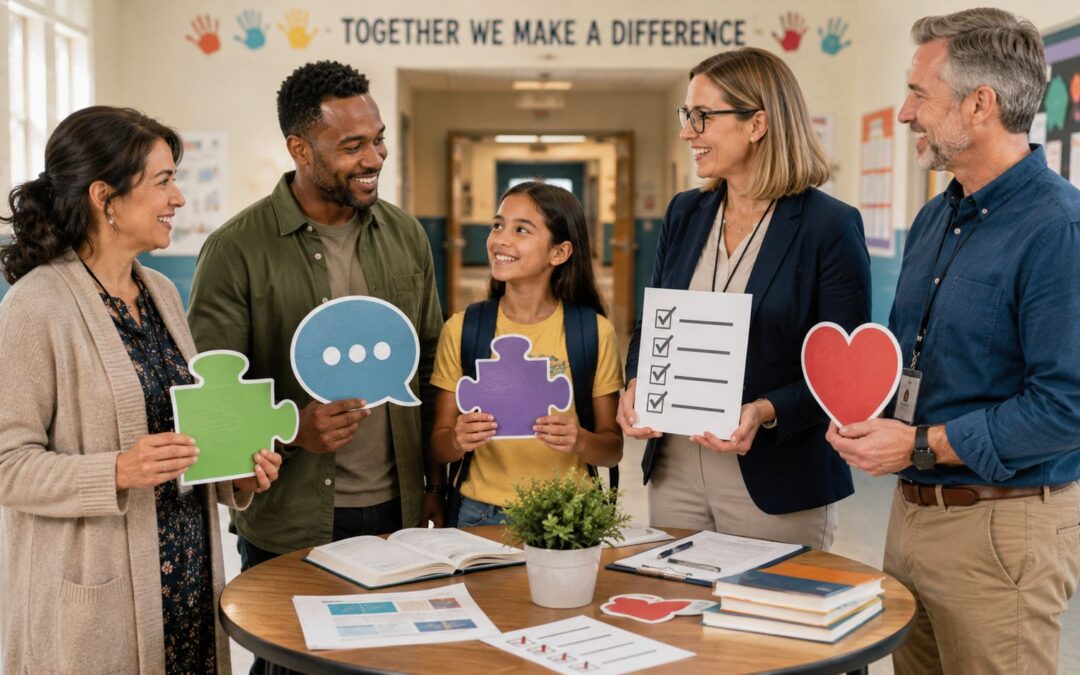
An SEL initiative can have thoughtful lessons, polished materials, and enthusiastic launch events, yet still struggle in practice. A teacher may use one set of words for calming down, families may use another at home, students may not understand how to ask for help, and community partners may not know how their work connects to the school's priorities. Without shared language and ownership, SEL becomes another program instead of part of daily life.

Strong stakeholder engagement strategies connect classrooms, homes, leadership teams, and community settings. They help schools listen before deciding, communicate during implementation, adapt when conditions change, and give students and families meaningful influence over the work. The OECD describes stakeholder engagement as involving people or groups with an interest in a topic in decision-making and implementation processes, a definition that fits K–8 SEL particularly well (OECD guidance on stakeholder engagement).

The strategies below pair each purpose with an implementation sequence, a usable communication template, measurement ideas, and a school-based example parents and teachers can adapt with students. Soul Shoppe is one relevant example of a social-emotional learning organization whose workshops, coaching, family resources, and shared tools can help schools build alignment across the wider community.

1. Collaborative Needs Assessment and Joint Planning

SEL planning works better when the people affected by the work help define the problem. Students notice peer dynamics adults may miss. Families understand home routines and stressors. Teachers see classroom patterns, while administrators and community partners understand operational constraints and available support.

Start by gathering input through more than one format. Combine a short survey with student listening circles, family conversations, teacher focus groups, and one-on-one interviews. Invite quieter participants directly, and use small groups so confident voices don't dominate. A planning committee with representatives from each stakeholder group can review themes, identify shared priorities, and turn them into an action plan.

Practical rule: Never ask for input without explaining how it will shape the next decision.

A district SEL coordinator might convene teachers, parents, student leaders, and community partners to identify bullying hotspots before introducing Soul Shoppe's Junior Giants Strike Out Bullying program. A principal could use family surveys and listening sessions to understand barriers to emotional regulation at home, then select Soul Shoppe modules that address those needs. In a classroom, a teacher might ask parents about student triggers and communication styles before choosing conflict-resolution tools that fit home practices.

Share the findings in plain language. Say, “Families asked for strategies that work during morning transitions, so we're adding a short routine for getting ready and leaving home.” Measure participation by stakeholder group, the priorities identified, and whether the final plan clearly responds to the feedback.
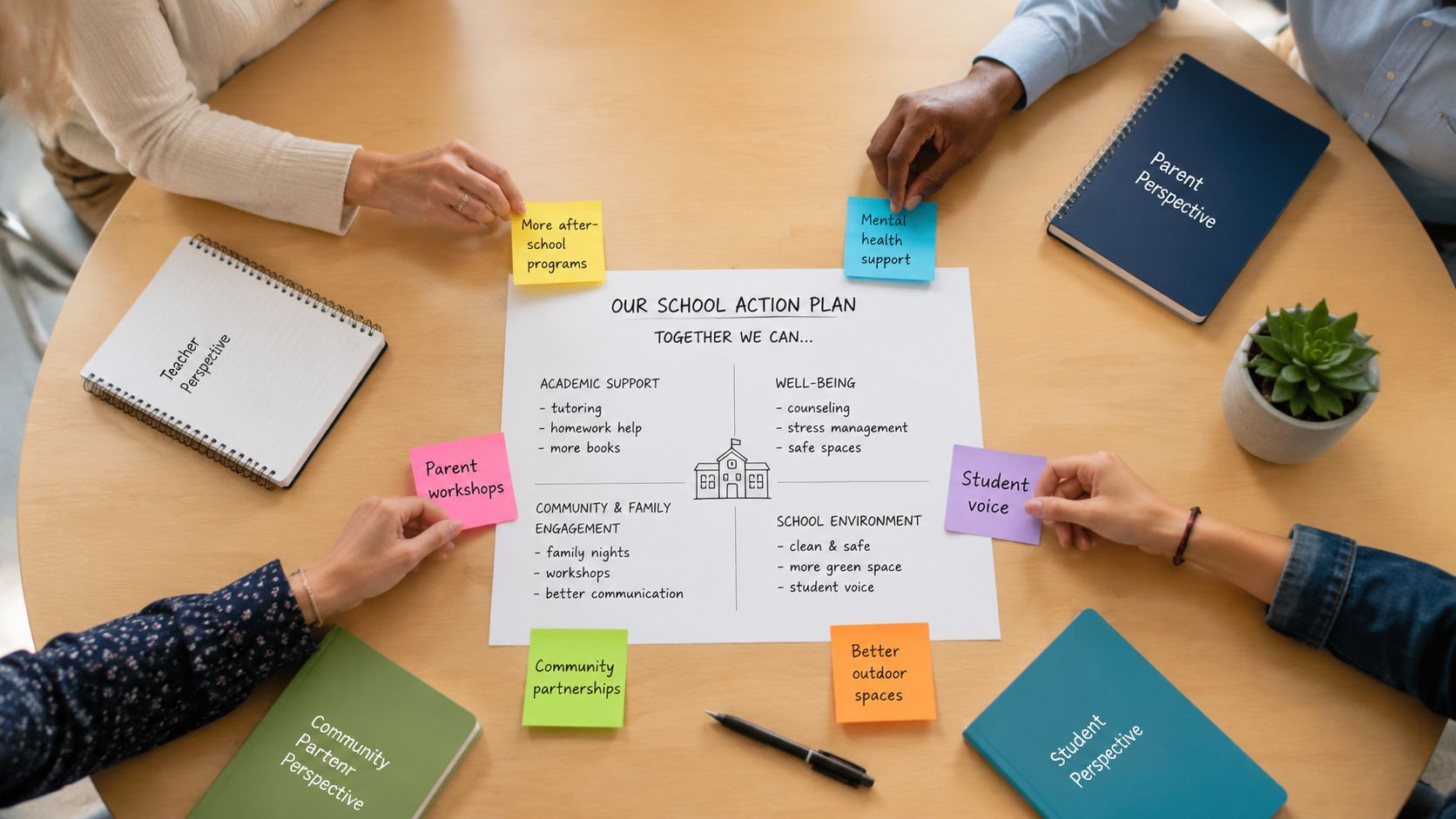
A diverse group of stakeholders collaboratively brainstorming a school action plan around a circular table with notes.

2. Regular Transparent Communication and Progress Sharing

Families and staff can't support an SEL initiative they rarely hear about. Communication should make the work visible without turning every update into a promotional message. Share what students are learning, where implementation is difficult, what has changed, and how adults can reinforce the same skills.

Create a communication calendar around natural milestones, such as staff training, classroom launches, family events, and review meetings. Use newsletters, parent meetings, classroom messages, digital platforms, short videos, and translated materials. Keep the content concrete. A simple explanation of a feelings thermometer is more useful than a general statement about emotional wellbeing.

A principal might send a monthly “SEL Snapshot” with one mindfulness practice from the Soul Shoppe curriculum and a brief update on classroom behavior patterns. A counselor could publish a quarterly “Conflict Resolution Corner” featuring a student success story, with permission, and a practice families can try at home. A district might share student videos about self-regulation tools, provided families and students have given appropriate consent.

Use a message structure that acknowledges reality:

What we're seeing: Students are using the conflict-resolution steps, but teachers need more support during unstructured times.
What we're changing: We're adding monthly coaching sessions and a short playground practice.
How families can help: Ask your child to describe the first step they use when a conflict begins.

Track whether updates reach different stakeholder groups, whether families understand the language being used, and whether communication includes both progress and challenges. A relationship survey can offer a useful benchmark. In a 2025 regulator survey, 51% of stakeholders reported satisfaction with their relationship, while the average relationship rating was 6.1 out of 10 (Stakeholder Satisfaction Survey 2025). The lesson for schools is practical: communication should be assessed by relationship quality, not message volume alone.

3. Structured Feedback Loops and Responsive Adaptation

A suggestion box isn't a feedback system if nobody knows what happened afterward. SEL contexts change as students move classrooms, family circumstances shift, and teachers discover which activities work in real conditions. Schools need a cycle that collects input, interprets it, makes a decision, and reports back.

Keep the first request short. Students can use a thumbs-up or thumbs-down signal, complete a one-sentence reflection, or choose one word that describes a session. Teachers can complete a brief “What's working, what's not” form each month. Families might respond to one focused question after a workshop rather than a long evaluation.

Then assign responsibility. A feedback steering committee can review comments from students, families, teachers, and partners, separate urgent concerns from longer-term patterns, and recommend adjustments. The committee should publish a short response, even when the answer is that a request cannot be adopted immediately.

For example, after a Soul Shoppe mindfulness workshop, students might report that a breathing technique felt difficult to use before a test. The teacher could adjust the pacing and offer a quieter alternative. A grade-level team could review teacher feedback about classroom conflict tools and request additional coaching. A parent advisory group examining bullying concerns might recommend a different emphasis in the Junior Giants program.

Use a visible response template:

  • You told us: Several students wanted more role-play practice.
  • We changed: The next lesson includes two student-led scenarios.
  • We'll check: Students will reflect on whether the practice felt useful.

Measure response rates qualitatively, the number and type of adjustments made, and whether the people who offered feedback can identify a change connected to their input. A feedback loop builds trust only when participants can see the connection between speaking and action.

4. Family Engagement Partnerships and Home Connection Programs

Students practice SEL across settings, not only during a scheduled lesson. Families need access to the same core language and tools, but schools shouldn't assume every caregiver can attend a meeting, use the same communication channel, or apply a strategy without adaptation.

Offer several entry points. Schedule family sessions at different times, provide interpretation and translated materials, and ask whether families prefer video, written guidance, group learning, or one-on-one support. Childcare and a light dinner can remove practical barriers for an in-person event. A parent leader model can also turn families from attendees into facilitators.

A school might host monthly Soul Shoppe Family Nights where caregivers practice the same self-regulation and mindfulness tools their children use. A teacher could send home a one-page guide titled “How to Use a Feelings Thermometer When Your Child Is Upset,” with three simple steps and a sample phrase. A district might offer a parent course through Soul Shoppe's app or learning platform so families can learn on their own schedules.

The home connection can begin at the dinner table. Schools can share dinner-time conversation starters that help caregivers ask about feelings, friendships, and problem-solving without turning the conversation into an interrogation.
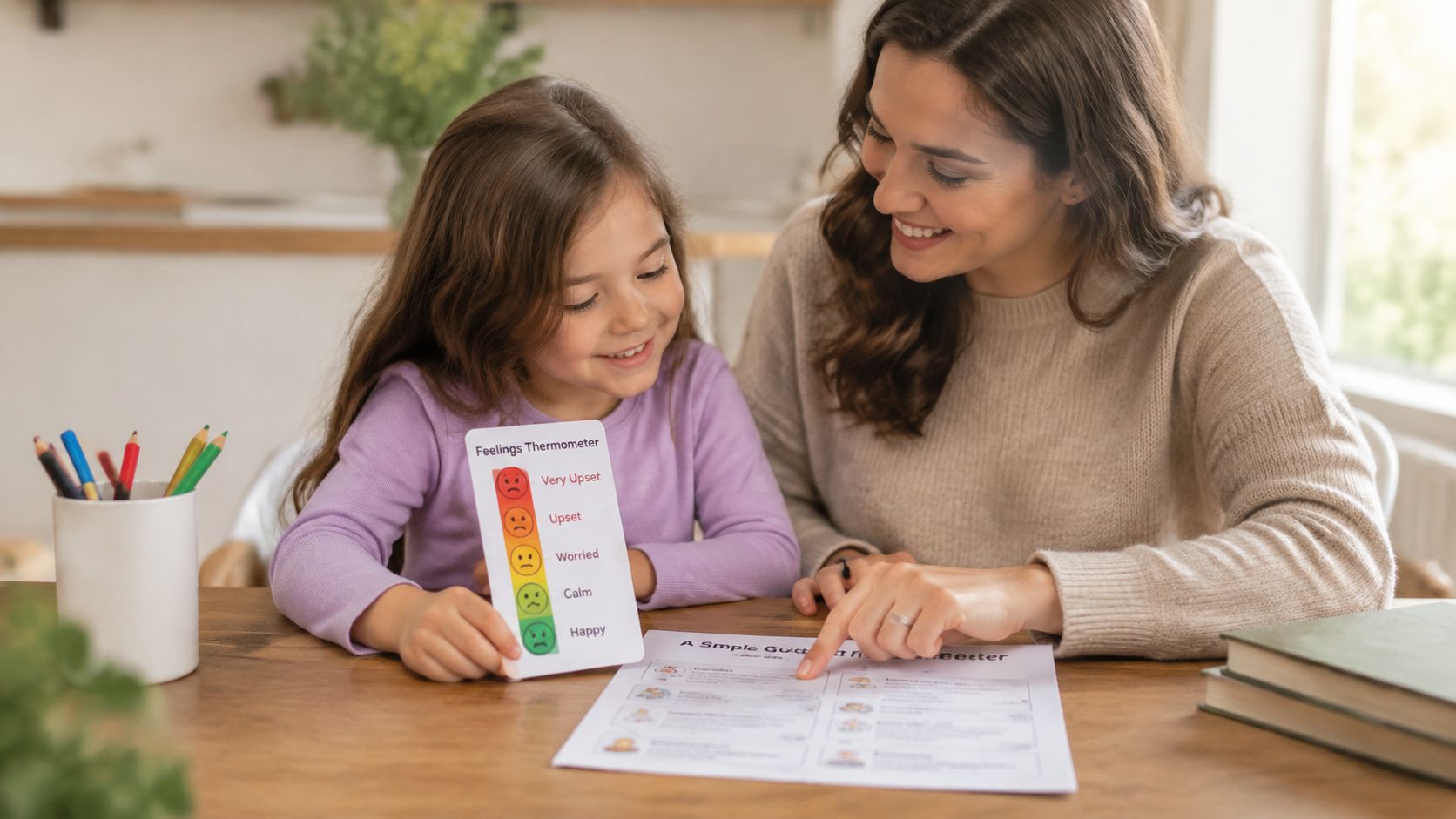
A smiling mother sits with her young daughter at a table using a feelings chart for emotional learning.

Ask families to contribute their existing strengths rather than presenting school tools as replacements for cultural or household practices. A useful invitation might read, “What helps your child manage big feelings at home? We'd like to learn from your family and connect those practices with the tools students are learning at school.”

The Brookings review identifies six practical areas for family-school engagement, including decision-making, communication, teaching practice, home learning, design, and system change (family-school engagement review). Schools can measure family participation, access across formats, caregiver confidence using the tools, and student reports of consistent language between school and home.

5. Student Voice and Youth Leadership in Program Design

Students aren't just recipients of SEL. They understand the social dynamics of their classrooms, hallways, buses, lunchrooms, and online spaces in ways adults can't fully observe. Giving them genuine influence makes the work more relevant and helps schools identify barriers earlier.

Create roles with real responsibility. A Student SEL Leadership Team might include diverse fourth- and fifth-grade students who review lessons, suggest adjustments, and lead peer presentations. Older elementary or middle school students can model brief mindfulness or conflict-resolution practices for younger classes during morning meetings or lunch.

Selection matters. Teacher nominations alone may favor students who are already visible and confident. Invite applications, use student recommendations, and consider representation across grades, cultures, learning needs, and social groups. Provide coaching before asking students to facilitate, and establish psychological safety so they can criticize a program without worrying that adults will dismiss them.

A sixth-grade bullying-prevention group could create short videos about conflict and share them with peers as part of a Junior Giants experience. A student leader might tell a teacher, “The lesson makes sense, but students won't use it on the playground unless we practice with situations that happen there.” That feedback should influence the next activity.

Use a clear message when inviting students:

“You're not here to approve a finished program. You're here to help us make the program useful, fair, and safe for students.”

Celebrate leadership through announcements, family letters, displays, or student-led assemblies, while protecting privacy and avoiding public recognition that a student hasn't chosen. Schools can track the diversity of leadership participation, the decisions students influenced, and whether peers report greater familiarity with the shared tools. Practical ideas for strengthening these roles appear in student leadership activities.

A young boy holds a clipboard and leads a group discussion in a classroom setting.

6. Building Administrator and Teacher Leadership Capacity

External workshops can start momentum, but school leaders and teachers carry SEL into daily decisions. If adults don't share the practices, students receive inconsistent messages about emotions, accountability, repair, and belonging.

Leadership development should include coaching, observation, reflection, and protected time. A district might work with a Soul Shoppe coach throughout the school year, pairing principal coaching with classroom visits. The principal can then support teachers using evidence from actual implementation rather than generic reminders. A teacher learning community could meet every two weeks to review workshop videos, rehearse strategies, and solve classroom challenges together.

A train-the-trainer pathway can build internal ownership. A principal or counselor who completes Soul Shoppe's training can facilitate professional learning for staff, while still using outside support when specialized guidance is needed. The trade-off is clear. Internal capacity takes time to develop, but relying entirely on external facilitators can leave schools without enough confidence or continuity when staff needs change.

Use coaching questions that keep the conversation specific:

  • Notice: Which student behaviors did you observe?
  • Interpret: What might those behaviors communicate?
  • Try: Which SEL response will you test next?
  • Review: What changed, and what still needs attention?

Match coaches thoughtfully, considering communication style and school context. Use video review or observation notes when appropriate, and connect leadership goals to school improvement priorities. Don't add learning to an already full schedule without removing competing demands.

Measure teacher confidence, coaching participation, consistency of shared language, and evidence that leaders are using SEL practices in staff meetings and student support decisions. Guidance on strengthening instructional support is available through these teacher coaching strategies.

7. Inclusive Representation and Culturally Responsive Engagement

A stakeholder map can look complete while still missing the people most affected by a decision. Families who are not organized, vocal, or easy to reach may be absent from school committees. Standard mapping often over-focuses on visible, already-connected actors, which is why recent research on EU mission cities recommends revisiting maps with participants and identifying communities facing barriers (research on inclusive stakeholder mapping).

Reach families through trusted relationships. Partner with community organizations, cultural leaders, youth programs, and family advocates. Offer interpretation, translated materials, childcare, meals, accessible locations, and meeting times that work for caregivers with different schedules. Explain why participation matters and how the school will use the input.

A school might work with Black, Latinx, and immigrant community organizations to co-design how Junior Giants bullying prevention addresses students' experiences with discrimination. A district could hold listening groups in community locations instead of requiring every family to come to the school. A facilitator might ask, “Which examples in this workshop feel familiar to your family, and which need to change?”

Cultural responsiveness isn't achieved by adding a few diverse examples to a worksheet. It requires examining who makes decisions, whose knowledge counts, and which communication norms the school treats as standard. Soul Shoppe workshops can include scenarios that reflect different cultural traditions and family structures, but the school community should help determine whether those scenarios feel authentic and respectful.

Track representation across planning groups, participation formats, languages supported, and changes made because of underrepresented perspectives. Follow-through matters most. If a school invites input and then offers no explanation for what happened, it can deepen mistrust rather than build belonging.

8. Cross-Sector Partnerships and Community Collaboration

Children experience wellbeing across systems. A school may teach conflict resolution, while a parks program manages peer disputes, a health center supports family stress management, and a youth organization creates after-school belonging. If those adults use unrelated language and pursue disconnected priorities, students must translate the system themselves.

Begin with trusted partners that already know the community. A district SEL Collaborative could bring together Parks and Recreation, mental health nonprofits, youth-serving organizations, and school staff. Together, they can identify shared goals, agree on common language, and create a community SEL calendar so families aren't asked to attend overlapping or repetitive events.

A school might partner with a community health center to offer family workshops on stress management, using Soul Shoppe curriculum as a foundation. Another could host a Peaceful Warriors Summit that brings families, youth program leaders, educators, and local organizations together to practice skills and strengthen relationships.

Keep the agreement simple. Clarify who leads each activity, how partners communicate, what information can be shared, and when the group will review progress. Formal agreements can protect accountability, but informal relationship-building matters too. Invite partners to observe one another's work and explain what their programs offer.

A useful partnership invitation might say:

“Our students move between school, home, and community programs. Can we agree on two shared SEL phrases, one referral process, and a calendar that helps families experience continuity?”

The strongest partnerships are reciprocal. Schools shouldn't treat community organizations as vendors or audiences. Ask what partners need, what expertise they bring, and what success would look like for their participants. Schools exploring broader community engagement best practices can use the same principle: align expectations before launching joint activity.

9. Peer Support and Accountability Structures

Teachers and administrators often sustain SEL more effectively when colleagues help them solve real problems. Top-down monitoring can confirm whether a lesson happened, but peer support explores whether students understood the practice, whether adults used it consistently, and what should change next.

Create a small implementation team with a clear remit. Four or five teachers might meet monthly to discuss classroom evidence, troubleshoot difficult situations, and select one practice to test. Pair teachers as peer coaches, not necessarily by seniority, but according to complementary strengths. One teacher may excel at restorative conversations, while another has strong routines for helping students regulate during transitions.

Peer coaching needs structure. Before an observation, agree on one focus, such as wait time, emotional vocabulary, or the teacher's response to conflict. Afterward, the observer should describe what happened, ask reflective questions, and avoid turning the conversation into a rating exercise.

A school might hold a monthly SEL Success Share. One teacher could explain, “I used the conflict-resolution process when two students had a friendship problem. They still disagreed, but they listened to each other and chose a next step.” Celebrating specific practice helps colleagues see what implementation looks like beyond slogans.

Use a balanced agenda:

  • Evidence: What did students say or do?
  • Problem-solving: Where did the routine break down?
  • Commitment: What will each person try?
  • Celebration: Which effort deserves recognition?

Accountability should connect to defined goals and a small set of measures, but it shouldn't feel punitive. Track participation in peer learning, completion of agreed practice trials, teacher reflections, and student feedback about consistency. Supportive accountability makes improvement a shared responsibility rather than an inspection imposed from above.

10. Data-Driven Dialogue and Evidence-Based Decision-Making

Data can build trust when stakeholders can understand it and influence its interpretation. It can also damage trust when leaders present a polished success story that ignores student experience, family concerns, or uneven implementation.

Choose measures that answer practical questions. A school might review office referrals, positive peer interactions, student sense of safety, belonging, attendance at family sessions, teacher confidence, and student self-regulation reflections. Keep the set manageable. More data doesn't automatically produce better decisions.

Share data in simple charts, then invite dialogue. A principal could present classroom conflict patterns at a family meeting and ask, “What do you see in these results? Which experiences aren't represented?” A teacher might review self-regulation observations with a peer and identify students who need a quieter practice or more adult modeling. A district could combine school climate findings with student and family stories before discussing priorities with the school board.

Gallup reported that 31% of U.S. employees were actively engaged in 2025, and its global survey used a 19,043-person sample with a ±1.1-point margin of error (Gallup employee engagement data). Although employees aren't the same population as K–8 students, the findings offer a practical measurement lesson. Even established systems can experience low participation, so schools should use credible sampling, short-cycle listening, and targeted follow-up rather than treating silence as satisfaction.

Use an outcome-measurement process that combines numbers with context, as described in Soul Shoppe's outcome measurement guidance. Report positive and difficult findings together. If a measure improves in one grade but not another, ask teachers, students, and families why before choosing an intervention.

A useful data conversation ends with an action, an owner, and a review date. Evidence should guide humility, not certainty.

Stakeholder Engagement: 10-Point Comparison

Approach Implementation complexity Resource requirements Expected outcomes Ideal use cases Key advantages
Collaborative Needs Assessment and Joint Planning High, time-intensive coordination and skilled facilitation Moderate–High, staff time, facilitation, mixed-method data collection Shared priorities, tailored SEL plans, stronger stakeholder buy‑in New program adoption, district or school planning, community-informed design Builds trust, ownership, and context-specific solutions
Regular Transparent Communication and Progress Sharing Low–Moderate, routine content production and distribution Moderate, communications time, translation, platforms Sustained engagement, accountability, clearer stakeholder expectations Ongoing implementation, reporting outcomes, maintaining momentum Builds trust, keeps communities informed, reinforces roles
Structured Feedback Loops and Responsive Adaptation Moderate, systems for rapid collection, analysis, and action Moderate, simple tools, analysis capacity, coordination time Continuous improvement, responsive adjustments, early problem detection Iterative program refinement, real-time implementation tweaks Demonstrates responsiveness, increases program relevance
Family Engagement Partnerships and Home Connection Programs Moderate–High, outreach logistics and accessible design Moderate, materials, events, translation, childcare, outreach staff Greater practice at home, improved family–child relationships, reinforced skills Reinforcing classroom SEL at home, family-centered supports Extends learning to home, increases practice and consistency
Student Voice and Youth Leadership in Program Design Moderate, selection, training, and ongoing support for youth Low–Moderate, training time, coordination, recognition resources More relevant programs, student leadership and agency, peer credibility Bullying prevention, peer-led initiatives, student outreach Authentic peer influence, student ownership, increased relevance
Building Administrator and Teacher Leadership Capacity High, sustained professional development and coaching High, quality coaches, protected time, PD budget Sustainable implementation, internal champions, improved fidelity Long-term scaling, embedding SEL into school culture Sustainability, leader modeling, reduced external dependency
Inclusive Representation and Culturally Responsive Engagement High, ongoing relationship-building and adaptation Moderate–High, outreach, interpretation, translation, community liaisons More equitable participation, culturally relevant programming Diverse communities, equity-focused initiatives, historically excluded groups Increases authenticity, addresses equity gaps, strengthens trust
Cross‑Sector Partnerships and Community Collaboration High, coordinating multiple organizations and agendas High, partnership management, shared resources, formal agreements Extended reach, aligned supports across settings, broader impact Community-wide SEL initiatives, multi-agency responses Leverages expertise/resources, continuity across settings, greater scale
Peer Support and Accountability Structures Moderate, establish PLCs, coaching pairs, and routines Moderate, protected time, facilitation, light data tools Higher fidelity, peer-driven improvement, morale and retention boosts Teacher implementation support, sustaining practice, problem-solving Intrinsic motivation, mutual support, practical accountability
Data‑Driven Dialogue and Evidence‑Based Decision‑Making Moderate–High, data systems, visualization, and stakeholder interpretation High, data collection/analysis capacity, dashboards, training Clear evidence of impact, targeted interventions, informed stakeholders Outcome measurement, accountability, resource allocation decisions Credibility, targeted improvements, informed decisions

Turn Participation Into Shared Ownership

Strong stakeholder engagement isn't created by adding more newsletters, meetings, or surveys. It grows through repeated, visible actions. Schools ask before deciding. They communicate what is happening. They show how feedback changed the work. They remove barriers that keep families and students out. They use evidence while staying humble about what the evidence doesn't explain.

The connected SEL system matters because students experience adult behavior as part of the curriculum. When a teacher listens before correcting, a parent names a feeling before giving advice, a principal acknowledges a concern without becoming defensive, and a community partner follows through on a promise, students see self-regulation, empathy, accountability, and conflict resolution in action.

Family-school engagement is strongest when it connects directly to learning. Recommended practices include class meetings, one-on-one conversations, sharing information about student skill levels, modeling activities families can repeat at home, and using family feedback to differentiate instruction and enrich the curriculum (NYU and Brookings family and community engagement guidance). That means a family event shouldn't stand apart from classroom learning. It should help caregivers understand what students are practicing and give them a realistic way to continue it at home.

Equity also requires operational choices, not only good intentions. Federal guidance emphasizes relationships between staff and families, meaningful involvement of families and trusted community advocates, and participation in program decisions (federal family engagement guidance). An AIR guide further recommends senior-level family-engagement roles, integrating family engagement into equity agendas, and maintaining communication with families who aren't currently engaged. Those structures help schools keep responsibility for engagement instead of placing the burden entirely on caregivers.

Start small, but make the first step concrete:

  1. Select one immediate strategy: Choose a listening circle, family practice session, student leadership role, or teacher peer-coaching cycle.
  2. Name the stakeholders: Identify which students, families, educators, administrators, and partners need to participate.
  3. Write the invitation: Explain why their perspective matters, what decision is open, and how much time participation will require.
  4. Choose a few measures: Track participation, implementation, student experience, and one outcome that matters to the community.
  5. Schedule the review: Put a date on the calendar to examine feedback, share what changed, and decide the next action.

Parents and teachers can model the same habits they want students to learn. Listen without rushing to fix. Reflect before reacting. Use shared language for feelings and needs. Repair conflict openly. Soul Shoppe is one relevant support for helping school communities build that shared language through workshops, coaching, family resources, and community partnerships.


Soul Shoppe offers experiential SEL workshops, assemblies, coaching, family resources, courses, and an app that support self-regulation, mindfulness, communication, conflict resolution, and whole-community engagement. Visit Soul Shoppe to explore tools that can help parents, teachers, students, and community partners practice connected SEL across school and home.