

10 Dinner Time Conversation Starters for Family Connections
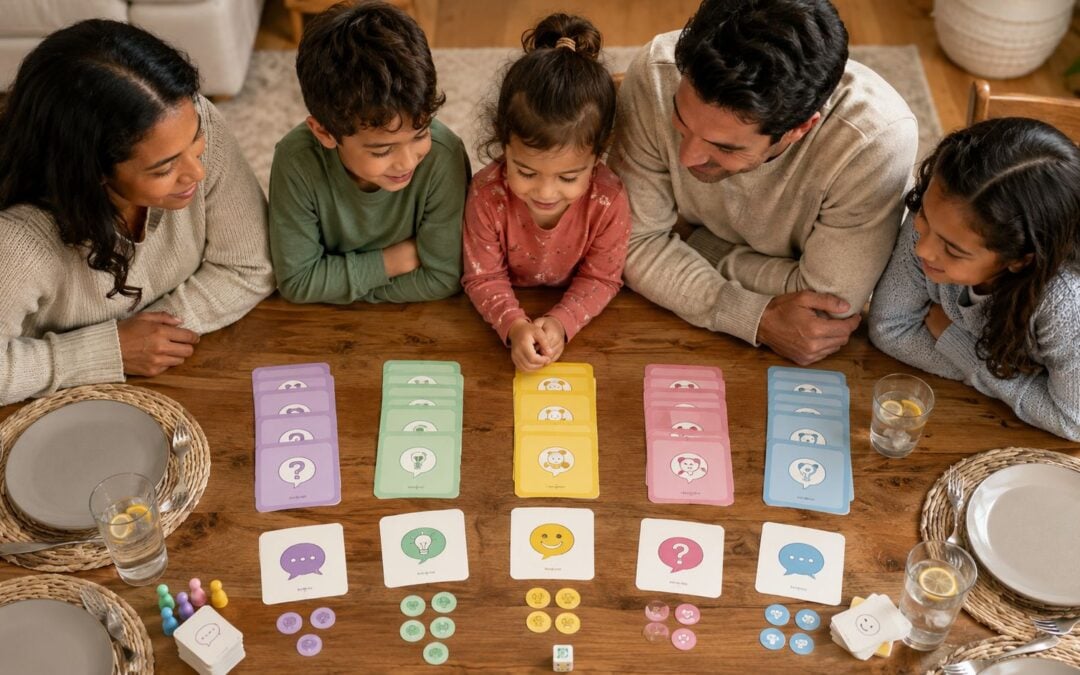
Dinner often gets reduced to logistics. Plates are cleared, homework is half-finished, someone's already thinking about tomorrow, and the room goes quiet except for chewing. That silence is exactly where dinner time conversation starters can change the mood. They give families and classrooms a simple way to move from “How was your day?” to something more honest, more specific, and easier for kids to answer.
The best prompts don't force a big talk. They create a small opening, then let children step through it in their own way. That's why university and parenting guidance has treated mealtime as a repeatable communication ritual for years, with one public-university extension even compiling a 50-question dinner toolkit that includes prompts about gratitude, worries, goals, and reflection, all designed for low-pressure sharing and connection (University of Tennessee extension conversation starters). The strongest family routines work the same way at home and in class. They are brief, predictable, and emotionally safe.
For Soul Shoppe families, teachers, and counselors, these prompts also fit SEL in a natural way. They support belonging, self-regulation, communication, and empathy without turning the table into a lecture. For more family bonding context, see Bornbir's mother son bonding tips.
1. The Gratitude Gem
A gratitude prompt changes the tone at the table fast. Children stop scanning for the right answer and start noticing one thing that went well. That might be an accomplishment, a kind gesture, or a small comfort from the day. The goal is not forced cheerfulness. It is positive reflection that becomes easier with practice.
Start by naming your own gratitude gem first. When a parent says, “Mine was finishing that project at work,” or a teacher says, “I was grateful when one student helped another clean up,” children hear the shape of the prompt and get a model they can follow. Keep the bar low. A younger child saying, “I liked playing on the swings,” matters just as much as an older child saying, “I'm grateful my math group helped me understand fractions.”

How to make gratitude feel real
Practical rule: accept small answers without correcting them. A child does not need to name a life-changing moment. “My snack was good,” or “My friend smiled at me,” is enough to keep the ritual going.
Keep the follow-up concrete. Ask, “What made that moment special?” or “When did you know it was a good day?” If the room feels flat, change the prompt before it turns stale. Try, “When did you help someone today?” or “What made you laugh?” For a fuller set of family-friendly gratitude ideas, Soul Shoppe's gratitude resources offer a useful starting point, and the broader dinner conversation approach described earlier follows the same low-pressure pattern.
When children are tired, gratitude can sound forced if adults push too hard. Slow down, answer first, and let silence do some of the work. A child who needs a minute to think is not resisting, they are warming up.
2. The Choice Conundrum
Decision-making prompts work best when they feel close to real life. Instead of abstract moral questions, give children a situation they can picture from school, sports, the playground, or the lunch line. That turns dinner into a place to rehearse judgment safely. A child can explore what they might do before they're under pressure to do it.
Use scenarios with more than one reasonable answer. For example, “Your friend copies your homework. What would you do?” invites options like telling the friend, telling the teacher, or doing nothing. A younger child might hear, “Someone cuts in line at lunch. What would you do?” and start thinking about assertiveness, fairness, and when adult help is needed. The value is in the discussion, not in hunting for one perfect response.
Link this to real classroom life when it makes sense. A teacher might use the same prompt during a lunch bunch or advisory period, then ask students how their choice could affect trust, safety, or teamwork. Soul Shoppe's decision-making resource frames this kind of reflection as part of practical problem solving and communication (Soul Shoppe games for decision making).
A simple facilitation pattern
- Offer two to four choices: This lowers the pressure to invent an answer from scratch.
- Ask consequences out loud: “What would happen if you ignored it?” keeps the thinking visible.
- Validate the first response: Even a messy answer can open a useful conversation.
- Bring it back to real settings: A classroom example often helps children connect the dots faster.
The biggest mistake is making the prompt feel like a quiz. Kids shut down when adults already sound certain. Stay curious, because curiosity keeps the table collaborative.
3. The Challenge Champion
Challenge prompts matter because children need to hear that struggle is normal. A strong dinner routine doesn't only celebrate wins, it also gives people a place to say, “That was hard, and I kept going.” That message builds resilience without sugarcoating the day. It tells children that difficulty is information, not failure.
Lead with your own example. “I struggled with staying patient in traffic today. I took deep breaths and listened to music instead.” That kind of sharing makes room for honest answers from kids. A child might say, “I had trouble with the math test, so I asked my teacher to explain it again,” while a younger child says, “I couldn't zip my jacket, so I asked my brother to help.” Older children can talk through disappointment, like not making a team or needing to try again.
Keep the focus on effort and strategy
Ask, “What did you learn?” rather than, “Did you win?” That one shift changes the tone of the whole conversation. It helps children notice the part of their response they can control, such as asking for help, pausing, or trying a new approach. Soul Shoppe's problem-solving resource reflects this same growth-oriented mindset (Soul Shoppe problem solving activity).
Share the story of the struggle, then name the strategy that helped. Children remember the strategy longer than the complaint.
A challenge journal can help when your family or class wants a visible record of growth. Keep it simple, one line per person, and revisit it after a hard week. The point is not to produce a polished reflection. The point is to show that people can learn from setbacks and keep moving.
4. The Connection Question
This prompt helps children shift attention outward. Instead of only reporting what happened to them, they notice someone else. That grows empathy in a way children can practice. It also helps families and classrooms become places where caring is visible, not just assumed.
Ask, “Who did you notice today?” or “When did you see someone struggle?” The answers might be ordinary, and that's the point. A parent might say they noticed a coworker who looked worried and asked if they were okay. A child might say they saw someone at recess who looked lonely and invited them to play. Even younger children can name small moments, like helping pick up a dropped lunch.
Move from noticing to action
Follow up with, “What did you do?” or “What could help them?” That keeps the conversation from staying abstract. It also teaches children that empathy is not only a feeling, it's a response. Soul Shoppe's empathy resource aligns with that exact idea of teaching children to notice and respond with care (Soul Shoppe how to teach empathy).
You can also use the prompt to discuss times when someone else was struggling in a way that was hard to name. Older children often understand nuance better than adults give them credit for. A teen might say a friend was quiet because of problems at home, and that can open a thoughtful conversation about privacy, support, and when to involve an adult.
The best responses are concrete, not grand. Small acts of noticing build the family habit you want most, people paying attention to one another.
5. The Feelings Thermometer
A feelings scale gives children a simple structure for naming emotion, even when they do not have the perfect word yet. That matters because some kids know they feel “off” long before they can tell you whether they are anxious, sad, overwhelmed, or tired. A number, color, or emoji gives them a place to start. It also fits the practical side of dinner conversation, where families and classrooms need a shared language that is quick enough to use at the table and clear enough to revisit later.
A parent might say, “I'm at about a 7 today, productive at work but tired.” A child might answer, “I'm a 5, some parts of school were fun, but I was frustrated with my friend.” Younger children can use colors, like “I'm green today,” while older children may be ready for a number plus a reason, such as “I'm a 3 because I'm anxious about that test tomorrow.”

Make the scale useful, not performative
Ask, “Where are you on the feelings scale?” and then pause. If adults rush straight into advice, children often stay at the surface. Better follow-ups are, “What pushed you to a 7?” or “What would help move you to an 8?” Those questions connect emotion to coping, which is where self-regulation grows. A child who says, “I'm at a 4 because math was confusing,” can then name one small next step, like asking for help before homework starts.
- Use one language consistently: numbers, colors, thermometer, or emoji faces.
- Normalize the full range: a lower score is information, not failure.
- Teach one strategy at a time: breathing, a quiet break, a drink of water, or a reset before homework.
- Notice patterns gently: “Mondays are often lower. Did the schedule feel rushed today, or was something else weighing on you?” That kind of question helps children connect a feeling to a real cause without feeling examined.
The strongest version of this prompt stays calm and ordinary. It works because it gives children a shared language they can use again tomorrow.
6. The Strength Spotlight
Strength prompts work because children need more than correction. They need to hear what is going well, in themselves and in other people. That builds confidence without pretending everything is easy. It also teaches children to see value in classmates, siblings, and adults beyond test scores or behavior charts.
Be specific. “You were kind when you waited for your turn,” lands better than “You're nice.” A parent can model with, “I noticed I was really patient today with you.” A child might say a classmate was great at including people, or that a friend was brave speaking up in class even while nervous. Younger children can identify physical or playful strengths too, like being strong on the playground.
Keep the spotlight broad
Include non-academic strengths like kindness, creativity, persistence, and humor. Children need to learn that strength is bigger than correctness. Ask, “What strength did you see in yourself today?” and “Who do you admire and why?” Those questions help kids practice positive observation without turning the table into a competition.
Write the strengths down if your family tends to forget them under stress. A note on the fridge or a card in a classroom basket can become a helpful reminder later. The next time a child feels discouraged, you can point back to an actual example instead of giving generic reassurance.
This prompt works best when it names behavior, not identity. “You kept trying even when that was tricky” is more useful than a label. Children can repeat a behavior. Labels are harder to live up to.
7. The Mindfulness Moment
Dinner can be one of the few times children stop moving enough to notice themselves. A mindfulness prompt uses that pause well. It asks them to notice what they saw, heard, touched, tasted, or smelled, or to remember a moment when they felt calm and present. That kind of reflection makes mindfulness less abstract and more usable.
A parent might say, “During my commute, I noticed the trees were really green and it calmed me down.” A child might say, “At lunch, I really tasted my food and it felt nice to slow down.” Younger children often respond well to texture, like “I felt the soft blanket when I was reading.” Older children might describe noticing their breathing while waiting for test results.

Use the senses to slow the room down
Start with a simple question. “What did you see, hear, feel, taste, or smell today?” That keeps the prompt accessible for mixed ages. If the table is restless, teach a grounding practice like 5-4-3-2-1, where people name five things they see, four they can touch, three they hear, two they smell, and one they taste. You don't need to make it a formal lesson. One round is enough.
A slower voice helps more than a fancy explanation. Invite one mindful breath before dinner or one thoughtful bite before conversation starts. That small pause often helps children settle enough to answer openly.
The goal is not to make dinner serene every night. The goal is to give children a repeatable way to come back to themselves when the day has been loud.
8. The Boundary Builder
Boundaries deserve a place at the dinner table because children need practice naming limits before they are under social pressure. A boundary prompt helps them notice when they said no, wished they could say no, or needed help protecting their space. That builds autonomy and respect at the same time.
A parent might say, “I said no to extra work today to protect my evening.” A child might share, “I told my friend I wasn't ready to share my feelings yet.” Younger children can practice with body boundaries, such as “I didn't want to hug someone, so I waved instead.” Older children may talk about needing adult help when someone touched them in a way that felt wrong at recess.
Make the language plain
Ask, “Did anyone disrespect your boundaries today?” or “Did you need to set a boundary?” Those words may sound serious, and they are. Keep your tone steady so the child doesn't feel they're being interrogated. Say, “Your body belongs to you,” and teach phrases they can use, such as “Stop, I don't like that” or “I need space.”
Discuss how to decline hugs, touches, borrowed items, or group activities respectfully, but don't make politeness more important than safety. If a child describes a boundary violation, respond supportively and take it seriously. The dinner table is not the place to minimize it or turn it into a joke.
This prompt works best when adults model the behavior in their own lives. Children notice when parents protect their time, their bodies, and their energy. That observation matters more than any speech.
9. The Kindness Tracker
Kindness prompts give children a way to see how small actions change a day. The important lesson is not that they need applause. The important lesson is that generosity has a ripple effect, even when the act is tiny. A child who notices that can start to view themselves as part of a caring community.
A parent might say, “I held the door for someone with their hands full.” A child might say, “I helped my classmate find their lost pencil and they smiled so big.” Younger children can report sharing crayons, while older children might say they sat with someone new at lunch because that person looked lonely. Those are all useful examples because they stay close to daily life.

Make kindness visible without turning it into a prize
Ask, “Who did you help today?” and “When did you see someone help another person?” Then go one step further and ask, “How do you think that made them feel?” That keeps the focus on impact, not reward. If your family likes physical reminders, keep a kindness jar or wall where people can add notes about small good deeds.
Kindness grows faster when adults name it in real time. “I helped because I saw they needed an extra hand” teaches the motive as clearly as the act.
Avoid using kindness as a scoreboard. If children start competing for points, the sincerity disappears. The better goal is a household or classroom culture where helping is expected, noticed, and appreciated.
10. The Growth Game
A dinner table can do more than review the day. It can help children see mistakes as information they can use next time. That shift matters because many kids read a wrong answer, a messy moment, or an awkward choice as proof that they are “not good at” something. A calm conversation can interrupt that habit and show that learning often starts with confusion, frustration, or a bad first try.
A parent might say, “I sent an email before I checked it carefully, so I had to fix a typo later.” A child might say, “I missed the math step at first, then I found the pattern after I tried again.” A younger child might talk about stacking blocks that kept falling and adjusting the base. An older child might describe feedback on an essay, then explain how revision made the work clearer.
Keep the language focused on learning
Ask, “What did you try?” and “What did that mistake teach you?” Those questions point the child toward the process instead of the embarrassment. Follow with, “What will you do differently next time?” or “What clue did you notice after the mistake?” If a child starts with harsh self-talk, answer with “You have not learned it yet” or “You found a useful clue” instead of repeating the criticism back.
A simple language swap can change the tone of the whole conversation.
| Common self-talk | Growth-focused swap |
|---|---|
| I can't do this. | I can't do this yet. |
| I messed everything up. | I made one mistake I can fix. |
| I'm bad at this. | I'm still learning this. |
| I failed. | I learned what to try next. |
The value of this prompt is that adults use it too. When a parent names a mistake and explains what they changed, a child sees that competence and imperfection can sit in the same room. A family poster with examples of “mistake, lesson, next try” can keep that lesson visible in a way children can revisit.
Soul Shoppe's SEL approach supports that idea by treating setbacks as useful information for growth, reflection, and resilience. Soul Shoppe problem solving activity
10 Dinner-Time Conversation Starters Comparison
| Conversation Starter | Implementation complexity | Resource requirements | Expected outcomes | Ideal use cases | Key advantages |
|---|---|---|---|---|---|
| The Gratitude Gem: Sharing What Went Right Today | Low, quick, routine practice | None to minimal (timer or token optional) | Increased appreciation, positive tone, emotional vocabulary | Daily dinners, family check-ins, routines with K-8 children | Promotes positivity and predictable sharing |
| The Choice Conundrum: Exploring Real-Life Decision-Making | Medium, needs scenario selection and facilitation | Prepared scenarios or prompts | Improved decision-making, perspective-taking, conflict skills | When teaching problem solving or before challenging social situations | Builds critical thinking and empathy via hypotheticals |
| The Challenge Champion: Celebrating Problem-Solving | Medium, requires adult modeling and reflection | Willingness to share struggles; optional journal | Greater resilience, growth mindset, self-efficacy | After setbacks, learning moments, or performance feedback | Normalizes struggle and models adaptive strategies |
| The Connection Question: Building Empathy and Understanding | Low, simple reflective prompt | None | Increased empathy, prosocial awareness, peer support | When fostering community, noticing others, or reducing isolation | Encourages noticing and supporting others |
| The Feelings Thermometer: Naming and Understanding Emotions | Medium, requires consistent use and follow-up | Visual scale/chart or emoji tools | Improved emotional literacy and self-regulation | Emotional check-ins, mood tracking, family language building | Makes emotions concrete and discussable |
| The Strength Spotlight: Recognizing Personal and Peer Strengths | Low, short recognition practice | None; optional notes or wall display | Higher self-esteem, peer appreciation, strengths awareness | Boosting confidence, pre/post-challenge reflections | Reinforces strengths-based, specific praise |
| The Mindfulness Moment: Sensory and Presence Check-In | Medium, benefits from guiding techniques | Brief scripts or grounding exercises | Increased presence, reduced anxiety, sensory awareness | Transition times, before meals, stressful days | Teaches simple grounding and calm practices |
| The Boundary Builder: Discussing Personal Limits and Respect | Medium-High, may surface sensitive issues | Adult readiness, supportive language, follow-up plans | Better self-advocacy, consent language, safety | Teaching consent, addressing boundary violations, safety talks | Empowers autonomy and models respectful limits |
| The Kindness Tracker: Spreading Positivity Intentionally | Low, regular sharing with optional tracking | Kindness jar, notes, or chart (optional) | Increased prosocial behavior and intrinsic motivation | Building community values, reinforcing acts of service | Cultivates intentional generosity and ripple effects |
| The Growth Game: Learning from Mistakes and Setbacks | Medium, needs consistent growth-language practice | Prompts, examples, poster or journal optional | Reduced fear of failure, improved problem-solving, persistence | After mistakes, learning reviews, performance feedback | Reframes errors as learning and promotes perseverance |
Keeping the Conversation Going
The best dinner time conversation starters are the ones you can repeat. A family ritual works better than a perfect one-time question, because children learn through familiarity. If the same prompt shows up every night, it becomes easier to answer openly, and easier to trust the table as a safe place. That repeatability also matters in classrooms, where students often need structure before they'll take social risks.
Printed prompt cards make the routine easier to maintain. So does a small jar with folded questions, or a mini-game where each person draws one starter before the meal begins. A rotating format keeps the table from feeling stale without adding much work for the adult. In homes with mixed ages, you can keep one set of simple prompts and one set of deeper ones, then let children choose. In classrooms, a basket of cards works well during advisory, lunch bunch, or calm-down time.
What works best is not intensity, it's consistency. A child who gives one-word answers this week may start adding details later, especially if adults keep answering first and keep the tone gentle. Celebrate that small shift. A longer answer, a more honest feeling, or a kinder observation is progress.
Adapt the prompts to the season of your family or class. Some weeks, gratitude will feel easier. Other weeks, boundaries, kindness, or growth language may be more useful. Revisit favorites often, but don't be afraid to retire prompts that have gone flat. The goal is shared language, not novelty for its own sake.
Over time, these little SEL moments become more than conversation practice. They become a pattern of noticing, naming, listening, and responding. That's the kind of dinner ritual that can shape how children relate to themselves and each other long after the plates are cleared.
A CTA for Soul Shoppe.