8 Powerful Perspective Taking Activities for K-8 Students in 2026
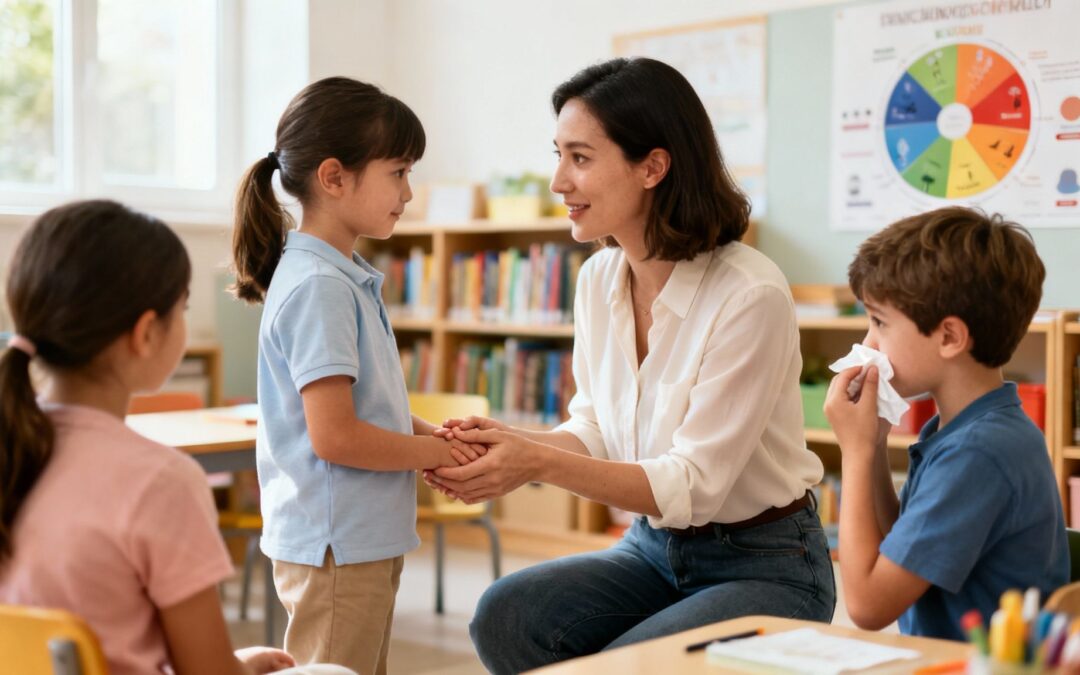
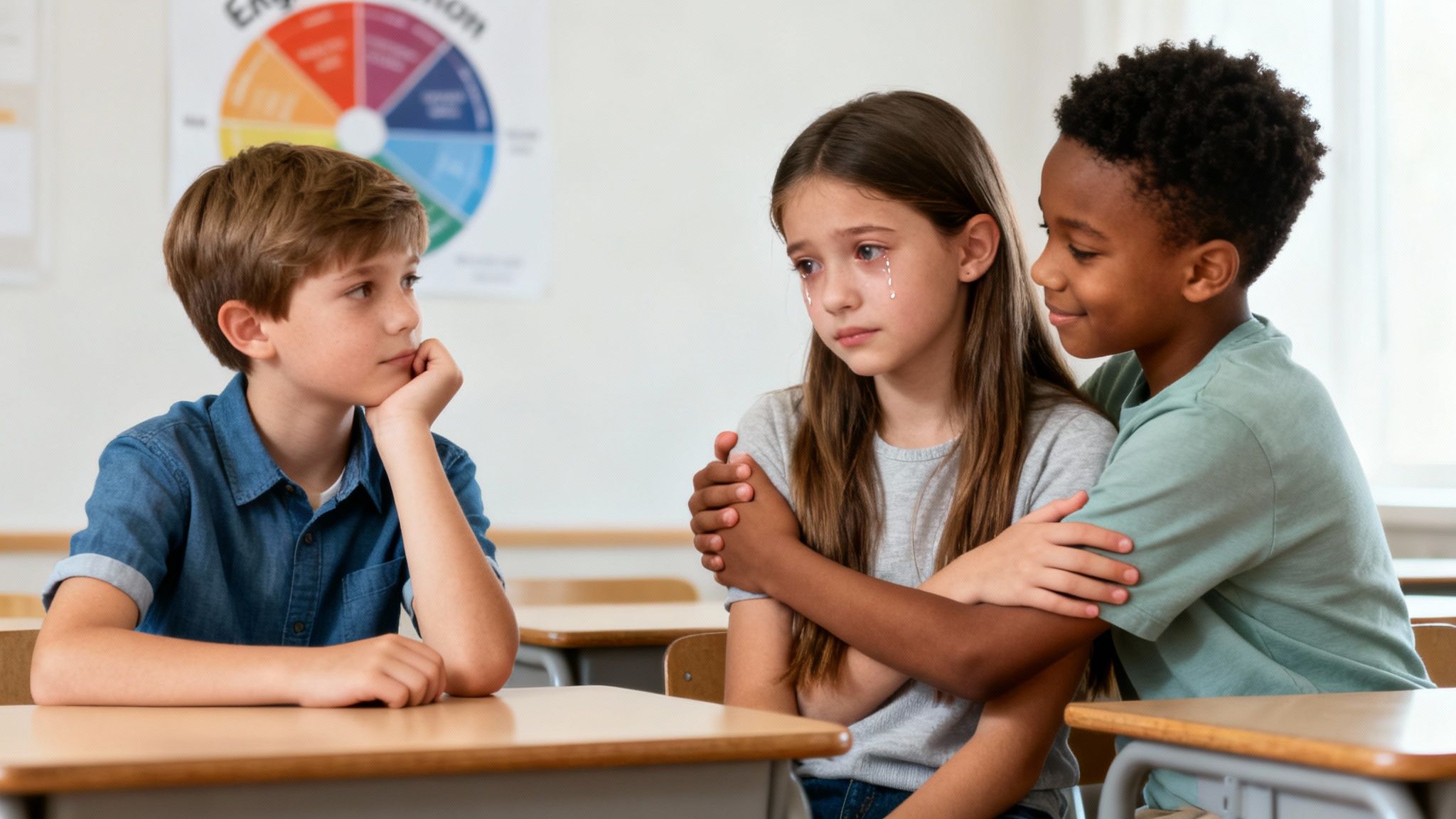
In a world that feels increasingly divided, the ability to genuinely understand another person’s point of view is more than a skill; it’s a superpower. For K-8 students, developing this ability, known as perspective-taking, is foundational for building healthy relationships, resolving conflicts, and creating inclusive communities. It’s the bedrock of social-emotional learning (SEL) that allows students to move from simple sympathy (feeling for someone) to true empathy (feeling with someone). This critical shift requires children to first understand their own emotions. A critical initial step in empathy is helping children identify and articulate their own feelings; consider using a simple feelings chart for kids to build this self-awareness.
This practical guide moves beyond abstract advice to offer a comprehensive roundup of powerful and actionable perspective taking activities designed for immediate use in classrooms, counseling sessions, and at home. We’ve compiled a variety of dynamic exercises suitable for kindergarten through middle school, ensuring you have the right tools for every developmental stage. Each item in this listicle includes:
- Clear, step-by-step instructions.
- Age-appropriate differentiations and modifications.
- Specific SEL skills targeted by the activity.
- Practical examples and sample scripts.
From role-playing and storytelling to art-based expression and restorative circles, these strategies are designed to cultivate deep, authentic empathy. Let’s explore how to move beyond the cliché and into transformative practices that create environments where every child feels seen, heard, and understood.
1. Role-Playing and Scenario-Based Activities
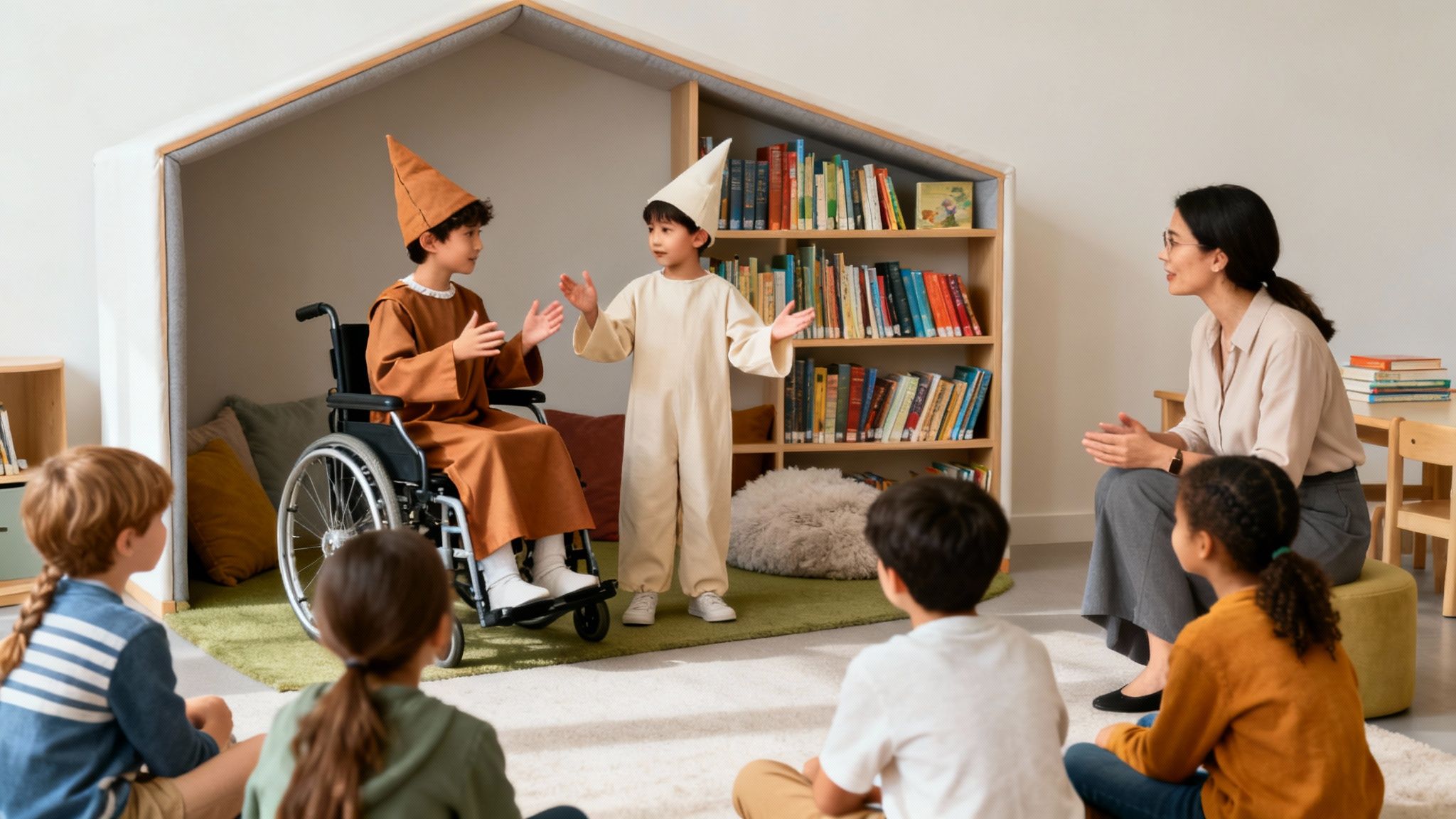
Role-playing is a powerful, hands-on method where students step into another person’s shoes to act out real-world scenarios. By embodying different characters, participants move beyond theoretical understanding to an experiential grasp of diverse viewpoints. This dynamic approach is one of the most effective perspective taking activities because it integrates movement, emotion, and social interaction, making empathy a tangible skill.
This method, popularized by practices like Augusto Boal’s Theatre of the Oppressed and used extensively by organizations like Soul Shoppe, allows students to safely explore complex social dynamics. They can practice navigating conflict, responding to peer pressure, and understanding the feelings of others in a controlled environment.
How It Works
The core of role-playing is assigning students specific roles within a predefined scenario. They act out the situation, making choices and reacting as their character would. The facilitator then guides a group reflection to unpack the experience.
- For Younger Students (K-3): Use simple, relatable scenarios. Practical Example: Have two students act out a conflict over a shared toy. One student is the “grabber,” and the other is the “owner.” A third student can play the “friend” who sees it happen. Afterward, ask: “To the owner: how did it feel when the toy was taken?” “To the grabber: what did you want in that moment?” “To the friend: what did you see and how did it make you feel?”
- For Older Students (4-8): Tackle more nuanced situations. Practical Example: A scenario could involve one student trying to convince another to cheat on a test, a group navigating the exclusion of a peer at lunch, or a student posting a hurtful comment online about a classmate. Assign roles like “the poster,” “the target,” and “the bystander” who saw the comment but didn’t say anything.
Implementation Tips for Success
To ensure these activities are productive and safe, structure is key. Always establish clear guidelines and objectives before you begin.
- Start Small: Begin with low-stakes, lighthearted scenarios (e.g., disagreeing on a game to play at recess) before moving to more emotionally charged topics like bullying or exclusion.
- Facilitate Debriefing: The learning happens in the reflection. After a role-play, use guided questions:
- “To the person playing [Character A], what were you feeling when that happened?”
- “What do you think [Character B] was thinking?”
- “If we did this again, what could we change for a better outcome?”
- Offer Opt-Outs: Participation should always be a choice. Allow students to observe if they are not comfortable acting. Observers can provide valuable insights during the debriefing.
Role-playing builds a strong foundation for social-emotional learning by transforming abstract concepts like empathy and respect into practical, memorable skills. By actively practicing these scenarios, students develop crucial communication skills that they can apply to real-life challenges.
2. Literature and Storytelling Circles
Stories are powerful vehicles for empathy, offering a direct window into another’s world. Literature and storytelling circles use the power of narrative to help students explore diverse viewpoints, motivations, and experiences. By engaging with characters in books or listening to peers’ personal stories, students practice one of the most fundamental perspective taking activities: seeing a situation through someone else’s eyes.
This approach is championed by educators like Harvey Daniels and Dr. Rudine Sims Bishop, who emphasize that books should serve as “windows, mirrors, and sliding glass doors.” Literature circles allow students to analyze character decisions, while storytelling circles build community by fostering understanding of each other’s lived realities.
How It Works
This method involves small groups reading and discussing texts or sharing personal narratives with a focus on viewpoint. The facilitator uses guided questions to deepen comprehension and encourage students to connect the story’s themes to their own lives.
- For Younger Students (K-3): Use picture books with clear emotional arcs. Practical Example: After reading The Invisible Boy by Trudy Ludwig, ask: “How do you think Brian felt when no one included him?” and “What could the other kids have done to make him feel seen?” Then, have students turn and talk to a partner about a time they felt like Brian.
- For Older Students (4-8): Use chapter books with complex characters and multiple perspectives, like Wonder by R.J. Palacio. Practical Example: Assign different small groups to be “experts” on a specific character (e.g., Via, Jack, Summer). Have them track their character’s point of view throughout the book and then present to the class how their character experienced a key event, like the first day of school, differently from others.
Implementation Tips for Success
Creating a safe and structured environment is essential for honest and respectful sharing. Establish clear norms before you begin any discussion or storytelling activity.
- Select Diverse Texts: Choose culturally responsive literature that reflects your students’ identities and introduces them to new ones. Ensure a wide representation of family structures, cultures, and experiences.
- Use Discussion Prompts: Scaffold conversations with sentence stems to help students articulate their thoughts. Examples include:
- “I wonder why the character decided to…”
- “From their perspective, they might have felt…”
- “If I were in that situation, I would…”
- Establish Group Norms: Before any circle, co-create rules for respectful listening, such as “one person speaks at a time,” “we listen to understand, not to reply,” and “what is shared in the circle stays in the circle.” This is especially crucial for personal storytelling.
By regularly engaging with stories, students build a cognitive framework for empathy. They learn that every person has a unique story that shapes their actions, a crucial skill for navigating social complexities in the classroom and beyond.
3. Empathy Mapping and Visual Perspective Activities
Empathy mapping is a powerful visual tool that helps students organize and understand another person’s experience. By creating a visual representation of what someone thinks, feels, says, and does, participants make invisible emotions and thoughts tangible. This concrete approach is one of the most effective perspective taking activities for younger learners, as it transforms abstract emotional concepts into an organized, easy-to-understand format.
Originally developed in the design thinking world by groups like IDEO, this method has been widely adopted by educators and counselors to build social awareness. It provides a structured way for students to move beyond their own viewpoint and systematically consider the complex inner world of another person, whether that’s a character in a book, a historical figure, or a peer in their classroom.
How It Works
The activity centers on a graphic organizer, often a simple chart with four quadrants: Thinks, Feels, Says, and Does. Students fill out the map for a specific person in a particular situation, using words, drawings, or both to capture their perspective.
- For Younger Students (K-3): Focus on literary characters or simple classroom scenarios. Practical Example: After reading The Little Red Hen, students can create an empathy map for the protagonist. Teacher asks: “What was the Little Red Hen thinking when no one would help her? (Maybe: ‘I have to do this all by myself.’) What did she feel? (Maybe: ‘Tired’ or ‘Frustrated’). What did she say? (‘I will do it myself then.’) What did she do? (She baked the bread.)”
- For Older Students (4-8): Use empathy maps to analyze more complex social dynamics. Practical Example: Have students create two empathy maps for the same situation from a history lesson, like the Boston Tea Party. One map is for a British soldier, and the other is for a Son of Liberty. This exercise visually highlights how two groups can experience the same event very differently.
Implementation Tips for Success
To get the most out of empathy mapping, it’s important to scaffold the process and create a supportive environment for exploration.
- Use Templates: Start with pre-made templates labeled with sections like “Thinks,” “Feels,” “Says,” and “Does.” This provides a clear structure, especially for students new to the activity.
- Model the Process: Before asking students to work independently, complete an empathy map together as a class. Use a very familiar character (from a movie or popular book) or a relatable situation (like feeling nervous before a presentation).
- Ask Probing Questions: Guide students’ thinking with questions that encourage deeper reflection. Ask, “What might this person be secretly worried about?” or “What do they wish others understood about them?”
- Integrate with Writing: Use the completed empathy maps as a pre-writing tool. Students can write a short story, journal entry, or a poem from the perspective of the person they mapped. You can learn more about methods like this when exploring how to teach empathy in the classroom.
Empathy mapping makes perspective-taking visible and accessible, giving students a repeatable process for building compassion and understanding in all aspects of their lives.
4. Peer Interviews and “Getting to Know You” Activities
Structured peer interviews transform typical icebreakers into meaningful perspective taking activities. Students ask carefully designed questions to learn about their classmates’ experiences, values, and backgrounds. This guided conversation moves beyond surface-level facts to build a genuine understanding of how a peer’s life has shaped their worldview.
This method, often used in restorative practices and community-building circles, helps dismantle assumptions and stereotypes. By actively listening to a partner’s story, students learn to appreciate the diversity within their own classroom, fostering a culture of curiosity and respect.
How It Works
The activity pairs students to interview each other using a set of prepared questions. The goal is not just to collect answers but to listen and ask follow-up questions. Afterward, students can reflect on what they learned about their partner and themselves.
- For Younger Students (K-3): Keep interviews short with simple, concrete questions. Practical Example: Partners can draw pictures to represent their answers. Questions could include: “What is a favorite family tradition and why is it special?” or “Tell me about a time you felt really happy.” The interviewer then shares one interesting thing they learned about their partner with the class.
- For Older Students (4-8): Use multi-layered questions that invite deeper reflection. Practical Example: A prompt could be: “Describe a challenge you’re proud of overcoming” or “What is something people often misunderstand about you?” After the interview, students can write a one-paragraph “bio” for their partner, focusing on what they learned about their character and strengths.
Implementation Tips for Success
Creating a safe and structured environment is crucial for these interviews to be effective. Clear guidelines help students feel comfortable sharing.
- Create Question Banks: Develop a list of questions ranging from lighthearted (e.g., “What’s your favorite thing to do on a weekend?”) to more profound (e.g., “What is a value that is really important to your family?”). This allows you to tailor the activity to the group’s comfort level.
- Model Active Listening: Before they begin, demonstrate what active listening looks like. Show how to make eye contact, nod, and ask clarifying questions like, “Can you tell me more about that?”
- Establish Safety and Confidentiality: Clearly state that personal stories shared in pairs should stay between those two students unless they get permission to share with the larger group. This builds trust.
- Use Sentence Starters: Provide prompts to help students formulate respectful and open-ended questions, such as:
- “Tell me about a time when…”
- “What’s important to you about…”
- “How does it feel when…”
Peer interviews are a powerful tool for building a connected and empathetic classroom community. They teach students that every person has a unique story and that taking the time to listen is a profound act of respect.
5. Perspective-Taking Through Art, Music, and Creative Expression
Creative expression offers a unique and powerful pathway for exploring different viewpoints. By using mediums like visual art, music, or dance, students can process and communicate perspectives that are difficult to put into words. This approach engages different parts of the brain than verbal discussion, making it one of the most inclusive perspective taking activities for students who may not be comfortable expressing themselves through speech alone.
This method, championed by arts-integrated education advocates and SEL programs, acknowledges that emotion and perspective are deeply personal. Creating or responding to art allows students to build their emotional vocabulary and empathy in a way that feels natural and non-confrontational, turning abstract feelings into tangible creations.
How It Works
This activity centers on using creative prompts to inspire students to explore a specific point of view. The goal is not artistic perfection but the process of understanding and expressing a perspective. The facilitator then guides a sharing circle where students can present and discuss their work.
- For Younger Students (K-3): Keep prompts concrete and feeling-focused. Practical Example: Play different pieces of music (one fast and upbeat, one slow and somber) and ask students to draw with colors and shapes that show how each song makes them feel. Or, after reading a story, ask them to draw a picture from the perspective of a secondary character, like the wolf in The Three Little Pigs.
- For Older Students (4-8): Use more complex and abstract prompts. Practical Example: Have students create a “perspective collage” using magazine cutouts to represent how someone new to the school might see the cafeteria, hallways, and classrooms. Another powerful activity is to have them write a song or poem from the perspective of a historical figure they are studying.
Implementation Tips for Success
To create a supportive environment, it is crucial to emphasize process over product and honor all forms of creative expression.
- Frame the Activity: Clearly state that the goal is to explore feelings and ideas, not to create a masterpiece. Use prompts like, “Create something that shows how [character] feels about…” to focus on expression, not technical skill.
- Use Diverse Materials: Offer a variety of mediums, such as paint, clay, digital art tools, or musical instruments. Play music from diverse artists and cultures, and discuss whose stories are being told.
- Facilitate Sharing Circles: After the creation process, invite students to share their work. Ask open-ended questions like, “What part of this piece shows the character’s feelings?” or “What story does this artwork tell?” Remember that some students may prefer to create and listen without sharing verbally.
By integrating the arts, you provide a versatile and deeply effective way for students to connect with the emotional lives of others. This approach validates different ways of processing the world and builds a classroom culture where every perspective is seen and valued.
6. Restorative Circles and Peer Dialogue Processes
Restorative circles are structured dialogues that bring together individuals affected by conflict to share their perspectives, understand the impact of actions, and collaboratively find a path forward. By creating a safe space for every voice to be heard, this method moves beyond punishment to focus on empathy and repair. This approach is one of the most transformative perspective taking activities because it helps participants understand the ripple effect of their actions on a community.
Pioneered by restorative justice leaders like Dr. Howard Zehr, this practice is now widely used in schools as an alternative to traditional discipline. It shifts the central question from “What rule was broken and who should be punished?” to “Who was harmed and what needs to happen to make things right?” This fundamental change empowers students to see situations from multiple viewpoints and take responsibility for community well-being.
How It Works
A facilitator guides participants through a series of scripted questions designed to promote listening and understanding. The use of a talking piece (an object that is passed around) ensures that only one person speaks at a time, and everyone has an equal opportunity to contribute.
- For Younger Students (K-3): Use circles proactively to build community. Practical Example: A “check-in” circle can start the day with a simple prompt like, “Share one happy thing and one tricky thing from your morning.” After a minor conflict, like excluding a friend from a game, the circle can explore questions like, “How does it feel to be left out?” and “What could we do next time to make sure everyone feels welcome to play?”
- For Older Students (4-8): Address more complex issues, such as a post-bullying incident. The circle would include the student who was targeted, the student who bullied, and supportive peers. Practical Example: The facilitator might ask the student who did the bullying, “What were you thinking and feeling right before it happened?” Then, to the student who was targeted, “What has been the hardest part for you since this happened?” This allows everyone to hear the full impact of the actions.
Implementation Tips for Success
Effective restorative circles require careful planning and skilled facilitation to ensure they are safe and productive for all involved.
- Train Facilitators: Leaders must be thoroughly trained in restorative practices and trauma-informed approaches. The facilitator’s role is to maintain safety, not to judge or solve the problem.
- Use a Consistent Framework: Guide the circle with a clear question structure. A common framework is:
- “What happened?”
- “Who has been affected by what happened, and how?”
- “What needs to happen to make things right?”
- Ensure Voluntary Participation: Forcing a student into a circle can undermine the entire process. Participation should be a choice, and individual “pre-circles” are essential to prepare everyone.
- Build Community Proactively: Don’t wait for harm to occur. Use circles regularly to build relationships and establish trust, making it easier to navigate conflict when it arises. You can learn more about restorative practices in education to see how they build positive school climates.
Restorative circles teach students that their voices matter and their actions impact others, building a deep, practical understanding of empathy and mutual respect.
7. Programmatic and Community-Based Approaches: SEL, Mindfulness, and Service Learning
Beyond standalone lessons, programmatic approaches embed perspective-taking into the very fabric of school culture through comprehensive Social-Emotional Learning (SEL) curricula, mindfulness practices, and service learning. These structured methods intentionally teach empathy alongside self-awareness, relationship skills, and responsible decision-making. By combining direct instruction with real-world community engagement, these are powerful perspective taking activities that help students understand systemic issues and their role within a larger community.
This approach, championed by organizations like CASEL and demonstrated through experiential programs like those offered by Soul Shoppe, moves beyond individual scenarios to build a consistent, school-wide language for empathy and understanding. It connects classroom learning to authentic community needs, fostering a deep sense of civic responsibility and interconnectedness.
How It Works
These programs integrate perspective-taking skills across the curriculum and school day, rather than isolating them to a single lesson. They often combine classroom instruction with practical, reflective experiences.
- For Younger Students (K-3): Use an SEL curriculum like Second Step or Responsive Classroom during morning meetings. Practical Example: A lesson might focus on identifying feelings in others using picture cards. This is followed by a class project like creating “get well soon” cards for a local children’s hospital, during which the teacher asks, “What words can we write that would make someone feel happy and cared for?”
- For Older Students (4-8): Implement a service-learning project. Practical Example: Students could partner with a local food bank. First, they learn about food insecurity in social studies. Then, they volunteer to sort donations. Finally, they write a reflection answering: “After meeting volunteers and hearing stories, how has your perspective on hunger in our community changed?”
Implementation Tips for Success
Success with these broad approaches hinges on thoughtful planning, professional development, and authentic community partnerships.
- Integrate, Don’t Add On: Weave SEL concepts into existing structures like morning meetings, advisory periods, and academic subjects. This makes the learning feel relevant and continuous.
- Invest in Training: Effective implementation requires that all staff understand the philosophy and practical strategies of the chosen program. Quality professional development is non-negotiable.
- Center Community Voice: When engaging in service learning, partner with community organizations as equals. Ensure projects are designed to meet genuine, community-identified needs rather than positioning students as “saviors.”
- Build in Reflection: Structure time for reflection before, during, and after service projects. Use prompts like, “What do we expect to learn?” and “How has this experience changed our perspective?”
- Cultivate Mindfulness: Introduce mindfulness to build the self-regulation and awareness necessary for perspective-taking. For deepening personal focus, practices such as meditating with crystals can be integrated to help students cultivate inner calm.
By adopting a programmatic approach, schools create a reinforcing ecosystem where perspective-taking is not just a lesson, but a lived value. These structured programs provide students with the consistent practice needed to develop a sophisticated and compassionate worldview. You can explore a variety of engaging social-emotional learning activities to supplement any curriculum.
8. Family and Cross-Generational Perspective-Taking Activities
Inviting family and community members into the classroom bridges the gap between home and school, enriching a student’s understanding of how personal history and culture shape viewpoints. These activities honor that students come from diverse family structures and backgrounds, positioning their lived experiences as valuable sources of knowledge. This approach makes learning relevant and affirms student identity, making it one of the most powerful perspective taking activities available.
This asset-based approach, rooted in frameworks like the Funds of Knowledge theory developed by Moll, Amanti, Neff, and Gonzalez, recognizes that families possess rich cultural and cognitive resources. By centering these voices, schools can build authentic partnerships and create a more inclusive learning environment where every family’s story is valued.
How It Works
This method involves creating structured opportunities for students to learn from their relatives and community elders. The focus is on storytelling and shared experiences, helping students connect curriculum concepts to the real world and understand the diverse viewpoints within their own community.
- For Younger Students (K-3): Host a “Family Treasures” show-and-tell. Practical Example: Students bring an item from home that is special to their family (like a grandparent’s recipe, a cultural garment, or an old photograph) and invite a family member to help them share its story. This helps children see how objects can hold different meanings and histories for different people.
- For Older Students (4-8): Implement a family history interview project. Practical Example: Students use a provided set of questions to interview an older relative about their life experiences, such as “What was school like for you?” or “Tell me about a time you had to be brave.” They can then present their findings by creating a “podcast” episode, a written report, or a visual timeline that is shared with the class.
Implementation Tips for Success
Creating a welcoming space for families is crucial for these activities to succeed. The goal is to build genuine, respectful relationships.
- Offer Multiple Participation Options: Not all families can come to school during the day. Allow participation through recorded videos, written stories, drawings, or a live video call. This inclusivity ensures everyone who wants to share can.
- Build Relationships First: Don’t make the first interaction with a family a request for them to share personal stories. Build rapport through positive communication, newsletters, and school events before extending an invitation to participate in a classroom activity.
- Facilitate a Thoughtful Debrief: After a family or community member shares, guide a student discussion to process the experience. Ask questions like:
- “What was one new thing you learned about your classmate’s family or culture?”
- “How was their experience similar to or different from your own family’s?”
- “How does learning this story change how you see our community?”
Engaging families and elders directly validates students’ identities and shows them that learning happens everywhere, not just within school walls. These cross-generational connections build a strong sense of community and teach students to appreciate the rich diversity of perspectives that make up their world.
Comparison of 8 Perspective-Taking Activities
| Activity | Implementation complexity | Resource requirements | Expected outcomes | Ideal use cases | Key advantages |
|---|---|---|---|---|---|
| Role-Playing and Scenario-Based Activities | Low–Moderate — needs facilitator debrief skills | Minimal materials and space; teacher facilitation time | Rapid observable social skill practice; improved empathy and confidence | Bullying prevention, conflict resolution, social skill practice (K–8) | Highly engaging; immediate feedback; builds shared classroom language |
| Literature and Storytelling Circles | Moderate — requires skilled facilitation and time | Texts/resources, structured protocols, teacher/librarian support | Deeper perspective analysis, improved literacy and respectful dialogue | Cultural understanding, literacy-integrated SEL, community building | Integrates academics + SEL; highlights diverse voices; scalable |
| Empathy Mapping and Visual Perspective Activities | Low — templates and modeling make it easy to implement | Templates, art supplies, display space, time for reflection | Tangible artifacts showing perspective; accessible for varied learners | Early elementary, students with verbal or processing challenges, conflict mapping | Concrete and inclusive; supports visual/kinesthetic learners; reusable |
| Peer Interviews and “Getting to Know You” Activities | Low–Moderate — needs protocols and privacy safeguards | Question banks, partner time, facilitator prep, confidentiality norms | Stronger peer connections, active listening, reduced isolation | Welcoming new students, peer mentoring, building belonging | Direct relationship-building; adaptable across ages; low cost |
| Perspective-Taking Through Art, Music, and Creative Expression | Moderate — needs clear framing to link art to perspective | Art/music materials, space, arts facilitation or teacher training | Increased emotional expression, alternative access to empathy development | Supporting language learners, trauma processing, honoring diverse expression | Engages multiple modalities; less verbally demanding; affirming |
| Restorative Circles and Peer Dialogue Processes | High — requires extensive training and cultural shift | Trained facilitators, time, preparatory work, follow-up supports | Relationship repair, accountability, measurable reductions in harm | Resolving bullying/conflict, repairing relationships, restorative discipline | Deep perspective shift; research-backed; builds community accountability |
| Programmatic & Community-Based Approaches (SEL, Mindfulness, Service Learning) | High — sustained planning, curriculum alignment, PD | Curriculum materials, professional development, community partnerships, funding | Long-term empathy and systems thinking; lasting behavioral change | School-wide culture change, civic engagement, sustained SEL implementation | Comprehensive and research-backed; builds leadership and civic responsibility |
| Family & Cross-Generational Perspective-Taking Activities | Moderate — logistical and cultural competence demands | Family outreach, translation/compensation, event coordination | Validated student identities, increased family engagement, richer context | Family nights, home visits, intergenerational storytelling, culturally sustaining curriculum | Deeply affirms identities; strengthens home–school connections; culturally sustaining |
Putting Perspective into Practice: Your Next Steps
We’ve explored a rich tapestry of perspective taking activities, from the dramatic flair of role-playing scenarios to the quiet introspection of empathy mapping. Each of the eight approaches detailed in this guide, whether it’s harnessing the power of storytelling, engaging in restorative circles, or interviewing a peer, serves as a vital tool in building a foundation of social-emotional intelligence. These are not just isolated classroom exercises; they are invitations to cultivate a culture of empathy, curiosity, and genuine human connection.
The core takeaway is that perspective-taking is not a static skill learned in a single lesson. It is a dynamic, ongoing practice. It flourishes when woven into the very fabric of a child’s daily life, becoming as natural as reading or math. It is the practice of asking, “What might this look like from their side?” during a playground disagreement, a historical lesson, or a family discussion.
From Activities to Lifelong Habits
The true power of these strategies is realized when they move beyond the activity itself and become a routine way of thinking and interacting. The ultimate goal is to equip students with an internal framework for understanding others, a framework they can carry with them long after they leave the classroom.
For example, a student who regularly participates in Literature Circles doesn’t just learn to analyze characters; they learn to question their own initial judgments about people they meet. A child who has used an Empathy Map to understand a classmate’s frustration is better equipped to offer support instead of reacting with annoyance. This is where the magic happens: the activity becomes a habit, and the habit becomes a part of their character.
Key Insight: The most effective perspective taking activities are those that are consistently integrated, creating a predictable and safe environment where students feel empowered to explore different viewpoints without fear of judgment.
Your Actionable Next Steps
Embarking on this journey doesn’t require a complete overhaul of your curriculum or home life. Meaningful change begins with small, intentional steps. Here is how you can start putting these ideas into practice today:
-
Start Small and Be Specific: Don’t try to implement everything at once. Review the list of activities and choose just one that feels like a natural fit for your students’ age group and current needs. Perhaps you start by incorporating a “Getting to Know You” interview into your morning meeting once a week, or you select a book specifically for its potential to spark a perspective-taking discussion.
-
Model the Behavior: Children are keen observers. Let them see you practicing perspective-taking. You can do this by verbalizing your own thought process. For instance, a teacher might say, “I see that many of you are feeling tired today. I’m going to try to see this from your perspective and adjust our schedule to include a short movement break.” A parent might say, “I’m feeling frustrated, but I’m going to take a moment to understand why you might have felt you needed to do that.”
-
Connect to Academics: Seamlessly integrate these practices into existing lessons. When studying a historical event, prompt students to write a diary entry from the perspective of two different historical figures. In science, have them debate the environmental impact of a new technology from the viewpoint of a scientist, a business owner, and a community resident. This shows that perspective-taking is a critical thinking skill applicable across all subjects.
-
Embrace Imperfection: There will be moments when discussions are challenging or when students struggle to see another viewpoint. This is part of the learning process. The goal is not to achieve perfect empathy in every interaction but to consistently create opportunities for practice. Celebrate the effort, not just the outcome.
By committing to these practices, we are doing more than just teaching a social skill. We are nurturing compassionate leaders, thoughtful friends, and engaged citizens who can navigate a complex and diverse world with wisdom and kindness. We are giving them the invaluable gift of seeing the world not just through their own eyes, but through the eyes of others.
Ready to build a comprehensive, campus-wide culture of empathy and respect? Soul Shoppe offers experiential programs that provide students and staff with a shared language and practical tools for conflict resolution, emotional intelligence, and perspective-taking. Explore Soul Shoppe’s programs to bring these vital skills to your entire school community.