Soul Shoppe's work is made possible by donors and partners who care deeply about the young people in their communities! We can't do this work without you. Support our work in classrooms and on playgrounds across the nation by donating here.
You know the moment. The room is noisy, someone's backpack is half-open on the floor, and a child who's been bright and chatty all morning suddenly goes quiet during writing time. At home, it's the same kind of shift at the dinner table, one word answers, shoulders tight, eyes on the plate. A sentence a day works in those moments because it gives children one small, predictable place to land, with language that's short enough to manage and meaningful enough to matter.
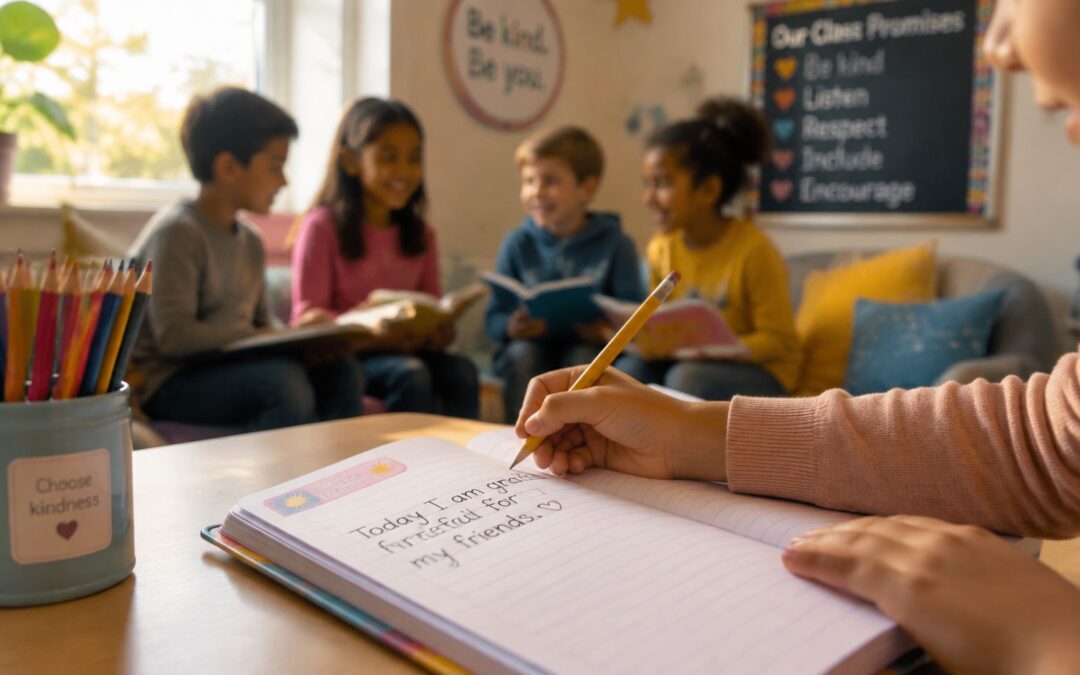
Why One Sentence Can Change a School Day
A lot of adults want a big opening, a full journal page, or a deep conversation before kids feel safe enough to share. Most children don't start there. They start with one thought, one feeling, or one small observation, and a sentence a day gives that first step a place to go without asking for a performance.
In a classroom, that can look like a morning meeting where the teacher writes, “I felt nervous before I came in, but I'm glad I stayed,” and invites students to respond with their own line. At home, it can be the child who usually says “fine” at bedtime suddenly offering, “I felt left out when my friends picked teams.” That single sentence doesn't solve everything, but it gives the adult something real to respond to, and that changes the emotional tone fast.
Practical rule: If a child can say it once, don't make them say it five different ways. The goal is connection, not repetition.
A sentence a day also works because it's small enough to feel safe. Kids who are unsure about sharing, or who shut down when asked to “talk more,” often do better when the task is narrow and familiar. They can focus on naming a feeling, a moment, or a need, then move on with the day instead of getting stuck in it.
The true SEL value is the rhythm. Children learn that emotions can be named, not hidden, and that adults will notice patterns without turning every feeling into a crisis. That predictable check-in helps build psychological safety in classrooms and homes, especially for kids who need a gentle way to enter communication.
The Research Behind Daily Sentence Practice
The reason this routine feels manageable is partly linguistic. English sentences used to run much longer, with research summarized in linguistic studies showing averages of about 63 words in 1525, 41.41 words by 1595, around 26 words in the 1820s, and roughly 14.4 words by 1950. A later corpus study found a decline from 33 words in 1876–1900 to 27 words in 1976–2000 (arxiv.org/pdf/2502.04321v1.pdf). The long arc points toward brevity, clarity, and compact expression, which is exactly why a one-sentence format feels so accessible for younger writers and busy families.
Why the format fits real life
Daily speech has also shrunk. A 2026 analysis of audio recordings from more than 2,000 people found that the average person uttered about 16,600 words per day in 2005, and that figure fell to below 12,000 words per day by 2019, a decline of about 28% over 14 years (Time). The researchers estimated the drop at roughly 330 fewer words spoken per day for each year in that period, about 120,000 fewer words per year. In plain terms, kids and adults are often carrying more of their inner life in shorter bursts, texts, and fragmented conversations, so a short written sentence can become a useful bridge back to reflection.
That bridge matters in SEL because language shapes regulation. A child who can name “frustrated,” “left out,” or “relieved” is already doing more emotional work than a child who only says “bad.” One sentence gives room for that naming without overwhelming the writer or the listener.
There's also a steadying effect in the format itself. It asks for just enough effort to create a habit, but not so much that adults abandon it after a busy week. That's why the routine can support belonging, self-awareness, and calm without needing to become a full journaling unit.
A short daily sentence doesn't replace deeper writing. It lowers the door so more children can walk through it.
Setting Up a Low-Lift Daily Routine
The first question teachers ask is usually practical, and it should be. If a routine adds copying, chart prep, and new management headaches, it won't last. A sentence a day works best when it fits inside something you already do, like morning meeting, advisory, arrival, dismissal, dinner, or bedtime.
Start with one visible place and one repeated cue. A chart paper on the wall, a notebook at the family table, or a shared digital doc can do the job. The point is not to create a polished system, it's to create a repeatable one that takes the least amount of thinking from the adult.
Keep the setup simple
Use one prompt for the whole day, or one weekly theme with tiny daily variations. If you're a teacher, write the sentence stem before students arrive. If you're a parent, put the notebook next to the dish soap, the coffee mug, or the bedtime lamp so you're not hunting for it when energy is low. For families who like extra support, tips for a writing journal can help you think through materials, spacing, and keeping the routine visible without overdoing it.
The structure should feel light enough to survive busy weeks. A child can dictate to an adult, write independently, or draw first and then turn the drawing into one sentence. The adult's job is to keep the routine moving, not to correct every detail in the moment.
A simple weekly flow looks like this:
Monday: Model a sentence about a feeling or event.
Tuesday: Let children answer the same kind of prompt in their own words.
Wednesday: Invite a partner share or quick read-aloud.
Thursday: Ask for one revision, maybe a clearer verb or a stronger feeling word.
Friday: Read back one sentence from the week and notice growth.
A few materials go a long way. Chart paper, sticky notes, pencils, a class notebook, or a phone note can all work. If you want a broader routine anchor for emotionally steady classrooms, this overview on routines for kids that help children feel emotionally grounded pairs well with a sentence a day because it treats predictability as a support, not a burden.
For teachers worried about prep, the hidden win is that repetition reduces decisions. Once the sentence frame is familiar, students spend less time asking what to do next, and more time thinking.
Prompts and Templates for Every Age Group
A sentence a day gets stronger when the prompt matches the child. Younger students need concrete language and a lot of modeling. Older students can handle perspective, conflict, and reflection, but they still need a frame that doesn't feel like a test.
The easiest way to keep it fresh is to rotate the type of prompt across the week. Use one day for a feeling, one for an event, one for a relationship, one for a problem, and one for a small success. That pattern keeps the routine stable while giving students new content to work with.
Sample A Sentence a Day Prompts by Grade Band
Grade Band
Prompt Example
Expected Response
K–2
“Today I felt ___ when ___.”
“Today I felt proud when I tied my shoes.”
K–2
“My favorite part of today was ___.”
“My favorite part of today was reading with my partner.”
3–5
“A kind choice I saw today was ___.”
“A kind choice I saw today was when Maya shared her markers.”
3–5
“One hard moment today was ___, and I handled it by ___.”
“One hard moment today was losing my page, and I handled it by asking for help.”
6–8
“I noticed myself reacting by ___, and next time I want to ___.”
“I noticed myself reacting by shutting down, and next time I want to ask a question first.”
6–8
“A situation I want to understand better is ___ because ___.”
“A situation I want to understand better is group work because I get frustrated when roles aren't clear.”
For K–2, keep the choices tight and concrete. A teacher might say, “Finish this sentence, ‘I felt __ when __.’” A child might answer, “I felt nervous when it was my turn,” or “I felt happy when my buddy smiled at me.” That's enough.
For 3–5, the sentence can stretch a little farther. A student might write, “I noticed I calmed down after I took a breath,” or “I felt included when my group saved me a spot.” At this age, kids start seeing the social pattern behind the feeling.
For 6–8, the best prompts invite reflection without becoming a lecture. Try, “What happened, what did you notice in yourself, and what do you want to do next time?” One student might write, “I got loud when I felt ignored, and next time I want to wait before I speak.” That kind of line is useful because it names behavior and choice in the same breath.
A useful companion resource for older students and home routines is journal entry prompts, especially when you want ideas that move beyond gratitude and toward self-awareness, perspective-taking, and conflict repair.
Keep the language specific. “Good day” tells you almost nothing. “I was proud when I asked for help” gives you a doorway into conversation.
Assessing Growth Without Killing the Joy
A sentence a day should not feel like a graded assignment with red ink waiting at the end. If students think every line will be scored, they'll start writing for approval instead of honesty. The better move is to watch for patterns that show growth over time and use those patterns to support conversation.
Notice change in the small things
Look for shifts in emotional vocabulary, willingness to share, and how much support a child needs to get started. A child who once wrote “mad” might later write “frustrated,” “disappointed,” or “embarrassed.” Another child may move from copied sentence stems to original thoughts, or from silence to one honest line in the notebook.
That kind of progress is easier to catch when you keep lightweight notes. A teacher might mark the date, the prompt, and one quick observation in a log. A parent might jot a note after bedtime, like “needed help starting” or “used a feeling word without prompting.” That's enough to see trends without turning the practice into paperwork.
For students who benefit from seeing their own growth, a short reflection every few weeks helps. Ask, “Which sentence felt most like you?” or “What's one word you use more now than you did before?” These questions keep the focus on voice, not compliance.
If you want a more formal lens, it can help to think about the practice as part of a broader outcome picture, especially when you're connecting SEL and literacy goals. This overview on outcome measurement is useful for educators who want to track change without flattening the relationship piece.
Use reflection, not pressure
Try one simple check-in every few weeks:
Student reflection: “What's easier to say now?”
Family reflection: “What do you notice your child talks about more often?”
Teacher reflection: “Who is participating more, and who still needs a model?”
Those questions help adults notice whether the routine is opening communication or becoming mechanical. If the sentences are getting shorter because the child is tired, that's useful information too. It may mean the prompt needs to be simpler, the time of day needs to shift, or the adult needs to model a little more.
Integrating the Practice Into Schoolwide SEL
A sentence a day works best when it lives inside a shared SEL language, not off to the side as one more isolated activity. If a school already uses advisory, community meetings, or a common calm-down framework, the daily sentence can echo those routines in a form students already recognize. That lowers the lift for teachers and families, because they are not building a separate system from scratch.
Make the routine part of the ecosystem
At the school level, the strongest use is as a low-lift routine builder. It gives students one shared place to practice vocabulary from assemblies, classroom agreements, peer support efforts, or bullying prevention work. That matters because public-facing materials for sentence routines often explain the steps, the chart paper, and the five daily segments, but they rarely answer the question busy educators ask first, how much prep and management this adds to an already full day.
That concern is real. A routine can look appealing on paper and still be hard to keep going if it depends on repeated copying or heavy teacher modeling every day. The version that lasts is modest, steady, and easy to repeat, so teachers can use it without turning it into another prep-heavy literacy task.
A schoolwide version can look like this:
Advisory: One shared prompt each week that matches the advisory theme.
Classrooms: A quick daily sentence that uses the same emotional vocabulary.
Families: A home version that mirrors the school prompt at dinner or bedtime.
Digital tools: A simple app or shared document for students who need typing or audio support.
For administrators, the main question is not whether the routine is flashy. It is whether students hear the same language in more than one place so the skill sticks. When a child practices naming feelings in class, then again in advisory, then again at home, the language starts to feel normal instead of academic. For a broader view of how structured SEL programs support this kind of routine, see our overview of social-emotional learning programs for schools.
Used this way, a sentence a day supports community without trying to replace deeper SEL lessons, counseling, or conflict resolution work. It works like a small daily thread that helps those larger systems hold together.
If you want a school partner that understands how small daily routines can strengthen belonging, self-regulation, and shared language, visit Soul Shoppe and explore programs that help kids and grownups practice connection in real classrooms and homes. Their SEL approach fits naturally with a sentence a day because it treats consistency, empathy, and community as daily habits, not one-time events.
Monday morning starts the same way for a lot of teachers. The lesson is ready, the slides are tight, the directions are clear, and the class still feels like it's running on autopilot, with students completing the work but not really stepping into it.
That gap is where student voice and choice matters. It gives students a real role in the classroom, not just a chance to answer questions, and it gives teachers practical routines for hearing from kids, using their ideas, and offering structured options without losing the flow of the lesson. Research keeps pointing to the same thing, students respond when they feel heard, when their input shapes what happens next, and when the classroom has room for both structure and participation.
What Changes When Students Have a Real Say
A teacher can do everything “right” on paper and still feel the room go flat. The directions are followed, the worksheet gets finished, and the energy never quite rises above compliance. That's usually the moment when teachers start looking for the missing layer, not more activities, but more student voice and choice.
Voice and choice are not a vague feeling. They are classroom routines that help students move from participating to helping shape the learning environment, which is a different kind of work. In practice, that can mean a student has a say in how a lesson unfolds, how a task is completed, or what class norms need adjusting. Those decisions don't erase teacher leadership, they make the classroom more responsive.
What changes in the room
When students are part of the process, teachers usually notice calmer transitions, more ownership, and less resistance to routine work. The research ties stronger student-voice indicators to stronger self-worth and engagement in grades 6 to 12, with students reporting higher rates of both when their schools had more of those indicators (PMC9219399). That matters because belonging and participation are not side benefits, they're part of the engine of learning.
Practical rule: if students only get to respond after adults have already decided everything, they're participating, not influencing.
This is also where psychological safety matters. If a student doesn't feel safe enough to speak candidly, a “voice” routine can turn into performative compliance. A simple lens for that connection is explained well in this overview of psychological safety in school settings, because kids need both permission and trust before they offer real input.
The biggest shift is this, voice and choice makes classroom life more teachable. Instead of treating student participation as a nice extra, teachers can build it into the daily rhythm in small, repeatable ways.
A Working Definition Teachers Can Actually Use
Student voice and choice has four mechanics that show up again and again in the research, and it helps to name them separately. A lot of confusion happens when these get blended together into one soft idea about “listening to kids.” The practices are more specific than that, and once teachers can label them, they can see which ones are already in place and which ones need attention.
The four mechanics in plain language
Seek student feedback. Ask students what is working, what is confusing, and what needs adjusting. A quick exit card after math might ask, “Which step helped you most today?”
Invite student input. Ask for ideas before you plan. In a reading block, that could sound like, “Which of these two topics would you rather explore first?”
Share collaborative decision-making. Make some choices together. For example, a class might decide which norm will help group work go more smoothly this week.
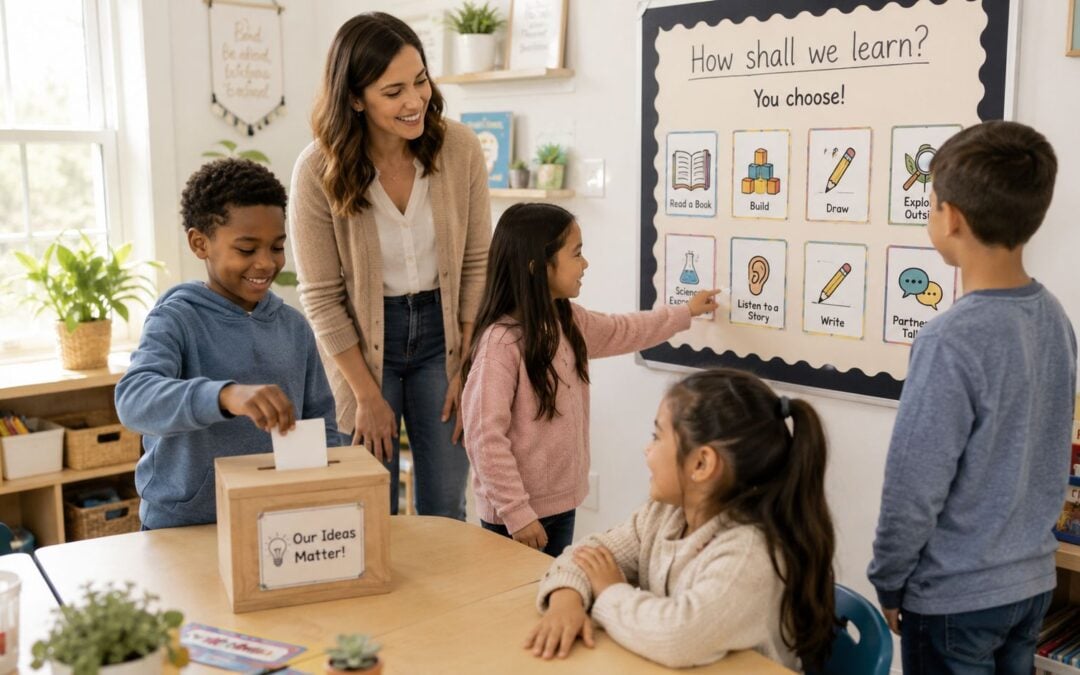
Offer structured choice. Give students meaningful options inside clear boundaries. A writing task might let them choose between a poster, slideshow, or oral explanation.
That set of practices is worth taking seriously because it connects to measurable outcomes. In one large study, students who reported at least one teacher using classroom student voice practices had higher self-reported grades, with a mean of 4.01 versus 3.76, and lower absenteeism (PMC10993169). Another study found that stronger student-voice indicators were associated with higher self-worth and engagement (PMC9219399). For a fuller look at how children build agency through guided decisions, see this overview of choice-making activities that give kids a voice.
Those findings matter because they show this is not just about making class feel friendlier. The point is not to let students run everything. The point is to build specific routines where their voice changes what happens next.
Classroom cue: if you can point to the exact moment a student's idea changed the lesson, you're using voice, not just discussion.
How to Add the Four Mechanics Without Overhauling Your Week
Teachers usually don't need a full reset. They need a sequence that starts small, shows students their ideas matter, and grows into more shared decision-making over time. The most effective rollout keeps the teacher in charge of the learning target while expanding how students help shape the path toward it.
Start with one feedback loop students can see
Begin with a simple question you can act on. Try, “What part of today's work helped you learn the most?” Then tell students what you noticed and what you'll adjust next time. If you want support for setting up student-facing routines and organizing them cleanly, these literacy center setup tips are useful because they show how structure makes independence easier to manage.
A student response might be, “The example helped, but I needed more time.” That answer gives you something concrete to change, and students learn that their feedback isn't decorative.
Add one input question each week
Once feedback is normal, invite input before you plan. A week's question might be, “Which example should we use to practice this skill, sports, animals, or school clubs?” That kind of question keeps the learning target steady while opening a small door for student preference.
Move to one collaborative decision per unit
Teachers and students decide something together. A class might co-decide the order of project checkpoints or the group-work norm they want to improve. A helpful way to think about it is to use the teacher's boundary as the frame and the students' ideas as the fill.
Introduce structured choice in how students show learning
This is the most familiar piece for many teachers. Students can choose how to show understanding, as long as the options match the goal. A science check-in might allow a labeled diagram, short explanation, or recorded response.
Quick check: if every student choice still leads to the same target, the choice is structured. If the target gets blurry, the choice is too loose.
One caution from the research is important here. A sixth-grade choice-board intervention increased self-efficacy and autonomy, but it did not produce statistically significant gains in motivation or social studies attitudes in pre/post survey analysis (PMC11836230). That's a reminder to keep choice aligned to purpose, not just variety. For more practical schoolwide examples of choice routines, daily check-ins for students can help teachers build a stable rhythm that students recognize.
A Week-One Routine That Builds Voice and Choice
A routine works better than a one-time launch because students need repetition to trust it. If the practice appears once and disappears, kids learn it was a special event, not a classroom habit. The simplest version is a Monday-to-Friday loop that takes only a few minutes a day.
Monday through Friday in practice
Monday, 3 minutes. Ask, “What would help you feel ready to learn this week?” Students can answer on sticky notes, in journals, or aloud. If only three students answer, collect the others on paper before lunch, then read a few responses back so the class sees you're using them.
Wednesday, 5 minutes. Offer one choice in practice work. Say, “You can solve the next four problems with a partner or on your own, but you need to show your steps.” A student response might be, “I want to work with Ava first, then try one alone.”
Thursday, 2 minutes. Use a feedback card. Ask, “What should I keep the same, and what should I change tomorrow?” If students shrug at first, make the prompt narrower. “Was the directions page clear, yes or no, and what would help?”
Friday, 5 minutes. Give one shared decision about the next week. The class might choose which example to start with, which reading response to review first, or which norm needs practice during group work.
The routine matters because it teaches students that their input has a place on the calendar. It also gives the teacher a visible way to respond, which is what builds trust over time. If you want another classroom-friendly model for quick student check-ins, mastering daily check-ins for students can help you pair voice with reflection.
What to do when students stay quiet
Write first: give a minute of silent think time before anyone speaks.
Use small groups first: let students talk in pairs before whole-class sharing.
Offer a forced choice: “Do you want A or B?” is easier than “Any ideas?”
Accept partial answers: “I'm not sure yet” still counts as data.
A good week-one routine doesn't need to be fancy. It needs to be predictable, brief, and visibly used.
Making Sure Every Student Is Heard
Voice and choice are not automatically equitable. Some students speak first because they feel confident, use academic language easily, or are used to being centered. Others, especially quiet students, new students, English learners, and kids who have learned that speaking up can feel risky, get left out unless the teacher designs for them on purpose.
Who gets heard by default
In many classrooms, the same few students answer the open-ended question, lead the discussion, and shape the group decision. That does not mean the room is unfair on purpose, it means the structure is uneven. Research frames student voice as structures and relationships, not just asking students what they want, and it emphasizes access, representative participation, clear roles, and adult responsiveness (SAGE).
That is why simple access moves matter so much. If students can answer in writing, draw a response, or talk in a small group before speaking publicly, more kids get a real entry point. Random-name selection can help balance who gets invited, and translation or visual supports can lower the language load for students who need it.
Equity rule: if the loudest students are the only ones shaping the classroom, the practice is not voice, it is volume.
Three adjustments that widen the circle
Multiple channels: use sticky notes, digital forms, partner talk, or drawing.
Private first, public later: let students rehearse an idea before sharing it out loud.
Response loops: show students how their answers affected a choice, even in a small way.
A classroom example helps here. If you ask, “Which part of the directions was confusing?”, a child who freezes during whole-group talk may still point to a step on the page, circle a word, or tell a partner first. That is student voice with a path, not a performance.
If your school is working on adult conversations about speaking up, master crucial conversations at work is a useful parallel because the same idea applies, people participate more when the environment feels safe and the process feels fair.
A helpful way to keep this from becoming performative is to check the four mechanics separately. Are students getting feedback? Are they giving input? Are they joining decision-making? Are they offered structured choice inside clear boundaries? When one of those is missing, the routine can look student-centered while still leaving the same voices in charge.
That distinction matters for equity. A teacher can invite input without making a real decision, or offer choices that only fit students who already know the hidden rules. The fix is not to give up on voice and choice, it is to make each routine visible, limited to what students can influence, and responsive enough that quieter students see their ideas used in the room.
You do not need to redesign everything at once. Start by asking who your routine already reaches, then adjust one part so the quietest students have a real path in.
For a broader systems lens, SEL programs for schools helps connect this work to a wider culture of connection and safety, which is where voice and choice hold up best.
Getting Leadership Buy-In and Scaling Across a School
A single classroom can show the value of these practices, and that matters for leaders who want something concrete before scaling. The research already shows that even just one teacher using classroom student voice practices was associated with better student agency, stronger math grades, higher GPA, and lower absenteeism (PMC11836230). That gives principals a clear place to start, a pilot is enough to show whether the routines are landing.
What leaders can put in place
Schoolwide growth usually needs four moves. First, give staff a shared language for the difference between feedback, input, collaborative decisions, and structured choice. Second, use walk-through look-fors so teachers know what a visible routine looks like. Third, include student representatives on school committees. Fourth, define the essentials, the learning targets, safety norms, and assessment criteria that stay adult-led.
For a broader systems lens, SEL programs for schools offers a helpful bridge because voice and choice work best when they sit inside a larger culture of connection and safety.
Leadership move: don't ask staff to “be more student-centered” and leave it there. Name the specific classroom behaviors you want to see, then make room for teachers to practice them.
A useful first step within a month is a staff meeting protocol where teachers bring one voice-and-choice routine they're already trying, then identify where students influenced a decision. That shifts the conversation from approval to evidence.
Troubleshooting and Knowing It Is Working
The first snag usually shows up fast. Students pick the easiest option, a few parents worry that the classroom is getting too loose, or the routine starts strong and then fades because it takes too much time. Those are normal problems, and they usually mean the structure needs tightening, not that the idea is wrong.
What to watch and what to fix
If students keep choosing the easiest path, narrow the options so each one asks for the same learning target. If families want more traditional structure, explain that choice stays inside clear boundaries, not outside them. If only a few students respond, add written responses or partner talk before whole-group sharing. If a routine feels performative, check whether students are making a real decision or only picking between options that do not change anything.
For a practical way to think about checking growth beyond test scores, MyCulture.ai's classroom assessment guide can help teachers observe soft skills and participation patterns alongside academic work.
Track three things for a few weeks, not forever. Watch engagement signals, attendance, and a short pulse question like, “Do my ideas matter in this class?” These are small classroom indicators, like looking at the dashboard while you drive, not only checking the final destination. If those signs improve, the routine is probably doing its job.
The clearest sign of success is simple. Students start expecting that their input will matter, and teachers start expecting to use it. The class feels less like a script and more like a shared routine, where feedback, input, decision-making, and structured choice each have a clear place.
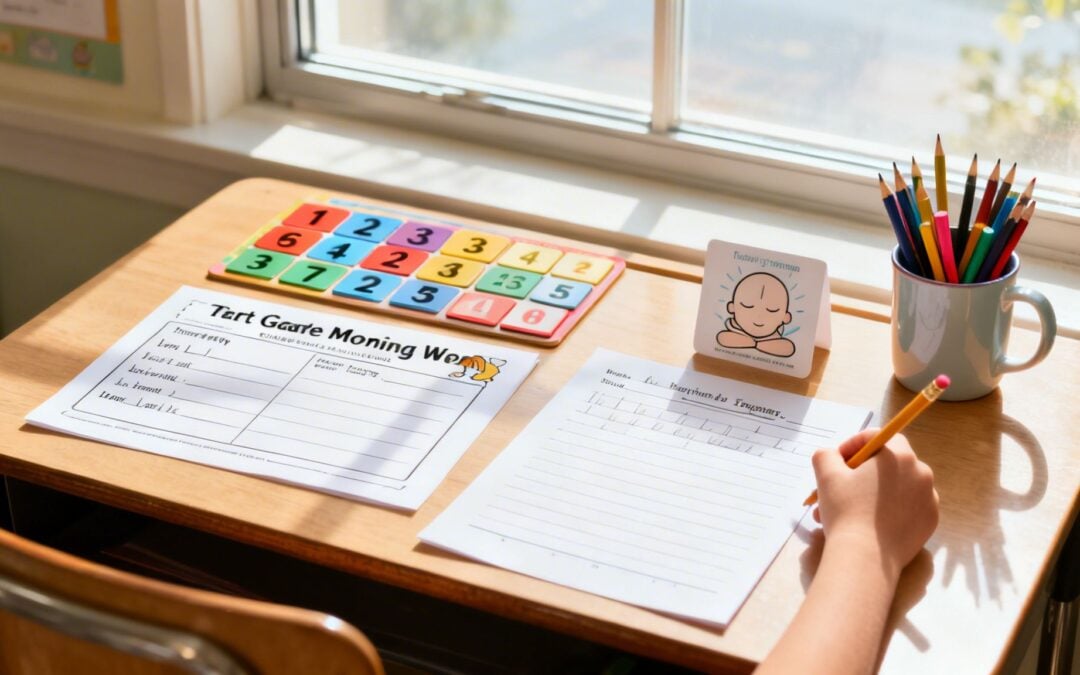
Imagine your 2nd graders walking into a calm, focused classroom, ready to connect and learn. This isn’t a fantasy; it’s the power of intentional morning routines. Traditional worksheets often miss the most critical part of a child’s school day: settling their minds and bodies. Effective 2nd grade morning work should build a foundation for learning, not just fill time before the first bell.
This guide provides a curated list of practical, low-prep activities that prioritize social-emotional learning (SEL) alongside academics. These ideas are designed for busy teachers, administrators, and parents seeking to replace morning chaos with meaningful engagement. A key part of this process involves teaching students foundational skills. Understanding how to regulate emotions is a cornerstone of a peaceful classroom, as it equips children with the tools they need to manage big feelings and focus on learning.
You will find specific, actionable examples for each activity, from mindfulness check-ins to problem-solving role-plays. We also include differentiation tips and ways to integrate practices from leading SEL organizations like Soul Shoppe. The goal is to ensure your students start their day feeling safe, connected, and truly ready to thrive.
1. Mindfulness & Breathing Check-In Circle
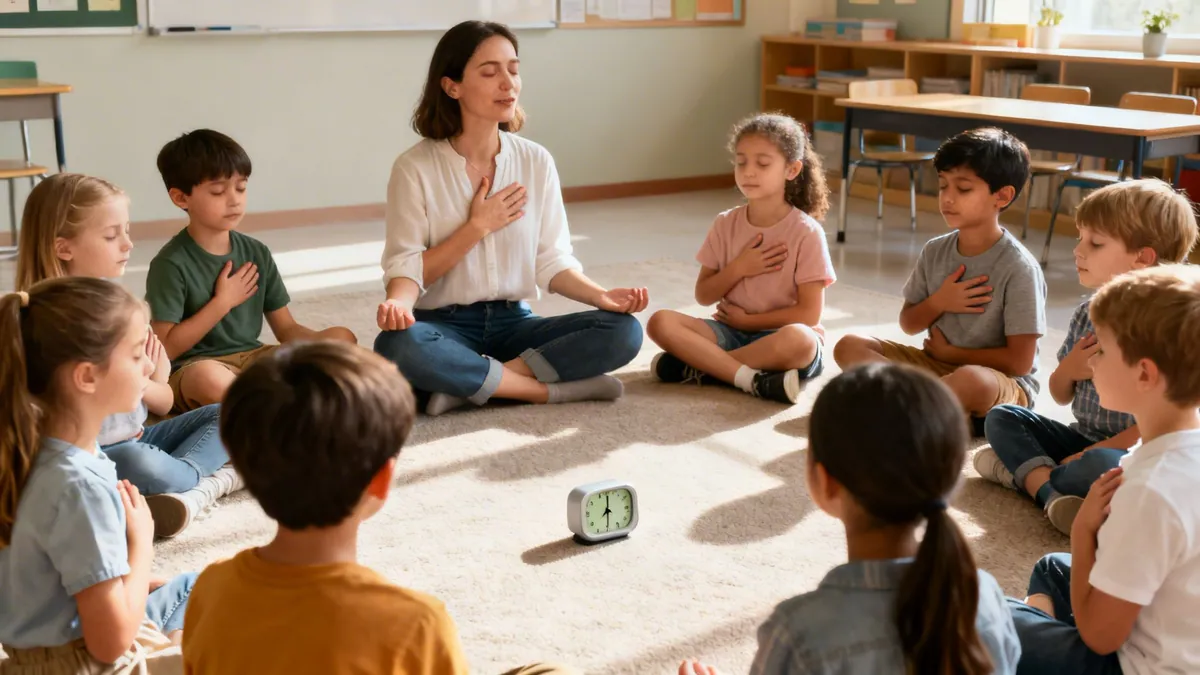
Starting the day with a Mindfulness & Breathing Check-In Circle is a powerful form of 2nd grade morning work that prioritizes social-emotional learning (SEL) before academics begin. This 5 to 10-minute structured activity involves gathering students in a circle on the floor to practice guided breathing, simple body scans, or grounding techniques. The primary goal is to help students transition from home to school, co-regulate their nervous systems, and build a foundation of calm, focused attention for the day ahead.
This practice directly supports students’ ability to identify and manage their emotions, a key component of SEL. Many schools successfully use programs like Calm or Headspace for Schools, while others integrate these moments into the Responsive Classroom morning meeting structure. The teacher acts as a facilitator, modeling calmness and guiding students through simple, consistent routines.
How to Implement a Breathing Circle
Start Small and Be Consistent: Begin with just two to three minutes of guided practice each morning. As students become more familiar and comfortable with the routine, you can gradually extend the time. A practical example is a “Take 5” breathing exercise: students trace their hand, breathing in as they trace up a finger and out as they trace down.
Create a Dedicated Space: If possible, designate a “calm-down corner” or a specific area of the classroom for this circle. Keep it free from visual distractions to help students focus inward.
Use Simple, Repetitive Language: Guide students with clear, predictable phrases. For example, “Let’s take a deep breath in through our noses, filling our bellies like a balloon… now, slowly let the air out through your mouth like you’re blowing a bubble.” This consistency creates a sense of safety and predictability. To effectively help children regulate their emotions and prepare for the day, consider integrating some of the best breathing exercises tailored for calming the nervous system.
Follow with an Emotion Check-In: After the breathing practice, ask students to non-verbally share how they are feeling. A simple thumbs-up (feeling great), thumbs-sideways (feeling okay), or thumbs-down (having a tough time) provides a quick, private way to gauge the classroom climate. These quick assessments are an essential part of effective daily check-ins for students.
Your authentic participation is key. When students see their teacher actively and genuinely engaging in the breathing exercises, they are more likely to mirror that engagement and internalize the benefits of the practice.
Integrating a daily Social-Emotional Learning (SEL) Prompt Reflection is an effective form of 2nd grade morning work that builds emotional intelligence through writing or discussion. This quiet, independent activity asks students to respond to a specific prompt about feelings, relationships, or problem-solving. By answering questions like, “Who showed you kindness yesterday?” or “How did you handle a frustration today?” students practice identifying emotions, developing empathy, and using the language of self-awareness.
This practice gives students a structured way to process their inner world and connect it to their school life. Many effective curricula, such as the Second Step Program and Zones of Regulation, use this prompt-based method to reinforce key SEL concepts. It allows teachers to gain valuable insight into students’ well-being while fostering a classroom culture where emotional expression is valued and normalized.
How to Implement SEL Prompts
Establish a Weekly Theme: Create a rotating schedule to cover different SEL competencies. A practical example: Monday (Gratitude – “What is one thing you are thankful for?”), Tuesday (Kindness – “Draw a time you helped a friend.”), Wednesday (Problem-Solving), Thursday (Empathy), and Friday (Reflection). This provides structure and predictability.
Keep Prompts Simple and Concrete: Phrase questions in a way that is easy for a second grader to understand. Instead of “Describe a time you showed perseverance,” try “What is something you worked hard on and didn’t give up?”
Model Vulnerability: Share your own authentic, age-appropriate response to the prompt first. Saying, “I felt frustrated this morning when I couldn’t find my keys, so I took a deep breath,” shows students that everyone manages emotions.
Use Visual Anchors: Create an anchor chart with sentence starters like “I felt happy when…” or “A kind thing I saw was…” to support students who need help structuring their thoughts. For example, for a prompt about helping, a starter could be: “I helped my mom by…” Providing a range of thoughtful and effective student reflection questions can guide this practice and deepen its impact.
Normalize All Feelings: Emphasize that there are no “right” or “wrong” answers. The goal is honest reflection, not a perfect response. This builds psychological safety and encourages authentic sharing.
3. Kindness & Connection Morning Meeting
A Kindness & Connection Morning Meeting is a structured, 10 to 15-minute group gathering that serves as exceptional 2nd grade morning work by putting community first. In this daily practice, students celebrate one another, practice active listening, and intentionally build a safe, supportive classroom culture. The core purpose is to establish belonging, reduce feelings of isolation, and ensure that every student feels seen and heard before academic instruction begins.
This intentional community-building time directly addresses students’ need for safety and connection, which are prerequisites for engaged learning. Many effective models exist, from the well-known Responsive Classroom Morning Meeting to frameworks like Tribes Learning Communities. The teacher’s role is to facilitate a predictable routine where students can share good news, acknowledge peer accomplishments, or play cooperative games.
How to Implement a Kindness Meeting
Establish Clear Norms: Co-create rules for respectful listening with your students. Simple expectations like “quiet bodies,” “kind faces,” and “eyes on the speaker” help everyone feel safe to share. For example, create an anchor chart with pictures demonstrating these norms.
Use a Talking Piece: Pass a designated object (a special rock, a small stuffed animal) to show whose turn it is to speak. This ensures equitable participation and teaches students not to interrupt, giving each child uninterrupted time. For example, you can say, “Only the person holding ‘Sparky the Star’ can share their thoughts.”
Start with Low-Risk Sharing: Begin the year with simple prompts like, “Share one thing you enjoyed this weekend.” As trust builds, you can move toward more personal sharing. For example: “Share your favorite part of the book we read yesterday.”
Rotate the Celebration Focus: To keep it fresh, dedicate each day to a different theme. For example, Mondays could be for celebrating academic effort (“I want to celebrate Maria for working so hard on her math facts”), while Tuesdays are for noticing acts of kindness. This structure guides students on what to look for in their peers. To discover more ways to foster these connections, you can find a wealth of classroom community-building activities that complement this morning routine.
Your consistent modeling of vulnerability and appreciation sets the tone. When you genuinely celebrate a student’s effort or share a personal story, you show students that the classroom is a true community where every member matters.
Using role-play for conflict resolution is a dynamic form of 2nd grade morning work that gives students hands-on practice with social problem-solving. These short, interactive skits focus on common classroom issues like sharing, taking turns, or responding to unkind words. By acting out different roles in a safe, guided setting, students learn to see conflicts from multiple perspectives, practice using “I-Feel” statements, and brainstorm peaceful solutions together. This makes abstract concepts like empathy and respect tangible and memorable.
This method directly equips students with the language and strategies needed to navigate peer disagreements constructively. Experiential programs from organizations like Soul Shoppe and the Second Step Program often feature role-playing as a core component for teaching these skills. The teacher facilitates by setting up simple scenarios, guiding the process, and helping students reflect on the outcomes of their chosen solutions, turning potential disruptions into learning opportunities.
How to Implement Problem-Solving Role-Play
Start with Puppets: Before asking students to perform, use puppets or stuffed animals to act out scenarios. This lowers the pressure and allows students to focus on the problem and solution, not on being in the spotlight. A practical example: have one puppet snatch a toy from another, then guide students to give the puppets the right words to use.
Scaffold the Scenarios: Begin with simple, two-character conflicts. For example, “Character A took Character B’s crayon without asking.” As students gain confidence, you can introduce more complex situations like, “Leo and Sara both want to be line leader. What can they do?”
Create a Visual Aid: Develop a “Problem-Solving Steps” anchor chart that students can reference. Steps might include: 1. Stop and Cool Off, 2. Use an “I-Feel” Statement, 3. Listen to the Other Person, and 4. Brainstorm a Solution. A practical example for step 2 is teaching the phrase: “I feel _____ when you _____ because _____.” To explore more ideas for building these skills, check out these engaging conflict resolution activities for kids.
Rotate Roles: Ensure every student has the chance to play different parts, including the person with the problem, the person who caused it, and a helpful bystander or “peace-maker.” This builds empathy by allowing them to experience the situation from all sides.
Connect to Real Life: After a role-play session, explicitly connect the practice to classroom life. Say, “Remember how we practiced asking nicely for a turn? I saw Jamal and Aisha do that at the block center. Great job using your peace-making skills!” This helps transfer the skills from the activity to real-world interactions.
5. Emotion Recognition & Feelings Check-In
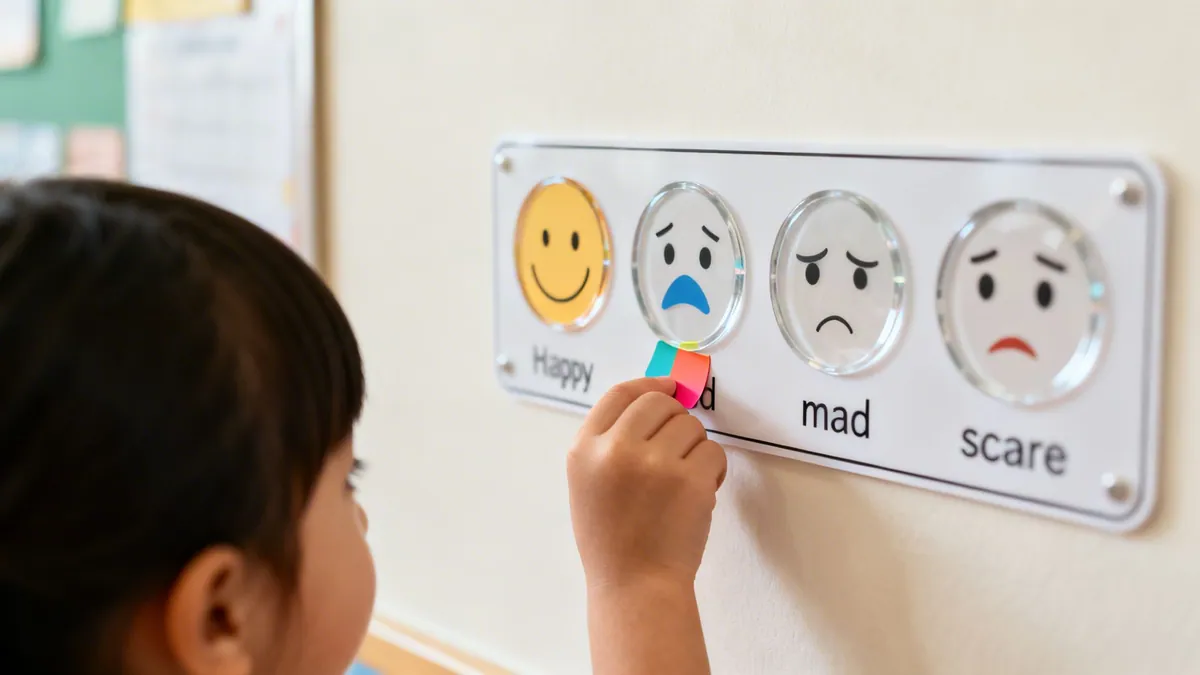
Building emotional literacy is a foundational part of social-emotional learning, and an Emotion Recognition & Feelings Check-In serves as effective 2nd grade morning work for this purpose. This daily activity asks students to identify and name their current feelings using visual aids like emotion wheels or feelings charts. The goal is to create a safe, predictable routine where discussing emotions is normalized, helping teachers gauge student readiness for learning and building a more empathetic classroom culture.
This practice gives students the vocabulary they need to move beyond simple terms like “mad” or “sad.” Frameworks such as the Zones of Regulation, which categorize feelings into colored zones (blue, green, yellow, red), are widely used to help children understand their emotional and physical state. Other teachers may use a feelings thermometer or a daily mood board where students place their name under a corresponding emotion face.
How to Implement a Feelings Check-In
Introduce Emotions Gradually: Start the school year with four basic feelings: happy, sad, angry, and scared. As students master this vocabulary, you can introduce more nuanced words like disappointed, frustrated, proud, or calm. For example, create a “feeling of the week” and discuss what it looks like, sounds like, and feels like in the body.
Use Consistent Visual Supports: Choose one visual system and stick with it. Whether it’s a color-coded chart based on The Color Monster or a Zones of Regulation poster, consistency helps students quickly recognize and identify their state without confusion. A practical example: a pocket chart where each student moves their name stick to the “zone” they are in each morning.
Model Naming Your Own Emotions: Your authenticity is powerful. Start the check-in by sharing your own feelings in a simple, age-appropriate way. For example, “Good morning, class. I am feeling excited today because we get to start our new science unit.” This models that all feelings are normal and acceptable.
Provide Non-Verbal Options: Not every child will be ready to share verbally. Allow students to use a thumbs-up/sideways/down signal, point to a chart, or place a clothespin with their name on a feelings poster. Respecting this choice is key to building trust and psychological safety.
After the check-in, you can make a general observation to validate their feelings and connect them to classroom strategies. A simple statement like, “I see some of us are in the blue zone and feeling tired this morning. Let’s remember we can take a stretch break if we need one,” shows students you see them and are ready to support them.
6. Partner or Peer Share Activity
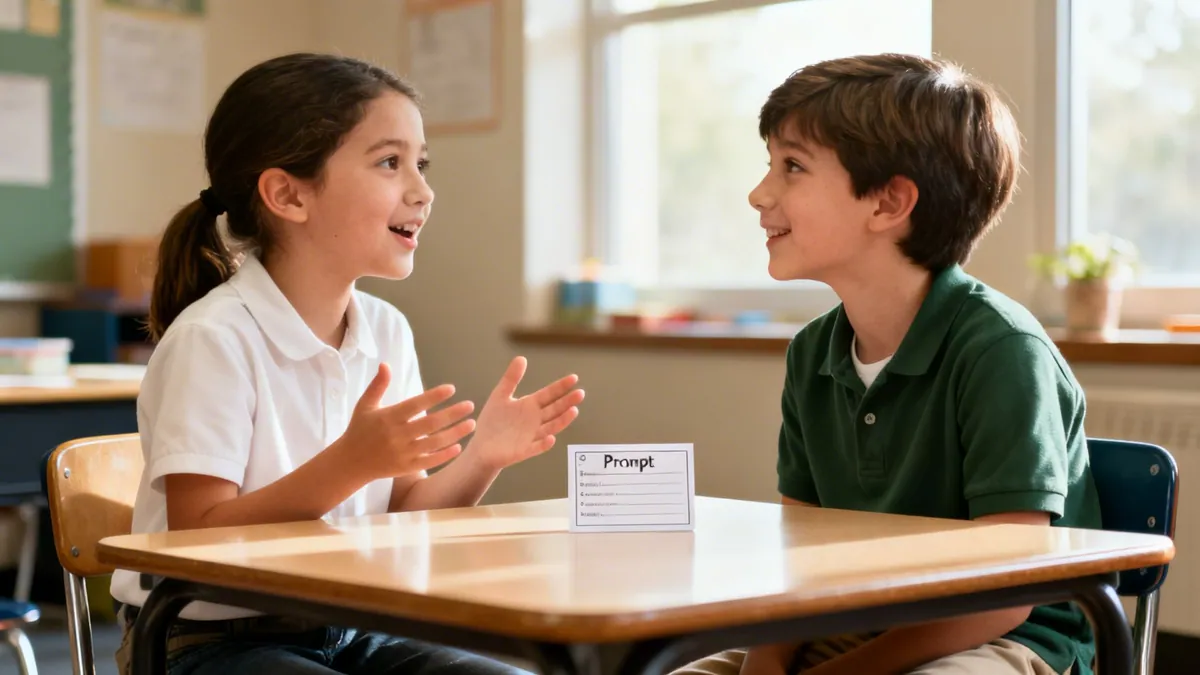
A Partner or Peer Share Activity is a structured form of 2nd grade morning work that develops crucial communication and social skills. This 5 to 10-minute routine involves pairing students to ask and answer thoughtful questions, practice active listening, and learn about one another in a safe, one-on-one setting. The primary goal is to build a supportive classroom community, give quieter students a voice, and foster empathy by creating intentional connection points.
This practice is a cornerstone of collaborative learning models like Responsive Classroom and Cooperative Learning. By taking turns speaking and listening, students move beyond surface-level interactions to build genuine understanding. The teacher acts as a facilitator, modeling respectful communication and providing engaging prompts that encourage students to share their thoughts and experiences.
How to Implement a Partner Share Activity
Model Expected Behaviors: Before starting, explicitly model what good listening and speaking look like. For example, act out a “good partner” who makes eye contact and asks a follow-up question, then a “distracted partner” who is looking away. A practical example is using the “EEKK” rule: Elbow-to-Elbow, Knee-to-Knee.
Use Clear Prompts and a Timer: Start with simple, concrete questions like, “What is one thing you are good at?” or “If you could have any superpower, what would it be and why?” Use a visual timer to give each partner 1-2 minutes to share, providing a clear structure for turn-taking.
Intentionally Pair Students: To build a stronger classroom community, purposefully pair students who may not typically interact. Rotating partners weekly or biweekly ensures that every student gets a chance to connect with many different classmates throughout the year, breaking down social cliques. For example, use “clock buddies” where students pre-select partners for different times of the day.
Teach Active Listening Skills: Make active listening a direct teaching point. Instruct students to “look at your partner, nod to show you’re listening, and think of one question to ask about what they said.” You can even create a “listening challenge” where students have to introduce their partner and one thing they learned from them. For example: “This is my partner, Sam. I learned that his favorite animal is a cheetah.”
7. Gratitude & Appreciation Activity
Integrating a Gratitude & Appreciation Activity into your routine is a simple yet profound type of 2nd grade morning work that builds community and fosters a positive classroom environment. This activity invites students to identify what they are thankful for, recognize their own strengths, and appreciate kindness in their peers. It shifts the daily focus toward positive relationships and emotional well-being, setting a constructive tone for learning.
Formats can range from a whole-class gratitude circle or a “Thankfulness Thanksgiving” tradition to individual gratitude journals. The core goal is to help students develop a practice of noticing the good around them, which builds resilience and a growth mindset. This practice is popularized by the Bucket Fillers movement and supported by research from positive psychology on the benefits of gratitude.
How to Implement Gratitude Activities
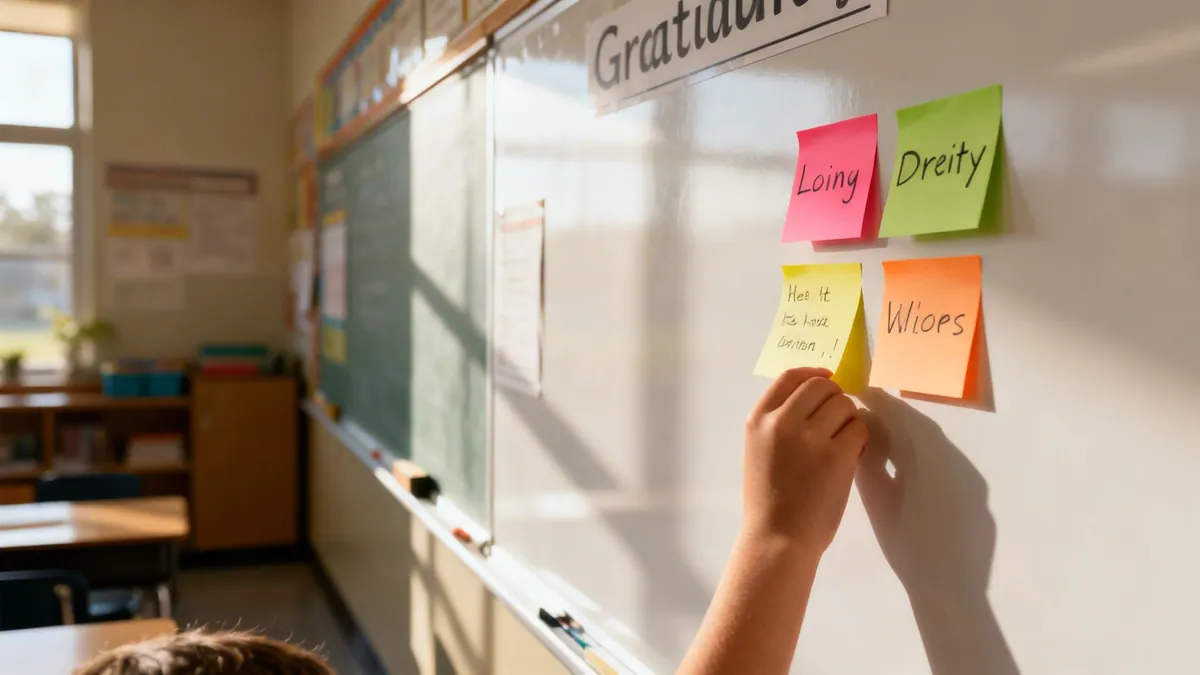
Create a Visual “Appreciation Board”: Designate a bulletin board where students can post sticky notes with appreciative comments about classmates. A practical example: a “Bucket Filler” board where students write notes saying, “To Lena, You filled my bucket when you shared your crayons with me. From, David.” Seeing the board fill up provides a powerful visual reinforcement.
Scaffold with Specific Prompts: Young students may need help identifying things to be grateful for. Use clear prompts like, “What is something that made you smile this morning?” or “Who showed you kindness on the playground yesterday?”
Model Authentic Gratitude: Share your own specific and genuine gratitude. For example, “I am so grateful for how quietly and respectfully everyone transitioned from the rug to their desks.” This models the behavior you want to see.
Introduce “Shout-Out Fridays”: Dedicate a few minutes at the end of the week for students to give a verbal “shout-out” to a peer who helped them, showed perseverance, or was a good friend. To ensure everyone feels included, you can discreetly track who receives shout-outs and gently guide students to recognize peers who haven’t been mentioned recently. For instance, “Let’s give a shout-out to someone who showed courage this week.”
8. Mindful Movement & Brain Break Activities
Incorporating Mindful Movement & Brain Break Activities into your morning routine is a dynamic form of 2nd grade morning work that channels physical energy into focus and self-awareness. These short, 5-minute sessions combine guided physical activities like yoga, stretching, or dance with mindful principles. The objective is to help students release pent-up energy, improve body awareness, and prepare their brains for academic tasks. This practice builds a crucial bridge between physical sensations and emotional states.