8 Examples of Healthy Boundaries for Kids and Adults

A child stands beside the classroom door after another student hugs them without asking. At home, a caregiver notices a child agreeing to every request, then becoming quiet and irritable. In both situations, something feels wrong, but the child may not yet have the words to explain it.
A healthy boundary is a clear limit that protects safety, autonomy, time, emotions, or relationships without rejecting connection. It can sound like, “Please stop,” “I need some space,” or “I'm not available for that right now.” Boundaries also belong to adults. A teacher can protect a professional role, and a parent can decline an unreasonable demand without withdrawing love.
Clear boundaries help children practice self-regulation, empathy, and assertive communication. They also make classrooms and homes more predictable, which supports psychological safety. The need for this teaching is practical. In a 2023 survey highlighted by Our Watch's research record, many surveyed young people misidentified controlling or coercive behavior as healthy, and only 22% felt completely confident taking action when they felt unsafe, uncomfortable, or disrespected.
The following examples of healthy boundaries are organized around everyday relationships and developmental settings. Each one gives adults a script, a teaching tactic, and observable cues that signal a limit needs attention.
1. Establishing Clear Communication About Screen Time and Device Use
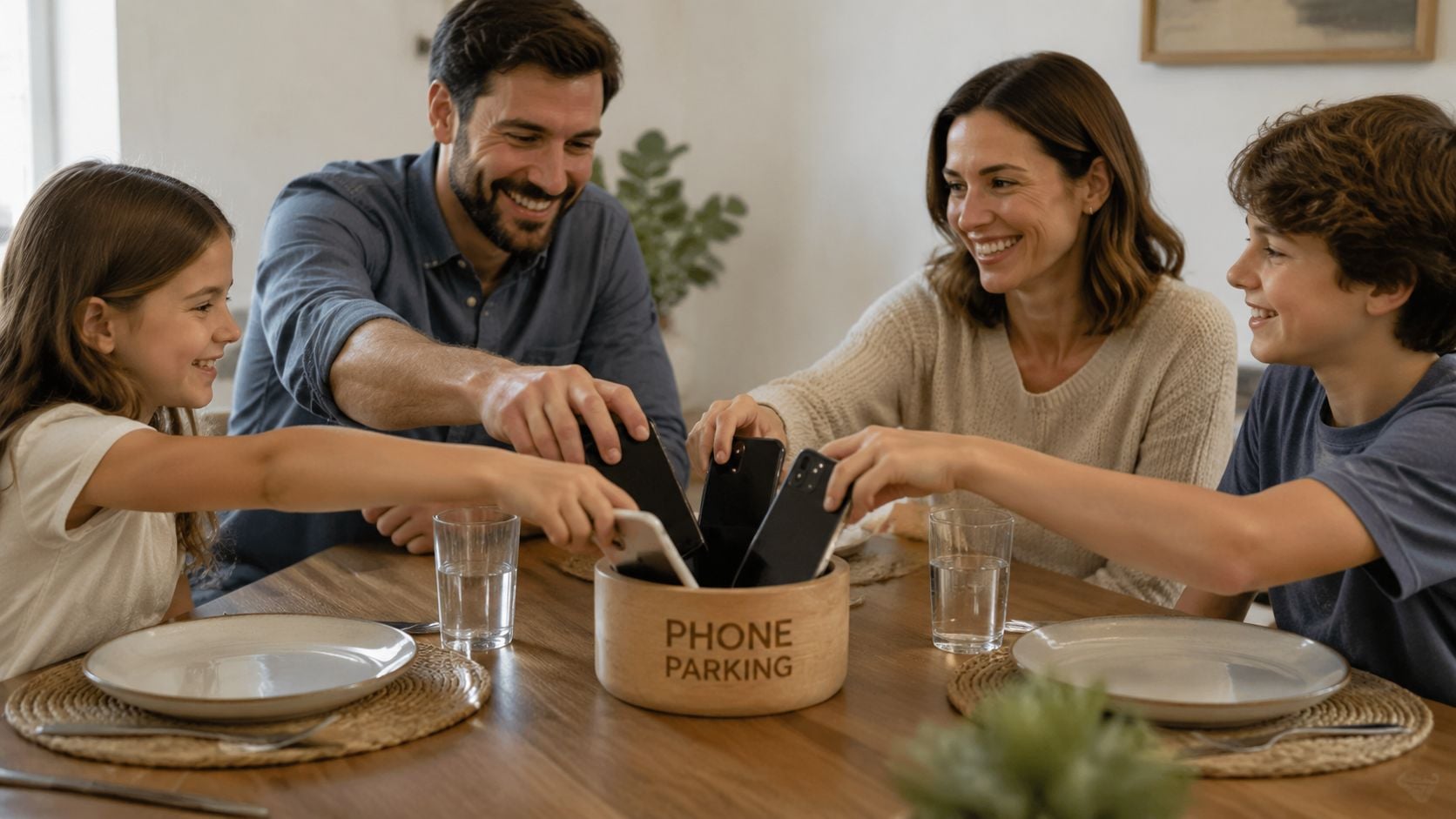
At dinner, a child reaches for a tablet while a caregiver checks messages under the table. In class, several phones interrupt a group discussion. These moments show why device boundaries work best when everyone understands when, where, and why screens are permitted. The purpose is shared attention, not treating technology as bad.
A teacher might say:
“Phones go in the parking area during our discussion. You can collect yours when the activity ends so everyone has a fair chance to listen and contribute.”
At home, an adult can say, “We keep dinner tech-free so we can talk and notice one another. That rule applies to grownups too.” A school may also set screen-free classroom days for hands-on collaboration, reading, movement, and conversation.
Teach the reason and model the limit
Invite children to choose one device-free time or zone. Explain that the agreement can support sleep, learning, face-to-face connection, and mental health. Adults must follow it as well. Clear, kind communication about limits is a skill adults can strengthen through assertiveness training for expats, then model in everyday family and school conversations.
Use practical supports:
- Start small: Choose dinner, homework, or morning arrival instead of changing every device habit at once.
- Use reminders: A timer, visual schedule, or classroom signal makes transitions less dependent on willpower.
- Name the next step: Say, “You have five minutes left, then the tablet returns to the charging station.”
- Connect online and offline empathy: Use guidance for helping kids practice empathy online to discuss how digital choices affect real people.
Notice repeated arguments during transitions, hidden devices, anxiety when access ends, or difficulty joining meals and lessons without checking a screen. These cues show that the agreement may need clearer wording, more practice, or stronger adult modeling.
2. Setting Limits on Emotional Labor and Parentification
Children need emotional support, but they shouldn't become a parent's confidant, conflict mediator, or emotional regulator. A child can know that a caregiver is worried without being asked to solve adult problems. The same principle applies at school. Teachers can be warm and authentic without processing divorce, financial distress, or other private struggles with students.
A parent who has had a difficult workday might say:
“That's an adult problem I'm working on with a grown-up helper. You didn't cause it, and you don't need to fix it. I'm glad you told me about your day.”
If money is tight, a teenager may hear, “We're being careful with spending this month,” rather than receiving frightening details about adult finances. A teacher can say, “I'm having a hard day, so I'm going to take a quiet breath before we begin,” without making the class responsible for the teacher's emotional recovery.
Support without transferring responsibility
Adults need their own support network, whether that means a friend, therapist, family member, support group, or another trusted adult. Trauma-informed parenting guidance can help caregivers think about safety, regulation, and the difference between sharing appropriately and oversharing.
Teach children that caring and carrying are different. They can listen, offer kindness, or get a trusted adult, but they don't need to manage a sibling's behavior or settle a parent's argument.
Look for signs such as a child monitoring an adult's mood, apologizing for ordinary needs, trying to mediate conflict, keeping secrets to protect a caregiver, or seeming unusually responsible for everyone's feelings. Teachers may notice a student repeatedly asking whether an adult is okay instead of focusing on age-appropriate work.
Respond with reassurance and a clear return of responsibility: “You noticed I was upset, and that was caring. The adults will handle this. Your job is to get ready for school.”
3. Respecting Privacy and Appropriate Physical Boundaries
Children's bodies, personal space, and private moments deserve respect. Asking before touching teaches autonomy in ordinary situations, including hugs, hair adjustments, clothing corrections, physical demonstrations, and comfort. Respect doesn't remove adult responsibility for safety. It gives children language to identify comfort and discomfort while adults remain attentive.
A teacher supporting a distressed student might offer choices:
- “Would you like a high-five, a thumbs-up, or some space?”
- “Is it okay if I sit beside you?”
- “You can tell me to stop if you don't want a touch.”
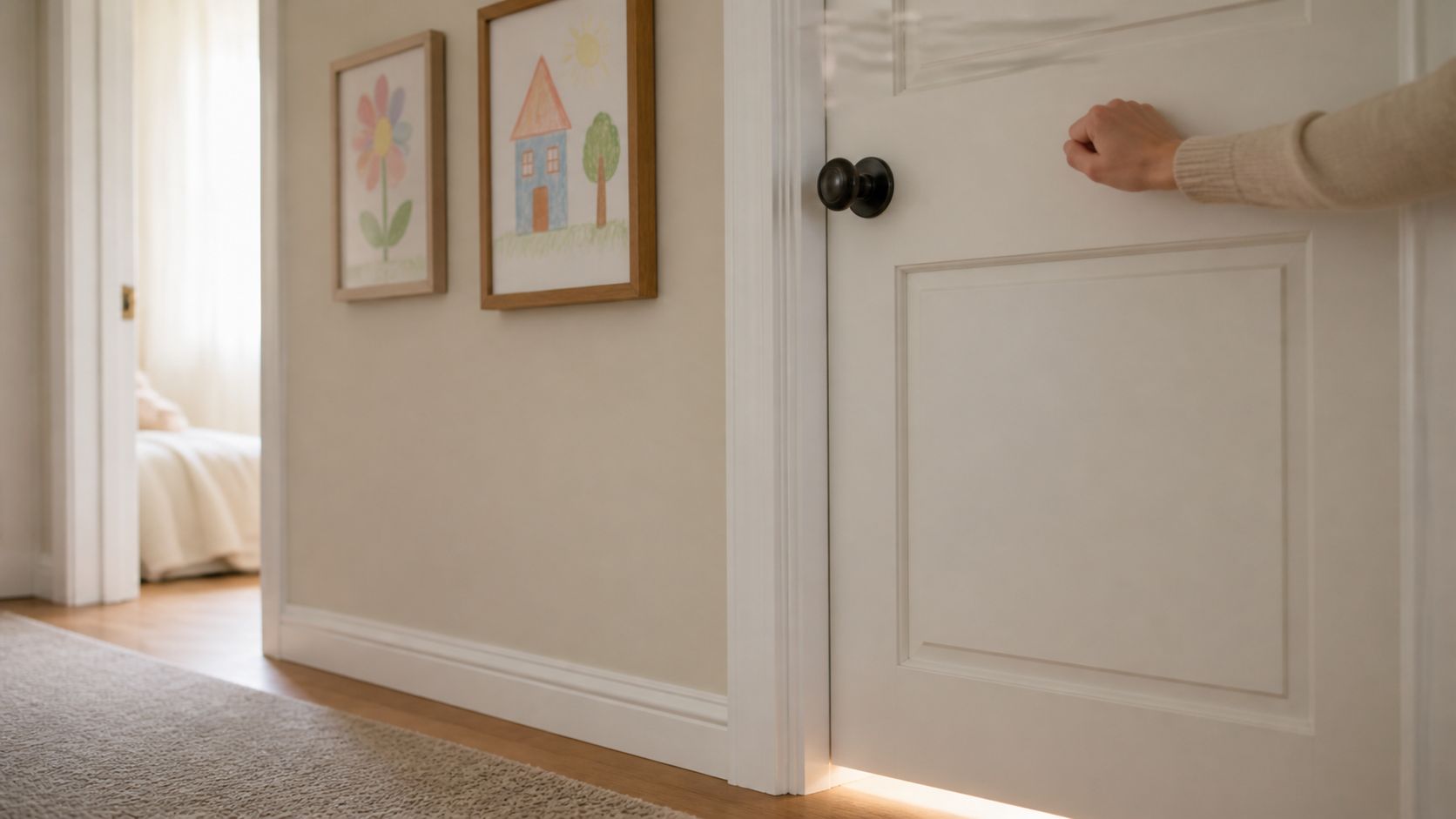
A parent can knock on a teenager's closed bedroom door and wait before entering. A coach can ask, “Is it okay if I help adjust your posture?” before physical guidance. When visiting relatives, a caregiver might say, “You can wave, shake hands, or just say hello. You don't have to hug.”
Practice short, usable language
Younger children can rehearse “Please stop,” “I need some space,” and “I'm not comfortable with that.” Adults can use role-play based on ordinary situations, such as a sibling grabbing a toy or a classmate attempting an unwanted hug. The Child Mind Institute's boundary activity gives adults a practical prompt for asking children how they could respond when someone hugs without permission.
Children also need to learn that other people's limits matter. Model asking, accepting “no,” and choosing another greeting. Don't say, “But they love you,” to override a child's physical boundary. Love doesn't create automatic permission.
For further classroom language, educators can use this resource on teaching respect to reinforce listening, consent, and dignity.
A physical-boundary lesson should include anatomically correct names for body parts, the concept that private parts aren't for other people to touch, and a clear instruction to tell a trusted adult if something feels unsafe. Pay attention when a child freezes, pulls away, avoids a person or setting, becomes distressed during greetings, or repeatedly says “no” while adults continue. Those are cues to pause and listen.
Before showing a visual reminder, let children know that asking first is part of respectful care.