

8 Self Discovery Journal Prompts for Students (2026 Guide)
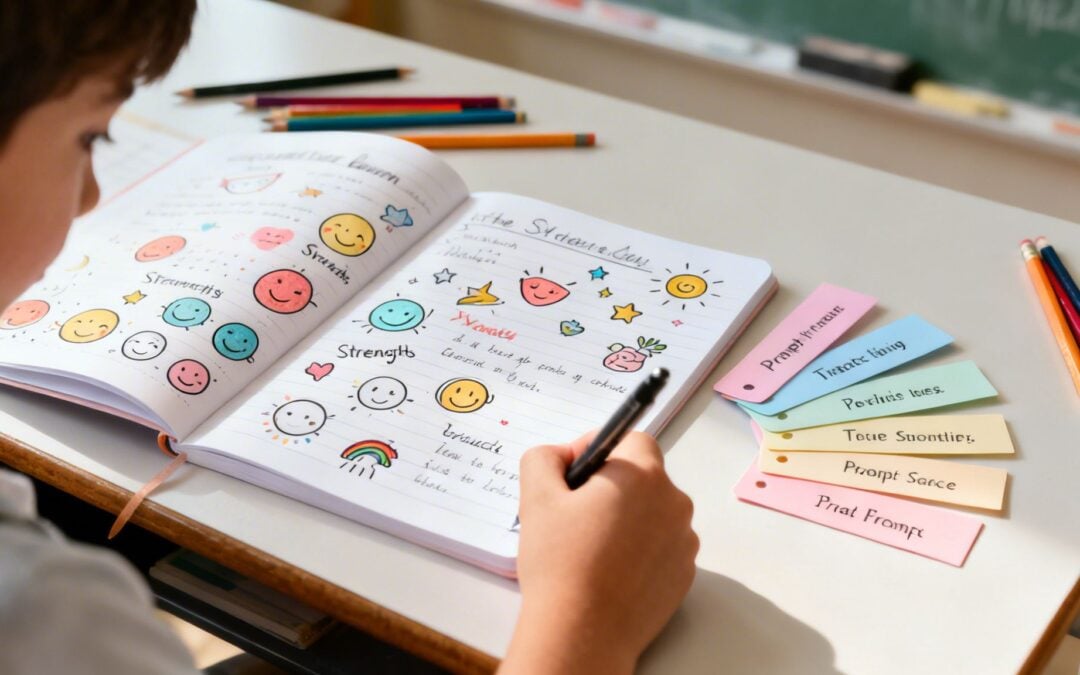
In the bustling worlds of classrooms and homes, creating space for quiet reflection can feel like a luxury. Yet, it's in these moments of stillness that children begin the essential journey of understanding who they are. This guide provides eight powerful types of self discovery journal prompts specifically designed for K-8 students, transforming a simple notebook into a profound instrument for personal growth.
For teachers and parents, this is not just about giving kids writing assignments. It's about providing a structured, safe, and effective tool to cultivate critical social-emotional learning (SEL) skills like self-awareness, empathy, and resilience. We will move beyond generic questions, offering practical, age-appropriate examples and facilitation tips to help you guide learners as they explore their values, strengths, emotions, and relationships.
You will find actionable strategies to implement these prompts, including:
- Age-appropriate examples for early elementary (K-2), upper elementary (3-5), and middle school (6-8).
- Sample student responses to illustrate a range of possible reflections.
- Quick facilitation tips for both classroom and at-home settings.
These prompts are designed to build a foundation for psychological safety, creating environments where students feel seen, valued, and ready to thrive. This resource will equip you to turn a blank page into a meaningful opportunity for connection, self-understanding, and lasting insight.
1. The Values Clarification Prompt
A foundational exercise in self-awareness, the Values Clarification Prompt guides individuals to identify their core principles. This is more than just picking words from a list; it’s an introspective process of connecting personal beliefs to real-life experiences. By reflecting on moments of pride, authenticity, or deep satisfaction, students and adults can uncover what truly matters to them. This understanding forms the bedrock of personal identity and influences future decisions.

This prompt is a powerful tool for social-emotional learning, helping students navigate the complex social dynamics of school. As emphasized in the research of Brené Brown and frameworks from CASEL, living in alignment with one's values is central to well-being and resilience.
Why This Prompt Works
The strength of this prompt lies in its connection to concrete memories. It asks learners not to think about abstract ideals but to mine their own history for evidence of their values in action. This makes the concept of "values" tangible and personal, rather than a theoretical school lesson.
By anchoring values to specific past moments, students can see that their principles are not just ideas they hold, but truths they have already lived. This builds a strong, evidence-based sense of self.
How to Use This Prompt: Examples and Adaptations
This exercise can be adapted for various ages and settings, making it one of the most flexible self discovery journal prompts available.
- For Lower Elementary (Grades K-2): Use simplified language. Ask, “Think of a time you felt super happy and proud of yourself. What were you doing? Who were you with?” After they share, you can help them name the value: “It sounds like helping your friend was really important to you. That’s called kindness.”
- Practical Example: A teacher asks a 1st grader this prompt. The student draws a picture of themself giving a classmate a bandage on the playground. The teacher says, "You felt proud when you helped them. That shows you value being a caring friend."
- For Upper Elementary (Grades 3-5): Introduce a list of value words (e.g., honesty, respect, creativity, friendship). Prompt them: “Write about a time you felt most like the ‘real you.’ What was happening? Look at this list. Which of these words best describes what was important to you in that moment?”
- Practical Example: A 4th-grade student writes, "I felt like the real me when I showed my comic book to my friends, even though I was nervous. That felt like courage."
- For Middle School (Grades 6-8): Students can handle more complex reflection. Use a two-part prompt:
- “Describe a time you were proud of a choice you made, even if it was difficult.”
- “What does this story tell you about what you believe is most important?”
- Practical Example: A 7th grader writes about choosing not to join in when friends were gossiping. Their reflection might be: "It was hard, but it shows I value loyalty and respect for people, even when they aren't around."
- For Caregivers at Home: Journal alongside your child. Share a story about a time you stood up for one of your values, like integrity or family. This modeling shows that identifying values is a lifelong process.
2. The Strengths and Superpowers Inventory
This empowering exercise shifts focus from deficits to assets, guiding individuals to identify personal strengths and talents they often undervalue. Instead of asking "what's wrong with me," this prompt encourages students and adults to catalog their 'superpowers'—both obvious talents and hidden strengths. This asset-based approach builds a positive self-concept by helping individuals recognize the unique value they bring to their communities.
Popularized by positive psychology pioneers like Martin Seligman and frameworks from Marcus Buckingham, this prompt is a core component of many asset-based educational approaches. By inventorying strengths, learners develop a vocabulary to describe their capabilities, which is a foundational step in building self-esteem and resilience.
Why This Prompt Works
The power of the Strengths and Superpowers Inventory lies in its concrete, evidence-based approach to self-worth. It encourages learners to move beyond vague feelings and identify specific, observable abilities. This process makes abstract concepts like "confidence" tangible by connecting them to real-world skills, whether it's a knack for making people laugh or a talent for organizing group projects.
When a student can name their strengths, like "I am a good listener" or "I am persistent," they are building a mental toolkit they can draw from during challenging times. It reframes their identity around what they can do, not what they can't.
How to Use This Prompt: Examples and Adaptations
This inventory is one of the most affirming self discovery journal prompts and can be easily adapted for any age. It’s a great way to kick off group activities and build a positive classroom culture.
- For Lower Elementary (Grades K-2): Use the "superpower" metaphor. Ask, “If you were a superhero, what would your special power be? Is it being a super helper? A super-fast runner? A super kind friend?” Create a class poster with drawings of each child's superpower.
- Practical Example: A kindergartener says her superpower is "making people smile." The teacher can respond, "That's a wonderful superpower! It's called humor or cheerfulness."
- For Upper Elementary (Grades 3-5): Have students create a "Strengths Resume." Prompt them: “List three things you are good at, inside or outside of school. For each one, write a sentence about a time you used that strength.” Strengths could include humor, creativity, or being a loyal friend.
- Practical Example: A student's resume might include: "Strength: Problem-solving. Example: I figured out how to fix our Lego tower when it kept falling over."
- For Middle School (Grades 6-8): Introduce more nuance. Use a prompt like:
- “Describe something you do that seems to come easily to you, even if others find it difficult.”
- “What is a non-academic skill you have that you are proud of (e.g., patience, problem-solving, empathy)?”
- Practical Example: An anxious student might identify that their "worry" is actually a strength in careful planning and attention to detail, writing, "I worry a lot about group projects, but it means I always make sure we have everything we need before we start."
- For Caregivers at Home: Regularly "catch" your child using their strengths. Say, "I saw how you kept trying with that puzzle even when it was hard. That's your persistence superpower showing up!" This external validation is a key part of many effective self-esteem building activities.
3. The Emotion Explorer and Mindfulness: Understanding Feelings, Triggers, and Present-Moment Awareness
This dual-focus exercise develops both emotional literacy and present-moment awareness. It guides individuals to identify, name, and understand their feelings, patterns, and triggers while simultaneously practicing non-judgmental observation of their current experience. By combining journaling with mindfulness, learners build a detailed map of their inner world, see the links between thoughts and feelings, and create the crucial space needed to choose thoughtful responses over automatic reactions.
This approach draws on foundational concepts from Daniel Goleman's work on emotional intelligence and Jon Kabat-Zinn's Mindfulness-Based Stress Reduction (MBSR). Journaling actively promotes present-moment awareness and emotional regulation, aligning perfectly with the principles of mindfulness and overall well-being.