

What Is Emotional Awareness and Why Kids Need It
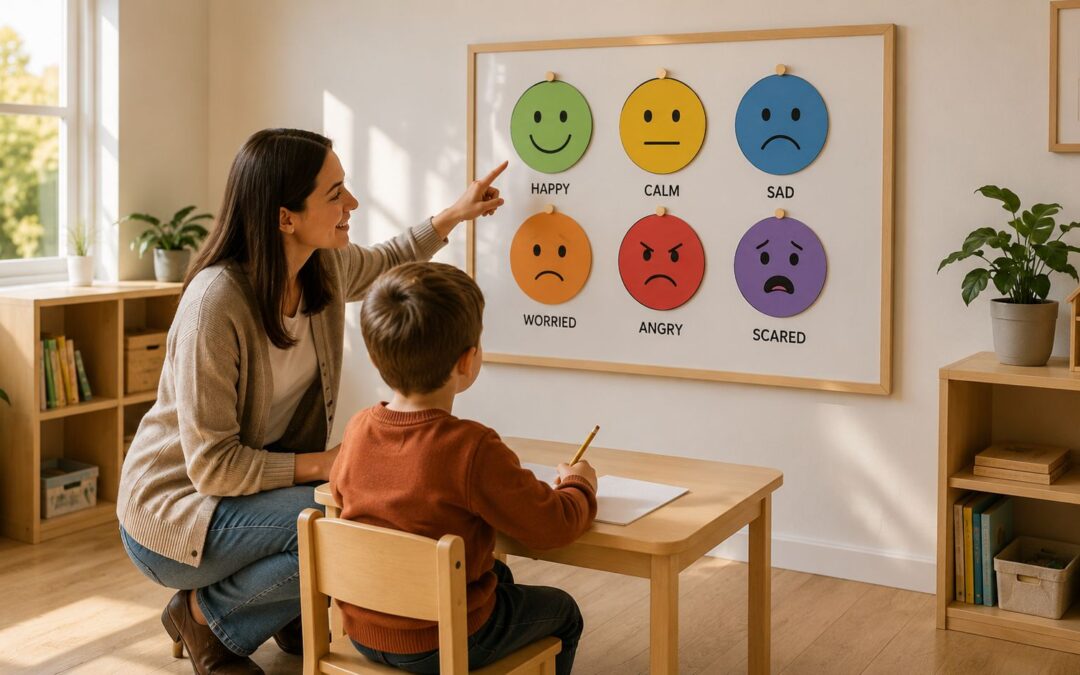
A child is crying over a missing shoe. A student is snapping at a classmate over a pencil. A parent is standing in the kitchen, trying to get homework started while everyone is already tired. In moments like that, what matters is often not the behavior you see first, but whether the child can notice what they feel, name it clearly, and make sense of it before the moment snowballs.
That capacity is emotional awareness, and it sits underneath a lot of what adults hope kids will eventually do well, from calming down to solving conflict to asking for help. It's also more teachable than many people assume, which is why it shows up in research as something measurable, not just a personality trait or a vague “good with feelings” quality. A useful starting point is to think of it as the skill of noticing emotions in yourself and others, then sorting them well enough to respond instead of react. For a wider early-childhood lens, this overview of emotional development in early childhood helps place emotional awareness in the larger picture of growth.
A Moment Every Teacher and Parent Recognizes
A student slams a book shut and says, “I'm fine,” which usually means they are very much not fine. A second-grader melts down because the shoe they wanted isn't in the cubby, and the tears seem bigger than the problem. A parent hears, “I hate homework,” and knows the sentence is carrying more than frustration.
Those moments are where emotional awareness becomes visible. Before a child can calm down, explain themselves, or ask for support, they have to register that something is happening inside them. Research on emotional awareness treats it as a measurable capability, not a vague trait, and recent global tracking even shows that it can rise or fall over time rather than staying fixed as part of someone's personality Six Seconds research on emotional intelligence.
What adults usually miss first
Adults often jump straight to behavior. We see the shout, the slam, the refusal, or the tears. The child, though, may only be aware of a body signal, like a tight chest or hot face, and not yet know what that signal means.
Practical rule: when a child is escalating, start by asking what they notice inside, not what they did wrong.
That shift matters because emotional awareness is the foundation under the rest of social-emotional learning. If a child can't notice the feeling in time, every later strategy starts too late. If they can notice it, even roughly, you have something to work with before the whole interaction tips into a power struggle.
A Working Definition You Can Use Today
Emotional awareness is the capacity to notice, label, and differentiate emotions in yourself and in other people. That sounds academic, but it becomes practical the minute a teacher asks, “Are you frustrated, embarrassed, or disappointed?” instead of settling for “You're upset.” The difference is not just vocabulary, it's precision.
A simple way to explain it at pickup is this. Emotional awareness is the skill of recognizing what you feel, figuring out what kind of feeling it is, and understanding how it's shaping what you're about to do. That makes it related to emotional intelligence, but not identical to it. It also comes before self-regulation, because you can't manage a feeling well if you haven't noticed it clearly enough to name it.
For a parent-friendly companion to that broader umbrella, this guide to emotional intelligence helps separate the pieces without making the concept feel fuzzy.
| Concept | Core Question It Answers | Where It Fits |
|---|---|---|
| Emotional Awareness | “What am I feeling, and what does it mean?” | The noticing and understanding piece |
| Emotional Intelligence | “How do I understand and use emotions well?” | The broader set of emotional skills |
| Self-Regulation | “What do I do now that I know how I feel?” | The response and control piece |
How it differs from empathy and self-regulation
Empathy is about reading someone else's inner world. Self-regulation is what happens after awareness, when a child uses a strategy to settle, pause, or choose differently. Emotional awareness sits earlier than both. It helps a child tell the difference between “I'm angry,” “I'm hurt,” and “I'm overwhelmed,” which is the level of detail most kids need before they can act with any steadiness.
Why Naming a Feeling Is Not the Whole Story
A child saying “I feel bad” has started the process, but they haven't finished it. That sentence could mean embarrassed, lonely, irritated, scared, disappointed, or just flooded. Research makes an important distinction here between attention to emotions, which is noticing that something is happening, and emotional clarity, which is understanding what that feeling means and why it matters emotional self-knowledge profiles.

From vague body cue to usable language
A teacher might hear, “My stomach hurts, I want to go home.” A parent might hear, “I'm mad,” when the child really means ashamed after being corrected in front of peers. The first move is to slow the moment down and ask for one more detail, not to correct the child's wording.
A helpful scaffold looks like this. First, notice the body cue. Then offer two or three feeling words. Then connect the feeling to the situation.
“Your shoulders are tight, and your voice got loud. That can happen when someone feels frustrated or embarrassed. Which one fits better?”
Tools like a digital reflection journal can be useful for older kids who need a low-pressure way to sort through what they felt after the moment has passed.
Sometimes low awareness is protection
It's tempting to treat every lack of clarity as a skill gap. Sometimes it is. Sometimes a child has learned that tuning out feelings helps them stay safe, stay invisible, or avoid shame. A 2021 study linked emotional-awareness difficulties with distress, loneliness, and distress concealment, which is a reminder that shutting down can be a coping strategy, not just a deficit Frontiers in Psychology. In those cases, the work isn't just vocabulary. It's trust, patience, and repeated experiences of being taken seriously.
For a deeper look at helping children find emotion words without forcing them, this piece on naming feelings is a useful companion.
How Emotional Awareness Develops from K Through 8
Kindergarteners often live in broad labels. They can usually say mad, sad, or happy, but they may not yet explain why the feeling showed up. By second or third grade, many kids can add words like scared or surprised and give a one-word reason, such as “test” or “fight.” That's a real step forward, because the child is beginning to connect feeling with event.
By fourth and fifth grade, some children can handle mixed feelings. They might say they're excited about a field trip and nervous about the bus ride, which shows they're no longer treating emotions as one-at-a-time. In middle school, a student may be able to identify a trigger, link it to a reaction, and use a coping move without adult prompting. That's the stage where emotional awareness starts to look like self-management in the wild.
The research is clear that this development is uneven. One longitudinal study described emotional awareness as attentional monitoring and differentiation of discrete emotions, and found that the dimension of differentiating emotions uniquely predicted internalizing symptoms in the sample longitudinal study on emotional awareness. In plain English, some kids need much more explicit support in moving from “something feels off” to “this is embarrassment, and it started when I got corrected in front of everyone.”

Red flags worth noticing
A child who frequently complains of stomachaches or headaches without a clear cause may be signaling stress through the body. A student who suddenly withdraws from peers, goes quiet in group work, or gets unusually reactive after small corrections may need more explicit emotional support, not more punishment. A middle schooler who can describe body tension but can't connect it to a feeling word may be stuck at attention without clarity.
The goal isn't to label every child by grade. It's to notice what they can already do, then meet them there.