

8 Powerful Gratitude Activities for Students
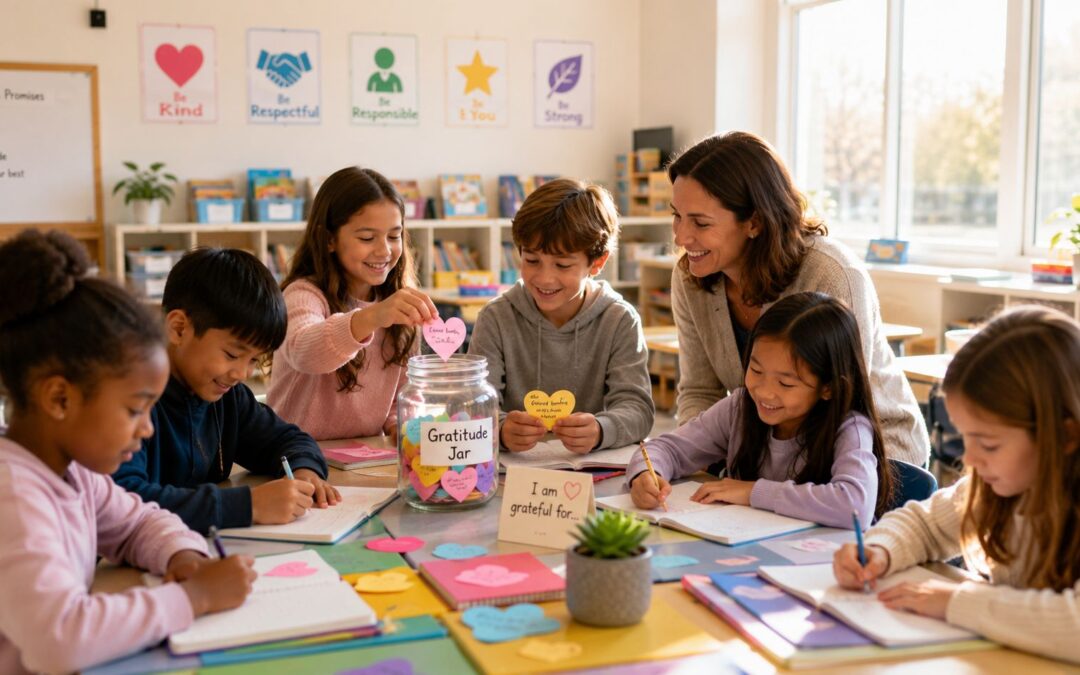
The room is busy, someone's pencil is rolling off a desk, a student is still carrying lunchtime frustration, and you're trying to keep the day moving without losing the class. In moments like that, gratitude activities for students aren't another task to squeeze in. They're a steady, low-prep way to help children slow down, notice support, and reconnect with one another. Research on gratitude interventions in students points in the same direction, showing improved well-being over time and describing gratitude as a “simple, easy to implement, low-cost” tool that can reduce negative affect, stress, and anxiety, while another meta-analysis found positive effects on psychological well-being and gratitude itself versus comparison activities (systematic review and meta-analysis).
For K-8 classrooms, that matters because gratitude fits core SEL goals, like self-awareness, relationship skills, and responsible decision-making. It also works well as a routine, not just a special lesson. School resources now translate gratitude into concrete practices such as journals, letters, gratitude jars, and reflection prompts, and classroom guidance often asks students to name a few things they're grateful for, then revisit the practice across days or weeks (Greater Good classroom guidance). These activities are practical, developmentally flexible, and easy to adapt for teachers, counselors, and parents supporting grades K-8.
1. Gratitude Journals
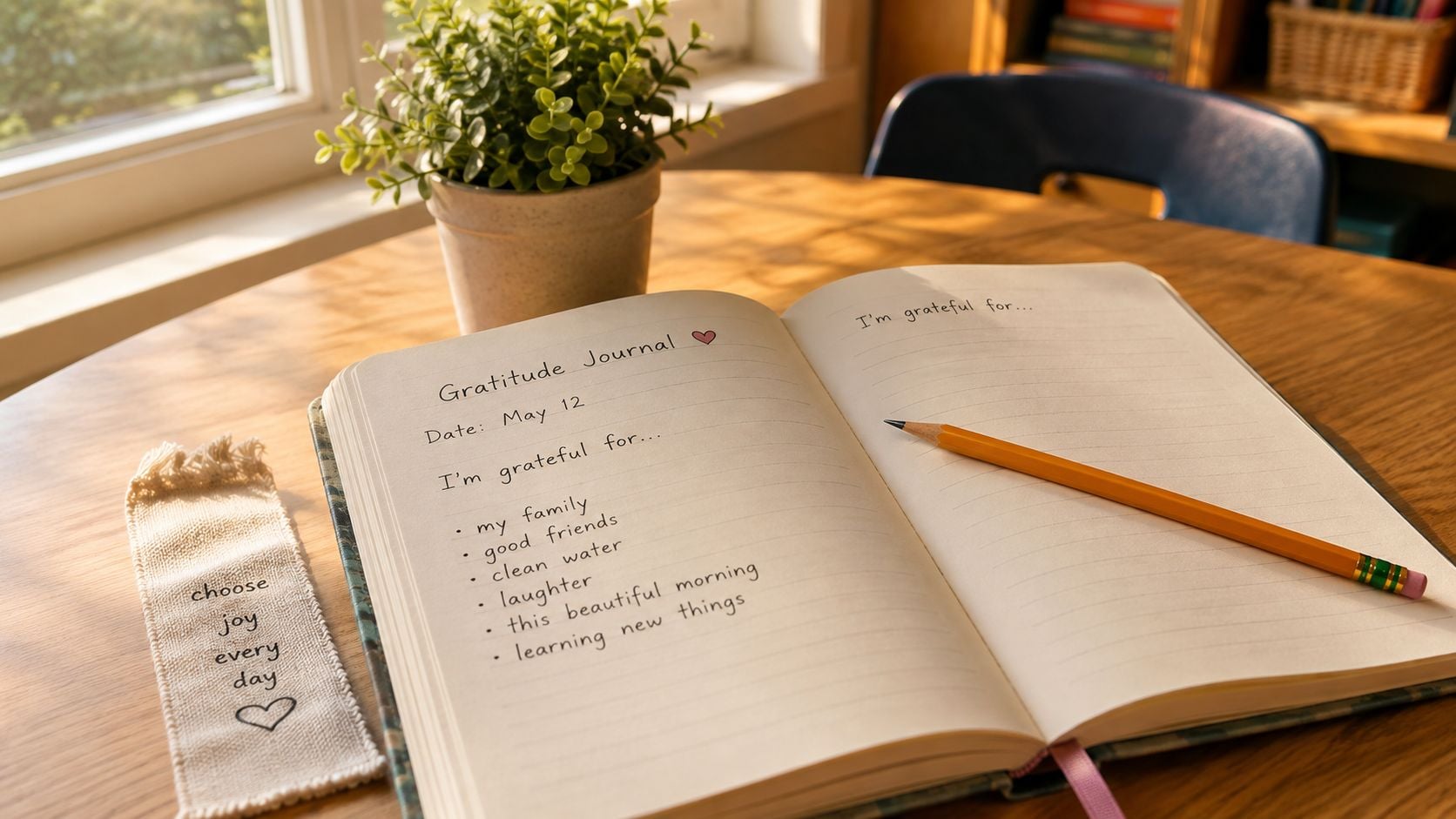
A gratitude journal gives students a private place to notice what is going well, which helps on days when their attention keeps drifting toward what feels hard. The structure is simple. Students write a few things they appreciate on a regular schedule, and that repeated practice trains attention toward support, connection, and small wins. Research synthesis on child and adolescent gratitude interventions supports that structure, with school and youth studies generally improving outcomes like positive affect, prosocial behavior, and school-related well-being when prompts are specific and repeated (systematic review of 18 studies).
How to make it work in K-8
A strong journal routine does not need a fancy notebook system. Start with 2 to 3 items for younger writers, then build toward 3 to 5 specific things once the habit feels familiar. A kindergartener might draw sunshine, a teacher, and cookies. A third grader might write, “I'm grateful for my dog Max because he waits by the door when I come home from school, and my mom for helping me with math homework.” A middle schooler might note a friend who stood up for them at lunch and the chance to try out for the basketball team. Specificity matters because general answers fade fast, while concrete details help students recall real support in their day.
Practical rule: Keep the prompt concrete. “What made today better?” is easier for many students than “What are you grateful for in life?”
For younger students, sentence starters help a lot. Try, “I'm grateful for…,” or “Today I appreciated…”. For non-writers, drawings, collages, symbols, and labels work well. A teacher can model a quick entry during morning meeting, then students can write during arrival, advisory, or bedtime at home. The routine becomes even stronger when you vary prompts weekly, people, experiences, nature, accomplishments, and even challenges that taught a lesson. If you want more ideas for keeping a writing routine steady, these tips for consistent Bible journaling offer a useful parallel for building reflection into daily life.
You can keep the structure fresh with this Soul Shoppe gratitude journal prompts resource, then review journals monthly so students can notice patterns in what they value. That reflection helps them see gratitude as a skill they practice, not a feeling they have to wait for.
2. Gratitude Circles and Talking Pieces
A gratitude circle slows the pace of the room in a good way. Students sit together, hold a talking piece, and share one thing they're grateful for while everyone else listens without interrupting. That simple structure supports turn-taking, active listening, and community building at the same time, which is why it fits neatly into SEL and restorative practice.
A second-grade circle might sound like this, “I'm grateful for my mom's hugs,” then, “I'm grateful that Tommy shared his crayons with me,” then, “I'm grateful for recess and my friends.” A kindergarten teacher can use a soft stuffed animal and model first, “I'm grateful for your happy faces,” then invite children to echo the frame. In middle school, the theme can go deeper, such as recognizing a peer's kindness, strengths, or support during a hard week.
If you already use community-building circles, this restorative circles in schools guide fits naturally with a gratitude routine.
Keep the circle safe and predictable
Classroom norm: The person holding the talking piece speaks, everyone else listens, and passing is always allowed.
That norm matters because gratitude should never feel forced. Offer sentence starters like, “I'm grateful for…,” “I appreciated when…,” or “I'm thankful for…”. Keep circles short, about 10 to 15 minutes, so they feel focused instead of dragging. For anxious students, let them write their gratitude on a card instead of speaking it aloud, then read it for them if they choose.
Choose a meaningful object for the talking piece, a smooth stone, decorated stick, or stuffed animal can all work. Start with the teacher and a few willing students, then expand as the class gets comfortable. Over time, a gratitude circle becomes more than a quick share, it becomes a predictable moment when every voice can be heard and every student sees that their appreciation matters.
3. Thank You Notes and Appreciation Letters
Written gratitude gives students a chance to slow down and name exactly what someone did that mattered. A thank-you note is more powerful than a generic “thanks” because it asks children to notice specific actions, qualities, or support. That specificity deepens relationship skills and helps the recipient feel seen, which is why this activity works well for teachers, families, school staff, and community helpers.
A fourth grader might write, “Dear Ms. Johnson, I'm grateful for you because you help me understand math problems when I'm confused. You never make me feel dumb. Thank you for being patient. Love, Emma.” A first grader can dictate a note to grandma, “Thank you for reading to me. I love when you do silly voices.” Middle schoolers can write to a custodian, cafeteria worker, or office staff member and describe how those adults help school feel safe and welcoming.
For student letter-writing, a few supports make a big difference.
- Use sentence starters: “I appreciate you because…”, “You helped me by…”, “Thank you for the time when…”
- Require specifics: Replace “you're nice” with “you helped me feel brave when I was nervous about the presentation.”
- Offer drawing plus dictation: Younger students can illustrate their note and add simple words.
- Build momentum: Writing workshops or note assembly lines help classes get started without overthinking.
The delivery matters too. Students can hand notes to a teacher after class, visit the custodian with a small group, or present appreciation cards during a school-wide celebration. If a child feels nervous, anonymous notes or a class poster still let them participate. The point is not perfect handwriting, it's giving students a real way to say, “I noticed what you did, and it mattered.”
4. Gratitude Photo Scavenger Hunt
Some students write best with their eyes open and their feet moving. A gratitude photo scavenger hunt turns noticing into an active task, as children look around the classroom, school, home, or neighborhood for things that represent appreciation. That can be a smiling friend, a sunny window, a favorite book, a helpful hand, or a place that feels calm and safe.
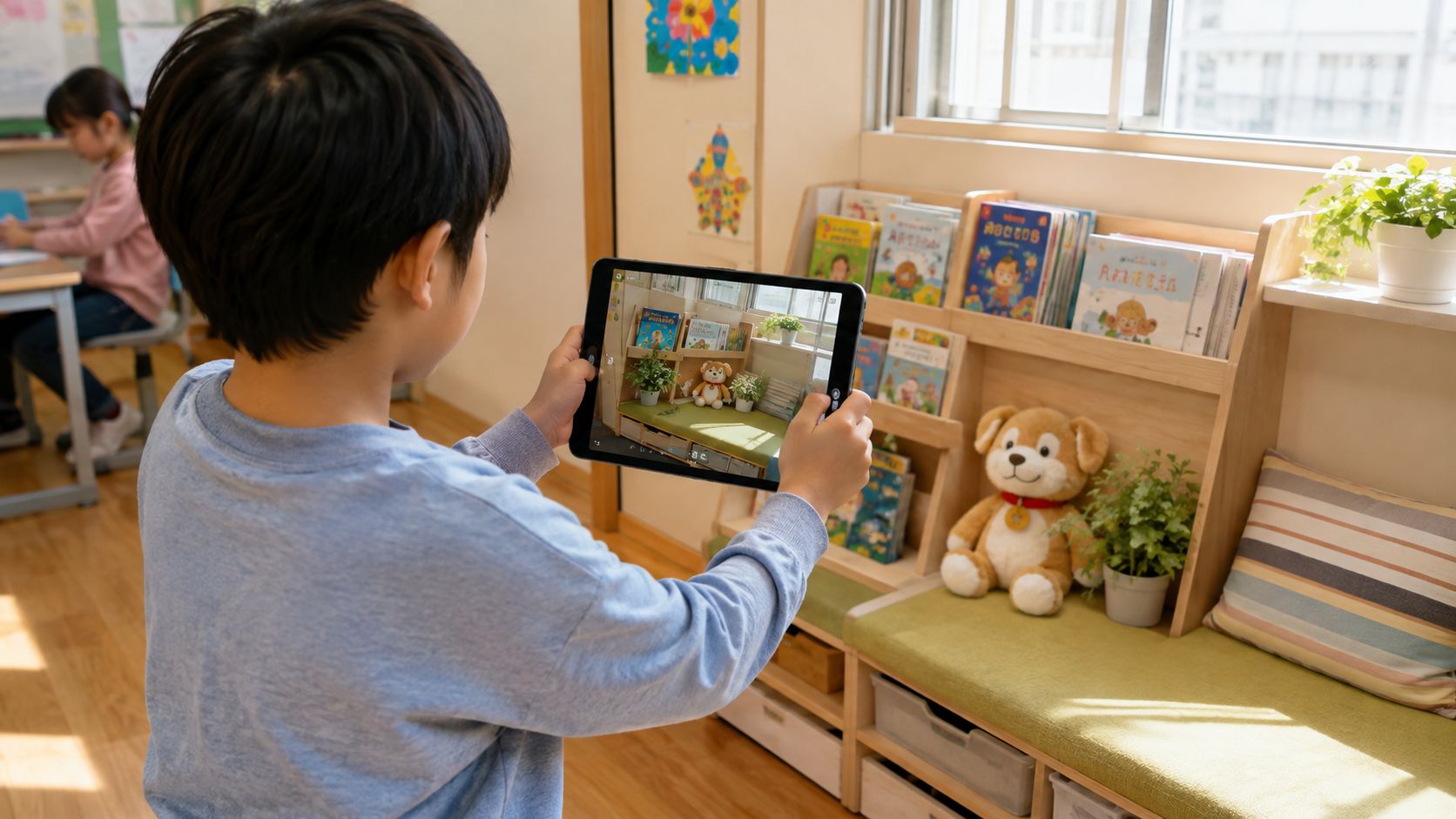
A third-grade class can search the room for a “Grateful Classroom” poster, one student photographing a friend smiling, another the class library, another the sunny reading corner. Middle schoolers can take pictures that match prompts like an act of kindness, something beautiful, a community helper, or a place where they feel safe. Kindergarteners can walk the room with a teacher and point to toys, friends, a hamster, or a painting wall, then draw what they found if cameras aren't available.
You can extend the activity by pairing it with a short reflection. Ask, “Why does this photo count as gratitude?” or “Who made this moment possible?” That conversation helps students move beyond snapping pictures to noticing care, effort, and support.
Make the hunt accessible
Use what your school already has, such as tablets, Chromebooks, or shared cameras. If technology isn't available, sketches work just as well. Set clear boundaries about where students can search, then give them categories like people, places, things, helping, nature, learning, and fun. Afterward, display the images in a hallway gallery, digital slideshow, or classroom presentation.
For home use, send a simple family challenge, “Find 5 things at home you're grateful for by Friday, then send photos or descriptions.” You can also close the loop by having students thank the people they photographed. That small step turns observation into relationship-building.
5. Gratitude Tree or Wall
A gratitude tree gives the whole class a shared place to deposit appreciation, and the display grows as the year goes on. That growth matters. Students can see their contributions next to everyone else's, which turns gratitude into a visible part of classroom culture rather than a private side activity. A wall, tree, branch display, stone garden, or flower garden can all work, depending on the space you have.
A second-grade class might add a paper leaf every week until the bulletin board fills with notes like “my dog,” “pizza,” “my best friend Jamal,” and “my teacher.” A middle school hallway wall can collect paper stones across a semester, then reveal a mix of academic, social, family, and personal appreciations. A school office can host a branch display with hanging ornaments from each class, which gives younger and older students the chance to contribute to one shared installation.
A few practical choices help this stay manageable.
- Pick a format that fits your space: tree, wall, jar, branch, stone garden, or flower garden.
- Set a rhythm: daily, weekly, or open contribution anytime.
- Use consistent materials: same-size leaves, stones, or cards keep the display tidy.
- Read them aloud regularly: students love hearing their words become part of the room.
You can also photograph the display as it grows, which helps families see the culture building over time. When the year ends, read the contributions aloud, make a book of gratitudes, or take one final photo before removing the display. That closure teaches students that gratitude can be archived, revisited, and shared.
6. Gratitude Buddy Interviews
Partner interviews give gratitude a conversational shape. Two students take turns asking prepared questions, listening closely, and then sharing what they learned about each other. This works especially well for students who need a little support going deeper than surface-level answers, because the format creates structure without making the conversation stiff.
A third-grade pair might begin with, “What's something at home you're grateful for?” The response might be a mom, a dog, or both, and the interviewer can follow with, “Why are you grateful for them?” Middle schoolers can handle richer prompts like, “Who's someone you're grateful for and why?” or “What challenge helped you grow?” In kindergarten, a teacher can whisper the question, and the child can answer with a simple sentence, “I'm grateful for my buddy because he makes me laugh.”
The activity gets stronger when students know they'll introduce their buddy to the class afterward. That bit of accountability encourages careful listening, but it shouldn't feel like a performance. Keep the interview to 3 to 5 minutes per person, provide 3 to 5 questions, and let students pass on anything they don't want to answer.
Ask for listening that shows care, eye contact, no interrupting, and one follow-up question if a student is ready for it.
Intentional pairing helps too. Don't always match close friends, because new pairs can build bridges across the room. For shy students, use a trio or written response sheet. For a counselor or teacher, the goal is simple, get students to notice one another with more attention and more respect. Gratitude becomes a conversation, not just a thought on paper.
7. Gratitude Meditation or Mindful Appreciation Practice
A class that feels restless after lunch, or tense before a test, often benefits from a short gratitude meditation. Students are not asked to produce answers on paper right away. They are guided to sit, breathe, and notice who or what they appreciate, which gives the brain a simple place to rest and helps students settle into a calmer state.
A first-grade teacher might say, “Close your eyes. Think about someone you love. How do they make you feel, happy, safe, warm? Notice that feeling in your heart.” A fourth-grade class before lunch might spend a few minutes thinking about three things they're grateful for today, then sit in silence before opening their eyes. In middle school, students can lie down or sit comfortably and picture a place where they feel safe and happy, then notice what creates appreciation there. For a more grounded focal point, a small object such as a candle, plant, or stone can help students keep their attention in one place.
For age-appropriate mindfulness support, this mindfulness activities for students guide pairs naturally with gratitude work.
Keep the practice trauma-sensitive
Start with very short sessions, about 2 to 3 minutes, and build only if the class is ready. Offer choices, sitting, standing, or lying down. Let students look softly downward instead of closing their eyes if that feels safer. For some children, especially those dealing with stress or loss, breathing and body sensations may feel easier than visualization, because the body can notice safety without needing a detailed mental picture.
The routine works best when it feels predictable and gentle. Use the same time each day so students begin to recognize the practice mode, much like musicians recognizing the first note of a familiar song. Gratitude grows more naturally when the room feels safe enough for students to pause, breathe, and notice what is already good.
8. Gratitude Acts of Service and Kindness Projects
A class that wants to show gratitude often remembers the lesson best when students do something helpful with their hands and time. Service projects let children turn appreciation into action, instead of leaving it as a feeling or a spoken thank-you. That might look like organizing classroom supplies for a teacher, making a care package for staff, or helping someone in the school community who needs support.
The best projects feel concrete and visible. A third-grade class might learn that their custodian likes coffee, so they pool small contributions, make a card, and present a gift card with a handmade poster. Middle schoolers might adopt an elderly neighbor, visit regularly, help with yard work, bring meals prepared in class, and create a photo album of memories. A fourth-grade class could support a friend whose family is struggling by organizing activity bags for younger siblings, meals, and donated winter clothes. Each example gives students a clear reason for their work, which helps gratitude feel connected to a real person.
Before students begin, a short planning conversation keeps the project student-centered and age-appropriate.
- Ask three questions: Who do we want to thank? What do they need? How can we help?
- Break up jobs: Some students plan, some make materials, some handle delivery.
- Use small budgets wisely: Homemade items, time, and attention often matter most.
- Debrief afterward: How did it feel to help, and how might the recipient have felt?
Teachers can also connect the project to the why behind kindness. When students hear, “We're doing this because we appreciate them and want to show it,” the purpose stays clear and the activity does not become just another craft. For teams building a wider kindness practice, this teaching kindness to kids resource fits naturally with service-based gratitude. Repeated projects can become traditions, which helps students see gratitude as something they can practice again and again, like a class habit that gets stronger each time they use it.
8-Activity Gratitude Comparison
| Practice | Implementation complexity | Resource requirements | Expected outcomes | Ideal use cases | Key advantages |
|---|---|---|---|---|---|
| Gratitude Journals | Low, easy to integrate into routines | Minimal, notebooks, prompts, alternatives for non-writers | Builds reflection, sustained gratitude habit, reduced anxiety over time | Morning meetings, transitions, homework, individual SEL practice | Low-cost, private, creates tangible record of positives |
| Gratitude Circles & Talking Pieces | Moderate, needs clear rules and facilitation | Low, one talking piece, organized circle time | Stronger peer connection, improved listening, public expression skills | Whole-class meetings, community-building sessions, restorative circles | Promotes equity of voice and immediate peer validation |
| Thank You Notes & Appreciation Letters | Moderate, requires scaffolding for writers | Low–moderate, paper, writing supports, delivery logistics | Deepened relationships, improved expressive writing, recipient validation | Writing units, relationship-building projects, family engagement | Tangible, meaningful impact on recipients; strengthens connections |
| Gratitude Photo Scavenger Hunt | Moderate, planning, supervision, clear boundaries | Moderate, cameras/devices or drawing supplies; permissions | Heightened observation, creativity, engagement, visual gratitude archive | Active lessons, outdoor/remote learning, art-integrated SEL | Highly engaging, multi-sensory, adaptable for remote learners |
| Gratitude Tree or Wall | Low–moderate, setup and periodic maintenance | Low, bulletin board space, paper/art supplies | Visible community reminder, sustained participation, shared pride | Classroom corridors, school common areas, long-term displays | Inclusive, low-pressure, visual celebration of collective gratitude |
| Gratitude Buddy Interviews | Moderate, structured questions and time management | Low, question sheets, timers, recording options | Improved listening, deeper peer understanding, increased empathy | Partner work, relationship-building, social skills lessons | Builds one-on-one connection with accountability to listen |
| Gratitude Meditation / Mindful Appreciation | Low, needs teacher skill and trauma-sensitivity | Minimal, quiet space, optional audio or objects | Reduced stress, improved self-regulation, increased awareness | Transitions, calming routines, SEL blocks, all ages | Accessible to non-writers, evidence-based calming practice |
| Acts of Service & Kindness Projects | High, planning, logistics, coordination | Moderate–high, materials, time, possible funds, permissions | Tangible community impact, leadership development, stronger bonds | Service-learning units, community outreach, long-term projects | Translates gratitude into action; high meaningful impact |
Bringing Gratitude to Life in Your School
The strongest pattern across these gratitude activities for students is that gratitude works best as a practice, not a one-time lesson. Journals, circles, notes, photos, displays, interviews, mindfulness, and service all give children different ways to notice care and name support. Some students will respond best in writing, others in conversation, movement, or action, so the most effective classrooms usually offer more than one entry point.
That's why starting small is often the smartest move. Pick one activity that fits your class culture, teach it clearly, and repeat it long enough for students to recognize the routine. A journal at morning meeting, a quick circle on Fridays, or a gratitude tree in the hallway can become a stable part of your SEL rhythm. Over time, these practices help students see that appreciation isn't just polite language, it's a way of paying attention to the people, places, and moments that make school feel safer and more connected.
Teachers and parents don't need to wait for the perfect week or a special event to begin. A short reflection before heading home, a thank-you note to a custodian, or a quiet two-minute gratitude pause before lunch can change the tone of a room. As those moments stack up, they support the kind of belonging and empathy that strong school communities need. If you're building out a wider SEL approach, gratitude fits naturally alongside practices that emphasize psychological safety, communication, and peer support, which also connects well with event engagement strategies for 2026.
Soul Shoppe is one organization that brings those ideas into schools through experiential SEL programs, coaching, and shared language for connection and self-regulation. If you want practical tools that help students practice gratitude alongside empathy and relationship skills, bring these ideas into your classroom and share them with your school team.
If you want support bringing gratitude and SEL into daily school life, explore Soul Shoppe. Their programs, workshops, and resources give educators and families practical ways to build connection, safety, and empathy with students.