

8 Essential Conflict Resolution Strategies for Kids: A 2026 Guide
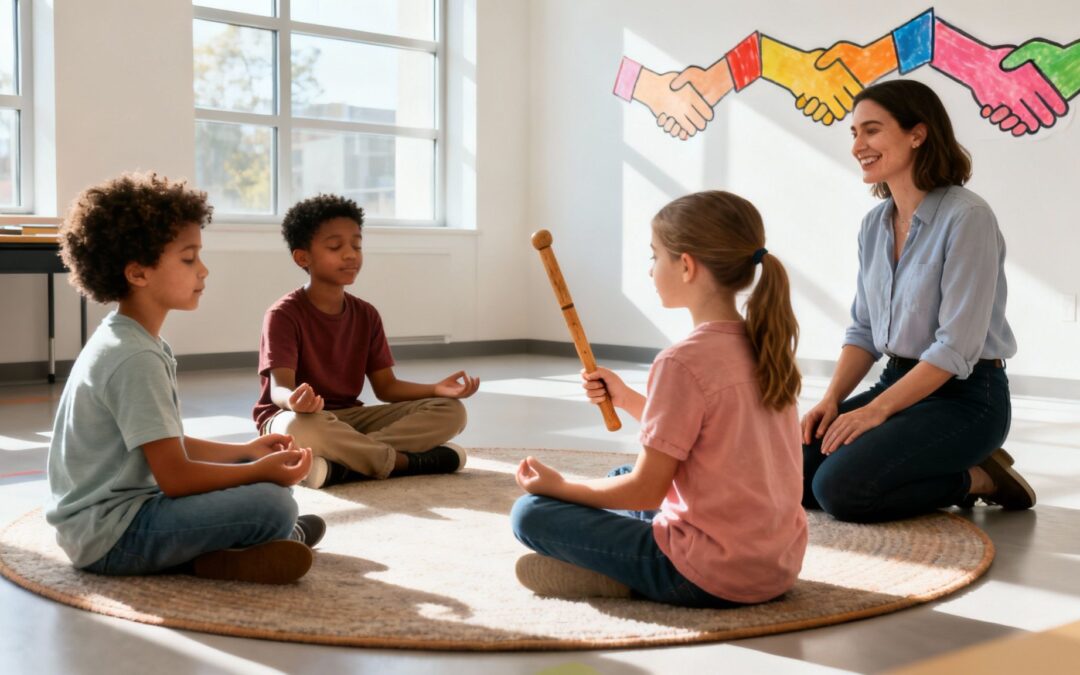
Navigating disagreements is a crucial life skill, yet children often need explicit guidance to move beyond yelling, tattling, and tears. For parents and educators, the real challenge lies in transforming these difficult moments into powerful learning opportunities. This guide moves beyond generic advice to offer a comprehensive roundup of powerful conflict resolution strategies for kids in grades K-8, designed for immediate use. We’ll provide actionable scripts, step-by-step activities, and age-appropriate examples you can implement today in the classroom, on the playground, and at home.
You will learn how to empower children with the language and tools to understand others, express their own needs, and solve problems collaboratively. We’ll cover everything from foundational skills like Active Listening and using I-Statements to more structured approaches such as Peer Mediation and Restorative Practices. These aren’t just quick fixes; they are foundational social-emotional learning (SEL) skills for building empathy, resilience, and healthier relationships.
The goal is to equip you with a toolkit to help children manage their emotions, communicate effectively, and take ownership of their solutions. We provide concrete steps for facilitating these processes, whether you’re a teacher establishing a peaceful classroom or a parent mediating a sibling squabble. For those seeking supplementary resources to reinforce these concepts, exploring a category dedicated to children’s books can offer stories and tools relevant to early social-emotional development. Let’s dive into the practical strategies that turn conflict into connection.
1. Active Listening, Reflective Speaking, and Perspective-Taking
This foundational strategy combines three powerful communication skills to transform how children navigate disagreements. Instead of reacting defensively, students learn to listen to understand, confirm what they’ve heard, and genuinely consider the other person’s point of view. This integrated approach builds a crucial bridge of empathy and is one of the most effective conflict resolution strategies for kids because it de-escalates tension and promotes mutual respect.
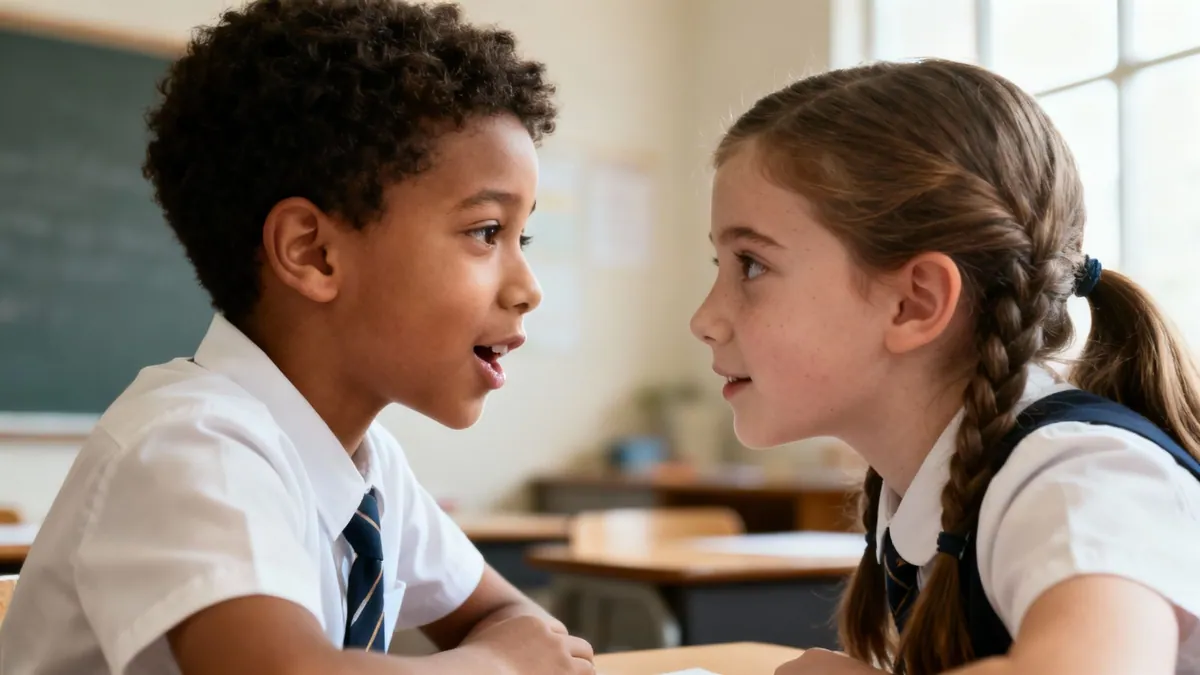
This method moves beyond simply “hearing” to deep, engaged listening. It fosters psychological safety, making it easier for children to express their true feelings without fear of immediate judgment. The goal is not to agree, but to understand.
How It Works in Practice
This strategy involves a clear, three-part process that can be taught and practiced in various settings, from classroom circles to playground disputes.
- Active Listening: The listener gives their full, undivided attention to the speaker. This means putting down pencils, making eye contact, and focusing completely on what the other person is communicating with their words and body language.
- Reflective Speaking: After the speaker finishes, the listener paraphrases what they heard to check for understanding. They might start with a simple phrase like, “So, what I’m hearing you say is…” This step is crucial because it validates the speaker’s feelings and corrects any misunderstandings before they escalate. Example: If Mia says, “I’m mad because Leo scribbled on my drawing,” Leo’s job is to reflect back, “So you’re saying you’re mad because I drew on your picture.”
- Perspective-Taking: Both children are then prompted to consider the situation from the other’s shoes. This could involve asking questions like, “How do you think they felt when that happened?” or “What might have been their reason for doing that?” Example: The teacher might ask Leo, “How would you feel if someone scribbled on your favorite drawing?” This final step cultivates empathy, the core ingredient for resolving conflict peacefully.
Actionable Implementation Tips
- Provide Scaffolds: Use sentence stems like “It sounds like you felt…” and “I can see why you would think…” to guide students. An emotion wheel can help younger children identify and name their feelings accurately.
- Model Consistently: Adults must model this behavior. When a child comes to you with a problem, practice active listening and reflective speaking with them to show how it’s done.
- Use Literature: Read stories featuring characters in conflict. Pause to ask students, “What is this character feeling? Why do you think they acted that way?” This builds perspective-taking muscles in a low-stakes environment. You can explore more ideas with this communication skills activity guide from soulshoppe.org.
- Start Small: Practice these skills during calm moments, like morning meetings or class discussions, before applying them to real-time conflicts.
2. I-Statements and Emotion Naming
This strategy empowers children to communicate their feelings and needs clearly without resorting to blame or accusations. By using a structured “I feel…” format, students take ownership of their emotions and articulate the impact of another’s actions on them. This method is one of the most effective conflict resolution strategies for kids because it shifts the focus from fault-finding to feeling-sharing, which lowers defensiveness and opens the door to constructive dialogue.
Pairing I-statements with the ability to name emotions accurately is crucial for emotional intelligence. When children can pinpoint what they are feeling beyond just “mad” or “sad,” they gain better control over their reactions and can communicate their inner world more effectively. The goal is to express, not attack.
How It Works in Practice
This strategy relies on a simple, teachable sentence structure that can be adapted for children of all ages. The core formula helps de-personalize the conflict and focuses on behavior and feelings.
- Name the Feeling: The child starts by identifying their specific emotion. This requires a moment of self-reflection to understand what they are truly feeling (e.g., frustrated, lonely, embarrassed).
- State the Behavior: They then describe the specific action that led to that feeling. This part is objective and avoids generalizations or character attacks (e.g., “when you took my crayon” instead of “you’re mean”).
- Explain the ‘Why’: The final part connects the feeling to the consequence or reason. This helps the other person understand the impact of their actions. The full statement looks like this: “I feel [emotion] when you [specific behavior] because [reason/impact].”
Practical Example (Playground):
- Instead of: “You’re a cheater! You always cut in line!”
- Use an I-Statement: “I feel frustrated when you cut in front of me in line because I have been waiting for my turn.”
Practical Example (Home):
- Instead of: “Stop being so annoying!”
- Use an I-Statement: “I feel distracted when you talk to me while I’m doing my homework because I can’t focus on my work.”
Actionable Implementation Tips
- Create an Emotion Vocabulary Chart: Use an emotion wheel or a chart with pictures and words to help younger children identify and name their feelings. Start with basic emotions and gradually introduce more nuanced ones like “disappointed,” “anxious,” or “excluded.”
- Model I-Statements Yourself: Adults should consistently model this language. For example, say, “I feel concerned when the floor is messy because someone could trip and get hurt.” This shows children how it’s done in everyday situations.
- Practice During Calm Times: Introduce and role-play I-statements during morning meetings or class circles, not just in the heat of a conflict. This builds the skill as a habit before it’s needed under stress.
- Use Sentence Stems: Provide visual aids with the sentence formula: “I feel ___ when you ___ because ___.” This scaffold helps children structure their thoughts, especially when they are upset. You can find more resources for helping kids find the words they need on soulshoppe.org.
3. The Problem-Solving Steps (Collaborative Resolution)
This strategy provides children with a structured, step-by-step framework to navigate disagreements collaboratively. It shifts their focus from blaming each other to working together toward a mutually acceptable solution. By following a clear process, children learn to approach conflicts with logic and creativity, transforming a moment of friction into an opportunity for growth. This method is one of the most powerful conflict resolution strategies for kids because it builds agency, critical thinking, and cooperation.
Instead of getting stuck on who is right or wrong, this approach empowers students to become active problem-solvers. It gives them a reliable roadmap to follow, reducing anxiety and promoting a sense of shared responsibility for finding a peaceful outcome.
How It Works in Practice
The process is broken down into clear, manageable steps that guide children from identifying the problem to implementing a solution. This structured format helps prevent discussions from devolving into arguments.
- Identify the Problem: Both children state the problem from their perspective without blame. The goal is to agree on a neutral definition of the issue. Example: “We both want to use the only blue iPad.”
- Brainstorm Solutions: Together, they generate as many potential solutions as possible without judgment. The rule is that no idea is a bad idea at this stage. Example: Ideas might include: “We can take turns for 10 minutes each,” “We can find another iPad,” “We can use the blue iPad together for a project,” “We can play rock-paper-scissors for it.”
- Evaluate and Choose: They review the brainstormed list and discuss the pros and cons of each option. They then work together to choose one solution that both of them can agree on. Example: They decide taking turns for 10 minutes each is the fairest solution.
- Implement the Plan: The children put their chosen solution into action. Example: They find a teacher to set a timer for 10 minutes for the first person’s turn.
- Follow Up: Later, they check in to see if the solution worked. If not, they can return to the brainstorming step to try a different approach.
Actionable Implementation Tips
- Post the Steps Visibly: Create a colorful chart or poster outlining the problem-solving steps and display it prominently in the classroom or home. This serves as a constant visual reminder.
- Use Consistent Language: Adopt a consistent name for the process, like “The Five Problem-Solving Steps,” across different classrooms and grade levels to build a shared school-wide culture. To effectively teach this, educators can draw inspiration from problem-based learning approaches that center on student-led inquiry.
- Practice with Scenarios: Use role-playing with hypothetical situations, like two students wanting the same library book, to practice the steps in a low-stakes environment before applying them to real conflicts.
- Document Solutions: For younger children, have them draw a picture of their agreed-upon solution. Older students can write it down. This simple act increases their commitment to the plan.
4. Peace Circles and Restorative Practices
This community-focused strategy shifts the goal from punishment to repairing harm and strengthening relationships. Instead of asking, “Who is to blame?” restorative practices ask, “What harm was done, and what needs to be done to make things right?” Peace circles provide a structured, equitable format for these conversations, making this one of the most transformative conflict resolution strategies for kids because it builds accountability and community simultaneously.
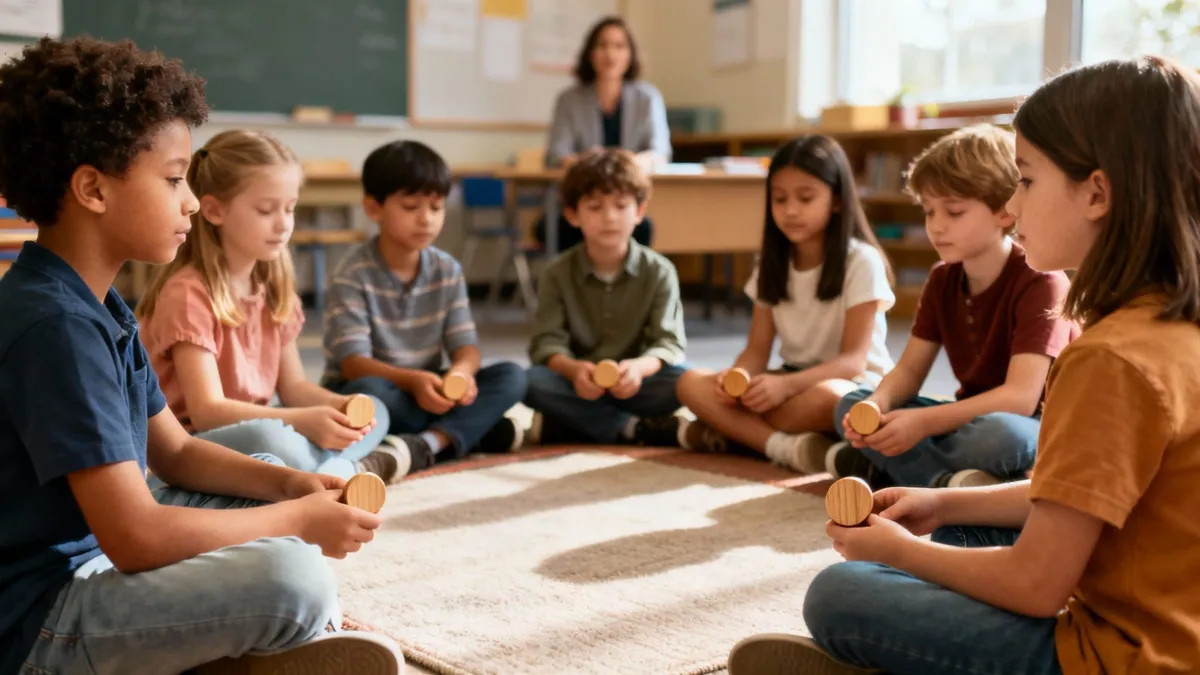
The circle format itself is symbolic, communicating that every voice holds equal importance. A “talking piece” is often passed around, granting the holder the right to speak without interruption. This deliberate process slows down reactive emotions and encourages thoughtful participation from everyone involved, ensuring even the quietest students have a chance to be heard.
How It Works in Practice
Peace circles can be used proactively to build relationships (community-building circles) or reactively to address harm (restorative circles). The process follows a clear structure that promotes safety and fairness.
- Opening and Norms: The circle begins with an opening ritual or quote to set a positive tone. The facilitator and group then co-create or review shared agreements, such as “Listen with respect,” “Speak from the heart,” and “What is said in the circle stays in the circle.”
- Rounds with a Talking Piece: The facilitator poses a question and passes a talking piece (like a special stone or ball). Only the person holding the piece may speak. Initial rounds often involve simple check-ins (“Share one word about how you are feeling today”) before moving to the core issue.
- Repairing Harm (Restorative Circles): When addressing a conflict, questions focus on impact and repair. Example: After a student’s joke hurt another’s feelings, the facilitator asks, “What happened?” “Who has been affected, and how?” and “What does our group need to do to make things right?” The group might decide that an apology and a promise to think before speaking are the best path forward.
- Closing: The circle ends with a closing ritual or a final round of reflections, reinforcing the sense of community and shared responsibility for the outcome.
Actionable Implementation Tips
- Start Proactively: Use circles for daily morning meetings or weekly check-ins to build trust and routine. This makes it feel natural to use the same format when a conflict arises.
- Use a Meaningful Talking Piece: Allow students to choose or create a talking piece for the classroom. This small act gives them ownership over the process and makes it more special.
- Train Facilitators: Effective facilitation is key. Train teachers, counselors, and even student leaders in restorative questions and circle management. The International Institute for Restorative Practices (IIRP) offers extensive training and resources.
- Create Visual Agreements: Write the circle norms on a large poster and display it prominently. This serves as a constant, visual reminder of the group’s commitments to each other.
- Keep Groups Manageable: When first introducing circles, work with smaller groups of 8 to 15 students to ensure everyone feels safe and has adequate time to participate.
5. Cool-Down Strategies and Self-Regulation Tools
Before a child can listen, reflect, or compromise, they must be calm. This strategy focuses on teaching children to recognize the physical and emotional signs of escalating anger or frustration and providing them with concrete tools to regulate their nervous system. Teaching students to “cool down” first is one of the most essential conflict resolution strategies for kids because a regulated brain is required for logical thinking and problem-solving.
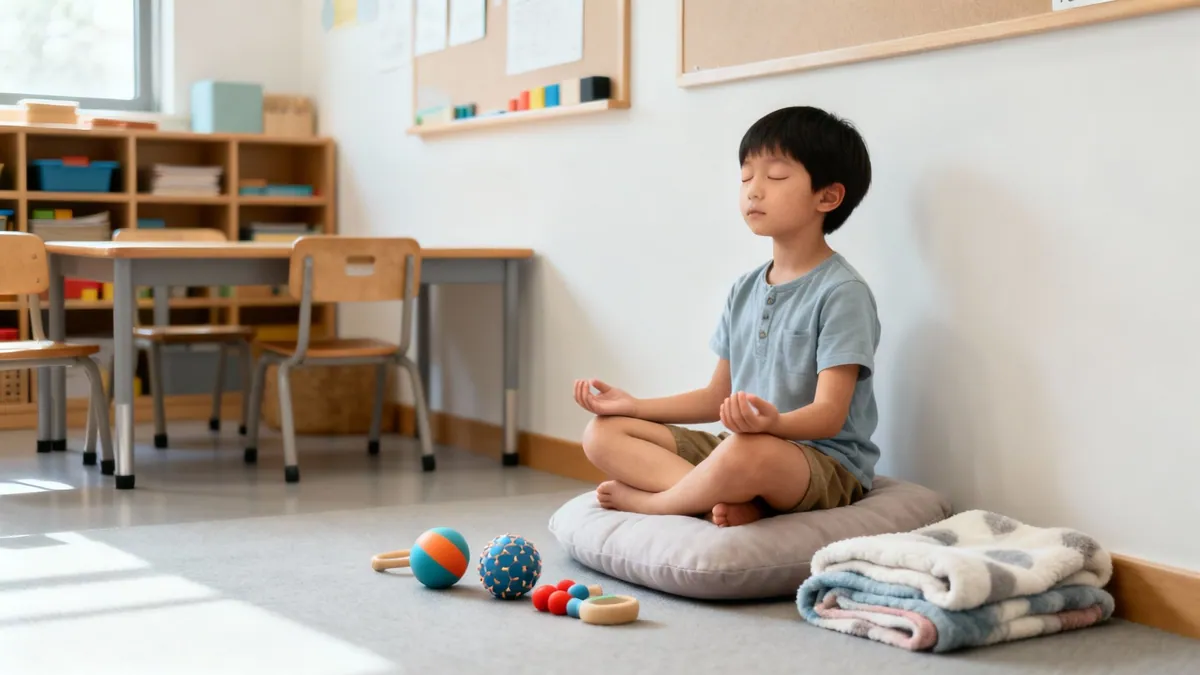
These tools empower children with a sense of control over their big emotions. Instead of reacting impulsively, they learn to pause and choose a strategy that helps them return to a state where they can communicate effectively and resolve the issue peacefully.
How It Works in Practice
This approach involves creating an environment where taking a break to self-regulate is normalized and supported. Children are explicitly taught various techniques and given access to resources that help them manage their internal state.
- Recognize the Signs: Adults help children identify their personal “escalation signals.” This might be a hot face, clenched fists, a racing heart, or a loud voice. Using a “feelings thermometer” visual can help them see how their emotions are rising.
- Choose a Strategy: Children are given a menu of pre-taught, accessible cool-down options. This could range from simple breathing exercises to movement breaks or using sensory tools. The power of choice is critical for building autonomy and self-awareness.
- Take a Break: The child uses their chosen strategy in a designated safe space, like a classroom “calm corner” or a quiet spot at home. This physical separation from the conflict provides the time and space needed for their nervous system to settle. Practical Example: A student who is getting frustrated during a math problem might say, “I need to go to the calm corner for five minutes.” There, they might squeeze a stress ball and do three deep “pizza breaths” (smelling the pizza, then blowing to cool it down) before returning to their desk, ready to try again.