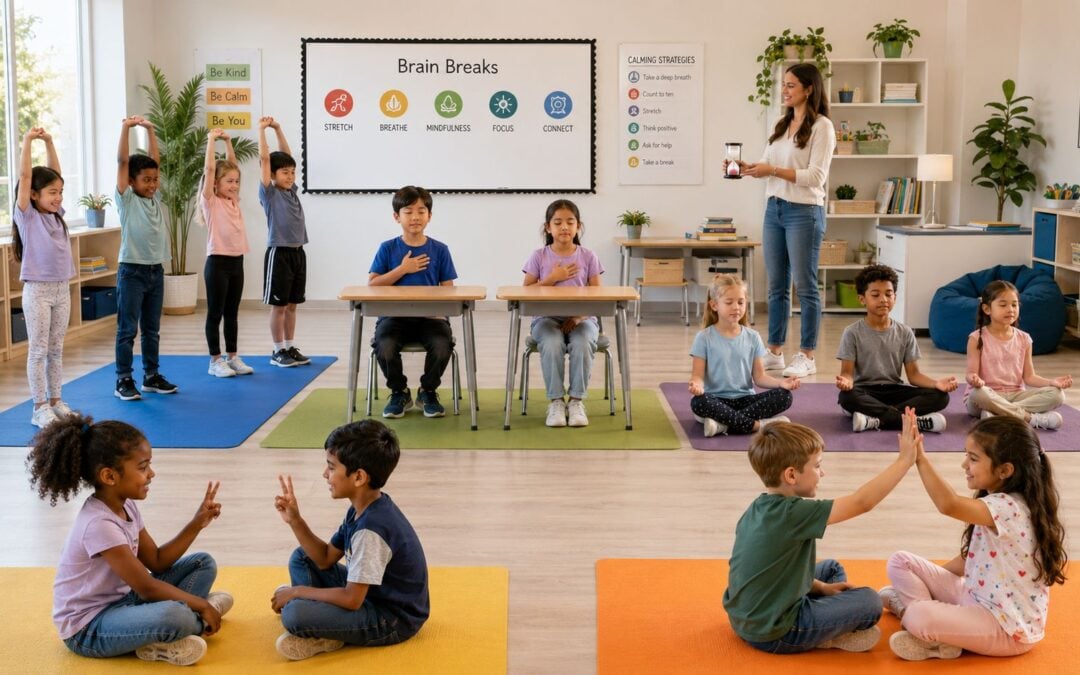
In any learning environment, from the classroom to the living room, maintaining focus and engagement can be a challenge. That’s where fun brain breaks become a powerful tool. These are not just time-fillers; they are strategic mental resets designed to help students refocus, regulate their emotions, and absorb information more effectively. Research shows that short, structured breaks improve cognitive function, reduce stress, and support social-emotional learning (SEL). For example, even simple activities like social dancing offer incredible benefits for mental well-being and social connection, reinforcing why an intentional break is so important.
This guide provides 10 practical, research-backed activities ready for immediate use. You'll find step-by-step instructions, age-specific adaptations, and classroom management tips for each brain break. Whether you're a teacher, administrator, or parent, these ideas will help you create a more positive and productive learning atmosphere, complete with suggestions for integrating Soul Shoppe’s shared SEL language to build a stronger sense of community.
1. Mindful Movement & Stretching
This category of fun brain breaks combines gentle physical activity with mindfulness, helping students release tension while sharpening their focus. Instead of high-energy bursts, these activities involve slow, intentional movements paired with deep breathing. This approach calms the nervous system, builds body awareness, and supports emotional regulation, making it a perfect reset before a challenging lesson or after a period of intense concentration.
How to Implement It
Successful integration relies on consistency and clear guidance. For example, a second-grade teacher might lead a five-minute "Shoulder Rolls and Sky Reaches" routine before math to settle the class. A parent could use a "Forward Fold" stretch after homework to help their child transition calmly to dinner time.
For an effective session, consider these tips:
Set the Tone: Play soft, instrumental music to create a calm atmosphere.
Model Slowly: Demonstrate each movement clearly so students can easily follow along. Example: As you model a "Neck Roll," slowly drop your chin to your chest and then gently roll your right ear toward your right shoulder, holding for a count of three before switching sides.
Use Simple Cues: Use accessible language like, "Reach for the ceiling," or "Gently drop your chin to your chest."
Connect Breath to Movement: Guide students by saying, "Breathe in as you lift your arms, and breathe out as you lower them."
2. The 5-4-3-2-1 Sensory Grounding Technique
This category of fun brain breaks uses a powerful mindfulness tool that anchors students to the present moment by engaging their five senses. The technique involves systematically identifying five things you see, four you can touch, three you hear, two you smell, and one you taste. This process interrupts overwhelming feelings or anxiety, pulling focus away from internal distress and toward the immediate external environment. It is an effective strategy for calming the nervous system and restoring emotional balance.
How to Implement It
Implementation is most successful when the technique is practiced during calm moments first. A third-grade teacher might lead the class through it after recess to help them settle, while a parent can use it to de-escalate a meltdown in a busy store. By making it a familiar routine, students learn to use it independently when they feel stressed, such as before a test.
For an effective session, consider these tips:
Model the Process: Guide students through each sense, demonstrating how to slowly notice and name items. Example: "Okay class, let's start with five things we can see. I see the green plant on the windowsill, the blue poster, Maria's red sweater, the white clock, and the light on the ceiling. Now it's your turn."
Create Visual Aids: Use a poster or laminated desk card showing the 5-4-3-2-1 sequence as a helpful reminder.
Adapt as Needed: For "taste," suggest students think of one thing they like to eat or the last thing they ate. For "touch," they can feel their desk, their sleeve, their pencil, and their own hair.
Pair with Breathing: Encourage slow breaths between each step, saying, “Breathe in and tell me five things you can see.”
3. Dance & Movement Breaks
This high-energy category of fun brain breaks uses music and playful movement to help students burn off excess energy, boost their mood, and increase blood flow to the brain. These activities provide a joyful outlet for physical expression, helping reset focus and build a positive classroom community. Whether it's a structured dance-along or a moment of free movement, these breaks are perfect for shaking out restlessness and re-energizing the room.
How to Implement It
Successful dance breaks are about channeling energy constructively. For example, a third-grade teacher might start the day with a two-minute dance party to an upbeat song, noticing improved moods and fewer conflicts. At home, a parent could use a quick game of "freeze dance" after school to help their child transition from a long day to homework time with renewed focus.
For an effective session, consider these tips:
Use Guided Videos: Use resources like GoNoodle or Just Dance Kids to provide structured, easy-to-follow routines.
Create a Playlist: Build a class-approved playlist of upbeat, age-appropriate songs that students can request.
Manage Space: If space is limited, have some students dance freely while others march or jog in place. Example: "Group A, you can do jumping jacks at your desk. Group B, you can jog in place. Let's switch in 30 seconds!"
Practice Impulse Control: Incorporate freeze dance, where students stop moving when the music pauses, to build listening skills and self-regulation.
Plan a Calm-Down Transition: Follow a high-energy dance break with a minute of deep breathing or stretching to help students settle back into their work.
4. Breathing Exercises & Belly Breathing
This powerful category of fun brain breaks uses guided breathing to activate the body’s natural relaxation response. Simple techniques like belly breathing calm the nervous system, helping students shift from a state of stress or high energy to one of calm focus. By learning to control their breath, students gain a practical tool for managing emotions, reducing anxiety, and preparing their minds for learning.
How to Implement It
Implementation can be adapted for any age. For instance, a kindergarten teacher might use the "smell the flower, blow out the candle" cue before circle time. A parent could guide their child through "balloon breathing," imagining their belly inflating and deflating, to soothe homework frustration.
To get started, try these simple tips:
Use Concrete Imagery: Younger students connect well with visuals like flowers, candles, or waves. Example: "Pretend you are holding a cup of hot chocolate. Breathe in deeply to smell the chocolatey scent for four counts. Now, slowly blow out for four counts to cool it down."
Model Visibly: Exaggerate the movement of your own belly so students have a clear visual to imitate.
Provide Tactile Feedback: Ask students to place a hand on their belly to feel the rise and fall.
Practice Proactively: Introduce these techniques during calm moments so they become familiar and accessible during stressful times. You can explore a detailed guide on the belly breathing technique to build confidence.
5. Partner Connection Games & Pair Bonding
This type of fun brain break focuses on interactive activities designed for two students, building social connection, communication, and peer relationships. Rather than individual or large-group activities, these games require direct engagement with a partner. Activities like mirroring movements or hand-clapping games help students practice collaboration and attunement, which strengthens classroom community and provides a much-needed mental reset.
How to Implement It
Success with partner games comes from clear instructions and thoughtful pairing. A fourth-grade teacher could introduce a "Mirroring" activity where one student leads with slow movements and their partner copies them exactly, building focus and empathy. A parent at home can play "Partner Simon Says" with their child to foster connection and joyful interaction after a long school day.
For an effective session, consider these tips:
Model First: Demonstrate the activity with a student so everyone understands the expectations.
Pair Strategically: Mix up partners regularly so students connect with different classmates.
Start Simple: Begin with low-pressure games before moving to more complex or physical ones. Example: A game of "Thumb Wrestling" or a simple hand-clapping sequence like "Miss Mary Mack."
Facilitate Reflection: Ask questions like, "What did you learn about your partner today?" to deepen the social-emotional learning aspect. For more ideas, explore other relationship-building activities that build community.
6. Guided Imagery & Visualization
This type of fun brain break transports students to calm mental landscapes, using the power of imagination to achieve deep relaxation and focus. The facilitator guides students through a sensory-rich story or scene, such as a peaceful beach or a magical forest. By engaging their minds in a positive, tranquil scenario, students can quiet distracting thoughts, reduce anxiety, and return to their tasks with a renewed sense of clarity and emotional balance.
How to Implement It
Successful guided imagery depends on creating a safe, comfortable environment with a slow, soothing voice. For example, a fourth-grade teacher might lead a "Floating on a Cloud" visualization after a lively recess to help the class settle down. A parent could use a "Safe Place" visualization to help their child manage worries before a big test.
For an effective session, consider these tips:
Use a Soothing Tone: Speak slowly and softly, pausing frequently to allow students to build the images in their minds.
Include Sensory Details: Describe what students might see, hear, smell, and feel. Example Script: "Imagine you are walking on a warm, sandy beach. You can feel the soft sand between your toes. Hear the gentle sound of the waves crashing on the shore. Can you smell the salty air?"
Offer Choices: Allow students to participate in a way that feels comfortable. Say, "You can close your eyes or just look down at your desk."
Keep it Brief: Start with short, 3- to 5-minute sessions and gradually increase the time as students become more familiar with the practice.
This category of fun brain breaks shifts mental gears from logical processing to creative, intuitive thinking. Activities like free drawing, doodling, or coloring provide a low-pressure outlet for emotional expression and mental rest. By engaging the artistic side of the brain, students can quietly process feelings, reduce stress, and return to academic tasks with a refreshed and calmer mindset. It is a meditative break that values process over a perfect finished product.
How to Implement It
Successful creative breaks depend on accessibility and an emphasis on freedom. For instance, a second-grade teacher might start the day with "feelings doodles," where students draw whatever represents their current mood. A parent could use "worry drawing" after school, inviting their child to doodle their anxieties before discussing them.
For an effective session, consider these tips:
Emphasize Process: Remind students, "There is no right or wrong way to create." The goal is expression, not a masterpiece.
Offer Simple Prompts: Suggest ideas like "draw your happy place" or "doodle your favorite sound," but allow students to create freely. Example: "Let's all draw a 'scribble monster.' Just scribble on the page for 10 seconds, then turn your scribble into a monster by adding eyes and legs!"
Keep Materials Ready: Have paper, crayons, and pre-printed patterns like mandalas easily accessible for quick transitions. Exploring tools like anxiety coloring pages can provide structured yet calming options.
Create a Calm Atmosphere: Play soft, instrumental music to help students settle into a creative flow.
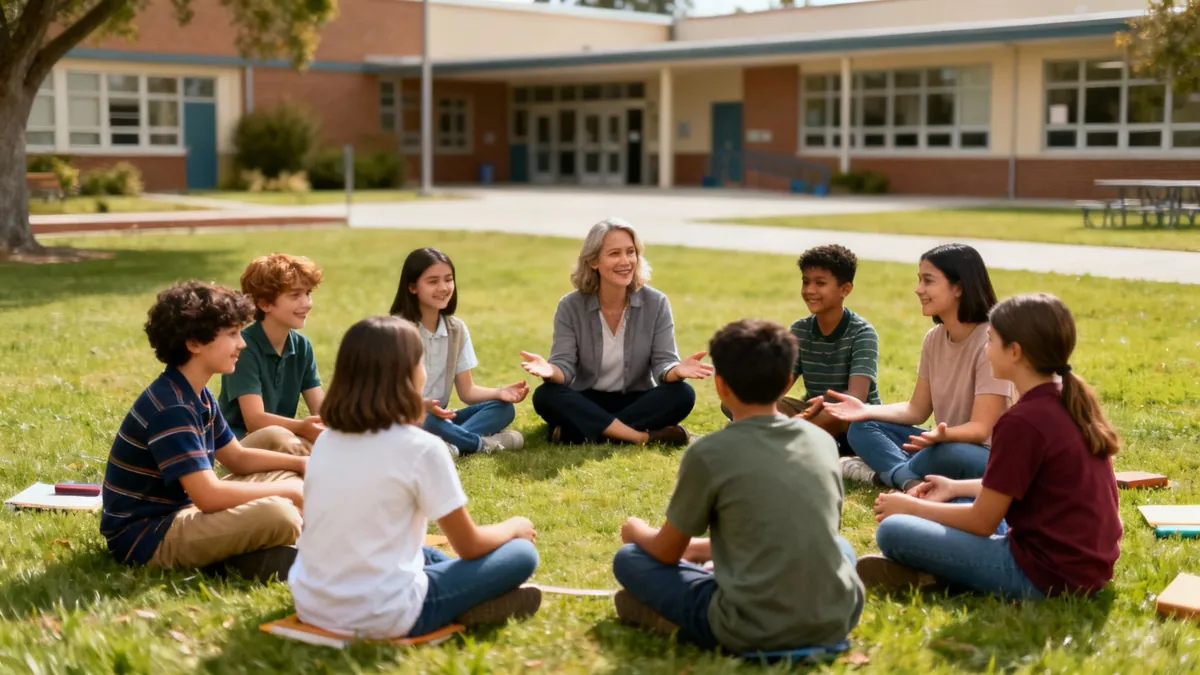
8. Kindness & Gratitude Circles
This category of fun brain breaks shifts the focus from physical movement to social-emotional connection. These structured group activities guide students to practice giving and receiving compliments, sharing appreciations, or identifying things they are grateful for. By creating a dedicated time for positive expression, these circles build empathy, strengthen peer relationships, and actively rewire focus toward pro-social thinking. It's an ideal reset for improving classroom climate and fostering a sense of belonging.
How to Implement It
Successful integration depends on creating a safe, predictable routine. For example, a third-grade teacher could hold a weekly “Compliment Circle” where each student receives two genuine compliments from peers, helping to reduce classroom conflicts. A parent might start a “Gratitude Dinner” where each family member shares something they appreciated about another person that day, building stronger family bonds.
For an effective session, consider these tips:
Model First: Demonstrate how to give a specific, genuine compliment to a student before asking the class to try. Example: Instead of "You're nice," model saying, "I appreciated how you helped Leo pick up his crayons when he dropped them. That was very kind."
Use Sentence Starters: Provide prompts like, “I appreciated when you…” or “I am grateful for…” to guide students.
Establish Clear Rules: Create a “no criticism” zone where only positive appreciations are shared.
Allow Passing: Normalize allowing students to pass if they don’t feel ready to share, which builds psychological safety.
9. Nature & Outdoor Observation Breaks
This category of fun brain breaks connects students with the natural world to provide a genuine sensory reset. By stepping outside or simply observing through a window, children shift their focus from academic pressures to the details of their environment-clouds, plants, weather, and wildlife. This practice reduces stress, grounds students in the present moment, and cultivates an appreciation for the world around them, making it an excellent way to calm a restless class.
How to Implement It
Successful nature breaks are built on simple, repeatable routines. For instance, a third-grade class could take a three-minute "sensory walk" around the playground, focusing on what they can hear and smell. At home, a parent might ask their child to spend a few minutes at a window on a rainy day and describe the patterns the raindrops make, helping them transition calmly from screen time to homework.
For an effective session, consider these tips:
Use Guided Prompts: Ask simple questions to direct focus, such as, "What are three different colors you can see?" or "What sounds are the loudest and quietest?" Example: "Everyone look at that tree. How many different shades of green can you find in its leaves? What direction is the wind blowing the branches?"
Create a Nature Journal: Encourage students to sketch or write down one thing they notice each time.
Visit the Same Spot: Returning to the same tree or garden area regularly helps students observe seasonal changes over time.
Engage All Senses: Prompt students to touch tree bark, smell damp earth after rain, or listen for bird calls to create a full sensory experience.
10. Sound & Music-Based Brain Resets
This category of fun brain breaks uses audio cues to shift mental states, offering a powerful tool for emotional regulation and focus. Activities range from actively singing or tapping rhythms to passively listening to calming music. Sound and music directly influence mood and energy levels, making them an efficient way to reset the classroom atmosphere, energize a sluggish group, or soothe overstimulated minds before a transition.
How to Implement It
Successful integration depends on being intentional with your audio choices. For instance, a fourth-grade teacher could play five minutes of instrumental focus music during independent writing time to help students concentrate. A parent might teach their child a simple, calming song to sing softly when they feel overwhelmed by big emotions.
For an effective session, consider these tips:
Curate Playlists: Create separate playlists for different needs: calming instrumentals for tests, upbeat tunes for energy boosts, and focus music for work periods.
Teach Simple Songs: Use repetitive, simple songs or chants that students can easily learn and sing together to signal transitions. Example: A simple call-and-response chant like, "Teacher: Macaroni and cheese! Students: Everybody freeze!"
Incorporate Rhythm: Use body percussion like clapping or desk tapping, or simple instruments like shakers, to create a shared rhythm that builds community and releases energy.
Consider Volume: Be mindful that some students are sensitive to loud sounds. Keep background music at a low, non-distracting volume.
Quick Comparison: 10 Fun Brain Breaks
Activity
Implementation complexity
Resource requirements
Expected outcomes
Ideal use cases
Key advantages
Mindful Movement & Stretching
Low–Moderate — teacher models simple sequences
Minimal space, optional soft music
Reduced tension, improved attention, body awareness
Transitions, before focused work, anxiety reduction
Inclusive, minimal setup, teaches self‑regulation
The 5-4-3-2-1 Sensory Grounding Technique
Low — scripted prompts, quick to run
None
Rapid anxiety reduction, present‑moment focus
Acute stress moments, pre‑test, quick resets
Portable, fast, works individually or whole group
Dance & Movement Breaks
Low–Moderate — manage music and timing
Music/audio and open space
Energy release, improved mood, increased focus
High‑energy periods, morning routines, before recess
Transitions, calming during work, energizing before activity
Neurologically impactful, versatile, enjoyable
Putting Fun Brain Breaks into Action
We've explored a wide range of engaging, research-backed activities designed to refresh young minds, from Mindful Movement and the 5-4-3-2-1 Sensory Grounding technique to Creative Expression and Kindness Circles. The common thread connecting them all is the power of intentional pausing. These are not just fun distractions; they are vital tools for building focus, managing emotions, and creating a positive, supportive learning environment. The true value of Fun Brain Breaks emerges when they become a consistent, predictable part of the daily rhythm.
Building a Sustainable Routine
The key is to start small and build momentum. Don't try to introduce all ten activities at once. Instead, choose one that aligns with your students' current needs. If post-recess energy is high, a guided Belly Breathing exercise might be perfect. If you notice students struggling with a complex math problem, a quick Dance & Movement Break could be the reset they need to find a new perspective.
Remember to model the activities enthusiastically and participate alongside your students. Your engagement signals that these moments are just as important as academic instruction. After each break, take thirty seconds to debrief. Ask simple questions like, "How does your body feel now?" or "What did you notice during that quiet moment?" This reflective practice connects the physical action to the internal benefit, deepening their social-emotional awareness.
From Breaks to Breakthroughs
Integrating Fun Brain Breaks consistently does more than just improve attention spans. It communicates a powerful message to students: their well-being matters. When they learn to identify their need for a break and use strategies like guided imagery or a gratitude share to reset, they are building foundational self-regulation and self-advocacy skills that will support them for a lifetime. These short, intentional pauses create the space needed for academic and emotional breakthroughs to happen, transforming your classroom into a place where students feel seen, supported, and ready to learn.
Ready to take your classroom's social-emotional learning to the next level? The strategies in this article are a great start, and Soul Shoppe provides the programs and curriculum to build a truly peaceful school culture. Explore our offerings at Soul Shoppe to discover how to integrate these practices into a comprehensive, school-wide system.
You can feel it within the first few minutes of the day.
In one classroom, students walk in slowly, avoid eye contact, and wait to be told what to do. Questions are met with silence. A mistake on the board makes a few kids smirk, and the rest of the room gets even quieter. In another classroom down the hall, students are still very much children. They wiggle, talk, and need reminders. But they also greet each other, take academic risks, and recover from missteps faster. The difference isn't just management style. It's climate.
For K to 8 educators, that difference matters every single period. When the room feels safe, predictable, and human, students are more available for learning. When it feels tense, cold, or chaotic, even strong lesson plans can fall flat. If you're working on behavior, engagement, belonging, or academic recovery, you're already working on classroom climate whether you call it that or not.
That's also why climate can't be separated from the larger work of connection across a campus. If you're thinking about how the classroom fits into the wider student experience, this piece on how to improve school culture helps show how those daily classroom moments build into something bigger.
The Invisible Force Shaping Your Classroom
A lot of teachers hear the phrase classroom climate and picture posters, flexible seating, or a calm corner. Those things can help, but they aren't the whole story. Climate is the lived feeling of the room. It's the emotional weather students and adults move through together all day.
You've seen it in small moments. A student raises a hand even though they aren't sure of the answer. A classmate drops a pencil and another student picks it up. A child who had a hard recess still walks back in and joins math without shutting down. Those moments don't happen by accident. They happen when the room feels safe enough for students to participate, recover, and belong.
What teachers often notice first
Most educators don't start by naming climate. They notice symptoms:
Participation drops when students are worried about being wrong.
Behavior escalates when kids don't feel connected or understood.
Energy gets flat when expectations are unclear or trust is thin.
Peer conflict lingers when students don't have shared tools for repair.
That's why climate can feel invisible and obvious at the same time. You can't hang it on a bulletin board, but you can absolutely feel it during transitions, group work, partner talk, and conflict.
Practical rule: If students are constantly scanning for embarrassment, exclusion, or unpredictability, they have less energy left for learning.
For teachers, this can be confusing because classroom climate isn't one single thing. It includes how students feel with you, how they treat one another, how safe it feels to try, and how clear and fair the learning environment is. It also includes parts of the room adults often overlook, like lighting, noise, space, and temperature.
The good news is that climate is not fixed. It shifts through repeated daily choices. The way you welcome students, respond to mistakes, organize support, handle conflict, and design routines all shape the atmosphere students experience.
Defining Classroom Climate Beyond Decoration and Rules
When people ask, what is classroom climate, the simplest answer is this. It's the overall emotional and academic atmosphere students experience in your room. Not your intentions. Not your posted expectations. The actual felt experience of being there.
A useful way to explain it to colleagues or families is to call it the room's emotional atmosphere. Students and teachers breathe it in every day. If that atmosphere feels respectful, clear, and supportive, kids are more likely to engage. If it feels sharp, confusing, or unsafe, participation shrinks.
According to Flip Education's classroom climate overview, classroom climate is a dual-dimension construct made up of an academic dimension and a social-emotional dimension. The academic side includes expectations, intellectual rigor, and support for learning. The social-emotional side includes belonging, safety, respect, and teacher warmth. That same source describes climate as the felt quality of daily life, created through thousands of interactions that shape whether students feel safe and included. In practice, that's why a positive climate supports risk-taking, curiosity, and collaboration.
What climate is and what it isn't
Many readers find this distinction challenging. Classroom climate is related to classroom culture and school climate, but it isn't the same thing.
Term
What it focuses on
Example
Classroom climate
The day-to-day felt experience in one room
“I feel safe asking for help in this class.”
Classroom culture
The deeper shared values and habits that build over time
“In this class, we repair harm and keep trying.”
School climate
The broader atmosphere across the school community
“This school feels welcoming and orderly.”
That distinction matters because teachers can directly shape classroom climate every day. You may not control every building-wide variable, but you do control many of the interactions students experience in your room.
Why decor and rules don't tell the full story
A beautiful room can still have a brittle climate. A tightly managed room can still feel emotionally unsafe. Students can follow directions and still feel unseen.
Climate sits underneath visible routines. A posted rule like “respect others” doesn't create respect by itself. Students decide whether respect is real by watching how adults respond to mistakes, who gets heard, whose feelings matter, and whether repair is possible after conflict.
Students learn the climate of a room by living in it, not by reading the walls.
That's also why two classrooms with the same curriculum and behavior chart can feel completely different. One teacher may hold high expectations while offering strong scaffolds and warmth. Another may hold the same expectations but respond in ways that increase anxiety. The standard looks similar on paper. The climate feels very different to children.
The Four Pillars of a Positive Classroom Climate
It is 9:10 a.m. A student gets an answer wrong and freezes. One classmate snickers. Another looks away. The teacher has a choice in that moment. Brush past it, correct it sharply, or turn it into a safe chance to learn. Those small moments reveal classroom climate faster than any poster on the wall.
A positive climate rests on four pillars that students experience all day long. If one pillar is shaky, the room can feel tense or unpredictable. If all four are steady, students are more likely to participate, recover from mistakes, and stay connected to learning. This is also where the benefits of social-emotional learning in daily school life become visible. SEL is not separate from climate. It gives teachers concrete ways to strengthen it.
Psychological and physical safety
Safety is the floor students stand on. If that floor feels shaky, everything else gets harder.
Psychological safety means students can ask for help, make a mistake, disagree respectfully, and try again without humiliation. Physical safety includes the emotional message sent by the room itself. Crowded pathways, constant noise, poor visibility, harsh lighting, and uncomfortable seating can all raise stress before a lesson even begins. Teachers sometimes overlook these factors because they seem logistical, not relational. Students feel them immediately.
A useful check is to scan your room the way a sensitive third grader would. Where are bottlenecks? Which seats make it hard to see, hear, or focus? Which areas tend to spark conflict during transitions? Tomorrow, you can widen one traffic path, create a calm reset spot, lower visual clutter near your meeting area, or move high-demand materials away from crowded corners.
Belonging and community
Belonging answers a different question. Do I have a place here?
Children do not need constant harmony to feel belonging. They need repeated signs that they matter to the group. They hear their name pronounced correctly. They see their work and identity reflected in the room. They notice that groups are formed in ways that include everyone, not just the most socially confident students. They experience repair after conflict instead of quiet exclusion.
This pillar grows through routines more than speeches. A second grade teacher opens with partner greetings so each child is acknowledged early. A sixth grade teacher rotates discussion partners and teaches sentence stems for inviting quieter peers in. A class meeting gives students language for naming harm, listening, and making things right. Belonging works like a braided rope. Many small strands create strength.
Positive norms and expectations
Students also need to know what this classroom asks of them and what support they can count on when the work is hard.
Healthy norms are more than rules on a chart. They are shared ways of speaking, listening, moving, and solving problems. In strong climates, expectations are clear enough to reduce anxiety and flexible enough to teach, not just punish. Students learn that respect includes waiting, disagreeing without insults, sharing materials fairly, and rejoining the group after a mistake. They also learn that academic struggle is part of learning, not proof that they do not belong.
This pillar becomes visible when teachers model the behavior they want to see.
Clear interaction norms show students how to enter a conversation, challenge an idea, and repair harm.
Academic norms make room for revision, questions, and productive struggle.
Predictable responses from adults help students trust that discipline will be fair and instruction will stay steady.
A fifth grade teacher might say, “In this class, we explain our thinking, listen fully, and try again,” and then practice those moves during math discussion. That is what makes expectations real.
Teacher-student relationships
Relationships hold the other three pillars in place. A room can have good procedures and still feel cold. Students can follow directions and still avoid risk if they do not trust the adult.
Catlin Tucker's piece on psychological safety draws on Dr. Amy Edmondson's definition of psychological safety as a climate of interpersonal trust and mutual respect. In K-8 classrooms, that trust grows through ordinary, repeatable actions. Teachers admit mistakes, invite student voice, notice effort, and stay calm enough to be predictable during stress.
These moves are simple, but they are not small. You say, “I gave unclear directions. Let me fix that.” You ask students for quick feedback at the end of the week. You kneel beside a frustrated writer and coach instead of correcting from across the room. When students trust the adult, feedback feels usable, and challenge feels manageable.
Why Climate Matters The Research on Student Outcomes
Some school decisions get labeled “extra” when they aren't directly tied to instruction. Classroom climate doesn't belong in that category. It affects how instruction lands.
A national study of 16,258 students found that for every one-point increase in a student's positive perception of their learning environment, math scores increased by 2.061 points, and a one-point increase in perceived safety correlated with a 1.806-point rise in math scores, as reported in the Educational Longitudinal Survey analysis. That's a strong reminder that safety and learning environment are not side issues. They are tied to academic outcomes.
What those findings mean in daily practice
Teachers don't experience climate as a research term. They experience it as whether students enter discussion, persist through challenge, and regulate themselves well enough to stay in the lesson.
A broader review in this overview of classroom climate research found small to moderate positive effects on social competence, motivation, engagement, and academic performance, along with small negative effects on socioemotional distress and externalizing behaviors. That means a positive climate isn't just about nicer feelings. It supports the social and emotional conditions students need in order to learn and relate well.
If you need language for advocating this work to colleagues or families, connect it to outcomes they already care about:
Academic engagement improves when students feel safe enough to participate.
Peer interactions get stronger when empathy and repair are part of the room.
Behavior support becomes more effective when students feel connected instead of managed.
Well-being improves when socioemotional support is built into the school day.
Families often understand this immediately. They know the difference between a child who says, “I got something wrong today,” and a child who says, “I don't want to go back.” For a deeper look at the wider student impact, Soul Shoppe's article on the benefits of social-emotional learning offers language many school teams can use in conversations with staff and caregivers.
A strong classroom climate helps students use what they know. A weak one often hides what they're capable of.
How to Measure the Vibe in Your Classroom
It is 10:15 a.m. Your lesson is organized, the directions were clear, and still the room feels off. One table jumps in right away. Another goes quiet. One student keeps looking around before answering, as if checking whether it is safe to be wrong.
That is classroom climate showing up in real time.
Teachers can measure that kind of pattern. You do not need a long formal tool to start. You need a simple routine for noticing what students experience across the day, then checking whether your systems for safety, belonging, support, and physical comfort are landing the way you intended.
A helpful starting point is this: climate is a group pattern, not a single moment. One student's rough day matters, but it does not define the whole room. You are looking for repeated signals across the class. Short, repeated check-ins often give you more useful information than a one-time survey because they show what students feel again and again.
Low-effort ways to gather student feedback
Use methods your students can handle quickly and accurately.
Anonymous mini-surveys work well when you repeat the same few prompts over time. Try statements like “I feel safe sharing ideas here,” “Students treat each other with respect,” “I know what to do when I get stuck,” and “Our room helps me focus.”
Emoji check-ins help younger students report feelings without needing a lot of language. You can ask about inclusion, clarity, or stress with simple visual choices.
Exit tickets can pair one learning question with one climate question. For example: “What helped you learn today?” or “Did partner work feel comfortable, confusing, or hard today?”
Fist-to-five check-ins give you a quick class snapshot. Ask about asking for help, understanding directions, feeling ready to join discussion, or how comfortable the room felt for learning.
Quick space scans are easy to miss, but they matter. Notice noise, crowding, seating flow, glare, temperature, and whether students can access materials without bottlenecks. A room can be emotionally warm and still feel physically hard to learn in.
Look for trends, then match the trend to the pillar of climate underneath it.
Signal
What it may mean
Next step
Many students avoid speaking during discussion
Emotional safety may be weak
Use turn-and-talk before whole-group sharing, and name mistakes as part of learning
Students often say they are unsure what to do
Support and structure may be inconsistent
Tighten routines, model directions, and post one clear process at a time
Some students report belonging while others do not
Connection may depend too much on social status or seating patterns
Rework partnerships, greeting routines, and who gets invited into leadership
Students lose focus at the same time each day
The physical environment may be working against attention
Check noise, movement breaks, seating layout, lighting, and material access
Students say adults do not listen
Voice and respect may be uneven
Add regular reflection prompts and make space for students to influence parts of the day
Teacher reflection belongs here too. After class, ask questions that are specific enough to answer candidly. Who got warm attention from me today. Who mostly heard correction. Which students took up space easily, and which students stayed at the edge. Did my setup help students regulate, move, and concentrate, or did it add friction?
A classroom thermometer works best when you check it regularly. One survey in October will not tell you what February feels like.
If the same pattern shows up across student feedback, your observation notes, and the physical flow of the room, treat it as useful information and adjust the environment, not just the lesson.
Practical SEL Strategies to Improve Your Classroom Climate
Good climate grows from repeated moves, not one big reset. The most useful strategies are small enough to use tomorrow and strong enough to repeat all year.
Build belonging first
Students settle faster when they feel recognized.
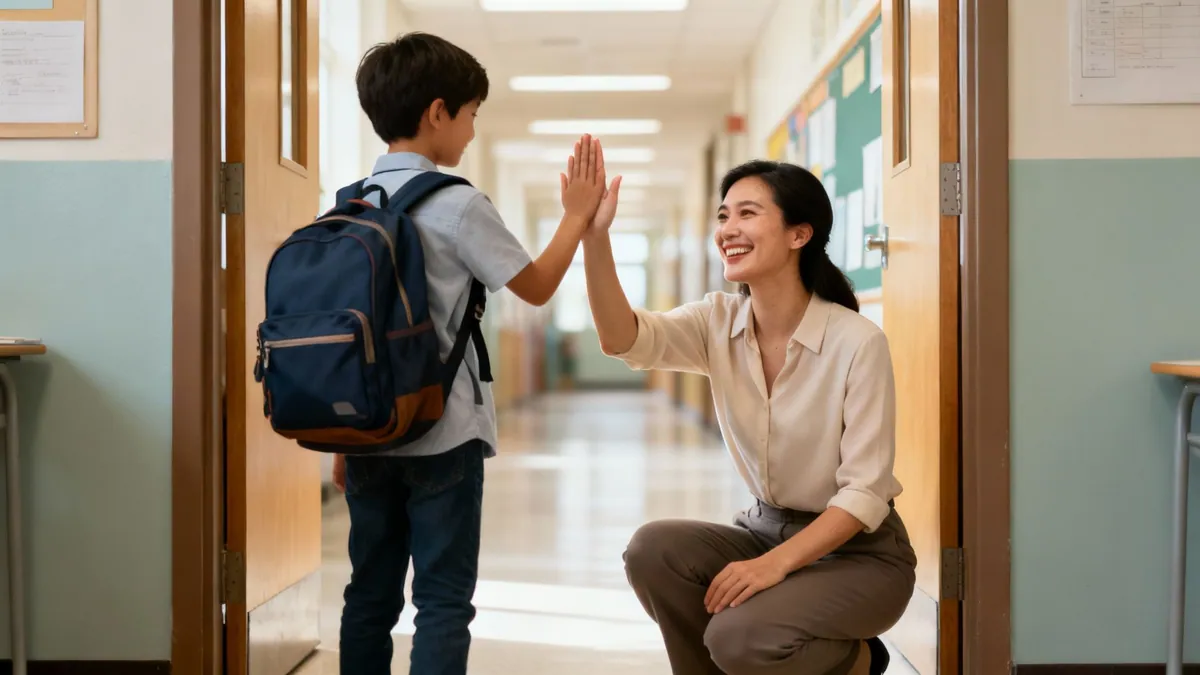
Try a Positive Starter routine at the door. Greet each student by name and offer a choice like a wave, thumbs up, or brief verbal check-in. Choice matters because some students want warmth without physical contact, and some need a softer entry after a difficult morning.
Other simple belonging moves work well across K to 8:
Morning or opening circles give every student a voice, even if the prompt is brief.
Partner rotations prevent social isolation and widen peer connection.
Two-minute connection conferences let you learn one non-academic detail about students over time.
A parent can use the same approach at home by replacing “How was school?” with one specific question such as “When did you feel included today?” That helps children notice climate, not just tasks.
Strengthen safety through predictable repair
Safety doesn't mean the absence of conflict. It means students know what happens when conflict or mistakes occur.
Use these routines:
Co-create class agreements in student-friendly language like “We let people finish” or “We fix harm.”
Teach I-statements so students can say, “I felt frustrated when my idea was interrupted.”
Model your own repair when you speak too sharply or rush a child.
Research summarized in the verified guidance on emotional intelligence shows that fostering these skills directly improves climate. Teachers can use a Feeling Words Chart to help students name emotions and run empathy drills where students role-play conflict by stating how the other person might feel, based on the findings in this well-being and classroom climate paper.
Here's what that can look like in a third grade class. Two students argue over markers. Before solving the problem, the teacher asks each child to choose a word from the chart. One says “left out.” The other says “annoyed.” Then both try one sentence about the other person's perspective. That slows the conflict and builds empathy instead of rushing straight to blame.
Make expectations clear without making the room rigid
Students do better when the room feels organized and transparent. If you use a digital platform, organize materials in consistent modules, include due dates, and place help resources where students can find them easily. That reduces uncertainty and supports the emotional side of climate because students know where to go when they're stuck.
For in-person routines, keep it visible and repeatable:
Show what participation sounds like with sentence stems.
Teach help-seeking by naming exactly what students can do before frustration spikes.
Celebrate revision and effort so rigor doesn't become fear of being wrong.
This short video offers a useful classroom-facing lens on creating a safer, more connected learning space.
8. Consistent Classroom Routines and Clear Expectations
One of the most foundational classroom management best practices involves creating a highly predictable environment. When students know exactly what to do and how to do it for every part of the school day, from sharpening a pencil to transitioning to lunch, their cognitive load decreases. This predictability frees up mental energy for learning and reduces the anxiety that often fuels disruptive behavior.
Consistent routines and clear expectations are not about rigid control; they are about creating psychological safety. Students feel confident and secure when their environment is logical and consistent. Research supports this, showing classrooms with well-established routines can have up to 50% fewer behavioral referrals.
How to Implement Routines and Expectations
Successful implementation moves beyond simply stating rules. It involves actively teaching procedures as you would any academic subject: with modeling, practice, and reinforcement.
Start Small and Build: Don’t overwhelm students (or yourself) by teaching 20 routines on day one. Focus on the 2-3 most critical procedures first, such as your morning entry routine, how to get the teacher’s attention, and the dismissal process. Once those are mastered, gradually introduce others. For example, a kindergarten teacher might focus only on the routine for hanging up coats and backpacks for the entire first week.
Model, Practice, Role-Play: Use the “I Do, We Do, You Do” model. First, demonstrate the routine yourself. For example, physically walk through the steps of turning in homework. Then, have the class practice it together, perhaps lining up for lunch as a group. Finally, have individual students role-play the procedure, like demonstrating how to ask for help. Repeat this process daily for the first two weeks of school and reteach as needed after breaks or when issues arise.
Create Visual Supports: Words are fleeting, but visuals are constant reminders. Post a daily visual schedule with pictures for younger students. Create anchor charts for multi-step procedures (like “Group Work Expectations”). Place laminated procedure cards at relevant classroom stations, such as a small sign at the pencil sharpener that says, “1. Wait for a quiet time. 2. Sharpen quickly. 3. Return to your seat.”
Classroom-Ready Example: Morning Entry Routine Instead of letting students trickle in with unstructured time, establish a clear three-step entry procedure posted on the door:
Unpack your backpack and hang it on your hook.
Turn in your homework to the red basket.
Begin your morning warm-up work silently.
Practice this sequence every morning, offering specific verbal praise like, “I see Leo has already started his warm-up. Excellent focus!” This small routine prevents morning chaos and sets a productive tone for the entire day.
9. Authentic Relationships, Belonging, and Family Engagement
Building genuine relationships where students feel known, valued, and psychologically safe is a cornerstone of effective classroom management best practices. When this sense of belonging is extended to include proactive, two-way family engagement, it creates a powerful support system that nurtures positive behavior and encourages academic risk-taking. This approach shifts the focus from managing behavior to fostering connection.
This is not just a feel-good strategy; it is a research-backed imperative. Schools that prioritize belonging report higher attendance, improved academic achievement, and a greater sense of safety. Research from organizations like Soul Shoppe shows that students who feel cared for by their teachers are significantly more likely to persist through challenges. When you add strong family partnerships into the mix, schools can see up to 30% fewer behavioral problems.
How to Implement Relationships and Engagement
Cultivating authentic connections requires intentional, consistent effort. It involves showing genuine interest in students as individuals and viewing families as essential partners in their child’s education.
Make Personal Connections Daily: Greet every student by name at the door with a high-five, handshake, or smile. Use interest inventories at the start of the year and then ask specific follow-up questions like, “How did your soccer game go on Saturday?” or “Did you finish that amazing drawing you were telling me about?”
Proactive Positive Communication: Don’t let your only communication with families be about problems. A practical example is to send a “Good News” postcard home when a student shows kindness or masters a new skill. Or, use a communication app to send a quick photo of a student engaged in a positive activity with a caption like, “Jasmine was a fantastic leader in her group today!”
Partner with Families for Problem-Solving: When an issue arises, approach the family as a teammate. Start the conversation with, “I’d love to partner with you to help Marco succeed. Can you tell me what strategies work best at home when he gets frustrated?” This shows respect and positions the parent as an expert on their child.
Classroom-Ready Example: The “Two-by-Ten” Strategy For a student you’re struggling to connect with, commit to the “Two-by-Ten” strategy. Spend two minutes a day for ten consecutive school days having a non-academic, non-disciplinary conversation with them.
You might ask about their favorite video game, their pet, or their weekend plans. The goal is simply to build rapport and show you see them as a person beyond their behavior or grades. This focused effort can dramatically repair and strengthen a relationship, often leading to a significant decrease in disruptive behavior because the student feels seen and valued.
10. Student Leadership and Voice in Classroom Management
One of the most transformative classroom management best practices involves shifting from a teacher-centric model to a community-based one where students have authentic agency. Giving students meaningful roles in classroom decision-making, from setting expectations to solving problems, builds a profound sense of ownership and responsibility. When students have a voice, they become invested partners in creating a positive and productive classroom culture.
This approach is about co-creating the classroom environment rather than imposing it. Students who feel seen, heard, and valued are far more likely to be engaged and motivated, and less likely to exhibit oppositional behaviors. Research shows that schools prioritizing student voice see stronger student-teacher relationships, increased academic engagement, and more equitable outcomes.
How to Implement Student Leadership and Voice
Cultivating student voice requires intentionally creating structures where their input is not just heard but acted upon. It involves teaching the skills needed to participate constructively in a democratic community.
Hold Regular Class Meetings: Dedicate time each week for a structured class meeting. Use an agenda that students can add to throughout the week. For example, a student might add “The pencils are always missing from the writing center” to the agenda, allowing the class to solve the problem together.
Create Meaningful Classroom Jobs: Go beyond simple line leader or paper passer roles. Establish leadership positions that have real responsibility. For example, a “Tech Expert” could be trained to help peers with login issues, or a “Class Ambassador” could be responsible for giving a short tour to any classroom visitors.
Co-create Expectations and Consequences: In the first week of school, ask, “What does a respectful classroom look, sound, and feel like?” Chart their answers. Then, guide them to turn these ideas into 3-5 positively-phrased class rules. When a rule is broken, ask the student, “We agreed to be respectful. What would be a good way to repair the harm done and make a better choice next time?”
Classroom-Ready Example: Problem-Solving Class Meeting Instead of the teacher unilaterally banning a popular but distracting item (e.g., trading cards), bring the issue to a class meeting.
State the Problem: “I’ve noticed that trading cards are becoming a big distraction during math time. What have you all noticed?”
Brainstorm Solutions: Ask students to brainstorm fair solutions. Ideas might include “cards are only for recess,” “a designated 10-minute trading time on Fridays,” or “cards stay in backpacks until dismissal.”
Vote and Commit: Have the class vote on the best solution and agree to try it for one week before revisiting the decision.
This process teaches problem-solving skills, respects students’ interests, and generates far greater buy-in for the final solution.
Classroom Management: 10-Strategy Comparison
Practice
Implementation complexity
Resource requirements
Expected outcomes
Ideal use cases
Key advantages
Restorative Practices and Circles
High — requires trained facilitators and school buy-in
Moderate–High — staff training, scheduled circle time, facilitator support
Class governance, restorative processes, student-centered classrooms
Empowers students, increases buy-in and peer accountability
Putting It All Together: Creating Your Proactive Classroom Ecosystem
Navigating the landscape of classroom management best practices can feel like trying to assemble a complex puzzle. We’ve explored ten powerful, interconnected strategies, from establishing consistent routines and integrating Social-Emotional Learning to fostering student voice and implementing restorative justice. The crucial takeaway is not to view these as a checklist of isolated tactics, but as threads to be woven together into a resilient and supportive classroom ecosystem. Effective management isn’t about control; it’s about connection, co-creation, and community.
The journey begins not with a complete overhaul, but with a single, intentional step. The most impactful changes are often small, consistent actions that build trust and predictability over time. By focusing on creating a foundation of psychological safety and authentic relationships, you establish the fertile ground where all other practices can take root and flourish.
Synthesizing the Core Principles
At their heart, these ten classroom management best practices share a common philosophy: they are proactive, not reactive. They shift the focus from correcting misbehavior to cultivating an environment where students feel seen, valued, and equipped with the skills to navigate social and emotional challenges.
Proactive vs. Reactive: Instead of waiting for conflict to arise, we build community through restorative circles, teach self-regulation with mindfulness exercises, and pre-empt confusion with crystal-clear routines. This preemptive approach minimizes disruptions and maximizes learning time.
Skills over Sanctions: Rather than relying solely on consequences, we actively teach empathy, perspective-taking, and collaboration. This empowers students with the social-emotional competencies they need to succeed both in school and in life.
Connection as the Catalyst: The thread connecting all these strategies is the power of human connection. Authentic relationships with students and strong family engagement are not “soft skills”; they are the very bedrock of a well-managed, thriving classroom.
Your Actionable Next Steps
Embarking on this journey requires commitment, not perfection. The goal is progress. Here is a practical, step-by-step approach to begin integrating these principles into your daily practice:
Start with a Self-Assessment: Reflect on the ten practices discussed. Which one resonates most deeply with your teaching philosophy? Where do you see the most immediate need in your classroom? Perhaps it’s strengthening relationships (#9) or clarifying routines (#8).
Choose One and Go Deep: Select a single practice to focus on for the next four to six weeks. For example, if you choose Mindfulness and Self-Regulation (#3), you could commit to leading a two-minute “belly breathing” exercise after every transition from recess or lunch.
Practical Example: A third-grade teacher might introduce a “Peace Corner” with a breathing ball and emotion flashcards. The initial goal isn’t for every student to use it perfectly, but simply to introduce it as a shared tool for co-regulation.
Involve Your Students: Frame this as a collaborative effort. Announce your new focus to the class. Say, “Team, we’re going to work on getting better at listening to each other’s ideas. One way we’ll do this is by practicing restorative sentence stems when we disagree.” This fosters buy-in and positions students as partners.
Track and Reflect: Keep a simple journal. What’s working? What challenges are arising? How are students responding? This reflection is crucial for making small adjustments and recognizing progress, which fuels motivation. After a month, you can either deepen your implementation of that practice or layer on a second, complementary one.
Mastering these classroom management best practices is an ongoing process of learning, adapting, and growing alongside your students. It is a profound investment that pays dividends far beyond a quiet and orderly room. It is the work of building a compassionate, equitable, and empowering community where every child has the opportunity to bring their whole self to the learning process, ready to engage, take academic risks, and ultimately, thrive.
Ready to bring this transformative, community-centered approach to your entire school? Soul Shoppe provides research-based programs, professional development, and practical SEL tools that directly align with the classroom management best practices in this guide. Discover how our on-site and virtual programs can help you build a safer, more connected school culture at Soul Shoppe.
Improving school culture isn’t just about adding another program to an already long list. It’s about being intentional in building an environment where everyone—from students to staff—feels safe, connected, and valued.
The most direct path to this is by weaving three core pillars into the fabric of each day: psychological safety, strong relationships, and a shared purpose. This isn’t about buzzwords; it’s about making tangible, positive changes that people can actually feel.
What a Positive School Culture Really Looks Like
Forget the abstract for a moment and picture what a thriving school culture feels like on a random Tuesday morning. It’s the energy you notice in the hallways. It’s the way kids and adults interact in the cafeteria. It’s the tone of the conversations in the staff lounge.
A genuinely positive culture has less to do with the posters on the wall and everything to do with the daily, lived experiences of every single person who walks through the doors.
At its heart, this kind of culture is built on a foundation of psychological safety. This means students feel secure enough to ask a question without worrying about being ridiculed. It means teachers feel empowered to try a new lesson plan without the fear of failure hanging over their heads.
It’s the crucial difference between a student raising their hand to say, “I don’t get it,” and one who stays silent to avoid looking foolish.
The Power of Strong Relationships
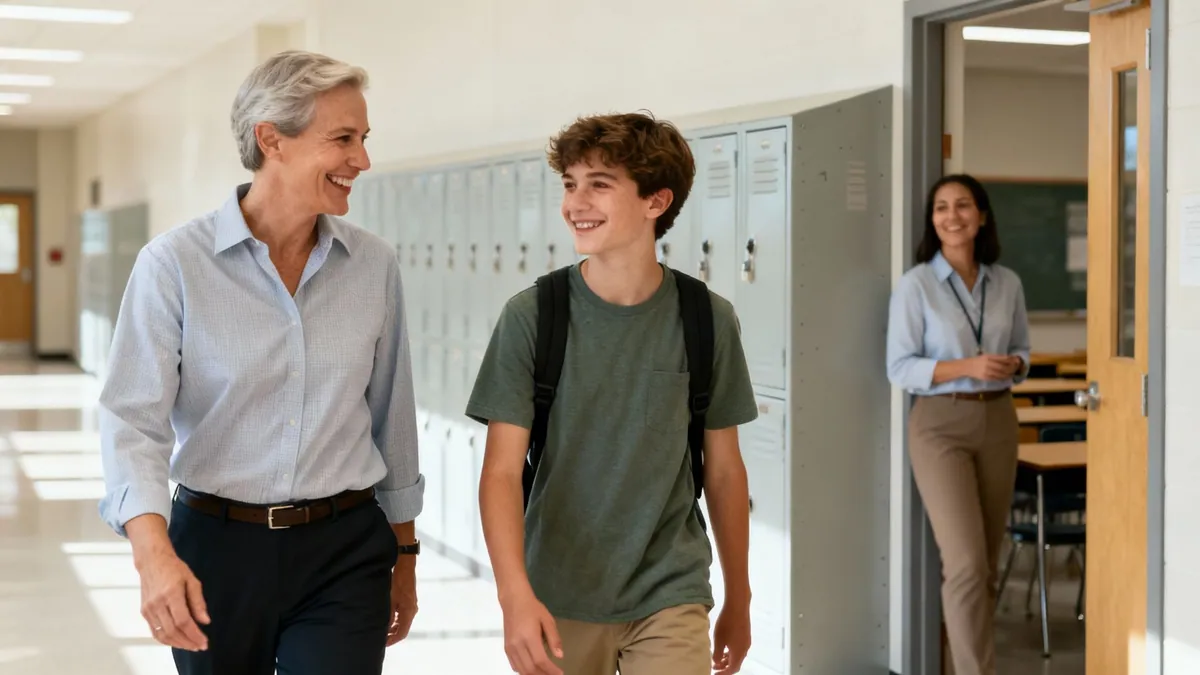
Beyond feeling safe, strong relationships are the connective tissue holding a healthy school together. This is so much more than students simply having friends. It’s about teachers who know their students’ interests, administrators who greet kids by name, and staff who feel genuinely supported by their colleagues.
Think about how two different schools might handle a conflict between students:
School A (Punitive Culture): The students involved get sent to the office, are handed a detention slip, and told to stay away from each other. The root of the problem is never addressed, and resentment is left to simmer.
School B (Relational Culture): The students sit down for a restorative circle, guided by a trained staff member. They each get to share their side, listen to one another, and work together to figure out how to repair the harm. This process builds empathy and gives them real-world conflict-resolution skills.
The second approach doesn’t just punish behavior—it actively mends relationships and strengthens the community. It sends a clear message that connection and understanding are what truly matter.
A Clear and Shared Purpose
Finally, a positive culture is united by a shared purpose that everyone understands and believes in. This has to go deeper than a generic mission statement plaque hanging in the main office. It’s a collective agreement that the school is a place for everyone to grow—academically, socially, and emotionally.
When a school’s purpose is clear, big and small decisions get filtered through a simple question: “Does this help our students and staff thrive?” This clarity aligns everyone’s efforts, from the principal’s budget priorities to a teacher’s classroom management strategy.
This shared mission is what transforms a school from a collection of individual classrooms into a cohesive community working toward the same goals. You can see it in action when older students mentor younger ones or when teachers collaborate on exciting cross-curricular projects. To see this come alive at the classroom level, it helps to understand what makes a peaceful and welcoming classroom culture.
Let’s break down these core components and what they mean for your school.
The Three Pillars of a Positive School Culture
Pillar
What It Looks Like in Practice
Impact on Students and Staff
Psychological Safety
Students ask questions freely. Staff try new ideas without fear of failure. Mistakes are treated as learning opportunities, not punishments.
Fosters curiosity and innovation. Reduces anxiety and boosts participation. Staff feel empowered and are more likely to stay.
Strong Relationships
Teachers greet students by name. Staff collaborate and support one another. Restorative practices are used to resolve conflicts.
Creates a strong sense of belonging. Students feel seen and supported. Behavior issues decrease as connections deepen.
Shared Purpose
Decisions are aligned with the school’s core values. Everyone can articulate “why we do what we do.” There’s a collective focus on student and staff well-being.
Aligns efforts and reduces friction. Motivates everyone to work toward common goals. Boosts morale and school pride.
The impact of focusing on these pillars is profound. Schools with strong, positive cultures see better academic outcomes, a significant drop in behavioral issues, and higher teacher retention rates. When staff feel respected and students feel they belong, the entire educational experience is elevated. Knowing how to improve school culture is really about knowing how to intentionally build these pillars, day in and day out.
Conducting a Meaningful School Culture Audit
Before you can improve your school’s culture, you first have to get an honest picture of what it’s actually like right now. It’s tempting to jump right into new initiatives, but starting without understanding the real experiences of your students and staff is like trying to navigate without a map.
A truly meaningful culture audit goes way beyond generic surveys. It’s about uncovering the unspoken rules, the hidden challenges, and the authentic bright spots that define daily life on your campus. This isn’t about finding blame; it’s about spotting specific opportunities to make things better.
The need for this deep listening is more urgent than ever. The Pearson School Report 2023 revealed some concerning trends post-COVID. For instance, only 27% of schools increased collaboration with parents on student issues, a sharp decline from 43% the year before. At the same time, just 36% offered mental health training for staff, down from 47%, even with staff wellbeing and student behavior as top concerns.
Moving Beyond Standard Surveys
Climate surveys can be a decent starting point, but they often miss the subtle, human details of a school’s culture. To get a richer, more complete picture, you need to get creative and give a real voice to the people who live that culture every single day.
Here are a couple of powerful ways to do that:
Shadow a student for a day. This is a game-changer. When an administrator follows a student from the first bell to the last, they get an unfiltered view of everything—the chaos in the hallways between classes, the social dynamics in the cafeteria, and the emotional energy of different classrooms. It reveals pain points and successes that numbers on a spreadsheet could never show.
Create safe, anonymous feedback channels. A simple staff feedback wall in the lounge with a stack of sticky notes can generate far more honest input than a formal meeting. It gives staff a low-pressure way to share what’s working, what’s not, and what they really need to feel supported.
Listening Directly to Students
Your students are the ultimate experts on your school’s culture, and creating structured ways for them to share their truth is non-negotiable. Student-led focus groups, for example, often create a more comfortable space for them to speak openly with their peers.
The questions you ask make all the difference. Move past the generic and ask things that get to the heart of their social and emotional reality:
“Where on campus do you feel like you truly belong?”
“When do you feel most invisible or unheard here?”
“Tell me about a time you felt really proud to be a student at this school. What was happening?”
“If you could change one ‘unwritten rule’ here, what would it be and why?”
These kinds of questions dig deep, helping you pinpoint specific areas that need attention, whether it’s a lack of inclusive spaces or a communication breakdown between students and adults.
By actively listening to these voices, you’re not just collecting data; you’re sending a powerful message that everyone’s experience matters. This act of listening is, in itself, the first step toward building a more positive and connected culture.
An audit will almost always surface important insights about psychological and physical safety on campus. To explore this specific area, targeted tools can be incredibly helpful. Our School Safety Quiz is a great resource for assessing key safety indicators, giving you a clear baseline to build from.
Strategies for Building Safety, Connection, and Empathy
So, you’ve taken a good, honest look at your school’s culture. Now it’s time to roll up our sleeves and put that knowledge to work.
Real change in school culture doesn’t come from a single assembly or a poster in the hallway. It’s built through small, consistent, and intentional actions that weave safety, connection, and empathy into the very fabric of the school day. Think of these as the foundational building blocks for a thriving community.
When students feel physically and emotionally safe, they can open themselves up to connection. And it’s from that foundation of connection that true empathy begins to grow.
Fostering a Foundational Sense of Safety
Psychological safety is the bedrock. It’s the unspoken permission a student feels to ask a “silly” question or for a teacher to try a new lesson that might not be perfect. Without it, real learning and connection are nearly impossible.
One of the most powerful ways to build this safety is by creating predictable routines for handling big emotions. When a child is spiraling—whether from anger, anxiety, or frustration—they need a clear, safe process to find their way back to calm.
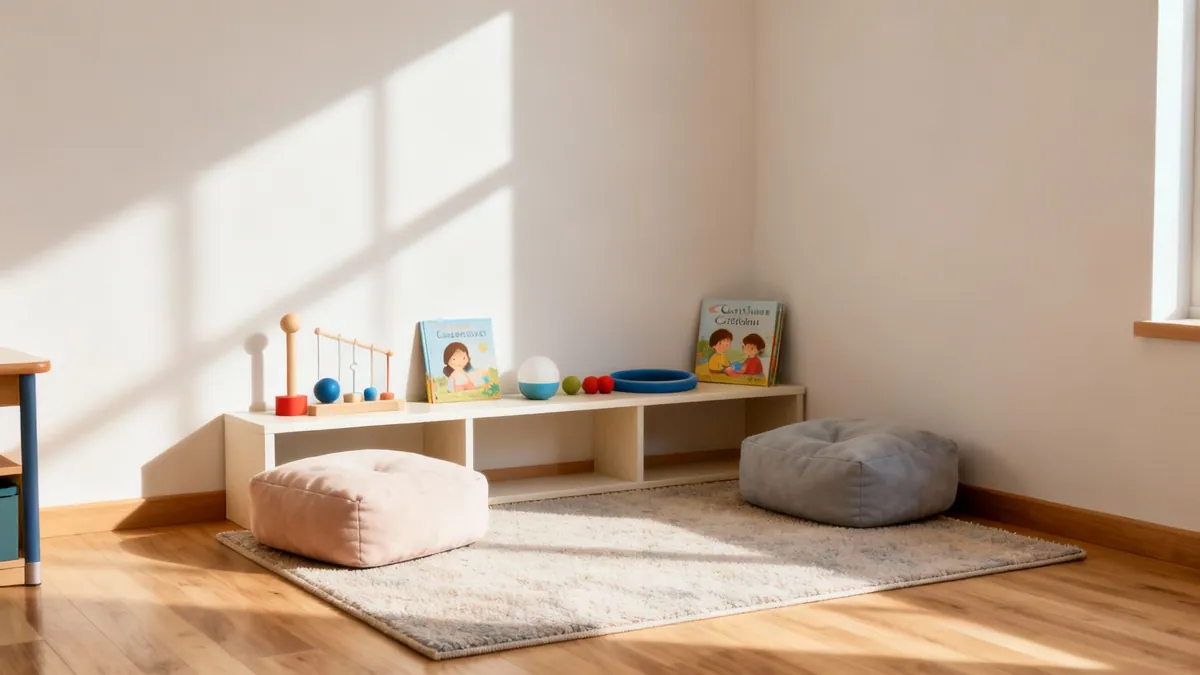
Practical Example: The ‘Cool-Down Corner’
A “cool-down corner” or “peace corner” offers a physical space for emotional regulation. This isn’t a timeout or a punishment; it’s a tool students learn to use for themselves.
For Teachers: Stock the corner with soft cushions, fidgets, calming picture books, or visual guides for deep breathing. Explicitly teach all students how and when to use it, framing it as a strong choice for self-care.
For Parents: You can easily create a similar space at home. When your child is upset, guide them to their calm-down spot and practice breathing with them. This reinforces the message that big feelings are okay and we have healthy ways to manage them.
Another key to safety is developing a shared, school-wide language for conflict resolution. When everyone from the principal to the playground aide uses the same approach, students get a consistent message about how to work through problems respectfully.
Using a common language, such as ‘I-statements,’ transforms conflict from a disruptive event into a valuable learning opportunity. It shifts the focus from blame to understanding and empowers students with tools they can use for the rest of their lives.
For instance, instead of a student shouting, “You always cut in line!” they are guided to say, “I feel frustrated when you cut in front of me because it feels unfair.” This simple shift teaches them to express their needs without attacking the other person, which immediately de-escalates the situation.
Nurturing Genuine Student Connection
Loneliness is a huge barrier to learning. To combat it, we have to intentionally create opportunities for students to build positive relationships—not just with their friends, but with all of their peers and the adults in the building.
These moments don’t need to be complicated. In fact, the most effective strategies are often simple, daily rituals that build a sense of belonging over time.
Practical Example: The Morning Meeting
Kicking off the day with a structured 15-minute morning meeting can set a positive and inclusive tone. This ritual might include a greeting, a brief sharing activity, and a quick group game. The goal is to make sure every single child feels seen and heard from the moment they arrive.
Teacher Tip: During the sharing portion, try a prompt like, “Share one thing you’re looking forward to today.” It keeps the focus on positivity and gives you a peek into what motivates your students.
Parent Tip: Try this at home! At breakfast or dinner, ask everyone to share one “rose” (something good) and one “thorn” (a challenge). It opens up communication and makes it normal to talk about the tough stuff, too.
Even the physical environment can help. A “buddy bench” on the playground is a brilliant, kid-friendly tool for inclusion. The rule is simple: if you’re feeling lonely, go sit on the bench. This acts as a quiet signal to others that you’d like someone to play with, giving classmates a clear, kind way to be an “upstander” and invite someone in.
Integrating Empathy into Daily Learning
Empathy—the ability to understand and share someone else’s feelings—isn’t just a “soft skill.” It’s essential for collaboration, problem-solving, and creating an inclusive community. The best way to teach it is to embed it directly into the learning you’re already doing.
You can practice perspective-taking in almost any subject. During literacy, for example, go beyond basic comprehension and dig into the characters’ emotional worlds. We have more targeted ideas in our guide on how to build empathy in the classroom.
Practical Example: Character Discussions
When reading a story, pause and ask questions that encourage students to step into someone else’s shoes:
“How do you think the main character felt when that happened? What clues in the story tell you that?”
“If you were that character, what might you have done differently?”
“Has anyone ever felt a similar way? What was that like for you?”
This simple practice helps students connect what they’re reading to their own lives, building the neural pathways for empathy. Filling your classroom library with books that teach empathy can also provide rich, natural opportunities for these conversations.
By weaving these practical strategies into your daily routines, you start to systematically shift your school’s culture. You create an environment where safety is the norm, connection is natural, and empathy is a skill everyone is actively practicing.