Soul Shoppe's work is made possible by donors and partners who care deeply about the young people in their communities! We can't do this work without you. Support our work in classrooms and on playgrounds across the nation by donating here.
A child can sit in your classroom every day, complete the worksheet, and still feel like a visitor. Another child can walk through the same door, hit a hard problem, make a mistake out loud, and stay engaged because they trust that they belong there.
Most teachers and parents know this difference when they see it. One student keeps their head down, avoids partners, and says “I'm fine” with a flat voice. Another raises a hand, joins the group, and recovers after a rough moment because they feel safe, known, and wanted.
That's why the question what is sense of belonging matters so much. It isn't a soft extra. It shapes whether a child risks, connects, persists, and learns. In school and at home, belonging changes how children interpret everyday moments. A redirection can feel like support, or like proof they don't fit. A group project can feel exciting, or threatening.
For educators and families, belonging is one of the clearest meeting points between emotional life and academic life. When we understand it well, we stop treating it like a mystery and start building it on purpose.
More Than a Feeling The True Meaning of Belonging
By 9:15, two students in Ms. Rivera's class have both finished the warm-up. On paper, they look much the same. In practice, their minds are having very different school days.
One child stays quiet, waits to be placed with a partner, and goes blank when the work becomes difficult. The other asks a classmate a question, tries an answer that may be wrong, and recovers after correction. The academic gap between those two students may not begin with skill. It often begins with whether the brain is busy learning or busy checking, over and over, “Am I safe here. Do I fit here. Will I be accepted if I struggle?”
That is why belonging deserves a more precise definition.
Belonging is the felt experience of being accepted, recognized, and included in a group or place in a way that allows a child to participate fully. It is social, but it is also cognitive. When children trust that they are legitimate members of a classroom or family system, they have more mental space for attention, memory, persistence, and problem-solving. If you support school communities through design or digital access, this same principle also shows up in accessibility guidelines for higher education, where inclusion affects whether people can participate with confidence.
A helpful way to explain this to adults is to compare belonging to bandwidth. Every child comes to school with a limited amount of attention for the day. If too much of that attention is spent scanning for exclusion, hiding mistakes, or guessing how others see them, less is available for reading, reasoning, listening, and taking healthy risks.
What belonging looks like in a child's day
Belonging appears in ordinary moments that adults can easily miss:
During discussion: A student offers an unfinished idea because being wrong does not feel socially dangerous.
In group work: A child expects there will be a place for them, not just a seat near others.
After correction: The message they hear is, “I can improve here,” rather than, “People like me do not fit here.”
At home later: They can describe a hard moment openly because they expect care instead of shame.
Belonging means a child can use energy to learn, instead of using that energy to defend their place in the room.
Many adults confuse belonging with friendliness, compliance, or popularity. Those signals can sit nearby, but they do not tell the whole story. A student may smile, follow every direction, earn strong grades, and still feel like a guest. That is one reason belonging can be missed in schools that appear successful from the outside.
For teachers and parents, this is an important diagnostic question: Does the child feel merely managed and praised, or known and included? The difference matters because belonging is not only about whether children feel good. It shapes how they interpret feedback, whether they ask for help, and how long they stay engaged when learning gets uncomfortable.
Belonging grows through repeated messages from adults and peers:
You are noticed.
You are respected.
You have a place here.
Your participation matters.
When those messages are consistent, children do not have to keep proving they deserve to be present. They can get on with the work of learning.
What Is Sense of Belonging in an Educational Context
A student walks into class on time, hangs up their backpack, and gets straight to work. From the outside, everything looks fine. But one child is settling in because school feels like a place built for them. Another is staying quiet, reading the room, and trying not to do anything that might expose them. The behavior can look similar. The learning experience is not.
In education, belonging is the lived experience of being accepted, included, and able to participate fully in the life of a school. It is social, but it is also cognitive. When a child trusts that they have a place in the room, they can put more attention toward listening, problem solving, remembering directions, and asking questions. When that trust is shaky, some of their mental energy gets pulled toward self-protection instead.
A useful way to understand belonging is to picture a house with four connected parts. If one part is weak, the whole structure feels less stable.
A child may want friends but not know how to enter a game. Another may have strong social skills but face routines that leave them out. A third may have both, yet still read the room as unsafe because of earlier experiences. That is why belonging is more than a warm feeling or a friendly classroom climate.
The four parts of the house
Part
What it means in daily school life
Example
Competencies
A child has the skills to join, respond, repair, and collaborate
A student knows how to ask, “Can I work with you?”
Opportunities
The environment makes connection possible
A teacher uses partner structures instead of letting the same social groups dominate
Motivations
The child wants to connect and sees value in trying
A student keeps showing up to morning meeting even after a hard social day
Perceptions
The child interprets the setting as accepting and safe
A student believes adults respect them and peers want them there
Why this matters for teachers and parents
This framework helps adults diagnose the actual barrier instead of making a quick judgment about personality or effort.
If a child rarely joins peers, the issue may be skill. It may be a classroom routine that rewards confident speakers. It may be subtle exclusion that adults have missed. It may also be perception, where the child expects rejection even when support is available. That last one often confuses adults, especially in schools that look successful on paper.
This is one reason belonging deserves attention alongside academics and the benefits of social-emotional learning. Belonging helps explain why two students with similar ability can show very different levels of participation, risk-taking, and follow-through.
Design choices shape that experience every day. Seating, transitions, group norms, wait time, feedback, and family routines all send messages about who is expected to participate. So does access. For example, strong accessibility guidelines for higher education can inform K to 12 practice. When schools review digital materials, parent communication, and student-facing platforms, removing barriers helps show that a space was built with all learners in mind.
A plain-language test
If you want a simple way to check for belonging, ask this:
Practical rule: Can this child participate, make mistakes, and stay fully themselves without losing status in the group?
If the answer is no, belonging is fragile, even if the room looks calm.
This defines what sense of belonging means in education. A child is not only present. The child experiences school as a place where they are accepted, expected, and able to contribute.
Why Belonging Is a Cornerstone of Student Success
A student walks into class after a hard morning. Nothing dramatic happens. No one is openly unkind. The lesson begins, partners turn to each other, and that student stays quiet, watches closely, and avoids raising a hand. By lunch, the child looks “fine.” By the end of the day, the child has learned less, asked for less help, and used a great deal of energy just trying to stay socially safe.
That is the academic side of belonging.
Belonging affects more than mood. It shapes how much working memory a child can use, how willing they are to take a learning risk, and how quickly they recover after confusion, correction, or conflict. In other words, belonging acts a lot like classroom oxygen. Children may not talk about it directly, but every learning task depends on it.
Belonging changes how the brain uses its energy
When a child is unsure, part of the mind shifts into surveillance mode. The child starts asking silent questions. Am I welcome here? What happens if I get this wrong? Who will notice if I fail?
That constant monitoring uses cognitive fuel.
Teachers often see the result before they name the cause. A capable student freezes during group work. A curious child stops volunteering. A strong reader suddenly rushes through assignments to avoid standing out. These are not always motivation problems. Often, they are signs that self-protection is competing with learning.
When children feel secure with the adults and peers around them, more mental energy stays available for attention, memory, language, and problem solving. The connection between belonging and learning is clear. Social safety supports cognitive stamina.
Academic success grows from social safety
Schools ask students to do hard things all day. Belonging makes those hard things more doable.
Healthy risk-taking: answering before being certain
Sustained effort: sticking with a frustrating task
Collaboration: listening, disagreeing, repairing
Self-advocacy: asking for help without shame
Each of these behaviors depends on more than skill. It also depends on the child's prediction of what will happen socially. If a student expects embarrassment, exclusion, or status loss, even simple participation can feel costly.
This helps explain a pattern many adults find confusing. Some students look successful on paper and still do not feel that they belong. They earn good grades, follow directions, and stay out of trouble, yet they rarely share an original idea, rarely ask for help, and rarely relax into the community. Performance can hide disconnection.
One useful classroom lens is accountability with support. Children follow through more consistently when they feel responsible to a group that also feels safe. Families and educators can borrow ideas from social accountability, not as pressure, but as shared commitment. A reading partner, a morning check in buddy, or a family goal chart works better when the child feels, “People are with me.”
Belonging supports achievement because it supports recovery
Learning is full of small disruptions. A wrong answer. A tough transition. A partner disagreement. A page of math that suddenly feels impossible.
A child with a steady sense of belonging usually returns to the task faster. The child can absorb feedback without hearing rejection in it. The child can make a mistake without deciding, “I am the problem.” That recovery speed has academic consequences. It affects practice time, persistence, revision, and willingness to try again tomorrow.
This is one reason belonging sits so close to the goals of social emotional learning benefits for students and classrooms. SEL gives children tools for self-awareness, relationships, and regulation. Belonging creates the conditions that make those tools easier to use under stress.
Belonging is a condition for learning, not a bonus feature
Schools sometimes treat belonging like a climate issue that lives off to the side of instruction. In practice, it is woven into instruction. It affects who participates, who persists, who asks for clarification, and who feels safe enough to think out loud.
Here's a short explanation many families appreciate:
In real life, a child who belongs may still have hard days. The difference is that the child stays reachable. After a correction, the child tries again. After a social misstep, the child comes back. After confusion, the child asks a question instead of disappearing into silence.
Children learn best when connection lowers the cost of trying.
That is why belonging stands underneath student success. It supports the emotional security, cognitive effort, and academic resilience that school asks for every single day.
How to Recognize and Assess Belonging in Your School
A student can earn A's, follow every rule, and still spend the day protecting themselves.
You may see it in the child who never volunteers unless they are certain of the answer. Or in the student who looks "easy" because they stay quiet, work alone, and never make trouble. From the outside, school seems to be working. Under the surface, that child may be using a great deal of mental energy to scan for risk, edit their words, or avoid standing out.
That is why schools need to assess belonging directly, not assume it from grades, attendance, or orderly classrooms. Belonging shows up in learning behaviors. It affects whether students ask questions, recover from mistakes, join peers, and use their attention for thinking instead of self-protection.
What high belonging often looks like
Belonging works like a sturdy floor under classroom life. Students do not have to test every step before they put their weight down.
You can often notice that floor in place before a child has language for it.
Students enter with ease: They know where to go and whom to approach.
Peer talk is open: Students invite others in without adult rescue every time.
Mistakes stay workable: Children can be corrected without spiraling into shame.
Voice is distributed: More than the same few students speak and lead.
Students show repair: After conflict, they can reconnect with support.
What low belonging can look like
Low belonging is often quiet. Adults can miss it because it does not always look like acting out.
A helpful rule is this: look twice at any pattern that seems like personality, maturity, or motivation. Sometimes the child is managing uncertainty about safety, status, or acceptance.
Signal
What adults sometimes assume
What may really be happening
Frequent stomachaches or nurse visits
Avoidance
School feels socially unsafe
Chronic silence in groups
Introversion
Fear of exposure or exclusion
Perfect compliance
Strong adjustment
Self-protection through invisibility
Resistance to partner work
Defiance
Past rejection or uncertainty about fit
Sharp reactions to small feedback
Oversensitivity
Low trust and fragile status
Simple tools that work in real schools
You do not need a large new program to begin. You need repeated chances to notice patterns and hear from students who are easy to overlook.
Try a few of these:
Anonymous exit tickets: Ask, “When did you feel most included today?” or “When was it hard to be yourself today?”
Fist-to-five check-ins: Students rate how connected they felt during a lesson or group task.
Listening conferences: A counselor, teacher, or principal meets briefly with students who are often quiet, new, or on the edges of groups.
Participation mapping: Track who speaks, who gets interrupted, and who gets chosen by peers.
Environment scans: Review walls, books, examples, names, celebrations, and routines for who is reflected and who is missing.
A school that wants more structure can pair these observations with a thoughtful plan for outcome measurement so climate goals become visible, trackable, and easier to improve over time.
Questions that uncover hidden exclusion
Belonging gaps often appear most clearly in schools that look successful on paper.
Ask a harder question: which students are achieving while staying guarded, overprepared, or socially invisible?
This question is important in high-functioning school cultures. A child may earn strong marks and still feel that parts of their identity are unwelcome, misunderstood, or constantly being evaluated. In that situation, academic success can hide emotional cost. The student is succeeding, but at a price that drains attention, flexibility, and confidence.
Ask staff to look for patterns such as:
Who gets praised for “fitting in”
Whose emotions are interpreted as maturity versus disrespect
Which families feel easy to contact and which seem harder to reach
Who receives second chances without having to earn them first
These patterns help adults see whether belonging is shared across the community or reserved for students who already match the culture.
Actionable Strategies to Cultivate Belonging in the Classroom
Belonging grows through repeated experiences, not occasional slogans. Children decide whether they belong by watching what adults do every day.
One of the clearest starting points is a welcome ritual. A belonging explainer recommends creating a daily practice such as a greeting circle where every student is named and acknowledged, because welcome and recognition are core ingredients of belonging (Scanlon Foundation explainer).
Start the day with recognition
A greeting ritual doesn't need to be elaborate. What matters is consistency.
A kindergarten teacher might stand at the door and offer three choices: wave, fist bump, or hello in the child's home language if they know it. A fifth-grade teacher might open with a circle where each student answers a simple prompt such as, “What's one thing helping you today?”
The SEL principle here is recognition. Children need evidence that adults notice them before adults direct them.
A child who is greeted by name starts the day with a social anchor.
Build structured peer connection
Some classrooms rely too heavily on organic friendship patterns. That leaves many students waiting to be chosen.
A stronger approach is to build short, predictable structures into the week:
Partner rotations: Change pairs often so children practice entry with many classmates.
Shared success tasks: Give pairs one product to complete together, such as a math explanation card or science observation sheet.
Listening roles: Assign one child to summarize a partner's idea before sharing their own.
Repair scripts: Teach phrases like “Can we try again?” and “I didn't mean it that way.”
These routines strengthen connection without putting all the social burden on the most confident students.
Make identity visible without making children perform it
Identity-affirming classrooms don't ask children to represent an entire group. They create many openings for students to be known in their own specificity.
That might look like name pronunciation practice, home language inclusion, family story projects, music from different traditions during transitions, or book choices that widen who gets reflected in the room. It also means adults checking whether examples, praise, and behavior interpretations land differently across students.
For schools that want practical community-building routines, how to build classroom community offers concrete ideas that can be folded into existing schedules. Programs such as Soul Shoppe also provide workshops and shared language for communication, conflict resolution, and peer connection, which some schools use alongside daily teacher-led routines.
Protect participation
One small change can shift belonging fast. Stop treating participation as only public speaking.
Offer multiple ways to join:
Instead of only this
Add this option
Hand-raising
Turn-and-talk, written response, or partner share
Whole-group debate
Silent discussion on chart paper
Open volunteer questions
Think time, then random but supportive selection
Immediate correction
Private conference or retry option
When students can contribute without social exposure every time, they stay in the learning community instead of withdrawing from it.
Extending Belonging From the School to the Home
Home can't control every peer dynamic at school, but it can do something just as important. It can give a child a steady base of validation, language, and connection.
One research summary offers a practical example for parents: encourage a child to join a school club where they perceive “fit,” because that supports the perception component of belonging. The same summary notes that when a student feels excluded, parents can use a validation strategy by first acknowledging the feeling and then helping the child reconnect (reviewed in this parent-relevant belonging article).
What to say when a child feels left out
Children often bring belonging struggles home in short, loaded sentences:
“Nobody played with me.”
“They already had a group.”
“I don't want to go tomorrow.”
“Everyone else is better at this.”
The first job isn't fixing. It's naming.
Try this sequence:
Validate the feeling “That sounds lonely.” “I can see why that hurt.”
Slow the interpretation “Let's talk about what happened before we decide what it means about you.”
Look for one next step “Who feels easiest to sit with tomorrow?” “Is there a club or activity where you feel more like yourself?”
That response teaches children that exclusion is painful, but it doesn't define their worth.
Mirror school rituals at home
Families build belonging through rhythm more than speeches.
A simple dinner check-in, bedtime gratitude exchange, or weekly walk can become a belonging practice when each person gets attention and respect. Some families like to create small recurring events for cousins, caregivers, or mixed households, and tools for organizing family events can help reduce the logistics so the focus stays on connection.
Here are home routines that work well:
Rose and thorn at dinner: Each person shares one good part and one hard part of the day.
Weekly one-on-one time: Ten focused minutes with one child and one adult.
Family welcome rituals: A special greeting after school or a consistent bedtime phrase.
Repair moments: Adults apologizing when they get it wrong, so children learn that belonging includes repair.
Help children find places of fit
Not every child finds belonging in the same setting. One child connects through soccer. Another finds it in art club, library helpers, robotics, choir, or a small lunch group.
Parents can gently watch for where a child seems more open, relaxed, and energized. That matters because belonging often grows where competence and comfort meet.
For families wanting conversation tools that deepen perspective-taking at home, how to teach empathy offers useful practices that pair well with belonging work.
When a child says, “I don't fit anywhere,” the most helpful adult response is often, “You may not have found your people yet, but we can keep looking together.”
Model the kind of belonging you want children to build
Children notice how adults talk about neighbors, teachers, relatives, service workers, and people who seem different from them. They also notice whether home feels safe for truth.
If you want a child to include others, let them hear you speak with respect. If you want them to ask for help, let them see you ask for help. If you want them to believe they matter, make room for their voice even when the schedule is full.
Belonging at home doesn't mean constant harmony. It means a child knows conflict won't cancel connection.
Soul Shoppe helps schools and families strengthen the everyday conditions that make belonging possible, including connection, safety, empathy, communication, and conflict resolution. If you want practical SEL support for your community, explore Soul Shoppe for workshops, programs, and tools that help kids and grownups build healthier relationships at school and at home.
A new student steps into class at 10:17 on a Tuesday. The teacher is already mid-lesson. A few students look up, a few do not, and the student has to make fast judgments. Where do I sit? Who will talk to me? How embarrassed will I be if I get this wrong?
Educators and families see that moment all year, not just on the first day of school. New enrollments, midyear transfers, housing changes, schedule shifts, and delayed starts all put students into unfamiliar rooms with social rules they do not yet know. As noted earlier, enrollment data shows schools and campuses are continually receiving new students. Welcome practices need to work in August, in January, and during an ordinary week in October.
The problem is not only logistical. It is relational. As noted earlier, recent school climate reporting found that many students do not feel welcome enough to fully be themselves at school. That gap shows up quickly. A student who is unsure about belonging is less likely to ask for help, join a group, take an academic risk, or recover well from a mistake.
A smile at the door helps. It does not give a student a map.
Strong welcome systems do more than create a friendly first impression. They show students what to expect, who to go to, how adults will respond, and how families will be included. In practice, that means planning for three groups at once: the student entering the building, the staff members responsible for the transition, and the caregivers trying to make sense of a new setting.
That is the angle of this guide. It is not a list of vague reminders to be kind. It is an SEL-based set of school routines, family-facing supports, staff moves, age-specific adaptations, and simple tools educators can use in real conditions, including busy mornings, tight staffing, and mixed student needs. Schools that already use restorative circles in schools often understand this trade-off well. Warmth matters, but structure is what makes warmth dependable.
The eight strategies that follow are designed to help schools build a welcome process students can feel, staff can repeat, and families can trust.
1. Structured Welcome Circles and Community Meetings
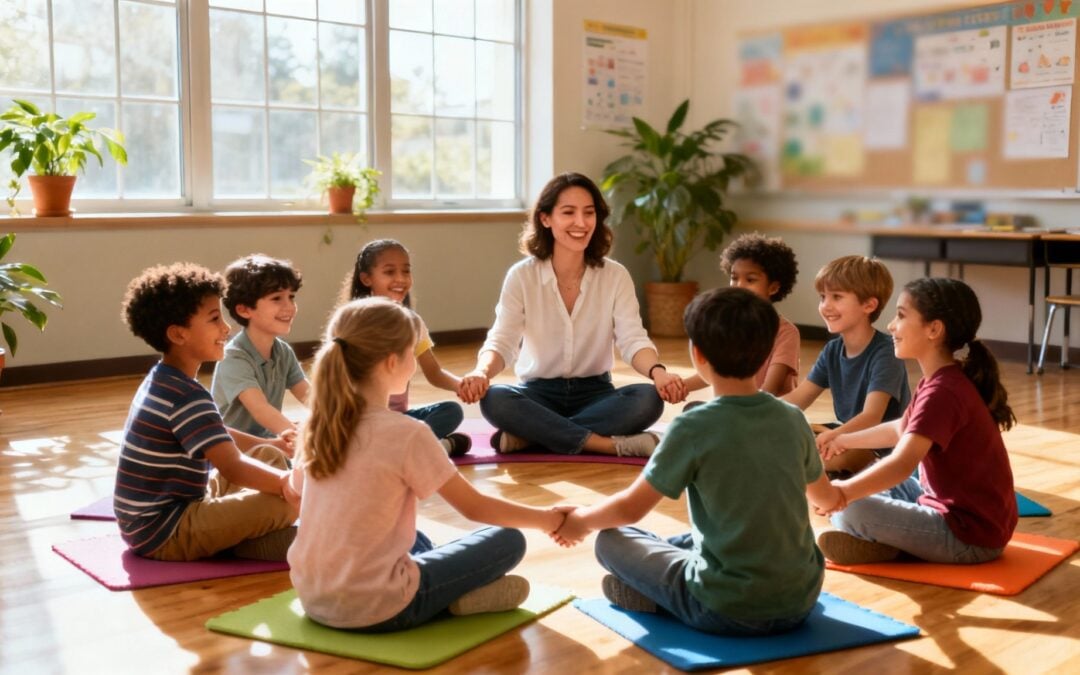
A new student should not have to decode the social rules of a class by watching from the edge. A short, structured circle makes the norms visible right away. Students hear names, practice listening, and learn that this classroom expects people to notice one another.
In practice, this can look simple. The class gathers in a circle for ten minutes. The teacher opens with a prompt such as “share your name and one thing you enjoy after school,” then invites the new student to opt in at their comfort level rather than forcing a full introduction.
How to run the first circle well
Start light. If adults jump too quickly into “tell us about your feelings,” many students shut down, especially older ones. Safer prompts work better first: favorite snack, music, pets, a place you like, or one thing that helps you focus.
Then teach the listening behaviors explicitly. Look toward the speaker. Let people pass. Don't pile on advice. Thank people for sharing. Schools that use restorative circles in schools often do this well because the routine is not random. It has roles, agreements, and repetition.
Practical rule: Never make the new student the centerpiece of the activity. Make them part of a structure everyone uses.
A few examples by age group help:
K-2: Use a greeting song, a name ball toss, or “show with your fingers how you're feeling today.”
3-5: Add partner shares before whole-group sharing so the student rehearses with one peer first.
Middle school: Use sentence stems on the board such as “A class helps me feel welcome when…” or “One thing I wish people knew about starting somewhere new is…”
Later in the week, revisit the circle and ask what's helping and what's still confusing. That second touchpoint matters. One welcome circle feels nice. A repeated community meeting feels safe.
Before moving on, some teams like to model the process in action:
2. Peer Buddy and Student Ambassador Programs
Adults can explain a schedule. Peers explain the social map. They know which lunch line moves fastest, where students hang out before class, and how a teacher likes work turned in.
That's why a buddy system works best when it's a real role, not a same-day assignment. If you pick the nearest child and say, “Show them around,” you may get compliance but not connection. A trained ambassador does more than point to the bathroom. They notice if the new student is eating alone, missing directions, or hovering at the edge of a group.
What strong buddy programs do differently
Good matching matters. Pair by shared interests when possible. If a student loves soccer, coding, drawing, animals, or manga, start there. That gives the first conversation somewhere to go besides “Where are you from?”
Training matters too. Students need short coaching on empathy, privacy, and boundaries. They should know how to include without interrogating, how to check in without becoming responsible for fixing everything, and when to get an adult involved. Schools already investing in social skills training can fold ambassador practice into that work.
One practical model looks like this:
Morning check-in: The ambassador meets the student before class and walks in together.
Transition support: They help at lunch, recess, dismissal, or passing periods.
Connection cue: They introduce the student to one or two other kind peers instead of dragging them through a large group.
Adult handoff: They inform the teacher or counselor if the student seems overwhelmed.
Some students need a social bridge, not a social spotlight.
This is especially important for students who already find friendship hard to manage. Families and educators working through attention, impulsivity, or social misunderstandings may also want guidance on support for ADHD friendship challenges.
One caution: don't turn the ambassador into a mini-counselor. Rotate roles, supervise the program, and thank students publicly for inclusion work. The job is to accompany, model, and connect. The adults still carry the support plan.
3. Family Welcoming Events and Orientation Sessions
If a family leaves orientation still unsure how arrival works, who to email, or whether their child will be understood, the welcome is incomplete. Schools often underestimate how much student anxiety rides on adult confidence.
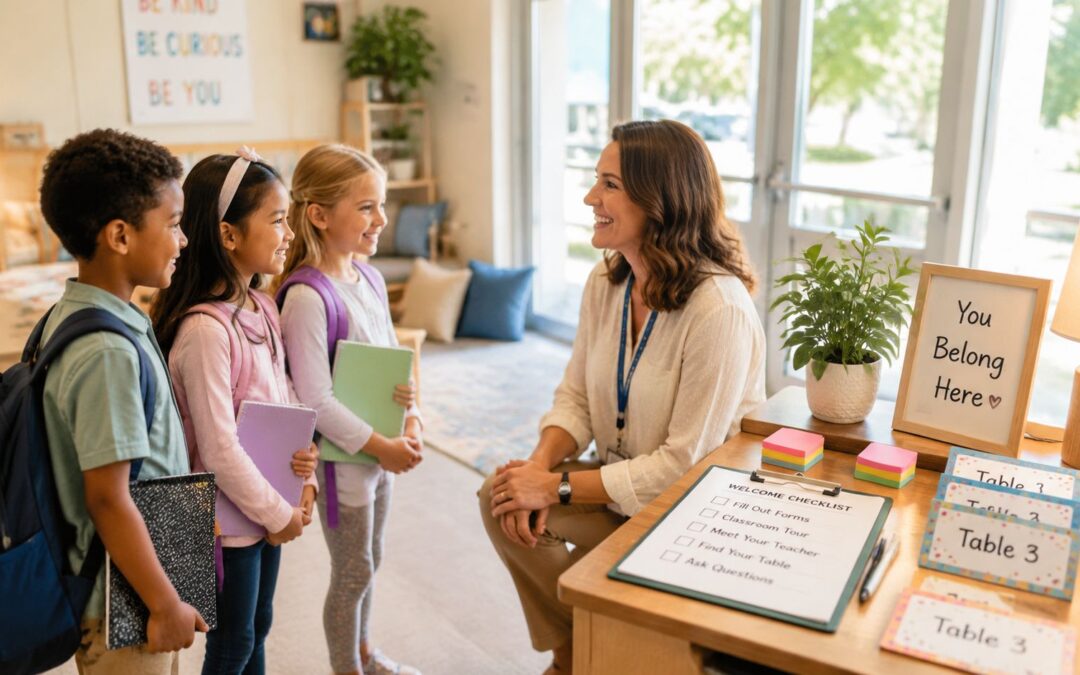
UCLA's School Mental Health Project recommends schoolwide practices such as welcoming tables, trained office staff, welcome folders, student greeters, and ongoing outreach to families in its guidance on schoolwide newcomer supports. That's a useful reminder that the first relationship is often not with a classroom teacher. It starts at the front desk, on the phone, or with the forms sent home.
What families actually need on day one
Keep the event practical. Families want to know where to park, how dismissal changes on rainy days, what support exists if their child is nervous, and how the school handles conflict, allergies, medications, and language access. They also need to meet real people, not just hear a slide deck.
A strong family event usually includes:
A short campus walk: Show the office, nurse, counseling space, cafeteria, pickup area, and bathrooms younger students are likely to use.
A human contact list: Give names by role, such as attendance, transportation, counseling, classroom teacher, and tech support.
A family voice component: Invite one current caregiver to share what helped their child settle in.
A take-home routine card: Include arrival, homework expectations, communication methods, and a few SEL prompts parents can use at home.
Trust grows faster when schools explain not just rules, but relationship norms. That's why it helps to frame orientation around building trust in relationships, especially for families entering a new system.
For younger children, send home something concrete. A simple visual schedule, a photo of the teacher, and a “what kindergarten feels like” prep sheet can reduce fear before the first morning. Many caregivers appreciate practical tools like a kindergarten preparation checklist.
Offer evening and virtual options if possible, plus translated materials and interpretation. A family shouldn't have to choose between showing up and understanding what was said.
4. Mindfulness and Grounding Exercises in Welcome Activities
Some students don't need more words on the first day. They need their body to settle. New schools can create sensory overload fast: noise, movement, unfamiliar adults, unclear routines, and the pressure of being noticed.
A brief grounding exercise helps because it lowers the demand before the social tasks begin. You're not asking the student to perform calm. You're giving them a way to find it.
Keep it short and normal
The mistake many adults make is overexplaining mindfulness. Don't launch into a lecture. Try one minute of breathing, stretching, or sensory noticing as part of a routine everyone uses.
A few examples that work in busy classrooms:
Five-finger breathing: Trace one hand with the other, breathe in going up a finger and out going down.
Chair push: Press both feet into the floor and push hands gently into the seat for a grounded body cue.
Room scan: Notice five blue things, four sounds, three textures, two smells, one steady breath.
Transition reset: Before lunch or after recess, pause for one breath in, one slow exhale, shoulders down.
Students are already familiar with AI-supported tools and digital routines in daily life. A 2025 survey reported 92% AI use among students, with 67% using AI daily or weekly, so many will adapt easily to guided audio prompts, translated calming scripts, or question-and-answer support during onboarding. But familiarity isn't the same as regulation. Students still need adults to model pacing, privacy, and when tech should step back.
For teachers, consistency matters more than variety. Use the same language every day for the first couple of weeks. If your class hears “feet on the floor, shoulders soft, one breath together,” that repetition becomes a safety cue.
A useful home-school bridge is sending families one simple strategy they can repeat in the car, at bedtime, or before the bus. If you want language to borrow, these grounding techniques for kids fit well into welcome routines.
Calm is easier to teach when adults make it ordinary instead of special.
5. Inclusive Classroom Seating and Partner Selection Strategies
“Find a partner” is easy for settled students and rough on new ones. The same goes for “sit anywhere” and “join a group.” Those directions reward social confidence, not readiness to learn.
This is one place where intentional teacher moves matter immediately. Seating and grouping are not neutral. They either reduce risk for a new student or increase it.
Assign first, release later
In the first days, assign seats and partners on purpose. Put the new student near classmates who are kind, steady, and able to include others without taking over. That doesn't always mean your most outgoing student. Sometimes the best first partner is the calm child who explains directions clearly and doesn't make a performance out of helping.
Pre-assign cooperative roles: Reader, materials manager, recorder, timekeeper, or illustrator.
Teach entry language: “Can I join your group?” “What part are you on?” “Can I help with the chart?”
Use visible supports: Word banks, modeled examples, and visual instructions reduce social friction during group work.
Watch the first group task closely: If a partner dominates or excludes, change the grouping quickly.
Real examples from everyday classrooms
In a primary room, this might mean placing the new student beside a peer who narrates routines kindly: “We put our folders here, then we go to the rug.” In upper elementary, it may mean assigning triads instead of pairs so no one carries the full burden of conversation. In middle school, it often means giving table groups a simple collaborative protocol instead of asking for spontaneous discussion.
The first partner is not about friendship. It's about access.
Later, once the student has a foothold, you can widen choice. But at the beginning, structure is kinder than freedom.
6. Clear Communication of School Expectations and SEL Framework
A student arrives on day two, watches everyone else move from morning work to the rug without a word, and freezes. No one has been unkind. The problem is that the rules are still invisible.
Welcoming students well means teaching the social operating system of the school. That includes what respect sounds like, how students ask for help, what happens after conflict, and which regulation tools are available during the day. Schools often assume children will pick this up by observation. Many do not, especially when they are new, anxious, multilingual, or entering a school with unwritten norms that returning students already know.
Make the hidden curriculum visible on purpose. A one-page guide works in most settings if it covers the moments that create the most stress: arrival, transitions, lunch, recess, bathroom procedures, technology use, help-seeking, and repair after harm. For early elementary students, use icons and photos. For older students, use plain language and examples of what adults will say. For families, send translated versions and explain the why behind the routine, not just the rule.
The SEL piece matters here. Expectations land better when they are tied to skills students can practice. “Use kind words” is vague. “Say, ‘I feel frustrated. Can I have a minute?’” gives a student language they can use under stress. “Be respectful in conflict” is easy to post and hard to follow. “Listen, state what happened, hear impact, make a repair plan” is teachable.
A practical orientation script can include:
How we speak to each other: “We use respectful language, and if we hurt someone, we fix it.”
How to get help: “You can ask your teacher, a classmate, the counselor, or the office.”
How to regulate: “If you need a reset, here is how you ask, and here is where you go.”
How adults respond to problems: “We listen first, help students name what happened, and work toward repair.”
Age matters. A kindergartener may need picture cards for “help,” “bathroom,” and “break.” A middle school student usually needs clarity about hallway expectations, device rules, and what to do when peer conflict starts online and spills into class. In high school, students need direct language about attendance, academic integrity, advisory support, and where to go if stress starts affecting daily functioning. Staff should also know basic warning signs and when to refer concerns. For older students, this guide on how to spot student depression can help adults recognize when a “quiet adjustment” may be something more serious.
Consistency across adults is what makes this work. If one teacher allows a reset break, another treats it as defiance, and a third ignores it, students learn that expectations depend on the room. That inconsistency hits new students hardest. A shared SEL framework gives staff common language, common responses, and fewer avoidable power struggles.
One simple checklist helps schools implement this without adding much burden:
Create a one-page expectations guide for students and families
Translate it into home languages used in the community
Teach each routine explicitly in the first week
Model the language for help-seeking and repair
Review expectations in classrooms, hallways, cafeteria, and arrival spaces
Train all adults to respond with the same core SEL language
Re-teach after breaks, schedule changes, or new enrollments
Student voice strengthens the message. Returning students can record short videos, make posters, or write “What I wish I knew my first week.” That keeps the tone human and specific, which matters more than polished language.
Clear expectations do not make school rigid. They make belonging more reachable. When students know what to do, what to say, and what support is available, they can spend less energy decoding the building and more energy learning, connecting, and settling in.
7. Individualized Check-ins and Early Detection Support Systems
A new student can make it through ten school days without causing a single concern. They follow directions, say little, and stay under the radar. In practice, that profile deserves attention, not relief. Quiet students are often still working hard to figure out lunch, peer dynamics, transitions, and whether any adult in the building really knows them.
Schools need a repeatable check-in system, not a good intention. Assign one adult to each new student for the first month. That adult could be a classroom teacher, counselor, dean, advisory lead, case manager, or office staff member with time to follow through. The role matters less than the consistency.
The check-in should be short, scheduled, and documented. Five minutes is enough if it happens more than once.
What to ask in a check-in
Use the same few prompts each time so adults can spot changes instead of relying on memory. Keep the tone calm and matter-of-fact. This is student support, not an interview.
Good prompts include:
Connection: “Who do you spend time with at school so far?”
Navigation: “What part of the day still feels confusing?”
Regulation: “When school feels stressful, what helps you reset?”
Agency: “What is one thing you want adults to understand about this week?”
Those questions give schools a practical read on belonging, routines, coping, and student voice. They also help staff catch small concerns before they grow into attendance problems, shutdowns, behavior incidents, or family frustration.
Use a simple tracker. Record the student's start date, assigned adult, first family contact, key concerns, strengths, and next follow-up date. In a busy building, this kind of system protects students from being forgotten after the welcome tour ends. It also helps teams respond faster when a pattern shows up across classes.
One caution matters here. Do not confuse compliance with adjustment.
Older students, especially, may hide distress behind tiredness, irritability, isolation, perfectionism, or missing work that appears “out of character.” If a student's presentation raises concern, staff and families may benefit from guidance on how to spot student depression. Use that information carefully. The goal is early support and referral when needed, not labeling normal transition stress as a disorder.
A workable timeline looks like this:
Days 1 to 3: brief welcome check-in and family contact
End of week 1: confirm peer connection, schedule understanding, and lunch or recess experience
Weeks 2 to 3: review mood, work completion, attendance patterns, and help-seeking
After the first progress report or grading checkpoint: decide whether the student can move to standard supports or needs a stronger intervention plan
This system should look different by age group. In elementary school, adults may get better information through drawings, play-based prompts, and family updates. In middle school, ask directly about lunch, group work, and social media spillover. In high school, include schedule load, transportation, credits, and whether the student knows where to go for academic and mental health support.
Students with disabilities, multilingual learners, and students entering after a move, family crisis, or hospitalization may need more frequent contact. That is not overreaction. It is good matching. The point is to give more support where the transition load is heavier.
Done well, individualized check-ins help schools catch problems while they are still manageable. Beyond that, they tell a new student something every child needs to feel early on. Someone noticed I got here, and someone plans to keep noticing.
8. Celebration of Diversity and Affinity Interest-Based Connection Groups
A new student can make it through the schedule, follow directions, and still go home feeling alone. That usually happens when a school offers access without connection. Students need a clear path to people, places, and parts of school life that reflect who they are.
Celebrating diversity helps. So do affinity groups, identity-based spaces, and interest-based clubs. Together, they give schools a practical SEL system for belonging. Students see themselves in the environment, find peers faster, and build trust without waiting weeks for informal friendships to form.
Start with discovery. Ask the student and family what feels familiar, energizing, or comforting. Do not infer from a last name, home language, race, disability label, or enrollment paperwork. One student may want a bilingual lunch group. Another may care far more about band, coding, skateboarding, or a small art club that feels calm and predictable.
That difference matters.
Schools often make one of two mistakes here. They treat identity as the only connection point, or they avoid identity altogether and offer only generic club lists. A better approach includes both. Affinity spaces can give marginalized students psychological safety and relief from being the only one in the room. Mixed-interest groups create cross-group friendships and reduce social silos. Healthy school culture needs each type of connection.
A workable entry plan looks like this:
Use a short interest and identity survey at enrollment: Ask about hobbies, languages, music, favorite subjects, causes the student cares about, and whether they want to learn about any cultural or affinity groups.
Offer a curated match, not a long menu: Recommend one or two groups that fit the student's age, schedule, and comfort level.
Set up the first visit: Have a buddy, counselor, advisor, or club leader greet the student and walk them in.
Check fit after the first meeting: Ask, “Did that group feel right?” and be ready with a second option.
Show representation every day: Use classroom libraries, bulletin boards, examples, pronunciations, and family-facing materials that reflect the students enrolled.
For elementary students, this may look like lunch bunches, heritage story circles, playground clubs, or choice-based centers where children can connect through shared interests. In middle school, students often respond well to identity-affirming groups plus interest clubs with low-pressure entry points, such as gaming, art, service, or intramurals. In high school, students usually need clearer access to existing organizations, adult sponsors who notice who is missing, and meeting times that work with jobs, athletics, and transportation.
Families should be part of this system too. Tell them which groups exist, who leads them, when they meet, and how a student can try one without making a long-term commitment. Some families worry that affinity groups will isolate students. Others worry their child will be ignored unless a group is explicitly welcoming. Clear communication helps on both fronts.
One practical script works well: “We want your child to have both comfort and connection. We can introduce them to a group where they share experiences with peers, and we can also help them join activities built around their interests.”
Done well, this work is much more than a celebration board in the hallway. It is a repeatable belonging system that includes students, staff, and families. And for a new student, that system answers a question they are often too cautious to ask out loud. Is there a place here where I do not have to edit myself to fit in?
8-Point Comparison of Welcome Practices
Initiative
Implementation complexity
Resource requirements
Expected outcomes
Ideal use cases
Key advantages
Structured Welcome Circles and Community Meetings
Moderate, requires skilled facilitation and scheduling
Low–moderate staff time, circle materials, facilitator training
Immediate sense of belonging, shared norms, improved listening and empathy
Small-to-medium cohorts, classroom or school orientation, restorative practices
Rapidly builds psychological safety and shared language
Peer Buddy and Student Ambassador Programs
Moderate, selection, training, and supervision needed
Creates shared expectations and clarifies SEL tools and vocabulary
Individualized Check-ins and Early Detection Support Systems
High, coordination, documentation, and follow-up required
Significant staff time, screening tools, data systems, training
Early identification of struggles, trusting adult relationships, targeted supports
Students at risk, large transitions, schools prioritizing mental health
Rapid, targeted intervention and strong adult-student connections
Celebration of Diversity and Affinity/Interest-Based Connection Groups
Moderate, planning, facilitation, and sustained commitment
Staff advisors, event resources, PD on inclusive facilitation
Greater belonging for diverse students, multiple connection pathways
Diverse student bodies, students seeking identity-based community
Validates identities, builds affinity spaces and student leadership
Building a Culture of Welcome, One Student at a Time
A new student arrives at 8:10 a.m. The office staff is kind, but no one is quite sure who walks them to class, where their family gets key information, or which adult will check in before the day ends. By lunch, that student has already learned something important about the school. Welcome here is either a shared practice or a matter of luck.
Schools that do this well build welcome into daily operations. The front office greeting, the classroom routine, the lunchroom support, the family communication, and the follow-up check-in all need to work together. Students notice inconsistency fast, especially when they are already scanning for safety, belonging, and social cues.
That is why a strong welcome system cannot depend on one especially caring teacher or one outgoing classmate.
It needs clear roles, predictable routines, and adult coordination. It also needs flexibility. A kindergartener may need visual schedules, a bathroom tour, and a calmer entry routine. A middle school student may care more about who they sit with, how to read the social scene, and whether there is one adult they can find without asking for help in front of peers. Families need something different too. Some want detailed orientation materials. Others need one trusted contact, translated communication, and reassurance that asking questions will not be seen as a problem.
As noted earlier, belonging affects whether students stay connected to school over time. K-8 teams do not need to copy higher education systems to act on that lesson. The practical takeaway is simpler. Early contact matters. Coordinated support matters. Students do better when adults notice small problems before those problems harden into patterns like school refusal, chronic stress, or social withdrawal.
Parents and caregivers can reinforce the same approach at home. Skip the broad question that usually gets a one-word answer. Ask, “Who did you spend time with today?” “What felt confusing?” “What felt easier than yesterday?” and “What do you want ready before school tomorrow?” Those questions help children identify friction points and successes. They also give adults details they can use.
For school leaders, the core work is alignment. Staff need a shared plan for the first day, first week, and first month. Teachers need practical tools they can use during a busy day, not one more initiative binder. Families need concise communication that explains who to contact, what support looks like, and how the school teaches skills like self-awareness, self-regulation, and relationship building in everyday settings.
That is the difference between a friendly school and a school with a working welcome system. One depends on goodwill. The other gives students, staff, and families a repeatable set of supports that can hold up across classrooms, grade levels, and transitions.
If your team wants outside support, Soul Shoppe is one relevant option for schools building shared SEL language and practical welcome routines. The organization offers programs centered on empathy, self-regulation, communication, and connection, which fit naturally with the schoolwide practices described here.
If you're ready to strengthen welcoming new students across classrooms, offices, and family touchpoints, explore Soul Shoppe for SEL programs, tools, and training that help school communities build connection, safety, and belonging in everyday practice.
Building a strong classroom community isn’t just a nice idea—it’s the single most important investment you can make in your students’ success. It’s about intentionally creating a safe, supportive space where every single student feels seen, heard, and valued. This is what transforms a room of disconnected individuals into a cohesive team, ready to learn and grow together.
The Foundation of a Connected Classroom
A positive classroom community doesn’t just happen. It’s carefully and consistently built, day by day. It’s the feeling of psychological safety that allows a quiet student to share an idea, even if they’re not sure it’s right. It’s the mutual respect that lets students give each other constructive feedback without anyone feeling attacked. For example, instead of a student saying, “That’s a bad idea,” the community culture encourages them to say, “I see your point. Have you also considered…?”
Think of it this way: when students feel like they belong, their brains can switch from a protective “fight or flight” mode to a state of genuine curiosity and engagement. Instead of worrying about fitting in, they can pour that energy into learning. This sense of belonging is a non-negotiable for academic achievement and social-emotional growth.
Why Community Matters More Than Ever
In any classroom I’ve been in, a true sense of community immediately cuts down on behavioral issues and boosts participation. When a student feels connected to their peers and their teacher, they become more invested in the group’s success and are far less likely to act out.
This supportive atmosphere also encourages academic risk-taking. Students are more willing to try a tough math problem on the board or ask a question they think might sound silly. A practical example is when a student attempts a challenging fraction problem on the whiteboard and gets it wrong, but the class response is a supportive, “Good try, you were really close!” instead of silence or snickering.
The benefits aren’t just anecdotal, either. They’re backed by solid research. Longitudinal studies have shown impressive results from programs designed to build classroom community. Students in these classrooms not only develop a greater sense of their own abilities but also achieve higher grade-point averages and test scores than their peers.
A thriving classroom community is not built with a single team-building activity. It is woven into the very fabric of your teaching—from how you greet students at the door to how you facilitate challenging conversations.
The Core Pillars of Community
To get you started, here’s a quick look at the core components of classroom community, outlining your role and what you’re aiming for with your students.
Core Component
Teacher’s Role
Student Outcome
Safety & Trust
Model respect, establish clear routines, and create a predictable environment where mistakes are learning opportunities.
Students feel secure enough to be vulnerable, ask for help, and take academic risks without fear of judgment.
Inclusivity & Belonging
Actively celebrate diversity, ensure all voices are heard, and integrate culturally relevant content and practices.
Every student, regardless of background or ability, feels like an essential and valued member of the group.
Shared Ownership
Co-create classroom norms with students, assign meaningful classroom jobs, and involve them in decision-making processes.
Students feel a sense of responsibility for their learning environment and are invested in its collective success.
These pillars provide a solid framework for creating an environment where every student can truly thrive.
Building this foundation rests on a few key principles. At its heart, it’s about creating an environment where every member feels both physically and emotionally secure.
Here’s what that looks like in practice:
Safety and Trust: Students need to know their classroom is a predictable and supportive space. This comes from setting clear expectations and consistently modeling respect and kindness in every interaction. A practical example is establishing a “Mistakes are Expected, Respected, and Inspected” motto, where you celebrate a student’s logical process even if the final answer is incorrect.
Inclusivity and Belonging: Every student must feel like an essential part of the group. This means actively making space for different perspectives, celebrating what makes each child unique, and ensuring all voices are heard. For instance, during a history lesson, you could invite students to share stories about their own family’s heritage related to the topic.
Shared Ownership: Students become more invested when they have a real say in their environment. Co-creating classroom norms or giving students meaningful responsibilities fosters a powerful sense of ownership. A simple example is letting students vote on the theme for the next class project or the book for the next read-aloud.
By focusing on these elements, you create the conditions for a vibrant learning environment to flourish. It all starts when you learn how to create a safe space where students are free to be their authentic selves.
Weaving Connection into Your Daily Routines
The real magic of classroom community isn’t just in the big, planned lessons; it’s baked into the small, everyday moments. Consistent routines are the steady heartbeat of a connected classroom, creating a predictable rhythm that helps every student feel safe, seen, and ready to learn. These rituals are the scaffolding for trust and belonging.
Think about the first few minutes of the day. A frantic rush to get seated sends a very different message than a deliberate, personal moment of connection at the door. When kids know what to expect, their nervous systems can relax. Our guide on how routines for kids help children feel emotionally grounded dives deeper into this psychology.
Start the Day with a Powerful Greeting
That first interaction of the morning can set the tone for the entire day. Going beyond a generic “good morning,” a personalized greeting at the door communicates one simple, powerful message to each student: “I see you, and I’m glad you’re here.”
This isn’t just a nice gesture; it’s a strategy that gets results. Research has shown that when teachers start the day with positive greetings at the door (PGD), there’s a significant boost in academic engaged time and a noticeable drop in disruptive behaviors. These simple rituals, alongside restorative practices like community circles, have a real, measurable impact. If you want to see the data for yourself, you can learn more about the importance of community-building in the classroom.
Here are a few age-appropriate ideas you can try tomorrow:
For K–2 Students: Set up a choice board by the door with pictures for a high-five, a silly dance, a hug, or a fist bump. This gives your youngest learners a sense of agency and turns the greeting into a fun, interactive game.
For 3–5 Students: Try a daily password or a special handshake. The password could be a vocabulary word from science or a fun fact, creating a quick moment of shared knowledge. For example, the password might be “photosynthesis” during a plant unit.
For 6–8 Students: With this age group, authenticity is everything. A simple nod and a genuine “How’s it going?” or “Hey, nice new haircut,” can be far more effective than a forced, overly cheerful greeting. A calm, sincere check-in goes a long way.
Design Morning Meetings That Truly Build Bonds
The Morning Meeting is a cornerstone routine for any community-focused classroom, but it has to be more than just running through the daily schedule. To be truly effective, it needs to be a dedicated time for students to connect with each other, share their voices, and feel like they belong to a team.
A solid structure includes four key parts: a greeting, a time for sharing, a group activity, and a morning message. The greeting, in particular, is your chance to make sure every single child is welcomed by their peers.
Greeting Examples:
Snowball Greet (K-2): Each student writes their name on a piece of paper, crumples it into a “snowball,” and gently tosses it into the circle’s center. Then, each child picks a new snowball, opens it, and finds that person to say good morning to.
Would You Rather? Check-in (3-5): Kick things off with a fun “Would you rather…” question (e.g., “…have the ability to fly or be invisible?”). Students share their answers and a quick reason why, learning something new and unexpected about their classmates.
Appreciation Toss (6-8): One student starts with a soft ball or beanbag. They share a piece of appreciation for another student—”I appreciate how Sarah helped me with my math yesterday”—and gently toss the ball to them. The receiver then shares an appreciation for someone else, and so on.
A well-facilitated Morning Meeting doesn’t just start the day on a positive note—it actively teaches students the skills of listening, empathizing, and validating others’ experiences.
Foster Ownership with Meaningful Classroom Jobs
Nothing builds a sense of shared ownership quite like giving students real responsibility for their environment. Classroom jobs should be more than just chores; they should be meaningful roles that contribute to the collective good. This practice is what shifts the mindset from “the teacher’s classroom” to “our classroom.”
Instead of the usual lineup of generic roles, get creative and tie jobs to your students’ strengths and your community’s values.
Class Historian: This student uses a class camera or tablet to take photos of special moments or collaborative projects during the week. On Fridays, they share a quick recap. For example, they might show a photo of a group building a successful bridge in a STEM challenge.
Greeter of Guests: When a visitor enters the room, this student is responsible for welcoming them, shaking their hand, and explaining what the class is working on at that moment. This is a huge confidence booster and shows respect for the classroom.
Materials Manager: Instead of just passing out papers, this student ensures that project supplies are organized, accessible, and well-stocked. They might conduct a “supply inventory” on Fridays and post a list of items that are running low.
These daily and weekly rituals are what transform your classroom from a place students simply attend into a community they are proud to belong to.
Routines are the bedrock of a safe classroom, but targeted Social-Emotional Learning (SEL) activities are how we intentionally teach the skills that build a true community. Think of these not as one-off icebreakers, but as structured experiences that deepen relationships and help you cultivate a resilient classroom culture.
Through these activities, students learn to step into someone else’s shoes, share their own feelings without fear, and handle tricky social situations with grace. This is where the magic happens—where empathy and trust take root.
This isn’t just a feel-good idea; it has a massive impact. A huge international survey by the OECD found that while 79% of students feel they belong at school, the numbers vary wildly from school to school. This proves what we as teachers already know: the environment we create in our own four walls can completely change a child’s sense of community.
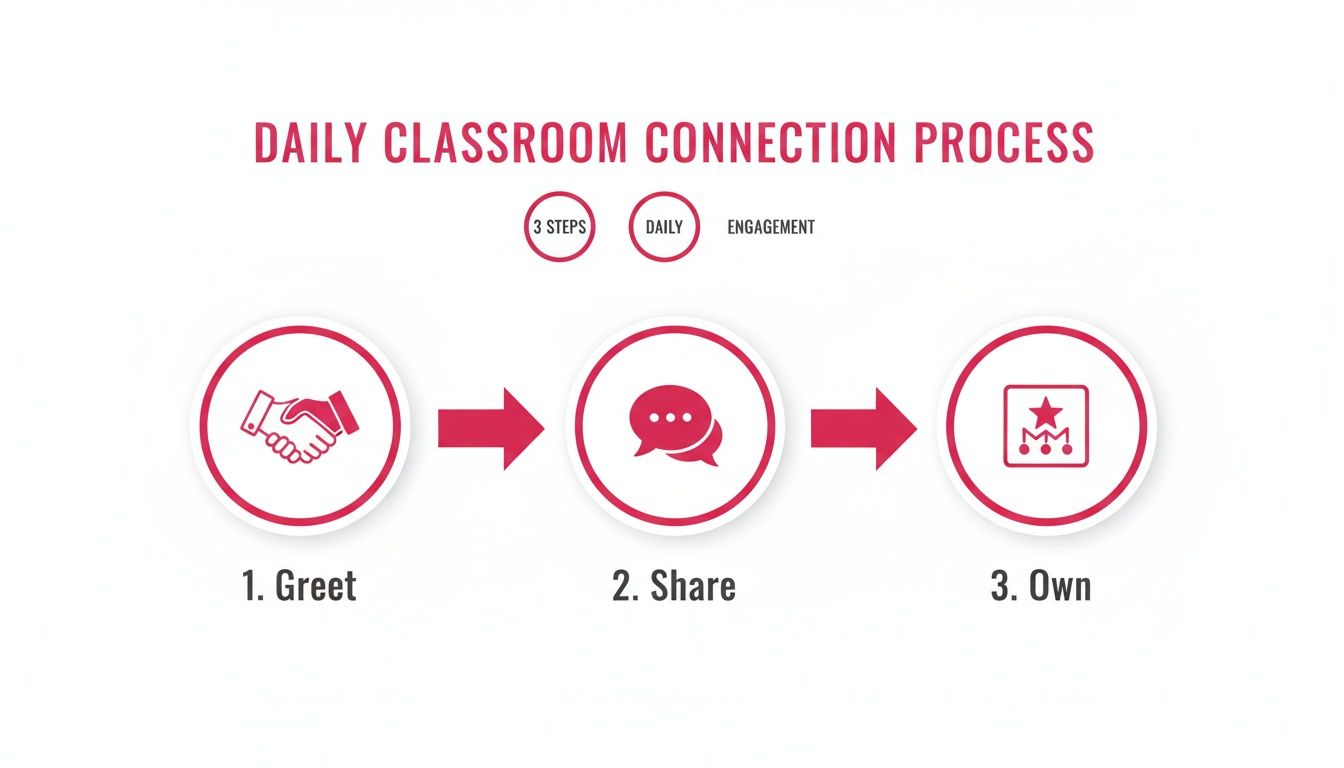
Building this sense of community is a daily practice, not a one-time event. A simple, repeatable process can reinforce these SEL skills every single day.
This cycle of greeting, sharing, and owning our actions creates constant opportunities for students to practice connection and empathy.
Activities for Younger Students (Grades K-2)
With our youngest learners, we want to keep things simple, concrete, and centered on positive vibes. The goal here is to build foundational skills in a way that feels like play. A “Compliment Circle” is a perfect way to get started.
Here’s how to run it:
First, gather your students in a circle on the rug.
Grab a soft object, like a class stuffed animal or a beanbag, to act as a talking piece.
You go first to model. Hold the object and give a student a specific, genuine compliment. For example, “I really loved how you invited Maya to play with the blocks today.”
Then, pass the object to that student. They give a compliment to someone else before passing it along. Keep it going until every child has had a turn to both give and receive a compliment.
A little pro-tip: I like to put sentence stems on the board, like “I appreciate how you…” or “It was helpful when you…” This helps kids move beyond “I like your shoes” to something more meaningful.
Building Empathy with Older Students (Grades 3-5)
By upper elementary, students are ready for more abstract thinking and deeper reflection. This is the perfect time to introduce activities that help them see that everyone has a rich, complex inner world. The “Inside/Outside” activity is incredibly powerful for this.
Here’s how to set it up:
Preparation: Give each student a large piece of paper and ask them to draw a simple outline of a person.
The Outside: On the outside of the outline, they’ll write or draw things about themselves that others can easily see—like their hair color, their favorite sport, or that they love to draw.
The Inside: Then, on the inside of the outline, they’ll add the things people can’t see—a worry they have, a hidden talent, or a special memory with their family.
Sharing: In small, trusted groups of three or four, students can share one “inside” item and one “outside” item.
This activity is a beautiful, visual reminder that there’s always more to a person than what’s on the surface. It really fosters a culture of curiosity and compassion. For more ideas like this, check out these practical social emotional learning activities.
By creating structured opportunities for vulnerability, we teach students that sharing our authentic selves is not only safe but is the very thing that builds the strongest bonds.
Encouraging Perspective-Taking with Middle Schoolers (Grades 6-8)
Middle school is a time of navigating complex social webs and figuring out their own moral compass. SEL activities for this age group should respect their growing intellect and their desire for autonomy and debate. A “Moral Dilemma” discussion is a fantastic way to do this.
Pick a scenario that feels real and relevant. Something like, “Your best friend asks to copy your homework because they were up all night with a family emergency. You know your teacher has a strict no-cheating policy. What do you do, and why?”
Here’s how to structure the conversation:
Present the Dilemma: Clearly lay out the scenario and the tough choice at its core.
Think Time: Give students a few minutes to jot down their initial thoughts and reasoning on their own.
Small Group Huddle: Put them in small groups to discuss their different viewpoints. Encourage them to really listen to one another.
Full-Class Debrief: Have a spokesperson from each group share the main arguments that came up, focusing less on the final decision and more on the why behind it.
Your job here isn’t to declare a “right” answer. It’s to be a facilitator, creating a space where students can safely practice seeing an issue from multiple angles and articulate their own values. These kinds of rich discussions are just one example of the many social-emotional learning activities that can really strengthen your classroom community.
To help you visualize how this all fits together, here is a sample plan for an upper elementary classroom that weaves these kinds of activities into a multi-week focus.
Sample 6-Week Community Building Plan
This table outlines how you can sequence themes and activities over several weeks to intentionally build specific SEL skills.
Week
Theme
SEL Competency Focus
Sample Activity
1
Getting to Know You
Self-Awareness
“Inside/Outside” Person Activity
2
Building Trust
Relationship Skills
“Human Knot” Team Challenge
3
Understanding Others
Social Awareness
Compliment Circle
4
Working Together
Responsible Decision-Making
Group Problem-Solving Scenario
5
Managing Feelings
Self-Management
“Feelings Thermometer” Check-ins
6
Celebrating Our Community
Relationship Skills
“Classroom Appreciations” Graffiti Wall
By intentionally weaving targeted SEL activities like these into your curriculum, you’re not just hoping for a kind classroom—you’re giving students the tools they need to build an empathetic and trusting community from the inside out.
Co-Creating Classroom Agreements with Students
One of the single most impactful shifts you can make in your classroom is moving away from a list of top-down rules to a living, breathing agreement you create with your students. This isn’t just about what ends up on the poster; the magic is in the conversations that get you there.
When students have a real voice in shaping their learning environment, they develop a profound sense of ownership. It stops being about “your rules” and starts being about “our community.” Instead of a lecture on behavior, the process becomes a collaborative project focused on a simple goal: creating a shared understanding of how everyone wants to feel and what they need from each other to make that happen. For student buy-in, it’s an absolute game-changer.
Guiding the Conversation
The key to a successful classroom agreement is asking the right questions. Your job here is to facilitate, not dictate. Think of yourself as a guide, helping students reflect on what makes a community feel safe, productive, and welcoming.
First, set the stage. Let them know you’re going to work together as a team to decide how you want your classroom to run so everyone can do their best learning and feel good about coming to school.
Here are a few open-ended prompts I’ve found really get the ball rolling:
What words would you use to describe the classroom you dream of being a part of?
How do we want to feel when we walk into this room every morning?
What do we need from each other to feel safe enough to share our ideas, even when we’re unsure?
Disagreements are going to happen! How can we handle them with respect? For example, what can we say instead of “you’re wrong”?
What does it look like and sound like when we are truly listening to one another?
These kinds of questions get students thinking about the feeling behind the rules, which is so much more meaningful than a simple list of dos and don’ts.
From Ideas to Actionable Agreements
As the ideas start flowing, capture everything on an anchor chart or whiteboard. Don’t filter yet—just get it all down. Your next step is to help the class distill this brainstorm into a handful of clear, positive, and actionable statements.
The trick is to reframe any negative commands (“Don’t be rude”) into positive commitments (“We speak with kindness”). This small linguistic shift is incredibly powerful. It focuses on what you will do rather than what you won’t, which feels proactive and empowering.
Examples of Reframing Student Ideas:
Student Suggestion
Positive Agreement
“No yelling out.”
“One person speaks at a time so all voices can be heard.”
“Don’t make fun of people.”
“We respect each other’s ideas and experiences.”
“Don’t mess with my stuff.”
“We take care of our own and others’ belongings.”
“Don’t be mean.”
“We speak to each other with kindness and assume good intentions.”
A classroom agreement is not a static document. It’s a living commitment that should be revisited, referenced, and celebrated all year long.
Once your class has landed on 3-5 core agreements, have every student sign the poster. This simple act symbolizes their personal commitment to upholding these shared values. Then, hang it somewhere prominent—a constant, visual reminder of the community you’re all building together.
Making the Agreement a Part of Your Culture
Now for the most important part: making sure that beautiful poster doesn’t just collect dust. Weave it into the fabric of your daily classroom life.
When a conflict pops up, use the agreement as your touchstone. Instead of saying, “Stop arguing,” you can point to the chart and ask, “Let’s look at our agreement about respecting each other’s ideas. How can we use that to solve this problem?” This simple redirect empowers students to hold themselves and each other accountable.
And don’t forget to celebrate the wins! When you see students living up to the agreements, point it out. “I just saw Maria help Leo with his project without being asked. That’s a perfect example of our agreement to support each other.” This positive reinforcement is what makes the agreement real. It shows everyone that these aren’t just words on a wall—they’re the way we do things here.
Partnering with Families to Extend Your Community
A thriving classroom community doesn’t just happen inside the school building. It truly flourishes when it extends beyond the classroom door to include families as respected, valued partners. When families feel seen and connected, they become our most powerful allies in a child’s learning journey.
Building these bridges doesn’t have to be a huge time commitment. It’s really about creating consistent, positive, and two-way channels of communication. The goal is to make families feel like they are genuinely part of the team. Often, it’s the simple, high-impact strategies that work best.
Start with a Warm and Welcoming First Step
That very first interaction sets the tone for the entire school year. Before you even touch on academics, take a moment to learn about the unique world each child comes from. A simple “Family Welcome Survey” is a fantastic tool for this.
This isn’t just about collecting data; it’s about starting a relationship. Frame your questions with respect and genuine curiosity.
Sample Welcome Survey Questions:
What are your hopes and dreams for your child this school year?
What is one thing you want me to know about your child that will help me be the best teacher for them? (e.g., “She is very shy at first but opens up once she feels safe.”)
What are some of your family’s favorite traditions or celebrations?
How does your child best receive praise or recognition? (e.g., “He prefers quiet, private praise over being singled out in front of the class.”)
What is the best way for us to communicate (email, app, phone call)?
This small gesture immediately communicates that you see and value the family’s expertise. It also gives you invaluable insights that help you connect with each student on a much deeper level right from day one.
Craft Weekly Updates That Build Connection
Let’s move beyond the standard weekly email that just lists homework and upcoming tests. Think about creating a class update that tells the story of your community in action. The goal here is to give families a window into their child’s world, not just another to-do list.
Think of it as your weekly highlight reel. Share photos of students deep in a collaborative project, a quick video of a fun science experiment, or even just a powerful quote from a class discussion. A practical example could be a short paragraph saying, “This week in social studies, students debated the pros and cons of ancient Roman aqueducts. Ask your child which side they argued for!” This gives parents a specific conversation starter.
A weekly update that shares a story of learning, a moment of kindness, or a collaborative success is far more powerful than a list of assignments. It invites families into the classroom experience, making them feel like part of the community’s journey.
Create Opportunities for Families to Engage
Inviting families into your classroom in meaningful ways solidifies their role as true partners. These moments are powerful, allowing students to take pride in their work and their community with their biggest supporters right there beside them.
Here are a few practical ideas to get you started:
Host a Student-Led Showcase: Instead of a traditional parent-teacher conference, let the students lead the conversation. They can present a portfolio of their work, share what they’re most proud of, and set goals for themselves with their families there to cheer them on.
Create a Shared Digital Album: Use a secure platform like Seesaw or a private Google Photos album where you can share candid shots of classroom moments. This gives families a real-time glimpse into the daily life of your community.
Family “Expert” Day: Invite parents and caregivers to come in and share a skill, a tradition, or a story related to their heritage or profession. For example, a parent who is a graphic designer could give a short lesson on logo design, or a grandparent could share stories about a holiday celebrated in their culture. This positions family members as valuable resources and celebrates the rich diversity within your community.
By consistently making these positive connections, you reinforce the message that everyone is on the same team, working together to help every single child succeed.
Common Questions About Building Classroom Community
Even with a fantastic plan in place, the realities of the classroom will always throw a few curveballs. Knowing how to build community isn’t just about the proactive steps; it’s also about troubleshooting the tricky situations that pop up.
Here are some of the most common questions I hear from teachers, with practical advice for those moments that really test our community-building skills.
How Do I Reach a Withdrawn Student?
When a student seems withdrawn or resistant, our first instinct might be to pull them into group activities. But that can often backfire. The real key is to shift from big-group expectations to small, individual connections. Forcing participation rarely works, but creating low-pressure invitations can make all the difference.
Start by learning what they’re genuinely into—a video game, a specific artist, a sport—and just bring it up casually when you have a one-on-one moment. For example, you might say, “Hey, I noticed you have a Minecraft keychain. My nephew loves that game. What’s the coolest thing you’ve ever built?” It’s a simple way to show you see them as a person, not just a student who isn’t participating.
Another great strategy is to give them a meaningful classroom job that lets them contribute without being the center of attention. Roles like “Tech Assistant” (helping with projectors or tablets) or “Class Librarian” (organizing the bookshelf) allow them to add real value to the community, but on their own terms. Just be sure to offer positive, private reinforcement for these small steps.
Your goal isn’t to force a withdrawn student into the middle of the circle. It’s to make sure they feel valued and respected right where they are, knowing the invitation to step closer is always open when they’re ready.
What Is the Best Way to Handle Conflicts?
First, let’s reframe this. Conflicts aren’t a sign that your community is failing—they’re actually an opportunity to make it stronger. The most effective way to handle them is to be restorative, not punitive. This means your focus is on repairing the harm done, not just assigning blame.
When a disagreement happens, try using a structured process to guide the conversation. A “restorative circle” is an incredibly powerful tool where everyone involved gets to share their perspective without being interrupted.
Guide your students to use “I-statements” to talk about how they feel. For example, instead of, “You always leave me out at recess,” a student learns to say, “I felt hurt when I wasn’t invited to play soccer today.” This simple shift helps them take ownership of their emotions without attacking the other person. The whole point is to find a way forward together, which reinforces the most important idea in our classroom: relationships are the priority.
I Have Limited Time. What Can I Do Daily?
If you only have a few minutes each day, the single most impactful thing you can do is a positive greeting at the door every single morning. It’s a small ritual that takes less than two minutes but has a massive impact on your classroom culture.
Make eye contact with each student as they walk in. Use their name. Offer a simple, warm interaction—a high-five, a handshake, or just a genuine smile.
This one consistent moment of connection sends a powerful message to every child before they even sit down: “You are seen, you are welcome, and I am happy you are here.” It is, without a doubt, the highest-leverage, lowest-effort strategy for building a strong community foundation.
At Soul Shoppe, we believe every student deserves to feel safe, connected, and valued at school. Our programs provide the tools and strategies to help you build a thriving classroom community where every child can flourish. Learn more about how we can support your school.