

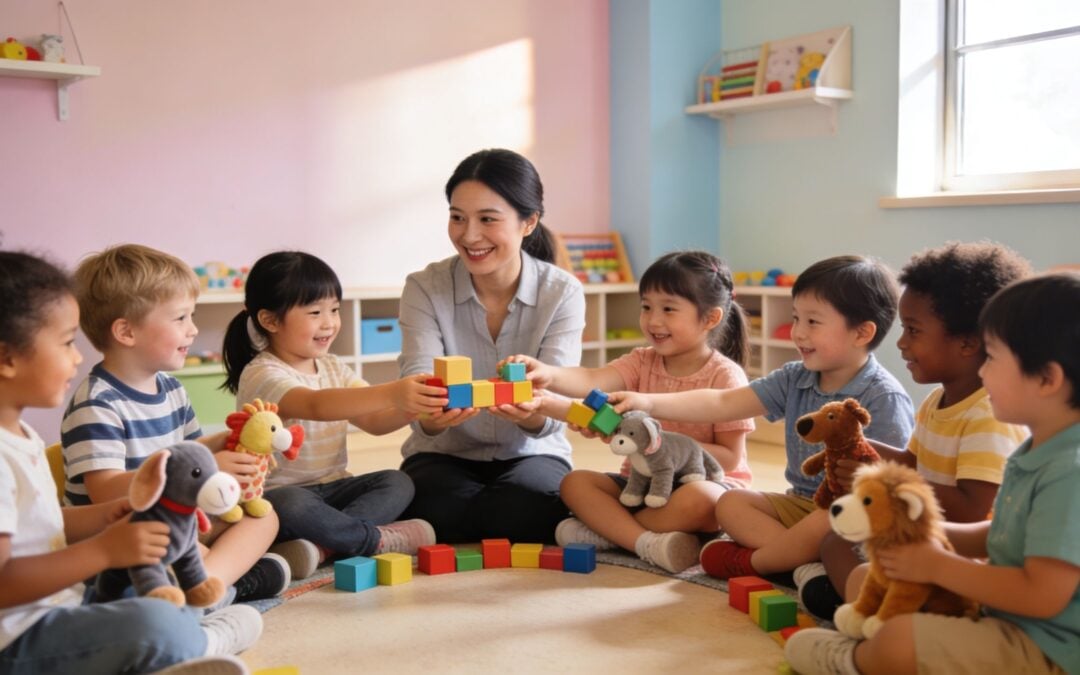
8 Social Skills Activities for Preschoolers That Work
The block area is busy. One child is building a tall tower. Another reaches for the last long block. A third child bursts into tears because someone “looked at me mean.” If you work with preschoolers, that scene probably feels familiar.
These moments can look small to adults, but they’re where children learn some of their biggest life lessons. They’re learning how to wait, how to ask, how to notice another person’s feelings, and how to repair a hard moment. That’s social-emotional learning in real time, and it matters just as much as early literacy and number sense.
We know early social development has lasting importance. A 20-year study highlighted by RWJF followed nearly 800 kindergarteners and found that stronger early social competence was linked to better adult outcomes later on. That’s one reason so many educators now treat social skills as teachable, daily practice instead of “nice if there’s time.”
The good news is that preschoolers don’t need long lectures. They need repetition, play, modeling, and kind adults who know how to slow social moments down. The activities below are practical social skills activities for preschoolers you can use at school, in a counseling group, or at home. If you’re also thinking about the larger goal of helping children connect across differences, this idea of building social bridges for kids is a helpful lens.
1. Emotion Recognition Circle
Before children can solve problems together, they need words for what’s happening inside them. Emotion recognition gives them that starting point. When a child can say “I’m frustrated” instead of screaming or grabbing, you’ve already reduced the intensity of the moment.
This activity works best as a short, predictable ritual. I like it at morning meeting, after recess, or anytime the group needs to reconnect.
How to run it
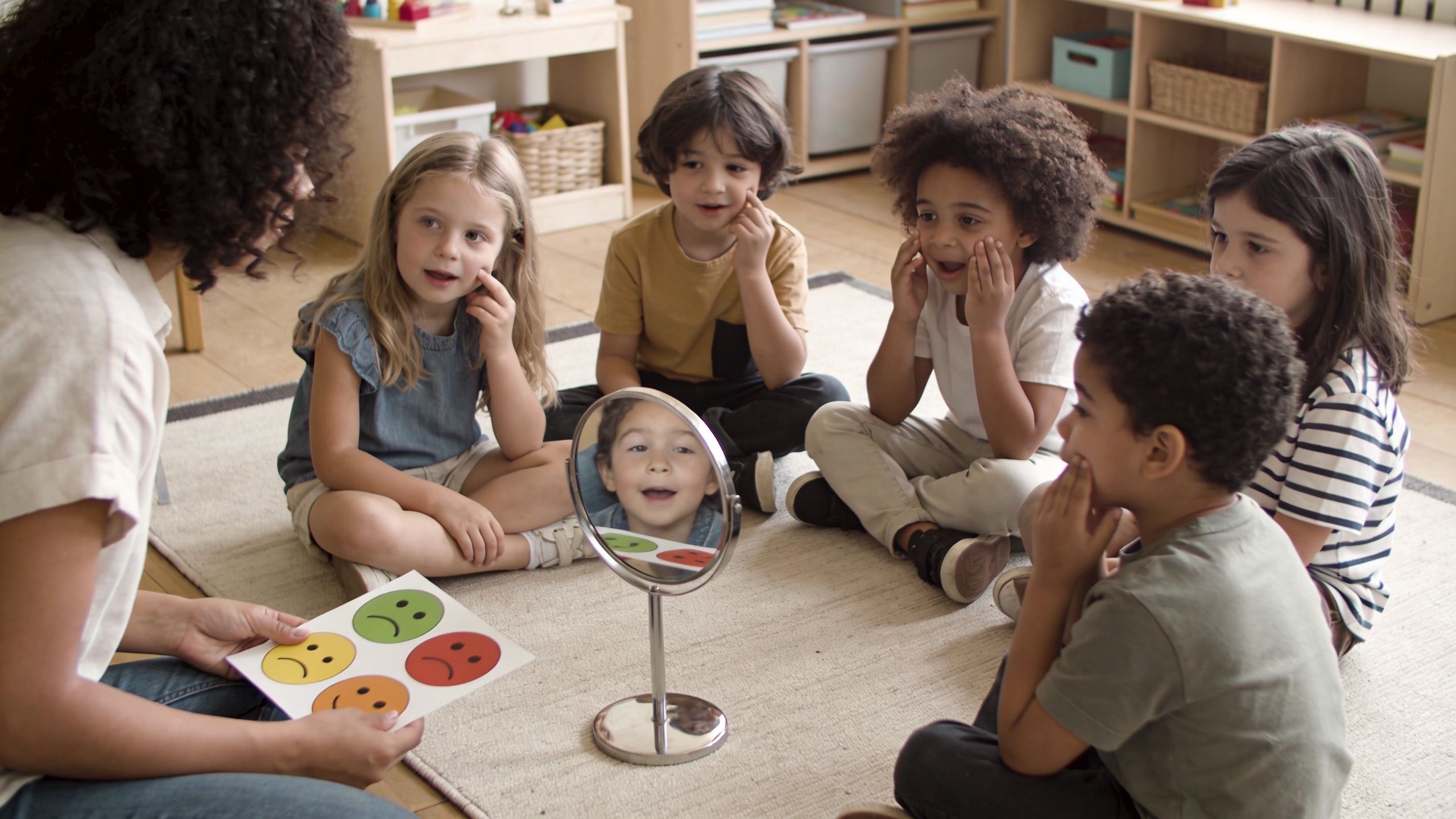
Gather children in a circle with a small set of feeling cards. Start with four basic feelings: happy, sad, mad, and scared. Hold up one card at a time and ask, “What do you notice about this face?” rather than “What is this?” That small shift helps children read clues instead of guessing a right answer.
Then invite mirror practice. Children look at themselves and try the face. You might say, “Show me a surprised face,” then ask, “What do your eyebrows do when you feel surprised?” Preschoolers love the physicality of this, and it helps them connect body signals to emotions.
A simple classroom example: “Jada wanted the blue marker, but Mateo was using it. How might Jada feel?” Let children offer more than one answer. Frustrated, sad, disappointed, impatient. That’s where emotional vocabulary grows.
Practical rule: Keep the pace gentle. If a child doesn’t want to share publicly, let them point to a card, whisper to you, or simply listen.
Easy adaptations for different children
Some children jump right in. Others need more safety.
- For shy children: Let them hold the card for you instead of speaking first.
- For children with limited language: Offer two choices, such as “sad or mad?”
- For children who become overwhelmed: Use real classroom situations later, one-on-one, rather than putting them on the spot in the group.
If you want a visual tool that children can keep using beyond circle time, a simple feelings chart for kids can help create shared language across the room.
2. Cooperative Games and Turn-Taking Activities
Some preschool games create winners and losers too quickly. Cooperative games do the opposite. They teach children that success can be shared, and that waiting, helping, and noticing others are part of the fun.
That matters because preschool social skills interventions can be especially effective. A 2024 meta-analysis in Frontiers in Psychology reviewed randomized controlled trials and found designed physical activities significantly improved preschoolers’ overall social skills, with the strongest effects seen in 12-week interventions.
Try these first
Start small. Two or three children can learn the rhythm of waiting and responding before you scale up to the full class.
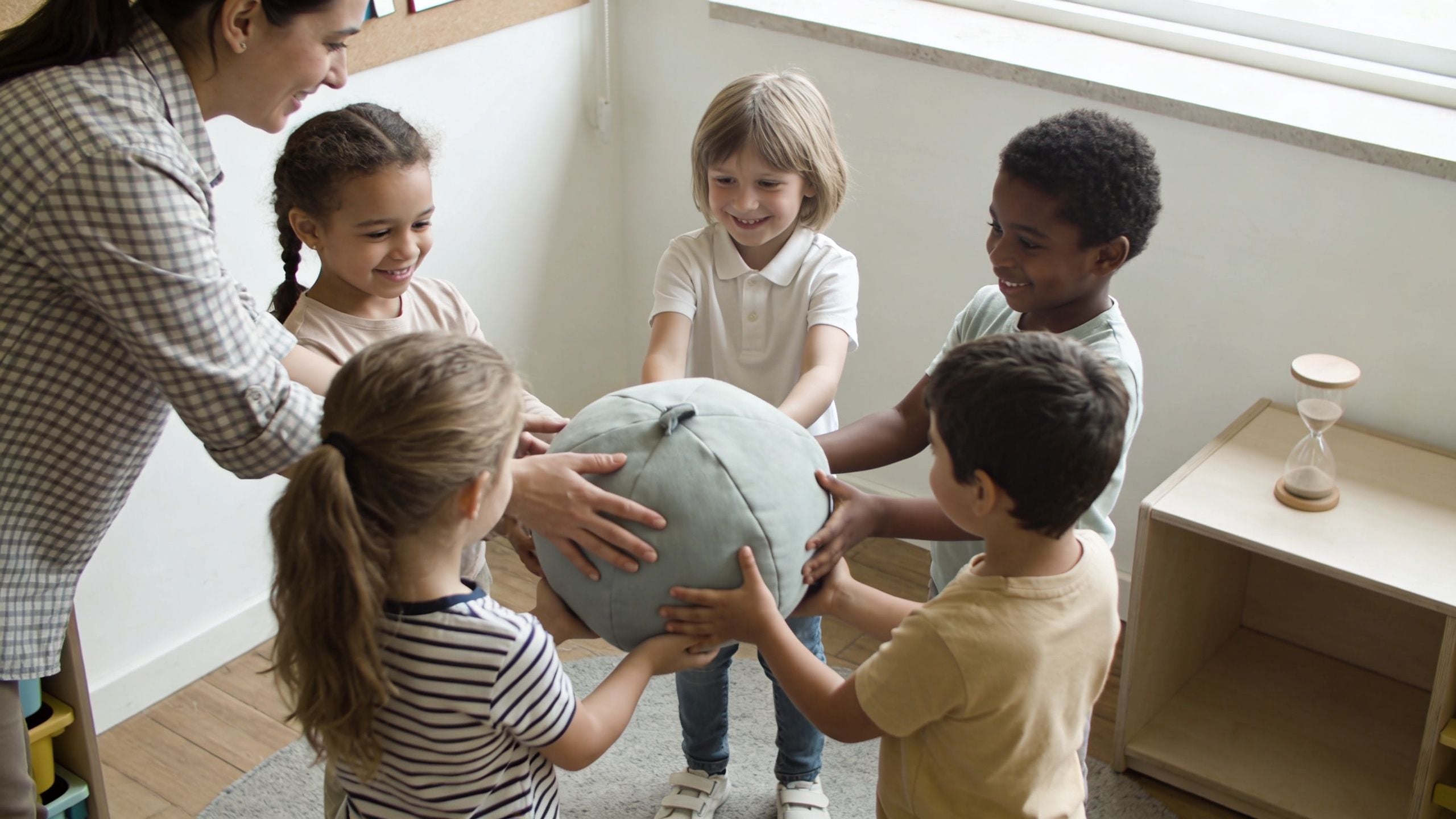
- Pass the soft ball: Sit in a circle and pass one ball with a simple script. “My turn, your turn.” Pause between passes so children feel the wait.
- Group tower: Give one tray of blocks to a small group and invite them to build one structure together. Narrate social moves you want to see: “You made space for her idea.”
- Parachute shake and freeze: Everyone holds the edge and works together to lift, lower, and freeze on cue.
I also like adapted movement games. In a cooperative version of Red Light, Green Light, the group’s job is to help everyone get across together. Children cheer for friends who stop successfully instead of racing to beat them.
What to say while they play
Your language shapes the learning. Use short narration that names the invisible skill.
- Notice waiting: “You had the ball and you remembered whose turn was next.”
- Notice repair: “He bumped your space, and you both kept going.”
- Notice inclusion: “You moved over so everyone could fit.”
For families trying to replace passive screen time with connection-rich play, this roundup on how to reduce screen time with these toys pairs well with cooperative routines.
If you want more game ideas you can simplify for younger children, Soul Shoppe’s collection of sharing games for elementary students offers structures you can adapt for preschool by shortening turns and adding visuals.
3. Peer Buddy System and Buddy Assignments
A buddy system gives children a simple message: no one has to do preschool alone. For children who tend to wander, cling to adults, or hover near the edges of play, a buddy can make the day feel more predictable and less lonely.
This isn’t about forcing friendship. It’s about creating repeated chances to practice friendly habits with support.
What buddying can look like in preschool
Keep the assignment concrete. “Buddy” is too vague if children don’t know what it means yet. Tie it to specific moments.
For example, buddies can:
- walk together to wash hands
- sit together during snack once a week
- help each other carry materials
- check whether their partner has what they need for an activity
One child might say, “Come with me to the rug.” Another might help by pointing to the cubby or waiting at the door. These are small acts, but they build responsibility and awareness.
A strong buddy system is structured, not sentimental. Preschoolers need to be shown what helping looks and sounds like.
Pair thoughtfully and teach the role
Be intentional with matches. Pair a confident child with a gentle one, not the loudest child with the quietest. Sometimes two children with similar interests work beautifully. Sometimes a child who loves routines is the perfect partner for a child who struggles during transitions.
Model the exact language you want buddies to use:
- “Do you want to come play?”
- “You can stand by me.”
- “Let’s ask the teacher together.”
- “It’s your turn first.”
Rotate pairings over time so children practice with more than one peer. And keep expectations modest. A successful buddy period might last only one transition or one center block.
If you’d like more ways to create intentional peer connection, these relationship building activities can help extend the buddy idea into the whole classroom culture.
4. Conflict Resolution and Problem-Solving Circles
Preschool conflict usually sounds repetitive. “She took it.” “He won’t let me.” “I had it first.” Adults can solve these disputes quickly, but if we always step in as judge, children miss the chance to learn how repair works.
A problem-solving circle slows the moment down. It teaches children that conflict is something we can talk through, not just react to.
A simple preschool script
Use the same sequence every time. Consistency matters more than eloquence.
Try this:
- What happened?
- How do you feel?
- What did you want?
- What can we do now?
Keep children close, calm, and brief. You’re not looking for perfect storytelling. You’re helping each child feel heard and guiding them toward one workable next step.
A classroom example: Two children both want the same dump truck. You sit with them and say, “Tell me what happened.” One says, “I had it.” The other says, “I wanted it.” You reflect both. “You were using it. You wanted a turn.” Then offer choices if needed: timer, trade, play together, or find a similar truck.
This short video can help adults picture restorative language in practice: