Soul Shoppe's work is made possible by donors and partners who care deeply about the young people in their communities! We can't do this work without you. Support our work in classrooms and on playgrounds across the nation by donating here.
More Than Words: Turning Self Love Mantras into Lifelong Skills
A child misses one math problem and whispers, “I’m so dumb.” Another gets left out at recess and decides it means nobody likes them. A middle schooler scrolls through photos, compares their life to everyone else’s, and grows quieter by the day. Most adults who care for kids have heard some version of this inner critic. It shows up in classrooms, on car rides home, at bedtime, and in the moments after a mistake.
Self love mantras can help, but only when we treat them as practices instead of posters. If a child says words they don’t believe, the phrase can feel fake. If an adult uses a mantra only after a meltdown, it becomes a rescue tool instead of a life skill. Kids need repetition, modeling, and language that matches their real experience.
That matters because self-affirmation isn’t just a trendy idea. A 2025 meta-analysis covering 17,748 participants across 129 independent studies found that self-affirmation interventions were linked with meaningful improvements in self-perception, general well-being, and social well-being, while also reducing psychological barriers like anxiety, according to this October 2025 review summary on positive affirmations. For educators and families, that’s a useful reminder that brief, low-cost practices can support emotional health when they’re taught well.
The key is teaching children how to use self love mantras in daily life. The eight mantras below work best when adults connect them to feelings, choices, relationships, and repair. That’s where they become part of SEL, not just positive talk.
1. I Am Enough
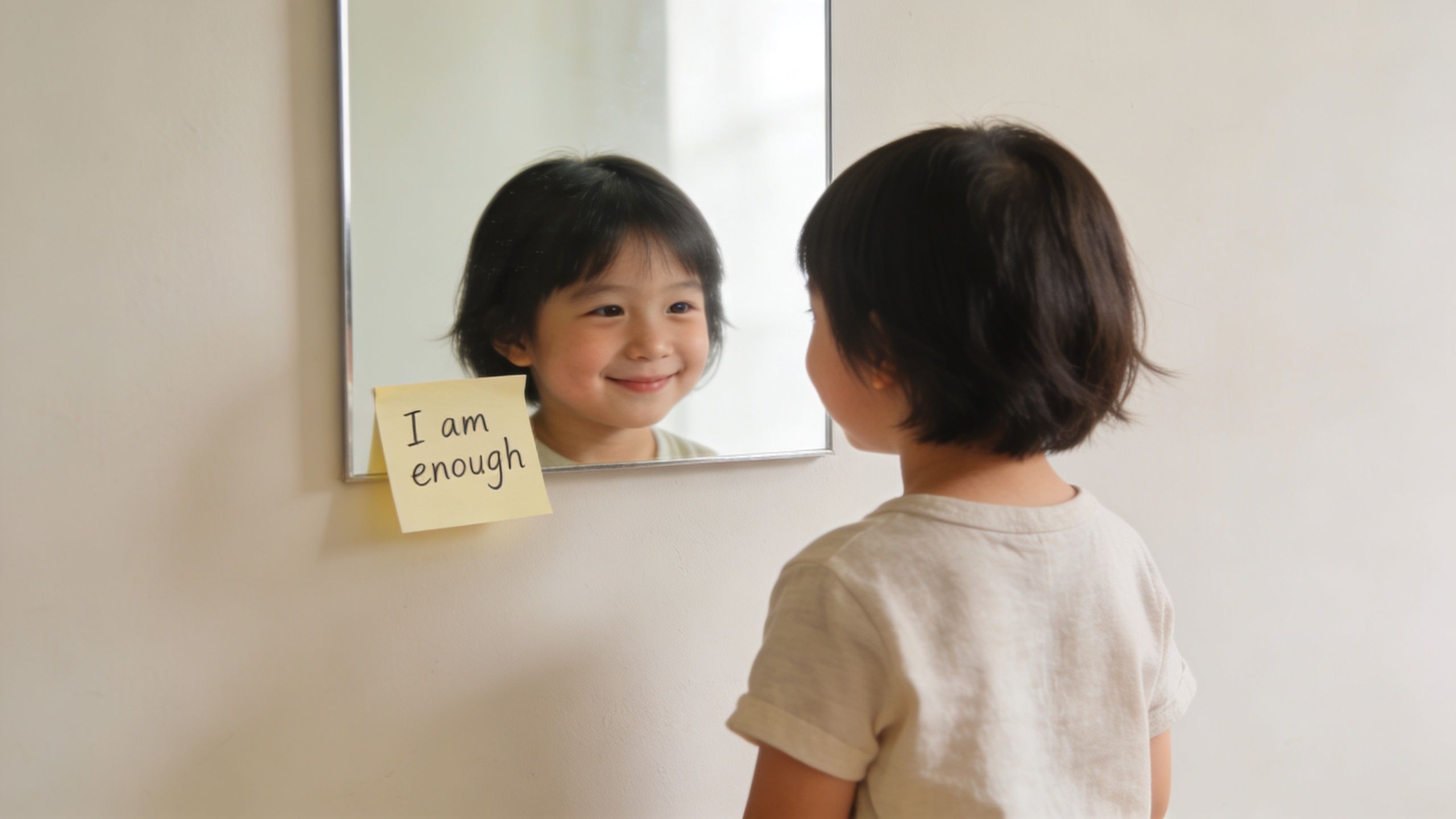
“I am enough” is often the first mantra kids need, especially the ones who think worth comes from grades, popularity, athletic skill, or always getting it right. This phrase pushes back on the belief that value must be earned. It tells a child, “You still belong, even when things are hard.”
For younger students, keep it concrete. “I am enough even when I spill paint.” “I am enough even when reading feels tricky today.” Older students can go deeper. “I am enough even if I’m not chosen first.” “I am enough even when I’m still figuring out who I am.”
How to teach it so kids believe it
Don’t ask students to chant this phrase with no context. Tie it to common school moments.
Morning meeting prompt: Ask, “What is one thing that makes you enough today, even before you achieve anything?”
After mistakes: Say, “You made an error. Your value didn’t change.”
At home: When a child says, “I’m bad at everything,” respond, “You’re disappointed. And you’re still enough.”
Practical rule: Pair the mantra with a real situation. Children trust specific language more than broad praise.
A teacher might say, “I didn’t explain that as clearly as I wanted. I’m still enough, and I can try again.” That kind of adult modeling matters. Kids learn self-acceptance when they hear adults practice it out loud.
This mantra also fits naturally with belonging work. A hallway poster can help, but daily language matters more. During partner work, class circles, or transitions, remind students that everyone enters the room with equal worth. If you want extra family-friendly language support, Kubrio's guide for parents offers confidence-building ideas that can complement this practice.
2. I Choose to Be Kind to Myself
Some children talk to themselves in ways they’d never use with a friend. They call themselves stupid, annoying, ugly, lazy, or behind. This mantra matters because it introduces agency. A child may not control every feeling, but they can learn to shift how they respond to themselves.
The phrase “I choose” is important. It turns self-kindness into an action, not a personality trait. Kids don’t have to wait until they naturally feel compassionate. They can practice it on purpose.
A simple classroom script
Try this after a student makes a mistake in front of others:
Teacher: “What did your inner voice just say?” Student: “That I messed everything up.” Teacher: “Would you say that to a friend?” Student: “No.” Teacher: “Try again with kindness.” Student: “I made a mistake, but I can keep going.”
That short exchange teaches more than the mantra alone.
Use the Friend Test: “Would you say this to a friend?”
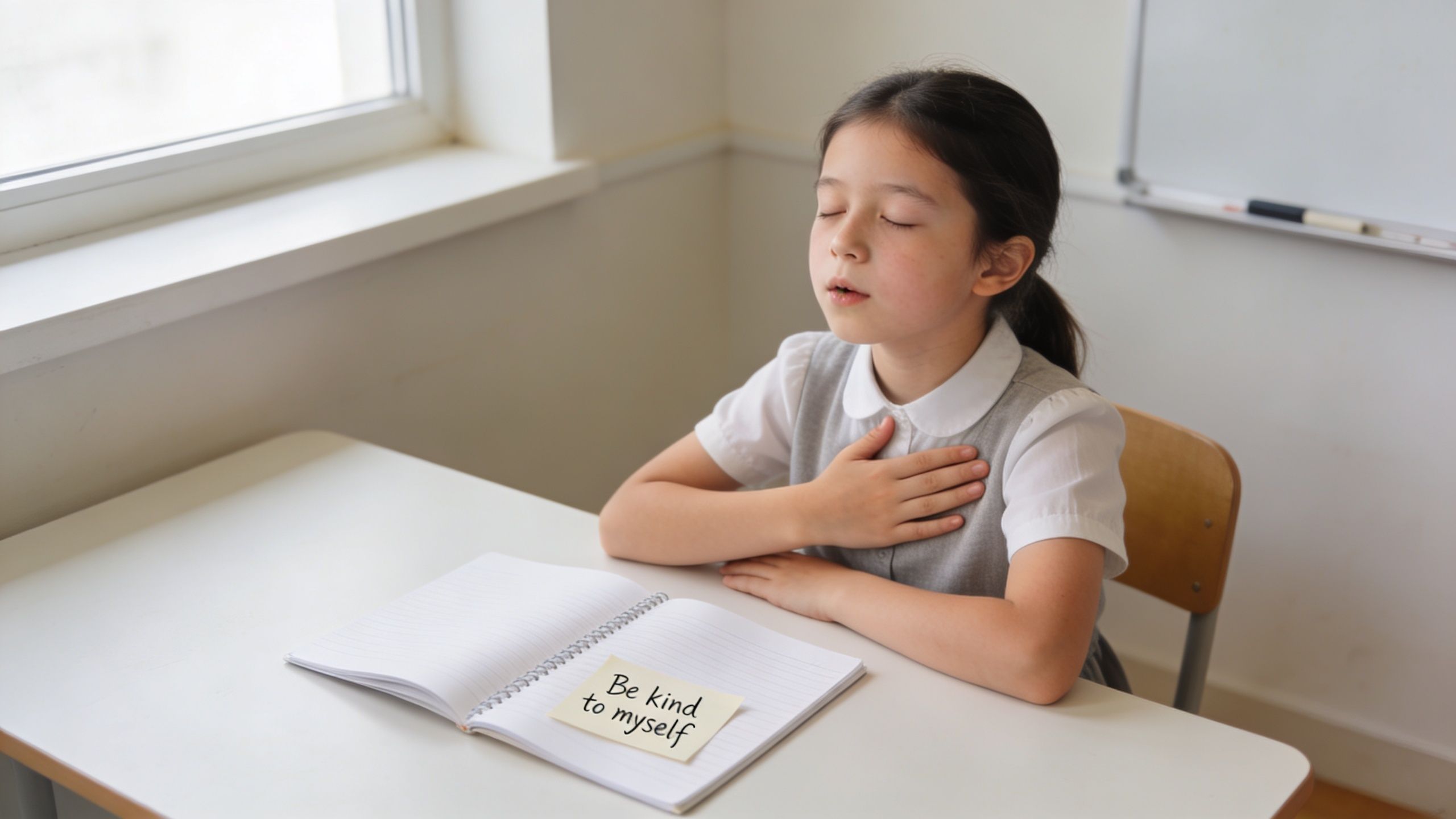
Add a body cue: Hand on heart, one slow breath, then the mantra.
Keep it brief: Long speeches rarely help in a dysregulated moment.
When children are upset, calm first and coach second.
At home, this often comes up after sports, homework, or social conflict. A parent can say, “It sounds like your inner voice is being rough. What would it sound like if you chose to be kind to yourself right now?” That question invites reflection without shaming the child for being hard on themselves.
Self love mantras work better when they sound believable. If “I love everything about myself” feels too far away, “I choose to be kind to myself” is often more honest and more usable. For adults who want language ideas rooted in compassionate self-talk, how to speak life over yourself offers prompts that can be adapted for older students and caregivers.
3. My Feelings Are Valid
Children often hear two unhelpful messages about feelings. One is “Don’t feel that.” The other is “Feel whatever you feel and do whatever comes next.” Neither teaches regulation. “My feelings are valid” gives kids a healthier middle path.
This mantra tells students that emotions are real and important, but emotions don’t get to run the whole room. A child can be angry and still not hit. They can feel jealous and still act respectfully. They can feel sad and still ask for help.
The sentence that should always follow
Teach this pair together:
All feelings are okay. Not all behaviors are okay.
That one line helps students separate emotion from action. It’s especially useful during conflict.
For example, a fourth grader says, “She didn’t pick me, and now I hate her.” Instead of correcting the feeling, an adult might say, “Your feelings are valid. It hurts to feel left out. Let’s find a safe way to say what you need.” That moves the child toward communication instead of suppression.
A counselor might use this mantra with a student who’s been told to “stop crying.” A teacher might use it when a student comes in upset after recess. A caregiver might use it after bedtime tears that seem too big for the situation. In each case, the message is the same. Your feelings make sense. You still need tools.
Practical SEL moves
Name the feeling first: frustrated, embarrassed, worried, disappointed, lonely
Connect feeling to need: space, comfort, repair, clarity, a break
Offer a safe action: breathe, draw, write, talk, ask for support
This mantra also supports psychological safety. Students are more likely to ask for help when they trust that adults won’t mock, minimize, or rush them. In a classroom community, that changes everything. Kids become more honest, more empathic, and more able to hear each other.
4. I Am Growing and Learning
Some students decide very early who they are. “I’m bad at math.” “I’m not a good reader.” “I’m the shy kid.” “I always mess up.” Once that story hardens, effort starts to drop. This mantra loosens the story.
“I am growing and learning” is one of the most useful self love mantras for school because it protects dignity while making room for change. It tells a child that struggle isn’t proof of failure. It’s part of development.
What this sounds like in real life
A kindergartener rebuilding a block tower can say, “I’m growing and learning how to make it steady.” A fifth grader revising an essay can say, “I’m learning how to organize my ideas.” A middle school student after an awkward peer interaction can say, “I’m growing in how I handle conflict.”
That language matters because it shifts identity from fixed to active.
Praise strategy: “You kept trying a new way.”
Praise persistence: “You stayed with it when it got hard.”
Praise reflection: “You noticed what wasn’t working and adjusted.”
When adults praise only talent, students often become more fragile. When adults praise process, students usually become more resilient.
A lesson snippet teachers can use
Write two statements on the board:
“I can’t do this.”
“I’m growing and learning.”
Ask students which statement helps the brain stay open to practice. Then invite them to rewrite common fixed thoughts.
“I’m bad at spelling” becomes “I’m learning spelling patterns.”
“I always ruin group work” becomes “I’m learning how to collaborate.”
“I’m not artistic” becomes “I’m growing my creative confidence.”
This mantra also works well in public repair. If an adult forgets directions or loses patience, they can say, “I’m growing and learning too.” That protects authority while modeling humility. Kids don’t need perfect adults. They need adults who can repair.
5. I Deserve Rest and Boundaries
Many children live in a constant state of “go.” School, homework, sports, activities, screens, social tension, and pressure to perform can wear them down. Adults often do the same to themselves. This mantra reminds kids that rest isn’t a reward for being productive enough. It’s part of being human.
Boundaries are a form of self-respect. Rest is a form of regulation. When we teach both together, children learn that caring for themselves helps them show up better for others.
What kids need to hear
Students often think rest means quitting. Reframe it.
Rest can be active: drawing, swinging, reading, building, listening to music
Rest can be quiet: alone time, breathing, lying down, looking out a window
Boundaries can be kind: “I need space,” “I’m not ready to talk yet,” “I can’t play right now”
A third grader might need a calm corner after lunch. A sixth grader might need fewer after-school commitments for a season. A parent might set a family boundary around device-free evenings so everyone can decompress.
The wider self-improvement app market shows how much people are looking for support in practices like affirmations, meditation, and positive self-talk. In the United States, that market reached $1.22 billion in 2024, up from $762 million in 2022, according to this WebWire report on self-improvement apps. That doesn’t mean an app replaces adult relationships. It does show that many families want accessible tools for emotional regulation and daily reflection.
Adult modeling counts most
Children notice when adults preach boundaries but never take them. If a teacher works through every lunch, kids absorb that. If a parent answers messages all evening while saying “rest matters,” kids absorb that too.
Say the boundary out loud. “I’m taking a few quiet minutes so I can reset.” “I can help after I finish this task.” “I’m resting because my body needs it.” That gives students permission to care for themselves without guilt.
6. I Celebrate My Unique Qualities
Comparison can flatten a child’s sense of self. One student wishes they were louder. Another wishes they were calmer. Another tries to hide a learning difference, cultural identity, family background, or personality trait just to fit in. “I celebrate my unique qualities” interrupts that pressure.
This mantra helps students notice what is distinct and valuable about them. Not better than others. Not more important. Distinct. That’s a powerful shift for identity and belonging.
Try an identity-based activity
Give students a page with the outline of a shield or a superhero badge. In different sections, ask them to fill in:
something they’re proud of
a way they help others
a quality that makes them unique
a challenge they’re learning to work with
a part of their identity they want respected
Then invite students to share only what feels safe to share. The goal isn’t performance. The goal is recognition.
An introverted student might write, “I notice things other people miss.” A highly energetic student might write, “I bring excitement and ideas.” A child with ADHD might identify creativity, humor, and quick thinking as strengths. A multilingual student might celebrate the ability to move between worlds.
Children build self-love faster when adults name strengths that are specific, observable, and not tied only to achievement.
This mantra is especially useful when correcting behavior. If a student interrupts constantly, you might say, “Your enthusiasm is a strength. We’re working on timing.” If a student withdraws, you might say, “Your thoughtfulness matters. I want to make sure your voice gets space too.” That protects identity while addressing the skill gap.
Schools can also support this through books, class discussions, heritage celebrations, and community norms that make difference visible and welcome. Self love mantras become more believable when the environment reinforces them.
7. I Am Responsible for My Choices, Not Everyone's Happiness
This mantra is more advanced, but many children need it. Some students feel responsible for keeping everyone okay. They monitor friends, absorb adult stress, over-apologize, or panic when someone is upset with them. Others get manipulated by peers who use guilt to control them.
This phrase helps students understand healthy responsibility. They are responsible for their own words, tone, actions, and repair. They are not responsible for controlling every other person’s emotional state.
A useful way to teach it
Draw two circles on the board or on paper.
In my control:
my choices
my words
my apology
whether I ask for help
whether I tell the truth
Not in my control:
another person’s mood
whether someone forgives me right away
another child’s friendship choices
how fast someone calms down
That visual is simple, and kids remember it.
A student might say, “I can invite them to play, but I can’t make them have a good day.” Another might say, “I’m responsible for apologizing for teasing. I’m not responsible for whether they want space afterward.” Those are healthy, grounded statements.
Care about people deeply. Don’t carry what belongs to them.
Use it in conflict resolution
In peer conflict, adults sometimes accidentally reinforce over-responsibility. They pressure one child to fix everything emotionally. A better script sounds like this: “Own your part. Speak respectfully. Make repair where you can. Let the other person have their own feelings.”
This mantra is especially helpful for natural caretakers, high achievers, and students affected by trauma, who may become hyper-focused on keeping others stable. For a short visual teaching tool on boundaries and emotional responsibility, this video can support older students and adults:
When students learn this distinction, empathy gets healthier. They can be kind without disappearing.
8. I Matter, and So Does Everyone Else
This may be the most community-centered of all the self love mantras. It holds two truths at once. I matter. Other people matter too. That balance is the heart of strong SEL work.
Some children hear messages that center only the self. Others are taught to disappear for the comfort of others. This mantra resists both extremes. It teaches dignity with empathy.
Where this shows up at school
Use this phrase when addressing exclusion, bullying, interruption, or social hierarchy.
If two students are in conflict, an adult might say, “You both matter in this conversation.” If a child is excluded from a game, a teacher might say, “Everyone here matters. How can we make space with fairness?” If a classroom is dominated by a few loud voices, the teacher can remind the group that quieter students matter too.
This idea also fits with whole-school belonging practices. In classrooms, every student can hold a visible role. In circles, every student can have the option to speak. In projects, every student can contribute in a meaningful way. The words need action beside them.
Why consistency matters
Google Trends and market reporting suggest that interest in self-improvement often spikes around moments like New Year’s and then fades, which is one reason schools and families need practices that last beyond a burst of motivation. One market summary notes that the broader U.S. self-improvement market was valued at $12.0 billion in 2024, with projections for growth through 2028, while behavior support is also shifting toward digital and hybrid formats, according to this self-love trend market overview. In schools, that’s a reminder to build routines, not one-off inspiration.
A practical classroom ritual is a closing circle where students complete one sentence stem: “Today I mattered when…” or “Someone else mattered to me when…” Those prompts move the mantra from abstract to lived.
“My voice matters, and your voice matters” is also a strong reset for class discussions. It slows defensiveness and invites listening. That’s how self-love grows into community care.
Promotes community-wide empathy, inclusion, and safety
Building a Culture of Self-Love, One Mantra at a Time
These eight mantras work best when adults treat them as skills to practice, not slogans to repeat. A child usually won’t internalize “I am enough” after hearing it once on a poster. They start to believe it when a teacher says it after a mistake, when a parent repeats it after disappointment, and when the school culture reflects it through belonging, repair, and respect.
The strongest approach is simple and steady. Pick one mantra for the week. Introduce it in plain language. Connect it to common student experiences. Practice it during calm moments, then return to it during hard ones. That rhythm helps children use the words when they need them.
Believability matters too. Some self love mantras fail because they ask kids to leap too far from their lived reality. Guidance on affirmation practice consistently points to the need for authenticity and belief alignment, especially for young people who quickly reject language that feels fake or performative, as discussed in this reflection on self-love mantras and authentic phrasing. In practice, that means “I’m learning to trust myself” may work better than “I never doubt myself.”
Development also matters. A second grader, a seventh grader, and a child recovering from peer exclusion won’t all connect with the same words in the same way. Age-specific and challenge-specific adaptation is one of the biggest gaps in common mantra advice, especially when schools want to align the practice with self-awareness, emotion regulation, relationship skills, and conflict resolution, as noted in this discussion of self-love mantras for different emotional needs. Teachers and caregivers can close that gap by adjusting the language, examples, and expectations.
A few habits make these practices stick:
Model the mantra yourself: Let children hear you recover from mistakes with respect.
Use it in ordinary moments: transitions, homework frustration, recess conflict, bedtime reflection
Keep it connected to behavior: validate feelings, then guide safe choices
Invite student ownership: let children rewrite mantras in words that sound like them
Revisit often: consistency matters more than intensity
This is the heart of social-emotional learning. We help children build an inner voice that is kinder, steadier, and more truthful. Over time, that voice supports resilience, empathy, and healthier relationships. A classroom or family that practices these mantras together doesn’t just raise confident kids. It builds a community where people know they matter, where repair is possible, and where belonging is practiced every day.
If you want help turning these ideas into shared language, schoolwide routines, and practical SEL experiences, Soul Shoppe offers programs, workshops, and resources that support connection, safety, empathy, and emotional skill-building for students, educators, and families.
In a world filled with constant challenges, building a child’s inner strength and resilience is more critical than ever. Positive affirmations for kids are far more than just feel-good phrases; they are practical, science-backed tools for shaping a child’s brain, building self-esteem, and fostering a growth mindset. These simple, powerful “I am” or “I can” statements, when practiced consistently, help children internalize positive beliefs about themselves and their abilities. For a child struggling with a difficult math problem, repeating “I can solve hard problems” can shift their mindset from defeat to determination. Similarly, a child feeling anxious about making friends can find comfort in the statement, “I am a good friend and people want to be my friend.”
This guide moves beyond simple lists, offering educators, school counselors, and parents a deep dive into the ‘how’ and ‘why’ of using affirmations effectively. You will find a comprehensive collection of affirmations organized by age and theme, complete with actionable strategies for integrating them into daily life. We’ll provide specific examples for classroom morning meetings, calming corners, and at-home routines. Beyond the power of positive words, research also highlights the profound impact of practices like exploring the art therapy benefits for mental health, which can complement verbal affirmations by providing a creative outlet for expression. Prepare to unlock a simple yet profound way to nurture the emotional well-being of the children in your care, turning simple words into a foundation for lifelong confidence.
1. I Am Brave
The affirmation “I Am Brave” is a foundational statement that helps children build courage and resilience. It’s not about eliminating fear but about acknowledging it and choosing to act anyway. This powerful phrase empowers kids to face a variety of challenges, from academic hurdles to complex social situations, fostering a belief in their own capability to handle difficulty.
For children, bravery can look like many different things: raising a hand in class when unsure of the answer, trying a new activity, or speaking up when they see something unfair. Reciting “I Am Brave” provides a mental anchor, helping them access their inner strength when they feel nervous or intimidated. This is one of the most effective positive affirmations for kids because it directly addresses the anxieties that can hinder learning and social growth.
Why It Works and When to Use It
This affirmation is particularly effective because it connects directly to Social-Emotional Learning (SEL) competencies like self-awareness and self-management. Organizations like Soul Shoppe integrate this concept into their research-based programs, recognizing that bravery is a skill that can be practiced and developed.
Use “I Am Brave” in moments that require social or emotional courage:
Before Presentations: A student can quietly repeat the phrase before speaking in front of the class. For example, before a book report, a teacher can lead the class in saying, “I am brave enough to share my ideas.”
During Conflict Resolution: It can be used as a grounding statement before peer-led mediations. A mediator might start by having both students say, “I am brave enough to listen and speak respectfully.”
Anti-Bullying Initiatives: Empowering bystanders to act is a key part of bullying prevention. A practical example is teaching students to say to themselves, “I am brave enough to tell a teacher,” when they witness unkind behavior.
By repeating “I Am Brave,” children internalize the idea that courage isn’t the absence of fear, but the decision to move forward despite it. This mindset shifts them from a passive role to an active one in their own lives.
Practical Tips for Implementation
Connect to Specific Actions: Pair the affirmation with a tangible goal. For example, “I am brave enough to ask the teacher for help” or “I am brave enough to join the game at recess.” For more ideas on developing this skill, explore these confidence-building activities for kids.
Create Visual Reminders: Display brave role models or stories in the classroom. To further encourage this quality, an inspiring Be Brave Wall Sticker Quote can serve as a daily visual reminder.
Start Small and Celebrate: Encourage practice in low-stakes situations first, like sharing an idea in a small group. Acknowledge and celebrate all acts of bravery, no matter how small, to reinforce the behavior. For example, a teacher could say, “David, I saw you were nervous to share your drawing, but you did it anyway. That was very brave.”
2. I Can Learn and Grow
The affirmation “I Can Learn and Grow” is deeply rooted in the concept of a growth mindset, popularized by Stanford researcher Carol Dweck. This powerful statement teaches children that their abilities are not fixed but can be developed through dedication and hard work. It reframes challenges and mistakes not as failures, but as essential opportunities for learning, which helps build academic and emotional resilience.
For a child, this mindset shift is critical. Instead of thinking “I’m bad at math,” they learn to think “I can improve at math with more practice.” This affirmation gives them the language to express this belief, turning moments of frustration into productive learning experiences. These are some of the most important positive affirmations for kids because they directly support the creation of psychologically safe classrooms where students feel comfortable taking risks.
Why It Works and When to Use It
This affirmation directly supports key Social-Emotional Learning (SEL) skills like self-efficacy and perseverance. It helps children understand that effort is the path to mastery. Soul Shoppe’s resilience-building workshops often center on this principle, teaching students that their brains are like muscles that get stronger with exercise.
Use “I Can Learn and Grow” to foster a positive approach to challenges:
During Difficult Assignments: When a student feels stuck, a teacher can say, “This is a tricky problem. Let’s say together, ‘I can learn and grow from this challenge,’ and then try a new strategy.”
After Receiving Feedback: It helps children see constructive criticism as a tool for improvement, not a judgment. A practical example is a student telling themselves, “The teacher’s note isn’t saying I’m bad at writing; it’s showing me how I can learn and grow as a writer.”
In Reflection Journals: Students can use it as a prompt to track their progress. For instance, a journal entry could start with: “This week, I learned and grew in science by finally understanding how plants get their food.”
By internalizing “I Can Learn and Grow,” children move away from a fear of failure and toward a love of learning. It empowers them to embrace the process of improvement, which is a foundational skill for lifelong success.
Practical Tips for Implementation
Model Growth Mindset Language: As an adult, openly share your own learning struggles. Say things like, “This is tricky for me, but I know I can learn and grow by trying a different way.”
Use the Power of “Yet”: Actively replace “I can’t do it” with “I can’t do it yet” in classroom conversations. This small change reinforces the idea that ability is a journey, not a destination. To explore this concept further, you can find valuable strategies in this guide to developing a growth mindset for kids.
Celebrate the Process, Not Just the Outcome: Praise students for their effort, the strategies they try, and their persistence. For example, say, “I saw how you kept working on that problem even when it was hard. Your brain is growing stronger!”
3. I Am Kind and Caring
The affirmation “I Am Kind and Caring” helps children build empathy, compassion, and pro-social behaviors. This statement shifts kindness from being just an action to a core part of their identity. By regularly affirming this trait, kids learn to see themselves as people who naturally show concern for others, which positively influences their peer interactions, conflict resolution skills, and overall classroom community.
This affirmation is a cornerstone for creating a positive social environment. It encourages children to think beyond themselves and consider the feelings and perspectives of their peers. Reciting “I Am Kind and Caring” serves as a mental cue to act with compassion, whether that means including a classmate at recess, offering help to someone who is struggling, or simply listening with an open heart. These are some of the most important positive affirmations for kids as they directly foster the emotional intelligence needed for healthy relationships.
Why It Works and When to Use It
This affirmation powerfully supports Social-Emotional Learning (SEL) competencies such as social awareness and relationship skills. Programs like Soul Shoppe build their entire curriculum around these ideas, understanding that empathy is a teachable skill that prevents bullying and creates safer schools.
Use “I Am Kind and Caring” to promote a positive and inclusive climate:
During Morning Meetings: Start the day with a group recitation to set a compassionate tone. For example: “Today, we will remember: I am kind and caring. Let’s look for ways to show that.”
Before Collaborative Work: Remind students to be kind and caring partners before they begin group projects. A teacher could say, “As you work with your partner, remember to listen to their ideas, because you are a kind and caring teammate.”
In Conflict Resolution Circles: Use it as a centering thought to encourage empathetic problem-solving. For instance, begin a mediation with, “Let’s remember we are all kind and caring people, and solve this problem from that place.”
When children identify as kind and caring, their actions naturally follow. This affirmation doesn’t just ask them to do kind things; it encourages them to be kind people.
Practical Tips for Implementation
Create Kindness Anchor Charts: Brainstorm with students what being “kind and caring” looks and sounds like. Examples might include: “Looks like: Sharing a pencil.” “Sounds like: ‘Are you okay?'” Write their examples on a chart and display it in the classroom as a constant visual reminder.
Pair with Specific Actions: Connect the affirmation to concrete behaviors. For example, “I am kind and caring, so I will invite someone new to play” or “I am kind and caring, so I will give a compliment.”
Recognize and Celebrate: Create a “Kindness Spotting” routine where students can acknowledge the kind and caring acts they see from their peers. This reinforces the behavior and builds a positive community. For more strategies, explore these methods for teaching kindness in the classroom.
4. I Can Help Others
The affirmation “I Can Help Others” shifts a child’s focus from their own needs to their capacity to contribute positively to their community. It builds a sense of agency and social responsibility, framing children as capable helpers and supportive peers. This powerful statement encourages them to recognize their own strengths and use them to assist classmates, which reduces isolation and fosters healthy peer relationships.
For kids, helping can mean offering to explain a math problem, including someone in a game, or simply offering a kind word. When children repeat “I Can Help Others,” they begin to see themselves as active, valuable members of their social groups. This mindset is one of the most constructive positive affirmations for kids because it directly counters feelings of helplessness and is a cornerstone of anti-bullying work, turning bystanders into supportive upstanders.
Why It Works and When to Use It
This affirmation directly supports the Social-Emotional Learning (SEL) competency of relationship skills, specifically social awareness and responsible decision-making. Programs focused on peer support and empathy, like those offered by Soul Shoppe, are built on the principle that children have the capacity to support each other when given the right tools and encouragement.
Use “I Can Help Others” to build a supportive classroom or home environment:
During Group Work: Encourage students to see themselves as resources for one another. A teacher might say, “If you finish early, remember ‘I can help others’ and see if a teammate needs support.”
For New Students: Frame helping a new classmate as a leadership opportunity. For instance, “Leo, you are a great helper. Can you show our new student, Maya, where the cubbies are?”
Bystander Intervention: Teach it as a precursor to action when a peer is being treated unfairly. A practical example is role-playing a scenario where a student tells themselves, “I can help by going to get Mr. Davis,” instead of just watching.
By internalizing “I Can Help Others,” children move from being passive observers to engaged participants in their social world. They learn that their actions, big or small, can make a meaningful difference to someone else.
Practical Tips for Implementation
Teach Specific Helping Skills: Don’t just say “help”; teach what helping looks like. For example, “I can help by asking, ‘Do you want to play?'” or “I can help by showing you how I solved the first step.”
Start with Low-Stakes Opportunities: Create classroom jobs or assign partners for a simple task. Acknowledge and praise these small acts specifically: “I saw you helping Alex put the blocks away. That was a great example of being a helper.”
Establish Clear Protocols: When dealing with conflicts or bullying, provide clear steps for how to help safely, such as telling an adult or inviting the targeted peer to walk away with them. Ensure children know they have adult support.
Celebrate Helping Actions: Create a “Helping Hands” bulletin board where students can post notes about how a classmate helped them. This makes prosocial behavior visible and valued by the entire community.
5. I Make Good Choices
The affirmation “I Make Good Choices” is a powerful tool for developing responsible decision-making and self-regulation. It empowers children by shifting their focus from external rules to their own internal capacity to choose their actions and responses. This phrase is foundational for building executive function and impulse control, which are critical skills for academic success and social harmony.
For kids, a “good choice” might be sharing a toy instead of grabbing it, taking a deep breath when frustrated, or choosing to start their homework. Reciting “I Make Good Choices” reinforces the idea that they are in control of their behavior. This is one of the most practical positive affirmations for kids because it directly supports positive classroom management and helps students learn constructive ways to handle conflict and difficult emotions.
Why It Works and When to Use It
This affirmation directly supports the Social-Emotional Learning (SEL) competency of responsible decision-making. It is a cornerstone of programs like Positive Behavioral Interventions and Supports (PBIS) and is frequently used by school counselors because it promotes self-awareness and accountability. Organizations like Soul Shoppe build their self-regulation training around this core concept, teaching students that they have the power to think before they act.
Use “I Make Good Choices” to guide behavior in key moments:
During Transitions: Say it as a class before moving from a fun activity to a quiet one. For example: “Okay team, we are about to line up. Let’s remember, ‘I make good choices,’ and show me a quiet, safe line.”
Before Independent Work: Use it to set the intention for staying on task and focused. A practical example: “Before you start your work, tell yourself, ‘I make good choices about how I use my time.'”
Conflict Resolution: It serves as a reminder to choose words and actions that solve problems, not make them bigger. A teacher could guide students by asking, “What is a good choice you can make right now to solve this?”
By internalizing “I Make Good Choices,” children begin to see themselves as capable decision-makers. This mindset empowers them to pause, consider consequences, and act with intention rather than on impulse.
Practical Tips for Implementation
Teach Decision Frameworks: Explicitly teach a simple model like “Stop, Think, Choose.” Then, connect the affirmation to this process. Say, “When we stop and think, we can make a good choice.”
Role-Play Scenarios: Practice common classroom challenges, such as disagreements over supplies or what to do when feeling frustrated. Ask students, “What good choice could you make here?” For example, act out a scene where someone cuts in line and practice the good choice of using words instead of pushing.
Reflect After Mistakes: After a poor choice, frame the conversation around the future. Ask, “What good choice will you make next time?” This turns errors into learning opportunities without shame. You can find more strategies for teaching self-regulation in our guide to mindfulness activities for kids.
6. I Belong Here
The affirmation “I Belong Here” addresses one of the most fundamental human needs: acceptance and connection. This statement directly counters feelings of isolation, loneliness, and social anxiety, which can often lead to exclusion and bullying. It fosters a sense of psychological safety, assuring children that their presence is valued within their community, whether that’s a classroom, a team, or their family.
For a child, feeling like they belong means they can be their authentic self without fear of judgment. It’s the difference between sitting alone at lunch and confidently joining a group. Reciting “I Belong Here” helps children internalize this sense of security and worth. This is one of the most important positive affirmations for kids because it lays the groundwork for healthy social development, active participation, and emotional well-being.
Why It Works and When to Use It
This affirmation is powerful because it reinforces a core component of Social-Emotional Learning (SEL): relationship skills and social awareness. Organizations like Soul Shoppe build their entire mission around creating cultures of belonging in schools, recognizing that a child’s ability to learn is directly tied to their feeling of safety and inclusion. This concept is also supported by belonging researchers like Brené Brown, who highlight its importance for courage and resilience.
Use “I Belong Here” to build a strong and inclusive community:
During Morning Meetings: Start the day with a communal recitation to set a welcoming tone. A practical example: “Let’s look around at everyone in our classroom community and say together, ‘I belong here.'”
Welcoming New Students: Pair a new student with a peer mentor and use this phrase as part of their introduction to the class. For instance, the whole class could say, “Welcome, Sarah! We are so glad you are here. You belong here.”
In Anti-Bullying Initiatives: Explicitly teach that everyone belongs and empower students to reinforce this message with their peers.
Before Collaborative Projects: Remind students that every member’s contribution is essential to the group’s success by saying, “Everyone in this group has an important role. You all belong here.”
By repeating “I Belong Here,” children develop a strong internal belief that they are an integral part of their community. This mindset shifts them from feeling like an outsider to an active, engaged, and valued participant.
Practical Tips for Implementation
Pair with Inclusive Actions: The affirmation must be supported by genuine practices. For example, use it during community-building circles where every student has an opportunity to speak. Create a “Welcome Wall” with photos of all students.
Create Specific Statements: Make it more personal by adding to the phrase, such as, “I belong in this classroom, and my voice matters,” or “I belong on this team, and my friends are happy I’m here.”
Celebrate Diversity: Intentionally highlight and celebrate the different cultures, backgrounds, and abilities within the classroom to show that diversity is what makes the community strong. Address any act of exclusion immediately to maintain the authenticity of your message.
7. I Can Calm Myself Down
The affirmation “I Can Calm Myself Down” is a powerful tool for developing emotional self-regulation. It empowers children by teaching them they have internal control over their big feelings, shifting their perspective from being overwhelmed by emotions to being capable of managing them. This statement, when paired with concrete calming techniques, gives students the agency to navigate stress, frustration, and anxiety constructively.
Instead of simply reacting to emotional triggers, a child who uses this affirmation learns to pause and choose a more effective response. This skill is crucial for preventing behavioral issues and resolving social conflicts peacefully. By internalizing “I Can Calm Myself Down,” children build a foundation for lifelong emotional intelligence. It stands out as one of the most practical positive affirmations for kids because it directly addresses the need for self-management, a key to success in both school and life.
Why It Works and When to Use It
This affirmation directly supports the Social-Emotional Learning (SEL) competency of self-management. Trauma-informed practitioners and mindfulness educators promote this approach because it builds a child’s internal locus of control. Organizations like Soul Shoppe incorporate this principle into their self-regulation workshops, recognizing that the ability to self-soothe is a teachable skill.
Use “I Can Calm Myself Down” during moments of escalating emotion or as a preventative practice:
During Transitions: Help students manage the stress of switching from one activity to another. For example, before cleanup time, a teacher could say, “It’s almost time to clean up. Let’s practice our calming breaths and remember, ‘I can calm myself down.'”
Before Difficult Tasks: Use it to reduce anxiety before a test or a challenging assignment. A parent could say, “I see you’re worried about the spelling test. Let’s take a deep breath and tell ourselves, ‘I can calm myself down and do my best.'”
In Calm-Down Corners: Post the phrase as a visual cue alongside sensory tools and breathing guides. A practical script for a student using the corner could be: “I feel frustrated. I will go to the calm-down corner and tell myself ‘I can calm myself down’ while I squeeze this stress ball.”
By repeating “I Can Calm Myself Down,” a child practices metacognition, actively thinking about their emotional state and choosing a strategy to manage it. This internal script is the first step toward independent emotional regulation.
Practical Tips for Implementation
Teach Specific Strategies: Before introducing the affirmation, teach 3-5 concrete calming methods like box breathing, squeezing a stress ball, or taking a short walk. Then, pair them directly: “I can calm myself down by taking three deep breaths.”
Practice Proactively: Don’t wait for a moment of crisis. Practice the affirmation and associated strategies during calm times, like a morning meeting, to build muscle memory. For more ideas, explore these calming activities for the classroom.
Use Visual and Kinesthetic Cues: Create charts showing calming strategies or use a consistent hand gesture (like placing a hand over the heart) when saying the affirmation. This helps anchor the concept for all learners.
8. I Am Worthy and Enough
The affirmation “I Am Worthy and Enough” is a profound statement that addresses a child’s core sense of self-worth. It directly counters feelings of inadequacy, perfectionism, and comparison-based thinking that can be so damaging to self-esteem. This message helps children understand that their value is inherent and not dependent on achievements, mistakes, or external validation.
For a child, feeling “enough” means accepting themselves just as they are. This affirmation helps build psychological safety and resilience, which is especially important in diverse school communities where children may receive societal messages that question their worth. Reciting “I Am Worthy and Enough” helps dismantle the internalized shame that can lead to peer conflict, anxiety, and bullying behaviors. These are among the most crucial positive affirmations for kids because they build a foundation of self-acceptance that supports mental and emotional well-being.
Why It Works and When to Use It
This affirmation, rooted in the work of researchers like Brené Brown and psychologists like Carl Rogers, is powerful because it promotes unconditional positive regard. It helps children develop a strong internal locus of control over their self-esteem, making them less vulnerable to peer pressure and criticism. Programs like Soul Shoppe emphasize creating a sense of belonging, which is directly tied to a child’s feeling of worthiness.
Use “I Am Worthy and Enough” to foster self-compassion and emotional security:
During Morning Meetings: Start the day by having the class recite it to cultivate an inclusive and accepting classroom climate. For example, looking in a small hand mirror and saying, “I am worthy and enough.”
After a Mistake or Setback: Remind a child of this affirmation to separate their actions from their inherent value. A parent could say, “You lost the soccer game, and it’s okay to be sad. But the score doesn’t change who you are. You are worthy and enough.”
In Anti-Bullying Lessons: Discuss how feeling unworthy can sometimes lead people to bully others, and how self-acceptance can stop that cycle.
By internalizing “I Am Worthy and Enough,” children learn that their value doesn’t need to be earned. This mindset frees them from the constant pressure to prove themselves and allows them to engage with learning and relationships more authentically.
Practical Tips for Implementation
Model Self-Compassion: Adults should openly model self-acceptance. For example, a teacher might say, “I made a mistake on that worksheet, and that’s okay. I am still a good teacher.”
Connect to Identity and Diversity: Pair this affirmation with lessons that celebrate diverse backgrounds, abilities, and identities. Ensure classroom books and materials represent all children, reinforcing that everyone is worthy.
Use in One-on-One Support: When a student is struggling academically or socially, quietly remind them, “You are trying your best, and you are worthy and enough right now, in this moment.”
9. I Can Use My Words
The affirmation “I Can Use My Words” is a critical tool for teaching children effective communication and conflict resolution. It encourages them to turn to verbal expression instead of physical reactions or internalizing their feelings. This phrase empowers kids to articulate their needs, feelings, and boundaries, which is fundamental for building healthy relationships and navigating social challenges.
For a child, using their words can mean asking for a turn, expressing hurt feelings, or disagreeing respectfully. This affirmation serves as an internal prompt, reminding them that their voice is a powerful tool for solving problems and connecting with others. As one of the most practical positive affirmations for kids, it directly supports the development of essential life skills like emotional expression and peer negotiation, which are central to bullying prevention.
Why It Works and When to Use It
This affirmation directly supports the Social-Emotional Learning (SEL) competency of relationship skills. It’s a cornerstone of programs that teach nonviolent communication and peer mediation, including the work done by Soul Shoppe in its skill-building workshops. By repeating “I Can Use My Words,” children build the confidence to engage in dialogue, a skill that is crucial for their social and emotional well-being.
Use “I Can Use My Words” during moments of conflict or high emotion:
During Disagreements: Encourage children to pause and use this phrase before reacting in a conflict with a sibling or peer. A practical example is a teacher coaching two students: “Instead of grabbing, let’s stop. Remember, ‘I can use my words.’ Now, can you tell Liam what you need?”
When Feeling Overwhelmed: It helps a child identify and name their feelings instead of acting out. For instance, a parent might say, “It looks like you’re very upset. You can use your words to tell me what’s wrong.”
In Restorative Circles: It is a foundational concept in practices that focus on repairing harm through communication.
By internalizing “I Can Use My Words,” children learn that communication is not just about talking, but about advocating for themselves and understanding others. This shifts their approach from reactive behavior to proactive problem-solving.
Practical Tips for Implementation
Teach ‘I’ Statements: Provide children with a clear formula for expressing themselves, such as “I feel… when you… because… I need…” For example: “I feel sad when you take the ball because I wasn’t finished. I need you to ask first.” This gives them a concrete tool to use.
Use Sentence Starters: Post visible charts with helpful phrases like, “Can I have a turn please?” or “I don’t like it when…” to support children who struggle to find the right words.
Role-Play Scenarios: Practice common conflicts through role-playing. This allows kids to rehearse using their words in a low-stakes environment, building muscle memory for real-life situations.
Model Healthy Communication: Adults should consciously model how to express feelings and resolve disagreements respectfully. Children learn powerful lessons by observing the adults around them.
10. I Can Handle Hard Things
The affirmation “I Can Handle Hard Things” is a powerful tool for building resilience and a growth mindset. It shifts a child’s focus from the overwhelming nature of a challenge to their own internal capacity to manage it. This phrase teaches them that difficulty is a part of life, but they possess the strength to navigate it, fostering stress tolerance and emotional regulation.
Instead of avoiding difficult situations, children learn to face them with a sense of capability. Whether it’s a tough math problem, a disagreement with a friend, or a big transition like moving to a new school, this affirmation acts as a steadying internal voice. It is one of the most effective positive affirmations for kids because it directly builds the psychological strength needed to bounce back from setbacks and persevere through adversity.
Why It Works and When to Use It
This affirmation is rooted in principles championed by resilience researchers like Angela Duckworth. It promotes the idea that effort and strategy, not just innate ability, lead to success. Programs like those at Soul Shoppe use this concept to build core strength in students, helping them see challenges not as threats, but as opportunities for growth.
Use “I Can Handle Hard Things” to support children through difficult moments:
Before Difficult Tasks: Students can say this before starting a challenging academic assignment or a test. For example, a teacher could lead the class in saying, “This test might be tough, but remember, ‘I can handle hard things.'”
During Transitions: It’s helpful during changes like starting a new grade or dealing with family shifts. A parent might tell their child, “Starting middle school feels scary, but you’ve handled hard things before, and you can handle this too.”
After Mistakes: Use it to reframe failure as a learning experience rather than a final outcome. For instance, after a student gets a poor grade, a teacher can say, “This grade is disappointing, but I know you can handle hard things. What can we learn from this for next time?”
By affirming their ability to handle difficulty, children internalize a message of self-efficacy. This belief empowers them to approach, rather than retreat from, the inevitable challenges of learning and life.
Practical Tips for Implementation
Pair with Coping Strategies: Connect the affirmation to a concrete action. For example, “I can handle this hard test by taking three deep breaths first” or “I can handle this disagreement by asking for help from a teacher.”
Model the Behavior: When you face a challenge, verbalize your own process. You might say, “This is a hard problem to solve. I know I can handle it if I break it into smaller steps.”
Reinforce After Success: Once a child has overcome a challenge, connect their success back to their strength. Say, “See? That was a hard thing, and you handled it!” This solidifies the connection between their effort and the positive outcome.
Comparison of 10 Positive Affirmations for Kids
Affirmation
Implementation complexity
Resource requirements
Expected outcomes
Ideal use cases
Key advantages
I Am Brave
Low — easy to introduce; needs practice opportunities
Low — posters, routines, role‑plays
Increased assertiveness, reduced social anxiety
Morning meetings, anti‑bullying workshops, small‑group practice
Boosts confidence and willingness to take social risks
I Can Learn and Grow
Medium — requires culture shift and teacher modeling
Medium — teacher training, reflection tools, classroom supports
Greater persistence, reduced fear of failure, improved academic risk‑taking
Builds stress tolerance, problem‑solving, and adaptive coping
Putting Affirmations into Action: Creating a Culture of Confidence
We have explored a powerful collection of affirmations, from “I Am Brave” to “I Can Handle Hard Things,” each designed to plant a seed of self-belief in a child’s mind. But the true impact of these phrases isn’t just in the saying; it’s in the doing. The journey from reciting a positive affirmation to internalizing its message requires a consistent, supportive, and intentional environment, both in the classroom and at home.
The ultimate goal is to move beyond a simple checklist of phrases and build a genuine culture of confidence. This is where the ideas, scripts, and activities provided in this article come to life. You are not just giving children words to say; you are providing them with a new internal script that can guide their actions, shape their self-perception, and build resilience in the face of challenges.
From Words to Lived Experience
The most significant takeaway is that affirmations are a tool, not a magic wand. Their power is unlocked when they are connected to tangible experiences and reinforced by the adults in a child’s life.
When a student is nervous about a presentation and you practice “I am brave” together, you link the words to the action of facing a fear.
When you notice a child sharing their crayons and praise them by saying, “That was so kind. You are showing everyone that you are kind and caring,” you are validating the affirmation with real-world evidence.
When a student is frustrated with a math problem and you guide them through the “I can learn and grow” mindset, you are actively teaching them to associate struggle with progress, not failure.
This consistent connection between language and action is what builds a child’s belief system. It shows them that these aren’t just empty words but truths they can see and feel in their own lives.
Key Strategies for Building an Affirmation-Rich Culture
To make these practices stick, focus on integration rather than addition. Weaving positive affirmations for kids into your existing routines ensures they become a natural part of the day.
Model Authentically: Children are keen observers. When they hear you say, “This is tricky, but I can handle hard things,” or, “I made a mistake, and that’s okay because I can learn and grow,” you model self-compassion and resilience. Your actions give the affirmations credibility.
Create Visible Reminders: The reproducible prompts and printable posters mentioned earlier serve as constant, passive reinforcement. Placing “I Can Calm Myself Down” in a calming corner or “I Belong Here” near the classroom door makes these concepts an ambient part of the learning space.
Establish Predictable Routines: Incorporating an affirmation into your morning meeting, as a journal prompt after lunch, or as a closing circle activity at the end of the day creates a reliable touchpoint. This predictability helps children internalize the messages through repetition and reflection.
A Note for Educators and Parents: Start small. Choose one or two affirmations that align with a current need or goal. If your classroom is struggling with social conflicts, focus on “I can use my words” and “I am kind.” If your child is experiencing anxiety, make “I can calm myself down” a daily practice. Mastery and consistency with a few affirmations will always be more effective than a superficial approach with many.
Ultimately, by embedding these powerful statements into daily life, you are doing more than just boosting a child’s mood. You are equipping them with essential social-emotional learning (SEL) skills. You are teaching them self-advocacy, emotional regulation, and a growth mindset. You are building a foundation of self-worth that will support them through academic challenges, social hurdles, and all the complexities of growing up. The culture you create today is the inner voice they will carry with them tomorrow.
Ready to take the next step and build a comprehensive, school-wide culture of respect and emotional safety? Soul Shoppe offers dynamic programs that teach students the skills to stop bullying, resolve conflicts, and build empathy, using tools that perfectly complement the power of positive affirmations. Discover how Soul Shoppe can help bring these concepts to life in your entire school community.