Soul Shoppe's work is made possible by donors and partners who care deeply about the young people in their communities! We can't do this work without you. Support our work in classrooms and on playgrounds across the nation by donating here.
It's late. You're replaying the day in your head. Maybe you snapped during homework, missed a school email, or felt distracted when your child wanted to tell you a long story about recess. A question slips in: Am I doing enough?
Most moms I meet, whether in schools, counseling rooms, or parent workshops, aren't asking because they don't care. They're asking because they care. They want to raise children who feel safe, capable, and loved. They also live in a world that asks them to earn, organize, notice, soothe, plan, remember, and keep going.
Moving Beyond the Myth of the Perfect Mom
The modern picture of motherhood is crowded. In the U.S., 40.5% of mothers with children under 18 are equal, primary, or sole income earners for their families, and in 2022 employed mothers spent 12.5 hours per week on active child care compared with 8.6 hours in 1975, which is over 40% more time on active child care while also working for pay, according to the U.S. Department of Labor's overview of mothers in the economy.
That matters because many ideas about the “good mom” still assume endless availability, endless patience, and endless memory. Real families don't run on endless anything. They run on skills, habits, repair, and support.
A healthier way to think about the qualities of a mom is this: not as a perfection checklist, but as a learnable social-emotional skill set. A good mom isn't the one who never gets tired, never misreads a moment, or always has the perfect words. She's the one who keeps building the conditions children need most. Safety. Connection. Structure. Repair.
If your brain feels full all the time, that's not a personal failure. It's often mental load. Many parents find it helpful to name the invisible planning work they're carrying, and this guide to managing mental load offers a practical starting point.
It also helps to shift from self-judgment to skill-building. Instead of asking, “Am I a good mom?” try asking, “What skill would help most in my family this week?” Maybe it's listening without fixing. Maybe it's holding a bedtime boundary. Maybe it's apologizing after a rough morning. Simple positive parenting tips can support that kind of steady, realistic growth.
Good-enough parenting gives children something they can actually use: a real relationship with a real adult who keeps coming back to connection.
When we translate big ideals into teachable behaviors, parents and educators can work from the same map. That shared map is where children often make their strongest gains.
Cultivating Emotional Safety as Your Foundation
Children learn best when they feel safe with the adults around them. Not spoiled. Not in charge. Safe.
Emotional safety means a child believes, “My feelings won't make this relationship disappear.” That belief changes how children talk, recover, and behave. It doesn't erase big feelings. It gives those feelings a place to land.
Empathy is the first signal of safety
Empathy is not agreeing with every reaction. It's showing your child that their inner experience makes sense to you.
A child says, “Nobody likes me.” The unsafe response is, “That's not true. Stop being dramatic.” The safer response is, “It sounds like you felt really left out today.” That second response doesn't lock in the child's conclusion. It opens the door for regulation and problem-solving.
Try this simple script:
Name what you hear: “You seem disappointed.”
Reflect the situation: “It happened when your partner picked someone else.”
Emotional regulation is the adult skill children borrow first
Children don't learn regulation from lectures. They learn it from nervous systems near them. When a mom lowers her voice, pauses before reacting, or says, “I'm upset, so I'm taking one breath before I answer,” she is teaching regulation in real time.
One easy home activity is a Feelings Thermometer. Draw a thermometer with four zones:
Zone
What it feels like
What helps
1 Calm
okay, focused
keep going
2 Stirring
annoyed, restless
drink water, stretch
3 Hot
mad, overwhelmed
breathing, quiet corner
4 Boiling
yelling, shut down
pause, co-regulate with an adult
Use it during calm moments first. Then, when your child is upset, ask, “What number are you right now?” That question is easier for many children than “How do you feel?”
Practical rule: Regulate first, teach second. A child in full distress can't absorb a lesson about behavior.
For families who like playful ways to build these skills, activities such as role-play, emotion cards, and guessing games can help. This roundup on how Playz helps develop emotional intelligence includes ideas parents can adapt for home.
What emotional safety looks like on a busy Tuesday
It often looks small:
At breakfast: “You're quiet today. Want me to just sit with you?”
After school: “Do you want help, or do you want me to listen first?”
At bedtime: “We had a hard moment earlier. I'm still here.”
Those ordinary responses teach a deep lesson. Feelings are manageable. Relationships can hold them. That's one of the strongest qualities of a mom a child can experience.
The Power of True Presence and Attunement
Some children have adults around them all day and still feel unseen. That's because presence is more than proximity.
Research on motherhood norms describes the “present mother” as someone with high attentional availability, accurate cue detection, and rapid response calibration, and that kind of attunement supports emotional co-regulation by helping adults step in before a child's needs escalate, as described in this research review on the “present mother” norm.
Presence is a noticing skill
Attunement sounds academic, but in daily life it often starts with one sentence: “I notice…”
“I notice you stopped eating after two bites.”
“I notice your shoulders got tight when we mentioned school.”
“I notice you're getting silly in that way that means you're overtired.”
That's not surveillance. It's informed caregiving. A child who feels accurately noticed is less likely to need to escalate to get understood.
A useful distinction for parents and teachers:
Being present in the room
Being attuned to the child
You hear noise
You notice a pattern
You react after a meltdown
You catch strain early
You say “Use your words”
You help the child find words
You focus on behavior only
You track cues, needs, and timing
This is why the qualities of a mom can be taught as observable skills. We can practice noticing. We can practice timing. We can practice listening for what behavior is trying to communicate.
How to strengthen attunement in small moments
Busy families don't need a three-hour ritual. They need repeatable micro-habits.
Try these:
Use device-free connection zones Pick one routine. Car ride. Bedtime. After-school snack. During that time, phones stay away.
Play the two-minute scan Before correcting behavior, pause and scan for cues. Hungry? Embarrassed? Overstimulated? Seeking connection?
Ask one observation before one question Say, “You got quiet when math came up,” before asking, “What happened?”
Mirror the child's pace Some children talk fast when upset. Others need long pauses. Matching pace helps them stay engaged.
If you want language that supports this kind of listening, these ideas on empathetic listening fit well in both home and school conversations.
A child doesn't always need an answer first. Often the child needs an accurate witness.
A school-age example
A fourth grader starts “forgetting” homework. An adult who only sees compliance may respond with pressure. An attuned adult notices the child has also become slower in the morning, more irritable at pickup, and less social after school.
That adult might say, “I'm noticing homework has been harder this week, and you seem more tired than usual. Is school feeling heavy right now?” That response gives the child a bridge into honesty.
Presence, then, is not just warmth. It's effective observation plus a timely response. Children feel that difference immediately.
Providing Structure with Consistency and Boundaries
Children relax when the adults act like they know what the guardrails are. They may protest those guardrails. They may test them daily. Still, structure helps children feel held.
Many parents worry that boundaries will damage connection. Usually the opposite is true. Kind, predictable limits tell a child, “You don't have to manage the whole world. I'm helping.”
Consistency lowers confusion
Consistency doesn't mean rigid sameness. It means your child can generally predict what matters, what happens next, and how adults respond.
That predictability supports regulation. A child who knows the bedtime sequence, homework routine, or morning expectation uses less energy guessing and more energy participating.
A simple structure often works better than a complicated system. Try this short family pattern:
After school: snack, movement, short check-in
Before homework: bathroom, water, supplies ready
Before bed: hygiene, connection, lights out routine
Children don't just need routine for tasks. They also need routine for relationships. For example, a daily five-minute check-in can become the emotional anchor of the day.
Boundaries are not punishments
A healthy boundary says what the adult will do to keep people safe, respectful, or regulated. It does not shame the child.
Compare these examples:
Less helpful: “If you don't stop whining right now, no tablet for a week.”
More helpful: “I want to hear you. I can listen when your voice is calmer.”
Less helpful: “You're being impossible.”
More helpful: “I won't let you hit. I'll stay close while you calm down.”
Less helpful: “Because I said so.”
More helpful: “The answer is no for today. You can be upset, and the limit is still no.”
Children borrow stability from adults who mean what they say and say it without cruelty.
A firm and kind script parents can use
Many moms need language more than theory. Here's a script for a common moment:
Child: “Play with me now!” Parent: “I want to play with you. I need quiet time for 15 minutes. When the timer rings, I'll join you.”
This script works because it does four jobs at once. It shows care. It sets a limit. It gives a clear timeline. It follows through.
You can also co-create family agreements, especially with elementary-age children:
Topic
Child input
Adult boundary
Screen time
choose show or game
adult sets start and stop
Chores
choose order
everyone contributes
Morning routine
pick music or outfit prep style
leaving time stays fixed
When children help shape part of the plan, they're more likely to cooperate with the plan.
One of the steady qualities of a mom is leadership without harshness. Not controlling every feeling. Not surrendering every limit. Just providing enough structure that a child can grow safely inside it.
Building Resilience Through Repair and Encouragement
Every parent will get it wrong sometimes. You'll misread a cue, answer too sharply, rush a child who needed more time, or enforce a limit in a tone you regret. That isn't evidence that you've failed. It's evidence that you're human.
What matters most after a hard moment is often repair. Parenting guidance identifies “repair when you make mistakes” as a hallmark quality, and a reliable sequence of acknowledging the event, naming the impact, apologizing, and offering a next step helps strengthen psychological safety and model accountability, as described in this guidance on traits of a good mom.
Repair teaches more than perfection ever could
A child who sees an adult repair learns powerful lessons:
Mistakes can be faced
Conflict can soften
Shame doesn't get the last word
Relationships can recover
That is resilience in action. Children don't build resilience by living in a mistake-free home. They build it by living in a home where people know how to come back together.
Here is a simple repair model parents and educators can both use.
Acknowledge “I yelled when you spilled the water.”
Name the impact “That probably felt scary and unfair.”
Apologize “I'm sorry.”
Offer a next step “Next time I'm frustrated, I'm going to pause before I speak.”
Reconnect “Do you want a hug, or do you want to sit together for a minute?”
Encouragement builds courage, not dependence
Repair helps children recover from relational stress. Encouragement helps them take healthy action afterward.
Encouragement is different from praise. Praise often focuses on the result. Encouragement focuses on effort, strategy, and persistence.
Compare:
Praise only
Encouragement
“You're so smart”
“You kept going when it got hard”
“Good job”
“You tried a new way to solve it”
“You're the best artist”
“You added details and stayed with it”
Children who hear encouragement start to internalize a message: I can try. I can learn. I can recover.
If you want a school-home lens on this, resources about building resilience in children can help adults use similar language across settings.
When a parent says, “I was wrong, and I'm fixing it,” the child learns accountability without humiliation.
A small shift toward autonomy
Encouragement also means stepping back enough for children to do manageable hard things. Let them answer the teacher's question themselves. Let them pack part of their school bag. Let them try the apology to a sibling with coaching instead of having you do it for them.
One of the most overlooked qualities of a mom is this balance: being supportive without taking over. That balance grows confidence.
Creating a Shared Language with Your Child's School
A child does better when home and school are not sending competing emotional messages. If a family says, “Talk about feelings,” but school mainly says, “Stop crying,” the child gets mixed signals. If both settings use similar language for safety, regulation, and repair, the child has a much easier job.
What shared language sounds like
Parents don't need clinical terms. Teachers don't need long family history. Both sides need usable language.
A parent might write:
“We're working on emotional regulation at home. When my child starts to shut down, a short pause and a simple choice helps more than lots of questions.”
A teacher might respond:
“We practiced ‘I feel' statements today during peer conflict, and your child participated well with a little support.”
That kind of exchange creates continuity. The child hears the same core message in both places: feelings are real, behavior has limits, and relationships can recover.
Scripts that help parents and teachers partner well
Here are a few examples families can use right away.
For a parent starting the conversation: “I'm noticing mornings have been harder. Have you seen any patterns at school that might help us understand what's going on?”
For a teacher sharing a useful strategy: “Your child responds well when I give a preview before transitions. You might try that before homework or bedtime too.”
For a parent naming a boundary approach: “We're trying to stay calm and consistent with limits at home. If there's language you use at school for redirection, I'd love to reinforce it.”
For a counselor or support staff member: “When conflict happens, we're helping students identify impact and practice repair. Using those same words at home can make the skill stick.”
Schools that want better family conversations often benefit from preparing adults with stronger question design. For leaders refining how they gather insight from families and staff, this resource on Comprehensive school interview questions can spark more thoughtful conversations.
A short video can also help adults align around what children need socially and emotionally.
One shared tool is better than five separate ones
If you're a school team or a family, start small. Pick one common tool and use it across settings for two weeks.
Examples:
Shared tool
Home use
School use
Feelings check-in
after school
morning meeting
Repair script
after sibling conflict
after peer conflict
Previewing transitions
before bedtime
before cleanup
Calm-down choices
bedroom or kitchen
regulation corner
This is one place where a structured SEL program can support consistency. For example, Soul Shoppe offers workshops and coaching that teach shared language for self-regulation, communication, and conflict resolution, which schools and families can reinforce together.
When adults coordinate, children don't have to decode two different emotional worlds. They can spend that energy learning, relating, and growing.
Embracing the Journey of a Good-Enough Mom
The most helpful qualities of a mom are not shiny traits that some people are born with and others are not. They are practices. You build them, lose them, return to them, and build them again.
Emotional safety tells a child, “Your feelings won't push me away.” Presence says, “I'm noticing you closely enough to help.” Structure says, “You are free inside clear guardrails.” Repair says, “This relationship can heal.” Those are not small gifts. They shape how children see themselves, other people, and the world.
A good-enough mom is not checked out, but she also isn't chasing flawless performance. She listens, notices, sets limits, repairs, and keeps learning. Some days that will look graceful. Some days it will look like apologizing in the carpool line and trying again after dinner.
If you're parenting and working, parenting and caregiving, parenting and carrying most of the invisible planning load, you do not need another impossible standard. You need a realistic picture of growth. Children don't need a perfect mother. They need a trustworthy one.
Keep the target close. Notice one cue earlier. Respond one step calmer. Hold one limit more clearly. Repair one hard moment more sincerely. That's how strong families are built.
If you want more support turning these everyday parenting moments into teachable SEL skills, explore Soul Shoppe. Their resources, workshops, and school-based programs focus on practical tools for empathy, regulation, communication, and conflict resolution that help children and grownups build safer, more connected relationships.
We’ve all been there—listening to someone talk, but our minds are busy formulating a reply, offering a solution, or just waiting for our turn to speak. Empathetic listening asks us to do something different. It’s the art of tuning into the feeling behind the words, not just the words themselves.
This kind of listening is all about connection over correction. It’s about creating a safe space where someone can be truly heard.
Defining Empathetic Listening in Education
To really define empathetic listening, try thinking of yourself as an “emotional detective” instead of a “problem solver.” Your first job isn't to fix anything or give advice. It's simply to understand and acknowledge the speaker's emotional state, which is the secret to building trust and psychological safety.
This skill is a cornerstone of effective social-emotional learning (SEL). When students feel genuinely heard and understood, they’re far more likely to open up, take healthy risks, and form real relationships with their peers and the adults in their lives.
Listening to Connect, Not Just Comprehend
There’s a big difference between empathetic listening and other ways we listen. It isn’t passive listening (where we’re just hearing sounds) or even active listening (which often focuses on remembering facts to repeat back). Empathetic listening goes deeper, tuning into the feelings simmering just below the surface.
For educators and parents, getting this right is a game-changer for building strong relationships. The foundation of strong interpersonal skills is this kind of genuine understanding.
Think about this common classroom moment:
Student: "I'll never finish this history project. It's just too much work, and I don't even know where to start."
Active Listening Response: "So, you're saying the project feels too big and you need a plan. Let’s break it down into smaller steps."
Empathetic Listening Response: "It sounds like you're feeling really overwhelmed and maybe a little stuck. That’s a tough feeling when you're facing a big project."
See the difference? The active listening response is helpful, but it jumps right to solving the problem. The empathetic response first acknowledges the student’s feeling of being overwhelmed. This small act of validation shows the student their feelings matter, opening the door to more productive problem-solving later.
By validating the emotion first, you create a space where the student feels safe enough to be honest about their struggles. This is the cornerstone of trust between a teacher or parent and a child.
This shift turns interactions from transactional to relational. It creates an environment where children feel secure enough to express themselves fully. The focus moves from just managing behavior to truly nurturing a child’s emotional well-being, which in turn supports their academic and social growth.
The Three Pillars of Empathetic Listening
To really get what empathetic listening is, it helps to think of it as a skill built on three core pillars. When educators and parents master these, they shift from just hearing a child's words to truly connecting with the feelings underneath. Think of these pillars as the foundation holding up a bridge of trust between you and a student.
This isn't about being passive; it's about being fully present and responsive. Instead of jumping in with advice or criticism, you create a space of genuine emotional safety. This sense of trust is the bedrock for building belonging in any school community.
Pillar 1: Attentive Presence
The first pillar is all about attentive presence. This means giving a child your complete, undivided attention, showing them with your body language that they are the most important thing in that moment.
It’s putting your phone down. It's turning away from the laptop. It's making eye contact that says, "I'm with you." Small cues like nodding or leaning in signal that you are fully engaged and ready to hear what they need to share.
Parent Example: Your child walks in from school, shoulders slumped. Instead of multitasking while asking what’s wrong, you stop what you’re doing, sit with them, and just say, “You look like you had a tough day. I’m here if you want to talk about it.” This simple act shows they have your complete focus.
Teacher Example: A student is lingering after class, clearly wanting to talk. Instead of tidying your desk, you can pause, turn your body fully toward them, and say, "I have a few minutes. What's on your mind?" This signals that they are your priority.
Pillar 2: Validating Their Feelings
Next up is validating their feelings, and this might be the most powerful step of all. It involves figuring out the core emotion the child is expressing and reflecting it back to them without any judgment.
Your goal isn't to agree or disagree with the situation, but simply to show that you understand their emotional reality. This is a crucial part of building emotional intelligence, as it teaches kids that their feelings are real, valid, and deserve to be heard.
Teacher Example: A student slams their book shut, exclaiming, “This is impossible!” Instead of correcting their attitude, you can say, “It sounds like you’re feeling really frustrated and stuck right now.” This names the emotion and shows you get it.
Parent Example: Your child is crying because they weren't invited to a birthday party. Instead of saying, "There will be other parties," try validating their hurt: "It feels so painful to be left out. I'm sorry you're feeling so sad right now."
Pillar 3: Withholding Premature Advice
The final pillar is withholding premature advice. For many adults, this is the hardest one. Our natural instinct is to fix things and solve problems for the kids we care about.
But jumping in with a solution too quickly can feel like a dismissal. It sends the unintentional message that their feelings are just an obstacle to be cleared away, not a valid experience to be processed.
Teacher Example: A student says, "I don't think anyone in my group likes my ideas." A problem-solving response is, "Let's find you a new group." An empathetic response is to pause, then say, "That sounds really discouraging. It’s hard to feel like your voice isn’t being heard."
Parent Example: Your teen complains, "I have too many assignments and I can't keep up." Instead of immediately creating a schedule for them, try saying, "It sounds like you're completely buried in work. That must be so stressful."
When you pause before offering solutions, you give the child space to work through their own feelings and sometimes even discover their own answers. Once they feel heard and validated, they become much more receptive to guidance. This patient approach builds resilience and empowers them to become stronger problem-solvers down the road.
Empathetic Listening vs Active Listening Key Differences
Though people often use the terms interchangeably, empathetic listening and active listening are two very different tools. Knowing when to use each one is a game-changer for parents and educators. It can be the difference between a child feeling truly heard and supported, or simply feeling… managed.
Think of it like having a toolkit for communication. You wouldn’t use a hammer to turn a screw, right? Same idea here.
Active Listening: Listening to Comprehend
At its core, active listening is about understanding information. The goal is to accurately hear and confirm the facts. When you listen actively, your mind is zeroed in on the details. You summarize what you’ve heard and ask questions to make sure you got it right. It’s perfect for those straightforward, get-it-done conversations.
This is the skill you pull out when the goal is purely about comprehension. It shines when a student needs to understand the steps for a project or when a parent needs to confirm the logistics of a weekend plan. It’s all about getting the details straight.
Teacher Example: A student seems confused about a homework assignment. Using active listening, the teacher might say, “Okay, let me repeat that back to make sure we’re on the same page. You’ll choose a historical figure, write one page on their major accomplishment, and find a photo. Did I get that right?”
Parent Example: A child is explaining their after-school plan. The parent listens and confirms, “So you’re going to Maria’s house, her mom will drive you home at 5 PM, and you need to finish your math homework there. Is that the plan?”
Empathetic Listening: Listening to Connect
On the other hand, empathetic listening is about connecting with emotion. Here, the facts take a backseat. Your goal isn’t to solve a problem or absorb a list of details; it’s to understand what the other person is feeling. This is where you build trust, create emotional safety, and show someone their feelings are valid.
When a student is upset about a playground argument, they don't need a step-by-step solution right away. They need to feel understood. Empathetic listening is the tool for that job.
This is your cue to set your problem-solving brain aside for a moment. Instead of asking, "What happened?" you might gently ask, "How did that make you feel?" It’s a subtle but powerful shift from information to emotion. Diving into different communication approaches, like exploring the art of listening, can add so much depth to our interactions with kids.
Teacher Example: A student is sitting alone after being left out of a game. An empathetic response sounds like, “It looks like you’re feeling really sad right now. It hurts to be left out.”
Parent Example: A teen is stressing about a big test. Instead of jumping to advice like, "Just study more," an empathetic parent might say, "It sounds like you're under a lot of pressure. That must feel really overwhelming."
This simple diagram breaks down the three pillars of empathetic listening. It's all about being present, validating feelings, and—this is the hard part—holding back the urge to give advice.
Empathetic Listening vs Active Listening Key Differences
To make it even clearer, let's break down the two side-by-side. This table highlights the primary goals, focus areas, and outcomes of each approach, helping you decide which tool is right for the moment.
Aspect
Empathetic Listening
Active Listening
Primary Goal
To connect and build emotional safety.
To comprehend and confirm information.
Focus
The speaker's emotions and feelings.
The facts and details of what is being said.
Your Role
A safe harbor for emotions.
A fact-checker ensuring accuracy.
Key Question
"How does that feel?"
"Did I understand that correctly?"
Best For
Relational conversations; offering support.
Transactional conversations; giving instructions.
Outcome
The speaker feels understood, validated, and safe.
The speaker feels heard and confident the message was received.
Both listening styles are incredibly valuable. The real skill lies in recognizing what a child needs in a given moment—is it a solution, or is it support? Choosing the right one builds stronger, more trusting relationships.
If you're looking to practice these skills, check out our guide with a great active listening activity you can easily adapt for your classroom or home.
How Empathetic Listening Transforms School Communities
When we bring empathetic listening into our schools, it’s not just about improving one-on-one chats. It’s a powerful tool that changes the whole feel of the campus. It builds psychological safety—that sense of trust where students feel comfortable enough to take a chance on a tough question, ask for help, or just be themselves without worrying about being judged.
This feeling of safety has a direct effect on how kids treat each other. It’s one of the most effective tools we have for resolving conflict and even preventing bullying. When a child learns to truly hear a classmate's side of things, even when they disagree, they’re taking the first real step toward kindness.
Building Safer and More Engaged Schools
Schools that make a point to teach and model this skill see real, noticeable changes. It creates an environment where students feel seen and heard, which is directly tied to better behavior and a powerful sense of belonging. The more connected kids feel to their school, the more they want to be a part of its success.
This shift sends ripples through the entire community. Research from BetterUp found that empathetic listeners build trust 40% faster just by using simple cues like eye contact and asking follow-up questions. In U.S. schools, programs that focus on these skills are linked to a 32% drop in behavioral issues. We've seen it in our own work, too—partnerships like Soul Shoppe's with the Junior Giants Strike Out Bullying program have been shown to cut student isolation by 38%. You can discover more insights about building trust through listening on BetterUp's blog.
This practice also deepens the teacher-student relationship, making the classroom a more cooperative and engaged space. When that connection is strong, academic achievement naturally follows. You can explore a deeper dive into how to improve school culture with these strategies.
By fostering an environment of active understanding, empathetic listening lays the groundwork for holistic approaches such as client-centered care, fundamentally reshaping how schools operate.
From Understanding to Positive Action
The benefits don't just stay within the school walls. As students and staff get better at hearing the emotions behind the words, they’re also building lifelong skills in problem-solving and collaboration. That ability to connect on a human level is what holds a positive community together.
Think about these key outcomes:
Reduced Conflict: When students can understand a peer's feelings, they're far less likely to turn to aggression or exclusion.
Increased Participation: Kids who feel safe and respected are more willing to share their ideas and join in on class discussions.
Stronger Resilience: Feeling understood helps students navigate tough times and bounce back from setbacks with more confidence.
Ultimately, empathetic listening is what turns a school from a simple collection of individuals into a truly connected community—a place where everyone feels like they belong.
Empathetic Listening Examples for Teachers and Parents
Understanding the definition of empathetic listening is the easy part. The real work comes when you’re face-to-face with a frustrated child and have to put it into action. The secret is to resist the urge to jump in and solve the problem, and instead, focus on validating the feeling behind it.
Let's walk through a few real-world examples. Pay attention to how the empathetic responses avoid giving advice and instead focus on naming the child's emotion first. This simple shift is often the key to helping a child feel truly seen and heard.
Scenario 1: In the Classroom
Imagine a student slumped in their chair, pushing their math paper away. They’re visibly upset and mutter, “I’m just bad at math. I can’t do this.”
What to Avoid: "Don't give up, just try again. It's not that hard if you focus." This kind of response dismisses their frustration and can make them feel even more defeated.
What to Say Instead: "I can see how frustrating this problem is for you. It feels like you’ve hit a wall, and that's a really tough feeling." This response acknowledges their struggle and opens the door to connection and support.
When educators move from simply hearing to truly listening—asking things like, "What part feels impossible?"—it makes a massive difference. In fact, students who feel genuinely heard are 25% more likely to ask for help and stick with a challenge. Over Soul Shoppe's 20+ years of work, schools that adopt these methods have seen a 40% drop in student isolation reports. You can dive deeper into this topic by reading this insightful article from EdTechReview on teaching students to listen with empathy.
Scenario 2: At Home
Your child storms in after a fight with a friend over a toy. They slam their door and yell, “It’s not fair! Alex took my favorite car and wouldn’t give it back!”
The goal of empathetic listening is to communicate: "Your feelings make sense, and I am here with you." It doesn’t mean you agree with their behavior, only that you understand the emotion driving it.
This validation is everything. It shows them their feelings are legitimate, which helps calm their reactive brain and allows them to think more clearly about what happened.
Here’s how to handle it:
What to Avoid: "You two need to learn how to share. It's just a toy." This response minimizes their feelings and immediately jumps into a lecture, which almost guarantees they’ll shut down.
What to Say Instead: "It sounds like you're really angry because you felt it wasn't fair when Alex took the car. Is that right?" This reflects back their feeling (anger) and the reason for it (unfairness), showing them you’re connecting with their experience.
Once your child feels their anger has been heard and accepted, you can then gently guide them toward a solution. Try asking something like, "That sounds so frustrating. What do you think should happen next?" This approach not only empowers them to solve their own problems but also builds a stronger, more trusting relationship between you.
Simple Activities to Practice Empathetic Listening
Think of empathetic listening like a muscle—it gets stronger the more you use it. Building this skill doesn’t need a grand, complicated plan. All it takes are simple, consistent exercises woven into your daily routines.
When we practice regularly, empathy stops being an abstract idea and starts becoming second nature. This makes it so much easier for both kids and adults to tap into this skill when emotions are running high. The goal is to make understanding another person’s feelings feel just as natural as asking them about their day.
For Teachers in the Classroom
You can bring empathetic listening practice into your classroom without overhauling your lesson plans. These activities are designed to be quick, easy, and focused on tuning into emotions and noticing what isn't being said.
Partner Share: Pair up your students and give them a simple prompt like, "Share one thing that made you happy or frustrated today." One student speaks for two minutes, and the other just listens. The listener's only job is to reflect back the feeling they heard, not just the facts. For example, "It sounds like you felt really proud when you finished your art project."
Emotion Charades: Write different feelings (like joy, frustration, confusion, or disappointment) on slips of paper. Students can take turns acting out the emotion without using any words. The rest of the class guesses what feeling they're showing. This is a fun way to sharpen observation skills, which are crucial for picking up on non-verbal cues.
Story Detective: After reading a story to the class, ask questions that focus on the characters' feelings. For example: "How do you think the wolf felt when the third pig's house didn't fall down?" or "What clues in the pictures tell us how the main character is feeling?"
The point of these exercises is to help students shift their focus from asking, "What happened?" to wondering, "How did that feel?" This simple change is the key to unlocking deeper understanding.
For Parents at Home
Home is where children first learn the language of emotion. Weaving empathy into your family’s conversations builds a powerful foundation of trust and connection. Even small additions to your daily routine can make a world of difference.
The 'One Feeling Question' at Dinner: When your child tells you a story about their day, listen for the emotion behind the words. Then, ask one simple follow-up question that focuses only on that feeling. If your child says, "My tower kept falling over and it was so annoying," you could ask, "What did that annoyance feel like in your body?" This validates their emotion before you jump into problem-solving.
Watch TV with "Emotion Goggles": While watching a show or movie together, hit pause during an emotional scene. Ask your child, "What do you think that character is feeling right now? How can you tell?" This teaches them to look for emotional cues in body language and tone of voice.
Putting It Into Practice: Your Questions Answered
Even with the best intentions, putting empathetic listening into practice can bring up some real-world challenges. Let's walk through a few common questions that educators and caregivers often have.
How Can I Practice Empathetic Listening if I Don't Have Much Time?
This is a big one. The good news is that empathetic listening is about the quality of your attention, not the quantity of time you spend.
A focused, two-minute conversation where you put your phone away, make eye contact, and truly validate a child's feeling is far more powerful than a distracted 20-minute talk. If a student sighs and says, "I messed up my whole drawing," a quick, heartfelt response like, "Oh, that sounds so frustrating when that happens," connects with them instantly. Make the moments you have count.
What if I Disagree with the Child's Perspective?
It’s crucial to remember that empathy does not equal agreement. The goal is simply to understand and acknowledge their feelings, not to endorse their viewpoint or actions. You can show a child you understand their emotion without saying their reaction was right.
You can say, "I can see you're really angry you weren't picked for the team," without having to say, "You're right to be angry."
Example for Parents: Your teen breaks a rule and is upset about the consequence. You can say, "I understand you're really disappointed about losing your phone privileges for the weekend. It's okay to feel upset about that." This validates their feeling without changing the consequence.
Validating the emotion first builds trust. It opens the door for a much more productive conversation later about how to handle that situation next time.
Can Empathetic Listening Be Taught to Young Children?
Absolutely. For younger children (think K-2), we just need to focus on the foundational skills. Use tools like feeling faces charts to help them put a name to emotions they see in themselves or in characters from a story.
You can model good listening by simply getting down on their eye level when they speak. Simple turn-taking games or activities like "Feelings Charades" are perfect for building those early empathy muscles and helping them define empathetic listening through their own actions.
Example for Teachers: During circle time, when a child shares a story, you can model for the class: "It sounds like you felt really excited when you went to the park! Who else has felt excited before?" This connects the feeling to a shared experience.
At Soul Shoppe, we provide schools with the tools to build kinder, safer, and more connected communities. Our programs equip students and educators with the social-emotional skills they need to thrive. Discover how we can support your school.
When we talk about self-management, we’re really talking about the practical tools students use to take charge of their own thoughts, feelings, and actions to get where they want to go. It’s the ability to steer their own ship, whether they’re navigating tricky homework, managing big emotions, or working towards a personal milestone. This isn’t just a “nice-to-have”—it’s a core skill for success both in and out of the classroom.
Understanding Your Student’s Inner Toolkit
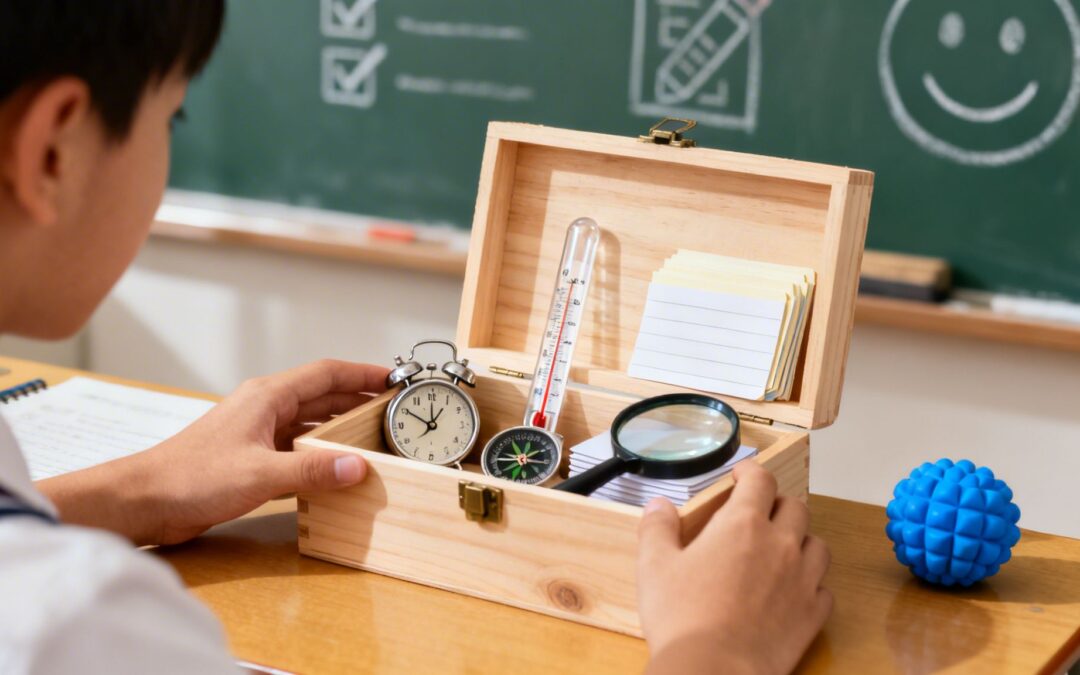
Think of self-management not as one single skill, but as a personal toolkit every child carries with them. Inside are all the specific instruments they need to handle daily challenges and build a strong foundation for whatever comes next. Just like a builder needs a hammer for one job and a measuring tape for another, a student needs different self-management skills for different situations.
For example, when a student gets frustrated with a tough math problem, their emotional regulation tool helps them take a deep breath instead of just giving up. When they’d rather be playing video games but have a project due, their impulse control tool helps them stay focused. Developing these skills isn’t about turning kids into perfect, rule-following robots; it’s about empowering them to make thoughtful choices for themselves.
Self-management is the bridge between knowing what to do and actually doing it. It empowers students to take ownership of their learning, behavior, and emotional well-being, turning potential into real-world competence.
This internal toolkit has a huge impact on every part of a student’s life. A child with strong self-management skills is much better equipped to:
Succeed Academically: They can map out study time, stay focused during lessons, and push through when subjects get tough. A practical example is a student using a planner to schedule 30 minutes for homework before playing, ensuring it gets done.
Build Healthy Friendships: They’re able to manage their reactions during disagreements and really listen to another person’s side of things without getting overwhelmed. For instance, a student who feels upset can say, “I need a minute,” instead of yelling at their friend.
Develop Resilience: They can handle stress, bounce back from setbacks, and walk into new situations with a sense of confidence. A resilient student who fails a test might think, “Okay, that didn’t work. I’ll ask the teacher for help and try a new study method.”
The Core Components of Self Management
To really get what’s inside this toolkit, let’s break down the key skills that all work together. Each one plays a unique role in helping a student navigate their world with more confidence and control.
Here’s a quick look at these essential components. As parents and teachers, our job is to help students recognize which tool is needed for the job and give them chances to practice using it.
The Core Components of Self Management
Skill Component
What It Looks Like in a Student
Emotional Regulation
Taking a moment to calm down after a disagreement on the playground.
Impulse Control
Raising their hand instead of shouting out the answer in class.
Goal-Setting
Breaking a large book report into smaller, manageable steps.
Organization
Keeping their backpack tidy and remembering to bring home their homework folder.
Stress Management
Using a breathing exercise before a test to reduce anxiety.
Attention Control
Finishing their reading assignment even when siblings are playing nearby.
When we see these skills as distinct but connected tools, it becomes much easier to pinpoint where a student might need extra support and how we can provide it. Building these skills one by one gives students the foundation they need to manage themselves effectively in any situation.
Exploring the 6 Pillars of Self Management
It helps to think of self-management as a “toolkit” a student carries with them. Let’s open that toolkit and look at the 6 essential instruments inside. These are the pillars that hold up a student’s ability to navigate their world with intention and control.
Each is a distinct skill, but they all work together—much like you need different tools to build a sturdy house. To make these ideas real, we’ll explore each pillar with a simple analogy and practical examples that parents and teachers can spot in everyday life. This helps turn abstract concepts into behaviors you can actually see, support, and encourage.
This diagram shows how a student’s success toolkit connects their thoughts, feelings, and actions, turning them into a powerful cycle for achievement.
The visual reminds us that self-management isn’t just about what kids do. It’s about helping them understand the powerful link between what they think, how they feel, and the choices they make.
1. Emotional Regulation: The Feelings Thermostat
Think of emotional regulation as a child’s internal “feelings thermostat.” It helps them notice when their emotional temperature is rising—from cool and calm to warm and annoyed, or even hot and angry. The goal isn’t to get rid of big feelings, but to learn how to keep them in a comfortable, manageable range.
A child with a well-calibrated thermostat can sense frustration building and use a strategy to “cool down” before a full-blown meltdown. This is absolutely foundational for learning and getting along with others.
Example for a Teacher: A kindergartener, accidentally pushed in line, feels their “thermostat” spike. They remember the class breathing exercise, put a hand on their belly, and take three slow breaths instead of pushing back.
Example for a Parent: An eight-year-old is about to lose a board game. They start to feel angry, but instead of flipping the board, they say, “I’m feeling frustrated, I need a minute,” and step away.
Example for a Student: A student gets a lower grade on a quiz than they wanted. Instead of crumpling the paper in anger (hot), they feel a pang of disappointment (warm), take a deep breath, and decide to ask the teacher how they can improve for the next one.
2. Impulse Control: The Mental Brakes
Impulse control is like having a reliable set of “mental brakes.” It’s the ability to hit pause between feeling an urge and acting on it. For a student, this means stopping to think before speaking, acting, or making a choice—especially when a more immediate, less helpful option is so tempting.
Without these brakes, a student might blurt out answers, grab a toy from a friend, or get sidetracked by their phone instead of finishing homework. Learning to use these brakes is crucial for classroom conduct and making safe, thoughtful decisions.
This skill is all about creating a moment of choice. It’s the pause that allows a student to ask, “Is this a good idea right now?” and steer toward a better outcome.
Example for a Teacher: A student is so excited they know the answer that they start to shout it out. They catch themselves, put their mental brakes on, and raise their hand instead.
Example for a Parent: A teenager sees a new video game they desperately want. Their first impulse is to spend all their allowance money. Instead, they pause and decide to save half of the money and put the other half toward the game.
Example for a Student: A fifth-grader is working on a group project, and a classmate suggests an idea they strongly disagree with. Their first impulse is to say, “That’s a stupid idea!” Instead, they apply their mental brakes, pause, and rephrase: “I see what you’re saying, but what if we tried this instead?”
3. Goal Setting: The Personal Roadmap
Goal-setting is a student’s “personal roadmap.” It helps them see where they’re going and plan the steps to get there. This skill transforms huge, overwhelming tasks—like a science fair project or learning a new instrument—into a series of smaller, more achievable milestones.
A good roadmap doesn’t just show the final destination; it highlights the route, potential stops, and the progress made along the way. This builds a sense of agency and teaches students how to work toward future accomplishments. It’s also tightly linked to motivation; as you can learn in this guide on how to develop self-discipline, breaking down goals makes it possible to keep going.
Example for a Teacher: To prepare for a spelling bee, a teacher helps a student set a goal of learning 5 new words each day, rather than trying to memorize 50 words the night before.
Example for a Parent: A child wants to save up for a new bike. A parent helps them create a “roadmap” by figuring out how much they need to save from their allowance each week and creating a chart to track their progress.
Example for a Student: A middle schooler wants to get a B in math but currently has a C. They create a “roadmap” with a parent that includes:
Destination: Earn a B or higher.
Route: Complete all homework, study for 20 minutes each night, and ask for help once a week.
Milestone: Check their grade every Friday to see if they’re on track.
4. Organization: The Tidy Backpack
Organization is about creating order in a student’s physical and mental worlds. Think of it as keeping a “tidy backpack”—both literally and figuratively. When a student’s backpack, desk, and schedule are organized, they can find what they need, remember deadlines, and approach their work with a clear head.
The opposite is a chaotic, overflowing backpack where homework gets lost and important papers are crumpled. This disorganization creates a ton of unnecessary stress and wastes mental energy that should be going toward learning.
Example for a Teacher: A teacher shows the class how to use a color-coded folder system: a red folder for math, a blue one for reading. This helps students visually sort their work and find materials quickly.
Example for a Parent: Before bedtime, a parent and child do a “backpack check” together, making sure homework is packed, old papers are taken out, and gym clothes are ready for the next day.
Example for a Student: A student knows exactly where their homework folder is. They have a specific pocket for important papers, so they hand in the permission slip calmly and start their day ready to learn. This reduces anxiety and builds independence.
5. Stress Management: The Pressure Valve
Stress management works like a “pressure valve.” Everyone feels pressure from school, friends, and home life. This skill allows a student to safely release that pressure before it builds up and leads to an explosion of anxiety, anger, or just shutting down completely.
Learning to spot the signs of stress (like a racing heart or tense shoulders) and use healthy release strategies is one of the most important self-management skills for long-term well-being. It goes hand-in-hand with self-awareness, which gives students the ability to recognize their feelings in the first place. You can read more about building that crucial foundation in our detailed guide on self-awareness skills.
Example for a Teacher: A teacher notices students are getting antsy before a test. They lead the class in a one-minute “chair stretch” to release physical tension and reset their minds.
Example for a Parent: A teenager is stressed about a social situation at school. Instead of letting them bottle it up, a parent suggests going for a walk together to talk it out, releasing emotional pressure.
Example for a Student: A high schooler feels overwhelmed by an upcoming exam. Instead of panicking, they use their “pressure valve” by taking a five-minute break to listen to music or talk to a friend. This helps them return to studying with a clearer mind.
6. Attention Control: The Focus Flashlight
Finally, attention control is like having a “focus flashlight.” In a world overflowing with distractions, this skill allows a student to shine a bright beam of concentration on what matters most in the moment—whether it’s the teacher’s voice, a book, or a math problem.
It also means noticing when the flashlight has drifted away and gently guiding it back to the task. This isn’t about forcing concentration for hours on end, but about learning to manage and direct one’s focus with intention.
Example for a Teacher: During silent reading, a teacher quietly prompts a daydreaming student by saying, “Shine your flashlight on your book,” providing a simple, non-judgmental cue to refocus.
Example for a Parent: A child is trying to do homework while the TV is on. A parent helps them manage distractions by saying, “Let’s turn the TV off for 20 minutes so you can use your full focus flashlight on this worksheet. Then you can watch.”
Example for a Student: A student is reading at home while their younger sibling watches cartoons in the same room. They feel their “flashlight” drifting toward the TV. They recognize this, stand up, and move to a quieter spot at the kitchen table to finish their work. They didn’t just notice the distraction—they took action to manage it.
Tracking Self Management Skills by Grade Level
How can you tell if a student’s self-management skills are on track? It’s a lot like learning to read or ride a bike—these skills grow over time and look totally different from one age to the next.
Knowing what’s developmentally appropriate is the key. It helps us provide the right kind of support without causing frustration for the child (or for us!). Think of this as a practical roadmap to understanding what “normal” behavior looks like and how to gently guide students toward the next milestone.
Early Elementary Milestones (Grades K-2)
For our youngest learners in kindergarten through second grade, it’s all about building the absolute basics of self-management. Kids at this age are just starting to move from being completely reliant on adults to taking their very first wobbly steps toward independence. Their self-control is very much a work in progress.
Our expectations should center on simple, concrete actions we can practice every day, with plenty of reminders and positive praise. Success isn’t about perfection; it’s about the effort.
Impulse Control Example: A first-grader wants the classroom’s special glitter crayon right now. Instead of grabbing it, they are learning to ask, “Can I use that when you’re done?”
Emotional Regulation Example: A second-grader feels tears coming after losing a game of kickball. They are learning to go get a drink of water to calm down instead of yelling.
Attention Control Example: A teacher asks a kindergartener to “put your drawing in your cubby and join us on the rug.” The child successfully completes both steps without getting sidetracked.
Organization Example: A student learns to put their crayons back in the box and hang their coat on their designated hook with a little bit of guidance.
At this age, self-management is a team sport. Think of it as co-regulation, where the adult acts as the external “brakes” or “thermostat” while the child’s internal system is still under construction.
When a first-grader manages to sit quietly for ten minutes during story time, that’s a huge win for their attention control. And when a second-grader remembers to put their homework folder in their backpack after just one reminder, they are mastering a crucial organizational skill.
Upper Elementary Milestones (Grades 3-5)
By the time students reach upper elementary, they are primed for more independence. Their brains have developed a greater capacity for planning and reasoning, which means they can start managing more complex situations and tasks. The training wheels are starting to come off.
Now, they can begin to see the direct connection between their actions and the results. This is the perfect time to introduce more structured planning and goal-setting.
Goal-Setting Example: A third-grader wants to learn their multiplication tables. A parent helps them set a goal to practice for 10 minutes each night using flashcards. Our guide on goal-setting for students offers more practical ways to build this crucial skill.
Organization Example: A fifth-grader starts using a simple weekly planner to write down assignments and due dates, checking it each afternoon.
Stress Management Example: A fourth-grader feels overwhelmed by a tough math problem. They are learning to name that feeling (“I’m frustrated!”) and use a simple strategy, like taking a few deep breaths or asking for a short break.
Impulse Control Example: A student gets better at thinking before they speak in a class discussion, showing more respect for what their classmates have to say, even when they disagree.
Middle School Milestones (Grades 6-8)
Middle school throws a whole new level of complexity at students—multiple teachers, changing schedules, and long-term deadlines. This is when self-management skills go from “helpful” to “absolutely essential” for both school success and personal well-being.
The focus shifts from simply completing single tasks to managing a whole system of ongoing responsibilities. They’re now expected to be the main drivers of their own learning.
Long-Term Planning Example: A seventh-grader has a research project due in two weeks. They create a timeline: week one for research and outlining, week two for writing and editing.
Advanced Organization Example: An eighth-grader uses a digital tool like Google Calendar or a school app to track their homework, sports practices, and social plans.
Emotional & Stress Management Example: A sixth-grader has a conflict with a friend. They are able to talk through the issue with the friend directly, using “I feel” statements, without needing an adult to step in every time.
This progression isn’t just about making school life easier. Strong self-management skills are consistently ranked among the top qualities employers look for. Building these skills in the classroom is one of the best ways we can set our kids up for a successful and fulfilling future.
Actionable Strategies for the Classroom
Okay, so we’ve talked about what self-management is, but how do we actually teach it in a busy classroom? This is where the real magic happens. By weaving simple, consistent routines into the school day, teachers can create an environment where students actively build and strengthen their own self-management toolkits.
The great news is, this doesn’t require a total curriculum overhaul. It’s about small, intentional actions that yield huge results.
The goal is to shift from correcting a lack of self-management to proactively teaching the skills. Instead of just reacting to a student’s outburst, we can give them the tools for emotional regulation before the feelings get too big. This simple shift empowers kids, cuts down on disruptions, and frankly, just makes the classroom a better place to be for everyone.
Create a Calm-Down Corner
One of the most effective, hands-on ways to teach emotional regulation is to set up a designated “Calm-Down Corner” or “Peace Corner.” This isn’t a punitive time-out spot. It’s a safe, inviting space where students can choose to go when they feel their emotions starting to bubble over. It gives them a physical place to practice self-soothing.
Stock this area with simple tools that help students manage their feelings and reset. The key is to frame it as a helpful resource, not a place of shame.
Practical Example: A student feels frustrated during math. They signal the teacher, walk to the Calm-Down Corner, squeeze a stress ball for three minutes while watching a sand timer, and then return to their desk ready to try again.
Sensory Tools: Think stress balls, soft pillows, or small containers of putty. These tactile objects give a student a quiet, non-disruptive way to channel anxious or angry energy.
Visual Aids: Post an “emotions chart” with faces showing different feelings. This helps kids identify and name what they’re experiencing—the crucial first step to managing it.
Breathing Guides: Simple visual cues work wonders. A picture of a flower to “smell” (inhale) and a candle to “blow out” (exhale) can guide a student through calming breaths without you having to say a word.
Timers: A sand timer or a simple visual timer provides structure. It allows a student to take a designated two or five minutes to regulate before rejoining the group.
Use Visual Timers and Schedules
So many self-management challenges, especially around attention and organization, come from a fuzzy sense of time. For a child, a 30-minute work period can feel endless and overwhelming. Visual timers are a game-changer because they make abstract time concrete and manageable.
By making time visible, you give students a powerful tool to manage their own energy and attention. It answers the constant question of “How much longer?” and helps them learn to pace themselves.
Practical Example: A teacher sets a visual countdown timer on the board for 20 minutes of independent work. Students can glance up and see exactly how much time is left, which helps them stay on task and manage their pace instead of asking the teacher repeatedly.
Practical Example: A clear visual schedule of the day’s activities is posted on the wall. Before transitioning from reading to math, the teacher points to the schedule. This helps kids anticipate the change, reducing the stress and disruption that can come from uncertainty. For students who might need a bit more support, you can explore other self-regulation strategies for students that build on these foundational classroom structures.
Implement Goal-Setting Routines
Make setting goals a regular, low-stakes part of your classroom culture. This gives students constant practice in breaking down tasks and builds their sense of accomplishment. These don’t have to be massive academic undertakings; small, personal objectives work wonders.
Here are a few practical ways to weave this in:
“One-Thing” Morning Check-in: Start the day by having each student write down one small, achievable thing they want to accomplish on a sticky note. It could be “finish my math worksheet,” “read one chapter,” or even “ask a question in class.” They put the note on their desk as a visual reminder.
Project Roadmaps: For longer assignments, work with students to create a simple “roadmap.” Break the project into three or four steps with target dates. For a book report, the steps might be: 1. Finish book by Friday. 2. Write outline by Tuesday. 3. Complete rough draft by Thursday.
End-of-Day Reflection: Take two minutes before dismissal for students to reflect on their “one thing.” Did they do it? If not, what got in the way? This builds metacognition—the ability to think about their own thinking and learning.
How to Foster Self Management Skills at Home
The classroom is a fantastic learning ground for self-management, but the real practice—the kind that truly sticks—happens at home. When parents and teachers are on the same team, they create a consistent world where kids can strengthen these essential skills in every part of their lives.
Don’t worry, reinforcing these ideas at home doesn’t have to be complicated. It’s really just about weaving simple, supportive routines into the natural rhythm of your family life.
Your role as a parent is incredibly powerful. By modeling and encouraging self-management, you’re handing your child a blueprint for success they’ll carry with them long after they’ve left the classroom. The key is to be supportive and realistic, always celebrating the effort, not just perfection.
Establish Predictable Daily Routines
Let’s be honest: kids thrive on structure. Predictable routines act like guardrails, guiding them through their day with far less stress and fewer power struggles. A consistent schedule for waking up, doing homework, and going to bed helps children internalize time management and take on more responsibility.
Think of it as creating a family rhythm. When a child knows what to expect, they can start to manage their own transitions between activities, which is a huge boost for both their confidence and their autonomy.
A consistent routine is the scaffolding that helps a child build their own internal sense of order. It reduces anxiety by answering the question, “What’s next?” before it’s even asked.
An after-school routine, for example, could be as simple as this:
Unpack & Snack (15 mins): Empty the backpack and grab a healthy snack. This gives them a moment to decompress.
Homework Time (30 mins): Settle in and work on assignments in a designated quiet space.
Free Play (Until dinner): Once responsibilities are handled, it’s time for fun and relaxation.
Create a Dedicated Homework Zone
An organized workspace is a game-changer for learning how to focus. Designate a specific spot for homework—whether it’s a desk in their room or a corner of the kitchen table. What matters is that it’s consistent, quiet, and stocked with all the supplies they’ll need.
This simple act of creating a “work zone” sends a clear signal to a child’s brain: “This is where I focus.” It cuts out the wasted time spent searching for a pencil or a quiet place to think, letting them dive right into their tasks. For any parent looking for ways to empower their children, figuring out how to motivate kids to study effectively is a huge piece of the puzzle.
Practical Example: Create a “homework caddy” with pencils, crayons, scissors, and glue. When it’s homework time, the child can bring the caddy to the kitchen table. When they’re done, everything goes back in the caddy, keeping the space organized and supplies easy to find for next time.
Use Chore Charts to Teach Responsibility
Chore charts are a classic for a reason—they are a brilliant, visual tool for teaching organization, goal-setting, and accountability. A good chart breaks down bigger responsibilities (like the dreaded “clean your room”) into small, manageable steps.
The trick is to make it a collaborative process. Sit down with your child to decide on a few age-appropriate chores and any potential rewards. This gives them a sense of ownership over the process and makes them much more invested in the outcome.
Practical Example (Ages 5-7): A chart with pictures for non-readers: a picture of a dog for “feed the dog,” a picture of a toy box for “put away toys.” They can put a sticker next to each task they complete.
Practical Example (Ages 8-12): A weekly chart on the fridge where they can check off multi-step chores like “sort and bring down laundry” or “help set the table for dinner.”
Practice Mindfulness Together
Stress management is a skill that benefits the entire family. Bringing simple mindfulness activities into your home can help everyone learn to hit the “pause” button and handle stress in a healthier way. You don’t need to be an expert; the goal is simply to practice paying attention to the present moment together.
Practical Example: Try “belly breathing” at bedtime. Have your child lie down and place a small stuffed animal on their belly. Ask them to breathe in slowly and watch the animal rise, then breathe out and watch it fall. This gives them a visual, calming focus point. For some family-friendly ideas to get you started, check out these simple self-care activities for students.
These efforts pay off in the long run. Workplace studies show that employees with strong self-management skills are 15% more productive because they are better at setting goals and managing their time. By building these skills at home, you’re not just helping with homework—you’re laying a foundation for their future success.
Connecting Self-Management to Lifelong Success
The skills we work on in childhood don’t just stay in the classroom. They become the bedrock of a successful and fulfilling adult life. When we teach a student what self-management skills are, we’re not just preparing them for the next test—we’re getting them ready for the real, complex world waiting outside the school gates.
Think of it this way: every small win in self-management is a building block for the future.
When a student learns to manage their frustration during a group project, they’re practicing the exact same skills they’ll need to navigate a tough conversation with a coworker one day. The organized backpack and homework planner of a middle schooler is the direct ancestor of the project management and deadline-driven work of a future career.
From Classroom Lessons to Career Readiness
This isn’t just a nice idea; it’s exactly what employers are looking for.
In its Future of Jobs Report 2025, the World Economic Forum pointed to self-management skills like motivation and self-awareness as top-five core competencies. With 39% of workers’ skills expected to change by 2030, companies are desperate for agile, resilient talent. You can dig into more of the data in the Future of Jobs Report on the WEF website.
Practical Connection: A student who uses a planner to manage five different subjects is learning the time management skills needed to juggle multiple projects in a future job. The ability to prioritize tasks, meet deadlines, and plan ahead is a direct outcome of practicing organization in school.
This really highlights how vital early SEL instruction is. By nurturing these skills now, we’re setting students up to thrive in the collaborative, fast-paced environments that future jobs will demand.
By guiding a child to manage their inner world, we empower them to shape their outer world. We are preparing them to be resilient problem-solvers, empathetic colleagues, and confident leaders.
The lessons learned from creating a study schedule or calming down after a playground disagreement are more profound than they seem. They are the very seeds of resilience, responsibility, and emotional intelligence.
As parents and educators, our guidance has a ripple effect that lasts a lifetime. By investing in these skills today, we’re giving the next generation the tools they need to build not just a successful career, but a well-managed, intentional, and meaningful life. Your support on this journey is one of the greatest gifts you can give.
Common Questions About Self-Management
We’ve covered a lot of ground, but you might still have some specific questions about what these skills look like day-to-day. Here are a few of the most common ones we hear from parents and educators.
How Can I Tell if It’s Defiance or a Skill Gap?
This is a critical distinction and one that can completely change how you respond to a child’s behavior. The key is to look at how they respond to a task, not just if they do it.
A student who can do the work but flat-out refuses is showing defiance. But a student who is genuinely overwhelmed by the steps involved—where to start, what to do next—is showing a skill gap. They might look frozen, frustrated, or just give up.
Practical Example: A teacher asks a student to clean their desk area. A defiant response might be, “No, I don’t want to.” A skill gap response might look like the student just moving papers around aimlessly, unsure of where to begin. This student doesn’t need discipline; they need a parent or teacher to break it down: “First, put all the loose papers in your folder. Next, put the crayons back in the box.”
What’s the Best Age to Start Teaching Self-Management?
Honestly? The best time to start is right now.
Self-management skills begin developing from the moment a child is born through co-regulation with a caregiver. When a toddler learns to wait a minute for a snack, that’s the earliest form of impulse control, guided by a trusted adult.
Practical Example (Ages 3-5): Focus on simple, concrete skills. Think two-step directions (“Pick up your toys and put them in the box”) and helping them use words for big feelings (“You’re feeling sad because playtime is over”).
Practical Example (Ages 6-8): You can start introducing basic organizational tools, like a homework folder, and simple goal-setting for tasks like cleaning their room. For instance, “Your goal is to make your bed every morning this week.”
The key is to start with small, age-appropriate expectations and build from there. You can’t expect a kindergartener to manage a weekly planner, but you can absolutely teach them to hang up their coat when they come inside.
What if a Student Struggles with Just One Specific Skill?
That’s completely normal! It’s very common for a student to be a rockstar at organization but struggle with emotional regulation, or vice versa.
The first step is to pinpoint the specific challenge and provide targeted support. If impulse control is the issue, try practicing games that require waiting for a turn. If they get easily overwhelmed by stress, introduce some simple breathing exercises they can do at their desk.
Practical Example: A student is well-organized but shouts out answers in class (a challenge with impulse control). The teacher can set a small, private goal with them: “Let’s see if you can raise your hand three times this morning. I’ll give you a quiet thumbs-up when you do.” This focuses on building one skill without overwhelming the student.
Soul Shoppe provides schools and families with the practical tools and shared language needed to build these essential life skills. Our research-based, experiential programs cultivate connection and resilience in every child. Discover how our assemblies, workshops, and digital resources can support your community at https://www.soulshoppe.org.