Soul Shoppe's work is made possible by donors and partners who care deeply about the young people in their communities! We can't do this work without you. Support our work in classrooms and on playgrounds across the nation by donating here.
The belly breathing technique is one of the simplest, most powerful tools we have for calming the nervous system. It’s all about swapping shallow chest breathing for deeper, more efficient breaths that engage the diaphragm. By inhaling to expand the abdomen and exhaling to contract it, you kickstart the body’s natural relaxation response.
What Is Belly Breathing and Why Does It Work So Well
Diaphragmatic breathing, which we often call the belly breathing technique, is how our bodies are naturally designed to breathe. It’s what you see babies do instinctively. But as we get older, life’s stresses and constant tension often cause us to switch to shallow "chest breathing" without even realizing it.
When we feel anxious, rushed, or overwhelmed, our breathing tends to become quick and high up in the chest. This pattern sends a direct signal to our nervous system that we're on high alert, locking us into a state of "fight or flight." Belly breathing flips that switch. By intentionally slowing down and deepening your breaths, you send a message back to your brain that everything is okay.
The Power of Conscious Breathing
This simple act of focusing on your breath engages the diaphragm, a large dome-shaped muscle at the base of your lungs. When you inhale deeply, your diaphragm moves down, creating more room for your lungs to fill with air. This movement directly stimulates the vagus nerve, a crucial part of the parasympathetic nervous system—your body's "rest and digest" command center.
The real power of the belly breathing technique lies in its ability to serve as a physiological reset button. It’s not just about feeling calm; it's about actively changing your body's stress response from the inside out.
For parents and educators, this is a total game-changer. Imagine a child who can calm themselves down before a big test. Or a classroom that can smoothly transition from the chaos of recess to quiet, focused learning. This isn't just a nice idea; it's a trainable skill. For example, a teacher can lead a one-minute "Belly Buddy" session before starting a math lesson to help students settle their minds and bodies.
Historical Roots and Modern Benefits
This practice is anything but a new-age fad. A focus on deep, intentional breathing has roots going back centuries. In the 1800s, the explorer George Catlin observed that Native American communities who consistently practiced nasal breathing showed remarkable health, from strong jaws to overall vitality. He documented these observations in his book, 'The Breath of Life,' directly linking their wellness to how they breathed.
Before we dive into the "how-to," it’s helpful to get a bigger picture by understanding the critical differences between nasal and mouth breathing and how they affect our health. When you teach a child this foundational skill, you're giving them a tool they can use for life. It helps them to:
Reduce anxiety and stress by lowering cortisol levels.
Improve focus and attention, which is crucial in academic and social settings.
Foster emotional regulation and build self-control.
Mastering this one technique can set the stage for a more peaceful and productive environment, both at school and at home.
How to Guide Your Child Through Belly Breathing
Before you can teach the belly breathing technique to a child, it’s a good idea to get a feel for it yourself. We can't pour from an empty cup, after all. Modeling a sense of calm is always the first, most important step.
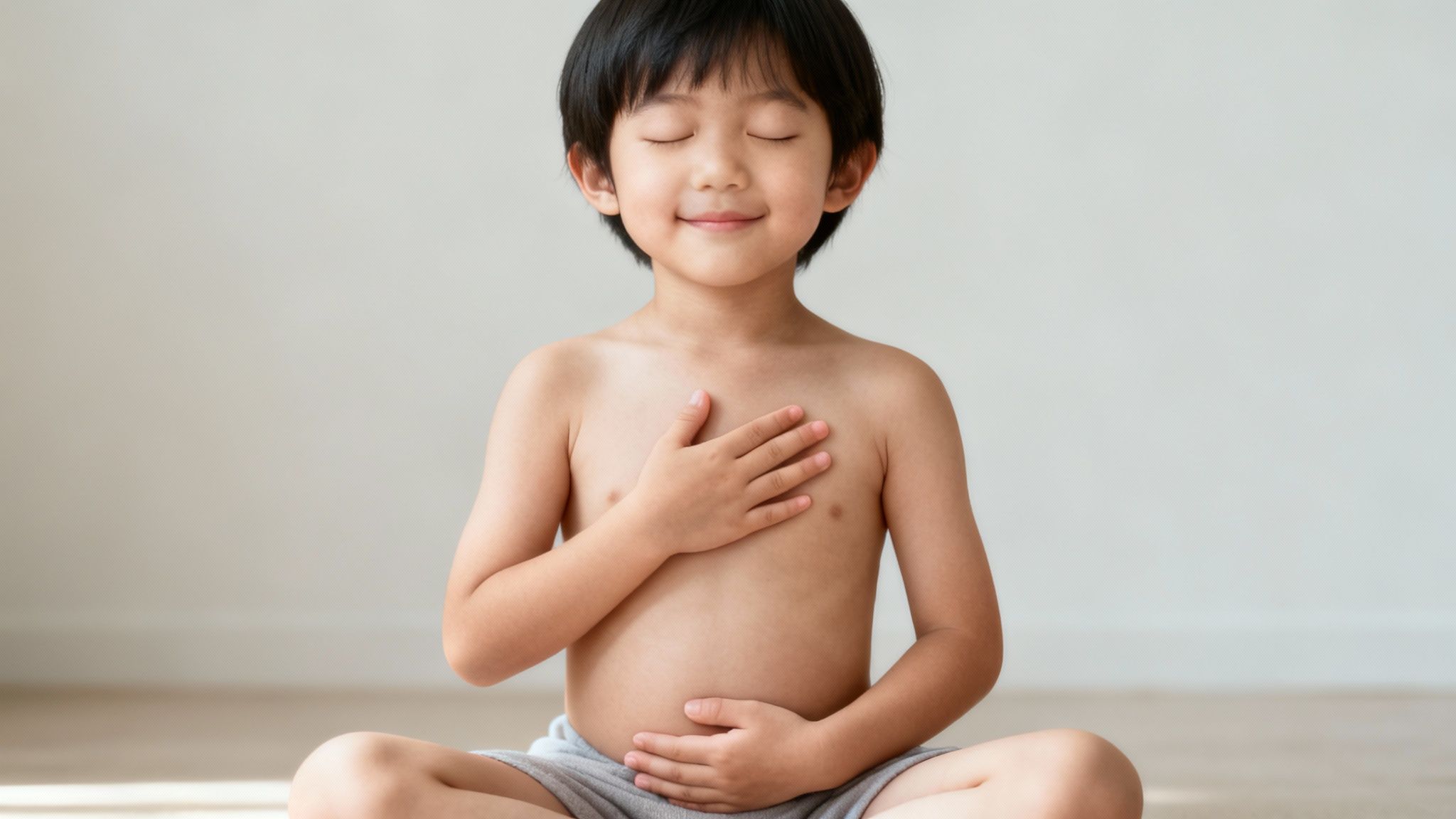
Find a comfortable spot, either sitting up straight or lying on your back. Place one hand on your chest and the other right on your belly, just below your ribs.
Now, take a slow, deep breath in through your nose. The goal is to feel the hand on your belly rise up, while the hand on your chest stays mostly still. As you exhale slowly, just feel your belly fall. That simple motion means you’re engaging your diaphragm. Once you can feel this in your own body, you'll be so much more confident and authentic when guiding a child.
Making Belly Breathing Fun for Kids
Let's be real—kids learn best through play and imagination. Dry, clinical instructions just won't cut it. To make the belly breathing technique stick, we need to turn it into a gentle, playful activity using visuals and language they can connect with.
Here are a few activities I’ve found work wonders at home or in the classroom.
The Breathing Buddy Activity
This is a classic for a reason—it’s fantastic for younger kids (think Pre-K to 2nd grade) because it makes the breath visible.
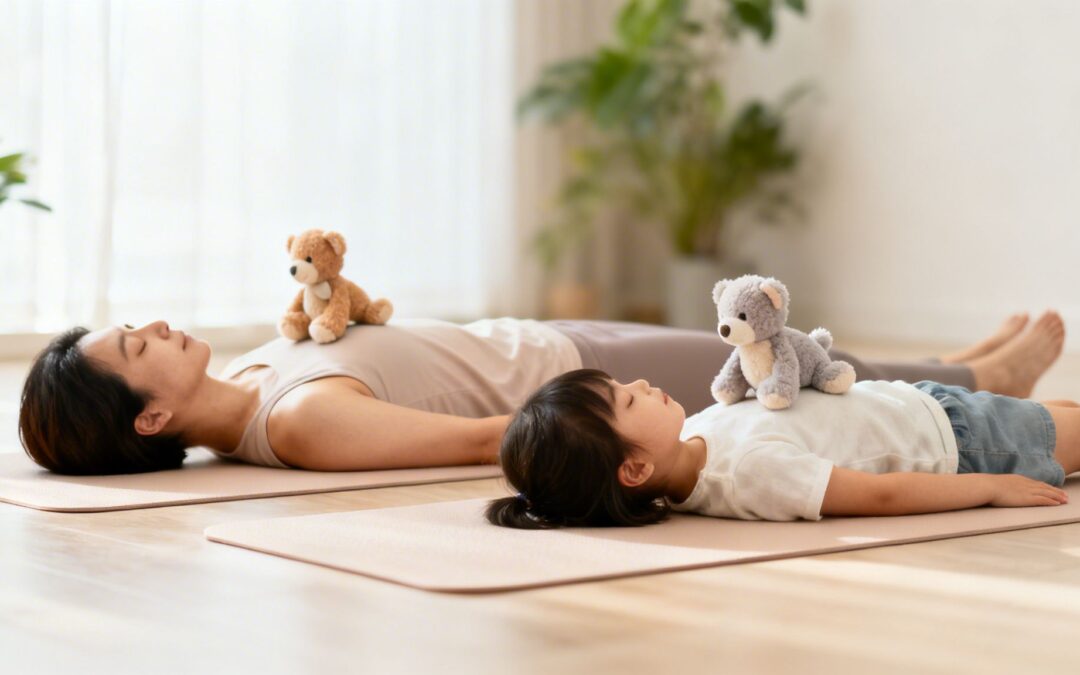
Practical Example: A parent can use this as part of a bedtime routine. After story time, say, "Let's put Teddy on our tummies and rock him to sleep." This creates a calm, focused transition toward sleep.
First, have the child lie down comfortably on their back, maybe on a rug or mat. Ask them to pick a small stuffed animal or a favorite lightweight toy to be their "Breathing Buddy."
Then, have them place their little buddy right on their tummy. Their one special job is to rock their buddy to sleep using only their breath.
You can guide them with a simple script: "Take a slow, quiet breath in and feel your tummy lift your buddy up toward the ceiling. Now, breathe out slowly and watch your buddy gently float back down." This turns an abstract feeling into a concrete result they can actually see.
Balloon Belly Breathing
This visualization is a game-changer for helping kids understand the idea of filling their abdomen with air. It’s effective for a wide age range, from kindergarteners all the way to older elementary students.
Practical Example: A teacher notices the class is getting restless during a long lesson. She says, "Okay everyone, hands on your bellies! Let's blow up our green balloons three times. Ready? Breathe in… and whoosh it out." This 30-second break resets the room's energy without disrupting the lesson plan.
Start by having them place their hands on their belly. Then, you can say something like, "Pretend there's a small, empty balloon deep inside your tummy. When you breathe in slowly through your nose, imagine you're filling that balloon up with air, making your belly get bigger and rounder."
"Now, as you breathe out slowly through your mouth, let all the air whoosh out of the balloon, making your tummy get smaller again." To make the imagery even more vivid, you can ask them to pick a color for their balloon. This gives a child a powerful tool to how to self-soothe in moments of big feelings or stress.
Teacher Tip: I love using this as a quick reset after a loud transition or a chaotic moment. Just three "Balloon Belly" breaths can help an entire class settle down and refocus their energy for the next lesson.
Simple Scripts and Visual Cues
Having a few go-to scripts in your back pocket makes it easy to introduce the belly breathing technique anytime, anywhere. Here are two of my favorites that work just as well one-on-one as they do in a group.
Smell the Flower, Blow Out the Candle
This sensory-based script is incredibly intuitive for most kids.
Practical Example: A child is getting upset because they can't get their shoes tied. The parent can kneel down and say, "Whoa, that's frustrating. Let's pause. Smell this beautiful rose with me… now blow out this birthday candle very slowly." This physical interruption breaks the frustration cycle.
For the inhale: "Imagine you're holding a beautiful flower. Bring it up to your nose and take a long, slow sniff to smell its wonderful scent. Let the air fill up your whole belly."
For the exhale: "Now, pretend you have a birthday candle in front of you. Purse your lips and blow the air out slowly and gently to make the flame flicker, but don't blow it all the way out just yet!"
That visual distinction between a sharp puff of air and a slow, controlled exhale is crucial. For kids struggling with emotional regulation, learning to extend their exhale is a powerful skill.
Belly Breathing Cues for Different Age Groups
The language we use matters. A cue that works for a second-grader might go right over a preschooler's head. It's helpful to have a few age-appropriate phrases ready to go.
Here are some simple, effective cues tailored for different developmental stages.
Age Group
Verbal Cue or Activity
Focus
Preschool (3-5)
"Let's pretend we're sleeping lions. Take a big, quiet breath in, then a long, sleepy sigh out."
Making it a game, connecting to familiar concepts (animals).
K-2nd Grade (5-8)
"Put your hands on your tummy. Can you make your hands go for a ride on your 'breathing wave'?"
Concrete, sensory feedback (feeling hands move).
3rd-5th Grade (8-11)
"Imagine your belly is a balloon. Breathe in to fill it up, breathe out to let the air out slowly."
Introducing simple visualization and control.
6th-8th Grade (11-14)
"Let's try 4-4-4 breathing. Inhale for 4, hold for 4, exhale for 4. Focus on the belly rising and falling."
Introducing structure and more advanced self-regulation techniques.
These are just starting points, of course. The best cue is always the one that resonates most with the child in front of you. Feel free to get creative and adapt the language to their interests
The Science Behind a Calmer Nervous System
Have you ever noticed how taking a few deep breaths can change your entire mood in seconds? It’s not just a feeling; it’s a powerful biological process at work. The belly breathing technique is like a direct line to your body's control center—the autonomic nervous system.
This system has two main modes. The first is the sympathetic nervous system, our "fight-or-flight" response, which kicks into high gear during stress. Then there's the parasympathetic nervous system, our "rest-and-digest" mode, which is all about calm and recovery.
When a child (or an adult, for that matter) feels stressed, anxious, or upset, their body is stuck in fight-or-flight. Their heart beats faster, breathing becomes short and shallow, and the body is flooded with stress hormones like cortisol. The belly breathing technique acts as a manual override for this entire response.
Engaging the Vagus Nerve
The secret ingredient here is the vagus nerve. It's the longest cranial nerve in the body and essentially runs the show for the parasympathetic nervous system. When you take a slow, deep breath that makes your belly expand, you're physically stimulating this nerve.
This simple action sends a signal straight to the brain: "It's safe to relax now." In response, the body gets the message to slow the heart rate, lower blood pressure, and ease up on cortisol production. It's a fascinating look into the mechanics of calming your nervous system through the vagus nerve.
By teaching a child this breathing technique, you are giving them a remote control for their own nervous system. It’s not a magic trick; it is a tangible, science-backed tool for self-management.
The Proven Impact on Respiratory Function
This isn't just theory; the physical benefits are real and measurable. Conscious, deep breathing makes our lungs work more efficiently. Over time, it can actually retrain the body to use a calmer, more effective breathing pattern even when at rest.
For instance, one four-month study with adolescents showed that regular practice led to a 10.96% increase in their tidal volume—that’s the amount of air moved with each breath. Their breathing frequency also slowed down by 11.47%, a clear shift away from rapid, shallow breathing. These findings show how consistent practice creates lasting change, and you can dig into the details in the full study on respiratory intervention outcomes.
Practical Examples in Action
Let’s see how this science plays out in a real school or home setting.
Before a Test: A student feels their heart pounding. The teacher says, "Okay class, before we start, let's take five deep belly breaths together." This activates their parasympathetic nervous system. Their heart rate slows, their mind clears, and they can finally access the information they studied instead of being blocked by test anxiety.
After Recess: A group of third-graders bursts into the classroom, loud and buzzing with energy. The teacher guides them through two minutes of "Balloon Belly" breathing. This collective sigh brings the energy down, cools off lingering playground squabbles, and gets their brains ready for focused learning.
Sibling Squabble: Two siblings are arguing over a toy. A parent intervenes and says, "Freeze. Everyone, let's do three Dragon Breaths." They inhale deeply and exhale with a loud 'whoosh.' The shared physical action breaks the tension, and they can address the problem more calmly.
These everyday moments are where the belly breathing technique proves its worth as a core emotional wellness tool. Learning to manage the body’s stress response is one of the most important self-regulation strategies for students we can possibly teach.
Weaving Belly Breathing into Daily Routines
The real power of the belly breathing technique isn’t in doing it once in a while; it’s in making it a habit. When kids practice consistently, they build a deep-rooted skill for self-regulation that they can turn to automatically. The goal is to make it as natural as brushing their teeth.
By weaving these quick exercises into existing schedules, you give children small pockets of calm throughout their day. This practice can be proactive—building resilience before stress hits—and reactive, offering instant relief in a tough moment.
Bringing Belly Breathing into the Classroom
Classrooms are busy places, full of transitions and shifting energy levels. A consistent belly breathing technique practice can anchor the day, creating a more predictable and focused atmosphere for everyone. It doesn't take much time, just a little intention.
Here are a few moments where you can easily slip it in:
Morning Meeting Kickstart: Start the day with just one minute of guided belly breathing. Practical Example: The teacher says, "Good morning, everyone! Let's start our day by waking up our bodies. Place a hand on your belly and let's take three slow breaths to get ready for a great day."
Post-Recess Reset: The jump from playground energy to quiet work can be a challenge. Use "Balloon Belly" breathing to help the class collectively exhale the chaos and settle their bodies.
Pre-Test Focus: Before a test or big assignment, lead the class through 3 to 5 deep belly breaths. This simple act can slow racing hearts, ease anxiety, and help students think more clearly.
By normalizing these brief pauses, you're not just managing classroom behavior; you're teaching a fundamental life skill. You're showing students that they have the power to manage their own energy and emotions.
Creating a Classroom Peace Corner
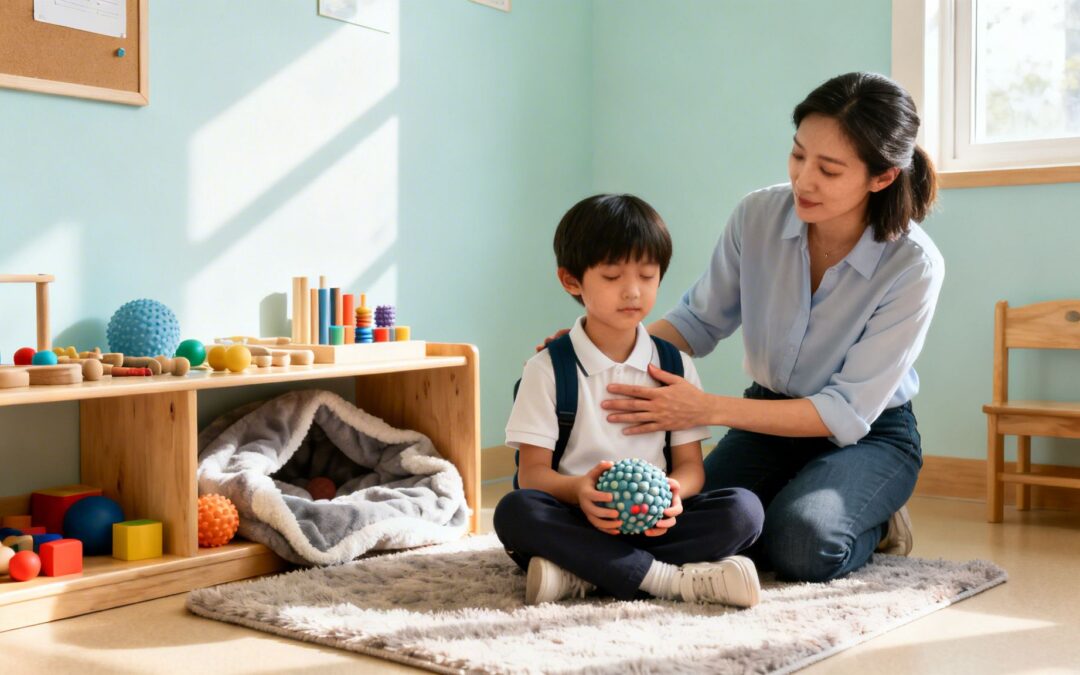
A designated "Peace Corner" or "Calm-Down Spot" gives students a safe, physical space to go when they need to practice their breathing skills. This isn’t a timeout for punishment. It’s a supportive spot for self-regulation.
Setting one up is simple:
Find a Quiet Spot: Look for a small, low-traffic area in your classroom.
Make it Comfy: Add a soft rug, a few cushions, or a beanbag chair.
Stock It with Tools: Include "breathing buddies" (small stuffed animals), laminated cue cards ("Smell the Flower, Blow Out the Candle"), or a glitter jar for focus.
Set Clear Expectations: Teach students that this is a place to go when they feel overwhelmed or upset. It’s a tool to help them reset before rejoining the group. Practical Example: A student who is visibly frustrated after a group activity can choose to go to the Peace Corner for two minutes to do "Breathing Buddy" breathing before re-engaging.
This small corner empowers students to take ownership of their emotional state. Knowing how to create these supportive environments is a key part of teaching mindfulness to children in a way that truly sticks.
Using Belly Breathing at Home
For parents, the belly breathing technique can transform challenging family moments and build deeper connection. It becomes a shared tool for navigating the inevitable ups and downs of life together.
Consider these opportunities to practice as a family:
Bedtime Wind-Down: Lying in bed is the perfect time to practice with a breathing buddy on the tummy. A few minutes of quiet belly breathing can ease the transition to sleep, especially for kids whose minds race at night.
Homework Frustration Breaker: When you see frustration building over a tricky math problem, pause everything. Say, "Let's take three dragon breaths together," and guide them through a slow inhale and a powerful "whoosh" exhale.
Pre-Game Jitters: Before a soccer game, recital, or any big performance, find a quiet moment to breathe together. Practical Example: In the car on the way to the recital, the parent can say, "I see you have some butterflies in your tummy. Me too! Let's tell them to calm down. Let's do three 'flower breaths' together."
When you model this yourself during your own moments of stress, you send a powerful message: this is a tool for everyone in the family.
Overcoming Common Breathing Practice Hurdles
Let's be real—getting kids to try a new calming technique isn't always smooth sailing. When you introduce the belly breathing technique, it’s perfectly normal to hit a few bumps. Some kids will feel silly, others will get distracted, and some might get frustrated if they feel like "it's not working" right away.
The secret sauce is always your own response. Your calm, patient, and encouraging attitude is the most powerful tool you have. If a child feels self-conscious, shift the energy. Instead of treating it like a serious chore, frame it as a quiet game or a secret superpower. You could whisper, "Let's see if we can make our breathing so quiet that no one even knows we're doing it!"
Troubleshooting Common Challenges
Sometimes, the physical part of the belly breathing technique is just tricky for little bodies to grasp. You'll see them trying really hard, but all you get is a puffed-out chest or even them holding their breath. This is incredibly common, but thankfully, it's also easy to address with a few simple tweaks.
If a child is struggling to feel their belly move, one of the best things you can do is have them lie down on their back. Gravity helps make the diaphragm's movement much more noticeable this way. This is the perfect time for the "Breathing Buddy" activity, where the rise and fall of a small stuffed animal gives them clear, visual proof that they're doing it.
Remember, the goal is always practice, not perfection. Create a supportive atmosphere where it’s safe to be a beginner. Celebrate the effort a child makes, not just the outcome.
Practical Fixes for Reluctant Kids
So, what happens when a child just flat-out refuses to practice? The key is to meet their resistance with curiosity and play, not force. Instead of a direct command, you'll need to pivot your approach.
Here are a few scenarios I've seen time and time again, along with solutions that work:
The Problem: A student loudly declares, "This is boring!"
The Solution: Turn it into a sensory game. Ask, "What color is your breath today? Can you imagine breathing in a cool, blue color and breathing out a warm, red one?" This gives their busy mind something interesting to focus on.
The Problem: A child is fidgety and just can't seem to stay still.
The Solution: Build gentle movement right into the practice. Try "Snake Breaths"—inhale deeply through the nose, then let out a long, slow, satisfying "hisssssss." This engages their body and naturally extends the exhale.
The Problem: A student insists, "I can't feel it!"
The Solution: Use tactile cues to make it concrete. Have them place their own hands on their belly. You can even gently place your hand over theirs and say, "Let’s see if we can make my hand go for a little ride."
Having a few of these playful strategies ready to go can help you navigate resistance and empower children to connect with the power of their own breath. These are just a few of the many simple but highly effective anxiety coping skills for kids that can make a profound difference.
Answering Your Top Belly Breathing Questions
Once you start introducing belly breathing, you’ll find that kids (and other adults!) have questions. That’s a great sign—it means they’re curious and engaged. Having some go-to answers ready will help you guide them with confidence, whether you’re a parent at home or an educator in a busy classroom.
One of the first questions I always get is about timing. How long should we be doing this? For an in-the-moment reset—when feelings are big or stress is high—just three to five deep belly breaths can work wonders. It’s a quick and powerful way to calm the nervous system.
When you’re trying to build a new habit, the goal shifts a bit. Aim for a consistent daily practice, maybe for three to five minutes. The key is always consistency over duration. A few minutes every day is far more effective than one long session once a week.
Age and Practice Differences
Another common question is about the right age to start. You can introduce the belly breathing technique to kids as young as three or four, and you might be surprised at how quickly they pick it up! For little ones, keep it playful and concrete. The "Breathing Buddy" activity is perfect because they can see and feel it working.
As kids get older, you can start explaining more of the "why" behind the practice. Helping them understand how this simple breath can calm their bodies gives them a powerful tool for life. It’s a skill that scales beautifully from toddlers to teens.
So, how does this fit in with other mindfulness practices?
Belly breathing is a foundational breathwork technique. It focuses specifically on the physical mechanics of using the diaphragm to directly influence the nervous system and trigger a relaxation response.
While it’s definitely a form of mindfulness, other practices might involve a broader awareness of thoughts, feelings, or sounds without such a direct focus on the breath's mechanics. Think of belly breathing as the most direct physical tool in your mindfulness toolkit. It’s an incredible first step for teaching children how their bodies and minds are connected.
At Soul Shoppe, we believe in equipping children with practical tools for emotional well-being. Our programs help build resilient, empathetic school communities where every child can thrive. Learn more about bringing our social-emotional learning resources to your school.
Learning how to self soothe is one of the most important skills we can teach our kids. It’s what allows them to navigate big, overwhelming feelings and build the resilience they’ll need for a lifetime. When a child can recognize an emotional storm coming, use a personal strategy to find their calm, and practice this in a safe space, they build a foundation for everything else—from focusing in class to creating positive friendships.
The Foundations of Self-Soothing in Children
Let’s clear up a common myth right away. Teaching a child to self-soothe has nothing to do with leaving them alone to “cry it out.” True self-soothing is a skill that’s learned, not forced. It develops through our active guidance, modeling, and co-regulation—the process of calming with them.
Think of it as the ability to independently manage emotional waves. It’s a skill that grows slowly, right alongside their developing brains. For our youngest kids, regulation is almost entirely external; they need a trusted adult to be their anchor in a storm. Over time, they start to internalize the strategies we show them, eventually learning to use them all on their own.
Creating Emotional Safety
The journey always begins with emotional safety. Before a child can even think about managing their feelings, they have to know it’s okay to have them—even the messy, inconvenient ones.
A huge part of this is giving them the words for what’s happening inside. When we create a shared, simple language for emotions, we demystify the experience. For example, a teacher might say to a second-grader, “It looks like you’re feeling frustrated because that puzzle piece won’t fit. Frustration can feel tight and hot in your body, can’t it?” This does two things: it labels the feeling and normalizes the physical sensation without judgment. You’re helping them connect the inner feeling to an outer word, which is a core building block of social-emotional development.
A child’s ability to self-soothe is directly tied to the feeling of being seen and understood by their caregivers. When we validate their emotions, we give them the security to explore and eventually manage those feelings independently.
While we’re focusing on school-aged kids here, these principles start way earlier. The groundwork for self-regulation is laid in infancy. If you’re curious about this stage, there are great guides on how to teach baby to self soothe that dig into the specifics.
Identifying Triggers and Modeling Responses
A key piece of the puzzle is learning to spot what sets off big emotions in the first place. These triggers change dramatically with age. What sends a kindergartener into a tailspin is worlds away from what rattles a middle schooler.
When we can anticipate these age-specific triggers, we can be proactive about modeling healthy ways to respond. A young child who’s crushed over losing a game might just need a hug and a quiet moment. A parent might say, “Losing feels so disappointing. It’s okay to be sad. Let’s get a big hug.” For an older student stressing about a test, you might model taking a few deep breaths and using positive self-talk, saying, “Wow, this test feels like a lot. I’m going to take three slow breaths to calm my brain down.”
To help you get started, here’s a look at some common triggers and simple soothing responses you can model for different age groups.
Age-Based Emotional Triggers and Initial Soothing Responses
This table breaks down some of the most frequent emotional stressors for K-8 students and offers immediate, age-appropriate actions you can model to help them begin the self-soothing process.
Age Group
Common Triggers
Initial Soothing Response to Model
K–2
Losing a game, sharing toys, transitioning between activities, loud noises.
“Let’s take a slow breath together.” Hugging a favorite stuffed animal. Moving to a quiet corner.
3–5
Peer disagreements, homework frustration, feeling left out, academic pressure.
“It’s okay to feel upset. Let’s write or draw about it.” Squeezing a stress ball. Taking a short walk.
6–8
Social drama, test anxiety, fear of failure, body image concerns, complex homework.
“I can see this is tough. Let’s listen to a calm song.” Journaling thoughts. Talking to a trusted friend.
By consistently modeling these simple actions, you give kids a real-life script they can draw from when their own emotions feel too big to handle alone.
Building a Sensory Toolkit for Calming Down
Once a child can name their feelings and triggers, we can give them something physical to do about it. This is where a sensory toolkit—often called a “calm-down kit”—becomes one of the most powerful resources you can have, both at home and in the classroom.
Engaging the senses is one of the fastest ways to ground a child who feels like they’re spiraling. When big emotions hijack their brain, the logical, thinking part goes offline. Sensory input helps cut through the noise, pulling them out of that reactive state and back into their bodies.
The Power of Sensory Engagement
A calm-down kit isn’t just a box of toys to distract a child. It’s a hand-picked collection of items designed to provide specific sensory input that actively de-escalates stress. Research backs this up, showing that tactile (touch) and proprioceptive (deep pressure) input have a significant calming effect on the nervous system.
You don’t need to spend a fortune on fancy gadgets. Honestly, some of the most effective items are things you probably already have, or can find at a local dollar store. The whole point is to offer a variety of textures, weights, and even smells that a child can turn to when their world feels a little too loud.
Here are a few powerful, low-cost ideas to get your kit started:
For Touch: A scrap of faux fur, a smooth river stone, a small sequin pillow, or different fabric swatches like velvet, corduroy, and silk.
For Pressure: A weighted lap pad (easy to make with a pouch of rice or dried beans), a perfectly squishy stress ball, or some therapy putty.
For Scent: Scented putty or play-doh with calming smells like lavender or chamomile. Even peppermint can be great for helping a child refocus their attention.
Co-Creating the Kit With Your Child
This is the most important part: build the toolkit with your child. When they get to choose what goes inside, they develop a sense of ownership over the tools and are far more likely to actually use them.
Find a calm, quiet moment to sit down together. Explain the kit’s purpose in a way they’ll understand. A parent might say, “Remember how your body feels when you get really frustrated? Let’s make a special box of things that can help your body feel calm and safe again.” A teacher could say, “Our classroom is a team. Let’s build a ‘Peace Corner’ with tools anyone can use when they need a quiet moment to reset.”
When a child co-creates their own sensory toolkit, they are not just picking out items; they are practicing self-awareness. They learn to identify what truly helps them feel better, turning a box of objects into a powerful symbol of their own competence and control.
For instance, a third-grader feeling anxious before a spelling test might pull out their peppermint-scented putty. The act of kneading it provides calming deep pressure to their hands, while the focusing scent helps clear their mind. To effectively build a robust sensory toolkit, it’s beneficial to consider specific best toys for sensory seekers that cater to varied sensory needs, providing targeted input for calming and focus.
Practical Examples in Action
Let’s look at how this plays out in the real world. These scenarios show how a simple toolkit can be woven right into a child’s day.
Example 1: A Kindergartener After a Loud Assembly
Scenario: Leo comes back from a noisy all-school assembly feeling jittery and overstimulated. He’s having a hard time settling down for quiet reading.
Tool: His teacher quietly guides him to the classroom’s “calm-down corner,” where he has his own small sensory box. He picks out a small, weighted lizard to place on his lap.
Outcome: The gentle pressure from the weighted animal helps ground him. That simple, physical sensation gives his nervous system the input it needs to settle down. In just a few minutes, he’s ready to rejoin the group.
Example 2: A Middle Schooler After a Disagreement
Scenario: Maya, a seventh-grader, has a small argument with a friend at lunch and comes home feeling upset and withdrawn.
Tool: Instead of pushing her to talk, her parent reminds her about the “chill out” basket they created together. Maya grabs a soft fleece blanket and her sketchbook.
Outcome: She wraps herself tightly in the blanket, giving herself a comforting, cocoon-like hug. She then spends 10 minutes doodling, which lets her process her feelings without having to find the words. This is a fantastic example of using established self-regulation strategies for students in a personal and meaningful way.
Mindful Movements and Breathing You Can Teach Today
While sensory tools are fantastic for grounding, some of the most powerful self-soothing strategies don’t come in a box. When we teach children how to use their own breath and body, we give them a toolkit they can carry anywhere, for life.
This isn’t just about telling a kid to “take a deep breath.” These are engaging, memorable activities designed to interrupt the stress cycle and return a child’s sense of control. Mastering this skill is at the heart of learning how to self soothe.
Breathing Exercises With Kid-Friendly Scripts
The goal is to make breathing feel less like a chore and more like a superpower. Using simple, playful scripts helps kids connect with the practice and, more importantly, remember it when they need it most.
Here are a few of my go-to’s that work wonders in both classrooms and homes.
1. Balloon Breaths This one is perfect for helping kids visualize their breath and slow down, which is incredibly helpful for taming anxiety.
The Script: “Pretend your belly is a big balloon. Put your hands right on your tummy. As you breathe in slowly through your nose, feel that balloon get bigger and bigger. Now, breathe out slowly through your mouth, letting all the air whoosh out as your balloon deflates.”
Practical Scenario: A parent sees their fourth-grader getting frustrated over a tough math problem. They might say, “Hey, let’s pause and do three Balloon Breaths to give our brains a mini-break.” This shifts the moment from struggle to proactive self-care.
2. Dragon Breaths This is the one I pull out for releasing frustration or big, pent-up energy. It encourages a strong, cleansing exhale.
The Script: “Sit up tall like a mighty dragon. Take a giant breath in through your nose, filling up your whole belly. Now, open your mouth wide and breathe out a powerful, fiery breath—whoosh!—to get all that mad energy out.”
Practical Scenario: After a disagreement on the playground, a teacher sees a student stomping back to class. Instead of scolding, they can get down on the child’s level and say, “I see some fiery feelings in you. Let’s be dragons together and breathe that fire out.”
3. Box Breathing (or Square Breathing) This technique is excellent for older kids (grades 3–8) because it introduces rhythm and focus. It involves tracing a square in the air or on their leg to pace the breath.
The Script: “Let’s draw a square with our breath. Using your finger, trace one side up as you breathe in for four counts. Hold your breath for four counts as you trace the line across the top. Breathe out for four counts as you trace down the other side. And hold your breath for four counts as you trace the bottom to finish the square.”
Practical Scenario: A middle schooler is visibly nervous before a presentation. A counselor could quietly guide them: “Let’s do some Square Breathing at your desk. No one even has to know. Just trace the square on your notebook.”
Mindful breathing activates the parasympathetic nervous system—the body’s natural “rest and digest” mode. By intentionally slowing their breath, children can lower their heart rate and signal to their brain that they are safe, effectively short-circuiting an anxious response.
Mindful Movements to Reset and Refocus
Sometimes, a child’s body just needs to move to let go of tension. These simple stretches can be done right at a desk or in a small space, making them perfect for classroom transitions or quick resets at home.
Starfish Stretches This full-body stretch is a fantastic way to wake up the body and release tension after sitting for a while.
How to Do It: “Stand up and reach your arms and legs out as wide as you can, like a big starfish! Stretch your fingers and toes. Now, curl into a tiny, tight ball. Let’s do it again—big starfish stretch, then tiny ball.”
Practical Scenario: A teacher notices the class energy is getting chaotic after a loud assembly. They can announce, “Okay, everyone, on your feet! Let’s do three big Starfish Stretches to help our bodies feel calm and ready for our next activity.” It gives students a physical outlet and instantly resets the room’s atmosphere.
Teaching these techniques is a vital step in helping kids build their emotional regulation skills, but it’s just one piece of the puzzle. The need for these practices is wider than you might think. For instance, a 2023 Safer Society survey found that while 74% of people have a daily self-care practice, 80% still report high burnout. More telling for us, 45% of respondents reported high stress in the prior six months. You can read the full research about these findings to see how stress is affecting people of all ages.
You don’t need fancy programs or complex exercises to teach a child how to self-soothe. In fact, some of the most powerful strategies are probably already happening in your home or classroom. The key is to turn these everyday activities into intentional tools for emotional regulation.
It’s all about helping a child connect the dots. When we guide them to see why listening to a certain song or doodling in a notebook makes them feel better, we’re handing them the keys. They move from just passively distracting themselves to mindfully managing their inner world.
Turn Passive Habits Into Active Soothing
Many activities kids already gravitate toward are, at their core, a form of self-regulation. Our job is to help them recognize this and use these habits on purpose. Instead of just seeing screen time or hobbies as “downtime,” we can frame them as real and valid self-care tools.
This isn’t just a hunch; it’s how kids are already coping. A 2023 survey revealed that 93% of youth use self-care to manage their emotions. The most common methods? Listening to music (72%), watching movies or TV (53%), and playing video games (47%). You can dive into the full breakdown of these powerful self-care findings to see just how central these activities are to their well-being.
By validating these existing habits, we remove the shame that can sometimes come with them. We send a clear message: “What you’re doing to feel better isn’t just okay—it’s a skill. Let’s get good at using it when you need it most.”
This shift in perspective is everything. It helps kids build a personalized menu of calming options that feel genuine and easy to reach for, boosting their confidence to handle whatever comes their way.
Create a “Calm-Down Playlist”
Music has a direct line to the emotional centers of the brain. The right song can shift a child’s mood, slow their heart rate, and give them a much-needed mental break. Building a “Calm-Down Playlist” with a child is a fantastic collaborative exercise.
For the Classroom: During a quiet moment, ask students to share one song that helps them feel calm or happy. Compile them into a class playlist to use during independent work, tricky transitions, or after a high-energy gym class.
For Home: Sit down with your child and explore different kinds of music. Try instrumental tracks, nature sounds, or even their favorite gentle pop songs. Ask them how each one makes their body feel. Does it make them want to tap their feet or relax their shoulders?
Practical Example: A fifth-grade teacher sees his class is getting antsy before a math test. He says, “Okay team, let’s put on our calm-down playlist for five minutes while we get our pencils ready.” A quiet, instrumental track comes on, and without him saying another word, the energy in the room visibly settles.
Set Up a “Doodle Corner” for Quiet Expression
Drawing, doodling, and coloring aren’t just for art class—they’re forms of non-verbal processing. For a child who can’t find the words for their big feelings, a pen and paper can be a lifeline. It gives them a way to get frustration or sadness out without having to talk about it.
In the Classroom: Designate a small, cozy area with paper, colored pencils, and markers. Frame it as a spot to “draw your feelings out” or to “give your brain a quiet break.”
At Home: Keep a “doodle basket” with sketchbooks and art supplies somewhere easy to grab. When you see your child is upset, you can suggest, “It looks like you have some big feelings right now. Do you want to go doodle them out in your book for a bit?”
Practical Example: An eight-year-old is fuming after an argument with her brother. She stomps off and grabs her sketchbook. She starts by furiously drawing dark, scribbly storm clouds. After a few minutes, she begins adding little sunbeams peeking through. The act of drawing helps her process the anger and move through it on her own terms.
Adapting Strategies for Different Ages and Needs
What works for a five-year-old won’t fly with a fifth-grader. The journey to learning how to self-soothe isn’t a one-size-fits-all path. What brings comfort to a six-year-old might feel silly or even embarrassing for a thirteen-year-old, so adapting our strategies is key.
As kids grow, their worlds expand. Their ability to think abstractly, understand their own feelings, and connect with others deepens. This means our approach has to evolve right alongside them, shifting from purely sensory methods for our youngest learners to more cognitive and relational tools for older students.
Kindergarten to Second Grade: Concrete Comfort
For kids in K-2, the world is very literal and hands-on. Their emotional regulation is deeply tied to their senses and what their bodies are experiencing. When big feelings hit, they need concrete, physical actions to feel safe and grounded again.
Self-soothing strategies at this age should be simple, easy to remember, and focused on the body.
Hugging a Stuffed Animal: The gentle pressure and soft texture offer immediate comfort. Practical Example: A first-grader feels sad after a playground squabble and the teacher allows them to get the classroom’s “feel-better bear” from the calm-down corner to hold at their desk for a few minutes.
Using a Weighted Lap Pad: During quiet reading, a child who feels wiggly and overstimulated can place a small weighted pad on their lap. That deep pressure sends calming signals straight to the nervous system.
Looking at a Calm-Down Jar: A glitter jar is a perfect visual anchor. Practical Example: A kindergartener is upset about their parent leaving at drop-off. The teacher can sit with them for a moment, shake the glitter jar, and say, “Let’s watch all the glitter settle. By the time it’s calm, our hearts might feel a little calmer, too.”
The goal here is to move from co-regulation to self-regulation. We start by modeling the soothing action with them—hugging them, breathing deeply beside them—and then guide them to use a physical tool on their own, like their favorite stuffed animal.
These early skills are incredibly important. Research shows that a child’s ability to self-soothe grows dramatically even in the first year of life, jumping from just 27.55% at one month to 46.39% by twelve months. This early development, often supported by comfort objects, helps build lifelong emotional health. You can learn more about how these foundational soothing skills develop and why they matter for a child’s future.
Third to Fifth Grade: Building a Bridge to Self-Awareness
Students in upper elementary are in a fascinating transition. They still absolutely benefit from sensory strategies, but they’re also starting to develop the ability to use more internal, cognitive techniques. They can actually think about their feelings and begin using simple self-talk.
This is the perfect age to connect concrete actions with their growing self-awareness.
Drawing or Journaling: A fourth-grader who’s frustrated with a tough math problem can be encouraged to “draw their frustration” or write down three angry words. This gets the feeling out without needing a complex conversation.
Using a Fidget Tool Discreetly: A fidget spinner or therapy putty can be used under a desk to manage pre-test jitters. It gives them quiet sensory input that helps focus the mind without distracting anyone else.
Listening to a Short Guided Meditation:Practical Example: A teacher can have students put their heads down for three minutes before a test and play a short audio clip: “Imagine a calm, blue light filling up your body, from your toes to your head, making you feel peaceful and focused.”
Sixth to Eighth Grade: Thinking and Connecting to Calm Down
By middle school, students are swimming in a sea of complex social dynamics and higher academic stakes. A squishy ball might still have its place, but they need more sophisticated tools that respect their growing independence and need for privacy.
The focus naturally shifts to internal self-talk and trusted peer connections.
Practicing Positive Self-Talk: A student who bombed a quiz can be taught to reframe their thoughts. Practical Example: A parent can model this by saying, “I’m so frustrated I burned dinner! Okay, deep breath. It’s not the end of the world. Let’s order a pizza and I’ll try that recipe again tomorrow.” This shows the student how to talk themselves through a mistake.
Creating a Calming Music Playlist: Music is a huge mood regulator for this age. An eighth-grader overwhelmed by social drama can put on their headphones and tune into a pre-made “chill” playlist, creating a personal bubble of calm.
Relational Soothing: Encourage them to reach out to a trusted friend. Practical Example: A teacher might notice a student is upset and say, “It looks like you’re having a hard time. Would you feel better if you took five minutes to talk with Sarah in the hallway?” This validates peer support as a healthy coping strategy.
When Self-Soothing Is Not Enough
Self-soothing skills are powerful tools, but they have their limits. It’s just as important to teach a child how to calm down as it is to recognize when their distress is bigger than what a coping strategy can solve.
These techniques are designed to help a child through temporary, manageable upsets. They aren’t a fix for chronic anxiety, deep-seated sadness, or overwhelming emotional pain. Knowing the difference is a critical part of supporting them effectively.
So, how can you tell when a child has moved beyond needing a calming corner and requires more specialized help? There are several clear indicators to watch for.
Red Flags to Monitor
Keep an eye out for persistent shifts in a child’s behavior, mood, or school performance. We’re not talking about a few off days, but consistent patterns that don’t get better even when they use their go-to soothing strategies.
Here are a few key signs that a higher level of care might be needed:
Significant School Changes: This could be a sudden or steady drop in grades, a consistent refusal to go to school, or frequent complaints of feeling sick without any clear physical cause. Example: A student who used to love math now complains of stomachaches every day before math class.
Extreme Emotional Outbursts: Look for meltdowns or tantrums that are far more intense or frequent than what’s typical for their age. This is especially concerning if they involve aggression, self-harm, or destroying property. Example: A ten-year-old throws a chair when asked to do their homework, a behavior that is new and extreme.
Persistent Withdrawal: You might notice them regularly pulling away from friends, family, and activities they used to love. Maybe they’re spending a lot more time alone in their room and seem disconnected. Example: A usually social teen stops answering texts from friends and quits the soccer team without explanation.
This decision tree infographic is a great starting point, outlining age-specific self-soothing strategies that can help you respond to a child’s needs.
Think of it as your first line of defense. The visual shows how to match techniques to a child’s developmental stage, but if you’ve tried these and things aren’t improving, it’s a clear signal to look further.
Reaching out for professional help is not a failure—it is a proactive and courageous act of care. It means you are expanding the child’s circle of support, bringing in partners who have specialized tools to help.
If you’re seeing these red flags, the first step is to document your observations. Make a few notes on the frequency, intensity, and context of the behavior.
Then, it’s time to start a conversation with the right people. At school, that might be the school counselor or psychologist. For parents, it’s about calmly sharing what you’ve noticed and suggesting you work together to find more support. You can also explore additional anxiety coping skills for kids to continue building out your toolkit.
Common Questions About Teaching Self-Soothing
As you start teaching and modeling self-soothing, it’s completely natural for questions to pop up. This is a nuanced skill, and every child’s journey will look a little different. Let’s walk through some of the most common questions we hear from parents and educators.
One of the first things everyone wants to know is, “How long will this take?” The honest answer is, there’s no set timeline. Self-soothing isn’t a single lesson you teach once; it’s an ongoing process. It takes a tremendous amount of patience and, more than anything, consistent modeling from the trusted adults in a child’s life.
What If My Child Resists?
Another big one we hear is, “What if my child refuses to use the calming corner?” Resistance like this is often a signal that the child needs more ownership of the space and the process.
This is a time to sidestep a power struggle. Instead, co-create the space and choose the tools with them. When a child has a hand in picking out that super-soft blanket or the perfect squishy stress ball, they’re much more likely to see it as their own helpful resource, not a time-out spot.
The goal is to build independence, not create another point of conflict. If a tool isn’t working, it’s not a failure on the child’s part. It’s simply a sign that you need to explore different strategies together.
Here are a few other common questions we get, along with some quick thoughts:
Can a middle schooler learn to self-soothe if they never have before? Absolutely. For older kids and tweens, you’ll want to focus on more mature strategies. Think about things like journaling, creating calming music playlists, or practicing positive self-talk. It is never too late to start building these essential life skills.
How do I balance letting my child self-soothe with giving them comfort? This is where co-regulation becomes your best friend. The process often starts with you soothing with them. For example, you might sit next to an upset child, rub their back, and do deep breaths with them. As you feel their body and breath start to calm, you can gradually step back a little, allowing them to take over by saying, “You’re doing a great job calming your body. Keep it up.” This teaches them they aren’t alone while building their own capacity for independence.
At Soul Shoppe, we believe that providing students with these essential emotional tools creates safer, more connected school communities. We have spent over 20 years developing research-based programs that empower children to manage their emotions and build empathy. Discover how our on-site and digital programs can support your students.
In a world buzzing with distractions, equipping children with tools to navigate their inner landscape is more essential than ever. Mindfulness isn’t about emptying the mind or sitting perfectly still for hours. It’s about paying attention to the present moment, on purpose, with curiosity and without judgment. This skill helps kids understand their big feelings, manage stress, and improve their ability to focus, whether in a bustling classroom or a busy home. By introducing simple, engaging mindfulness activities for kids, we provide them with a practical toolkit for life.
This guide moves beyond generic advice to offer a comprehensive roundup of 10 practical, evidence-based mindfulness activities designed for students in grades K-8. Each activity is presented as a valuable, standalone tool for building self-awareness and emotional regulation. For every item on our list, you will find:
Step-by-step instructions for easy implementation.
Age-specific adaptations for younger and older children.
Practical tips for both classroom and home settings.
Key social-emotional learning (SEL) targets for skill-building.
These aren’t just calming techniques; they are foundational practices for developing resilience, empathy, and self-control. They empower children to respond to challenges thoughtfully rather than reactively, aligning with Soul Shoppe’s mission to create safe, connected school communities. As children learn these vital skills, it’s also valuable to understand broader effective relaxation techniques for stress relief that promote calm and well-being at any age. Let’s explore how these simple yet powerful practices can transform your classroom or home, one mindful moment at a time.
1. Belly Breathing (Diaphragmatic Breathing)
Belly Breathing, also known as diaphragmatic breathing, is a foundational mindfulness activity for kids that serves as a powerful anchor for self-regulation. It involves taking slow, deep breaths that originate from the diaphragm, causing the belly to rise and fall. This simple action directly activates the body’s parasympathetic nervous system, which is responsible for the “rest and digest” response, effectively countering the “fight or flight” stress reaction.
This technique is remarkably accessible for all ages, making it a go-to tool for educators and parents. Its power lies in its simplicity and immediate physical feedback, as children can feel their belly move, which helps them focus on their breath and body.
How to Implement Belly Breathing
The core instruction is to have a child place one hand on their chest and the other on their belly. Guide them to breathe in slowly through their nose, focusing on making the hand on their belly rise while the hand on their chest stays relatively still. Then, they exhale slowly through their mouth, feeling their belly fall.
For Younger Kids (K-2): Use playful imagery. Ask them to pretend their belly is a balloon they are slowly inflating and deflating. Or, have them lie on their backs with a small stuffed animal on their belly and watch it rise and fall with each breath.
For Older Kids (3-8): Introduce simple counting patterns. A “5-4-3-2-1” method works well: inhale for 5 seconds, hold for 4, exhale for 3, hold for 2, and repeat. This structure provides a concrete focus for a wandering mind.
Practical Classroom and Home Examples
Belly Breathing can be seamlessly integrated into daily routines to build emotional resilience.
Classroom Scenario: A second-grade teacher notices her class is restless and unfocused after recess. She initiates “Bubble Breaths,” guiding students to inhale deeply and then exhale slowly as if blowing a giant, delicate bubble they don’t want to pop. This 60-second reset helps the class transition calmly back to learning.
Home Scenario: A parent helps their anxious 10-year-old prepare for a big test. They sit together and practice “box breathing” (inhale for 4, hold for 4, exhale for 4, hold for 4) for a few minutes. This empowers the child with a tangible tool to use if they feel overwhelmed during the exam.
By practicing during calm moments, children build the muscle memory needed to deploy this skill effectively when they feel stressed, anxious, or angry. For more ideas on creating a peaceful learning space, explore these calming activities for the classroom.
2. Body Scan Meditation
Body Scan Meditation is a progressive relaxation technique that guides children on an internal tour of their own bodies. The practice involves bringing gentle, non-judgmental awareness to different body parts one by one, simply noticing any sensations like warmth, tingling, or tightness. This activity is a cornerstone for developing interoception, the sense of the internal state of the body, which is crucial for emotional regulation.
This technique teaches children to tune into their physical stress signals, such as a tight jaw or clenched fists, and consciously release that tension. It fosters a deeper mind-body connection, helping kids understand how their emotions manifest physically. Its quiet, introspective nature makes it an excellent calming tool for individuals or groups.
How to Implement a Body Scan Meditation
The core instruction is to have a child lie down comfortably with their eyes closed or with a soft gaze. Guide them to bring their attention to their toes, then slowly move their focus up through their feet, legs, belly, arms, and all the way to the top of their head, noticing sensations in each part without needing to change anything.
For Younger Kids (K-2): Use tangible and playful language. Ask them to imagine a warm, sleepy flashlight shining on each body part, or pretend to be a melting snowman, slowly softening each part of their body from their toes to their head. Keep sessions short, around 3-5 minutes.
For Older Kids (3-8): Introduce more nuanced concepts. Encourage them to notice the difference between tension and relaxation by first tensing a muscle group (like squeezing their hands into fists) and then releasing it completely. This “tense and release” method provides clear physical feedback.
Practical Classroom and Home Examples
A Body Scan can be used as a transition activity to help children settle their bodies and minds.
Classroom Scenario: A middle school teacher plays a 5-minute guided body scan recording for their students during the last few minutes of class. This provides a structured moment of calm before the bell rings, helping students decompress from academic pressure before transitioning to their next period or home.
Home Scenario: A parent guides their energetic 7-year-old through a short body scan before bedtime. Lying in bed, the parent softly says, “Notice your feet. Are they warm or cool? Now let’s say goodnight to your knees.” This routine helps the child wind down, release physical energy, and prepare for restful sleep.
Practicing this meditation helps children build body awareness, a key component of self-awareness. To explore this further, check out these powerful emotional intelligence activities for kids.
3. Mindful Walking
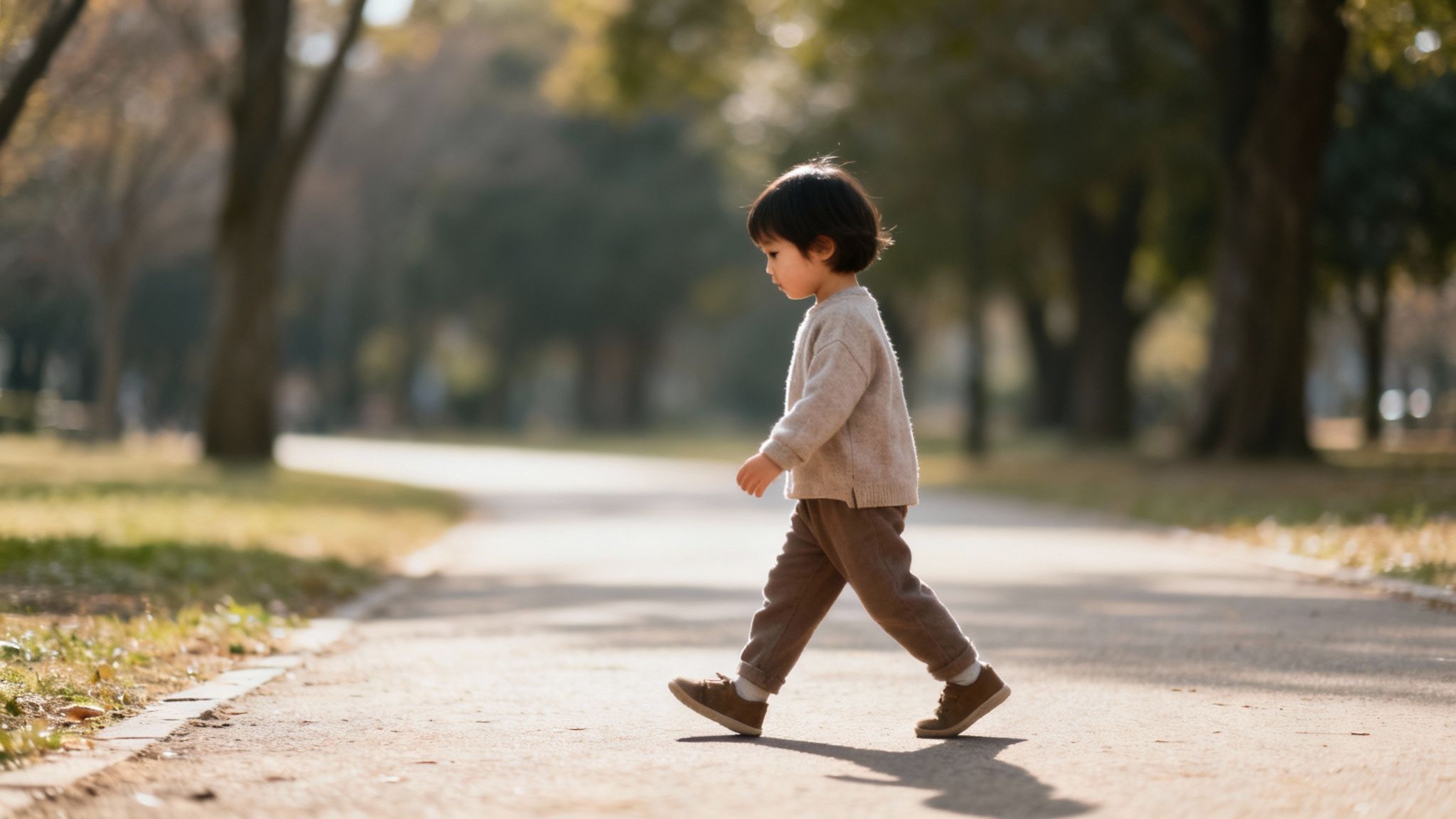
Mindful Walking is a dynamic meditation that bridges the gap between movement and awareness, making it one of the most accessible mindfulness activities for kids, especially for kinesthetic learners. This practice involves walking slowly and deliberately while paying close attention to sensory experiences: the feeling of feet on the ground, the sounds in the environment, and the sights along the path. It transforms a simple, everyday action into a powerful tool for grounding and presence.
This technique is highly effective for children who struggle with the stillness of traditional meditation. By engaging the body, it provides a physical anchor for the mind, helping to channel restless energy into focused attention and self-awareness.
How to Implement Mindful Walking
The goal is to shift focus from the destination to the journey of each step. Guide children to walk at a slower-than-usual pace, encouraging them to notice the sensations of lifting one foot, moving it through the air, and placing it back down on the ground.
For Younger Kids (K-2): Turn it into a game of observation. Ask them to be “Nature Detectives” or “Sound Spies,” walking as quietly as possible to notice things they might usually miss. Use prompts like, “Let’s walk like we’re sneaking up on a butterfly.”
For Older Kids (3-8): Introduce more structured sensory awareness. Create a “Sensory Scavenger Hunt” where they must find five different things they can see, four sounds they can hear, three textures they can feel, and two scents they can smell during their walk.
Practical Classroom and Home Examples
Mindful Walking can be used as a transition activity, a brain break, or a way to reconnect with the environment.
Classroom Scenario: A PE teacher begins class with a “Snail’s Pace Lap” around the gym or field. Students are instructed to walk as slowly as possible for two minutes, focusing only on the feeling of their shoes touching the floor. This serves as a calming warmup that brings the group’s energy together before more active games.
Home Scenario: A parent notices their child is feeling agitated after a long day of screen time. They initiate a five-minute “Awareness Walk” around the backyard. The parent prompts, “What do you notice with each step? Can you feel the grass under your shoes? What’s the farthest sound you can hear?” This short, active reset helps the child decompress and reconnect with their physical surroundings.
Practicing Mindful Walking helps children develop a greater appreciation for their environment and teaches them that mindfulness can be incorporated into any activity, not just sitting still.
4. Loving-Kindness Meditation (Metta)
Loving-Kindness Meditation, also known as Metta, is a heartfelt practice where children silently repeat phrases of goodwill and compassion. This powerful mindfulness activity intentionally directs kind thoughts toward oneself and then gradually outward to others, including loved ones, neutral people, and even those with whom they have difficulty. It directly cultivates empathy, quiets negative self-talk, and builds the neurological pathways for kindness and connection.
This practice is particularly effective for fostering a sense of belonging and reducing bullying behaviors. It shifts a child’s internal focus from judgment to compassion, providing a framework for understanding that everyone, including themselves, desires happiness and safety. Its structured nature makes it an accessible tool for nurturing social-emotional intelligence.
How to Implement Loving-Kindness Meditation
The core of the practice is guiding children to repeat simple, positive phrases. A common starting point is having them place a hand on their heart to create a physical connection to the feelings of warmth and kindness they are generating.
For Younger Kids (K-2): Use very simple, concrete phrases. Guide them to think of someone they love and silently wish them well: “May you be happy. May you be safe. May you be healthy.” Create a “kindness circle” where children imagine sending these kind thoughts out to their friends and family.
For Older Kids (3-8): Introduce a more structured sequence. Start with self-compassion, which is often the most challenging step. Then, extend the phrases to a loved one, a neutral person (like a school custodian), a difficult person, and finally to all living beings. The phrases can be adapted, such as: “May I be peaceful. May I be strong.”
Practical Classroom and Home Examples
Loving-Kindness Meditation can be a cornerstone for building a positive and inclusive community culture.
Classroom Scenario: After a conflict on the playground, a fourth-grade teacher uses Metta as a restorative practice. She guides the students to send kind thoughts first to themselves (“May I be calm”), then to a friend (“May you be happy”), and finally, when they are ready, to the person they disagreed with (“May you be peaceful”). This helps de-escalate lingering resentment.
Home Scenario: A parent incorporates a brief loving-kindness practice into their child’s bedtime routine. They sit together and silently send kind wishes to family members and friends. This ends the day on a positive, connected note and helps ease worries or anxieties about school relationships.
By regularly practicing Metta, children develop a “kindness muscle” that strengthens their capacity for empathy and forgiveness. To discover more strategies for nurturing this essential skill, explore these insights on how to teach empathy to students.
5. Five Senses Grounding (5-4-3-2-1 Technique)
The Five Senses Grounding technique, often called the 5-4-3-2-1 method, is a powerful mindfulness activity for kids that pulls their attention out of overwhelming thoughts and anchors them firmly in the present moment. This sensory-based exercise interrupts anxiety or worry spirals by systematically engaging each of the five senses to notice the immediate environment. It is a concrete, interactive tool that requires no materials and can be done anywhere.
This technique is especially effective for emotional dysregulation because it shifts focus from internal distress to external, neutral observations. By asking the brain to perform a specific, sequential task (find 5 things you see, 4 you can touch, etc.), it redirects cognitive resources away from the source of stress, providing immediate relief and a sense of control.
How to Implement Five Senses Grounding
The process is a simple countdown that guides a child through their senses. Verbally prompt them to silently or aloud identify:
5 things they can see.
4 things they can feel or touch.
3 things they can hear.
2 things they can smell.
1 thing they can taste.
For Younger Kids (K-2): Turn it into a game like “I Spy” or “Sensory Detective.” You can say, “Let’s use our detective eyes! Can you spot five blue things?” Simplify the prompts and offer gentle guidance if they get stuck.
For Older Kids (3-8): Encourage them to be specific and detailed. Instead of just “a chair,” they might notice “the smooth, cool metal of the chair leg.” Create a small, laminated card with the 5-4-3-2-1 prompts that they can keep in their desk or pocket as a discreet tool.
Practical Classroom and Home Examples
The 5-4-3-2-1 method is a versatile tool for managing moments of high stress.
Classroom Scenario: A school counselor is working with a fourth-grader who experiences panic before presentations. The counselor teaches the student the 5-4-3-2-1 technique to use while waiting for their turn. The student focuses on seeing the posters on the wall, feeling the texture of their jeans, hearing the hum of the projector, smelling their pencil, and tasting the mint they were given. This sensory input grounds them, reducing their anxiety.
Home Scenario: A parent notices their child becoming agitated and overwhelmed after a frustrating homework session. The parent gently says, “Let’s take a break and use our senses.” They guide the child through the 5-4-3-2-1 steps, bringing immediate awareness to the present and breaking the cycle of frustration before it escalates.
Teaching this technique during calm moments first allows children to practice and internalize the steps, making it easier to recall and use effectively when they feel overwhelmed.
6. Mindful Eating
Mindful Eating is a powerful practice that transforms a routine activity, like snack or mealtime, into an opportunity for deep, sensory awareness. It involves slowing down to engage all five senses: noticing the food’s colors and textures, inhaling its aroma, hearing its sounds, and savoring each flavor. This simple shift from automatic to intentional eating helps children develop present-moment focus, fosters a healthier relationship with food, and teaches gratitude.
This technique, often introduced with Jon Kabat-Zinn’s classic “raisin exercise,” is incredibly effective because it uses a familiar, tangible object. It teaches kids to appreciate their food and the journey it took to reach them, anchoring mindfulness in an everyday experience.
How to Implement Mindful Eating
The goal is to guide children through a sensory exploration of their food before and during consumption. Create a calm, distraction-free environment and encourage them to slow down and notice every detail of the experience.
For Younger Kids (K-2): Use simple, appealing foods like a single strawberry or a slice of orange. Guide them with questions like, “What does it look like? Is it bumpy or smooth? What does it smell like? What sound does it make when you bite it?”
For Older Kids (3-8): Introduce the concept of gratitude. Before eating, prompt them to think about where the food came from: the farmer, the sun, the rain. Have them write down or share one thing they notice about the taste or texture that they’ve never noticed before.
Practical Classroom and Home Examples
Mindful Eating can be easily incorporated into scheduled meal times to create moments of calm and connection.
Classroom Scenario: A first-grade teacher starts each day’s snack time with a “Mindful Minute.” Before the students eat their crackers, she asks them to hold one, look at its shape, feel its texture, and then take one slow bite, listening for the crunch. This brief ritual helps settle the class and fosters a calm transition.
Home Scenario: A family decides to have a “no-screens” dinner one night a week. The parent leads a short mindful eating exercise with a piece of broccoli, asking everyone to describe its taste and feel. This simple practice opens up conversations about food and encourages everyone to slow down and savor their meal together.
By practicing mindful eating, children learn to pay attention on purpose, improve self-regulation, and cultivate a deeper sense of appreciation for the simple things in life.
7. Guided Visualization/Imagery
Guided Visualization, also known as guided imagery, is a mindfulness activity that uses the power of imagination to transport a child to a calm and peaceful mental state. It involves listening to a descriptive narrative that helps them create a detailed, positive scene in their mind, such as a tranquil forest, a warm beach, or a personal “safe space.” This practice engages the senses and activates the parasympathetic nervous system, effectively reducing anxiety and stress hormones.
This technique is especially potent for visual learners, as it provides a rich, internal world they can access for comfort and self-soothing. By creating these mental sanctuaries, children learn they possess a powerful tool within their own minds to manage overwhelming feelings, accessible anytime and anywhere.
How to Implement Guided Visualization
The goal is to guide the child using calm, descriptive language that appeals to multiple senses. You can use pre-recorded scripts from apps like Calm or Headspace, read from a book, or create your own based on the child’s interests. Start by having the child get into a comfortable position, either sitting or lying down, and inviting them to close their eyes if they wish.
For Younger Kids (K-2): Keep visualizations short, simple, and magical. Guide them to imagine they are a fluffy cloud floating gently across a blue sky, or a tiny ladybug exploring a soft, green leaf. Use very concrete sensory details, like “feel the warm sun on your back” or “smell the sweet flowers.”
For Older Kids (3-8): Introduce more complex and empowering narratives. Guide them through building their own private treehouse or a secret garden. You can also use visualization to prepare for challenges, like imagining themselves successfully giving a presentation or scoring a goal in a soccer game.
Practical Classroom and Home Examples
Guided Visualization is a versatile tool for transitions, test preparation, and emotional regulation.
Classroom Scenario: A fourth-grade teacher plays a five-minute guided imagery audio track of a “walk through a peaceful forest” after lunch. Students listen with their heads on their desks. This quiet time helps them reset their energy, reduces post-recess chatter, and prepares their minds for an afternoon of focused learning.
Home Scenario: A parent helps their 8-year-old who is afraid of the dark. Each night, they do a “special star” visualization. The parent guides the child to imagine a warm, glowing star in their belly that fills their whole body with protective light, making them feel safe and brave as they fall asleep.
Practicing these mental journeys regularly helps children build a library of calming images they can call upon independently when they need to find their inner peace.
8. Mindful Coloring/Art
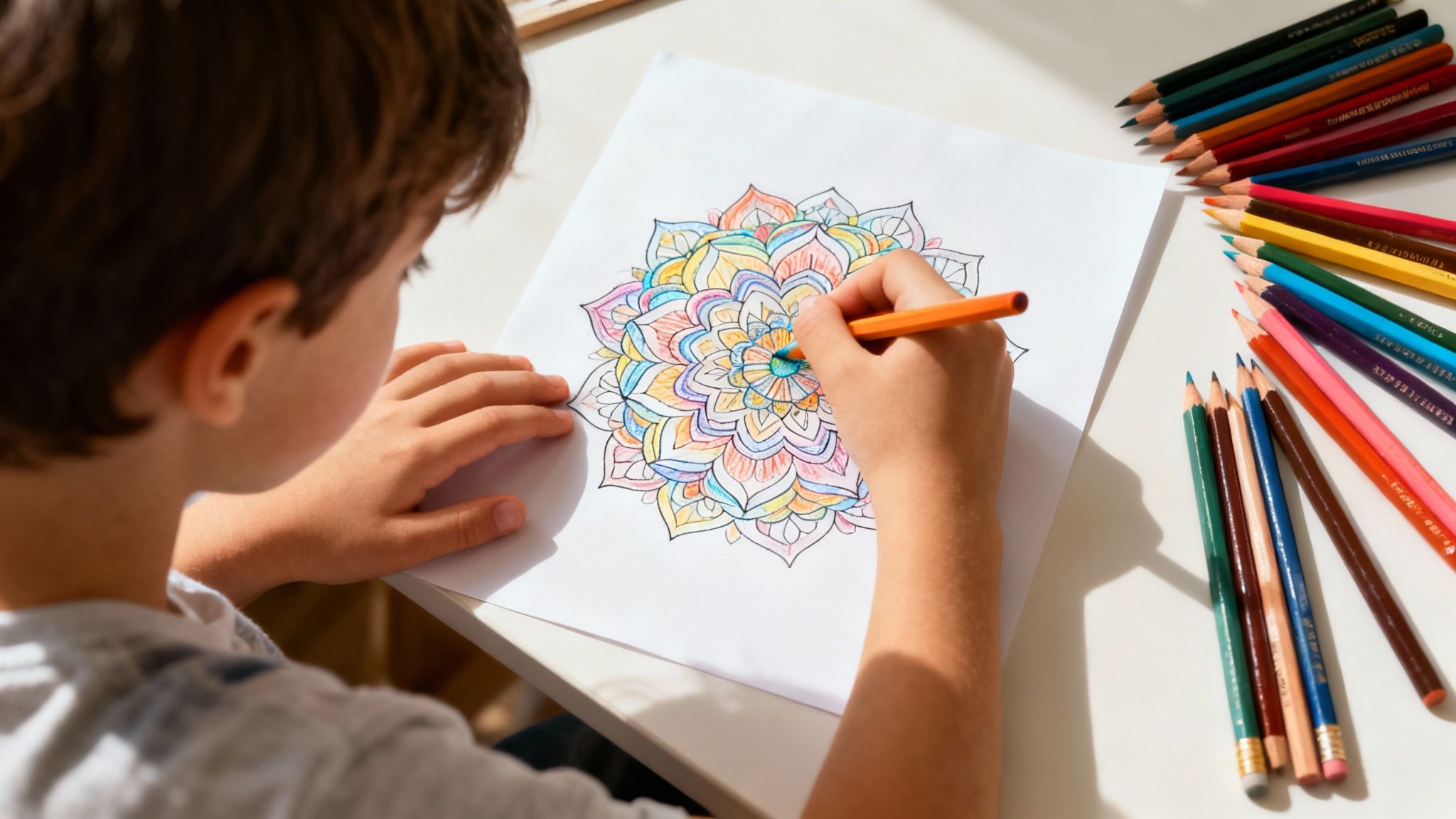
Mindful Coloring/Art is a creative practice that combines artistic expression with present-moment awareness. Instead of focusing on creating a perfect masterpiece, children engage in coloring, drawing, or painting while paying close attention to the sensory experience: the feel of the crayon on paper, the vibrant colors flowing from a marker, and the gentle movements of their hand. This approach makes mindfulness accessible to kids who may find traditional seated meditation challenging.
This activity helps children anchor their attention in a gentle, engaging way, calming a busy mind and reducing feelings of stress or anxiety. It beautifully shifts the focus from the final product to the process itself, encouraging non-judgment and self-acceptance.
How to Implement Mindful Coloring/Art
The goal is to guide a child’s awareness to the physical and sensory aspects of creating art. Frame the activity with the idea that there is “no wrong way” to do it. Encourage them to move slowly and intentionally, noticing what they see, feel, and hear.
For Younger Kids (K-2): Use simple, large designs like mandalas or nature scenes. Prompt them with sensory questions like, “What does the blue feel like? Is it calm like the ocean or bright like the sky?” and “Listen to the sound the marker makes on the paper.”
For Older Kids (3-8): Introduce more complex patterns or free-drawing prompts. Ask them to “draw their feelings” using colors and shapes that represent their current emotional state. Encourage them to notice how their body feels as they create, such as the tension in their hand or the rhythm of their breathing.
Practical Classroom and Home Examples
Mindful Coloring can be used as a calming transition, a brain break, or a quiet-time activity.
Classroom Scenario: A fourth-grade teacher provides mandala coloring pages as a “soft start” to the day. As students enter, they can choose a page and color quietly while soft instrumental music plays. The teacher circulates, asking gentle questions like, “What colors are you choosing today?” This sets a calm, focused tone for learning.
Home Scenario: A 7-year-old is feeling frustrated and overwhelmed after a difficult day at school. Their parent sets up a “mindful art station” with paper and watercolors, inviting the child to simply play with the colors on the page. The parent says, “Let’s just watch how the red and yellow mix together.” This provides a non-verbal outlet for difficult emotions.
By emphasizing the process over the outcome, this activity teaches children that their effort and presence are what truly matter, making it one of the most effective mindfulness activities for kids who express themselves visually.
9. Mindful Movement/Yoga
Mindful Movement, often expressed through kid-friendly yoga, is a dynamic mindfulness activity that combines physical postures, focused breathing, and present-moment awareness. It encourages children to connect with their bodies by moving through gentle poses while noticing physical sensations. This practice is exceptionally beneficial for kinesthetic learners, as it provides a physical outlet to release stored tension, improve body awareness, and calm the nervous system.
This approach powerfully demonstrates the mind-body connection in a way that is engaging and accessible. By linking breath to movement, children learn to use their bodies as a tool for grounding and self-regulation, making it a cornerstone of many school-based SEL programs.
How to Implement Mindful Movement
The goal is to guide children through simple sequences of poses, encouraging them to notice how each shape feels in their body. Focus on the experience of movement rather than perfect form.
For Younger Kids (K-2): Use animal and nature themes to spark imagination. Guide them through a “jungle adventure” where they become a stretching “snake” (cobra pose), a tall “tree” (tree pose), or a strong “lion” (lion’s breath). Keep it playful and story-driven.
For Older Kids (3-8): Introduce basic “flow” sequences, linking a few poses together with breath. For example, move from Mountain Pose to Warrior I, focusing on the feeling of strength and stability. Introduce partner poses to build collaboration and trust.
Practical Classroom and Home Examples
Mindful Movement can be used as a brain break, a transition activity, or a dedicated practice to start or end the day.
Classroom Scenario: A fourth-grade teacher notices post-lunch wiggles. She leads a five-minute “Chair Yoga” sequence. Students stretch their arms high like a “reaching giraffe” and twist gently in their seats like an “observant owl.” This short, structured movement helps them reset their focus for the afternoon lessons without disrupting the classroom setup.
Home Scenario: A parent wants a calming bedtime routine for their energetic 7-year-old. Together, they do a few simple floor poses like Child’s Pose (“mouse pose”) and Cat-Cow stretches. They end by lying in Savasana (“starlight pose”) with soft music, helping the child’s body and mind wind down for sleep.
By incorporating movement, this practice helps children develop both physical literacy and emotional intelligence, giving them an active way to manage their energy and emotions.
10. Gratitude Practice/Thankfulness Exercises
Gratitude Practice is a powerful mindfulness activity for kids that involves intentionally focusing on and appreciating the positive aspects of life. By regularly identifying things they are thankful for, children actively rewire their brains to notice goodness, which builds resilience, enhances empathy, and fosters a more optimistic outlook. This practice shifts their perspective from what is lacking to what is abundant.
This exercise is incredibly versatile and can be adapted for any age group, making it a cornerstone of Social-Emotional Learning. Its strength lies in its ability to cultivate a lasting positive mindset, strengthening relationships and a sense of connection to the world around them.
How to Implement Gratitude Practice
The fundamental goal is to create a consistent routine for reflection. Guide children to think beyond material items and appreciate people, experiences, personal strengths, and even challenges that lead to growth.
For Younger Kids (K-2): Keep it tangible and visual. Create a “Gratitude Jar” where they can add a pom-pom or a drawing of something they’re thankful for each day. During a morning meeting, go around in a circle and have each child share one “happy thing” from their day before.
For Older Kids (3-8): Encourage deeper reflection through journaling or specific prompts. A “Three Good Things” journal, where they write down three specific positive things that happened and why, is highly effective. Prompts like, “Who helped you today and how?” make gratitude more specific and meaningful.
Practical Classroom and Home Examples
Gratitude exercises can be woven into daily life to build a consistent habit of thankfulness.
Classroom Scenario: A fifth-grade teacher creates a “Wall of Awesome” bulletin board. Each Friday, students write on a sticky note something they are grateful for that happened at school that week, such as a friend helping them with a math problem or learning a new skill in PE. This creates a powerful visual reminder of the positive community they are building together.
Home Scenario: A family starts a dinnertime ritual where each person shares one thing they are grateful for. One evening, a child shares that they are thankful for their sibling helping them find a lost toy. This simple act not only fosters individual gratitude but also strengthens family bonds by highlighting acts of kindness.
By making gratitude a regular practice, we teach children to actively scan their world for goodness, a skill that supports lifelong mental and emotional well-being. For more ways to cultivate thankfulness, explore these gratitude activities for kids.
Scalable, low-cost, builds classroom culture of appreciation
Putting It All Together: Building a Mindful Community
We’ve journeyed through a powerful collection of ten distinct mindfulness activities for kids, from the grounding calm of Belly Breathing to the expansive compassion of Loving-Kindness Meditation. Each practice, whether it’s the sensory focus of Mindful Eating or the creative release of Mindful Coloring, offers a unique pathway for children to connect with themselves and the world around them. But the true power of these tools isn’t found in a single, isolated session; it lies in their consistent and intentional integration into the fabric of a child’s daily life.
These aren’t just activities to quiet a noisy classroom or settle a restless child at home. They are fundamental building blocks for social-emotional intelligence. When a student uses the Five Senses technique to manage pre-test anxiety, they aren’t just calming down; they are learning self-regulation. When a group of children participates in a Mindful Walk, they aren’t just exercising; they are sharpening their focus and awareness. These practices are the very foundation of empathy, resilience, and self-awareness.
From Individual Practice to Community Culture
The ultimate goal is to move from isolated “mindfulness moments” to a sustained “mindful culture.” This shift happens when the principles behind the activities are woven into everyday interactions and routines, both at school and at home.
At Home: Imagine a family dinner that begins with one minute of Mindful Eating, where everyone silently appreciates the colors and smells on their plate before digging in. Picture a bedtime routine that includes a short Gratitude Practice, where each family member shares one thing they were thankful for that day. These small, consistent rituals transform abstract concepts into lived experiences.
In the Classroom: Consider a teacher who starts the day not with a bell, but with three rounds of Belly Breathing to help students transition into a learning mindset. Think of a guidance counselor who uses the Body Scan meditation to help a child identify where they feel frustration or sadness in their body. These aren’t just classroom management tricks; they are intentional strategies for building a safe, supportive, and emotionally literate learning environment.
Key Takeaway: The most effective approach is not about doing all the activities, but about choosing a few that resonate and practicing them consistently. The aim is integration, not just implementation.
Your Actionable Next Steps
Mastering these concepts begins with small, deliberate steps. The journey of building a mindful community is a marathon, not a sprint, and every step forward creates a positive ripple effect.
Start Small and Be Patient: Don’t try to introduce all ten activities at once. Pick one that feels accessible and appealing. Maybe it’s a 30-second Mindful Movement stretch break for your second graders or a simple Gratitude Jar on the kitchen counter for your family. Success builds on small, consistent wins.
Model the Behavior: Children are incredibly perceptive. They learn more from what we do than what we say. Let them see you taking a deep breath when you feel stressed. Talk about the five things you can see and hear when you’re feeling overwhelmed. Your personal practice is the most powerful teaching tool you have.
Adapt and Be Playful: Remember, mindfulness for kids should be engaging, not a chore. Frame it as a “superpower” for focus or a “calm-down” tool. Adapt the language and duration to fit the age and energy level of the children you are with. A Body Scan for a kindergartener might be a playful “wiggle and freeze” game, while for a middle schooler, it can be a more traditional, guided meditation.
By embracing this toolkit of mindfulness activities for kids, you are giving the children in your life an invaluable gift. You are equipping them with the internal resources to navigate the complexities of life with greater awareness, compassion, and resilience. You are planting the seeds for a future where they can not only succeed academically but also thrive as balanced, empathetic, and self-aware human beings.
Ready to move beyond individual activities and build a comprehensive, school-wide culture of empathy and emotional safety? Soul Shoppe provides research-based social-emotional learning programs that equip K-8 schools with the tools and training to reduce bullying and create thriving communities. Explore our programs and see how we can help you embed these essential skills into your school’s DNA at Soul Shoppe.