

10 Words for Emotions: A K–8 SEL Vocabulary Guide
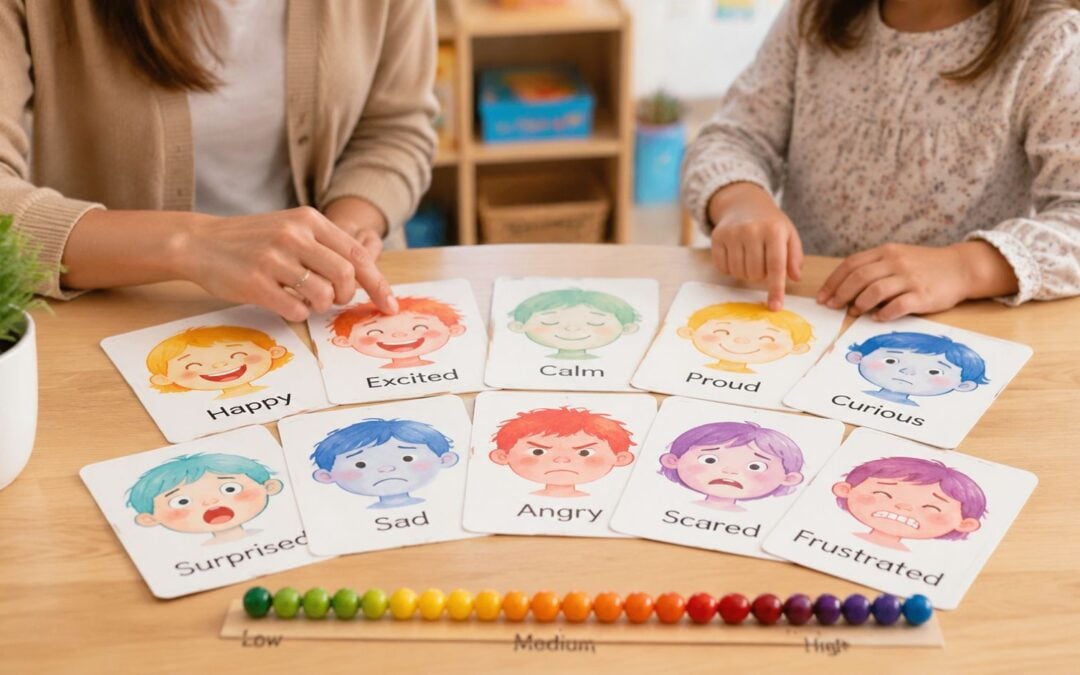
A child comes home quiet after school. They shrug at dinner, snap at a sibling over a small comment, then melt into tears when a backpack zipper sticks. Most adults see “a bad mood,” but children usually need something simpler and kinder, a name for what they feel, plus a clue about what to do next.
Words for emotions help children connect body signals, experiences, needs, and choices without treating feelings as good or bad. That matters because emotion language is learnable, and research shows it can be measured at scale, compared across ages, and linked with well-being and distress. It also matters because the words people use for feelings have changed over time, which means children are not just memorizing labels, they're learning a social language for inner life, as historical work on English emotion words shows (historical overview of emotion words, emotion vocabulary and well-being study).
For K–8 learners, the best path starts with broad feeling words, then adds more precise labels, body cues, and context. Younger children usually need direct teaching and repeated practice, because emotion-specific vocabulary grows quickly in early childhood and then becomes more nuanced later, and instruction that targets specific feelings in context works better than just handing kids a list (children's emotion vocabulary development, emotion-specific vocabulary and comprehension). Keep that in mind as you move through these core words. Each one can become part of a calm classroom routine, a family check-in, or a printable chart children can use.
1. Happy
Happy is the easiest place to begin because children already recognize it in faces, voices, and movement. A happy child may smile, laugh, bounce, clap, or talk more freely, but happiness also shows up as quiet contentment, like settling comfortably into a favorite book. Adults can help children notice that happiness is not only “big joy,” it's also a steady sense that something feels right.

What happiness looks like in everyday life
A child might bounce when they hear they earned extra recess. A class might cheer when a peer finally masters a hard concept. At home, a child might grin through dinner after hearing good news from a grandparent. In each case, the feeling is visible, but the reason matters too.
Use simple prompts that connect body and meaning. You might say, “Your smile tells me you're feeling happy,” or, “I can see your shoulders got lighter when that happened.” In a classroom chart, a happy face or thumbs up gives younger children a quick visual match for the word. At the family table, ask, “What made you feel happy today?” and let the child answer in their own words.
Practical rule: Notice happiness without overexplaining it. When adults name it calmly, children learn that positive emotion can be recognized, shared, and remembered.
For a teacher-friendly extension, positive thinking exercises can pair well with a short gratitude moment, a celebration circle, or a “good news” share. how to tell happiness from joy can also help adults think more carefully about related words, especially when older students start asking why two positive feelings do not always feel the same.
2. Sad
Sad names sorrow, disappointment, or grief, and it deserves just as much teaching time as happy. Children need to know that sadness is normal, not a problem to hide. When adults treat sadness as welcome information, kids learn that difficult feelings can be handled without shame.
A student might tear up after losing a game. A child may feel heavy after a pet dies or a friend moves away. Another student might go quiet after critical feedback on schoolwork. Sadness often shows up as a slower body, lower voice, less eye contact, or pulling away from noise and conversation.
How to respond without rushing
Start by making room for the feeling. Say, “It's okay to feel sad when something didn't go the way you hoped.” Then pause. Many adults try to fix sadness too quickly, but children often need a calm witness before they need advice.
A few helpful supports fit naturally at school or home.
- Name the cause: Ask, “What are you feeling sad about?” so the child can separate the feeling from the event.
- Offer quiet support: Sit nearby, draw together, or let the child cry if needed.
- Give choices for expression: Journaling, sketching, talking, or a trusted adult check-in can all help.
- Make space for recovery: A feelings corner, a cozy chair, or a quiet hallway reset can help children return when they're ready.
Sadness becomes easier to carry when adults don't treat it as a behavior to stop. It's a feeling to understand, and often a sign that something mattered significantly.
3. Angry
Angry is a powerful word, and children usually learn it early because the feeling is easy to spot. Anger can show up when a child feels threatened, disrespected, blocked, or unheard. It also often covers other feelings, like hurt, fear, or frustration, so the word opens the door to deeper understanding rather than ending the conversation.

Helping children catch anger early
A child might slam a pencil after making a mistake. Another might yell when a peer cuts in line. Some children throw materials, clench fists, or speak in a sharp voice when they've hit their limit. The goal is not to shame the feeling, it's to teach children to notice it before it takes over.
An anger thermometer works well for that. You can teach levels early, before the feeling reaches a breaking point. A child at level 2 or 3 might still be able to breathe, move, or ask for help. At higher levels, the body is flooded, and learning pauses.
Try phrases that separate feeling from behavior.
I see you're angry, and we don't hit.
That sentence keeps the limit clear while still naming the emotion. During calm moments, build an anger action plan together. It can include a signal, a breathing reset, a water break, or a short walk to cool down. For more classroom-ready guidance, anger management for kids can support consistent language between school and home.
What anger may be hiding
Sometimes the underlying question is not “Why are you angry?” but “What got hurt underneath?” A child may be angry because they felt left out, embarrassed, or frightened. When adults ask gently, “Are you angry because you felt left out?” they help children move from reaction to reflection. That shift is a major step in self-regulation.