

5 Senses Poems to Boost SEL in Kids
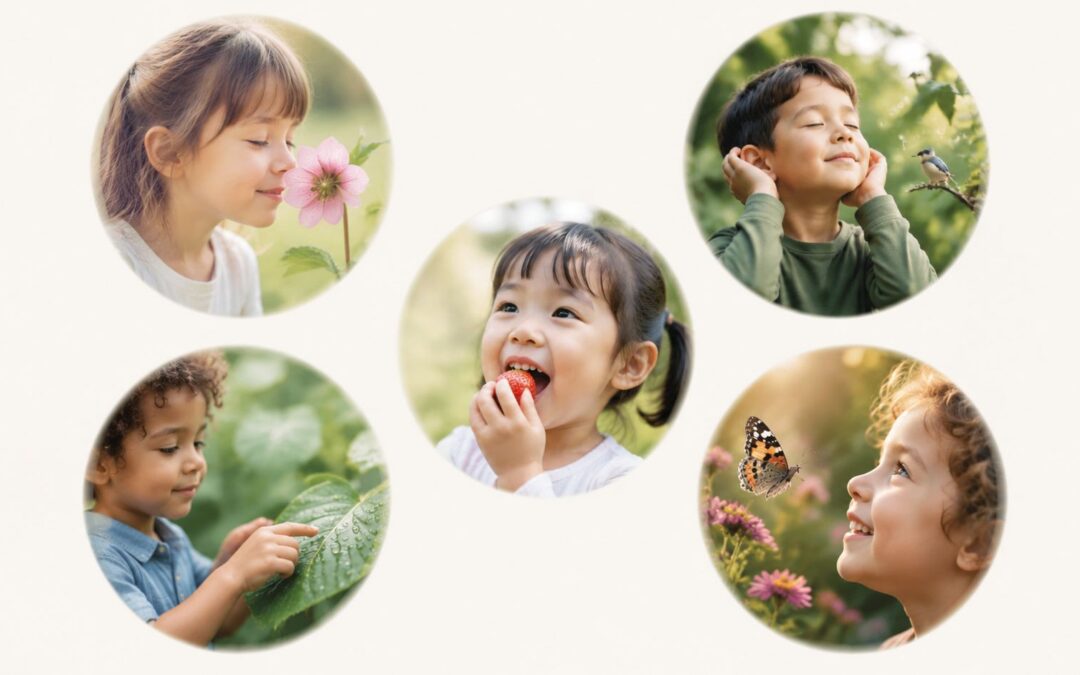
A child closes their eyes and listens to rain on the roof. Another tastes a strawberry and pauses, as if the sweetness has a story attached to it. Those moments can look small from the outside, but for children they are often the first clues that feelings live in the body, not just in words. 5 senses poems turn those clues into a simple, repeatable practice that helps kids notice what they feel, name what they notice, and connect with other people more kindly.
Teachers and parents can use sensory poetry as a gentle entry point into self-awareness, self-regulation, empathy, and belonging. The form is familiar, structured, and accessible, which is why it fits so well in early literacy and SEL work. Traditional poetry instruction still centers the five classic sensory image types, sight, hearing, taste, smell, and touch, and that framework has stayed steady across decades of classroom use, which makes it a useful foundation for young writers and readers alike (EBSCO on imagery in poetry).
1. "Five Senses" by Mary O'Neill The Classic Sensory Explorer
Mary O'Neill's “Five Senses” gives children a clean, memorable path into sensory language. The poem's value is its simplicity, because young learners can follow one sense at a time without getting lost in complicated figurative language. That matters in K-1 settings, where students are still building the vocabulary they need to talk about what they notice in the world and in their own bodies.
The poem also fits the way poetry is already taught in schools. Poetry is already part of most schooling, which makes a familiar sensory poem a natural bridge between literacy and SEL. In classrooms, teachers often use poems like this to introduce environmental awareness, because children learn to notice sights, sounds, textures, and smells before they're asked to explain them.
A strong fit for self-awareness
When students hear a line about sound, then think about the sound of their own classroom, they're practicing a core SEL move, connecting outside input to inner experience. That same move helps children describe how their bodies feel during calm, stress, curiosity, or excitement. A child who can say “my hands feel tight” or “the room sounds loud” is already building emotional vocabulary.
Practical rule: Pair the poem with one concrete action right away, because children learn best when the words and the senses stay connected.
Parents and teachers can keep this simple. Read the poem aloud, then ask children to make a “My Five Senses” chart with personal examples, like “rain on the window” for hearing or “warm socks” for touch. A sensory scavenger hunt around the classroom or playground works well too, and the poem can anchor sound exploration, texture matching, smell jars, taste tests, and observation walks. If a child feels overwhelmed, the poem can also become a grounding tool, returning attention to one sense at a time and helping the child re-enter the room with more stability.
For a ready-made companion activity, the 5 senses activity gives families and educators a simple place to begin.
2. "Listen" by David Sobol The Mindful Listening Poem
David Sobol's “Listen” shifts the focus from noticing to receiving. That distinction matters for SEL, because real listening is not passive silence, it's a skill that supports communication, trust, and psychological safety. When children practice listening with intention, they learn that being heard and hearing others are both part of belonging.
The poem works especially well in moments when the room needs to slow down. A teacher can read it before a peer listening activity, a morning meeting, or a conflict-resolution circle, then ask students to notice how a quiet room changes the way they pay attention. The poem's auditory imagery makes listening feel active and deliberate, which helps children understand that they aren't just waiting for their turn to talk.
Using sound to build empathy
Listening is one of the clearest pathways into empathy. Children who learn to hear another voice without interrupting, correcting, or rushing to answer are practicing a social habit that supports stronger relationships. That's why this poem fits so naturally with community-building and classroom communication routines.
In a school setting, the poem can lead into a listening walk, where students go outside and document sounds they hear, or into a sound map, where they list the noises they notice in different places. Counselors can use it in small groups to open discussion about what it feels like when someone really listens. Parents can also use it at home by creating a family listening moment, turning off background noise, and asking each person to share one sound they noticed.
Read the poem in a quiet space first. Students often understand “listening” better when they feel the contrast between distraction and attention.
For English learners, visual cues help a lot. Point to a picture of an ear, a hallway, a bell, or a tree outside the window, then invite students to name what they hear in short phrases. That keeps the task concrete and lowers language barriers. A simple follow-up question, “What did you notice that you hadn't noticed before?” can open the door to presence, curiosity, and respect for other people's experiences.
The listening skills activities resource pairs well with this poem when you want a classroom routine that reinforces genuine attention.

3. "Taste" by Jane Taylor Adaptation The Emotion-Sensory Connection Poem
Taste is one of the easiest senses to connect to memory, which makes it especially useful for SEL. A child can think about “sweet,” “sour,” or “spicy” and immediately connect those sensations to reactions in the body, and that opens a conversation about emotion without forcing direct disclosure. For some students, that's safer than being asked to explain a feeling head-on.
This poem type works well because it connects sensory awareness to emotional awareness. Students begin to see that what they taste can affect how they feel, and that feeling can shape what they remember. That bridge is valuable for young children who don't yet have a rich emotional vocabulary, and it's also respectful of the fact that children experience food and sensation differently.
A low-pressure way to talk about feelings
Taste poems can help students compare reactions without turning the class into a debate. One child may link sour to frustration, while another links it to wake-up energy. Both responses are valid, and that difference helps normalize neurodiversity and varied sensory preference.
Classrooms can use this poem during cultural celebrations to honor family foods and shared traditions. A student might describe a holiday dish, a family snack, or something that reminds them of home, then connect it to an emotion or memory. Counselors can use the same format when a child is processing grief or another difficult feeling, because the sensory focus keeps the conversation gentle and concrete.
Safety first: Check allergies before any taste activity, and give students an observation-only option if tasting isn't appropriate.
Safe samples can be simple, like crackers, fruit, chocolate, or lemon slices with proper precautions. After tasting, students can draw or write about what the flavor felt like and then match it to an emotion on an emotion-flavor chart. You can ask, “What does happiness taste like to you?” or “What tastes remind you of home?” and accept whatever answer comes forward. For self-regulation, the question can shift to, “What tastes help you feel calm or alert?” so children begin thinking about healthy coping habits in everyday language.
For families, a tasting activity can become a conversation about memory and comfort at the dinner table. A child who says, “This tastes like my grandma's kitchen,” is doing more than naming food, they're naming attachment, belonging, and emotional association. The naming feelings resource can support that conversation when you want language for big feelings without making the child feel exposed.

4. "Touch" Sensory Exploration Poem The Connection and Safety Poem
Touch-based poems give children language for comfort, discomfort, and boundaries. That makes them especially important in SEL, because students need words for both welcome touch and unwanted touch, and they need practice saying those words in safe, age-appropriate ways. A tactile poem helps normalize that different people feel differently about texture, pressure, and closeness.
This kind of poem works well in younger grades because touch is immediate. A soft blanket, a pinecone, or a rough piece of bark can quickly lead into conversations about what feels calming, what feels too intense, and what kinds of touch are appropriate in a school setting. That connection supports both self-regulation and personal safety.
Building comfort, consent, and vocabulary
Teachers can introduce the poem with texture boxes, then guide children to describe what they notice using words like bumpy, smooth, soft, prickly, cold, warm, and comforting. Students can connect those textures to emotion by finishing simple prompts like, “This texture helps me feel calm,” or “This texture feels like quiet.” The language stays concrete, which helps students who struggle with abstract emotional talk.
This poem also creates a natural opening for consent. A teacher can say, “We respect that different people like different touches,” and use that statement to support personal space, hugs, handshakes, and other greetings. That kind of routine is especially useful during transitions, when students may be more dysregulated and less able to explain what they need.
Always offer an observation-only option. Some children don't want to touch everything, and that choice should be respected without comment.
Classrooms can build a comfort corner with textures that students choose for grounding, then return to the poem when the room feels noisy or tense. Counselors can use it to discuss safe and unsafe touch in careful, age-appropriate language. For students with sensory sensitivities, drawing, describing, or watching others explore can still keep them included.
The how to create a safe space resource pairs naturally with this poem when you want tactile work to reinforce trust, not pressure.
5. "Sight" or Observation Poem The Mindful Presence and Connection Poem
A sight-based poem trains children to slow down and look carefully. That skill matters because observation is the foundation for social awareness. When students learn to notice small details about classmates, nature, or classroom objects, they also become more likely to notice feelings, needs, and shifts in energy.
This poem is especially powerful in inclusive communities. Children who are taught to really see each other with curiosity are less likely to flatten people into labels or assumptions. The poem gives teachers a way to make noticing feel kind, not nosy, and that distinction helps build belonging.
Seeing people with more care
A simple classroom routine can start with a noticing walk. Students go outside, look closely, and notice five beautiful things, then return to share what they saw. That same routine can move into peer appreciation, where children are invited to notice something kind about a classmate or something they appreciate about the room. Families can do the same thing at home by naming five things they notice around the house.
Observation poems also support perspective-taking. A counselor can ask, “What did you notice about how the other person felt?” and use the answer to guide conflict repair. In anti-bullying work, the poem becomes a reminder that when children really see one another, they're less likely to hurt each other. That idea is simple, but it's powerful because it links attention with care.
Connection grows when children practice looking for the full person, not just the mistake or the label.
Students can draw something they observed closely, then explain the details they included. Teachers can also create a noticing chart with prompts like, “What do we notice about our classroom, autumn, or each other?” This gives children a shared language for appreciation and helps them practice growth mindset by noticing the positive in others and themselves. For students with visual processing differences, the activity can shift to sound or touch so everyone still has access to the same SEL goal.
The sample week in a creative arts program shows how creative routines can carry emotional learning across the week when children revisit a theme through different forms.
Five Senses Poems Comparison
| Poem | Implementation complexity | Resource requirements | Expected outcomes | Ideal use cases | Key advantages |
|---|---|---|---|---|---|
| "Five Senses" (Mary O'Neill) | Low, simple read-aloud and activities | Minimal, poem text, basic sensory props (bins, objects) | Foundational sensory vocabulary, self-awareness, engagement | K–2 shared reading, introductory mindfulness, sensory stations | Highly accessible, rhythmic for memorization, supports multi-sensory learning |
| "Listen" (David Sobol) | Low–Moderate, needs quiet setting and scaffolding | Quiet space, optional audio cues (bell, nature sounds), visual vocab supports | Improved listening, present-moment attention, empathy, social awareness | Peer listening circles, conflict-resolution prompts, community meetings | Direct focus on auditory attention, builds listening as respect and empathy |
| "Taste" (Jane Taylor adaptation) | Moderate, requires planning and sensitivity | Food samples, allergy checks, cultural considerations, safe protocols | Emotional vocabulary linked to sensory triggers, interoception, cultural belonging | Emotion vocabulary lessons, cultural celebrations, counseling activities | Bridges taste to emotion, validates individual differences and cultural food ties |
| "Touch" Sensory Exploration | Moderate–High, trauma-informed facilitation and consent needed | Texture samples, explicit consent procedures, private/controlled spaces | Vocabulary for boundaries and comfort, self-regulation, safer touch awareness | Lessons on consent, calming/comfort corners, tactile regulation activities | Directly supports boundary language, kinesthetic engagement, nervous-system regulation |
| "Sight" / Observation Poem | Low–Moderate, needs varied environments and focus activities | Access to outdoor/varied settings, drawing or observation materials | Enhanced social awareness, mindful presence, appreciation of others/environment | Noticing walks, peer appreciation, anti-bullying and perspective-taking lessons | Builds careful observation, fosters compassion and belonging, adaptable to many settings |
Bringing Sensory Awareness into Everyday Learning
Integrating 5 senses poems into your classroom or home isn't just a literacy activity, it's a practice in mindfulness, empathy, and connection. The five-senses framework has stayed central in poetry instruction because it gives children a familiar way to organize experience, and that structure makes it easier to move from noticing to naming, then from naming to relating (EBSCO on imagery in poetry). When kids have words for what they hear, taste, touch, see, and smell, they're better equipped to talk about emotions, ask for help, and understand one another.
Poetry already has a strong place in learning, which makes sensory poems a practical tool rather than a novelty.
For SEL, its power is in repetition. A child who returns to a five-senses poem during calm moments learns the language before stress arrives. A child who uses it during a hard moment can borrow the structure until their own words come back. That's why these poems work so well for self-awareness, regulation, empathy, and belonging; they give children a way to experience those skills before they can fully explain them.
Start small. Read one poem, use one sense, and add one short activity. A listening walk, a texture box, a tasting conversation, or a noticing chart is enough to begin. What matters most is consistency, because children grow in confidence when adults keep offering them safe, concrete ways to notice themselves and each other.
If you want a partner in that work, Soul Shoppe offers experiential SEL programs, coaching, and shared language that help school communities build connection, safety, and empathy. Visit Soul Shoppe to explore resources that support sensory learning, emotional regulation, and everyday relationship skills for children and the adults who guide them.