

Assembly Programs for Schools: An SEL & Bullying Guide
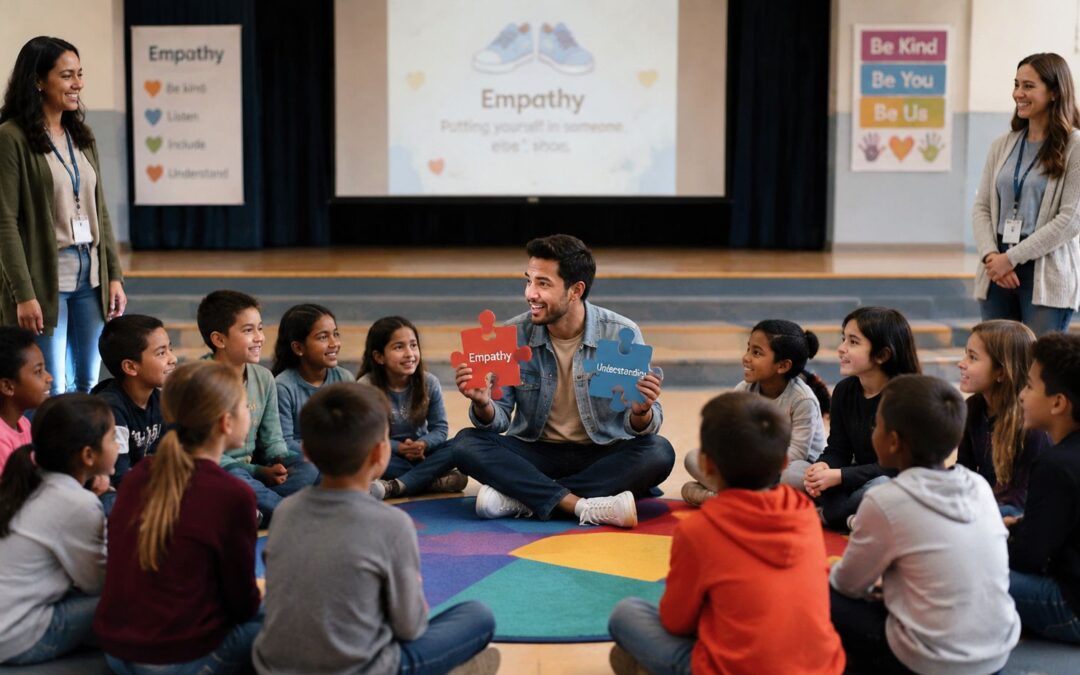
The gym is booked, the bell schedule has been adjusted, and your teachers are already asking the practical questions. Where will students sit? Who's covering recess? Will the presenter need a projector? Beneath those logistics sits a bigger question that many new principals feel right away: Will this assembly help students, or will it just fill an hour?
That question matters because students can tell the difference between a one-off event and a meaningful school experience. They know when adults are offering a catchy slogan with no follow-through. They also know when a school is building a shared language around respect, problem-solving, and belonging.
That's why I encourage school leaders to treat assembly programs for schools as part of their SEL strategy, not as a side event. When they're planned well, assemblies can reinforce the social skills you want students using in the cafeteria, on the playground, in group work, and online. Parents and teachers feel the difference too, because the message doesn't end when students leave the auditorium.
From All-School Meeting to Meaningful Movement
Most principals have seen the same scene. Students file into the multipurpose room buzzing with energy. A few are excited. A few are dysregulated from the transition. Teachers are spread around the edges, hoping the microphone works and that the message lands.
In too many schools, assemblies stop there. They become a break from the day rather than an extension of learning.
That's a missed opportunity. Nearly 80 percent of schools in the United States utilize specialized educational assembly programs to reinforce learning, and those programs are designed to build critical thinking, empathy, and social skills through interactive presentations, as noted by Academic Entertainment's overview of educational assembly providers. That matters because an SEL assembly isn't just about attention. It's about giving a whole student body one shared experience and one shared set of words.
What a stronger assembly looks like
A bullying-prevention assembly with purpose feels different from the moment students enter. Adults have already taught audience expectations. The presenter uses student participation instead of long lectures. Students practice what they might say if they see someone left out at recess. Teachers hear language they can repeat later in class.
Practical rule: If students can't use the message in a real conflict by the end of the week, the assembly was too abstract.
Here's a simple example. A school wants to reduce exclusion on the playground. Instead of booking a generic “be nice” show, the principal chooses a program that helps students identify exclusive behavior, notice its impact, and practice an action step such as inviting someone in, getting help, or using a respectful check-in phrase. The assembly then becomes the launch point for a schoolwide norm.
Why the experience needs to be visible
Students absorb culture through repeated signals. What adults praise, model, and revisit becomes what students expect from one another. That's why details that seem small can help reinforce the larger message. A spirit day, classroom posters, and even coordinated visual cues can make a schoolwide campaign feel coherent. If you're pairing an assembly with a belonging or kindness initiative, T-Shirt Envy for custom campus apparel offers practical ideas for making school messages visible without turning the event into a marketing exercise.
For younger students, I'd also pair the assembly with short movement resets during the following week so the emotional message doesn't compete with regulation needs. This collection of fun brain breaks for school days can help teachers bring students back to focus while keeping the tone connected to care and community.
The shift is simple but important. Don't ask, “What assembly should we book?” Ask, “What student behavior and school climate do we want to strengthen, and how can an assembly help us start that work together?”
Aligning Assembly Goals with Your School Culture
Before you compare providers, get clear on your own school. A strong assembly doesn't begin with a catalog. It begins with a campus need that adults can describe in plain language.

If your staff says, “Our students need kindness,” keep going. Kindness is a value, not yet a planning goal. You need to name where students struggle and what success would look like in daily school life.
Start with the friction points
Walk your campus mentally from arrival to dismissal. Where do students lose connection, self-control, or empathy?
- Playground conflict: Students argue, but they don't know how to repair.
- Classroom exclusion: Some students get left out of partner work or group games.
- Transitions: The move from lunch or specials back to class is rough.
- Online behavior: Older students carry digital conflict into the school day.
Once you identify the friction point, write a goal that a teacher could observe. Instead of “improve behavior,” try “students will use common language for problem-solving during recess conflict.” Instead of “promote inclusion,” try “students will practice one response when they notice someone being left out.”
Bring in the adults who know the patterns
Teachers, counselors, noon supervisors, and office staff often see different slices of student life. If you only ask the leadership team, you'll miss useful details. A recess aide might tell you that the issue isn't physical aggression. It's repeated exclusion during games. A fourth-grade teacher might notice that students can explain feelings but struggle to enter hard conversations respectfully.
A short staff prompt can help:
- Where are students getting stuck socially?
- What language do you wish students used more often?
- What would feel different in classrooms or common spaces if this improved?
You can also ask a small student group. Their answers are often concrete. “People say rude things when they lose.” “Kids don't know how to join a game.” “Everyone watches and nobody helps.”
Match the assembly to the culture you're building
An assembly should support the climate you want every day. If your school is working on belonging, your event should give students phrases and routines that support belonging. If your staff is focused on emotional regulation, the assembly should include concrete strategies students can practice.
The clearest assembly goals sound like behavior, not branding.
A useful checkpoint is this: could your teachers continue the theme the next morning without needing to reinterpret it? If the answer is no, your goal is still too vague.
For schools doing broader climate work, this article on how to improve school culture offers a helpful companion lens. The assembly should fit into that larger effort, not sit beside it.
A practical example helps. If your school has recurring lunchroom conflict, your assembly goal might be: “Students will learn and practice respectful language for handling small peer conflicts before they escalate.” That gives your provider, your teachers, and your support staff something specific to reinforce.
Choosing the Right Program and Partner
Once your goals are defined, selection gets easier. You're no longer shopping for a fun event. You're choosing an instructional partner.

The strongest partners don't just entertain students for an hour. They help adults carry the message forward.
What to look for
Use these criteria when reviewing assembly programs for schools.
| What to look for | Why it matters |
|---|---|
| Clear alignment to your SEL or bullying-prevention goal | You want a program that solves your problem, not a generic morale boost |
| Age-appropriate design | Kindergarten students and fifth graders need different pacing, examples, and language |
| Interactive participation | Students remember more when they practice, respond, move, or rehearse |
| Teacher follow-up materials | Staff need vocabulary, prompts, and simple next steps |
| Behavior support planning | Audience routines and adult roles affect whether students can engage |
| Evidence-informed approach | You want substance behind the delivery |
One example of a more integrated approach is the Soul Shoppe Elementary Peace Program, a year-round K to 5 curriculum that provides school-wide instruction on friendships, problem-solving, and bullying prevention while creating shared language across grades, as described by the San Ramon Valley Unified resource page. That kind of model is useful because it treats the assembly as one piece of a broader system, not the whole intervention.
If you're comparing options, this overview of SEL programs for schools can help you distinguish a stand-alone event from a more connected schoolwide approach.
Questions worth asking a provider
In meetings with providers, ask direct questions. Don't settle for polished generalities.
- How do you adapt for age bands? Ask what changes between K to 2 and grades 3 to 5.
- What do teachers receive before the event? If the answer is “a flyer,” that's thin support.
- What follow-up do you recommend in classrooms? Strong providers can answer quickly and concretely.
- How do you handle student participation? You want active engagement without chaos.
- What are your AV and space needs? This affects staff planning and student flow.
- How do you customize for school goals? Listen for whether they ask about your climate and student needs.
Ask providers to describe what students will actually say or do differently after the assembly. Their answer will tell you whether they teach skills or just themes.
Red flags to avoid
Some warning signs show up fast.
A provider may rely on broad slogans like “be respectful” without naming teachable actions. Another may promise a powerful experience but offer no classroom materials, no staff briefing, and no process for feedback. Be cautious if the program sounds exactly the same for every school regardless of grade level or community need.
Also pay attention to whether the provider understands student regulation. An SEL assembly should never depend on students sitting still for an extended stretch while adults deliver abstract advice. Younger students especially need movement, call-and-response, stories, or guided practice.
Think about cost in the right way
Budget matters, but cheap and effective are not always the same thing. A lower-cost assembly can become expensive in staff time if adults must build all the follow-up from scratch. A more complete program may save effort because it includes planning support, teacher tools, and a schoolwide framework students can keep using.
A helpful question for your team is not “What does this event cost?” It's “What support comes with it, and what will we need to create ourselves if it doesn't?”
Your 8-Week Assembly Planning Timeline
A smooth assembly day starts long before chairs are unfolded. The planning rhythm matters because students benefit when adults are coordinated, calm, and clear.

A practical framework from Academic Entertainment's assembly best practices recommends an 8-week pre-planning timeline that starts with educational goals and budget, includes a detailed day-of plan, and ends with a structured classroom discussion within two days to reinforce retention.
Weeks 8 through 6
Start with purpose and commitment.
Week 8
Confirm your educational goal, target grade levels, and budget. Decide what problem the assembly is meant to address. This is also the time to choose a planning lead.Week 7
Vet programs and partners. Review sample materials, ask questions, and make sure the content matches your school culture.Week 6
Finalize booking, date, space, and contract details. Put the event on the master calendar so support staff, specialists, and front office staff can plan around it.
At this stage, I tell principals to create one working document with everything in it. Time, provider contact, tech needs, adult assignments, seating plan, arrival pattern, and classroom follow-up. When details live in one place, the day runs better.
Weeks 5 through 3
At this point, many schools either build momentum or lose it.