

MTSS Tier 1: A Practical Guide for K-8 Schools
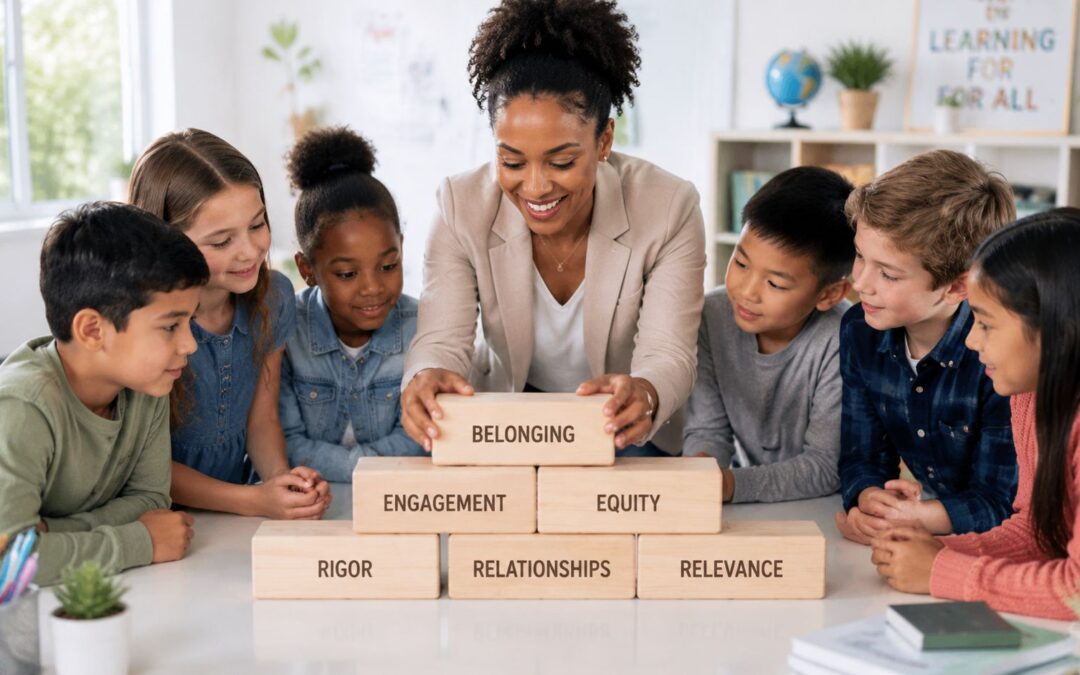
A principal opens the staff meeting with a familiar question: “Why are so many students being flagged for extra support this fall?” The reading specialist points to decoding gaps. A classroom teacher brings up behavior during transitions. The counselor names friendship drama, shutdowns, and students who seem on edge before the day even gets going. Everyone cares. Everyone is working hard. Yet the work can start to feel fragmented.
That's where MTSS Tier 1 helps. Not as one more initiative to layer on top of everything else, but as the shared base that holds the whole school together. It gives teachers, specialists, counselors, and families a common way to think about support before students are in crisis and before small struggles grow into bigger ones.
In K-8 schools, that matters every single day. A kindergartener needs predictable routines. A fourth grader needs clear reading instruction and a way to reset after recess conflict. A seventh grader needs structure, belonging, and adults who notice when missing work is really a sign of stress. Tier 1 creates the conditions for all of that to happen schoolwide.
When schools strengthen the universal layer, students feel it. Hallways feel calmer. Expectations make sense. Classrooms become more predictable. Adults stop reacting to every problem as if it belongs to one student alone and start asking a better question: what are we building for everyone?
Building a School Where Every Student Thrives
On many campuses, the warning signs show up before anyone names them. Teachers are reteaching routines in October. Office referrals come from the same parts of the day. Families say their child “used to like school” but now feels lost, bored, or overwhelmed. Staff members care immensely, but each team may be solving only its own slice of the problem.
A grade-level team might say, “Our students need stronger reading support.” The counselor may say, “They also need better self-regulation.” The assistant principal may focus on lunchroom behavior. All three can be right. The trouble starts when the school treats those as separate problems instead of connected signals.
A familiar school meeting
I've sat in those meetings as a teacher and as an SEL coach. The room is full of smart people. Someone suggests another intervention group. Someone else proposes a behavior chart. A parent asks what they can do at home. The conversation gets busy fast.
Then one steadying question changes the tone: what if the core experience of school needs to be more consistent, more proactive, and more supportive for everyone?
That's the heart of Tier 1. It brings academic instruction, behavior expectations, and social-emotional supports into one schoolwide system. It's the daily experience every student walks into, not the safety net that appears later.
Tier 1 works best when adults stop thinking in silos and start designing one predictable, caring experience across classrooms, hallways, and home-school communication.
A school with a strong universal layer usually feels different before you ever study a spreadsheet. Students know what happens when they enter class. Teachers use common language for problem solving. Families hear the same core messages from multiple adults. If you're already working on climate and connection, this kind of school culture improvement work fits naturally inside Tier 1.
What this looks like in daily practice
In a K-8 setting, Tier 1 often shows up through simple, repeatable moves:
- Shared routines: Every class starts with a calm, known entry routine.
- Common expectations: Staff teach what respect, safety, and readiness look like in concrete ways.
- Early support: Teachers notice concerns early instead of waiting for failure.
- Family partnership: Caregivers know the language the school is using and can reinforce it at home.
For parents, Tier 1 means your child shouldn't need to struggle loudly to be noticed. For teachers, it means you're not expected to invent support systems from scratch in every room. For principals, it means the school's first line of support is also its most important one.
What Is MTSS Tier 1 Really
The simplest way to explain MTSS Tier 1 is this: it's the foundation of the school house. If the foundation is solid, the whole structure has a better chance of holding steady. If the foundation is uneven, cracks show up everywhere. In classrooms, those cracks can look like behavior referrals, widening skill gaps, chronic confusion about expectations, or too many students needing help beyond the core.

The universal layer for every student
Tier 1 is the universal foundation of support provided to every student. Effective schools aim for Tier 1 to successfully support at least 80% of their student population, which signals that the core instruction and environment are meeting the needs of most students, as explained in Panorama's overview of MTSS tiers.
That sentence carries a lot of meaning, so it helps to slow it down.
Tier 1 is not a reading intervention group. It isn't a behavior plan for a few students. It isn't only for students who are struggling. It is the core experience all students receive through classroom instruction, schoolwide expectations, and proactive support.
In practical terms, that includes things like:
- Strong core teaching: Clear modeling, checks for understanding, and chances to practice.
- Predictable routines: Students know how class begins, how help works, and how transitions happen.
- Positive behavior support: Expectations are taught, practiced, and reinforced.
- Belonging and safety: Students feel seen, welcomed, and emotionally safe enough to learn.
How Tier 1 differs from Tiers 2 and 3
This is one of the places people get tangled.
Think of the tiers as levels of intensity, not levels of student worth. Tier 1 is for everyone. Tier 2 adds targeted support for students who need more than the universal layer. Tier 3 provides intensive, individualized intervention. Multiple MTSS explanations describe the framework as having three tiers, with Tier 1 for all students, Tier 2 for targeted support, and Tier 3 for intensive individualized intervention.
Practical rule: If your school is leaning on Tier 2 and Tier 3 to solve needs that show up across many classrooms, the universal layer probably needs attention first.
For families, a useful translation is this: Tier 1 is what every child should be able to count on each day. For teachers, it means the basics aren't basic at all. They're the backbone. For school leaders, it means universal systems deserve the same care and planning as interventions.
A strong Tier 1 doesn't remove the need for more support. It makes that support more precise, more equitable, and more sustainable.
The Four Core Components of Tier 1
Tier 1 gets clearer when you stop treating it as a vague philosophy and start naming its moving parts. In schools, I think of it as a four-part engine. If one part is missing, the ride gets rough fast.

The MTSS model evolved by integrating Response to Intervention (RTI) for academics and Positive Behavioral Interventions and Supports (PBIS) for behavior. That history helps explain why modern Tier 1 addresses the whole child and relies on universal screening at least twice a year to monitor progress and the effectiveness of core instruction, as described in LightSpeed Systems' MTSS framework guide.
High-quality core instruction
This is the teaching every student receives. It should be clear, intentional, and accessible to a wide range of learners. In a Tier 1 classroom, teachers don't wait for confusion to pile up before adjusting. They build in supports from the start.
A first grade teacher, for example, might model a phonics skill out loud, give students a visual anchor chart, let them practice with a partner, and quickly reteach for a small group during independent work. That's still Tier 1 because the design of the lesson assumes student variability from the beginning.
Universal screening
Screening is a school's regular checkup. It helps adults identify which students may be at risk and whether the universal layer is doing its job. Screening should happen early, not after months of struggle.
A practical example: a school screens reading, math, and behavior at the start of the year, reviews the patterns by grade level, and notices one grade needs stronger vocabulary support across classrooms. That finding points the team back to core instruction.
Universal screening is not about sorting kids into labels. It's about asking whether the school is noticing needs early enough to respond wisely.
Evidence-based practices
Teachers need strategies and materials with a strong instructional rationale behind them. In plain language, schools should use approaches that are grounded in research, taught consistently, and implemented well.
This can be as concrete as using explicit modeling during a new math routine, a predictable partner-talk structure, or a schoolwide approach to repairing harm after conflict. If your staff is building shared student language, conflict resolution practices for schools fit naturally into this part of Tier 1.
Data-based decision making
Without data, adults often default to hunches. Sometimes those hunches are right. Sometimes they lead schools to over-refer students when the larger issue sits in the core.
Data-based decision making means teams study screening results, classwork patterns, attendance, behavior concerns, and implementation consistency. Then they decide what to strengthen.
Here's a one-sentence classroom example for each component:
- Instruction: A teacher preteaches vocabulary before a science text so more students can access the lesson the first time.
- Screening: A school notices early literacy screening concerns across one grade and responds with stronger shared routines, not immediate pull-out referrals for everyone.
- Evidence-based practice: A class uses a daily explicit routine for teaching discussion norms instead of assuming students already know how to collaborate.
- Data use: A team compares missing-work patterns across classrooms and finds one unclear assignment system that can be fixed schoolwide.
Integrating SEL and Behavior into Tier 1
Academic learning doesn't happen in a vacuum. Students learn through their nervous systems, their relationships, and their sense of safety. If a child is bracing for embarrassment, recovering from conflict, or unsure how to ask for help, even excellent academic instruction can miss the mark.
That's why Tier 1 needs social-emotional learning and positive behavior support woven into the day, not saved for an assembly or a crisis response.

What students need before they can show what they know
A strong Tier 1 classroom answers quiet but powerful questions for students:
- Am I safe here
- Do I belong here
- What happens when I make a mistake
- How do people solve problems here
When schools answer those questions clearly, behavior support becomes more preventive and less reactive. Teachers spend less energy on constant correction and more on instruction, coaching, and connection.
In practice, this can look very simple:
- Morning meetings: Students greet one another, preview the day, and practice listening.
- Feelings check-ins: A teacher learns who may need a quiet check-in before math starts.
- Shared language: Students use sentence stems such as “I felt…” or “I need…” during peer conflict.
- Reset spaces: A calm corner helps students regulate without shame or exile.
For families, this matters at home too. If a school teaches students how to name feelings, pause, and repair harm, parents can echo that language after school. A child who hears “Take a breath and use your words” in both places gets more traction than a child navigating two completely different systems.
SEL is not extra
One of the most common misunderstandings is that SEL steals time from academics. In reality, it supports access to academics. Students who can follow routines, recover after frustration, and communicate needs are more available for learning.
That's also why many schools look for practical social-emotional learning programs for schools that can support universal classroom practice. Soul Shoppe is one example. It offers live SEL lessons by grade level and professional development that schools can use as part of a broader Tier 1 approach.
This short video gives a useful feel for how relationship-centered support can come alive in school settings: