

All About Me Kindergarten Activities & SEL
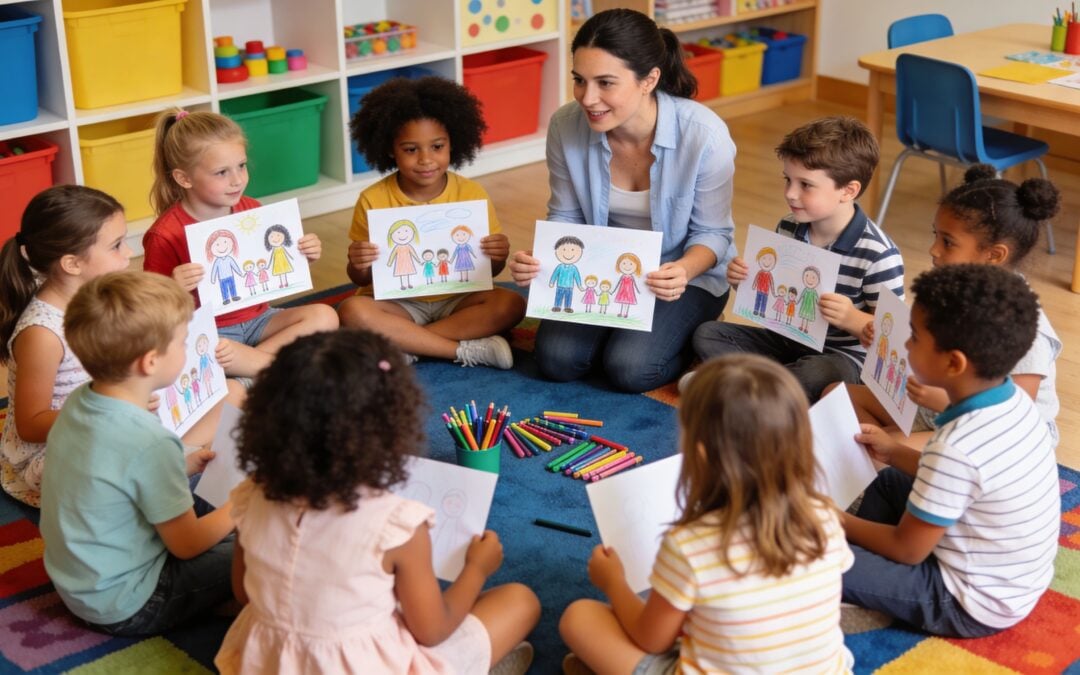
The first days of kindergarten can feel loud and tender at the same time. A child is holding a backpack almost as big as their body. A parent is smiling with watery eyes. A teacher is greeting everyone while noticing who clings, who wanders, who talks nonstop, and who says nothing at all.
That moment tells us something important. Before children can fully learn together, they need to feel safe together.
That’s why all about me kindergarten activities matter so much. They aren’t just cute first-week crafts. When we use them well, they help children say, “This is who I am,” and hear, “You belong here.” That shift builds the kind of classroom community where empathy, confidence, and calm problem-solving can start to grow.
The Magic of the First Few Weeks in Kindergarten
A kindergarten classroom in the first week is full of mixed signals. One child races to the block area. Another freezes at the doorway. Someone misses home. Someone else is ready to tell you about their dog, their cousin, and the missing tooth they had in June.

Those first few weeks set the emotional tone for the whole year. Children are learning the room, the routines, the grownups, and each other. They’re also asking silent questions all day long.
- Am I safe here
- Will anyone play with me
- Does my teacher know me
- Is there room for my family, my language, my feelings, and my story
Why identity work comes first
When we start with all about me activities, we give children a simple way to enter the community. They don’t need advanced academic skills to participate. They just need a place to notice themselves and a structure for sharing small pieces of who they are.
That’s powerful in kindergarten.
A self-portrait says, “I can show you me.”
A name activity says, “My name matters here.”
A favorites chart says, “Other kids like things I like too.”
A family page says, “The people who care for me belong in this classroom story.”
Practical rule: If an activity helps a child feel seen before it asks them to perform, it’s doing important first-week work.
What teachers can do on day one
You don’t need a complicated unit to begin. Start with a few grounded routines that signal belonging.
- Greet each child by name if possible, even if you’re still learning pronunciations.
- Offer low-pressure choices such as drawing, stickers, or picture cards.
- Model your own sharing with a simple teacher page about your favorite snack, color, or pet.
- Name similarities out loud. “You both love pancakes.” “Three friends have baby sisters.”
- Protect the pace. Some children are ready to talk. Others need time.
If you’re building first-week routines around connection, this piece on building community in the classroom offers a helpful frame for thinking about belonging as a daily practice, not a single lesson.
The deeper goal
The magic isn’t the poster on the wall. It’s what happens while children make it.
They watch each other.
They listen.
They compare.
They laugh.
They realize that difference isn’t a threat.
That’s the beginning of community. And in kindergarten, community has to be built on purpose.
What Are All About Me Activities
When people hear “All About Me,” they often think of one worksheet with a face outline, a spot for favorite color, and maybe a box for age. That can be part of it, but a strong all about me kindergarten unit is much richer than a single page.
It’s an identity-based set of activities that helps children explore who they are, how they’re alike and different, and how they fit into the classroom community.
The core parts children usually explore
Most all about me activities revolve around a few familiar themes:
Self-portraits help children notice physical features, practice observation, and represent themselves visually.
Name exploration gives children repeated chances to see, trace, build, and say their names with pride.
Favorites and preferences make sharing easy. Favorite foods, colors, games, and books are often the safest entry points for conversation.
Family and important people invite children to describe the people who care for them, without forcing one narrow definition of family.
These pieces work because they’re concrete. A kindergartner may not be ready to explain identity in abstract language, but they can tell you, “My grandma makes rice,” or “I like red rain boots,” or “My baby brother cries a lot.”
More than a tradition
All About Me activities have been a foundational back-to-school tradition for over a decade. They support the transition into school by building self-awareness, easing peer connections, and giving a child something concrete to say about themselves in a room full of strangers. Teachers Pay Teachers kindergarten All About Me resource overview.
That’s why these activities are not filler. I treat them as early community curriculum.
What an all about me unit can include
A full unit often includes a mix of experiences rather than one product:
- Drawing work: self-portraits, family pictures, favorite place drawings
- Oral language: partner sharing, circle time prompts, teacher interviews
- Early writing: name practice, labels, dictated sentences
- Classroom displays: graphs, books, posters, shared charts
- Home connection: family photos, caregiver questionnaires, take-home pages
If you want to extend the theme beyond school with hands-on projects, families often appreciate simple, low-pressure options like these easy crafts to do at home, especially when you frame them as conversation starters rather than art assignments.
A helpful way to think about it
An all about me unit works best when it answers three child-sized questions:
| Question a child may be asking | Classroom response |
|---|---|
| Who am I | Activities about name, body, likes, feelings, strengths |
| Who are you | Partner sharing, interviews, listening games |
| Do I belong here | Group charts, class books, welcoming displays |
Once teachers see that structure, planning gets easier. You’re not just collecting facts about children. You’re helping them build identity, language, and connection in ways they can manage.
Building More Than a Poster The SEL Benefits
If you’ve ever watched a kindergartner hold up a drawing and wait for the class to notice it, you’ve seen social-emotional learning in action. The child isn’t only sharing a paper. They’re taking a risk. They’re hoping to be received.
That’s why these activities matter so much. They help children practice the inner skills and relationship skills that make a classroom feel emotionally safe.

Self-awareness starts with simple choices
Young children build self-awareness by naming what they notice about themselves. That might sound small, but it’s foundational.
When a child says:
- “I feel nervous”
- “I like building”
- “I’m good at drawing”
- “I don’t like loud sounds”
they’re practicing the habit of paying attention to their own experience.
A self-portrait supports that work. So does choosing a favorite song for a class chart. So does finishing the sentence, “I feel proud when…”
These are not extra moments. They are how children begin to understand themselves.
Children often share more when the prompt is specific and sensory. “What food makes you feel cozy?” gets deeper responses than “What’s your favorite food?”
If you’re looking at all about me kindergarten through an SEL lens, it helps to connect each activity to a specific skill. This overview of the benefits of social-emotional learning gives useful language for that connection.
A short visual can also help when you’re planning or explaining the purpose to families: