

A Practical Guide to Mindfulness in the Classroom in 2026
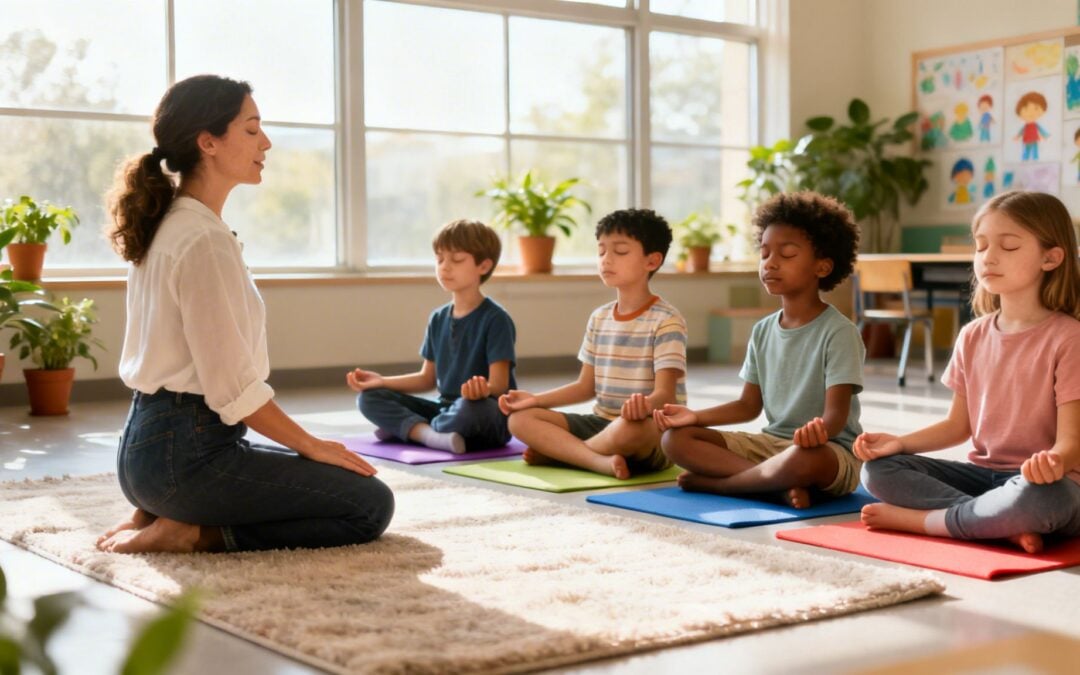
When we talk about mindfulness in the classroom, we're not asking kids to empty their minds. It's much more practical than that. We're teaching them how to pay attention to the present moment with a sense of kindness and curiosity, training their brains to focus and better manage the big waves of thoughts and emotions that can be so distracting.
The result? A calmer, more focused, and more productive learning environment for everyone.
Why Mindfulness in the Classroom Is Essential
So many of our students walk through the school doors already feeling overwhelmed. They're navigating a world of constant pings, pressures, and stimulation that can leave them feeling stressed and anxious before the first bell even rings. When a child's nervous system is on high alert, it's incredibly difficult for them to focus, learn, or build positive relationships.
This is exactly why mindfulness in the classroom is no longer a "nice-to-have." It's a foundational tool for both academic success and emotional well-being. Think of it less as another thing on your endless to-do list, and more as a powerful strategy that primes the brain for learning, making every other minute of instruction that much more effective.
Creating a Foundation for Focus
Picture this: your third-graders tumble back into the classroom after a chaotic recess. They're buzzing with energy, a few are still bickering over a game, and starting the afternoon math lesson feels almost impossible. Instead of trying to talk over the noise, you dim the lights and ring a small chime.
"Okay, friends," you say softly. "Let's take two minutes to settle our bodies. Put your hands on your desk, feel your feet on the floor, and just listen until you can't hear the chime anymore." That simple, two-minute reset is enough to interrupt the chaos and guide your students back into a learning mindset.
This is mindfulness in action, and it directly supports academics. When students learn to notice their own restlessness and are given tools to find their calm, they are much better prepared to:
- Improve Attention: Mindfulness literally strengthens the brain's ability to focus and tune out distractions. For example, a student who practices noticing sounds can better tune out hallway noise during a test.
- Enhance Emotional Regulation: Kids learn to recognize big feelings like frustration or excitement without letting those feelings take over. A practical example is a student who feels angry after a disagreement using a "breathing buddy" technique to calm down before shouting.
- Boost Working Memory: It's simple—a calmer mind is better able to hold on to and process new information. After a mindful minute, a student is more likely to remember a multi-step instruction you give them.
Responding to a Growing Need
This shift isn't just happening in a few classrooms; it's a global movement in education. The mindfulness in education market is on track to surge from $1.4 billion in 2024 to an estimated $5.3 billion by 2033. This incredible growth isn't a fluke. It's a direct response to rising concerns over student anxiety and a wave of compelling neuroeducation research that links mindfulness to better focus and emotional intelligence.
By teaching students to pause and notice their inner world, we give them a lifelong skill for navigating challenges. It’s about building self-awareness, not just about being quiet.
This internal skill set is a huge piece of the social-emotional development puzzle. When a child can identify what's happening inside them, they get much better at understanding the feelings of others. This is how we build empathy. In fact, you can explore the powerful connection between inner awareness and social skills by reading about the benefits of social-emotional learning.
Ultimately, weaving mindfulness into the school day helps create resilient, emotionally intelligent learners who are ready to take on a complex world.
Your Implementation Plan For School-Wide Mindfulness
Bringing mindfulness to an entire school can feel like a huge undertaking. But a thoughtful, step-by-step approach can make it not only manageable but truly sustainable. The secret? A successful school-wide rollout isn't a top-down mandate. It begins with genuine buy-in and a focus on the well-being of the adults in the building first.
The most effective mindfulness in the classroom programs always start by supporting the teachers. When educators feel the personal benefits of mindfulness themselves—less stress, more presence—they become the most authentic and powerful champions for their students.
Start Small and Build Momentum
The key is to avoid overwhelming your staff. Instead of a massive, all-at-once launch, think about creating a ripple effect that starts with a core group of enthusiastic people.
- Form a Wellness Team: Find a few passionate staff members—teachers, counselors, or administrators—to lead the charge. This small team can pilot practices, gather feedback, and help guide the process.
- Conduct a Needs Assessment: Don't assume you know what the biggest stressors are. Use a simple, anonymous survey to ask staff and students what they're struggling with. For example, a question could be: "When do you feel most stressed during the school day? (a) Before a test, (b) During lunch/recess, (c) Transitions between classes."
- Identify Pilot Classrooms: Invite a handful of interested teachers to try a few simple practices for a month. Support them with resources and regular check-ins, creating a low-stakes space to experiment.
This gradual approach builds a foundation of success stories and hands-on experience, which makes the whole idea much more appealing to hesitant staff members down the road.
This flow shows the simple but powerful path that mindfulness creates, moving us from a state of stress to one of calm, focused attention.
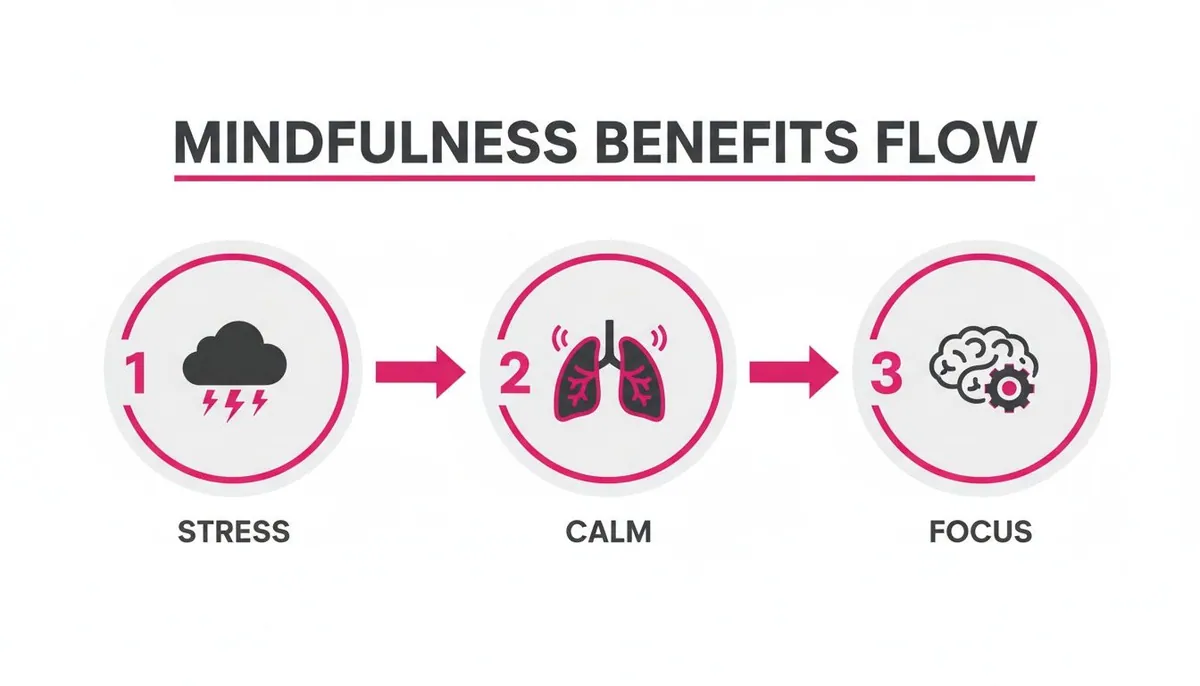
The goal isn't to eliminate stress completely—that's impossible. It's about developing the skills to navigate it effectively, which leads to greater mental clarity and calm.
Provide Robust Professional Development
Great training is the engine of a successful program. The quality of teacher preparation is directly tied to student outcomes. And the data backs this up.
Of the over 7,000 adults trained to deliver mindfulness to more than 200,000 young people, 92% of teachers reported personal benefits like reduced stress. This personal growth has helped fuel an explosion in youth meditation, which jumped from just 0.6% in 2012 to 5.4% in 2017. As you can see from these findings on teacher training and student outcomes, when teachers are well-supported, the social improvements in students are much more likely to stick.
When introducing the idea at a staff meeting, start with an experience. Don’t just talk about mindfulness—lead a one-minute breathing exercise. Let them feel the shift from chaos to calm firsthand.
To make sure your program is truly effective, it's essential to Master Instructional Design Principles when creating your PD sessions. Your training should be experiential, ongoing, and practical, not just a one-off workshop.
Weave Mindfulness into the School Day
Look for small openings to embed short, simple practices into routines you already have. This helps mindfulness become a natural part of the school culture, not just another thing on the to-do list.
Practical Examples for School-Wide Integration:
- Morning Announcements: Start the day with a school-wide "Mindful Minute." The principal can guide students in a moment of quiet breathing or ask them to notice one sound in the building.
- Script: "Good morning, everyone. Before we begin our day, let's take a moment to arrive. Feel your feet flat on the floor, take a slow breath in, and a long breath out. Have a wonderful day of learning."
- Classroom Transitions: The moments between activities are perfect for a quick reset. Use a chime, a song, or a simple breathing exercise to signal a shift in focus.
- Teacher Tip: After a lively activity, you could say, "Let's practice 'Stoplight Breathing.' We'll take one deep breath for the red light to pause, one for the yellow light to notice, and one for the green light to get ready for what's next."
By integrating these small moments, you build a consistent practice across campus. This approach reinforces mindfulness as a core piece of your school's support system, just like other effective SEL programs for schools. The goal is to make these tools second nature for both students and staff.
Practical Mindfulness Activities For Every Grade Level
The best way to bring mindfulness into the classroom isn't through long, complicated lessons. It's about weaving short, simple practices into the natural rhythm of the school day. The trick is picking activities that are right for each age group, ensuring a technique meant to bring calm doesn't just create confusion or a case of the giggles.
The goal is to give students a mental toolkit they can reach for anytime—before a test, after a disagreement on the playground, or just when their brain feels a little too "buzzy." Below are some of my favorite, road-tested examples for different grades, complete with scripts to help you guide them with confidence.
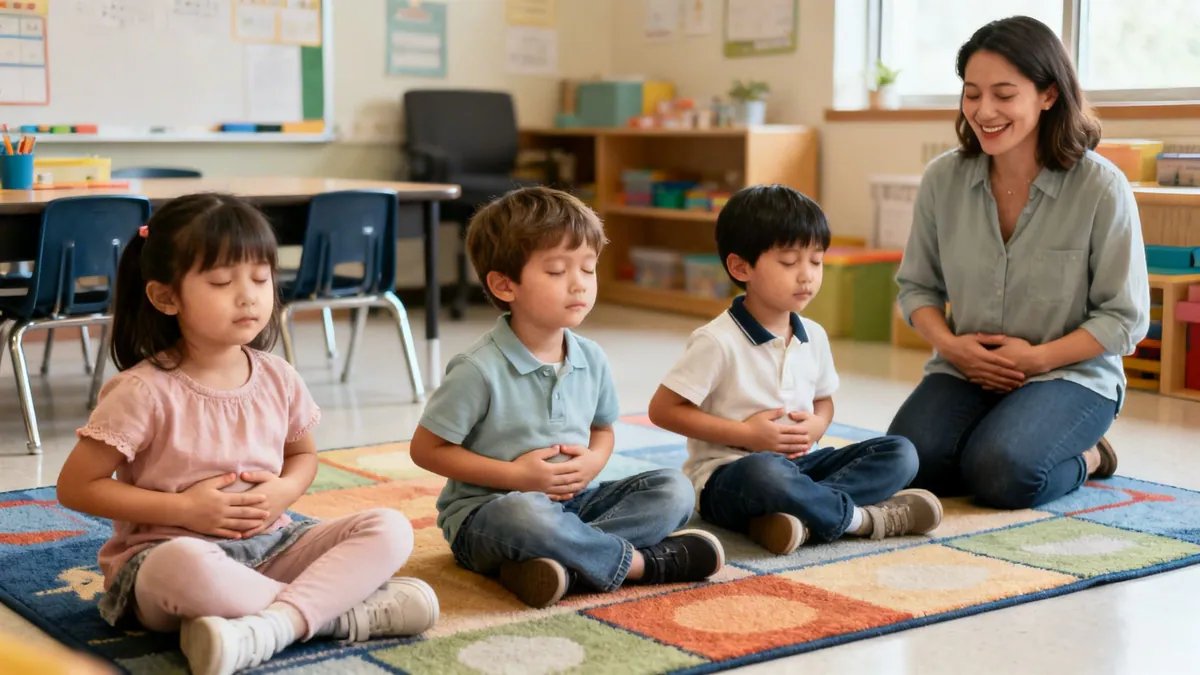
Activities For Early Learners (Grades K-2)
With our youngest students, mindfulness has to be tangible, playful, and connected to things they can see and feel. We use imagination and physical sensations to make big ideas like "attention" and "calm" feel real.
Belly Buddies
This is a classic for a reason—it makes mindful breathing visible and fun. It's perfect for settling the class down after recess or as a quiet start to your morning meeting.
- How it works: Students lie on their backs (a rug or mat is great) and place a small stuffed animal or a beanbag on their belly.
- Sample Script: "Find a comfy spot on your back and let your Belly Buddy rest on your tummy. Without talking, let's see if we can rock our buddies to sleep. Take a slow, quiet breath in through your nose and feel your belly lift your buddy way up. Now, breathe out slowly and watch your buddy float back down. Let's take a few more sleepy breaths together."
Weather Reports
This activity is a game-changer for building emotional literacy. Instead of a child having to say "I'm angry," they can learn to say "I feel stormy inside." This creates a little bit of distance, making the feeling less overwhelming.
- How it works: During your morning meeting, ask students to check in with their "internal weather."
- Sample Script: "Let's be weather reporters for our feelings. What's the weather like inside you today? Is it sunny and bright? Maybe a little cloudy and quiet? Or are there some rumbly storm clouds? There's no right or wrong weather; we're just noticing what's there."
Exercises For Middle Grades (Grades 3-5)
Upper elementary students are ready for practices that are a bit more structured. They can start to grasp the connection between where they put their attention and how they feel inside.
Mindful Listening
This practice is fantastic for sharpening focus and pulling students into the present moment using sound. It's one of my favorite ways to transition between subjects and reset the room's energy.
- How it works: You'll need something that makes a long, resonant sound, like a singing bowl, a chime, or even a simple bell.
- Sample Script: "Let's practice our mindful listening. I'm going to make a sound. If you're comfortable, you can close your eyes and listen as carefully as you can. Put a thumb up when you can't hear the sound anymore. Let's see how long we can follow the sound with our ears."
Thought Surfing
This exercise introduces a huge idea: thoughts come and go, and we don't have to get swept away by every single one. It’s an early step in learning to think about our own thinking.
This teaches a core principle of mindfulness: we are not our thoughts. Just as a surfer rides a wave, we can learn to observe our thoughts as they rise and fall without letting them knock us over.
- How it works: This works well as a short, guided visualization.
- Sample Script: "Imagine you are sitting by a gentle stream. Every thought that pops into your head is like a leaf floating by on the water. You don't have to grab the leaf or follow it down the stream. Just notice it as it floats into view, and then watch as it floats away."
For educators just starting out, finding high-quality 5 minute guided meditation scripts can be a fantastic resource for these short, effective breaks.
Techniques For Older Students (Grades 6-8)
Middle schoolers are not only capable of more introspection, but they also appreciate understanding the "why" behind what they're doing. The best practices for this age group help them navigate the specific social and academic pressures they face every day. You'll find many more ideas to support this age group in our guide to mindfulness activities for kids.
Mindful Walking
For students who have a hard time sitting still, mindful walking is a lifesaver. It channels that restless energy into a focused, grounding practice. It’s a great tool to use before a big presentation or after a tense moment with a friend.
- How it works: Students can walk slowly and silently around the classroom or in a hallway, putting all their focus on the physical feeling of walking.
- Sample Script: "We're going to take a slow, mindful walk. As you take each step, just notice the feeling of your foot lifting off the floor, moving through the air, and connecting with the ground again. Feel the heel, the arch, the ball of your foot. If your mind starts wandering to other things, gently bring your attention back to the feeling of your feet on the floor."
To make it even easier to find the right activity at the right time, here’s a quick-start guide you can use as a reference.
Mindfulness Quick-Start Activities By Grade Level
This table summarizes some simple and effective mindfulness exercises you can tailor for different developmental stages in your K-8 classroom.
| Grade Level | Activity Name | Core Skill | Best Time to Use |
|---|---|---|---|
| K-2 | Belly Buddies | Mindful Breathing | After recess, start of day |
| K-2 | Weather Report | Emotional Awareness | Morning meeting, check-ins |
| 3-5 | Mindful Listening | Focused Attention | Transitions, before a test |
| 3-5 | Thought Surfing | Metacognition | When students seem distracted |
| 6-8 | Mindful Walking | Grounding, Focus | Before presentations, for restless energy |
| 6-8 | Body Scan | Body Awareness | End of day, after PE |
Remember, the goal isn't perfection; it's about offering consistent opportunities for students to connect with themselves. Starting with just one or two of these simple practices can make a world of difference.