

A Guide to Impulse Control in Children for Parents and Teachers
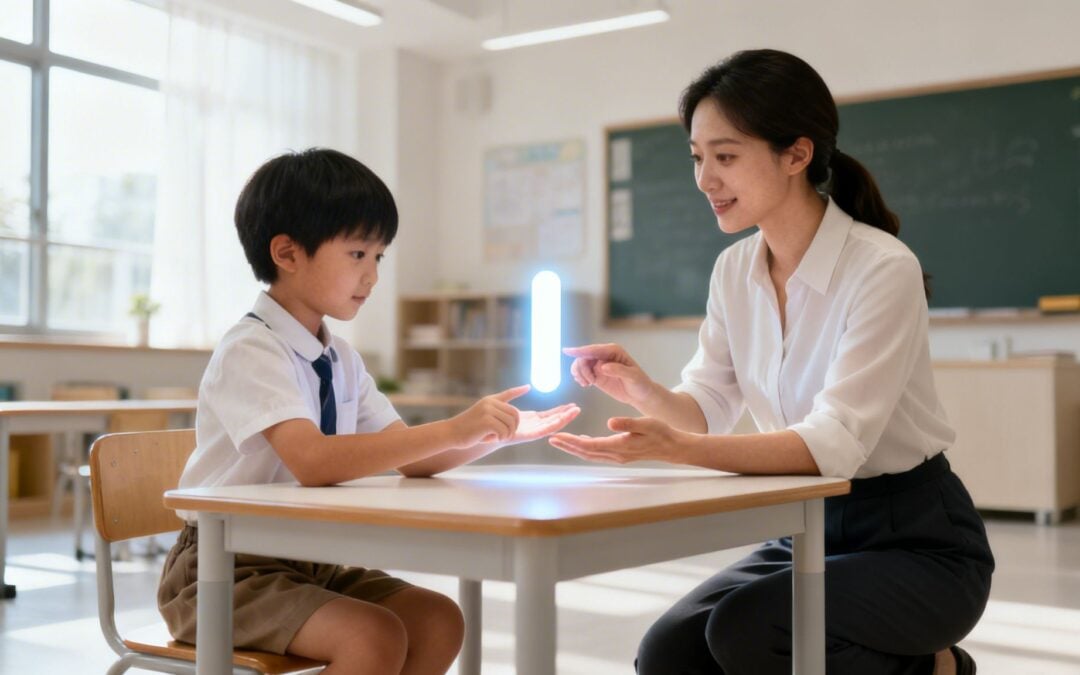
Picture this: a child so excited to share an answer they blurt it out before the teacher finishes the question. Or a toddler who, overcome with frustration, snatches a toy from a friend. These moments aren't about being "bad"—they're windows into a developing skill called impulse control.
Think of it less as a switch for good behavior and more like learning to ride a bike. It takes time, practice, and a whole lot of guidance to find that balance.
Why Impulse Control Is a Skill Every Child Needs

At its core, impulse control is the ability to hit the pause button between feeling an urge and acting on it. It’s the brain's internal braking system. For kids, that system is still being built, which is why they so often seem to act first and think second.
This skill is the bedrock for making friends, doing well in school, and handling all the big emotions that come with growing up. When we actively teach impulse control, we’re helping children strengthen that internal pause button, leading to calmer classrooms and more cooperative homes.
The Real-World Impact of Impulse control
A child who can manage their impulses can wait their turn for the slide instead of pushing ahead. They can raise their hand instead of shouting. These might seem like small things, but they are huge victories in their social and emotional journey.
This ability to pause and think has a ripple effect on a child's entire world. Strong impulse control helps children:
- Build Healthier Friendships: They learn to share, take turns, and talk through disagreements instead of grabbing or hitting. For example, instead of snatching a toy, they learn to say, "Can I have a turn when you're done?"
- Succeed Academically: They're better able to focus on instructions, stay on task, and resist the constant distractions of a busy classroom. For example, they can listen to all the directions for an art project before immediately starting to paint.
- Manage Big Emotions: They find ways to use their words to express frustration rather than defaulting to a meltdown. For example, instead of throwing their blocks when a tower falls, they can say, "I'm so mad it fell over!"
A child’s capacity for self-control is one of the most important predictors of positive outcomes. It's more than just behavior management; it's about giving them the tools for lifelong well-being.
It's a Foundational Life Skill
Ultimately, helping kids with impulse control is about preparing them to handle life's frustrations and setbacks with grace. It’s a cornerstone of social-emotional learning that helps them feel seen, understood, and in charge of their own actions.
Activities that require focus and respect for others can be a huge help. For example, exploring how structured physical programs aid in building confidence and discipline in children shows how external routines can build internal strength. When we model and teach this skill, we’re not just correcting a behavior—we're building a child's resilience from the inside out.
How a Child's Developing Brain Shapes Impulsive Behavior
To really get why a child might snatch a toy or blurt out an answer, we have to look under the hood at their developing brain. It helps to think of it as a team with two very different players: one is a speedy, emotional "first responder," and the other is a thoughtful, slower "planning manager." The dynamic between these two is the secret to understanding impulse control.
The first responder is the limbic system, which you can think of as the brain's emotional core. It's where big feelings like excitement, frustration, and fear come from. This part of the brain is fully formed and running the show from a very young age, which is why toddlers and young children have such powerful, immediate reactions to everything.
The planning manager is the prefrontal cortex, located right behind the forehead. This is the brain's CEO, responsible for logic, thinking ahead, and most importantly, hitting the brakes on those sudden urges. But here's the catch: the prefrontal cortex is the very last part of the brain to fully mature. Its major development continues well into a person's early 20s.
The Accelerator and the Brakes
Picture a car with a super-sensitive gas pedal but brakes that are still being installed. In a child's brain, the emotional limbic system is that powerful accelerator, while the developing prefrontal cortex is the unreliable brake. This imbalance is exactly why children so often act first and think later.
Their emotional engine revs high with excitement or curiosity, and the impulse to do something is immediate. The thoughtful "planning manager" simply hasn't built up the strength or speed to consistently jump in and say, "Hang on, let's think this through."
Practical Example:
A five-year-old sees a colorful cupcake on the kitchen counter. Their limbic system (the first responder) practically shouts, "I want that now!" and sends an urgent signal to grab it. Their prefrontal cortex (the planning manager) is supposed to intervene with, "Wait, we should ask first," but that connection is still a bit slow and weak. The result? The child's hand is already reaching for the cupcake before the "stop" signal even has a chance to arrive.
Building Brain Connections Through Co-Regulation
Knowing about this developmental gap completely changes how we should look at discipline. When a child acts impulsively, it isn't a sign of bad behavior or defiance. It's a signal that their brain's braking system needs a helping hand. This is where co-regulation comes in. By acting as their external "brakes," we help children navigate overwhelming feelings and impulses they can't yet manage on their own.
Co-regulation isn't just about stopping a single impulsive act. It's the process of lending a child your own calm and logic, which actively helps build and strengthen the neural pathways between their emotional brain and their thinking brain.
This process is a fundamental part of developing crucial self-management skills. You can learn more about these foundational abilities by checking out our guide on what are self-management skills.
Here’s what co-regulation looks like in action:
- Lending Your Calm: When a child is getting worked up, you make a point to stay calm yourself. This gives them a steady emotional anchor in their storm. Practical example: Your child starts crying loudly because their sibling won't share. Instead of matching their volume, you get down on their level and speak in a soft, steady voice.
- Narrating the Feeling: You give them the words for what they're feeling. For instance, "You seem really frustrated that your turn is over." Practical example: "I can see you're very angry that the block tower fell. It's okay to feel that way."
- Guiding the Next Step: You offer a clear, simple solution. "How about we take three deep breaths together before we decide what to play next?" Practical example: "It’s not okay to hit. Let's use our strong hands to squeeze this pillow instead, and then we can talk about it."
Every single time you guide a child through this process, you’re doing so much more than just correcting a behavior. You are physically helping to build the brain architecture they need for lasting impulse control. You're not just correcting them; you are essentially being their prefrontal cortex until their own is strong enough to take the wheel.
Realistic Milestones for Impulse Control Development
It’s one thing to know that impulse control develops over time, but it’s another to know what’s “normal” for a specific age. We don’t expect a toddler to read a chapter book, so we shouldn’t expect them to have the same self-restraint as a ten-year-old. Setting realistic expectations is the very first step in offering support that actually works.
Think of this as a developmental map. It’s here to help you recognize what’s age-appropriate and spot when a child might need a little extra coaching.
The brain's emotional center and its logical "planning center" mature at very different speeds. This timeline gives you a great visual of how that gap influences a child's ability to manage their impulses from moment to moment.

As you can see, the emotional, reactive part of the brain is online and ready to go from early on. The thoughtful, planning part? That takes years to fully connect. This is exactly why our patience and consistent coaching are so critical.
To help you set appropriate expectations, here's a look at the typical journey of impulse control, from grabbing toys in preschool to navigating social situations in middle school.
Impulse Control Milestones From Preschool to Middle School
| Age Group | Common Impulsive Behaviors | Emerging Self-Regulation Skills |
|---|---|---|
| Preschool (3-5) | Grabbing toys, blurting out thoughts, big emotional reactions (tantrums) to small problems. | Beginning to understand simple rules, can wait for very short periods with reminders, starts to label feelings. |
| Early Elementary (6-8) | Acting out when tired or excited, interrupting conversations, difficulty losing games gracefully. | More awareness of social rules, can follow multi-step directions, can use simple calming strategies (like taking a deep breath). |
| Upper Elementary (9-11) | Rushing through work, occasional sarcastic or unfiltered comments, getting distracted by peers. | Better at thinking before acting, can understand another person’s perspective, starts to use problem-solving skills independently. |
These milestones aren't rigid rules but gentle guides. Every child develops at their own pace, and skills can look strong one day and disappear the next—especially when a child is tired, hungry, or overwhelmed.
A Closer Look at Each Stage
Preschoolers (Ages 3-5)
At this age, the world is all about immediate wants and needs. Their brain’s emotional "first responder" is in the driver's seat, while the logical "planning manager" is just learning to give directions. Impulsive behavior isn't just common; it's their default setting.
Practical example: A four-year-old sees a shiny red truck in another child's hands. Their brain screams, "I want it!" and their hand grabs it. They aren’t being mean—they simply haven't built the neural wiring yet to pause, consider the other child, and ask for a turn.
Early Elementary (Ages 6-8)
As kids start school, their "planning manager" starts to get stronger. They have a better grasp of rules and are more aware of others' feelings, but their impulse control is still pretty inconsistent. It takes a lot of mental energy for them to manage their urges.
Practical example: Think of a seven-year-old in a board game. They know the rules say to wait for their turn, and they manage for a few rounds. But as the game gets exciting, they might forget and roll the dice early. They have the knowledge, but consistent follow-through is still a work in progress.
This is a perfect time to focus on a child’s emotional literacy. Digging into the full spectrum of child emotional development gives you a much richer context for all the changes happening under the surface.
During these years, impulse control is like a flickering lightbulb. It shines brightly in moments of calm but can easily go out when a child is tired, hungry, or overstimulated. Consistency and gentle reminders are your best friends.
Upper Elementary (Ages 9-11)
This stage often brings a major leap in self-regulation. The prefrontal cortex—the brain’s CEO—is making huge strides. This allows kids to think more logically about consequences and get a better handle on their immediate desires.
Practical example: You'll notice they can hold back impulses more reliably, even when they're excited or upset. A nine-year-old working on a group project might disagree with a friend's idea. Instead of blurting out, "That's a dumb idea!" (something they might have done a few years ago), they're now more capable of pausing to say, "What if we tried it this way instead?"
This shows a real ability to filter that first reaction and choose a more constructive path. It's a huge milestone that shows all that earlier groundwork is finally paying off.
Effective Classroom Strategies for Impulse Control
Building a classroom that supports impulse control isn't about stamping out every single outburst. It’s about creating a predictable, supportive space where kids can practice hitting their own internal "pause button" with you as their guide. These techniques are designed to be woven right into your daily classroom life, turning ordinary moments into powerful learning opportunities.

The real key is to shift from correcting impulsive behaviors after they happen to proactively teaching the skills that prevent them in the first place. This simple change helps create a calmer, more focused, and cooperative learning environment for everyone.
Implement the Stop, Think, Act Framework
The "Stop, Think, Act" model is a simple but incredibly powerful mental script. It helps children interrupt their own impulses, and your job is to make this internal process visible and external until they can manage it on their own.
It works because it gives kids a concrete, three-step process to follow when they feel that sudden urge. It breaks down a really complex self-regulation skill into small, memorable parts.
You can use consistent verbal cues throughout the day for those common challenges:
- Lining up for recess: "Okay, everyone, before we all jump up, let's Stop and look at the door. Think about what a quiet, safe line looks like. Now, let's Act by pushing in our chairs and walking."
- Answering a question: "I see so many excited hands! Remember to Stop before you call out. Think about your answer. I'll call on someone to Act and share it with us."
- Starting a new activity: "Pencils down for a moment. Let's all Stop and listen to the directions. Think about the very first step. When I say 'go,' you can Act."
Make Waiting Concrete with Visual Timers
For a child who struggles with waiting, being told to "wait five minutes" can feel like an eternity. Waiting is an abstract concept, but you can make it tangible and way less frustrating with visual timers.
A visual timer physically shows the passage of time, which reduces anxiety. Kids can see that the waiting period has a clear, predictable end, making it much easier to manage their patience.
Try these in your classroom:
- Practical example: Use a simple sand timer for short waits, like when students are taking turns in a game.
- Practical example: A Time Timer (the kind where the red disk slowly disappears) is great for longer stretches, like during independent reading.
- Practical example: For class-wide transitions, project a large digital countdown timer on the board so everyone can see it.
"I can see you're excited to use the computer. Let's set the timer for five minutes. When all the sand is at the bottom, it will be your turn."
Use Role-Playing for Common Conflicts
Practicing how to handle tough situations when everyone is calm is one of the best ways to prepare students for real-life disagreements. Think of role-playing as building muscle memory for positive social behaviors.
It works because students can safely try out communication and problem-solving skills without the pressure of a real, emotional conflict. This helps them build a script for what to say and do when they feel frustrated or unheard.
Set up short, simple scenarios based on common classroom problems:
- Scenario: Two students both reach for the last green marker.
- Script: Have one student practice saying, "Can I use it when you're done?" instead of just grabbing it. Then, have the other student practice responding, "Sure, you can have it in two minutes."
- Debrief: Ask the class, "What did you notice? How did that feel better than just grabbing the marker?"
Structured classroom management programs can be incredibly effective at reducing impulsivity. For instance, research from Johns Hopkins trials on the Good Behavior Game—a classroom intervention for disruptive behaviors—found that kids in the program showed lasting reductions in impulsive and aggressive actions all the way through adolescence. It’s proof that consistent, structured strategies yield powerful, long-term benefits for impulse control in children.
Proactive Environmental and Instructional Support
Beyond direct instruction, the way you set up your classroom and deliver your lessons can make a huge difference in reducing impulsive behaviors. For students who need more support, consider these self-regulation strategies for students.
Here are a few key adjustments you can make:
- Provide Seating Options: Offer wobble stools or resistance bands on chair legs to give students a quiet outlet for their physical energy.
- Break Down Instructions: Instead of giving all the directions at once, deliver them one or two steps at a time.
- Preview Transitions: Give a heads-up five minutes before a change. Say, "In five minutes, we will clean up our art supplies and get ready for math."
- Offer Brain Breaks: Schedule short, 2-3 minute movement breaks between periods of focused work to help everyone reset.
Fun Home Activities That Build Self-Regulation

You don't need workbooks or rigid lessons to build impulse control in children. In fact, some of the most powerful opportunities are hiding in plain sight—in your playroom, in your kitchen, and in your daily routines.
The real key is to make practicing self-regulation feel like a game, not a chore. When you do, you help your child build the mental muscles for patience, listening, and thinking before they act, all in a safe and playful space.
Games That Teach the "Pause" Button
Classic childhood games are perfect for practicing response inhibition—the ability to stop an action that’s already in motion. It’s all about hitting that internal "pause button" on command.
- Red Light, Green Light: This one is a classic for a reason. When you yell "Red Light!", a child has to fight the powerful urge to keep running and freeze in place. It’s a direct, physical way to practice stopping an impulse.
- Freeze Dance: This works the same muscle. Kids have to dance with abandon until the very second the music stops, training them to pay close attention and control their bodies instantly.
Want to add a challenge? Try changing the rules. For a practical twist, tell them to "freeze" when the music starts and "dance" when it stops. This makes them inhibit their old habits and adapt on the fly, adding another layer of cognitive control.
Activities for Following Steps and Delaying Gratification
So many household activities are natural lessons in patience and following a sequence. These are the skills that help counter that powerful "I want it now!" urge that every child feels.
Building self-control isn't about rigid discipline; it's about playful practice. When a child learns to wait for a cookie to bake or a turn in a game, they are building the foundation for bigger life skills like waiting to speak or thinking before acting.
Baking Together
Following a recipe to bake cookies or a cake is a fantastic, multi-step lesson in managing impulses. Your child can’t just dump everything into the bowl at once and expect a good result.
- Patience: They have to wait for each ingredient to be measured and added.
- Following Directions: They learn that steps must be followed in a specific order to get the treat they want.
- Delayed Gratification: And of course, the ultimate test is waiting for the cookies to bake and cool before they can finally take a bite.
Building with Blocks or LEGOs
When a child is following instructions to build a specific model, they have to resist the urge to just start clicking random bricks together. They have to slow down, find the correct pieces, and connect them in the right order. This activity strengthens their ability to manage frustration and stick with a plan.
To complement these strategies, exploring fun movement activities for preschool kids can also contribute to their self-regulation development at home.
For even more ideas, check out our guide on self-control games and activities for parents and teachers. Ultimately, the goal is to make practicing these crucial skills a natural and positive part of your family dynamic.
When to Be Concerned About Your Child's Impulsivity
All children act on impulse sometimes—it’s just a normal part of growing up. But as a parent or educator, how do you know when that impulsive behavior crosses the line from typical development to a potential red flag?
The answer isn't about a single action, but about the bigger picture. We need to look at the frequency, intensity, and impact of the behavior. A four-year-old grabbing a toy is pretty standard stuff. A ten-year-old who still can't wait their turn despite repeated coaching, however, might need a different kind of support. The goal isn’t to pathologize childhood energy, but to recognize patterns that get in the way of a child’s ability to learn, make friends, or stay safe.
Distinguishing High Energy from Concerning Impulsivity
It’s incredibly easy to confuse a highly energetic kid with one whose impulsivity points to an underlying issue. A high-energy child might be fidgety and talkative, but they can usually dial it back when they need to. A child with significant impulse control challenges struggles to put on the brakes, even when they know the rules and genuinely want to follow them.
Think about these key differences:
- Context Matters: Is the impulsivity happening everywhere—at home, at school, and on the playground? Or does it only pop up when the child is tired or overstimulated? Challenges that show up across different environments are more concerning.
- Impact on Relationships: Is the child’s impulsivity consistently hurting their friendships? Constant interruptions, physical scuffles, or an inability to play cooperatively can quickly lead to social isolation. Practical example: A child is repeatedly left out of games at recess because others are tired of them not following the rules.
- Safety Concerns: Does the child’s impulsivity put them or others in real physical danger? This includes things like running into the street without looking, climbing in unsafe places, or acting aggressively without any clear trigger. Practical example: A child bolts away from a parent in a crowded parking lot, despite repeated warnings.
If you feel like you’re constantly managing a child's behavior just to prevent disaster, rather than simply guiding them, that’s a sign that more support might be needed. It’s the difference between coaching a new driver and having to grab the wheel every few seconds.
When to Seek Professional Guidance
So, you’ve consistently tried strategies at home and in the classroom, but you’re not seeing any improvement. This might be the time to seek professional guidance. A pediatrician, school psychologist, or child therapist can help figure out if the impulsivity is a symptom of a condition like ADHD, Oppositional Defiant Disorder (ODD), or even a learning disability.
Gender can also play a role in how these behaviors show up. For example, research on over 2,000 children found that girls often develop self-control skills earlier than boys. Understanding these developmental differences helps us make sure our support strategies are as effective as possible. You can discover more insights about these gender-based differences in self-control development.
Consider seeking an evaluation if your child's impulsivity:
- Persists Despite Support: You've tried visual timers, role-playing, and consistent routines, but the challenging behavior isn't getting better.
- Severely Impacts Learning: The child can't focus long enough to finish their work or follow simple classroom instructions.
- Leads to Significant Social Isolation: Other kids are actively avoiding your child because of their unpredictable or aggressive actions.
- Causes Harm: The behavior results in injury to themselves or others, or significant damage to property.
Reaching out for help isn't a sign of failure; it's a proactive step toward getting your child the right tools. It brings clarity and opens the door to a support plan that can make a real, meaningful difference in their school and home life.
Common Questions About Impulse Control in Children
Even when you have a good handle on the strategies and developmental milestones, real-world questions about impulse control in children always pop up. Let's tackle some of the most common concerns we hear from parents and teachers.
Are Screen Time and Impulsivity Related?
This is a question on nearly every parent's mind, and the short answer is yes, there’s a link. Think about it: many of the apps, games, and shows our kids love are built on a loop of instant rewards and non-stop stimulation. This can make the real world—where you have to wait for your turn or listen to a story—feel painfully slow to a developing brain.
Of course, this doesn't mean all screen time is harmful. It just means balance is key.
Practical example: Imagine a child spends an hour on a tablet game, racking up points every second. When they come to the classroom carpet for a 20-minute read-aloud, it can feel like shifting from a speedboat to a snail. Their brain is wired for that immediate feedback, making it a real struggle to settle into an activity that requires patience.
To help create that balance, you can:
- Mix it up. Make sure screen time is balanced with activities that naturally build patience, like board games, building with LEGOs, or just playing outside.
- Watch together. When you can, co-view content with your child and chat about what you’re seeing. This shifts them from being a passive viewer to an active, thinking participant.
What Is the Difference Between Impulsivity and ADHD?
This is a really important distinction. All kids are impulsive sometimes—especially when they're young, tired, or super excited. But with Attention-Deficit/Hyperactivity Disorder (ADHD), that impulsivity is a persistent, core symptom of a neurodevelopmental condition.
The real difference comes down to the frequency, severity, and how it impacts their life.
Practical example: A child might get excited and blurt out an answer once or twice during a lesson. A child with ADHD, however, might do so constantly, struggling to stop even when they know the rule and are trying their best to follow it. The behavior isn't just a one-off; it shows up across different settings, from the classroom to the playground to home.
A child with ADHD often has other challenges with focus and/or hyperactivity that go beyond what’s typical for their age. While the strategies in this guide can absolutely help, a child with suspected ADHD needs a full evaluation from a professional. This allows for a targeted support plan, which might include things like behavioral therapy or specific classroom accommodations.
How Can I Reinforce School Lessons at Home?
Consistency is your superpower here. When kids hear the same language and use the same tools at school and at home, those self-regulation skills start to click into place much faster.
The best place to start is by simply talking to your child's teacher. A quick email or chat asking, "What specific words or techniques are you using for calming down or waiting?" can make a world of difference.
Practical example: Maybe the teacher says they use a "calm-down corner" and a "take five" breathing exercise. Later that day, when homework frustration hits, you can say, "It looks like your brain is getting tangled up. Let's try that 'take five' breathing your teacher showed you." You've just built a seamless bridge between their two worlds.
You can also model it yourself. Narrate your own moments of impulse control out loud.
- "Wow, I really want to eat this cookie right now, but I am going to pause and wait until after dinner."
- "Ugh, I'm so frustrated I can't find my keys. I'm going to take three deep breaths before I look again."
This gives your child a peek into the internal monologue behind self-control. And don't forget to celebrate their small wins! When you notice them waiting for their turn without a reminder, point it out. It shows them their hard work is paying off and that you see their effort.
At Soul Shoppe, we believe in equipping every child with the tools they need to understand their emotions and build healthy relationships. Our programs provide schools with a shared language and practical strategies to foster self-regulation, empathy, and resilience in every student.
Discover how Soul Shoppe can bring social-emotional learning to your school community.