

A Practical Guide on How to Stop Bullying in Schools

If we want to truly stop bullying, we have to move beyond reactive punishments and start building a proactive culture of safety and respect from the ground up. The most durable solution isn’t a single program but a unified strategy that weaves together school-wide policies, classroom-level social-emotional learning (SEL), and active family partnerships. This guide offers a clear roadmap for creating an environment where every child feels secure enough to thrive.
Building a Foundation of Safety to Stop Bullying
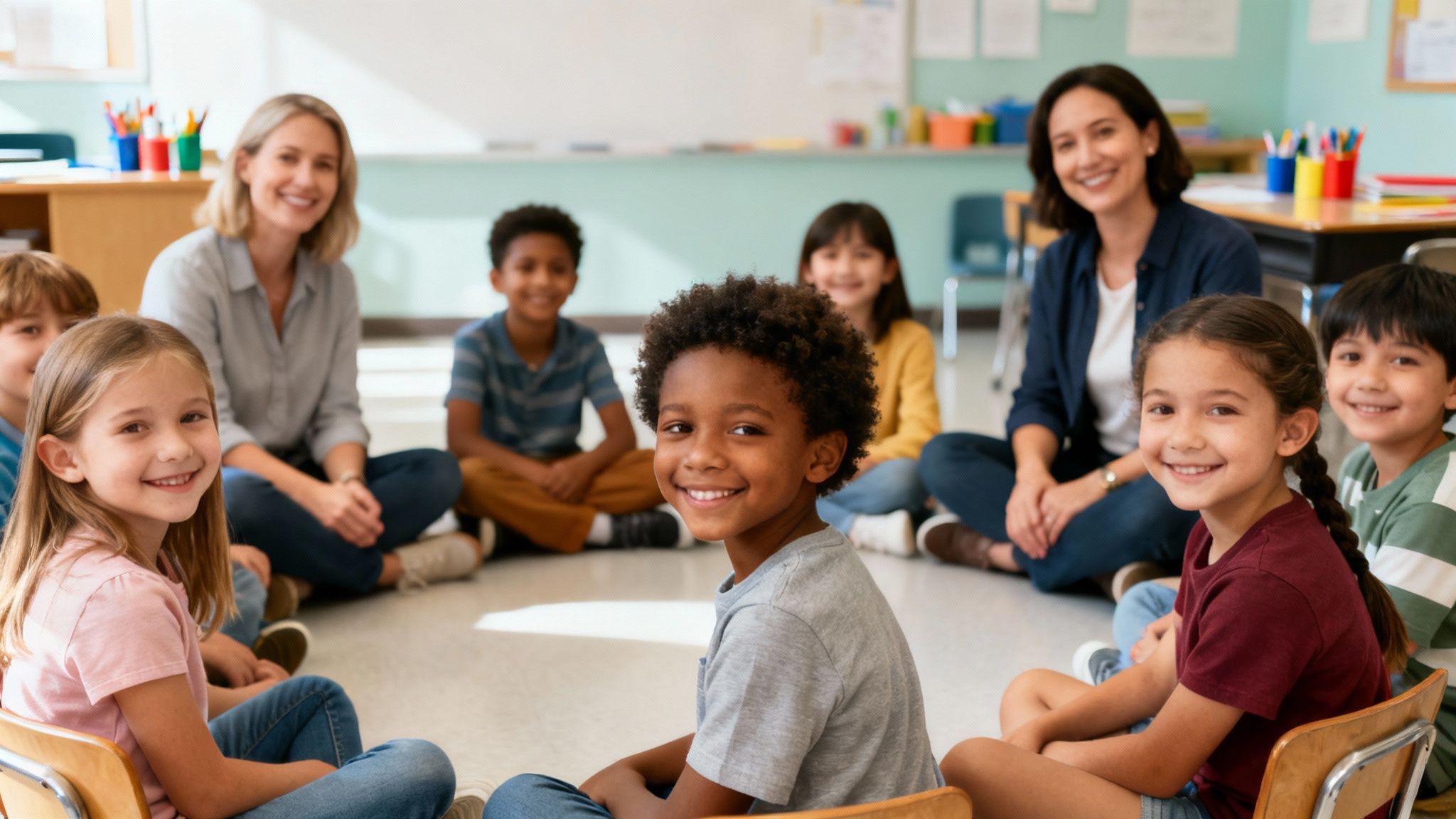
When we ask how to stop bullying, the real answer isn’t a one-time assembly or a catchy slogan. It’s about creating a fundamental shift in the school’s ecosystem. It means building a place where empathy is taught as intentionally as mathematics and where kindness is woven into the daily fabric of school life. This approach moves beyond just telling students “don’t bully” and instead gives them the skills to understand one another.
Why a Unified Strategy Matters
A disconnected approach almost always falls flat. A school might have a strong anti-bullying policy on the books, but if teachers aren’t equipped with classroom strategies and parents aren’t involved, the policy remains just words on paper. A plan that actually works requires everyone to be on the same page, speaking the same language of respect and support.
This is where the three pillars come into play. Creating a protective net around students requires a team effort, with each group playing a vital role. This shared responsibility is key to building a strong foundation of safety.
Three Pillars of Bullying Prevention
| Stakeholder Group | Key Responsibility | Example Action |
|---|---|---|
| School Leadership | Establishes clear, consistent policies and expectations for behavior. | Implementing a school-wide reporting system and restorative justice protocols. |
| Teachers & Staff | Implements daily practices that foster empathy, communication, and conflict resolution. | Leading daily morning meetings focused on SEL skills like perspective-taking. |
| Parents & Caregivers | Reinforces these values at home and maintains open lines of communication with the school. | Discussing the school’s “kindness” theme at home and practicing empathy with their child. |
When these three groups work in concert, they create a powerful, protective net around students. A huge part of this foundation is fostering a strong sense of psychological safety. You can learn more about the importance of psychological safety and see why it’s so critical for every community.
The Power of Social-Emotional Learning
The statistics on bullying are staggering. A massive global analysis found that 25% of students are victims, while another 16% are stuck in the cycle as both bullies and victims. This isn’t just a behavior issue; it’s a public health crisis tied to severe emotional distress.
But the research also points to a powerful solution. Schools that implement comprehensive SEL programs see bullying incidents drop by as much as 30%. Why? Because they teach core skills like empathy, self-awareness, and self-regulation. These are the building blocks of a kind and respectful community.
A truly safe school isn’t just free from physical harm—it’s a place where every child feels seen, heard, and valued. This sense of belonging is the ultimate antidote to bullying.
By focusing on these proactive strategies, we do more than just stop negative behaviors—we actively build a positive culture. A key step in this process is learning how to create a safe space where students feel comfortable enough to be themselves and ask for help when they need it. This playbook provides the practical, actionable methods to make that vision a reality.
Designing Your Whole-School Prevention Plan
To truly stop bullying, we have to shift from just reacting to incidents to proactively building a campus-wide culture of respect. That big-picture work starts with a solid, whole-school prevention plan. Think of it as a blueprint that gives everyone—administrators, students, parents, and staff—a shared language and a clear set of expectations for how we treat each other.
An effective plan isn’t a document that gathers dust on a shelf; it’s a living guide shaping daily interactions on campus. It takes abstract ideas like “kindness” and turns them into real, observable behaviors. This whole process kicks off when school leadership lands on a clear, simple, and unified definition of what bullying is—and what it isn’t.
Establish a Clear Definition of Bullying
Your first job is to define bullying in a way that’s simple enough for a first-grader to grasp but still holds weight with a high school senior. This definition has to be communicated over and over, consistently, across the entire school.
The key is to distinguish bullying from everyday conflict by highlighting its three core ingredients: an imbalance of power, repetition, and an intent to harm.
For example, a teacher could put it this way: “Conflict is when two friends disagree over a game. Bullying is when one person repeatedly uses their power—whether that’s being bigger, more popular, or something else—to hurt someone else on purpose.”
This clarity is everything. It empowers both students and staff to recognize bullying when it happens, which is the essential first step to stopping it. When everyone’s on the same page, reporting becomes far more accurate and effective.
Assemble a Dedicated Safety Committee
This isn’t a one-person job. You need a dedicated safety committee made up of administrators, teachers, counselors, parents, and, yes, even students. This team becomes the champion for your anti-bullying efforts, digging into the data and making sure the plan stays on course. Their different viewpoints are invaluable for creating strategies that are actually practical for your specific school community.
This committee is tasked with a few critical actions:
- Assess the current climate: Use surveys to get a real baseline. Where and when is bullying actually happening?
- Set specific, measurable goals: Don’t just aim to “reduce bullying.” Aim for something concrete, like a 20% reduction in reported incidents on the playground within six months.
- Communicate the plan: Make sure every single person knows the policies, the procedures, and their specific role in making the school a safer place.
Gather Honest Feedback and Data
To fix the real problems, you need real feedback. As you design your plan, it’s crucial to set up reporting systems that feel safe. Well-designed anonymous feedback forms can be a game-changer, allowing students and staff to report what they see without fearing retaliation. This data is pure gold for pinpointing “hot spots” where bullying is most common, like the bus line or that one unsupervised hallway.
A school climate survey can reveal surprising truths. You might discover that what adults perceive as harmless teasing is experienced by students as relentless social bullying. Acting on this data is what makes a prevention plan effective.
This information lets you target your efforts with precision. If the surveys show cyberbullying is a major issue, you can pour resources into digital citizenship lessons. This data-driven approach moves you beyond guesswork and toward solutions that work.
Implement Proactive and Engaging Programs
A strong plan is always more about prevention than punishment. Instead of just waiting for fires to start, you have to actively build a culture of kindness and respect through programs that get students engaged. This is the work that makes bullying socially unacceptable.
Consider kicking off initiatives like these:
- Peer Mediation: Train older students to help younger ones resolve conflicts peacefully. It empowers the student leaders and teaches everyone valuable life skills.
- Kindness Campaigns: Organize a school-wide “Kindness Week” with daily challenges, like writing thank-you notes to cafeteria staff or creating a “wall of compliments.”
- Upstander Training: Don’t just hope students will intervene—explicitly teach them how to do it safely. Role-playing different scenarios helps them build the confidence to actually speak up.
These activities aren’t just fluffy add-ons; they are fundamental to shifting the entire school culture. For more structured approaches, you can explore various bullying prevention programs for schools that offer proven frameworks for building empathy and respect. When kindness and inclusion become the norm, you create an environment where bullying simply can’t thrive.
Classroom Scripts and Strategies for Teachers
Teachers are on the front lines, turning school-wide policies into the everyday reality of the classroom. To really make a difference, you need more than just theory; you need practical, in-the-moment tools to build an anti-bullying culture from the ground up. This is about weaving social-emotional learning (SEL) into the very fabric of your lessons, morning meetings, and even the way you handle small conflicts.
These consistent, small actions are what truly create a psychologically safe classroom. When students feel seen, heard, and have the words to express their feelings without attacking others, the environment that lets bullying take root starts to fade away.
Start the Day with Connection
Those first few minutes of the day are everything—they set the tone for all the hours that follow. A structured morning meeting is a perfect routine for building community and explicitly teaching the communication skills that stop bullying before it starts.
One of the most powerful tools you can give students is the “I feel” statement. It’s a simple language shift, but it’s a game-changer. It turns accusations into conversations, helping kids share their hurt feelings without putting the other person on the defensive.
Morning Meeting Script Example
Imagine a student, Alex, seems down after a disagreement during recess.
- Teacher: “Good morning, everyone. Before we start our day, let’s do a quick check-in using our ‘I feel’ statements. Remember how this works? It helps us share what’s going on inside without placing blame. We start with ‘I feel…’, then ‘when you…’, and finish with ‘because…'”
- Teacher (to Alex): “Alex, it looks like something might be on your mind. Would you feel comfortable sharing with an ‘I feel’ statement?”
- Alex: “I feel sad when Maya says I can’t play with the group because it makes me feel left out.”
- Teacher: “Thank you for sharing that, Alex. That took a lot of courage. Maya, can you tell me what you heard Alex say?”
- Maya: “He feels sad because I told him he couldn’t play.”
- Teacher: “Exactly. Thank you for listening. Now, how can we solve this problem together so that everyone feels included?”
This kind of structured dialogue doesn’t just resolve one issue; it models empathy and collaborative problem-solving for the whole class, creating a foundation of respect that lasts all day.
Weave Empathy into Daily Lessons
You don’t need a separate, time-consuming curriculum to teach SEL. You can bake it right into the subjects you’re already teaching. Literature, history, and even science are full of opportunities for students to step into someone else’s shoes and build their empathy muscles.
- During Reading: When you’re discussing a story, go deeper than just plot points. Ask questions that invite emotional reflection: “How do you think the main character felt when that happened? Why do you think the antagonist acted that way? Have you ever felt something similar?”
- In Social Studies: As you learn about historical events, make a point to discuss the perspectives of all the different groups involved. This helps students see that every story has multiple sides and that people’s experiences and feelings shape their actions.
- For Group Projects: Before they dive in, have students create a simple “team contract.” They can agree on how they’ll communicate respectfully, listen to everyone’s ideas, and handle disagreements if they come up.
These small, consistent practices help students get in the habit of considering how others feel—a cornerstone of bullying prevention. For more ideas, check out our guide to classroom management strategies for teachers that foster a positive learning environment.
Intervene with a Clear Protocol
When you see a bullying incident happen, knowing exactly what to do and say is critical. A calm, consistent, and structured response de-escalates the tension and helps every student feel safe. The goal is to stop the immediate behavior, support the student who was targeted, and address the aggressor’s actions without shaming them in front of their peers.
Just follow this simple, three-part process:
- Stop the Behavior Immediately: Use a firm but calm voice. “Stop. That is not okay in our classroom.”
- Support the Targeted Student: Immediately turn your attention to the student who was hurt. “Are you alright? Come with me, let’s talk over here for a second.”
- Address the Behavior Privately: Talk to the student who did the bullying later, away from an audience. “Tell me what was happening there. Let’s talk about that choice. In this school, we are kind to each other.”
The immediate priority is always the safety and well-being of the targeted child. By addressing the other student’s behavior in private, you lower their defensiveness and open the door for a real conversation about their actions and the impact they had.
This protocol ensures you act decisively to stop the harm while preserving the dignity of everyone involved. It sends a clear message: the behavior is the problem, not the child.
Globally, the scale of this issue is huge; one-third of youth (30.5%) report being bullied. Whole-school SEL strategies that build connection and empathy are the most powerful antidote, reducing bullying incidents by 20-50%. Programs that teach skills like self-regulation and conflict resolution have a proven track record of creating safer school communities. You can discover more insights about the worldwide impact of bullying and effective solutions.
How to Respond to Bullying Incidents
When a bullying incident happens, the way adults respond is a powerful moment. It can either make things worse or start the healing process. A clear, compassionate, and consistent workflow is the key to making sure the targeted student feels supported, the behavior is addressed, and the whole community learns from what happened.
The first move is always to stop the behavior and make sure everyone is safe. But the long game isn’t just about punishment—it’s about repairing the harm and teaching crucial life skills. This mindset shifts the focus away from simple punishment and toward accountability and restoration.
Initial Steps for Immediate Intervention
When an incident is happening right in front of you, a swift and calm response makes all the difference. Your priority is to de-escalate the situation and check in on the well-being of the student who was targeted. Research shows that when a bystander steps in, bullying stops within 10 seconds most of the time. As an adult, your intervention carries even more weight.
This three-step process is a great mental model for teachers and staff to follow in the heat of the moment.
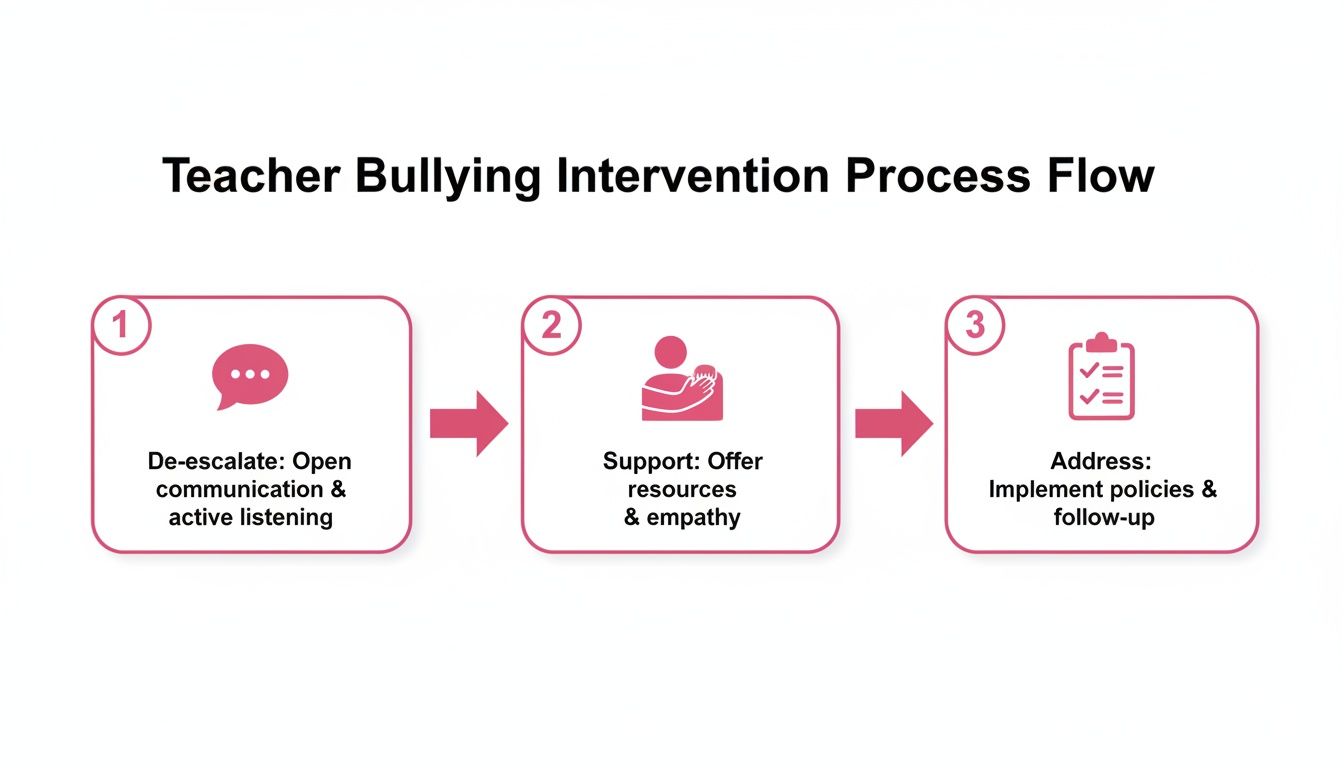
This visual reminds us that safety and support always come first. Addressing the behavior can wait until the immediate situation has calmed down.
Conducting a Fair and Unbiased Investigation
Once things are stable, it’s time to figure out what happened. This isn’t about taking sides; it’s about gathering the facts from a neutral place. A fair process shows every student involved that their voice matters and that the goal is to find a truthful, helpful resolution.
- Separate and Listen: Talk with each student involved one-on-one and in private. This keeps them from being influenced by each other and gives them a safe space to share their side of the story.
- Use Open-Ended Questions: Instead of asking, “Did you push him?” try something like, “Can you tell me what happened at recess today?” This encourages a more detailed and honest account.
- Talk to Witnesses: If other students saw what happened, their perspective is valuable. Remind them that the goal is to help everyone, not to get anyone in trouble.
- Document Everything: Use a simple incident report form to note who was involved, what happened, where and when it took place, and who saw it. This paper trail is vital for spotting patterns and making sure you follow up consistently.
Shifting from Punishment to Restorative Practices
While consequences are necessary, a purely punitive approach like an automatic suspension often fails to teach new behaviors. It can make a student feel even more isolated and resentful without getting to the root of why they acted out in the first place.
A much more effective approach is using restorative practices. This framework focuses on helping the student who caused harm understand its real-world impact and then giving them a chance to actively repair it.
Instead of asking, “What rule was broken and what is the punishment?” a restorative approach asks, “Who was harmed, what are their needs, and whose obligation is it to repair that harm?”
This is a fundamental shift that helps build a culture of accountability and empathy. By focusing on mending relationships, you not only stop the immediate behavior but also teach students critical skills in communication and conflict resolution. If you’re new to this concept, you can learn more about what restorative practices in education look like in our detailed guide.
Facilitating Restorative Conversations
A key tool here is the restorative conversation or circle. This is a mediated meeting where the students involved can speak and listen to one another in a safe, structured environment. An adult facilitator guides the conversation, making sure it stays respectful and productive.
Here’s a simple script you can adapt to guide a restorative conversation:
Facilitator Script Example
- To the student who caused harm: “Can you tell me what happened from your perspective? What were you thinking at the time?”
- To the student who was harmed: “What was the impact of that on you? What was the hardest part for you?”
- To the student who caused harm: “Now that you’ve heard how [student’s name] felt, what are your thoughts?”
- To both students: “What needs to happen to make things right? What can we do to make sure this doesn’t happen again?”
This process doesn’t just tell students what to do; it guides them toward genuine understanding and shared solutions. The outcome isn’t dictated by an adult but co-created by the students themselves, which makes it far more meaningful and likely to stick.
Partnering with Parents for Prevention
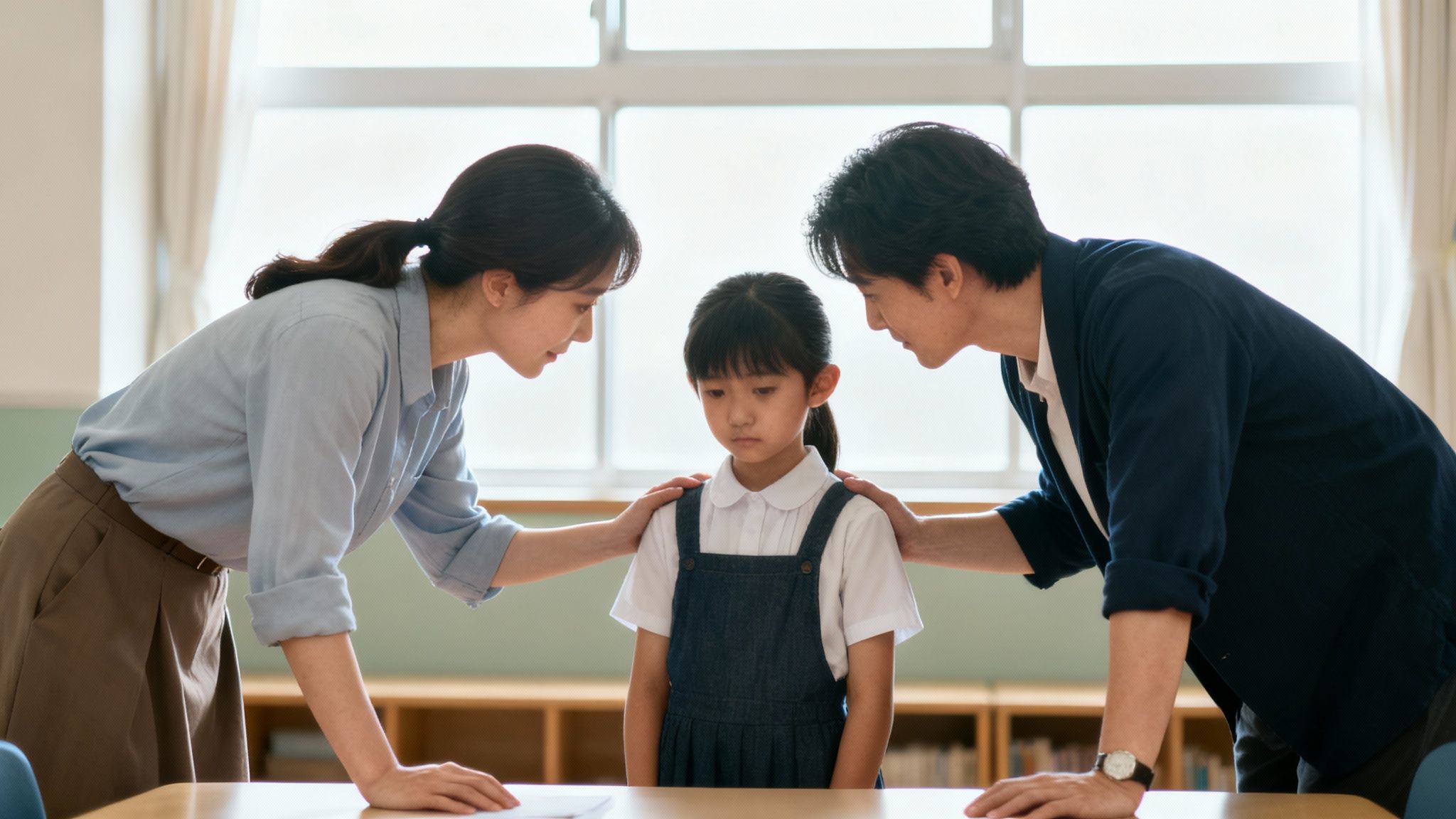
A strong home-school partnership is one of the most powerful defenses we have against bullying. When schools and families are on the same page, speaking the same language of empathy and respect, we create a consistent, supportive world for our kids. It means the lessons of kindness learned in the classroom get reinforced at home, and vice versa.
This alliance is so important because it closes the gaps where bullying can take root. When a child knows their parents and teachers are a united team, they feel safer. They’re also far more willing to speak up about problems they’re facing or witnessing.
Opening Lines of Communication
For schools, a real partnership starts with proactive communication. The key is not to wait for an incident to happen before reaching out. Instead, build a steady rhythm of sharing resources and creating opportunities for parents to engage with the school’s anti-bullying mission.
These efforts don’t have to be complicated to be effective:
- Monthly Newsletter Templates: Dedicate a small section to conversation starters for families. It could be as simple as, “This month, ask your child about a time they saw someone being an ‘upstander’ and what that looked like.”
- Parent Workshop Agendas: Host a workshop—in-person or virtual—on a relevant topic like digital citizenship or understanding social bullying. Give parents practical takeaways they can use that same night.
- Resource Hub: Create a simple page on the school website with curated articles, book recommendations, and links to support services for families.
This kind of consistent outreach builds trust and gives parents the tools they need to be active partners.
Guidance for When Your Child Is Being Bullied
For parents, hearing that your child is being bullied is heartbreaking and can make you see red. Your first response is absolutely critical in helping your child feel safe and heard. The goal is to listen without judgment and then move into calm, strategic action.
Here’s a practical way to respond:
- Listen and Validate: Try to set your own emotions aside for a moment and create a truly safe space for your child to share. Say things like, “Thank you for trusting me with this. That sounds really hard,” or “I’m so sorry that happened. We will figure this out together.”
- Document Everything: Keep a simple, factual log of incidents. Just note the date, time, location, what happened, and who was involved. This information is invaluable when you talk to the school.
- Contact the School Calmly: Schedule a meeting with your child’s teacher or a school counselor. Bring your log and approach the conversation as a collaborative partner. A good starting line is, “I’m concerned about something and I’d like your help.”
Your child’s emotional safety is the top priority. Reassure them that it is not their fault and that you are on their team. This validation is a powerful antidote to the shame and isolation that bullying can cause.
When Your Child Is the One Bullying
Discovering that your child is the one causing harm can be confusing and deeply upsetting. It’s so important to address the behavior directly while also making it clear that you love and support them. This isn’t about shame; it’s about helping them understand the impact of their actions and learn better ways to interact with others.
Start with a calm, private conversation. Try to understand the “why” behind their behavior—are they feeling insecure, struggling to fit in, or mimicking something they’ve seen? Set firm, clear boundaries that the behavior is unacceptable and establish consequences that are logical and restorative, like writing a sincere letter of apology or helping a younger student with a task.
Tackling Cyberbullying Head-On
The digital world adds a whole new layer of complexity. The fight has moved online, where harassment can feel inescapable 24/7. Recent data shows an alarming trend: lifetime cyberbullying victimization is projected to skyrocket from 33.6% in 2016 to 58.2% by 2025. This digital nightmare is most common on platforms like Instagram and YouTube, making digital citizenship a non-negotiable life skill. You can learn more about the stark realities of cyberbullying statistics to get the full picture.
Parents and schools have to work together on this. It means:
- Setting Tech Boundaries: Establish clear family rules about screen time, what can be shared online, and which apps are appropriate.
- Promoting Digital Empathy: Talk regularly about how words and images shared online have a real-world impact on people’s feelings. It’s not just pixels on a screen.
- Recognizing Warning Signs: Be aware of changes in your child’s behavior, like becoming secretive about their device, seeming anxious after being online, or suddenly withdrawing from friends.
By fostering open dialogue about our digital lives and modeling responsible online behavior, we can help kids navigate their online worlds safely and kindly. This partnership between home and school is our best strategy for how to stop bullying in all its forms.
Your Top Questions About Bullying, Answered
Even with the best school-wide plan, bullying situations can feel complex and emotionally charged. When you’re in the thick of it, whether you’re a parent or an educator, tough questions come up. These moments are nuanced and require direct, thoughtful advice.
Knowing how to respond isn’t just about big programs; it’s about confidently handling these specific, real-world moments. The right response can make all the difference for a child who is struggling. Here, we tackle some of the most common challenges you might face.
How Can I Spot the Sneakier Forms of Bullying?
Physical aggression is usually obvious, but social bullying—what experts often call relational aggression—is much harder to see. It’s subtle, insidious, and can be just as damaging, leaving a child feeling worthless and completely alone. This is the kind of harm that often flies right under the adult radar.
Keep an eye out for these more hidden behaviors:
- Intentional Exclusion: This isn’t just a one-off disagreement. It’s a consistent, deliberate pattern of leaving a child out of games, friend groups, or conversations to isolate them.
- Spreading Rumors: This classic tactic now happens in whispers down the hallway and in blasts across social media. The goal is always the same: to ruin a child’s reputation and social standing.
- The Silent Treatment: A group might suddenly stop talking to one child, ignoring them completely. It’s a powerful and painful way to exert social control.
- Public Humiliation: This includes making a child the butt of a joke in front of everyone, mimicking how they talk or walk, or doing something to deliberately embarrass them.
A real-world example? You might notice a student who used to be inseparable from their group is now eating lunch alone every day. When you ask, they might just shrug and say, “They don’t like me anymore.” A gentle, probing conversation, however, might uncover a clear pattern of intentional exclusion.
What Are a School’s Legal Responsibilities?
Every school has a legal and ethical duty to provide a safe learning environment. While the specifics can vary, all 50 states have anti-bullying laws on the books. These laws typically require schools to have a clear anti-bullying policy, a process for reporting and investigating incidents, and a prevention plan.
Things get even more serious when federal civil rights laws come into play. If the bullying is based on a student’s race, color, national origin, sex, disability, or religion, the school’s responsibility escalates. They must take immediate and effective steps to end the harassment, stop it from happening again, and address its impact.
A school’s legal duty isn’t just about having a policy tucked away in a binder. It’s about actively implementing and enforcing it. If a school knows about severe or persistent bullying and doesn’t respond adequately, they could be held liable.
For parents, this is key. Get familiar with your school’s and district’s specific anti-bullying policy. If you feel like your concerns aren’t being taken seriously, putting your complaint in writing—and directly referencing their own policy—can be an incredibly powerful next step.
When Is It Time to Seek Professional Help?
Being bullied is a deeply painful experience, and the emotional scars can last long after the behavior stops. Many kids are resilient, of course, but some need extra support to process the trauma and rebuild their sense of self. Knowing when to call in a professional is a crucial part of helping a child who has been deeply hurt.
Consider finding a therapist or counselor if you notice these signs persisting over time:
- Major shifts in behavior: Your child becomes unusually withdrawn, anxious, or depressed.
- School avoidance: They constantly complain of stomachaches or headaches, especially on school mornings, or flat-out refuse to go.
- Losing interest in things they once loved: They suddenly quit the soccer team or stop drawing, with no new interest to replace the old one.
- Changes in sleeping or eating: This could look like nightmares, trouble falling asleep, or a sudden loss of appetite.
- Any talk of self-harm: Any mention of feeling hopeless or wanting to hurt themselves should be taken seriously and addressed immediately.
For instance, if a child who lived for soccer suddenly refuses to go to practice because the kids who tease them are on the team, and that withdrawal starts creeping into other areas of their life, it’s a clear signal. The emotional impact is significant. A good therapist can offer a safe space to work through those feelings and develop healthy coping skills.
At Soul Shoppe, we believe that creating a safe and empathetic school community is the most powerful way to prevent bullying. Our programs equip students, teachers, and parents with the social-emotional tools needed to build a culture of kindness and respect from the ground up. Learn how we can help your school at https://www.soulshoppe.org.