

Bullying Prevention Strategies for Teachers That Work

You’ve just watched a fifth grader slide into a seat at lunch, open a book, and eat alone while three classmates snicker nearby. Nothing gets thrown. No one raises a hand. By the time you hear about it, the students have moved on, but the targeted child has already learned a painful lesson about where they belong.
That moment is why bullying prevention strategies for teachers have to reach beyond referrals and consequences. Teachers need practical routines that shape peer behavior before harm becomes a pattern, plus calm intervention tools for the incidents they do see. The strongest approach is consistent, relationship-based, and small enough to use on an ordinary Tuesday.
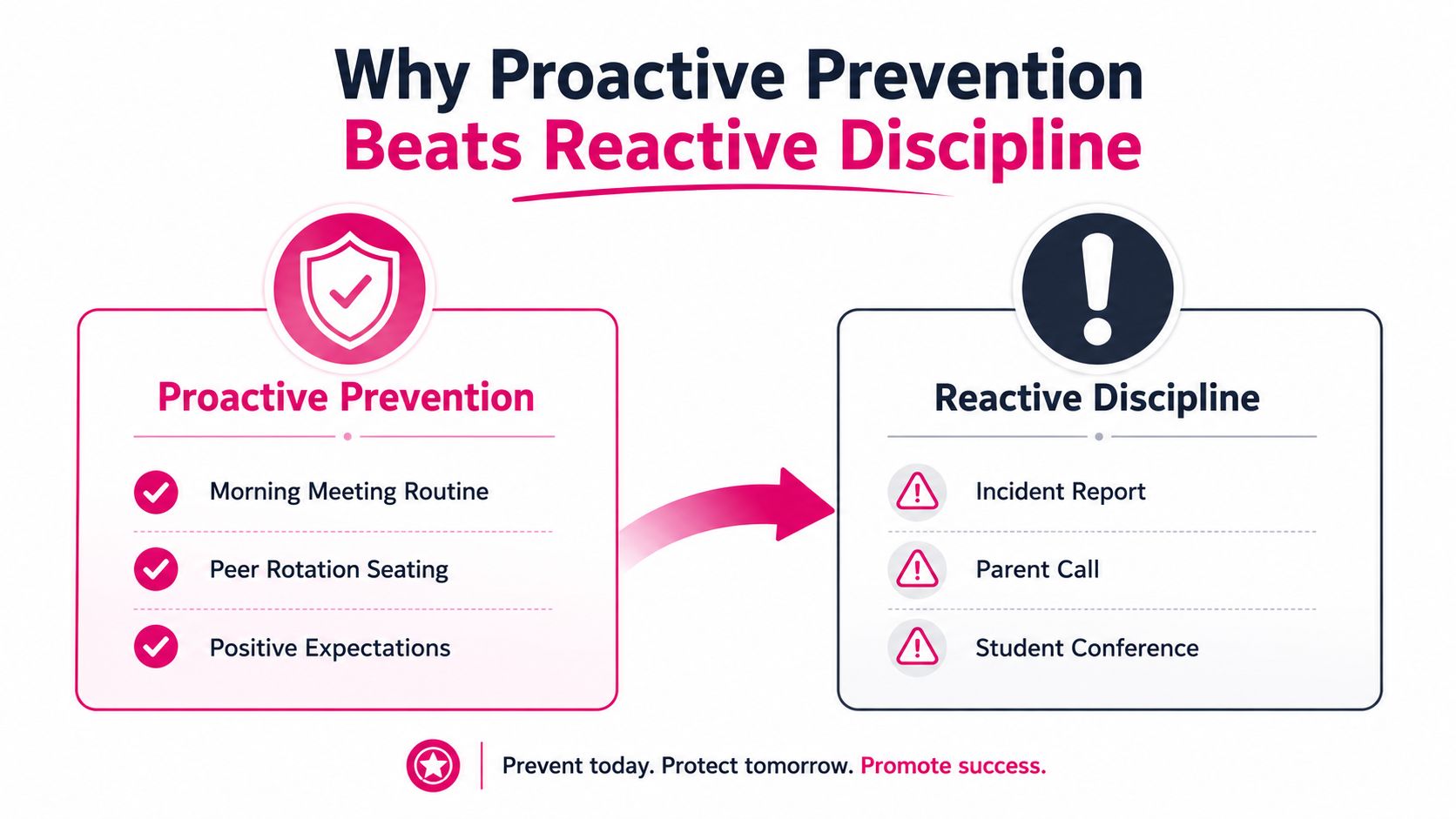
Why Proactive Prevention Beats Reactive Discipline
A reactive response might involve pulling students aside, assigning detention, or completing a referral form. Those actions can be necessary, especially when safety is at risk, but they usually begin after the social damage has happened. They may address the visible behavior without changing the lunchroom dynamic, the group’s status system, or the targeted student’s sense of safety.
A 2003 survey of teachers found that 86.3% of responding teachers said they had serious talks with both the student who bullied and the student who was targeted, while fewer than one-third reported building bullying prevention into classroom time, at 31.7%, or involving students in creating anti-bullying classroom rules, at 31.2%. The study included 359 respondents from 700 surveyed teachers, a 52.4% response rate. The original PubMed record helps explain the historic shift from responding after incidents to creating structures that make harmful behavior less acceptable and less rewarding.
The evidence also points toward coordinated prevention. A 2019 meta-analysis of 100 independent school-bullying program evaluations found that interventions reduced perpetration by about 19–20% and victimization by about 15–16%. Stronger results were associated with whole-school approaches, clear policies, classroom rules, informal peer involvement, and parent information, rather than lessons delivered in isolation. The meta-analysis in Psychology in the Schools also connected activities such as group discussion, role play, and class exercises with greater reductions in victimization.
Micro-practices change the room
Micro-practices are small actions repeated often enough to become part of classroom life:
- Greet students at the door: Use each child’s name and notice their emotional state without demanding an explanation.
- Structure peer interaction: Rotate partners, assign roles during group work, and avoid leaving social arrangements entirely to popularity.
- Name the behavior you want: Say, “I saw you make room for Jordan,” rather than offering general praise such as “Good job.”
- Check the edges: Notice who stands outside groups, gets interrupted, or repeatedly loses access to materials and play.
These actions use minutes teachers already have. A morning greeting, a deliberate partner switch, or a thirty-second reflection after recess can reinforce belonging more consistently than a standalone assembly.
Practical rule: If students only hear the school’s expectations after something goes wrong, the system is teaching them that prevention is optional.
A teacher who wants to strengthen this daily work can connect it with broader social-emotional learning benefits, especially skills involving empathy, communication, self-regulation, and relationship repair. The point isn’t to add another initiative. It’s to make ordinary transitions, group tasks, and corrections carry the same message: everyone belongs, adults notice, and students have safe ways to respond.
Building a Classroom Culture That Prevents Bullying
Prevention starts with classroom design, not a poster added after the first incident. During the opening weeks, arrange the room so students experience varied partnerships, see the shared norms, and have predictable ways to connect with an adult.
Begin with rotating peer groups. Change table partners or learning teams on a planned cycle, and give each student a meaningful role such as materials manager, recorder, questioner, or encourager. Rotation doesn’t erase friendship groups, but it prevents one social arrangement from controlling every learning opportunity.
Create an anchor chart with students. Ask, “What helps someone feel safe joining a group?” and “What does respectful disagreement sound like?” Turn their answers into observable statements, such as “We make room,” “We don’t repeat private stories,” and “We ask before touching someone’s materials.” A shared definition matters because students need to recognize exclusion, threats, teasing, and repeated targeting as behaviors that adults will address.
Set up a connection corner for brief, private check-ins. It can be a chair near your desk, a hallway conference spot, or another visible but quiet location. This isn’t a place to send students for punishment. It’s a predictable setting where you can ask, “Who feels hard to sit with today?” or “What happened during partner work that I should know?”
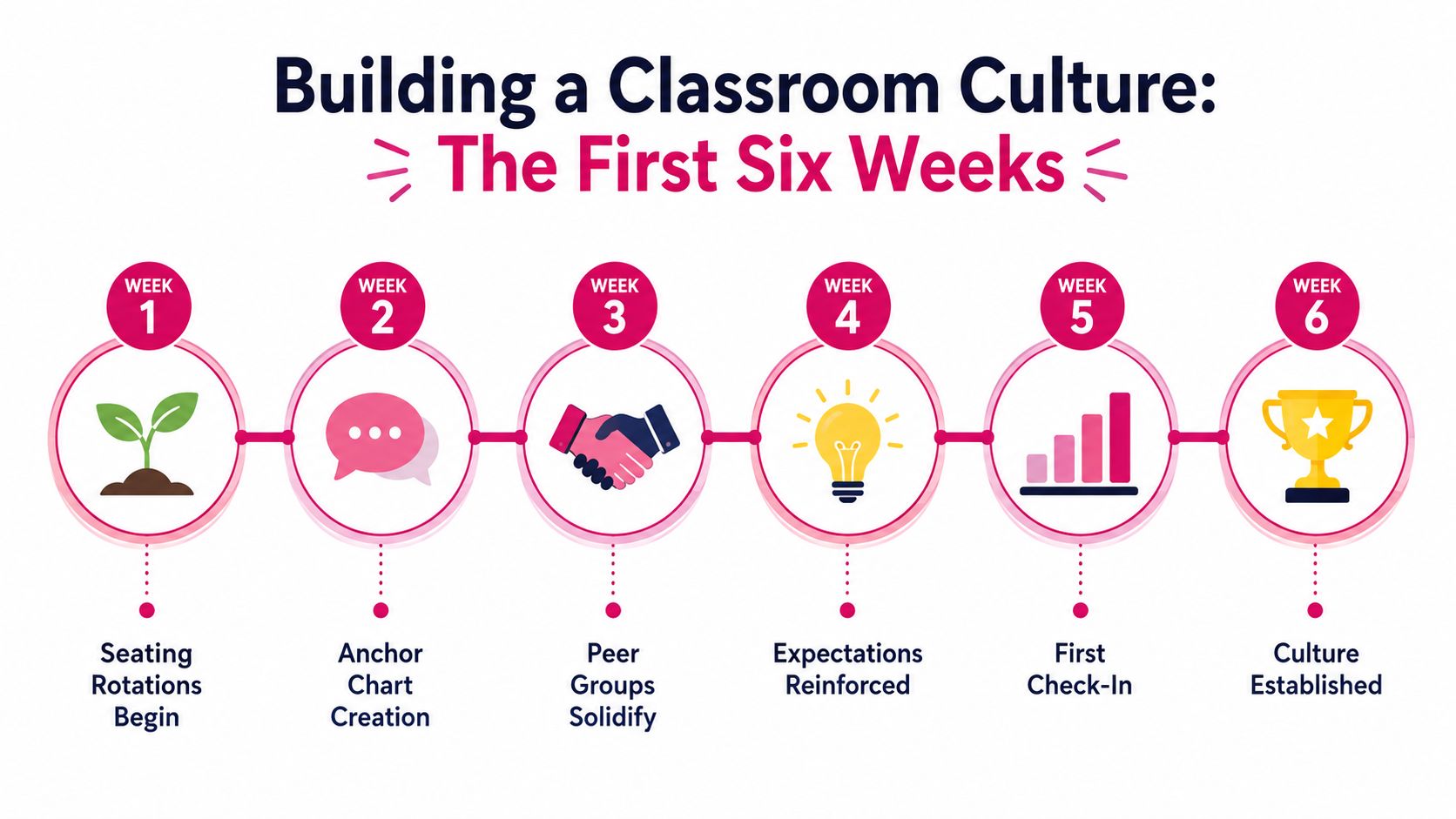
A first-six-weeks sequence
Use one social focus each week, then reinforce it during academics and transitions:
- Week 1, identity and belonging: Students share names, interests, strengths, and the conditions that help them participate.
- Week 2, empathy mapping: Students consider what a person might notice, feel, need, and say in a challenging situation.
- Week 3, assertive communication: Model the difference between passive, aggressive, and clear language.
- Week 4, recognizing exclusion: Use fictional scenarios involving table groups, games, messages, and invitations.
- Week 5, bystander roles: Practice safe ways to speak up, interrupt, invite, and report.
- Week 6, class commitment: Students review the agreement, revise language, and mark their commitment through a class meeting or ceremony.
A morning circle might ask, “What helps you join a group?” On another day, students can complete a partner switch, changing partners halfway through a task with a new responsibility. At dismissal, ask students to finish one sentence privately: “I felt included when…” or “A moment that needs repair is…”. These prompts surface tensions before they become normalized.
When students help write the agreement, avoid asking for vague promises about kindness. Try this script:
“We need agreements that someone can see and hear. If our value is belonging, what would a classmate see us doing when someone joins a group? What would they hear if we disagree? Which actions should adults respond to every time?”
You can also draw useful parallels with workplace culture advice when thinking about consistency, shared norms, and the daily behaviors that make a community feel safe. For an education-specific companion, see what makes a peaceful and welcoming classroom. The central idea is social scaffolding, a web of repeated positive connections that makes it harder for one student to become socially isolated without adults noticing.
Intervention Scripts and Bystander Coaching Techniques
In the moment, students need a response that is specific, brief, and connected to the class agreement. Avoid labeling a child as “mean” or “a bully.” Name what happened, state the expected behavior, and create a path toward repair.
Three scripts for common situations
Direct verbal aggression
A student says, “Nobody wants you in this group,” or uses a slur during a game.
- Name it: “I heard you tell Kai that nobody wants him here. That comment excludes him.”
- Connect it to the norm: “Our agreement says we speak about people respectfully and make room during group work.”
- Repair it: “You need to acknowledge the impact, restate the invitation, and help Kai rejoin safely. We’ll talk privately about what led to the comment.”
Social exclusion
A group blocks a classmate from a table or repeatedly changes the rules so one student can’t participate.
Say, “I noticed the group changed the rules after Sam joined. Our agreement says access to the activity can’t depend on popularity. Let’s pause, state the rules clearly, and decide how everyone can participate.” Then ask the targeted student what would help them re-enter without forcing a public apology.
Covert relational aggression
A student spreads a private story, encourages peers to avoid someone, or uses a group chat to create shame.
Try, “I learned that a private story was shared with other students. Sharing it has affected someone’s relationships, and our agreement protects privacy. We’ll stop the spread, identify who needs support, and plan a repair that doesn’t require the targeted student to perform forgiveness.”
Teach the 3 Ds
Students shouldn’t be expected to confront unsafe behavior alone. Teach three choices and let them select the safest one:
- Direct: Say, “Stop. That’s not okay here,” when the student feels safe.
- Distract: Change the activity, invite the targeted student to join another group, or redirect attention.
- Delegate: Tell a trusted adult as soon as possible when direct action feels unsafe or the behavior continues.
Use role-play during morning meeting. Give students scenarios such as a classmate being left out of a science team, a hurtful message appearing in a group chat, or a student being mocked during recess. Pause the role-play and ask, “Which D fits this situation, and what words could you use?”
The bystander intervention guidance for students can support a shared vocabulary for these choices. You can also make practice more realistic by designing workplace scenarios as a model for writing age-appropriate situations with clear decisions and consequences.
Use this quick decision tree before choosing the intensity of your response:
- Was there a disagreement between students with similar social power? Treat it as conflict, separate the students if needed, teach problem-solving, and facilitate repair.
- Is there a power imbalance, repeated behavior, or a strong likelihood of repetition? Treat it as possible bullying, increase supervision, document the pattern, support the targeted student, and follow school policy.
- Is anyone in immediate danger? Prioritize safety, get additional adult help, and follow emergency procedures before attempting a restorative conversation.
Watch the video below for another way to visualize scenario-based practice.
After the immediate response, check back with the targeted student privately. Ask, “Where do you feel safest during this part of the day?” and “What would make tomorrow easier?” The follow-up communicates that reporting doesn’t end when the conversation ends.
Connecting Classroom Practices to Schoolwide Systems
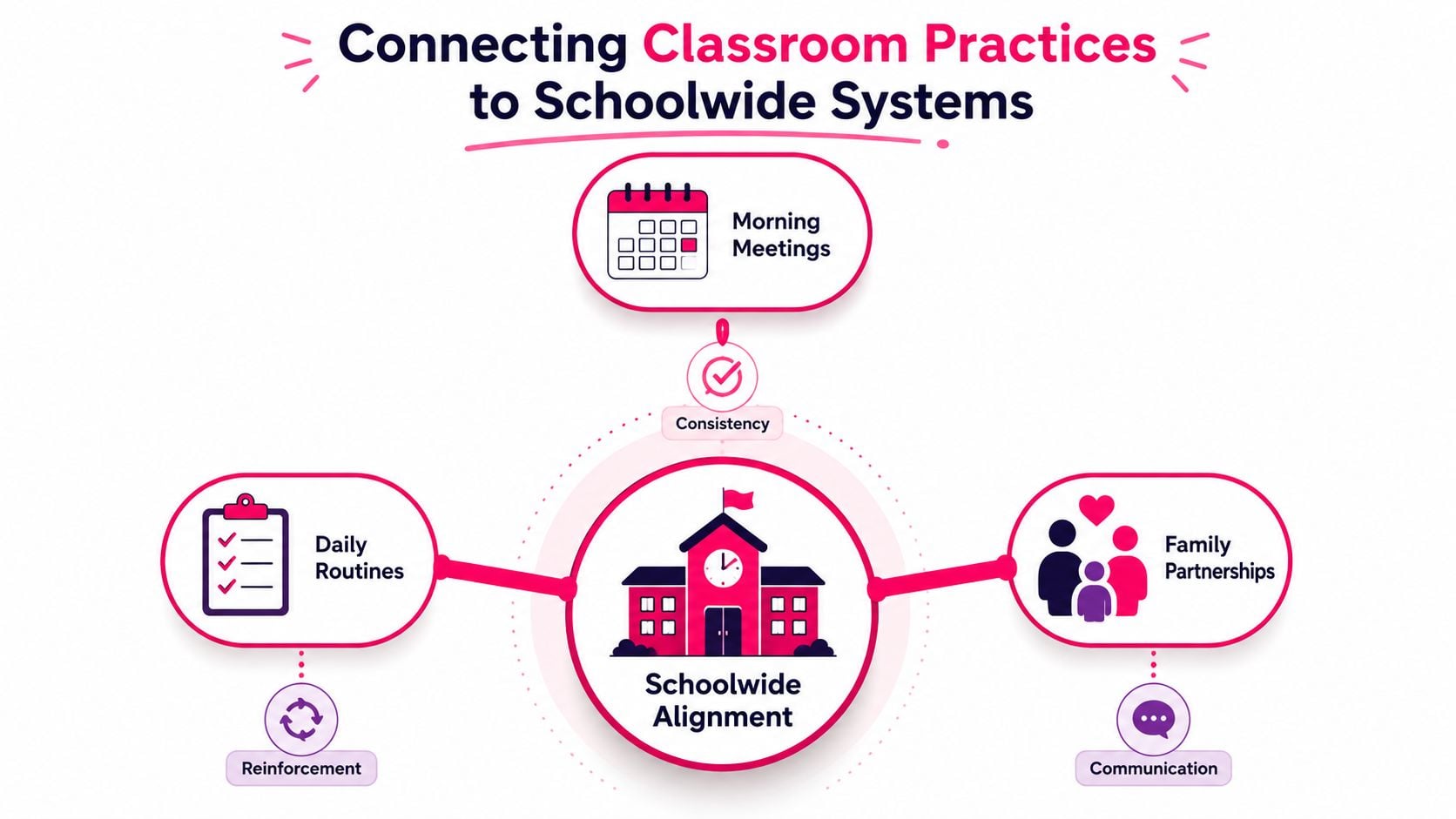
A classroom agreement loses power when students hear different expectations in the hallway, cafeteria, bus line, or online learning space. Teachers strengthen prevention when they use the same core vocabulary as counselors, administrators, lunch supervisors, and families.
Start by comparing your classroom language with the school’s PBIS or MTSS materials. If the school uses “be respectful,” identify what that means during group work, recess, and digital communication. If the school emphasizes reporting, clarify who receives the report, what gets documented, and how students are protected from retaliation.
Make consistency visible
A shared vocabulary might include:
- Belonging: Every student has a safe way to participate.
- Bystander: A student who sees or hears a harmful interaction.
- Upstander action: A safe choice to speak up, interrupt, invite, or report.
- Repair: A structured effort to address impact and rebuild trust.
- Report: Information given to a trusted adult so the school can respond.
A Louisiana procedure illustrates why staff need clear escalation rules. In that state process, a teacher, counselor, bus operator, or other school employee who witnesses bullying or receives a report must make a verbal report the same day and a written report within two days. The Louisiana Department of Education reporting procedure is state-specific, so use your own policy as the authority, but the practical lesson is broad: don’t rely on memory or informal hallway conversations.
Invite families into prevention
Family engagement works best when it gives caregivers a clear, manageable role. Send a short multilingual tip sheet that defines bullying, conflict, exclusion, and reporting. A brief video update can demonstrate the language students are practicing, such as “Stop. That’s not okay here,” or “I’m going to get an adult.”
Use conference prompts that gather information rather than assign blame:
- “Where does your child feel connected at school?”
- “Have you noticed changes in friendships, routines, or digital communication?”
- “Which adult does your child trust when something feels unsafe?”
- “What language works well at home for asking for help?”
A simple communication calendar might include an opening-year explanation of shared expectations, a midterm reminder about reporting and bystander choices, and a later invitation for families to share patterns they’re noticing. Teachers can bring recurring observations to leadership, such as repeated exclusion in a particular transition, unclear supervision in a common area, or inconsistent responses to digital incidents.
For a broader view of how school-based programs combine policies, training, student skills, and family involvement, consult bullying prevention programs for schools. Your classroom notes can become useful system feedback when they describe conditions and patterns, not just individual children.
Overcoming Real Barriers to Implementation
Teachers don’t abandon prevention because they don’t care. They abandon routines that require separate planning, depend on every colleague responding identically, or become impossible during a crowded week of assessments, IEP meetings, and family conferences.
A 2025 NIJ synthesis of support needs for the Olweus Bullying Prevention Program identified recurring gaps involving training intensity, staff discussion, competing priorities, time constraints, communication, and staff support. A 2025 thematic review likewise emphasized program fidelity, teacher efficacy, and school climate. The practical conclusion is simple: implementation needs organizational support, not just a folder of lesson plans.
Use a five-minute integration model
Attach prevention to existing moments:
- Arrival: Greet students and scan for changes in mood, friendship patterns, or avoidance.
- Literacy: Ask how a character could respond as a target, bystander, or trusted adult.
- Group work: Assign rotating roles and observe who gets interrupted or excluded.
- Transition: Reinforce one observable behavior, such as making room or reporting safely.
- Dismissal: Use a private reflection prompt or quick check-in with a student who seemed isolated.
For staff alignment, invite a colleague to observe one routine for a short, non-evaluative visit. The observer records only whether the teacher stated the norm, structured participation, and followed up on a concern. Compare notes briefly and choose one adjustment.
Digital bullying needs its own protocol because educators may be only moderately prepared to identify and respond to online incidents, particularly subtle exclusion and chat-based harassment, according to a 2025 peer-reviewed review of online-school anti-bullying measures. The review in PMC highlights gaps in training, awareness, and monitoring systems.
When a digital concern reaches you, preserve relevant information according to school policy, record who reported what and when, and avoid asking students to conduct their own investigation. Escalate threats, harassment, or repeated targeting through the school’s established pathway, then involve families and support staff as policy requires.
| Common Implementation Barriers and Practical Workarounds | Workaround | Time Required |
|---|---|---|
| Limited planning time | Embed a discussion prompt into an existing lesson or transition | A few minutes |
| Inconsistent staff responses | Agree on one shared sentence and one reporting path | A brief team check-in |
| Punitive default reactions | Replace labels with behavior-specific language and a repair step | The same conference time |
| Digital incidents | Use a written decision path for preserving information and escalating concerns | A short documentation step |
| Staff fatigue | Rotate responsibility for sharing examples and reviewing patterns | A scheduled team routine |
Tracking Progress Without Adding Paperwork
Measurement should help you decide what to do next, not create another binder. Keep the system small, consistent, and focused on student experience as well as adult response.
Use three sources of information:
- A two-question student pulse check: Ask, “Do you feel safe joining groups in this class?” and “Is there an adult you can tell when something feels wrong?” Offer a private response method and avoid asking students to name peers in a group setting.
- A lean incident log: Record the date, setting, behavior, apparent power difference, whether the behavior may repeat, adult action, student support, and bystander response. This captures context instead of reducing the event to “aggressor” and “victim.”
- A peer-nomination sociogram: At quarterly intervals, use age-appropriate prompts such as “Who helps others feel included?” or “Who would you choose for a partner when you need support?” Follow school privacy procedures and use results to plan connections, not to rank children.
Stagger the collection
A nine-month rhythm might look like this:
- Month 1: Establish a baseline pulse check and review classroom routines.
- Month 2: Review incident settings and supervision points.
- Month 3: Conduct the first sociogram and plan intentional peer connections.
- Month 4: Repeat the pulse check and adjust one routine.
- Month 5: Review bystander behavior in incident logs.
- Month 6: Conduct a second sociogram and compare connection patterns.
- Month 7: Repeat the pulse check before a high-transition period.
- Month 8: Review family reports, digital concerns, and recurring locations.
- Month 9: Complete a final pulse check and summarize next steps.
A one-page dashboard can contain four boxes: student safety responses, trusted-adult access, incident contexts, and follow-up completion. Share trends with administrators using neutral language: “Reports cluster during unstructured group formation,” or “Students are reporting more quickly, but follow-up documentation is inconsistent.”
Be careful when incidents appear to decrease. Fewer reports can mean fewer incidents, improved adult supervision, or students learning to hide behavior. Compare pulse responses, private check-ins, bystander actions, and location patterns before concluding that the problem has disappeared.
Soul Shoppe offers school communities workshops, assemblies, coaching, and tools that build shared language for connection, self-regulation, communication, conflict resolution, and safe peer support. Visit Soul Shoppe to explore resources that can help your staff turn bullying prevention into daily classroom practice.