

10 Fun Brain Breaks to Boost Focus and SEL in 2026
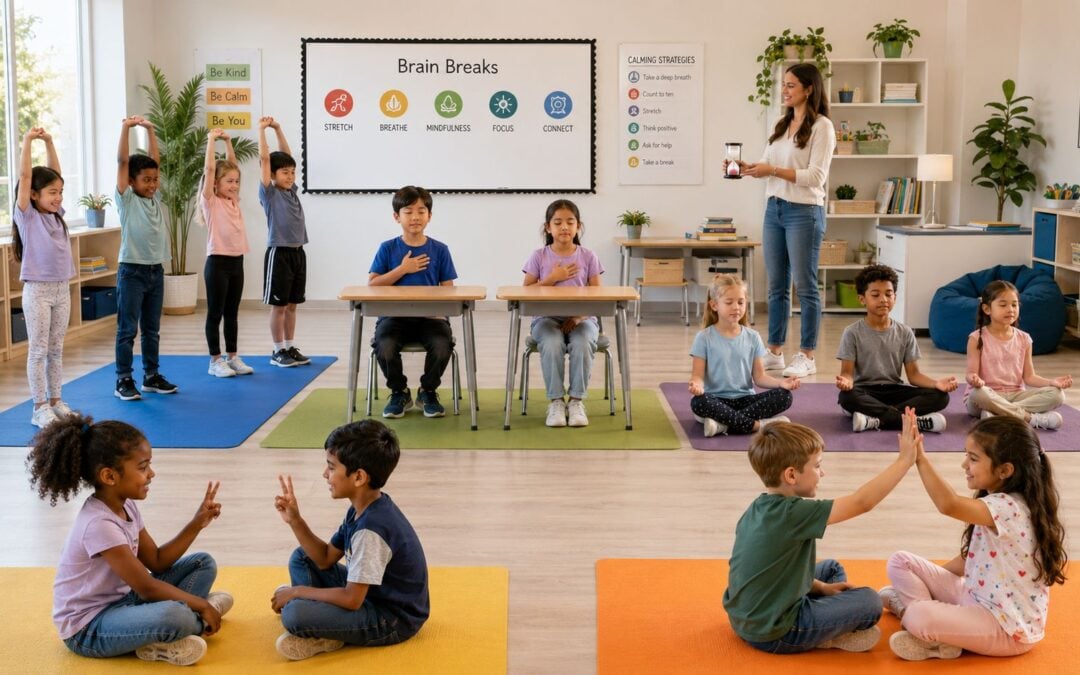
In any learning environment, from the classroom to the living room, maintaining focus and engagement can be a challenge. That’s where fun brain breaks become a powerful tool. These are not just time-fillers; they are strategic mental resets designed to help students refocus, regulate their emotions, and absorb information more effectively. Research shows that short, structured breaks improve cognitive function, reduce stress, and support social-emotional learning (SEL). For example, even simple activities like social dancing offer incredible benefits for mental well-being and social connection, reinforcing why an intentional break is so important.
This guide provides 10 practical, research-backed activities ready for immediate use. You'll find step-by-step instructions, age-specific adaptations, and classroom management tips for each brain break. Whether you're a teacher, administrator, or parent, these ideas will help you create a more positive and productive learning atmosphere, complete with suggestions for integrating Soul Shoppe’s shared SEL language to build a stronger sense of community.
1. Mindful Movement & Stretching
This category of fun brain breaks combines gentle physical activity with mindfulness, helping students release tension while sharpening their focus. Instead of high-energy bursts, these activities involve slow, intentional movements paired with deep breathing. This approach calms the nervous system, builds body awareness, and supports emotional regulation, making it a perfect reset before a challenging lesson or after a period of intense concentration.

How to Implement It
Successful integration relies on consistency and clear guidance. For example, a second-grade teacher might lead a five-minute "Shoulder Rolls and Sky Reaches" routine before math to settle the class. A parent could use a "Forward Fold" stretch after homework to help their child transition calmly to dinner time.
For an effective session, consider these tips:
- Set the Tone: Play soft, instrumental music to create a calm atmosphere.
- Model Slowly: Demonstrate each movement clearly so students can easily follow along. Example: As you model a "Neck Roll," slowly drop your chin to your chest and then gently roll your right ear toward your right shoulder, holding for a count of three before switching sides.
- Use Simple Cues: Use accessible language like, "Reach for the ceiling," or "Gently drop your chin to your chest."
- Connect Breath to Movement: Guide students by saying, "Breathe in as you lift your arms, and breathe out as you lower them."
2. The 5-4-3-2-1 Sensory Grounding Technique
This category of fun brain breaks uses a powerful mindfulness tool that anchors students to the present moment by engaging their five senses. The technique involves systematically identifying five things you see, four you can touch, three you hear, two you smell, and one you taste. This process interrupts overwhelming feelings or anxiety, pulling focus away from internal distress and toward the immediate external environment. It is an effective strategy for calming the nervous system and restoring emotional balance.
How to Implement It
Implementation is most successful when the technique is practiced during calm moments first. A third-grade teacher might lead the class through it after recess to help them settle, while a parent can use it to de-escalate a meltdown in a busy store. By making it a familiar routine, students learn to use it independently when they feel stressed, such as before a test.
For an effective session, consider these tips:
- Model the Process: Guide students through each sense, demonstrating how to slowly notice and name items. Example: "Okay class, let's start with five things we can see. I see the green plant on the windowsill, the blue poster, Maria's red sweater, the white clock, and the light on the ceiling. Now it's your turn."
- Create Visual Aids: Use a poster or laminated desk card showing the 5-4-3-2-1 sequence as a helpful reminder.
- Adapt as Needed: For "taste," suggest students think of one thing they like to eat or the last thing they ate. For "touch," they can feel their desk, their sleeve, their pencil, and their own hair.
- Pair with Breathing: Encourage slow breaths between each step, saying, “Breathe in and tell me five things you can see.”
3. Dance & Movement Breaks
This high-energy category of fun brain breaks uses music and playful movement to help students burn off excess energy, boost their mood, and increase blood flow to the brain. These activities provide a joyful outlet for physical expression, helping reset focus and build a positive classroom community. Whether it's a structured dance-along or a moment of free movement, these breaks are perfect for shaking out restlessness and re-energizing the room.
How to Implement It
Successful dance breaks are about channeling energy constructively. For example, a third-grade teacher might start the day with a two-minute dance party to an upbeat song, noticing improved moods and fewer conflicts. At home, a parent could use a quick game of "freeze dance" after school to help their child transition from a long day to homework time with renewed focus.
For an effective session, consider these tips:
- Use Guided Videos: Use resources like GoNoodle or Just Dance Kids to provide structured, easy-to-follow routines.
- Create a Playlist: Build a class-approved playlist of upbeat, age-appropriate songs that students can request.
- Manage Space: If space is limited, have some students dance freely while others march or jog in place. Example: "Group A, you can do jumping jacks at your desk. Group B, you can jog in place. Let's switch in 30 seconds!"
- Practice Impulse Control: Incorporate freeze dance, where students stop moving when the music pauses, to build listening skills and self-regulation.
- Plan a Calm-Down Transition: Follow a high-energy dance break with a minute of deep breathing or stretching to help students settle back into their work.
4. Breathing Exercises & Belly Breathing
This powerful category of fun brain breaks uses guided breathing to activate the body’s natural relaxation response. Simple techniques like belly breathing calm the nervous system, helping students shift from a state of stress or high energy to one of calm focus. By learning to control their breath, students gain a practical tool for managing emotions, reducing anxiety, and preparing their minds for learning.

How to Implement It
Implementation can be adapted for any age. For instance, a kindergarten teacher might use the "smell the flower, blow out the candle" cue before circle time. A parent could guide their child through "balloon breathing," imagining their belly inflating and deflating, to soothe homework frustration.
To get started, try these simple tips:
- Use Concrete Imagery: Younger students connect well with visuals like flowers, candles, or waves. Example: "Pretend you are holding a cup of hot chocolate. Breathe in deeply to smell the chocolatey scent for four counts. Now, slowly blow out for four counts to cool it down."
- Model Visibly: Exaggerate the movement of your own belly so students have a clear visual to imitate.
- Provide Tactile Feedback: Ask students to place a hand on their belly to feel the rise and fall.
- Practice Proactively: Introduce these techniques during calm moments so they become familiar and accessible during stressful times. You can explore a detailed guide on the belly breathing technique to build confidence.
5. Partner Connection Games & Pair Bonding
This type of fun brain break focuses on interactive activities designed for two students, building social connection, communication, and peer relationships. Rather than individual or large-group activities, these games require direct engagement with a partner. Activities like mirroring movements or hand-clapping games help students practice collaboration and attunement, which strengthens classroom community and provides a much-needed mental reset.
How to Implement It
Success with partner games comes from clear instructions and thoughtful pairing. A fourth-grade teacher could introduce a "Mirroring" activity where one student leads with slow movements and their partner copies them exactly, building focus and empathy. A parent at home can play "Partner Simon Says" with their child to foster connection and joyful interaction after a long school day.
For an effective session, consider these tips:
- Model First: Demonstrate the activity with a student so everyone understands the expectations.
- Pair Strategically: Mix up partners regularly so students connect with different classmates.
- Start Simple: Begin with low-pressure games before moving to more complex or physical ones. Example: A game of "Thumb Wrestling" or a simple hand-clapping sequence like "Miss Mary Mack."
- Facilitate Reflection: Ask questions like, "What did you learn about your partner today?" to deepen the social-emotional learning aspect. For more ideas, explore other relationship-building activities that build community.
6. Guided Imagery & Visualization
This type of fun brain break transports students to calm mental landscapes, using the power of imagination to achieve deep relaxation and focus. The facilitator guides students through a sensory-rich story or scene, such as a peaceful beach or a magical forest. By engaging their minds in a positive, tranquil scenario, students can quiet distracting thoughts, reduce anxiety, and return to their tasks with a renewed sense of clarity and emotional balance.
How to Implement It
Successful guided imagery depends on creating a safe, comfortable environment with a slow, soothing voice. For example, a fourth-grade teacher might lead a "Floating on a Cloud" visualization after a lively recess to help the class settle down. A parent could use a "Safe Place" visualization to help their child manage worries before a big test.
For an effective session, consider these tips:
- Use a Soothing Tone: Speak slowly and softly, pausing frequently to allow students to build the images in their minds.
- Include Sensory Details: Describe what students might see, hear, smell, and feel. Example Script: "Imagine you are walking on a warm, sandy beach. You can feel the soft sand between your toes. Hear the gentle sound of the waves crashing on the shore. Can you smell the salty air?"
- Offer Choices: Allow students to participate in a way that feels comfortable. Say, "You can close your eyes or just look down at your desk."
- Keep it Brief: Start with short, 3- to 5-minute sessions and gradually increase the time as students become more familiar with the practice.
7. Creative Expression Activities (Drawing, Doodling, Coloring)
This category of fun brain breaks shifts mental gears from logical processing to creative, intuitive thinking. Activities like free drawing, doodling, or coloring provide a low-pressure outlet for emotional expression and mental rest. By engaging the artistic side of the brain, students can quietly process feelings, reduce stress, and return to academic tasks with a refreshed and calmer mindset. It is a meditative break that values process over a perfect finished product.

How to Implement It
Successful creative breaks depend on accessibility and an emphasis on freedom. For instance, a second-grade teacher might start the day with "feelings doodles," where students draw whatever represents their current mood. A parent could use "worry drawing" after school, inviting their child to doodle their anxieties before discussing them.
For an effective session, consider these tips:
- Emphasize Process: Remind students, "There is no right or wrong way to create." The goal is expression, not a masterpiece.
- Offer Simple Prompts: Suggest ideas like "draw your happy place" or "doodle your favorite sound," but allow students to create freely. Example: "Let's all draw a 'scribble monster.' Just scribble on the page for 10 seconds, then turn your scribble into a monster by adding eyes and legs!"
- Keep Materials Ready: Have paper, crayons, and pre-printed patterns like mandalas easily accessible for quick transitions. Exploring tools like anxiety coloring pages can provide structured yet calming options.
- Create a Calm Atmosphere: Play soft, instrumental music to help students settle into a creative flow.
8. Kindness & Gratitude Circles
This category of fun brain breaks shifts the focus from physical movement to social-emotional connection. These structured group activities guide students to practice giving and receiving compliments, sharing appreciations, or identifying things they are grateful for. By creating a dedicated time for positive expression, these circles build empathy, strengthen peer relationships, and actively rewire focus toward pro-social thinking. It's an ideal reset for improving classroom climate and fostering a sense of belonging.
How to Implement It
Successful integration depends on creating a safe, predictable routine. For example, a third-grade teacher could hold a weekly “Compliment Circle” where each student receives two genuine compliments from peers, helping to reduce classroom conflicts. A parent might start a “Gratitude Dinner” where each family member shares something they appreciated about another person that day, building stronger family bonds.
For an effective session, consider these tips:
- Model First: Demonstrate how to give a specific, genuine compliment to a student before asking the class to try. Example: Instead of "You're nice," model saying, "I appreciated how you helped Leo pick up his crayons when he dropped them. That was very kind."
- Use Sentence Starters: Provide prompts like, “I appreciated when you…” or “I am grateful for…” to guide students.
- Establish Clear Rules: Create a “no criticism” zone where only positive appreciations are shared.
- Allow Passing: Normalize allowing students to pass if they don’t feel ready to share, which builds psychological safety.
9. Nature & Outdoor Observation Breaks
This category of fun brain breaks connects students with the natural world to provide a genuine sensory reset. By stepping outside or simply observing through a window, children shift their focus from academic pressures to the details of their environment-clouds, plants, weather, and wildlife. This practice reduces stress, grounds students in the present moment, and cultivates an appreciation for the world around them, making it an excellent way to calm a restless class.
How to Implement It
Successful nature breaks are built on simple, repeatable routines. For instance, a third-grade class could take a three-minute "sensory walk" around the playground, focusing on what they can hear and smell. At home, a parent might ask their child to spend a few minutes at a window on a rainy day and describe the patterns the raindrops make, helping them transition calmly from screen time to homework.
For an effective session, consider these tips:
- Use Guided Prompts: Ask simple questions to direct focus, such as, "What are three different colors you can see?" or "What sounds are the loudest and quietest?" Example: "Everyone look at that tree. How many different shades of green can you find in its leaves? What direction is the wind blowing the branches?"
- Create a Nature Journal: Encourage students to sketch or write down one thing they notice each time.
- Visit the Same Spot: Returning to the same tree or garden area regularly helps students observe seasonal changes over time.
- Engage All Senses: Prompt students to touch tree bark, smell damp earth after rain, or listen for bird calls to create a full sensory experience.
10. Sound & Music-Based Brain Resets
This category of fun brain breaks uses audio cues to shift mental states, offering a powerful tool for emotional regulation and focus. Activities range from actively singing or tapping rhythms to passively listening to calming music. Sound and music directly influence mood and energy levels, making them an efficient way to reset the classroom atmosphere, energize a sluggish group, or soothe overstimulated minds before a transition.
How to Implement It
Successful integration depends on being intentional with your audio choices. For instance, a fourth-grade teacher could play five minutes of instrumental focus music during independent writing time to help students concentrate. A parent might teach their child a simple, calming song to sing softly when they feel overwhelmed by big emotions.
For an effective session, consider these tips:
- Curate Playlists: Create separate playlists for different needs: calming instrumentals for tests, upbeat tunes for energy boosts, and focus music for work periods.
- Teach Simple Songs: Use repetitive, simple songs or chants that students can easily learn and sing together to signal transitions. Example: A simple call-and-response chant like, "Teacher: Macaroni and cheese! Students: Everybody freeze!"
- Incorporate Rhythm: Use body percussion like clapping or desk tapping, or simple instruments like shakers, to create a shared rhythm that builds community and releases energy.
- Consider Volume: Be mindful that some students are sensitive to loud sounds. Keep background music at a low, non-distracting volume.
Quick Comparison: 10 Fun Brain Breaks
| Activity | Implementation complexity | Resource requirements | Expected outcomes | Ideal use cases | Key advantages |
|---|---|---|---|---|---|
| Mindful Movement & Stretching | Low–Moderate — teacher models simple sequences | Minimal space, optional soft music | Reduced tension, improved attention, body awareness | Transitions, before focused work, anxiety reduction | Inclusive, minimal setup, teaches self‑regulation |
| The 5-4-3-2-1 Sensory Grounding Technique | Low — scripted prompts, quick to run | None | Rapid anxiety reduction, present‑moment focus | Acute stress moments, pre‑test, quick resets | Portable, fast, works individually or whole group |
| Dance & Movement Breaks | Low–Moderate — manage music and timing | Music/audio and open space | Energy release, improved mood, increased focus | High‑energy periods, morning routines, before recess | Highly engaging, builds community, boosts mood |
| Breathing Exercises & Belly Breathing | Low — teach patterns and practice | None, can be done at desks | Immediate nervous‑system regulation, reduced anxiety | Before tests, transitions, calming moments | Quick, discreet, evidence‑based self‑regulation |
| Partner Connection Games & Pair Bonding | Moderate — requires pairing and facilitation | Peers, small clear space | Improved social skills, stronger peer bonds | SEL lessons, community building, morning meetings | Strengthens relationships, interactive, accountability |
| Guided Imagery & Visualization | Moderate — needs calm facilitation and scripts | Quiet space, optional soft background sounds | Deep relaxation, enhanced focus and creativity | After stress, before reflective tasks, bedtime routines | Powerful mental regulation, customizable, fosters imagination |
| Creative Expression Activities (Drawing, Doodling, Coloring) | Low–Moderate — provide prompts and manage materials | Paper, crayons/pencils; optional art supplies | Emotional expression, calming, self‑reflection | When verbal expression is hard, transitions, calming corner | Nonverbal outlet, accessible, therapeutic |
| Kindness & Gratitude Circles | Moderate — requires trust and skilled facilitation | Seating area, time for sharing | Increased empathy, sense of belonging, prosocial behavior | Weekly rituals, community building, conflict prevention | Builds classroom culture, reduces bullying, teaches empathy |
| Nature & Outdoor Observation Breaks | Moderate — planning and supervision needed | Outdoor access or nature‑viewing spot | Significant stress reduction, sensory reset, renewed focus | Before testing, after long indoor periods, seasonal lessons | Strong wellbeing benefits, engages curiosity, sensory grounding |
| Sound & Music‑Based Brain Resets | Low–Moderate — curate music and manage volume | Audio equipment or simple instruments | Mood regulation, memory support, attention shifts | Transitions, calming during work, energizing before activity | Neurologically impactful, versatile, enjoyable |
Putting Fun Brain Breaks into Action
We've explored a wide range of engaging, research-backed activities designed to refresh young minds, from Mindful Movement and the 5-4-3-2-1 Sensory Grounding technique to Creative Expression and Kindness Circles. The common thread connecting them all is the power of intentional pausing. These are not just fun distractions; they are vital tools for building focus, managing emotions, and creating a positive, supportive learning environment. The true value of Fun Brain Breaks emerges when they become a consistent, predictable part of the daily rhythm.
Building a Sustainable Routine
The key is to start small and build momentum. Don't try to introduce all ten activities at once. Instead, choose one that aligns with your students' current needs. If post-recess energy is high, a guided Belly Breathing exercise might be perfect. If you notice students struggling with a complex math problem, a quick Dance & Movement Break could be the reset they need to find a new perspective.
Remember to model the activities enthusiastically and participate alongside your students. Your engagement signals that these moments are just as important as academic instruction. After each break, take thirty seconds to debrief. Ask simple questions like, "How does your body feel now?" or "What did you notice during that quiet moment?" This reflective practice connects the physical action to the internal benefit, deepening their social-emotional awareness.
From Breaks to Breakthroughs
Integrating Fun Brain Breaks consistently does more than just improve attention spans. It communicates a powerful message to students: their well-being matters. When they learn to identify their need for a break and use strategies like guided imagery or a gratitude share to reset, they are building foundational self-regulation and self-advocacy skills that will support them for a lifetime. These short, intentional pauses create the space needed for academic and emotional breakthroughs to happen, transforming your classroom into a place where students feel seen, supported, and ready to learn.
Ready to take your classroom's social-emotional learning to the next level? The strategies in this article are a great start, and Soul Shoppe provides the programs and curriculum to build a truly peaceful school culture. Explore our offerings at Soul Shoppe to discover how to integrate these practices into a comprehensive, school-wide system.