A rough morning at school rarely announces itself in a big way. It often starts with a student going silent before a quiz, a child crying over a missing pencil, or a parent hearing “I’m fine” in a voice that clearly means something else. In those moments, adults usually do not need a perfect speech. They need a few steady words that help a child pause, breathe, name the feeling, and choose what to do next.

That is where mental health quotes can help. A short, clear sentence works like a handrail on a staircase. It does not carry a child up the steps, but it gives them something steady to hold onto while they regain balance. In a classroom or at home, the right quote can reduce shame, start a conversation, and give students language for feelings that still feel confusing or too big.

For educators and caregivers, the core question is not which quote sounds nicest. The better question is how to use a quote to build self-awareness, empathy, coping skills, and connection. That shift matters. A quote on a poster may be pleasant to read once. A quote used as an SEL tool can shape a morning meeting, support a calm-down routine, prompt reflection in a journal, or help a student repair after conflict.

This list is built with that purpose in mind. Each quote is treated as something practical for K-8 students, not just something inspiring for adults. You will see ways to turn wise words into classroom prompts, calm-corner language, discussion starters, and small routines that children can use. If your school is also working on building resilience and perseverance through growth mindset in the classroom, these quotes can support that work by giving students simple language for hard moments.

If you want to turn a favorite line into a poster or calm-corner card, this client-side quote maker tool can help you make it classroom-ready.

1. It is not the mountain we conquer, but ourselves. – Edmund Hillary

This quote works well with students who think success only counts if it looks big from the outside. Many children focus on the visible result. The grade. The goal. The performance. Hillary’s words shift attention inward, where a lot of real growth happens.

A student who uses belly breathing before a math test has done something important, even if they still feel nervous. A child who raises a hand to ask for help after sitting in confusion has made a real gain in self-awareness. Those are “conquer ourselves” moments.

A young man standing on a grassy hill, with a double exposure of mountains over his torso.

How to use it with students

Put this quote into plain school language: “The hardest part is often managing what’s happening inside us.” Then ask students to name a recent inner challenge. Maybe it was frustration, fear, jealousy, or the urge to quit.

In a classroom meeting, try a prompt like, “What’s one thing you handled inside yourself this week?” You’ll often hear more meaningful answers than you would from asking about accomplishments alone.

Practical rule: Praise regulation, reflection, and repair, not just performance.

A teacher might say, “I noticed you wanted to shout when the game didn’t go your way, but you stopped and took a breath. That was a victory.” A parent might say, “You were upset about homework, but you came back after a break. That matters.”

A simple SEL routine

Use the quote during a Monday advisory, counseling session, or morning meeting with a three-part reflection:

  • Name the mountain: “What felt hard?”
  • Name the self-skill: “What did you do inside yourself?”
  • Name the next step: “What will you try again next time?”

This pairs nicely with classroom conversations about perseverance and self-regulation. Schools already building these habits can connect the quote to a broader growth mindset in the classroom approach.

2. You are not alone. – Multiple sources

Few messages matter more to a struggling child than this one. Isolation makes problems feel bigger. A student may believe they’re the only one who feels left out, panicky, homesick, angry, or embarrassed. This quote interrupts that story.

That’s especially important in student settings where mental health needs are significant. Between 2020 and 2021, over 60% of college students met the criteria for one or more mental health issues, according to these student mental health statistics. K-8 students are younger, but school adults can still take the same lesson seriously. Students need language that reduces shame and invites support.
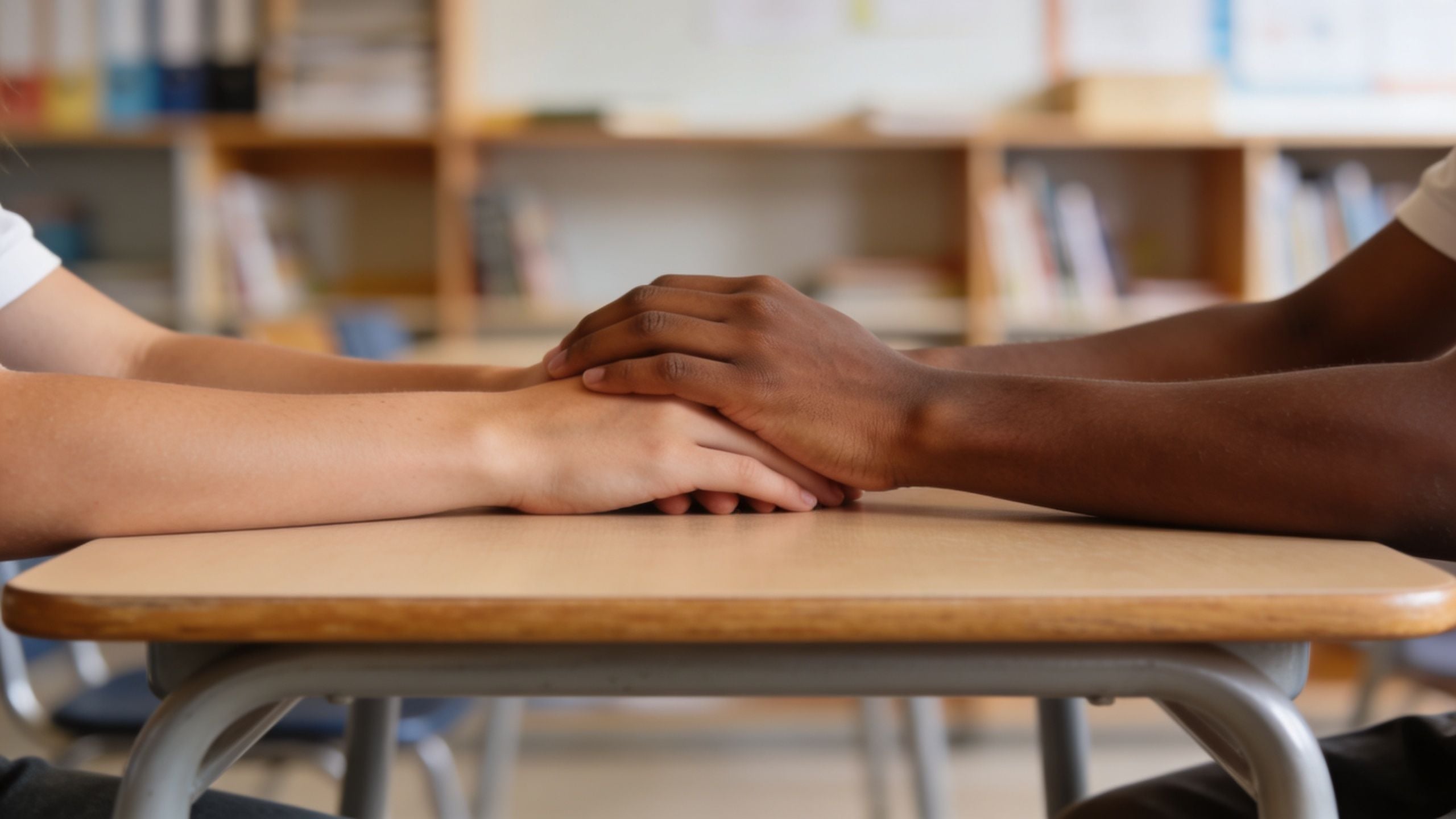
A close-up of two people holding hands on a wooden desk, symbolizing support and mental health care.

Make the message visible and real

A quote like this only helps if adults back it up with action. A poster that says “You are not alone” means very little if students don’t know whom they can talk to, where to go, or what happens when they ask for help.

Try a “Support Map” activity. Students write or draw trusted people at school, at home, and in the community. Younger children can use circles and simple labels like teacher, auntie, coach, counselor, or neighbor.

You are not alone should always be followed by “and here’s who can help.”

In class, a teacher might say, “Lots of people feel overwhelmed sometimes. If that happens to you, you can tell me, the counselor, or another trusted grownup.” At home, a parent can say, “You don’t have to solve every hard feeling by yourself.”

A community-building example

Create a bulletin board titled “We all need support sometimes.” Instead of asking students to share private struggles publicly, invite them to post anonymous notes finishing one sentence: “It helps me when…” Responses often build empathy fast. Children start to see that many classmates need comfort, quiet, movement, reassurance, or a friend.

If families need outside support, it can also help to have a trusted local care option available, such as this expert guide to Vernon help.

3. Comparison is the thief of joy. – Theodore Roosevelt

Children compare constantly. Who finished first. Who got invited. Who reads at a higher level. Who has more likes, better shoes, a newer lunchbox, a stronger team, a closer friend group. Comparison can shift normal school life into a running self-critique.

This quote gives adults a clean way to name the problem without shaming the child. It doesn’t say ambition is bad. It says that constant measuring against other people can steal satisfaction from our own growth.

A young boy and girl standing in front of two mirrors, one displaying a phone camera interface.

What to say when comparison shows up

Suppose a student says, “Maya’s project is way better than mine.” Instead of offering empty reassurance, try: “Let’s compare your work to your last draft, not to someone else’s final product.” That redirects attention to progress and effort.

At home, if a child says, “Everyone else is better at soccer than me,” a parent can answer, “Who are you compared to last month?” That question teaches self-reference, which is a healthier habit than social ranking.

A useful classroom activity is “My one good thing.” Each student names one strength, interest, or improvement that belongs to them. Not the best in class. Just theirs.

Help students build self-esteem instead

Comparison shrinks when students have practice noticing their own strengths. That can happen through partner compliments, identity webs, portfolio reflections, or goal-setting tied to previous personal work.

For more hands-on ideas, educators can draw from these building self-esteem activities.

Later in the week, you can revisit the message with a media literacy conversation. Ask, “How do you feel after you scroll or watch people show only their best moments?” Even younger students understand that what we see isn’t always the whole story.

A short video can help launch that discussion:

4. It's okay to not be okay. – Various mental health advocates

Students often get the message that being “good” means being pleasant, calm, and easy to manage. This quote pushes back on that. It tells children that hard feelings don’t make them bad. They make them human.

That kind of normalization matters because many people still hesitate to seek support due to stigma, even though mental health challenges are common, as noted in the BetterHelp background cited earlier. In schools, this quote can reduce the pressure students feel to hide distress until it bursts out as shutdown, avoidance, or behavior.

Validation first, problem-solving second

If a student is unusually quiet, an adult might say, “You seem off today. It’s okay to not be okay. I’m here if you want to talk or sit in silence.” That response creates safety without demanding disclosure.

With younger children, pair the quote with a feelings chart. A child who can point to worried, disappointed, frustrated, lonely, or tired has a much better chance of getting support before a problem escalates.

Saying “it’s okay to not be okay” doesn’t mean leaving a child alone in distress. It means starting with acceptance so guidance can work.

Turn the quote into a routine

Use a daily check-in where students choose a color, emoji, or weather word for their mood. Then teach follow-up choices. Red might mean “I need space.” Cloudy might mean “I need help getting started.” This moves the quote from comfort to skill-building.

At home, during a tantrum or shutdown, a parent can say, “It’s okay to feel upset. We still need a safe way to handle it.” That’s a strong SEL message because it validates emotion while guiding behavior.

If your school is helping students name feelings and respond to them more skillfully, this emotion-focused coping examples resource offers useful language for that work.

5. Progress, not perfection. – Recovery and wellness communities

Perfectionism shows up early. Some students erase holes through their paper. Some won’t turn in work unless it feels flawless. Some fall apart over small mistakes because they equate error with failure.

This quote softens that rigid thinking. It reminds children that healthy growth usually looks uneven. Better choices happen in steps. Learning happens in drafts. Emotional regulation improves over time, not all at once.

What this looks like in school and at home

A student who used to shout during conflict now walks away, but still slams the door. That’s not perfect. It is progress. If adults only respond to what’s still wrong, students may stop trying. If adults notice the step forward, they reinforce change.

A teacher handing back quizzes can say, “Circle one thing that improved from last time.” A parent helping with room cleanup can break the task into smaller wins: books first, then clothes, then desk. Small visible steps make progress concrete.

Language that lowers pressure

Try replacing “Did you get it all right?” with “What did you improve?” Replace “Why can’t you do this yet?” with “What’s one part you can do now?” These small language shifts reduce fear and make effort feel worthwhile.

This quote also works well in behavior plans. Instead of expecting instant transformation, track one target skill at a time, such as asking for a break, using a calm-down strategy, or rejoining a group after conflict.

  • For teachers: Praise the specific step forward, like “You started your work even though you felt stuck.”
  • For parents: Name the process, like “You kept going after a hard moment.”
  • For counselors: Help students graph their own growth with simple reflection notes.

When adults model this language for themselves, students notice. “I’m still learning how to stay patient when plans change” is much more helpful than pretending grownups always have it together.

6. Your feelings make you human. Even the unpleasant ones have a purpose. – Sabaa Tahir

Many children sort emotions into two piles. Good feelings are allowed. Bad feelings are a problem. That idea leads to hiding, exploding, or feeling ashamed of normal reactions.

This quote teaches a better frame. Feelings carry information. Anger may point to a crossed boundary. Anxiety may signal uncertainty or importance. Sadness may show that something mattered. The feeling itself isn’t the enemy. The next choice is what needs guidance.

Teach the message directly

In class, say something like, “All feelings are welcome. Not all behaviors are.” That short sentence is one of the clearest ways to teach emotional literacy.

If a child says, “I’m mad,” you can follow with, “What is the feeling trying to tell you?” Maybe they wanted fairness. Maybe they felt embarrassed. Maybe they needed space. The answer helps the adult respond more wisely.

Feelings are signals. Students need help reading them, not judging themselves for having them.

Practical examples students understand

Suppose a student gets angry because a classmate grabbed a marker. You might say, “That anger makes sense. It tells you a boundary was crossed. Let’s practice a safe response.” Then model a sentence like, “Please ask before taking my things.”

In a counseling office, if a student feels anxious before a presentation, the adult can reframe it: “Your body knows this matters to you. Let’s help that energy work for you.” Then they can rehearse breathing, positive self-talk, or the first line of the speech.

A strong literacy connection is to pause during read-alouds and ask, “What is this feeling doing for the character?” Students begin to see emotions as useful information, not just disruptions.

7. Be kind to yourself. You're doing the best you can. – Unknown/Various sources

Some students speak to themselves in ways they’d never speak to anyone else. “I’m dumb.” “I ruin everything.” “Nobody likes me.” Those thoughts can become habits unless adults actively teach self-compassion.

This quote is simple enough for young children and still meaningful for older students. It offers a gentler inner voice, especially after mistakes, conflict, or disappointment.

A hand holding a yellow sticky note with the text Be kind to yourself against a mirror.

A classroom self-compassion practice

Try a one-minute reset after a hard test or social bump. Invite students to place a hand on their chest or lap, take a slow breath, and say to themselves, “This is hard. I’m doing my best. I can try again.” Keep it optional and low-pressure.

For children who resist affirmations, use the “friend test.” Ask, “What would you say to a friend in your situation?” Then help them offer the same words to themselves. That often feels more believable than direct praise.

Everyday ways adults can model it

When you make a mistake in front of students, don’t perform perfection. Say, “I messed that up. I’m going to fix it and be patient with myself.” That shows children what healthy recovery sounds like.

At home, after a rough day, a parent might say, “You handled a lot today. Let’s do one kind thing for ourselves before bed.” That could be reading, stretching, coloring, or resting.

  • For younger kids: Keep the phrase short, like “Kind words for me.”
  • For older students: Use journaling prompts such as “What do I need to hear right now?”
  • For families: Build a small self-care menu with quiet choices, movement choices, and connection choices.

Some families also connect self-kindness with physical routines that support calm. For example, caregivers exploring wellness habits may be interested in reading about ways to improve sleep and reduce stress naturally.

8. Strength doesn't mean you never break. It means you break and you rebuild. – Various sources

Children often think strong people never cry, never struggle, and never need help. That belief can make vulnerable students feel weak when life gets messy. This quote offers a healthier definition. Strength includes repair.

That idea fits well with school communities that want to normalize recovery after conflict, disappointment, grief, or big transitions. Students don’t need the message that pain disappears quickly. They need to know that support and rebuilding are possible.

Rebuild after the hard moment

A friendship conflict is a good example. After a painful argument, a teacher can say, “It may feel broken right now. The strong thing is to slow down, own your part, listen, and rebuild.” That teaches repair over avoidance.

In family life, rebuilding might mean returning to a conversation after everyone has calmed down. A child learns that relationships can bend and still be cared for.

Help students see resilience in action

One way to teach this quote is through stories. Share age-appropriate examples of people who struggled, asked for help, practiced again, and kept going. In art, students can explore the idea through repaired objects, memory books, or “before and after” reflection pages.

This message also fits broader resilience work. Adults supporting students through challenge can use ideas from this building resilience in children guide.

Strength isn’t pretending nothing hurts. Strength is staying connected to support while healing.

For schools using digital tools, there’s growing interest in mental health apps that deliver check-ins, reflection prompts, and supportive messaging. The global mental health apps market was valued at USD 7.48 billion in 2024 and is projected to reach USD 17.52 billion by 2030, according to Grand View Research’s mental health apps market report. Even with that growth, adults still matter most. A tool can prompt reflection. A trusted grownup helps a child rebuild.

8 Mental Health Quotes Comparison

Quote Implementation complexity Resource requirements Expected outcomes Ideal use cases Key advantages
"It is not the mountain we conquer, but ourselves." Low–Moderate, reflective activities and modeling Low, journaling, brief lessons, facilitator time Increased self-awareness and self-regulation SEL lessons, self-regulation workshops, assemblies Promotes agency and growth mindset
"You are not alone." Moderate, needs sustained community actions and follow-up Moderate–High, peer programs, counseling access, visible supports Greater help-seeking, reduced isolation, stronger belonging Anti-isolation campaigns, peer support initiatives, crisis outreach Normalizes struggles and builds psychological safety
"Comparison is the thief of joy." Moderate, requires culture shift and curriculum integration Moderate, digital-wellness lessons, teacher training Reduced social comparison, improved self-esteem and authenticity Social media literacy, anti-bullying programs, goal-setting lessons Addresses peer pressure and fosters individual values
"It's okay to not be okay." Low–Moderate, simple messaging plus response protocols Moderate, staff training, clear referral paths, counseling Normalized vulnerability, earlier disclosure, reduced shame Check-ins, assemblies, counseling introductions Validates feelings and encourages help-seeking
"Progress, not perfection." Low, framing and assessment changes Low–Moderate, progress-tracking tools, teacher coaching Reduced perfectionism, sustained motivation, incremental gains Grading practices, behavior plans, skill-building programs Encourages self-compassion and celebrates small wins
"Your feelings make you human. Even the unpleasant ones have a purpose." Moderate, requires nuanced emotion education Moderate, emotion vocabulary tools, lesson plans, counselor support Improved emotional literacy and healthier expression Emotion identification lessons, mindfulness, counseling Validates emotions and reduces suppression
"Be kind to yourself. You're doing the best you can." Low, simple to introduce but needs modeling Low–Moderate, self-compassion exercises, resources for practice Increased self-compassion, lower self-criticism, better coping Stressful periods, parent/teacher trainings, classroom routines Reduces shame and supports sustainable wellbeing
"Strength doesn't mean you never break. It means you break and you rebuild." Moderate, trauma-informed framing and follow-up Moderate–High, trauma-informed staff training, recovery supports Greater resilience, normalized help-seeking, recovery focus Crisis response, resilience curricula, peer support groups Reframes strength as recovery and promotes rebuilding

From Words to Wellbeing: Integrating Quotes into Your School Community

A Monday morning starts with a small moment. A student walks in upset after a rough weekend. Another freezes over a mistake on a math page. A third says nothing at all, but puts their head down. In those moments, a quote can give adults and students a simple place to begin.

That is the value of quotes for mental health. They give children and adults shared language for skills that can otherwise feel abstract. “I’m not okay today” supports self-awareness. “I need help” supports help-seeking. “Progress, not perfection” supports self-management. “I can rebuild” supports resilience. For K-8 schools and families, the quote is not the lesson by itself. It works more like a sentence stem in writing class. It gives students a structure they can use until the skill feels natural.

Repetition helps that language stick. If one quote shows up during morning meeting, in a counseling check-in, during a restorative conversation, and again at home, students start to treat it like a tool instead of a poster. The message becomes familiar. Familiar language is easier to reach for during stress.

School communities also need a shared approach, not just private encouragement. As noted in this discussion of mental health awareness quotes and school culture gaps, quotes matter more when adults use them to build belonging and emotional safety across the day. A quote on the wall has limited value by itself. A quote connected to class agreements, peer support, reflection routines, and conflict repair gives students a clear path from words to action.

A few simple practices help:

  • Use one quote for one week: Keep it visible and return to it with one brief prompt each day, such as “What could this look like at recess?” or “When might this help during class?”
  • Match the quote to a routine: Use “Progress, not perfection” during drafting and revision. Use “You are not alone” during community circles or after a hard event.
  • Teach the skill under the quote: Pair “It’s okay to not be okay” with a script for asking for help, naming a feeling, or taking a break.
  • Model the language yourself: Students trust phrases they hear adults use in real situations, such as “I made a mistake, and I’m going to try again.”
  • Invite family partnership: Send home one quote with a short discussion question so children hear the same language in school and at home.

Used this way, quotes become SEL tools. They help adults respond with consistency and help students practice naming feelings, asking for support, and repairing after setbacks. In a school community with strong SEL habits, words are not decoration. They are part of how children learn safety, empathy, and connection.

If you want more practical ways to turn everyday moments into SEL learning, Soul Shoppe offers programs, workshops, and resources that help school communities build connection, safety, and empathy so kids and grownups can thrive.