

Time Management for Teenager: Master Time Management for
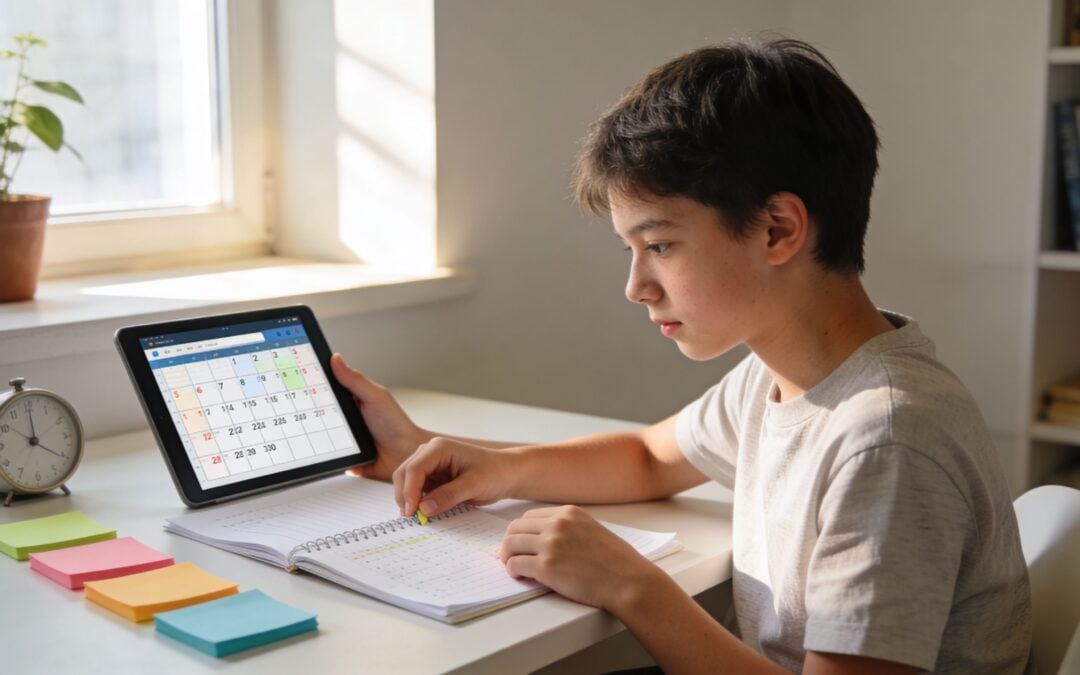
A lot of adults are looking at the same scene right now. A teen has homework open, a phone buzzing, three school deadlines in the same week, and a level of stress that shows up as irritability, shutdown, or “I’ll do it later.” From the outside, it can look like laziness or poor follow-through. From the inside, it often feels like overload.
That’s why time management for teenager issues need to be treated as more than an organization problem. For parents, teachers, and counselors, this is often a self-regulation problem first. When a young person learns how to notice pressure, make choices, and use a plan without getting trapped in perfectionism, they gain something bigger than productivity. They gain a sense of agency.
Why Time Management Is an Essential Skill for Teenagers

A teenager can be busy all day and still feel like nothing important got done. That’s common when attention is constantly being pulled in different directions. School asks for sustained focus. Friends expect quick replies. Devices make every moment interruptible.
The pressure is real. U.S. teenagers are experiencing a dramatic surge in screen time, with the average teen spending 4.8 hours per day on social media platforms, and 35% describe their social media use as “almost constant” according to the CDC data brief on teen screen time and social media use. That time competes with homework, sleep, and face-to-face connection.
Time management is really self-management
For teens, calendars and checklists matter. But the deeper skill is learning how to manage energy, emotions, distractions, and competing priorities. That’s why this belongs in the same conversation as self-awareness and regulation. Adults who want a fuller framework can connect this work to self-management skills for children and students.
When teens feel behind, they often tell themselves one of two stories:
- “I’m bad at this.” They see missed work as proof they’re irresponsible.
- “I work better under pressure.” They normalize last-minute stress because it feels familiar.
Neither story helps. A better message is that time management is a learnable life skill.
What adults often miss
Time management isn’t about turning teens into tiny adults who optimize every hour. It’s about helping them feel less scattered and more steady.
Practical rule: If a strategy improves completion but increases panic, it isn’t sustainable.
In schools and homes, the strongest time habits usually grow when adults teach three things together:
| What teens need | What it looks like in practice |
|---|---|
| Awareness | noticing where time and attention are going |
| Planning | deciding what matters most before the day gets hectic |
| Emotional regulation | staying engaged when a task feels boring, hard, or scary |
A teen who can pause before reaching for the phone, start homework without spiraling, and recover after a rough day is building a foundation that supports both wellness and learning. That’s why this skill matters so much.
Connect Before You Correct Understanding Teen Motivation

When adults see procrastination, the instinct is often correction. “Use your planner.” “Start earlier.” “Put your phone away.” Sometimes that helps. Often it doesn’t, because the visible behavior isn’t the whole problem.
A more useful starting point is this: teens often struggle with time management because of “low motivation, lack of time, perfectionist tendencies, or lack of rest,” and effective support reframes time management as a beneficial skill to manage pressure as described in this mental health resource on teen time management.
What procrastination may actually mean
A student says they forgot to start a project. That can mean several different things.
- Fear of failure: “If I try and it’s not good, everyone will know.”
- Perfectionism: “If I can’t do it really well, I don’t want to begin.”
- Mental fatigue: “I’m too drained to organize my thoughts.”
- Low confidence: “I don’t know how to start, so I avoid it.”
- Schedule overload: “There wasn’t a realistic place to put this.”
If adults skip that layer and jump straight to control, teens often hear criticism instead of support.
Conversation starters that lower defensiveness
The goal isn’t to interrogate. It’s to help a teen name what’s happening. That naming alone reduces shame.
Try language like this:
“What feels hardest about starting this?”
This gets past “I don’t know” faster than “Why didn’t you do it?”“Does this feel confusing, boring, stressful, or like too much?”
Some teens need choices before they can identify emotions.“Do you want help making a plan, or do you want me to just sit with you while you begin?”
This preserves dignity and gives them agency.“Are you avoiding the task, or are you avoiding the feeling the task brings up?”
Older teens often respond well to this because it respects their inner experience.
You don’t want to introduce time management as one more mountain a teen has to climb. It works better when they experience it as relief.
What connection looks like at home and at school
Parents can use a short evening check-in instead of repeated reminders. A teacher can pull a student aside and ask what part of an assignment feels sticky. A counselor can help a teen notice patterns, such as freezing whenever a task involves public evaluation or long writing.
A simple response pattern works well:
Validate the feeling
“That sounds overwhelming.”Reduce the size of the task
“Let’s figure out the first tiny move.”Return control
“Which step do you want to do first?”
Trust holds significant importance. Teens are more likely to use planners, timers, and routines when they don’t feel those tools are being used against them. They need support that says, “You’re capable, and we can build this together.”
Building Sustainable Routines Not Rigid Schedules
Rigid schedules often fail because teen life isn’t tidy. Buses run late. Practice gets extended. Energy changes across the week. A plan that only works on a perfect day usually collapses by Tuesday.
A better approach is a routine with anchors. The anchors are the essential elements that protect health and learning. According to this adolescent time-use and wellness summary, the CDC recommends 8 to 10 hours of sleep for teens, while homework and screen-heavy leisure compete for that time. When sleep is protected, teens tend to function with better focus, memory, and motivation.
Start with the big rocks
Ask a teen to build the week in this order:
Sleep first
Bedtime and wake time don’t need to be identical every day, but they should be stable enough that the body can predict rest.School obligations next
Class time, commute, practices, tutoring, and fixed family responsibilities go in before anything optional.Homework blocks after that
Not “do homework all evening.” Use a clear start time and a realistic stopping point.Downtime on purpose
Teens need unstructured space. If rest only happens by accident, it gets crowded out.
Families looking for a broader lens on predictability and emotional steadiness may also appreciate these routines that help children feel emotionally grounded.
Use a brain dump before making the plan
Many teens say they “have too much to do,” but what they really have is too much to hold in working memory. A brain dump helps.
Have the teen write everything down on paper or in a notes app:
- math worksheet
- text coach back
- finish slides
- shower
- study vocab
- birthday gift for friend
- email teacher
- laundry
- chemistry quiz Friday
Don’t sort it at first. Just empty the mind. Then group items into school, personal, family, and follow-up.
A routine should feel supportive, not suffocating. If a plan leaves no room for being human, it won’t last.
A weekly rhythm teens can actually use
Here’s a simple pattern that works better than minute-by-minute control:
| Time of week | Focus |
|---|---|
| Sunday evening | look at the week, list deadlines, choose priority tasks |
| After school | short reset, snack, short break before homework |
| Early evening | focused schoolwork block |
| Later evening | lighter tasks, prep for tomorrow, wind-down |
| Friday or Saturday | catch-up block if needed, then true downtime |
Teachers can reinforce this by posting major due dates clearly and encouraging backward planning. Parents can reinforce it by asking, “What does your week look like?” instead of “Do you have homework?” The first question invites strategy. The second often gets a defensive answer.
Helping Teens Prioritize What Truly Matters
A teen sits down to work with a history test coming up, a group chat buzzing, laundry half-finished, and a friend sending messages about social drama. Everything feels urgent. That’s the moment when prioritizing matters most.
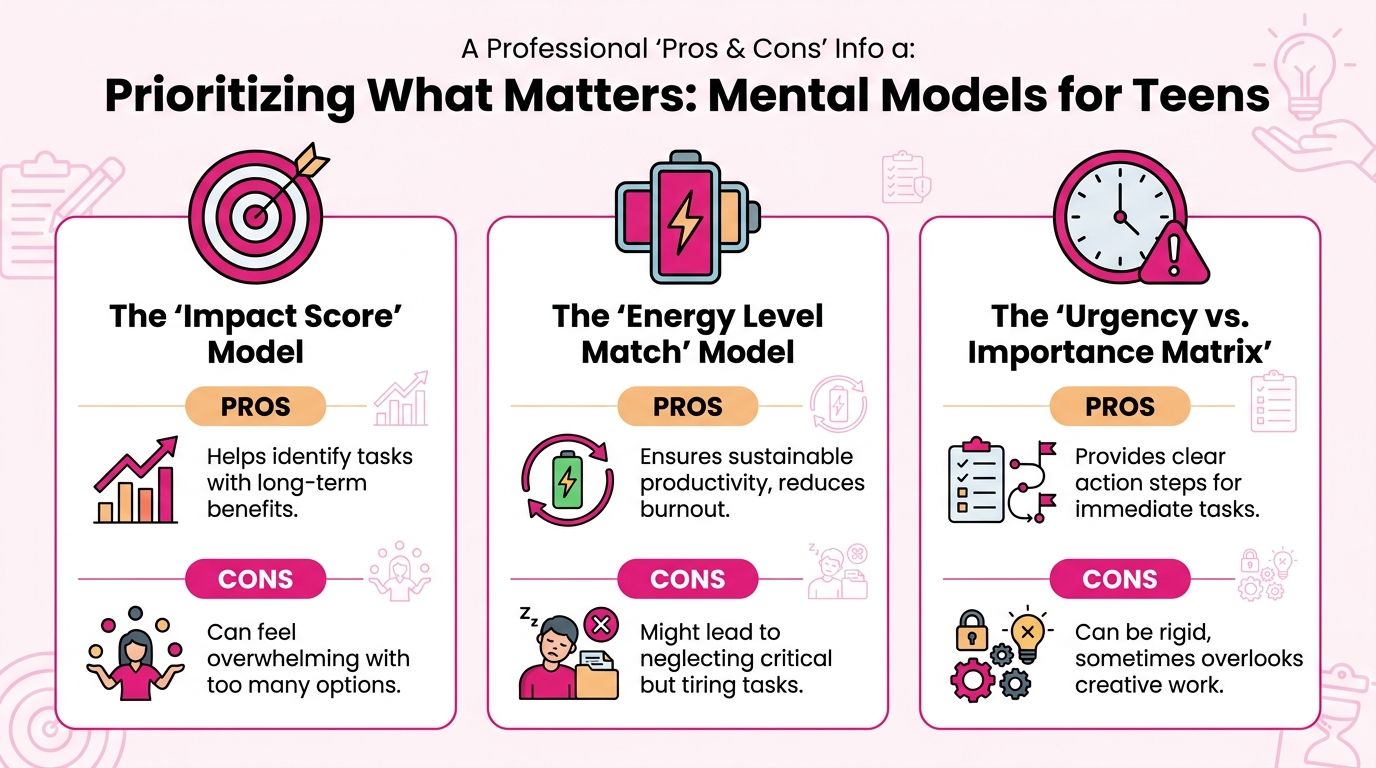
A teen version of the Eisenhower Matrix
The easiest way to teach prioritizing is to sort tasks by urgent and important.
| Category | Teen example | Best response |
|---|---|---|
| Urgent and important | assignment due tomorrow, forgot instrument for concert | do it now |
| Important but not urgent | studying for next week’s exam, drafting scholarship essay | schedule it |
| Urgent but not important | pressure to reply instantly to nonessential messages | limit it |
| Neither urgent nor important | scrolling without purpose | cut it back |
This model works because it turns a vague sense of pressure into a concrete choice.
What this looks like in real life
Take Maya, a student with a science quiz on Friday. On Wednesday night she plans to “study later,” but her phone keeps lighting up. A friend wants immediate advice about an argument. Another group chat is active. She starts toggling between messages, a study guide, and a video. An hour passes. She feels busy and gets very little done.
That’s where adults can coach without taking over. Ask, “Which of these affects tomorrow or next week in a meaningful way?” The science quiz belongs in important but not urgent until the night before. That means it deserves protected time now, before it becomes a crisis.
A useful script for teens is:
- Write down every current demand.
- Circle the items that affect grades, commitments, health, or relationships in a lasting way.
- Pick one task to do first.
- Silence or move the rest out of reach for the block of time.
The 80/20 rule helps teens stop treating everything as equal
The ASU Prep Digital article on time management for teens describes the Pareto Principle, or 80/20 rule, as the idea that 80% of results can come from 20% of high-impact activities. It also notes research cited there showing multitasking increases errors by 50% and can double the time it takes to complete tasks because of task-switching costs.
That matters for teens because they often spread effort thinly across too many small actions. They check five apps, rearrange notes, answer messages, and tell themselves they’re working. In practice, their best results usually come from a few high-impact actions.
For a student, those high-impact actions might be:
- Reviewing the study guide for tomorrow’s quiz
- Starting the first paragraph of the essay
- Emailing the teacher about a missing assignment
- Sleeping on time before a demanding day
Everything else may still matter, just not first.
When a teen says, “I have too much to do,” the next question is, “Which task will make the biggest difference if it gets done today?”
If you’re teaching this at school or at home, pair it with a simple reflection question from goal-setting practices for kids and students: What is the one action that moves this forward most? That keeps teens from confusing motion with progress.
From Planning Tools to Practical Application
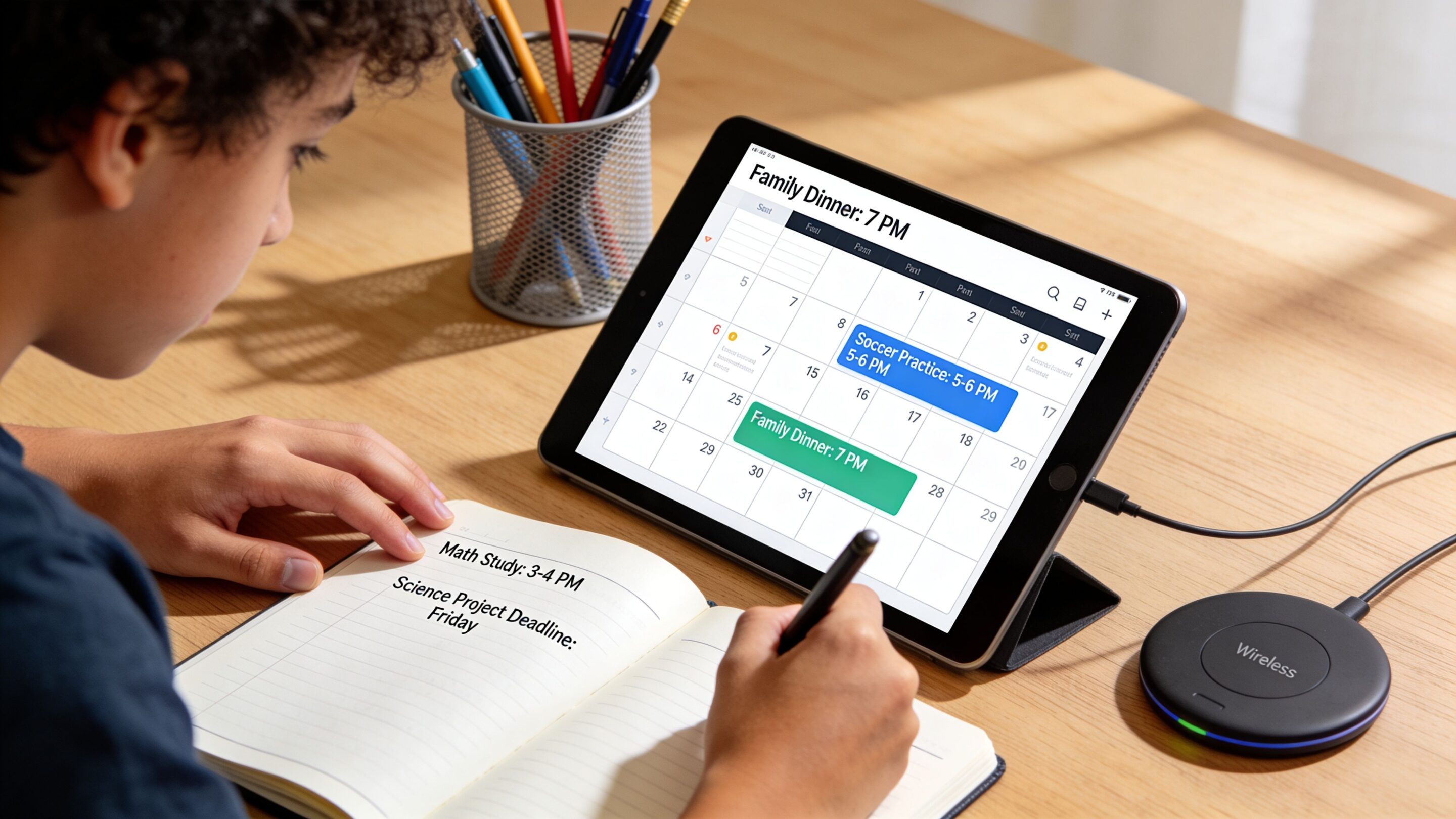
A planning tool won’t rescue a teen by itself. A beautifully color-coded planner can still sit unopened in a backpack. A calendar app can become one more ignored notification. The tool matters less than whether the teen will follow through with its use.
That said, structured planning does make a difference. A study of university students learning time management through workshops found that teaching goal setting, prioritization, and time blocking reduced academic failure rates by 71% in the experimental group compared with the control group. The age group is older than middle or high school students, but the takeaway is still useful: clear planning habits are teachable, and they help.
Analog versus digital tools
Some teens think best with paper. Others need reminders that travel with them.
| Tool type | Works well for teens who | Common drawback |
|---|---|---|
| Paper planner | like writing by hand, want fewer distractions | may forget to check it |
| Whiteboard | benefit from seeing the week at a glance | not portable |
| Google Calendar | need reminders and repeating events | can become cluttered |
| Todoist or similar app | like checking off tasks and sorting lists | may overbuild the system |
| Notebook plus phone reminders | want simple and flexible | information gets split across places |
For long deadlines, visual countdowns can help a lot. If a teen struggles to grasp how close a due date really is, a tool like this Google Calendar countdown guide can make upcoming projects more concrete.
A practical example with a school project
Say a student has a social studies presentation due in two weeks. Many teens write “work on project” in their planner, which is too vague to act on.
A usable plan is more specific:
Day one
Read the rubric. Choose topic. Write down what “done” means.Day two
Gather sources and save them in one folder.Day three
Create a rough outline with intro, main points, and conclusion.Next work block
Make slides or draft note cards.Later in the week
Practice aloud once, revise weak spots, check required materials.
Time blocking offers a solution. Instead of waiting for motivation, the teen assigns each step to a specific block of time. “Wednesday, 7:00 to 7:30, find sources.” “Thursday, after dinner, outline.” Small assignments to time reduce the mental friction of starting.
How adults can support without hovering
The best support sounds like coaching, not surveillance.
- Ask to see the breakdown, not just the final due date.
- Help estimate how long one step might take.
- Prompt a weekly review on the same day each week.
- Let the teen choose the tool when possible.
If a student consistently forgets digital alerts, paper may be better. If they lose papers, an app may be the smarter fit. The goal isn’t the perfect system. The goal is a repeatable one.
Overcoming Procrastination with Self-Compassion
Procrastination usually looks like avoidance. Underneath, it’s often protection. A teen protects themselves from boredom, confusion, fear of doing poorly, or the discomfort of not knowing where to begin.
That’s why shame rarely fixes it. Harsh self-talk can create a short burst of panic, but panic isn’t the same as steady follow-through. Teens need strategies that lower the barrier to starting.
Use small-entry strategies
Two tools work especially well because they reduce pressure.
The 5-minute rule
Tell yourself you only have to work for five minutes. Starting is the win. Once momentum begins, continuing gets easier.Pomodoro-style work blocks
Use a short focused interval, then take a brief break. For teens, shorter rounds are often more realistic than demanding long stretches of concentration.
If attention is especially hard to hold, these practical steps to improve focus can give parents and educators extra ideas for reducing distractions and making task initiation easier.
Replace the inner critic
Listen for the difference between these two voices.
| Self-criticism | Self-compassion |
|---|---|
| “I’m so lazy.” | “I’m having trouble starting, and I can begin small.” |
| “I always do this.” | “This is a pattern, not my identity.” |
| “I ruined the whole night.” | “I can still make one good choice now.” |
The most helpful response to procrastination is often, “What is the kindest next step that still moves this forward?”
That may mean opening the document, finding the worksheet, or setting a timer and sitting near a supportive adult. Not every rescue move has to be dramatic.
Reset the nervous system first
Some teens can’t plan their way out of overload until their bodies calm down. A short breathing exercise, a stretch break, or a minute of quiet can create enough space to re-engage. Teachers and caregivers who want simple regulation tools can draw from these mindfulness activities for students.
One practical routine works well in the moment:
- Name the feeling.
- Shrink the task.
- Set a short timer.
- Begin without aiming for perfect.
That sequence teaches a powerful lesson. Action doesn’t require feeling fully ready first. Sometimes readiness grows after starting.
Conclusion Fostering Agency and Systemic Well-Being
When adults approach time management as an SEL skill, teens gain more than better homework habits. They learn how to notice overwhelm, make thoughtful choices, recover from avoidance, and build confidence through follow-through. That is real emotional growth.
Adults also need to be honest about the systems around them. As noted in this ASCD article on teen downtime and support, many teens are carrying schedules so overloaded with academics, activities, and family responsibilities that it becomes mathematically impossible to protect enough sleep and daily free time. In those cases, the answer isn’t “manage your time better.” The answer is to reduce the load.
Healthy time management for teenager success happens when teens have both skills and breathing room. Families, schools, and youth programs all play a role in creating that balance.
Soul Shoppe helps schools, families, and communities build the kind of emotional foundation that makes skills like time management stick. Explore Soul Shoppe for practical SEL programs, workshops, and resources that support self-regulation, connection, and confidence in everyday school and home life.