A child is under the table. Another is crying because the math page feels impossible. At home, your own child is yelling that their socks feel wrong, their brother touched their stuff, and now everything is too much.

Those moments don't need a lecture first. They need a bridge back to calm.

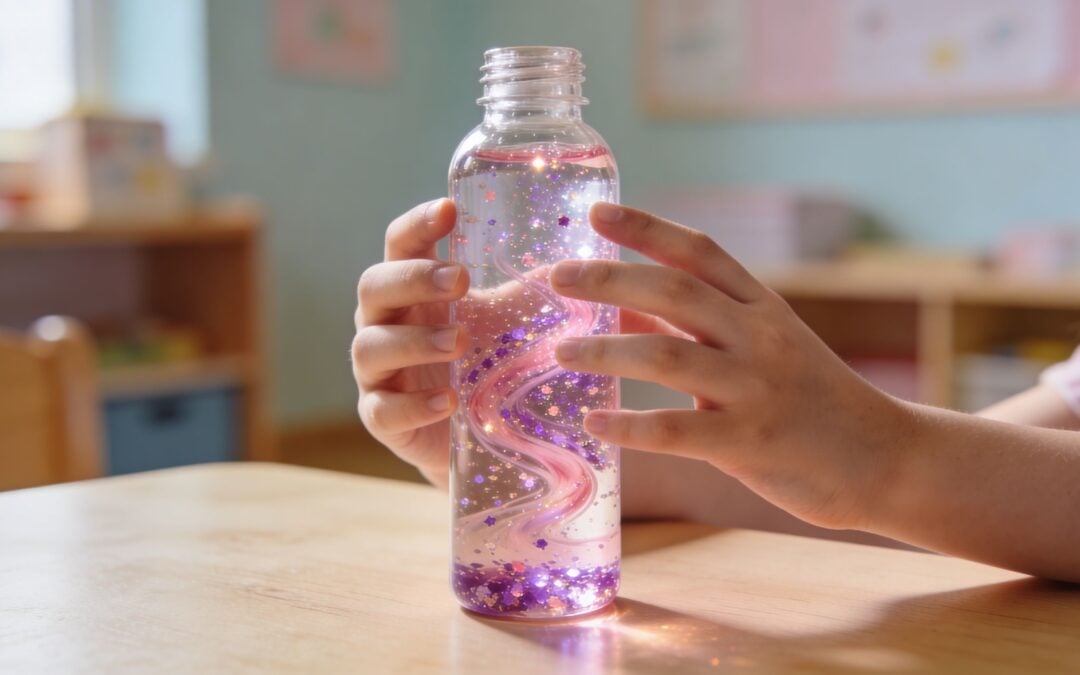
One of my favorite tools for that bridge is a glitter sensory bottle. It looks simple, and that’s part of its power. A sealed bottle with water, glue, and glitter gives a child something concrete to hold when their feelings are anything but. Their eyes track the swirling sparkle. Their hands stay busy. Their breathing often begins to slow without anyone demanding, “Calm down.”

That’s why this tool has stayed in classrooms, counseling spaces, and family homes for years. It isn’t just a cute craft. It’s a practical support for self-regulation, transitions, mindfulness, and emotional language.

More Than a Craft The Power of a Simple Glitter Bottle

I remember offering a glitter bottle to a student during a rough transition after recess. He wasn't ready to talk. He wasn't ready to problem-solve. He was only ready to say, “Everyone is too loud.”

So we didn’t start with words. I handed him the bottle, sat nearby, and said, “Watch until the glitter settles. I’ll stay with you.”

That was enough to interrupt the spiral.

A glitter sensory bottle works because it gives children an outside object that matches their inside experience. When feelings are scattered, the glitter is scattered too. When the motion slows, children can see what settling looks like.

Why this simple tool matters

Glitter sensory bottles became popular in early childhood education and therapy in the early 2010s, with tutorials appearing on educational websites by 2015. That growth lined up with wider school interest in social-emotional learning. According to Children's Learning Centers of Fairfield County, citing CASEL, SEL programs reached 27% of U.S. students by 2017, up from 3% in 2011.

That rise matters in everyday practice. Schools needed tools that were easy to introduce, easy to repeat, and simple enough for children to understand.

A bottle like this can support:

  • Big feelings: anger, frustration, disappointment, or sensory overload
  • Transitions: entering class, leaving recess, moving to homework, bedtime, or car rides
  • Quiet reset routines: calm corners, counselor offices, reading nooks, and family reset spaces
  • Mindfulness lessons: making breathing visible and concrete for children who don't connect with abstract instructions

A child doesn't need to explain everything before they can start regulating.

Where families and teachers often get stuck

Many adults dismiss this tool because it seems too small. They think, “It’s just glitter in a bottle.” I understand that reaction.

But children often need regulation strategies that are visible, repeatable, and low-pressure. A glitter bottle checks all three boxes. It gives the nervous system something predictable to follow.

If you're building a calm corner or looking for other engaging craft activities for kids, this kind of hands-on project fits beautifully because it isn't only about making something. It's about creating a tool children can use later, when emotions rise and words disappear.

The Science of Calm Developmental and SEL Objectives

When a child watches glitter drift downward, a few helpful things happen at once. Their eyes focus on one moving target. Their body gets a cue to pause. Their brain shifts from reacting outward to noticing inward.

That’s why this tool can work even when a child isn’t ready to talk.

A curious young girl holding and watching a sparkling glitter sensory bottle with intense focus and fascination.

A visual anchor for a busy nervous system

Children in distress are often dealing with too much input at once. A glitter sensory bottle narrows attention. Instead of tracking every sound, face, and demand in the room, they track one slow visual event.

That matters in both classrooms and homes. Predictable movement can reduce the pressure to respond right away. It offers a nonverbal path toward regulation.

In therapeutic contexts, the effect has been measured. A 2022 study referenced by the National Autism Center included sensory tools like these in 40% of effective behavior plans, with a 45% decrease in agitation episodes when used as a 2 to 3 minute visual timer. The same source explains that the settling time can mirror calming deep breathing cycles. That finding is summarized by Cultivate BHE’s overview of glitter sensory bottles for autism support.

How this connects to SEL skills

A glitter bottle isn't the lesson by itself. It's a support for the lesson.

When adults pair the bottle with simple reflection, children begin to build core SEL capacities:

  • Self-awareness: “My body feels tight.” “My thoughts are racing.”
  • Self-management: “I can pause before I yell.”
  • Attention control: “I can stay with one thing until I feel steadier.”
  • Emotional language: “My feelings were stormy. Now they’re quieter.”

For educators who want shared language around development, social-emotional development in children gives a helpful frame for understanding how these skills grow over time.

Why neurodivergent children often respond well

For many children with ADHD, autism, sensory processing differences, or high anxiety, verbal directions can add pressure during a hard moment. “Use your words” may be too much too soon.

A glitter sensory bottle can help because it asks very little at first. Watch. Hold. Breathe. Wait.

That simplicity makes it useful as a co-regulation tool. The adult doesn’t have to fix everything immediately. They can sit nearby and offer a calm rhythm.

Practical rule: Use the bottle before the child is fully escalated whenever possible. Early support works better than emergency support.

The metaphor children understand quickly

One reason this works so well in SEL lessons is that the metaphor is easy to grasp.

You can say:

  • “When we shake the bottle, it looks like our thoughts when we’re upset.”
  • “The glitter isn’t bad. It’s just moving fast.”
  • “Your feelings can be big and still settle.”

That kind of language is respectful. It doesn't shame the child for being dysregulated. It normalizes the experience and gives them a picture for what regulation feels like.

For older elementary and middle school students, I often add one sentence: “Calm doesn’t mean no feelings. It means your body is ready to think again.”

How to Make a Perfectly Mesmerizing Glitter Bottle

A good glitter bottle should do one thing well. It should move slowly enough to hold attention, but not so slowly that it turns into murky sludge.

Most first attempts go wrong for a simple reason. People guess the ratios.

The best results come from understanding what each ingredient does.

A five-step infographic guide titled Crafting Calm showing how to make a glitter sensory bottle.

The master recipe

Experiments with sensory bottle recipes show that the glue-to-water ratio shapes the settling speed. According to The Craft-at-Home Family’s clear-glue sensory bottle experiment, a 3:1 water-to-clear-glue ratio yields a benchmark 3-minute settling time, and using clear school glue instead of pre-mixed glitter glue can create up to 4 times longer glitter suspension.

That means clear glue gives you more control over the calming effect.

Here’s the setup I recommend most often.

What to gather

  • A clear plastic bottle: Choose a sturdy bottle that feels solid in small hands. Smooth-sided plastic bottles work well in classrooms.
  • Warm water: Warm water helps the glue dissolve more smoothly.
  • Clear school glue: Clear glue usually gives a cleaner, slower visual effect than glitter glue.
  • Fine glitter: Fine glitter stays in motion longer. A little chunky glitter can add visual interest.
  • Optional food coloring: One or two drops are enough if you want tint.
  • A funnel and spoon: These cut down on frustration and spills.
  • Strong adhesive for the lid: Super glue is a common choice for the threads.

If you're working on a sensory unit, 5 senses activities for kids can pair nicely with the bottle-making process because children can talk about what they see, hear, and feel as they create.

How to build it

  1. Fill the bottle with warm water first.
    Don’t fill it all the way. Leave room for the glue and the glitter to move.

  2. Add clear glue.
    Aim for that 3:1 water-to-clear-glue ratio if you want a slower, calming descent.

  3. Pour in glitter.
    Start modestly. You can always add more. Too much glitter can make the bottle visually crowded.

  4. Add color if you want it.
    A drop or two of food coloring is plenty.

  5. Close the lid temporarily and shake.
    Watch the movement before you seal it for good.

  6. Adjust if needed.
    If the glitter drops too fast, add more clear glue. If it barely moves, add a little more water.

A short demonstration can help if you want to see the process in action.

What each ingredient is doing

Children love making these, but adults need to know why the recipe works.

Ingredient Job in the bottle What happens if you use too much
Warm water Helps mix the contents smoothly Bottle may settle too fast if there’s too much water
Clear glue Slows the glitter and creates that floating effect Bottle can become thick and cloudy
Fine glitter Gives the visual tracking effect Can become dense if overloaded
Food coloring Adds theme and visual appeal Can darken the bottle too much
Adhesive on lid Keeps the bottle classroom-safe Without it, leaks are much more likely

The step people skip

The lid has to be sealed as if a determined child will test it. Because they will.

I apply adhesive on the lid threads, screw the lid on tightly, wipe the rim, and let it cure fully before the bottle goes into a calm corner. If I’m making a class set, I test each bottle by turning it upside down over a sink first.

If the bottle is meant for school use, don't send it into circulation until you've tested for leaks.

A few first-try fixes

  • The glitter falls too fast: Add more clear glue, shake again, and retest.
  • It looks muddy: Use less coloring and less filler next time.
  • It feels boring: Mix fine glitter with a small amount of chunky glitter for contrast.
  • The bottle is too full: Pour out a little liquid. Motion needs space.

A successful glitter sensory bottle should feel soothing, not chaotic. When you shake it, the movement should invite watching. If it makes your eyes jump around or if everything drops immediately, keep adjusting.

Creative Variations for Different Ages and Goals

Once you’ve made one reliable bottle, you can start matching the design to the child and the moment. That’s when this tool becomes much more than a generic calm-down jar.

Different fillers create different experiences. Some bottles are best for quiet recovery. Others work better for short transitions, focus resets, or sensory curiosity.

How movement changes the goal

Advanced recipes can be tuned by changing the liquid base. A Day in Our Shoes explains that adding 25% baby oil or mineral oil creates layered movement, while 10% to 20% glycerin can slow glitter descent by 2 to 4 times. The same source notes that a drop of dish soap can reduce glitter clumping by over 90%.

Those adjustments give you options.

A faster bottle can support a child who needs a brief reset and then wants to get back to work. A slower bottle can support a child who needs more help staying with one calm activity.

Sensory Bottle Recipes and Their SEL Purpose

Bottle Type Key Ingredients & Adjustments SEL Objective Ideal for Ages
Classic Calm Bottle Water, clear glue, fine glitter Self-regulation during upset moments K-5
Deep Breathing Bottle Add glycerin for slower drift Pacing breaths and extending calm K-8
Ocean Bottle Blue tint, baby oil or mineral oil for layered flow, ocean-themed fillers Transition support and sensory soothing K-5
Focus Reset Bottle Slightly lighter mixture so objects settle sooner Brief visual break before returning to task 3-8
Feelings Theme Bottle Color tied to a feeling, simple symbolic fillers Emotion naming and reflection K-4
Galaxy Bottle Darker tint, silver glitter, star confetti Quiet observation, mindfulness, creative writing prompts 2-8
Peace Corner Bottle Classic formula with uncluttered colors Independent use in calm-down spaces K-8

Matching bottles to developmental stages

Younger children usually do best with a cleaner visual field. Too many sequins, beads, and novelty items can make the bottle feel busy instead of soothing.

Older children often enjoy a bottle that feels less “babyish.” I’ve had good success with:

  • Ocean themes: especially when tied to science or habitats
  • Galaxy themes: great for writing, art, or quiet reflection
  • School-color bottles: useful when students help make a shared set for the classroom calm corner

Simple examples from real use

A kindergarten teacher might keep an ocean bottle near the rug area and say, “Take one minute to watch the waves settle before we start.”

A fourth-grade teacher might use a darker galaxy bottle before a test and say, “Eyes on the glitter. Shoulders down. Slow breath in, slow breath out.”

At home, a parent might hand a child a feelings-themed bottle during sibling conflict and ask, “What color matches your body right now?”

The best variation isn't the prettiest one. It's the one a child will use.

Keep the design purposeful

When adults get excited, bottles can become overdecorated. I say that with love because I’ve made those bottles too.

If your goal is calm, keep these design choices in mind:

  • Choose one visual focus: Too many fillers compete for attention.
  • Use color intentionally: Softer or cooler tones often feel less activating.
  • Test movement before sealing: A beautiful bottle that settles poorly won’t get used.
  • Label the purpose: “Breathing Bottle,” “Transition Bottle,” or “Peace Corner Bottle” helps adults stay consistent.

The strongest classroom sets usually include a few different styles, not one bottle for every situation.

Integrating Sensory Bottles into Your Classroom and Home

A glitter bottle helps most when adults introduce it before a child is in full distress. If the first time a child sees it is during a meltdown, it can feel like one more demand.

Treat it like any other SEL tool. Teach it when everyone is calm. Practice it when no one urgently needs it. Then it’s available when emotions spike.

A young girl and her teacher interact with a glowing glitter sensory bottle on a small table.

In the classroom

A glitter sensory bottle belongs best in a defined space. That might be a peace corner, a calm-down spot, a counselor table, or a quiet chair near the library area.

The key is this. The bottle should feel like a support, not a consequence.

I introduce it with language like:

“This is a tool for helping your brain and body get steady. It is not a punishment spot. It is one choice you can make when you need a reset.”

That script matters. Children quickly notice whether a regulation space is respectful or controlling.

A simple routine that works

Many teachers overcomplicate calm-down procedures. Keep it short.

  1. Notice the early sign.
    “I see your hands are tight.”

  2. Offer the tool.
    “Do you want the glitter bottle or a quiet seat first?”

  3. Stay nearby if needed.
    Some children regulate better when an adult remains physically present.

  4. Reflect after the settle.
    “What does your body need next?”

That last step is where the SEL learning happens. A physical tool is useful, but reflection helps the child build transfer.

Research supports that pairing. A 2025 study in the Journal of School Psychology found that when sensory tools were used within SEL programs with guided reflection, they reduced student dysregulation by 28%. That finding is summarized in this discussion of sensory tools and guided reflection.

If you're building out a broader practice around regulation, teaching mindfulness to children offers a useful companion approach.

A glitter bottle meditation

Here’s a script I’ve used with students from early elementary through middle school:

  • “Shake the bottle once.”
  • “Watch the glitter move.”
  • “Let your eyes stay with one part of the bottle.”
  • “Breathe in slowly.”
  • “Breathe out slowly.”
  • “When the glitter settles, notice if your body changed at all.”

For younger children, I shorten it even more. “Shake. Watch. Breathe. Wait.”

For older students, I add, “You don’t have to force calm. Just observe.”

In morning meetings, circles, and group spaces

A glitter bottle can also support shared emotional language.

Try these uses:

  • Feeling check-in: Pass the bottle around. Each student names one feeling word.
  • Transition to listening: One shake, then everyone gets quiet before instructions.
  • Conflict repair pause: Use it as a settling object before peers talk through a disagreement.
  • Writing prompt: “If your mind looked like this bottle today, what would it show?”

These routines help students see regulation as normal and teachable.

At home

Families often need practical uses, not theory.

A glitter sensory bottle can help during:

  • Before homework: a short reset after school
  • Sibling conflict: a pause before discussing what happened
  • Bedtime: a steady visual cue for slowing down
  • Leaving the house: a transition ritual when mornings are rough

Here’s a parent script that works well: “Your body looks overwhelmed. Let’s watch the bottle first, then we’ll talk.”

That sequence respects timing. Children can’t always process conversation and regulate at the same moment.

What not to do

A good tool can lose its value if adults misuse it.

Avoid these common mistakes:

  • Don’t force it: An offered tool works better than a demanded one.
  • Don’t use it as exile: “Go sit over there with the bottle” can feel shaming.
  • Don’t expect magic: It supports regulation. It doesn't replace relationship.
  • Don’t skip repair: After calm returns, children still need help naming what happened and what comes next.

Troubleshooting Common Glitter Bottle Problems

Even experienced teachers make a bottle that flops sometimes. Usually the issue is easy to fix once you know what you’re looking at.

The glitter sinks too fast

This is the most common problem. The liquid is usually too thin.

Add a little more clear glue, shake again, and retest. If you want the bottle to become part of a child’s regular calming routine, it can also help to pair the visual pause with other self-soothing strategies for kids.

The glitter clumps together

Clumping usually means the fillers are sticking or the mixture needs a small adjustment.

Try adding a drop of dish soap if the bottle hasn’t been permanently sealed yet. Swirl gently and watch whether the glitter begins to spread more evenly.

Sometimes the fix is tiny. One small adjustment can change the whole feel of the bottle.

The bottle looks cloudy

Cloudiness often comes from overmixing, too much color, or ingredients that don’t blend cleanly.

Let the bottle sit for a while before deciding it failed. If it still looks muddy, rebuild with less food coloring and fewer fillers.

The bottle leaks

If the lid leaks, retire the bottle until you can fix it properly.

Dry the lid and threads completely, reapply strong adhesive, close it firmly, and let it cure fully. I always test repaired bottles upside down over a sink before handing them back to children.

The bottle is too busy to feel calming

A glitter sensory bottle should draw the eye, not overwhelm it.

If there are too many sequins, beads, or competing colors, start over with a simpler recipe. In regulation tools, less is often more.

Frequently Asked Questions About Glitter Sensory Bottles

Are glitter sensory bottles safe for toddlers?

They can be, if adults use a sturdy plastic bottle, seal the lid securely, and supervise use. For very young children, avoid sharp fillers or anything that could become unsafe if the bottle opened.

Do I have to use glitter?

No. Some children prefer beads, sequins, pom-poms, or themed confetti. If you're trying to reduce mess or avoid traditional glitter, you can still create a visually engaging bottle with other fillers.

How do I clean the outside?

Wipe the outside with a damp cloth and dry it well. If little hands have made it sticky, a mild soap on the cloth usually does the job. Keep water away from the lid seam if the seal is aging.

How long does a glitter sensory bottle last?

A well-made bottle can last a long time if it stays sealed and is handled with care. In classrooms, I check bottles regularly for cloudiness, leaks, or cracked plastic. If the contents stop moving well, I rebuild rather than trying to save a bottle that no longer works.

What age is best for a glitter sensory bottle?

They can work across a wide age range. Younger children often use them for sensory soothing and transition support. Older students may use them more intentionally for mindfulness, focus, and emotional reset.

Should I make one bottle or several?

Start with one strong, reliable bottle. Use it. Observe who responds to it and when. Then make additional versions for different needs, such as a slower breathing bottle or a simpler transition bottle.


If you want more practical tools for helping children build empathy, self-regulation, communication, and psychological safety, explore Soul Shoppe. Their work supports schools, families, and communities with experiential social-emotional learning that children can apply in real life.